For most people, finding the best chicken feeders may seem like a reasonably easy thing to do, and in many ways, it is. But there’s different factors to consider before buying one.
In this buyer’s guide, I’ll show you the best chicken feeders, and factors to consider before you make a purchase.
Best Chicken Feeders: A Buyer’s Guide
** Top 7 Feeders We Recommend **
The best feeder for YOUR chickens largely depends on your flock.
For example, your chickens may be prone to knocking over water, fighting over feeders, and pooping all over the place. You also might work a lot, and not return home until well after dark.
You can buy chicken feeders from an array of locations near your hometown and even browse through an extensive selection online and have it shipped right at your door.
Amazon (ships nationally)
Your local farm store
Tractor Supply (nationwide locations)
Orschelns (locations in the midwest)
True Value (nationwide locations)
Why do you need a chicken feeder?
Chickens aren’t at all fussy when it comes to eating – in fact, most hens couldn’t care less if you dumped their food on the ground.
But the mess they create – and the vermin it attracts – means it’s easier to just invest in a reliable way to offer food to your flock.
A quality chicken feeder cuts down on food waste (which eases the strain on your wallet), and ensures your flock is properly fed at all times.
It’s also more hygienic, and reduces the likelihood that your fluffy butts will pick up bacteria from exposing their food to their own waste.
Bear in mind that you also might need multiple chicken feeders, especially if you have a large flock or bullies. One per 6 hens is usually adequate.
What to consider when choosing a chicken feeder?
When perusing options on Amazon or at your local farm store, keep the following questions in mind:
Are your hens super messy (or do you hate messes)?
Do you work all the time?
Or, do you worry they won’t have constant access to feed?
This is so you can estimate the size and quantity you’ll need, as well as what features your new feeder should have.
Some other things to think about:
Strength
How much weight can the feeder hold? How much will you feed at a time. For example, if you’re planning to put 20 pounds of grain into it, make sure that weight won’t be too heavy.
Will the your flock’s food stay dry and fresh?
Wet and/or moldy feed can be prevented by buying a weather-proof chicken feeder. This reduces the chance your hens will eat grain full of mold and bacteria that can harm them.
** Best Weather-Proof Chicken Feeder **
Is it easy to clean?
This is especially important during summer because flies and maggots LOOOOVE old chicken feed. Note that even though metal is sturdier, plastic and PVC are easier to clean.
This prevents disease and abnormal eggs from being laid.
Are there any sharp edges or anything that can hurt your hens?
I don’t typically recommend chicken feeders that automatically close when your flock is eating. These feeders also have a tendency to tip over, causing waste and attracting rodents.
So, check out your potential feeder and make sure it won’t harm your flock.
** Safest Chicken Feeder **
How many feeders do you need?
This will depend primarily on the type of feeder. If you opt to use regular galvanized or plastic hanging feeders, then one per 6 chickens is fine.
However, as a precaution always keep an eye out that all your flock members are getting enough food.
How much should I spend on a chicken feeder?
You can spend as much or as little as you want. Chicken feeders can even be as basic as a dish or a bowl or as fancy as a golden automatic feeder.
If you’re on a budget, you can even fashion your own homemade chicken feeders, and there are many resources online.
Typically, you won’t need to spend more than a few dollars on a gravity or galvanized feeder, but automatic feeders can run a couple hundred dollars.
** Best Budget Feeder **
How often should I clean my chicken feeder?
A weekly clean up with warm soapy water is ideal. Grove Collaborative has wonderful all-natural cleaners that are economically priced and delivered to your door (on my first order, we got about $80 worth of free stuff).
Plastic and PVC are easier to clean than metal, especially in the crevices.
Take note that if you buy a PVC feeder, thoroughly check that it is indeed easy to clean. Even though it’s convenient to have a chicken feeder PVC, some of the pipe feeders can be tricky to clean.
Should I hang my chicken feeder?
It’s entirely up to you. Hanging it keeps it cleaner because the chickens can’t poop in their dinner, and it keeps insects and rodents out of it.
Just remember that storing a lot of food in it will make it harder to hang well because of the weight. Always secure it to a stud or some other structural element that can support the weight.
How high off the ground should a chicken feeder be?
Your chickens should easily be able to reach their dinner. The point of hanging the feeder is to reduce waste, keep the feed clean, and provide a clean living environment for the flock.
You can also place the feeder on a cinder block to raise it off the ground.
However, if you have baby chicks, the feeder shouldn’t be off the ground at all as they won’t be tall enough to reach it.
There is a possibility that it can prevent rodents from entering the coop because no-waste feeders mean that the feed doesn’t fall on the ground, and there’s no reason for them to enter the coop.
How do I keep rats out of my chicken feeder?
If you struggle with vermin, it’s best to use a feeder that closes right after the hens eat. Always make sure that the coop door is closed at night to stop rats and mice from entering and getting a free meal.
Like an automatic chicken coop door, having an automatic chicken feeder can make your life easier, especially if you work a lot and don’t have much time to visit your chickens, or worry that they won’t have constant access to their grain during the day.
Just check that it’s properly working every day, and remember that if they break, you will either have to fix it or buy a new one.
Considered one of the best chicken feeders. Boasts a grill that stops chickens from throwing out food. Made from galvanized steel that’s built to last even during the toughest outdoor conditions. Keeps rats, birds, and mice away from feed. Can hold 20lbs of feed & can approximately feed 6 chickens for 10 days.
Rain proof and can hold up to 25 pounds of feed. Waterproof design, and can screwed into a wall or placed on a stand. Saves money by preventing costly feed from spilling.
Can hold up to 55 lbs of feed. Suitable for pellets, mash, and crumbles. Prevents roosting with a hinged gable-style lid. Made from heavy gauge galvanized metal.
For chickens 12 weeks and older. (Younger/smaller chickens can crawl in the port). Weather-proof. Keeps out rats, mice, squirrels, and wild birds. 99% of feed stays in feeder. Holds 20 pounds of feed. Refill once every week for 8 hens.
Which is the best chicken feeder in your opinion? Leave a comment below!
So I’m a huge fan of Halloween! I think it’s so fun for kids and I love the costumes, the pumpkins, and all of the fall decorations.
However, especially if you’re raising chickens in an urban or suburban area, Halloween can be a pretty stressful and scary time for your chickens. So today we’re going to talk about how to keep your chickens safe on Halloween.
Now the thing about Halloween, is that it’s really fun for us humans, but for animals it can be kind of a scary time, especially if you have domestic animals. There’s going to be a lot more activity in your neighborhood during Halloween and that can be very stressful for chickens and other pets.
Trick-or Treating People
The number one thing to remember during Halloween and Trick-or-Treating, is that not every neighborhood Trick-or-Treats at night.
Usually chickens will go in their coop at night and you’ll keep them safely cooped up all night long night, so you might think you don’t need to take any extra steps to keep them safe.
But some areas tend to have Trick-or-Treating hours during the day, or at dusk, right before sunset, which are times when your chickens might be out and about and hunting and pecking instead of safely in their coop.
So you definitely want to make sure that you coop your chickens up during the hours of Trick-or-Treating, especially if they’re during the day.
More and more neighborhoods are shifting more towards day hours to protect kids. And so younger kids who might go to bed earlier, can still enjoy Trick-or-Treating.
So definitely make sure that your chickens are cooped up. And make sure that the coops are secure. You’re going to want to make sure that other people can’t easily get into your coop.
I would also consider keeping your chickens cooped up the night before Halloween because that tends to be mischief night. Mischief night is a big deal in some areas.
It’s not such a big deal in our area. We live in a very rural neighborhood, and I grew up in a rural neighborhood where we actually never got Trick-or-Treaters.
But in some areas that I have lived in, mischief night has been a big deal, especially if you have a lot of teenagers around or young adults who might be impetuous.
It could be a pretty disastrous situation for your chickens. So my suggestion is just all Halloween, the night before Halloween and Halloween day, and that block of time around Halloween, just keep your chickens cooped up, or if you do allow them to forage and run around, supervise them just for the sake of safety.
It’s not worth somebody possibly harming your chickens, to let them roam around free.
My recommendation is that you keep your chickens cooped up or make sure that they are being supervised, so that you can make sure they stay safe.
Dogs
This is another reason why you should coop your chickens up on Halloween. A lot of people, as they’re taking their kids around Trick-or-Treating, bring their dog with them. And we all know that even the most family friendly dog, when it sees a chicken, can turn into a killer.
I know this from personal experience. Our dog was a great family dog. Loved people and was so friendly, but the second he got around a chicken, he turned into a chicken killer.
Not every dog out there is going to be like that, obviously. But you really don’t want to take the chance that’s somebody’s neighborhood dog could get at your chickens. That’s just another reason to keep your chickens cooped up earlier on Halloween.
Predators
Because of all the candy and all the food around during Halloween, predators might be a bigger issue. Namely, things like possums and raccoons.
Raccoons are pretty nondiscriminatory when it comes to what they eat. If it’s there, they’re going to go for it.
So because of all the candy and food around, raccoons are more likely to be out than they would any other night. They’re going to be out every night, but they’re probably going to be out in droves on Halloween (and probably a couple days after too).
So I recommend that you double check that your coop is secure, so that your chickens will be safe from predators.
Traffic
Another reason to keep your chickens cooped up around Trick-or-Treat time, is because of higher volumes of traffic. I remember when we were kids, my parents didn’t want to walk with their kids from house to house. It’s not fun. It’s tiring. You’re an adult. You’ve been working all day. So what do you do? You get the car out.
The problem with this, (I’m sure you’re already put it all together) is that chickens sometimes aren’t the brightest when it comes to traffic. I know mine aren’t. We’ve actually never had a chicken get hit, but it can happen because people aren’t paying attention. They’re watching their kids. They’re watching the dog. They’re not paying attention to what your chickens are doing.
Then there’s the people who’ll hit your chickens on purpose. So best advice, during Trick-or-Treat hours, after Trick-or-Treat hours, and on mischief night, just keep your chickens cooped up.
Your chickens won’t be harmed in any way by keeping them cooped up. Just make sure that they have plenty of food and water. You can give them extra treats and boredom busters to keep them entertained, but I would recommend you keep them in their coop.
Candy
Don’t be tempted to give your chickens candy. As we all know, chickens are curious creatures, and when given the opportunity, they’ll taste anything. If you’ve been thinking about giving them candy during Halloween, don’t do it. Just don’t do it. They don’t need it.
There are plenty of other healthy treat options you can give your chickens if you want to spoil them on Halloween. You could give them corn (real corn, NOT candy corn!), lettuce, Black Soldier Fly Larvae,mealworms, or one of my treat mixes, but please don’t give them candy.
Now another thing to keep in mind, is to make sure that you keep your trash cans lidded up tightly, so that your chickens can’t scavenge in the trash cans.
For the most part they’ll pretty much eat whatever they can find. Candy can mess with their blood sugar and it can mess with a whole ton of other things.
The other thing is that certain candies, such as hard candies, gumballs, or candy corn, can be choking hazards for your chickens. Once they swallow the candy it goes into their crop. Eventually it hits the gizzard. The gizzard has rocks in it and it grinds everything up.
But in the meantime, as it’s going down the esophagus, there’s a chance that they might choke on it. Especially if it’s something big and hard.
Don’t give your chickens candy and try not to throw candy in your yard. You just want to make sure that your yard is fairly clean before you let your chickens out of their coop again.
Chances of them choking on candy are probably slim (they could also just as easily choke on a piece of hard corn) but for the sake of making things easy on ourselves, just avoid giving your chickens candy.
The final thing that I’ll say about candy, is to not give your chickens anything that’s been unwrapped. As an example of this is, some families prefer to give out healthy treats, so they’ll give out apples, or oranges, or bananas.
My suggestion is although it might be tempting to throw them in the compost pile, or to feed it to your chickens as their Halloween treat, don’t feed them anything that’s come from another person that’s been unwrapped.
It’s the same reason as we don’t give it to our children. You don’t know what somebody’s put in it. You don’t know if they’ve put poison in it. You don’t know if they’ve put pins in it.
We all hear the stories every year of somebody where someone found pins or other stuff in their kid’s Halloween candy. It can happen. My suggestion is stay safe, don’t feed your chickens any unwrapped fruit or vegetables from other people, because again, you don’t know what’s been in them.
Candy Wrappers
So as we all know, chickens are opportunistic eaters. They might very well go ahead and try and eat candy wrappers. And that’s definitely not good for them.
So just make sure that when your kids are eating the candy that all the candy wrappers get cleaned up so your chickens don’t accidentally ingest them.
Candy wrappers are something that could very easily mess with your chickens digestive system. It might not hurt them immediately, but it could cause some serious problems later on.
Make sure your chickens can’t get at any candy wrappers and be sure that you keep your trashcans lidded so that your chickens can’t get in them and dig around and accidentally ingest a candy wrapper or anything else that they really should not be eating.
It’s good to keep the raccoons away too, so I highly suggest you lid your garbage cans.
Can your chickens eat pumpkins or gourds?
We’ve talked about all of the scary stuff, so now let’s talk about feeding your chickens pumpkins! If you have unpainted pumpkins or other sorts of gourds, go ahead and chop them up and feed them to your chickens.
They will absolutely love you for it! If the pumpkin or the gourd has been painted, I probably would not feed the peel itself to your chickens. We don’t really know what’s in those paints so it’s not good for them. And as the person eating their eggs, you don’t want to ingest any of that either.
Go ahead and cut away the painted part, then feed it to your chickens. If the whole outside has been painted, maybe just cut it open and scoop out the interior.
There is a belief that pumpkin seeds can help your chickens with worms. I don’t really see any proof of that, but at the end of the day, the chickens love the seeds. They think they taste great and they’re good for them. And the pumpkin itself is very good for them. It has a lot of nutrients in it!
My one tip when it comes to pumpkin and gourds, is to wait to buy them until the day after Halloween. The grocery stores in our area heavily discount gourds after Halloween, so I will often buy like 10 gourds for only five bucks.
I feed them to my pigs, I feed them to the chickens. We even feed them to our goats too!
It’s a perfect opportunity for people like us to go score really inexpensive food for our chickens and the other livestock on our farm. It’s super healthy for them and they love it! They get to dig through it and they’ll just have the best time ever.
So yes, your chickens can eat pumpkins and gourds. They will love it, and it’ll be very nutritious for them. So go ahead and feed them away to your flock!
So that’s all folks, I hope you were able to learn a little bit more about how to keep your chickens safe for Halloween! Let me know in the comments below what you do to keep you chickens safe for Halloween!
It’s fall, y’all….and that means you gotta make sure your backyard chickens are ready before the cold sets in. You need to know what to do in your coop in October!
I know in some parts of Canada (looking at you, Alberta) that it’s already snowing….but for most of the United States, it’s just starting to get cool. The really cold temperatures have not yet settled in.
And there’s lots you can do right now BOTH to celebrate the season AND prepare your flock for the upcoming wind and ice.
Although chickens weather winter pretty well in most locations (their feathers help!), just a few tweaks can mean an easier time when the cold weather mercury dips.
Even if you live in a temperate climate, there are ideas on this list to help your backyard chicken flock stay healthy year-round.
Fall is also the perfect time to explore some fun treat ideas, and we have the details! So read on!
October Coop Checklist
1. Deep Clean
Now is the time to give your coop a final clean before the cold makes it miserable outside. You likely won’t want to clean it again (a deep clean at least) until the spring thaw.
In addition to sweeping out any old bedding, be sure to wash off any accumulated poop on or under roosting bars, and wipe down nesting boxes that might have bits of broken eggs or feathers lodged in them.
If you have a wooden or cement floor, give it a good wash to reduce the chances of ammonia buildup, which can affect your chickens’ lungs.
Put down a thick layer of fresh bedding to give them warmth.
Be sure to have feed closed up tightly to help prevent hungry rodents from inviting themselves in.
2. Keep Water From Freezing
Now is the time to figure out how you’ll keep water unfrozen in your chicken coop. Will you use heated bowls, solar energy, or add water throughout the day?
Remember, what works in Southern Missouri likely won’t work in Northern Dakota, right?
3. Go Pumpkin Shopping
This time of year, there are lots of pumpkins to buy. Don’t pay retail – wait until they go on sale and stock up for your backyard chickens.
Pumpkin is very healthy for chickens, with lots of vitamins and nutrients for chickens – and they love pecking at it! Plus it helps keep them from boredom.
Most stores start to discount pumpkins well before October 31.
Pumpkins keep for a while and stored in a cool, dry location, you can have healthy treats for your hens for the next month or two!
While predators might leave your fluffy butts alone during summer, as the days get shorter and food becomes more scarce, they might turn an eye to your chickens.
Now is the time to check that your coop is completely secure and make adjustments as needed.
Make sure all doors and windows latch tightly, and upgrade the wiring around your coop if necessary. You don’t want predators to get OVER your coop walls or UNDER them!
You can usually purchase seconds (bruised or unattractive fruit that’s still fresh and edible) for pennies on the dollar. They still make great treats for your fluffy butts!
Some great ideas for fruit and veggies to feed backyard chickens are peaches (without the pits), apples (without the seeds), and leafy greens!
Your chickens may need some supplements to keep them healthy in the winter. As you know, they won’t be getting all the nutrients they are used to getting from so many bugs. If they are accustomed to being free-range they’ll be missing the bugs, and if they are coop dwellers they need help all year long.
Scratch grains and high protein treats and feed will also help increase your chicken’s body temperature (as they are digesting).
8. Ventilation and Drafts
This is a topic that requires careful balance. Your chickens need ventilation (fresh air), but they also need to be free of cold drafts (especially if there is moisture). Since no people have the exact same setup, it’s hard to tell you what you need to do (exactly).
Just keep this in mind and be sure your backyard buddies have some fresh air, but aren’t getting chilled and sick by moisture-filled drafts. Straw or wood shavings are always an easy standard when it comes to keeping a coop fresh and clean while helping chickens stay warm and draft-free.
Summary
The month of October is amazing and a time for celebration. The cooler weather, the bright colors, and the smell of pumpkin lattes. Let’s just not forget that our chickens need some extra care during this time. We all love our flocks and the better prepared we are, the better their Fall will be.
So lets get off our roosts and go clean that coop and do the other things we need to! Our chicken friends deserve it!
Many beginners wonder “How much does it cost to own a chicken?” And in this article, we’re going to talk specifics about how chicken keeping can affect your wallet.
Like many things in life, you can make chicken keeping as expensive or inexpensive as you want.
Now, just how much does it cost to own a chicken? It is important to take into account the kinds of things you’ll spend money on and the ongoing costs that come with having a backyard full of fluffy butts.
Here’s your “chicken cost calculator” guide!
How Much Does It Cost To Own A Chicken?
For 5 chickens:
Regular feed typically costs about $30 per month, non-GMO feed about $150 per month
A coop can cost from $1 to $2,000
Bedding costs about $20 per month
Feeders & waterers cost about $5 – $15 each
Baby chicks cost about $5, adult chickens cost $1 to $30 on average
Buying a baby chicken can cost anything from a few cents to hundreds of dollars (for purebred breeding-quality, specialty chickens). On average, though baby chicks should cost less than $5 for most chicken breeds.
The specific cost depends on a variety of factors, such as the sex of the chicken (females usually cost more than males), how rare the breed is (rare breeds cost more), and if it is a hybrid chicken (like an Easter Egger).
Started pullets, which are young female chickens that are about 4 weeks old, cost on average $15 to $25 each. Laying hens can cost anywhere from $10 (for mixed breeds) to $100 (purebred from a hatchery). Certain breeds, like the all black chicken Ayam Cemani, can cost up to $5,000!
Baby chicks: Starting at $1, averaging about $5
Started pullets (4 weeks – 16 weeks): About $15 – $25
Laying Hens: About $10 to $100, depending on breed
How Much Does A Pullet Cost?
It depends on the breed, but started pullets are on average around $15 to $25, although this amount varies by location. If you purchase one from a hatchery, you will also need to pay shipping (unless the shipping is embeded in the price). It’s typically best to buy a started pullet in your local area instead of online.
How Do You Get Chickens In Your Backyard?
To start raising chickens in your backyard, first make sure you can have chickens! Otherwise, you might have a nasty surprise visit from your city/town officials, and, heartbreakingly, you might have to re-home your flock. If you’re sure it’s okay to have chickens, you will need to make sure all their basic necessities such as the coop (or brooder, if they’re chicks), feed, water, etc are covered.
You can buy egg laying chickens at a hatchery, your local farm store (like Tractor Supply, Orschelns, Southern States, or Rural King, depending on your region), or from a local breeder.
To find a local breeder, it’s best to ask at farm stores in your area, or look on Facebook for groups. If you want a specific breed, you can search Facebook for breeder groups. If you plan to use a hatchery, choose one near you – the chicks will be shipped overnight or 2 day priority. A hatchery close to you means the chicks will have less time in transit.
Here’s a list of recommended hatcheries that will ship chicks to you:
When purchasing chicks from a local farm store or breeder, be sure to note the welfare of the chicks – if they don’t look healthy, or their crates don’t look clean, DO NOT BUY!!
Feeding Chickens
How much does it cost to feed a chicken per month?
On average, it costs $0.15 to feed your chickens per day, with organic feed costing at around $0.60 per pound. For a flock of 5 chickens, you will likely spend less than $30 a month, if you feed a 16% layer feed found at local farm stores.
For organic feed, you will spend more – about $150 per month. If you feed treats like black soldier fly larvae or mixed treats like BEE A Beautiful Hen (which is really popular), you need to factor those costs in as well.
However, it doesn’t pay to be cheap – chickens are living creatures, and you will need to feed them well so they lay healthy eggs for you. I have a list of what chickens can eat here.
The old saying “You are what you eat” is applicable to chickens as well. What you put in makes a difference in their health, the nutritional value of their eggs, and their lifespan.
How much should I feed a chicken?
The amount to feed a chicken varies, however, on average, 1 chicken needs about ½ – 1 cup of feed daily. You can free feed your chickens (you can use one of the chicken feeders I recommend here) or put a meal out for them daily.
Check their weight and general health frequently, and increase their feed if they need it. If you see them wasting a lot of feed, then decrease the amount you’re putting out for them (or use a no-waste chicken feeder).
Do chickens need herbal supplements?
While not strictly necessary, you can offer your flock herbal supplements (such as nesting herbs, or mixing herbs in their feed) to ensure that they will be at their optimum health – and a healthy immune system will protect them against common diseases. Remember that treating unhealthy chickens can impact your wallet and result in a lost flock member.
How much does a free range chicken cost?
If you plan to free range your chickens, you can save some money on their feed. However, it’s still advisable to feed them a 16% layer feed. For a flock of 5 chickens, you will likely spend less than $30 a month, if you feed a 16% layer feed found at local farm stores.
If you want to feed your hens non-GMO feed, it typically costs about $150 per month. Also, if you feed treats like black soldier fly larvae or mixed treats like PowerHen, you need to factor those costs in as well.
If you want your chickens to lay eggs for you, then you’ll need to feed them well. Free range chickens might not get all the nutrients they need, or they might eat stuff that effects the nutritional value of their eggs.
Buying Eggs vs. Keeping Chickens
Is it cheaper to have chickens or buy eggs?
If you simply want to save money, it’s cheapest to buy your eggs from a grocery store or allow your own flock to free range permanently. However, there’s other issues with both of those options.
For starters, the industrial egg industry, being concerned with profits, typically does not provide their chickens with healthy, happy lives. Unfortunatley, there have been multiple animal welfare issues reported over the years. Many of these chickens are killed or otherwise disposed of after 12 – 18 months. They’re usually confined to cages or very crowded living conditions. In some cases, they’re given antibiotics continuously, which does show up in their eggs.
The quality of the eggs is poor. If you’re conscious of your food sources, or an animal lover, consider raising chickens yourself or getting your eggs from a local supplier, where you can be sure the animals are treated with respect.
Chickens that free range permanently tend to have happier lives than chickens that are kept by the egg industry. However, they tend to hide their eggs (which defeats the purpose of raising them for eggs), or stop laying eggs altogether. They might also become flighty, since they have to fend for themselves against chicken predators.
Another option is to allow your chickens to feed off your compost pile, develop a mealworm breeding farm, or raise black soldier fly larvae (which can also feed off your compost pile). During spring, summer, and fall months, you can provide some type of free feed to your hens (through your compost pile) but the nutritional value of your eggs isn’t guaranteed, nor is the health of your flock.
Remember that once you have an established flock, keeping chickens is a relatively low cost because unlike other pets you can greatly profit from them since they produce food for you.
How many eggs does a chicken lay a day?
Chickens lay only one egg per day (unless they’ve laid an egg inside an egg – then technically, they’ve laid two. You can read more about abnormal eggs here.) Remember that there will be some days where they won’t lay eggs at all since a hen’s body take 24 – 26 hours to fully form one egg.
Chicken Coop Costs
How much does a chicken coop cost?
The chicken coop cost is typically around $200 to $2000 if you buy them from Amazon or another store. You can build your own chicken coop for around $100 or less (for a very simple structure). Although, if you can find pallets, you can build it for the cost of nails.
I’ve compiled 55+ free chicken coop plans here and a list of free pallet barn plans here. You can also find a list of what your coop should include here. You can find reviews of different chicken wire options here.
Is it cheaper to buy a coop or build one?
It depends primarily on the materials you use and the features your coop will have. Many low cost coops (around $200 – $300) are very cheap and will break after 1 or 2 years, regardless of what the manufacturer promises. In the long run, it’s cheaper to invest in a good coop or garden shed (that can be converted into a coop) or to build a coop yourself with good quality materials.
Remember that if you purchase a garden shed and convert it into a coop, you can always convert it back into a garden shed if you decide chickens aren’t for you – so this makes buying a good quality building worth the investment and it might increase your property value.
Keeping Chickens For Beginners
What are the best chickens for beginners?
Here’s a list of champion egg laying chicken breeds:
Cochins are a lot of fun to own because they’re hardy, lay brown eggs consistently, and enjoy human company. You can get a full-sized cochin or the bantam variety – and both have feathered feet! The bantams will eat less but will also lay smaller eggs. You can read about cochin chickens here.
Delaware
Delawares are excellent laying chickens that can produce up to 5 brown eggs per week. They’re cold hardy, distinctive looking, and friendly.
For those for whom patriotism is important, the Delaware Chicken is distinctly American. Bred and raised in the USA, it never gained the traction needed to find itself imported to other countries. To this day, it can only be found in the USA. That in itself makes this breed special.
Easter Eggers
Great for beginners because they lay consistently of about 250 eggs per year – and you might even get blue eggs! (Or green, or pink…..it just depends on the genetics of the individual hen.) You can read more about Easter Eggers here and other blue egg laying breeds here. If you definitely want blue eggs, you can learn about Ameraucanas here and Araucanas here.
Jersey Giants
These big birds are a heritage chicken breed, and also one of the largest purebred chickens in the United States.
Jerseys Giants are best as an addition to homes looking for an excellent show breed, some amazing broilers, or hens that lay between 150 and 200 brown eggs per year. This breed is quite popular and has a definite group of followers, in essence, it has its own fan club!
Marans
Marans are pretty quiet, disease-resistant, and are cold-hardy chickens that don’t require a lot of work. The hens lay chocolate-colored eggs (although how dark they are will depend on the individual chicken). They’re great layers producing approximately 250 per year.
Rhode Island Reds
Rhode Island Reds are another heritage chicken breed that’s pretty popular. They require little care. They pretty much just need food, water, a clean coop, and maybe vet care.
Your Rhode Island Reds won’t start laying eggs right away – you will have to wait a few months for that. But once they do, you can look forward to around four or five large brown eggs each week.
Is it hard to raise chickens for eggs?
No, but like any other pet, you need to ensure they’re safe, have access to food and water, and a clean home. They’re easier than dogs or cats because they can feed and water themselves (as long as you use a gravity feeder or a DIY chicken waterer that allows them to free-feed). And unlike dogs or cats, they don’t need to be let in and out of the house constantly.
It you’re concerned about the work, it’s best to start with 3 hens, and a small coop. You can always expand and build a bigger coop later. Chickens will produce eggs if they feel they are protected and are in a healthy and spacious environment. As long as you provide this, they should prove no trouble to raise for eggs.
Selling Chickens & Eggs for Profit
How much is a live chicken worth?
A live chicken will on average cost around $3 to $30 depending on the breed and age of the chicken. Here’s some general guidelines:
Baby chicks: Starting at $1, averaging about $5
Started pullets (4 weeks – 16 weeks): About $15 – $25
Laying Hens: About $10 to $100, depending on breed
How much is a full grown chicken worth?
A full grown chicken can cost at around $1 to $5,000 depending on the breed and sex of the bird. Barnyard mixes (chickens of unknown lineage) can cost $1 while prized breeds like Ayam Cemani can cost $5,000. Age is also a factor: hens that come from the egg laying industry might be 12 months old, but cost $1. Older hens might be less (or even free), while chicks that are 6 months old (so, just starting to lay eggs) might cost more because they have a lot of egg laying year left.
So, best to do your research first in locking down your ideal bird, then calculate how much does it cost to own a chicken for your area.
Can I make money from eggs?
Possibly. This will depend on a variety of factors, including how much it costs to raise your chickens, what your chickens eat, and how much people will pay for eggs in your area. If you only sell a dozen eggs for $1, then it’s harder to turn a profit. But if you sell your eggs for $6 a dozen, then you’ll make money, as long as your chickens cost less than $6 to feed.
It’s best to write a detailed spreadsheet of expenses, then base your cost per dozen eggs off that.
How much are baby chicks worth?
The average baby chick sells for $5, depending on the breed. Purebred and unusual breeds will sell for more (maybe $7 – $10), while mixed breeds will sell for $1 or $2. Chicks over 1 week typically sell for less, also (since farm stores don’t want to keep them longer than 1 – 2 weeks).
If you’re planning to hatch eggs yourself, then you will want to sell the chicks “straight run,” and tell buyers you aren’t sure whether the chicks are hens or roosters. You’ll need to decide whether you’ll sell purebred or a hybrid chicken. Cost of a baby chick varies based on these factors.
Can I sell chicken feathers?
Yes, you can sell chicken feathers – there are even special birds bred for their feathers. Many chicken owners sell feathers on Ebay or Etsy. Feathers are usually sold by the pound.
Summary
Well, there you have it. I know there are a lot of variables and conditions – but such is life. You should, however, have enough information to decide now. I will speak beyond the cost for a monent. Don’t forget to factor in chicken happiness vibes. It’s a thing. Chickens bring a lot of joy…not to mention a lot of eggs that you can trust the nutrition of.
Blame it on the huge amount of nutrients or their deliciousness: It’s undeniable that duck eggs are becoming more and more popular for health nuts.
While most people think of chickens when they eat eggs, duck eggs are gradually making their way to kitchen tables everywhere.
And why not? They’re low in calories, great for skin and hair, and, according to science, might be edible even if you have a chicken egg allergy.
In this article, we’ll cover the advantages and disadvantages of duck eggs, along with their health benefits, how to cook with them, where to buy them, and how to make sure they’re fresh!
Duck Egg Nutrition
Duck eggs are full of nutrients, and some researchers claim they’re perhaps even healthier than chicken eggs – especially for those with egg allergies.
Compared side-by-side with chicken eggs nutrition facts labels, duck eggs provide important nutrients you might not get from just eating chicken eggs.
Duck Eggs Nutrition Facts
Chicken Egg Nutrition Facts
Advantages of Duck Eggs
Higher in omega-3 fatty acids
More protein, riboflavin, folates, iron, phosphorus, Vitamin B, & selenium
Larger yolks, which means more flavor
Creamier baked goods
Better quality of life for poultry, if purchased locally
Possibly edible if you have egg allergies (check with your doctor first)
Yes! Duck egg nutrition data indicates this food is a good source of:
Omega-3 fatty acids
Protein
Riboflavin
Folate
Iron
Phosphorus
Vitamin B12
Selenium
Duck eggs are full of omega-3 fatty acids, and they’re 67% fat. But don’t let that fool you – that’s “good fat” that’ll help you stay healthy and possibly lose weight if you follow the keto diet.
They’re higher in protein than chicken eggs, thanks to the albumen, which has more proteins in it than chicken eggs. The yolks are bigger, which means they contain more essential vitamins and minerals.
They also might stay fresher for longer due to a thicker shell. Part of the reason their shells are so thick is that the chicken egg industry doesn’t provide sufficient calcium to hens. Since duck eggs aren’t produced on such a commercial scale, they tend to have better diets.
Duck eggs purchased from a local source also might still have the bloom, which is a natural coating on the shell that keeps it fresher for longer periods. However, if you want to wash eggs you bought from a local farmer, you can read this article for advice.
If you’re not sure whether the eggs you purchase are fresh or not, you can try the fresh egg float test.
Are Duck Eggs Safe To Eat?
Yes! Duck eggs are safe and very delicious. Just like chicken eggs, there’s a small possibility of salmonella. To avoid this, purchase your duck eggs from a local source that provides a high-quality diet for their ducks. High-quality diets can reduce instances of salmonella and e-coli infecting the eggs since the duck’s digestive system is healthier. Also, be sure to fully cook the eggs so all bacteria are killed off.
How Long Do Duck Eggs Stay Fresh?
Up to 6 weeks if refrigerated. It’s always best to purchase your eggs from a local supplier so they’re as fresh as possible. Eggs purchased at a supermarket can be nearly 60 days old. You can learn more about how to tell if an egg is good or bad here.
How Many Calories Are In A Duck Egg?
According to the Egg Nutrition Center, duck eggs have about 70 calories each. Whether you boil them, poach them, or scramble them, the calorie count remains the same.
What Do You Do With Duck Eggs?
Duck eggs are delicious when fried, poached, steamed, or boiled. You can cook them exactly like chicken eggs, so there are many recipes out there you can use. They’re great to bake with and yield a creamier texture to cakes. In recipes, you can swap out chicken eggs for duck eggs – just use 1 duck egg for every 1 chicken egg (for example, if the recipe calls for 1 chicken egg, just use 1 duck egg).
If you raise ducks, you can feed the eggshells back to your flock, or even scramble eggs for them.
Can You Eat Duck Eggs Raw?
Nutritionists and doctors recommend not eating raw duck eggs to avoid possible salmonella infection. As a precaution only use duck eggs in recipes that can be thoroughly cooked. Note that duck eggs and chicken eggs have the same chances of carrying salmonella.
A doctor can help you determine whether you can eat duck eggs if you’re allergic to eggs in general. According to the American Academy of Allergy, Asthma, & Immunology, your doctor might provide tests to see if you’re also allergic to duck eggs.
Are Duck Eggs High In Histamine?
Like chicken eggs, duck eggs are considered to be low in histamines. Eggs in general are good to eat if you have a histamine intolerance. According to one study performed by researchers, the way you cook your duck eggs has no effect on the histamines you consume.
You can also eat duck eggs with certain fruits and vegetables to consume minerals that will help your body release histamines.
Can You Eat Mallard Duck Eggs?
Yes, you can eat mallard duck eggs. Some people even use these eggs for baking, and they say it makes the cakes fluffier. To cook with mallard eggs, simply substitute duck eggs for chicken eggs in the same quantities called for in the recipe. For example, if the recipe calls for 1 chicken egg, use 1 duck egg.
Be sure to only use eggs purchased from a local source – do not disturb wild duck nests for their eggs.
Is Duck Egg Good For Hair?
Duck eggs are great for healthy hair! They’re they are high in protein and contain biotin, which is essential for scalp health and hair growth. A diet high in egg proteins can also lend your hair a healthy shine, and since duck eggs are also high in lecithin, they might help moisturize your locks (lecithin is a fat used to moisturize the hair, and is even used in commercial hair products.)
Additionally, a key constituent of duck egg yolks is sulfur, which is important for healthy hair follicles. You can eat duck eggs or even mix them with oil and wash your hair for healthy, strong locks.
Why Do Duck Eggs Smell Fishy?
If your duck eggs smell fishy, it’s possibly caused by high levels of choline in the egg. According to this study, choline can cause high levels of trimethylamine (TMA) that results in a fishy odor in eggs. However, this is less likely to happen if ducks eat a good high quality feed.
If you’re purchasing eggs and they smell, ask your supplier about their flocks’ diet. If you purchase them at the supermarket, try a different brand. Another possibility is the eggs are rotten or weren’t stored correctly. If your duck eggs smell fishy or bad, throw them out.
Duck Eggs Vs. Chicken Eggs
What’s The Difference Between A Duck Egg And A Chicken Egg?
In most cases the nutritional value of the chicken and duck eggs don’t vary that much, however, duck eggs have higher fat content, higher protein, are full of omega 3 fatty acids, and have more cholesterol (the good kind of cholesterol) than chicken eggs.
You might notice that duck eggs have very large yolks compared to chicken eggs – in fact, duck egg yolks comprise 42% of the total weight of the egg! That’s a lot of nutrients in one small package!
Some people report that duck eggs might have an earthy or denser taste to them, although most people say they taste the same.
Why Are Duck Eggs More Popular?
Duck eggs are better used for pastries and for diet recipes as duck eggs are considered healthier than chicken eggs.
How Do Duck Eggs Taste Compared To Chicken Eggs?
Some people report that because of their higher fat content and bigger yolks, duck eggs have a slightly richer flavor than chicken eggs. However, duck eggs and chicken eggs usually taste the same.
You might notice that duck eggs enhance the flavor of baked goods because the larger yolks make baked good creamier.
Which Is Healthier Chicken Or Duck Eggs?
Neither is healthier than the other. Their nutritional value will depend on your dietary goals. Duck eggs are higher in fat (because the yolks are bigger) than chicken eggs, however, they’re higher in omega-3 fats, which are a good fat. They’re also higher in protein, and are an excellent source of folic acid, Vitamin B, Vitamin A, Vitamin D, iron, and other essential nutrients. If you’re allergic to chicken eggs, you might be able to eat duck eggs.
Both chicken and duck eggs are low in histamines, so they’re both great to eat if you have histamine issues.
Do Duck Eggs Have Cholesterol?
Yes, duck eggs have about 620 mg of cholesterol, which is significantly higher than chicken eggs. However, there’s good cholesterol and bad cholesterol.
If you’re worried or trying to avoid cholesterol, then check with your doctor about whether adding duck eggs to your diet is advised.
Where To Buy Duck Eggs
You can purchase duck eggs to eat from:
A supermarket like Whole Foods
A local farmer or duck keeper
Farmer’s markets
Etsy (shipped duck eggs)
Duck eggs usually cost about $6 per dozen, although prices do vary. While you can purchase them on Etsy, it’s simpler to find a Whole Foods or a farmer’s market in your area.
Why Are Duck Eggs So Expensive?
Duck eggs are more expensive than chicken eggs partly because they’re larger, and partly because there’s no real industrial production of the eggs (which keeps costs low, but sacrifices quality).
If you purchase your eggs locally, from a farmer or someone who has a flock, you can be sure the ducks have a happy life and have been fed a high-quality diet.
Cooking with Duck Eggs
How Many Chicken Eggs Equal A Duck Egg?
You can substitute 1 chicken egg for 1 duck egg in recipes. Baking with duck eggs is easy, and you might find the duck eggs yield a creamier and fluffier baked good because of the larger yolk.
Duck Eggs Recipes
You can find a full list of 50 different egg recipes here. Simply substitute duck eggs in any of these recipes. You can also find a list of ideas to use up excess eggs and eggshells here.
Scrambled Duck Eggs Recipe
Whisk 2 duck eggs with 1 tablespoon of cream. Add a pinch of basil. Cook on medium heat until thoroughly cooked.
Hard Boiled Duck Eggs Recipe
Add 2 duck eggs to water at a rolling boil. Remove after 4 minutes. Immediately sink into ice cold water and leave until cool. Remove shells and enjoy.
If you want to try something a bit different, soak your hard boiled eggs in tea to make delicious tea eggs.
Soft Boiled Duck Eggs Recipe
Add 2 duck eggs to water at a rolling boil. Remove after 2 minutes. Immediately sink into ice cold water and leave until cool—place in a bowl or egg cup. Remove the top portion of the shell to eat with a spoon.
Poached Duck Egg Recipe
Bring a pot of water to a rolling boil. Crack 1 duck egg into a separate bowl. Quickly stir the boiling water so it creates a cyclone in the center. Add the duck egg immediately. Cook for 3 minutes, then remove the duck egg, and put it on a plate. Repeat for the remaining duck eggs.
Fried Duck Eggs Recipe
Heat a cast iron pan until hot. Add 1 tablespoon of butter so the eggs don’t stick. Crack 1-2 duck eggs into the pan. Fry until the whites are opaque and no longer liquid. Transfer to a plate to enjoy.
Baking With Duck Eggs
When baking with duck eggs vs. chicken eggs, you can simply substitute 1 duck egg for 1 chicken egg. An easy recipe to start out with is English Custard.
Raising Ducks for Eggs
Which Ducks Lay The Best Eggs?
Khaki Campbells or Runner ducks lay the best eggs – about 300 per year. Pekin ducks also lay consistently, although their eggs tend to be larger than Khaki Campbells or Runner duck eggs, which can cause them to taste rubbery if overcooked.
To get the best eggs nutritionally and avoid a fishy smell, it’s best to purchase eggs from a local supplier who gives their flock a high protein feed. You can learn what ducks eat here. You can also see a full list of abnormal egg types to avoid here.
Do Ducks Lay Eggs Every Day?
Ducks will lay about 3-5 eggs a week depending on the individual bird. To ensure your ducks lay consistently, offer them a high protein diet of at least 16% protein like this. You can also add herbsto their diet to support a healthy digestive system, which will help them maintain or improve egg production. If your ducks aren’t laying eggs at all, and they’re the right age, then this article can help you figure out what’s going on.
At What Age Do Ducks Lay Eggs?
Ducks tend to start laying eggs at about 6 months. However, if your ducks become 6 months old in the winter or during very hot summers, it might take them longer to start laying because of the weather. (Cold, heat, or fewer daylight hours can affect egg production).
Can Ducks Lay More Than 1 Egg A Day?
No, ducks only lay 1 egg during a 24-hour period.
What Color Are Duck Eggs?
Different duck breeds lay different colored eggs. While most ducks lay white eggs, they can also lay off white, cream tinted, green, blue, or black eggs. Here’s a chart that shows you which breeds lay different colored eggs:
Breed
Egg Color
Eggs Laid Per Year
American Pekin
White
200
Ancona
Green
200
Appleyard
White
250
Black East Indie
Grey, charcoal grey
200
Call Duck
Green, white, cream
300
Cayuga
Black, charcoal grey, light grey
200
Crested Duck
White
200
Indian Runner Duck
Green, blue
300
Khaki Campbell
White
280
Muscovy
Off white, cream, speckled
200
Magpie
White, bluish green
280
Mallard
White, greenish white
200
Orpington
White
300
Rouen
White
250
Saxony
White
200
Swedish
White
200
Welsh Harlequin
White, blue
300
For better eggs, there’s a lot you can feed your ducks. You can find out what to feed poultry for better tasting eggs here.
If you end up with more than you know what to do with, you can read how to preserve eggs here.
Hatching Ducklings
How Do Duck Eggs Get Fertilized?
After the drake mates with the hen, the sperm goes up the oviduct and fertilizes an egg yolk that was released from the hen’s oviduct. The yolk and albumen then descend down the oviduct, where they are encased in the shell and finally laid by the duck hen.
How Can You Tell If A Duck Egg Is Fertile?
If you don’t intend to incubate the egg, you can crack it open and see if the egg has been fertilized. You should see a “bullseye” in the yolk, which indicates fertilization.
If you want to incubate the egg, and you know your duck hens have been mating with a drake, then incubate the egg (you can learn how to incubate eggs here). After 10 days, candle the egg – if you see a dark spot around the middle of the egg with spider-like veins beginning to form, then it is fertile and you have a duckling embryo growing.
Candle the duck egg. If you see clear and distinct veins, then the egg is developing a duck embryo. Proper incubation is important for it to fully develop.
By day 12, you should start to see signs of movement inside the egg. Alternatively, after Day 12 of the incubation cycle, you can gently place the egg in water and see if it wiggles. The water causes the embryo to react, which produces the wiggle. However, this method might disrupt embryo development, and I don’t recommend it.
How Do You Take Care Of Duck Eggs?
If you spot duck eggs in the wild, it’s best to leave them alone. But if you have an abandoned nest on your property (for example, if you know for certain the hen was killed by a predator or your domestic duck abandons her nest), then you can complete the incubation cycle with an incubator.
The incubator temperature should be 99.5 degrees F, with 50% humidity inside the incubator. Duck eggs take 28 days to develop and hatch. Around day 10, you should start to see veins and other signs of development, if the eggs are fertile.
Once the eggs hatch, you’ll have baby ducks. You can learn how to raise ducklings here.
Where Can You Buy Duck Eggs For Hatching?
Some places to look are:
Hatcheries
Local breeders
Ebay
Etsy
Note that hatching eggs you purchase and are shipped through the mail isn’t that easy. The post office is rough on the eggs, and even the most careful breeder can’t control what the post office does.
My recommendation is to purchase ducklings from a local breeder or farm store rather than buying hatching eggs. If you do want hatching eggs, you can check big, established hatcheries like Cackle Hatchery.
No, a rooster is a chicken, which is a different species than ducks. So, a rooster cannot fertilize a duck egg. This scenario should be avoided because roosters can easily harm duck hens by placing too much pressure on the duck’s back.
Summary
Ducks are awesome creatures with eggs that are amazing. You now have all the information you need to decide for yourself. Have some fun and experiment with different recipes. Also, you might try hatching your own duck eggs.
Life is too short to pass up on opportunities like this – so go find some duck eggs and enjoy!
Disclaimer and References
*The information in this article is for educational and entertainment purposes only. The nutrition facts labeling on this site is an estimate. Always consult a qualified professional regarding your diet. The theoretical egg nutritional values included in this article are based on the following references:
U.S. Department of Agriculture, Agricultural Research Service. FoodData Central, 2019. Database #01123.
U.S. Department of Health and Human Services. Food and Drug Administration. Guidance for Industry: Nutrition and Supplement Facts Labels Questions and Answers Related to the Compliance Date, Added Sugars, and Declaration of Quantitative Amounts of Vitamins and Minerals. November 2018.
U.S. Department of Health and Human Services. Food and Drug Administration. Food Labeling: Revision of the Nutrition and Supplement Facts Labels Final Rules. May 27, 2016.
The information in this article about duck eggs was reviewed by a licensed physician.
You might be surprised at the largest chicken breed, or you might already have an idea of the winner.
Giant chicken breeds are a great addition to any backyard flock! They have a presence, they’re usually very beautiful, they definitely resemble tiny dinosaurs, and you’ll enjoy watching them!
With each of the breeds in this article, you’ll have the finest selection of dual-purpose kings or egg-cellent egg layers.
If you’re considering adding some gentle but big chicken breeds to your flock, then this article is for you. You’ll discover the largest chicken breeds that are also great egg layers – and despite their size, they’ll easily fit into any backyard flock!
Top 10 Largest Chicken Breeds
Jersey Giant
Cochin
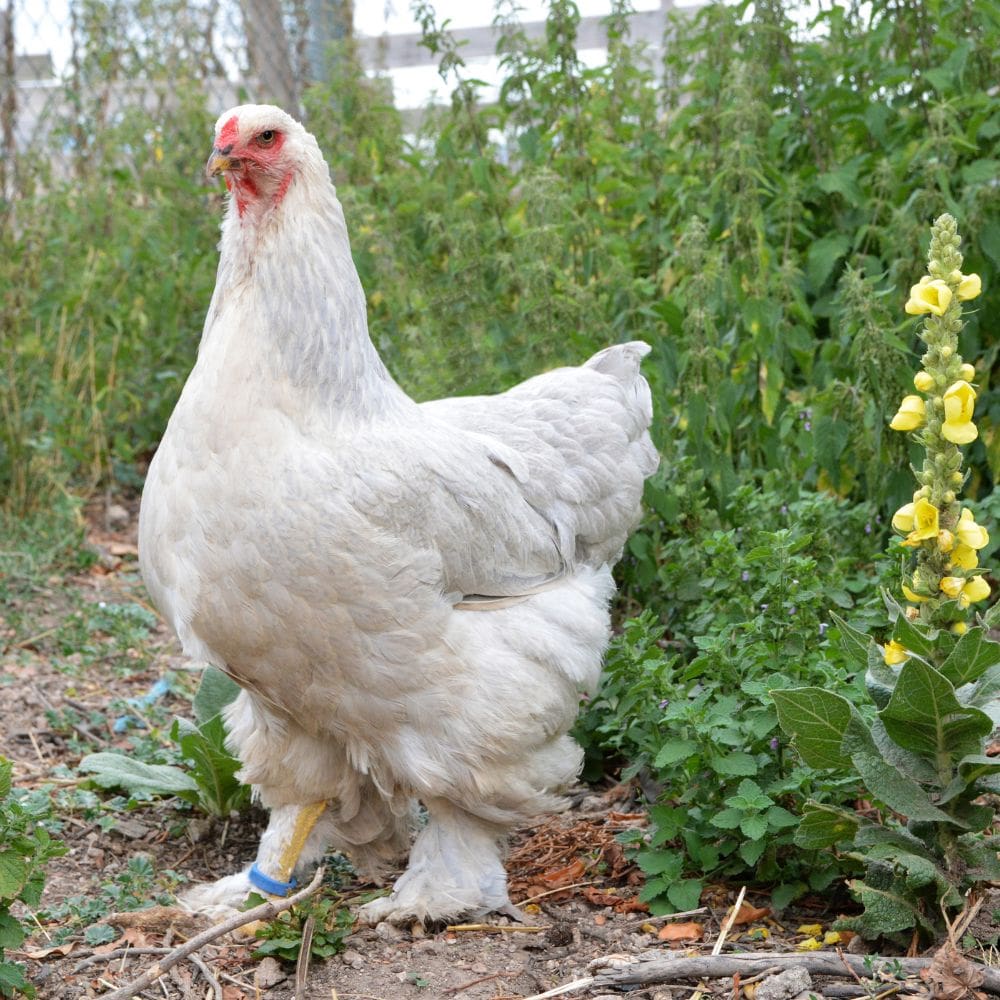
Brahma
Cornish
Buff Orpington
Malines
Maylay
Langshan
Barred Rock
Dong Tao
Jersey Giant
The Jersey Giant chicken is one of the biggest chicken breeds out there. However, they are more than just giant chickens. They are docile and mellow which makes them a great pet breed!
Jersey Giants are a heritage chicken breed that was developed in New Jersey in the 19th century as an alternative to turkeys. They’re good layers at 150 to 200 large eggs per year. The Jersey Giant egg color is brown.
How Much Does A Jersey Giant Chicken Weigh?
What Is The Heaviest Chicken Breed? The Jersey Giant! The roosters can weigh up to 15 pounds (they’re called Jersey GIANTS for a reason), with the black variety usually just a pound heavier than the white.
How Big Is A Jersey Giant Chicken?
This huge chicken breed is usually between 16 to 26 inches tall.
Cochin chickens are fluffy giants who are also one of the most popular chicken breeds. They’re friendly, cold-hardy, and lay eggs consistently. If you add one to your flock, you can choose between a full-sized Cochin or the bantam variety (Or get both. Definitely get both).
Standard-sized Cochins are about 5 pounds and are well-loved for their fluffy, soft feathers. They do have feathers on their feet, giving them a fun and unique appearance. These fluffers like to be handled, especially the bantam variety (which weighs about 2 pounds – perfect for children.)
All Cochins love treats, and you can expect about 160 eggs per year.
How Big Can A Chicken Get? Brahmas are well known because of a video of a giant rooster that went viral (owned by a man named Fitim Sejfijaj, based near Kosovo) and boasts the title of “Biggest Chicken In The World” (Guinness Book of World Records). Suddenly, everyone wanted Brahmas!
There are several different varieties of this chicken breed, including:
Light
Dark
Buff
Bantam
In terms of their size, there’s no difference between a Light and Dark Brahma, although the Bantam version won’t get very big.
When it comes to a Brahma vs. Jersey Giant, the Jersey Giant is usually bigger than a Brahma. However, both types of chickens make great pets.
The full-size Brahmas are an old breed that can be as tall as 30 inches (although this is rare and depends largely on the breeder). Many people love that Brahmas are feather footed. They’re also great egg layers, and lay up to 300 eggs per year.
How Big Is A Brahma Chicken? Some can grow to around 30 inches tall, however, this will vary from chicken to chicken and breeder to breeder. Because of its size, it’s sometimes called the “King of Chickens.”
Cornish
Developed in the UK during the 19th century, the Cornish chicken has a squat, square body and weighs in at around 10 pounds. They come in several varieties including:
Dark
White
White-Laced Red
Buff
Black
They’re also the parent stock of modern Cornish Rock chickens (also called Cornish Cross), which are bred to grow extremely quickly for their meat (Cornish Rock chickens also make docile pets, if you can keep them alive long enough. They tend to have heart issues).
The Orpington chicken breed is a heritage strain of dual-purpose chicken that was developed in the town of Orpington, in the UK. This type of chicken comes in several varieties, including:
Buff
Black
White
Blue
Chocolate Cuckoo (unrecognized)
Jubilee (unrecognized)
Lavender Columbian (unrecognized)
Columbian (unrecognized)
Lavender (unrecognized)
Chocolate (unrecognized)
Splash (unrecognized)
This docile and friendly breed is great for families because they’re calm around children and are laid back with confinement. They’re large, topping out at about 10 pounds.
As some of the best egg layers out there, you can expect about 280 eggs per year. You can read more about Orpingtons here.
Malines
Originating in Belgium in the 19th century, this chicken breed is one of the largest in the world (rivaling Jersey Giants for heft). The roosters can reach 12 pounds, and both males and females sport cuckoo-patterned feathers.
These chickens have a calm temperament, and don’t mind being picked up. They’re fair layers that produce 150 eggs per year. While there is a bantam variety, they’re not readily available.
Malay
What Is The Tallest Chicken Breed? The Maylay! While not as hefty as the Jersey Giant, the Malay chicken IS considered the tallest chicken breed in the world, reaching 30 inches in height. (Although the current “Tallest rooster in the world” record is held by a Brahma).
Developed in Europe from local chickens and birds from India and the Malay peninsula, they became popular because of their height. Maylay roosters weigh about 9 pounds, and the hens are fair layers. You can expect about 100 eggs per year. Today, they’re mostly kept for ornamental purposes.
Langshan
Langshan chickens originated in China, and made their way Westward in the 19th century.
They’re feather footed, and lay dark brown eggs. They’re a hardy black chicken breed that’s heat tolerant and is friendly towards humans.
They can weigh up to 9 pounds, and lay about 180 eggs per year.
Barred Rock
With sharply defined barred black and white feathers, Barred Rocks are an old American breed that’s been popular since the 1700s. The roosters weigh about 7 pounds, with friendly personalities. As great egg layers, you can expect about 280 eggs a year.
“Barred” refers to their feather coloring and is a dominant sex-linked gene. From the barred version, other types of Plymouth Rock chickens were developed (including white, buff, Columbian, and other combinations). You can read more about Plymouth Rock chickens here for the full list.
Dong Tao
Also known as the “dragon chicken,” Dong Taos have a very unique appearance. Unique is actually not a strong enough word. You should check them out here, you will not believe your eyes.
Weighing in at about 12 pounds, members of this breed sport enlarged legs and feet. They originated in Vietnam, where they’re prized for their meat. Their big legs make it difficult to lay eggs and move around, so they’re not kept for their eggs.
Other Large Chicken Breeds
Rhode Island Reds
Rhode Island Red chickens are one of the most popular and well known breeds available. Although they’ve fallen in popularity the past few years in favor of ornamental breeds, they’re very cold hardy, and aside from regular feed, water, and housing, they require little care. Roosters weigh approximately 9 pounds.
Note: There are two types of Rhode Island Red breeds: Industrial strains, which are bred for high egg production, and heritage strains, which trace their roots back to the first Europeans in America. The heritage strains tend to be bigger, while the industrial strains are bred with only egg production in mind.
Delaware
Delaware chickens are also popular and are very easygoing. They’re not the heaviest birds out there, topping out at about 6 to 8 pounds. They’re great egg layers, and you can expect about 280 eggs per year.
For those for whom patriotism is important, the Delaware Chicken is distinctly American. Bred and raised in the USA, it never gained the traction needed to find itself imported to other countries. To this day, it can only be found in the USA. That in itself makes this breed special.
Australorps are gaining popularity (especially black Australorp chickens) because they’re excellent layers. Originating in Australia, their parent stock is Orpingtons. Its name is a mixture of “Australia” and “Orpington.”
Males weigh up to 10 pounds, making them fairly heavy. The average hen will lay about 300 eggs per year.
What Is The Most Aggressive Chicken Breed?
While you will likely hear different opinions from different owners. I know the Silver Laced Serama rooster is fairly aggressive and not recommended for children.
Hens can become aggressive when they’re broody and their nest is disturbed. Roosters can become aggressive in the first year of their lives (when hormones kick in) and in early spring. However, most roosters chill out as they age.
It’s been my experience that almost any breed of chickens can have an aggressive bird, while most chickens are pretty friendly. Just like people, they all have their own personalities and quirks – so you never know. It also depends on how much they are handled and if they have someone (or something) taunting them regularly.
What Chicken Lays Largest Eggs?
Breeds that lay large eggs include:
Rhode Island Red
Barred Rock
Jersey Giants
Orpingtons
Langshan
Marans
Welsummer
Summary
As you can see, there are many large breeds out there. Some are easy to find, while others are not. One thing for sure is that if you are a chicken lover like me then you will most definitely want to try at least one or two of these largest chicken breeds. And, to be honest, I think you should . 😉