We all know chickens have beaks but do chickens have tongues? Well now, maybe you haven’t even thought of that question until reading this! Now, you MUST know! 

First, go look inside your chickens mouth…wait, that easier said than done 😆. But we have you covered. Backed by scientific facts and sprinkled with some fun chicken-related trivia, we’ve got the answer to this eggstra fun trivia question.
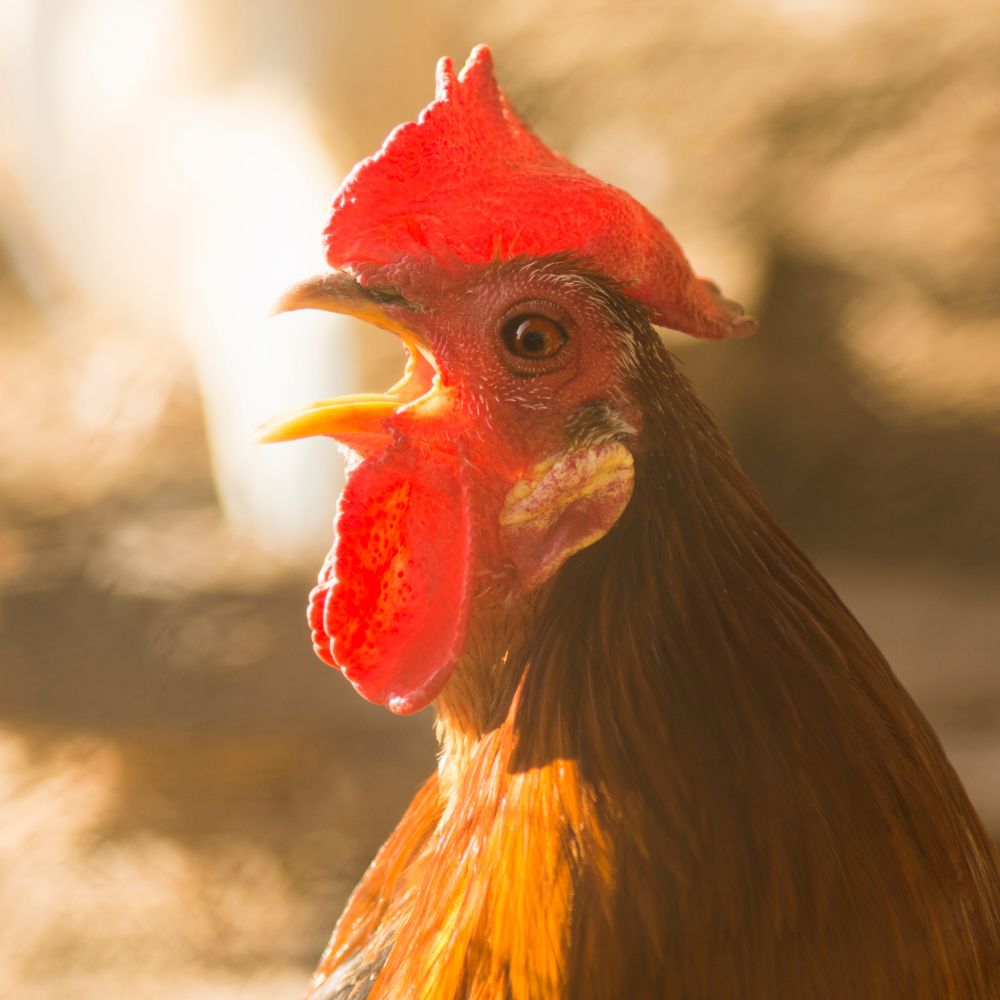
Rooster crowing

The Anatomy of (part) a Chicken

Before we address the question of chicken tongues, we might as well visit the basic anatomy of these birds. Chickens, like other birds, have unique features that suit their needs for pecking, foraging, and consuming their diet of bird delicacies (grains, bugs, seeds, grass, and more). 

Let’s start by talking about some of the chicken features we all take for granted. 

Beak

First up is the beak. The beak serves multiple functions, such as pecking, probing, and grooming. 

Chickens don’t have teeth, which means that chickens cannot chew their food. Instead, they use their beaks to pick up food items and swallow them whole or break them into smaller pieces by grinding the food with a muscular organ called a gizzard.

Combs and Wattles

On top of a chicken’s head, you’ll find the comb and wattles, which are fleshy, red structures. These serve as thermometers, helping chickens regulate their body temperature. 

Tongue

Now, let’s address the burning question: do chickens have tongues?

Drum roll please…yes, chickens have tongues! Nothing like a mammals tongue, but a tongue nonetheless.

They do have a very small triangular tonguelike impostor. This tiny little part of the chicken mouth is very hard to see and/or identify. It certainly doesn’t come out of the chickens mouth where we can see it on a regular basis, and there’s no chance your chicken will lick you! 

The tongue impostor has a sharp end on it and the rest has a rough texture like that of a cats tongue. This little mystery body part is necessary for poultry to swallow their food.

That being said, I’ll reiterate that it’s nothing like a normal mammal tongue (which is what we usually think of when we say tongue).

Fun Fact: Chickens also have something called a glottis.

A what what? A glottis is in the back of the throat at the base of the tongue. It’s role is gatekeeper – closing when the chicken swallows so the food doesn’t get into the windpipe. Hey, guess what? Humans have this cute little glottis too!

What About the Taste Buds?

While chickens lack a conventional tongue, they do have taste buds. These taste receptors are not located on the tongue but are dispersed along the walls of their mouth and esophagus. The number of taste buds are much lower than that of a human.

Chickens are not known to have a refined sense of taste, and their taste preferences are often geared towards bitter, sour, and sweet flavors. This ability helps them determine which foods are safe and which are not. 

Fun Fact: Chickens Taste the Rainbow

Chickens can see a broader spectrum of colors than humans, including ultraviolet light. This ability seems to play a role in their cuisine choices. Some have suggested that chickens use colors to aide in identifying nutritious foods.  

So, while chickens may not have tongues in the traditional sense, they have a unique way of experiencing their colorful world.

How Chickens Eat

Now that we’ve clarified the absence of a traditional tongue in chickens, you might wonder how they manage to eat and enjoy their meals. Chickens have been given a clever system for consuming food without the need for chewing.

The Crop

One essential component of the chicken’s digestive system is the crop. This is a specialized pouch located at the base of their neck. The crop acts as a temporary storage chamber for food, allowing chickens to consume food like ninjas and then digest it slowly over time. 

Fun Fact: Do Chickens Drink Like A Dog?

No. When chickens drink water they do not lap the water up with their tongues like your family dog. They scoop water up with their beaks. Imagine what a tiny scoop it would be given the size of a chicken’s mouth!

The Gizzard

The gizzard is another very important part of a chicken’s digestive system. It’s a muscular organ that literally grinds food up. Grit, and even small stones, that chickens ingest during pecking accumulate in the gizzard. 

The gizzard enables chickens to break down their food effectively without the need for chewing or a traditional tongue.

The Role of the Beak in Eating

The beak plays a crucial role in a chicken’s eating process as well. Chickens use their beaks to pick up food in a very precise manner. If you ever take the time to just sit ond observe a chicken (which I highly recommend), you will be amazed at their pecking abilities.If you do this, toss them some yummy protein rich treats so they can show you their skills.

They can peck at seeds, grass, grains, insects, and other food items with remarkable, award winning accuracy.

Fun Fact: Beak Temperature Control

One fascinating function of a chicken’s beak is its role in regulating body temperature. Chickens don’t have sweat glands, so they can’t sweat to cool down like humans do. In addtion to some of the more commonly thought of temperature regulators, like combs and wattles, they also engage in a behavior called “gular fluttering.” 

When a chicken is hot, it may open its beak and rapidly vibrate its throat muscles to promote heat loss through evaporation, somewhat like panting in dogs. This behavior helps them cool down in hot weather.

Chickens’ Communication and Vocalizations

While chickens might not have wagging tongues, they do communicate using various vocalizations. These distinctive sounds are an essential part of their social interactions and can convey a range of messages, from announcing the discovery of food to alerting the flock to potential predators.

Roosters, for example, crow to announce the dawn and establish their territory. Hens may make soothing purring sounds when they are content or loud cackling sounds when they lay an egg. simply put, they make a wide range of noises.

These vocalizations are integral to their flock dynamics and can even help identify individual birds. A very fun read: Uncovering The Mystery – Why Do Roosters Crow?

Fun Fact: Chickens Have Excellent Hearing

Chickens have a keen sense of hearing. They can detect a wide range of sounds, including high-pitched noises that are inaudible to humans. This acute hearing ability helps them stay alert to potential threats in their environment. It also explains why chickens are so hard to sneak up on. 

Summary

In the world of backyard chickens and biology, the question of whether chickens have tongues might seem perplexing. The answer is yes they do, but no they aren’t like our tongues. 

Will your cantankerous Millie stick her tongue out at you when she’s mad or playful? No. She definitely doesnt’ have that kind of tongue. But do they have a tiny little tonguelike feature that helps them eat? Yes. Yes they do.

Chickens are so cool. They are truly fascinating pets that make the world a better place. And that, my friend, is one of many reasons why we keep chickens!

Want to read more indepth about chicken anatomy, inclduing the tongue? Check out this articlewe came across: A Review of Avian Anatomy
Additional Reading

Among the myriad of questions we chicken lovers ask, one query stands out as particularly amusing: Do chickens fart? 

It’s a question that has the power to both tickle our funny bone and ignite our inquisitiveness. So, hop on the flatulence investigation bus and be sure to get a front row seat! 

In order to properly understand this topic, we must first talk about all the sciency stuff that digestive tracts are made of. But don’t run off, this is a pretty cool science lesson if I do say so myself. 

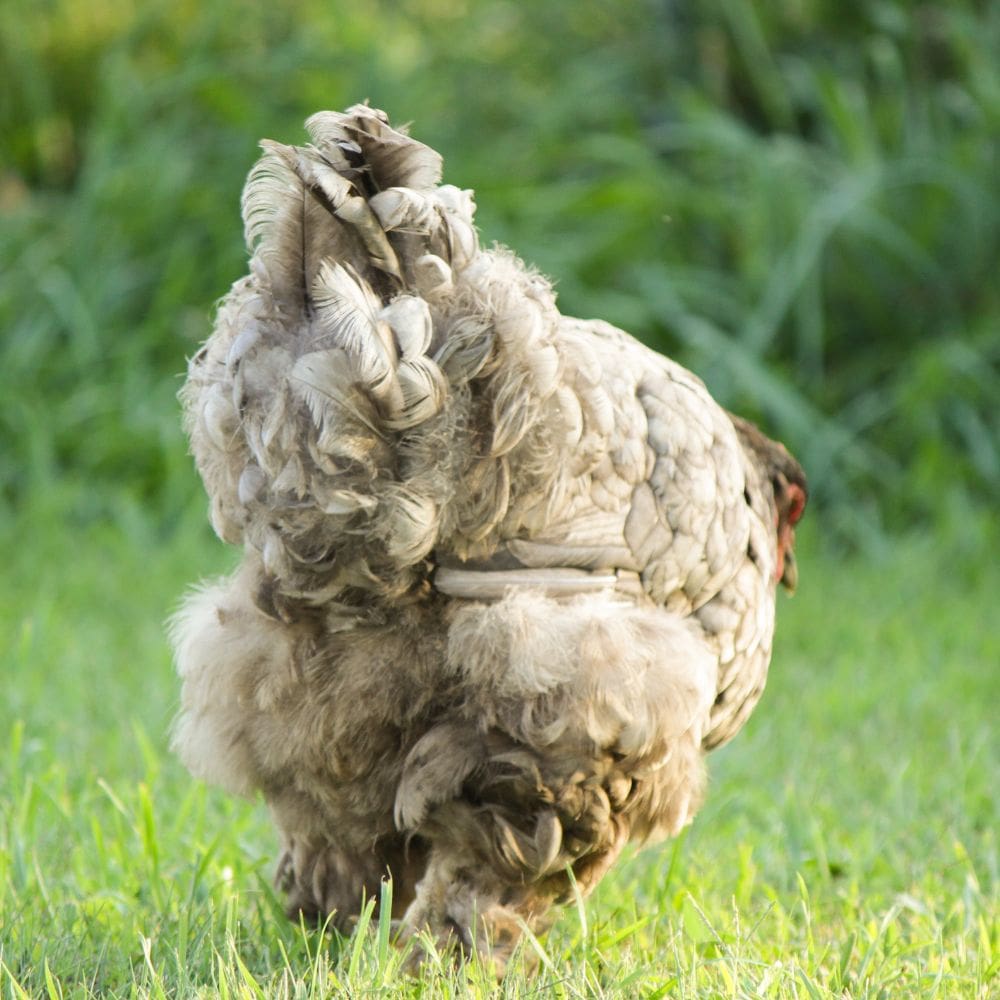
The backside of a light blue chicken

Chicken Digestion

Before we embark on our exploration of whether chickens fart…pooter scooter, cut the cheese, or whatever name you call it, it’s essential to understand how these feathered creatures process their meals. Chickens possess a digestive system that differs substantially from humans (or other farm animals).

The journey of digestion begins in a chicken’s beak, where they peck at grains, seeds, grass, and insects. Following this initial maceration, the food moves into the chicken’s crop, a temporary storage compartment along the esophagus. From there, it proceeds into the stomach, divided into two sections: the proventriculus (similar to our stomach) and the ventriculus, or gizzard (a muscular grinding chamber).

Unlike mammals, chickens lack teeth for chewing, relying instead on a specialized organ called the gizzard. This muscular pouch mechanically grinds and pulverizes their food. You might want to read Do Chicks Need Poultry Grit?

After that, it’s on to the small intestine and then to the large intestines.

Another interesting read is Chicken Anatomy 101.

Fermentation in Chickens

Now, let’s talk about the magic that occurs within a chicken’s digestive system. Chickens are incapable of breaking down food material on their own (as stated above), relying instead on a symbiotic relationship with microorganisms, including bacteria and protozoa. These microorganisms take residence in the chicken’s ceca, paired pouches near the end of their digestive tract, and play a pivotal role in the process of fermentation.

During fermentation, these tiny tenants produce gases, such as carbon dioxide and methane, as byproducts of their metabolic activities. These gases, generated during the microbial ballet within the chicken’s digestive chambers, are essential for the chicken’s digestion, aiding in the extraction of nutrients from their food.

More On Gas

So, after this snapshot of chicken digestion, the central question remains: Do chickens fart? Well, it all comes down to how you define flatulence.

Traditionally, flatulence involves the expulsion of gas from the digestive system through the rectum. Humans and cows have specific exit routes for gas, allowing for the audible and sometimes fragrant phenomenon we call a fart. Chickens, however, lack a rectum or an anal opening as mammals possess (this is so embarrassing to talk about, isn’t it?).

Chickens release gas through their cloaca, a single multipurpose opening used for excretion, reproduction, and egg laying. This versatile cloacal vent serves multiple functions, which means that when gas escapes, it usually lacks the comedic flair of a human fart. Instead, it is a discreet and integrated aspect of their digestive process.

I do have to tell you something though. This does not mean that chickens NEVER make a farting sound. I’ve heard it with my own ears once or twice, so I’m a believer! 

Chicken Poo

When chickens release gas, it typically occurs during their natural process of excretion. Gas produced during fermentation in the ceca exits alongside feces as part of the overall digestive process. This explains why chicken droppings sometimes contain tiny gas bubbles (or air bubbles), a sign of excess gas release.

While chicken flatulence may not (usally) manifest in the familiar manner of human flatulence, it undoubtedly plays a pivotal role in their digestion, enabling the efficient extraction of nutrients from their food. In essence, chickens have their own version of “intestinal melodies.”

Addressing Odor Concerns

The topic of odor in conjunction with chicken gas is one that raises eyebrows. While chickens don’t emit resounding farts, they can produce gases that contribute to the distinctive scent of their poo.

The foul smells of chicken manure can be attributed to various gases produced during digestion, including ammonia, hydrogen sulfide, and volatile organic compounds. These compounds can indeed give chicken manure its unmistakable and sometimes pungent aroma, especially when concentrations are high.

Chicken odors may increase if your flock is regularly eating vegetables or dairy products. They will chow down almost anything (I often compare them to pigs), but some things cause more odor than others. The ingreidents of their diet does make a difference.

For chicken lovers managing the odor of chicken manure is a critical concern. Adequate ventilation, well-planned waste management systems, and the maintenance of clean and dry bedding all serve as strategies to mitigate the odor, improving the living conditions for these feathered friends we love so dearly.

Tips To Help Your Chickens Digestion

Separating Fact from Fiction

Chickens have long been the subject of myths and misconceptions. The question of chicken flatulence is just one among many curiosities surrounding these captivating birds. As we venture into their world, let’s dispel a few other poultry-related myths:

  • Chicken Intelligence: The notion that chickens are unintelligent, often labeled as “bird-brained,” is far from the truth. Scientific research has revealed that chickens possess complex cognitive abilities, including problem-solving, social learning, and even the capacity for self-recognition in mirrors.
  • Headless Chickens: Tales of headless chickens running around the chicken coop are not myths but actual occurrences, albeit with a logical explanation. After decapitation, residual neural activity in the spinal cord can lead to erratic post-decapitation behavior. However, perpetual motion isn’t part of the equation. Although there is always the exception to the rule: How Mike The Chikcen Lived Without A Head (this is not normal)
  • Egg Worries: The belief that consuming too many eggs raises cholesterol levels has been debunked (depending on the source). Eggs are a rich source of protein, vitamins, and minerals and can be a healthful component of a balanced diet when consumed in moderation.

Summary

So, do chickens (both hens and roosters alike) fart? In their unique way, the answer is yes. Chickens produce gas as a fundamental part of their digestive process, and it exits alongside their feces through the cloaca. 

Although it lacks the theatricality of human flatulence, it’s a natural and indispensable aspect of their digestion, enabling them to efficiently extract nutrients from their food.

The next time you look at your sweet hen Gertrude, you will know that she is not always a lady of manners. 

These feathered creatures play essential roles on our farms and in our backyards (and sometimes on our tables), but do you know the facts that unravel hen vs chicken? What about pullets and cockerels…where do they fit in?

Maybe you’ve never thought about it, or maybe it’s kept you up all night! Either way, let’s take an informative journey to gain a better understanding.

I recall when I learned (as an adult, mind you) the difference between a heifer and a cow and a steer and a bull. It was an epiphany that I now feel privileged to know! I hope the same is true for you regarding chickens (or hens) after reading this fun and informative article.

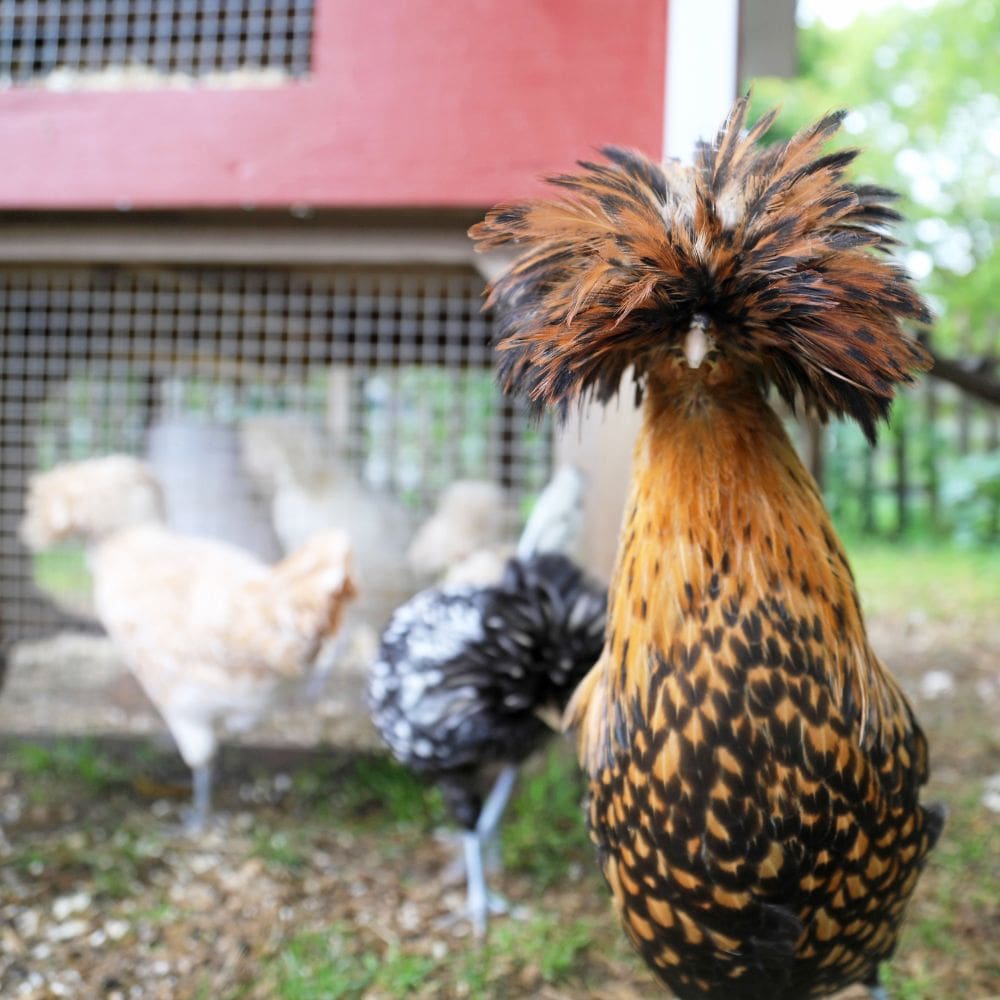
Polish chicken looking adorable with coop and other chickens blurred in background

Hen VS Chicken – What is the Difference?

The big question. The answer is fantastic if I do say so myself. Basically, in the simplest form, a chicken is the “kind” that lumps all the differences into one pocket. When I think of hen vs chicken, I automatically think female. But that is not the case.

A hen is usually considered a mature female chicken that lays eggs. It’s sort of like a heifer and a cow in the bovine world. A heifer is a female Bovine that has not yet given birth. A cow, on the other hand, is a mature Bovine that has given birth.

So there you have it. But what about pullets, cockerels, and roosters? Where do they fit in? Read on!

Hens – The Laying Queens

Meet the leading ladies of the coop. These are not just girls or teeny boppers. They are the “women.”

Hens, as I mentioned above, are basically female chickens that have reached maturity. This is often thought to occur between 6 months and 1 year of age. Once they start laying eggs they can safely fit into this description and new title.

Known for their nurturing instincts and often falling into the broody hen category, they diligently tend to their eggs and chicks, ensuring their well-being and safety.

Hens typically lay eggs consistently throughout the year, making them the primary source of those delightful ovals of nutrition we enjoy at breakfast.

Want the best eggs ever? If you answered yes, then you should try Best Eggs Ever! Bundle: 8 Products For Your Best Eggs Ever!

Chickens – The Diverse Crew

Chickens, on the other hand, is a more general term that encompasses both male and female members of the flock. They come in various breeds and showcase a wide range of feather colors and patterns.

While not all chickens lay eggs, because the label encompass both genders, they contribute to the social dynamics of poultry and add diversity to the barnyard scenery. Obviously, you need both male and female (chicks and pullets, cockerels and roosters) to make the chicken world go round. 😊🐔

Chicks – Baby Chickens

Chicks are easy to explain. They are simply baby chickens. Both male and female alike – the word chick covers it all.

If they are newly hatched and still in the adorable state, then it’s safe to call them a chick! Baby chicks are hard not to love and make the world a better place for sure.

Pullets – The Future

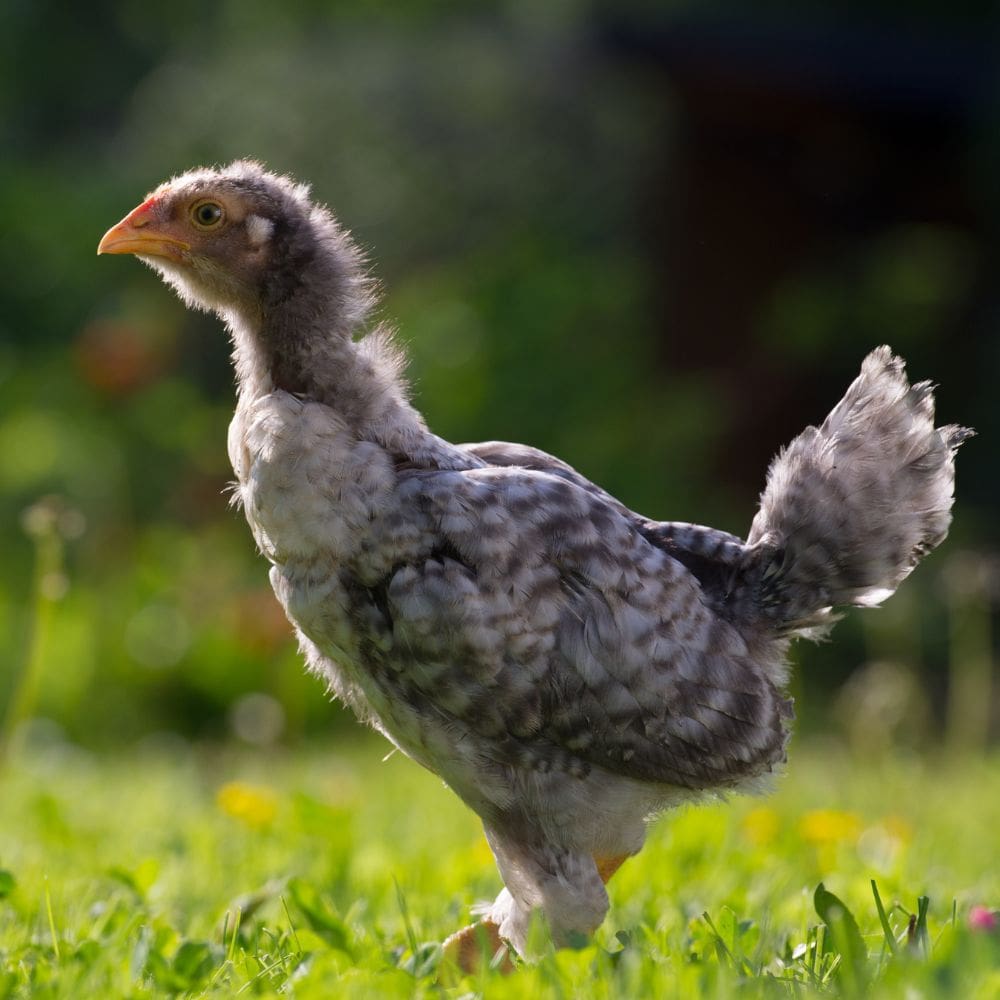
Pullets are young female chickens that are yet to lay their first eggs. They represent the transition between chicks and mature hens. Teenagers, if you will (and you will…if you know how awkward pullets can be as they are physically transitioning into adulthood).

As pullets grow, they undergo hormonal changes, and by around 16 to 24 weeks of age, they begin their egg-laying journey. It’s an exciting time as they develop into full-fledged egg-layers and assume their roles within the flock.

Pullet standing on green grass

Cockerels – The Adolescents

A cockerel is a young male chicken that is still maturing. They might not be ready to take on the responsibilities of full-grown roosters yet, but they’re on their way. This category may also be less noticeable by just taking note of physical characteristics.

As they grow, you’ll notice them displaying signs of assertiveness and dominance as they figure out their place in the pecking order. When they start mating, or at least by one year of age, they can graduate to “Roosterville.” This, unfortunately, is often when they start exhibiting some aggression. The level of aggression can vary by breed of chicken, as well as be affected by how much you handle him from birth.

The grand tip of the day is to keep your cockerels (and all other chickens) friendly by treat-training them. This is simple to do but the rewards are great. Use a nutritious chicken treat, like Chicken Candy, and make friends with your flock. They will quickly and easily learn to love you, follow you, and be your best friend ❤️. Plus they are healthier and happier overall if you feed them good ingredients.

Roosters – The Crowning Leaders

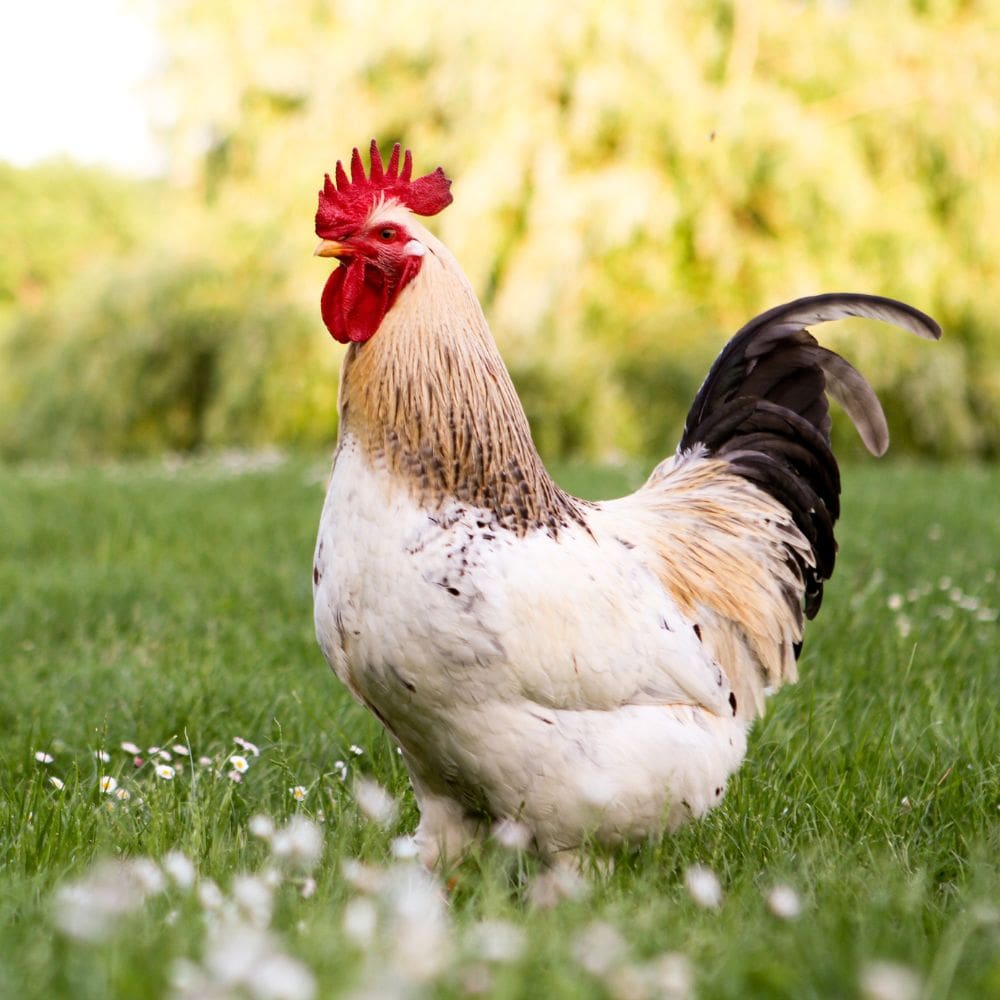
Roosters, mature male chickens, are crowned with vibrant plumage and distinct tail feathers. They usually have more pronounced wattles and combs. They’re not egg-layers like hens, but their roles are equally essential in the coop.

Roosters serve as protectors and guardians of the flock and they have spurs. These masculine chaps also crow. Their crowing isn’t just a morning wake-up call; it also serves as an alarm to warn the hens and chickens of potential dangers.

White, brown and black rooster standing on greene grass. Hen vs chicken

What Is A Capon?

It’s a word we rarely hear (and a situation we rarely see), so it’s no wonder you are asking. A capon is a male chicken that has been physically made to not be able to fertilize an egg (aka produce offspring). Essentially it’s like a steer (a bull fixed to be unable to reproduce).

A Capon is basically a rooster that is just kept as a pet and stripped of his manhood 😣. It’s for a good cause, however, as they prove to be less aggressive than an intact rooster. But, finding a vet that can, or will, do this might be very challenging.

Hen vs Chicken Summary

Will you be chastised by the chicken community if you don’t get all the labels correct? Heck no. You can say chicken or hen and no one will care, but it is nice to know the whole story isn’t it?

The next time you find yourself in the presence of these wonderful fowl, however, take a moment to appreciate the unique roles they play. From the egg-laying queens to the crowing leaders, each member of the crew brings something unique to the barnyard community.

Hens and chickens are more than just farm animals; they are oftentimes our best friends and the hardest workers on the land.

Picture this – It’s a serene evening on your rural homestead, and your prized flock of chickens is settling in for the night. You’ve taken all the precautions to protect them from predators, but you can’t help but wonder – do possums eat chickens?

This question has perplexed many backyard chicken mamas (and papas), and in this blog post, we’re going to dive into the world of possums and their dietary habits to separate fact from fiction.

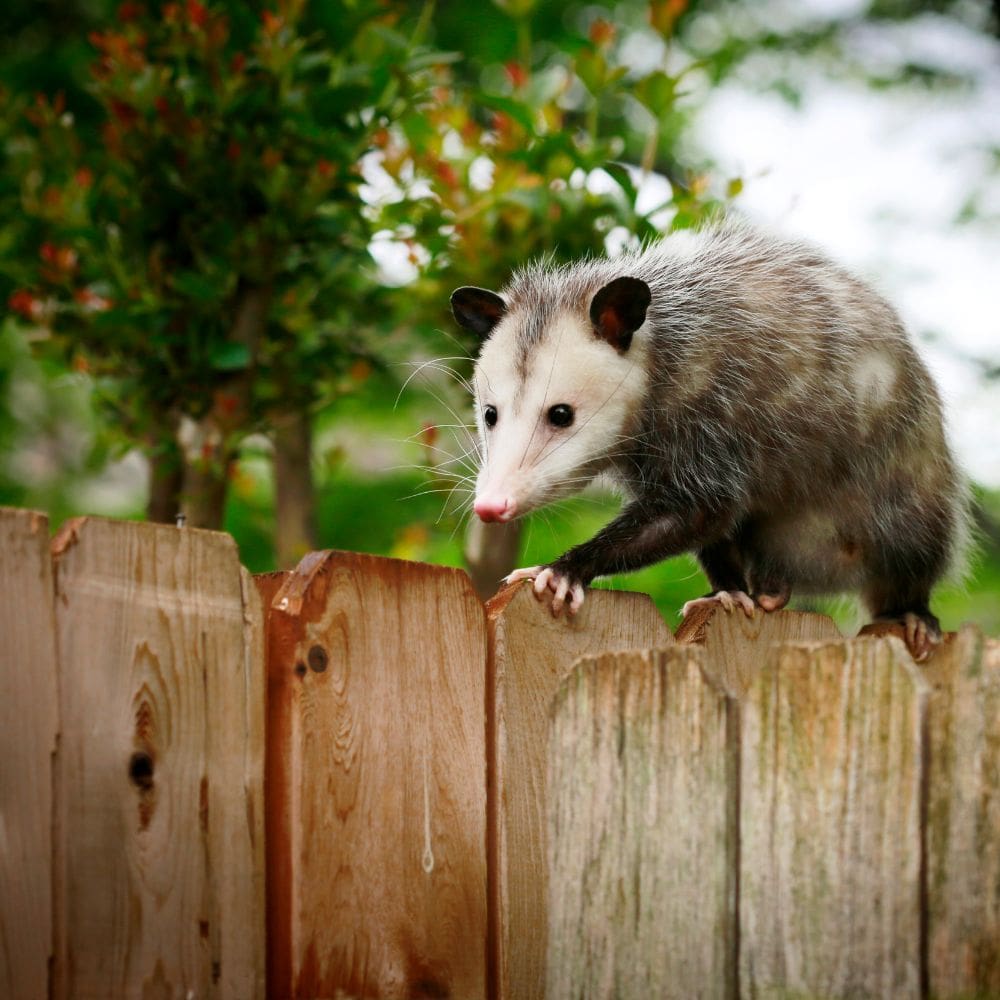
Possum Climbing fence

Possums: The Nighttime Visitors

Before we get into the nitty-gritty of possums and their culinary preferences, let’s take a moment to understand these interesting creatures. First and foremost, let’s just admit it – they are so ugly their cute! Baby Possums are especially adorable in their own weird way. Okay, okay…they have beady black eyes and a hairless tail and these things are hard to get over. They make up for it with their handy opposable thumbs.

Now, let’s get to the facts. Possums, also known as opossums, are marsupials that are native to North and South America. They are known for their adaptability and nocturnal habits, often making appearances in the dark of night. This is precisely the reason they often end up as road kill.

Possums are omnivorous, meaning they eat a variety of foods. Their diet primarily consists of fruits, vegetables, insects, small rodents, and even carrion (dead animals). This broad diet makes them opportunistic feeders, and they’re always on the lookout for a meal.

Possums and Chickens: The Myth

The notion that possums have a particular appetite for poultry has been circulating for quite some time. Many backyard chicken keepers worry about their feathered friends falling victim to these nocturnal creatures. But is this concern based on fact, or is it more of an urban legend?

To set the record straight, possums are not inherently chicken predators (they aren’t like raccoons). While they are opportunistic eaters, they typically don’t seek out live chickens as their primary food source. Instead, they are more likely to feed on insects, small mammals, fruits, and vegetables. That said, there are instances where possums might pose a threat to chickens, and we’ll explore those scenarios next.

When Possums and Chickens Collide

Although possums may not have chickens at the top of their menu, there are situations where they can become a concern for chicken keepers. Here are a few scenarios where possums and chickens might cross paths:

  • Nesting Material: Possums are known to raid chicken coops for nesting materials like straw, hay, or feathers. While they’re not targeting chickens themselves, this behavior can disrupt the comfort of your flock.
  • Eggs: Possums have a keen sense of smell and might be drawn to the scent of freshly laid eggs. If they find their way into your coop, they could pilfer your precious eggs.
  • Chickens in Distress: Possums are opportunistic feeders, and if they happen upon a sick or injured chicken, they might take advantage of the situation and consume it.
  • Overpopulation: In areas with high possum populations and limited natural food sources, they may become bolder and explore chicken coops for alternative food options.

Protecting Your Chickens from Possums

Now that we’ve established that possums are not chicken killers by nature but can still pose some threats, let’s discuss how you can protect your feathered friends from these nighttime visitors.

  • Secure Coop Design: Ensure that your chicken coop is sturdy and well-constructed. Use strong locks and latches to keep possums from gaining access to your chickens or their eggs.
  • Use Motion-Activated Lights: Installing motion-activated lights around your coop can startle possums and other potential predators, deterring them from approaching.
  • Close Doors at Night: Possums are primarily nocturnal creatures, so make sure to close the coop door securely at night to keep your chickens safe.
  • Remove Attractants: Regularly clean up leftover food, spilled grain, pet food, and scattered eggs to reduce the appeal of your coop to possums.
  • Employ Traps: If you suspect possums are frequenting your coop, you can set humane traps to catch and relocate them away from your property.
  • Use Guardian Animals: Consider using guardian animals like dogs or geese that can deter possums and other potential threats from entering your chicken area.

The Bottom Line

In the grand scheme of chicken predators, possums are not the most significant threat. While they might occasionally indulge in chicken coop offerings like eggs or nesting materials, they are not natural chicken killers. Proper coop management and predator-proofing measures can help keep your chickens safe from possums and other potential threats.

Remember, possums play a vital role in the ecosystem by controlling insect populations and cleaning up carrion. Some sources say that they can eat up to 6,000 ticks a year. Plus they eat slugs, snails, mice, and other pests. Based on that, you might rethink those bad thoughts you have about these creatures.

Fun Facts

  • They have very sharp teeth (50 of them!)
  • Possums are the only marsupial in North America (animals with a pouch where they carry their young)
  • Their poop pretty much looks like dog poop
  • They love cat food
  • Eating cockroaches is something they do (yuck…but helpful)
  • A possum bites larger prey in the neck (cute turns vicious)

Summary

So, do possums eat chickens? The answer is not a straightforward “yes” or “no.” Possums are opportunistic feeders, and while they may not be chicken predators by nature, they can become a nuisance to backyard poultry keepers in certain situations.

Additional Chicken Articles

There are some truly captivating creatures that we can enjoy, and one of these is the Welsh Harlequin duck. Of course, I’m a sucker for waddling ducks from the start. So, keep that in mind.

Many poultry and fowl have mysterious beginnings that we can only piece together. The Welsh Harlequin, however, is a different story. It’s fun to be able to actually know the history from time to time.

Let’s learn a little about this feathered gem. 

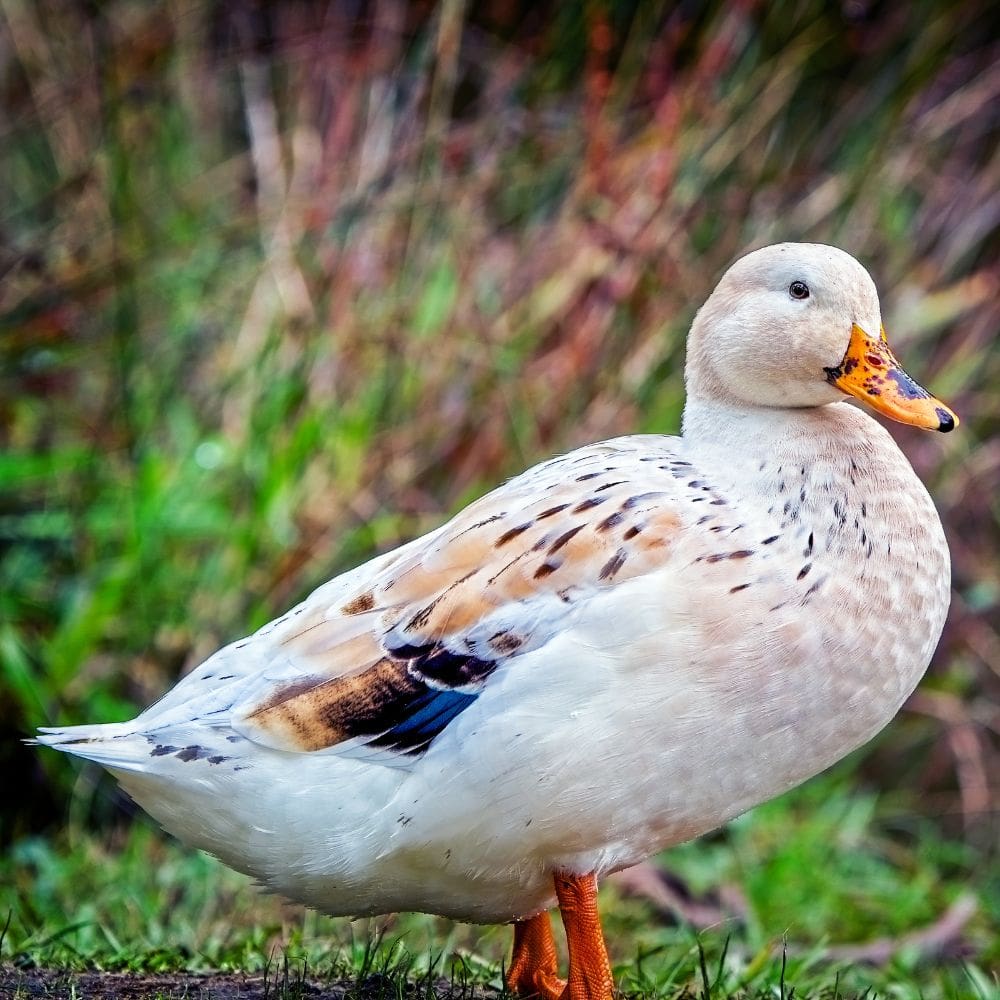
Welsh Harlequin Duck with blurred background

Welsh Harlequin Duck History Snippet

The Welsh Harlequin duck, or scientifically known as Anas platyrhynchos domesticus, hails from the beautiful land of Wales, United Kingdom. 

This is a fairly new breed so we know its roots. Back in 1949, a guy named Leslie Bonnet came up with the brilliant idea of creating a duck breed that was not only easy on the eyes but also could pop out some serious eggs.

He used two lighter-colored Khaki Campbell ducks to start off this duck development endeavor. His experiment in selective breeding gave birth to the Welsh Harlequin.

This beauty was brought to the United States in 1968. It was recognized by the American Poultry Association Standard of Perfection in 2001.

Welsh Harlequin Appearance

Let’s start with the most obvious – their stunning plumage. Simply put a beautiful bird.

The females, in particular, have the most unique feather patterns in my personal opinion. Welsh Harlequin drakes have more of a Mallard appearance with a dark head with a green sheen, a white collar, and chestnut brown shoulders. Females, on the other hand, are a frosted white with darker rust and reddish-brown colors peeking through and throughout.

These ducks are the Goldilocks of the duck world – not too big, not too small, but just right. They’ve got a sleek and streamlined body, a pretty long neck, and an oval head that’s just the right size. And when they move, it’s like watching a ballet on water!

Something ultra cool about these fancy-named ducks is that the sexing accuracy is quite high. This is due to their bill color. The males have darker bills and the females have lighter bills with a dark spot at the end of it. It’s noticeable right after hatching but very quickly changes.

Welsh Harlequin Personalities

Welsh Harlequins are known for their laid-back and friendly vibes, making them a perfect fit for backyard bids. They’re social butterflies who get along swimmingly with other ducks and feathered friends. Human interaction is especially possible if you tempt them with protein-packed treats like these.

This calm demeanor makes this breed land in the great pets category, and that’s a win-win for them and you. They are also excellent foragers which cuts down on feed bills and helps you keep the insect and weed population down. Nice.

Egg Production

Leslie Bonnet’s experiment was a hit! Adult females are egg-laying champs, cranking out around 220-300 white or cream-colored eggs each year. That’s a lot of omelets! And custard cakes. And deviled eggs. And….you get the picture.

Let’s face it, having cute ducks waddling around is great – but from a practical duck-keeping lense it’s also important to have a useful pet (and not just a yard free-loader). Many “duckketeers” claim that these fun-loving ducks are a better egg producer than the Khaki Campbell. You can be the judge of that.

How To Care for Ducks

  • Provide LOTS of fresh, clean water
  • Ensure they have suitable housing (a coop that is predator proof)
  • Offer your flock high quality, high protein feed to meet all of their dietary requirements

Saving the Day (and the Ducks)

Unfortunately, these cool ducks have faced a bit of a rough patch, with their numbers dwindling over the years (even though they haven’t been around that long). Like many other unique breeds, they’re now on the endangered list, with the American Livestock Breeds Conservancy giving them the “threatened” status. But don’t worry, there’s hope!

If you’re looking to help out our feathered friends, here’s how you can make a difference:

  • Pick Your Duck Breeder Wisely: If you plan on raising ducks (Welsh Harlequins), be sure to buy from breeders who are all about preserving this awesome breed.
  • Support the Heroes: Organizations like the ALBC are on a mission to save endangered breeds. You can pitch in by donating or becoming a member – every bit counts!
  • Share the Love: Spread the word about Welsh Harlequin ducks and the importance of preserving these unique breeds. Encourage fellow bird lovers to get involved in the conservation action.

Summary

The Welsh Harlequin duck is a real treasure in the world of waterfowl – it’s got the looks, the personality, and the egg production to prove it. But with their numbers dwindling, it’s up to us to make sure they stick around for future generations to enjoy. So, this means we get to raise more ducks! Woo-hoo!

I’m always up for another reason to have more feathered friends! 🦆🌟

With the Olive Egger chicken the color of eggs might not be too surprising (the name is a pretty obvious hint), but do you know the genetics behind the birds? This article will explain the breeding combinations, plus some fun facts.

Olive Egger chickens are funky, spunky, classy, and sassy. They are also unpredictably predictable (read on to find out what I mean). If you are a chicken lover and you haven’t experienced an Olive Egger chicken, you need to get your chicken math calculator out and get to work!

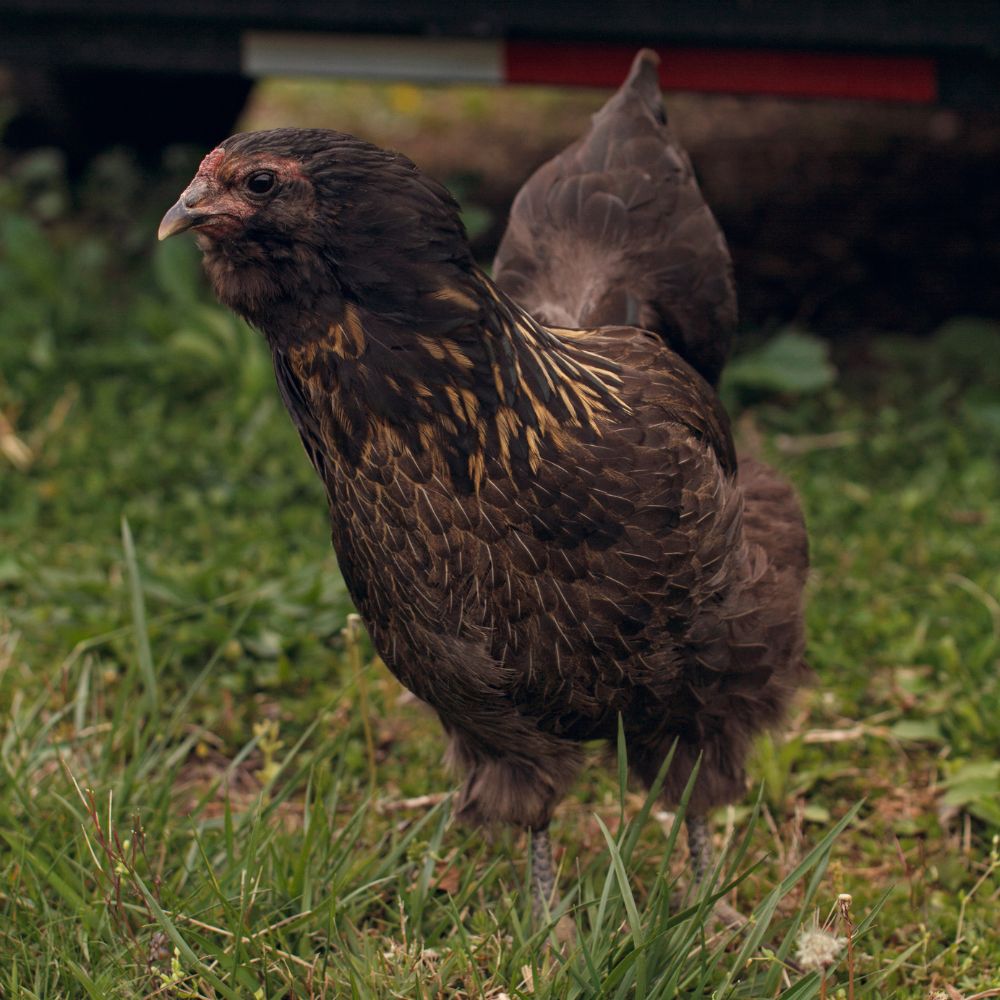
Olive Egger chicken standng on grass

What’s A Olive Egger Anyway?

An Olive Egger chicken is not really a breed, and it’s not recognized by the American Poultry Association. It’s a mix, or hybrid, of certain breeds that result in (you guessed it)… olive-colored eggs.

Olive Egger Chicken Breeding Combinations

There are several different combinations that can result in an Olive Egger chicken. The key factor is that one parent chicken must be a dark brown egg layer and the other parent chicken must be a blue egg layer. Here are some examples:

  • Ameraucana & Marans
  • Ameraucana & Welsummer
  • Legbar & Maran
  • Araucana & Barnevelder

You can find article links to these breeds at the end of this article if you want to learn more about them.

Olive Egger Chicken Appearance

What does an Olive Egger chicken look like? Since they can be created by breeding many different kinds of breeds (one dark brown egg layer and one blue egg layer), there is only one common trait that is guaranteed – and that is the color of their eggs. Olive is the color but in reality, it can vary with many shades of green.

Beyond the color of eggs, these birds can have some pretty unique looks. Some with muffs, some without. Some with pea combs, some with rose combs. Perhaps one will have feathered legs or one will have feathered feet, and others will not. Maybe some will have beards or crests, and some will be beardless and crestless. It’s like a surprise grab bag and boy is it fun and it can be funky at times.

Most have darker shades of plumage, but some will surprise with lighter colors. Often times they can be confused with Easter Egger chickens depending on the breeds that were used. In fact, I had (what I thought was) an Easter Egger that eventually showed her true colors (she laid olive colored eggs).

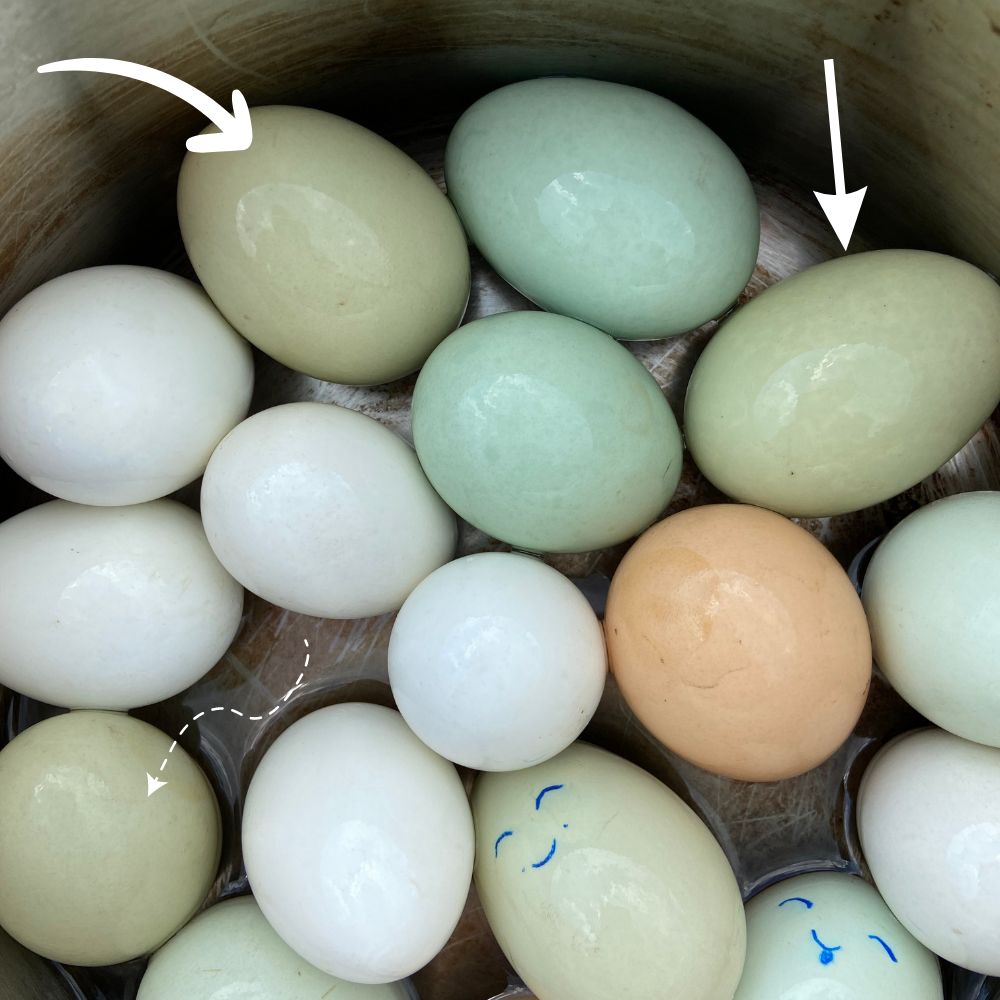
Close up of many different colored chicken eggs with arrows pointing to olive colored eggs

Olive Egger Egg Production

They do lay eggs and they are pretty good layers. However, as with all facts about Olive Eggers – this varies greatly because of the makeup of their genetics. Since they are a hybrid and can be from several varieties of breeds, the outcome is not exactly predictable.

It’s safe to say that an Olive Egger chicken will lay approximately 180 to 200 small to medium (and sometimes large) sized, lovely olive green eggs per year. But not just olive green eggs (although that’s the goal), but also light green eggs, dark green eggs, brownish green eggs, and in-between-all-that-eggs. 😊Oh, and sometimes blueish-green eggs.

It’s important to raise your flock with good nutrition from the start. Be sure your chick starter is a quality feed that has the right amount of protein. And when they graduate (transition) to layer feed, it’s also very important that the feed you use is full of good ingredients and not full of fillers.

In case you didn’t catch it, I’ll say it again (because it’s THAT important) – feed your flock quality ingredients! You can’t feed them junk and expect good health and strong egg production. And if they aren’t free-ranging, they need additional support like herbal oyster shells and grit.

Now, go fill your egg cartons with colorful and strong eggs!

Olive Egger Temperament

In case you haven’t noticed the theme yet, there is no predictable outcome when it comes to Olive Eggers (except for maybe the color of their eggs). While it’s true there’s a certain set of characteristics that you will surely see, some things like personality can be a bit unpredictable.

The temperament of Olive Eggers greatly depends on which breeds were used to create the ones you have (or the ones you run out and buy after reading this article). Generally speaking, the breeds used are quite friendly. Some are a little more skittish or sassy, but none of them (again, generally speaking) are angry birds (or mean birds).

Most folks who own Olive Eggers report them as being fairly docile and amicable birds. A certain percentage will say they can be a little shy, but there’s no way to tell how they were raised (which plays a big role).

As with most all chicken breeds, the more you handle them, love them, and treat train them – the friendlier they will be. If you want to go overboard, you can slap a chicken diaper on your Olive Egger, invite them inside your house, and end up with a dog-like chicken pet. 😉😆 We may laugh, but some people do this!

Olive Egger Size

Again, this varies greatly depending on the combination of breeds used to develop the strain of Olive Egger you have.

Hens will usually fall in the 5 to 7-pound range and roosters in the 6 to 8 lb range (as with all poultry males, they are usually a bit bigger than the females). It will depend on the parents (I always crack a smile when I refer to chickens as parents). ❤️🐔

Are Olive Eggers Broody?

Yes. Usually, they are broody because most of the breeds used to develop them are also broody. If you want a hen that will faithfully sit on eggs and hatch out a bunch of cute little chicks, then an Olive Egger fits the profile (most of the time, not always).

Not sure if you want a broody hen or not? There are things to consider. For one thing, broody females become angry birds sometimes (while they are sitting on eggs). They want to protect their little sweeties, so it makes sense. But there are a lot more things to consider when you let any hen go broody. Here is an article to help you: Broody Hen – To Help or Hinder, You Decide

Whether you let your hen hatch chicks or you buy chicks, there’s one thing that is completely predictable in every way – an Olive Egger chick is adorable and loveable, and irresistible.

How Are Olive Eggers Predictable Yet Unpredictable?

Well, if you read this whole article up to this point you will see that everything from color to size to personality depends. It depends on the parent breeds used as the winning combination to make your Olive Egger. It further depends on the traits and characteristics of the parent birds.

So it’s safe to say that it’s very predictable that the outcome is unpredictable. Yet, there is a certain range of characteristics you can count on, the most important one being the egg color.

How to Care For Olive Eggers

  • Provide plenty of fresh, clean water every day. Dirty water can make chickens sick. Don’t risk it, refresh it every day and keep the waterers clean.
  • Feed quality high protein feed (check the ingredients out in this feed).
  • Supplement your chickens with vital vitamins and minerals
  • Keep your chickens safe from predators in their coop (here’s how)
  • Give calcium for strong eggshells

Summary

If you like the thought of a surprise chicken grab bag with a really good shot of having olive-colored eggs, then you are going to like Olive Eggers. It will spunk up your egg basket and provide joy in the process. Enough said.

Additional Article About Related Breeds