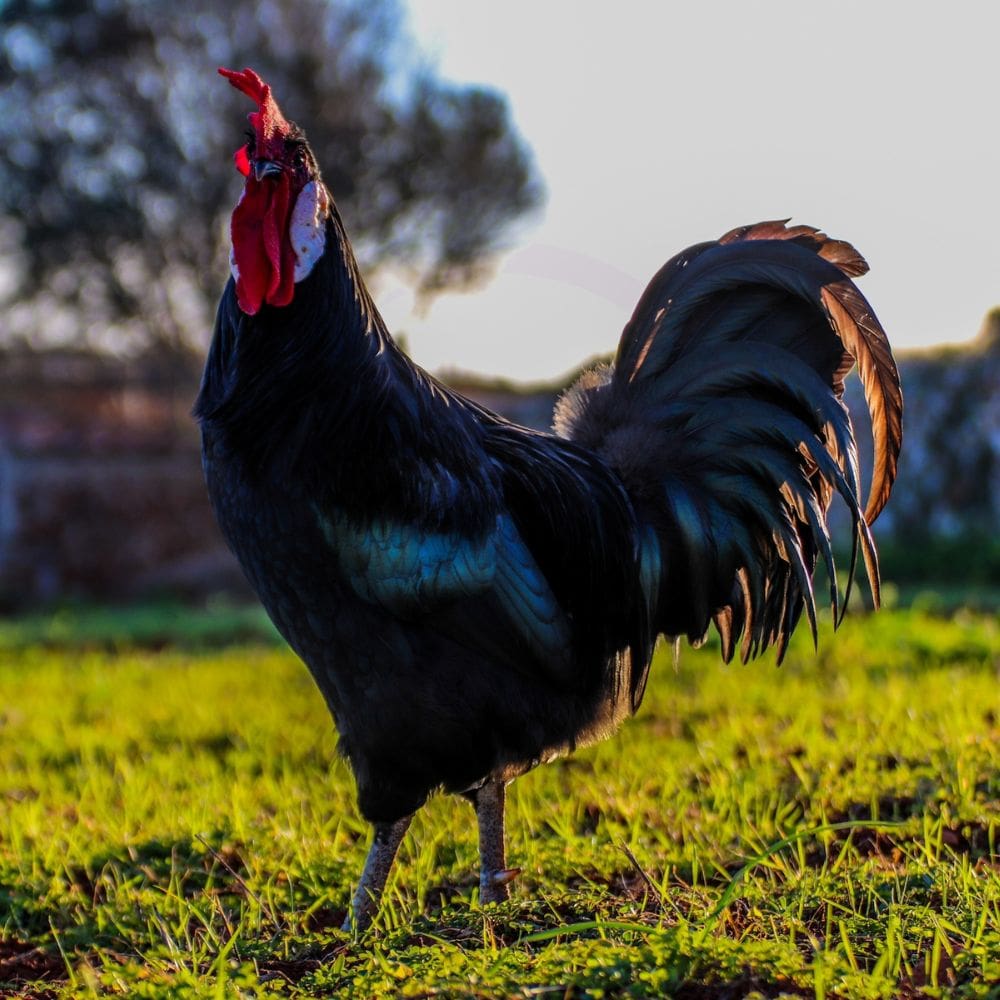
Chickens are special pets with quirky rituals, one of which is roosting on chicken perches. It’s not just a meaningless habit – it’s purposeful and necessary. Intriguing, I know. Come along and learn all the fun details about chicken perches, why chickens roost, the best way to set up roosting bars, and more!
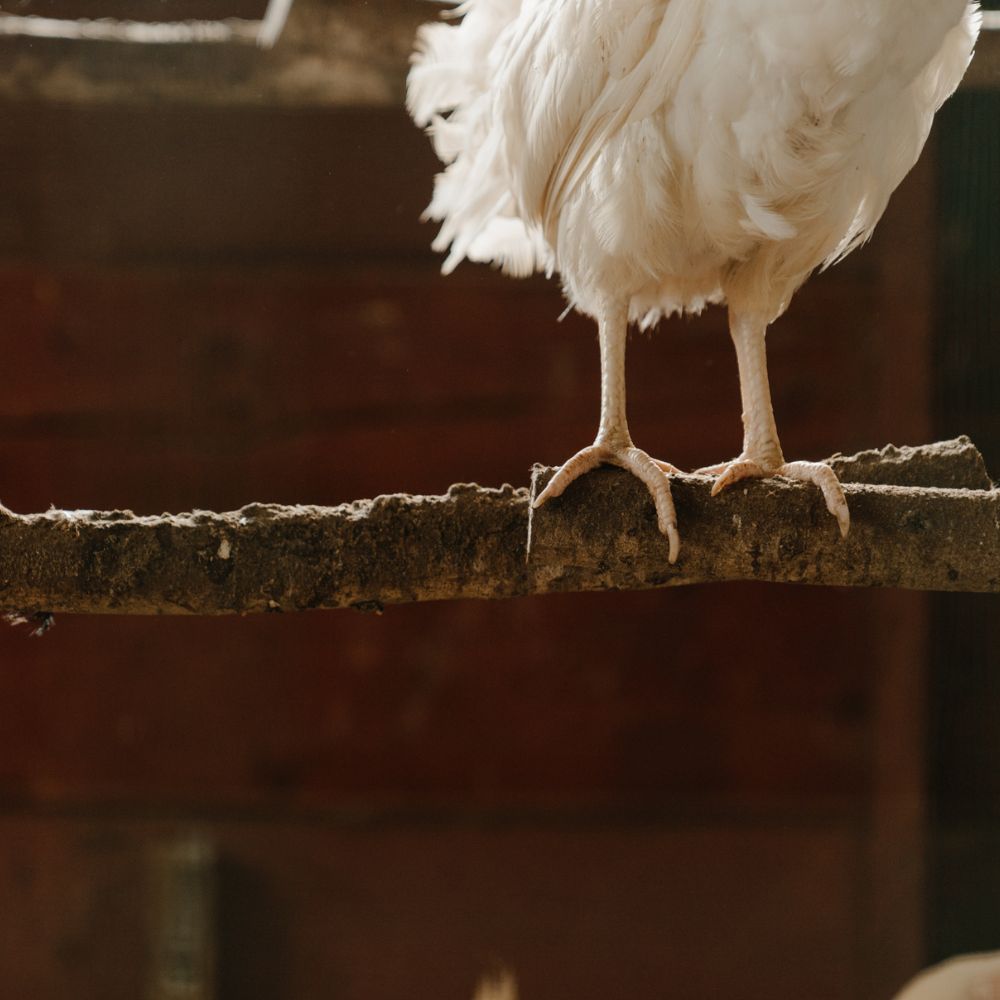
Chicken on a perch

What Are Chicken Perches?

The phrase “chicken perches” is often exchanged with “roosting bars”. Are they the same thing? Yes, they are. Technically a chicken perches on a roosting bar, or at least that is the most common terminology used.

Some folks may say that when a chicken perches, it’s outside of the coop on a tree limb or fence for resting or watching…and when they go up for the night they roost.

Either way, you get the point (and we’ll just say the terminology is interchangeable). Chickens aren’t ground dwellers. It’s an internal drive – a need – to roost. They WILL roost at night. If you don’t provide a roosting bar for them they will roost on whatever they can find (even if it doesn’t seem appropriate or comfortable).

Why Do Chickens Roost?

It’s not complicated, but perhaps you haven’t put thought into this question before now (which is totally normal 😉). Chickens roosting on chicken perches or roosting bars is a natural instinct built into chickens to avoid predators.

Let’s face it, poultry is pretty low in the food chain – they have several predators that sincerely enjoy chicken dinners as often as possible. Everything from raccoons to neighbor dogs, coyotes to owls.

Of course, if you have a predator-safe chicken coop and you shut the door every night, they have no need to fear. But they don’t understand that and you can’t reason with them (trust me, I’ve tried). Regardless of how safe they are, they will roost. And if they accidentally get locked outside the coop, they will find alternative chicken perches – whether it be a tree, a fence, the roof of the coop, or other more dangerous places you wish they never perched.

A Perch is a Perch – Or is It?

Chickens can, and will, use any old perch you provide but that doesn’t mean it’s the best setup. There are definitely specific methods and ways of making chicken perches for your favored friends. Here is a list of food for thought when it comes to providing roosting areas for your birds.

Hint: The reasons behind this list will be covered more in depth below.

  • Chicken perches should be about 1.5 to 4 feet off the floor.
  • If possible, put chicken perches above (or away from) your laying boxes so the chickens are not inclined to roost in the nesting boxes (especially if you use nesting herbs to make their boxes more inviting…nighttime is not the time you want them to enjoy those spa-like herbs!).
  • Roosting (or perching) bars should be about 2 inches wide for a more comfortable grip.
  • Provide 8 to 12 inches of space per bird.
  • Do not place chicken perches over anything you don’t want to be decorated with poop.
  • Be sure there aren’t screws poking out, sharp edges or splinters on the wood, or any other dangers for your sweet birds (You might need to sand the wood to make it smooth and problem free).

Why Does Any Of This Matter?

Chicken Perch Height Matters

The reason the height of the perches matters is for safety. As long as your coop is shut up at night, your chickens don’t really need to be super high to avoid predators. Plus, if the roosting bars are too high your chickens may get hurt when they try to get off of the perches, especially large and heavy chickens.

The highest perches should likely not exceed 5 feet to ensure the safety of your flock.

There is a risk that they can hurt their wings as well if they don’t have enough open space to properly fly down off the chicken perches without flopping into the walls.

Roost Placement Matters

Let me explain this with a personal story. The house we bought has a great barn with amazing built-in chicken coops. The folks who built the barn tried to make them top-notch coops. And they are….buuuuutttt…they put the roosting bars right in front of the nesting boxes.

This means that my chickens want to roost IN the nesting boxes. The reason this is a problem is that they poop all night in the nesting boxes, so where they lay eggs is full of poop. Yuck! This caused me a ton of extra cleaning work that I don’t have the time (or the desire) for. I had to make a contraption to close off the laying boxes at night so they won’t go in and make a mess.

On the other hand, if you place the roosting bars above the nesting boxes, the chickens will likely use the bars because they seek the highest reasonable refuge. This, of course, means they will poop on top of your nesting boxes. But life is such.

If you have extra space (which most of us don’t), you can put the chicken perches on the other side of the coop so they aren’t pooping on top of your nesting boxes.

Roosting Bar Size Matters

Both the diameter and the length of the bars (or perches) do matter! The chickens need enough foot space so their feet are not damaged or strained. If you are using round perches they should be around 2 inches in diameter. Chickens will also roost on square, rectangle, and flat surfaces – but they all need around 2 inches of foot space.

One item that makes roosting super easy to facilitate is a ladder. Chickens love to roost on ladders that are placed against the wall at an angle. Use wooden ladders, not metal (metal gets too cold in winter, too hot in summer, and slippery when wet).

Beyond that, hens (and roosters) need enough space to all have a place to perch comfortably for the night. This also means they need space to fly up and get situated. A girl needs some elbow (or wing ) room from time to time, ya know?

During warm nights backyard chickens will need plenty of room to spread out so they don’t get too hot. While during cold winter months they will huddle close together to produce as much warmth as possible.
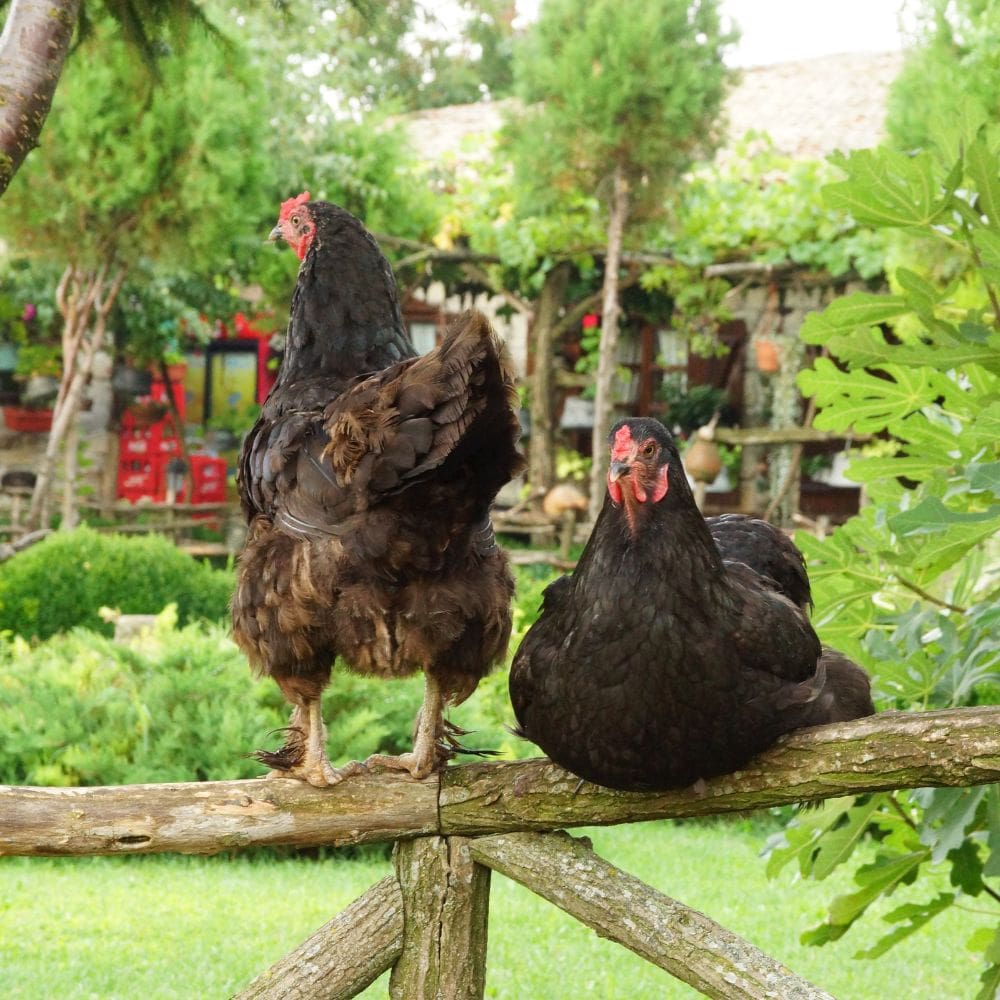
Chickens perched on a wooden fence

Pecking Order and Chicken Perches

Chicken pecking order is an intricate system and they all know the invisible rules of the game. Pecking order affects who eats first, who eats the most, who gets mated, and who does the mating (and so on). But it also plays a role in the roosting rituals they exhibit.

The Bossy Flossies will get the best, most desirable roosting spots – you can count on that. Just be sure there is a spot for everyone and don’t worry about trying to rearrange any chickens. The minute you do, they will resort – trust me.

Just recently I attempted to rearrange the chicken universe for my sweet little silkie, named Doodles, to ensure her warmth on a cold night. You would have thought I was poking every chicken with a hot poker. I guess I won’t do that again. Sorry Doodles but the top hens get first choice.

Why Not the Floor? (since they are safe from predators)

We’ve established that chickens roost by nature to avoid predators. But we’ve also established that your flock doesn’t really need to roost because we keep them safe at night by shutting up their coops. So why can’t they just perch on the floor? Wouldn’t that simplify my coop?

There are a couple of problems with this idea. First, your chickens would be very unhappy. They would likely not want to go into the coop at night, they would seek out other roosting places. It’s built into their DNA, they want to roost.

The other reason is that your chickens would be more susceptible to parasites, bacteria, and infection if they huddle on the floor instead of a roosting perch. They would be wallowing in their own poop, and you can imagine how bad this would be for them.

Lastly, little critters like mice (and even rats) can munch on your chickens’ toes if they are huddled on the coop floor. Ouch!

Summary

Chicken perches and roosting bars are not usually on the top of the “worry” list. But at least now you know there are things you need to consider. You now have the knowledge to ensure your backyard buddies have ideal roosting areas for their sleeping comfort!

Other Helpful Chicken Articles

If you are inclined to like critters, you might be thinking of pet ducks. Adorable for sure, but adorability doesn’t necessarily equal a good pet. I mean…baby bears are adorable but you don’t want to bring one home to raise in your backyard. And I could go and on with examples.

Ducks are not bears, but there are things you should know before you buy cute little ducklings for pets. In this article, I will give you all the information you need to make an informed, and reasonable, decision.

Up close of adorable duck with blurred background

Do Ducks Make Good Pets?

This is the big question, isn’t it? The answer is not a simple yes or no (like most things). It depends on your situation, your personality, your goals, and your resources.

Let’s go through the pros and cons of having pet ducks so you can make an informed decision that you won’t regret. Getting a new pet is a big deal and you need to make sure it’s the right fit.

Pet Duck Pros

💕 Ducks are very entertaining.
💕 They have long life spans.
💕 Quackers (Ducks) are egg layers.
💕 Pet ducks eat pesky insects.
💕 They are less destructive to your yard and landscaping than chickens.
💕 Ducks produce a LOT of compostable manure for your garden.

Pet Duck Cons

😣Ducks can be very noisy.
😣They are extremely messy and require a lot of cleanup maintenance.
😣Pet ducks need a LOT of clean water.
😣Most ducks are predator magnets.
😣They can fly away (and maybe not come back).

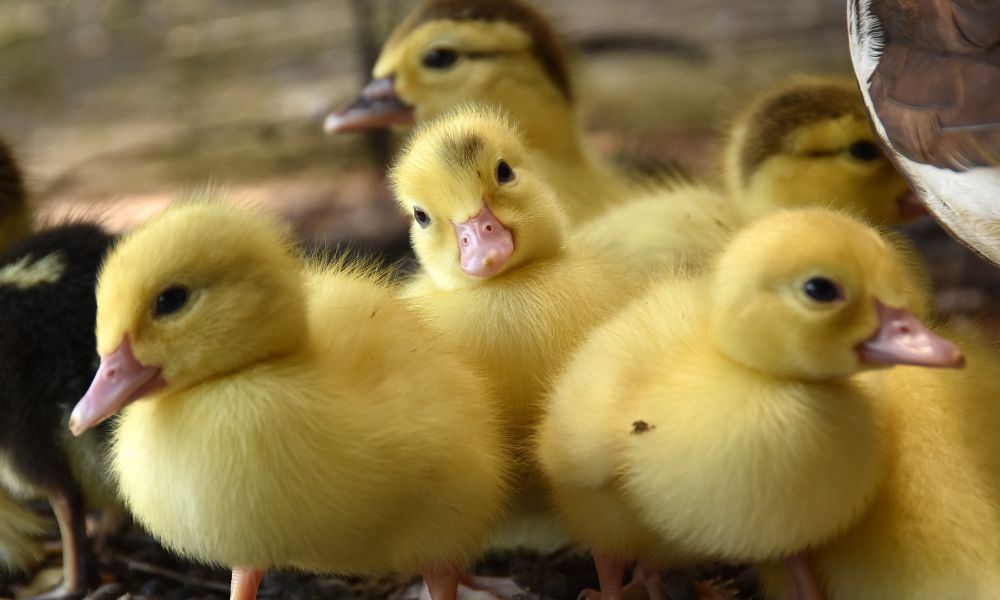
Cute group of yellow ducklings

Pet Duck FAQ

Are Ducks Friendly?

Although they can be, they aren’t usually lap pets (of course, there are exceptions to this). Also, when I say they are friendly that doesn’t mean they will come up to you and let them pet you. It does mean that it’s possible, depending on the breed and how much you handle them as ducklings, that they won’t run from you like you are Godzilla.

Furthermore, it means that they can be trained to come near you especially if you lure them with yummy treats like these.

Are Ducks Messy?

YES! It may be their biggest downside. Ducks are super duper messy. Whatever mess you can imagine, it’s worse. They are pooping machines and don’t mind doing their business everywhere.

You might be thinking “my chickens are pretty messy like that too.” True enough, but I promise you that ducks are messier.

Do Ducks Need a Body of Water?

I’m going to say yes to this. In fact, a pond is the best, but some type of pool works as well. Ducks are happiest in the water. Simply put, they love to splash and play all day. To have a duck and deny it water is duck abuse.

If you have to use a pool or tub of some kind – be prepared to clean it often! Ducks are messy bessy’s and you will find the need to clean their water almost daily. It’s a cold hard fact that you need to be ready for.

What Do Ducks Eat?

You can feed adult ducks a high quality chicken feed like this (check out the ingredients in this feed – amazing!). Ducks also eat all kind of fruits and vegetables, plus they love insects like mosquitos and slugs.

Ducklings have different needs so you will want to feed them a feed made for them OR add this brewers yeast to chick starter (for the extra niacin they need). Read this article we wrote “What Do Baby Ducks Eat” Ultimate List Of Treats, Feed, Fruits, & Vegetables to learn all about it.

How Long Do Ducks Live?

If taken care of properly (fed quality food, provided good shelter, etc) ducks can live many happy years. I’d say the range is about 10 to 15 years. It’s about like a family dog at that point! Read more about this: How Long Do Ducks Live? Top Pet Breeds

Do Ducks Eat Bugs?

Yes they do! This is definitely a bonus feature of pet ducks. If they are free ranging ducks they will eat mosquitos, slugs, snails, worms, and more. Less bugs around your place is a good thing, especially around your garden.

What Kind of Shelter Do Ducks Needs?

Shelter is an important aspect of pet duck ownership. Not only do they need a good coop to get out of the elements when needed…it’s also a place for them to be shut or cooped up at night to protect them from nighttime predators that are lurking around looking for fresh duck dinner.

Be sure to keep the coop dry and clean with straw or wood shavings. They do not need roosting bars or perches like chickens.

Do Duck Eggs Taste Good?

Of course this is an opinion question more than a fact. But most folks can’t tell a difference between duck eggs and chicken eggs if they don’t know. Some report duck eggs to have a bit of a stronger taste. Fancy chefs prefer using duck eggs for baking, so that’s a good sign.

While egg flavor is up for debate, egg laying is definitely a benefit of having a duck as a pet. Duck eggs are nutritious and you can read about them here: Duck Eggs: Nutrition & Buyer’s Guide.

Can You Own a Lone Duck?

Ducks are social creatures, like most farm type animals. They don’t really like to be alone. Having a buddy for them is essential if you ask me. Basically, if you decide you want a duck – go ahead and get more than one. While they may enjoy another duck friend, the main point is that your pet duck needs a companion of some kind – even if it’s a chicken. 🐔

Can Ducks Live With Your Chicken Flock?

Yes, they can. However, they need water all the time and they can make a huge wet mess. This is not good for your chickens. This is something to take into consideration. It can be done, with lots of cleaning, as many people have chickens and ducks together.

Are Male Ducks Mean?

Males and females alike can be friendly or mean (a lot like people). It depends on several factors – everything from breed to how they were handled as ducklings, all the way to individual personalities.

Duck Breed Details

There are many breeds of ducks to choose from. Some of them might be a good fit for you and some might not be. Consequently it’s important to do your research so you choose the best breed for you. Learn all about several different breeds in the following articles we have written to help you out!

🦆 Call Ducks – Adorable, Miniature, Irresistible
🦆 Indian Runner Ducks 101
🦆 Rouen Ducks – One of the World’s Largest Duck Breeds
🦆 Pekin Ducks – The Most Popular Duck of All
🦆 Khaki Campbell Ducks – An Amazing Duck Breed You Will Love
🦆 Do Muscovy Ducks Make Great Pets?

Learn More About Ducks

Good or Bad Idea?

This is a decision only you can make. You know your goals, your limits, your schedule, and your situation. This article should provide you with enough food for thought that you can now make a decision you won’t regret. Just be sure to have all your ducks in a row if you decide to dive into duckville! 🦆🦆🦆

Is it a turkey? Is it a chicken? Is it a cross between the two? It’s so ugly it’s cute – the Naked Neck Chicken, otherwise known as a Turken – is quite a bird. Want to learn more? You are in the right place at the right time. Let’s do this!

This specialty bird is quite comical in appearance. I remember the first time I laid eyes on a Naked Neck chicken. I remember saying what was in my mind out loud…”What IS that??” The owner kindly told me.

She went on and on about how much she loves her Turkens and planned on getting more. My next question was “why?” and this started a journey of learning all about his breed.

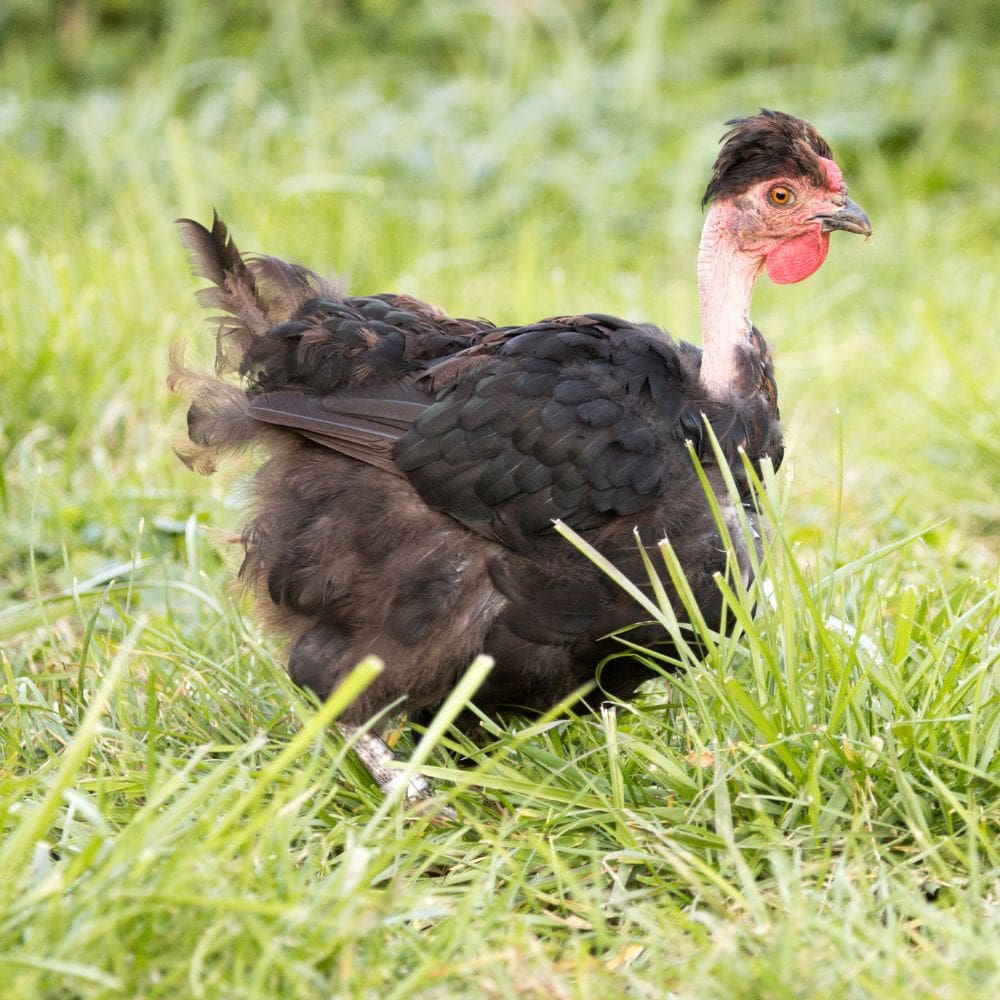
Naked Neck Chicken Turken on green grass

What Exactly is a Naken Neck Chicken?

It’s an understandable question. What is it? At first glance, it sure looks like a turkey, but as you continue to look you figure out that it just can’t be. After that, you might find your mind wondering if it could be a chicken, but that defies what you know about backyard chickens. Lastly, you might wonder if they are molting or sick due to their lack of feathers.

Don’t worry, this is normal for most of us. And if you are like me and you research everything, you quickly learn that a Naked Neck Chicken, also known as a Turken, is NOT what you think.

Many people think it’s a cross between a turkey and a chicken. Indeed, this is actually where the nickname “Turken” came from. But a Naked Neck Chicken is 100% chicken. Once you know this, your brain can rest at ease…right? Wrong! Why is the neck naked??? We thinkers NEED to know. But before we learn why the neck is embarrassingly naked, let’s learn about the history of this breed.

The history is actually short and sweet. We don’t know who developed this breed originally, but we can trace it back to Transylvania Romania. It is often called the Transylvanian Naked Neck. We have been aware of the breed since the early 1900s. Read more speculation about the history here.

Why is the Neck Naked?

THIS my friend is a question worth asking. And here is the answer…if you are ready for a science lesson that is. I’ll keep it simple. I think National Geographic sums it up best and in the simplest fashion.

The Transylvanian bird’s naked neck results from a random genetic mutation that causes the overproduction of a feather-blocking molecule called BMP12, a new DNA study shows.

The mutation first arose in domestic chickens in northern Romania hundreds of years ago. The naked neck chicken—also dubbed the churkey or turken—has a chicken-like body but a turkey-like head atop a long, deep-red neck.

National Geographic

Want to learn more science nerd details on the BMP12 blocking molecule? I thought you might. Click here.

Can the Naked Neck Gene Be Passed to Other Chicken Breeds

Yes, you can create a hybrid that possibly has a naked neck too (notice I said possibly). Apparently, the naked neck gene also improves breast size which is one of the reasons people like these funny little birds. It could be a motivating factor in cross-breeding your other chickens as well.

The Good

Entertainment

There are plenty of good things about this Naked Neck Chicken breed. For one thing, they are entertaining. You’ll be the talk of the town (or at least of the neighborhood). Owning one of these quirky birds with featherless necks is akin to having an exotic pet.

Besides the Naked Neck hens are docile and friendly little birds to boot. Chicken keepers constantly talk about their goofy personalities which adds to their entertaining spirit. You really can’t help but fall head over heels for these entertainers (especially naked neck chicks…they are irresistibly cute).

The roosters are usually friendly too but can be aggressive at times (this is something most all roosters can be from time to time).

Eggs

These fun-loving chickens make up for the lack of neck feathers with eggs. That’s right, they are are pretty good layers. According to Cackle Hatchery, they can lay from 180-240 eggs per year which is as good or better than the average chicken. Their egg color is light brown.

Beyond that, these sweet birds are not very broody. This is great if you don’t want to fight for eggs with a broody hen.

Meat to Eat

This is one of the very reasons these funny-looking chickens are popular on homesteads and small farms. Their genes are geared toward larger breasts, which makes for a great meat bird.

And think, you’ll have fewer feathers to pluck on butchering day (thinking positive thoughts here). They do have 50% (or so) fewer feathers than many other chicken breeds.

Foraging Frenzy

Naked Neck chickens pay their way quickly with all the foraging they do. If you can let them free range that is. They love to hunt and peck and find all the goodies they can. They are pretty crafty about avoiding predators too.

This is not only good for their health, but it’s good for the nutritional value of your eggs and meat (if you choose to eat it). And it will reduce your feed bill as an added bonus.

That being said, if you can’t or don’t want to let them free range – they are not super active chickens and will do well in confinement. However, you will want to supplement their diet with protein-rich treats if you do keep them cooped up. The bonus is that they will be all the more friendly if they know you are the almighty treat distributor! 😉

Hardy

Due to having fewer feathers to weigh them down, they are exceptionally heat tolerant. If you live in a hot climate, this might be a great choice. But don’t be discouraged if you live in a cold climate because they do surprisingly well in cold weather too. Just an all-around great bird, right?

They will need a really good shelter to protect them from extremely cold temperatures though.

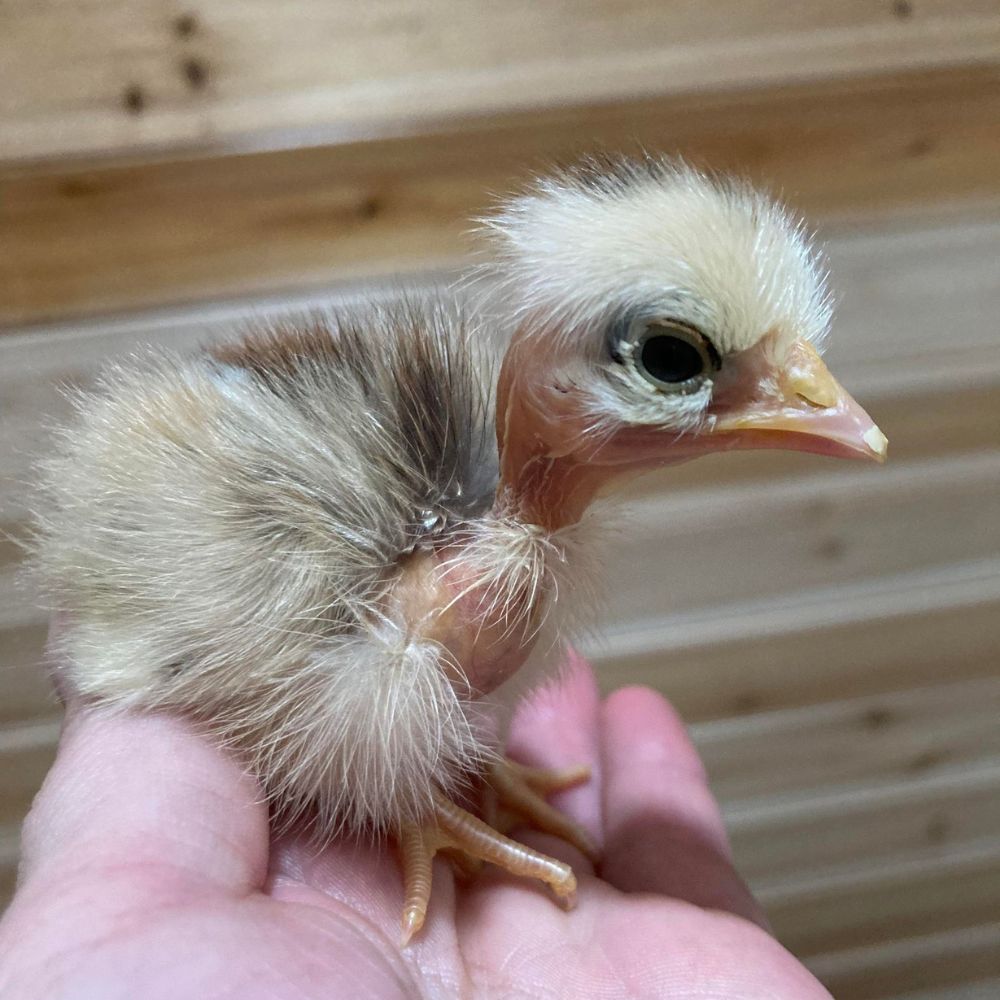
Naked Neck Chicken Turken chick in a hand
Irresistible Naked Neck chick!

The Bad

I could, like any good debater, simply reverse all the pros into cons. You know how that can go, right? I could, but I won’t.

I’ll just tell you that there really aren’t that many cons for these friendly birdies. I mean, if their nakedness running around in your backyard flock bothers you then I would skip on down the line to the next breed on your list. Other than that, they are pretty much a decent chicken breed to try out.

They can be a little loud, so consider that.

Naked Neck Chicken FAQ

How Large Do Naked Necks Get?

Naked Neck chickens are pretty meaty. The hens weigh about 6 1/2 lbs and the roosters weigh around 8 1/2 pounds.

What Colors Do Naked Necks Come In?

Red, white, and buff are the colors recognized by American Poultry Association. However, they come in different colors such as black, blue, cuckoo, golden-salmon, and more.

Can I Hatch My Own Naked Neck Chicks?

Sure! In fact, they aren’t that broody by nature…they are pretty low on the broodiness scale. So incubating their eggs to hatch chicks is the best route to take. If you want to learn more about hatching your own chicks read these articles: How to Hatch Chicken Eggs (Even Without Incubators) and Why Don’t All Incubated Eggs Hatch?

Can Naked Neck Chickens Go In My Coop?

Yes, they can go in the coop with the rest of your flock. If you are just introducing them to an already established flock you will need to be cautious (but this is the case when introducing any new chickens).

They can get picked on, especially their naked necks. Keep them separate but where they can see the rest of the flock for a few days so they can get acclimated to each other.

Are Naked Necks Good For Kids?

They are docile and known as friendly chickens, often being reported as lap chickens. They are good companions for kids as well as adults.

How Do I Care For a Naked Neck Chicken?

You care for them just like any other chicken (except you knit them a scarf for their naked necks…just kidding…maybe).

You will want to be sure they have fresh water and high-quality feed like this. Don’t forget to befriend them with nutritious Chicken Candy (yes, there are chicken treats). Finally, be sure they are safe from the elements and predators with a sturdy coop.

Summary

Naked Neck chickens are oddballs, that is as true as anything I’ve ever said. That being said, they have a lot of great qualities that many, many breeders are addicted to.

If you’ve read this far, then I’d say you should go for it. See what all the hype is about and fall in love with a bird that is so ugly it’s cute!

We’ve all heard all the hype about fake news. What about fake eggs? There’s no end to false information being passed around, but do black chicken eggs fall into this category? You might just be surprised by the answer. Grab your basket and go on an egg hunt with me…starting…NOW.

Up close of hands holding 4 black chicken eggs

Black Chicken Eggs – Fact or Fiction?

I suppose it depends on how you ask the question. If you ask me if there are black chicken eggs? I’ll say yes. On the other hand, if you ask me if they are naturally occurring? I’ll say sort of. Keep reading to get the full scoop.

Before I tell you the super secret explanation to that mysterious question let me talk about something else.

There are ALL kinds of reports online about all manner of topics. Black eggs are one such topic. Some claim there is such a thing, and some claim there isn’t. And isn’t that just the way things are today? It’s hard to tell the fakes from the real deal. Have no fear, I will tell you the truth as best I can research it for you.

Black Egg Details

There are indeed black chicken eggs that are naturally occurring. However, they don’t come out of the chicken black, and they aren’t painted with synthetic paint or food coloring either. Okay, I’ve got your attention. So here’s the deal.

Black Eggs of Hakone’s Hell Valley

In Japan, there is a place called Hakone’s Hell Valley. It’s a volcanic valley heavily laden with sulfur. They boil eggs in the hot springs there and the naturally occurring sulfur colors the eggs charcoal black. And there you have it, naturally occurring black eggs. So, yes, there are all natural black eggs – but just not straight out of the chicken.

It’s more mysterious than that though. The Japanese believe that if you eat just one of these eggs you will add seven years to your life! Whoa. I’m not sure I believe it, but I think I’ll try hard to buy into this fountain of youth and see if I can find one (or two) of those charcoal black eggs for my birthday!

It’s a big tourist attraction in Japan, as you might expect with claims of prolonging your life. Even if it is extremely expensive to visit the valley, not to mention potentially dangerous due to active volcanic activity – it still may be worth going. It’s incredibly beautiful and welcoming.

Read all about it here.

Black Eggs of Hakone’s Hell Valley tourist area

Don’t Ayam Cemani Chickens Lay Black Eggs?

Have you heard about an Ayam Cemani chicken? They are literally ALL black chickens, and I’m not just talking about black feathers. They are black from their heads (including their combs, wattles, and beaks) to their toes and everything in between. When I say in between, I mean it. Even their organs are black.

Because Ayam Cemani chickens are all black, inside and out, there is a big misconception that their eggs are also black. It sounds right to me, but it’s just not. It doesn’t seem to fit the mold, but they lay a white to a cream-colored egg. Go figure.

Ayam Cemani chickens aren’t the only black chicken breeds out there, but they may be the most unique of them all (a close runner-up are the Kadaknath chickens). Some of the other mostly black (and beautiful) chickens you can read about are the Black Copper Maran, the Silkie chicken, the Black Australorp, the Minorca, and the Sumatra chicken (these are either black or have a black variety).

You can read about all kinds of black chicken breeds here.

Do Emu Lay Black Eggs?

Okay, so an Emu isn’t a chicken and they may not make great pets (since they are exotic). But we are trying to find black eggs somewhere outside of Japan. So do Emu lay black eggs? Some sources say yes, but it appears that they do not.

Emu eggs are a neat blueish-green color (which is sometimes a dark enough emerald green that they appear almost black) and they have been all the craze from time to time. They can weigh up to 2 pounds and are known for being a culinary delicacy. Read about the craze egg here.

Emu eggs laying on a sandy ground area

What About Cayuga Duck Eggs?

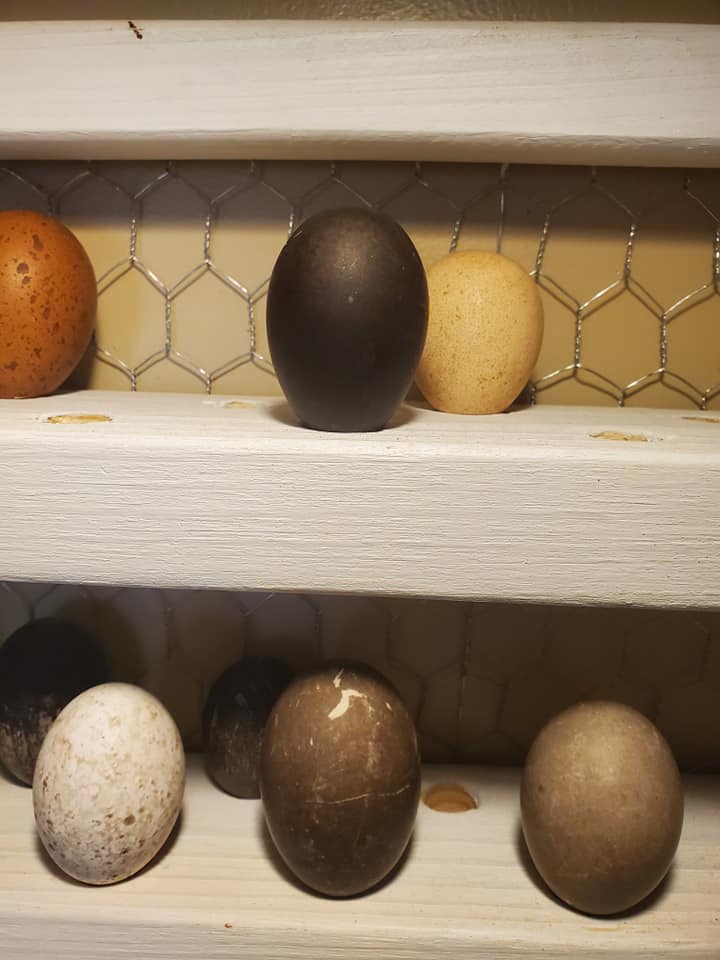
The third time is a charm, right? So they aren’t chickens, but they are close. At least closer than an Emu is. Cayuga hens actually lay black eggs…sometimes. They can start out black and then gradually get lighter and lighter as they lay. They are really the only birds you are likely to find that will give you some black eggs.

This breed of duck is stunning as they sport a beetle-green sheen. However, the coolest part about them is when they lay black eggs. As you can see, black eggs are rare – so that makes it extra fun to find them in your duck house.

Cayuga Duck Egg – Black – Photo from Facebook

Colored Chicken Eggs

Even though you may not be able to get basketfuls of black chicken eggs, you can still have a variety of egg colors. There are blue eggs and chocolate-colored eggs, there are pink eggs and speckled eggs, and there are green eggs and brown eggs. Bird eggs come in all colors and sizes.

Read about blue egg layers in this article Chickens That Lay Blue Eggs: Buyer’s Guide. Read about the potential for chocolate-colored eggs in this article Black Copper Marans – Do They Really Lay Chocolate Eggs? Read about several colors of eggs in this article 12 Chickens That Lay Colored Eggs: Blue, Green, Chocolate, and Pink!

Summary

If you want to add some color to your backyard chicken flock in the way of eggs, you can certainly reach that goal. It’s just not going to be black eggs. I hope it’s not too disappointing, but at least you know the truth. And you have one leg up in the next trivia game you are involved in.

Other Chicken Breeds To Learn About

Lovely flock of hens desperately seeking strong, protective, handsome rooster breeds. Have you seen this advertisement in your local paper? Probably not, but if chickens (or chicken owners) could make it happen – they would.

Roosters play an important role in the world of chickens. They not only have a built-in nostalgic alarm, but they are also great at protecting their flock from predators, fertilizing eggs, and more! Not everyone wants a rooster, but if you do – there are some pretty awesome rooster breeds out there that you need to know about!

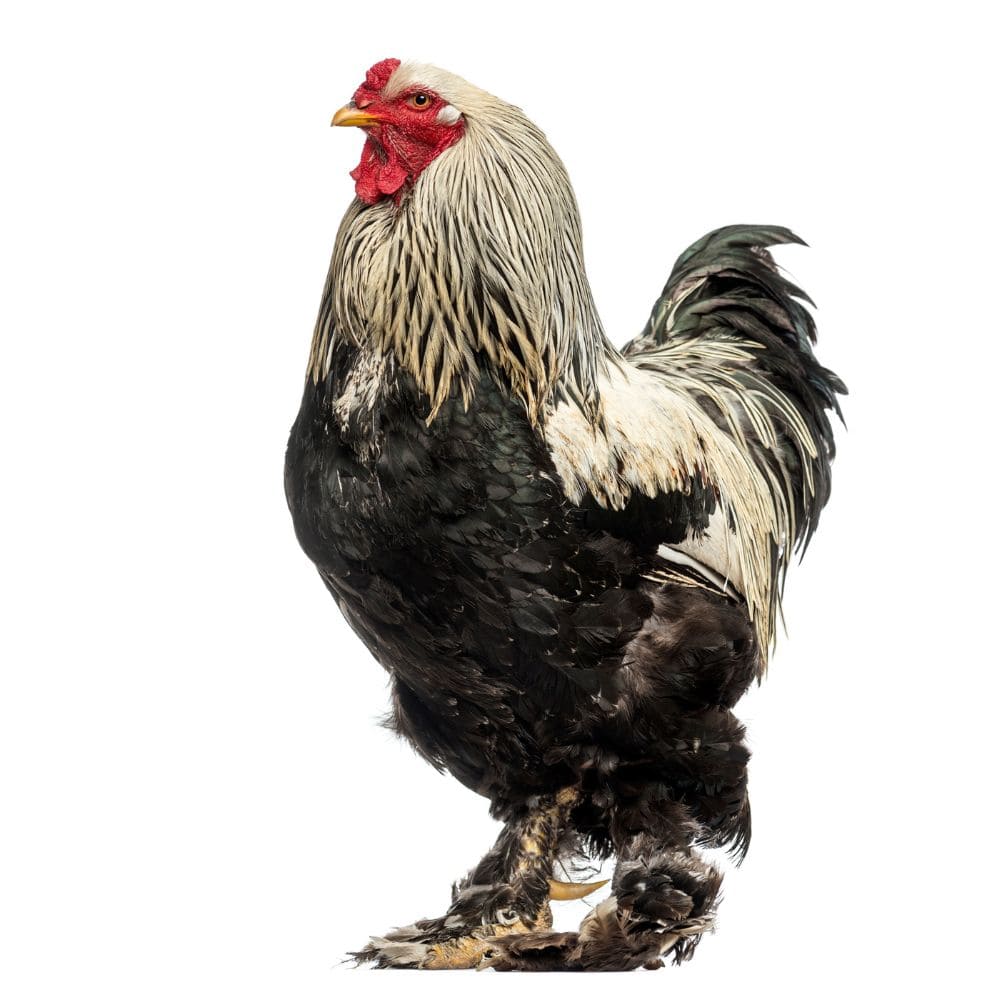
Brahma Rooster on all white background

Ten Awesome Rooster Breeds

Let’s jump right in and talk about ten awesome rooster breeds. You may, or may not, know that there are MANY chicken breeds. It can be hard to sift through all the varieties and find your match. If you are like me, you’ll end up with 20 or more different breeds just to try and figure out what breed is the best.

There are breeds that are popular because they are pretty, there are some known for being a dual-purpose breed (eggs and meat), there are breeds that are coveted because of their hardiness, and on it goes. Let’s just say – there are a LOT of choices out there. Chicken keepers have no lack of breeds of chickens calling their names – that’s for sure.

There are so many wonderful breeds out there, so don’t get too focused on a small list. But I will tell you that these ten breeds will get you started with a bang. They are truly amazing rooster breeds that you simply can’t go wrong with. If you want to add a rooster to your backyard flock, THIS is a great place to start.

#1 Welsummer

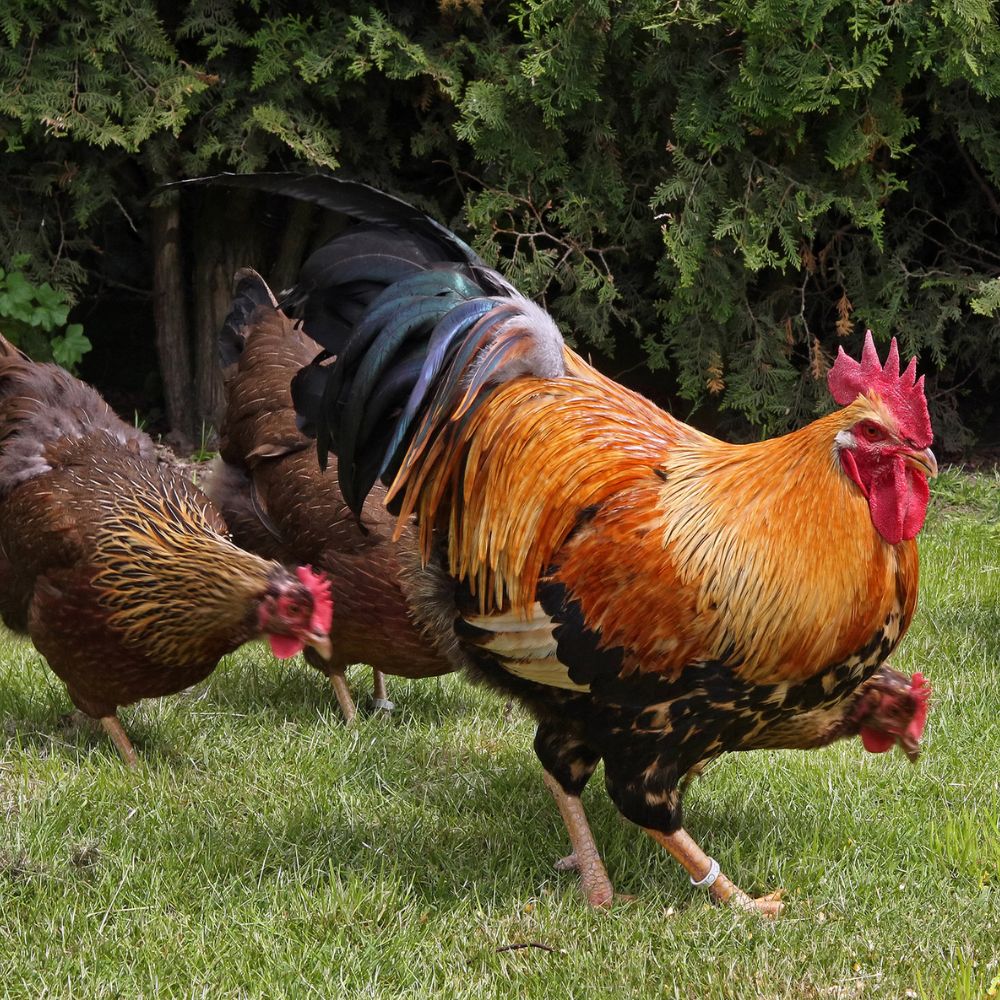
This breed holds a special place in my heart as my very first rooster was a Welsummer. I wanted that iconic Welsummer rooster – with a boisterous, large full tail sporting plenty of beautiful, shiny green feathers! As far as I knew, it was THE rooster to have. 

Read all about this breed in this article called Welsummer Chickens – Iconic Chickens With a Royal Twist.

Developed in the 1900’s it was first imported into this country in 1928 for its large brown egg. The Welsummer eggs will vary in tints of dark brown eggs and most of the eggs will have a real dark speckled pigment in the egg shell. The Welsummer is a large, upright, active bird with a broad back, full breast, large full tail and a single comb. Welsummers have a docile and friendly personality. 

Cackle Hatchery

Find more information and prices here: Cackle Hatchery.

Welsummer Chickens

#2 Silkie

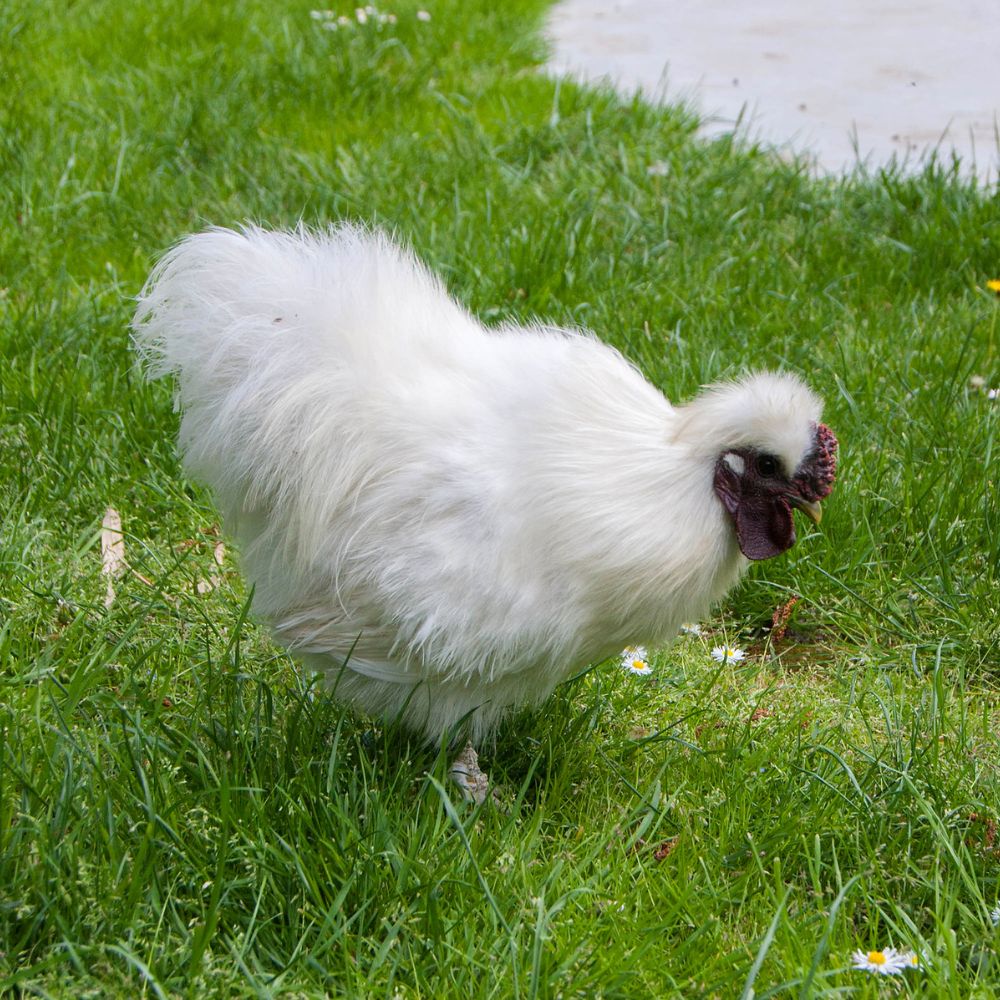
Cute, cuddly, fuzzy, and cheerful. You can’t help but love this unique breed. For full disclosure, these are a bantam breed (which is a smaller size than a standard chicken). This breed is definitely a hit for kids and make great pets.

My son had a gray silkie he named Muskrat. Muskrat was the main attraction of our farm for a while. You would see my son bouncing around the farm with Muskrat in his arms. It was precious.

Read all about this breed in this article called Silkie Chickens: Pet Facts and Fiction.

Silkies are named for their unique fluffy plumage, which feels like silk. They have several unusual qualities, such as black skin and bones, blue earlobes, and five toes on each foot (although not all of our silkies will hatch out with five toes). Calm and friendly and the most docile of poultry.

Hoover’s Hatchery

Find more information and prices here: Hoover’s Hatchery

White Silkie rooster on green grass

#3 Australorp

Although some folks might be more excited about how many eggs the hens lay, I get most excited about the beetle green (and sometimes purple) iridescent color that shines within their plumage. It is magical in my opinion. AND they are beautiful soft feathers to boot!

The Australorp roosters are just plain gorgeous and they are also extremely sweet birds, making them for great families.

Read all about this breed in this article called All About Australorp Chickens and Where To Buy Them.

Find more information and prices here: Murray McMurray Hatchery

#4 Speckled Sussex

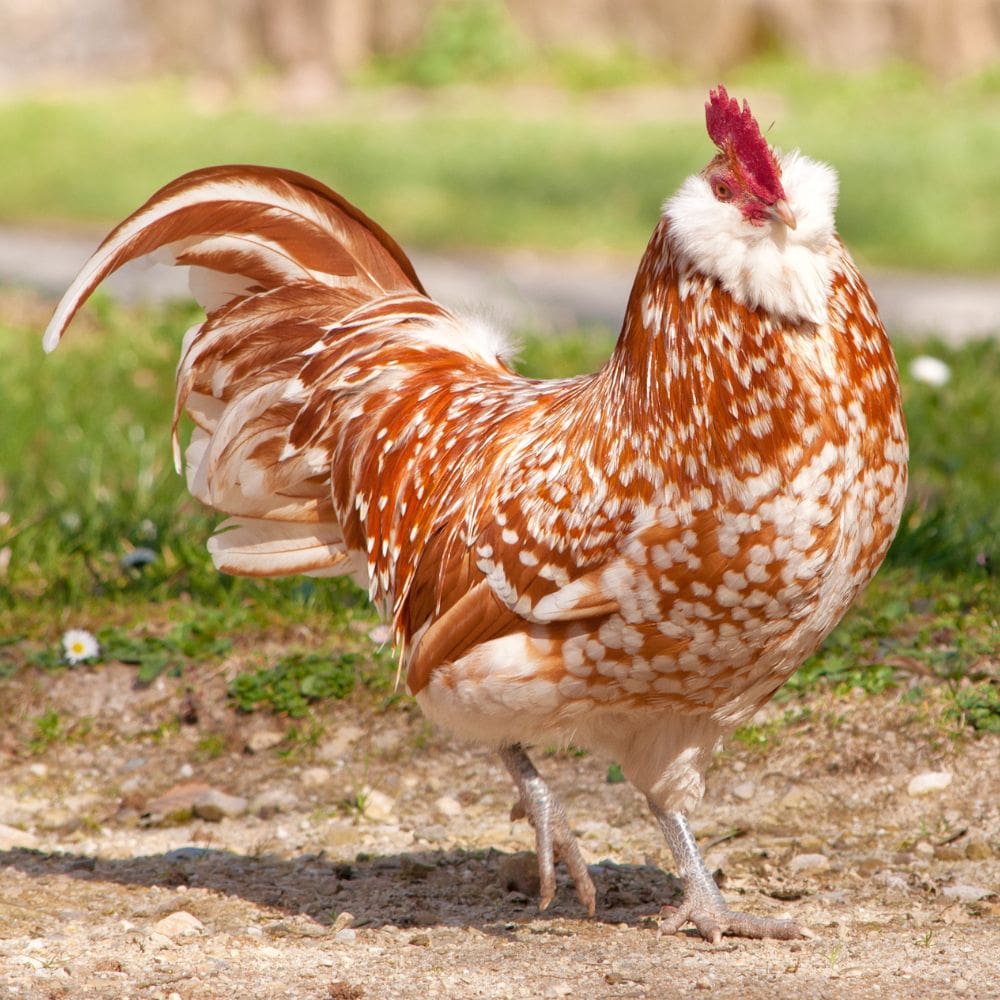
Speckled Sussex chickens have wonderful, inquisitive, and “big” personalities, not to mention the beautiful “speckles” on their feathers! The Speckled Sussex rooster can have green in its feathers as well! Don’t be surprised if they willingly sit on your lap or take treats from your hands – they’re the perfect pet chicken!

They don’t require special feed, are docile, and the hens don’t get very aggressive during brooding. The roosters are equally a joy to be around!

Read all about this breed in this article called Speckled Sussex Chickens – Gorgeous, friendly, productive, and so much fun to own!

Find more information and prices here: Cackle Hatchery

#5 Polish

They have a natural talent to shine in the coop or shows. They’re adorable, friendly, full of personality, have a loving temperament, and make great companions.

Polish roosters are most consistently thought to be from Spain originally and then imported to Holland. They did not appear on the scene in America until around 1830 or so.

The name Polish either comes from the idea of Polish soldiers’ helmets OR the prefix “pol” meaning large head. Either way, their head crest remains their claim to fame. Read all about this breed in this article called Polish Chickens: Eggs, Colors, & More.

Find more information and prices here: Hoover’s Hatchery

#6 Brahma

While Brahma chickens are known for growing into beasts the size of large turkeys, giving it the nickname “The Majestic One” by the American Brahma Club, and the equal honor of the name “king of all poultry” (due to its size and vigor). However, the average Brahma isn’t quite that large.

Brahmas are very friendly, as long as you’ve raised them to enjoy the company of people (feed them lots of treats and they’ll be yours forever). They are pretty good around small children too, although the kids might be intimidated by a large bird!

Brahmas are quiet, docile, and calm birds who love to take treats from your hand and get cuddles. They get along great with other chickens, as well.

Read all about this breed in this article called Brahma Chickens: What To Know Before You Buy!

Find more information and prices here: Murray McMurray Hatchery

#7 Salmon Faverolles

Salmon Faverolles would be awarded “Entertainers of the Year” if there were such a thing as chicken entertainment awards! Plus they are friendly, cuddly, and cute!

Faverolles chickens come in a wide color palette, from Mahogany, Black, Buff, Blue, Blue Salmon, Cuckoo, Ermine, Laced Blue, to Splash. But only two colors are actually recognized by the American Poultry Association: White and Salmon. 

These bearded beauties are great docile birds that are very friendly. The breed originated in France and became the premier meat and egg laying breed at the Paris market in the late 1800s. The salmon color is the most prominent in Europe and where they are available in the U.S.

Hoover’s Hatchery

Read all about this breed in this article called Salmon Faverolles Chickens Owner’s Guide.

Find more information and prices here: Cackle Hatchery

#8 Orpington

What’s not to love about the Orpington chicken? First bred in 1886, this bird is one of the oldest heritage breeds and is now raised for eggs, meat, and exhibition. This is a good solid bird, and the rooster is no exception.

If you’re in the market for some Orpington chicks, you’ll find a ton of hatcheries specializing in all kinds of Orpingtons – including Buff, Black, Blue Laced, Red, Lavender, Barred, and more. You can even buy bantam Orpingtons or fertile hatching eggs online!

The Buff Orpington and the Lavender Orpington are probably the ones you have heard about most often. But all of the varieties are pretty awesome.

Read all about this breed in this article called Buff Orpington Chickens: Buyer’s Guide.

Find more information and prices here: Hoover’s Hatchery

#9 Wyandotte

If you want a truly beautiful hen in your flock, you can’t go wrong with a Wyandotte rooster. With their intricately laced feathers and easy-going personalities, they’re the perfect addition to any backyard flock.

While the exact color will depend on the variety, the laced versions have beautiful dual-colored feathers – a main color (such as silver or gold), edged with black. Many people refer to the Golden Laced Wyandotte as a “black and gold chicken,” which is an accurate description.

They come in so many varieties including the Silver Laced, Columbian, Gold Laced, Blue and Black. Read all about this breed in this article called Wyandotte Chickens: Buyer’s Guide.

Find more information and prices here: Murray McMurray Hatchery

Stunning Wyandotte rooster standing on ground

#10 Cochin

Be ready to fall in love with a big, fluffy, friendly mass of feathers when you start raising Chochin rooster breeds! Whether you raise the full-size version or a bantam, you are sure to have a new best friend!

You’ll know it’s a Cochin chicken you’re looking at when you find most of its body covered in feathers – even hiding its legs. Their feathers swoosh around their legs as they wander around your yard!

These cuties come in a large variety of colors. Everything from Red, Blue, Silver Laced, and Buff…all the way to Columbian, Lavender, and Barred. (and more)

Cochin Bantams are extremely docile. If you’re looking for a tame chicken to keep around the house or farm, the Cochin Bantam is the perfect option.

Cackle Hatchery

Read all about this breed in this article called Cochin Chickens: Eggs, Colors, Personalities & More!

Find more information and prices here: Cackle Hatchery

A Few Tips

  • Roosters of any breed have the potential of showing some aggression during mating season.
  • If you have to keep your flock in confinement (not free ranging) be sure they have enough room so they aren’t cramped. If they are too cramped they will become angry birds and fight with each other. So make sure their coop is sufficient.
  • Keep your rooster to hen ratio in check. Read about that here.

Where to Buy These Rooster Breeds

Here are three great hatcheries that will get you started. Other than hatcheries you can check with local breeders, local farm stores (at chick days), and Facebook Groups.

Want to Learn About Other Rooster Breeds?

More Rooster Reading

Aside from being the largest of the Mediterranean chicken breeds, the Minorca chicken has a lot of other attributes that land in the “big” category. This fun and spunky breed is an attention-getter for sure.

Follow me to learn all about this interesting breed.

Minorca rooster on grassy background

What’s the Big Deal About Minorca Chickens?

Funny you should ask. There are several BIG deals about Minorca chickens. Let’s go through each one together.

1. Biggest Mediterranean Chicken Breed

Minorca chickens look unusual – they’re mostly black, but with a white spot near the ears. They’re an old breed and have grey legs. Minorcas are named after their place of origin: the Island of Minorca, off the coast of Spain.

They are the largest of all the Mediterranean breeds such as Leghorns, Spanish, Andalusians, and Anconas.

2. Big Earlobs, Combs, & Wattles

These sleek and slender eye-catching chickens sport their accessories like none other. They stand out in a crowd and never cease to amaze the onlookers. Some call it elegant, some call it comical – either way, they are enjoyable to look at.

They have exceedingly large white earlobes that you simply can’t miss atop their black bodies. And if that isn’t enough to catch your attention, then their extra large combs (that are floppy) certainly will. Pair those with their really large wattles, and you have yourself a chicken with its own backyard show.

3. Big Eggs

Although Minorca chickens are not stars when it comes to the number of eggs they lay, they make up for it in size. These ladies lay some whoppers! They may not be the size of duck eggs, but they are definitely runner-ups.

They lay about 200 large white eggs per year, and the hens don’t tend to go broody.

4. Big Personalities

Some call them feisty, some call them funny – but one thing for sure is that their personalities aren’t just plain Jane. Minorca chickens have a reputation for having interesting and appealing personalities as well as an enjoyable temperament.

Minorca Chicken Breed FAQ

What Do Minorca Chickens Look Like?

There are a few colors of Minorcas (like white, blue, and buff) but the most impressive – and most popular – is the Black Minorca. They have a sleek look, with a shimmer when the sun hits their feathers. They generally have slate-colored legs (light to dark slate) and a long tail.

With their long, muscular bodies, the Minorca is known as a beautiful chicken. Some describe them as angular birds due to their almond shape. They have large wide feathers.

There is something alluring about an all-black chicken. Read about several all-black breeds here.

Are Minorca Chickens Hardy?

Yes and no. Since they are a Mediterranean breed, they are built for heat. So they are heat hardy. They do well in warmer climates, so it’s a good option if you live in a warm area.

They do not fair as well in super cold climates. Their big earlobes, combs, and wattles are prime candidates for frostbite. This can be quite painful and problematic.

Be sure to take care if you decide to heat your coop as it can be dangerous.

How Many Eggs Do Minorca Chickens Lay?

While they aren’t award-winning egg layers for the most eggs laid, they are at the top for the size of eggs. So it all evens out if you think about it. You can fry up one extra large egg instead of two smaller eggs.

Minorca chickens lay around 200 to 280 large eggs each year. Not bad egg laying. In fact, I would say they are good layers.

Do Minorca Chickens Like to Free-Range?

Yes! They are excellent foragers and love to free-range. They love to spend their whole day finding their own protein. Depending on the time of year, you may still want to give them treats to supplement their protein intake.

How Big Are Minorca Chickens?

They aren’t super-sized like a Jersey Giant, but in the class of Mediterranean breeds, they are the largest. Minorca roosters are a bit larger than the ladies. Hens weigh around 7.5 lbs and roosters weigh as much as 9 pounds. That’s pretty impressive.

Do Minorca Chickens Come in Rose Comb?

Yes, there is a variety of rose comb Minorcas. But the floppy comb is really one of the most adorable attributes of this breed. If you are in an area with cold weather, you might consider the rose comb if you are set on trying this breed.

Are Minorca Chickens Broody?

No, they are not known to be broody. The Minorca hen is also not the best of mothers, so it’s best that they are not broody. In the unlikely event that your Minorca does become broody, read this article to help deter her if that’s what you decide to do.

Summary

Most Minorca enthusiasts consider them to be the most interesting of their flocks and you might just feel the same. If you want big eggs and big personality, you don’t live in a super cold climate, and you desire their unique look – you might just consider this breed.

Where to Buy Minorca Chickens

It’s not necessarily easy to find this breed. Here are some leads to help you out.