On Facebook, I see people asking why chickens can’t fly, so I thought it would be a good topic for an article.

Can chickens fly? While it seems like chickens can’t fly, our feathered friends DO have the CAPABILITY to get some airlift – they’re just not that good at it. In fact, the longest recorded flight lasted 13 seconds, while the furthest distance recorded was 301.5 ft.

So, it’s not that chickens can’t fly…..they just suck at it. Here’s a deeper explanation.
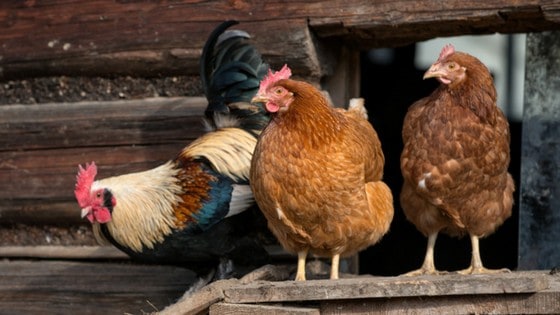
Wondering why chickens can't fly? Here's what you need to know!

Why Chickens Can’t Fly Very Well

Can chickens fly? While some chickens fly better than others, as a whole, chickens are not good at flying because of ancestry and selective breeding by humans.

Modern chickens are the noble descendants of the grey or red jungle fowl found in the wild in around Thailand, Myanmar, Vietnam, and Laos. Their ancestors did a pretty good job of flying, particularly if there was a predator involved.

However, since modern chickens have become a companion to humans, the need to fly for survival has been largely bred out – mostly for food purposes – and their wings have become vestigial.

The reasons why chickens can’t fly is because chickens adapted to spend time on the ground since their food is located on the ground (doesn’t do them much good to stick to the air if they’ll never catch a meal, right?). Their feet too are adapted for walking as opposed to perching.

Certain species also have been bred to be poor fliers (think Silkies or Frizzles) largely because they’re ornamental breeds – so things like wingspan or other factors that allow a bird to fly were less important breed features than, say, unique feathering.

Silkies have fluffy feathers similar to down, for example, which makes it nearly impossible for them to fly. Read more about the best types of chickens that make great pets.

So, how high can chickens fly? Well, with enough determination, some chickens can fly over an 8 foot fence, although not all will be successful.


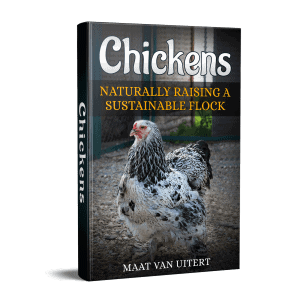
Chickens; Naturally Raising A Sustainable Flock is my best selling book about raising healthy hens! You’ll learn how to handle sticky first aid situations, raise baby chicks with the week-by-week checklist, how to give the best care even in the worst weather, and more! Click here to learn more.


Buy Now


Can Any Chickens Fly? Here’s the Chicken Breeds That Can Fly

Now, there are certain chicken breeds that can fly better than others, such as Wyandottes and Orpingtons. They’re good for at least one foot off the ground for a short while, particularly if the neighbor’s dog has decided to visit. Read more about raising chickens with neighbors.

However, because they’re heavy and not really built to fly, they’ll get some lift off, but their wings cannot give them the lift power needed for them to fly for very long.

Heavier breeds survive a dog attack because they’re fast runners (chickens can run faster than people – about 14 miles per hour. That’s why when we want to catch them, we don’t have a prayer in hell until nightfall). If you’re a beginner at chicken raising, check out this post for the best chicken breeds for beginners.

Lighter breeds such as Leghorns, Ancona, and Araucanas to some extent, are better fliers – you might notice that they’ll roost up in the trees during the night, while heavier breeds struggle to roost even a few feet up.

If they’re safe from predators, you might wonder why chickens fly at all – it’s not needed for survival, and they’ll find all the treats they need on the ground. Read more about how to keep your chickens safe from predators.

Well, as you know, chickens are full of curiosity, and they’ll fly largely to explore their surroundings and to interact with their flock mates. Who doesn’t have a hen loves to discover new things, especially if it’s food related? Ours go nuts when their chicken tractor is moved to new grass!

Can Roosters Fly?

Like hens, it’s not that these chickens can’t fly – in fact, roosters are marginally better at it than hens. However, the need has been largely bred out of them, and roosters no longer need the ability to fly in order to stay safe from predators.

I hope this answered your questions about why chickens can’t fly!

So can chickens fly? Yes and no. I hope this information helped explain why most chickens can’t fly. Feel free to ask me more questions about why chickens can’t fly or any other information you need about raising chickens!

More Chicken Raising Resources:

Learn More about Types of Chickens with the Backyard Chicken Bundle!

The Backyard Chicken Bundle is a unique ebook bundle with every resource you need to start raising a flock of healthy hens! (Total value $250)

Included in the bundle are:

  • 5 individual ebooks with over 40 gorgeous full color photographs, charts, and recipes for all-natural coop cleaners, layer feeds, herbal first aid salves, and more.
  • 34 page Herbal Encyclopedia to growing 30 different herbs for your hens right in your own backyard
    E-books naturally complement each other so you have information at your fingertips.
  • 3 downloadable checklists to save your flock from bad weather & predators, and to keep them healthy while molting.
  • 1 Apple Cider Vinegar for Backyard Chickens video that shows you step-by-step how to make organic apple cider vinegar in your own kitchen.
  • Information you can TRUST by a recognized backyard chicken expert featured in Reader’s Digest, Glamour, and on major news networks like ABC, CBS, & NBC. And START spending every possible minute playing with & enjoying your pets (without the worry)!

Click here to learn more about the Backyard Chicken Bundle!

Backyard Chicken Bundle

I, for one, am not the biggest fan of electricity. In fact, I try to avoid it if possible. But with winter on its way, and the likely power outages (anyone remember Snowmageddon where most of Washington DC was out of power for a couple weeks?) you’ll want to know how to stay warm in winter without heat so if you lose power, you have a plan.

Being cold sucks (unless you’re one of those people who craves cold. I’m not. I want to stay warm all the time), so during power outages you will need to look for alternative ways to make sure that your house is sufficiently heated.

These are my genius hacks (tried and true) for how to stay warm in winter without heat, and if you’re camping or go hunting this winter, then you can adapt these tips to figure out how to stay warm in a tent, too.

Drinking a Warm Beverage

Tea, coffee, whatever. If you don’t have power, then brew thyself a warm beverage to stay warm in winter. The beverage will raise your body temperature, and you’ll feel it down to your toes (this is also good for animals if they’re cold, too). Just don’t burn yourself.

Staying Under Extra Blankets During the Day

During the super cold days (the ones where my hands are freezing), I pretty much stay under several quilts all day. Those blankets help retain the heat your body lets off and you can even practice a bit if Danish Hygge with your cozy self.

Wearing Fleece

Sheep don’t get cold for a reason (ok, they do but fleece is still a winter staple for cold wussies like me who need to stay warm in winter). Pants, socks, even a fleece shirt are all winning ideas.

I keep a couple fleece tops in my winter emergency survival kit in the car in case I find myself stranded (during Snowmageddon, there were several people who froze because their cars got stuck and they didn’t keep a winter emergency survival kit in their vehicles.

Wearing a Hat

Your mama always told you to wear a hat, and that’s because you lose most of your body heat through your head. So, be a trooper and wear a hat, preferably with fleece, so the cold has minimal spaces to get into your body.

Your mama taught you right. Now go call her and thank her.

Using a South-Facing Sun Room with Good Insulation

Southern exposures get the most sunlight during the day, so any room facing South will be warmer (also, Southern winds are warmer than northern winds, so Northern facing rooms will be colder simply because that’s how weather works).

Also be sure the room has good insulation so heat that gets into the room does not escape easily. There’s no use in trying to stay warm if you aren’t taking that extra step to RETAIN the warmth.

Using a Wood Stove (or a Rocket Stove)

While it’s not the most economical because you have to buy the stove and pipes and possibly the wood, this is probably the easiest way to stay warm in winter without power. (This is the stove we use – I HIGHLY recommend it).

Just be sure that the chimney leads outside so you don’t inhale smoke. Most commercial wood stoves are created to have sufficient draw, so your part is just installing it correctly so you can stay warm without accidentally hurting yourself.

And yes, you should use a commercial stove – don’t be that guy that builds his own and burns his house down or dies in the middle of the night because of smoke inhalation. Yes, those people do exist. Usually they’re my neighbors.

You can learn how to install a wood stove here.

Only Heating the Rooms You Most Frequently Use

This won’t really help you heat your house, but it’ll help you lower the cost and possibly the stress of having to figure out how to heat a bunch of rooms.

For example, we don’t worry too much about heating our kitchen, as long as the temperatures aren’t below 20 (if it is, then we have to worry about pipes freezing, and yes, we’ve woken up to our fair share of broken pipes).

The food will stay fresh and we won’t have to worry about paying to run the fridge. Pretty win/win.

Using a Gas Generator

A gas generator can also be an easy way to stay warm in winter during a power outage as long as you don’t mind paying for the gas and listening to the noise.  You just need to keep the generator outside the house so that the fumes produced do not hurt you.

(An alternative is a solar generator like this. Supposedly, this gadget can power several appliances. It ain’t cheap, but you’re worth the investment.)

Making Sure the Rooms Are Free Of Drafts

This is also helpful to stay warm because the drafts can allow heat to escape. You just need to take a few minutes to ensure there are no drafts.

Putting Heavy Blankets Over Doors and Windows

We do this every winter because it’s fast and effective. By keeping the heavy blankets over the doors and windows you will be ensuring that heat does not escape. This will also prevent more cold air from getting into the house.

Opening Curtains During the Day

When your curtains are opened during the day, the sun’s rays can get into the house. Particularly if your windows face south and there’s no drafts in the room, this will help heat the air inside your house.

Placing Clear Plastic Over Windows

This is one of our favorite ways to stay warm in winter, especially if the wind is really blowing. Our farmhouse is old, and the insulation is minimal. Clear plastic keeps the chill out while at the same time allowing light to get in and significantly helps to preserve heat.

Putting Blankets On the Ceiling and On the Floor

Especially if there isn’t much insulation on your floor, you’ll want to put blankets down to stay warm. We’ve used this method to help insulate the house, keeping it relatively toasty even when it’s close to zero outside. Just keep the blankets away from your wood stove or generator.

Cold but don't have power? Here's 14 genius ideas for how to stay warm in winter without heat!

There are many types of chickens but there are a lot of breeds to choose from. Here are 12 breeds you’ll love in your backyard!

Raising chicken breeds for eggs is usually why people get into poultry in the first place! Then, very quickly, you realize it’s a lot of fun to own these weird little cluckers and each of the types of chickens has a distinct personality…….and you fall in love.

Some types of chickens are great chicken breeds for eggs, some are good for meat (or dual purpose), and some types of chickens are perfect as pets. And there are some chicken breeds you need in your life just because they’re fun and quirky (and you can put bows on them).

In this article, we’re going to show you the best types of chickens that are perfect for your backyard!

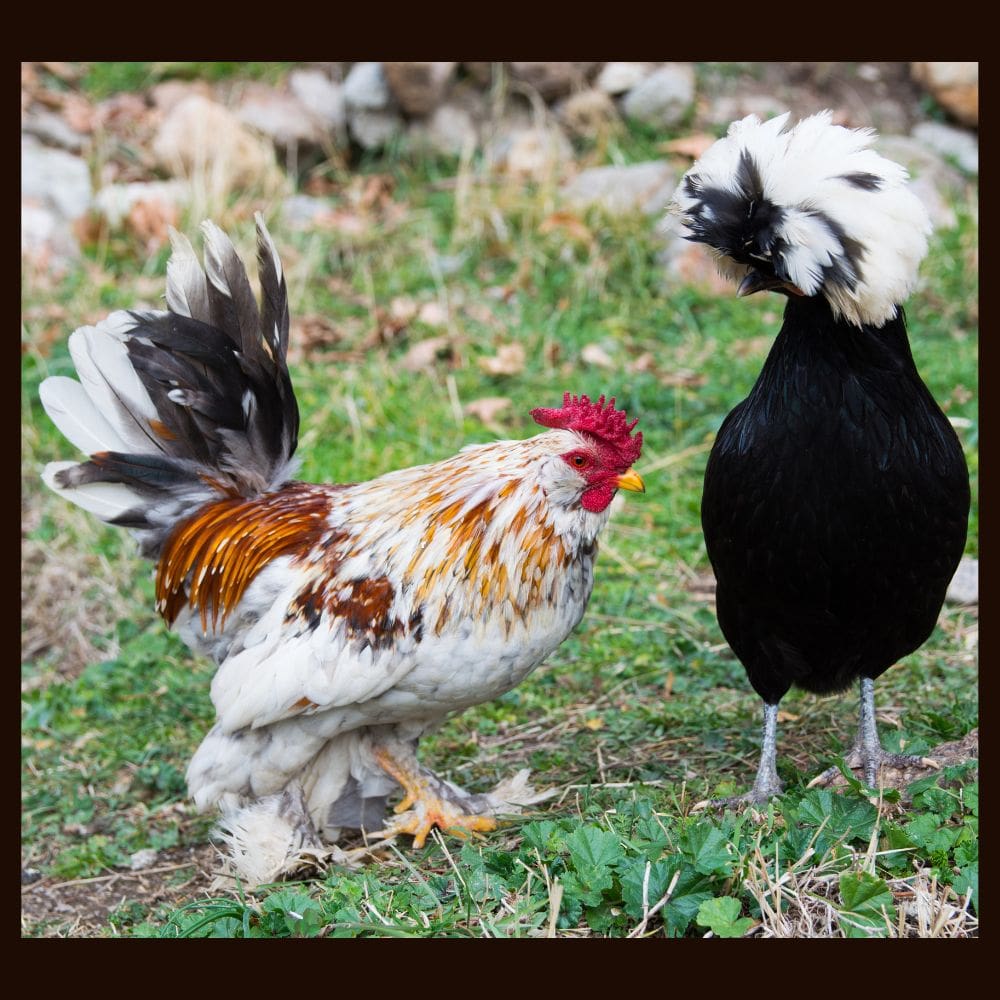
Sultan and Polish chickens standing together on grassy terrain

Chicken Breeds For Eggs

Marans

Marans, a type of chicken which originated in France, can lay anything from a light brown egg to dark brown eggs (the coveted chocolate-colored eggs are said to be the best in the world).

The first few eggs a marans hen lays can be darker than subsequent ones, unlike other chicken breeds. Chart your flocks egg colors to see if her eggs stay the same shade! There are several different types of marans chickens, including Black Copper, Blue Copper, Cuckoo, and Wheaton.

Production Reds

This type of chicken isn’t really a breed, but rather a modern strain, created for high egg production. They lay very consistently, and some will even lay throughout winter.

Many commercial farms raise this breed.

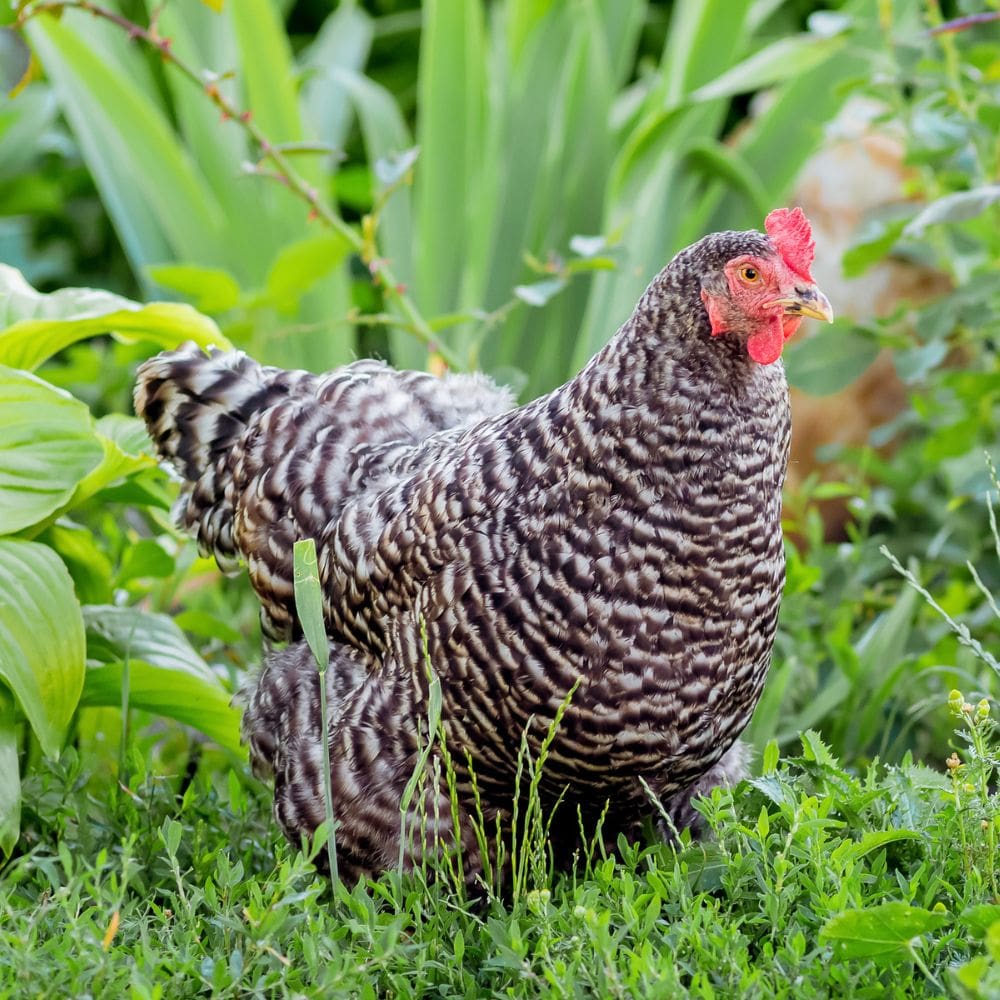
Plymouth Rock Chickens

This is an old chicken breed that’s been raised in the United States for hundreds of years. Plymouth Rock chickens are a great chicken breed for eggs. They lay about 280 eggs a year and the roosters are great guardians and protectors.

This breed is very common on a lot farms, I’m sure you would recognize them right away. They are also called Barred Rocks.

Plymouth Rock Chicken

Easter Eggers

Easter eggers are not breeds of chickens, but rather hybrid chickens. They are a mix between chickens carrying the blue laying gene and another breed, such as New Hampshire Red Chickens.

They usually have a muff and sometimes a beard, these are the traits that make them so adorable.

If you’re looking for a healthy types of chickens that lay all sorts of colored eggs, then definitely raise Easter Eggers, but know the color of the eggs isn’t guaranteed, since they don’t breed true.

Types of Chickens For Pets & Children

Silkies

Out of all the types of chickens, Silkies are best known for their even, friendly temperaments, and some silkies are even used as therapy chickens for special-needs children because they’re so good with people.

Silkies are adorable with fluffy feathers and 5 toes on their feet. Adult males get around 4 pounds. Hens go broody easily, and they are the types of chickens that will hatch eggs other than their own.

Because of their fluffy plumage they look like stuffed animals!

Rhode Island Reds

Rhode Island Reds are one of the oldest types of heritage chickens in America. There are both industrial strains of Rhode Island Reds, bred for egg production as well as the heritage strains, which are larger.

They’re docile and friendly types of chickens, and easily trained to be held in your lap. Rhode Island Reds also happen to be an excellent chicken breed for eggs, and they can produce about 280 eggs each year!

If you’ve never had a heritage breed, you are in for a treat.

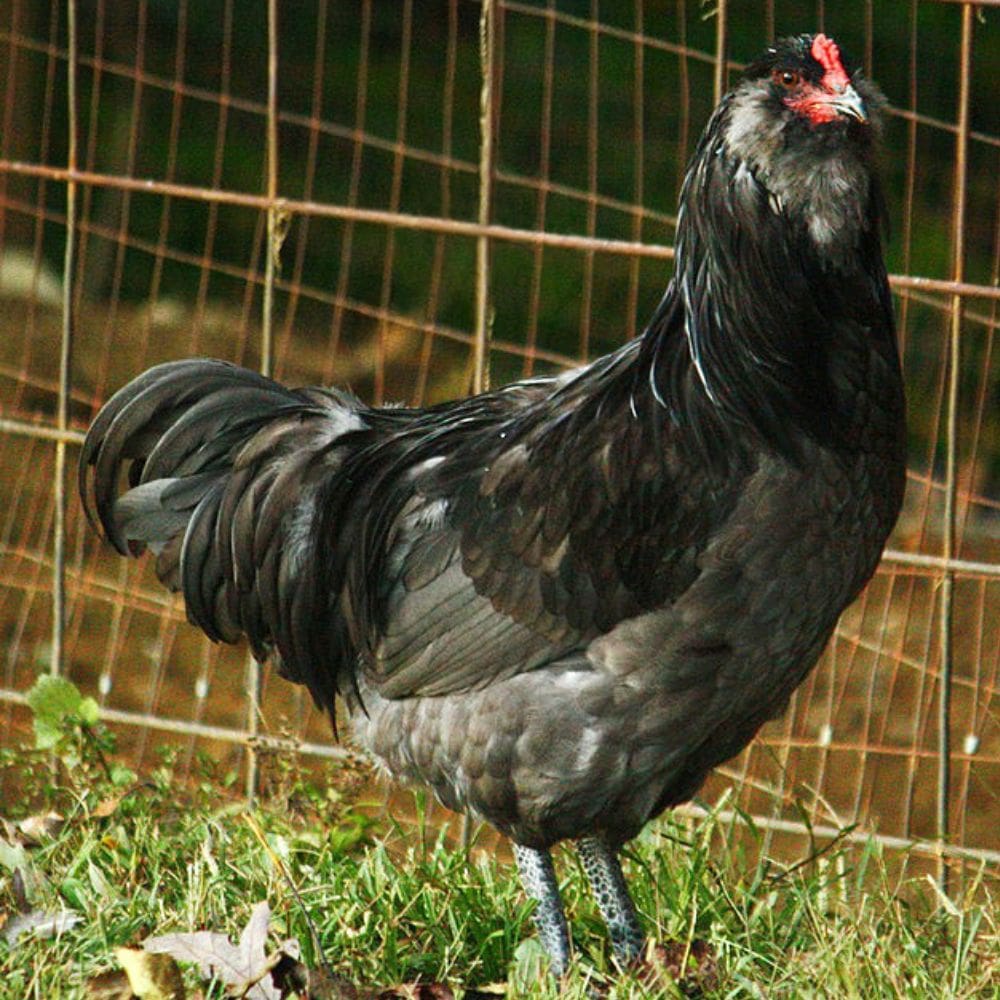
Ameraucanas

Ameraucanas are great pet types of chickens because they lay beautiful blue eggs and are small and adorable.  

An American breed, Ameraucanas were developed intentionally to preserve the blue egg laying gene of the Araucana (which is the only type of chickens to carry the blue egg laying gene), but to eliminate the some of the lethal genetics of the Araucana breed.

Ameraucana Chicken

Beautiful Types of Chickens

Hamburg

Hamburg chickens are beautiful with black and white feathers. They are great chicken breeds for eggs, and you can get either full sized or bantam types.

This breed looks much like a wild chicken and they love to forage. Hamburgs are also very cold weather hardy birds.

Polish Bantams

Polish chickens look a bit like cartoon characters with big tufts of feathers on their heads (they look like pom poms!). They come in a bantam size as well. Polish bantams come in a variety of colors, and they are calm and docile. I mean, who wouldn’t love looking at these cluckers all day?

They can be a little skittish if you don’t handle them a good bit because their pom pom heads block some of their vision.

Lavender Orpington

This breed is becoming more popular because…well…..lavender. They’re not really purple (they are more of a gray), although some owners disagree! Orpingtons are known for being great layers. They’re also great companions!

There are several varieties of Orpingtons such as the Buff Orpington and the Blue Orpington. You won’t be disappointed with any of the Orpingtons.

Sultans

Sultans are one of several heritage chicken breeds that are critically endangered. They were bred in Turkey as ornamental birds for the gardens of the Sultan (in fact, their actual name is Serai Taook, which in Turkish means Sultan’s Fowl.)

They’re very pretty chickens, with tufts of feathers on their heads and feathered feet.

Frizzles

Frizzle chickens are ultra unique and irresistible. They have curled feathers that are almost unbelievable. They are a genetic trait, and are certainly a show stopper!

These types of chickens are docile and happily will sit on eggs for you when they’re not strutting around your yard! They are not cold hardy however, due to their light and flowy curled feathers.

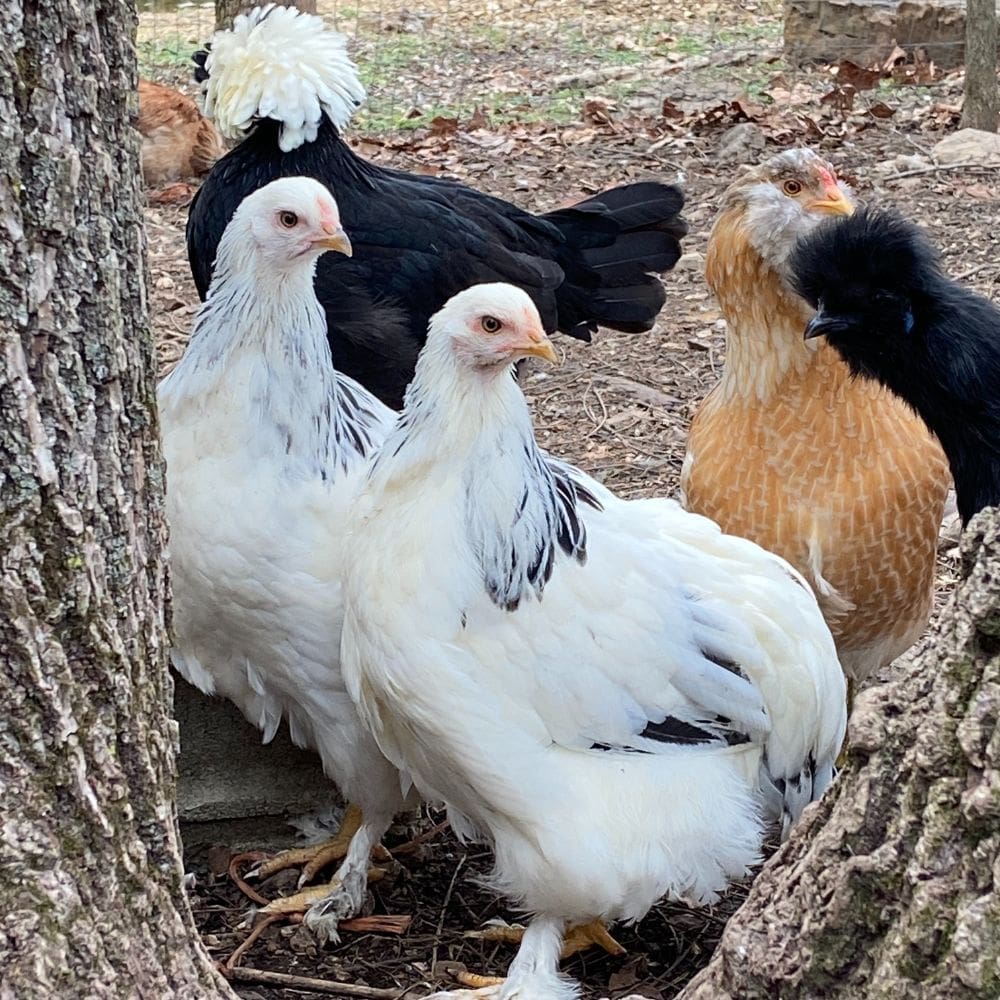
Brahmas

These types of chickens are super cool – they have black and white feathers (there are other varieties as well), and tufts of feathers on their feet. Brahmas are docile and happy to hang out on your lap!

Best of all, you can get them as average sized chickens, or as large as turkeys! How cool would a huge rooster like this be in your backyard! But the females are just as nice.

Brahmas and Polish and Silkie and Easter Egger chickens

Summary

That’s the run down on 12 types of chickens I would highly recommend for every chicken owner to have. But don’t go just yet, there is more great reading, information, and guidance below!

Further Reading On Chickens

Learn More about Types of Chickens with the Backyard Chicken Bundle!

The Backyard Chicken Bundle is a unique ebook bundle with every resource you need to start raising a flock of healthy hens! (Total value $250 for just $24.99). E-books naturally complement each other so you have information at your fingertips.

Information you can TRUST by a recognized backyard chicken expert featured in Reader’s Digest, Glamour, and on major news networks like ABC, CBS, & NBC. And START spending every possible minute playing with & enjoying your pets (without the worry)!

Included in the bundle are:

  • 5 individual ebooks with over 40 gorgeous full color photographs, charts, and recipes for all-natural coop cleaners, layer feeds, herbal first aid salves, and more.
  • 34 page Herbal Encyclopedia to growing 30 different herbs for your hens right in your own backyard
  • 3 downloadable checklists to save your flock from bad weather & predators, and to keep them healthy while molting.
  • 1 Apple Cider Vinegar for Backyard Chickens video that shows you step-by-step how to make organic apple cider vinegar in your own kitchen.

Click here to learn more about the Backyard Chicken Bundle!

Backyard Chicken Bundle

Molting chickens can be stressful because, well, your flock looks naked and like they’re unhealthy.

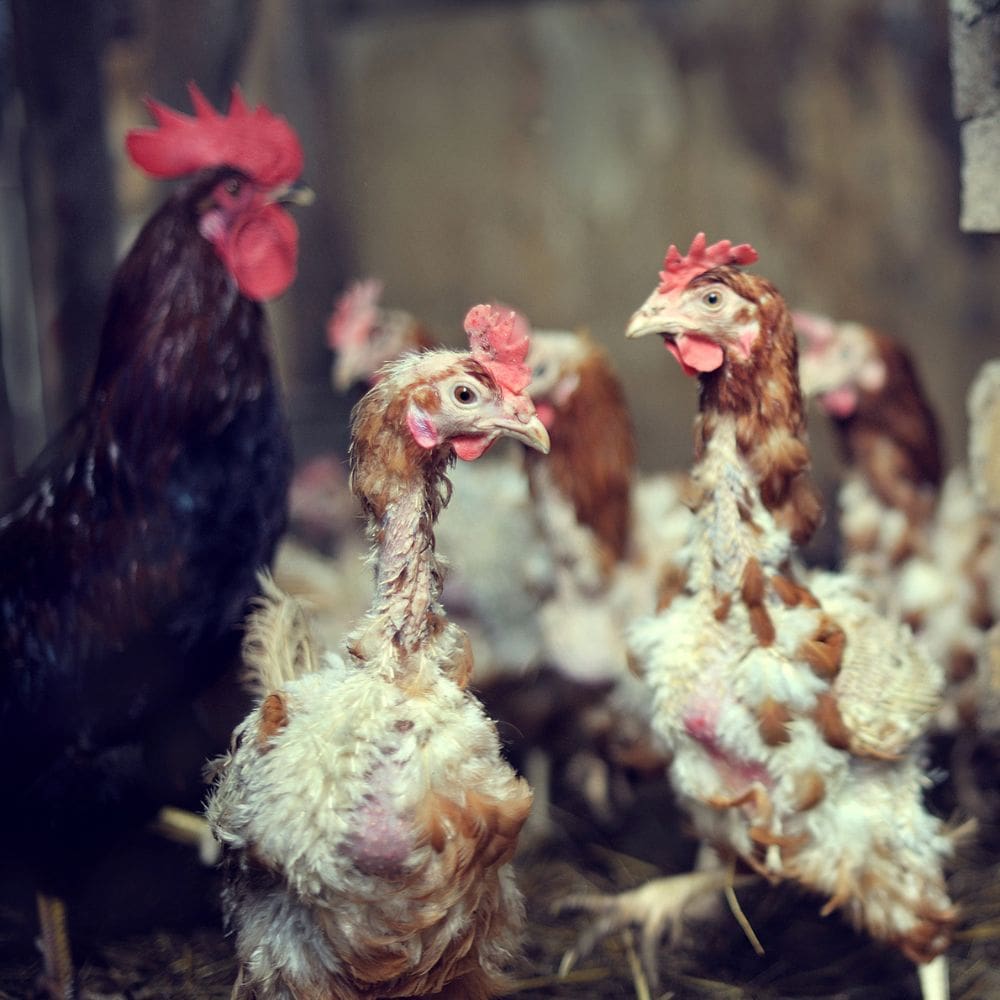
In fact, they can look like they’ve been to hell and back. They can look scruffy, and you might worry that they’re sick. And you might even take them to the vet!

When we say “chickens molting,” you might wonder what that really means. It’s a term you see thrown around on Facebook, but it can be confusing if you’re a beginner with chickens.w

Basically, when we say “chickens molting,” we mean that your hens and roosters are losing their feathers. They shed old feathers and then grow new ones! Don’t worry the molting process is perfectly normal.

Close up of two hens with minor feather loss from molting

When do chickens molt?

Chickens tend to molt in the late summer, early fall or even early winter when breeding season is over.

As your chickens get more and more “naked,” you’ll probably worry that your flock is cold (they might be and you’ll have to find a way to keep them warm).

You might be wondering “when do chickens molt for the first time? – it’s a typical question new owners ask. The answer is that chickens start molting typically in the winter after their first year. The timing can vary but it’s typically in the 14 to 18-month old range.

How often do chickens molt?

Usually, every year, although the severity of the molt (meaning how many feathers they’ll lose) varies from hen to hen and the year.

Your mileage will vary; while some people have chickens that look like they’ve had every feather removed, I’ve personally never had a hen lose more than a few feathers.

We live in an area where the winters are mild, so maybe that has something to do with it!

How long does molting last?

Almost universally, when I encounter a new backyard flock owner who has chickens molting, I’m asked “How long do chickens molt?” and the answer probably won’t satisfy you.

Truthfully, only your chickens know how long they’ll be molting. We’ve had it last 2 weeks and up to 6 months. Most molting seems to last 60 to 90 days, from the time the hens start to lose their feathers to completely regrowing new ones.

During this time, as your hens regrow their feathers, they’ll be more physically sensitive than normal. As the feathers start to grow, new pin feathers emerge. Touching them can hurt your chickens.

When the feathers finish growing, though, your hens won’t be so sensitive, and you can pick them up and pet them as you normally would.

You might be tempted to provide a sweater or saddle for molting chickens, but it’s best to just let nature take its course. If it’s very cold out, you can find another way to keep your flock warm.

Chickens molting or chicken mites?

When your chickens start to lose their feathers, it can seem similar to a mite infestation. However, the two present differently, so using these rules of thumb, you can confidently know whether your chickens are molting or if there’s a more serious issue.

When chickens molt, they lose feathers in a systematic, predictable fashion: From the top of their heads, then their necks, and then on down until they lose their tail feathers.

If you think your problem is mites and not chickens molting, you’ll usually see feather loss around the vent, the tail, or other areas; it’s not in a predictable pattern. You’ll also notice their skin is red and irritated, and possibly flaky.

Close up of chickens with lots of feather loss due to molting

What’s the difference between a hard molt and a soft molt?

Basically, a hard molt is when chickens lose a lot of feathers and it’s very obvious. It’most likely when you may panic and thing your chickens are dying from some horrible disease.

On the other hand, a soft molt is when you may not even really notice that your chickens are molting. It’s hard to tell unless you have been around chickens for a long time and pay close attention. This is the most common kind of molt.

Egg productivity during molting

Unfortunately, most chickens will have drastically reduced egg production during the time they are molting. Some chickens stop laying altogether.

Since molting is triggered by daylight hours, this is when egg production naturally decreases anyway. It’s a natural laying cycle for backyard chickens.

Plus they are using their energy to grow new feathers instead of producing eggs. However, providing a lot of protein may help to curb this problem and keep at least some eggs coming your way.

What should I feed a molting hen or rooster?

Your molting chickens’ diet is extremely important. For feather regrowth, your flock needs lots and lots of protein. In addition to a high-quality layer feed (you can get my favorite feed here), you’ll want to give your chickens extra protein. Protein intake is key for many health-related topics.

Mealworms (or suet cakes made with mealworms) are a good high-protein supplement. You can also feed raw, unsalted nuts, black oil sunflower seeds, kelp, freshwater shrimp, grubs, or crickets.

You can mix them directly with their feed or offer the extra protein separately. Molting chickens also need plenty of fresh water!

In addition to protein, your flock needs to have plenty of minerals and vitamins. This is good for health in general.

Is all feather loss due to molting?

No, it’s not. Your chickens can lose feathers due to illness or chicken bullying. So don’t just assume all feather loss is due to molting.

Your flock could have parasites, but there are ways to determine that. Read this article to help you: Chicken Parasites – An Informative Guide to Uninvited Guests.

If you have chicken bullies in your coop, that is a pretty obvious cause and there are ways to prevent that. Read about that process here. If you simply have chickens working out the natural pecking order, you might have a few feathers flying here and there but that will work itself out.

Summary

If you notice feathers falling the first thing to do is NOT panic. Check your chickens over for parasites and general health first and make sure you don’t have a bully pecking at the underdogs. After that, focus on protein intake for your flock. Relax, you’ve got this!

Every month I do an unboxing and an update of my ButcherBox order.

If you’ve never heard of ButcherBox, it’s a subscription box that with organic, grass-fed beef, pork, and chicken. The animals are humanely and sustainably raised.

It’s become extremely popular with homesteaders who can’t necessarily raise their own livestock (cattle for instance) but still want access to sustainable, organic food.

Here’s this month’s ButcherBox! The company has been super generous this month, and until October 31, you can save $11 and get free filet mignon when you use this link here: Get Your Own ButcherBox!

https://www.facebook.com/thefrugalchicken/videos/1972140699731864/

So you’ve heard keeping chickens as pets is a good idea – you get free breakfast, lots of laughs, and a new best friend to watch Netflix with.

You can keep your flock of chickens in a safe coop outdoors; some people like keeping a chicken as a pet in the house (using a diaper, of course).

And many owners believe their chickens are the best form of therapy (and you even get eggs….find a therapist that can do THAT).

In this article, I’ll answer some frequent questions about keeping chickens as pets: the good, the bad, and the ugly (just kidding…there isn’t any ugly. Or bad for that matter). Pet chicken care is easy, as long as you take a few things into consideration before making the leap into owning indoor pet chickens.

What does an indoor pet chicken eat?

Good chicken-keeping practices say that you should feed your pet chicken a high-quality layer ration with at least 16% protein feed. Most major brands out there put a lot of time and effort into producing feeds with the right amount of nutrients, so you can’t really go wrong with them.

You can also make your own non-gmo layer feed with my favorite recipe here.

That being said, your new chicken best friend can eat most fruits and vegetables (I explain which ones to avoid here), as well as yogurt, cheese, eggs (yes eggs), and meat if you want to go that direction.

Chickens are omnivores and opportunistic eaters, so they will go for meat if you let them (they love bugs, right?). Whether you want them to have meat protein is completely up to you.

Stay away from feeding your pet chickens anything processed, with salt, sugar, or artificial anything. Fresh and all natural is best for your indoor pet chicken!


Chickens; Naturally Raising A Sustainable Flock is my best selling book about raising healthy hens! You’ll learn how to handle sticky first aid situations, raise baby chicks with the week-by-week checklist, how to give the best care even in the worst weather, and more! Click here to learn more.

Chickens: Naturally Raising a Sustainable Flock

Buy Now


Chickens as Pets: Chicken Breeds

While ANY chicken can make good pets, there are some breeds that naturally lend themselves to the role. Silkies, for example, are beautiful and very docile. Silkies are also healthy, and love spending time with people. Rhode Island Reds are great chickens as pets, and we’ve kept a few as pets and been very happy with them.

Thinking about keeping chickens as pets? Here's what you need to know!

Chickens as Pets: pros and cons

Before getting chickens as pets, there’s some things you should think about. Will your chickens live indoors or outdoors? Can you handle the amount of poop? (Yes, they poop a LOT).

Particularly if you have children, having a pet chicken means you will need to keep up with cleaning and disinfecting, especially if your hens live indoors; they ARE carriers of salmonella and campylobacter bacteria (amongst others), and your kids can pick the bacteria up. Ask me how I know.

This isn’t to say you SHOULDN’T keep indoor pet chickens, you’ll just need to be aware and be extra vigilant. There are things you can do (such as feed apple cider vinegar and yogurt) that will introduce beneficial bacteria into your pets digestive system, but it won’t eliminate ALL of the bad bacteria. It just creates an environment where the good bacteria can proliferate.

What about medical care? Do you have avian vets in your area? Are you prepared to take your chickens to a vet? Are you willing to learn how to care for her if you can’t take her to a vet? (this is possible and reasonable – we don’t have qualified avian vets in our area, so we have to wing it on our own).

Chickens as pets are more delicate than a cat or dog, and they tend to have shorter lives. They also get mysteriously sick and don’t let their humans know until it’s too late (yes, this really does happen)  – are you okay with that?

Chickens as Pets: What about Neighbors?

Something else to consider is whether your neighbors are on board if you decide to keep chickens as pets – ESPECIALLY if your local area has restrictions. Don’t be the guy that decides you’re smarter than city hall – the roads are paved with used-to-be chicken owners who had to get rid of their flocks because they didn’t follow town restrictions.

If you’re planning to keep indoor pet chickens, then it’s none of the neighbor’s business what you do – but keeping a hen instead of a rooster is a smart idea. If your flock will live outdoors, though, you might want to clear it with the neighbors.

Even if your town doesn’t have rules about chickens, a ticked off neighbor can still complain, that the city can “invent” rules at their convenience – yes, it’s happened. People have had whole legal battles and it’s taken months to keep the chickens they were allowed to legally own in the first place. Discretion is the better part of valor.

So, do you think keeping chickens as pets is for you? I hope so, they’re a lot of fun!

Thinking about keeping chickens as pets? Here's what you need to know!

More Resources for Those Interested in Raising Chickens as Pets:

Learn More about Types of Chickens with the Backyard Chicken Bundle!

The Backyard Chicken Bundle is a unique ebook bundle with every resource you need to start raising a flock of healthy hens! (Total value $250)

Included in the bundle are:

  • 5 individual ebooks with over 40 gorgeous full color photographs, charts, and recipes for all-natural coop cleaners, layer feeds, herbal first aid salves, and more.
  • 34 page Herbal Encyclopedia to growing 30 different herbs for your hens right in your own backyard
    E-books naturally complement each other so you have information at your fingertips.
  • 3 downloadable checklists to save your flock from bad weather & predators, and to keep them healthy while molting.
  • 1 Apple Cider Vinegar for Backyard Chickens video that shows you step-by-step how to make organic apple cider vinegar in your own kitchen.
  • Information you can TRUST by a recognized backyard chicken expert featured in Reader’s Digest, Glamour, and on major news networks like ABC, CBS, & NBC. And START spending every possible minute playing with & enjoying your pets (without the worry)!

Click here to learn more about the Backyard Chicken Bundle!

Backyard Chicken Bundle