Do you want to garden, but you just don’t have enough time for it? I’m with you.


To be honest with you, after working 40 hours a week, the last thing I want to do is garden. So there’s been many years when I just haven’t planted a garden. I decided that since I’m one who doesn’t have a lot of time for a garden, there’s probably more people out there who need some help on how to get started on a garden without a lot of time.


Here are my tips on how to garden when you don’t have a lot of time


1. Start out small
2. Take it slow
3. Start with container gardening
4. Choose foods that you like
5. Choose easy plants to grow
6. Plan out your garden ahead of time
7. Use a soaker hose
8. Participate in a community garden


My first tip is to start out small.

Don’t try and tear up half your yard and plant a massive garden. Just because you saw a beautiful huge garden design on pinterest, doesn’t mean that’s what is right for you! I always recommend starting out small and maybe just trying a couple of plants at a time. You don’t want to create a massive backyard garden and then realize you actually don’t enjoy gardening at all! I normally suggest that you just choose a small area of your yard to plant a garden in and try it out for a year. If it works out and you love it, then you can get a little bigger the next year. Having a large garden is A LOT of work and it requires a time commitment so you don’t want to get yourself into too so much that it ends up stressing you out!

New to small space gardening? Here's 3 Square Foot Gardening Plant Spacing Ideas for beginner gardeners!

Take it slow


Along the same lines as my last tip, if you don’t have a lot of time you need to take it slow. I suggest starting small and then slowly increasing your garden size each year. You don’t want to jump into a huge garden too quickly because you’ll likely end up getting pretty stressed which is not what gardening is supposed to do! I use gardening as a way to relieve my stress and spend some time outdoors, but I also know how much I can handle and I don’t try and do too much.


Start with container gardening

Container gardening is a great way to garden that’s easy and doesn’t take a lot of time. You can start with container gardening and then branch out as you get more time to garden!
Check out this how to guide with 35 of the easiest plants you can grow in a pot or container. This post gives some great information on what plants you can grow in a container and what you will need to be successful at container gardening. Also for my apartment dwellers, check out this how to guide on how to grow plants in your windowsill. It’s easy and you don’t even have to leave your house or your apartment!


Start out with an herb garden

So I love herbs and they are some of my favorite plants to grow because they’re pretty easy and incredibly useful. There are TONS of diy herb gardens out there that you can make and I love this guide that has tons of different diy herb gardens you can choose from.

Choose foods that you like

Trust me, when you don’t have a lot of time you want to choose to grow plants that produce vegetables or fruit that you actually like. Especially when you are just starting out you don’t want to plant jicama (it’s a really good, but also a fairly unknown vegetable, at least in my area) when you have no idea what to do with it. And if you grow things you don’t like you’re less likely to enjoy gardening and you’ll get discouraged. Before you plant something in your garden you should know how you’re going to use it! Look up a couple of recipes that use that vegetable that look good to you, so you know how you’re going to use it once you’ve grown it. Don’t waste time planting vegetables or fruits that you don’t like and won’t use!

Choose the easy plants

I HIGHLY recommend that especially for beginners you start out with the easy plants. They’re a little bit more forgiving, of potential mistakes and if you don’t have a lot of time it’s very easy to make mistakes (like forgetting to water for a long time) Some of my favorite easy plants to grow are:
Cucumbers
Green Beans
Peas
Tomatoes
Mint
Zucchini: Seriously you can’t get these things to STOP producing. You’ll have more zucchini than you know what to do with
Summer Squash: Same with summer squash. It grows like CRAZY
Bell Peppers
Spinach

The Tower Garden has an amazing how to guide to help you choose plants, and seeds that will work best for your garden and are easy to grow. Check it out here


Plan out your garden ahead of time

Trust me. If you don’t plan out your garden you’ll probably regret it. You might think that you’re saving time by not planning, but when you realize you planted your tomatoes directly in the shade of a tree you’ll wish you had. Plant your plants in the right spot! Look up the sun and water requirements for each plant and then plant accordingly. Put low water plants together and full sun plants together. You’ll save yourself tons of time watering when all of your plants that need a lot of water are together, and all of your low water plants are together. It makes things simpler, easier, and faster.


Use a soaker hose

I LOVE soaker hoses. Once they’re set up in your garden they will save you so much time because you can just leave them on and let your garden to soak. Beats watering with a watering can am I right? I also feel like using a soaker hose is WAY more effective and saves water.


Get the right tools

So I normally keep things pretty simple here at the homestead, but there are some new, fancy homesteading and gardening tools that are huge time savers. I highly recommend a no kink hose (like this one) because getting kinks out of a 100 ft long hose is a pain! So look around and find the best tools that will work for your garden, and save you the most time! Also a great tool you can use are self watering containers. Check out these amazing diy self watering containers! If you’re anything like me, you forget to water your plants A LOT. So I love these diy self watering containers because they save tons of time and prevent me from accidentally killing my plants.


Find (or create) a community garden

Personally, I think community gardens are a huge timesaver. The work of gardening is divided up among a bunch of people, so there’s less work for everyone involved. Which is a HUGE timesaver. Look around your community and see if there is a community garden near you that you can participate in. Or see if some of your neighbors would be willing to help you create one!

Go to your closest farmers market

Ok so I understand that for some of us there just isn’t enough time in the day for gardening. And that’s ok! One of my favorite gardening alternatives are farmers markets or farm shares. You can head to your local farmers market and pick up some amazing fruits and vegetables that are delicious and fresh! I also suggest that you contact local farmers and see if they do farm shares. There are several farms in my area that do farm shares and they are awesome! Basically with most farm shares you pay a certain amount up front and then you pick up certain fruits and vegetables each week. I LOVE farm shares because they’re a great way to support local farmers and you get to try out different yummy fruits and vegetables each week!

Do you need some extra help getting started with your garden? Check out my book all about backyard gardening!

Are you a really busy person? How do you make time for gardening? Help me out and share your time-saving gardening tips in the comments below!


Who doesn’t want to raise people friendly chickens?

If you’re keeping backyard chickens, it’s pretty likely you’re also keeping them as pets. Yeah, yeah, they lay eggs, and that’s great, but they also make great pets, right?

Which means you likely want to raise people friendly chickens. And luckily, that’s a pretty easy thing for anyone to do.

It’s also pretty important if you have children – NOTHING is worse than a rooster who flogs your kids, or pecks bloody holes into you when you enter their coop.

While the rooster is just doing his job, it’s also no fun to get beat up just for feeding your flock.

So, in this article, I’m going to show you how to raise people friendly chickens so you can have a flock that’s fun and enjoys your company as much as you enjoy theirs!

Start with a breed that’s known for their friendly nature

Yes, it’s true that any chicken can be a lap chicken. We’ve had plenty of chickens of various breeds, and whether you can raise people friendly chickens with them largely comes down to how they’re handled and their individual personalities.

But like dogs, some breeds of chickens have a tradition of being raised as companions to people, and so are MORE LIKELY to become your best friends.

The list of breeds below isn’t comprehensive; it’s just to get you started!

Silkies

Silkies are well known for their friendly, docile natures. They’re also great chickens for children because they put up with being held better than other breeds. (Read more about Silkie chickens here)

Speckled Sussex

These backyard chickens are so beautiful, and full of personality! They have brave natures, so they’ll readily come up to people while other breeds will shy away from human company. (Read more about Speckled Sussex chickens here)

Polish Bantams

Like other bantams, polish bantams are gentle and more willing to be held than other breeds, They also look adorable with puffs of feathers on their heads!

Cornish Crosses

I seem to be alone in this opinion, but I think Cornish Crosses are great chickens as pets. They enjoy human company and being held, and love just sitting and watching the world go by.

We’ve kept quite a few Cornish Crosses as pets, and they’ve consistently been great family members. The only drawback is they tend to have heart issues, and don’t seem to live as long as other breeds.

Rhode Island Reds

If reared as pets, Rhode Island Reds are great for a starter backyard chicken flock. They have friendly natures.

We used to have one hen named Daisy. She would do the “submissive squat” to indicate she wanted to be picked up and held. Such fun!

Araucana & Ameraucanas

Both of these breeds are friendly, and lay blue eggs! Araucanas originated in Chile, while Ameraucanas are a hybrid breed created in the United States.

You can read more about araucana chickens here.

Raise your flock from the time they’re chicks

It’s simpler to start from scratch when trying to raise people friendly chickens than try to retrain a hen that’s had little human contact.

So, if you want your chickens to be members of your family, it’s best to get them when they’re chicks, and consistently interact with them.

Now, there ARE exceptions: We’ve had hens we rescued from battery cages, and they made GREAT pets.

So, in some cases, rescues will learn to enjoy human company and being spoiled, especially after they spent their lives being shut up in less than pleasant surroundings.

But to be on the safe side, it’s easier to start with chicks and train them to enjoy human company.

Spend time with them, make them your friends, and establish yourself as flock leader

To raise chickens that enjoy human company and being handled by people, it’s crucial to spend time with them and make them your friends.

If they don’t know you well or aren’t sure about your role in the flock, they’ll avoid you.

It’s also important to let them know you’re the flock leader. The flock leader keeps them safe, shows them where food is, and keeps them comfortable.

Spend an hour or so every day with your flock, give them treats, and play games with them. They’ll love it!

Lots of treats!

Yep, it’s true. If you’re the “bringer of treats,” you’ll always be popular.

Offer your flock treats from your hands, and spend time talking with them and bonding with them as you indulge them.

The more you do this, the more your flock will make positive associations with you, and begin to regard you as their “Fearless Leader.”

Get to know their own quirks and what makes each one unique

Getting to know each individual chicken is important. You’ll get to know what makes each one unique, and what might help them bond with you.

Does your chicken love black soldier fly larvae? Or is oregano the key to their hearts? Does fast movement scare them? Do they liked to be picked up a certain way?

Knowing these individual preferences will help you help them stay comfortable in your presence!

Limit foraging and keep ‘em well fed. Be their food source

To raise people friendly chickens, they need to know people are their friends. And it helps if your flock understands you’re their food source.

If your flock has to forage for food, they essentially have to fend for themselves. This leads to mistrust – they don’t know what to make of you, so they avoid you.

In other words, they go wild.

Now this isn’t to say foraging is bad. Quite the contrary – it’s a normal and healthy behavior.

If you want to raise healthy people friendly chickens, then allow your hens to free range, but supervise their free ranging, and spend time with them as they forage.

Offer them treats at the same time so they recognize you’ll always be there with a meal.

You can make a game of it by scattering treats around and let them “hunt” for their dried insects!

Learning how to raise people friendly chickens is easy – and get ready to have some new best friends!

Yeah, I get it – talking about chicken coop roofs is not exactly sexy. At least not as sexy as nesting boxes, right??

But here’s the cold hard truth: The roof of your coop is really, really important. The last thing you want is a roof that retains water or is structurally unsound in snow.

I’ve seen HUGE buildings (horse barns) cave in because of the weight of snow.

The roof of your coop is also space you can repurpose – it doesn’t JUST have to be a roof. For example, you can grow a garden on your coop – a garden of lettuce for your flock. How’s that for local food, LOL!

So today’s Adorable Coops article features 6 coops that have FABULOUS roofs that will inspire you!

This coop blends well into the rest of the buildings around it, and appears to have a vent between the wall and the roof. This is a great idea for super hot climates to increase ventilation!

https://www.instagram.com/p/BkCEuNjFbQi/?utm_source=ig_share_sheet&igshid=1vvxnxdbwhgey

This beautiful coop has a tin roof that rain will roll right off of – very important to keep your flock dry!! (I also want to steal that rooster statue!!)

https://www.instagram.com/p/Bjxqn2AgGnn/?utm_source=ig_share_sheet&igshid=1n0ohi0k9n3t8

How cute is that sign! The angle of this roof means snow won’t build up.

https://www.instagram.com/p/BjnJkvWBaua/

Another adorable coop with an angled roof!

https://www.instagram.com/p/BjNzm3FltMa/?utm_source=ig_share_sheet&igshid=10t65yg5dd9d5

The corrugated roof makes it hard for snow to stick around! And the hens seem to love it, too!

https://www.instagram.com/p/Bj5zJJ6ACiY/?utm_source=ig_share_sheet&igshid=atnlj884bf2h

You know you want an herb garden on your coop’s roof. I would make it 6 inches deep to make sure there’s enough soil, and be sure to use some sort of liner!

https://www.instagram.com/p/BkGJcPpHqlO/?tagged=chickencoop

June is one of my favorite months. Summer is just getting started and the gardening season is just beginning. I LOVE eating fresh fruits and vegetables that are grown locally.

One of my favorite things about June is that peas are just coming into season! I LOVE peas! They’re SOOO good fresh and they are one of my favorite snacks to munch on.

I love peas, but I also think it’s super important to eat foods that are grown locally. And unfortunately where I live peas don’t grow year round. In fact, normally June is the only month I can find fresh peas in my area! Although you can plant peas in June for a late summer harvest, I want peas all year round!

Over the years I’ve learned some different ways that you can preserve peas, so that you can have yummy, locally grown peas all year round and I’d love to share them with you! 

Personally, I prefer to freeze my peas. Canning is great for other vegetables, but the thought of canned peas makes me gag. Yuck. If you’re a canning fan check out my step by step guide for canning vegetables. But personally, canned peas just aren’t for me.

I also think that freezing peas helps preserve their flavor and in my experience they taste almost as good as fresh peas! Plus frozen peas are my go to vegetable for dinner time, so why not make sure they’re locally grown peas?

One of the first things that you need to do in order to preserve peas is to pick out good, ripe peas.

When you go to the farmers market or if you’re picking peas to preserve at home, you need to choose peas that are ready so that you get the best flavor for your frozen peas. I look for peas that are a bright green color. I also feel the pods to see if the peas inside feel round. If they’re not round and the pod feels a bit empty then that pea is under ripe. If the pod feels full and tight and the peas inside seem to be crowding each other then those peas could be over ripe.

In my experience it takes a little bit of trial and error to figure it out. While over or under ripe peas might still taste good fresh, they’re not going to taste very good once they’re frozen, so try and get peas that are just right.

After you pick your peas, you need to shell them.

Growing up this was a go to family activity in late June. We would spread out a huge blanket and shell peas together, so that we could freeze them the next day. As kids we probably ate more peas than we shelled, but it was a fun family event that we loved.

Nowadays, if you’re lazy like me, you can buy already shelled peas. I know, I know. I’m lazy. But the farmer who lives down the road from me has a giant machine that shells peas as they are picked, and so I like to take advantage of the modern technology;)

After your peas are shelled, rinse them in cold water. I normally put them in a large bowl and run water over them to try and get any leftover dirt, leaves etc. off that might be still hanging around.

Now here’s the tricky part. There’s a lot of debate about whether or not your should blanch your peas before freezing them. 

Honestly, I’ve frozen them without blanching them and I’ve blanched them as well. And I’ve had good experiences with doing both. However, from my research I’ve learned that freezing peas without blanching them can lead to mushy and tasteless peas after they’ve been in the freezer for several months. That hasn’t been my experience, but here’s what I recommend. If you are planning on keeping the peas in your freezer for more than a couple of months you should blanch them just to be safe.

There’s nothing worse than freezing peas, only for them to be ruined a couple of months down the road.

If you’re planning on eating your frozen peas relatively quickly (within a few months) you’re probably ok to freeze them without blanching them. But you are going to run a little bit of a risk of them getting ruined faster than normal. So keep that in mind!

I’ve done both. And I’ve had good experiences with both, but I would recommend that you blanch your peas if you plan on storing them for longer. It does take a little bit more time, but it’s worth it if your peas last longer in the freezer.

If you’re going to blanch your peas here’s what you need to do.

I get a huge pot (like this one) and put it on the oven to heat up. Once the water starts boiling I put my peas in the boiling water. Make sure you don’t put too many peas in the pot! They won’t cook correctly if there’s too many in there, so make sure you don’t put in too many peas at a time.

Next, wait until the water returns to a boil and then set a timer for about a minute to a minute and a half. Once it’s been a minute and a half, immediately take the peas out of the pot and place them in ice water. This cools the peas down and prevents them from getting overcooked!

I suggest you leave the peas in the water for about 10 minutes or until the peas are fully cooled. I then strain them and then spread them out on a cookie sheet.

I freeze my peas on a cookie sheet first because then they are individually frozen which makes it much easier to get them out later on. If you freeze them this way you can go to the freezer and get small scoops of peas instead of having to thaw an entire bag.

Place your cookie sheet in the freezer for about 3 hours and then scrape the peas off. I then put them into gallon or quart sized freezer bags and put them back in the freezer!

Make sure you get as much air as possible out of the bag before you close it up! And I always recommend that you label your bag with the date that you originally put them in. Frozen peas are good in the freezer for 8 months to a year. One of my favorite resources is eatbydate.com. You can use this website to determine how long your food is good for depending on how it’s stored! So keep track of how long you have been storing your food, so that you don’t risk getting sick from bad food!

Do you freeze peas? I’d love to hear about how you do it! Do you have tricks to make it easier? Let me know about them in the comments below!

Deciding what chicken wire you’ll put on your coop is a pretty important part of backyard chicken ownership.

While we see our fluffy butts as cute feathered pets, the sad truth is the rest of the animal kingdom sees your chickens as dinner. So, we have to take steps to protect our hens, and that means choosing chicken wire that’ll keep predators OUT and your flock IN. There are lots of different types of chicken wire, and in this article, we’ll discuss:

  • ½ inch & 1 inch chicken wire
  • ½ inch hardware cloth for backyard chickens
  • ¼ inch hardware cloth
  • Screens

And the advantages and disadvantages of each. We’ll also talk about poultry netting versus wire, and plastic versus metal and coated metal. The type of chicken wire you’ll use on your coop depends on a few factors, including:

  • Your budget
  • Predators in your area
  • The age of your chickens
  • Aesthetics (yes, this is important!)

So, get ready for an in depth look at each type of chicken wire out there!

What length and width chicken wire should you buy?

The answer to this question will vary from situation to situation. We discuss specific hole sizes below, but it’s also important to consider the length and width of the chicken wire you buy.

For example, we’re redoing the fencing on my coop right now. The posts are 4 feet away from each other. We’ve purchased 1-inch chicken wire that’s 48” wide and 150’ long to ensure we have enough to make panels for the entire run. If your fence posts are closer together,  or wider apart, then you’ll have to consider that spacing before deciding on which chicken wire will work for your coop.

While we usually install fencing horizontally, in the case of chicken wire and chicken coops, it’s best to install the wire itself vertically. You want your chicken run to be tall enough to keep your flock in, and you don’t want any gaps between the wire that predators can get through. When installed horizontally, a 48” tall fence will require a second layer so the fence is tall enough. Avoid this scenario!

Chicken wire ½ inch – 1 inch

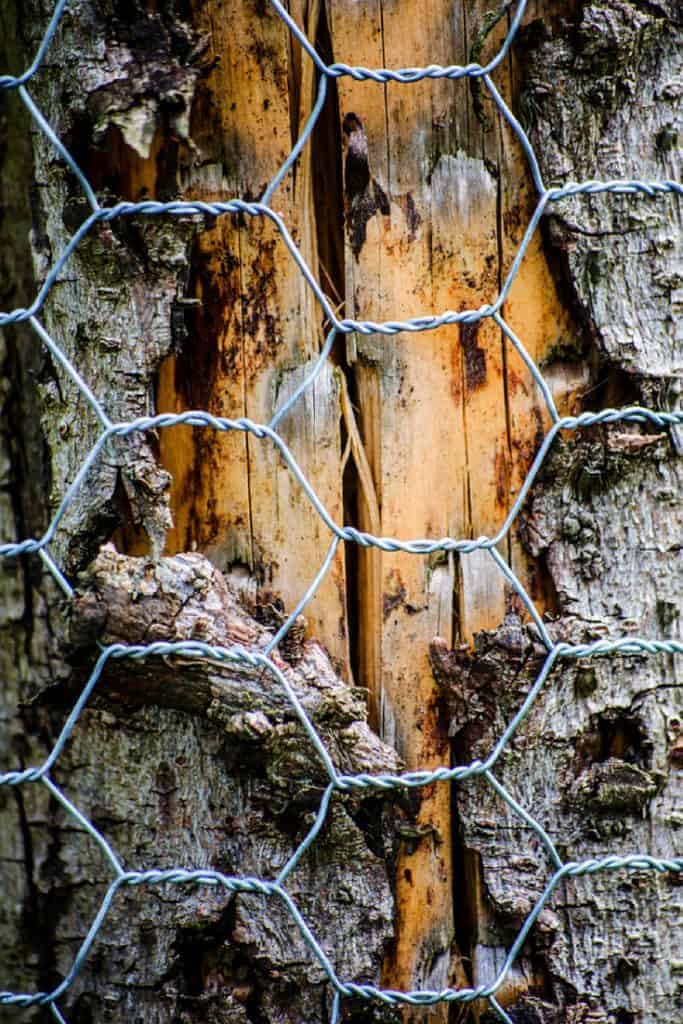
When you think of chicken wire, you probably think of the wire fencing with hexagonal openings. This is traditional chicken wire, and it has advantages and disadvantages.

What Chicken Wire Is Best For A Coop

While it comes in various sizes, for chickens, the ½ inch or 1 inch variety are best. Chickens, especially young ones or smaller bantam varieties, such as Cochins, silkies, ameraucana bantams, or brahma chicks, might be able to fit through larger holes, or predators might be able to get through. Also, pests such as rats might fit through larger holes. Half and one inch chicken wire is easy to cut (an important consideration) and install – you can use staples or screws with washers to attach it to fence posts.

However, you should remember that this type of chicken wire is thin and easily pulled apart by predators. In our area, we don’t have a lot of carnivores trying to kill our hens, so it works well for us. But for readers who live near bears, or have very aggressive neighborhood dogs, or who have wily raccoons, this type of wire can lead to some sad situations.

Another consideration, especially if you have chicks, is they can become tangled in chicken wire, and get a wing caught. I’ve dealt with this situation a few times – we’ve had to unwind the chick from the wire to set it free. Don’t ask me how they manage to get stuck – chickens be chickens!

But yes, this can happen – so it’s something to think about. That being said, this type of chicken wire is relatively inexpensive, and is easily found in longer rolls at big box stores.

Hardware cloth ½ & ¼ inch

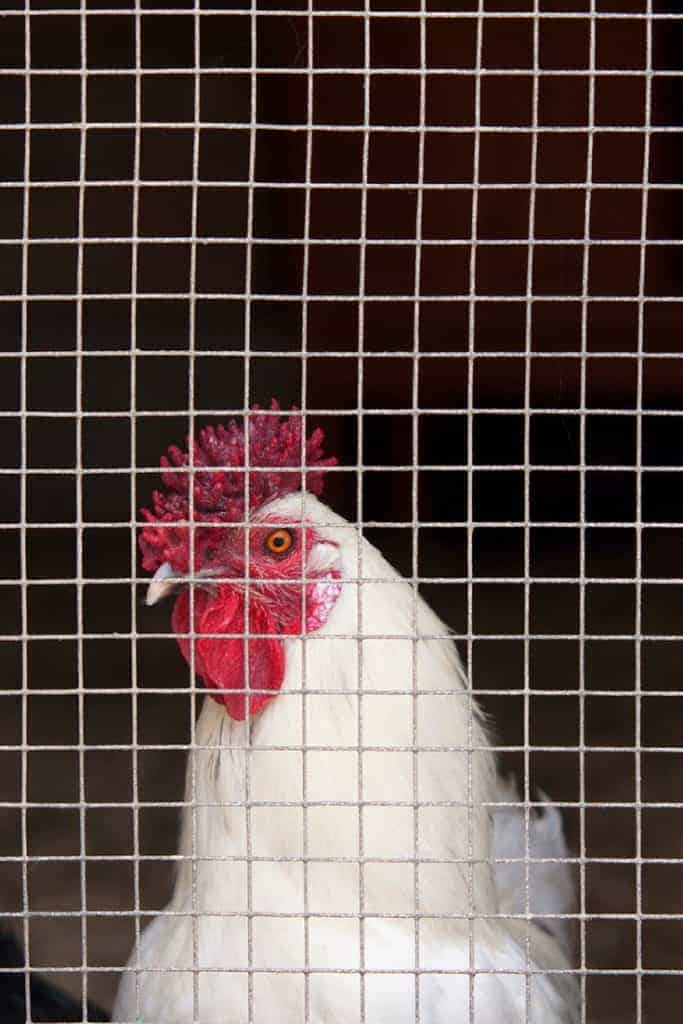
Hardware cloth is usually what experienced backyard chicken owners use when building their coops. It’s very sturdy and, when installed correctly, is harder for predators and neighborhood dogs to rip through. It also doesn’t stretch out of shape like chicken wire, so predators can’t maneuver through it as easily.

You can buy hardware cloth with larger openings, but typically, the half and ¼ inch sizes are best. These sizes are impossible for backyard chickens to fit through – so they’ll remain in your coop – and most predators can’t fit their fingers/paws through the holes.

Raccoons in particular like reaching through chicken wire to grab a free meal. Hardware cloth makes it harder for them to grab a pullet’s leg and rip her apart. It’s also harder for predators to get a grip on the wire and rip it off.

Hardware cloth also looks better aesthetically than the other options on this list, although it can be pretty expensive, especially if you need wider pieces or you have a large run for your backyard chickens.

What Chicken Wire Is Best For A Coop

Metal – Coated vs. Uncoated

You might notice that chicken wire comes in 2 different varieties (other than size) – coated and uncoated. Coated chicken wire just contains an extra layer of plastic on the outside. It’s typically green, but I’ve seen it in other colors as well.

While coated chicken wire certainly isn’t necessary, it can look better and, if your chicks get stuck between holes, it can make it easier to free them and less painful for the chicken.

It’s also a little easier to install because you won’t have to grab thin wire for the entire installation. It tends to be a bit more expensive, so your budget will dictate whether coated or uncoated chicken wire is for you.

Screens

Another unconventional option are screens – yep, the same screens you probably have on the windows in your house. This is a great option if BUGS are a big issue in your area. Nothing is worse than a fly or gnat infestation – and they CAN harm your flock! Screens are typically made of wire, and they’re pretty easy to install, although fixing them (should they get torn) is a bit of a pain in the butt.

If your chickens are active and like to bicker, or if you have other pets such as cats, you might find screens don’t last very long and you’ll be replacing them pretty frequently. They also won’t stand up to most predators – so if your neighbors dogs like to make a meal out of your flock, then screens are best avoided. They also tend to be a bit expensive, so it’s important to compare the costs to the other chicken wire options in this article.

Poultry netting

Another option available is poultry netting, which is plastic fencing that looks like hardware cloth, but is made of plastic. This type of chicken wire is good for keeping your hens out of your garden, but provides little protection against a predator, since its easily ripped off. It can also look pretty ugly – especially if you get orange poultry netting! It’s best to stick to traditional chicken wire or hardware cloth.

Hopefully this article gives you some ideas about which chicken wire is best for a coop. There’s plenty of options, and your choice will be specific to your own situation!

Adding a window to your chicken coop is easy – as long as you have a plan.

While the coop we bought for our hens is largely perfect, when the summer time heat hit, it got just a little bit too stuffy in there for my comfort.

Backyard chickens don’t sweat like humans do – so they feel heat more and chickens have a hard time cooling down.

It’s very important your coop has great ventilation and air flow so your hens don’t develop respiratory issues and suffer heat stroke – so we decided to add a few windows to our chicken coop to reduce the heat inside AND increase the airflow.

Before we get started, know that there’s a LOT of decisions to make before you start cutting a hole in the wall of your coop…..practical AND style decisions.

And since you’ll be looking at your coop for a LONG time, both of these types of decisions are equally important.

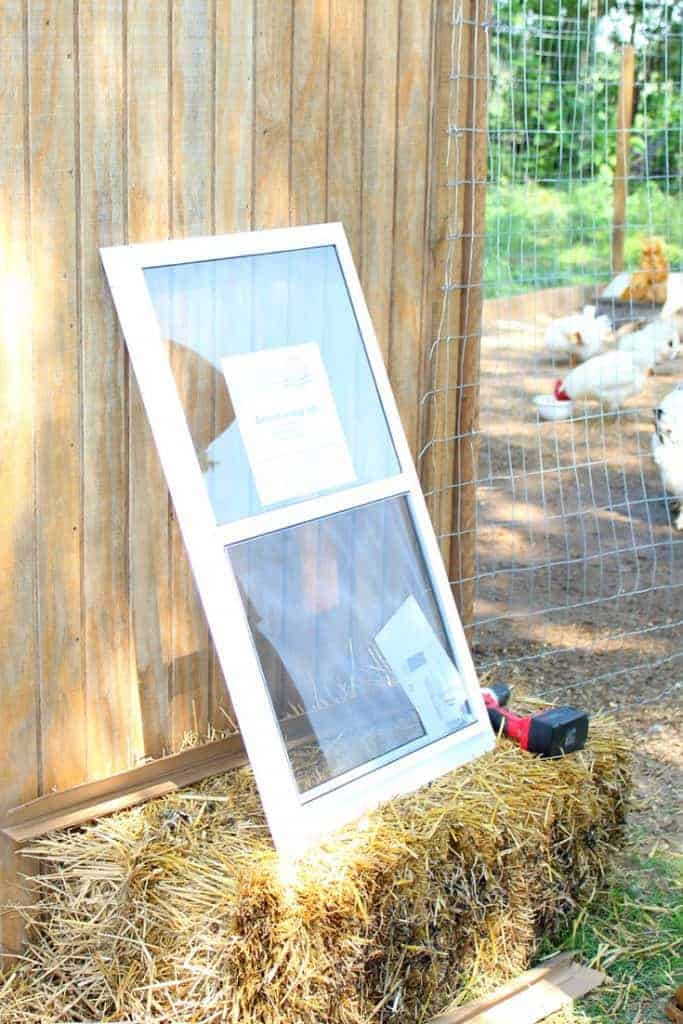
For those who can’t wait to discover what window we chose, we opted for a $30, pre-fab, single hung windows with screens. You’ll learn why as you read the article.

Backyard chicken coop window tutorial

You should choose the type of window that works best for your own situation, however.

Here’s how we did it, and how you can add a window to your chicken coop yourself.

Tools needed:

  • Sawzaw or other way to cut a hole in your coop wall
  • Window & manufacturer’s window installation kit
  • Molding or wood to frame the window
  • Broom to sweep up wood shavings and dust
  • Measuring tape
  • Ear plugs (yes, these are important – you don’t want ringing ears!)
  • 1-inch drill bit & drill
  • Electric screwdriver
  • A carpenter’s pencil or a marker

Step 1: Decide Where To Put The Window

This is critical – once you cut a hole in your coop wall, it’s permanent, so keep the following questions in mind before adding the window.

Where does the wind blow?

The goal is to create air flow – so you want to make sure you stand a good chance by putting the window where there tends to be a lot of airflow already.

Don’t make this decision lightly – you need to keep airflow from all seasons in mind.

On our farm, we have a lot of wind from the North, so it seems it would be best to place the window on the North side of the coop.

But in the winter, the North wind come from Canada, and it’s cold and bitter. So, the North side isn’t the best place.

The coop already has a window to the South, so we decided on an East/West location for the windows. We get a good West wind, and during the winter, it’s not as bitter as the North wind.

Are you adding more than one window?

Not every coop needs multiple windows. Ours does, so we decided to add 2 windows.

But going back to airflow….

You might need more than one window if your coop is very hot and stuffy over the summer, or if you want a lot of light in your coop and live in a cooler area, so make this decision before deciding on the final placement of your chicken coop window.

Is there a spot that tends to get super wet with rain (avoid this spot)?

An open window is an invitation for wet weather to seep into your coop. If you have a particular spot that’s more likely to bring water into the coop, this might not be the best place to add a window.

For example, we rarely have East winds – so we know we’re less likely to have our coop soaked during a sudden rainstorm with a window that faces the East.

This is key to reduce moisture in your coop and keep your chickens healthy.

What height should you put it at to avoid predators?

If chicken predators plague your area, you want the window to be high enough that they can’t just jump into your coop or rip open any screens.

In our area, we don’t have much trouble with predators. However, we still make sure the window is several feet off the ground.

Backyard chicken coop window
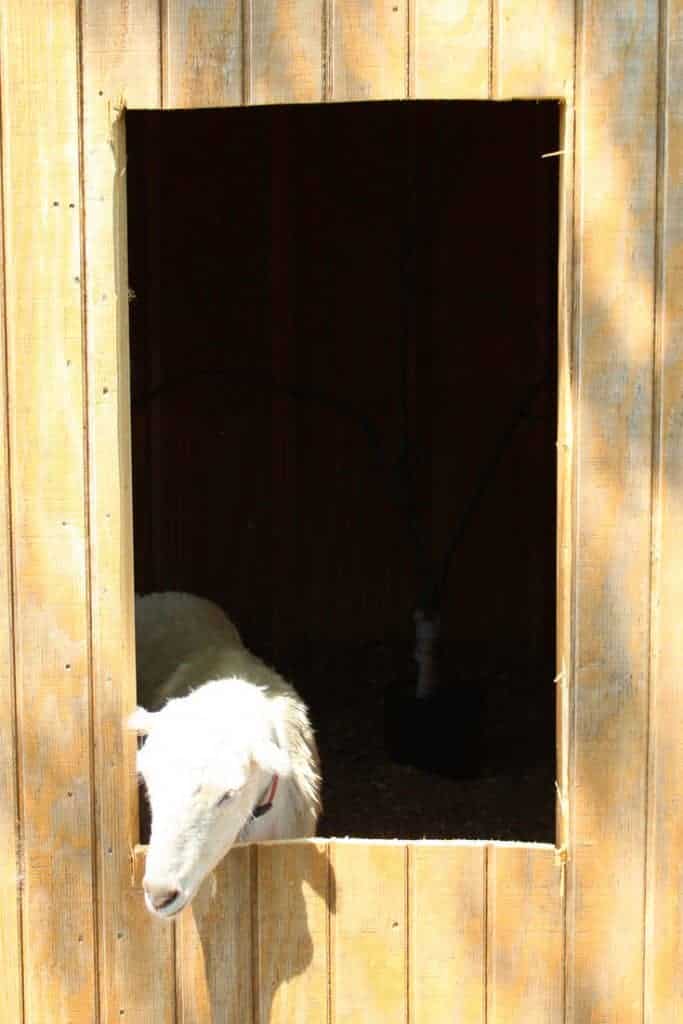
The goat had to inspect our work

Where does the window look the most attractive?

Really, this IS important, so don’t gloss over this because it seems frivolous.

You’ll be looking at this new window for a long time – choose a spot on the chicken coop wall that looks “right” and not funky.

The last thing you want is to regret the placing decision and spend the next 20 years kicking yourself.

Do you need to move any structural beams or add bracing?

Go inside your chicken coop and look at the overall structure. To install the window, will you need to move any beams and will you need to brace the walls around the window?

For our coop, the interior 2×4 beams were largely for looks – they didn’t really support the walls at all. So, we were free to remove them as needed.

However, your coop might not be structured the same way, and you might need to brace a wall in order to keep your flock’s home structurally sound.

Adding bracing is pretty easy. We had to do it in our farm house when we installed French doors, but it’s important to know whether you have to do it – so you don’t walk out one morning to a crumpled heap of wood.

So, take these decisions into consideration when deciding where to place the window in your chicken coop.

Do you plan to buy a pre-fab window or build one yourself (or simply cut a hole in the wall??)

Ask yourself whether you plan to DIY the window (which brings up another host of questions) or if you’ll buy a window and kit and just install it yourself.

We opted to buy windows – they cost about $30 each and look better than just a hole in the wall.

Step 2: Will the window close?

Ask yourself whether you plan to close the window at any point. This is also an important decision.

In the past, we simply cut holes in the wall, slapped some hardware cloth in it, and left it at that.

Then winter rolled around, and we regretted being so cavalier – because we then had to cover the chicken coop window with really ugly tin.

In some areas (such as areas with little rainfall and high temperatures), a window that closes isn’t as important.

So, you need to consider your local climate.

But if you plan to close the window during bad weather, you’ll need to buy or make a window that has the ability to close.

Do you plan to use hardware cloth or a screen?

The purpose of a window is to create airflow, but you also don’t want your flock to escape through the window.

So, you’ll need some sort of covering for the big gaping hole you’re about to create. We wanted to keep bugs out of the coop as much as possible, so we opted for a prefab window that had a screen.

If you live in an area with a lot of predators, a screen might not be the best option. In fact, if you live in an area with bears, you might want to consider safety bars.

If raccoons or opossums are an issue in your area, then ¼ inch hardware cloth might be a better option. For areas with aggressive neighborhood dogs, ½ inch hardware cloth will work well.

We don’t have a lot of predators, and certainly no bears, but we do have a LOT of flies in our chicken coop……so we went with a screen that gave us a bit of bug control.

Before cutting, ask yourself whether you’ll use hardware cloth or a screen.

Single hung or double hung?

This is kind of a minor decision, but ask yourself whether you want a single or double hung window to grace the wall of your chicken coop.

Single hung windows are cheaper, so we went with that.

Step 3: Cut A Hole In The Wall The Size Of The Window

Now it’s time to actually install the window. First, keep your chickens out of the coop if possible – they will be disturbed by the loud noise and wood particles in the air.

Let your hens free range and enjoy some time outside hunting bugs while you improve their home.

Next, make sure you don’t need to move any structural beams.

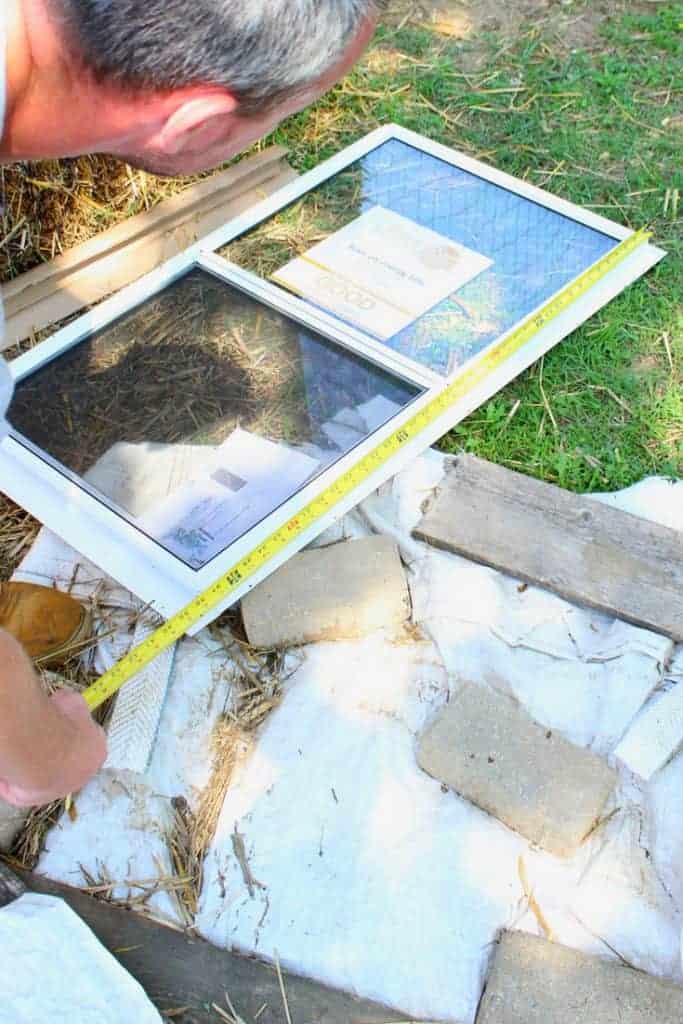
Measure the size of your window, and measure the wall – if any beams are in the way, they’ll need to be moved or you’ll need to find a new spot. Don’t start cutting until you’ve figured this out.

Backyard chicken coop window measuring

If you’re using a prefab window, consult the window installation kit and instructions before cutting.

Remember, you can’t do this twice, so measure twice, cut once!

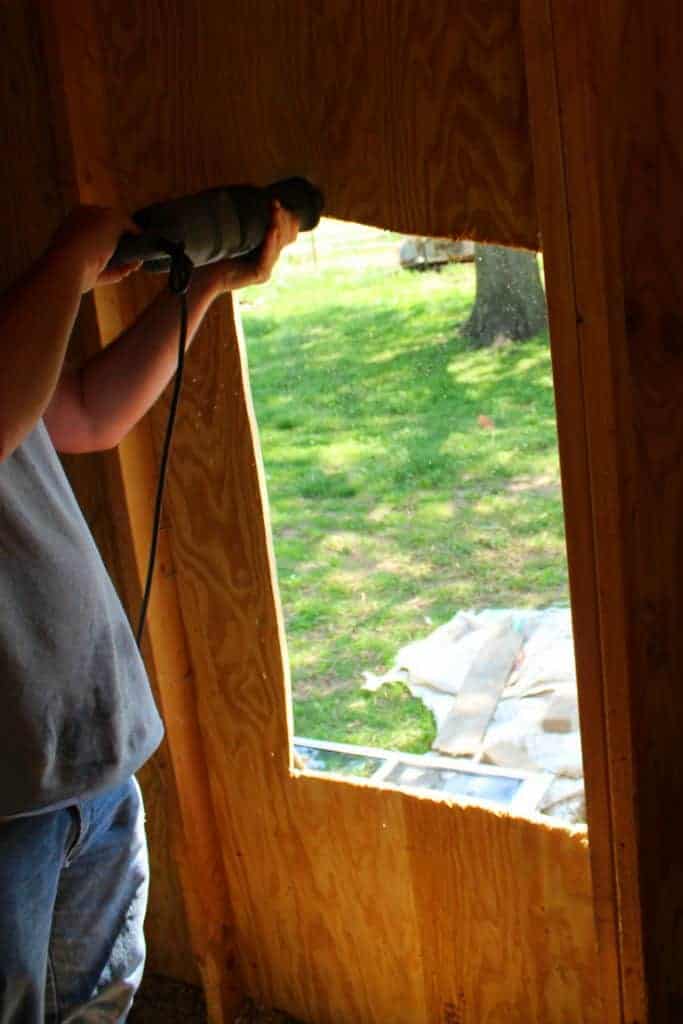
To cut the hole in the wall, we started by tracing an outline of the window on the wall, and then used a drill to create a hole large enough for the sawsaw to fit through.

Using the tracing as a guide, we cut a hole the length and width of the window. Easy!

Backyard chicken coop window opening

Step 4: Following The Instruction With Your Window Kit, Install The Window

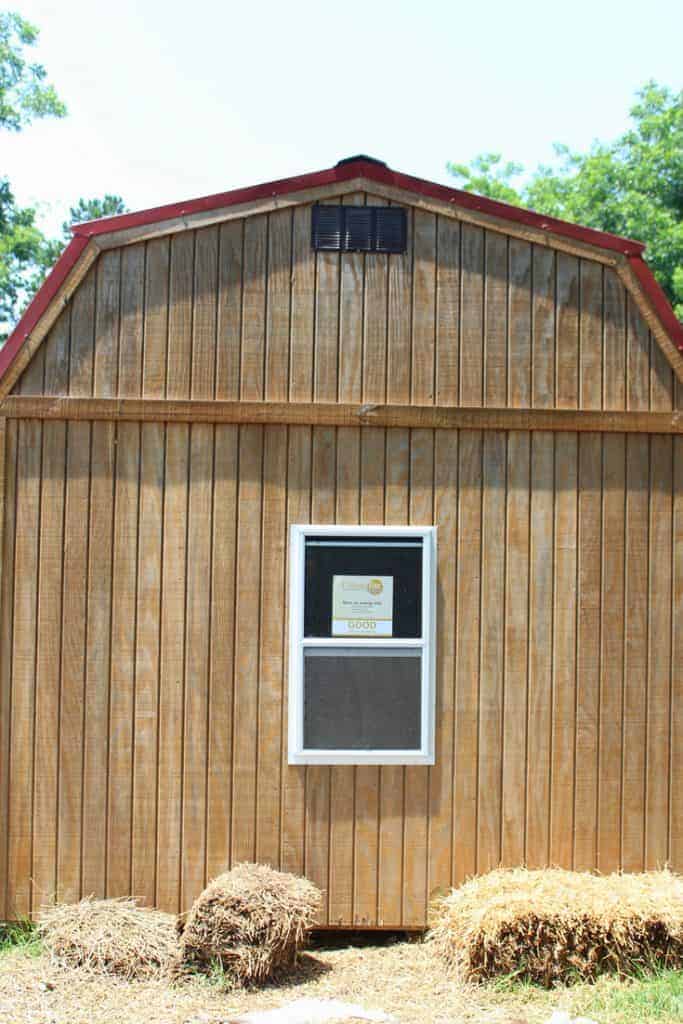
Installing the window was easy – most of the work is making all those pre-installation decisions!

Using the manufacturer screws, we easily affixed the window to the chicken coop wall.

If you’re using hardware cloth, add it inside the coop. You can use small hardware staples or screws with washers to keep it in place.

For extra security from predators, you can also add a wood frame over the hardware cloth to make it even harder to remove.

Backyard chicken coop window installation complete

Step 5: Finish Off The Installation By Framing Your New Chicken Coop Window

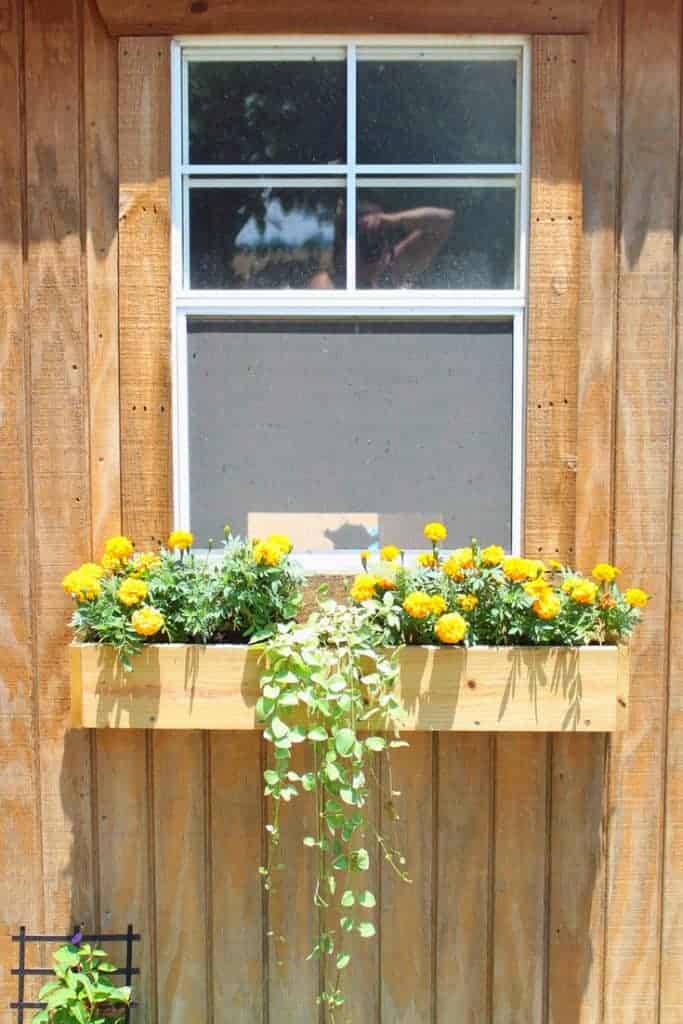
You can leave the window as is, or frame it to complete the look. I highly recommend framing it – it’ll keep the window looking nicer for longer, and cover up any mistakes (and we made plenty!).

You can also add shutters or a window box for an additional cute finishing touch to your new chicken coop window, like we did with this window:

Backyard chicken coop window installation tutorial