As I’m getting older, I’m having a harder time being comfortable sleeping, and waking up easily.
I’ve suffered from neck and back pain for the past few years, and when you also factor in 2 small children with autism, and you can imagine I’m pretty beat by the end of the day.
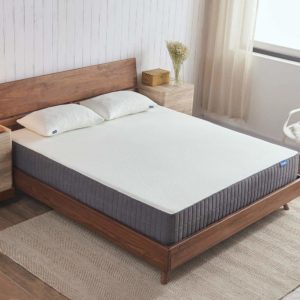
When Sweetnight asked if I wanted to review their queen sized, 10 inch memory foam flippable mattress, I jumped on the opportunity – their website promised a cloud like experience, and with “breathable fabric for sleeping cool,” I knew I had to give their mattresses a test drive!
Getting Our Sweetnight Mattress
Our Sweetnight mattress arrived very quickly from Amazon. You wouldn’t think a mattress would fit in a 4’ box, but somehow, the Sweetnight staff managed to shove it in there!
We were sent a queen sized mattress to review, but there are different size options available.
Getting the Sweetnight mattress from Amazon gave me confidence in the product because it shipped quickly – I got it within 48 hours. On Amazon, the queen size Sweetnight mattress has multiple 5 star reviews (with a 4.6 star overall review) – with over 400 reviews!
In addition, Sweetnight mattress foam is CertiPUR certified, which means they are made without using ozone depleting products and are free of heavy metals (important for anyone with children!)
After we unboxed the mattress, the directions said to wait 72 hours for it to reshape itself. However, our mattress only took about 24 hours to return to a fluffy shape, ready for bedtime.
It also came with a booklet that promised the mattress was as soft as a cloud. It WAS very soft from the moment we unwrapped it! Larry couldn’t wait – he had to test it out immediately after it reshaped, and said it was the most comfortable mattress he’d ever laid on!
Actually Laying On Our New Sweetnight Mattress
The first thing we noticed is that the mattress is very soft – believe me, the “cloud like” experience promised in the booklet wasn’t kidding! From the moment we laid on the mattress, we could feel our bodies relaxing as the memory foam gelled to our bodies.
Even my husband, who is pretty picky about mattresses, LOVES how soft (yet supportive!) the Sweetnight mattress is!
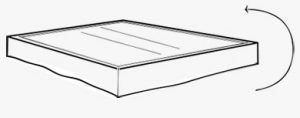
We tested both the soft side and the firm side, since the Sweetnight 10 inch queen size mattress is designed to be flippable. I personally prefer the firm side, but Larry prefers the softer side – so we’ve been using the softer side of the mattress (which is still supportive enough that I don’t wake up with aches and pains).
Every week, I see a physical therapist for neck pain, so I asked of my neck and shoulders felt any different – she said the muscles in my shoulder blades felt looser. So I took that as a good sign!
I haven’t woken up with neck pain since we started using this mattress.
All in all, our experience with Sweetnight Mattress has been excellent!
Where to Buy Sweetnight Mattresses
You can purchase these mattresses directly on the Sweetnight store (Sweetnight.store) or on Amazon by clicking here.
So, How Many Stars Did We Give It?
Sweetnight Mattresses are excellent, and the review team at Pampered Chicken Mama gives them 5 stars! The 10 inch, queen sized mattress we tested is super comfortable and cozy to sleep on, supportive, and everything their website promises. They’re also reasonably priced (prices vary based on the different models, but compared to other options out there, they’re very affordable).
On one cold, January morning, I received my catalog from Cackle Hatchery, and something stirred in me…..it was time to order baby chicks!
A lot of people who read this blog are just getting into backyard chickens, and aren’t really sure how or where to buy their fluffy butts. OR sometimes readers want a specific breed (which was my situation) and the only place to purchase those chicks are from a hatchery.
As a blog owner, my goal is to inform you, and help you raise your flock so they’re healthy. And that starts with getting quality chickens from a reliable source!
So, this article will tell you my experience purchasing chicks from Cackle Hatchery, and what you should know as a consumer so you get healthy chicks that’ll grow into happy layers.
After getting their latest catalog and happily thumbing through it, I decided it was time to bulk up my bantam stock here on the farm, as well as my colored egg layers.
I’ve purchased from Cackle Hatchery in the past (probably 2 years ago, when I got my Brahma hens and Jersey Giants – they’re still alive and healthy), and had a good experience. This supplier is also 4 hours from my farm, so the babies (in theory) wouldn’t have to go far to reach my home.
Read on, and discover my experience with Cackle Hatchery!
My Buying Experience
First, understand that this is just MY experience. Your mileage may vary, and this certainly isn’t the first (or last) time I’ve ordered from Cackle.
The Cackle Hatchery website is super easy to navigate. I had a hard time tearing myself away from the ducklings and turkey poults, but I headed over to the egg layer section of their website.
I wanted some rare breeds from Cackle Hatchery, which is why I chose the Mille Fleur d’Uccles and Porcelain d’Uccles.
Remember that most suppliers, Cackle Hatchery included, don’t offer the option to purchase either male or female bantams. It’s harder to sex these chickens because they’re smaller, and the room for error is much larger. (You can learn how to sex chicks here).
So, I knew purchasing the Silkies, Mille Fleur d’Uccles, and Porcelain d’Uccles is a crap shoot. I’m fine with that. If you can’t have roosters in your area, though, it’s something to consider.
Placing my order was easy, and I feel the prices are fair (especially shipping. It only cost me about $25 for expedited shipping, although your mileage may vary).
All in all, my order cost $200, which included the shipping. I was happy with this cost.
Choosing a Shipping Date
Cackle Hatchery doesn’t have a system per se that allows you to choose a shipping date. Other hatcheries I’ve ordered from provide a list of dates, and you click a radio button to choose a specific date.
Cackle requests you put your desired dates in a text box, which was a little confusing at first. So, I put something to the effect of:
“Please ship the chicks during the end of May/beginning of July.”
Why this time frame? Because it’s warm enough so I won’t need a heat lamp in my cabin (where baby poultry live until they can go into a coop. You can find good chicken coop plans here), and not SO hot that the trip here will be miserable.
The folks at Cackle Hatchery ended up choosing the actual ship date: May 29, 2019.
In theory, I was fine with that. In practice, I wasn’t super thrilled: I didn’t realize the chicks would be shipped on a Wednesday for a Friday delivery because of Memorial Day (May 27, 2019).
Why is this a problem? Well, it only takes one dodo at the Post Office to mess up, and my fluffy butts spend the weekend in a cold building with no food, courtesy of the United States Postal Service.
We live in a remote area where mail CAN take an extra day to get to us. So, even though the Post Office guarantees a certain delivery date, sometimes, we get our mail a day later.
So, I would have preferred the babies to ship from Cackle Hatchery on a Monday or Tuesday. (In hindsight, I could have put that on my shipping directions, but it didn’t occur to me at the time – so, it’s something you should take into consideration. I’ll be doing it next time).
You might have a stronger stomach for these things, but I don’t! I worry about the chicks every step of the way.
Receiving My Order From Cackle Hatchery
As the shipping date approached, I notified my mail carrier that I’d be getting baby chicks, and asked her to tell me if they would spend an extra day at the post office before delivery (so I could pick them up early).
We know the post office staff here on a personal level, and they’re just as concerned for the safety of the animals.
When my bantams and full sized chickens shipped, I received an email notification from Cackle Hatchery AND the Post Office (I signed up for text alerts so I could monitor their journey).
It took 2 days for the package to get to my area, and on May 31, the chicks arrived! (By the way, US Post Office, that was the dumbest route EVER: Lebanon, MO → Kansas City, MO → St. Louis, MO → Cape Girardeau, MO → My local area).
My mail carrier texted me, and we agreed I would pick the package up at my local post office (rather than being delivered to the house) so I could get them into their brooder ASAP.
I wanted the chicks as fast as possible, and my mail carrier didn’t want to listen to chirping all day. I get it.
The box had a lot of air holes, was very securely taped, and had stickers informing the postal workers that there were live animals inside the box (in case the loud chirping wasn’t obvious). I was pleased to see a sticker that directed mail handlers to keep the chicks out of extreme cold and heat.
So, it’s obvious Cackle Hatchery does its best to ensure a safe arrival.
How Did The Chicks Fair On Their Journey From Cackle Hatchery?
I resisted the urge to peek into the box until the chickens were home. There was LOTS of loud chirping, which is a good sign.
Angry chicks = healthy chicks! What you DON’T want to hear is silence.
I’d already prepared the brooders, feeders, and waterers, so after I opened the box, did a head count, and checked for any casualties, everyone was ready to get into their new homes!
All the little ones arrived safely – there were no DOA. I’d call that a successful ship!
They were split into 2 different areas of the box, and they were wiggling, and ready to get out.
I was really pleased with my purchase!
Cackle Hatchery included 4 extra chicks to account for casualties, including 1 extra Speckled Sussex, and 3 others I can’t yet identify (a lot of chicken breeds look similar when young. However, they’re definitely bantam breeds).
The Black Copper Marans, Silkies, and Speckled Sussex in particular seemed (and still seem) very healthy. A good sign is when the chicks immediately begin seeking food and water, and they were VERY ready to feast!
The Mille Fleur d’Uccles and particularly the Porcelain d’Uccles seemed stressed and very confused, which isn’t a good sign.
As I opened the box, I noted that the Porcelain d’Uccles already were hunched, chirping loudly, and closing their eyes.
They were quickly put into their brooders and introduced to food and water, and given space and time to settle (sometimes, it’s just the shipping process that can cause stress, and when they realize they’re safe, they snap out of it).
As of writing this review, we lost 1 Mille Fleur d’Uccle and 3 of the Porcelain d’Uccles which I’m REALLY not pleased with (so, there’s only 2 Porcelain d’Uccles remaining from my original order) within 48 hours of receiving our order from Cackle Hatchery.
(Note: They do ask you to call in case of casualties within a 48 hour time frame so they can help you out. Because our chicks arrived on a Friday, I had to wait until Monday to call).
However, we haven’t lost any of the other Mille Fleurs, and they seem very eager to eat, interact with their clutch mates, and enjoy life.
It’s normal to lose some chicks, but the Porcelain d’Uccles seemed to struggle from the moment I opened the box from Cackle Hatchery (I inspect them before putting them into their brooder to check for heat stress, etc).
At the time, I wasn’t sure if it was stress or a health issue, but since the other chicks are doing well, I can’t really say why the Porcelain d’Uccles didn’t make it.
However, losing 4 out of about 40 chicks is pretty much to be expected, and I’m happy with the health of the remaining flock.
The box arrived with a free coop sign, a very useful pamphlet about how to care for my new pets, some stickers (which my kids loved), and a safety flier about avoiding salmonella, directions for washing hands after handling poultry, etc.
Would I Buy From Cackle Hatchery Again?
Would I order from Cackle Hatchery again? YES.
I think they’re a good quality supplier, and the Porcelain d’Uccles notwithstanding, the hatch I got arrived alive, and with most of the chicks in good health.
I got the breeds I ordered, and extras in case some chicks didn’t make it.
Their ordering process was straight forward, the poultry was reasonably priced, and the shipping process as simple and fast as possible.
If you’re a reader who wants to order from a hatchery, I’d recommend this one.
However, I think next year, I’ll drive out to Cackle Hatchery to pick up my order!
Hey y’all! Here’s this week’s sneaky peek photos of life on our farm!
These images also appear on my Instagram account where I share MANY more photos and stories from the farm!
If you aren’t yet following me there, you can right here.
Enjoy the photos & be sure to share some of yours with me!
https://www.instagram.com/p/BxqzpfBFJcu/
https://www.instagram.com/p/BxtZ4evFQwb/
https://www.instagram.com/p/BxwAsa2FDNk/
https://www.instagram.com/p/BxyFKp8FtY0/
https://www.instagram.com/p/Bx03kb_FxVH/
Pet birds don’t get much better than Cream Legbar chickens. They lay blue eggs and you can tell which are males and which are females seconds after they hatch – super dreamy indeed!
This fascinating breed of chicken is a relative newcomer to the backyard flock scene, but because of their good looks, excellent egg-laying ability, docile personality, and sky-colored eggs, they’ve become extremely popular.
In this article, you’ll discover everything there is to know about Cream Legbar chickens, from the breed history to how to care for them, and where to buy these feathered beauties.
5 Amazing Cream Legbar Chicken Facts
They’re an unusual crested chicken breed
They are an auto-sexing chicken (meaning you can tell the sex of the chicks at hatching)
They lay blue or blue/green eggs
The breed almost went extinct in the 70s because nobody wanted blue eggs (surprising since powder blue suits were all the rage)
It took several decades of study for the breed to form
History Of The Cream Legbar Breed
Established in the United Kingdom, Cream Legbars are getting more popular, but are still considered to be a fairly rare breed in the USA.
It was developed by Reginald Crundall Punnett and Michael Pease, researchers at Cambridge University, who wanted to create a breed that could easily be sexed at hatching (you can read more about how to sex a baby chick here).
These gentlemen crossed a Gold Legbar chicken (a hybrid of Barred Rocks and Brown Leghorns) with white Leghorns and Araucana chickens.
While this gets a bit technical about chicken genetics, the Araucanas brought the dilute creme gene to the mixture, which inhibits the gold gene from being expressed in the chicks (which is why Cream Legbars are a light grey or cream color).
It’s also from the Araucanas that the Cream Legbar gets its crest and blue egg laying genes.
Thanks to this mixture, the chicks can be sexed after they hatch by examining their down. Like other autosexing chicken breeds, Cream Legbars have specific markings when they’re born. The pullets have a dark brown stripe extending over the head, neck and tail, and barring around the eye. They also have a head spot.
Roosters have paler down, and less pronounced barring.
Breed Standard
According to breeding clubs, these are the required markings of Cream Legbar hens and roosters:
Roosters: Cream neck hackles, sparsely barred. Crests are cream and grey colored. Saddle hackle feathers are long and cream barred. The wings are also faintly barred.
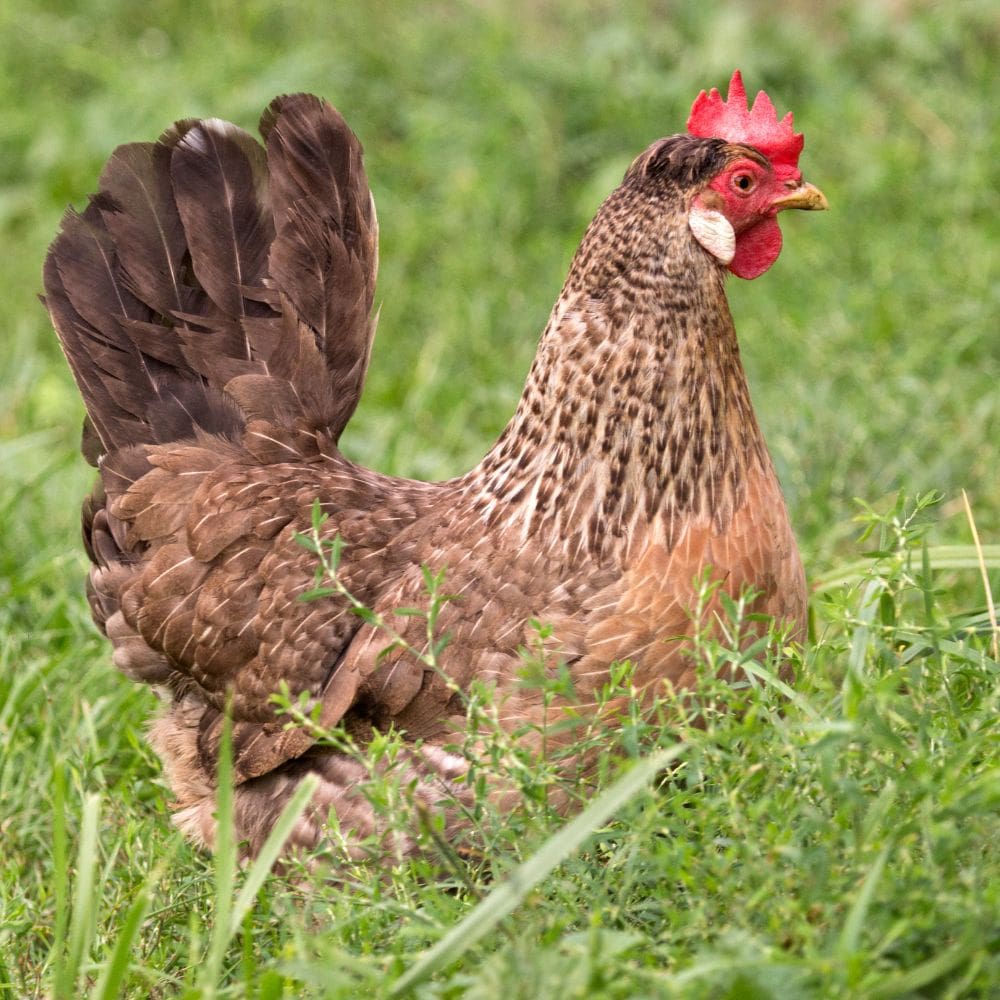
Hens: The breast is salmon colored and the rest of the body is silver-grey with soft barring. The neck hackles and tail are covered with cream feathers with grey barring. Like the roosters, the crest should be cream and grey. The hens should lay blue or blue/green eggs, and should lay prolifically.
Unlike their Araucana ancestors, these chickens don’t have the tufts.
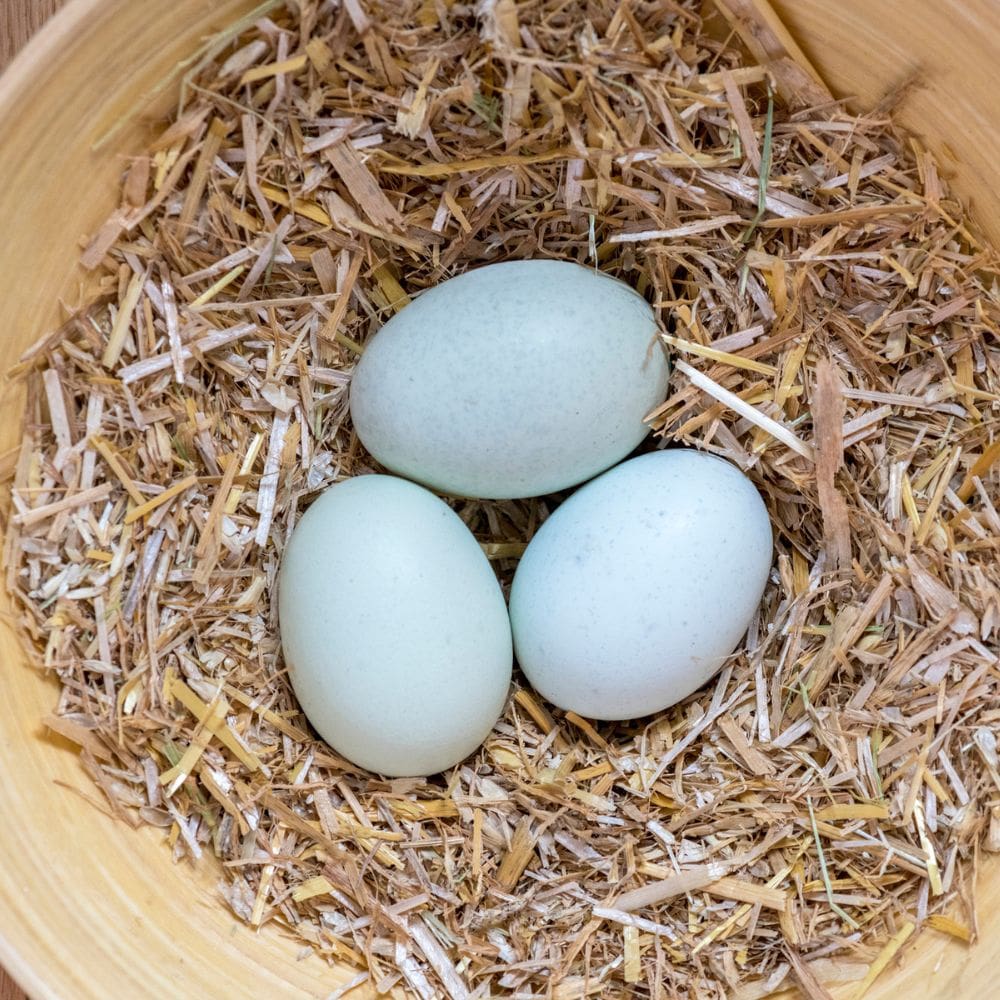
Because of their Araucana heritage (and selective breeding), the crested Cream Legbar egg color isblue or blue/green. If your Cream Legbar hen doesn’t lay blue eggs, then it’s likely a hybrid (you can find out about other colored egg layers here.).
How Many Eggs Does A Cream Legbar Lay?
Cream Legbars lay about 280 eggs each year, and are noted for being very prolific egg layers. So, don’t be surprised if you find lovely blue eggs in your nesting boxes 5 times a week!
Like most chickens, Cream Legbars start laying their eggs at about 6 months of age. This will depend on different factors, however, such as her diet and the time of year. It’s always best to feed your hens a high quality layer feed that’s at least 16% protein. You can also supplement with extra treats, such as black soldier fly larvae and oyster shells for extra calcium.
Many readers ask “When do cream legbars start laying?” because their chickens are 7 months old, with no eggs in sight. Remember thatif your hen turns 6 months old during winter, she is less likely to start laying. In fact, she might wait until spring before beginning egg production.
The cream legbar temperament is usually docile, butit depends on how they’re raised. Because they have Leghorn genetics, they can be a bit flighty (Leghorns are notorious for their flightiness). However, many owners report that if the Cream Legbar chicks are hand raised, they’re very friendly and will take treats from your hand.
According to the breed standard, having a docile Cream Legbar is ideal.
Cream Legbars also have a bantam variety, and on the whole, bantams tend to be friendlier than full sized chickens. You can read more about bantams here.
Are Cream Legbar Roosters Aggressive?
Some breeders report that Cream Legbar roosters tend to be more aggressive than other chicken breeds, and are good protectors. So, if you’re looking for a pet chicken for your children, then this breed might not be the best available (Silkies and Cochinsare two options.)
Feeding Cream Legbar Chickens
Like most chickens, the best Cream Legbar diet includes a lot of protein. Chicks need a high protein diet to grow correctly- 18% protein chick starter is best.
Layers need it also so they can provide you with yummy eggs. The ideal diet for a hen includes a 16% protein layer feed and fresh, clean water every day.
This is especially important since Cream Legbars (thanks to the Leghorn genes) have a very good feed to egg ratio, so they won’t eat as much as bigger chickens. You want that feed to last as long as possible!
For nicely colored yolks, you can add herbs high in beta carotenes, such as calendula.
Your cream legbar flock should have 24 hour access to water (although they probably won’t drink at night). An automatic waterer makes this easy. If you want to build your own, you can get my tutorial for a gravity waterer here.
Cream Legbar Chicken Lifespan
Cream Legbars tend to be healthy birds, and on a general basis, you can expect yours to live between 5-10 years. Note that the exact lifespan depends on lots of different factors, such as diet, shelter, and veterinary care. You can learn more about the factors that can effect how long your chickens live here.
Cream Legbar Vs. Ameraucana: Which Is Better?
When it comes to laying eggs, many owners report that Cream Legbars are more prolific layers. However, the Ameraucana is more likely to be friendlier and cuddlier. Ameraucana roosters are also usually pretty mellow.
Coops For Cream Legbar Chickens
The perfect Cream Legbar chicken habitat should be:
Safe from predators
Well ventilated
Draft-free
Easy to clean
10 square feet of space per chicken
Full of environmental interests such as branches and toys
While Cream Legbars are not very large, they can be flighty and nervous. It’s best to stick to the 10 square feet of space per chicken rule of thumb.
These are also smaller birds, and easily picked off by predators, including dogs, raccoons, opossums, and larger predators like bears. Make sure your coop is 100% predator proof, and use a run or tractor to allow your flock some outdoors time.
You can learn how to build a predator proof coop here and figure out the best chicken wire here for your particular coop. If you want to know how to identify common chicken predators, you can read this article.
Cream Legbars are both cold hardy and heat hardy, but remember that they’re still fairly small birds. So, your coop should keep them dry and warm in the winter so they don’t freeze.
In the summer, your coop should have good cross breezes so they don’t overheat. A few windows are always a good idea – just be sure to use screens or hardware cloth so no predators can eat your flock.
Chicken Health Issues
Parasites
All chickens can have trouble with parasites, like lice and mites. It’s important to keep an eye on them so you can detect any problems right away. One of my favorite things to help out is my PestsBGone all natural nesting herbs, and your chickens will love it too.
Marek’s Disease
When Greenfire Farms first imported Cream Legbar chickens, Marek’s seemed to be a big issue. The breeder reported that this was partly due to the imported birds having no resistance to the strains of the virus we have in the USA. Subsequent generations seem more immune. However, it’s not a bad idea to have your Cream Legbar chicks vaccinated for Mareks to be on the safe side.
Prolapse Vent
Because Cream Legbar hens are such prolific layers, there’s a chance she might end up with a prolapsed vent. However, this seems unlikely, and reports are few and far between.
Where to Buy Cream Legbar Chickens
There are several major hatcheries and a few recommended breeders which you can buy your Cream Legbar chicks from.
With a breed like this – very popular and not very well publicized – it’s easy to head to the wrong place and purchase chickens that LOOK like Cream Legbars, but won’t lay blue eggs or are unhealthy.One popular cross I’ve seen is a Cream Legbar and a Welsummer chicken – they look like the real deal, but likely won’t lay beautiful blue eggs.
Or, you might find the breeder doesn’t know the difference between Cream Legbars, Ameraucanas, Easter Eggers, or Araucanas and accidentally sells you the wrong breed. You can learn the difference between these super blue egg layers here.
Because of their popularity, they tend to be much more expensive than other chicken breeds, which makes it tempting for people to pass off hybrids for purebred Cream Legbars.
When it comes to this breed, make sure you’re prepared to spend a bit more at a reliable hatchery. Cream Legbar pullets are a bit more expensive than standard breeds.
Located in Connecticut. If you live on the East Coast, you’ll want to use this hatchery so your chicks don’t travel too far.
This has been one of the top hatcheries for decades in the United States. They carry day-old chicks that you can have shipped right to your door. The Cream Legbars on their site have gotten many 5-star reviews, and owners seem happy with their purchase.
Located in Ohio. If you live in the Mid-Atlantic or Northern Midwest, this is a good hatchery to order from. Your chicks won’t travel too far.
Meyer has a good reputation, and on their website, they show photos of beautiful sky-blue eggs that’ll be perfect in any morning egg basket. They have great reviews too.
Located in Missouri. A good hatchery to order from if you live in the Midwest, Texas, Oklahoma, Nebraska, Kansas, the Dakotas, etc. This is the hatchery I have the most experience with. Every time I’ve ordered from them, the chicks arrived ASAP and in good shape.
Their prices for Cream Legbar chicks are competitive. Note that as of the time of press, they only shipped these chicks through June, so get your orders in early.
The roosters in particular look very beautiful. You can read our review of Cackle Hatchery here.
Located in Iowa. A good place to order from if you live in the Dakotas, Iowa, Minnesota, etc. I’ve ordered from this hatchery before (although not Cream Legbar chickens) and had a good experience.
Their prices are very competitive, and the photos on their website show pretty blue/green eggs, and hens with very impressive crest feathers!
One of the top breeders (if not THE top breeder) in the United States, Greenfire Farms, also has Cream Legbar chickens for sale. As one of the first importers of these chickens, they’ve helped establish solid flocks for other breeders, and only raise healthy birds you’ll be proud to have in your flock.
You can expect to make more of an investment in your birds, but you’ll have beautiful parent stock from which you can establish your own flocks.
Other Ways To Purchase Cream Legbar Chickens
You can join the Cream Legbar Club to connect with other enthusiasts (and possibly breeders).
Join Facebook groups and ask for breeder recommendations. Here’s a popular group called Cream Legbar Breeders of America.
Barred Rock Chickens – What’s not to love about this striking breed? Discover all you need to know about this all-time favorite.
When we first started keeping hens, Barred Rocks were our choice. Barred Rock chickens are one of the most well-known breeds out there — and subsequently, one of the most popular.
Once upon a time, our ancestors raised them as a dual-purpose birds with a combination of some of the best farm chicken qualities: docility, hardiness, and broodiness.
These days, this breed is best known for its egg-laying ability and gorgeous plumage.
In this article, you’ll discover facts about these cluckers, recommendations for reliable breeders and hatcheries, whether Barred Rock chickens make great pets, and more!
5 Amazing Barred Rock Chicken Facts
One of the oldest breeds in America
First exhibited as a breed in 1869
“Barred” refers to their feather coloring
They lay medium to large brown eggs
The barred color pattern is a dominant sex-linked gene
Breed History
According to the Livestock Conservancy, which promotes heritage livestock breeds, the Barred Rock was developed in America in the middle of the 19th century. It’s not clear exactly who developed the breed, however, it seems these chickens are the product of crossing Spanish, White Cochin, Dominique, Buff Cochin, Black Java, and Brahma chickens.
From the barred version, other types of Plymouth Rock chickens were developed (including white, buff, Columbian, and other combinations). You can read more about Plymouth Rock chickens here for the full list.
They were very popular as an all-purpose breed around the turn of the 20th century and were admitted into the American Poultry Standard of Perfection in 1874.
Barred Rock Chicken Temperament
Are Barred Rock Chickens Friendly?
Yes, Barred Rock chickens are generally friendly, which makes them ideal for families as pets. The roosters are especially calm with both people and other animals. If you want to raise Barred Rocks as pets, it’s best to feed them lots of treats and handle them daily.
You might notice that your hens won’t be as friendly if they’ve “gone broody’ and want to hatch eggs. This is normal, and she will return to being friendly if you help her stop her broodiness or after she’s successfully hatched chicks.
Generally, no they aren’t. Barred Rock chickens are friendly and docile birds towards humans and other animals.
However, if your chickens don’t have enough space (10 square feet per hen) or you have too many roosters, they might become aggressive toward each other. It’s always best to have 1 rooster for every 10 hens and to make sure everyone has enough space and food to eat.
Are Barred Rocks Noisy?
No, the roosters might crow when they see a predator but are not noisier than other chicken breeds. The hens are very quiet.
Barred Rock Egg Laying Ability
How Long Do Barred Rock Hens Lay Eggs?
Like most hens, Barred Rock chickens will lay the most eggs during 9 months of age until they’re about 3 years old. Most chickens will slow down or stop laying after they turn 3. There will be exceptions; some readers have emailed me with stories about their 7-year-old hen who still puts out eggs 3 times a week. However, most chickens won’t lay eggs consistently when they’re that old.
You should decide what you plan to do with your hens when they stop laying. We personally keep ours and let them live out their lives naturally since they’re pets.
To ensure your hens are in peak condition for egg laying, it’s best to feed them a layer feed with 16% protein and supplement with oyster shells for extra calcium. Research shows that this diet helps them from becoming nutrient deficient (which can cause hens to stop laying eggs).
How Many Eggs Per Year Do Barred Rocks Lay?
A Barred Rock female will lay about 280 eggs per year. They’re actually considered one of the champion egg-laying chicken breeds!
Although the actual amount will vary from bird to bird. To ensure your chickens produce lots of eggs, you should feed them a healthy diet, including a 16% protein layer feed.
Barred Rock chickens lay brown eggs. Their egg size is medium to large.
Do Barred Plymouth Rocks Go Broody?
Yes. Because Barred Rock chickens are a heritage breed, they tend to go broody. When the breed was first developed, modern incubators didn’t exist, so to hatch chicks, a broody hen was required.
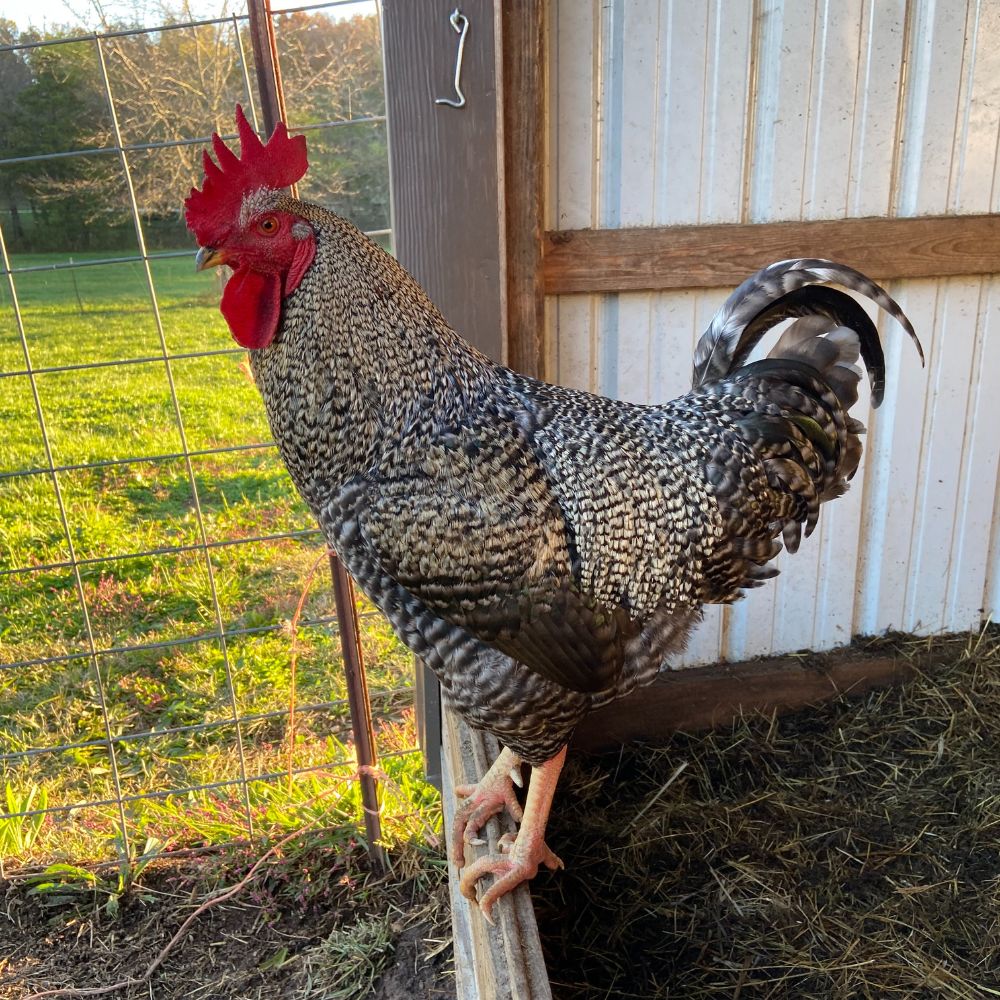
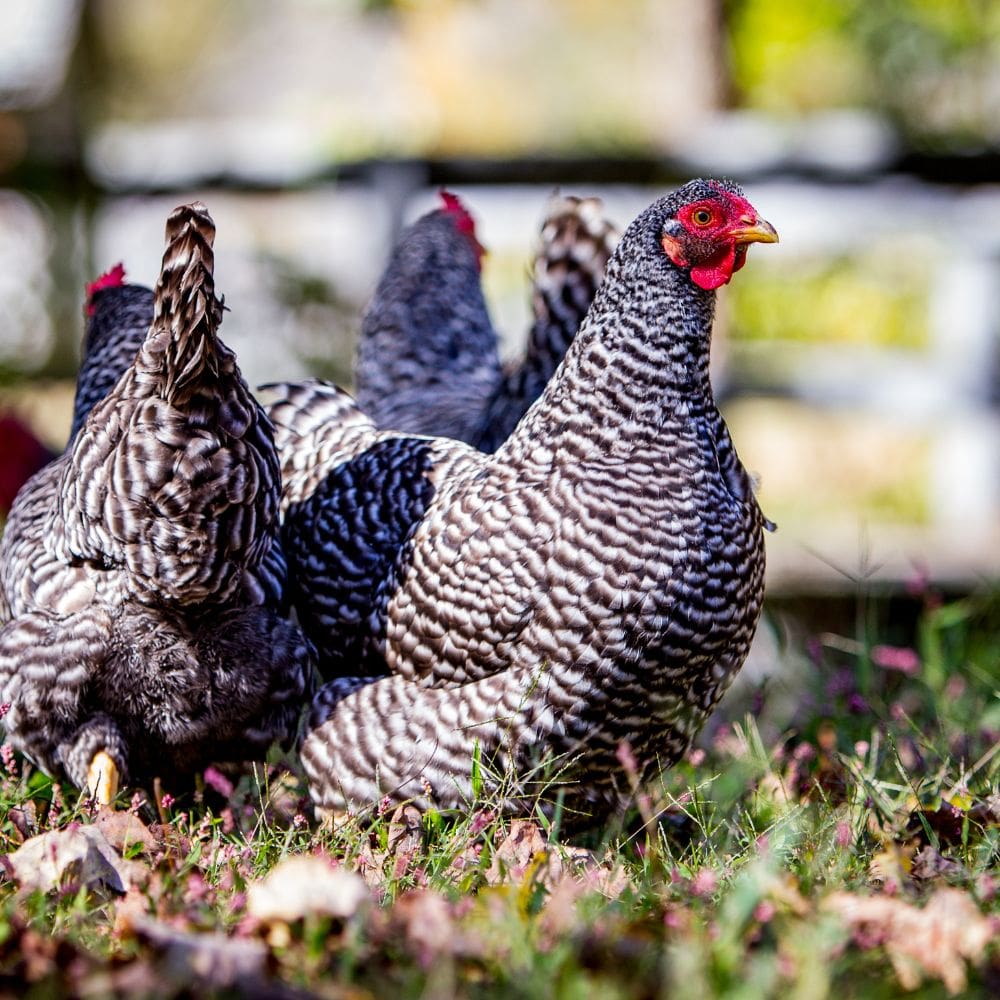
These birds have beautiful black and white feathers that give them the trademark “barred” appearance. They have a single comb with red wattles and ear lobes that show off their health and vigor. They have yellow beaks and feet that give them a friendly, approachable expression.
The roosters have long, black and white striped tail feathers that they lose during fall molting (but they grow back even more beautiful). They do look a lot like the Dominique breed, but there are ways to tell them apart, such as the Dominique’s rose comb. You can read more about that here.
Are Barred Rock and Plymouth Rock Chickens the Same?
Yes, Barred Rock chickens are a variation of the Plymouth Rock chicken. The barred feathers were the first coloring of the Plymouth Rock, and from the Barred Rock, other variations were developing, including:
White
Buff
Silver Penciled
Partridge
Columbian
Blue
How Big Do Barred Rock Chickens Get?
Pretty big – about 9.5 pounds for the roosters and 7.5 for the hens. While there’s not much you can do to influence the size of your chickens, feeding them a high-quality diet will ensure their growth doesn’t get stunted.
If you want to show the breed or just have a pet, you might also be interested in the bantam version. Adorable for sure.
Feeding Barred Rock Chickens
Chicks
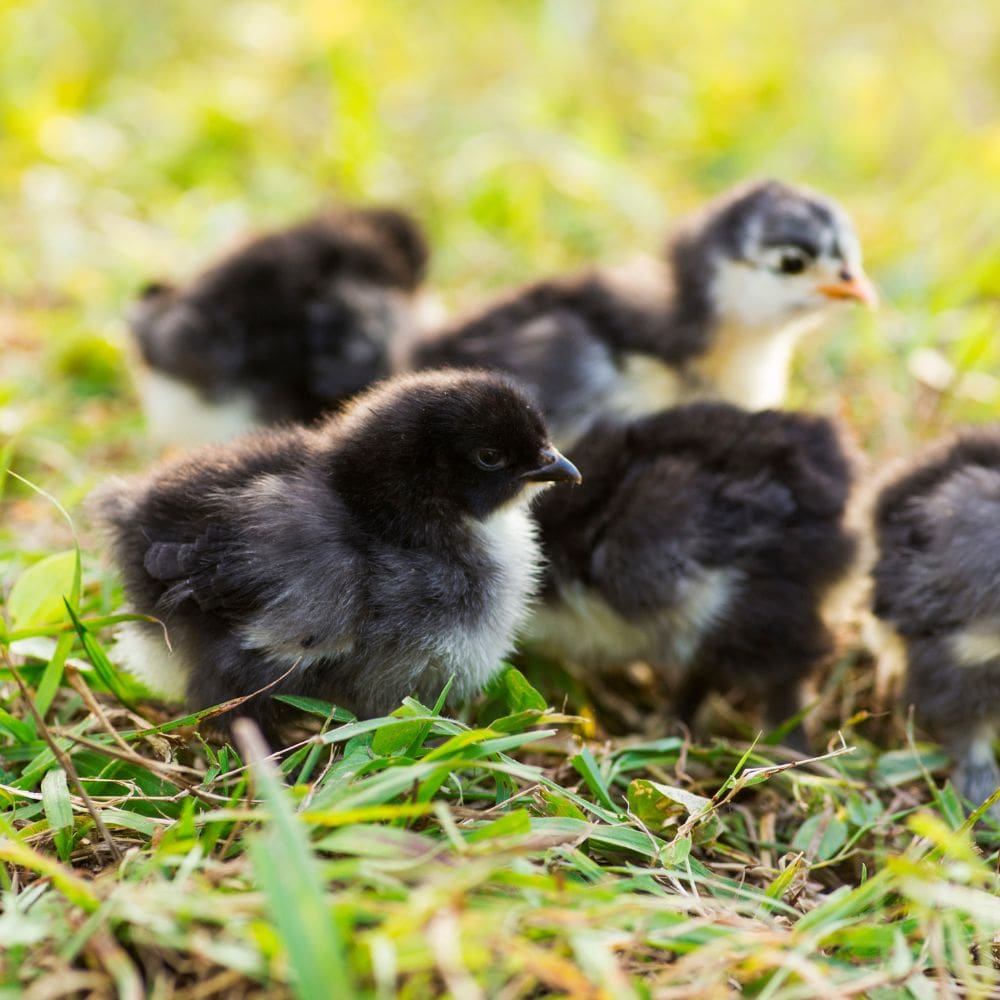
As baby chicks, you’ll want to provide your flock with an 18% protein chick starter like this one. The protein is necessary to help them grow correctly. Without it, they might not develop properly and it could affect their lifelong health.
Once your chickens start producing eggs, you’ll want to give them a layer feed and a calcium supplement like oyster shells. Layers need it so they can provide you with yummy eggs. T
he best diet for any hen starts with a 16% protein layer feed and fresh, clean water every day.Roosters can also eat layer feed, although they will probably leave the oyster shells alone.
Barred Rocks are a large chicken breed, but have a very good feed-to-egg conversion ratio – so they don’t need a TON of feed.
Like all chickens, this breed does better with space to forage and explore. There should be sufficient space inside the coop and run. You should also make sure it has the basic essentials like a roost, waterers, and feeders.
The ideal chicken coop should be:
Safe from predators
Well ventilated
Draft-free
Easy to clean
10 square feet of space per chicken
Enriched with environmental interest, such as branches and toys
Barred Rocks are fairly large chickens, so to ensure they’re healthy and don’t develop bad habits, make sure their coop has 10 square feet of space per chicken especially if you are keeping them in confinement all the time.
To keep them safe from dogs, raccoons, opossums, and larger predators like bears, make sure your coop is safe.
If you want to build your own coop, there are plans for a predator-proofchicken house here. Make sure you’re using the best chicken wire for your particular coop as well (generally ¼ inch hardware cloth is best).
Barred Rock chickens are very hardy in cold weather, but their coop still needs to keep them dry and warm in the winter. In the summer, they should have access to a well-ventilated coop that’s clean and free of ammonia (clean it weekly). Your coop should have good cross breezes so they don’t overheat.
Breeding Barred Rock Chickens & Genetics
Since the barring genes are common in a lot of chicken breeds, you probably aren’t surprised to learn that breeding Barred Rocks to create other, new hybrids is pretty common. It’s also popular for genetics when trying to create sex-linked chicks.
While we won’t dive too deep into genetics (it’s such a tricky topic!), here’s some interesting information about breeding Barred Rocks!
The barring gene is dominant.
A Barred Rock rooster will pass the barring gene to his offspring, however, the Barred Rock hen will only pass the barring gene onto males (which is why you can tell the sex of Sex Linked chicks right after they hatch)
A barred rooster paired with a non-barred hen won’t produce sex-linked chicks. To create sex-linked chicks, you must pair a rooster who doesn’t carry the barring gene with a purebred barred hen.
You can learn more about how chickens mate here and learn all you ever wanted to know about barring here.
Common Health Issues
Like other chickens, Barred Rocks are susceptible to lice, chicken mites, worms, and other parasites. Bumblefoot is another ailment Barred Rocks can get.
To keep your chickens healthy, you can add herbs to their feed, such as oregano, garlic, and lemon balm. If you don’t want to go to all the trouble of gathering herbs and mixing them up, I recommend checking these herbal blends out.
Where to Buy Barred Rock Chickens
Most major hatcheries and farm stores carry these chickens – you might also see them called “Plymouth Rock” chickens – this is because Barred Rocks are actually a color variation of Plymouth Rocks.
All the hatcheries on this list are good places to buy this breed – it’s probably best to choose a hatchery close to you, so your new chicks don’t have to travel too far before landing on your doorstep.
Always look for healthy, active chicks! If the photos of the babies don’t look great, or they look unhappy or sick, then don’t purchase them.
The top 5 hatcheries I recommend to purchase Barred Rock chickens are:
My Pet Chicken
If you live in the Northeast or Mid-Atlantic, then this hatchery is a great option (note they do ship nationwide). They’re located in Connecticut.
My Pet Chicken sells day-old chicks and 6-week-olds that you can have shipped right to your door. The Barred Rock chickens on their site have gotten many 5-star reviews, with some owners saying their Barred Rock hens were the first to lay eggs.
They also look very full-bodied with soft feathers, which is great. I imagine this is what the Barred Rocks our ancestors raised looked like (rather than some of the scraggly breeds you see today that are bred for egg production only).
Meyer Hatchery
There are many 5-star reviews for the Barred Rock chicks on this website – so it looks like past customers love their chicks! Meyer is located in Ohio, so if you live in the Mid-Atlantic. Northern Midwest, or Kentucky area, this is a good hatchery to order from since your chicks won’t travel too far.
Owners say their babies arrived healthy and have now grown into active layers. The prices at this hatchery are competitive.
Cackle Hatchery
Cackle is located in Lebanon, Missouri, so it’s a good hatchery to buy chicks from if your farm is in the Midwest, Texas, Oklahoma, Nebraska, Kansas, the Dakotas, etc. I personally usually order from this hatchery (they’re about 4 hours from my farm). Every time I’ve ordered from them, the chicks arrived ASAP and in good shape.
Their prices for Barred Rock chicks are reasonable, and they have good customer service. You can read our review of Cackle Hatchery here.
Murray McMurray
Murray McMurray has been around for a while, and they’re located in Iowa. If you live in the Dakotas, Iowa, Minnesota, etc, then this is a good hatchery to order from. I’ve ordered chicks through them once, and it was a good experience.
Their Barred Rocks have many 5-star reviews. Their prices are a bit more expensive than the other hatcheries on this list.
Stromberg Chickens
Stromberg is located in Minnesota, so it’s a good option for our Northern friends (sorry, Canada, I don’t know if they ship to you). Their prices are a little more expensive than other options on this list. On their site, there’s an option to have your chickens vaccinated for Marek’s disease.
There’s not a whole ton of information and photos on their site of the chickens (no photos of the chicks themselves), but this hatchery has a good reputation.
Other Ways To Purchase Barred Rock Chickens
Join Facebook groups and ask for breeder recommendations. Here’s a popular group dedicated to this breed.
Summary
As you can see, there is pretty much nothing bad about the Barred Rock breed. They are a good, solid, heritage breed that is friendly, hardy, and beautiful.
Hey y’all! Here’s this week’s sneaky peek photos of life on our farm!
These images also appear on my Instagram account where I share MANY more photos and stories from the farm!
If you aren’t yet following me there, you can right here.
Enjoy the photos & be sure to share some of yours with me!