The second we got our farm, natural chicken keeping became a priority.

The egg itself is said to be the perfect source of protein, and chickens are so easy to keep that they make sense for any farm.

Natural chicken keeping also has the added benefit of saving you money, as long as you do it right (and there certainly are times when it’s best to not cut financial corners.)
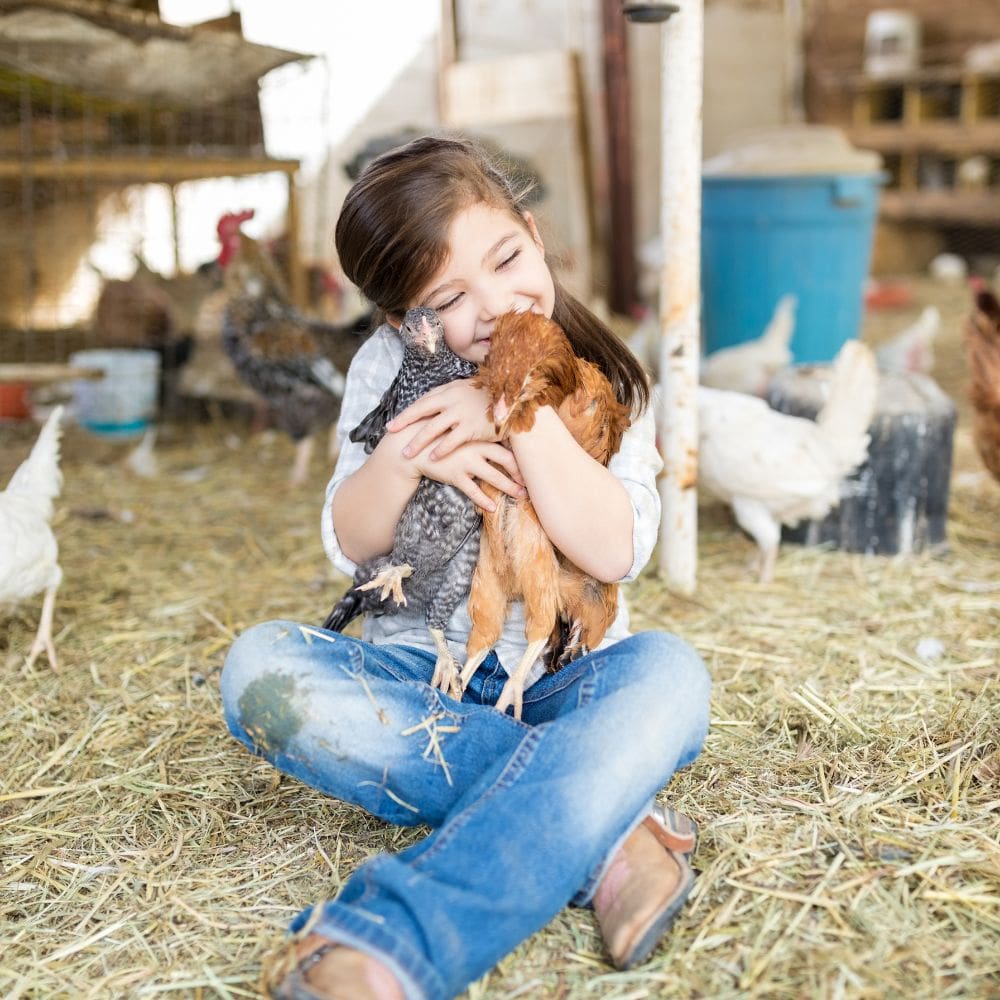
A young girl happily hugging two chickens while sitting in a coop

7 Natural Chicken Keeping Mistakes

We’ve saved by using fermented feed, herbs to keep our chickens healthy, and using food we could easily grow on our farm.

Buuuut….

We also made mistakes. 

At one point, we went 6 months with no eggs. That’s a huge bummer, believe me!

We’ve also had chickens stop laying in nesting boxes—and had to figure our way out of that one! (hint: placing eggs where you want them to lay helps!)

But we improved and got better.

Trust me, as a chicken owner, you will make mistakes (which you’ll learn from and get better from!)

As I’ve gained more experience in natural chicken keeping, and become a resource for new hen owners, there are certain mistakes I see time and again.

Here are the top 7 natural chicken keeping mistakes that you can avoid—and the chickens you have hunting and pecking in your backyard will thank you!

1. Worrying too much about the GMO/Non-GMO debate

I frequently get emails from new owners who want to know whether they should provide non-GMO feed, or who don’t know what to do because they can’t afford organic non-GMO layer mash.

The bottom line is the quality of your hen’s diet is the most important thing. If you can’t afford organic, non-GMO feed, then just opt for what you can afford.

While people will tell you that natural chicken keeping begins with feeding non-GMO, organic feed, it’s also about using naturally-found herbs, fermented grain, and vegetables, or even crafting your own feed to raise healthy hens.

It’s more important that you enjoy your “pets with benefits” and feel good about them—and if you’re stressing about not being able to afford organic feed, or if you’re putting yourself in financial distress over it, then keeping a backyard chicken flock won’t be any fun. 

Do your best, and enjoy the parts of natural chicken keeping that are within your budget and time constraints.

2. Getting a rooster so your hens lay eggs

Every so often I encounter new owners who believe they need a rooster to get eggs from their hens, and that roosters are a part of natural chicken keeping.

One of the nice things about owning hens is they’ll lay fresh eggs whether a rooster is present or not—you only need a rooster if you want eggs to hatch. 

(If you’re wondering how chickens mate, it’s pretty wild.)

Getting a rooster isn’t a bad idea, and it helps your hens feel safer and completes their social hierarchy, but you definitely don’t need a rooster to start all natural chicken keeping.

This is good news if your town doesn’t allow them!

3. Underestimating chicken predators

Every time I hear about a new owner who loses their flock to a formidable predator, I feel terrible for them. 

There’s nothing more heartbreaking than working hard raising chickens in a natural, healthy chicken flock only to have it ripped apart in one night by raccoons or coyotes. Foxes and hawks are also fairly common.

I’ve found that a lot of new chicken owners don’t realize just how crafty predators can be, and how much energy they’ll exert to get a free dinner.

Part of natural chicken keeping is making sure your flock stays safe. Sometimes new owners think chickens will be fine left to their own devices, but hens are pretty much defenseless against chicken predators

Usually, they either run away or fly up away from predators. Other than that, they don’t have many natural defenses.

You might not realize that predators aren’t just wild animals—domestic cats and dogs can cast an eye at your flock.

We made the same mistake until we started losing them to our dog! I’ll never forget the day we learned that our dog, who was so great with people, was a chicken killer.

So, even if you don’t have wild predators, remember that a secure predator-proof chicken coop and run will help prevent your flock from becoming a chicken chew toy. You can use things like hardware cloth or chicken wire to prevent digging predators from getting in the coop.

As a side note, even rats, mice, and other rodents can harm chickens. It’s important to keep feed covered and not to leave extra feed out overnight if you are having a problem with rodents. These pests will even seek out dropped feed on the floor of the coop, so keeping a clean coop is important as well.

4. Assuming chickens will fend for themselves and stay healthy

Common chicken keeping mistakes include new owners assuming that natural chicken keeping means letting the hens forage for their own sustenance (completely free-ranging).  

Natural chicken keeping doesn’t mean allowing your hens to fend for themselves, and if you go this route, you run the risk of unhealthy hens, with no eggs.

You won’t believe how many emails I get from owners who aren’t getting eggs and have no idea that diet is the issue.

You might also lose chickens to predators as they stray further and further from their home.

Sometimes I read advice that it’s natural to allow a chicken flock to feed itself because our ancestors did it, but it’s simply not true (and even if it is, it’s not best).

For example, what happened in the winter with snow on the ground and nothing growing? Were the hens foraging then?

Natural chicken keeping doesn’t necessarily mean throwing chickens in your backyard and forgetting about them until you want eggs, but it’s a common mistake I see new owners making.
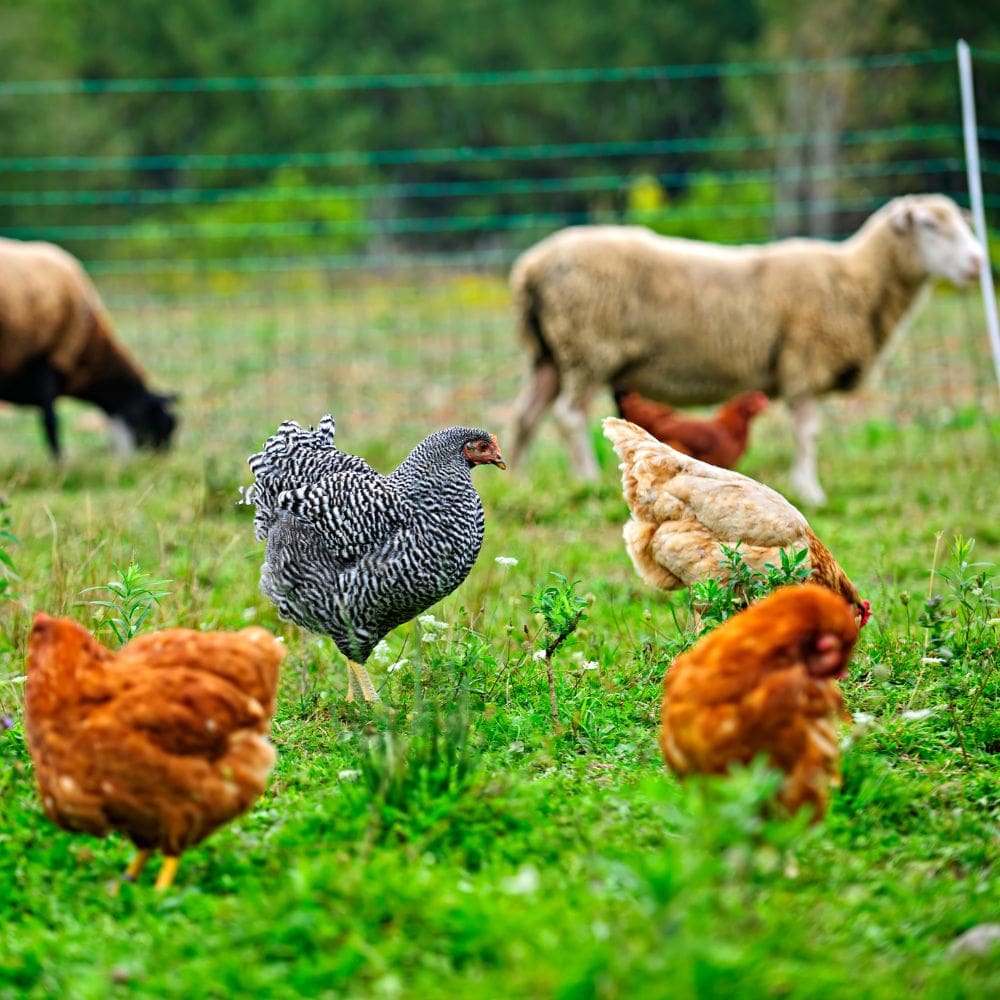
Hens happily pecking in a field of green with sheep in the background

5. Thinking oyster shells and grit are the same thing

When I read Facebook posts from people trying to explain natural chicken keeping, they frequently say something like “give your hens oyster shells or grit to help them digest.”

While you should offer both to your chicken flock, oyster shells and grit serve two different purposes.

Oyster shells are used as a calcium supplement so your hens can form healthy, hard egg shells. 

Without some sort of calcium supplement, your hen might become deficient in the mineral.

She then might start to lay soft shell or other abnormal eggs, or she might start drawing calcium from her own bones to lay natural normal-looking eggs.

Grit, on the other hand, helps your hen digest food, and without it, she might develop an impacted crop or even sour crop.

Your hen will swallow the grit, and it will make its way into her gizzard, where the stones will sit and help “chew” whatever food she’s eaten.

So, each serves a very different purpose, and shouldn’t be confused (but both are equally important for your chicken.)

6. Using vinegar to clean wounds

While vinegar works well in natural cleaning solutions, it’s not a good idea to use it in wounds. 

I do see this advice from time to time, and it’s a common issue in my area.

Even my vet asked me whether I use vinegar to clean wounds when I brought a rabbit to see her and was relieved to hear that I don’t use it.

Vinegar doesn’t have the same bacteria-killing qualities as alcohol or hydrogen peroxide, for example, and it simply won’t be as effective in preventing an infection.

You’ll be doing your chicken a disservice by using it.

7. Failing to learn about common illnesses and how to treat them

Although many of my readers DO try to learn about common poultry illnesses before getting a flock (and a hearty high-five to them!), many owners out there DON’T—and then use Facebook groups as a way to diagnose their chickens.

Similarly, about once a week I get a message over Facebook from an owner who asks me to diagnose their sick chicken—something that’s virtually impossible to do over social media.

While I feel for every flock owner out there with a sick hen, and it’s natural to want answers, don’t wait until you’re in trouble to learn about chicken illnesses.

There are many natural remedies out there for common illnesses, but the time to learn about them is not when you have a sick chicken.

Learn about common ailments and how to treat them (natural remedies or conventional) before or as soon as you get your flock—life will get a lot simpler, and you’ll be better prepared to help your hen when she’s in trouble.

You should also learn about prevention methods such as herbal dust baths, vitamin supplements, and proper ventilation that help keep your hens from getting sick in the first place.

Summary

While as a new chicken keeper, you will likely make mistakes, natural chicken keeping is full of rewards—just give it your best shot!

Related Articles

Wondering how to tell if eggs are good? We’ve all been there. 

You open the fridge, excited to cook a delicious omelet or a healthy scramble. You open the egg carton, only to notice that the expiration date stamped on the cardboard has long since passed. Are they good eggs or are they bad eggs?

What’s an egg-lover to do? Don’t rush to toss the carton in the trash.

A stinking, horrible smell of sulfur is a telltale sign that you have a rotten egg on your hands. This sulfurous smell means your eggs are no longer edible, but it’s not the only technique that you can follow. Expiration dates are good estimations of how long you can let eggs sit in your refrigerator – but as mere approximations, they aren’t always reliable on their own.

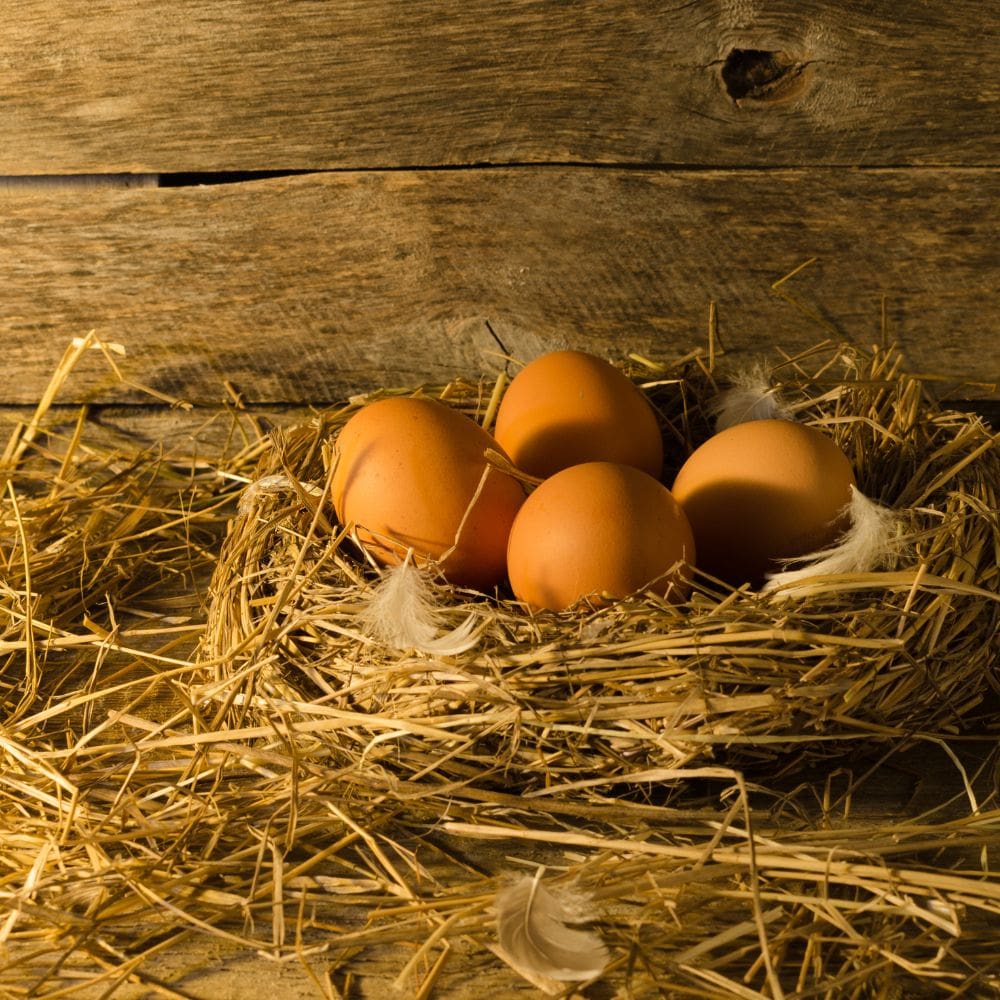
Eggs in straw nest with barnwood background

Here are some of the best methods of how to tell if eggs are good – with or without an expiration date.

https://www.facebook.com/thefrugalchicken/videos/1900156476960100/

When Do Eggs Usually Go Bad?

Believe it or not, not all eggs go bad at exactly the same time – and you can’t always trust the posted dates. 

Remember that the estimated freshness and longevity of eggs are determined by the American Egg Board, an association whose job is to increase national demand for products on behalf of U.S. egg producers. It wants you to buy more eggs, so the dates are going to be more conservative. 

Nevertheless, these dates are good first lines of defense against food-borne illness. Eggs can usually last in the refrigerator for about 30 days after packing. When you look at your egg carton, you may see a variety of dates, including a sell-by, expiration, or pack-by date. Usually, you’re safe to eat eggs within 21-30 days of any of these dates. 

The quality of the egg will usually start to decline after a certain date, but will still usually be safe to eat. Unfortunately, if you are eating your own farm-fresh eggs (instead of store eggs), determining freshness and safety without a sell-by date can be a bit more tricky. 

Usually, raw whole eggs are safe to eat for about four or five weeks. While raw eggs that have been processed in any way (such as separated egg whites and yolks or hard-boiled eggs) are only safe for about two to seven days. Once heat has been applied or the eggshell has been removed, there is a greater likelihood that bacteria is going to interfere with the freshness of the egg.

How To Tell if Eggs Are Good Past the Expiration Date

Unless you’ve cooked the eggs or altered them in some way, don’t toss them just because the expiration date has passed. As with meat and produce, it’s pretty easy to tell whether your eggs have gone bad without needing to look at the expiration date. 

Remember, refrigeration preserves the quality of the egg quite dramatically, so as long as your eggs have been stored properly, you have a bit of extra insurance.

Here are some easy methods of how to tell if your eggs are good.

https://www.facebook.com/thefrugalchicken/videos/1958735731072361/

Step One: The Visual Inspection

If you’ve already sniffed your eggs and can’t tell whether they’ve gone bad or not, using your eyes is another great way to tell whether your eggs are safe to eat. 

Before cracking your egg, make sure the shell is not cracked. A crack can not only indicate the presence of bacteria, but a crack can cause an egg to spoil more quickly than it would if it were contained in an unbroken shell.

You should also look out for a slimy or powdery appearance on the egg. A powdery appearance can indicate mold, while sliminess can be a sign of bacterial growth. 

Step Two: Eggs in the Bowl 

It sounds like the name of a fun Easter scavenger hunt. However, this method simply refers to the act of placing your egg in a bowl of water to determine whether it is still fresh or not. This is also called “the egg float test” or the “water test.”

Eggs are porous, and the liquid that is contained inside the egg evaporates over time changing the size of the air pocket within. The liquid is replaced with additional outside air. When the egg fills with air, it will float.

Therefore, by placing an egg in a bowl filled with cold water, you can determine whether it is safe to eat. If the egg sinks to the bottom or lays flat on its side is still fresh, while one that floats to the surface is no longer fresh.

What if your egg stands on one end at the bottom of the bowl? It’s still probably safe to eat, but it won’t be as fresh. 

Step Three: Audio Test

The audio test works according to the same science as the one above – older eggs begin to fill with air. This is sometimes called the shake test.

To conduct the audio test, simply hold an egg to your ear and shake it. You’ll need to have good hearing, but if you can hear a sloshing sound inside the egg, you need to toss it – it’s not safe to eat.

Step Four: Crack ‘n Sniff

Here’s where we get more advanced. Perhaps you’ve tried the steps above and aren’t convinced that your egg is fresh but you also don’t know for sure that it’s spoiled. Here’s what you need to do.

Crack the egg into a pan. Before you continue cooking, it’s important to make sure the egg isn’t loaded with nasty egg-borne bacteria. 

Take a close look at the egg. If it’s fresh, the yolk will be a bright yellow or orange and the whites should stay right in place. They may spread out a little bit, but they won’t be overly runny. Similarly, the yolks of older eggs may appear flattened or discolored. In particular, keep an eye out for any black, blue, pink, or green shades in the whites and yolk – this can be a sign of bacterial growth.

If either of these criteria is evident when you crack your eggs, discard them. Still not convinced? Give the questionable egg in the pan the sniff test. If it doesn’t have an unpleasant odor, it’s probably safe to eat, but you want to be sure to avoid food poisoning.

Tip: you might want to hard boil the rest of the eggs as they’ll taste fresher this way.

Step Five: Flashlight Test

If you have ever hatched your own baby chicks at home, you might already be familiar with the flashlight test, also known as “candling” an egg. You can easily use the candling or flashlight method as a way to tell if eggs are good in the kitchen, too. 

To do this, venture into a dark room with a flashlight. Any small flashlight or reading light will do. Place the flashlight so that the light is shining up into the large end of the egg. Tilt the egg and move it quickly from left to right. 

This will allow the contents of the egg to be illuminated. Look closely at what’s inside. You should be able to see the air cells in the egg. The fresher an egg is, the thinner and smaller the air pockets will be. 

How to Keep Eggs Fresher – For Longer

Do you feel as though your eggs begin to spoil as soon as you get them home from the grocery store? If so, you could be making a simple mistake in storing them. Although some refrigerators are equipped with egg compartments in the door, this is actually not the best place to store them. They will experience too many temperature fluctuations here. 

Instead, store your eggs in the main part of the refrigerator, where it’s colder and the temperature is more stable. If you are eating eggs from your own chickens, avoid washing them until you’re ready to use them. 

The outer layer of the egg contains something called a bloom. This is a covering that helps prevent the buildup of bacteria and also works to preserve freshness. And don’t worry if you see a blood spot in the yolk. It’s perfectly safe to eat and is simply a sign of a fertilized egg.

You can also freeze your eggs if you have more than you know you will use in a given time frame. Frozen eggs will cook up just like fresh eggs, but the freezing process will help to keep your eggs fresher for longer. 

Eggs being cooked in frying pan with tomato sauce and chives

Why It’s Important to Know How to Tell If Eggs Are Good

You may eat eggs every day, or they may be an occasional treat in your household.

Whatever the case may be, it’s important for you to know how to tell if eggs are good or not. Not only can these strategies prevent you from unnecessarily throwing away safe, delicious eggs, but they can also help keep you safe from foodborne illnesses.

Food-borne diseases that are caused by bacteria, such as Salmonella, often produce eggs that look, smell, and appear completely normal. Therefore, it’s not only important to conduct these other tests but to make sure you completely and fully cook your egg to a safe temperature before you go ahead and eat it. 

And remember, even if you can’t eat your eggs because they’re past their prime, there are plenty of ways to avoid wasting them. Use the eggshells in your garden as a fertilizer or pest repellent. In the meantime, maybe whip up some cereal for breakfast instead.

Summary

While it is important to avoid eating a contaminated egg, there are clearly ways to determine whether or not your eggs are safe. We hope these tips and videos help you feel comfortable with the process. Just remember, if in doubt don’t eat them. It’s always better to be safe than sorry.

From dogs that eat poop to dogs that won’t stop barking, there are all kinds of issues that you may have to deal with when you become a pet owner. However, if you’re looking for advice on how to stop a dog from attacking other pets, you may likely find that there are few ways to stop this behavior for good.

This is a very difficult topic to write about because there is not a one size fits all solution for dealing with aggression and aggressive behaviors in dogs. Unfortunately, for some individual dogs, there may not be a win-win solution either. The key here is trying to identify warning signs early in order to take immediate action before the behavior becomes too much of a habit. 

Just like there will not be one solution that works for every dog or every situation of aggression in dogs, there is usually not just one miracle cure that will work to stop the behavior. A combination of training, medication, and avoidance will likely need to be implemented for best outcomes.

What is Aggression?

stopping dog from attacking animals and chicks

There are several types of canine aggression that dogs may display – and many potential reasons behind aggression in dogs, too.

Generally speaking, aggression in dogs refers to any undesired behavior that can be linked to an attack (or the threat of an attack). A dog might bare his teeth, snarl, grow, become rigid and still, and, if the aggression escalates, bite or nip.

Prevention of aggression, including aggression toward people along with any other form of aggression, such as toward other animals, is key. It is especially important for households that have children or any other pets or animals. If you’re reading this article, there’s a good chance that you want to keep your children and animals safe – so keep reading to learn how you can stop this type of behavior.

Can Aggression Be Cured?

If you have a dog that has been acting aggressively toward other pets, you might be wondering if he can ever be “cured” of these behaviors.

Fortunately, by taking certain steps, you can limit your dog’s aggression and often completely eliminate the harmful behaviors. There’s no guarantee that canine aggression toward other pets can ever completely, 100% be cured, though, so it’s always a good idea to limit a dog’s exposure to the people, animals, and situations that pique these behaviors.

Ultimately, you are responsible for your dog, so you need to make sure you limit risks by being aware of his tendencies – even if it’s been awhile since he acted out toward other animals.

Are Some Breeds More Aggressive Than Others?

While there’s nothing saying that your neighbor’s pit bull is going to be more aggressive than your little Pomeranian, the ASPCA reports that there are some breeds that are more likely to bite than others.

Why is that the case? For one, certain dog breeds have historically served specific functions for humans. While some were highly valued for their guarding and protective tendencies, others were lauded for their hunting prowess or fighting skills. As you might expect, dogs that were expected to fight will be more likely to display aggressive behaviors than others – though obviously, that is certainly not always the case.

What Causes Aggressive Behaviors?

stopping dog from aggression with animals

The first step toward stopping this aggression is figuring out why your dog is being aggressive in the first place. While inter-dog aggression is common, it’s not the only kind of aggression – some dogs become hostile toward other animals, like cats, or even toward inanimate objects, like vehicles.

Canine aggression can be categorized as territorial aggression, in which a dog defends your home or another space from what he views as an intruder.

There is also fear-based aggression, a type of reaction that a dog will exhibit when he senses that he is in danger and needs to defend himself. This is common in rescue animals as well as those that were neglected or not properly socialized as puppies.

Aggression can be purely environmental in its causes, too. A dog that is sick or injured is more likely to be aggressive, as is one that is being possessive. Possessive aggression in dogs is actually quite common and is sometimes referred to as “resource guarding.”

Occasionally, dogs may also behave violently when they are frustrated or trying to show dominance toward people or other animals.

Why Would My Dog Fight With Dogs He Has Never Met?

In many cases, dogs fight with their regular companions – perhaps pets he has been around his whole life. However, it is much more common for dogs to fight with new animals, typically those that they have never met before.

That’s because it’s normal for dogs to express a bit of fear in uncertain situations. The goal here is to recognize your dog’s body language that might be telling you he is uncomfortable. This can help you prevent aggressive behavior before it occurs.

Aggression between two or more unfamiliar dogs can be related to fear, poor communication, possessive behavior or resource guarding, defensive mechanisms, and territorial behaviors.

How to Stop a Dog from Attacking Other Pets: 5 Basic Tips

stopping dog from aggression with animals

1. Work with your Veterinarian

If you notice your dog showing signs of aggression towards your other pets, the first thing you should do is schedule an appointment with your veterinarian. You can discuss the situation with your vet and they can examine your dog to make sure there is not a medical reason for the inter-dog aggression.

There are, in fact, some medical conditions that can make dogs behave more aggressively in the face of perceived threats. If a dog is in chronic low-grade pain, or if they anticipate pain, they can act more aggressive toward another pet. Although rare, it is possible for a dog to develop a brain tumor or even a tumor in their adrenal glands, causing them to become more aggressive and attack other pets.

Once medical conditions are ruled out, your vet can refer you to a positive reinforcement dog trainer or an animal behaviorist. This is extremely important because you will need to work on changing your dog or puppy’s behavior. Working with a professional who has the knowledge and experience is crucial.

2. Work with a Dog Trainer or Veterinary Behaviorist

Once your vet refers you to a dog trainer or veterinary behaviorist, make the call. A veterinary behaviorist is a veterinarian who has extensive training and knowledge in animal behavior. They also have the added benefit of being able to prescribe behavior-modifying medication.

It’s important to note that dogs aren’t the only animals that can behave aggressively. Animals of all species, including seemingly docile critters, like chickens, can have violent tendencies. Recognizing that this behavior is normal – albeit undesirable – is the first step in treating the issue.

If there is not a veterinary behaviorist near you or if their services are too expensive, a dog trainer will still be needed to treat the most extreme levels of aggression. Make sure they only use positive reinforcement in their training and not punishment. Punishment techniques will only make your dog’s behavior worse.

It is best if the trainer can come to your home to see how your dog or puppy behaves in their own environment and with the other pets around. Then they can work with you, your dog, and the other pets to find a workable solution.

By evaluating your dog, they should help you identify triggers that set your dog off and cause them to attack other pets. Is it just one pet in particular? Is it one action a pet does? Is it always during a particular time, such as feedings? Are there multiple triggers involved?

There are many things the trainer will need to help you narrow down to determine the underlying trigger for the aggression. Once that is determined, you and your trainer can work on ways to redirect the behavior before your dog has a chance to attack.

3. Medications 

If your dog has high anxiety or the behavior of attacking other pets has become a habit, your dog will likely need to be started on prescription medications. The is because in order for your dog to learn how to respond to things in new ways, they need to be able to relax their brain. 

The medications that can help with this are anti-anxiety and anti-depressive human medications. The most common ones used are Fluoxetine (Prozac) and Clomipramine. Every dog is different. One medication may work wonders in one dog, while have no effect in another. It can sometimes be a game of trial and error.

These particular medications need to be given to your dog or puppy for at least 2-3 months for you to know if they are helping. They need to build up in your dog’s system over the course of 1 month before they start working. 

Your vet will also want to check bloodwork before starting one of these medications to make sure your dog’s organs are functioning properly.

4. Avoidance

If you know what the trigger is that causes your dog to attack other dogs, try to avoid it if at all possible. It is best to just not put your dog into that situation. This may also mean that you keep certain pets at a distance away from your dog. You just do not let them interact in any way. You may need to give them separate living spaces (note – if you use an outdoor dog house, it’s important to keep it warm in the winter and cool in the summer!) and separate feeding times.

It is understandable that not all situations are avoidable – you can’t always keep your dog at a distance. This is where your training comes in handy. It is very important to be able to redirect your dog’s attention to focus on you if they are in a negative situation. 

5. Basic Obedience Training

Work on basic obedience and commands that make it impossible for your dog to do the negative behavior in the heat of the moment. For instance, train your dog to lie down and roll over with very specific words and hand motions that your dog can easily understand in any situation. If you notice them about to attack, do the command. They cannot attack when lying down, especially not when lying on their back. 

Have high value treats at your fingertips so you can reward your dog when they do redirect their attention and focus on you, doing the command. This will work to reinforce their good behavior. 

Alleviating boredom is another way you can help prevent your dog from attacking other pets. Here’s a good tip from the I Love Backyard Chickens Facebook page:

Give the dog a job. Be consistent. Obedience training first. I have a catahoula I got from the pound at 8 months old. He wanted to chase and get them at first. I tied his lead to my hip everyday while I did farm chores. Then after a few weeks he was free to do chores off lead. Then I taught him to protect my chickens, cattle and sheep from coyotes, cats, possum, raccoons etc. then I taught him to watch the sky for predators. He will not let a predatory bird land on our 6 acres. He chases from the ground not allowing them to land. Now he no longer needs cues it’s his job. He always gets corrected in a stern voice when doing wrong and always praised in cheerful voice when doing good. Consistent training and always praising as well as reprimand when needed. Dogs are happy to have a job. I try teach him something new every month. He helps with the cattle now too.

Charlotte Carter

You can also train your dog to focus better, which can also help you control him more easily when he is being aggressive around other animals. To do this, start by making a sound, like a smacking noise. Put a treat at eye level and give your dog the treat when he looks at you. You may need to do this a few times.

6. Monitor Closely

Sometimes, the case may not be that your dog has already displayed aggression toward another pet but that you are worried about him attacking new additions to your home or homestead. In that case, early exposure while monitoring both parties closely is essential. Be a good babysitter!

As Lauren Marsland writes on the I Love Backyard Chickens Facebook page:

Desensitization [sic]. Expose both animals to each other as much as possible. But if there even a tiny risk, always monitor your animals together and if you aren’t there to monitor them, don’t leave them together.

Lauren Marsland

7. Provide Boundaries

Another thing that can be helpful is to keep your dog at a controlled distance from other animals. If he must be in the same vicinity as other animals and you know that he is going to behave aggressively, consider using a leash, kennel, cage, fence, or muzzle. Although this is certainly not ideal, it may be necessary if you know that you cannot trust your dog around other animals.

Stay Safe While Teaching Your Dog to Be Kind

dog not aggressive with child

Never get in the middle of a dog fight. If your dog attacks another pet, do NOT put your hands or arms in between them as this only ensures that you will get bit. Your dog will not realize they are hurting you if they are in attack mode, even if they are on a leash. 

Something else that’s important to remember? If you’re aggressive, there’s a good chance that your dog will be, too. Try to stay calm whenever your dog is acting aggressive. This may help keep everyone safe and limit aggressive behaviors as well.

Trying to distract your dog with a really loud sound or by pouring lukewarm water on them may work. But, never put yourself in the middle of it.

Related Articles

If you’re looking to learn about the Australorp chicken breed AND want to know the best hatcheries to buy them from, then congratulations! You’ve found the best one-stop shopping guide for Australorp chickens! 

Australorp Chickens (especially the black variant) are gaining popularity because they’re excellent layers of brown eggs AND a great option for meat due to their size. They are also extremely sweet birds, making them for great families.

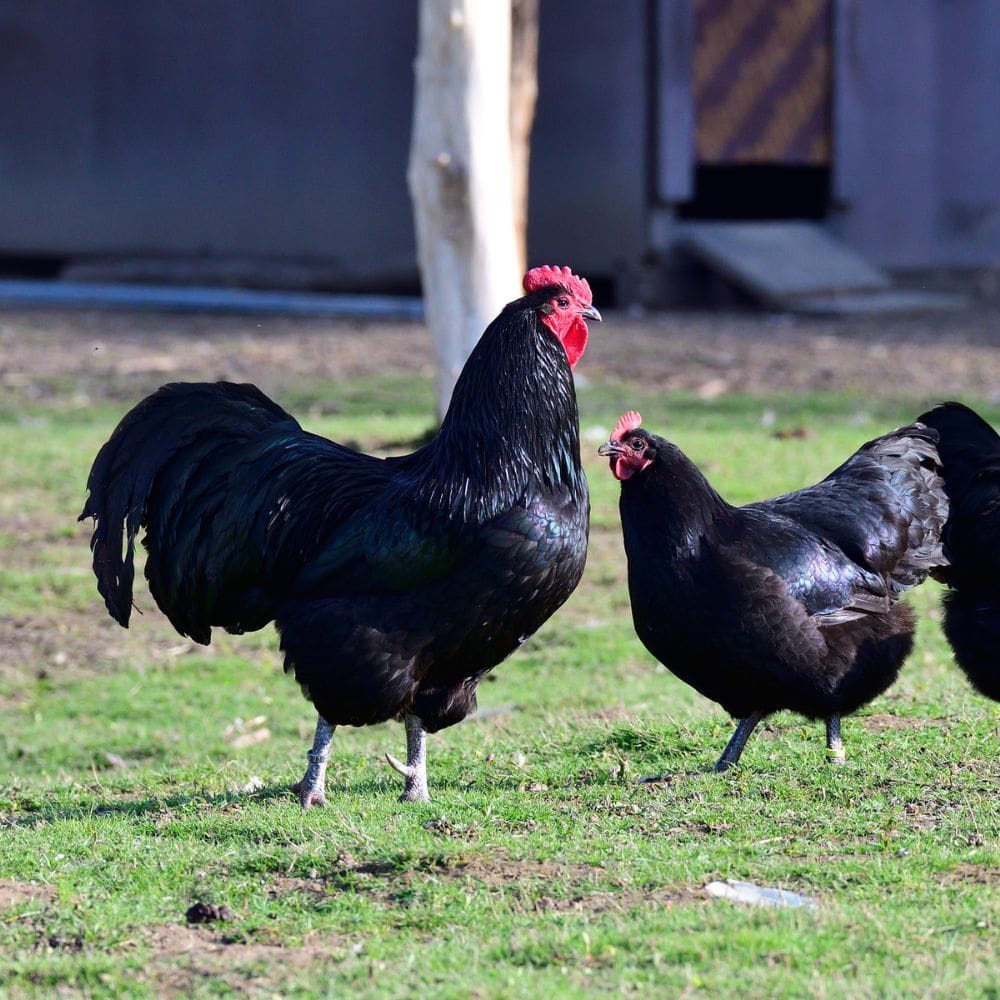
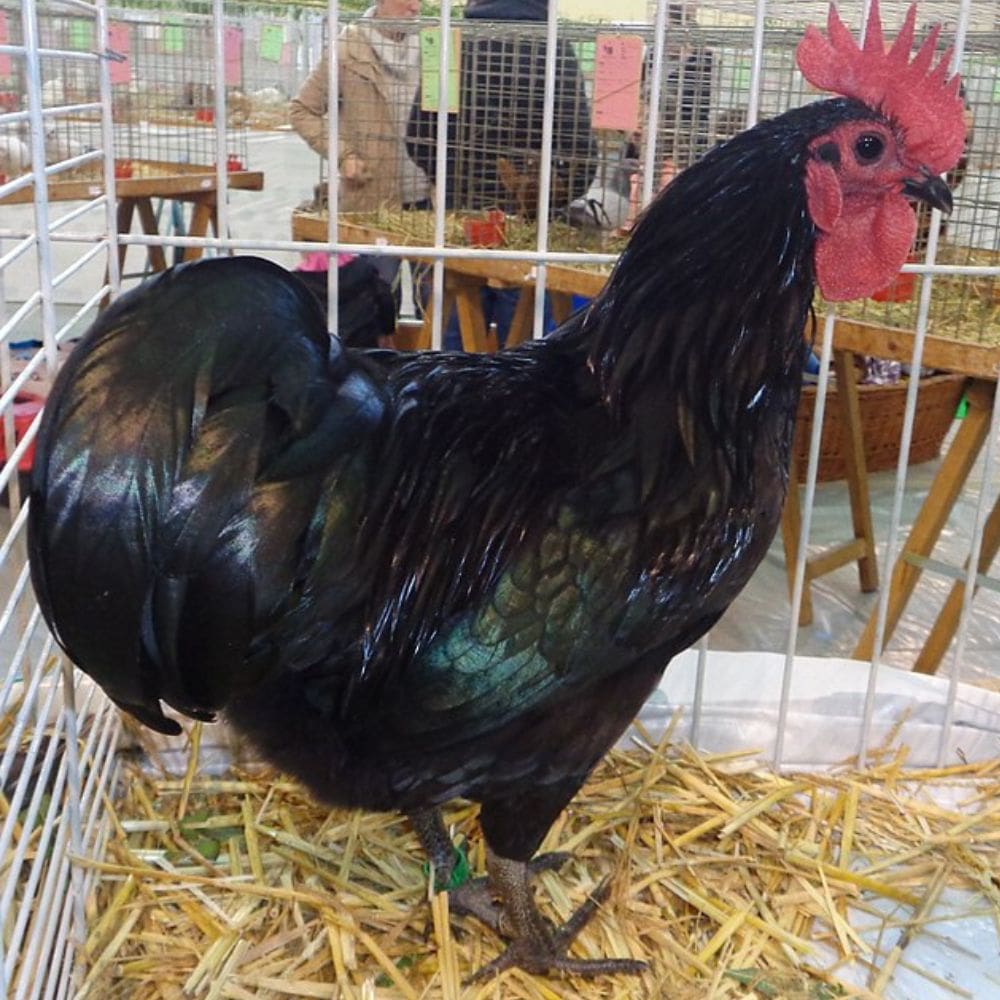
Australorp rooster and hen standing in grass together. You can see the shimmer in their plumage.

Why Are They Called Australorps?

Here’s a quick drive-by, mini history lesson. Back in the early 1900s William Cook’s Orpingtons were taken from England to Australia. They were then crossed with Rhode Island Reds with the purpose of refining their egg laying ability.

This refined version of the orpington, became what we know today. They were imported into America in the early 1920s. The chicken powers that be had a hard time figuring out a name for this breed – they were called everything from Australian Utility Black Orpingtons to Australs.

But the final name ended up as Australorp which is a mixture of “Australia” and “Orpington.”

Is There Anything Special About Australorp Chickens?

I’m so glad you asked 😉 Yes! Although some folks might be more excited about how many eggs they lay, I get most excited about the beetle green (and sometimes purple) iridescent color that shines within their plumage. It is magical in my opinion. AND they are beautiful soft feathers to boot!

I absolutely love looking at my black Australorp (which my kids named after their favorite Aunt Krissy).

Why Are Australorp Chickens So Popular?

These birds are so popular because of their excellence in dual purpose lives: males make excellent meat chickens weighing in at up to a whopping 10 pounds. These are LARGE birds! The female birds are excellent layers, with an average production run of about 300 eggs per year. Do you see the common link? EXCELLENCE!

Do Australorp Chickens Only Come In Black?

No, Australorp chickens can be found in a variety of colors. Although black is the original, and most popular, color there are a couple of other colors to choose from. I will warn you – only the black has the amazing beetle green (and sometimes purple) iridescent sheen to their black feathers.

The three standardized, and recognized by the American Poultry Association, colors are black, white, and blue. If you are anything like me when I was new to chickens – my heart leapt at the thought of a BLUE chicken. But blue in the chicken world is really more of a gray, sometimes with a tiny hint of lavender. Just so you know.

How Can You Tell an Australorp Rooster From a Hen?

  • Roosters have a more upright stance, carrying their tail high
  • Both males and females have a single, red comb – but the males will be taller
  • Roosters have long, flowing sickle feathers
  • Males will have spurs on their legs
Australorp Rooster in a cage as a display at an event.

Are Australorp Chickens Hardy?

Yes and sort of. Australorp chickens are excellent winter-hardy birds, most chicken lovers agree with this. However, the most popular variety, the black Australorps, do need plenty of shade. Because they are black their feathers attract the sun and this makes them more susceptible to heat stroke. That being said, my Australorps have never had any issues.

Are Australorp Chickens Friendly?

This breed is VERY friendly! Australorps are really a docile breed. They are sweet, calm, members of the flock. These fluff muffins are truly a great all-in-one package and a delight to have around!

Australorp Chicken Egg Production

I’ve already mentioned, several times, that Australorps are great egg layers of brown eggs. And that they are. There are some stories, although I suppose they could be myths, that some Australorp hens set a world record of egg laying back in the 1920’s. The word on the street is that the average of the record setters were around 310 eggs in a year.

Don’t get too excited and order 100 of these birds though. The modern version of this breed are not known for laying 310 eggs a year. But they do lay an impressive number of eggs, about 300 per year.

I Want Some! Where Do I Buy Them?

Great temperament? Check! Gorgeous? Check! Dual purpose? Check! They DO check all the boxes.

So, where you can get these wonderful birds?

5 Best Hatcheries to Buy Australorp Chickens

1.Cackle Hatchery

Cackle Hatchery proudly boasts that they have been hatching and shipping since 1936. A third-generation hatchery based in Missouri, their mission is to provide customers with quality poultry for showing, meat, enjoyment, and eggs. They ship throughout the USA, including Alaska, Puerto Rico, and Hawaii. They offer nearly 200 different types of chickens at all stages. 

Cackle also offers many other kinds of poultry including ducks, water fowl, game birds, turkeys, and other fowl. They are also a good source for supplies and books. 

Check out prices from Cackle Hatchery here.

Advantages 

  • Discounts if you buy male chicks
  • Vaccinations available
  • Only need 3 birds to ship (or just one for male birds)

Disadvantages 

  • Limited availability (February through September)
  • Sold as baby chicks only.

2.  Meyer Hatchery

Meyer Hatchery is based in Polk, Ohio, and boasts itself as the “premier Poultry Source.” Priding itself on customer service and availability, Meyer Hatchery provides a variety of chicken breeds to meet customer demands for color and diversity. They welcome mixing and matching of breeds of the same poultry type to meet minimum order requirement for safe shipping. To help with orders, they have a calendar of hatchings. 

Meyer has a variety of means of communication, including multiple phone numbers, fax, and email. They also run a blog that covers everything from breeds to plant pairing with chickens, feed, cooking recipes, fowl entertainment, and survival tips.

Check out prices from Meyer Hatchery here.

Advantages

  • Website is up-to-date in real time. 
  • Accepts checks and credit cards
  • Guarantees gender of chicks either through refund or store credit.
  • Optional vaccination.
  • Member of the National Poultry Improvement Plan (NPIP), and provide NPIP VS Form 9-3 free of charge. 
  • Offer orders of over 100 chicks. 

Disadvantages

  • Limited store hours that change with the season. 

3. Chickens for Backyards

Chickens for Backyards is an online poultry store that ships orders from Phillipsburg, MO. It sells over 100 breeds of day-old chicks, ducks, geese, turkeys, and guineas with orders as low as three fowl. They have a mix and match option for all breeds, which can be shipped all in the same order. 

Shipping schedules run from February through October. On their website, they offer a comprehensive FAQ page and Chick Care information. On the Australorp product page, there is a breakdown of the bird and information on the live chick guarantee. 

Check out prices from Chickens For Backyards here.

Advantages 

  • Orders can be cancelled up to 24 hours before shipping. 
  • Free shipping on supplies.
  • Comprehensive FAQ that covers a range of questions from care, feed, shipping, sexing, local laws relating to chicken farming, and terms.

Disadvantages 

  • Offer a 90% sexing guarantee, and will refund 90% of the purchase price once the 90% guarantee is surpassed. 

4. My Pet Chicken

 My Pet Chicken got started in 2005 by Traci Torres and her husband, Derek Sasaki, two novices to the chicken world who had a dream to help other novices in their farmers’ goals. To do this, the put free how-to information on the web and offered some unique products and services. 

The website launched in 2005 and in 2006, their flock had grown to the point to where they started offering chicks for sale from their headquarters in Monroe, CT. The site has been mentioned in another of publications, and serves tens of millions of page views per year.

Check out prices from My Pet Chicken here.

Advantages 

  • Offers Marek’s vaccinations on all standard chicks at the click of a button.
  • Consistent hours of operation. 
  • A good source for questions about ordering chickens, chicken care, and about raising chickens.
  • Full refund for any bird that has been incorrectly sexed or if any arrive less than alive (which is rare).
  • Super easy to navigate website.

Disadvantages 

  • Limited availability.
  • Does not have a storefront

5. Murray McMurray Hatchery

Murray McMurray started his chicken business in 1917. As a banker, he sold his chicks to locals through the bank and by 1919, he had developed his own stock of chickens. During the Great Depression, he devoted himself to chickens full time. Since then, Murray McMurray Hatchery has developed into one of the largest chick hatcheries in the country. They sell more than just chickens, with ducks, geese, guineas, turkeys, other fowl and game birds all in the catalogue.

Sexed male chicks tend to be the cheapest, meaning you can get some serious savings if you’re planning on raising these birds primarily for meat. You can also buy pullets or mix and match your order with chicks of other breeds, too. 

Check out prices from Murray McMurray Hatchery here.

Advantages

  • Males are extremely inexpensive
  • Bulk discounts available
  • Excellent breed availability 

Disadvantages

  • Minimum order of six birds at a time

Summary

If you’re looking for brown egg layers that are also excellent dual purpose birds, you can’t go wrong with an Australorp. All Australorps, including the Black Australorp, are great for people who want egg and meat birds with equally awesome yields.

Looking for more information on baby chicken care, then read this article we wrote. The most important things to have is a heat source, a waterer, and good quality chick food.

If you want to know all about Rhode Island Red Chickens AND the best hatcheries to buy them from, you’ve come to the right place!

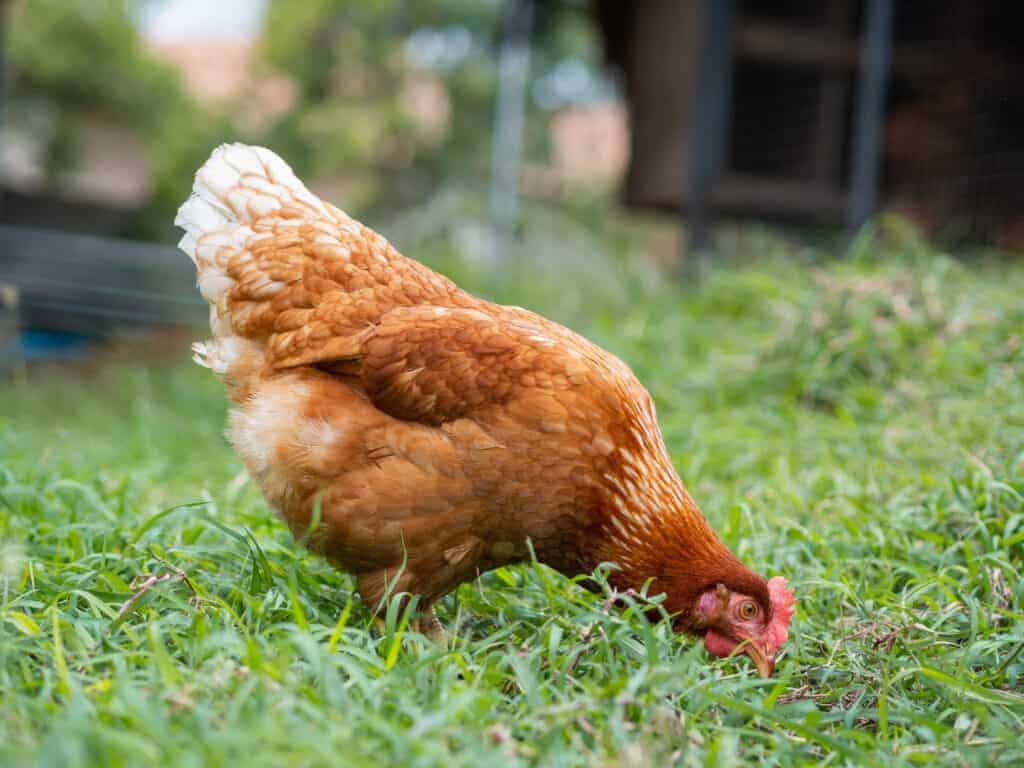
Rhode Island Red chicken in grass

Fast Facts About Rhode Island Red Chickens

  • Rhode Island might be the smallest state in the USA, but hasn’t stopped it from making a big name for itself in the world of chickens. Rhode Island Reds are the state bird of Rhode Island. It certainly makes sense.
  • They first got started as a breed in 1830.
  • These amazing birds are one of the foundations for sex-link chickens, which are not a breed of chicken, but rather, a type of chicken whose gender is immediately identifiable upon their birth. 
  • This breed was developed in (you guessed it) Rhode Island… and Massachusetts.
  • Rhode Island Reds are great at egg-laying. In fact, they are known for their egg production (four or five eggs per week) and are also excellent meat birds (with each bird dressing out to a 5-7 lb carcass).
  • These dual purpose birds are one of many breeds of chickens that are known as heritage breeds, with other popular options including Plymouth Rocks, Wyandottes, and more.
  • Tolerant of just about any climate, they are a hardy breed that are known for their adaptability.
  • Rhode Island Reds are family friendly and they do well as pets as well as around children.

Fast Facts About Rhode Island Red Appearance

Rhode Island Red hens come in a range of red colors (surprise!). The color will sometimes include a rust shade. Often times they will have some dark (green and black) tail feathers. They weigh around 6 to 6.5 pounds. Their feet and legs are a cheery yellow color.

Roosters are usually a darker red than the ladies. They exhibit the dark green and black tail feathers. Males are big fellas and weigh around 8.5 pounds.

Rhode Island Red chickens usually a have single comb, but due to a recessive gene some of them end up with a rose comb. Both males and females usually have a horn colored beak (which is sort of a dull gray).

Fast Facts About Raising Rhode Island Red Chickens

Ready to start your own flock of Rhode Island Red chickens? Whether you’re adding these chicks to an existing flock or starting from scratch, make sure you stock up on all the essentials before you bring your little guys and gals home.

What to Feed Them

To start with, you’re going to need a high-quality chick starter, like this one. It will provide your feathered friends with all the protein and other nutrients they need to get off to a good start.

Coop Tips

Make sure your coop has plenty of room for your birds – ideally, at least three square feet of space apiece, ideally more if they won’t be free ranging.

You will need at least one nest box for every four birds, too. We recommend filling your nesting boxes with great smelling nesting herbs to boost your birds’ production!

How to Get Good Egg Production

Your Rhode Island Reds won’t start laying eggs right away – you will have to wait a few months for that. But once they do, you can look forward to around four or five large brown eggs each week.

You can give them n egg boost with Best Eggs Ever and Power Hen, you’ll never regret giving them the best. Be sure to provide a clean and healthy coop atmosphere and plenty of fresh water.

10 Best Hatcheries to Buy Rhode Island Red Chickens

With such widespread value, RIRs (short for Rhode Island Red) are often sought after. If you are in the market for one, then you are in luck, my friend! Here is our list of TEN of the most prominent locations to buy these popular fluffy butts.

1. Meyer Hatchery

Meyer Hatchery is based in Polk, Ohio, and boasts itself as the “Premier Poultry Source.” Priding itself on customer service and availability, Meyer Hatchery provides a variety of chicken breeds to meet customer demands for color and diversity. They welcome mixing and matching of breeds of the same poultry type to meet minimum order requirement for safe shipping. To help with orders, they have a calendar of hatchings. 

Meyer has a variety of means of communication, including multiple phone numbers, fax, and email. They also run a blog that covers everything from breeds to plant pairing with chickens, feed, cooking recipes, fowl entertainment, and survival tips.

Check out prices from Meyer Hatchery here.

Advantages

  • Website is up-to-date in real time. 
  • Accepts checks and credit cards.
  • Guarantees gender of chicks either through refund or store credit.
  • Optional vaccination.
  • Member of the National Poultry Improvement Plan (NPIP), and provide NPIP VS Form 9-3 free of charge. 
  • Offer orders of over 100 chicks. 

Disadvantages

  • Limited store hours that change with the season. 

2. Cackle Hatchery

Cackle Hatchery proudly boasts that they have been hatching and shipping since 1936. A third-generation hatchery based in Missouri, their mission is to provide customers with quality poultry for showing, meat, enjoyment, and eggs. They ship throughout the USA, including Alaska, Puerto Rico, and Hawaii. They offer nearly 200 different types of chickens at all stages. 

Cackle also offers many other kinds of poultry including ducks, game birds, turkeys, water fowl, and other fowl. They are also a good source for supplies and books. 

Check out prices from Cackle Hatchery here.

Advantages 

  • Discounts if you buy male chicks.
  • Vaccinations available.
  • Only need 3 birds to ship (or just one for male birds).
  • Offer both Standard and Bantam RIRs!

Disadvantages 

  • Limited availability (February through September).
  • Sold as baby chicks only.

3. Murray McMurray Hatchery

Murray McMurray started his chicken business in 1917. As a banker, he sold his chicks to locals through the bank and by 1919, he had developed his own stock of chickens. During the Great Depression, he devoted himself to chickens full time. Since then, Murray McMurray Hatchery has developed into one of the largest chick hatcheries in the country. They sell more than just chickens, with ducks, geese, guineas, turkeys, other fowl and game birds all in the catalogue.

Sexed male chicks tend to be the cheapest, meaning you can get some serious savings if you’re planning on raising these birds primarily for meat. You can also buy pullets or mix and match your order with chicks of other breeds, too. 

Check out prices from Murray McMurray Hatchery here.

Advantage

  • Males are extremely inexpensive.
  • Bulk discounts available.
  • Excellent breed availability.

Disadvantages

  • Minimum order of six birds at a time.

4. Hoover Hatchery

Another established brand if you’re looking for chicks is Hoover’s Hatchery. Hoover’s supplies many farm and garden supply stores in the United States with their chicks, making them a smart choice if you want to skip the middleman and order from the hatchery directly.

Plus, Hoover’s offers free shipping on practically everything you order. You’ll have to buy at least 15 chicks; so Hoover’s might not be the best option if you live in a city with chicken restrictions. However, as long as you’re willing to buy in bulk, it’s a smart choice. You can even mix and match your order by adding other birds of other chicken breeds along with poultry species like pheasants, turkeys, guineas, ducks, and more. 

Another benefit of ordering from Hoover’s Hatchery? Despite the fact that this hatchery is located in Iowa, not necessarily a warm-weather state, it hatches chicks all throughout the year – a must-know feature if you plan on buying chicks around Christmastime. 

Check out prices from Hoover Hatchery here.

Advantages

  • Excellent guarantee and refund policy in case of shipping problems.
  • Hatches chicks during the winter, one of the few hatcheries to do so.
  • Sells other kinds of poultry too.

Disadvantages

  • Large minimum order.

5. Valley Farms Hatchery

Valley Farms Hatchery is located in Alabama and is one of the few large commercial chick hatcheries located in the southern United States. If you live in the south, that’s one good reason to give Valley Farms a try – you won’t have to ship your new Rhode Island Red chickens long distances, which can cut down dramatically on shipping stress.

You can buy fertile hatching eggs along with Rhode Island Red chicks from this hatchery. You’ll find some of the lowest price, here, too, with a minimum order of just three chicks. If you buy males, interestingly, the order minimum is just one bird. Buying in bulk poses several advantages though, especially if you can buy more than 50 birds at once – you’ll get significant savings.

Check out prices from Valley Farms Hatchery here.

Advantages

  • Each order is backed by a 100% live delivery guarantee, no matter where you live.
  • One chick minimum order if you’re buying males.
  • Optional Marek’s vaccination.

Disadvantages

  • Limited shipping dates.

6. Purely Poultry

As a family-owned business, Purely Poultry was started in a college dorm room as a one-stop source for all poultry need. They pride themselves on their knowledge of their products, selection, and how-to details related to everything they offer, including ducks, chickens, geese, and lots of other birds! With their dedication to their products and customers, Purely Poultry has some of the best customer service around.

Located in Durand, WI, they guarantee live birds with every order, which is a good promise, indeed!

Check out prices from Purely Poultry here.

Advantages

  • Each order backed by live arrival guarantee.
  • Small order minimum on chicks.
  • Other kinds of poultry offered, too.

Disadvantages

  • Not huge advantages to buying multiple chicks – discounts are minimal.

7. The Chick Hatchery

The Chick hatchery is Michigan’s “premier source for superior quality poultry.” With a creed that revolves around the sharing and joy of raising chickens, they operate in no-kill facilities. They raise their chickens humanely, with any unsold chicks going to Amish farms. Much of the experience of raising chickens is the awareness of the individual chicken and the relationship between food and our own health.

Their Rhode Island Red 8-12 week Pullets are available throughout the year! Shipped out on Tuesdays and arrive between one and two days.  

Check out prices from The Chick Hatchery here.

Advantages

  • All poultry guaranteed live delivery.
  • Offers discounts on orders of larger quantities of birds, which helps significantly cut down on rates.
  • Bantam varieties are available from February through August.

Disadvantages

  • Ships a maximum of 12 total pullets.
  • Relatively expensive for pullets.
  • Does not ship to Hawaii or outside the USA.

8. Chickens for Backyards

Chickens for Backyards is an online poultry store that ships orders from Phillipsburg, MO. It sells over 100 breeds of day-old chicks, ducks, geese, turkeys, and guineas with orders as low as three fowl. They have a mix and match option for all breeds, which can be shipped all in the same order. 

Shipping schedules run from February through October. On their website, they offer a comprehensive FAQ page and Chick Care information. On the Rhode Island Red product page, there is a breakdown of the bird and information on the live chick guarantee. 

Check out prices from Chickens for Backyards here.

Advantages 

  • Orders can be cancelled up to 24 hours before shipping. 
  • Free shipping on supplies. 
  • Comprehensive FAQ that covers a range of questions from care, feed, shipping, sexing, local laws relating to chicken farming, and terms.

Disadvantages

  • Losses must be reported within 3 days of arrival. 
  • Limited availability.

9. Townline

Townline Hatchery, out of Zeeland, MI, prides itself on its hands-on approach that its entire experienced staff observes. In fact, they have an entire series of how to raise birds! Their FAQ section is already quite comprehensive, and they encourage customers to contact them with any questions not already covered. They provide customers with 26 different breed of bird.

The only disadvantage to ordering from Townline is that you’ll have to buy in bulk. The hatchery has a minimum order of fifteen chicks, which can be a challenge if you live in a city that has restrictions on how many birds you can raise (most towns cap it at six hens). However, if you’re planning on shopping for a large flock anyway, Townline is the way to go – the hatchery offers a discount of several dollars per bird when you buy more than 100 chicks.

Check out prices from Townline Hatchery here.

Advantages

  • Superior customer service
  • Excellent reputation as one of the longest-standing hatcheries
  • Great for buying chicks in large quantities

Disadvantages

  • Not many hatching dates available for fall, winter, or early spring shipping

10. Heritage Pullets

Heritage Pullets is run entirely by family, with each member contributing his part to the daily operations. They are located in beautiful Montana.

A few of their practices that truly set them apart from others include but are not limited to,  complete access to pasture of all pullets after one month of age, they are not raised on wire or in cages and they treat them with table scraps regularly. They also supplement the chicks with fodder in this early stage to set a healthy foundation for a long and productive life.

Check out prices from Heritage Farms here.

Advantages

  • There is no minimum order.
  • For shipments of live poultry, they guarantee live delivery and 48-hour survivability and will issue a refund for losses.
  • Member of the National Poultry Improvement Plan (NPIP).
  • Flocks are tested for Pullorum-Typhoid and Avian Influenza (AI)
  • If the order is canceled more than 14 days before the shipment date, the only fee charged is what the credit card company charges them.

Disadvantages

  • They do NOT guarantee one-day delivery. If your birds take more than one day to arrive, they will not refund the shipping cost.
  • They are a bit expensive.
  • Since they ship on Tuesdays, they are very busy and not able to answer the phones on that day.

Summary

Rhode Island Reds are an amazing family backyard bird. They are lovely, friendly, dual purpose, great egg layers, and more. We are sure you will love raising this breed. And now, you have a list of 10 hatcheries you can trust to order your new family friends from.

So…what are you waiting for?

Related Articles

Does my pet have allergies?

That’s a question you may find yourself asking if you have noticed symptoms of allergies in your pet.

As springtime comes upon us, many of us also start getting the ills of our springtime allergies- sneezing, itchy eyes, running noses, and sore throats. Well, guess what? Just like us, our pets can suffer from allergies, too!

Pets with allergies can have mild symptoms to severe symptoms. Some are similar to those which we suffer from, and some are different. The good news is, there are treatments available that provide relief to your pet, which we will discuss below.

How Common Are Allergies in Dogs?

vet pet with allergies

Allergies are just as common in dogs and other pets as they are in humans. Allergies are most common in dogs older than six months of age, with most affected dogs being a year or two old (or older). They can occur in dogs of all breeds and backgrounds, so there’s no getting around it – you probably won’t be able to select a dog that is “allergy-free.”

There are several types of allergies, with allergy symptoms ranging from severe to mild. Your dog might have environmental allergies, flea allergy dermatitis, or food allergies.

Symptoms of allergies may mimic those that are found in the human immune response, too, like a stuffy nose, atopic dermatitis, secondary skin infections, chronic ear infections, and eye drainage. Although there is no cure for allergies, an allergy in pets can be treated just as easily as can the symptoms of people with allergies.

Signs of Pet Allergies:

Pets with allergies may have one or more of the following signs:

  • Itchy skin 
  • Itchy ears
  • Hives
  • Sneezing 
  • “Reverse sneezing”
  • Runny nose
  • Eye drainage/Irritated eyes
  • Respiratory symptoms
  • Allergic dermatitis

Itchy skin and ears are the most common signs of allergic reactions in pets. Pets with allergies usually develop a lot of inflammation in their skin, which causes them to itch and scratch with intensity. The itching is usually worse at night when they are relaxed and not focused on anything else. This can often cause you to lose sleep if your pet is up scratching all night. 

Unfortunately, one of the most dangerous effects of allergies in pets is that all that itching can sometimes lead to other problems, like inflamed skin, a secondary infection like bacterial infections, and bleeding.

Some pets with allergies, particularly those reacting to environmental allergens, may just have some sneezing or what we refer to as “reverse sneezing”. This is more common in dogs. They will get themselves into a fit and it almost looks like and sounds like they are snorting or wheezing and trying to breath with fierce effort. They usually are back to normal within a few seconds to one minute.

Causes of Allergies

any pets can have allergies

Pets can have allergies from many different things. Some of the common causes of allergies in pets are: 

  • Pollen (all different kinds)
  • Food
  • Fleas
  • Detergents, shampoos, things they may come into contact with
  • Vaccine reactions

Environmental (seasonal) allergies are usually caused by various types of pollens that are floating around in the air. This is usually at its worst in the springtime and the fall. However, some pets are more sensitive to certain pollens that come out in the summer and/or winter. Allergies caused by pollen can result in any or all of the signs of allergies, including itchy skin and ears, sneezing, runny noses, and irritated eyes.

Food allergies usually cause itchy skin and occasionally problems with digestion (vomiting and diarrhea).  The cause of the food allergy is usually due to the protein source within the food (some of the most common food allergens are chicken, pork, or beef).  Some pets may be allergic to the carbohydrate source (rice, potato) or even to a particular dye within the food that makes it look a certain color.   

Finally, some pets may have an allergy to certain shampoos, conditioners, or even detergents you may use for their bedding or your bedding. 

How to Tell if Your Dog Has Seasonal Allergies vs. Food Allergies

It can often be challenging to tell if your dog is suffering from a seasonal (environmental) allergy or a food allergy. Of course, the easiest way to tell if it’s a seasonal allergy is if the symptoms come and go with the changing of seasons.

But if you notice that your pet is sick pretty much year-round, there’s a good chance it’s a food allergy. Remember that even if you haven’t changed your pet’s food, he may suddenly start showing a sensitivity or allergy anyway. This often occurs when manufacturers change ingredients in a dog food, eliciting a reaction in dogs who were previously fine.

What is a Flea or Insect Bite Allergy and How Is It Treated?

Just as humans can react badly when they are bitten by insects, so, too, can dogs. Insect bite allergies are nothing more than exaggerated inflammatory responses to insect bites or stings, such as bees, ants, mosquitoes, fleas, and deerflies. All of these can cause reactions in sensitive pets. Flea saliva is one of the most common insect allergens.

Even though fleas usually cause itching, pets with flea allergy really tear their skin up way more than a pet that doesn’t have a flea allergy. If your pet has a flea allergy, their skin will be very red and inflamed even though you may not visibly see fleas walking around on them. They will have incessant itching even with just one or two fleas on them. 

Are Allergies Inherited?

Again, as with humans, there might be some evidence to suggest that allergies are genetic. Dogs might be more likely to have allergies, especially allergies to pollens and plants, if one or both of their parents also suffered from allergies.

Does My Pet Have Allergies? When to Call the Vet

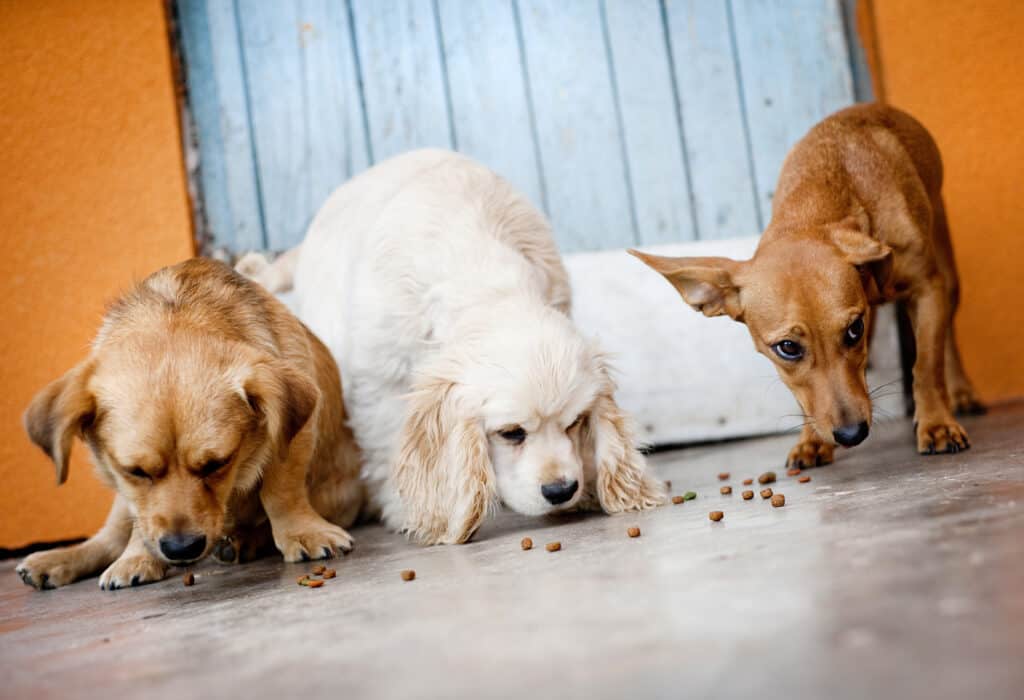
group of dogs with food allergies

If your pet just as a mild itch or occasional sneezing, it is fine to wait it out to see if your pet is able to get through their allergy season on their own. Do not give into temptation to give your pet any human allergy medications, especially the ones with decongestants in it, as these can be very toxic to your pet. 

Here are some reasons you should schedule an appointment with your vet:

  • If your pet begins scratching their skin every time they are at rest
  • if the need to scratch is interfering with their normal daily activities
  • if they feel down and out and don’t even have the energy to eat their normal amount of food
  • if you are seeing bumps, scratches, or a lot of redness on their skin
  • if they are losing fur

It’s important to get your pet into the vet sooner rather than later because as your pet starts tearing up their skin they can develop secondary bacterial and/or yeast infections. The earlier the itch is treated, the better chance you have at getting it under control with prescription medication or allergen-free pet food without further complications.

How Are Allergies Diagnosed and Treated?

Your vet can examine your pet to look at their pattern of itch and skin irritation. This can help guide them in offering you some advice on what the underlying cause of your pet’s itch may be. Then, they can work with you to develop a short-term and long-term treatment plan. Depending on what your vet sees on your pet, they may prescribe or recommend one or multiple of the following treatments:

  • anti-itch medication (there are so many options available these days for our pets!)
  • special shampoo
  • antibiotic
  • antifungal medication
  • ear drops
  • eye drops
  • fish oils
  • medicated skin wipes
  • flea prevention medications
  • restricting certain foods from your pet’s diet
  • prescription food
  • food trial
  • allergy testing and allergy shots

Allergy shots, in particular, are extremely effective as allergy treatments for dogs.

Overall, 60 to 80 percent of dogs with environmental allergy will respond very well to allergy shots, often eliminating the need for other medications the pet may have been given to control signs…Young dogs may respond better to immunotherapy than do older dogs.

Dr. Scott Miller, College of Veterinary Medicine at the University of Illinois at Urbana-Champaign

Working with your vet is the best way to get your pet’s itch under control. Sometimes it will be through trial and error, while other times it may be very straight forward and an easy fix. Keeping an open mind and understanding that allergies can be very frustrating to truly get under control will help you through this process. 

What Can I Give My Dog Naturally for Allergies?

Often, allergy medications are the best treatments for dogs who are suffering from allergies. In some cases, though, you may be able to try more natural treatments to get your dog’s allergies under control. Do this only under the advisement of a veterinarian, but you may want to consider a natural remedy of omega-3 fatty acids.

Other natural remedies to try include:

  • Apple cider vinegar
  • Epsom salts
  • Oatmeal baths
  • Yogurt
  • Vitamin E
  • Coconut oil

There are even special shampoos, like hypoallergenic shampoo and conditioner products, that can help treat severe body-wide itching so you don’t need to rely on topical or oral medications to treat the skin condition. Sometimes, isolating common ingredients in your dog’s food that might be triggering a gradual reaction can be helpful. By conducting a simple “diet trial” in which you eliminate that single food ingredient, you may be able to relieve some of the most typical signs of allergies.

Here is more information on how the diet trial works:

The “gold standard” or best method that we currently have, for diagnosing food allergies is the dietary elimination trial. This means feeding your pet a diet purchased through a veterinarian or carefully made at home that contains only a few ingredients (typically one protein and one carbohydrate plus necessary fats, vitamins, and minerals) that your pet has never been fed before or that are hydrolyzed (where the proteins are broken down into very small pieces that can hide from the immune system) or purified to remove the parts that are likely to cause allergies. This diet is then fed as THE ONLY FOOD OR FLAVORED THING TO GO INTO YOUR PET’S MOUTH for at least a month but potentially several, depending on your pet’s history and type of issues. If your pet’s signs dramatically improve during the trial, then to confirm a food allergy, your pet then has to go back to the old diet again. A quick relapse is suggestive of an allergy to an ingredient in the old diet.

Clinical Nutrition Team at Tufts University

What Are Other Causes of Gastrointestinal Signs or Skin Issues in Pets?

One of the reasons why it is so important to seek out veterinary help when treating your pet’s allergies is to make sure that it’s allergies causing his woes, and not some other condition. There are lots of other medical conditions, from mild to more severe, that can cause similar symptoms.

For example, classic signs of digestive problems might not be related to a food allergy but could instead by related to eating poor-quality food, ingesting chemicals, an obstruction in the digestive tract, or some kind of injury to the digestive tract.

Similarly, skin issues can also be called by parasitic, bacterial, or fungal infections. They could have sarcoptic mange or a wide variety of other issues.

Therefore, it’s important to always get a professional opinion before you attempt any medical treatments yourself. While pet allergies aren’t usually serious, there is no point in making your pet suffer unnecessarily. Help him get the treatment he needs – scratches and sniffles, be gone!

Related Articles: