Are you ready for spring? I can’t hear you. Are you ready for spring?!

I know I am. To beat these chilly blues, I’ve been planning my garden. Right now I’m deciding what to plant where. Last year, I made a few companion planting mistakes I’ll be sure to avoid this year.

We’ve built our raised beds, and I’ll be doing more square foot gardening this year.

(This article is an excerpt from my book, Organic By Choice: The (Secret) Rebel’s Guide To Backyard Gardening. In that book, you’ll find an encyclopedia of how to grow vegetables such as tomatoes, eggplants, lettuce, and more. You can buy it on Amazon or off this website to save 20% and get the digital version free.

Buy now right here to save 20% and get the digital version FREE!)

If you’re new to square foot gardening, then here’s my beginner’s guide to square foot gardening – it’s super easy to implement, but you have to make sure you get the companion planting right.

If your spacing is poor or your vegetable plants don’t “get along well,” then you’ll probably not have the harvest you’re expecting.

I think a salsa garden and an all-tomato garden are definitely on the list!

This year, my garden will be awesome. 

I’ve picked out a place for the radishes, near the house where the soil is loose but rich with the compost from plants of yesteryear. (I’m not the biggest fan of radishes, but they’re about as instant gratification as gardening gets, and this year I want to try to pickle them!)

The kale will line the walkway that leads to our front door, since kale, which doesn’t grow too tall, makes an attractive border, adding texture to our front lawn.

The cabbage will go in the front of the house, where I’ve been composting manure, and where they will be easily accessed.

It’s also far away from my radishes, since radishes and cabbage don’t grow well together. That was companion planting mistake #1 last fall. I planted my cabbages near my radishes, and neither did too great!

In fact, just like some foods just don’t like each other, some veggies don’t make good companion plants. Using a companion planting chart when planning your garden can help prevent costly mistakes.

As you plan your spring garden, use this easy companion planting guide to avoid 6 common companion planting mistakes:
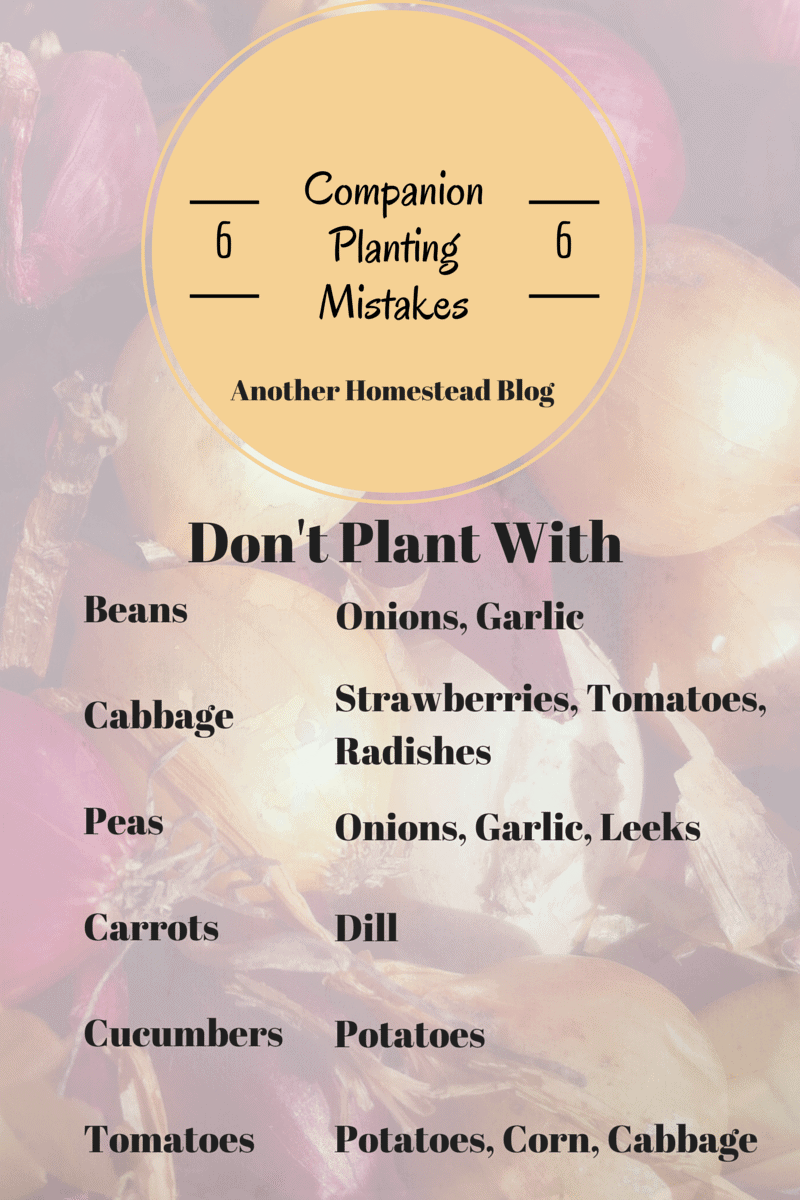
Companion Planting No-Nos

Now, you do need to pay attention to zones (you can find out your USDA zone right here

Your season also will dictate what you’ll plant. Here’s guides for each month of the growing season:

January    February    March    April    May    June     July    August    September

Itching to start gardening RIGHT NOW?

Here’s 12 crops you can start in cold frames – including lettuce, spinach, radishes and more!

You can also learn how to heat your green house right here.

What will you plant in your garden this spring? Will you try companion planting? How will you avoid these 6 common companion planting mistakes?

square foot gardening plant spacing

Who doesn’t love spending bonding time with their backyard chickens? I know I do!

The time I spend with my chickens is the highlight of my day, and I’m sure it is for you, too. And what better way to spend time with your flock then feeding them treats they’ll ADORE??

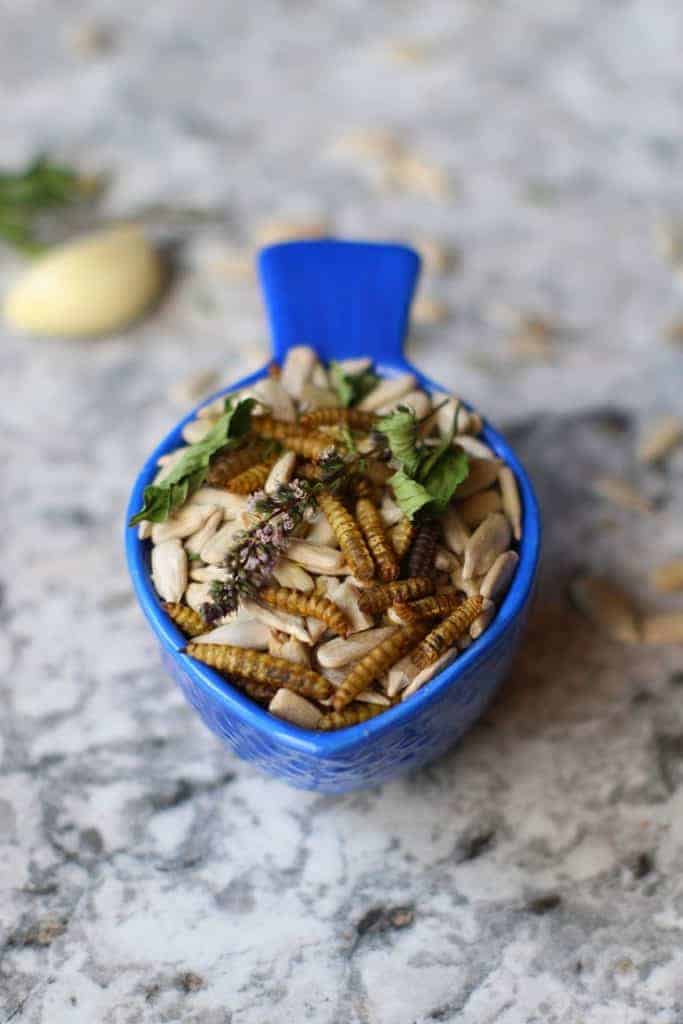
This week’s high protein treat is full of goodies your hens will go GAGA for! Every time I share this mix with my flock, the hens practically jump on top of me – so you know it’s good!

While treats should only be about 10% of your flock’s diet, it’s still a good idea to put healthy ingredients into your homemade mixes.

That’s why this treat has healthy seeds such as pumpkin (which might help reduce worms) and sunflower seeds!

I love adding oregano and mint, both of which are great for helping balance your hen’s gut. If they’ve eaten anything that might cause some digestive upset, the mint can help.

The oregano and garlic are great for overall health, and the garlic might turn off any mites or lice so your hens stay parasite-free.

And of course, hens LOOOOVE their dried insects! I used black soldier fly larvae in this recipe, but you can substitute with any dried insects your hens love.

Because this is a granola-type mix, it scales easily, so you can be sure each hen gets a bite!

It’s best to hold off on treats until your hens are about 12 weeks old, so this recipe isn’t for baby chicks (they should have chick starter so they grow up healthy. There’s plenty of time for treats as they get older.)

Here’s the recipe – if you make it yourself, be sure to reach out and let me know how it worked out for you!

High Protein Treat For Backyard Chickens with mint

High Protein Bonding Time Treat for Backyard Chickens

Ingredients (per chicken)

  • 3 tablespoons black soldier fly larvae (Buy here)
  • 3 TBSP pumpkin seeds
  • 3 TBSP sunflower seeds
  • 1 tsp oregano (dried or fresh) (Buy dried here)
  • 1 tsp mint (dried or fresh) (Buy dried here)
  • 1 tsp chopped, crushed, or powdered garlic

Directions: Mix ingredients and feed as part of a complete diet.

Bonding time ideas

Here’s some fun activities you can do with your chicken while enjoying them and giving them their special treat:

Do you have any more ideas for bonding time with your backyard chickens? I’d love to hear!

Installing an automatic chicken coop door is easy, but it’s not always super straightforward.

Here’s 7 sneaky hacks to install an automatic door for your chicken coop that the pros don’t always tell you  (and I learned the hard way).

First, in the video below, we show you how to install the automatic chicken coop door from out of the package to fully installed.

There’s lots of options for automatic chicken coop doors. (This article contains affiliate links, which means I earn a small commission at no extra cost to you.)

If you want to buy the coop door we use, here’s where to get it. The company is a small business, and they’re great folks. They answered all of our questions, and the coop door is great quality.

Here’s 7 hacks you should keep in mind to make the installation process simpler and less stressful for you and your chickens!

DIY automatic chicken coop door

Check the installation area is the right size for your automatic chicken coop door.

It seems simple enough, but don’t make the mistake of eyeballing the size of the automatic coop door.  We didn’t do this and had to slightly widen the installation space. Luckily, this was easy and not dramatic.

You might need different hardware than the automatic chicken coop door company provides. This is normal.

We found with our coop, the screws provided by manufacturer weren’t long enough for our coop (not manufacturer error, just the way our coop is made). So, we had to substitute, and the installation went smoothly.

Double check the door is flush with the sides and floor.

We didn’t experience any issues with this, but it’s still worth checking all the same (see tip #7). Holes or gaps let in cold air and moisture, rats, and possibly predators.

If your coop door requires an AC outlet, use a solar powered or battery powered generator for off grid coops

Off grid generators that don’t use gas and that are quiet are ideal. This is the solar powered generator we use (it can also be charged from an AC outlet in our home).

Put the generator inside a box or place it high so the chickens leave it alone. (A box is the best solution to extend the life of the generator and keep it dust-free).

Use a drill to create holes to open an area for the door

This made life easier and installation much faster. If you need to power your tools with an AC plug, the solar generator can help with that too.

Leave animals out of the coop during installation so the noise doesn’t bother them.

The rooster in particular was bothered by the loud noise of the jigsaw. Let your chicken flock run around outside while you install their new door.

https://www.instagram.com/p/BeebcReB3Ba/?taken-by=pamperedchickenmama

Buy an automatic door with interior and exterior frames.

This will provide insulation for your flock so cold and drafts won’t blow through during winter. The frames also make it harder for predators to get through the door and kill your flock.

The one we installed in the video above comes with frames:

DIY automatic chicken coop door

Don’t worry if your chickens don’t understand the automatic coop door at first.

They’re smart and will figure it out eventually.

https://www.instagram.com/p/BdlIwIvhmcM/?taken-by=pamperedchickenmama

Who doesn’t love a great blue egg laying breed like Araucana chickens?

Blue eggs are one of those fun perks of owning backyard chickens….but not all blue egg layers are the same. (Even though they’re easily confused and mis-marketed).

If you’ve been wondering what this super cool (and rare) breed of chicken is about, then read below to learn all about Araucanas, including their particular breed characteristics and how to spot the real deal from their closely related kin, Ameraucanas, Easter Eggers, and Cream Legbars!

Breed Characteristics

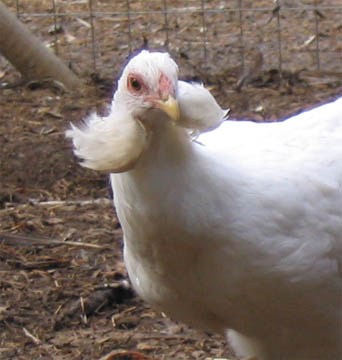
Araucanas are a chicken breed native to Chile and have distinctive tufts of feathers (called peduncles) that protrude near their ears.

The tufts are present at birth (so if your Araucana doesn’t have them as chicks, they won’t develop them), and chickens can have no tufts, or just single tuft, or two tufts. Two tufts are considered ideal for the breed.

Araucanas are rumpless (meaning they don’t have tail bones like most chicken breeds)) with small pea combs. They’re possibly the only chicken breed native to the Americas, and the name Araucana comes from the Araucania region of Chile.

Araucanas are commonly confused with Ameraucanas, a breed developed in the United States in the 1970s, based on the Araucana breed, but they are two distinct breeds. The name Ameraucana is a cross between American and Araucana.

Adult males weigh about 5 pounds while hens lay about 4 pounds, making them one of the smaller breeds of chickens.

It’s important to remember that if you’re looking to raise purebred Araucanas, to buy chickens that adhere to the traditional characteristics of the breed.

They should lay blue eggs, be recognized colors, exhibit the tufts, and be rumpless. You can use these characteristics to be sure the chickens you’re buying are truly the correct breed.

There’s definitely characteristics that differentiate Araucanas, Ameraucanas, Easter Eggers, and Cream Legbars! As always, it’s best to seek out a reputable breeder (more information on this at the end of this article.)

araucana laying different colored eggs
Araucana exhibiting tufts

Ameraucana who also displays the tufts:

https://www.instagram.com/p/BcYN_iZDtbQ/?taken-by=pamperedchickenmama

Colors

Both full sized Araucana chickens and bantam breeds are recognized, and recognized color varieties in the United States include black breasted red, silver duckwing, golden duckwing, black, and white.

The bantam variety also include buff as a recognized color.

Eggs laid per year and color

Araucanas lay blue eggs, and on average they lay 260 eggs annually. The blue laying gene is a genetic anomaly possibly caused by a retrovirus or way back in the evolution of the Araucana breed. (You can tell of an Araucana egg is truly a blue egg by looking at the interior of the shell.)

https://www.instagram.com/p/BGNzEFIC82p/?taken-by=pamperedchickenmama

Raising Araucana Chicks

They can be a bit tricky to hatch yourself, and according to the Araucana Club of America “Where most breeds get hatch rates of 90%; Araucana breeders get successful hatches (double tufted & rumpless) of anywhere from 55% to 25%, including the posthatch period.”

You can hatch Araucana eggs yourself (just be sure to buy fresh ones and store the hatching eggs correctly before incubating them). Raising chicks isn’t any different than raising other breeds.

What its like owning Araucana chickens

Araucanas are a fun chicken breed to own and despite their smaller size, they can lay nice big eggs.

Not all Araucanas enjoy a lot of human attention, so it’s important to spend time with them frequently when they’re chicks and spend a lot of time feeding them treats if you want lap chickens.

They don’t require special feed, are docile, and the hens don’t get aggressive during brooding.

Where you buy Araucanas

You can buy Araucanas at most major hatcheries however you should also seek a reputable breeder to ensure you’re getting true Araucanas and not Ameraucana or Easter Egger chickens.

You can buy hatching eggs, baby chicks, and started chickens. For a full list of Araucana breeders, you can visit the Araucana Club of America at http://www.araucana.net/breeders/.

For more information about Araucanas in the United States at Araucana Club of America.

Image of Araucana: By User:Anne Cushing – Own work, Public Domain, https://commons.wikimedia.org/w/index.php?curid=24475773

Hey y’all! Here’s this week’s sneaky peek photos of life on our farm!

These images also appear on my Instagram account where I share MANY more photos and stories from the farm!

If you aren’t yet following me there, you can right here.

Enjoy the photos & be sure to share some of yours with me!

https://www.instagram.com/p/Bet4NXJhu_r/?taken-by=pamperedchickenmama

https://www.instagram.com/p/BewdAhFhvcH/?taken-by=pamperedchickenmama

https://www.instagram.com/p/Be1mmmohDU_/?taken-by=pamperedchickenmama

https://www.instagram.com/p/Be4LZjihAfp/?taken-by=pamperedchickenmama

https://www.instagram.com/p/Be9U-zrhJT6/?taken-by=pamperedchickenmama

https://www.instagram.com/p/Be6vw8khGcZ/?taken-by=pamperedchickenmama

I’ve gotten a lot of questions lately about which breeds are best for a backyard flock for the first time owner.

First, congrats on making the leap into chicken ownership! Watching your birds scratch and interact with each other is one of the most relaxing past times I can think of.

They’re great fun, and when you get that first egg, you’ll feel a real sense of accomplishment and independence.

You can either buy established hens or chicks locally, or buy chicks either through the mail or at your local feed store. I’ve found a great variety by buying them locally, and even have gotten some mixed breeds that were fantastic.

If you buy locally, you know what you’re getting (for the most part), and you can pick your birds. You don’t have to deal with travel stress, and you’ll meet like-minded people who can help you out if you have any questions.

Most chicken owners are very friendly, and interested in helping you keep your flock healthy and happy.

If you buy from a hatchery, you will find a great variety, and some breeds you might not find locally. Hatcheries are also a great source of information, and carry chicken-related products that can be shipped with your chicks

So, which chicken breeds make great starter flocks? Let’s take a closer look!

5 Chicken Breeds For New Chicken Mamas

1. Rhode Island Reds

If you want easy to care for and great brown-egg layers, Rhode Island Reds are a great breed. They lay consistently, and are great producers, and convert feed into eggs very efficiently.

All ours have been very friendly, and we even had a couple that would run to us like dogs when they saw us.

photo (20)
My Rhode Island Red laying an egg (you can never predict where they will choose to lay!)

2. Buff Orpingtons

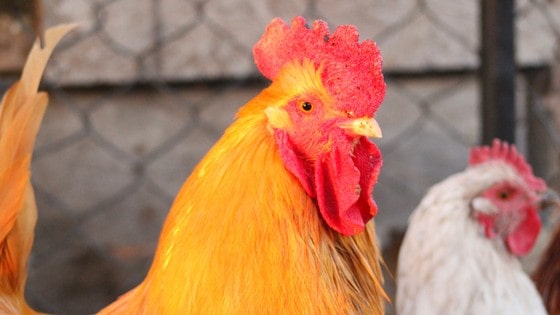
Buffs are a great breed for people who want eggs and big beautiful golden birds. Buff Orpington roosters can get up to 10 lbs, which is heavier than egg laying breeds.

The hens produce just as well as traditional egg laying breeds, and can get up to 8 lbs. Their feed conversion ratio is good too!

Wondering can chickens lay eggs without a rooster? If you keep a rooster and chickens, you'll need to know this backyard chicken for beginners idea!

3. Leghorns – If egg laying is your thing, then Leghorns, with their pretty white feathers, are the breed for you. Their eggs are white, and can be fairly large. They tend to be nervous though, so they won’t make a good lap chicken.

4. Production Red (aka Red Sex Links, Golden Comets)

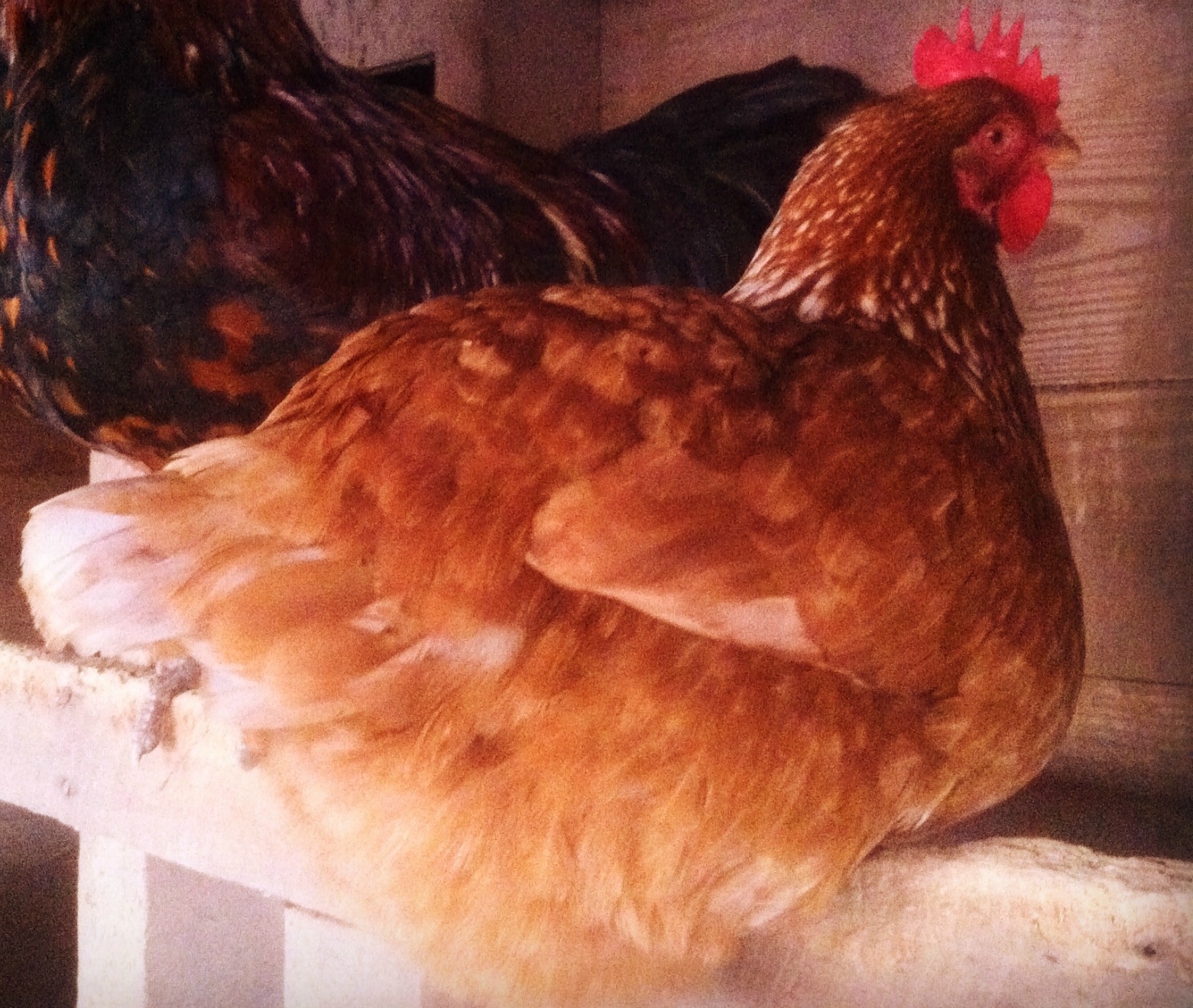
Production Reds are one of the best egg laying breeds around,and have an excellent feed to egg conversion ratio. Our hens also lay in the winter, when our other hens have stopped.

They aren’t so friendly though, but if egg production is most important to you, then you can’t go wrong!

golden sex link
One of my hens. A great producer!

5. Barred Rocks

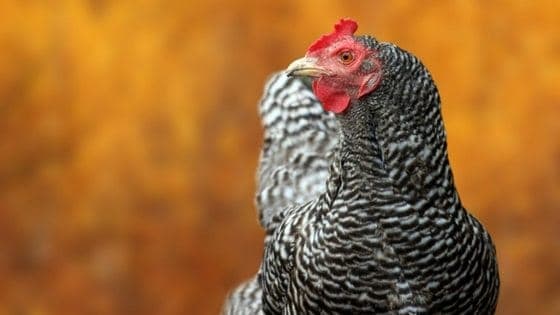
Barred Rocks are an extremely pretty breed to look at! They lay reliably, and owners of Barred Rock chickens are devoted to the breed because of their egg laying ability and friendly natures.

Owners report their Barred Rock hens are the watchdogs of the flock, making them a good addition if you’ve had trouble with predators.

Bonus Breeds

Cornish Cross

I’ve said it once, and I’ll say it again: I think Cornish Crosses make great pets. The breed as a whole is docile, they don’t get flustered, love to sit with their owners, and love attention. Ours lay every day.

Silkies

Silkies also make great pets, especially for children. Silkie chickens are small, the roosters aren’t territorial, social, and they love attention. They also lay eggs….so there’s that too.

Brahmas

We have a few brahmas, and they’re friendly, quiet when picked up, and love attention. They lay brown eggs and lay consistently.

Speckled Sussex

We have a speckled sussex, and she’s friendly, although opinionated, loves treats, and does well when being picked up. She likes to eat from the hand, which is great too!

There are plenty of options for starter chicken breeds, and these are just a few. They’re all easy to care for, and produce eggs reliably, in addition to being nice to look at! With any breed you get, you will be entertained!