Not sure what to buy for your chickens to help them pass the time? You might want to consider investing in some toys for chickens from Omlet, one of the best places to buy chicken supplies.

If you raise your chickens only for their egg or meat producing capabilities, you’re missing out. Scientists are just beginning to uncover the many ways in which chickens are similar to humans in their capacity for intelligence, feeling emotions, and other characteristics.

Therefore, you might want to consider raising chickens as pets. Not sold on the idea? Check out our article on why you should keep chickens as pets – we’ll change your mind!

Even if you don’t invite your chickens inside all day, providing them with plenty of toys is a great way to keep them busy. These top toys for chickens from Omlet will provide your flock with a way to stay entertained, something that’s beneficial particularly if you want to avoid negative flock behaviors like feather pulling and egg-eating (and during the long, dull days of winter, to boot!). 

Consider these top toys as you get started on your journey toward building a fun-filled (and healthy!) chicken coop. 

4 Top Toys for Chickens from Omlet
best toys for chickens from omlet

1. The Omlet Peck Toy 

What It Is 

The Omlet Peck Toy comes with two options – you can buy the Poppy or the Pendant. Both are super fun, interactive feed toys that your chickens will absolutely love. Combining enriching entertainment with a steady flow of treats, these toys can be installed in any coop or run (don’t worry – they’re waterproof). Fill it with treats and watch as your chickens enjoy pecking at this toy all day long. 
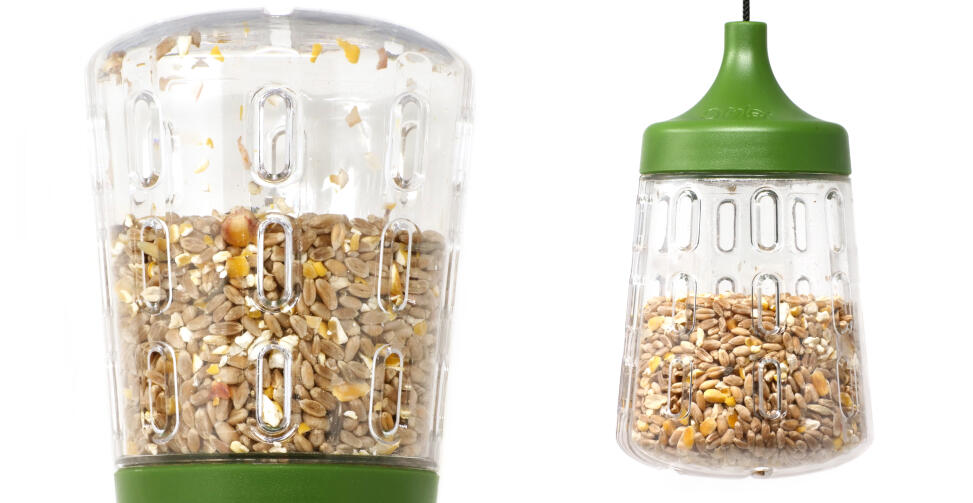
The slow release nature of the Peck Toy ensures your chicken treats last longer.

The Poppy Peck Toy is meant to be pushed into the ground, like a garden stake, and allows your chickens to peck at the dispenser via the holes. The Pendant Peck Toy works in a similar way but comes with an adjustable string so it can be hung in a coop or run.

Not sure how to finish setting up the rest of your coop or run? You can find more tips here.

Where to Buy It 

You can purchase this toy by visiting Omlet’s website here

What the Company Claims 

  • Provides an engaging, interesting challenger or playful hens
  • Has a slow-release format so it prevents dominant hens from enjoying all the treats
  • Can help encourage natural and healthy chicken behaviors, like foraging and pecking
  • Comes with two legendary designs – both hold the same amount of treats
  • Quick and easy to tall
  • Measures 15cm x 8.5cm 
  • Holds 300 g of corn 
  • Dispenser is easy to refill and dishwasher safe 

Our Experience 

Does the Omlet Peck Toy  Live Up To Its Claims?

The Omlet Peck Toy does live up to its claims. Although there were a few issues that I found with the toy – like the slots that allow the rain in – it’s a good treat dispenser if you’re using feed that won’t mold quickly.

What Don’t We Like 

It may take some time for your hens to get used to this product. Some chickens need to be shown how the device works before they use it. 

Is it Useful for Chicken Owners?

The Peck Toy from Omlet is useful for chicken owners. Not only can you use it as a regular treat dispenser for your backyard hens, but you can also use it to provide mental stimulation. It will help you control portions when dispensing treats and can also provide your flock with essential exercise. After all, there are so many benefits associated with free-ranging and proper exercise!

What to Watch Out For

There are some slots in the top of the Poppy Peck Toy that let the rain in. You may want to use this one only in a covered run or inside a coop so that the feed does not become moldy. 

If you’re looking for treats to fill your feeder, you should take a look at our non-GMO cracked corn. It’s delicious and nutritious and fits perfetly in this feeder.

Summary 

These peck toys are absolutely phenomenal, providing your chickens with a source of sustenance as well as hours of entertainment. They can also help you control the portions of your chickens’ feed so you don’t have to worry about them filling up on unhealthy treats like scratch grain. 

If you’re in the market for a better way to feed your chickens, you might want to consider these low-waste feeder ideas.

2. The Omlet Chicken Perch 

What It Is 

Chickens need places to perch, and this chicken perch by Omlet provides your hens with the perfect spot! Naturally weather-resistant, this perch can be put anywhere inside or outside of the chicken coop. Most chicken keepers will put it outdoors in the run so that it can help your chickens perch at the highest point for a great view at any time of the day. 

Where to Buy It 

You can purchase this toy by visiting Omlet’s website here

What the Company Claims 

  • Fits directly into Omlet prefabricated chicken coops
  • Two bars can be attached together for a longer perch 
  • Can be extended to fit just about any size run
  • Connector clamps around mesh or chicken wire for a secure, neat finish
  • Can be attached directly to any surface
  • Made out of durable eucalyptus 
  • Easy to install

Our Experience 

Does the Omlet Chicken Perch Live Up To Its Claims?

It’s a pretty basic perch, but it does live up to its claims. It’s easy to install and your chickens will likely take to it immediately.

What Don’t We Like 

Although this chicken perch is sturdily built, it’s made out of wood so is prone to some natural splitting along the length. This isn’t necessarily a dealbreaker, but you’ll want to stain it or use a varnish to prevent it from cracking anymore. 

Is it Useful for Chicken Owners?

Chickens like to perch, as it mimics the behaviors they would display in the wild when searching for predators and potential sources of food. By putting one of these Omlet perches in your chicken run, you’ll be helping your chickens express their most natural, wildest selves. 

What to Watch Out For

Just keep in mind you may have to do some finagling to get this perch to fit inside your coop or run. Although it can fit most sizes and styles of runs and coops, you might have to extend or add on to it to get it to fit perfectly. 

Summary 

While some reviewers claimed that this product seemed like a “glorified broom handle” at first, you’ll likely find that to be anything but the case when you invest in this product (as did most reviewers after submitting their initial reviews). Not only is it sturdy and durably built, but it will give your chickens the perfect vantage point no matter the size or design of your run. 

3. The Chicken Swing 

What It Is 

If your chickens are constantly on the move, you won’t find a better product than this chicken swing by Omlet. It’s a toy that will not only allow your chickens to perch, but also to get some much-needed exercise. It has a unique patented design that enables the chickens to move the swing themselves rather than needing to be pushed by the owner. 

Chickens will love swinging on The Chicken Swing

Where to Buy It 

You can purchase this toy by visiting Omlet’s website here

What the Company Claims 

  • Has a corn-like texture for added grip
  • Can be used by chickens of most breeds and sizes
  • Requires no pushing by the owner
  • Made from safe, high-quality parts that are durable and weather-resistant
  • 16.25” in length
  • Comes complete and ready to hang 

Our Experience 

Does the Omlet Chicken Swing Live Up To Its Claims?

Yes and no. I found that this swing was a great way to acquaint your chickens to the idea of playtime, but you’ll have to invest some time in getting them used to how to use it. Start young!

What Don’t We Like 

If you don’t take the time to train your chickens to this swing, they might not ever get the hang of it (or like using it). It’s best to start using this chicken swing when your birds are young. That way, they will get used to it being in the run and won’t be spooked when it moves on its own in the wind.

Is it Useful for Chicken Owners?

When you buy this chicken swing, you won’t just be providing your chickens with hours of entertainment – you’re also likely to find yourself giggling away as you watch chicken butts flying in the air! This swing is a great way to give your girls some exercise as they stretch their legs and wings, and it’s made from high-quality parts that are sure to last. 

What to Watch Out For

You may want to introduce this swing to your chickens when they are young. Although adult chickens can (and do!) easily get the hang of it, it’s easier for young chicks to learn how to use the swing first. 

Summary 

The Omlet Chicken Swing is a great accessory for any chicken coop, pen, or run. Your birds will likely get the hang of it quickly, and they don’t want to stop swinging once they do!

4. Caddi Chicken Treat Holder

What It Is 

One final product from Omlet to consider as you’re on the lookout for the top toys for chickens is this chicken treat holder. Like the other chicken treat toy reviewed earlier in this article, this toy is a great way to keep food secure, off the ground, and portion-controlled – while also entertaining the heck out of your chickens!

Not only does the Caddi offer a clean and tidy solution to feeding your hens, it will keep them entertained for hours!

You can hang this swinging feeder by its adjustable nylon strap and plastic hook. You can hang it in any chicken enclosure, in fact, and it’s a great compliment to the Peck Toys reviewed earlier in the article. You will be sure to meet all of your chickens’ treat-feeding needs with this combo!

Where to Buy It 

You can purchase this toy by visiting Omlet’s website here

What the Company Claims 

  • Measures 7.9” x 3.1” 
  • Built from heavy-duty welded steel with a waterproof rain cap
  • Keeps hens’ treats off the ground for neat and tidy dispersal
  • Great source of entertainment that can be used with all kinds of treats (like leafy greens)
  • Nylon string is adjustable so you an hang it in any setting
  • Easy to detach the plastic hook for quick cleaning and refilling

Our Experience 

Does the Caddi Chicken Treat Holder Live Up To Its Claims?

Yes. This chicken treat holder should be at the top of your list! And if you’re looking for ideas of what to fill it with, be sure to check out our huge line of non-GMO treats for your chickens, like these mealworms!

What Don’t We Like 

There’s very little we don’t like about this product – it’s made out of durable materials and is easy for your chickens to use. 

Is it Useful for Chicken Owners?

The Caddi Chicken Treat Holder is super helpful for chicken owners. Not only will it help you provide your flock with a bit of exercise as they peck and nibble around the treats in the feeder, but it will also keep the foods safe, secure, and off the ground – no more wasting food! 

What to Watch Out For

When you hang this chicken treat holder, be sure it’s at a height that’s accessible to your chickens. You may need to watch them for a while and adjust to make sure they can get at the food with ease, or they won’t use the feeder. 

Summary 

With very little assembly required, this chicken treat holder is the perfect chicken toy from Omlet. It’s a combination feeder and plaything that’s sure to delight your flock! 
Related Articles

Not sure how to keep a chicken coop warm in winter? Then pull up a chair, because we have quite a few (battle-tested) ideas for you today.

(Want to know how to keep your flock’s water from freezing? Get my genius hacks here).

While the winters never get too brutal here in Missouri, we still do get our share of freezing temps (usually in January and February) thanks to the polar vortexes from our Canadian friends up North.

And trying to keep a chicken coop warm in winter is never fun. It’s usually a battle of ingenuity, and we’re kept on our toes trying to find new ways to keep the flock toasty and cozy when it’s gotten so cold we don’t even have a prayer of getting the hose unfrozen.

Now before we begin, just remember: For the most part, your chickens will be fine during the winter.

Every year, a few people ask whether their hens will freeze in temperatures below 40 degrees, and the answer is no. Your chickens will likely be fine no matter what.

Only once temperatures dip below zero and into the VERY below zero temperatures (negative 30 degrees, for example) do you really need to be concerned about keeping them warm.

In temperatures above zero, your chickens will fluff their feathers to stay warm and all the walking around and foraging will help keep their blood circulating and their body temperature up.

At night, they’ll bundle together on a roost and keep their little legs warm by sitting on them.

But you still are probably wondering how to keep a chicken coop warm in really cold weather, so here are some ideas we’ve used on our farm to get you started!

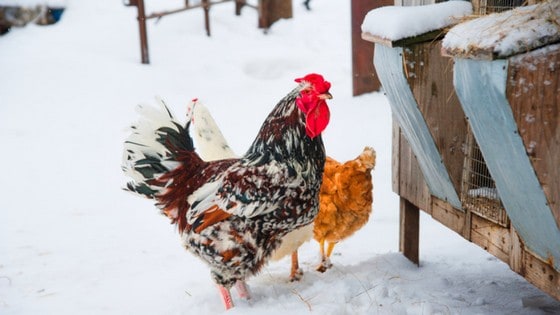
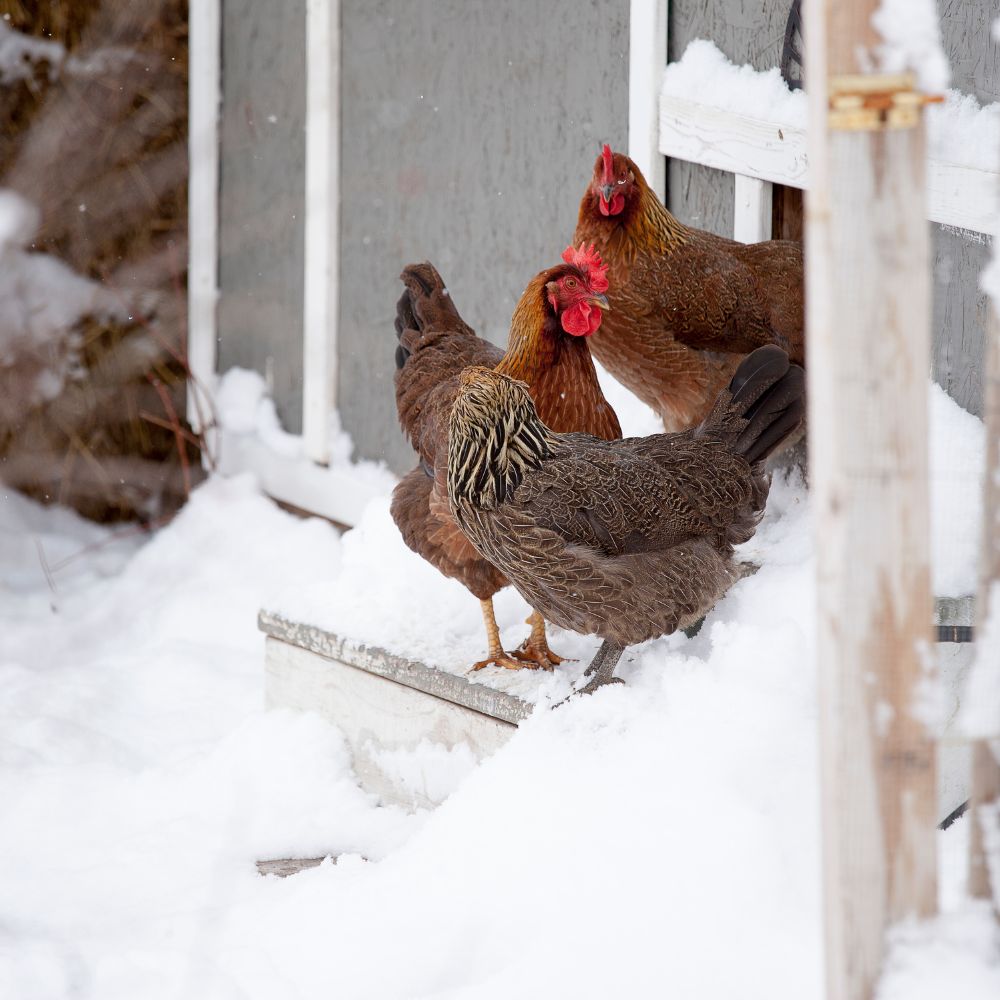
How to keep a chicken coop warm in winter - hens in snow

1. Shut the door midday and let the sun warm your coop up

We’ve had a lot of luck with the various coops on our property by using solar energy to keep the coops heated. Our coops have windows, so for the first part of the day, we can open the coop doors and let the hens forage.

About mid-day, you can close the doors and allow the heat to get trapped inside the coop, keeping it warmer than it would be otherwise.

Now, don’t ask me how many degrees this will raise the temperature – that’s going to depend on a wide variety of factors.

And this won’t work 100% of the time. But it might be the difference between 22 degrees and 32 degrees in the coop – and that’s a heck of a difference.

2. Use lots of straw & clean out every week

Straw is an amazing insulator – that’s why you see those straw houses becoming so popular.

Putting about a foot deep of straw in your coop will do wonders keeping the cold air out and the warm air generated by your flock’s body heat in. As a bonus, your flock won’t have to stand on a cold floor.

Now, you might hear that straw is not good to use as bedding – to each his own. Some people have decided that straw harbors mites, and the answer is if you don’t clean your coop, pretty much anything will harbor mites.

Clean the straw out of your coop weekly and add mite repelling nesting herbs, and you’ll be good to go.

Wondering how to keep a chicken coop warm in winter? Keep your backyard chickens toasty warm with these 6 genius hacks!

3. Deep litter method

If you don’t know what the deep litter method is, or if you’ve heard of it but aren’t sure what it entails, then you can learn everything you want to know right here.

Now for full disclosure, I don’t use the deep litter method. But people who DO use it claim it can raise the coop temperature by about 10 degrees – pretty significant when you’re talking about daily highs in the teens.

The reason it generates so much heat is because of all the layers of straw, manure, etc. The manure dropped by the chickens composts along with the straw, and the breaking-down process causes heat. You may have noticed heat coming from your garden compost before – it’s the same principle.

4. Radiant space heater

Like the deep litter method, this one isn’t going to be for everyone. If you’re not sure what a radiant heater is, you can see an example here.

Now note, I didn’t say heat lamp – that’s a definite no-no because they get way too hot. Every winter, there’s a slew of posts on Facebook about people who used a heat lamp and their coop went up in flames.

Just say no to heat lamps. A coop heater with bulbs is just plain risky.

Radiant heaters are a different thing – they don’t get so hot and have some safety features. They can raise the temperatures in your coop a few degrees, and that can make all the difference.

Just note, that you will need an electrical source to use a radiant space heater.

Now, would I personally use one of these in my coop? Probably not. I’m WAY too paranoid about fires and our winters are not that cold – it’s the odd day that things get below zero.

That being said, you might want to use one – and if you do, the more power to you.

5. Use a tree line to break the wind

We have one horse pasture that I swear is 10 to 20 degrees warmer than the others. When the water is frozen solid in the other fields, it’s not even icy in this particular pasture.

And the reason is that there are a lot of trees causing a ginormous windbreak. And it makes all the difference for wind chill.

It’s pretty insane how much a tree line can keep a coop warm simply because it’s keeping the cold winds away from your flock.

If your chickens are in a tractor, or if you can somehow move them behind a tree line, you’ll be able to keep the coop from losing as much warmth.

You can also use something else to create a windbreak (moving the coop behind a structure so it’s protected), that’ll work as well.

If you plan to use straw in your coop, you could even buy extra straw bales to create a “wall” to break the wind (don’t laugh – we’ve done it and it WORKS.)

This one will take a bit of planning on your part, but you can save a lot of heat by simply eliminating drafts. (After all, it IS those polar vortexes that contribute to the cold in the first place).

Making sure your coop doors and windows have proper insulation will go a long way.

Don’t use any of that spray foam, however (my husband loves that stuff and it’s a nightmare to clean up, and your chickens might decide to taste test it – never a good thing.)

If you’re trying to figure out how to heat a chicken coop in winter, then spend a little and get something better than foam spray that will do the job without taking the chance your flock will try to eat it.

Reasons To Keep a Coop Warmer

  • You may want to keep chickens warm (or at least warmer) if you have breeds that aren’t as hardy as others
  • Freezing weather will also freeze your eggs if you can’t gather them throughout the day
  • Very cold temperatures can pose a danger to your chickens’ combs (especially large combs) and wattles
  • Keeping chickens in areas that have extreme winter months may make it necessary
  • It may be necessary if you have an unusally cold winter (to avoid things like frostbite)

Bonus Tips

Bonus Tip #1

We are talking about keeping your coop warm (or warmer than frigid), but you can also help keep your chickens themselves warmer. How? Well, by making sure they have enough protein and nutrients. You can give them protein packed treats like PowerHen, or non-GMO cracked corn before bedtime.

These are surefire ways to get your flock warmed up through the process of digestion. Plus they will know you love them and they will love you even more!

Bonus Tip #2

If you have the time, you can also give them hot water (not boiling). They will stay more hydrated which will also help them continue to lay eggs. The extra benefit is the warmth from the water will provide warmth for the hens too. It may not be a world changer, but every little bit helps.

Bonus Tip #3

If you are feeling extra ambitious, you can make a greenhouse type addition to your coop. Use clear plastic around a frame of some sort. This will not only help give your feathered friend plenty of space to run and hop around, but it will also creat a warm spot for them to hang out.

Bonus Tip #4

You can put petroleum jelly on your flocks combs and wattles to help prevent frostbite when the temps are extremely low.

Sometimes, I lay awake at night and think about how great my flock would look with all kinds of different duck breeds.

(Well, maybe not really all night. I do like to sleep.)

Ducks are lovely creatures that make great pets – and they lay eggs! Lots of eggs (sometimes, more consistently than chickens).

From wonderful egg layers like the Ancona and Silver Appleyard, to beautiful heavy breeds like the Rouen and Aylesbury, ducks are great to have in any backyard or farm.

However, there’s so many options, it can be hard to know which duck breeds are best for you!

In this article, we’ll discuss everything you need to know about ducks, from baby duck breeds or miniature duck breeds, and to mixing duck breeds in order to find a combination that’ll fit your needs.

List of Pet Domestic Duck Breeds

  • American Pekin
  • Ancona
  • Appleyard
  • Call Duck
  • Cayuga
  • Crested Duck
  • Indian Runner Duck
  • Khaki Campbell
  • Muscovy
  • Magpie
  • Mallard
  • Orpington
  • Rouen
  • Saxony
  • Swedish
  • Welsh Harlequin

Duck Breeds

American Pekin

This large duck breed has been domesticated for over 2000 years! They’re one of the most popular duck breeds, and are instantly recognizable because they’re white! This friendly duck has an orange beak and legs, and is an excellent producer of large, white eggs. They’re generally healthy (although you need to give them Brewer’s Yeast as ducklings so they grow healthy bones). American Pekin ducks are good-natured and make for excellent pets.

They’re both heat and cold hardy, and are one of the heavier breeds, weighing at about 9 pounds.

How many eggs do Pekin ducks lay?

On average, Pekin hens lay about 200 very large white colored eggs per year (this will depend on diet – you can learn what ducks eat here).

Ancona

This dual-purpose duck is beautiful and friendly….and lays GREEN eggs! They’re also excellent foragers, and will keep your gardens free of slugs and other pain in the butt garden pests. Originating in England, they’re a relatively new breed (developed in the earthy 20th century) and are said to descend from Runner ducks. They’re great producers of eggs, and can lay green, blue, white, or cream eggs. They’re friendly, and make excellent pets if you feed them lots of treats.

Appleyard

Named after their breeder, Reginald Appleyard, this is a pretty new duck breed, but growing in popularity rapidly. They’re one of the “champion egg layers” of the backyard duck world, producing about 250 white eggs per year. They’re heavy, weighing in at around 9 pounds for the drakes, and are excellent foragers. You can find Appleyards at most big hatcheries. You can learn more about this duck breed here.

Call Duck

These are smaller ducks (kind of like bantam chickens) that are mostly kept as companions. They have smaller bills and were originally used as decoys by hunters to attract wild ducks. Because of their size and adorable appearance, they make great pets, and enjoy human company. The drakes weigh about 1.5 pounds, with the hens weighing about 1 pound (so, pretty small). Their egg colors can range from green to white to cream.

Because of their size, they’re even more susceptible to predators, so make sure their duck house is safe.

Cayuga

Although it’s not clear how this duck breed developed, one thing is for sure: Cayuga ducks are very distinct! Their unique name derives from the indigenous people who occupied modern day Upstate New York before the European invasion.

They’re solid black (although their feathers have a green sheen to them, especially the drakes). They’re friendly and are excellent foragers. The hens lay eggs in shades of light grey to a dark, charcoal grey (sometimes even black). As the season progresses, the eggs get lighter and lighter. The males weigh about 7 pounds, and the females about 5 pounds.

Crested Duck

Crested ducks are great pet breeds (especially for children) because they’re friendly and look like something straight out of a Dr. Seuss book! The crest on their head is actually a genetic abnormality. They seem to be an ancient breed, and there’s some 2000 year old images showing a duck with a crest of feathers. Weighing in at around 7 pounds, they’re also fairly large.

They’re excellent layers of about 200 eggs per year. There’s also a bantam version of this duck breed. The crest is caused by a lethal allele, and when both parents carry the crested genetics, 25% of the clutch won’t hatch (similar to araucanas and their lethal genetics). So, it’s best to breed a crested duck to a non-crested duck to ensure the best possible hatch rate (50% of the ducklings will be crested). You can read more about hatching eggs here.

Indian Runner Duck

This duck breed is very distinctive, with their nearly vertical build. They also don’t waddle, instead, they’re built to run (hence their name “runner duck.) They’re excellent layers of about 300 eggs per year, and are great for pest control. Originating from the East Indies, they’re quiet ducks that prefer to forage. They’re also on the small side, with drakes weighing about 5 pounds. Their duck eggs are green or blue (or shades in between).

Indian Runner duck colors include:

  • White
  • Penciled
  • Buff
  • Black
  • Chocolate
  • Blue
  • Grey
  • Fawn & White

Khaki Campbell

Khaki Campbells are a popular duck breed that lays large, white eggs consistently (about 200 per year). They’re brown, and it’s easy to tell the drakes from the hens. They’re friendly if hand raised, and fed lots of treats. However, they’re susceptible to predators, especially since they tend to be on the small side. They also tend to “go broody” (want to hatch eggs) more than other breeds. You can easily find this breed at most big hatcheries.

Muscovy

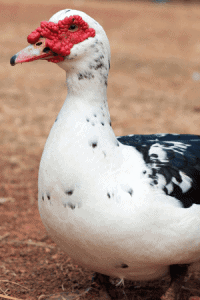
The Muscovy duck breed is a bit of an anomaly in the duck world – they’re the only duck breed not descended from Mallards! The have very distinct appearances, with faces that look covered with bright red warts. Unlike other duck breeds, their eggs take 35 days to hatch (other breeds take 28 days to hatch). They’re also one of the only breeds to perch in trees, and have claws to aid them. They’re large, and lay about 200 off white eggs per year. Some owners say the eggs have a greenish tint, but aren’t exactly green. They love to eat ticks and mosquitoes! You can read more about Muscovy ducks here.

muscovy duck breed with red face


Magpie

This is a funny black and white duck breed that’s becoming more popular as a pet. They’re friendly and distinctive-looking birds, and enjoy human company if offered lots of treats. They’re fairly upright (although not as vertical as Runner ducks) and are excellent layers – about 280 eggs per year.

Mallard

With their green heads and pervasive quacks, mallards are fun a duck breed to raise. While you can find them in the wild, there’s also domestic mallards that hatcheries sell. The males and females look different (unlike Pekins where both are white), with the females having black and tan feathers that remind me of tiger stripes. They’re very beautiful! The females lay about 200 white or greenish white eggs per year.

Orpington Duck

Developed in the town of Orpington in the UK, this breed is less known in the US, but rising in popularity. Their developer, William Cook, also developed the Orpington chicken. Good Ol’ William crossed Rouen, Indian Runner, and Cayugas to create his beautiful Orpington ducks. They’re great producers of large eggs, laying around 200 per year. This duck breed comes in 3 color variations: Buff, Blond, and Brown. The males have a yellow bill, while the females have darker colored bills. While admitted into the American Poultry Standard of Perfection, they don’t necessarily breed true.

Rouen

The Rouen are a duck breed that’s colored like the mallard, but are larger. Originating in France, they’re beautiful birds to look at, and lay prolifically: about 200 white eggs per year. They make great farm ducks, and enjoy human company.

Saxony

Saxony ducks are distinctive looking with their grey heads and wood-colored feathers. Unlike other duck breeds on this list, they were developed in Germany in the 20th century, and are great layers of large, white eggs. They’re large ducks, weighing in at about 9 pounds.

Swedish

This popular breed has white feathers on its chest, and beautiful blue/grey feathers. They were developed in Germany and Northern Poland, and are called “Swedish” because the recognized government was the kingdom of Sweden at the time the breed became known. Blue is the most well known feather color, but other varieties include brown and black. It’s said that Daffy Duck was a Swedish drake – he certainly has the characteristics! They’re great layers of large eggs.

Welsh Harlequin

These are smaller ducks, weighing in at around 5 pounds. Originating in Wales (hence the name Welsh Harlequin) and are derived from Khaki Campbells. Like Mallards, they have green/black heads, and lay prolifically – about 300 white eggs per year.

How Many Varieties Of Ducks Are There?

There’s about 28 types of domestic duck/pet duck breeds in the USA.

What Kind Of Duck Has A Green Head?

Several duck breeds have green heads, including Mallards, Welsh Harlequins, and Rouens. Cayuga drakes also have green heads, although their entire bodies are covered with black feathers that sport a greenish sheen.

What Breed Of Duck Has Yellow Ducklings?

Duck breeds that have yellow ducklings are Pekins and Khaki Campbell ducks. Their ducklings are covered in yellow feathers and have orange beaks and feet.

Keeping Ducks as Pets

What Are The Best Backyard Ducks?

The best backyard duck breeds that lay lots of eggs and are friendly are:

  • Khaki Campbell (about 280 eggs/year)
  • Magpie (about 280 eggs/year)
  • Mallard (about 200 eggs/year)
  • Welsh Harlequin (about 280 eggs/year)
  • Buff Orpington (about 300 eggs/year)
  • Crested (about 200 eggs/year)
  • Rouens (about 250 eggs/year)
  • Call Ducks (about 300 eggs/year)

Different breeds lay different colored eggs. While most ducks lay white eggs, they can also lay off white, cream tinted, green, blue, or black eggs. Here’s a chart that shows you which breeds lay different colored eggs:

Breed Egg Color Eggs Laid Per Year
American Pekin White 200
Ancona Green 200
Appleyard White 250
Black East Indie Grey, charcoal grey 200
Call Duck Green, white, cream 300
Cayuga Black, charcoal grey, light grey 200
Crested Duck White 200
Indian Runner Duck Green, blue 300
Khaki Campbell White 280
Muscovy Off white, cream, speckled 200
Magpie White, bluish green 280
Mallard White, greenish white 200
Orpington White 300
Rouen White 250
Saxony White 200
Swedish White 200
Welsh Harlequin White, blue 300


What Are The Friendliest Duck Breeds?

The top 3 in friendliest duck breeds would have to be the Pekin, Rouen, Khaki Campbell, Swedish, and the Call duck.

Are Ducks Friendly Pets?

Yes! Particularly if you hand raise them and give them lots of treats, they’ll be your best friend. It’s also important to pick breeds that are friendly, such as Call ducks. You can learn about how to raise people friendly poultry here. If you want to give your ducklings treats, you can learn what ducklings eat here.

Can A Duck Be An Indoor Pet?

Yes, but it’ll have to wear a diaper. Ducks, like all birds, don’t have a bladder, so when nature calls, they’ll go anywhere. That being said, ducks are happiest with other ducks, and living in a flock. 

What Is The Largest Breed Of Duck?

Pekins. The drakes weigh about 12 – 13 pounds. Traditionally, Pekins were raised as both meat and egg producers, but in modern times, they’re largely kept as layers and pets.

How Long Do Domestic Ducks Live?

The average lifespan of the average domesticated duck is 8 to 10 years, as long as they’re cared for properly. This will vary by breed and individual bird. You can read more about how to raise healthy ducks here and more about how long individual duck breeds live here.

Do Ducks Bite You?

Just like any animal ducks can and will bite when threatened. However, these incidences are few and far between, and ducks don’t generally bite their owners without being provoked and very scared.

Can You Train A Duck?

Yes, with treats, you can train a duck to come when called. If you work with them every day and follow some simple steps (like training them with treats during evening, when they naturally want to come to their house), your ducks will be trained in no time.

Are Ducks Affectionate?

Yes, pet ducks can be very affectionate when they receive the right care.

Will Domestic Ducks Fly Away?

Fear not, as most domesticated duck breeds cannot fly because they’re too heavy compared to their wings. However, some breeds like Mallards have evolved to fly, so you can simply trim their wings.

How Can You Tell If A Duckling Is Male Or Female?

When they hatch, the other sure fire way is to “vent sex” a duck, however, only qualified professionals should attempt this. When they’re about 4 to 6 weeks old, you might notice some ducklings develop a deeper quack, while others retain a high pitched squeak. The lower pitched quack is a sign of a duck hen – their adult voices develop much sooner. As adolescents, a good sign to look for is a curled feather that sticks up near the tail, called a “drake feather,” which indicates the duck is a male.

Which Breeds Are Quiet?

Muscovies are quiet (they don’t quack. Instead, they have a quiet, whispery call that sounds like a hiss). You can learn more about Muscovies here.

Duck Breeds For Eggs

Ducks for White Eggs

Duck breeds that lay white eggs are the Pekin, Buff Orpington, Indian Runner, Swedish, Magpie, and Ancona.

Ducks for Green Eggs

Duck breeds that lay green eggs are the Indian Runner, Call, and Ancona.

Ducks for Blue Eggs

Duck breeds that lay blue eggs are the Indian Runner and Magpie.

Ducks for Black Eggs

Duck breed that lay black eggs is the Cayuga.

Are Duck Eggs Good To Eat?

Yes, duck eggs are good to eat as they are high in fat and rich in omega 3. They’re potentially healthier than chicken eggs, and often, people who have an allergy to chicken eggs can eat duck eggs. You can discover more about duck eggs here.

What Are The Best Laying Ducks?

The best laying ducks are the Campbell, Runner, Buff, Welsh Harlequin, Magpie, and Ancona.

Do Ducks Need Shelter At Night?

Yes, it’s a good idea to give all duck breeds shelter at night to protect them from predators and from inclement weather. You can learn how to build a safe duck pen here.


What Do Ducks Like To Sleep On?

The good thing about ducks is that they don’t roost, so they are fine with sleeping on soft shavings on the coop floor. You can learn about different coop bedding options here.

Which Duck Breeds Are Broody?

The best broody duck breeds are Muscovies and the Welsh Harlequin.

Feeding Backyard Ducks

What Can I Feed My Backyard Ducks?

It’s best to feed your ducks a high quality layer feed specifically formulated for ducks. You can also supplement their diet with oyster shells for additional calcium. As for treats, you can feed your backyard ducks insects, worms, weeds/grass, fish, eggs, berries, cracked corn, or sunflower seeds. For a full list, you can learn more about what to feed ducks here.

Some veggies and leafy greens that ducks love are:

  • Cut grass (that hasn’t been sprayed with any chemicals)
  • Kale
  • Swiss chard
  • Radish & turnip greens
  • Lettuces & other salad greens

Some high-protein treats you can feed ducks are:

Remember: Ducks aren’t chickens – they have round bills that don’t pick food up easily like sharp beaks. So, it’s best to float treats on water so your ducks can easily dig them up.

Which duck breeds do you raise? Please a comment below!

All right, y’all. We made it past the holidays, and now we’re into big gardening time. So, you’re probably wondering, “What can you grow in January?”

What can you grow in January? Here's vegetable gardening for beginners ideas and when to plant your seeds!!

January is kind of a dull month. All the major holidays are over, we’ve all got sticker shock at how much we spent in the past couple months, and it’s freakin’ cold.

So, not much fun, which is where starting your seedlings comes in. The seed catalogues are rolling in, and it’s time to start figuring out what you’ll grow.

(this article is an excerpt from my bestselling book Organic By Choice: The (Secret) Rebel’s Guide To Backyard Gardening.  You can get a copy on Amazon or buy it directly from me which will save you 10% and you’ll get the digital copy for free.

Buy your copy right here)

What can you grow in January?

Now, there’s definitely some vegetable seedlings you can start indoors under lights, which you can eventually transition out to cold frames.

I show you in this article which vegetables do best in cold frames.

And there’s some things you can grow right in your kitchen, such as sunflower microgreens (tasty for you AND your chickens).

So, if you’re still wondering “what can you grow in January?” then hang onto your pants (please, do, really. No one wants to see you with your pants down), and check out the list below.

square foot gardening plant spacing

Kale (Brassica oleracea acephala)

My old friend kale does well in cold weather, and because of that, you can start it right now if the gardening itch is getting to you.

You can buy kale seeds from my favorite store Seeds Now.

Keep that grow light about 1-2 inches above the pots. I tend to broadcast kale and then thin because the seeds are so tiny.

My old eyes and cranky finger joints can’t handle the fiddly-ness of individual potting. If this sounds like you, then broadcast in trays filled with soil, and cover lightly with dirt.

In Organic By Choice: The (Secret) Rebel’s Guide To Backyard Gardening, I show you how to care for kale, harvest it, and save the seeds. All important stuff for a self-sufficient garden!

square foot gardening plant spacing

Lettuce (Lactuca sativa)

So, confession time. I grow lettuce for my chickens and my rabbits because it’s fun watching them eat it, and I’m not a huge fan of lettuce personally.

You can get organic lettuce seeds for a reasonable price right here.

I started using this plan because I always wanted to grow in January, even though I’m not a huge fan of lettuce. But it works out, and the critters are happy with everything I grow for them (in January and the rest of the year, too).

So, lettuce isn’t that much different than kale, although it IS less cold loving.

Because we live in Missouri, and don’t have a spring, I start these in January. The rule of thumb is to start lettuce seeds indoors under lights about 6 weeks before the last spring frost date.

Go here if you want to grow in January based on the last spring frost date.

Lettuce seeds like a heat range of 45 – 75 degrees for germination, so if you’re startings seeds inside your house, you should be okay, but if you’re starting out in a garage, you might need a heat mat like this one.

If you care for your lettuce seedlings well enough, you should get quite a few early spring harvests out of them.

Just remember that your lettuce will be with you indoors through January and on into the later months before transplant, so they’ll need a bit of space – go with 6 inch pots to start them so they have plenty of room to grow.

square foot gardening plant spacing

Mustard (Brassica juncea)

Mustard is another one I start to grow in January. It’s best to start mustard 3 weeks before your last spring frost date, but in this neck of the woods, that can be very early.

In 2017, we had a series of very warm weeks in February and into March, and it never really cooled down again.

And mustard doesn’t like heat, so it shoots up, and I lose my crop. Which is why I start it under lights as early as January 15.

Like kale, mustard seeds are small and fiddly, so I broadcast in a tray and then thin.

Those seeds like temps at least 55 degrees, so again, if you’re starting them outside in a greenhouse or garage, use a heat mat.

You can also learn how to heat your off grid greenhouse, which is simpler than it seems.

Mustard seeds are another one I save. It’s easy, and I show you how to do it in Organic By Choice: The (Secret) Rebel’s Guide To Backyard Gardening.

Onions (Allium cepa)

Onions are a bit tricky, and if you want to grow in January and transplant, now is a good time to get going.

Now, fair warning: They need a lot of space and it’s easier to start them from sets. But if you’re dedicated, you can definitely have success starting them under lights in January. Onions need temps over 30 degrees to flourish, so just remember that when you start your grow tray.

square foot gardening plant spacing

Spinach (Spinacia oleracea)

I’ve never had much success growing spinach indoors since it doesn’t transplant well, but maybe you’ll have better luck.

You can buy organic spinach seeds here.

I prefer direct sowing, especially since it can survive light frosts (the plant, at least. The seedlings….that’s another story).

Spinach needs soil temps of at least 40 degrees to grow, but doesn’t do well if soil temps are above 70 degrees. So, this is a good one to start in a cold frame or in a garage under lights. Or a greenhouse!

Herbs

You can start various herbs now for transplant in your garden in spring/early summer. If your house is warm enough, you can start them under lights without a heat mat (although it’s easier with the heat mat).

You can buy organic herb seeds here.

square foot gardening plant spacing

Use these tricks to starting seeds easier

There are some seeds that take a few extra steps to start (or, it can help them start better). In this article, I show you 2 easy tricks that should be in your master gardener toolkit to starting seeds from certain vegetables easier!

Wondering what can you grow in January for your chickens? Well, luckily, pretty much all the veggies we discuss in this article are great for chickens. Mine particularly like kale, herbs, and spinach!

square foot gardening plant spacing


free hit counter

Ah, Italy… one of the most romantic destinations in all the world, home to some of the finest wines, exceptional seafood, exquisite pasta, and… chickens?

Ummmm, chickens you say? Yup. Believe it or not, one of the most iconic chickens originated in Tuscany, Italy.

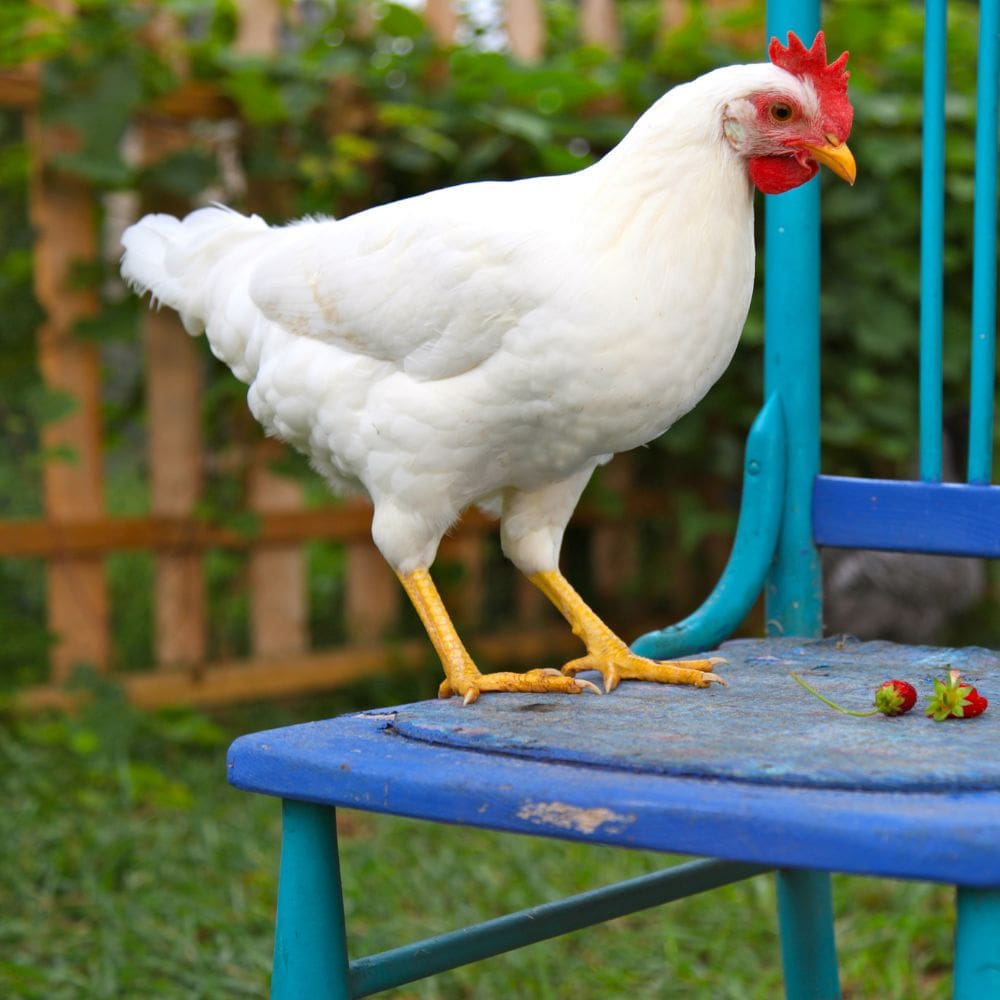
Leghorn Chicken standing on a bright blue chair with two strawberries

I mean, when we think of a chicken, what comes to mind? For many of us, it’s Foghorn Leghorn — the Looney Tunes chicken. If you are too young to know what I’m talking about, check this video out! (Go on…it will make you smile).

If you’re feeling that your home could use some Italian spice (and a LOT of eggs), then perhaps a Leghorn (pronounced Leggern) is just the bird to add to your family!

History Snippet of Leghorn Chickens

Much of the history of Leghorn chickens is a mystery, like many breeds of chickens. Let’s face it, keeping track of chicken lineage probably wasn’t at the top of the priority list for people back in the day. What we can track leads us to Italy.

We also know that this breed has been refined over the years, and is now one of the best-known egg layers around!

The name Leghorn is a curious name, but once you hear the reason it makes perfect sense.

The Leghorn is a breed of chicken originating in Tuscany, in central Italy. Birds were first exported to North America in 1828 from the Tuscan port city of Livorno, on the western coast of Italy. They were initially called “Italians”, but by 1865 the breed was known as “Leghorn”, the traditional anglicisation of “Livorno”.

Google Arts and Culture

Leghorn Chicken Appearance

For starters, they are cute. Super cute.

I love a lot of color in my flock, but there is just something refreshing about my all-white leghorns with their big, red floppy, combs.

BUT…did you know that the white variety is not the only color this breed comes in? There are as many as 12 varieties, depending on the source. They come in a variety of colors such as light brown, dark brown, black, red, buff, gold duckwing, and many more.

Several of the varieties also have rose combs, instead of large single combs. These were bred on purpose in order to help those that live in a very cold climate, meaning less comb frostbite. A large comb is more susceptible to damage in cold weather.

Leghorns are slender, upright birds that look ready to take on the world. Due to their slender build and dedicated work ethic (excellent foragers), they are not heavy chickens. In other words, they aren’t really known as meat birds. The females weigh around 5 to 6 lbs, and the males weigh around 7 to 8 lbs.

Leghorn Egg Production

Now we are talking! Leghorns are excellent egg-laying chickens, most would label each hen as a prolific layer. The production Leghorns (not the Heritage Leghorns) are the most popular white egg commercial breed in the world. They lay 220 – 300 large or extra-large white eggs each year! Some even say they will lay up to 320 eggs per year!

Not only are they fantastic egg-making machines, but their “warranty” doesn’t expire after two years. They can lay for 4 to 6 years! Wowzer. Just be sure to feed them high-quality feed and treat them with some vitamins too!

One of the reasons Leghorn chickens lay so many eggs is that they are not known for going broody. When a female chicken goes broody, they hull up in its laying box nurturing and incubating its eggs – they stop laying during this time.

It’s a good thing these ladies don’t go broody because they are awful mothers.😢

Do Leghorn Chickens Make Good Pets?

Most will tell you that they don’t really make the best chicken pet in the world — at least not a lap pet. Don’t give up on them though, they aren’t aggressive or mean…just not willing to walk around town on a leash letting all the bystanders pet them. 😉

Leghorns do tend to be nervous and always on guard. But this is precisely what makes them excellent foragers, aware of their surroundings andoften able to avoid predators. They are very independent, like to do their own thing, and need plenty of space. They really do best as free-range birds.

Should You Buy Leghorn Chickens?

With excitement, I say yes! I have several varieties of this breed and I love them! 💞

They truly are stupendous egg layers, so if you want a steady betty egg-laying chicken, Leghorns are your ladies (especially the traditional white leghorns).

I have one that flys over the fence and into the pen where I keep some teenager bantams. She gecoldnerally spends the night with them instead of sleeping with all the other full-grown hens and roosters.

This hen loves hanging out with the younger ladies and she leaves me one big, white, beautiful egg each and every day (even in 20-degree weather)! I know it’s her because she’s the only one old enough to lay in the bantam pen. She also follows me around for sunflower seed treats every time I walk in the coop (which I happily give her).

Where Can You Buy These Egg-Making Wonders?

1. Meyer Hatchery

Find more information and prices here: Meyer Hatchery

Meyer Hatchery is based in Polk, Ohio, and boasts itself as the “Premier Poultry Source.” Priding itself on customer service and availability, Meyer Hatchery provides a variety of chicken breeds to meet customer demands for color and diversity. They welcome the mixing and matching of breeds of the same poultry type to meet minimum order requirements for safe shipping. To help with orders, they have a calendar of hatchings. 

Meyer has a variety of means of communication, including multiple phone numbers, fax, and email. They also run a blog that covers everything from breeds to plant pairing with chickens, feed, cooking recipes, fowl entertainment, and survival tips.

We have linked the page to the White Leghorn Chickens above, but Meyer offers a variety of Leghorns, including Light Brown Leghorns and Exchequer Leghorns. 

Advantages

  • Significant discounts if buying male chickens
  • Accepts checks and credit cards
  • Guarantees gender of chicks either through refund or store credit
  • Optional vaccination
  • Member of the National Poultry Improvement Plan (NPIP), and provide NPIP VS Form 9-3 free of charge
  • Offer orders of over 100 chicks

Disadvantages

  • Limited store hours that change with the season

2. Murray McMurray Hatchery

Find more information and prices here: Murray McMurray Hatchery

Murray McMurray started his chicken business in 1917. As a banker, he sold his chicks to locals through the bank, and by 1919, he had developed his own stock of chickens. During the Great Depression, he devoted himself to chickens full-time. Since then, Murray McMurray Hatchery has developed into one of the largest chick hatcheries in the country. They sell more than just chickens, with ducks, geese, guineas, turkeys, other fowl, and game birds all in the catalog.

We have linked the Pearl-White Leghorn Chicken above, but they also offer a variety of Leghorns, including Silver, Rose Comb Brown, Red, and Single Comb Brown.

Advantages

  • Males are extremely inexpensive
  • Bulk discounts are available
  • Excellent breed availability 

Disadvantages

  • Minimum order of six birds at a time.

3. Cackle Hatchery

Find more information and prices here: Cackle Hatchery

Cackle Hatchery proudly boasts that they have been hatching and shipping since 1936. A third-generation hatchery based in Missouri, their mission is to provide customers with quality poultry for showing, meat, enjoyment, and eggs. They ship throughout the USA, including Alaska, Puerto Rico, and Hawaii. They offer nearly 200 different types of chickens at all stages. 

Cackle also offers many other kinds of poultry including ducks, waterfowl, game birds, turkeys, and other fowl. They are also a good source of supplies and books. 

The link above brings you to the White Leghorn Chicken sales page. This hatchery also offers Brown Leghorns.

Advantages 

  • Discounts if you buy male chicks
  • Very reasonable prices
  • Vaccinations are available
  • Only need 3 birds to ship (or just one for male birds)

Disadvantages 

  • Limited availability
  • Sold as baby chicks only

4. Purely Poultry

Find more information and prices here: Purely Poultry

As a family-owned business, Purely Poultry has some of the best customer service around. They pride themselves on their knowledge of their products, selection, and how-to details related to everything they offer, including ducks, chickens, geese, and lots of other birds! 

Located in Durand, WI, they guarantee live birds with every order, which is a good promise, indeed!

The link above will take you to the White Leghorn Chicken page but they also offer Light Brown Leghorns, White Leghorn Bantams, and Exchequer Leghorns.

Advantages

  • Each order is backed by a live arrival guarantee
  • Small order minimum on chicks
  • Other kinds of poultry are offered, too

Disadvantages

  • Not a huge advantage to buying multiple chicks – discounts are minimal

5. Hoover’s Hatchery

Find more information and prices here: Hoover’s Hatchery

Another established brand, if you’re looking for chicks, is Hoover’s Hatchery. Hoover’s supplies many farm and garden supply stores in the United States with their chicks, making them a smart choice if you want to skip the middleman and order from the hatchery directly.

Plus, Hoover’s offers free shipping on practically everything you order. You’ll have to buy at least 15 chicks; so Hoover’s might not be the best option if you live in a city with chicken restrictions. However, as long as you’re willing to buy in bulk, it’s a smart choice. You can even mix and match your order by adding other breeds along with poultry species like pheasants, turkeys, guineas, ducks, and more. 

Another benefit of ordering from Hoover’s Hatchery? Despite the fact that this hatchery is located in Iowa, not necessarily a warm-weather state, it hatches chicks all throughout the year – a must-know feature if you plan on buying chicks around Christmastime. 

The link above will take you to the White Leghorn sales page. This hatchery also offers Brown Leghorns and California White Leghorns.

Advantages

  • Excellent guarantee and refund policy in case of shipping problems
  • Hatches chicks during the winter, one of the few hatcheries to do so
  • Sells other kinds of poultry too

Disadvantages

  • Large minimum order of 15 chicks or 20 bantams

It seems that everyone buys feed for their chickens, but is layer feed necessary? Or is there a better plan? In this article, you’ll learn all about layer feed, and if it’s something you really need in order to raise a healthy flock!

Living things need to eat. In fact, that might be one of the biggest motivators for gathering a group of chickens in our barns and sheds. We look after them, and they provide us with collections of eggs and meat. If you read our article about what chickens can eat, you know that to produce an adequate supply of eggs for us, our hens need the right nutrients for the job.

To aid in this, industry experts created specially-created feeds called layer feed. These feeds help hens with egg production. They also add some smaller bonuses to our chickens.

What Is Layer Feed?

Layer feed is a mixture that helps chickens grow strong and healthy. It offers them a balanced mix of nutrients, vitamins, and minerals. It’s feed specifically for laying hens and has healthy amounts of protein and calcium. Your hens need a lot of both to lay healthy eggs!

Chicken feed
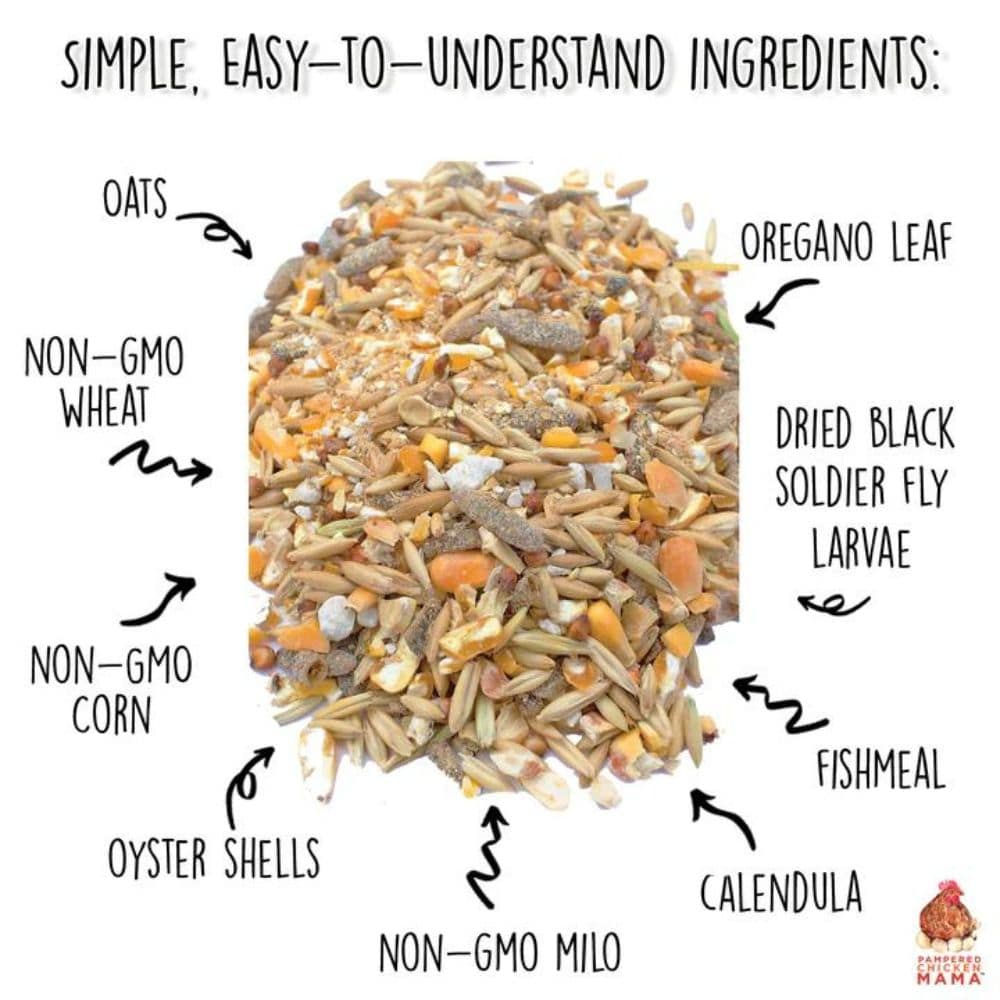
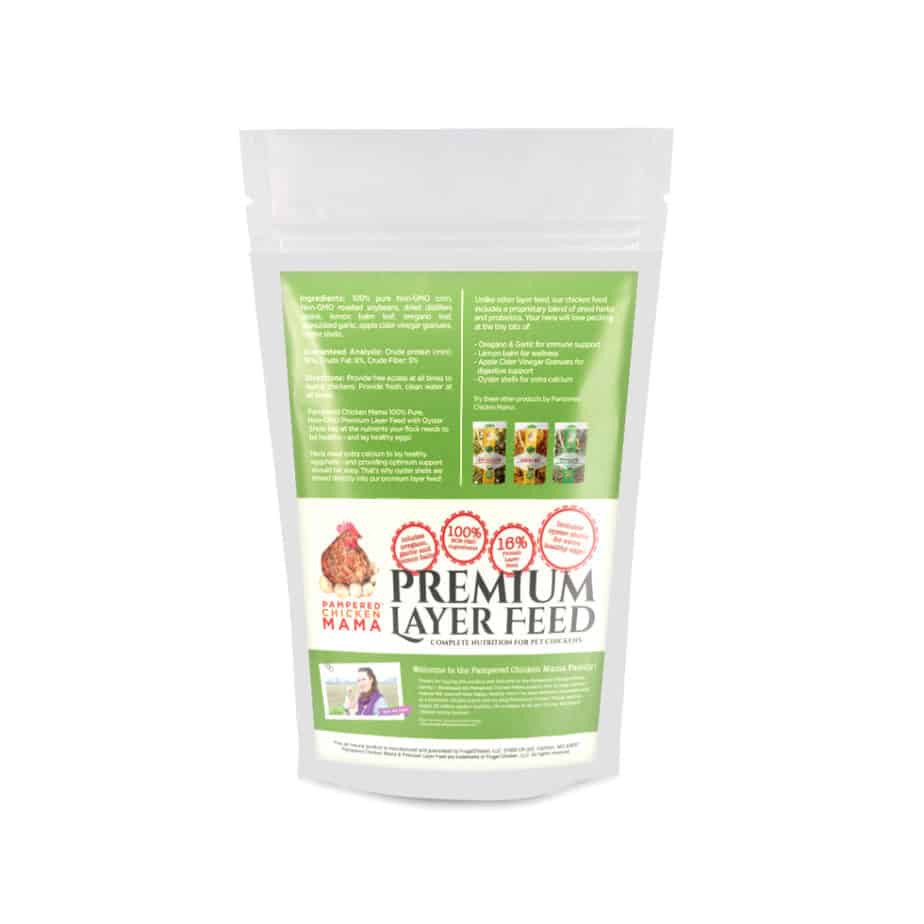
Example of layer feed ingredients – click the image to learn more.

How Much Protein Should A Feed Have?

A feed with 16-18% protein is best, with the right nutrients for your chickens to remain healthy. A layer feed isn’t the same as a chick starter, which is formulated for baby chickens.

A common question we get is about how to switch to a layer feed from a chick starter. For the first part of your chickens’ lives, they should be on starter and grower feeds. Then once they begin laying, you should switch them to a layer feed. It’s easiest to switch gradually over the course of a week. A sudden switch could lead to diarrhea and other gastric problems.

Laying hens will eat about a quarter pound of feed each day. Free-ranging hens need less than this, as they will be foraging for much of their own feed. Despite their foraging, they will still need a significant amount of layer feed to help maintain a proper nutritional balance.

You might wonder if roosters eat layer feed since they don’t lay eggs. In short, yes they can. They’ll be perfectly healthy. It’s unrealistic to house roosters and hens together and feed them different meals. It would actually be more like a circus than a farm!

Can Chicks Eat Layer Feed?

Your chicks have different dietary requirements than your fully-grown chickens. They will need different nutrients. Layer feed has extra calcium, which can cause your chicks to have trouble growing correctly. It’s always best to feed your baby chickens an 18% starter ration.

Chicks also need crumbles and not pellets, so keep that in mind. And you will have to decide whether to use medicated feed or not. Here is an article to help you decide: Medicated Vs Unmedicated Chick Starter.

When you transition from starter feed to layer feed, you should do it gradually by mixing the two together over a period of about two weeks.

Does Layer Feed Have Grit?

No, it does not. Grit is a coarse and abrasive material that chickens can safely ingest. It helps them grind up and properly digest food since they don’t have teeth. It has no nutritional value, so you should offer it separately. You can read more about grit here.

Can Broiler Chickens Eat Layer Feed?

Broiler chickens need a higher protein percentage than egg layers. The best feed for them is heavier protein content feeds. In a pinch, your broilers would not suffer from layer feed. But the lower protein content might mean your chickens are smaller than expected.

How Much Does Layer Feed Cost?

Layer feed can range in price. A budget feed at your local farm store might cost about $.50-.60 / lb. If you are looking for non-GMO or organic homemade mixes, they will be a little more expensive. But your chickens will have a better diet. This is the Non-GMO layer feed we use.

Should I Make Homemade Feed?

Whether to make homemade feed vs. store-bought feed is up to you. It depends on your lifestyle, free time, and the particulars of your farms. There are many recipes available online (like this one here). The following is a list of ingredients that are most often included in homemade layer feeds.

Common Ingredients of Homemade Feed

  • Oat groats
  • Regular naked oats
  • Black sunflower seeds
  • Hard red wheat
  • Soft white wheat
  • Kamut flour
  • Millet
  • Whole corn
  • Crack corn
  • Popcorn
  • Lentils
  • Peas
  • Sesame seeds
  • Brewers’ yeasts
  • Sea kelp
  • Alfalfa
  • Barley
  • Fish meal
  • Flax seed
  • Food-grade lime or aragonite

Each ingredient brings its own value into the mix: oils, protein content, nutrients, vitamins, amino acids, calcium, and energy. The ratio of ingredients can vary, and the higher protein ingredients will probably be more expensive than the grains. As a result, the grains will usually compose the bulk of the homemade layer feeds. Seeds and supplements like peas will certainly be more expensive, but they add tons of nutrients and variety to the feed.

Extras

You can add extra supplements depending on the season. If it’s time for a worming or mite-prevention cleansing, food-grade diatomaceous earth, garlic, or cider vinegar can all be added to help with keeping your birds’ bodies healthy – both inside and outside. You can give these supplements temporarily or long-term. You can mix the ingredients into garbage pails or metal pails by hand.

Advantages of Store-Bought Feed

One of the biggest advantages of using store-bought layer feeds is the scientific measurements of protein. Excess protein can create problems in many barnyard animals. Renal dysfunction is one problem that does occur with too much protein. But a low protein content can result in smaller or abnormal eggs. It can also cause your chickens to stop laying and/or to become flighty.

Fermenting Feed

You also might wonder whether you should ferment chicken feed. There are many resources online that show you how to ferment chicken feed (here’s ours). It’s certainly not necessary, but it’s very easy. The main idea is to submerge your flock’s feed underwater and allow beneficial bacteria to grow. If you’re worried about gut health and want to do everything possible for your flock, then fermenting feed might be for you! You can also ferment chick starter.

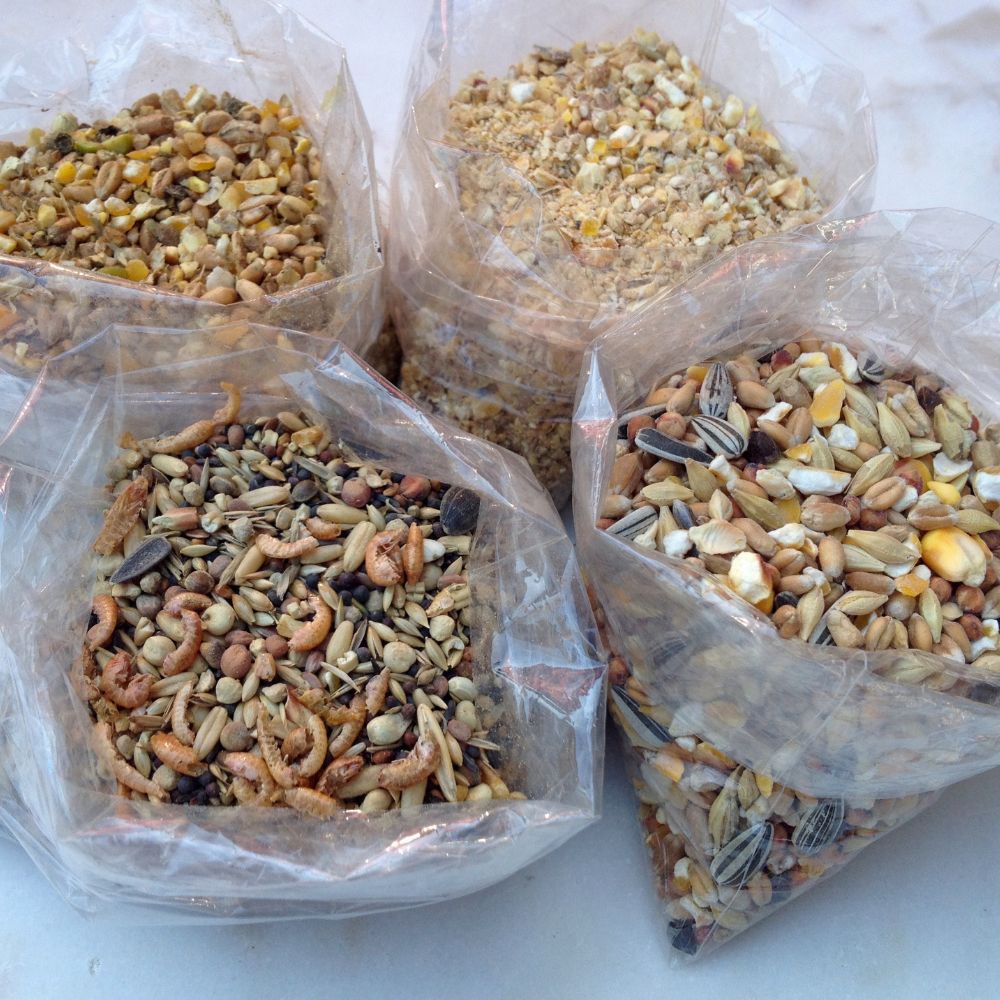
Four bags of different kinds of chicken feed

Do Chickens Prefer Storebought or Homemade?

This is a very specific question that requires significantly more research for a definitive answer. Current observations show that there is no preference. Picky eaters are everywhere, so there just might be one in your flock. Chickens are live creatures, and some can certainly be more picky than others.

What Food Is Really Necessary?

There will always be people who think layer feeds are unnecessary. And in some situations, they’re possibly right. But industry studies show that a 16% layer feed is the basis of a good diet. Personally, I would stick to “tried-and-true” facts. It can take a while to get chickens back on track if their rhythm is messed up by the wrong protein and nutrient levels.

Is Chicken Scratch Good Enough?

No, chicken scratch does not have all of the necessary nutrients to sustain your flock if that’s all it has to eat. It does make a great treat and is a good source of energy though.

Will Feed Make Eggshells Strong?

Not really, but a well-balanced diet certainly helps. However, if you do not free-range your flock then you will likely need to supplement with some type of oyster-shell to create strong shells.

Where To Buy Layer Feed

Layer feeds are available everywhere, and we even sell our own very popular blend right here. Petco, Tractor Supply, and even Wal*Mart all stock layer feeds. Chances are good that a simple Google search of “layer feed” and “nearby” will net you a source for the feeds. We are pretty proud of our ingredients though.

Photo of our layer feed

Summary

Layer feeds have become a single stop for your egg-laying hens. They are easy to mix, contain a good balance of ingredients for your little ladies, and help your flock produce the “butt nuggets” we all know and love. By looking after the eating habits of our girls, we are improving the quality of our own food: our eggs.