Feeling like champagne and caviar? Why not throw in some expensive Bresse Chicken to make your night on the town complete? Why not? For starters, it might be hard to find. And since the price is twice as nice, you might settle for that chicken sandwich from your local fast food favorite! 😆

Bresse chicken is said to be one of the most expensive dishes out there. What’s so special about this bird and why is it so expensive? Follow me to see.
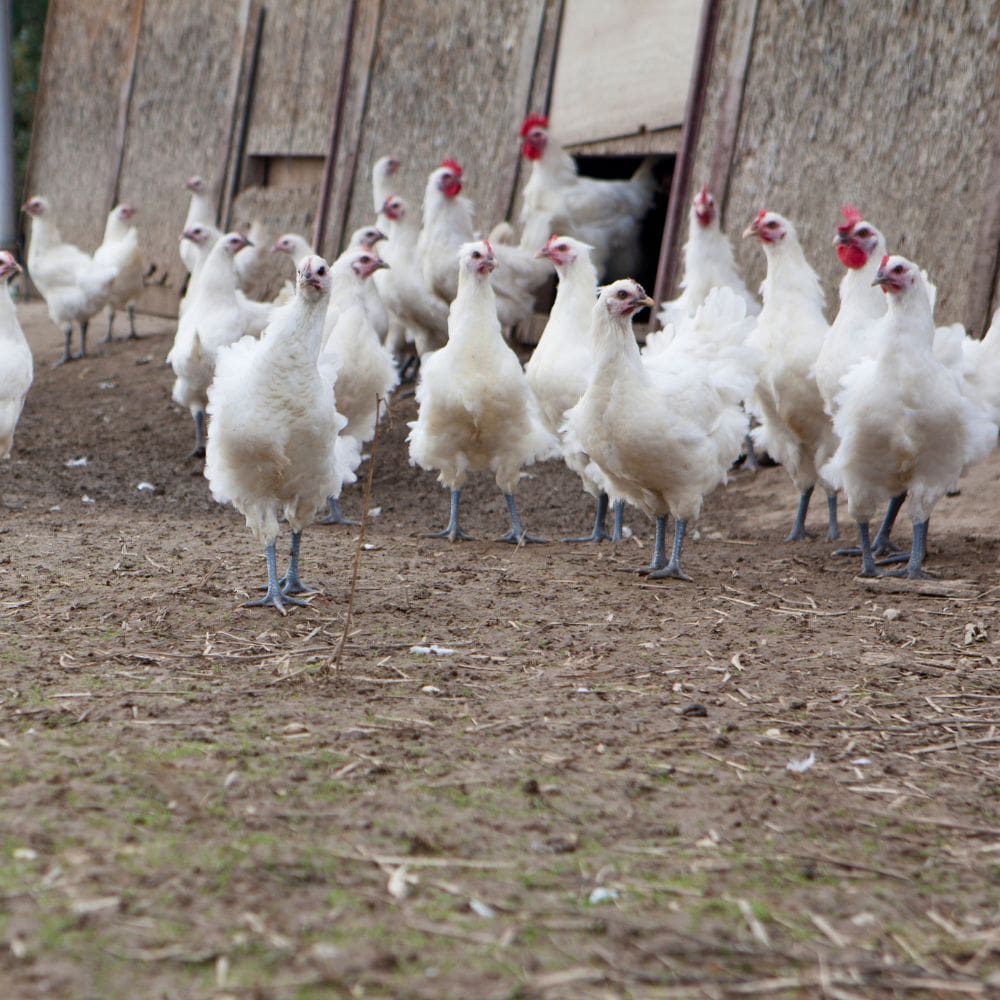
Bresse Chicken flock in front of coop

What’s So Special?

Let’s jump right into the most interesting part about this Bresse chicken breed. It is said to be the most delicious chicken, and the most expensive, in the world. That’s a big shoe to fill.

It’s unique in that the meat of this bird is marbled more like that of beef than chicken and has a distinct flavor. It’s a genetic difference that, apparently, no other chicken breed in the world has. And, THAT, my chicken-loving friends, is why THIS breed is so special.

They also have more delicate bones (light bones), thin skin, and a larger percentage of tender, dark meat than other breeds. But it’s not just genetics that contribute to the luxurious specialties of this breed. The way they are raised, and the timing of their demise (uh hum…I mean by the time of their processing).

This breed must be raised as foragers, primarily, for about 16 weeks (usually no longer than 24 weeks). And then they are confined in a “resting period” to finish up for the last 2 to 4 weeks to help prevent toughening of the meat. The resting period is essentially confinement to prevent much movement. The birds are fed milk and corn (or corn soaked in milk) during this time to further the process of fat marbling (if raised by professional breeders who know what they are doing with this breed).

How Pricey Are These Chickens?

And now you might understand why this breed is so. very. expensive. How expensive? Well, as an example, you can buy 10 chicks from Bresse Farms in Mississippi for around $127.00 (that’s with shipping). But much like Ayam Cemani, you need to check out any hatchery or breeder to be sure you are getting the true breed. The ones listed at Bresse Farms are considered to be American Bresse Chickens.

The French only allow a small percentage of these specialty meat (and egg) birds to be exported. Those are truly French Bresse chickens.

What about ordering a Bresse chicken dinner at a restaurant? Those prices vary greatly, but you can be prepared for it to break the bank.

Can you tell the difference between American and French Bresse chickens? Probably – if you are a serious breeder or chicken connoisseur, or perhaps a French chef. And if you want to try what has been called the tastiest chicken in the world, I would suggest an officially French variety.

What About Cornish Cross?

Why would someone pay so much more for a Bresse chicken when they can buy a Cornish Cross chicken for a lot less? Well, there is a bit of a trend – people are searching for heritage chickens more often. Not everyone cares, but keeping the heritage breeds alive and well helps us all in the chicken world.

Cornish Cross chickens are fast and easy to raise (ready in 8 weeks), and I must admit they are pretty tasty. But it’s well known in the culinary world that Bresse has the Cornish beat by a long shot. And the Bresse breed is a heritage breed that is worth keeping strong.

Bresse Chicken History Snippet

The Bresse chicken breed finds its lineage in the 16th century, flourishing in the rustic beauty of France’s Bresse region (eastern France). According to this article, France only exports about 5% of this breed – adding to the allure and scarcity.

Its exquisite flavor captured the attention of nobility and connoisseurs, eventually leading to its esteemed AOC (Appellation d’Origine Contrôlée) recognition. This designation, a testament to its authenticity and heritage, firmly establishes the Bresse chicken’s status as a culinary treasure.

It has earned the nickname “queen of chickens” due to its unique set of genetics and marbling meat.

Bresse Personality

The Bresse chicken possesses a unique personality characterized by curiosity and vitality. Flourishing in free-range settings, these birds exhibit intelligence and sociability, often forming endearing connections with their caretakers.

Their insatiable curiosity fuels their prowess as adept foragers, a trait that significantly influences the tenderness and quality of their meat.

Appearance

The Bresse chicken has a bright red comb, beautiful white feathers, and blue legs and feet (more of a steel gray). I know it sounds very similar to a White Leghorn, but they are very different if look closely. They do have that nostalgic chicken feel just the Leghorn though.

The Bresse chicken is not large, the roosters weigh in at about 6-7 pounds at 16 weeks of age. The hens weigh less, at about 4-5 lbs.

Bresse Chicken FAQ

Are Bresse Chickens Good Egg Layers?

Yes, they are not just known for their chicken meat. They are also really good egg layers. They lay around 260 medium cream-colored eggs each year. This makes them excellent dual-breed chickens. Plus they have lovely dispositions, so they are pretty darn good pets as well.

Are Bresse Chickens Broody?

No. They do not tend to be broody girls. It’s not very likely that they will have the motherly instinct kick in, but if they do you’ll have to decide which route to take. Here is an article that might help you with this (and any other breed that may go broody on you at some time): Broody Hen – To Help or Hinder, You Decide

Are They Hardy?

This breed is hardy. They do well in heat and in cold temperatures. It’s one of the reasons this breed is a good heritage chicken breed. Want to learn about some more heritage chicken breeds? Read this: Top 7 Heritage Chicken Breeds Our Grandparents Kept

Do Bresse’s Need To Forage?

Bresse chickens do best when they have the ability to forage. So, free-ranging is a perfect fit for them. It’s also part of what makes their meat so tasty. If you want this breed for the special meat marbling, you should let them free range (provided they have plenty of bugs and vegetation to eat for the first 12 weeks. Then confine them and feed them corn soaked in milk for the last 2 to 4 weeks for fattening up and tenderizing. It’s how the pros do it.

If you don’t have the ability to free-range your flock, then you definitely need to stock up on natural treats and feed that will serve the same purpose. Try this high protein feed packed full of USA-sourced, non-GMO ingredients, and give this treat sampler bundle a try too (full of high protein insects and other goodies your chickens need to flourish).

Summary

Are you now wanting to try the unique flavor of the Bresse chicken? The genetic lineage of this breed certainly lures us chicken people in.

I say “Go for it!” Now you just have to decide whether you want to try the more accessible American White Bresse of North America or the more expensive and harder-to-find French Bresse.
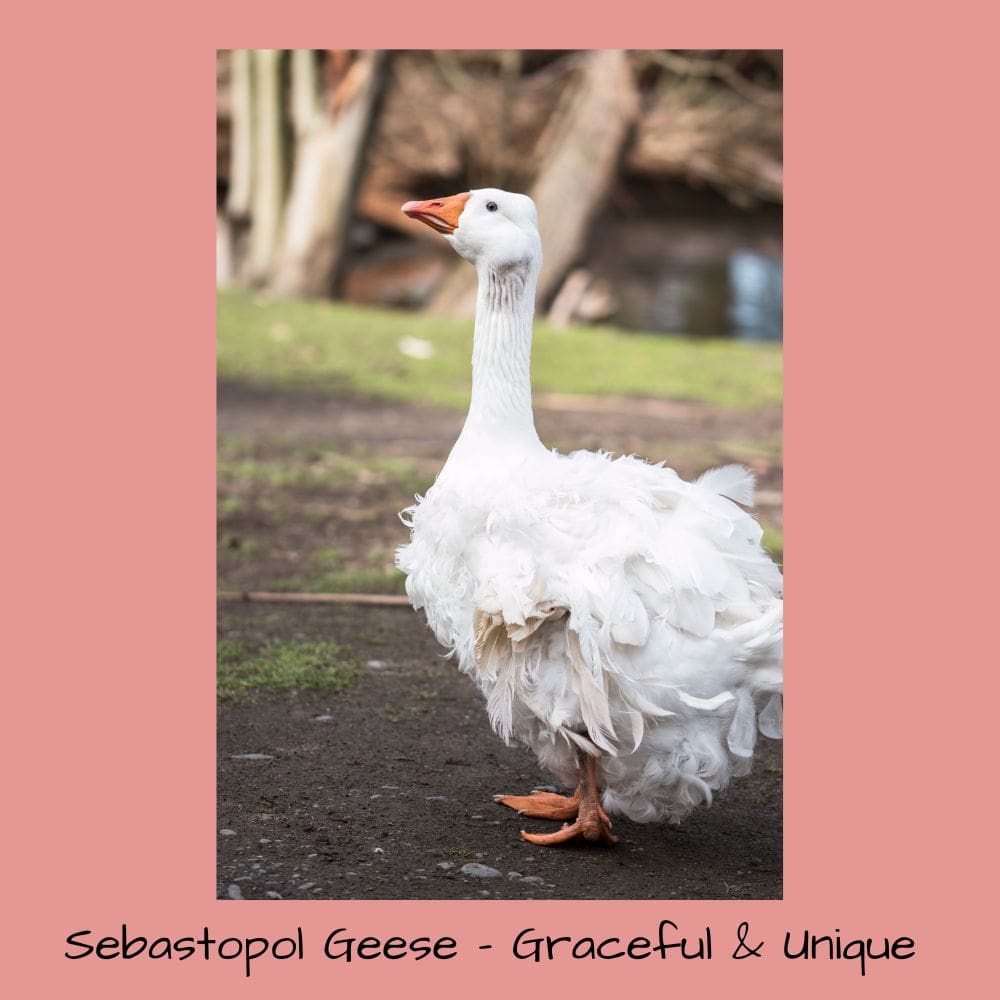
Ever wondered about getting geese but not sure what kind to get? To be honest, I’m a bit leery of geese, but Sebastopol geese made me take a second look.

This breed of geese seems to have stepped out of a fairy tale. With their unique white feathers gently curving like a fluffy could, and their sweet but shy demeanor – you might just fall in love with these whimsical wonders!

Let’s not waste any time and get right into the details of this lovely goose.

Sebastopol goose standing in an upright position

History Snippet

First of all, the name of this breed gives you a hint. Beyond that, there is not a huge amount of information about the history of this breed. Here is what The Livestock Conservancy has to say:

The Sebastopol goose originated in southeastern Europe, with sources pointing to the region around the Black Sea. They were named after Sebastopol, a Russian city from which they were imported to the US. In Germany, the birds have been known as “Strupp Guns” or “Lockengans” which means “unkempt goose” or “curl goose” due to the frizzled appearance of their feathers. The breed was developed from wild Graylag geese, which are native to Europe, and was recognized by The American Poultry Association Standard of Perfection in 1938.

The Livestock Conservancy

They were also known in England as Danubian, and by the Spanish and Italians as Danubio. These names have something to do with the Danube River, but it’s still a bit of a mystery in relation to Sebastopol.

Over time, the breed found its way into many parts of the world, including North America, where it became quite popular. Through dedicated breeders, these geese have managed to survive and thrive.

Sebastopol Geese Appearance

The true allure of the Sebastopol geese is their unique appearance. Their most striking feature is their soft and fluffy white feathers that uniquely curl along their body, giving them a cloud-like, angelic appearance. These curly feathers are truly the most adorable part of their appearance.

Although they do look angelic, they can also look pretty unkempt and dirty if their fluffy white feathers meet the mud. However, they are pretty good at cleaning and grooming themselves, thankfully. This is especially true if they have a body of clean water to swim in. They are, of course, good swimmers.

Sebastopols are medium-sized geese with long slender necks. The males (ganders) weigh about 14 lbs. and females (geese) weigh approximately 12 lbs. when mature. They have large rounded heads, arched backs, and lovely orange webbed feet.

The curly feathers are on the main part of the body, but the vast majority of their necks have normal feathers. The breast feathers follow the curly pattern and show off well.

The fun feathers make for a unique look but they do prevent them from flying. They are not fast movers and don’t seem to have an interest in wandering so they are quite easy to keep in confinement if needed.

Another unique thing about these angelic inside-out feather pillows is their prominent eyes. Some of them have blue eyes and it’s a sight to behold.

They are hardy and can be raised in cold climates, but due to their floofy curly feathers (that don’t repel water well or provide much warmth), they need good protection during wet and cold winter weather (much like Frizzle chickens).

Are Sebastopol Goslings Born With Curly Feathers?

Nope. They don’t start to show their curl until 2 to 3 weeks old. As they grow, the curly effect increases as well. Another interesting thing is that they sometimes start with gray like feathers that turn into white.

Do They Come In Different Colors?

Yes. They come in gray and buff varieties, but the white variety is the most popular.

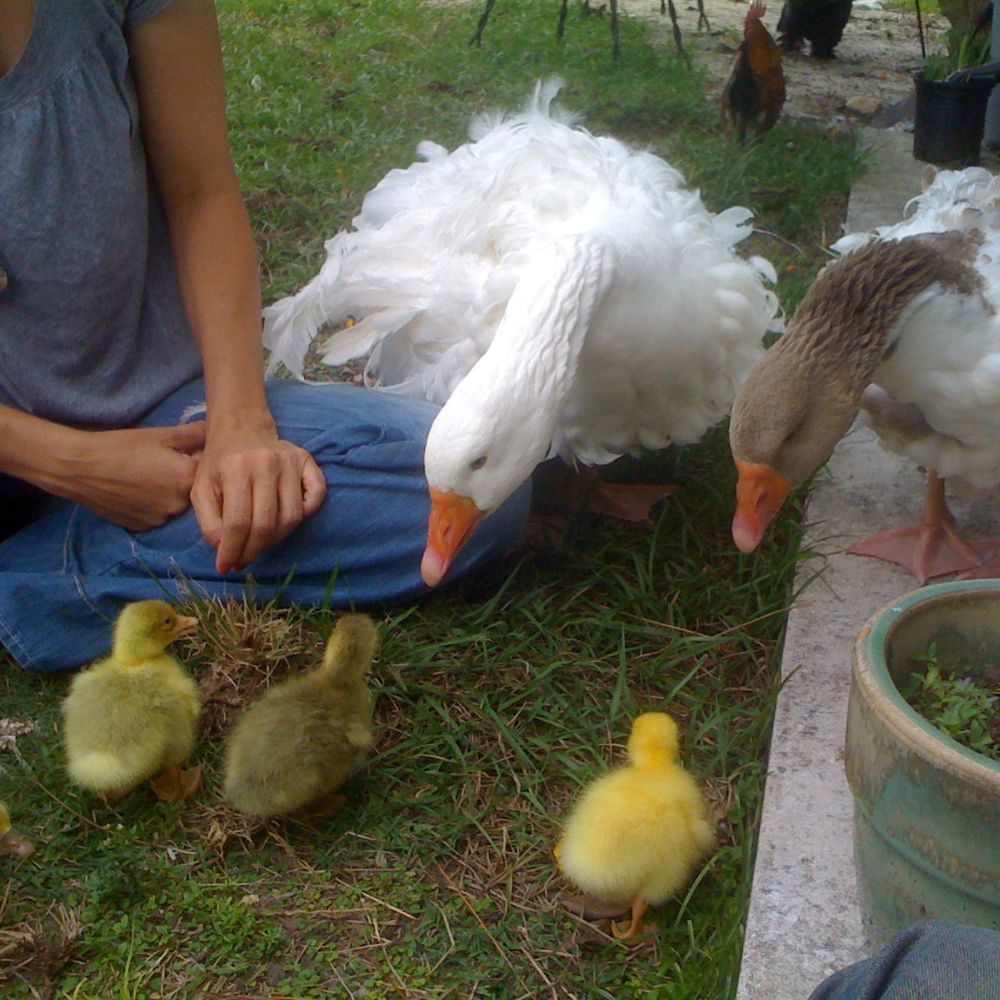
Sebastopol Goose showing curiousity about goslings that aren't hers

Temperament

One of the most endearing qualities of Sebastopol geese lies in their gentle and docile nature. Unlike some other goose breeds known for their aggressiveness, Sebastopols are notably friendly and easily approachable. This makes them wonderful additions to any backyard flock or family setting.

They enjoy the company of humans and other animals, and their calm disposition often extends to their interactions with children, making them excellent pets for families. They are excellent swimmers and love to have the opportunity.

Sebastopol’s are not aggressive, and they are friendly – but I wouldn’t go as far as to say they are lap geese. 😆 Their shy side keeps them from getting too close…unless you train them to follow you for treats. If you treat train them, be sure to offer treats that are nutritious as well. These are my favorites – check out the ingredient list and you will be impressed.

This breed tends to be excellent foragers which is nice. It keeps them happy, busy, and productive.

Sebastopol Geese Egg and Meat

While Sebastopol geese are primarily adored for their looks and temperament, they are not just all beauty and no substance. As contributors to the homestead, they offer some practical benefits too.

In terms of egg production, Sebastopols are reliable layers (for geese), providing a reasonable number of eggs throughout the year (if you consider 25-35 eggs per year reasonable, in the land of geese they are moderate layers). The eggs are typically large (much larger than chicken eggs) and have a rich flavor, making them prized additions to any kitchen. They lay white eggs.

Regarding meat production, Sebastopol geese do have some value, but it is not their primary purpose. Their meat is flavorful, lean, and appreciated by those who prefer a more distinctive taste compared to traditional poultry.

What Do Geese Eat?

Geese are grazers that eat things like stems, seeds, leaves, berries, and bulbs. They also eat insects of all kinds and some will eat aquatic plants as well.

Captive geese will likely need a high-protein feed as well. Be sure to pick one with excellent ingredients that aren’t packed with nonsense fillers. Need help? Try this one: 16% Premium Layer Feed With Black Soldier Fly Larvae, Fishmeal, & Herbs

Summary

As for Sebastopol geese, they are one of the most popular breeds in the goose world. You have to admit, they are a bit irresistible with their curly feathers and (possibly) blue eyes. Just be sure that you are ready for geese. They are different than chickens and ducks.

Did Someone Say Ducks?

Speaking of ducks, they are quite fun too. Check out some popular duck breeds in these articles we wrote.

From their stunning plumage to their charming behaviors, each species of bird carries its own distinct flair. There are so many types of birds out there, some are wild and some can be pets. Finches can be both.

Let’s learn a bit about some of the delightful finch varieties plus some fun facts about this species.

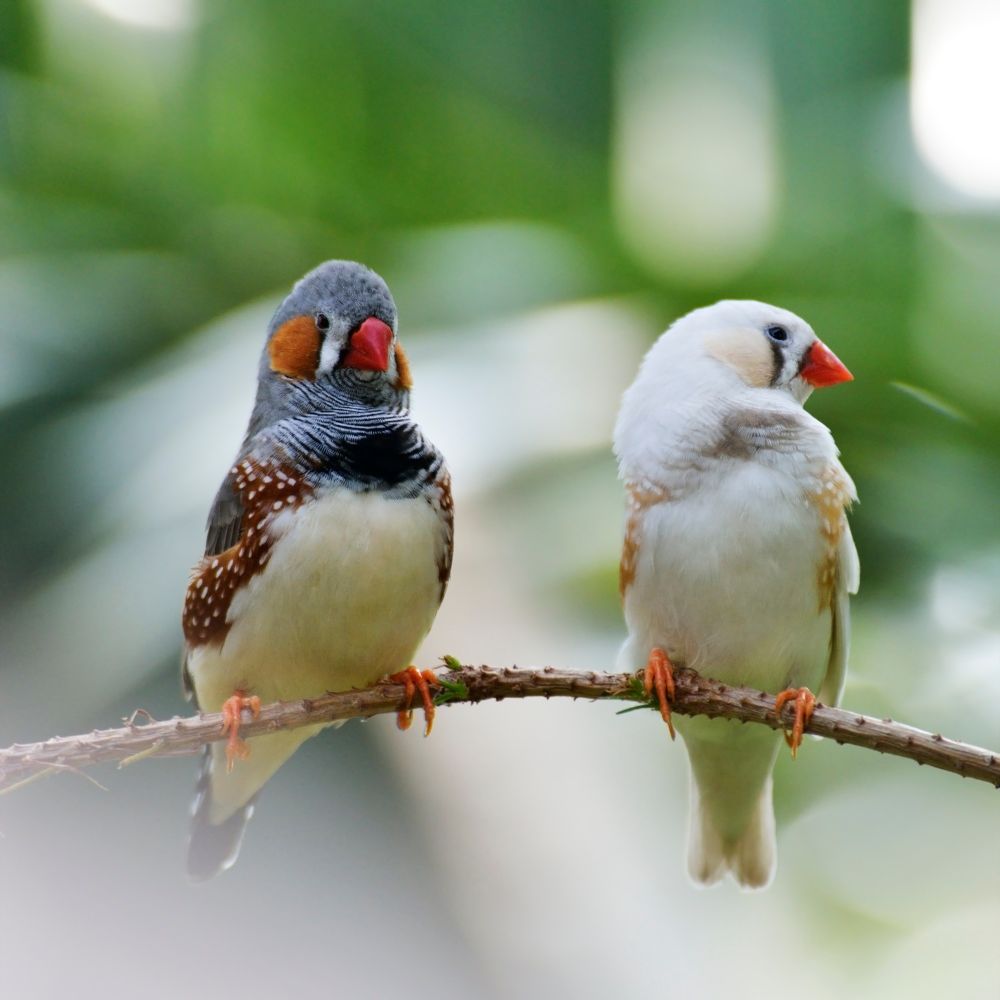
Two Zebra Finches sitting on a small branch with blurred background

Pet Finches

In the scientific world, finches are called Fringillidae, and there are well over 200 varieties. Although all 200+ varieties are delightful little birds with diversity as wide as the ocean, we will only be talking about 10 of the types of finches (I’m sure you don’t have time to read about 200+ types 😊).

The most common types of finches that people keep as pets in the United States are the Zebra and Canary varieties. But the Society finch and Owl finch are also quite popular. It will obviously depend on what your local pet stores or breeders have and, of course, your preference.

I’d say finches for pets are along the lines of parakeets for pets. If you want to learn more about parakeets you can read Parakeets – Ultimate Guide For The Smallest Parrots. They are suitable for those wanting a pet bird but are not ready to take on the commitment of a parrot. And if you want to learn about parrots you can read 10 Types of Parrots People Keep As Pets (with Pictures)

It is said that finches do best with a cage buddy, so you’d likely want two of them. They need a large cage or aviary to really thrive.

Their captive lifespan can be as many as 10-15 years, so it is still quite a commitment though. Keep that in mind if you are considering a finch for a pet. Those living out in wildlife do not fare so well.

If you don’t want to have a captive finch, you can also put feeders out to attract wild finches.

You can learn more about finches’ behavior, hear some finch sounds, and find out about bird conservation here.

10 Types of Finches

1. Zebra Finch (Taeniopygia guttata)

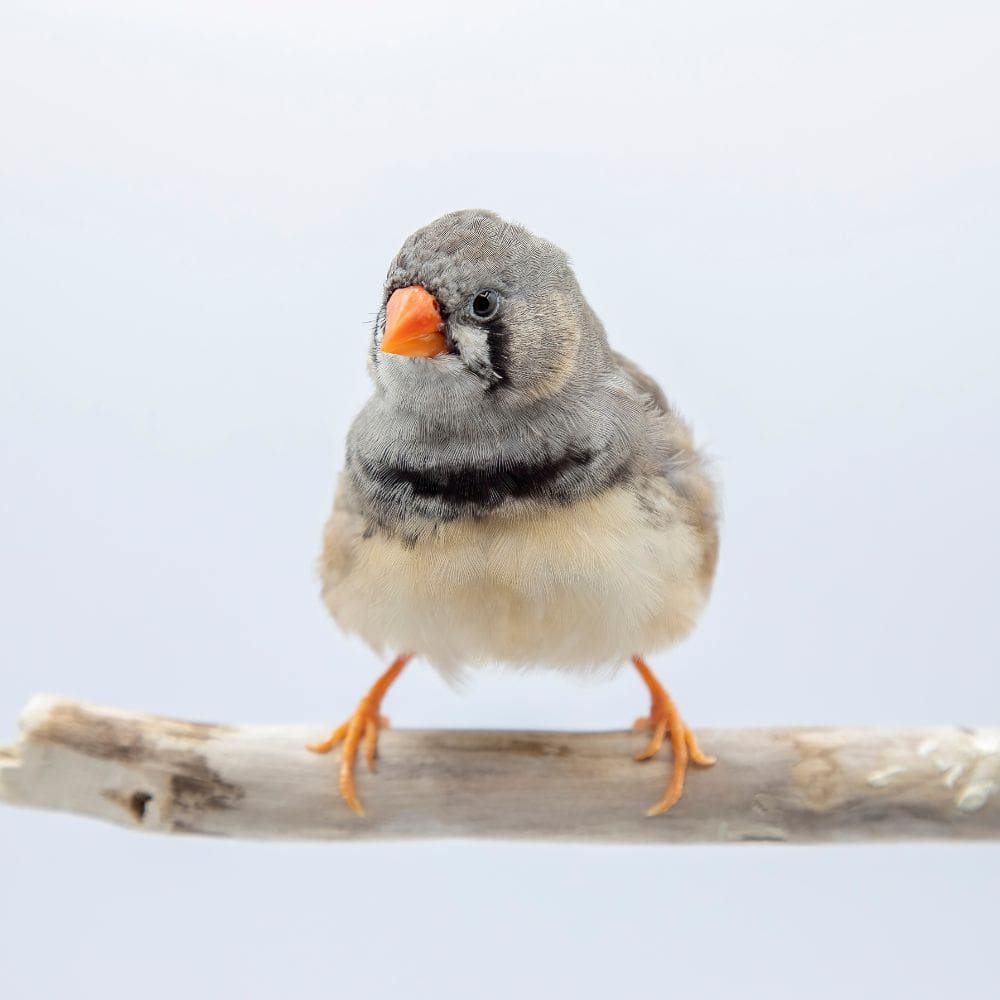
Dressed in nature’s finest black and white stripes, the Zebra Finch is a true fashion icon. These social butterflies thrive in large flocks, serenading us with their melodious chirping. Their remarkable adaptability has made them a popular choice among birdkeepers worldwide.

Zebra Finch sitting on a branch with all off white background

2. Gouldian Finch (Erythrura gouldiae)

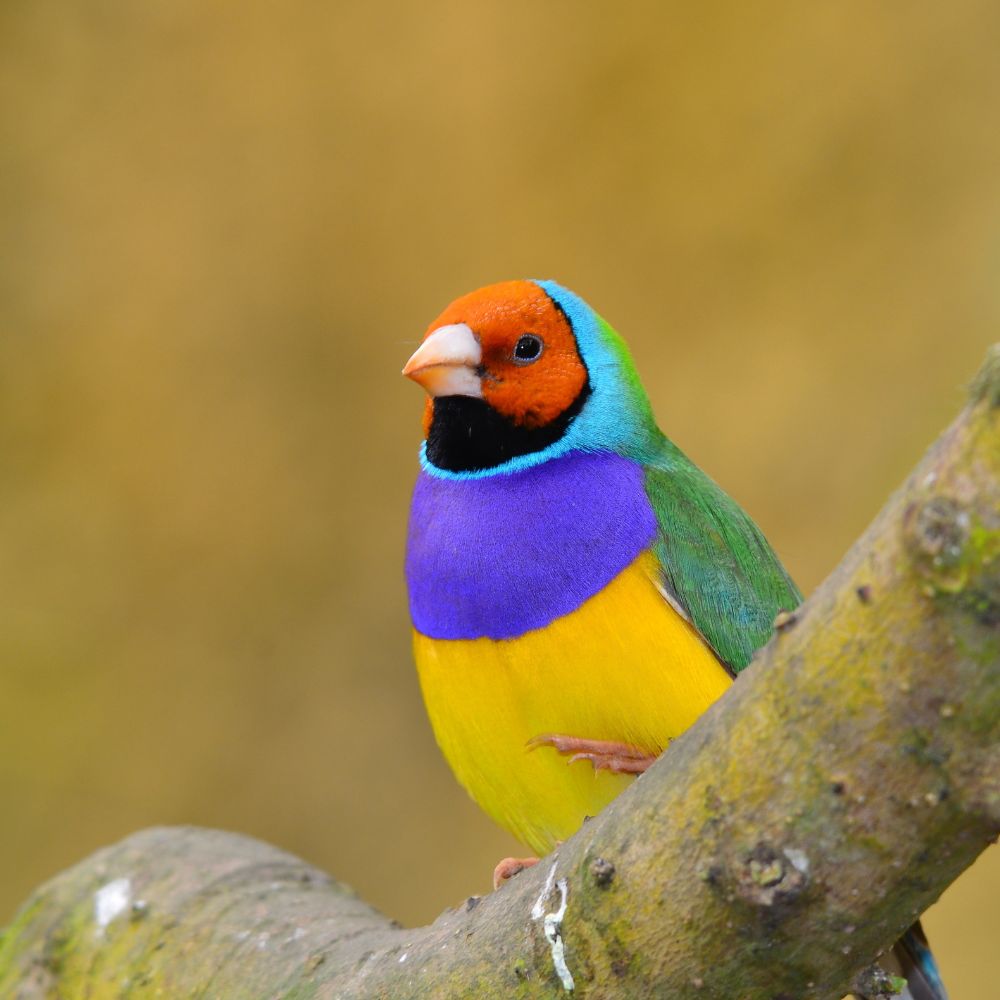
Prepare to be mesmerized by the Gouldian Finch’s dazzling colors! With vibrant red, green, and yellow plumage, it’s a living masterpiece. These Australian natives value their privacy, often nesting in tree hollows away from prying eyes. Only the male sings!

Gouldian Finch sitting on a tree with blurred background

3. Society Finch (Lonchura domestic)

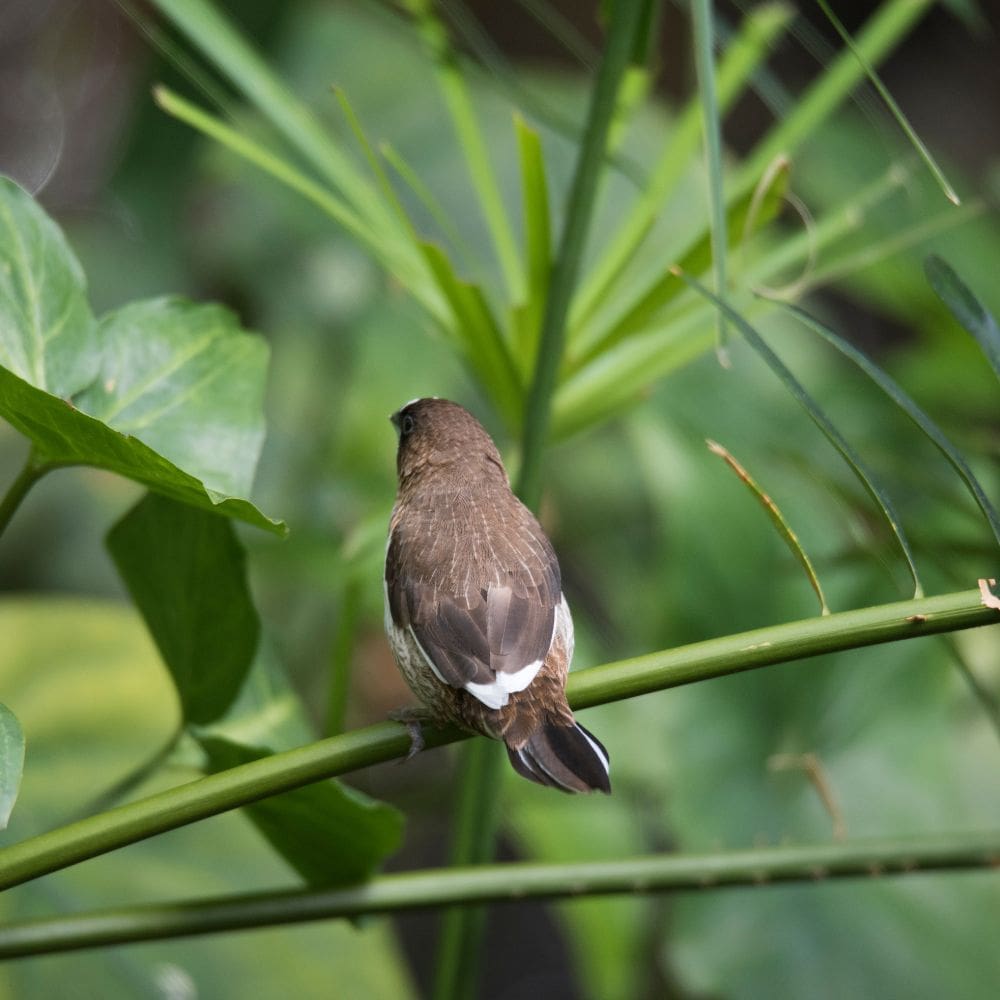
Hailing from East Asia, the Society Finch exudes elegance in its soft, muted colors. Known for their docile nature, they coexist peacefully with other finch species and can even mimic some human speech! There are different color varieties of this type of finch as well.

Society Finch sitting on a plant, view is of back of finch

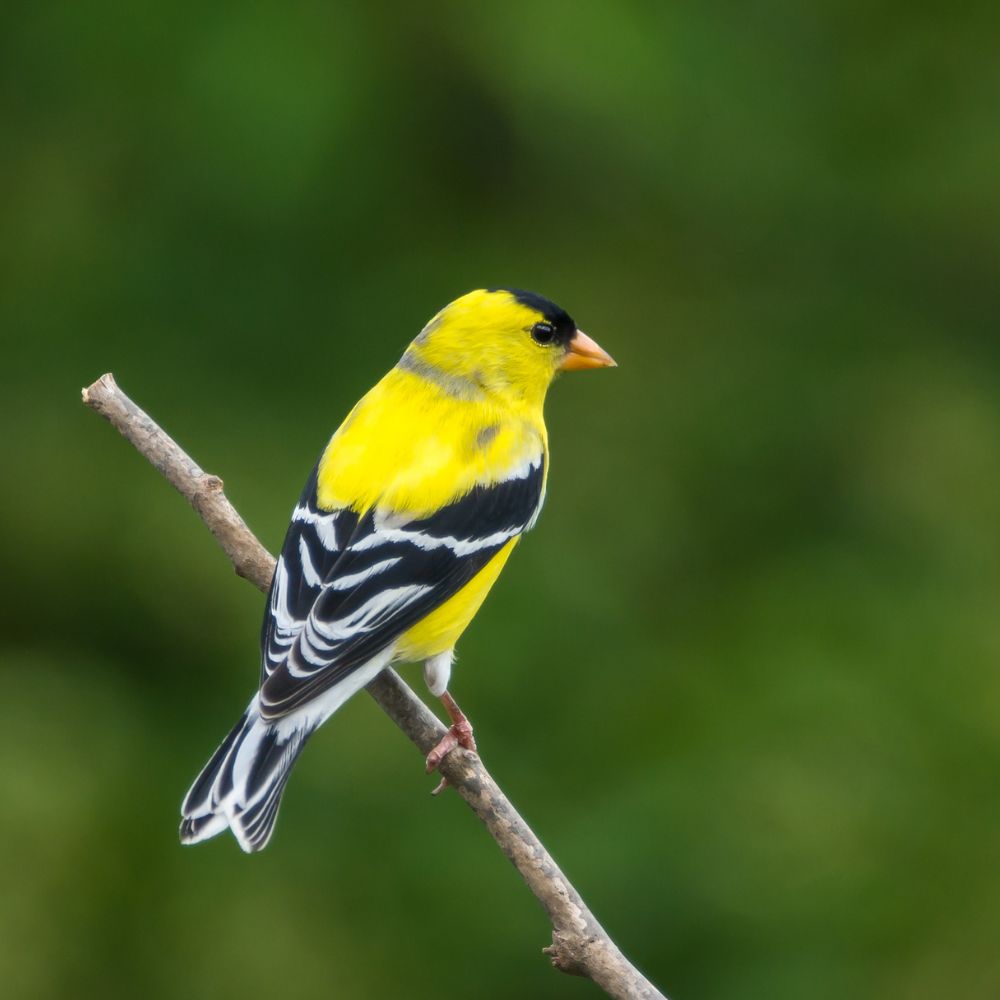
4. American Goldfinch (Spinus tristis)

The American Goldfinch is a vibrant ambassador of North America’s avian diversity. Their brilliant yellow plumage and cheerful songs have earned them the nickname “wild canary.” As true seasonal fashionistas, their feathers shift to a subdued olive during winter. These are the only finches that molt twice a year.

American Goldfinch sitting on a branch with blurred background

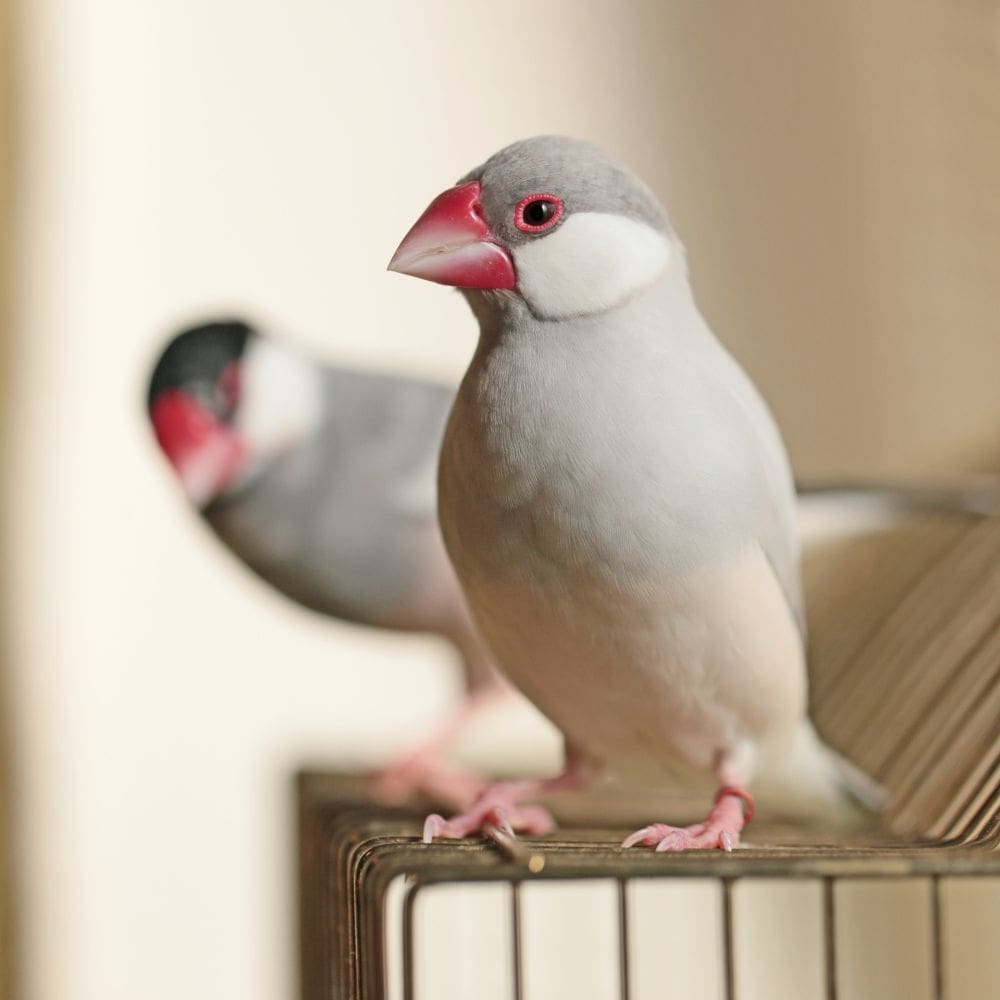
5. Java Sparrow (Lonchura oryzivora)

Despite its name, the Java Sparrow is indeed a finch with a unique beak designed to crack open rice grains. Native to Java, Bali, and the surrounding islands, these little charmers are highly social and thrive in large aviaries. It is not the common sparrow you see in North America.

Two Java Sparrows sitton on a cage

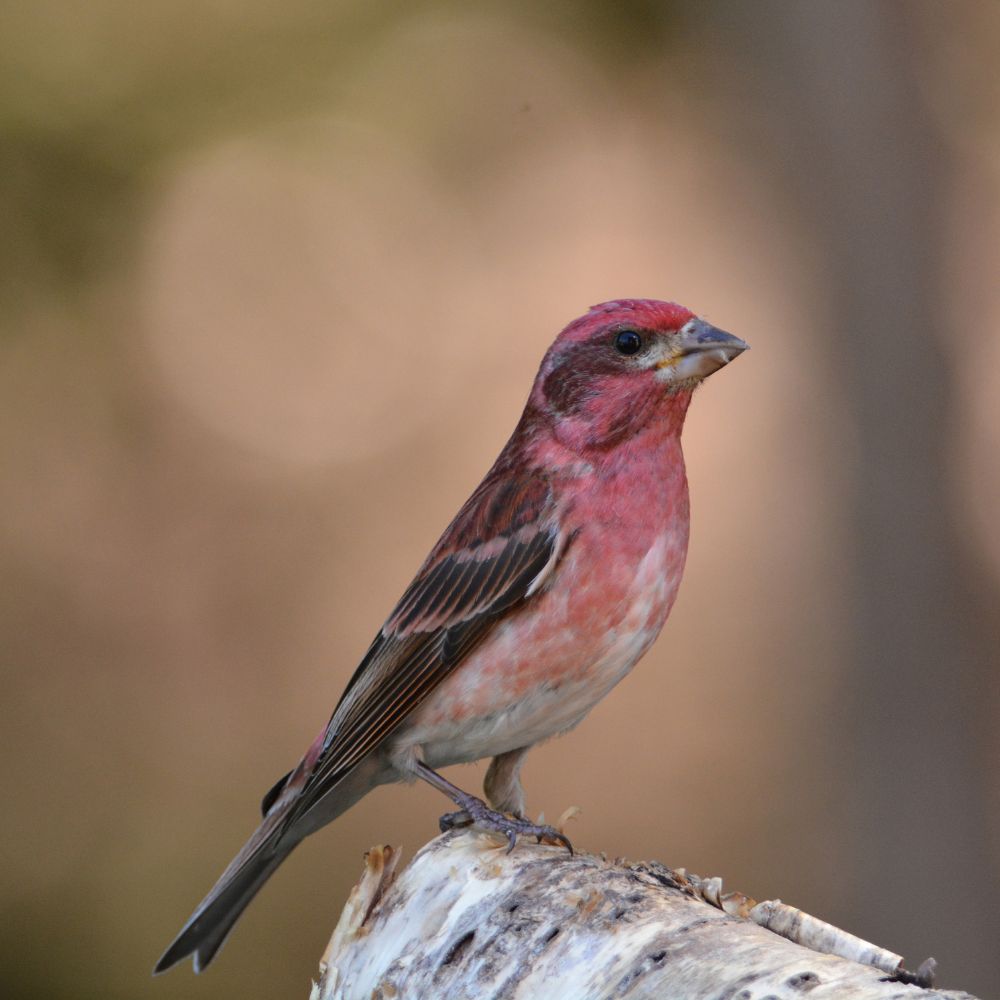
6. Purple Finch (Haemorhous purpureus)

Adorned in rosy-red and plum purple shades, the Purple Finch is a sight to behold. Native to North America, they are often spotted among coniferous forests. Males sing elaborate songs to impress potential mates, showcasing their vocal prowess. It is very crafty at crushing seeds and extracting nectar out of flowers.

Purple Finch sittin on a branch with blurred background

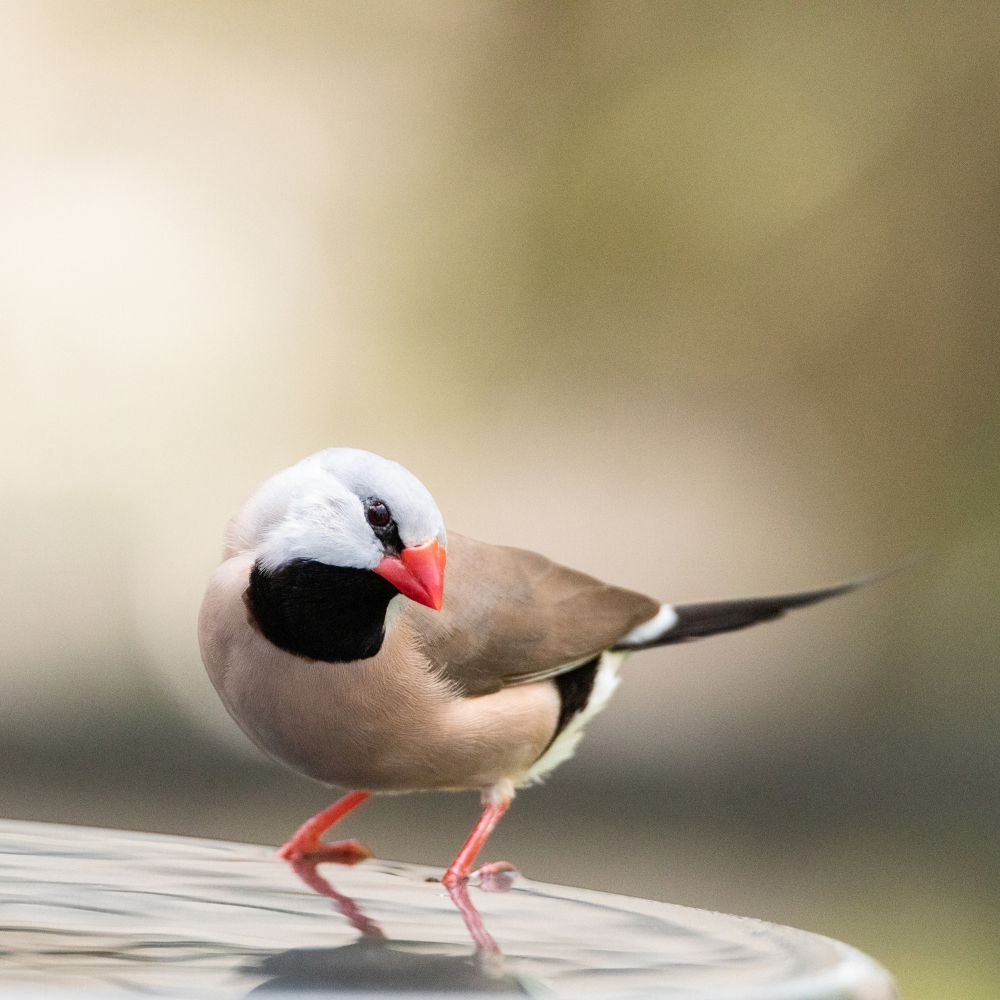
7. Long-tailed Finch (Poephila acuticauda)

Known for its strikingly long tail feathers, the Long-tailed Finch boasts a charming blend of white, black, and orange plumage. Found in the grasslands of Australia, these finches are skilled foragers with an affection for grass seeds.

Long tailed Finch looking sweetly at the camera

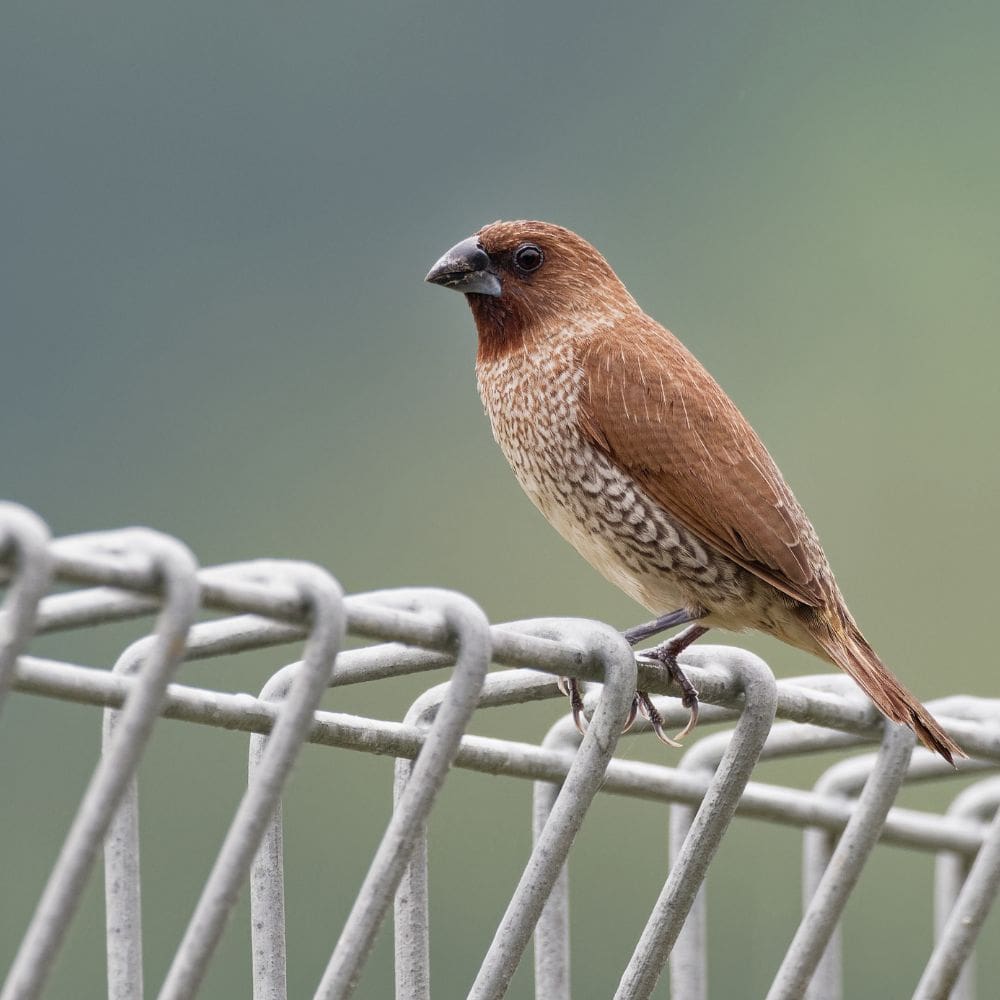
8. Spice Finch (Lonchura punctulata)

The Spice Finch, native to Southeast Asia, brings a delightful splash of color to our lives. Their delightful chirps and friendly demeanor make them an excellent choice for bird lovers of all ages.

Spice Finch sitton on wire cage

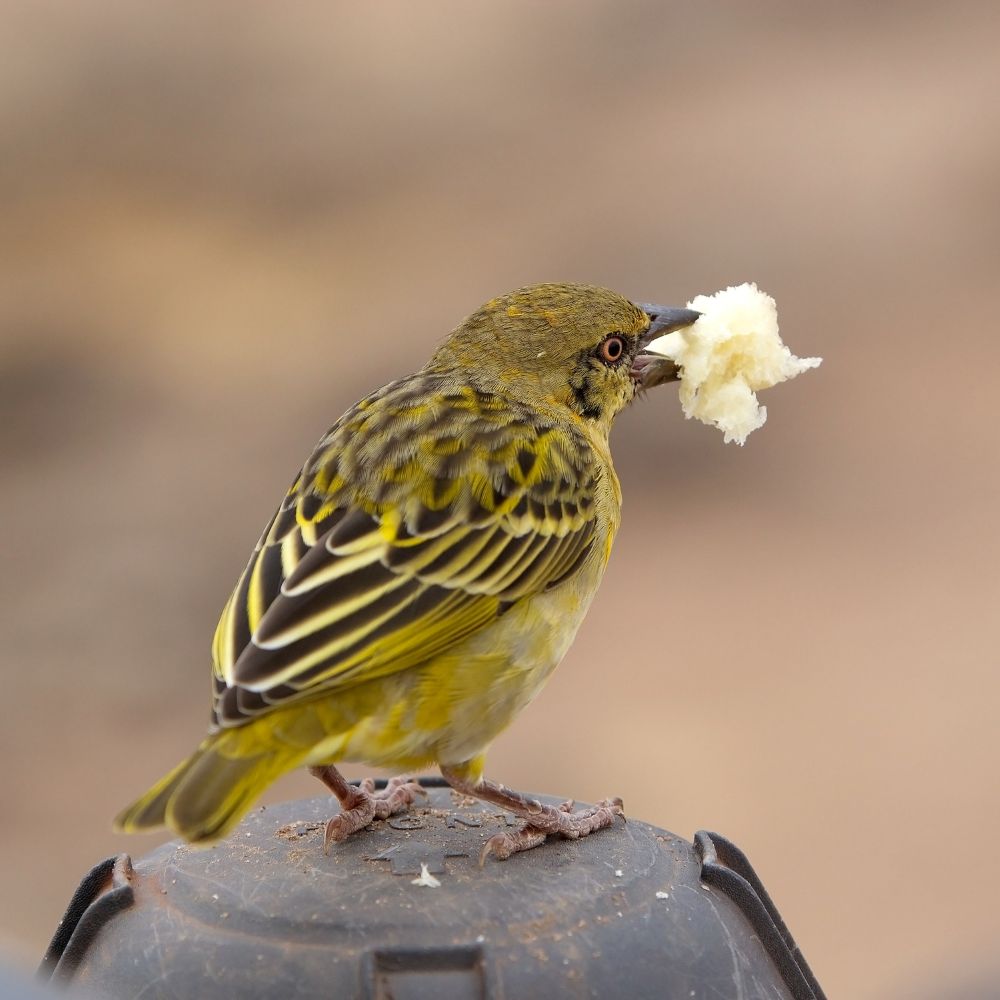
9. Yellow-fronted Canary (Serinus mozambicus)

A sunbeam in bird form, the Yellow-fronted Canary flaunts its bright yellow belly. Native to Africa, they are highly admired for their vocal talents, often breaking into a cheerful chorus at dawn and dusk.

Yellow Fronted Canary finch with a piece of fruit in its mouth

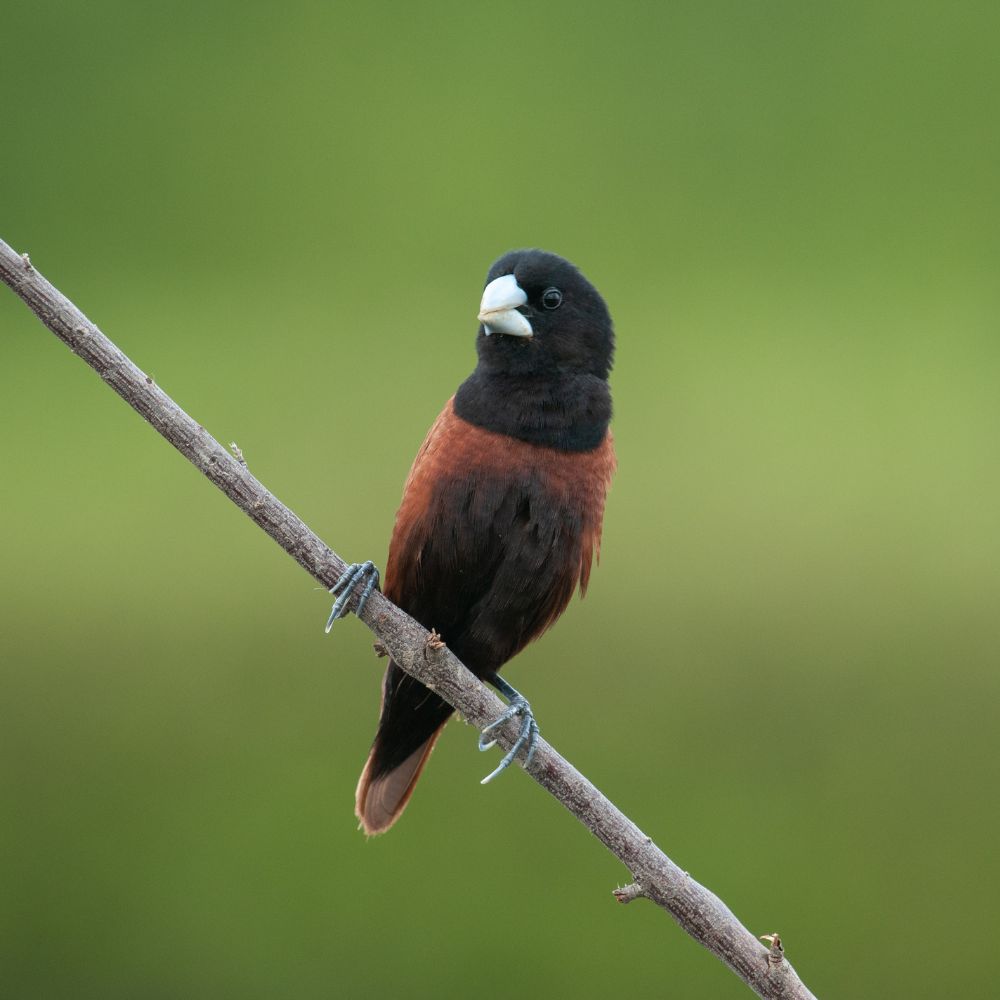
10. Chestnut Munia (Lonchura atricapilla)

Dressed in warm hues of chestnut and black, the Chestnut Munia is a joy to behold. Also known as the Black-headed Munia, they are popular residents of Southeast Asia and are often found in reed beds and marshy areas.

Chesnut Munia finch sitting on a small branch with blurred green backgound

Fun Facts About Finches

1. Feathery Medley

 Finches, part of the Fringillidae family, boast an impressive repertoire of over 150 diverse species, each with its own distinct characteristics. From the magical woodlands to the barren deserts, these feathered wonders have conquered habitats worldwide.

Prepare to be dazzled by their unique and greatly varied plumage! With a palette ranging from sunny yellows to deep scarlets, finches are artistry on full display.

2. Family Importance

In the Finch world, both parents share in the process of raising the young. It’s a precious system for sure. They both take turns incubating the eggs and then, later, feeding the new babies.

The whole family cares for the young birds until they are old enough and strong enough to take on the world.

3. Social Butterflies

These charismatic beings are socialites to the core! Gathering in lively flocks, called a charm (sweet, isn’t it?) they exchange stories and social interactions through a symphony of chirps and melodies, creating a harmonious chorus that echoes through the woods.

These sociable birds thrive on forming tight-knit flocks, allowing them to communicate, share food sources, and provide safety in numbers. Witnessing a bustling group of finches engaging in animated chatter is a delightful experience.

4. The Love Ballet

When romance is in the air (only during a certain time of the year), adult male finches don their fanciest feathers for a courtship dance that would put any suitor to shame. Twirling, swooping, and singing their hearts out, they strive to win the affection of their potential partners. It’s better than watching a movie.

5. Avian Architecture

Meet the feathered architects! Female finches channel their inner artists as they craft intricately woven nests from twigs, grass, and other unconventional materials, ensuring their offspring’s comfort and safety. The nests are very shallow and shaped like a cup, made of twigs, hair, feathers, and whatever the mama bird can find.

6. Egg Array

Finch eggs come in an array of patterns and colors, but did you know that some finches also have the ability to change the color of their eggs? The African Cuckoo finch can change their egg color to mimic other finch eggs to trick them into raising their young.

7. Feathery Mimics

Move over, mockingbirds! Some finches are exceptional mimics, mirroring the songs of other birds or even imitating human-made sounds, leaving us in delightful awe.

Finches are the true maestros of the bird orchestra and are excellent singers! Each species boasts its unique song and calls, ranging from cheerful melodies to intricate tunes.

8. Urban Fashionistas

Unfazed by cityscapes, these adaptable birds have mastered urban living, gracing our parks and gardens with their lively presence.

Finches are exceptional navigators, and their brilliant plumage is not just for show. Their vibrant colors play a crucial role in communication, helping them signal dominance, attract mates, and even communicate warnings to other members of the flock.

9. Foodie Finches

Finches are clever foragers, using their specialized beaks to extract seeds from various plants. Some species are skilled at manipulating flowers to extract nectar, while others are adept at capturing insects to supplement their diet.

You can feed adult finches dried mealworms, and they love them! Plus they are really good for them. But young finches can’t digest their rigid bodies so do not feed young finches these. They also really enjoy millet.

10. Adorable In Name

While the birds themselves are adorable, so is the name of a flock of finches. They are called a “charm.” Quite charming if I do say so myself.

Summary

To sum it up, finches are simply amazing! Their vibrant colors, beautiful songs, and quirky behaviors show us how incredible nature can be. It’s amazing how many colors and varieties they come in, and this is just one species of bird!

So, you want to incubate duck eggs but don’t know how? We have the answers to get you started on this grand adventure.

If you’ve ever incubated chicken eggs, you know how exciting it can be. But now you want to try ducks. Duck hatching can be quite different from chicks, but have no fear – with a little information and the right tools, you can do this!

After reading up on the subject, I was so nervous the first time I ever tried hatching duck eggs. There seemed to be so many methods and tons of warnings. I was shaking in my mud boots for sure. But I’m here to tell you that my first attempt went surprisingly well and I have the ducks to prove it! 😉

Without further ado, let’s get to it. Here are the 7 easy steps to incubate duck eggs.

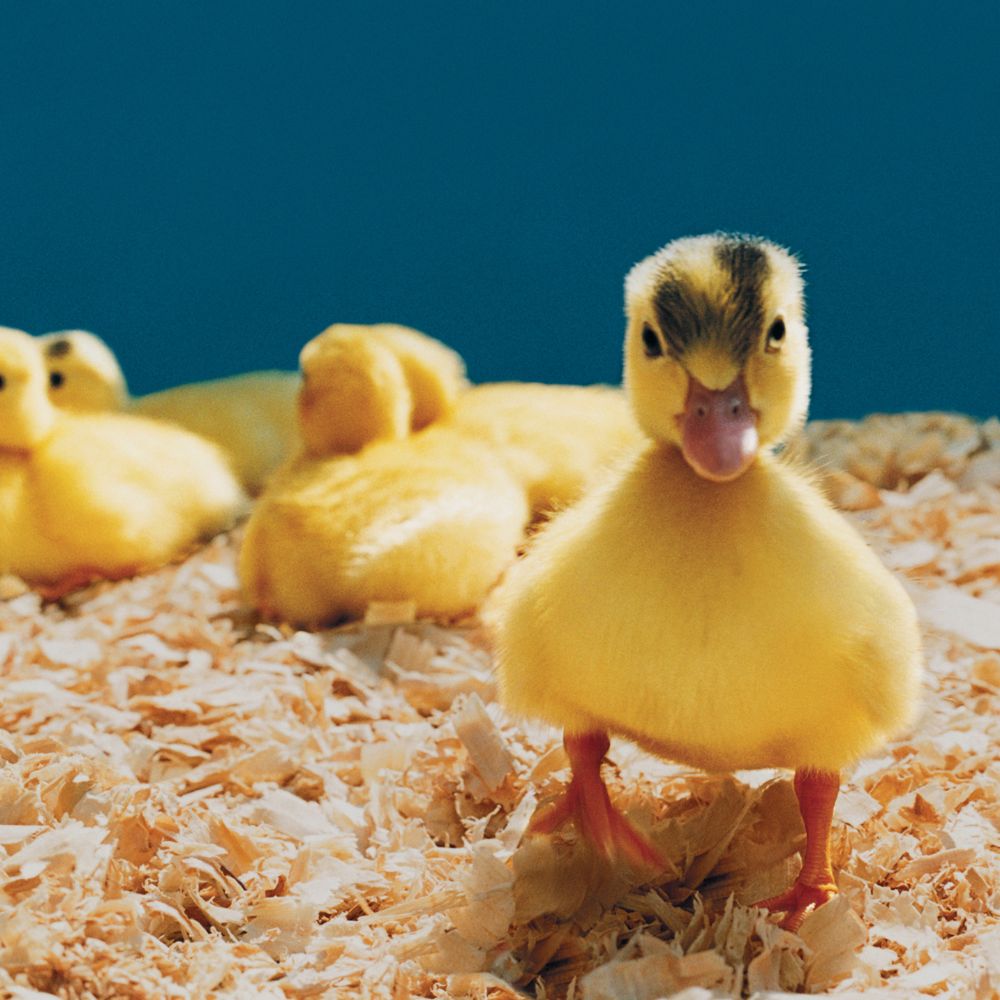
Cute duckling facing the camera with other ducklings laying down in the background

7 Steps To Incubate Duck Eggs

First, let me encourage you. It’s true that hatching chicken eggs is a bit easier. But hatching duck eggs isn’t exactly rocket science either.

Take a deep breath and get ready to write down a few notes. I know firsthand it can be a bit scary to try something new like incubating duck eggs, but it’s very rewarding and lots of fun. There are always risks when trying to learn something new, but that’s just part of it. You can do this!

Secondly, I want to be sure you know up front that duck eggs take longer than chicken eggs to hatch. While chicks take 21 days, ducks take 28 days (Muscovy ducks take 35 days). So you cannot easily hatch chick and duckling eggs together – just so you know.

Step 1 – Incubator

The first step is to get all your ducks in a row (but not your literal ducks…they haven’t hatched yet). You need to be sure you have an incubator that works.

There are many incubators out there to choose from. Some are strictly for chicken eggs and some are more versatile. The one I use has different trays you switch out depending on which species you are hatching. I will admit that I only have the chicken tray, but I have hatched quail and ducks using that chicken tray and had great success. However, I don’t recommend it simply because it added stress to the process (because I was more nervous about the outcome).

Here is an article about incubators if you need help: Best Incubator: Reviews & Buyer’s Guide

Once you have an incubator be sure to test it out. Turn it on for several hours and be sure it holds the proper temperature and humidity level.

I personally recommend having an incubator that is self-turning and has both a temperature and humidity gauge. These are the features that I believe make the process simpler and less stressful (and ultimately most successful).

Step 2 – Choosing Hatching Eggs

Choose your eggs wisely. They should not be odd-shaped or have cracks or imperfections of any kind. Cracked eggs are not going to incubate successfully. It’s recommended to choose eggs that are not exceedingly small or large as well.

Do not wash eggs because it will damage the outer membrane and allow bacteria to enter the eggs. You can simply dry wipe them to clean them a bit.

You can even candle the eggs at this point to be extra sure they don’t have hairline cracks or anything else that is weird. I candle them to be sure the ducks haven’t been sitting on them without me knowing (in other words, to be sure they aren’t already partially started in the incubation process as a fertilized egg will do).

It’s best to collect fresh eggs because each day that passes decreases the hatch rate. I will say that I once hatched eggs that were 10 days old, because my son was gifted them by a neighbor, and had a really good hatch rate. However, I still claim it’s best to use fresher eggs.

I number the eggs with a pencil to keep a log of activity and so that I can see the eggs are being turned (as the egg rolls the numbers move and it causes peace to my soul to know the egg turner is working properly).

If you don’t want to keep a log of the progress of each egg (talked about in step 5 if you want to know why) then at least put an X on each egg so you can see that they are turning (or so you know you turned them if you are doing it manually).

Step 3 – Regulate and Egg Placement

Turn your incubator on and wait until the temperature and humidity are consistently stable. For duck eggs, the temperature should be 99.5 F and the humidity should be at 55%. Be sure you open vents to the incubator according to your specific incubator manual.

You should allow your eggs to reach room temperature before putting them in the incubator.

Once your eggs are room temp and your incubator is stable, place your eggs in the incubator. The way you place them in the incubator will depend on what incubator you are using. If you have an incubator that holds each egg upright, you will want to set the eggs with the small end down.

In the case of my incubator, my eggs just lay down in the little tray that has dividers that help them turn with the automatic turning process. The pointed end of the eggs point inward toward the center.

Step 4 – Turn the Eggs

Turn the eggs at least 4 times a day. This is absolutely necessary in order for the ducklings to grow properly and not get stuck to the inside of the shell.

This is where an automatic egg turner comes in handy. Automatic turners have a timer and they are consistent and they never forgot (uh hum…like some of us humans can do).

Step 5 – Candle the Eggs

At about 7 days into the incubation process, you should candle the eggs with a flashlight to be sure you see a developing embryo. Otherwise, they will rot and stink to high heaven. They can even explode, and trust me when I say you don’t want to have that on your bucket list. Remove any eggs that are not developing.

Here is a guide to candling eggs: Miracle In a Shell – All About Candling Eggs

You can candle the eggs quite often without causing any problems (except for the last 3 days, more on that in the next step). I love candling eggs along the journey to see the changes and monitor the eggs.

I personally number the eggs with a pencil and keep a log of activity, growth, and movement. On occasion, I will see an egg stop developing later on in the process and I remove them once I’m 100% sure.

Step 6 – Stop Turning and Hatch

The number of days of incubation is different for ducks than it is for chicks. It takes 28 days for ducks to hatch (unless they are Muscovy ducks in which case they take 35 days). It can take longer depending on how stable your temperature is, among other factors. So you should not give up on all the eggs if they don’t hatch exactly on day 28 (wait at least a couple of days past that, maybe even up to 5 days).

On day 25 (for ducks other than Muscovy) the turning of the eggs should stop automatically or be stopped manually. The ducklings need to settle and get in position and find the air cell for pipping their way out of the shell.

If you have a turning tray, that needs to be removed at this point.

The temperature should be changed to 99 F and the humidity level to 65%, and the ventilation openings should be opened up more (again, according to your manual).

Once the ducklings begin to pip you should increase humidity to about 80% and open the vents up fully (or as directed by your manual).

Step 7 – Brood

Remove the adorable ducklings after they hatch and are at least 90% dry and place them in a brooder area. Enjoy watching your new baby ducks waddling around.

Ducklings are a bit different than chicks when it comes to brooding as well. They need to be able to clear out their nostrils in the water. This means they need fresh water more often because they make a total mess out of the water all.day.long.

Don’t be fooled, it’s not just dirty water that you’re facing. It’s water all over the place. I don’t know how they accomplish it, but the entire brooding area will get wet quickly and needs to be cleaned often. It can be aggravating but their cuteness makes up for it by landslides.

Now that you have hatched ducklings you can read more in-depth about how to raise them up here: How to Raise Ducklings

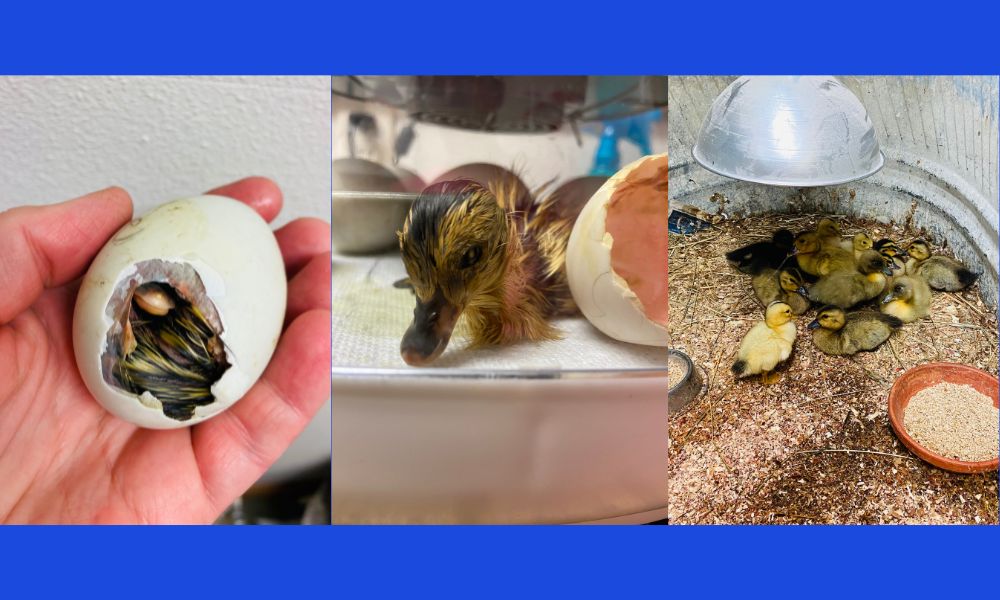
Three photos - a duckling partially hatched, a duckling freshly hatched, and ducklings in a brooder

Tips

  • The temperature and humidity levels are ultra-important. You need to follow those rules as closely as possible. I will say that I had trouble regulating the humidity on my last hatch. I think it was because I decided to put a paper towel under the eggs to make it easier to clean up – I regret that. It was very stressful. I still ended up with a good hatch rate, but I also lost two fully developed ducklings that drowned in the shell because of too much moisture. The time of year, and the location you keep your incubator can change the humidity level – so you have to keep that in mind from hatch to hatch.
  • When you open the incubator to candle the eggs (or for any other reason), be sure the lid of the incubator is shut properly (if there is even a tiny crack that isn’t sealed it will affect your temp and humidity).
  • Don’t rush to help a duckling out of a shell. Most of the time they are going to be fine. It’s VERY hard to help a duckling (or chick) out of a shell without killing it. They need to absorb the yolk and it simply takes more time for some ducklings. If you find yourself needing to help one (after 48 hours of the first duckling pip), you have to go VERY, VERY slowly – picking tiny little pieces of shell off bit by tiny bit. You have to ensure they stay warm and moist as well (which is a challenge). If you see blood, stop! They aren’t ready.
  • If your first attempt doesn’t go as well as planned, try again. Don’t give up. Pay attention and even take notes so you can refer to them to help you troubleshoot and do better the next time.

Where To Get Duck Eggs

If you don’t have ducks yet, you won’t have eggs to hatch (obviously). I personally get mine from a neighbor or friend. But you can also order them from hatcheries or find a local farm in your area to buy them from. Facebook has a lot of duck related groups and it’s likely there will be a group that is in your area.

Summary

If you are thinking of hatching ducks – just do it! But before you do be sure that ducks are a good fit for you. You can read this article to help you decide: Pet Ducks – Good or Bad Idea?.

Duck Related Articles

The Light Brahma is honestly one of my all-time favorite chicken breeds. They are so incredibly beautiful and some of the sweetest chickens you’ll ever meet. Pair that with their egg-laying and dual-purpose functionality – and you have yourself prized chickens. 

Learn all the fun details about this breed of splendor. Read on…

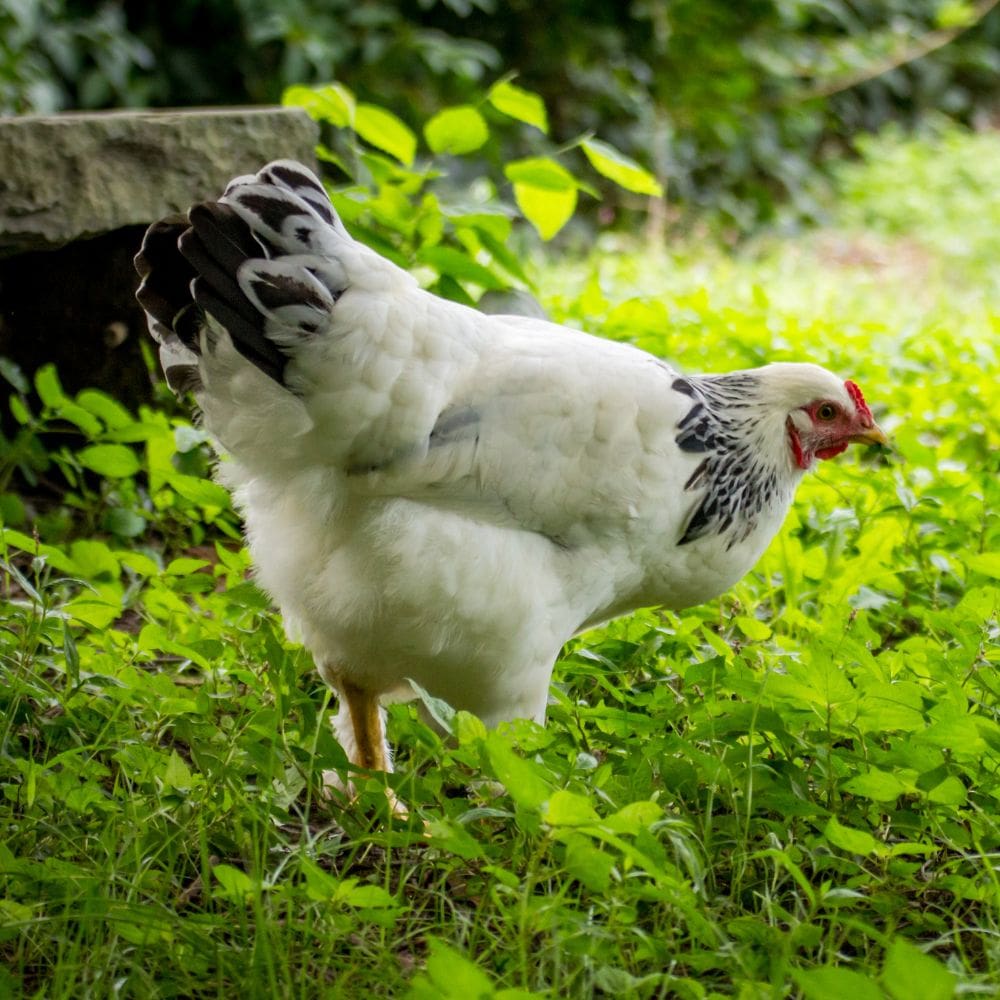
Light Brahma hen standing in greenery with sunlight shining in around her

Appearance

Light Brahmas feature a beautiful combination of white and black feathers, creating an elegant pattern. The word that comes to mind when I joyfully watch my Light Brahmas prance around the run is splendor. I just can’t get enough. I can’t tell you how many photos I’ve taken of these chickens (more than their fair share). 

Their large size and sturdy build further add to their majestic presence. With adorable feathered feet, feathered legs, and shanks they are truly full of unique charm. Additionally, they have deep red combs and wattles that provide a stunning contrast against their snowy-white plumage. My Light Brahmas keep their feathers clean and bright, it’s quite amazing.

Light Brahma roosters weigh an average of 10 to 12 pounds. The hens are about 8 to 9.5 pounds. They can grow up to 30 inches tall! They compete well with other large chickens such as the Jersey Giant.

There are also bantam-sized Light Brahmas! They are, of course, incredibly adorable. The males weigh about 38 ounces and the females about 34 ounces.

Brahmas come in other colors as well, such as Buff Brahmas and Dark Brahmas. My personal favorite is none other than the lovely Light Brahma!

Personality

Beyond their splendor in appearance, Light Brahmas are known for their amiable and docile nature. These chickens have earned a reputation as gentle giants, exhibiting a calm and friendly demeanor. Their friendly disposition makes them ideal for those seeking a breed that can easily coexist with other chickens and animals (and, of course, people). 

Even though they are large birds, they don’t seem to mind confinement much. They are pretty content chickens all around. Light Brahmas truly make a great pet because of how friendly and content they are.

Brahmas are hardy chickens that tolerate cool climates well. The ladies can be attentive mothers if you decide to let them raise their own chicks.

Lady hugging a Light Brahma chicken

Egg Production

Light Brahmas are not just amazingly beautiful chickens, they also excel in terms of productivity. As layers, these birds are known for their consistent and reliable egg production. Hens typically lay medium size to extra-large brown eggs, averaging around 300 eggs per year. 

This breed tends to maintain its egg-laying capacity even during colder months when other breeds might experience a decline in production. In order to keep your chickens laying well through the year, as well as enhance their taste, treat them to Best Eggs Ever Nesting Herbs! The eggs they will produce will be plentiful and have exceptional taste.

For good quality eggs that don’t have weak shells, you should also supplement them with calcium. My favorite way to do this is with oyster shells – check these out. This is especially important if you can’t, or don’t want to, free-range your flock.

Meat Production

Light Brahmas also possess excellent meat production qualities. Due to their substantial size, Light Brahmas yield a generous amount of flavorful, tender meat. 

Although not as fast-growing as some specialized meat breeds, their meat is comparable. It’s worth noting that many people choose to raise Light Brahmas primarily for their dual-purpose qualities, reaping the rewards of both eggs and meat.

History Snippet

The Light Brahma chicken breed has a storied history that adds to its splendor. Originating in the United States in the mid-19th century, the Light Brahma quickly gained popularity and admiration.

They were originally bred from larger birds imported from China and then crossbred with the Chittagong breed from India. The resulting chickens possessed remarkable size and hardiness, making them well-suited for both exhibition and utility purposes.

The Light Brahma breed soared to prominence, capturing the attention of chicken keepers, breeders, and even royalty. Queen Victoria herself developed a fondness for the breed, further enhancing its reputation. 

By the late 19th century, Light Brahmas had become popular in poultry shows and exhibitions worldwide. Today, they continue as a favorite among many.

How to Care for Light Brahmas

Summary

The Light Brahma chicken breed is a true testament to the splendor of the chicken world. From their majestic appearance to their gentle personality and remarkable productivity, these birds have rightfully earned their place in the hearts and coops of many chicken mama’s (and daddy’s). 

If you are looking for a backyard chicken that is friendly like a family dog, want good egg layers, has a quiet temperament, and is considered one of the best breeds around (in my opinion) – then go get yourself a Light Brahma chicken (or several of them).

Where to Buy Light Brahma Chickens

So now that you’ve learned about this breed, I know you want one (or more)! Where do you buy these fluffers? Well, they aren’t hard to find – but here is a list to help get you started in the right direction!

1. Cackle Hatchery

Find more information and prices here: Cackle Hatchery

Located in Missouri, Cackle Hatchery is one of the largest online chick retailers. Not only can you find more than 185 different kinds of chickens here, including broiler, egg-laying, and bantam species of all kinds, but Cackle also specializes in several rare breeds.

At Cackle, you can also find other species of poultry like geese, turkeys, ducks, game fowl, and more. You can also buy Brahma fertile hatching eggs if you want to raise your own birds from start to finish. There are also exhibition-line birds available for purchase, too. 

Cackle just has a 3 bird minimum, which is nice.

Advantages

  • Bantam and exhibition birds available
  • Pullets can be purchased instead of chicks
  • Low average chick price
  • 3 chick minimum

Disadvantages

  • Limited inventory of Brahma birds

2. Meyer Hatchery

Find more information and prices here: Meyer Hatchery

Meyer Hatchery is another large hatchery, this one located in Ohio. Along with a variety of chick breeds, you can also buy things like hatching eggs, books, coops, and pullets. 

One of the benefits of ordering from Meyer Hatchery is that you are only required to order three birds (as long as you order at opportune times of the year). This is a good option for folks who are interested in raising a small flock of Brahma chickens and don’t want to deal with the hassle of minimum orders of ten or more birds.

If you live close to the hatchery, you can even pick up on-site!

Advantages

  • Only a 3-chick minimum 
  • Sells light, buff, and dark Brahma chicks
  • Sells other kinds of Brahma-raising equipment too

Disadvantages

  • No substantial discounts for orders of more than 25 birds

3. Purely Poultry 

Find more information and prices here: Purely Poultry

Purely Poultry is a family-owned business that specializes in Brahma chickens along with chickens of other breeds. You can also buy things like waterfowl, turkeys, peafowl, quail, and more, here, too. 

If you’re buying baby Brahma chicks, you’ll be required to order at least three birds. However, if you’re willing to wait for adult birds, there are no shipping restrictions on how many you need to order. Located in Wisconsin, this company specializes in Brahma Bantams, Buff Brahmas, Dark Brahams, and Light Brahmas. 

Advantages

  • All kinds of Brahmas available 
  • Minimum order of 3 birds
  • Has a live arrival guarantee 

Disadvantages

  • No apparent discount for purchasing in bulk

4. Townline Hatchery

Find more information and prices here: Townline Hatchery

Townline Hatchery is one of the oldest hatcheries on this list, having been in business for more than a century. One of the greatest benefits of ordering with Townline Hatchery is that the company maintains its own breeder flocks. Everything is raised on-site so you can rest assured that your chicks are raised in the ideal conditions. 

The employees here are some of the best, attending to each and every chick each day as they gather eggs, set up incubators, and care for the fresh hatches. Townline also has excellent customer service –  you can tell that this hatchery has really worked out the kinks in its more than 100 years of operation. Located in Michigan, this hatchery is actually the oldest mail-order hatchery in the country!

You’ll have to buy chicks in minimum batches of fifteen, making it a less-than-ideal situation for people who want to raise Brahams in small urban settings. However, if you’re buying in bulk, Townline is the way to go, since this hatchery offers a discount when you order 100 chicks or more.

Advantages

  • Has a solid reputation
  • Excellent customer service
  • Significant discounts for ordering multiple chicks

Disadvantages

  • Has limited hatching availability around the  year 

5. Murray McMurray Hatchery

Find more information and prices here: Murray McMurray Hatchery

Despite the funny, somewhat repetitive-sounding name, Murray McMurray is one of the best places to buy Brahma chicks in the United States. You’ll find all kinds of poultry – of all ages – here, but it’s best known for its baby chicks. 

As one of the largest hatcheries in the country, it’s headquartered in Iowa. you can buy light, buff, or dark Brahma chicks along with pullets here. Unlike many other hatcheries, you’ll get a significant discount for purchasing sexed male chicks.

Advantages

  • Male chicks are cheaper here
  • Pullets available 
  • Can mix and match breeds

Disadvantages

  • Minimum order of six chicks

Private breeders nationwide

You can find a complete list of breeders (that are affiliated with the American Brahma Club) here.

Chickens can be awesome for more than one reason. They are fun, and productive, provide us with breakfast, help us bake, and provide a healthy portion of protein. If you want dual-purpose chickens, it’s crucial to know what breeds are well-balanced and can get the job done.

Dual-purpose chicken breeds are a popular choice for those seeking versatility, as these breeds excel in both egg production and meat yield. This article will explore ten of the top dual-purpose chicken breeds, highlighting their unique characteristics and why they are excellent additions to any backyard flock.

What Does Dual Purpose Mean?

I love chickens, and chickens are my friends. Thinking of eating one of my feathered friends disturbs my soul – but my family needs to eat. AND I want to know that what I’m feeding my family is not full of antibiotics, are well fed, and loved along the way. So it only makes sense that I need dual-purpose birds as part of my flock.

Simply put, dual purpose means that the breed of chicken can produce a good amount of eggs per year AND grow large enough to be a good-sized (and tasty) meat bird when the time is right.

What is a Heritage Breed?

Unlike commercial hybrid breeds (more on hybrids in a moment), heritage chickens have not undergone extensive genetic modifications for commercial purposes. Instead, they retain their natural characteristics, including hardiness, foraging instincts, and the ability to reproduce naturally.

One advantage to heritage breeds is, when it comes to hatching them, you know what you’re going to get from the heritage egg. Hybrids…not so much.

To be fair, even heritage breeds were developed by crossing other breeds. However, they maintain their reproduction predictability and hardiness.

Read up on heritage breeds in this article we wrote: Top 7 Heritage Chicken Breeds Our Grandparents Kept

What is a Hybrid Chicken?

Hybrid chickens, also known as crossbreeds or commercial hybrids, are the result of intentional crossbreeding between two or more specific chicken breeds.

These crosses are carefully designed to combine desirable traits from different parent breeds, such as high egg production, rapid growth, disease resistance, or specific meat qualities.

The breeding process aims to maximize productivity and uniformity, resulting in chickens that can reach maturity quickly, have consistent traits across the flock, and meet the demands of the modern poultry industry.

Hybrid chickens are widely used in commercial farming operations due to their predictable performance, efficiency, and ability to meet market demands for eggs and meat.

Heritage or Hybrid For Dual Purpose Use?

Just like I love old antique things, quaint little farm houses, and stories from the simpler past…I love heritage chickens. I think it’s essential to keep the pure bloodlines alive because there are some good, hardy chicken breeds out there that I don’t want to see on the endangered list.

HOWEVER, there is nothing wrong with crossing breeds to enhance certain traits. There is definitely a place for hybrid chicken breeds and I love them just as much as the heritage breeds.

In other words, we need both. And as far as which is better for dual-purpose use – well, I personally think there are far more heritage breeds that meet the dual-purpose requirements.

Read about ten of the top dual-purpose chickens next.

Ten of the Top Dual-Purpose Chickens

1. Delaware

This heritage chicken originated in Delaware in the 1940s by crossing  Barred Plymouth Rock roosters and New Hampshire hens. They’ve been important in creating modern broiler breeds, and for a while were the most popular meat chickens in the Mid-Atlantic area largely because of their color.

Delaware females lay between 100 and 150 large brown eggs per year. They might not be as good as championship egg-laying breeds, but they are certainly no slouch when it comes to egg productivity.

Read more about the Delaware breed here: Delaware Chickens – Nearly Extinct (Looking for a forever home!)

2. New Hampshire Reds

New Hampshire chickens shine bright when it comes to being a great meat producer that also lays a good amount of eggs. They were crossed with Rhode Island Reds, which is part of the reason they look a lot alike.

Rhode Island Reds have stolen the spotlight over the years much like the older, prettier sister can do. But if you take a closer look at New Hampshires, you may scratch your head in wonder over this overshadowing.

The reason the egg-laying ability, of 200 to 280 brown eggs per year, is notable is that they are a fast-growing variety that is appealing for meat production as well. Being a good layer that also displays rapid growth makes them an amazing dual-purpose breed.

Here is a fun article about New Hampshire Reds. There is a super fun story about a competition they were involved in. Don’t miss it. New Hampshire Chickens – Fast Growing Superstars

3. Plymouth Rock

With popularity stretching back to before the Wild West was tamed, these fluffy butts are one of America’s oldest breeds. And in case you are wondering if a Barred Rock and Plymouth Rock are the same breed or not…they are not (not exactly). In reality, the Barred Rock is just one Plymouth Rock chicken recognized variety; in other words, it is a variation of the standard breed.

It’s an excellent dual-purpose bird. Their large size Is ideal for meat production. It also boasts fine egg-laying capabilities and a single hen can produce 200 eggs per year. These days, they’re also kept as pets, and in breeding programs that want to raise sex-linked chickens.

Read more about this awesome breed here: Plymouth Rock Chickens: Buyer’s Guide

4. Wyandotte

While not the largest chicken breed, Wyandottes are fairly substantial with roosters weighing in at around 8 to 9 lbs and the hen at 6 to 7 lbs. This weight makes them a good dual-purpose breed as well.

They are egg happy chickens that lay around 200 to 250 medium eggs a year. Pretty good.

There are many varieties of Wyandottes! There are too many Wyandotte chicken colors to mention here, but trust me when I say there are a LOT of colors to choose from. All of which are good dual-purpose birds.

Find out more about this gem here: Wyandotte Chickens: Buyer’s Guide

6. Brahma

While Brahma chickens are known for growing into beasts the size of large turkeys, giving it the nickname “The Majestic One” by the American Brahma Club, and the equal honor of the name “king of all poultry” (due to its size and vigor). However, the average Brahma isn’t quite that large.

Regardless, they are big enough to make a nice family meal and they produce about 300 eggs a year. Win-win my friend.

Read up on this large and friendly breed: Brahma Chickens: What To Know Before You Buy!

7. Speckled Sussex

Sussex chickens have historically been raised by chicken keepers as a dual-purpose breed (for both eggs and meat), although many people today raise them as beautiful pets.

Speckled Sussex hens lay about 260 light brown eggs per year, and are consistent layers. The size of the egg depends on the hen; ours lay medium-sized eggs.

They are a heritage breed, which means they pretty much had to be hardy to survive long ago before all the modern care conveniences.

Learn more about this unique breed: Speckled Sussex Chickens – Gorgeous, friendly, productive, and so much fun to own!

8.Faverolles

Faverolles are a French chicken breed. They take their name from the French village that they were first bred in, Faverolles, which is about 50 miles northeast of Paris.

It is thought that Faverolles are a genetic mixture of Houdon, Brahma, Crêve-Cour, Dorking, and Cochin chickens. Like most breeds with a long heritage, Faverolles were first bred for the dual purpose of eggs and meat. 

Back in the day they took to close confinement better than other breeds. This quickly brought them to the forefront of the poultry market. Plus they are good egg layers.

Dive into details here: Faverolles Chickens

9. Orpington

Originating in the United Kingdom, Orpingtons are a heritage breed that’s well-loved because of their calm nature, beautiful plumage, and functional purposes. There are several varieties of Orpingtons, such as the Buff Orpington and the Lavender Orpington. They are all equally as great.

Orpingtons are just a good all round bird. Friendly, lay about 280 eggs per year, and have a good meat yield. Plus they do well in just about any climate. That’s a recipe for dual purpose. They have been a favorite of homesteaders for many generations.

Read up on Orpingtons here: Buff Orpington Chickens: Buyer’s Guide

10. Black Sex-Link

Black sex link chickens are a hybrid mix that results by crossing a pure-bred barred hen and a pure-bred non-barred rooster. For example, crossing a Barred Plymouth Rock hen with a Rhode Island Red rooster will result in sex-linked chicks.

They will be some of the best egg-layers around. With good care, they have been known to produce 300 eggs per year. 

An added bonus of this particular pairing of chicken is the size. The Black Sex Link results of this pairing are large enough to serve as meat chickens. Once your Black Sex Link hens have exhausted their eggs, they will make a sizable addition to your dining needs. 

Find out more about this fascinating breed here: Black Sex Link Chickens: Buyer & Care Guide

Summary

Dual-purpose chickens are the superheroes of backyard flocks, bringing the best of both worlds – great eggs and tasty meat. In this article, we dive into the top ten breeds that excel at laying eggs while packing some serious meaty goodness.

Whether you’re a newbie or a seasoned chicken keeper, these breeds will make your backyard flock productive and useful. Get ready for eggs and meat that’ll knock your socks off!

Bonus

Are you mostly looking for excellent meat birds? AND are you wanting your chicken to taste more like the store bought chicken you are used to? If so, you might want to consider Cornish Cross chickens.

We have a very informative article about Cornish Cross chickens. Learn all you need to know in this article: Cornish Chickens of All Kinds – What’s the Difference?

More Chicken Dual Purpose Breed Articles