Chickens don’t have teeth. To help them digest their food, owners must provide their hens and roosters with poultry grit.
Mainly made of crushed granite, it helps the chicken grind down their food while in the gizzard, the part of their stomach where food and grit are mixed together with all the acids and digestive enzymes. This process allows for the breakdown and absorption of the nutrients chickens need to be healthy.
Many free-range chickens get the grit they need from small stones and rocks while foraging for food. But if your flock doesn’t free range, it can be difficult for the chickens to access the poultry grit they require, especially when they’re kept in fenced enclosures. For this reason, you should introduce one of the numerous varieties available of chicken grit substitutes into your flock´s daily diet.
In this article, we’ll cover the different types of poultry grit available, their quality, and their advantages.
Grit and Oyster Shells Aren’t The Same
Grit is small stones that chickens naturally pick up. They’re important for digestion, and help chickens break down their food. Sometimes, you’ll see oyster shells referred to as grit on the Internet. While oyster shells can perform some digestive activities that grit does, these two things aren’t the same.
Oyster shells are an important source of calcium, and you should feed it so your hens lay eggs with thick shells that don’t break easily. However, it will be digested eventually, whereas rock grit will stay in your chicken’s digestive system until it’s pooped out.
Grit, on the other hand, is usually granite, and doesn’t provide any nutrients or minerals. However, because they aren’t digested, they will remain in your flock’s digestive system longer. Stones are also stronger, and better at helping break down food. It’s best to offer both of these important supplements to your chickens to help them be as healthy as possible. Now that we got that clear, let’s talk about the different types of poultry grit available.
There’s 5 Types of Poultry Grit
Small stones found in nature
Yep, if you’re on a budget or just want to use materials already available to you, then you can go collect a bunch of small stones and make them available free choice. Stones smaller than a pea are best (about the size of an elderberry). You want to make sure your chickens can swallow them! If you don’t want to search for stones, then you have commercial options listed below.
Chick grit/Flint grit
It’s very tiny and thin flakes of crushed granite. It is used for grinding down food and helping chickens, ducks, and other poultry with their digestive processes. You typically see this type for baby chicks, and used in quail grits and turkey grits because the stones are small and easy for chicks to swallow. Smaller flakes are less useful for adults.
Granite grit
This is probably what you’ll see when you look for poultry grit at your local farm store. It’s larger pieces of granite that are the perfect size for adult chickens to swallow. You can offer this granite grit free choice or mix it with your flock’s feed. Your chickens will pick up the stones as they need them.
Oyster shell grit
As mentioned above, this isn’t the same type of poultry grit as granite grit, but it can still help your flock breakdown food in their gizzard. Unlike rocks, it will eventually break down in their digestive system. This type of grit is mainly made of ground up oyster shells and it is a great source of calcium to help chickens develop stronger egg shells.
Mixed poultry grit
Because these 2 types of grit described above behave in different ways in the chicken gizzard, one is soluble and the other one is not, they can be mixed together to allow for a greater benefit.
Poultry grit with probiotics
Lately, a lot of commercial companies have started adding probiotics to oyster shells. Probiotics are always a good idea – studies show that chickens with healthy digestive systems are healthier overall, weigh more, have better food absorption, and lay better eggs.
4 brands of poultry grit
The purchase of chicken grit can be quite affordable nowadays, and doesn’t need to break your bank. To choose the best option for your flock, first of all, it is important to understand the different types of grit available and what specific benefits they can offer to your chicken and their needs.
We have done the homework for you, so let´s have a look at some of the best considered brands and varieties of poultry grit you can buy and which will not cost you a fortune:
Manna Pro Poultry Grit
This poultry grit is made of insoluble crushed granite, and it has been specially created to aid your chickens with a thorough digestion. Additionally, it comes in a handy 25lb bag. For more detailed information and to buy this product click here.
Nest Herbs With Oyster Shells
If you want to provide your flock with oyster shells, then this product makes it easy. Chickens love it! The oyster shells are the perfect size for hens, and the aromatic herbs make their coop a more relaxing place to lay eggs. You can buy this product here.
Purina Chick Grit
Ideal for chicks, young turkeys and game birds of up to 10 weeks of age. The crushed granite has been sized smaller, making it easier to swallow for chicks and helping them to support a healthy digestion. You can purchase Purina Chick Grit here.
Cherry Stone Poultry Grit
By Cherry Stone, this poultry grit has been specially designed to enable a more efficient digestive process. It is made of 100% crushed quartzite, which is harder and sharper than granite. To buy Cherry Cherry Stone Grit click here.
Is sand good poultry grit?
While you might hear that sand is a good poultry grit substitute, it’s not. Because it’s very fine, and absorbs water, sand can clump together in the crop and digestive system, causing sour crop or an impact. Larger stones will pass through the digestive tract better.
How much poultry grit should I feed my chickens?
In most cases, you can offer it free choice and let your flock decide when they need it. Put the poultry grit in a separate container from the food. A small bowl, chicken feeder (check out my recommendations here) or poultry grit feeder will work just fine. Check on the feeder regularly, and top off as needed.
Can I feed my chick the same grit as the adults?
No. You should feed chicks a type of grit specifically created for their size. Otherwise, your chicks might not eat it, or they might choke or become impacted because the stones are too large. Most commercial chick grits will say on the package that they’re for younger poultry. You can introduce adult sized grit at about 16 weeks. Until then, providing the chicks with a high quality starter chicken feed will suffice.
I hope this poultry grit guide has helped you decide which type is best for you and how to feed it so your chickens are as healthy as possible!
Hey y’all! Here’s this week’s sneaky peek photos of life on our farm!
These images also appear on my Instagram account where I share MANY more photos and stories from the farm!
If you aren’t yet following me there, you can right here.
Enjoy the photos & be sure to share some of yours with me!
https://www.instagram.com/p/Bz1eMOAAWPa/
https://www.instagram.com/p/Bz4XU44AjyC/
https://www.instagram.com/p/Bz9vIyAApNc/
https://www.instagram.com/p/Bz_zD0KnZdy/
https://www.instagram.com/p/B0CY86bAPH5/
https://www.instagram.com/p/B0FYAqfg2JI/
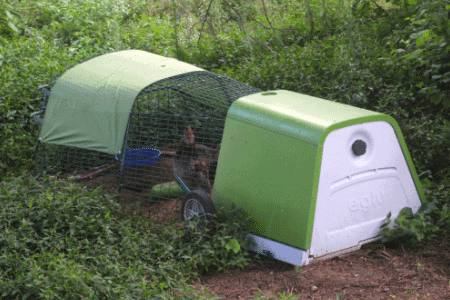
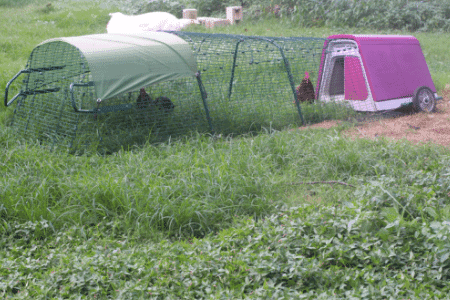
For this review, Omlet sent me two Eglu Go Modern Chicken Coops to test. We tested purple and green coops.
We tested the Eglu Cube previously (you can read that review here), love it, and still use it daily, so we were excited to test the Eglu Go also!
We’ve found everything we’ve tested from Omlet to be well made, durable, and great for backyard chicken owners, and couldn’t wait to give the Eglu Go a test drive.
Below are our first impressions, testing results and overall recommendations! Read on to find out about our experience.
What it is
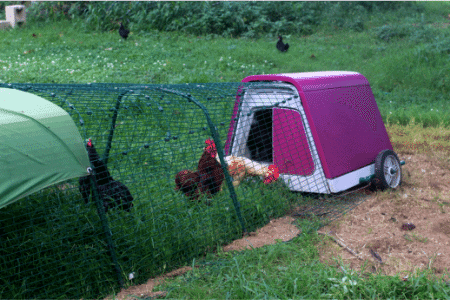
The Eglu Go is a chicken coop with an attached run that’s designed to be mobile. The unit itself sits entirely on the ground, and has wheels to move it.
The coop itself is thick plastic, with two doors – one on the back for the human to use, and one on the front for the chickens to enter and exit into the run area. The run is wire.
Inside the coop, there is an area for hens to lay eggs, and the coop includes a tray to catch manure.
Durable material prevents the build up of red mite
Twin wall insulation ideal for all seasons
Add Eglu Wheels for easy movability
Our experience
The Eglu Go Modern Chicken Coop arrived in several boxes. We were prepared because we’d already tested the Eglu Cube, and knew the coops needed assembly.
The coops were easy to put together, with easy to follow instructions. Anyone with a screw driver can put the coop together.
We tested the coops over several months over several different parts of our farm to test its ease of use, whether it was predator proof, and whether the chickens liked it.
We’ve housed hens AND roosters in it, as well as ducks and younger chicks.
We really liked the design. It was easy for chickens to get in and out of, and after the first day, they understood that the coop was a place to rest.
We received our coop in the early spring, when the roosters were just coming out of their winter slump. They needed to be separated from the hens!
We first tested it by keeping 3 hens in the Eglu Go. Because the coop is designed to keep predators out, it also does a great job of keeping randy roosters at bay.
We immediately noticed our hens were happier, and they started laying eggs again. Hooray!
They enjoyed sitting together inside the coop at night, and loved that each day, we moved the coop to a different patch of grass.
Moving the coop was very easy. The coop is designed to lift when the wheels are engaged, and anyone (even my 5 year old daughter) can easily move the coop.
We’ve noticed that moving slowly is better for the chickens, and be sure to remove any feed or water bowls before moving it.
Later on, we ended up sequestering rooster in the Eglu Go. While the hens love it, their feathers grew back in just a few weeks (thanks to all the green grass they got when we moved the coop each day!).
Like the hens, the roosters quickly understood the Eglu Go, and enjoy their daily tours of the farm. They go into the coop at night, and enjoy spending the day hunting bugs in their run.
Even though we have established predatorson our farm (skunks, coyotes, and raccoons), we haven’t lost any chickens. We attribute this to the Eglu Go’s unique design that keeps predators from getting into the coop.
Does Omlet’s Eglu Go Modern Chicken Coop live up to its claims:
Yes! The Eglu Go is a modern and sleek coop that’s perfect for beginners and experienced chicken owners alike. It keeps out predators, is easy to use and keep clean, and the chickens love it. Omlet claims the material will help prevent mites. We didn’t see any on our chickens during the testing period, and because the plastic is so easy to keep clean, it’s easy to keep the coop mite-free.
What don’t we like
When we tested the coop with ducklings, the little ones didn’t understand to go into the coop itself at night. Because the run isn’t built for humans, it was REALLY hard to squeeze into the run to get the ducklings into the coop. So, it might take some trial and error on your part to get little chickens and ducks to understand the coop’s purpose.
Is it useful for chicken owners?
We recommend the Eglu Go Modern Chicken Coop for flock owners with less than 4 chickens. We’re impressed with how easy this coop is to use, but there isn’t enough space for more than 3 hens or 4 bantams.
We tested it to keep roosters away from hens during peak breeding season, and it was EXCELLENT for this use. The hens returned to laying, and were able to regrow their feathers.
For urban chicken owners, this is the perfect coop to add to your backyard that’ll let your chickens free range without complaints from the neighbors.
We’ve tested several products from Omlet, and their predator proof coops are the real deal.
What to watch out for:
Watch out for the coop doors in the summer. Because they can easily be shut by children, a chicken can easily be trapped inside for hours. There’s no standard mechanism on the coop to prevent the doors from being shut accidentally.
Summary
The Eglu Go is a sleek, useful coop for backyard chicken owners. We give it 5 stars for design, usefulness, safety, durability, and ease of use! Our chickens use it daily and love it!
Thinking of buying Frizzle chickens? Here’s everything you need to know about these unique birds, and the best places to buy them!
Looking back at the first time I ever learned about frizzle chickens, I remember I was REALLY excited to add these crazy-looking creatures to my flock!
I finally did, but learning about this particular breed has been a lesson in math. And I’m not referring to the typical “chicken math” we all joke about.
If we follow the simplest math equation of 2 or 3 hens in the same backyard, then you’ll likely get eggs. Put a rooster into the same coop, and then there will probably be chicks.
Math and chickens really shouldn’t extend beyond that, but where Frizzle chickens are concerned, math becomes a far more important part of the equation than we might think!
Today, we’re going to delve into just what makes a Frizzle so frizzley (Frizzle math). We’re also going to be sure that we don’t let them Frazzle (because it is a thing!), and in the process, we’ll look at some other important details about this special chicken breed.
What is a Frizzle Chicken?
Perhaps the most important thing to consider when discussing Frizzle chickens is the fact that the Frizzle isn’t one particular chicken breed.
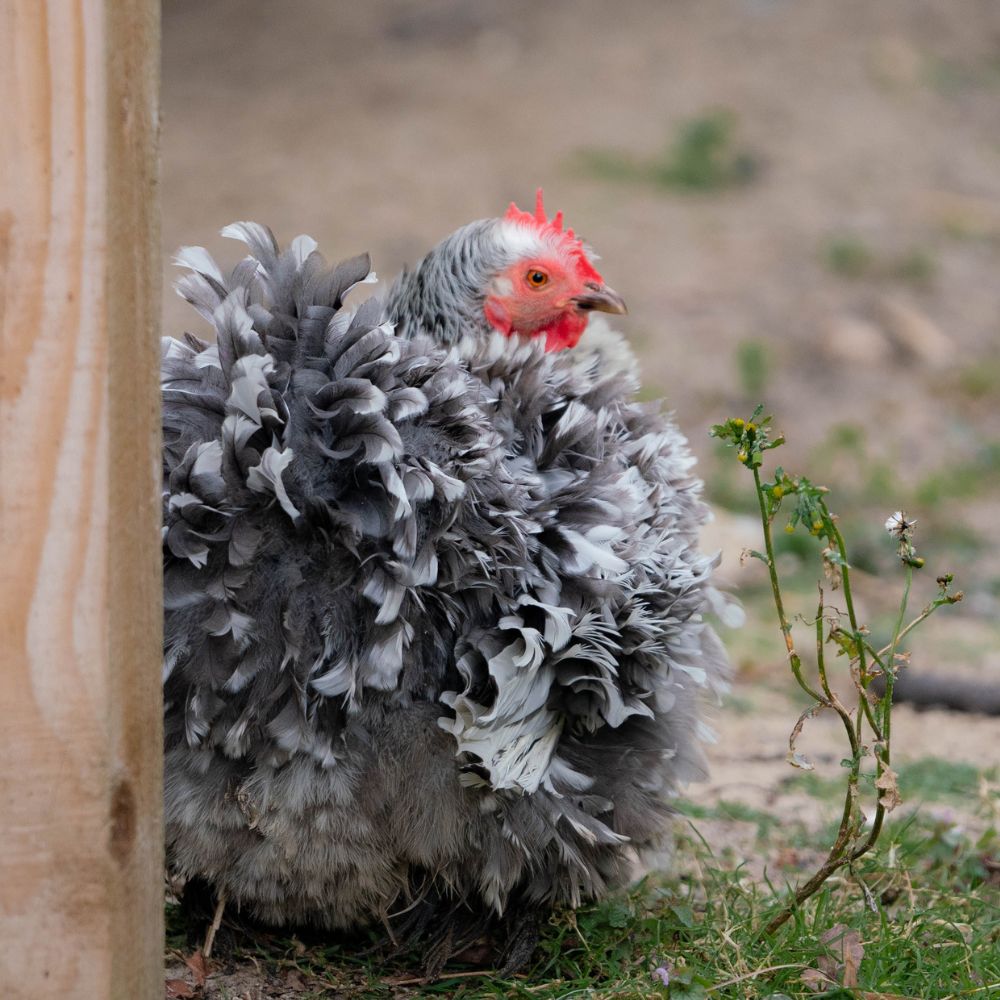
Instead, it is the result of careful or selective breeding and a whole lot of patience. The defining feature is the curly feathers which makes these chickens reminiscent of a feather duster with a beak!
They are very striking in appearance, but Frizzles take their genetic and shape cues from their originating breed (such as cochins or silkies).
If, for example, you breed a Jersey Giant chicken with Frizzle genetics, it would big a big floofy critter with all the size and mass of the Jersey Giant (not that it is a very common occurrence.) Indeed, it appears to be a purely speculative breed. But this would hold true in theory!
Just as with their baseline variety, Frizzle chickens can come in a wide variety of colors ranging from black, blue, buff, white Columbian like the Wyandotte, duckwing, black-red, brown-red, cuckoo, pyle, spangle as in the Old English Game and red as in Rhode Island Red.
Temperament is another area that Frizzle chickens are generally pretty consistent with. They are friendly and lovable birds that are delightful to have in any backyard flock.
What is Frizzling?
Frizzling is what happens when a chicken feather curls upwards and outwards from the body. It’s a mutation resulting in imbalances in the genetic pool.
Most chicken feathers lay flat against the body, but frizzling is special. It creates a very distinct-looking bird that some say resembles a Muppet.
It’s the result of an “mf” gene which, if present, will result in your chick taking on either a normal-feathered chick or one that sports that “Frizzle look”.Keeping track of which chicks have the gene is a very important task. It is only through the mating of a Frizzle with normal-feathered fowl that results in the Frizzles that you are looking for.
And herein lies the math that is so important (keeping really good records is a must!)
The outcome of the matings can result in three distinct varieties of chicken. Two of which are wonderful and a delight, but the last of which… well, that’s something that is best avoided. If you mate one Frizzle with another Frizzle, there is a 25% chance that the result will be something called a Frazzle.
Frazzles are almost too delicate for their own good. Their feathers are almost brittle to the touch. Frazzle chickens often suffer bald spots where the feathers have broken away. This is not good because feathers play an important part in maintaining body temperature!
For these and other reasons, such as an enlarged heart and other physical issues that often prevent Frazzles from living to maturity, Frazzles are best avoided.
When I first started researching Frizzle chickens, I spoke with various breeders who have experience breeding these unique birds.My friend Katie at Itty Bitty Chicken Farm in South Carolina told me it’s very critical to only mate a normal feathered chicken with a Frizzle (and to avoid a Frizzle/Frizzle mating at all costs.)
If you decide you want to hatch Frizzle chicks, here’s the chicken math you need to know:
Normal x frizzle = 50% frizzle, 50% normal
Frizzle x frizzle = 50% frizzle, 25% normal, 25% frazzle
While the science isn’t overly complex, good note-taking and controlled breeding are important to ensure all your chicks get the chance to live healthy lives.
Luckily, the genetic chance of getting a Frazzle isn’t too hard to remember. What’s most important is exercising care and caution with your birds, so that the Frizzles you’re looking for are the best quality bird that you can develop.
What Chicken Breeds Have Frizzles?
Common Frizzle bantam breeds:
Cochins
Silkies
Orpingtons (Buff, Lavender, etc)
Plymouth Rocks
Japanese Bantams
Polish Bantams
Cochin
Cochin chickens are one of the most popular breeds among beginners because they’re hardy, lay brown eggs consistently, and enjoy human company.
Both the full-sized cochin and the bantam variety have been known to produce Frizzle variations. The standard-sized cochins have big and beautiful bodies that can weigh about 5 pounds and have an abundance of fancy soft feathers.
They are gentle giants that are easy to handle, and this temperament makes them great pets for families while also making them great foster moms for hatching and brooding. The bantam variety weighs about 2 pounds, and is exceptionally friendly.
They are common in black, white, and red varieties. You can read more about cochins here.
Plymouth Rock
A dual-purpose bird that is one of America’s oldest chicken breeds, the Plymouth Rock is an excellent egg layer.
This breed also has a distinct black and white bar plumage, which is a beautiful addition to any Frizzle flock. Both roosters and hens are generally calm, and these birds get along well with everyone.
The roosters are good protectors for their flocks, and aren’t aggressive towards people. They’re curious and generally will prefer to free range and find morsels in the yard, they also tolerate confinement well.
They come in the standard colors: Barred, Blue, Buff, Colombian, Partridge, Silver Penciled, and White. You can read more about Plymouth Rock chickens here.
Silkies
Silkies are a special, fully-bantam variety of chicken that are almost perfect for a Frizzle. Their legs are completely covered in feathers. So if you get one of these Frizzled up, you’ll have a feathery friend whose unique curvy feathers stretch from toe to top! Adorable indeed!
With their super-soft plumage and easy-going temperaments, these beauties make for wonderful pets. Other details that make these birds such oddities (as far as other chickens are concerned) are their black skin and bones, blue earlobes, and feet with five toes each.
If you don’t want to have your Silkies lounge about as just pets, you should know they can average at about 150 eggs a year. This makes for a sizeable contribution to the pantry.
They come in black, blue, buff, white, partridge, splash and gray varieties. You can read more about silkie chickens here.
Japanese Bantam
Japanese bantams are known in some parts of the world by another name: Chabo. Whatever their name, they got their start in the Land of the Rising Sun, and are a true bantam breed.
These birds are distinctive for their upright tails that often stick up higher than the peaks of their combs! These beautiful birds are mostly decorative, as their small stature isn’t ideal for meals. And they only produce about 75 eggs per year.
These fuzzy babies are born to strut the catwalk!
Japanese Bantam Frizzles come in all the standard colors: black-tailed white, black, mottled, black-tailed buff, and gray. You can read more about bantams here.
Polish Bantams
Another show bird is the Polish Bantam. These sweet birds were originally developed as egg-raisers who can produce a solid 200 eggs each year! However, their primary function soon went to the wayside because of their telltale crest of curly feathers that engulf their heads.
These crests have made them distinctive enough for chicken lovers around the world to covet them for their visual appeal. They are sweet chickens whose unique qualities make them ideally suited for a Frizzley offspring. They can be quirky or flighty owing to poor vision resulting from their crests.
The colors for the Polish Bantam Frizzle run the whole list, and as it is a show bird, the list is vast: white crested black, golden, silver, white, buff laced, white-crested blue. And then there are also the bearded and non-bearded varieties as well as the unrecognized varieties, too!
Originating in the UK, the Orpington is the quintessential chicken breed whose round body and distinctive buff coloring is often envisioned when one thinks of chickens.
These chickens are hardy and rugged and are ideal for confinement or small yards (like are most common on the small islands of Great Britain). These birds are consistent egg-layers, grow rapidly, and make for a tasty 2 to 3 pound bird.
Although there have been sightings of all varieties of Orpington Frizzles (including black, blue, white, and the unrecognized splash and lavender), the buff variety is by far the most common.
So, how do you tell the males and females apart? Just like other chickens, there are some easy and not-so-easy ways to tell frizzle hens from roosters:
Roosters will have redder combs/wattles earlier (about 4 – 8 weeks old)
Roosters will have longer tail feathers
Roosters will crow! (starting anywhere from 3 days old to 16 weeks)
Yes, frizzle chicken breeds do lay eggs, however, some breeds produce more than others. The number of eggs laid will depend on the breed. For example, Cochin frizzles will produce about 200 eggs a year, while Japanese bantam frizzles will only lay about 75.
What Color Eggs Do Frizzles Lay?
The color is dependent upon the root breed of the Frizzle. Cochins and Buff Orpingtons lay brown eggs, while Silkies lay white eggs. If you have a frizzle Easter Egger, then who knows what color eggs she’ll lay!?
Are Frizzle Chickens Good Egg Layers?
Across the board, the Frizzle chicken breeds are gentle and good layers, though some breeds produce a sizable quantity more than others. Boost your egg laying by providing good quality feed and treats. One of my favorites is Best Eggs Ever Nesting Herbs, you won’t be sorry if you try it.
Can You breed Frizzle to Frizzle?
Technically, you can, but with a one in four chance that it will produce a Frazzle, the practice is discouraged. Frazzles have feathers that are so brittle that they often break off the birds’ bodies and leave unsightly bald spots. This can make them more susceptible to cold in winter.
These Frazzles also suffer a number of other health risks like organ problems. If you’re looking for your Frizzles to enjoy a long healthy life, it is best to breed them to non-Frizzles.
Are Frizzle Chickens Cold Hardy?
While some breeds of the Frizzles are more cold-hardy than others, all Frizzles suffer one drawback. Because their feathers turn upwards, they cannot seal the heat the way feathers generally do. As a result of this, they have a hard time creating an air buffer between their bodies and the outside air.
In colder months and wet weather, pay special attention to their comfortjust in case they can’t keep as warm as the other non-Frizzles in your coops.
Where Do frizzle Chickens Come From?
Records of the birds go back as far as the 1600s! Charles Darwin, the famed British evolutionary, made mention of them as being predominantly from India. He called them “Caffie Fowl.”
Officially, there is no record (in English, at least) of where these birds came from, however, all details point to Asia (maybe China or the East Indies).
Are All Frizzles Bantams?
No. At least one breed, Cochins, has varieties that are standard-sized. Generally speaking, though, most Frizzles are bantams.
Is the Frizzle Gene Dominant?
Yes, the frizzle gene is dominant and 50% of the offspring will at least have one frizzle gene and one normal gene. Though the mixture of the flock does not always produce 50% Frizzle feathered chickens and 50% non-Frizzles.
Are Frizzle Roosters and Hens Friendly to Raise?
Yes! While your experience will depend on the individual chicken, most Frizzles are extremely friendly – especially if you give them lots of treats!
What Size Coops Do Frizzle Chickens Need?
Because most Frizzle Chickens are bantams, most advice relating to their homes overlap with rules for bantams. Providing them with perches for them to hang out will help keep them happy and content.
As far as their coop space is concerned, about 1 to 2 square feet per bird is ideal. This is a little more than half as much as a full-sized chicken requires.
As with any other chicken, Frizzles are not immune to their environments – they are susceptible to lice, mites, worms, and other parasites. To help boost their immune systems and beat the bugs, feed apple cider vinegar and crushed garlic daily. You can learn more about my favorite herbs for deterring mites here.
Where Can You Buy Frizzle Chickens?
One of the biggest problems with ordering your Frizzles is getting them to actually be Frizzles. If you buy day-old chicks in advance, there is no guarantee that they will be Frizzles. A dozen purchased might result in only six being Frizzles. Or you could luck out and find the whole dozen frilled and foofy!
By buying mature, or at least semi-mature birds you are more likely to know if they are actually Frizzles.
Find more information and prices here: Ideal Poultry
Ideal Poultry has been hatching eggs since 1937. As they near their centennial anniversary, they have developed quite a distinctive boasting right: that they are the largest supplier of backyard poultry in the USA! With a headquarters located in Cameron, Texas, Ideal Poultry can fulfill all of your poultry needs through its website, mailing list, and easy-access payment options.
With generations of experience, they have a FAQ page that answers loads of very important questions that a novice chicken owner might have.
Advantages
Optional Marek’s vaccine for 20¢ per bird (here’s a list of other vaccines your chickens might need, too).
Discounts range starting at orders of 25 or more.
Assorted Frizzle Cochin Bantams are a selection of Black, Red, or White Frizzle Cochin Bantams.
An order of Frizzle chicks will be an assortment of the three varieties of Cochin Bantams.
Have a minimum dollar value on poultry: $30.
In the event of a baby chick death during shipping, they will either reship chicks or credit your account.
Meyer Hatchery is based in Polk, Ohio, and boasts itself as the “Premier Poultry Source.” Priding itself on customer service and availability, Meyer Hatchery provides a variety of chicken breeds to meet customer demands for color and diversity.
They welcome the mixing and matching of breeds of the same poultry type to meet minimum order requirements for safe shipping. To help with orders, they have a calendar of hatchings.
Meyer has a variety of means of communication, including multiple phone numbers, fax, and email. They also run a blog that covers everything from breeds to plant pairing with chickens, feed, cooking recipes, fowl entertainment, and survival tips.
Frizzle chicks are available through August, September, and October.
Advantages
Discounts start with orders of 25 or more chicks.
Website is up-to-date in real time.
Accepts checks and credit cards.
Optional vaccination.
Member of the National Poultry Improvement Plan (NPIP), and provide NPIP VS Form 9-3 free of charge.
My Pet Chicken got started in 2005 by Traci Torres and her husband, Derek Sasaki, two novices to the chicken world who had a dream to help other novices in their farmers’ goals. To do this, they put free how-to information on the web and offered some unique products and services.
The website launched in 2005 and in 2006, their flock had grown to the point to where they started offering chicks for sale from their headquarters in Monroe, CT.
The site has been mentioned in other publications and serves tens of millions of page views per year with some of the best customer service. Without a doubt, My Pet Chicken is one of the best hatcheries to buy frizzle chickens.
But wait! Before you order your chicks, make sure you pick up some baby chick starter. You can’t raise chicks without it.
Advantages
Offers Marek’s vaccinations on all standard chicks at the click of a button.
Consistent hours of operation.
A good source for questions about ordering baby chicks, chicken care, and about raising baby chicks.
Full refund for any bird that has been incorrectly sexed.
As a family-owned business, Purely Poultry has some of the best customer service around. They pride themselves on their knowledge of their products, selection, and how-to details related to everything they offer, including ducks, chickens, geese, and lots of other birds!
Located in Durand, WI, they guarantee live birds with every order, which is a good promise, indeed! Frizzle Cochin Bantams come in a variety of colors; Purely Poultry offers chicks in white, black, and red.
And what is a bantam chick you might ask? You can read more here!
Advantages
Each order backed by live arrival guarantee.
Discounts start at orders of 25 chicks.
Small order minimum on chicks.
Other kinds of poultry offered, too.
Disadvantages
Relatively expensive.
Not a huge advantage to buying multiple chicks – discounts are minimal.
Find more information and prices here: Welp Hatchery
Located in Bancroft, IA, Welp Hatchery was founded way back in 1929 by Joseph H. Welp. While their specialty is Cornish Rock Broilers, they have diversified to include a wide range of chicken breeds. To simplify their orders, they have a catalog available for viewing or downloading. From its shipping points in Iowa, New Mexico, Minnesota, and Wisconsin, this hatchery truly has a wide reach.
Their Frizzle Cochin Bantams come in three colors: black, red, and white.
Advantages
Can choose the breeding date on the product page.
Marek’s immunization is a one-click process.
Offer free shipping.
Disadvantages
Minimum orders of 5.
The most important thing is to choose a high-quality hatchery that’s also close to you (if you can) – so your new pets don’t spend forever in the mail.
You might have difficulty finding the colors of Frizzles that match your vision. It might be best to contact a qualified breeder and discuss color possibilities with them.
What Are You Waiting For?
Want to add dazzle to your coop? Then add a Frizzle! (But not a Frazzle!)
Hey y’all! Here’s this week’s sneaky peek photos of life on our farm!
These images also appear on my Instagram account where I share MANY more photos and stories from the farm!
If you aren’t yet following me there, you can right here.
Enjoy the photos & be sure to share some of yours with me!
https://www.instagram.com/p/ByvoDifAmRe/
https://www.instagram.com/p/By0k6nrgee4/
https://www.instagram.com/p/By_gxxBgcwO/
https://www.instagram.com/p/BzBiwS_ATob/
https://www.instagram.com/p/BzEx72oAn9k/
https://www.instagram.com/p/BzRnC7vAIzi/
https://www.instagram.com/p/BzZhOVEg-cE/
https://www.instagram.com/p/BzjgQ7kAp7B/
We all know hens need water….but do you know what’s the best chicken waterer to make sure your fluffy butts are safe?
A good chicken waterer can make or break your flock. During the summer, it needs to provide consistent access to cool water to avoid heat stroke. In winter, it needs to be tough, so it doesn’t freeze over.
In this article, we’ll explore the various options available for chicks and adult hens. Chicken waterers are the easiest and best way to water chickens, regardless of season OR flock size.
The best chicken waterer we recommend:
The best chicken waterer for summer:
The best chicken waterer for winter (to keep water from freezing):
Why do I need a chicken waterer?
In short, because chickens need consistent access to water. Without it, they’ll become dehydrated, sick, and eventually, they’ll die. Waterers also let you keep track of your flocks liquid intake. This is especially important on hot days, or if they seem sick or stop laying eggs.
And if you want to provide herbs to your flock, soaking the herbs in water makes it easier to ensure all your hens get the benefits.
Chicken water feeders, or drinkers, come in a variety of sizes and shapes – what’s most important is that the waterer is safe, can hold enough water to last your chickens all day, and that your flock can’t knock it over and dump the contents everywhere.
How many chicken waterers do I need?
It’s best to have 1 waterer for every 5 chickens, especially during the summer (very hot climates might want to have 2+ waterers per chicken, especially if you’ll be gone all day.) If you have less than 1 waterer per 5 chickens, you will probably have to fill it up more frequently. If you use a automatic chicken waterer system like nipples, you just need to make sure there’s enough water in the system for all your chickens.
Different Kinds of Chicken Waterers
There’s different options with waterers and chicken water drinkers, and it’s best to know all the available options so you can pick the right one for your flock. (You can also check out the best chicken feeders I recommend here.)
There’s several kinds of waterers:
Mason jar waterers
Plastic waterers
Stainless steel waterers
Nipple waterers
Pet bowls
Drinker cups
Mason jar waterers
These are perfect for chicks, and they’re relatively inexpensive. They’re not the best for adults, however, because they don’t typically hold enough water. You will have to clean them daily, otherwise mold and moisture build up on bottom of the waterer, and form a gnarly bacteria culture.
Plastic waterers
These are an affordable option, and they’re also easy to clean. Sometimes they hold enough water for chickens, especially if you have a flock of 1-5 chickens. They’re also good for bantam chicken flocks. For larger flocks, however, they typically don’t hold enough to last all day. Like the mason jar waterers, you need to clean these daily.
Stainless steel waterers
These tend to be bigger than plastic waterers, but the same issue applies. They’re usually not big enough to accommodate flocks of 10 or more chickens (although you can use more than one waterer). They’re also usually heavier, so they’re harder for hens to knock over (which is a good thing). This is one of the easiest to use for all chicken breeds.
Nipple waterers
These systems make watering chickens very easy, and it keeps the water cleaner than the options above. Typically, the water supply is housed in a barrel, and the water automatically fills the nipples. Your chickens can then get a drink whenever they want.
The downside is that:
they’re sometimes hard to clean,
don’t provide a lot of water at once,
have a learning curve for your flock,
and tend to be more expensive.
Pet bowls
Yep, you can use a large canine pet bowl for your chickens – they work great. They’re durable, easy to clean, and can hold a lot of water. There’s nothing that says you need to spend a lot! (You can learn about other costs of owning a chicken here.)
One downside is that your chickens can easily tip them over (you can always place rocks in them), and the water can get dirty very easily.
Drinker cups
These are a type of automatic waterer that fills a drinking cup at eye level whenever your chickens are thirsty. They’re easy to set up and for chickens to learn to use. One downside is a lot of them aren’t very deep (so your chickens won’t get a lot of water per swallow) and they can freeze during winter.
How Much Water Does A Chicken Drink?
On average, chickens drink about a quart of water daily – so your waterers should be able to hold enough to keep each member of your flock happy. Using an automatic chicken waterer is the easiest way to make sure your flock has enough to drink. If your chickens become dehydrated, they can become sick or they might not lay eggs as efficiently.
What Should A Chicken Waterer Be Made Of?
Your chicken waterer can be made of several different materials:
Plastic,
Rubber, and/or
Stainless steel
There’s advantages and disadvantages to each option.
What’s better, plastic, rubber, or stainless steel?
On a grand scale, all are equally just as good – so when deciding on the best chicken waterer for your flock, choose the material that works best for your situation.
Plastic is always going to be easier to clean, especially in crevices. Rubber tends to shred, or get marks on it where bacteria can hide. It’s important to note, however, that plastic is less durable, and more likely to be cracked than rubber or stainless steel.
However, in winter, rubber tends to freeze less than plastic or metal. With a stainless steel chicken waterer, it’s important to take note that in the winter it can freeze faster, so if you don’t use a water heater, plastic or rubber is the better choice to go with.
With rubber heater buckets they tend to be black, this is so they’ll attract heat, and make the frozen water melt faster. (You can learn more about how to keep chicken water from freezing here.)
These are a type of solar heated chicken waterer – so using a rubber ground feeder, you can make your own diy heated chicken waterer. Amazon has good options, and there are many tutorials and resource material available on the internet to make a chicken waterer diy.
Watch this video for more information:
Do Chickens Need An Automatic Waterer?
Your flock doesn’t necessarily need an automatic waterer, but it can make it easier to ensure that your chickens have access to water all the time. This is especially during the summer, when heat stroke can take its toll (learn more about how to keep chickens cool here).
On average, a mature chicken can drink approximately 1 quart of water each day in temperatures from 40 – 75, and even more in hot weather. They’ll also tend to drink more in winter, when the air is drier, so if you live in an area with long winters, consider investing in a 1 gallon heated chicken waterer.
In the winter, if you have an automatic waterer make sure that it will work in sub-freezing temperatures.
This is the automatic waterer we recommend:
What Size Chicken Waterer Is Best?
For adult chickens, it’s best to get 1 waterer per 5-6 chickens, and possibly more if you have flock bullies. Especially during summer, it’s important to make sure everyone can access water. You’ll need a waterer that holds about 1-2 gallons, if you have a flock of 5-6 chickens.
For day old chicks, a mason waterer is best. It holds enough water, and is shallow enough so your chicks won’t drown.
If you have adult chickens or chickens over 16 weeks, a 5-gallon bucket waterer is perfect – just make sure to turn it into an automatic waterer like in this video. While it’s tempting to just put the 5 gallon bucket in the coop, it’s too deep, and your chickens might fall in and drown.
Should I Use A Nipple System For My Chickens?
Many people are happy with a chicken water feeder that includes nipples. They do have to be set up, but are handy devices designed to give water to chickens with minimal mess. Make sure your flock can get enough water, and also remember to hang it just a few inches above ground so your chickens can reach it. To hang it, use a stud or 2×4 board, since the waterer tends to be heavy..
In winter, these aren’t the best choice because they’re typically made with metal, which can freeze easily.
Should I Use Drinker Cups?
Using drinker cups might be the best chicken waterer system for your flock since it’s an easy and affordable automatic system. Remember to check the depth of the cups – in some cases, they aren’t deep enough for an adult chicken to get enough water. These are great for chicks, though, because they prevent the baby chicks from falling into the water and drowning.
Also, make sure any pipes in the drinker cup system are easy to clean or replace when they’re dirty. It’s important to prevent bacteria from forming and harming your flock.
Should I Use A Water Heater In Winter?
You can use a heated chicken waterer, just make sure it’s safe and won’t cause a fire. In Southern areas of the USA, it’s not really necessary as long as temperatures don’t get below freezing (especially during the day). Plastic or rubber are also the least likely to freeze. (You can learn how to keep water from freezing with this trick – it also works for heated duck waterers too).
In some areas of the US, you likely will have to use a water heater, especially if temps in your area are consistently under 32 degrees F. Insulated chicken waterers are another option, however, even they will freeze eventually.
If you do use a water heater, it’s best to not use an extension cord because this can spark a fire. Always plug directly into a socket, and frequently check the cord to make sure it’s in good condition.
This Harris Farms chicken waterer has the capacity to hold a 3.5 gallon of water, it’s durable and easy to fill with a twist-lock system that comes with a hanger/carry handle.
LITTLE GIANT Automatic Waterer, 5 Quart
Created by Little Giant, this easy to assemble and clean automatic waterer can hold up to 5 quarts of water providing a continuous flow of fresh water for adult poultry. The automatic float controls the water level to ensure that there is no spilling or overflow. The cover prevents roosting and keeps debris out of the water and it has a 0.75-inch hose that attaches to a standard garden hose.
Miller Manufacturing 740 Mason Jar Water Base
Designed by Miller Manufacturing, this plastic base waterer is perfect for poultry and game birds. It’s molded from shock resistant polystyrene and fits a model 690.
5 Gallon Chicken Waterer – Horizontal Side Mount Poultry Nipples
Created by RentACoop, this chicken waterer has the capacity to hold 5 gallons and is made from 100% food grade and BPA free plastic. The horizontal nipples prevent the ground/bedding from getting wet and comes with a no-roost cone to keep the lid clean and bacteria free. It comes in complete setup no assembly required!
RentACoop Automatic Chicken Water Nipple Cup Waterer Kit for Poultry
Created by RentACoop, this automatic chicken waterer doesn’t need tabs to push and the cups are always half full! It’s a solution for clean water for ducks, geese, turkeys, and an innovative chicken water drinker. Watch this video to see how it works:
Royal Rooster Chicken Poultry Twin Waterer with Automatic Valve Operated Cup
Designed by Royal Rooster, this twin waterer is a no-mess solution to water your chickens or ducks! It’s easy to fill and clean and hooks straight onto mesh or attach to the wall with brackets. It has the capacity of 1-gallon cup style drinker (suits 4-6 chickens/ducks), 20” tall, UV stable, durable PVC plastic, Australian made quality.
Premier Chick Nipple Waterer
Created by Premier, this nipple waterers has a 1-liter capacity that sits or hangs above the litter so water is always clean. It’s ideal for easy clean-up and a no-mess solution to giving waterers to chickens.
Designed by Farm Innovators, this is by customer demand one of the best chicken waterer on Amazon. It’s a premier one chicken waterer that has the capacity to hold 3 gallons and it prevents water from freezing down to 0-degree F due to it being thermostatically controlled. It’s an all-around heated duck waterer and one of the most well reviewed heated chicken waterer Amazon has.
Premier Chick Nipple Drinker with Wall Bracket
Created by Premier, this 1-liter nipple drinker can sit or hang above the litter to ensure that water is clean and fresh, comes with a wall bracket for hanging on a brooder or coop wall. The lightweight wire hanging bracket is also included with the nipple waterer for attachment to the cage.
Muddy Hill Farm Sideways Sipper Horizontal Drinker Nipple – Spring Action, No drip, Side Mount, Poultry Nipple Drinker
Designed by Muddy Hill Farm, this sipper uses a horizontal drinking nipple to ensure no drips and leaks, unlike vertical nipples. Easy to install with its unique wing-like shape, just drill a ⅜” hole in your plastic container and screw in the Sideways Sipper Horizontal Poultry Drinker Nipple.
How To Clean A Waterer
How Do You Clean A Chicken Waterer?
To clean a chicken waterer:
Soak the entire waterer in hot water
With a stiff cleaning brush, gently scrub away dirt and bacteria.
You can also use a gentle soap (make sure you get all the soap out of the waterer after scrubbing).
If you don’t want to use soap, you can use hot water and white vinegar instead.
Make sure all residue is cleaned off the waterer before returning it to your chicken coop.
It is important to clean your chicken water dispenser often. because nasties like bacteria, dirt, or algae can contaminate your flock’s water. In some cases (like stainless steel or nipples), you might also notice rust buildup on your waterer. Clean your vessel monthly with a brush, hot water, and a gentle dish soap. If you do not want to use soap, you can use white vinegar instead (we use this when cleaning our chicken incubators to get rid of bacteria.)
Is Bleach Harmful To Chickens?
In large quantities, it’s poisonous. Because chickens are so much smaller than humans, they feel the effects of bleach fumes more than we do. When cleaning your chicken waterers, it’s best to steer clear of bleach and use milder options.
How Much Vinegar Do You Put In Chicken Water?
If you want to clean your waterer with vinegar, use 1 tablespoon per 1 gallon of water. Be sure to clean your waterers with hot water, and use a stiff brush to scrape away dirt and buildup. If you want to give your chickens apple cider vinegar in their water, add 1 tablespoon of vinegar per 1 gallon of water, and add the mixture to their water dispenser.
How Do I Keep Algae Out Of My Chicken Waterer?
To keep algae out of chicken water:
Keep your waterers out of the sun
Clean them frequently
Use a fountain, or other waterer that’ll keep water moving
Algae grows in standing water that’s in sunlight. So, to keep your flock’s water algae-free, make sure to keep their waterer out of direct sunlight, and clean them frequently. Since algae grows in standing water, you can also use a fountain since the moving water makes it harder for algae to grow.
Can Chickens Drink Water Out Of A Bowl?
Yes – large canine bowls (for great danes or irish wolfhounds, for example) are best. You can use just about anything that can hold liquid to give water to your chickens. Some common devices to keep hens from flipping over their water bowl are halves of tires, tip-over pails, rocks, and tubs.
Can Chickens Drink Cold Water?
Yes. Chickens like drinking nice cool water. During summer months, you can provide cool water for most of the day by putting a block of ice in their waterer in the morning. Even in the winter, chickens will prefer cool water over hot.
Do Chickens Need Lots Of Water?
The average chicken drinks about 1 quart of water a day. So, you will need to provide enough water to satisfy your entire flock. You’ll also need to check their water intake in winter to make sure they’re drinking enough – otherwise, they might become dehydrated.
How Much Water Do Chickens Need A Day?
A typical full-grown laying hen will on average need a quart of water on a daily basis, however, this varies on the size of the hen, seasons, and outdoor temperature. Do not limit a chicken’s water because having an inconsistent supply of water will stop them from laying eggs and their health will deteriorate.
Do Chickens Need Water Inside Their Coop?
Yes, especially if they stay in a coop and/or run full time. Even though chickens don’t drink once they roost, they’ll be up at the crack of dawn (since chickens see more colors than we do, they’re up earlier). They’ll want a drink as soon as they wake up and start moving. During summer, they might return to their coop because it’s shady. In winter, they might not want to leave to stay warm. So, it’s always a good idea to keep water in your chicken coop. You can learn about what your coop should include here.
Do Free Range Chickens Need Water?
Free range chickens are no exceptions – they still need an adequate amount of water for them to remain healthy. They need a clean, fresh water source in the garden or access to their waterer located in the chicken coop.
Can Chickens Go Without Water At Night?
Yes, because once night falls and they roost, chickens usually won’t want to eat or drink. However, it’s still a good idea to keep water in their coop. Once they wake up and start moving, they will want water.
How Long Can Chickens Be Without Water?
Chickens can be without water for a couple days, but it’s not recommended. To remain healthy and to lay eggs, chickens need full time access to water. Without it, they can become dehydrated and stop laying eggs. It can take several weeks for them to recover.
Will Chickens Drink Dirty Water?
Yes, they will. Chickens aren’t too picky. However, it’s not a good idea to give them dirty water. It can contain harmful bacteria or mold, or any other thing that can make your flock sick. It’s best to provide fresh, clean water at all times.
Will Antifreeze Kill Chickens?
Yes, antifreeze is poisonous to chickens. Antifreeze contains ethylene glycol, which is highly toxic – it can take just a few drops to kill a chicken. It’s always best to keep your antifreeze away from your chickens (and other household pets).
Can I Put Apple Cider Vinegar In My Chickens Water?
Yes, chickens love apple cider vinegar, and it’s easiest to offer it to your flock in water. Mix 1 tablespoon of apple cider vinegar per 1 gallon of water. You can learn more about apple cider vinegar and chickens here.
Which do you think is the best chicken waterer? Leave a comment below!