Interested in learning how to stop chickens from pecking each other? You’ve come to the right place. 

If you have chickens, there’s a good chance you’ve noticed their not-so-nice feather-pecking tendencies from time to time. 

The extent of the bullying and feather pecking can vary. While some flock owners only have to deal with a bit of feather pulling here or there, others have full-blown massacres on their hands as hens begin to kill each other without mercy. If you’ve begun to notice damage to feathers, injured chickens in your flock, or a dramatic reduction in egg laying – you will want to take action immediately.

Fortunately, there are several easy ways you can determine the causes of pecking and stop chickens from picking on each other. Read on for some tips.
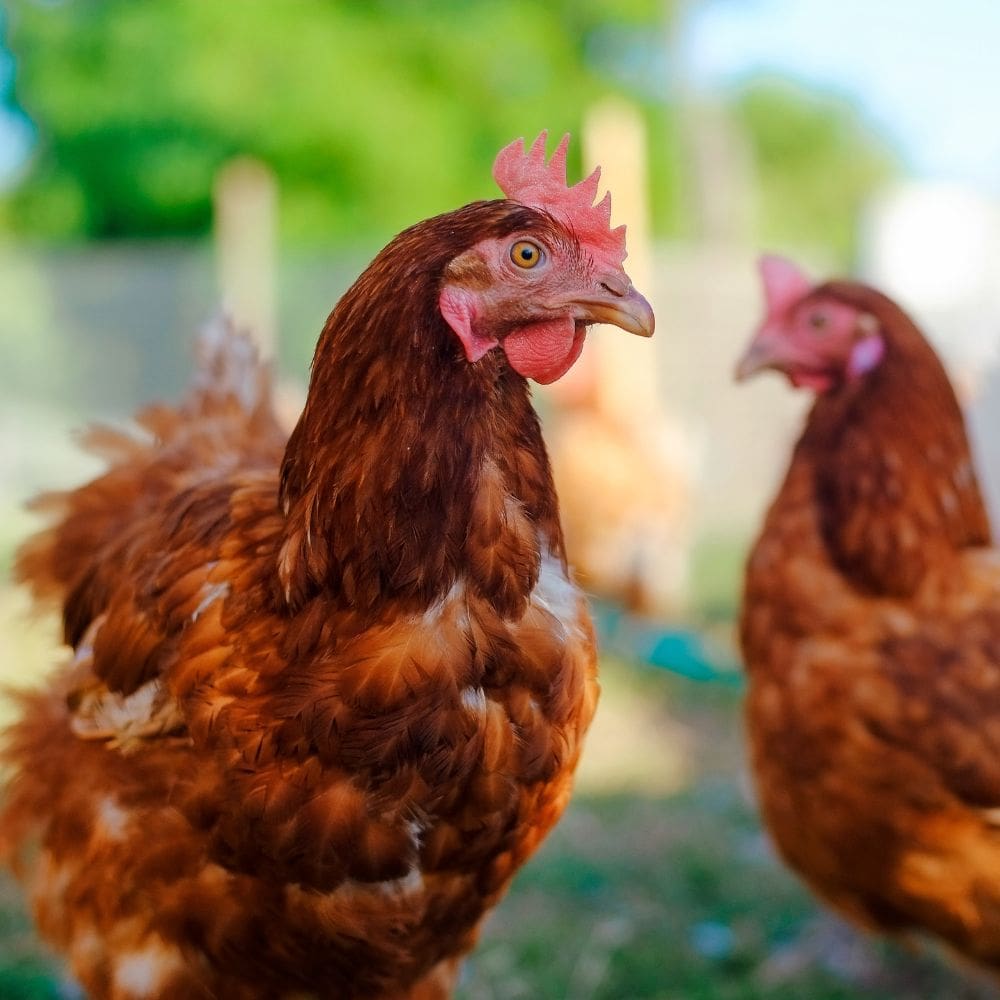
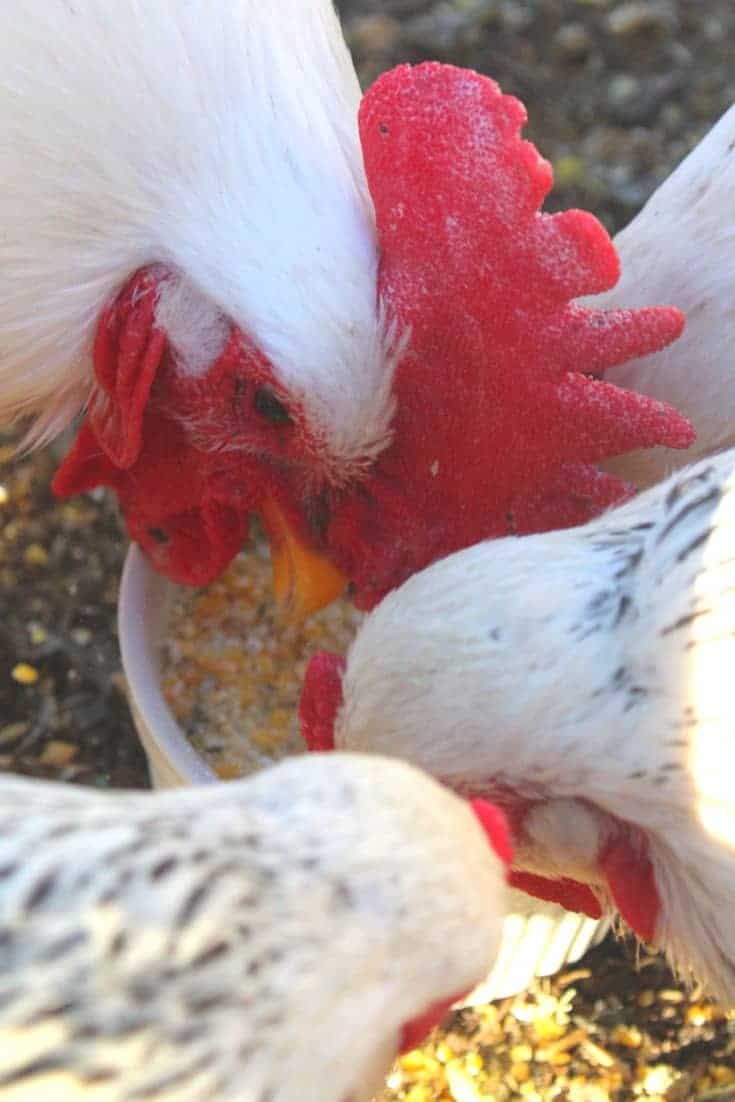
A close up of a red hen with a another hen in the blurred background

How to Stop Chickens From Picking On Each Other: 10 Helpful Tips

1. Understand the Pecking Order

Each flock has its own unique natural pecking order that determines the relationships and social hierarchy within a flock. The most assertive, most dominant hen will naturally be at the top of the pecking order. In some unique circumstances, the dominant hen actually takes on rooster-like behaviors. This is common in flocks that are lacking a rooster. 

When left undisturbed, the pecking order usually remains unchanged. However, when the pecking order is undergoing some kind of transformation, you may notice excessive bullying behavior in your flock. If a hen wishes to rise to the top, she will act more aggressively with the other flock members as she challenges the more dominant birds. 

From the outside, this behavior might seem negative, but it’s entirely natural. If you think it’s a pecking order shift that’s causing your hens to pick on each other and cause serious damage to feathers, don’t worry. There’s not much you need to do (or should do) to intervene. Just let the shuffle run its course. 

2. Evaluate the Potential Causes of Bullying 

Besides changes to the pecking order, there are four main causes of bullying in a flock: stress, sickness, overcrowding, and boredom. 

Take a careful look at your flock to help you determine which of these issues might be causing the bullying behavior and damage to feathers among your girls. In most cases, they can easily be identified and addressed as they occur. 

Stress is one of the most common causes of bullying, and unfortunately, it can also be one of the most difficult to pinpoint and eliminate. As with people, there are all kinds of things that can cause chickens to stress and lead to feather pecking. From poor weather to predator threats and everything in between, it can be tough to narrow down the list of culprits.

However, do what you can to keep your chickens happy and healthy. We’ll talk more in the next point about how to boost the health of your flock, but it’s also important to make them feel safe. Make sure your coop and run are secure and comfortable and you’ll likely notice fewer bullying incidents as a result. 

3. Boost Flock Health

Think about the last time you had a cold. You probably weren’t very friendly, were you?

That’s why it’s so important to keep your backyard flock healthy when you’re trying to prevent bullying. If your chickens aren’t healthy, they aren’t going to be very amicable toward each other. Not only that but chickens intuitively know when one of their own is ill.

Therefore, you will want to make sure you keep your free-range chickens as healthy as possible. Make sure they are vaccinated (if necessary) and kept up to date with dewormers (even if you are using natural methods to keep parasites at bay). Keep the coop clean to prevent mites and lice, too, which will help prevent bullying in the flock.

As a side note – sometimes, chickens will bully each other when they notice that one has any severe damage, like bloody or raw areas showing on its skin. You can often prevent these sorts of situations by making sure your chickens have dust baths (which will limit the occurrence of external parasites) but if you happen to notice red or raw spots on your chickens’ skin, apply a liquid bandage like Blu-Kote to remove the temptation to peck and pick for the others.

4. Provide Entertainment

Boredom is one of the most common causes of aggression in a flock. You might notice that this becomes an issue if your chickens have been stuck inside all winter or if you keep your chickens in a confined setting. When chickens can’t get outdoors to do chicken things they are naturally going to become more aggressive toward each other. 

If you can, introduce a few boredom busters to the coop. A bit of scratch grain, like our non-GMO blend, goes a long way, as do chicken toys like chicken swings and hanging heads of lettuce.

It is also a good idea to make sure your chickens have access to enough hours per day of bright light. Sometimes free-range chickens engage in more feather picking when they are deprived of natural sunlight. While you don’t need to introduce excessive light or a heat source to the chicken coop,  an ample supply of light (red light is best) can be helpful.

You may also want to add some relaxing herbs, like these, to your nesting boxes. This may help calm down broody hens and make egg laying a bit less stressful for everyone!

5. Introduce New Birds at the Right Time

If you plan on adding new chickens to the coop, don’t do so willy nilly. Ideally, all of your flock mates should be around the same age – when they grow up together, the pecking order will be established more naturally and you shouldn’t have to worry about bullying later on.

However, if you must introduce new chickens later on, do so with caution. One way to introduce new birds is to put them in the coop at night, when all the flock mates are sleepy and on the roost. Although the birds will notice each other in the morning, they’ll be much less likely to be aggressive. Although you can expect some shenanigans as the pecking order gets sorted out. 

Make sure there is plenty of space in your chicken coop, too. You need at least 10 square feet per bird along with ample opportunities for dust bathing, nest boxes, and adequate feeder space. This (especially extra nesting boxes) can prevent aggressive pecking later on – and avoid dead birds in the future!

Another tip – if you are introducing chickens that look dramatically different than those in your existing flock (for example, if you are adding a White Leghorn to a flock of New Hampshire) you may want to introduce more than one of that breed. Chickens will often engage in feather pecking when there are others who look different, and there’s safety in numbers. 

If you want the absolute best outcome, you might want to read this article we wrote: How Do I Add A New Chicken To My Flock?

6. Isolate (or Distract) the Bully 

Sometimes, you may have no other choice than to isolate the bully who is being aggressive. This will be easiest if you’ve been able to pinpoint the main perpetrator in your flock – sometimes, that’s easier said than done. If you aren’t sure which chicken is to blame, hold off. Otherwise, you can remove the “mean” chicken and put her in a separate location. While she’s gone, the pecking order should re-establish itself, and she’ll likely be a bit calmer upon her return.

Another thing you can do is to distract the bully. You can squirt her with a hose, toss pebbles in her direction, or any other safe techniques when she starts up with her nonsense. Of course, you’ll have to actually witness the bullying behavior for this to be effective, so that can be limiting in and of itself. 

7. Prevent and Eliminate Overcrowding 

If you’ve ever ridden a subway in New York City, you probably know how stressful it can be to be packed shoulder to shoulder with other people. The same goes for chickens that are jammed tight into a coop. Make sure your chickens have some wiggle room, which will help them feel a bit more comfortable and less likely to fight with each other. 

Often, adding some additional feed (this herbal chicken feed for layers is a great option!) or making sure there is adequate space in your housing systems is all it takes to improve the appearance of feathers and enhance your chickens’ overall well-being after a period of feather pecking.

You’ll also want to be sure there are enough feeders and waterers for all your birds. If they have to fight for food and water, they will not only peck at each other but they may also not get proper nutrients.

8. Maintain the Right Hen-to-Rooster Ratio

Most of the tips in this article have to do with bully hens, but it’s certainly not uncommon for roosters to be aggressive, too. Most of the time, an aggressive rooster can be attributed to a poor hen-per-rooster ratio. 

You should aim for no more than one rooster for every five hens. That way, you won’t have roosters fighting over hens and the hens won’t feel targeted by the rooster as he goes about his “courting” behaviors.

9. Chicken Glasses?

One unique solution to stop chickens from picking on each other is to use chicken glasses, also known as pinless peepers. Although some chicken keepers claim that this technology is nothing more than a gimmick, others swear by it.

Chicken glasses prevent chickens from seeing what is directly in front of them. While wearing the glasses, a hen can see to the sides, but she can’t see facing forward, which can help prevent aggressive chickens from pecking behavior and picking at the feathers of other chickens. 

10. Remain Attentive 

The best tip for stopping chickens from feather picking is to remain attentive and vigilant at all times. 

It can be tough to identify what’s causing the aggression in your flock – as well as who is inflicting it – but following these steps and paying attention to the members of the flock can be hugely beneficial as you try to keep your flock safe and happy. 

How to Help Chickens Injured From Bullying

How do you know when too much pecking becomes a problem? If your chickens have been injured from this, chances are, it’s time to intervene.

Once you’ve followed some of the tips above and removed the bully, you may need to isolate the injured bird from your flock. An “over-pecked” chicken may have injuries that attract and entice other chickens to peck. This can lead to greater injuries over time.

For minor injuries, remove the injured bird and spray the wound with Blu-Kote or a similar type of animal-specific liquid bandage. Return the chicken to the flock as soon as possible, ideally once you’ve been able to stop the bleeding and cover up the wound. You don’t want to keep your chicken away from the rest of the flock for too long, as this can lead to greater bullying later on.

However, for more extensive injuries, you may need to call in a vet for help.

Summary

Do a quick Google search for the topic, and you’ll find all kinds of “home remedies” designed to stop chickens from bullying each other. Some people swear by things like vinegar – but if you’re wondering if vinegar will help keep your chickens from pecking at each other, you may want to keep moving. Others will recommend more intensive, risky procedures like beak trimming, but usually, this is not necessary.

Ultimately, the only way to stop chickens from feather-pecking each other is to figure out the root cause behind the behavior and actively work to stop it. While a bit of feather loss here and there is nothing to worry about, you should take more precautions if you have noticed victims of cannibalism and excessive feather pecking.

Over time, you should be able to put an end to this nasty behavior – just be vigilant!

Related Articles


Why are my chicken’s feathers falling out?!?!? Chicken feather loss is one of the top topics I get questions about.

There are many reasons why your chicken’s feathers might be falling out. I’ll go through some of the main ones today and give you tips on what you should do.

The top reasons chickens lose feathers are:

  1. Molting
  2. Not enough protein
  3. Self-inflicted from stress
  4. Broodiness
  5. Picking by bullies
  6. Mites and lice
  7. Vent gleet
  8. Overmating by roosters
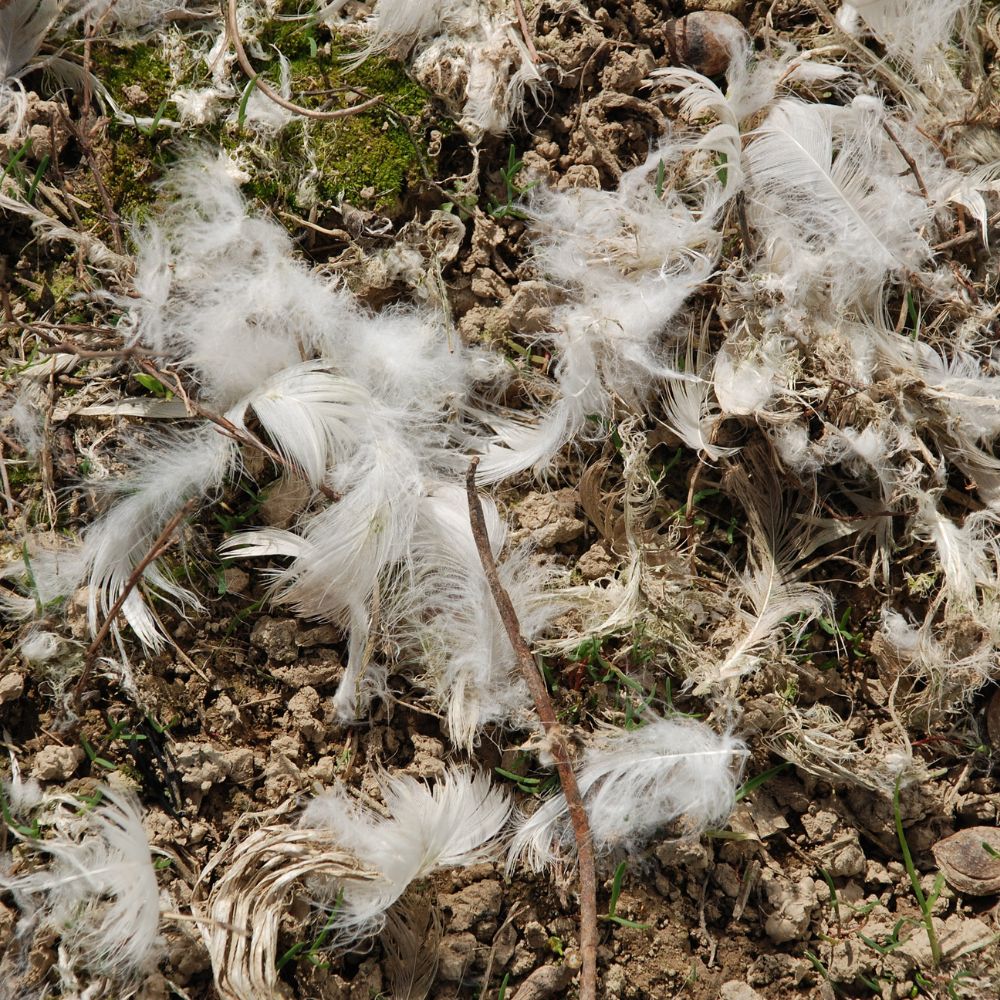
Feathers all over the ground

Top Reasons for Chicken Feather Loss

Molting

So, chickens molt. And it’s a very common reason why chickens lose feathers.

In case you don’t know, molting is when chickens lose feathers and then those feathers are replaced by new feathers.

And luckily, it’s a natural and totally normal process that happens more or less once a year (normally in the fall), and it can be ugly. Not always, but sometimes you’ll wonder what happened to your once beautiful hens! By the way ducks molt, too!

I love chickens, but they just aren’t that good looking when they’re going through a rough molt. It’s messy, ugly, and a little bit uncomfortable as the feathers grow back.

The molting process can be scary for first time chicken owners, but realize that your chickens losing their feathers in a molt is a normal process.

If you want, you can feed them a high protein treat (like BEE A Beautiful Hen, which we sell in the store) to help them stay healthy and regrow their feathers. You can also try Fluffiest Feathers Ever!

Not Enough Protein

Another reason your chickens could be losing their feathers is because they aren’t getting enough protein. This can happen if you’re feeding your chickens scratch or letting them forage for their food (and not serving a high protein feed). 

Even if you allow your chickens to roam around the yard and they’re finding and eating bugs, you need to make sure that you are also providing them with access to feed that is nutritionally balanced and has the appropriate amount of protein.

If your chickens start losing their feathers without an explanation (such as molting), then evaluate their diet and feed that you are providing.

What to do:

Provide more protein!!! Start incorporating high protein treats, our store has a large selection of treats packed full of goodness. Check them out here. Mix the with their food or just as a treat (we have lots of treats in the store with dried insects for just this reason!).

Plus chickens LOVE them  (like….really love them, LOL!) so they will eat it happily! If you want to raise them yourself, it’s easy to start a mealworm or black soldier fly larvae farmIf you aren’t up for raising meal worms or fly larvae, it’s easy enough to buy.

Self-inflicted Picking or Picking By Other Chickens

One reason your chickens might lose their feathers is from picking or feather-pecking, which is usually caused by environmental stress such as over crowding, bullying, or boredom. Think of it as a reaction to anxiety.

Bullying among chickens CAN happen (personally, we’ve been lucky and not experienced this in our coop, but yours might have an alpha hen who picks on a more subservient hen).

Every coop has a social order and particularly if the flock as a whole is stressed or the “picked on” hen is new, chickens will sometimes peck the victim until she’s lost her feathers (most often you will notice a bald spot).

Or your chickens could also be stressed and so they begin picking feathers of other hens in the coop to deal with that stress.

What to do:

The simplest thing to do in this case is figure out why your chickens are stressed and try to remove the problem. If they’re over crowded (10 square feet per chicken in a coop is a good guideline), then give them more room.

If they’re bored, then provide environmental enrichment such as treats or snacks they have to “hunt” for, swings, branches for them to fly up to (this can also give them more room), places to hide, etc.

One popular idea is to put a treat such as cabbage, carrots, tomatoes, or cucumbers on a string and allow your flock to peck at it.

If your flock has a bully, then you can remove the bullied chicken from the coop and isolate her from the flock (give her a friend since 2 chickens together are likely to bond since they only have each other for company). You can then try to reintroduce everyone a few days later or continue to keep them separate.

If your chickens lose feathers still, then you need to continue looking for the cause.

Broodiness

Chicken’s may also be picking their feathers due to broodiness. Some chickens get broody (i.e they really want their eggs to hatch) and so they’ll sit on their eggs for long periods of time and often pick their own feathers (usually their breast feathers) and lay them around their eggs for warmth.

If you want your hen to hatch the eggs, then let her do it, and understand she’ll stop picking her feathers after the chicks hatch. If you haven’t experienced it, broody hens are quite determined.

What to do:

If you don’t want her to hatch chicks, then break her broodiness. She should stop losing feathers because she’ll stop picking at herself.

Mites & Lice

Yuck. I hate lice and chicken mites, and they can definitely cause your chickens to lose feathers. Now, you might say “I don’t see any mites on my chickens” and assume the issue is something else.

I hear this a LOT from chicken owners trying to figure out feather loss. Even though you might not see mites on your chickens, they can still be the source of your trouble.

Mites are sneaky. They hide in corners of your coop and then come out at night and infest your flock. And eventually, they can cause more than feather loss. They can also cause your chickens to lose the scales on their legs and eventually death as they rob your hens of nutrients.

Chicken losing feathers completely? Here's what to do!

What to do:

Even if you don’t think mites are why your chickens are losing feathers, you can still preemptively clean your coop and use herbs to keep mites and lice away. We have made specially formulated mixes with this is mind, check them out here.

If you don’t know, diatomaceous earth is a powder that your chickens can take dust baths in. It has been shown in scientific studies to reduce the number of mites and lice in chickens because it’s sharp edges cut the exoskeletons of insects, causing them to die.

However, I highly recommend that you only use DE in well ventilated areas. Keep your flock out of the coop while you’re spreading it about (a little goes a long way)! Chickens have a very delicate respiratory system, so you want to be careful that they don’t inhale it on a regular basis.

If you don’t want to bother with DE, you can just use herbs. Mint repels insects, so hanging peppermint around the coop or nesting box is a great way to get rid of or prevent a mite infestation.

Another option is to provide garlic for your flock. Because of the spicy nature of garlic, it repels external parasites (and it’ll help your flock’s immune system as well!)

Vent gleet

Another reason your chickens could be losing their feathers is vent gleet. This is a fungal infection in the vent area (where your chicken expels waste and eggs). It can cause some pretty nasty whitish/yellowish discharge along with a loss of feathers.

Think of it like a yeast infection. It’s gross and it’s definitely not good for your chicken!

What to do:

If you think your chicken has vent gleet, then the best thing to do is take her to the vet. They can give you medications or make recommendations for all natural solutions.

One way you can help prevent vent gleet is to ensure your chickens have good gut health! You can do this by adding some apple cider vinegar (about a tablespoon per gallon) to your chicken’s water.

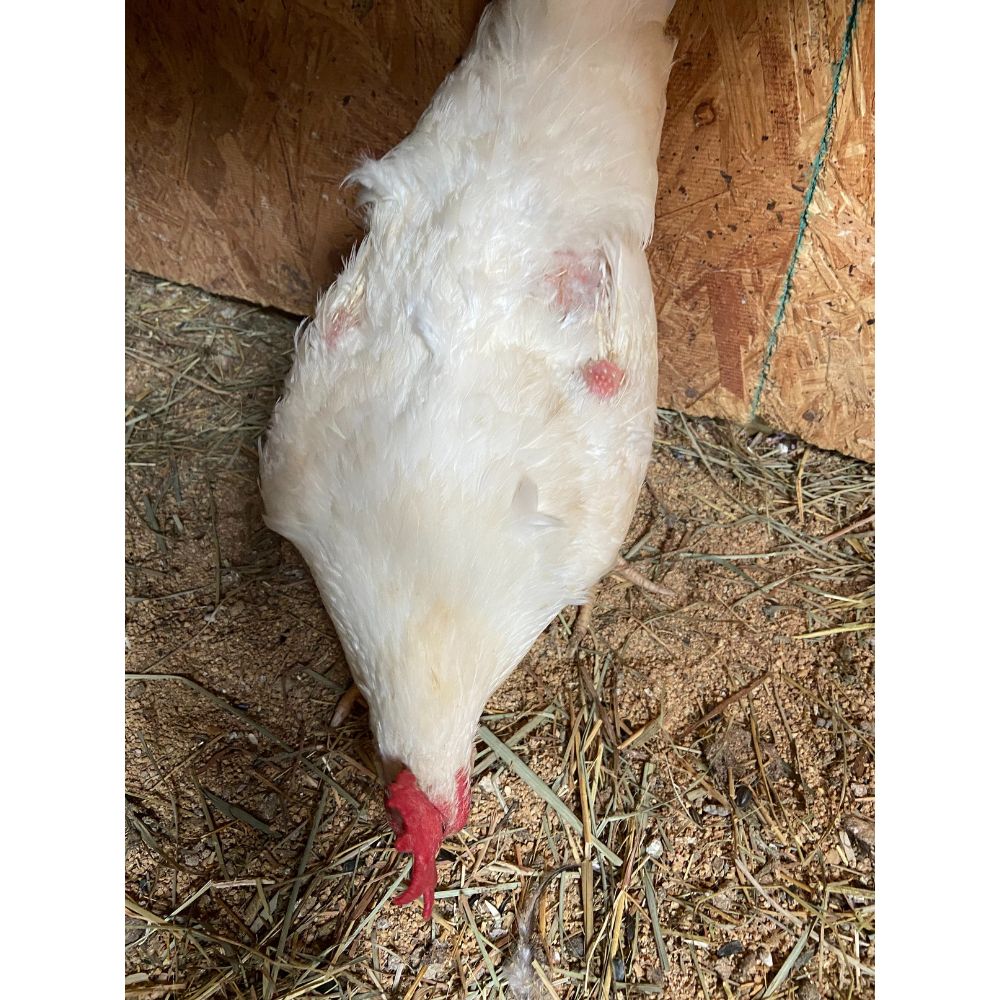
Chicken with feather loss due to rooster mating

Rowdy roosters 

So roosters like to mate. A LOT. It’s normal and part of a flock’s social dynamics. If you notice feather loss on your hen’s back (and only their back) and you have a rooster, you can be pretty sure the issue is overmating.

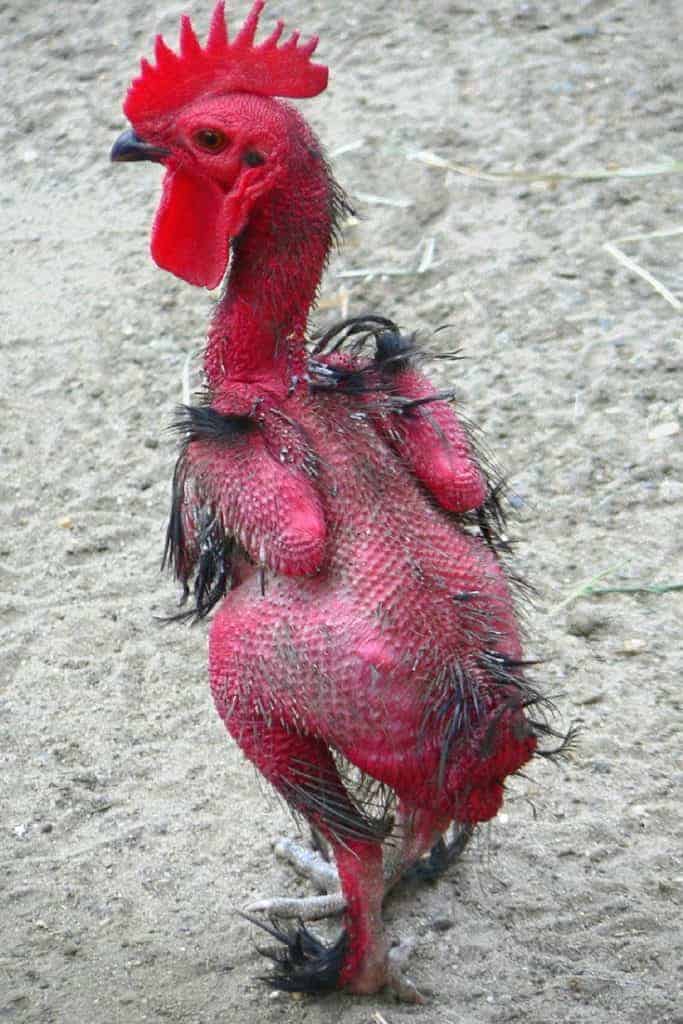
This isn’t to be taken lightly. I’ve seen cases where roosters were overmating hens to the point where the hens lost not just their feathers, but the skin on their chests. This, of course, is a much bigger issue than losing feathers. 

In summer, this can end in a bad case of fly strike, and you might have to put your hen down if it’s bad enough.

Fly strike is notoriously difficult to get rid of. Treatment – consists of picking maggots off your hen’s body and removing dead tissue. This is painful and difficult, and a lot of animals simply die of shock.

Roosters stand on top of hens backs while they are mating and they can cut your hens or cause them to lose feathers. Sometimes they can even cause open wounds.

What to do:

If this happens you might first need to treat the wound with something like blu-kote or another wound care spray. Then you need to separate the roosters from your hens to keep your girls safe from this unacceptable behavior. If the issue is only feather loss (and not skin loss), you can also use a chicken saddle, which will cover the bald area.

You might have multiple roosters and see them excessively bickering over the hens, then it’s time to either give each rooster his own flock of hens, or re-home one of the roosters.

If you have multiple roosters and notice one rooster is losing feathers on his back, then it’s time to separate him from his “prison buddy” if you get my drift. (Yes, this is a real thing that can happen because it’s about social dominance and their pecking order).

Other Considerations

There are other things to consider and keep an eye on. For example predator attacks can also be a cause of feather loss. This can be either because of actual physical harm, or the stress of an attempted attack.

Another issue can be a lack of certain vitamins or minerals. Or it can be caused from a protein deficiency. These issues can be easily remedied by feeding your hens a high quality feed.

Summary

Chicken feather loss can certainly be concerning, but it’s not impossible to figure out and fix. It may take a bit of detective work, but you’ll have it figured out in no time.

Who doesn’t love chamomile? I do, you do, and I guarantee your chickens do!

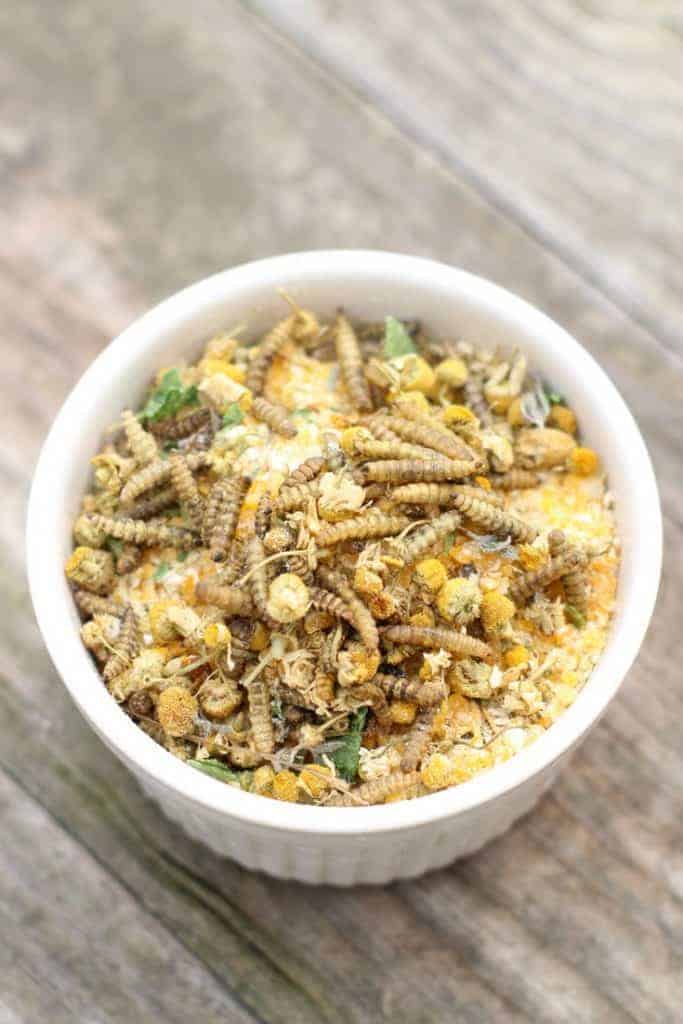
And chamomile is the star of Chamomile & Black Soldier Fly Larvae “Granola.”

And I tell you, hens LOVE this treat! My hens love digging in and testing each bit!

German chamomile (Matricaria chamomilla) is wonderful for hens because, as you probably know, it has qualities that help hens relax.

And since relaxation and a sense of security is important to getting the best eggs possible out of your hens, you can imagine how important chamomile is to your herbal medicine chest!

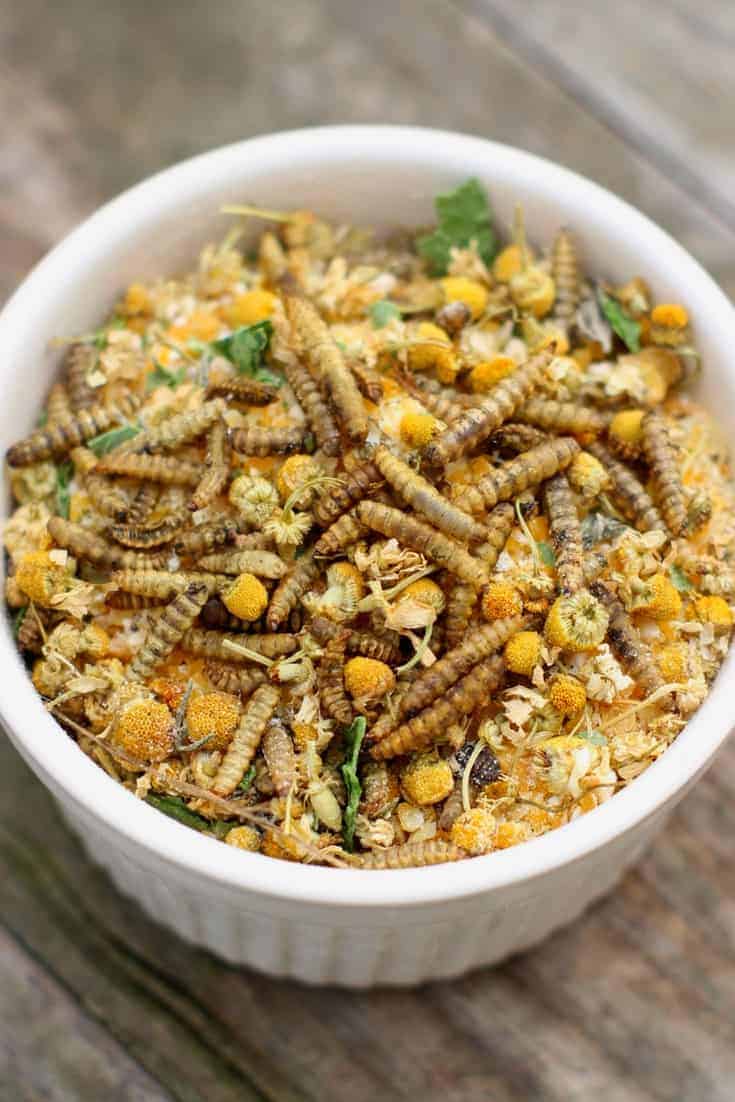
Chamomile & Black Soldier Fly Larvae “Granola” backyard chicken treat

This treat is a great go-to recipe if your chickens are nervous (if a hawk was flying above or the neighbors dog came over for a “visit”), and you want them to come out of their hiding places, relax, and feel safe again.

You can find chamomile to buy in the shop right here, and it’s the exact same herbs that I used in this recipe.

Corn is also a big part of this treat, and my hens have a ball poking around and trying to find every last kernel!

You can use dried ground, chopped, or whole corn kernels. If you do use whole kernels (which chickens love, by the way), the recipe adjusts slightly.

Although I haven’t tried, if you add egg and water, you can probably make this into “cornmeal muffins” your hens will adore.

This recipe also features our old friend, dried black soldier fly larvae, which hens also love! (As if I had to remind you!)

If you don’t have black soldier fly larvae on hand, mealworms or any other dried insect are a great substitute. Mine go bonkers for both.

I’ve included kale in Chamomile & Black Soldier Fly Larvae “Granola” because kale has lots of great vitamins and minerals for chickens.

Plus, hens love greens! You can use either fresh or freeze dried kale. We usually go for freeze dried kale because the nutrient content is still high AND it’s shelf stable.

A treat like this is perfect before bedtime if it’s winter in your area or as a mid-day treat when the days aren’t too hot – so perfect for spring.

All you need to do is put out a bowl with the “granola” in it and let your chickens have at it.

I hope your hens enjoy this as much as mine do!

Chamomile & Black Soldier Fly Larvae “Granola” for chickens

How To Make Chamomile & Black Soldier Fly Larvae “Granola.”

Ingredients (per chicken):

¼ c dried, Non-GMO Corn (ground, chopped) — use ½ cup if whole corn kernels

Chamomile – 2 tbsp (Buy in my store here)

Black Soldier Fly Larvae – ¼ cup (Buy in my store here)

Kale – ¼  cup  — use freeze dried or fresh kale

Directions

Combine all ingredients in a chicken-safe dish. You can scatter the “granola” to make sure each hen gets a bite. Smaller flocks can eat out of the bowl together.

This isn’t a replacement for their regular feed, and should be part of a complete diet.

It’s a hit!

Ahh…..yolks. They’re pretty much the best part of eating an egg. And as backyard chicken owners, you’re probably in search of the perfect golden yolk. So, can you change the color of chicken egg yolks with diet alone?

The answer is yes! We do a lot of scientific research to make sure this website is as accurate as possible, and we’ve consistently seen time and again, you can alter the yolk color.

According to science, it’s completely possible to change the color of your chicken’s yolks based on her diet.

In fact, two chefs were interviewed by Food & Wine magazine because their restaurant serves eggs with RED (yes, red) yolks.

But before we get into it all, let’s say one thing first: Use these ideas ethically.

Just because you CAN cause hot red yolks doesn’t mean you necessarily SHOULD. Will it hurt your chickens?

Well, too much of ANYTHING isn’t good, but a sprinkle up to ¼ cup per chicken here or there of herbs will only HELP your flock be healthier.

So, have fun with this article, but be judicious and always put the welfare of your chickens first.

That being said, there’s ways to change the color of chicken egg yolks using all-natural herbs and foods.

Can you change the color of egg yolks?

Some options proved to change egg yolk colors

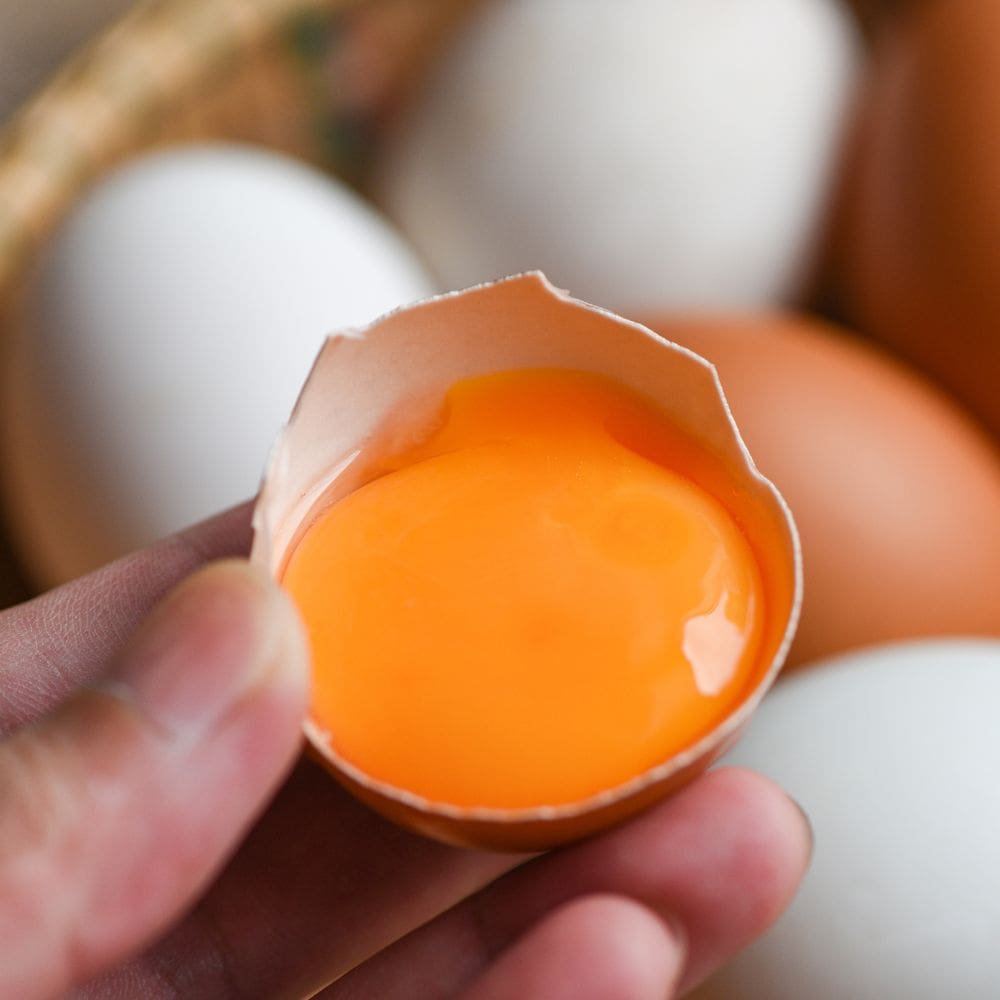
Depending on what your chickens are exposed to, or fed, their eggs can naturally range from pale yellow to deep orange. You can alter the shades and colors by feeding them certain things. From vegetables, to herbs, and other natural foods – you can experiment and influence egg yolk color.

If your chickens free range, it may be harder to know exaclty what they are eating and how much of it they eat.

  • Calendula
  • Chili powder
  • Tomatoes
  • Carrots
  • Rice
  • Marigolds

Calendula

Aside from smelling delicious, calendula (botanical name Calendula officinalis) is popular among backyard chicken owners because the beta carotene, which gives the flower it’s yellow pigments, can also help your hens lay eggs with golden yolks instead of pale yellow yolks.

It also helps that calendula has lots of vitamins to help your hens be healthier! And chickens love to pick at the pretty yellow petals.

If you want to feed calendula to your flock, ¼ cup per chicken in their feed or nesting box is a great idea, and your hens will LOVE it!

Chili powder

This, chili powder, is what famed chefs Dan Barber and Dominique Ansel use to change the color of chicken egg yolks to bright red, according to their interview in Food & Wine magazine.

Chili also has other uses: it’s been shown in studies that the capsaicin might help prevent and/or get rid of worms in chickens.

The idea is the worms object to the spicy taste of the chili powder, detach from the hen’s intestines, and are pooped out, breaking the lifecycle of the worms.

You can add chili powder to your flock’s or add it to nesting boxes. It can make orange yolks too.

Tomatoes & carrots

Tomatoes the fruit are perfectly fine to feed chickens (the leaves & stems are foods that chickens shouldn’t eat!), and in studies, feeding chickens tomato powder (which is more concentrated) changed the color of the yolks, increasing them from a paler yellow to the more ideal gold.

The tomato powder also increased the amount of vitamins in the eggs, particularly the carotenoids and vitamin A!

You can feed tomato powder by sprinkling it on your flock’s feed, but just be sure it’s not too much!

Rice

Yep, our good friend WHITE RICE can actually change the color of chicken egg yolks. But it’s probably not what your looking for – rice can actually turn yolks WHITE.

This pretty shocking revelation was discovered by scientists and farmers in Japan, when they switched chickens to a rice based diet after the cost of corn skyrocketed.

It apparently didn’t alter the taste of the eggs – with customers calling the eggs light and delicious – and there might even be a market to sell eggs from chickens with rice-based diets.

Personally, I wouldn’t feed just rice to my chickens, but they sure do love it as a treat! Just be sure you only feed cooked rice!

What else might change the color of chicken yolks?

Well, it’s hard to say since there haven’t been a TON of studies, but look at fruits and veggies.

If they use certain vitamins for THEIR color, it’s likely they’ll also change the color of chicken yolks, although it’s impossible to say how much.

One example is beets! We all know beets can change the color of human urine and it’s great as a natural easter egg dye, so it’s entirely possible beets might also change the color of chicken yolks (that is, if you can get your chickens to eat it!).

Other things we’ve read about are marigold petals, kale, spinach, red peppers, and paprika.

In this case, though, I think it’s better to stick to trying to change the color of chicken yolks to a golden yellow with healthy foods such as calendula, rather than “play God” and try to alter nature just for fun.

Whatever you do, please do not use food color to try to alter their yolk color. Food coloring ingredients are not good.

Summary (Nutrition and Calcium)

For many of us, the thought of changing yolk color is pretty enticing but my advice is don’t focus too much on the yolk color. Focus on the nutritional value of the egg as well as the health of the egg shells. You can do this by feeding a high quality, high protein feed like this. And supplementing their feed with some crushed oyster shells like these to boost their calcium.

If you do this, you” have a winning combination! After that, you can experiment with yolk color and have some fun with it.

When one hears the name “Jersey Giant,” it might be understandable to envision a massive giant tromping and stomping over the hills. Luckily for poultry lovers, these robust fowl are nothing at all like immense monsters upsetting livestock and unearthing trees.

They are, however, the winner of the “biggest chicken breed.” Jersey Giant roosters can grow to a massive 15 lbs and reach stately heights of up to 26 inches. Their female counterparts can reach up to 11 pounds and are as tall as 20 inches. These are some BIG birds!

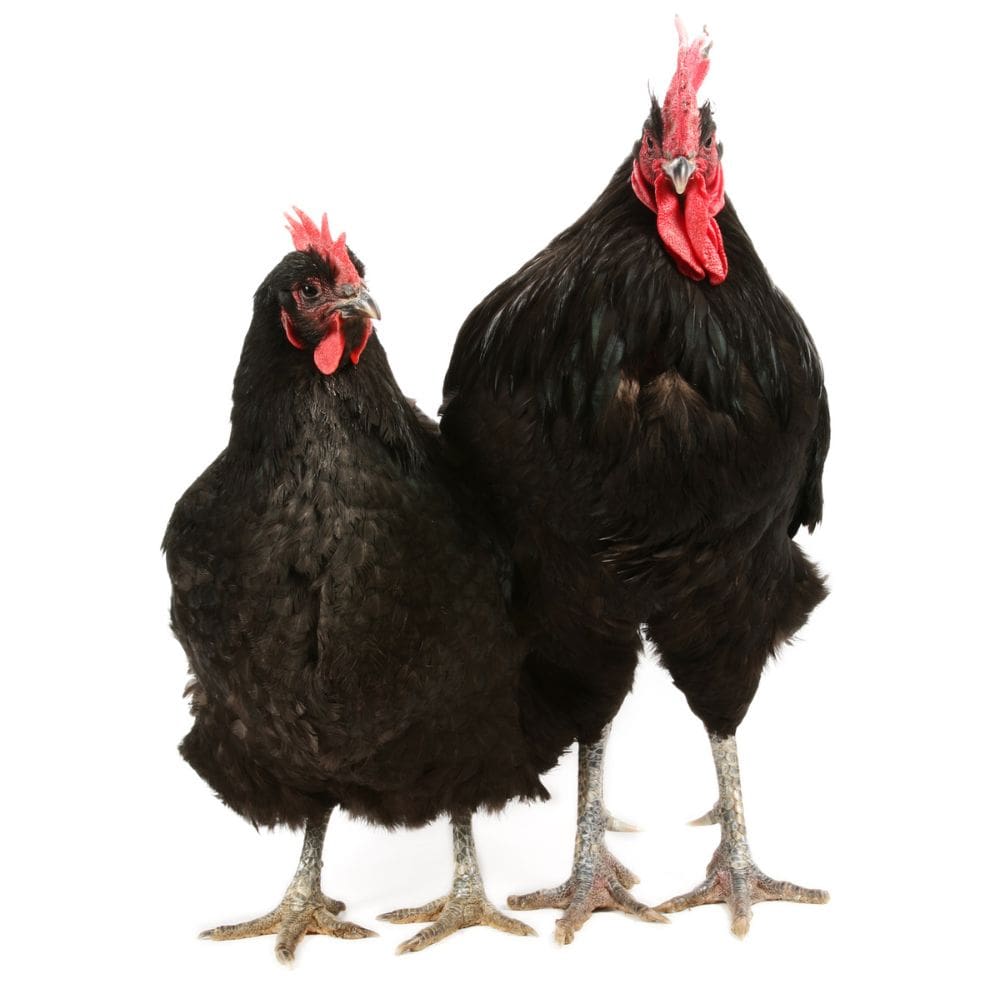
Jersey Giant Rooster and Hen on white background

They are quite colorful, too, with their Black, Blue, and White variants being recognized by the American Poultry Association. A fourth color – Splash – is not recognized by the APA because it is a genetic quirk of a color that can sometimes result from breeding two Blues.

Jerseys are best as an addition to homes looking for an excellent show breed, some amazing broilers, or hens that lay between 150 and 200 brown eggs per year. This breed is quite popular and has a definite group of followers, in essence, it has its own fan club! Let’s find out why.

What is the Jersey Giant?

Jersey Giants originated in New Jersey in the good ole USA in the late 1800s and that’s how they got their name. They were first called the Jersey Black Giant because Black was the last name of the two brothers that developed them.

You can read more about large egg-laying chickens here, but the most important thing to know about Jersey Giant chickens is that they are great chickens with incredible personalities. And if you are looking for a chicken breed that’s great for egg production as well as serving as a solid meat bird, this is the one.

Jersey Giant chickens are perfect free-range birds, offering decent egg production without compromising on egg size or meat.

There are different colors of Jersey Giants, but the most common is black. They have stunning black plumage(feathers) with shimmery green highlights throughout. The beetle green sheen really shows in the sunlight.

They have brown eyes, red wattles, a red single comb, and black legs. Their beak is mostly black with a yellow splash on the tip.

In addition to the black variety, there is also a white variety and a blue variety. These giants can weigh up to 13 pounds!

Jersey Giant Temperament

They have been called gentle giants and for good reason. They are huge and they are extremely gentle and friendly. Due to their large size – much like Brahmas – they may be intimidating (especially to children) but they don’t deserve it. These large birds are all heart and snuggles!

Jersey Giant Chicken Egg Production

Jersey Giant hens aren’t exactly egg machines, but they keep up with about 150 to 200 eggs per year. Eggs are as expected, giant in size and light brown in color.

They are known for being good layers in winter! Bonus!

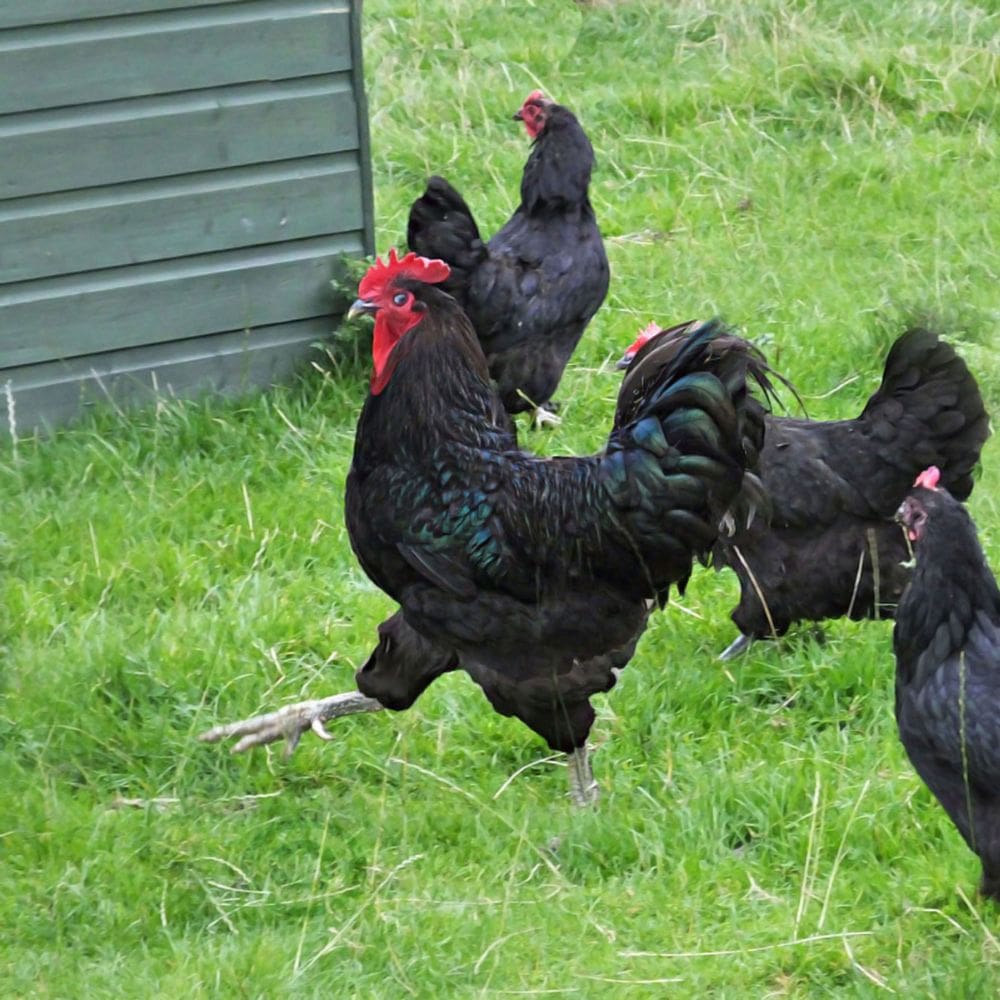
Jersey Giant Rooster happily marching along on green grass

Where To Buy Jersey Giants?

Ready to start raising Jersey Giants? Pick up some high-quality herbal chick starter here and check out the list below of the best hatcheries to buy Jersey Giant chicks.

With a credit card at your side, it won’t be long before these immense birds are growing in your own coops and runs! You can also check with local breeders in your area.

5 Best Hatcheries to Buy Jersey Giant Chickens

1. Meyer Hatchery

Find more information and prices here: Meyer Hatchery

Meyer Hatchery is based in Polk, Ohio, and boasts itself as the “premier Poultry Source.” Priding itself on customer service and availability, Meyer Hatchery provides a variety of chicken breeds to meet customer demands for color and diversity. They welcome the mixing and matching of breeds of the same poultry type to meet minimum order quantity requirements for safe shipping. To help with orders, they have a calendar of hatchings. 

Meyer has a variety of means of communication, including multiple phone numbers, fax, and email. They also run a blog that covers everything from breeds to plant pairing with chickens, feed, cooking recipes, fowl entertainment, and survival tips. Meyer offers Black Jersey Giant Chickens. 

FYI – looking for egg-cellent chicken feed? Have a look at our layer feed for sale here.

Advantages

  • Website is up-to-date in real time. 
  • Accepts checks and credit cards.
  • Guarantees gender of chicks either through refund or store credit.
  • Optional Marek’s vaccination.
  • Member of the National Poultry Improvement Plan (NPIP), and provide NPIP VS Form 9-3 free of charge. 
  • Offer orders of over 100 chicks. 

Disadvantages

  • Limited store hours that change with the season. 
  • Limited availability.

2. Cackle Hatchery

Find more information and prices here: Cackle Hatchery

Cackle Hatchery proudly boasts that they have been hatching and shipping since 1936. A third-generation hatchery based in Missouri, their mission is to provide customers with quality poultry for showing, meat, enjoyment, and eggs. They ship throughout the USA, including Alaska, Puerto Rico, and Hawaii. They offer nearly 200 different types of chickens at all stages. 

Cackle also offers many other kinds of poultry including ducks, waterfowl, game birds, turkeys, and other fowl. They are also a good source of supplies and books. Cackle Hatchery offers both Black and White Jersey Giant Chickens. 

Advantages 

  • Discounts if you buy male chicks.
  • Vaccinations available.
  • Only need 3 birds to ship (or just one for male birds).

Disadvantages 

  • Limited availability (February through July).

3. Hoover’s Hatchery

Find more information and prices here: Hoover’s Hatchery

Hoover’s Hatchery supplies many farm and garden supply stores in the United States with their chicks, making them a smart choice if you want to skip the middleman and order from the hatchery directly.

Plus, Hoover’s offers free shipping on practically everything you order. You’ll have to buy at least 15 chicks; so Hoover’s might not be the best option if you live in a city with chicken restrictions. However, as long as you’re willing to buy in bulk, it’s a smart choice. You can even mix and match your order by adding other birds of other chicken breeds along with poultry species like pheasants, turkeys, guineas, ducks, and more. 

Another benefit of ordering from Hoover’s Hatchery? Despite the fact that this hatchery is located in Iowa, not necessarily a warm-weather state, it hatches chicks all throughout the year – a must-know feature if you plan on buying chicks around Christmastime. Hoover’s Hatchery offers only Black Jersey Giant Chickens. 

Advantages

  • Excellent guarantee and refund policy in case of shipping problems.
  • Hatches chicks during the winter – one of the few hatcheries to do so.
  • Sells other kinds of poultry too.

Disadvantages

  • Large minimum order quantity.

4. Murray McMurray Hatchery

Find more information and prices here: Murray McMurray Hatchery

Murray McMurray started his chicken business in 1917. As a banker, he sold his chicks to locals through the bank and by 1919, he had developed his own stock of chickens. During the Great Depression, he devoted himself to chickens full time. Since then, Murray McMurray Hatchery has developed into one of the largest chick hatcheries in the country. They sell more than just chickens, with ducks, geese, guineas, turkeys, other fowl and game birds all in the catalogue.

Sexed male chicks tend to be the cheapest, meaning you can get some serious savings if you’re planning on raising these birds primarily for meat. You can also buy pullets or mix and match your order with chicks of other heritage chicken breeds, too. McMurray’s Hatchery offers both Black and White Jersey Giants.

Advantages

  • Males are extremely inexpensive
  • Bulk discounts available

Disadvantages

  • Minimum order of six birds at a time

5. Welp Hatchery

Find more information and prices here: Welp Hatchery

Located in Bancroft, IA, Welp Hatchery was founded way back in 1929 by Joseph H. Welp. While their specialty is Cornish Rock Broilers, they have diversified to include a wide range of chicken breeds. To simplify their orders, they have a catalog available for viewing or downloading. From its shipping points in Iowa, New Mexico, Minnesota, and Wisconsin, this hatchery truly has a wide reach. They offer both Black and Blue Jersey Giants.

Advantages 

  • Can choose the breeding date on the product page. 
  • Marek’s immunization is a one-click process.
  • Minimum orders of 5.
  • Wintertime availability for select breeds (including Blue Jersey Giants!)

Disadvantages 

  • Maximum orders of 25.

Related Articles

Crafting homemade suet cakes for chickens is a simple way to boost the fat in your flock’s diet while giving them a way to stay occupied. Plus you might be wondering what a suet cake even is.

A question I get is “What are suet cakes anyway?” I’ll answer that below.

A frequent questions I get is “Can chickens eat suet cakes?,” and not only is the answer a definitive “YES!” but feeding DIY suet cakes to chickens can help reduce bad behavior and stress from being confined in a coop all day.

Regardless of the season, your flock will benefit from suet cakes. In the winter they help provide needed energy and in the summer they can help keep your “babies” cool.

And they’re always a total hit! When my flock catches sight of their suet cakes, the light comes back in their eyes as they realize they’re about to have a blast.

Needless to say, as soon as I drop the treats in their chicken feeders, it’s game on.

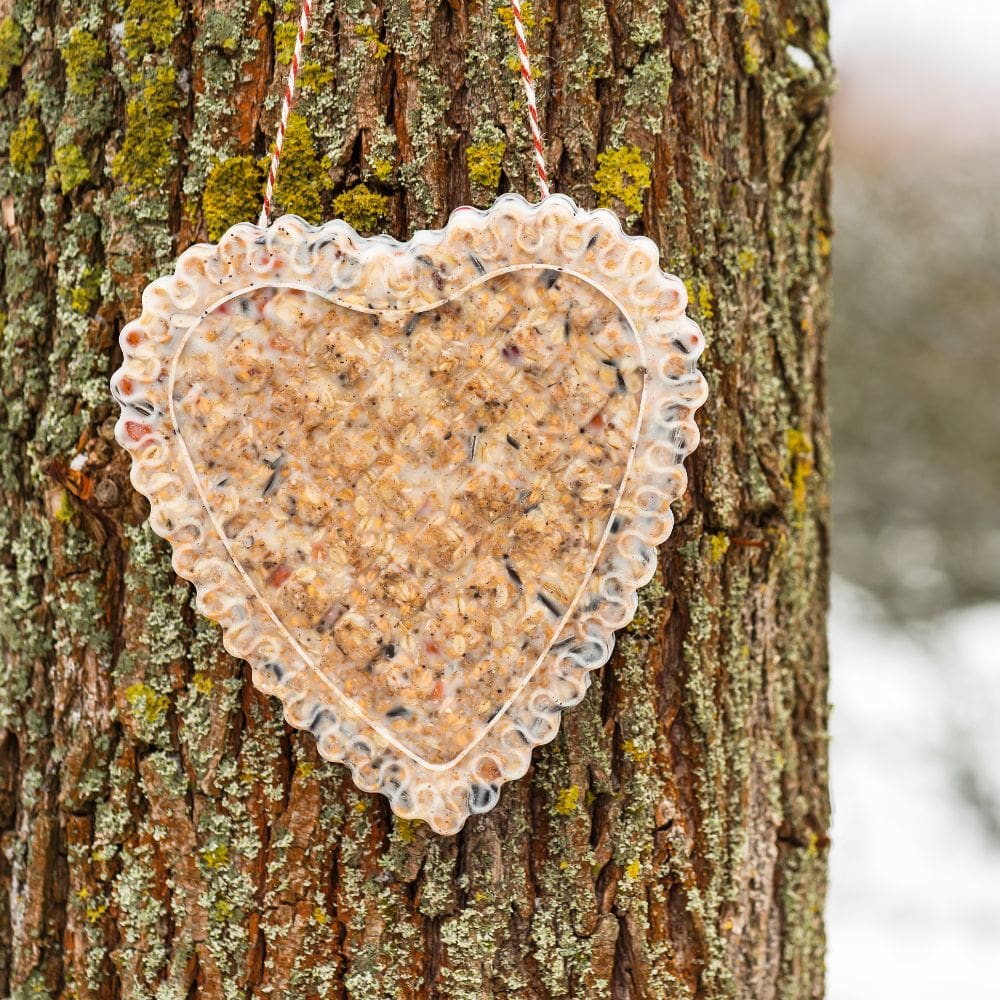
Homemade heart shaped suet cake hanging on a tree

What Is Suet?

Suet is the hard, white fat found on the kidneys and loins of beef, lamb, and mutton. Suet cakes, however, have morphed over time and other fats are now regularly used to make them. Read on to learn about that.

Chicken Fat Fuel

I like to use coconut oil when I make homemade suet cakes for chickens because it’s good for them (with good antibacterial qualities), it’s malleable, and it holds the corn, oats, and other things I add fairly well.

It’s also a nice source of healthy fat, particularly in winter, when you need to worry more about their calorie intake in the cold.

If you’re feeling creative, you can make homemade suet cakes with bacon grease or other grease leftover from cooking.

You can use grease by itself, but I still like to mix it with coconut oil (especially good for winter, when the extra protein will help the chickens out).

Remember, however, that these are treats – not a replacement for a good basic diet of non-GMO layer feed.

I can guarantee your chickens will love your homemade suet and come running whenever they see you have them!

Here are some of the best homemade suet cake for chickens recipes I’ve found that will help your chickens improve their health while providing a treat, and I’m happy to share them with you!

Suet Cake Ingredients (Add Ins)

In addition to the grease or oil, you can pretty much add anything that’s fine for chickens to eat. Some easy choices are:

  • Cracked corn or fresh corn
  • Oatmeal
  • Chopped unsalted peanuts or other nuts
  • Minerals (like these)
  • Dry peas
  • Wheat berries
  • Lentils
  • Flax seeds (improves omega-3s in eggs)
  • Scratch mix (here is option of scratch with herbs)
  • Sunflower seeds (high in fat)
  • Dried fruit
  • Raisins
  • Millet
  • Spices (like cayenne)
  • Meal worms (try these)

I like to add more corn and peanuts in the winter months for an energy boost to help them through the night.

Another option is to add pea sprouts, microgreens, etc, which is especially easy to do if you use coconut oil.

You can also add fresh or dry herbs. Oregano, sage, and thyme are good options that are also easy to source. We make several herb blends that can be easily added. They are specially formulated for chickens and provide many health benefits. Check them out here.

What Shape Should They Be?

As for shape, you have endless options.

I like to use a muffin tin; we have a lot of chickens, and a single large block would get eaten by a few, leaving the rest of our chickens wanting.

So, the muffin tin makes sure everyone gets a piece of the suet cakes.

You can also use a shallow pan, large candy molds, or anything that fits easily into your freezer. Many folks have a great deal of fun using different molds in the shape of a heart or pumpkin, Christmas tree, and so on.

How To Make Homemade Suet Cakes For Chickens

1. Choose a pan or mold

Make sure the pan or mold is deep enough to accommodate all the coconut oil you plan to use.

2. Melt the grease or oil

Melt the grease or oil over low heat, just until melted (especially important if using sprouts).

Coconut oil has a melting point of 77 degrees, so it only needs to be warmed until it starts to melt. Any more, and you might destroy some of the beneficial properties of the oil, as well as potentially cooking some of your additives (and altering their nutrients).

This is particularly key if you plan to use sprouts – when they’re fresh, sprouts have more nutrients. But if they cook in hot oil, your chickens will enjoy them less.

3. Stir in add ins

I like using regular oatmeal. People always seem to give it to us, and this is a simple way to use it up that’s also a nice treat for our backyard chickens.

Grind or chop up whatever you’re adding to your homemade suet cakes to make sure the entire block doesn’t crumble, and if you use peanuts, make sure they’re unsalted.

You can also alter your recipe depending on the season, adding more corn in the winter when energy is important, and flax seeds in the summer when they’re laying eggs again.

4. Pour mixtures into pans or molds

Fill to the top, since the coconut oil won’t expand in the freezer. You can add some extra oatmeal or corn on the top as well.

Remember that the pan or molds will be hot so be careful picking it up and moving it.

5. Freeze until solid

Time will vary depending on your freezer. I like to make homemade suet cakes for chickens in the evening, then let them freeze overnight.

6. Remove suet cakes from pan or mold

If you need to, you can run a knife around the edge of the pan, but I’ve found that’s less effective than simply turning the pan over and tapping on the bottom.

7. Feed your chickens

Now is the moment we’ve all been waiting for! Present these gifts to your chickens and watch them enjoy!

If you are using coconut oil keep in mind that it has a low melting point, so don’t remove them from the freezer until you’re ready to feed them or they’ll be a slimy, melty mess. I’ve found they start to melt as soon as I bring them outside. 

Summary

Yes, it’s as easy as that! Making homemade suet cakes is easy – and it’s a good way to fight boredom, reduce bad behaviors, and make sure your hens are getting extra calories!

Have fun with it! Try different add ins and different shapes (the chickens won’t care about the shape but it can bring you joy)!