What’s better than farm fresh eggs, with bright orange yolks, on toast with homemade butter? Pretty much nothing.

So you need to know what to feed your chickens for better tasting eggs…

These days, I can’t even compare my hens’ eggs to grocery store eggs. My hens produce wonderful, better tasting eggs with golden/orange yolks that have an incomparable taste (at least compared to grocery eggs).

When I look at one of my eggs, I see the chickens foraging in the sunshine, engaging in their own chicken politics, and gobbling up the treats I leave for them. There’s a lot of satisfaction in those eggs.

I’ve received a lot of questions about whether the color of eggs makes them taste different (yes because the color is indicative of what they’ve ingested) and my secrets to feeding for those coveted golden yolks.  Well, we’ve run LOTS of tests on our farm with our chickens – and we figured out what helped our chickens lay better eggs!
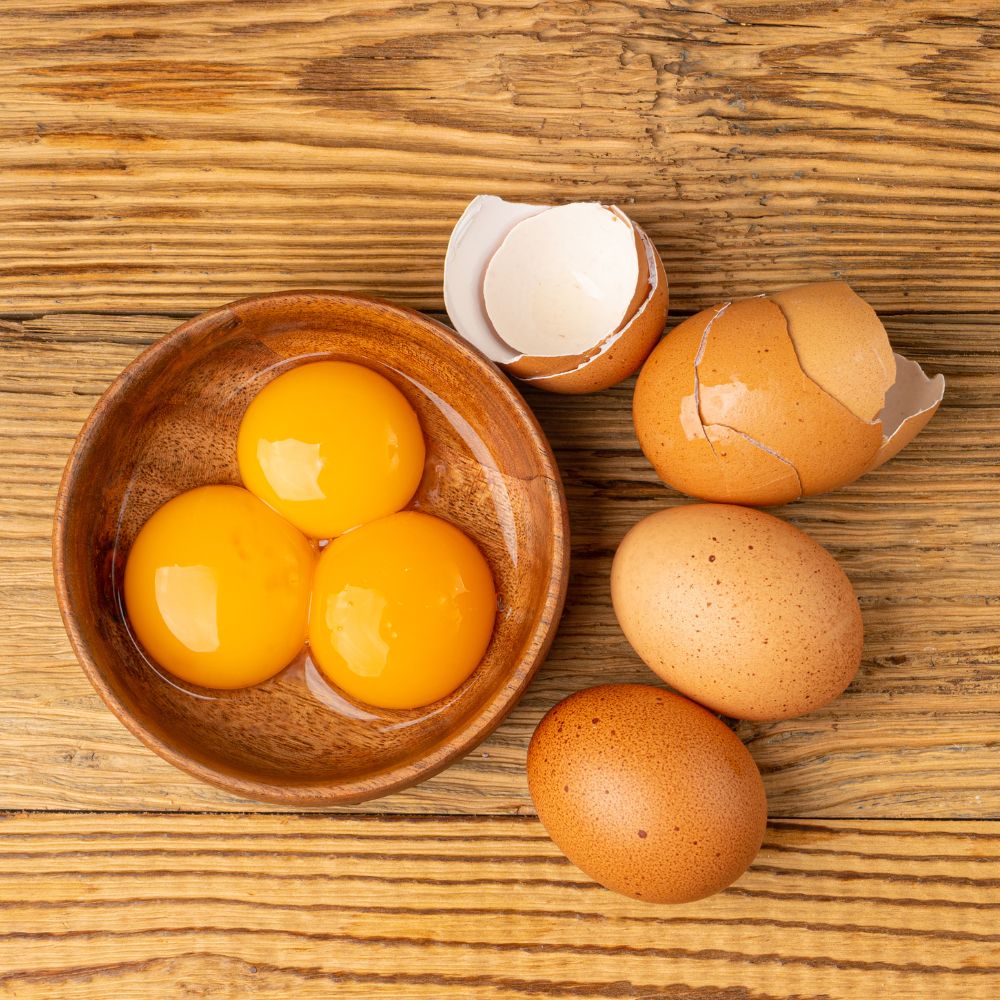
A wooden bowl with three eggs in it with their shells next to the bowl

Step 1: A High Protein Diet

The foundation of the diet for my flock is the wheatgrass fodder I grow. Wheatgrass is very high in protein, which is key to healthy chickens and better-tasting eggs. You can also use barley, but I use wheat because barley isn’t available in the quantities I need in my area, and I try to support local businesses.

I explain how to grow fodder in my How to Grow Fodder and Why You Should guide. They love eating the grass, and scratching through the remaining seeds to get at the roots! I use these Non-GMO seeds to grow fodder. It’s easy!

I also add alfalfa and grass hay, especially in winter. Who doesn’t love reminders of summer when you’re trapped inside? The alfalfa and hay add protein and they get to scratch through it to get to other tasty bits of their dinner. I’ve also found that kelp adds protein, iron, and a lot of necessary vitamins.

My hens love and recommend this kelp product:

Step 2: Fiber and Herbs

Along with the wheat grass, I add oatmeal, alfalfa, garlic (fresh or powdered), and dried oregano to my chicken’s feed. You can find those herbs in this non-GMO product I love:

The oatmeal provides fiber in an easy-to-break-down form. Recent studies have shown that garlic and oregano have antibiotic properties, and help keep hens healthy and disease-free.

In fact, some large egg operations have been able to eliminate antibiotics completely from their hens’ diets after adding oregano and garlic to their feed. They claim their hens have never been healthier. Chicken farmers in Italy have long touted that for better tasting eggs, a forage-based diet is the secret to golden yolks (calendula helps also!). I’ll take it.

Step 3: Fresh Foods

I don’t use a set recipe. I just sprinkle and mix. I also add kitchen scraps, as well as fresh veggies like cabbage, tomatoes (which they can pick through), etc. Since it’s winter and their water keeps freezing, the fresh veggies help them stay hydrated in addition to giving me better tasting eggs.

In warmer weather, I add weeds I pull from the garden, grass clippings, fallen fruit, etc to their diet. And they give me great tasting, golden yolked eggs. And a bonus? The garlic keeps the coop smelling nice!

This spring, I’m also going to add a mealworm farm to the homestead, specifically for the hens. I think they will love the added protein and “hunting” their own bugs (especially since, thanks to neighbor dogs, I can’t let them free range anymore). Black soldier fly larvae are also a good option. They have a lot of calcium in them. You can learn to more about them here or buy some dried ones for your hens at a good price here. For yolks that look like lovely balls of sunshine, I think the most important thing is happy hens that have a diet high in protein.

Bonus Egg Tips

  • Need to increase your eggshell strength? It’s easy with oyster shells! You can simply provide it free choice or mix a little in with your chicken’s feed.
  • Backyard chicken keepers often give supplements (such as viatmins and minerals) to their flocks to give them an immune system and nutrition boost. Here’s one of our favorites: Vital Nutrients
  • You can give vegetable and table scraps to chickens as a daily treat! They love them.
  • Mealworms are an excellent source of protein for your birds. They love dried mealworms like these.

Summary

Better tasting, brighter colored eggs are not rocket science…but they are science. The great news is that it’s simple science – high protein, fiber, herbs, and fresh foods. The better the ingredients you put into your flock, the better the eggs will be.
Need to know what chickens to raise for colored eggs? We have what you need to know!

When you cross chickens with colored eggs, you get something fan-freakin-tastic that has both beauty and functionality. Breakfast just got a little more interesting, and now every day feels like spring no matter what time of year it is.

If you are growing bored of white eggs and want to add additional beauty to your day try choosing chickens to raise for colored eggs! Read more to learn about 5 excellent breed choices!

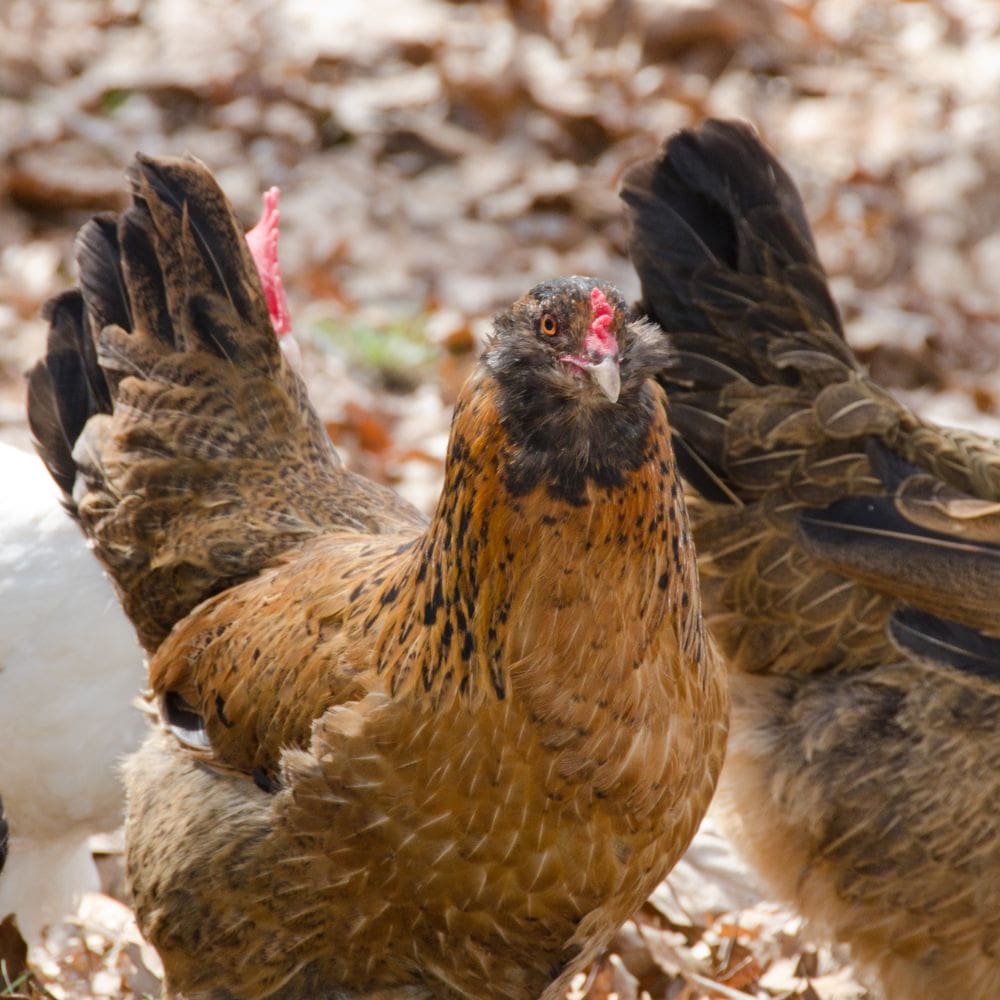
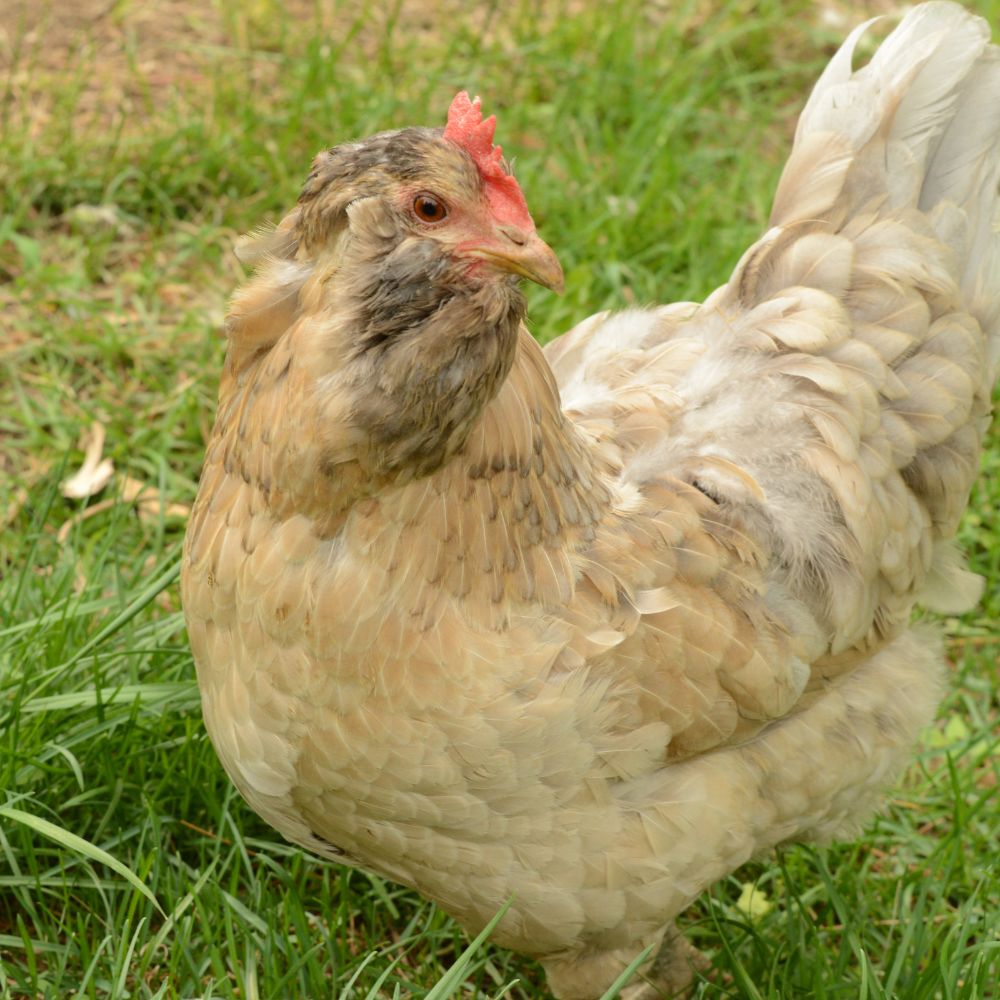
Easter Egger Hen standing in green grass

5 Colored Egg Chicken Breeds

1. Easter Eggers

Easter eggers lay colored eggs from green to blue, any shade in between, and occasionally pink eggs. They’re not a breed, but a cross between any chicken breeds that have the blue egg-laying gene.

Some owners suggest their hens lay purple eggs, but in most cases, this is likely the bloom tinging the brown egg a different color. Our females sometimes lay “purple” eggs, but if you wash off the bloom, they’re really just regular brown eggs!

If you like surprises, Easter Eggers are a great choice for multi-colored chicken eggs.

Some Easter Eggers have ear tufts and beards, while some don’t. Some have tails, and others don’t (Araucanas – which are blue egg layers – are rumpless, so they don’t grow tails). Really, anything goes!

Here is an article to learn more about these fun birds: Easter Egger Chickens: Egg Color, Personalities, And More!

If you want to read more about other chickens that lay blue eggs, look here.

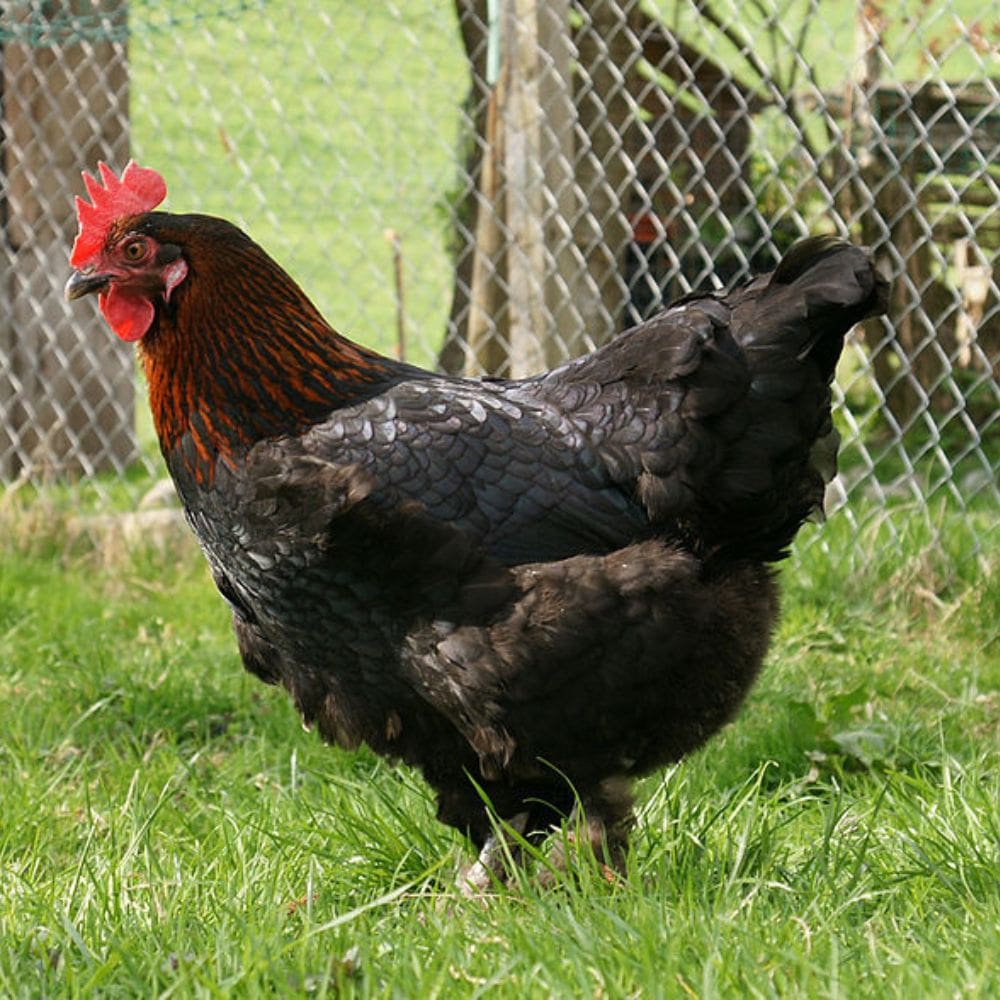
2. Marans

Marans lay brown eggs and can lay anything from a light brown egg to the coveted chocolate-brown eggs. Brown egg layers are worth a second look, their eggs are almost as fun as finding blue eggs!

The reality is that only the first few eggs laid in the season will (or CAN be) a darker brown color. With each egg they lay, the color will lighten up a bit. At the end of their laying season, they can be a lot lighter. And then the cycle will start all over again.

There are a lot of Maran varieties to choose from, from cuckoo marans to black copper marans.  I have a cuckoo maran and blue copper Marans and hope to add some black copper maran hens this year. My cuckoo maran is a sweet, tame bird who enjoys human interaction.

Read this article for more in-depth details on Maran chickens: Black Copper Marans – Do They Really Lay Chocolate Eggs?

3. Olive Eggers

Olive eggers are a cross between a blue egg-laying breed and a dark egg-laying breed (like Marans). Similar to Easter Eggers, olive eggers aren’t a true breed, but a hybrid. As their name implies, their eggs are a gorgeous olive green.

I’m not going to lie to you, they’re not my favorite chickens out of the flock, even if they lay green eggs. They’re more skittish than my other breeds, and some of them have a tendency to hide their eggs if given the chance to roam.

Learn a little more about Olive Egger here: Why are chicken eggs different colors?

4. Ameraucanas

This is a breed that lays blue eggs. Not to be confused with Araucanas (which originated in Chile), Ameraucanas can lay different shades of blue eggs, making them a nice mix with Easter Eggers and Olive Eggers in your morning egg basket.

There is no questioning the capabilities of the Ameraucana for egg production. They are one of the most productive egg-laying breeds known to give at least 250 to 300 eggs a year, weighing approximately 53 – 60 grams.

Read up on this unique backyard chicken here: Ameraucana Chickens: Know Before You Buy!

5. Welsummer

Similar to Marans, Welsummers are known for their dark brown eggs. They lay shades of brown, from terracotta to chocolate. Sometimes the eggs also have pretty speckles, making them an interesting addition!

Wondering why the Welsummer has dark brown eggs with occasional speckles? One weird word: Protoporphyrin (not to be confused with any other word you regularly use). If you are feeling like quitting your job and becoming a chicken scientist, then start here. It seems as if this topic is still being studied quite a bit. 

You might be surprised by some of the interesting tidbits in this article: Welsummer Chickens – Iconic Chickens With a Royal Twist

Below: Welsummers, Easter Eggers, and Black Copper Marans.

Welsummer Chickens
Ameraucana Chicken
Black Copper Maran

Bonus: Cream Legbars

To add even more pastel colors to your day, consider Cream Legbars. They have the Araucana genes, so they lay different colored eggs with shell color such as blue, green, or olive eggs.

This fascinating breed of chicken is a relative newcomer to the backyard flock scene, but because of their good looks, excellent egg-laying ability, docile personality, and potentially sky-colored eggs, they’ve become extremely popular.

Here is an article with more info about this dreamy breed: Cream Legbars – A Dream Come True

    What About Nutrition?

    Eggshell color makes your basket pretty and fun but you also want the eggs to be nutritious, right? You need to be sure your flock is getting all the protein, vitamins, and minerals they need. In order to do this you need to choose products that have quality ingredients. We are what we eat, and our chickens fall under the same line of thought.

    Here is a list of products that are packed full of non-GMO quality ingredients you can’t find just anywhere. There aren’t fillers and by-products in these blends either.

    Summary

    If you are reading this then you are likely one of the many backyard chicken keepers who are looking for some color. As you can see, there are several breeds and varieties to choose from. Have fun, get creative, and be willing to try some breeds you’ve never tried before.

    When you start collecting a basketfull of multiple colored eggs, you’ll be glad you did. Your heart will smile and the sun will shine!

    Keep reading to learn about some other breeds of interest and useful egg articles!

    Other Breeds of Interest

    Okay, so you want colored eggs…but you also want high production. You might need a mix of breeds to satisfy all your desires and needs. Here are some articles about some other breeds of interest that might suit your fancy.

    Additional Egg Articles

    49a231cc5800448cdd1cea79b2a9ff6bacc0468e6972f4adaa

    Are you like me, and have an ever-growing list of homestead improvement projects?

    Try using telephone poles!

    We have a large pier-and-beam barn on the homestead that once upon a time was used as a corn silo. The layout was difficult to use for anything we needed, and it was obviously not used as a corn silo in many years, since it was like stepping back in time. It was filled with fertilizer bags and old appliances from the 1950’s!  Continue reading “5 Ways to Use Telephone Poles on the Homestead”

    Here on the farm, winter is the best time to start some of our larger building projects.

    The sub-flooring in our mud room.
    The sub-flooring in our mud room.

    It’s also when we focus on indoor projects. When we bought this homestead, to say the house was a mess as an understatement. The kitchen floors from the 1950’s badly needed updating, and newspapers accrued from the 1940’s through present day were stacked in the attic.

    There was no shower, just an old iron-cast tub that clearly hadn’t been cleaned in years, and ancient plumbing that only allowed a trickle of water. The washer and dryer were kept in the bathroom. Everything was D-I-R-T-Y! The barns weren’t any better, having been neglected for years, filled with ancient corn cobs and fertilizer bags from the 1950’s.  (The roof is in great condition, though!)

    So, what’s a girl to do when there are projects galore and little money for improvements? Continue reading “How to Use Pallets for Projects – and Why I Recommend Screws Instead of Nails”


    Call me yellow. Call me decisive. Call me whatever you like (I’m sure this crowd won’t call me anything!), but there are certain things I won’t do on the homestead.

    Why not? Well, in part it boils down to time management, and living the good life without overwhelming myself.

    1. Go without a washer and dryer.

    I 100% applaud those who, with more industry than I possess, wash and dry their clothes by hand. It’s a satisfying experience to know you can be self-sufficient with washing your clothes if you lose electricity.

    While I would certainly do it if I had to, I tried washing and drying my clothes by hand for a while in the interest of being a purist, but it wasn’t for me. When my husband brought me a big stack of quilts…umm…yeah…I ran for the washer. Continue reading “5 Things I Won’t Do on the Homestead”


    You need to make this.
    Repeat. You need to make this.

    If there’s anything you should learn as a homesteader, it’s how to make bone broth. Why? Bone marrow is one of the most nutrient-dense food available, and when you make bone broth, you release those locked-up vitamins. If you’re sick, you eat chicken soup, right? This is that chicken soup times a thousand. Continue reading “Go-To Guide: How to Make Bone Broth in 5 Easy Steps”