
Wondering “When do chicks roost?”
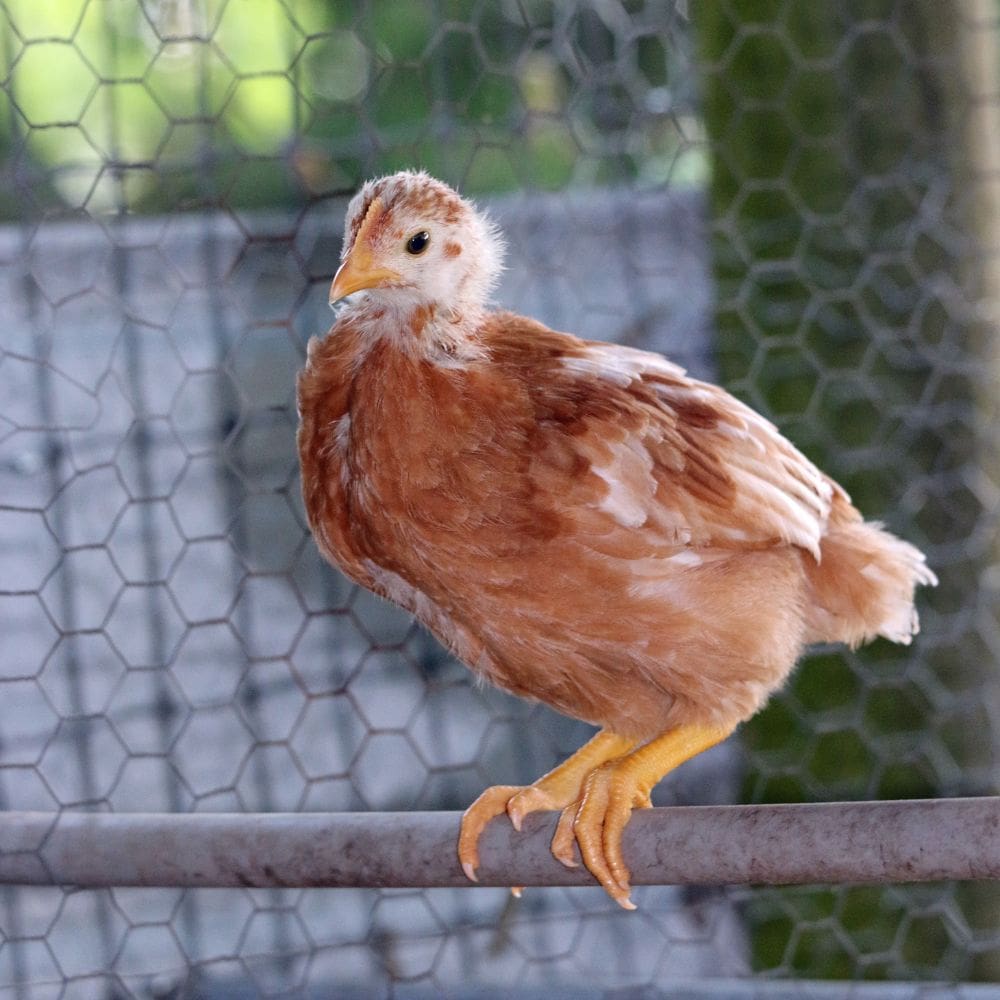
Full-grown chickens look most at home when they’re roosting, don’t they? Roosting is when chickens settle in on a roost to rest safely.
It’s an important part of their lives because it symbolizes an authentic feeling of security, which, for a prey animal, is very important. Chickens don’t start out their lives roosting, though.
Keep reading to learn more. Also, be sure to catch the video about this (below).
What Exactly Is Roosting?
The phrase “roosting bars” is often exchanged with “chicken perches”. Are they the same thing? Yes, they are. Technically a chicken perches on a roosting bar, or at least that is the most common terminology used.
Some folks may say that when a chicken perches, it’s outside of the coop on a tree limb or fence for resting or watching…and when they go up for the night they roost.
Either way, you get the point (and we’ll just say the terminology is interchangeable). Chickens aren’t ground dwellers. It’s an internal drive – a need – to roost. Many call it natural instincts. They WILL roost at night (with few exceptions). Generally speaking, if you don’t provide a roosting bar for them they will roost on whatever they can find (even if it doesn’t seem appropriate or comfortable).
Maybe you can just call it a roosting perch. 😊
They’ll Roost When They’re Ready
The true answer to this question is that your chicks will roost when they’re ready to roost. But we can talk about the different stages that chicks go through when it comes to roosting.
Chickens roost in order to be safe. It’s an instinctual thing that a lot of different birds do, so they’ll naturally start to do it when they’re ready.
What’s Feathers Got To Do With It?
On our farm, we have noticed that different breeds of chicks will start to roost at different times and at different ages. Generally speaking, we have found that they start to roost at around 8 to 12 weeks.
The reason for that is that when they’re chicks, they naturally want to huddle together in a clump on the floor, which is how they stay safe. If you think about it, in the wild they want to cluster under their mother. Since the mothers are generally on the floor, that’s where they’ll cluster. (Which is one reason I don’t think chicks need their mother hens.)
When they’re chicks, they are covered in down, which is not really feathers. Chickens can’t get up onto anything unless they jump on it, so only once they start to develop feathers will they start to actually roost. Even then, I’ve found that it takes them until that 8- to 12-week mark.
When Feathers Appear
You might notice that, even at maybe two weeks, when they start to get their wing feathers, the chicks will start to want to roost if given the option. This happens even in your brooders.
Will they roost up high like adults? No, but they might roost maybe 18 inches off the ground, and that just shows that it’s an instinctual thing for them. You don’t have to train them for this. They’re going to do it naturally.
Learning By Example
In our coop, we start integrating baby chicks into the coop at around 10 weeks. By this time, they usually have all their feathers. If they don’t, they still sit on the ground, but they’re watching the adults roost.
These youngsters start to get the picture that, “Oh, that’s what I’m supposed to do as a chicken.” But really until they get the feathers, they’re usually not going to start doing that.
Not Roosting?
If you find that your chickens aren’t roosting despite having feathers and despite being the right age, ask yourself some questions:
- What do you have in there for them to roost on?
- Is there anything driving them away from it?
An example might be that you don’t have roosting bars at all, or what you have provided is too thin. Chickens are not going to roost on little twigs. You want their roost to be about two inches wide. That’s more comfortable for them.
Some folks use an old wood ladder and chickens seem to love these. Just be sure it’s wood and not metal.
But let’s just say your roosts are perfectly fine and your chicks are not using them. Then ask yourself;
- Is the roost too high?
- Is the roost too crowded?
- Is there something about the roost that’s deterring them (such as vermin crawling on them)?
Let’s say mice can get onto it and are scuttling around at night; your chickens aren’t going to want to roost on that. Or there isn’t enough room for another chicken to fly up and get then get situated without causing chaos.
Those are just some questions to ask.
Here is an article that will provide further help: Chicken Perches – All About Roosting Rituals.
Roosting Materials
As stated before, roosting is very important, and making sure your coop has higher places for your chickens to sleep is a step towards making it 100% predator proof.
As for roosting material, we personally go for the natural type of roost. We might use sticks from outside, larger logs, for example. We also make swings out of those pieces of wood, or we might use a two-by-four. Just be sure they an’t get splinters and that the diameter is sufficient for comfortable roosting.
You can buy commercial roosts. We’ve never actually used them because we found that free logs seem to work fine for us.
Roosting Tips
- It’s best to have roosting bars in an area that is not over or under your nesting boxes. Simply put if they are over the nesting boxes they will poop all over the boxes. If they are under the boxes, flock members will be encouraged to roost IN the boxes (and poop all over the inside).
- Pecking order can also play a role. Some bossy flossy might not allow a certain chicken to roost. You might have to intervene or provide another roosting area.
- You may wonder why it matters if your chickens roost, especially if they are safely locked up in a coop at night. The quick answer is that chickens huddled together on the bacteria covered floor are more likely to get an infection, lice and mites, and other parasites.
- It’s imperative that there is plenty of room for all the chickens to hop up and roost. If there is not, then some will be forced to huddle on the floor. In the summer they will need extra space on the roosting bars so they don’t get too hot. In the winter they will roost close together to produce warmth.
Summary
As you can see, when your flock is good and ready, they will roost (at least most of the time). Be sure your coop is comfortable and your roosting “bars” are adequate (including enough roosting space). It’s a pretty natural drive for chickens to roost (even for backyard chickens), and as long as you have these simple things in place, you likely won’t have to worry about a thing.
Additional reading
Chicken eggs come in a variety of colors, and since we are looking at the whole process of a chick’s life, we may as well look the egg too. One of the biggest questions people have is “What color eggs will my chickens lay?” This is a fun question, one that I’ve decided to answer today.
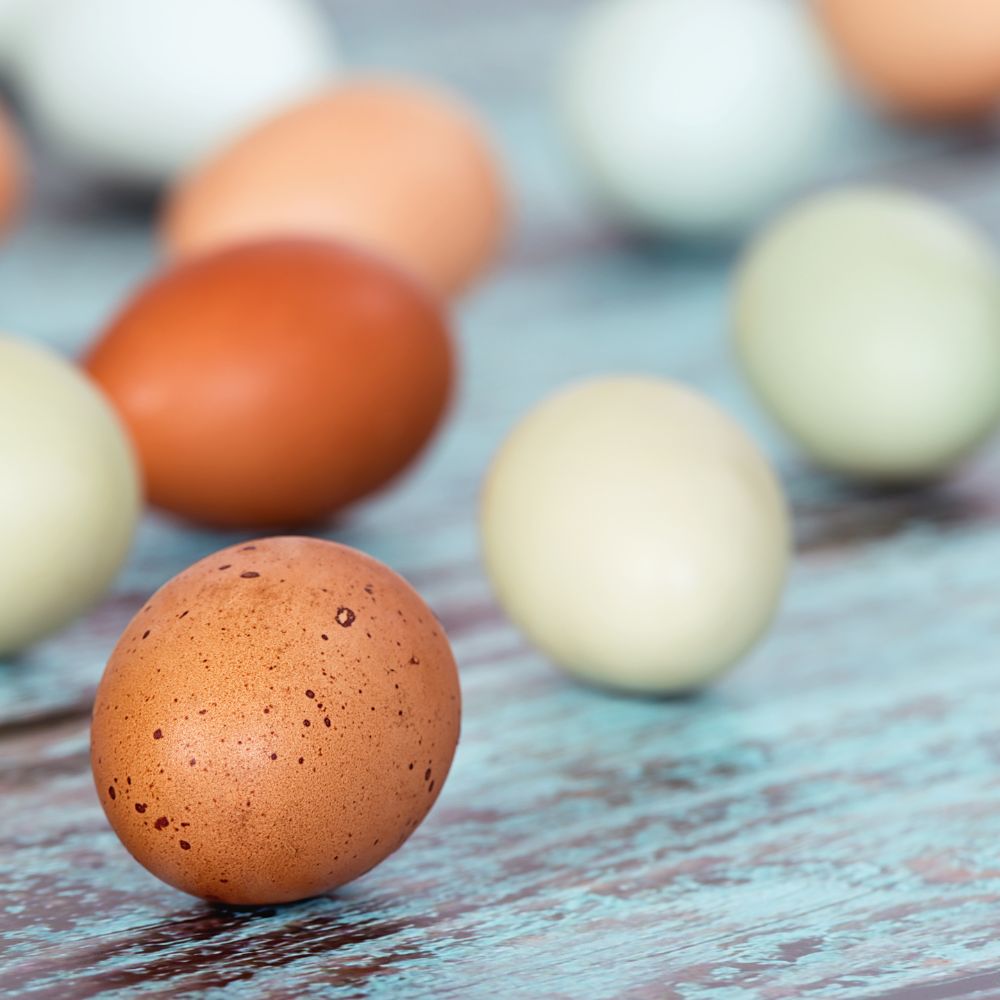
For me, the thrill of having chickens begins before they are even hatched. Chickens need care and attention even when they are still in their eggs. I don’t know about you, but I love eggs. Sure, they are incredibly useful in the kitchen, but if we’re hatching them, we’re not thinking food, are we? No, what I’m talking about is egg color.
What Color Eggs Will My Chickens Lay – How Can I Tell?
Hens can lay all sorts of colored eggs – everything from green eggs to chocolate brown eggs, some lay blue eggs and others lay pink eggs. And all shades in between. Egg shell colors are just another part of raising chickens that is enjoyable and fun.
So, how do you know whether your hen will lay white eggs (like a white Leghorn) or be cream egg layers (like Buff Orpingtons)? Can you tell if they will be blue egg layers or pop out dark brown eggs? You want to know the future eggshell color that will fill your egg basket NOW, but how?
- The Surefire Way
- Disclaimer!
- Earlobe Color
- Easter Eggers
- Ayam Cemanis
- Silkies
- Summary
- Additional Reading
The Surefire Way Of Knowing What Color Eggs Your Chicken Will Lay
There are a few different ways you can predict (sort of) what color eggs your flock will lay, but really? The only surefire way to know what color eggs your chickens will lay is by waiting until the egg is actually laid. I know, pretty obvious and not exactly the advice you were hoping for. But I’m a truth teller, so that’s what you get.
Beyond that, there are some other ways that can probably help you figure out what color egg your hen will lay. So keep reading.
Disclaimer!
Before we get started with this, I must say that there are always exceptions to everything I say here. Don’t message me or leave a comment about how I’m wrong because a specific breed of chicken might not follow the conventions mentioned in this video.
There are always going to be exceptions, and I will touch upon some of them. Please keep in mind that the information in this post (and video) is very generalized advice.
Will Ear Lobe Color Tell You Egg Color?
From a conventional standpoint, if your chicken has white earlobes, it will lay white eggs. If your chicken has red earlobes, it will lay brown eggs.
Some very obvious exceptions to this, notably, are Easter Eggers, Silkies, and Ayam Cemanis – or any sort of chicken that is completely black.
Silkies and Polish Bantams have blue ear lobes, but they can lay like a white egg or a cream-colored egg. Easter Eggers have red ear lobes and they can lay any sort of color eggs, from brown to cream to pink to blue to green to teal.
Exceptions To Ear Lobe Color
Easter Eggers
Easter Eggers, especially, are tricky: the only way you are guaranteed to know what color egg will come out of your chicken is by seeing the egg that comes out of its vent. But this unexpected fluke of genetics is one of the exciting parts of raising your own chickens!
Easter Eggers aren’t a breed, exactly, and the colors of their eggs do have something to do with that chicken’s particular genetics. Because they are more like a hybrid, their eggs can be one of a massive variety of colors. With Easter Eggers, the idea that red ear lobes mean brown eggs doesn’t work in reality.
An Easter Egger can lay brown, white, cream, blue, green, or even pink eggs. There’s no way to know until she actually starts laying. Many folks are partial to a blue egg shell, but trust me when I say blue-colored eggs are not the only exciting color pallets out there.
One thing to note is that each Easter Egger hen can only lay one color throughout that hen’s lifetime. If you want a different color egg from your Easter Egger, you need to have another hen.
Ayam Cemanis
Ayam Cemanis and chickens that have purely all black skin are another exception. Even though they’re completely black in color, and they have black ear lobes, Ayam Cemanis don’t lay black eggs; their eggs are cream-colored.
Silkies
Silkies also have black skin, but they’re not purely black because they do have blue ear lobes. They also do not lay black eggs, but rather cream-colored eggs.
Want to learn something fun about black eggs? Check out this article: Black Chicken Eggs AND the Fountain of Youth.
Summary
There you have it! While most chicken breeds are at least mostly predictable, there are exceptions.
When your chicks are ready to start laying, the anticipation of seeing the eggs will keep you on your toes. Who knew that backyards (and your egg carton) could be so colorful!?
Additional reading
- How often do chickens lay eggs?
- When chickens stop laying eggs
- Chicken breeds that lay colored eggs
- Welsummer Chickens – Iconic Chickens With a Royal Twist
- Araucana Chickens – Extremely Rare Breed Worth Checking Out
- Ameraucana Chickens: Know Before You Buy!
- Cream Legbars – A Dream Come True
- Minorca Chicken – Big Eggs, Big Features, Big Personality
- Light Brahma Chicken – Breed of Splendor
Do chickens need vaccines? Well, that depends!
We all want our chickens to be healthy, right? With all the conflicting information out there, you might be completely confused whether your chickens need vaccines or not.
In this article, I’ll be tackling three of the biggest chicken vaccinations. I’ll give you my personal strategies regarding them, and I’ll answer the question: “Do chickens need vaccinations?”
Disclaimer
Most chicken vaccines – compared to people vaccines – are not really available to backyard chicken owners.
You might find them available through a vet or a hatchery, but usually they’re given to chickens that are in the layer industry – and those companies employ vets who can administer vaccines. So, they’re more likely to have them available.
Before we discuss this subject, please remember I’m not a vet, and I’m not qualified to give you any sort of veterinary advice. This is just information I’ve learned over the years from raising chickens and I’ve had to make some of these decisions myself.
The purpose of this article isn’t to tell you whether or not you should vaccinate your chickens. You’ll discover the different options available, and then you can go ahead and make a decision yourself about whether or not it’s right for you.
Also, in this article, we’re looking at vaccines for layers. There are vaccines for broilers (meat chickens), but in all likelihood, if you’re raising chickens for meat, you probably don’t want to give them any vaccines anyways because it’s likely not part of your lifestyle.
My Go-To Resource For Health Queries
For this article, I’ve pulled information from the Merck Veterinary Manual. If you ever have any questions about different medications for chickens, or even just what the symptoms your chicken is exhibiting might mean, I have personally found the Merck Veterinary Manual to be full of value.
Whenever we encounter an issue on our farm, it’s actually the first resource we go to. If I need to look up a dosage for a medication or if I need to know what medications are available for a specific issue that we’re dealing with, it’s usually where I go. It doesn’t always have all of the answers, but it’s a really good place to start.
Marek’s Disease
The first vaccine that we’ll talk about is the vaccine for Marek’s disease. This is a vaccine you’ll find the most common at hatcheries. There’s no real way to help a chicken if they contract Marek’s.
However, personally, I don’t vaccinate my chickens for Marek’s. There’s no real reason why; I just don’t do it.
We haven’t really had it be an issue on our farm. Maybe one day when it is an issue, I will change my mind. But we’ve been doing this for many years, and it really hasn’t been a problem.
Most hatcheries will offer it. Farm stores don’t, so I wouldn’t go into a farm store and ask if the chicks had been vaccinated for Marek’s when you go to buy them.
I’ve also not heard of any farm store that sells a Marek’s vaccine. It’s something that you would either have to get from a hatchery or from a vet.
Newcastle Virus and Infectious Bronchitis
The next vaccine we’ll talk about is the vaccine for Newcastle and Infectious Bronchitis. Those two, for some reason, are usually administered together.
Newcastle is on the same level as Marek’s – it’s pretty deadly. You might’ve heard that, in California, there have been lots of outbreaks of the Newcastle virus, and whole flocks have been destroyed, or people have had to euthanize their chickens.
Because it’s so deadly, people tend to vaccinate for it.
Some hatcheries offer it, some don’t. You should call the individual hatchery you’re going to purchase your chicks from and see if they offer it.
Sometimes vets offer it, sometimes they don’t, so you should research on your end to see where it’s available (and if it’s even available) for your chickens.
Similarly, a lot of companies that have lots of layer chickens want to vaccinate for infectious bronchitis to make sure that their entire flock – which could be thousands of chickens – doesn’t catch it.
Again, is it really necessary for your flock? I can’t really say. It’s going to be completely up to you to make that decision, but it’s another option.
Fowl Pox
Fowl pox is a virus where the chickens get black spots on their combs. It’s easily confused with frostbite. It’s not as deadly as Marek’s and Newcastle.
I personally wouldn’t vaccinate my flock for fowl pox. We’ve had it here, and our chickens have gone through it just fine. But you should talk to your vet about whether or not to vaccinate your own chickens. You’re going to have to make the decision for yourself.
I have not heard of a vet that gives this vaccine. We also live in an area where there aren’t a lot of chicken vets. We do have a lot of chicken farms – broiler farms – but, again, that’s a different breed than what we’re talking about here. We’re talking about layers.
Your vet might have access to it or you might have a really good poultry vet in your area who could offer these different options to you.
What I Personally Do
I don’t personally vaccinate my chickens for any of these diseases. I don’t think it’s necessary.
But your area, especially if you live in California, it might be necessary. Or you might feel like you’re doing a better job as a chicken owner for having done it. It’s completely up to you.
These are just the different options that I have found to be available to backyard chicken owners, and that you might want to consider.
So should you vaccinate your chickens? It’s up to you!