Grilled Bacon Wrapped Asparagus – Crispy bacon wrapped around tender asparagus and sprinkled with salty Parmesan cheese, this simple side dish is giving you a new reason to eat asparagus! It’s a perfect side and easy to make on the grill and with only three ingredients!

Grilled Bacon Wrapped Asparagus on a colorful platter with a bowl of parmesan cheese for sprinkling on top.
Grilled Bacon Wrapped Asparagus

Are you ready for the holiday? If you’re getting your grill on, I have a terrific side dish, that everyone will be grabbing the instant it comes off the grill!

Hey friends, it Deb stopping by again from Bowl Me Over. It’s summer and we are doing a ton of grilling, so today I thought I’d share with you an easy recipe for a terrific side dish made right on the grill.

Bacon. Wrapped. Asparagus. Need I say anymore?

The salty bacon gets crisp while the asparagus is perfectly tender. And it is delicious! Everyone will be fighting for seconds!

Grilled Bacon Wrapped Asparagus on a platter, ready to serve!
The asparagus turns out so tender!

Let’s go thru the basics.

How do you trim asparagus spears?

  • Rinse the asparagus to remove any grit and then snap off the woody end. You can save the end pieces to make stock if desired.

Steps to make Grilled Bacon Wrapped Asparagus

  • Prepare a bundle with about 5-6 spears
  • Wrap tightly with thin sliced bacon – 2 slices of bacon per bundle
  • Grill on all sides until the bacon is crispy
  • Sprinkle with parmesan cheese the instant it comes off the grill

Bundles of asparagus wrapped in bacon getting ready for the grill
Wrap the bacon around the asparagus bundle.

What temperature to cook bacon wrapped asparagus?

  • Preheat the grill to 350-375 degrees. Try and keep the grill within that temperature range. Definitely less than 400 degrees. Below that the bacon will just steam. Much more than that and the bacon will burn and turn black. I know…. I’ve done the research! 😀

How do you cook asparagus with bacon wrapped around it?

  • Be sure to oil the grill well. Add the bacon wrapped asparagus and close the lid. Flip it every three minutes or so. Don’t futz with it, just rotate it to the new side. Continue turning the bundles until the bacon is crispy on all sides.

Grilled Bacon wrapped Asparagus being cooked on the grill
Take your time and be sure the bacon gets good and crispy!

Just be patient – this takes about 20-25 minutes to cook. You want the bacon good and crispy! The hardest part is not eating this as soon as it comes off the grill!

Sprinkle the bundles with Parmesan cheese the instant you take it off the grill so it melts and gets all cheesy! Lightly cover the side with foil until you’re ready to serve.

Grilled Bacon Wrapped Asparagus being sprinkled with parmesan cheese.
Sprinkle with parmesan the instant it comes off the grill.

If you’re looking for something super tasty to serve with this meal, how about teriyaki steak? We love this marinade and use it on just about everything!

Have you joined the blog yet? I have so many great grilling options and I’m always sharing new ideas!

I hope you really enjoy this recipe! Be sure to tag me on Instagram @bowl_me_over – I’d love to see how it turned out for you!

Grilled Bacon Wrapped Asparagus

Grilled Bacon Wrapped Asparagus – Crispy bacon wrapped around tender asparagus and sprinkled with salt parmesan cheese is the perfect side dish and to make on the grill!

  • 1 1/2 lbs. asparagus
  • 12 slices bacon (use thin sliced)
  • 1/4 cup parmesan cheese
  • nonstick coating for the grill
  1. Clean the asparagus, snap off the woody ends.
  2. Prepare each bundle with about 5-6 spears.
  3. Wrap tightly with thin sliced bacon – 2 slices of bacon per bundle.
  4. Oil the grill and add the bundles to the grill. Grill on all sides three minutes per side until the bacon is crispy 20-25 minutes.
  5. Sprinkle with parmesan cheese the instant it comes off the grill.

If you love this meal, I’m going to send you over to the blog for more terrific recipes!

Souper Chef DebDebra Clark blogs over at Bowl Me Over where she shares her love of all things in a bowl! Soups, stews, salads, Buddha bowls, ice cream you name it! Comfort food that is delicious and full of flavor. Most meals are quick and easy!

You can also connect with her on Facebook, Pinterest, Instagram, Twitter and YouTube.
We all know chickens go through a molt every year, but did you ever wonder “do ducks molt?” Duck molting is indeed a thing!

In fact, they molt quite a bit every year – possibly enough to build you a whole new duck.

In fact, I’ve gone outside and wondered whether the drakes, hens, and young ones had a pillow fight the night before and didn’t invite me!

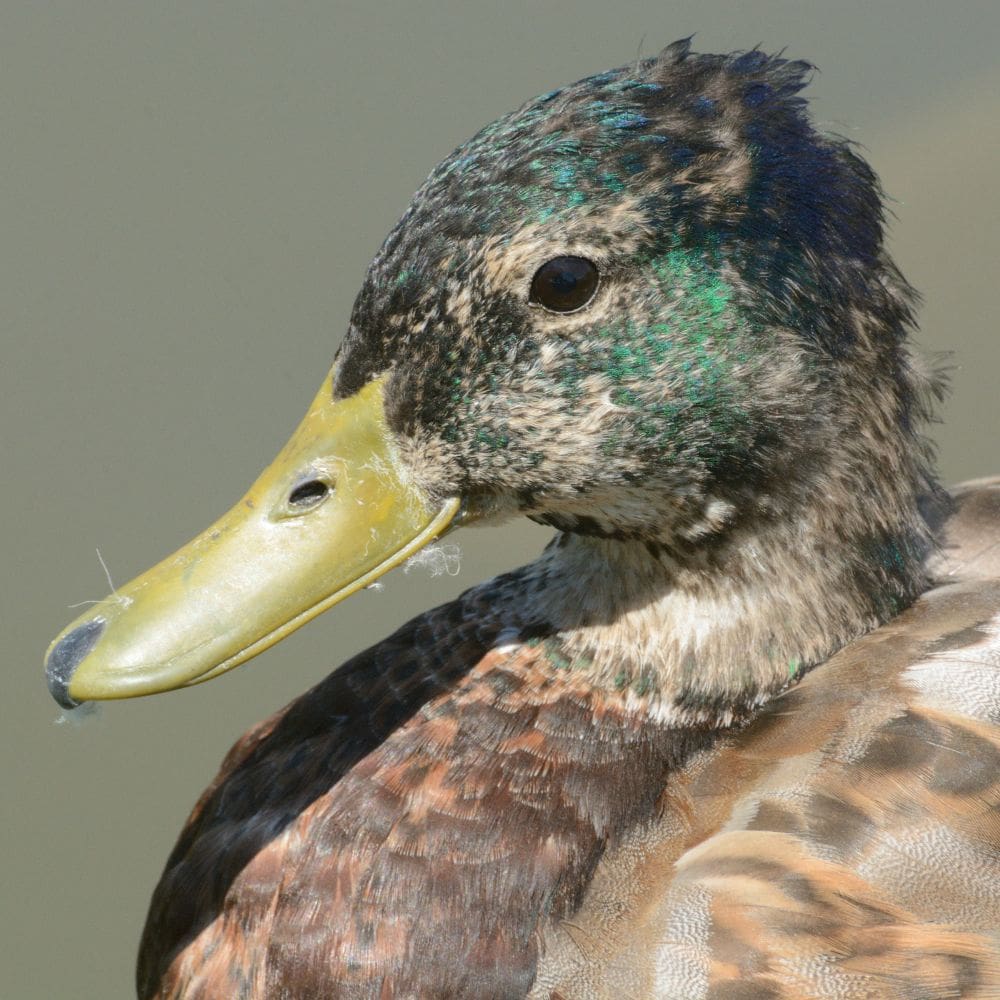
Up close of Mallard duck who is molting

You might even wonder how such a little bird can have so many feathers hidden – more on that in a minute.

Our hen Henrietta, a Khaki Campbell is molting presently – and she looks quite a bit disheveled. Not sleek and bright like the younger ducks in her pen!

Like chicken molting, ducks molt to replace old feathers with new feather growth, and they do it every summer. So, expect it to be an annual event.

How do ducks molt?

Ducks molt differently than chickens, and in the main summer molt, both duck hens and drakes will lose feathers.

Chickens molt by losing them on their head, neck, and back, and then regrowing them in the same top-down pattern.

Ducks, on the other hand, just lose their feathers all over the place and all at once, including their primary ones. They’ll also scratch and pluck them out with their bills to speed things along or just relieve the itch.

Henrietta has been caught with bits of plumage all over her bill – she dunks herself in water to clean it off!

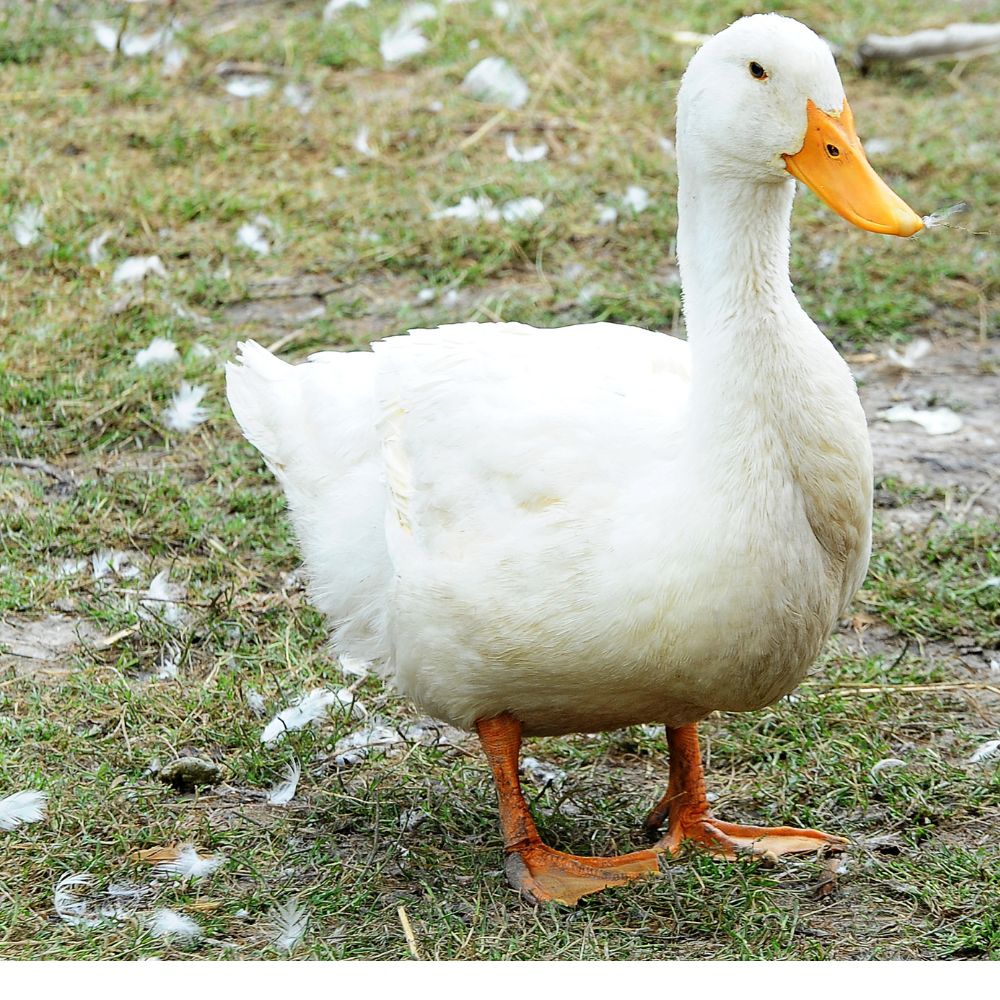
White duck standing in grass with feathers all over the ground due to molting

You might also notice your ducks aren’t playing or interacting as much – again, this is normal. Henrietta has been staying a bit back from the younger ducks as she loses her feathers.

Additionally, drakes (male ducks) will undergo an additional molt after the spring breeding season has ended – they will lose their fancy-colored plumage for duller-colored feathers. The purpose of this in the wild is to help waterfowl stay safe from predators (as a bit of camouflage).

Why do they lose so many feathers?

As you probably know, in addition to their primary plumage, ducks also have a significant downy undercoat. This downy is the same down you’ll find in coats and pillows.

So, ducks will also lose their down during a molt, which is why it can look like a crime scene in their pen – and you might take a headcount, wondering how a predator got into the duck house.

Rest assured, it’s just natural feather loss.

In fact, ducks lose their primary feathers (such as flight feathers) all at once. In the wild, they will be flightless for about a month – no big deal since ducks are usually close to water, keeping them safe from predators.

This is less of an issue for domestic ducks, although the sight of it can be overwhelming. Just grab the broom and sweep them out. Your sweet little pet ducks will be just fine.

As Henrietta has molted, she looks very disheveled, and her color appears mottled – this is a result of losing feathers as well as loose ones that haven’t yet been shed.

Eventually, glossy new plumage will appear, and the ragged hen will look sleek and beautiful again. Just remember, that the length of time it takes to complete a molt will vary from duck to duck.

What about egg production?

While your female ducks molt, you might notice the hens’ egg production goes down – this is normal. Like chickens, growing new feathers is hard on the duck’s body and requires a lot of protein for ducks.

We’ve noticed that Henrietta is egg-laying less, and when she does lay an egg, they’re smaller. Again, this is totally normal, and once she’s done molting, production picks back up.

If your ducks stop laying completely, you still don’t need to worry – it’s normal, and they’ll start again eventually.

What should you feed during duck molting?

When your ducks molt, it’s a good idea to give them extra protein. The first thing to be sure of is that they are eating high-quality feed with excellent ingredients. Here is our special blend.

Beyond that, you can give them extra feed during their molt, or offer treats of dried mealworms floating on water (it also provides extra entertainment). Giving them high-nutrient treats such as kale or parsley will help as well.

If they can have access to a pond or are able to free-range some they can also get extra protein by eating bugs.

You can also switch to a higher protein feed if needed.

Can’t feather loss indicate parasites?

Yes, this is true. However, if your duck has parasites (like lice or mites) the feather loss will likely be in patches and not a full-body experience. The interesting thing is that molting helps reduce the chance of parasites as the feathers shed and renew.

If you are worried about this, just be sure to spread out your duck’s feathers and look for raw spots, crusty areas, and actual bugs.

Summary

If your flock is going through a major molt, I know it can be a frightening sight. Seeing your hen’s plumage go from amazing to frazzled is not necessarily fun. Just remember it’s a natural part of duck life, a renewal of sorts. Althought there is no way to determine exactly how long it will last, it usually only lasts about 2-3 weeks.

Just be sure to give your sweet quacks some extra protein rich treats along with extra love.

Additional Duck Articles

Ever have old stuff lying around your home, and you know it can be upcycled into something useful and beautiful, but you’re not sure what? That’s why I’ve invited my friend Adrienne to show you how to make a recycled bicycle planter!

This project is easy and super cute – and would make a great addition to any coop! (and your chickens would love to hop on the bike as a toy!)

This recycled bicycle planter is made from an old bike that was rescued from the junk pile, and with a little paint and wooden crates filled with summer flowers, an old rusty bike can be recycled bicycle planter that makes a great, colorful addition to your garden!

Recycled Bicycle Garden Planter

Time: 2 days
Cost: $30
Level: Easy

Using recycled objects in the garden has been a trend for many years. Homeowners can decorate their garden areas inexpensively while giving new life to old objects such as glass bottles, old chinaware, and discarded metal items like this old bike.

We have an old metal scrap pile on our property where items have been discarded for many, many years by my husband’s family.

My in laws found this old bike in a dumpster about 30 years ago and my husband used it to learn to ride a bicycle.

After he was finished with it, it sat in the junk pile until I rescued it last week and turned it into a bright, colorful flower planter for my garden.

Supplies for recycled bicycle garden planter

  • Old bicycle
  • Spray paint and primer
  • Two wooden crates
  • Twine
  • Potted plants
  • Metal post ( I used an old curtain rod)
  • Hammer
  • Scissors
  • Knife

Directions for recycled bicycled garden planter

Step one: Clean

Begin by cleaning of the bike the best you can. Since this bike was from the junk pile and had been sitting outdoors for many years there was lots of mud, moss, and pine needles stuck to it.

I used a green scouring pad and dish soap to scrub as much as the gunk off as I could and rinsed it down with the garden hose

Step two: Remove the tires

If the tires on your bike are in decent shape you can leave them on. The tires on my bike were starting to fall off so I decided to completely remove them.

I used a knife and scissors to cut the tires off of the rim. The older the rubber is, the easier it will be to cut through and remove so if your tires are nice you may want to keep them on.

Step three: Prime

After the bike is completely dried, spray paint the bike with white primer. Look for a formulation that will cover rust and is suitable for use on metal. Coat the bike throroughly and let the primer dry.

Tips for spray painting:

  • Paint outdoors on a hot day but paint in the shade. Painting in direct sun will cause the wet paint to get to hot and may not cure properly.
  • Use the right type of paint for the material you are painting. The paint can should tell you what materials it is safe to use on.
  • Spray in a smooth and steady motion going with the grain of the object you are spraying.
  • Start by moving your hand before you press the trigger to avoid blotches.
  • It’s better to do several thin coats of paint and let the paint completely dry between coats. If you try to do one thick coat the paint may not dry properly.

Step four: Paint

Once the primer is completely dry coat it with two coats of spray paint in the color of your choice, letting It dry between coats.

Step five: Attach the crates

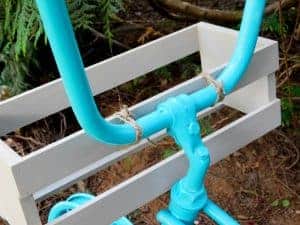
After the bike is completely dry it’s time to attach the crates. Use twine or rope to tie the crates to the front and back of the bike.

At the front of the bike I attached the crate to the handle bars and at the back of the crate I placed it onto the tire rim and tied it to the metal.

Step six: Stake it to the ground

Depending on the bike you have chosen, there may be a kickstand and that may be all that is required to keep the bike upright on it’s own. I needed extra reinforcement so I used an old curtain rod and slipped it down through the middle of the bike and into the soil.

Then I used a hammer to drive it into the ground as far as I could. This makes the bike steady.

Remember: When the bike is full of flowers it will be heavier and more prone to tip. You may also want to lean it against a tree or fence.

Step seven: Add potted plants and flowers

Purchase some potted plants of your liking and insert them into the crates. For the most visually appealing look use flowers that are in a contrasting color to the bike.

Take a look at the color wheel and choose a color that is opposite of the bike color you chose. for instance I used orange-red flowers with a blue bike.

Remember to water your flowers several times per week, or as the soil gets dry. Keep your plants healthy and happy, and your bike planter will have your garden looking great for years to come.

Adrienne is a DIY blogger and jewelry artist located in Washington State. She teaches people on a budget the skills they need to complete creative projects around the home and garden. You can find her online at Crafty Little Gnome teaching readers projects like how to cut a glass bottle and make homemade bleach.

Yes, it’s true. You can make your own organic, all natural coop refresher, and it won’t even cost you a million dollars.

While I love the commercial coop refresher products you can buy, there came a day on the farm when we NEEDED something to squelch the stench in the rabbit coop and the chicken coop.

And by squelch, I mean eliminate completely. We needed a coop refresher and we needed it NOW.

(Want more chicken keeping goodness? Grab The Backyard Chicken Bundle (TM) – it’s 3 full-length e-books, plus checklists and recipe books. All for the price of one. Yes, a 90% discount. You can’t beat that. Get it here while it’s on sale.)

It was one of those hot fall days when you never know what to expect – it can be 80 degrees during the day (yeah!) and a kit-and-chick-killing 42 degrees at night. (Here’s how to prepare your chicken coop for winter).

We keep the coop very clean, but at those temperature swings, it doesn’t take much to make me worry.

After we cleaned out all the straw, I wasn’t satisfied – something was needed to make the coop extra clean.

Now, here’s the thing. We live 45 minutes from ANY sort of store that might sell a commercial chicken coop refresher.

And it was Sunday evening. Running to town in order to buy something like a chicken coop refresher just wasn’t going to happen.

But something needed to happen – fast.

So, I improvised. And it worked so well, that we now ONLY use my favorite organic all-natural coop refresher recipe on the farm.

And the best part?

It costs less than a few dollars, and last a good long time. And your chickens will be happier and healthier for it.

herbs for backyard chickens

Organic all-natural coop refresher is easy to make at home. If you need a quick chicken coop refresher spray recipe, this is perfect for backyard chicken beginners!

Making Your Own All-Natural Coop Refresher

So, the purpose of a chicken coop refresher is to soak up any animal waste and neutralize the odors so your chicken flock doesn’t breathe in ammonia or other fumes that can harm them.

Now, I don’t have anything against commercial chicken coop refresher products.

But I don’t think they’re always necessary. I think – no, I KNOW – you can achieve the same results for a coop refresher with basic ingredients you probably have in your home right now.

That day that one fall evening when I was in a panic, it dawned on me that two simple ingredients – flour and baking soda – could produce the same effect we might spend a lot of money to solve.

Think about it – flour is extremely absorbent. We all know that from making bread.

If you use organic flour to make your own coop refresher…well, you’ve got an organic solution to your smelly chicken coop.

(Want more chicken keeping goodness? Grab The Backyard Chicken Bundle (TM) – it’s 3 full-length e-books, plus checklists and recipe books. All for the price of one. Yes, a 90% discount. You can’t beat that. Get it here while it’s on sale.)

Baking soda is the gold standard for neutralizing odors – that’s why we’ve kept it in our refrigerator since our childhood.

Why couldn’t it also be used in a homemade coop refresher to neutralize odors from chicken waste?

Well, it can. And it costs less than $1.

SHAZAM.

Particularly if you’re worried about using diatomaceous earth or something like lime, this combination can be a good solution while not sacrificing a clean chicken coop.

While the flour and baking soda particulates won’t hurt your flock, it’s still a good idea to allow the dust from your all natural coop refresher to settle (so to speak) before allowing your hens back into the coop.

herbs for backyard chickens

The ratio of flour to baking soda in your chicken coop refresher

Now, I’m kind of making a production out of this all-natural coop refresher idea, but the truth is the ratio of baking soda to flour is not as precise as, say, the ratio if you were baking.

Typically, I go for a 5-pound bag of flour and mix in 1 small box of baking soda in a 5-gallon or painter’s bucket.

Brands don’t matter, just make sure it’s fairly high quality and not the bottom shelf who-the-hell-knows-what’s-in-it brand (I’m looking at you, Dollar General Clover Valley brand of flour. You can literally smell all the chemicals in that “flour.”)

Mixing baking soda with flour, I found, makes it easier to sprinkle the chicken coop and sweep out than if it were either ingredient alone. (Check out these awesome FREE chicken coop plans!)

Once you’ve put both ingredients into the bucket, thoroughly mix (I use a feed scoop, you can use a big spoon if you don’t have a scoop), and get to sprinkling.

You’ll notice the smell start to neutralize fairly quickly, assuming you’ve done a good job cleaning your coop as thoroughly as possible. Learn how to clean your chicken coop like a pro!

(If you have puddles of urine everywhere, then you might need just a tad more coop refresher. Or a few bucketfuls.) And if you’re having problems with flies in the chicken coop, click here to read how to keep flies out of the coop.

Sweep out, resprinkle the coop refresher, and sweep out as necessary. I personally resprinkle a final layer of my homemade coop refresher and put straw on top. You can do whatever you feel is best for your flock.

It’s easy, it’s fast, and it’s cheap. I guess for once, you really can have all three. Happy sprinkling!

herbs for backyard chickens

More Chicken Raising Resources:

Learn More about Types of Chickens with the Backyard Chicken Bundle!

The Backyard Chicken Bundle is a unique ebook bundle with every resource you need to start raising a flock of healthy hens! (Total value $250)

Included in the bundle are:

  • 5 individual ebooks with over 40 gorgeous full color photographs, charts, and recipes for all-natural coop cleaners, layer feeds, herbal first aid salves, and more.
  • 34 page Herbal Encyclopedia to growing 30 different herbs for your hens right in your own backyard
    E-books naturally complement each other so you have information at your fingertips.
  • 3 downloadable checklists to save your flock from bad weather & predators, and to keep them healthy while molting.
  • 1 Apple Cider Vinegar for Backyard Chickens video that shows you step-by-step how to make organic apple cider vinegar in your own kitchen.
  • Information you can TRUST by a recognized backyard chicken expert featured in Reader’s Digest, Glamour, and on major news networks like ABC, CBS, & NBC. And START spending every possible minute playing with & enjoying your pets (without the worry)!

Click here to learn more about the Backyard Chicken Bundle!

Backyard Chicken Bundle

Popsicle are one of my absolute favorite snacks. They’re perfect to help keep you cool on a warm day AND they taste amazing!

I’m always on the hunt for new homemade popsicle recipes because I’m not a fan of all of the ingredients that are in store bought popsicles.

One of my favorite popsicle recipes uses berries and I love the delicious fruity taste.

But today I was craving something that tasted a little bit more tropical. Maybe I’m just wishing I was on a warm sandy beach right now instead of at home typing away on my computer.

So I decided that I wanted to try and make some pineapple flavored popsicles. And they turned out AMAZING! So I decide to share the recipe with all of you!

This recipe only takes 2 ingredients!!! And I literally whipped it up in about 2 minutes.


Here’s what you’ll need:

  • ½ cup of milk
  • 1 can of sliced pineapple
  • Popsicle mold

You can use whatever type of milk you want for this recipe. I used regular whole milk, but I think almond or coconut milk would also taste AMAZING in this recipe.

I used canned pineapple (because cutting a fresh pineapple is a lot of work). I used the canned pineapple that comes in round slices, but you could use any type you have on hand. Whenever I get canned fruit I always make sure that there isn’t added sugar and that the pineapple is canned in pineapple juice. Pineapple is sweet enough on its own so I don’t think it needs added sugar.

You could add some honey or sugar to this recipe, but I decided to just leave it out. Honestly it tasted great without it because pineapple is so sweet by itself!

I just combined all of the ingredients into a blender. I only used about 5-6 slices of pineapple and I broke up the slices into smaller pieces to make it easier to blend. I also poured in a little bit of pineapple juice that was leftover in the can (probably about ¼ cup) to add some extra pineapple flavor.

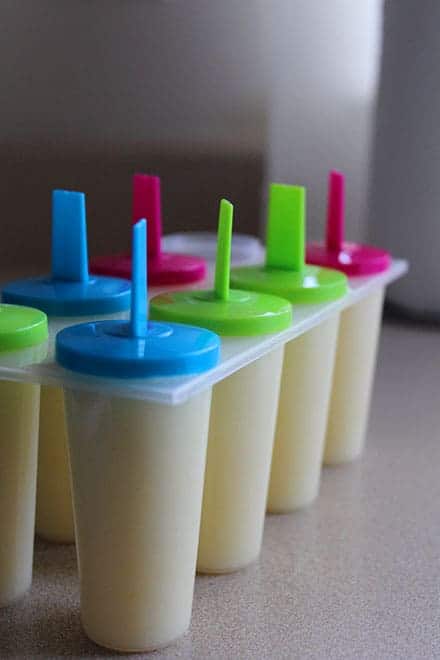
Then I just blended it up until it was mixed together and poured it into my popsicle molds. My popsicle mold is similar to this one, and I really like it! It works great for me! Make sure you blend it really well otherwise your popsicles could be a little stringy.

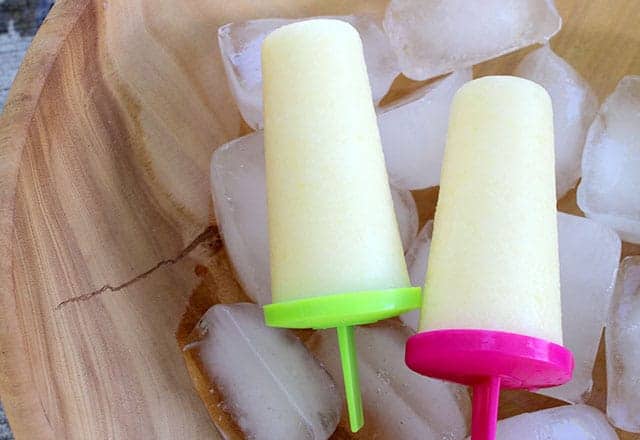
I left the popsicles in the freezer for about 5 hours and wallah! I had a delicious, tropical treat that made me feel like I was relaxing on a warm beach (even though I was really just hanging out in my kitchen)

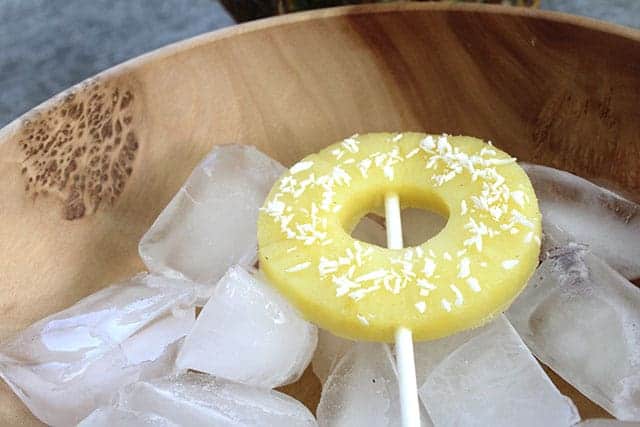
With the leftover pineapple slices I also decided to make another popsicle! This one was even easier! I just put a popsicle stick through the pineapple slice, placed it on a small piece of tinfoil and stuck it in the freezer for 2 hours!

It was SOO good! And it took me about 30 seconds to do! I had one and it was so good I had to make another one! This time I sprinkled coconut over the top and it made it the perfect summer treat!

Easy Homemade Pineapple Popsicles

These easy pineapple popsicles only take about 5 minutes to make and taste like a tropical summer dream!

  • 1/2 cup milk
  • 1 can sliced pineapple
  1. Combine milk and sliced pineapple (I used about 5-6 slices) into the blender
  2. Add pineapple juice (from can) into blender (I used about 1/4 cup, but you can add as much or little as you want!)
  3. Blend ingredients well and then pour mixture into popsicle molds
  4. Freeze for 5 hours and then enjoy!

Do you have any homemade popsicle recipes? Share them with me in the comments below!

We’ve all been there – starting at the half empty carton in the fridge. The eggs are about to go bad, and you’re not sure what to do with them except throw them away.

Personally, I don’t like tossing extra eggs if I can help it, and I’ve spent a lot of time researching and testing unusual ways to repurpose them.

And I’ve discovered that there’s a LOT you can do with extra eggs!

In this article, I’m going to show you how, with a little bit of preparation, you can save extra eggs and reuse them in several ways in your home.

8 Unusual & Genius Hacks To Use Extra Eggs

Shine bread

Use egg whites as a glaze for breads, muffins, and pastries. Adds a glossy sheen and helps keep toppings such as herbs or sesame seeds in place.

Thicken soups

Add egg yolks to soups and sauces to thicken them. Wait until the soup is relatively cool so the yolks don’t cook & scramble – unless you’re making egg drop soup, in which case you want the eggs to cook!

Make Homemade Mayo

Homemade mayonnaise tastes much better than the store bought stuff – and you can be sure it’s made with fresh, organic ingredients.

Mix egg yolks with a blender, and gradually drizzle olive oil a few drops at a time while blending constantly. Add vinegar to taste until mayo is white and creamy. If you want to ferment the mayo for extra nutritional benefits, this article will help you out.

Remove Stains

If your coffee mugs are stained from tea or coffee, use eggshells to remove tem. Grind up eggshells and sprinkle them in the mug. Add warm water until a slurry is formed. Leave to soak overnight. If the stains aren’t fully removed by morning, repeat until the stains are gone.

Freeze Them

Separate egg whites & yolks.  Freeze egg whites to use in meringues or to shine bread as needed. Mix yolks with a pinch of salt or sugar to keep them moist when you defrost them (freezing tends to dry yolks out). Note which yolks have salt or sugar so you can use them in an appropriate recipe.

You can also freeze yolks and whites together (scramble them first), and use in recipes as needed.

Make Candied Nuts

Separate whites from yolks (or use the frozen whites from above!) and whisk with a ¼ tsp of water. Add your favorite nuts, coating them with the egg mixture. Remove nuts and sprinkle with cinnamon and sugar.

Bake at 250 degrees F for 45 minutes (keep an eye on them so they don’t burn). Use a spatula to turn them regularly to they bake evenly. Enjoy!

Add to Smoothies & Other Drinks

Love smoothies? Want them to be even more smooth? Add egg whites! Whisk them until they’re frothy and fluffy, and use up to 2 tablespoons per 8 ounces of smoothie. You’ll have to play with it a bit to see what tastes best to you.

The egg whites will give your smoothies a silkie texture. You can also use them in alcoholic drinks.

Make A Homemade Calcium Supplement

Eggshells are an excellent source of calcium and other micronutrients. Add them to smoothies or other drinks to meet your daily calcium requirements.

To make eggshell powder, first spread the shells on a cookie sheet. Bake them at 350 degrees F for 10 minutes. Once they’ve cooled, process them until they’re completely ground.

If necessary, you can grind them with a food processor then finish with a mortar and pestle until the shells are fully powdered (sharp edges never did anyone a favor!)

Store in the fridge and use within 3 weeks. Only use about ¼ tsp per 8 ounces of drink (20 or so shells will make about ½ to 1 cup of powder).

If you can’t make it through all the powder in that time, you can add the remainder to your compost bin, your garden, or feed to your chickens. (For other animals such as dogs and cats, check with your vet first).