Thinking about freezing chicken eggs because you’re getting so many? Read on for my best tips!

Eggs are incredibly valuable: within them lie the blueprints of life. But they’re also sustenance. The vast amount of cultures around the world that raise chickens for eggs has made their eggs one of, if not THE most essential egg on the planet. 

Many times throughout the year our hens are laying a lot of eggs and we’re left with WAY too many of them! Especially when we feed them things like Best Eggs Ever and Egg-Cellent Yolks (check them out!).

While you have many options for preserving eggs, freezing is the easiest and one of the safest ways to make sure you have “butt nuggets” on hand whenever you want them. (This goes for chicken eggs and duck eggs).

Then, when it is time to use them, they can be thawed for any and all of your culinary dreams. This is truly a wonderful fact that can add some versatility to this egg-cellent ingredient. 

However, if we are going to freeze eggs, there are some key details to consider first.
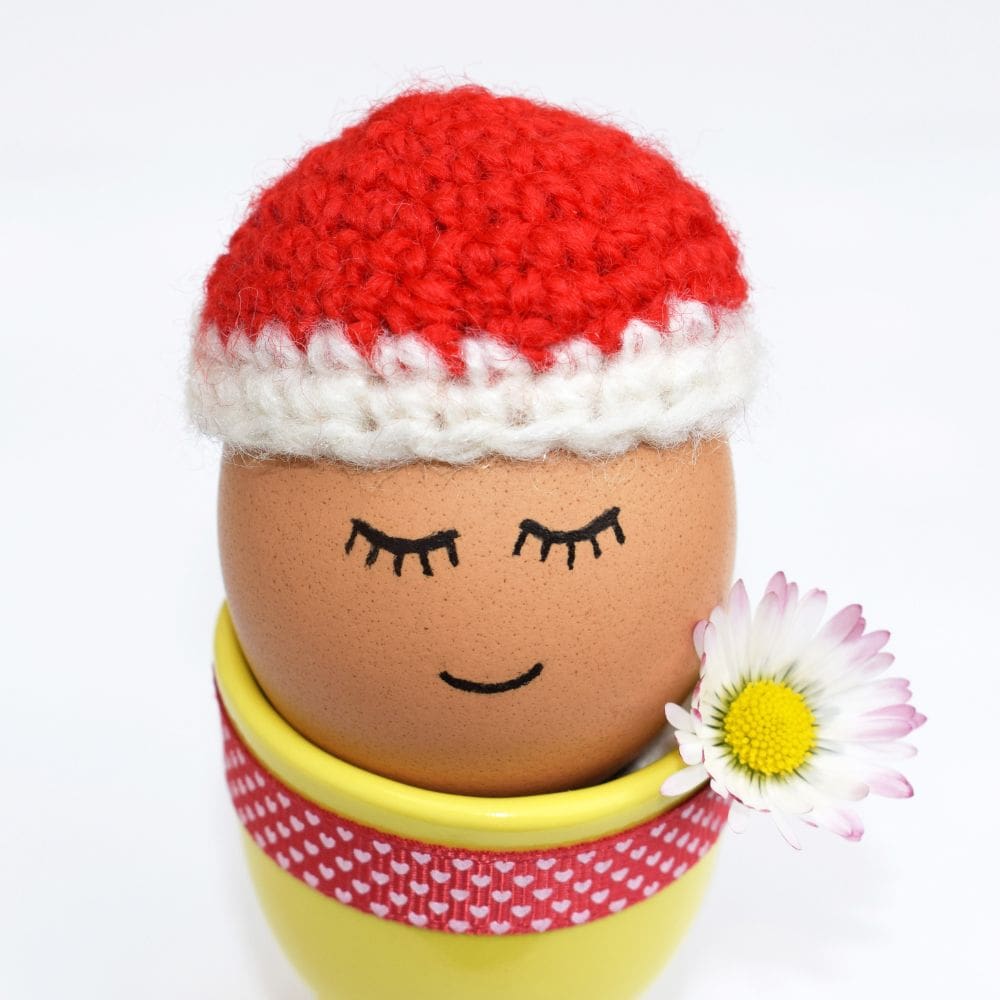
Cute chicken egg in a little flower pot with a crochet hat

How Quickly Should You Freeze Eggs?

If you are going to freeze your eggs, it is better to do so sooner than later.

A few days at room temperature or in the fridge is about the maximum length of time you should wait before freezing them (learn how to tell if eggs are fresh here). That way, you are using only the freshest eggs.

Eggs should only be frozen for about a year before they are used, dating your freezer containers is recommended. 

No Shells Allowed!

As anyone who has accidentally left eggs in their coop during a snowstorm can attest, eggs expand as they freeze which can (and probably will) result in cracked shells. As you can see the possible demise, eggs should never be frozen in shells.

Cracking them into a freezer-safe container also ensures that you’re not using valuable freezer space to store eggs that might have problems: veins, lash eggs (yuck!), partially-incubated chickens (yes, it can happen), or other egg abnormalities.

You’ll also want to wash your eggs first – you don’t want flecks of dirt, bacteria, or manure to get into your whites or yolk prior to freezing.

Should You Separate Yolks and Egg Whites?

When people ask “can you freeze eggs,” they next ask whether they should freeze the WHOLE egg, or separate whites and yolk. 

It’s a good question because the yolk and albumen are very difficult to separate once they have already been frozen. If you only plan to use eggs for dinner – in stir-fry, breakfast cooking styles, salads, or in meat recipes – then cracking them straight into your storage receptacle is ideal.

If you plan to bake or do any cooking or baking that requires just yolk or egg white, then separating white from yolk would be the better option. (Here are a ton of recipes that use eggs!)

Either way is fine, but if you plan to store your eggs whole, consider beating them just past the blending point. Doing this prevents the yolks from taking on a gelatinous consistency, which can be very difficult to cook with.

How To Store Just Egg Whites

Whites are relatively easy to store. Break the egg and separate out the yolk being careful to avoid getting any yolk in them. Then pour the whites into your receptacle of choice, and freeze.

The best containers for whites are ice cube trays or large freezer-safe bags. Label them with the date of storage and the number of eggs.

How To Freeze Egg Yolks

Yolks are trickier because the freezing process causes them to thicken or gel. Once gelled, their usage diminishes significantly, and while it might be possible to find a use for them, the uses of gelled yolks are quite few and far between.

To help with this issue you can add some salt or sugar. For every 4 yolks, you should beat in either 1/8 teaspoon salt or 1.5 teaspoons sugar.

Be sure to label the bag with when they were frozen and whether they have been beaten with sugar or salt. Pulling out sweetened yolks for a main dish, or salted yolks for a dessert isn’t the best idea!

Ideas For Frozen Eggs

  • Breakfast sandwiches
  • Scrambled eggs
  • Breakfast burritos
  • Baking of all kinds
  • Quiche

Can You Freeze Hard-Boiled Eggs?

You can freeze a hard boiled egg, but it’s not recommended. It significantly changes the texture and taste of the egg. It’s best to stick to other frozen raw egg uses if you ask me.

How To Freeze Eggs

There are several ways you can freeze eggs, but one of the most popular ways is to use ice trays. Crack an egg into each little square or whisk the eggs up and pour the egg mixture into the ice tray. Either way, be sure to cover it with plastic wrap before putting the tray into the freezer.

Once the eggs are frozen, pop them out and put them into a freezer-proof container or storage bag.

Of course, you can skip the ice tray step and simply put the eggs into the container of your choice. It’s just harder to measure that way (if you think you will need calculated measurements).

Ready, Set, Cook!

When you are ready to use your frozen eggs, thaw them overnight in the refrigerator or under running cool or cold water. Then, as soon as they are softened, put them to use.

So, can you freeze eggs? The answer is YES! Go for it!
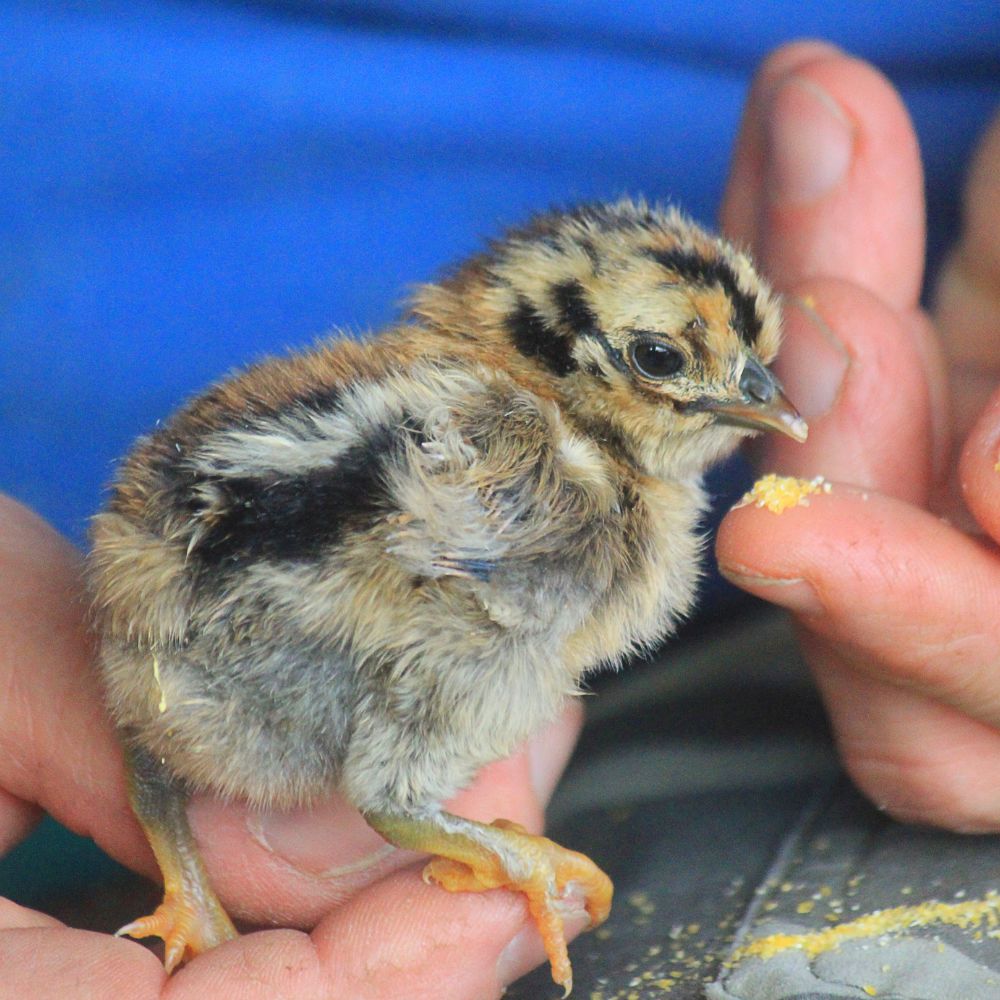
The debate about medicated vs unmedicated chick starter has been raging for decades. Controversies are often unavoidable, especially when it comes to the well-being of our human and animal families.

Being informed is important and this post is aimed at doing just that!

There is lots of bickering back and forth on social media about whether it’s better to feed your young chicks medicated chick starter or unmedicated chick starter. 

Today, I’m going to share some facts about this controversial topic. I’ll describe the differences between them, dispel some of the myths out there, and give you information that can help you figure out whether medicated or non-medicated feed is right for you.

Feed Names

You’ve probably heard feed called several different names, so what is what? Well, it’s not complicated. Starter feed is the feed you start your chicks on. It is often called chick starter, chick starter feed, chick feed, or just starter feed. It all means the same thing.

Grower feed is slightly different however. Chick grower has less protein and not as much calcium. It’s used for “teenager” chicks, between chick stage and adulthood. You can begin grower feed between 6 and 20 weeks. Or you can skip it and feed starter feed until they are adults and then switch to layer feed.

Medicated vs Unmedicated chick starter

Coccidiosis

Coccidiosis is an infestation of parasites in a chick or chicken’s gut or intestines. In baby chicks and adults too, this can be deadly. 

Will it kill every chick if you don’t use medicated chick starter? No.  Might it kill a chick? Possibly. 

Unfortunately, the veterinary medical care surrounding baby chicks isn’t very advanced. It’s really hard to acquire accurate figures surrounding Coccidiosis. 

I don’t know of many statistics out there that show how many chicks actually die of parasite infestation. Medicated chick starter, however, was designed to directly combat both Coccidiosis and parasite infestation. 

In terms of nutrient value, medicated chick starter should contain 18% protein. If it doesn’t, I would find a chick starter that does. If it’s produced by a commercial manufacturer, it’s gonna have all the nutrients your baby chicks need to grow into healthy adults.

Medicated Chick Starter

To look at what medicated chick starter is, it’s important to distinguish what it is not. I’m not sure who started this or why there is a misunderstanding about this product, but medicated chick starter does not have antibiotics in it. 

Medicated chick starter does have amprolium in it. Amprolium is a medication that prevents the growth of parasites that are naturally found in the soil.

Unmedicated Chick Starter

Non-medicated chick feed doesn’t have this extra medication (Amprolium) that helps prevent the growth of parasites. 

Unfortunately, these parasites are everywhere. They’re going to be in the soil, on grass, and wherever your chicks roam...so your chicks will be exposed to them. It’s up to the chick to build up immunity against them. 

Some people argue that medicated chick starter prohibits chicks ability to build up that immunity or that it’s somehow unnecessary to help build up their own immunity.  

Unmedicated chick starter, again, is a complete feed and has the nutrients and vitamins that they need to grow up healthy. It has all the beneficial minerals that your chicks need. However, choosing a starter with extra nutrients will be all the better. Check this one out taking special notice of the ingredients.

The fact that unmedicated chick starter doesn’t have amprolium in it is ultimately the only difference between the two types of chick starter.

Organic Options and Uses for Chickens

When people want to raise their chickens organically or naturally, they choose not to feed the medicated chick starter. This organic approach keeps pharmaceutical medication from going through their chickens. 

This is important, particularly for people who choose to raise their chickens for meat, like broilers. The point is that this prevents their birds from polluting people with pharmaceuticals when they are consumed. 

If you’re raising layers, this is not as large a problem. By the time the chicks are actually laying hens, you’ve probably taken them off the medicated starter and grower feed and started them on a layer feed. The good news is, by doing so, the amprolium is not going to be in their system any longer and cannot be passed to their eggs.

The Bottom Line – Medicated vs Unmedicated Chick Starter

The bottom line is that there really isn’t a right or a wrong choice when it comes to these two different types of chick starter crumbles. One has some extra medication in it to help with parasite control, while the other doesn’t. 

In terms of their nutritional value, I personally think that they’re the same. It is fine that some people out there disagree with me on that, but my opinion is based on my own observations and experiences. 

Your Choice – Medicated vs Unmedicated Chick Starter

So that’s the deal and I’m not going to tell you which to choose. 

What we sell in our stores is unmedicated chick starter. That seems to be more popular with people who follow me and people who buy from me.

I don’t think that there’s anything immoral about either one. If you choose to feed medicated chick starter, that’s fine. If you choose to feed unmedicated chick starter, that’s fine also. It just depends on what your individual goals are and what you feel is best for your flock. 

Just remember that the lack or inclusion of amprolium is the main difference between medicated and unmedicated chick starter.

Summary

  • Medicated chick starter has an added medication called Amprolium, which is used to prevent and treat intestinal coccidiosis. It’s not an antibiotic.
  • Coccidiosis is a parasite infestation that can occur both in adult chickens and baby chicks. It can be deadly.
  • Unmedicated chick starter does not have Amprolium or any other medicine in it.
  • The chick starter Pampered Chicken Mama produces is non-medicated. (View here)
  • Which is best for chicks? There’s no right or wrong answer. You decide what’s best for your flock.
  • I don’t personally feed medicated chick starter, in case you are wondering.
  • You can add herbs such as garlic, lemon balm, and oregano to support healthy immune system functions. Our chick starter includes these herbs.

Healthy hens and roosters don’t come in baskets from storks. It takes the right kind of chicken feed to turn them into healthy, thriving, fluffy butts in your coop. Read on for an informative Chicken Feed 101 mini course!

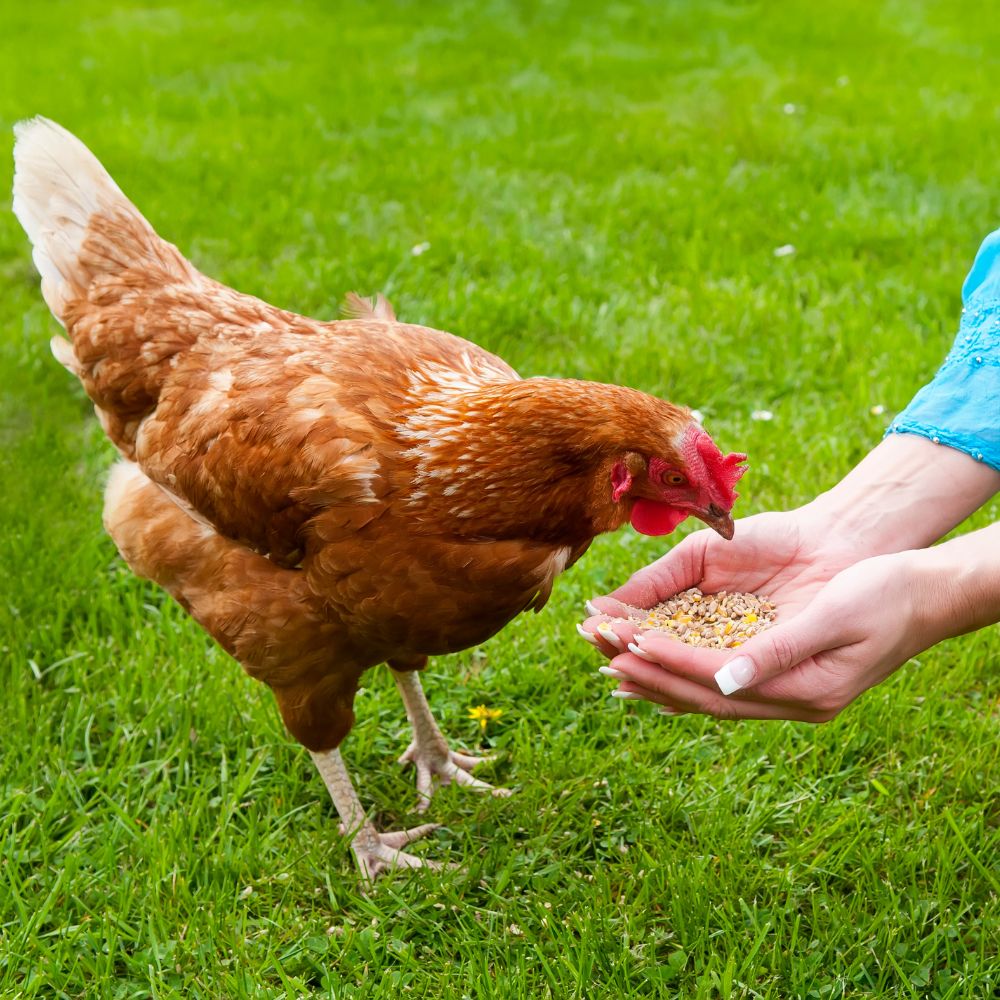
Chicken eating out of womans hands with green grass in background

What is chicken feed called?

There are several types of chicken feeds. Starter feed is a protein-dense variety of chicken feed designed to meet the dietary requirements of baby chicks. To complicate matters, there are varieties of chicken food known as starter/grower feed, which is essentially a type of feed that chickens can eat from 1-20 weeks of age.

You can just feed them starter feed until you transition them to layer feed if you want to, or you can give them grower feed in between.

For day-old baby chicks to 10 weeks, starter feed should be crumbles or mash that contain 18% protein. Don’t be confused with crumbles and mash. Crumbles look like tiny pieces of granola while mash is finely ground chicken feed pellets. Both are easier for chicks to consume compared to huge pellets.

Eventually, they’ll start laying. Chicken layer feed would be similar to the textured mixture of crumbles, mash, and pellets. However, It needs at least 16% protein minimum, with added calcium. Laying hens need high-protein chicken feed as well for more eggs.

Tip: stay away from feeding onions, and other strong-tasting foods to layers. They can cause undesirable-tasting eggs.

What to feed chickens for the best tasting eggs?

After many years of learning, we developed our own feed and packed it full of all the best ingredients. So many folks wanted to learn how to make it but just didn’t haven’t the time or resources so we now sell it. Check it out here.

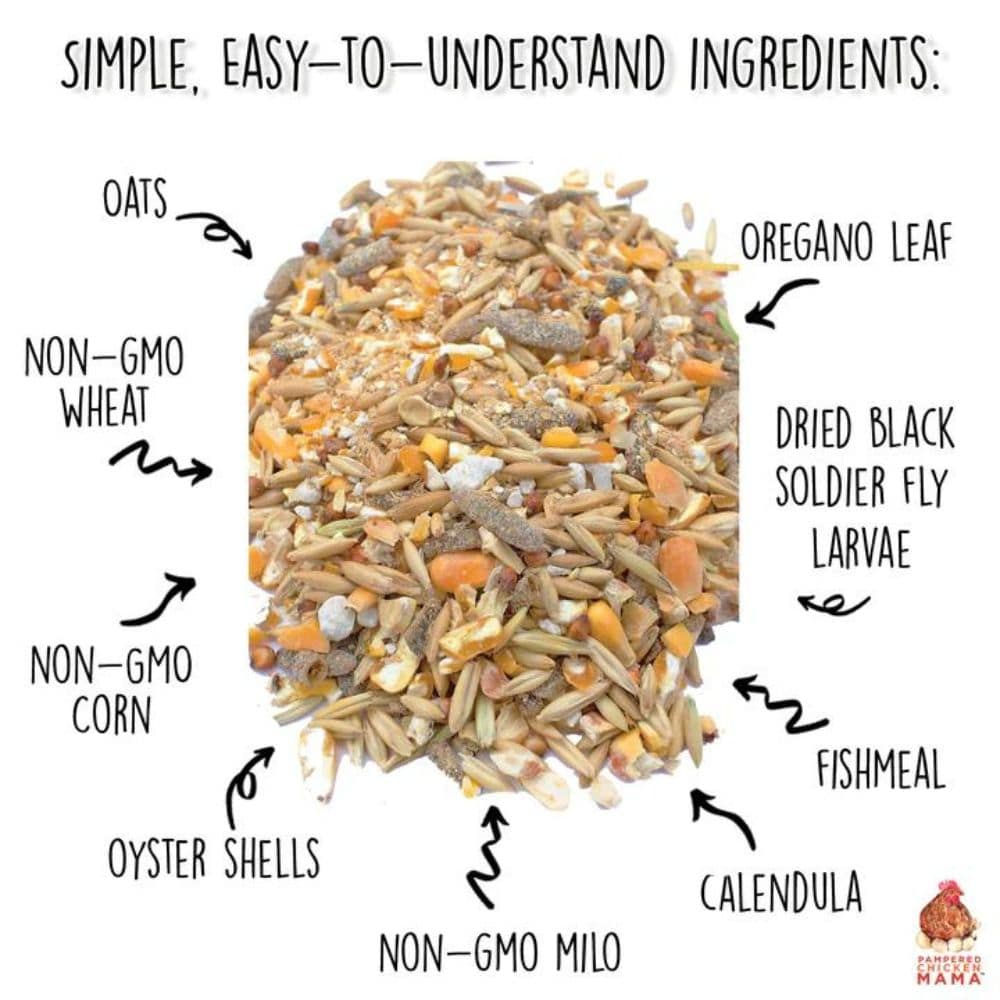
In addition to the great feed, we also use our very own blend of natural herbs, oyster shells, garlic for immune boosting, and apple cider vinegar granules to balance gut pH and introduce beneficial bacteria.

What do you feed a chicken?

The foundation of any good chicken diet is a high-quality poultry feed. We feed our girls this high protein layer feed, which provides them with the right amount of protein and minerals to keep them at the top of egg production! In short, you can feed chickens:

  1. Layer feed (16% protein)
  2. Dried insects like black soldier fly larvae or mealworms
  3. Vegetables
  4. Fruits such as grapes, berries, and melons
  5. Grasses
  6. Seeds like wheat or millet

What is the best feed for chickens?

The best feed is high in protein, while providing all the nutrients chickens need. While there are a lot of commercial chicken feeds on the market, I still prefer non-GMO chicken feed. We’re proud to have a nutrient packed chicken feed that nourishes your flock and also gives chickens fluffy feathers and the best eggs! Click here to get the best chicken feed ever.

If you want to make your own homemade feed, just make sure it has essential chicken feed ingredients. You can read my favorite chicken feed recipe here.

Chicken feed

How much do you feed a chicken per day?

A well-known ballpark figure for estimating purposes is 1/4 pound of feed per chicken per day, or, 1.5 pounds of feed per chicken per week. Keep in mind that this is a ballpark figure, and you’ll need to watch your flock’s intake. If they gobble their feed quickly and still seem hungry, offer more.

Do free-range chickens need feed?

Yes. Even though they have access to pasture, you still need to give them poultry chicken feed to make sure they’re getting the right kind and enough nutrition, especially during winter. During summer, when there are plenty of bugs and grass, you can cut way back on feed.

Do chickens need food and water at night?

Chickens roost and sleep at night, and they won’t get up to eat and drink until it’s light again. However, you should always provide 24 hour access to water just in case. There’s always a chance that you might forget to put their water out. You also might have an emergency and have to leave in a hurry…or any number of things. So be sure to keep water out and full at all times.

Here’s a list of waterers we recommend.

How often should chickens be fed?

This is a very common question in growing backyard chickens. Food must be available to chickens whenever they need it. The full feeding method is a good technique to guarantee that there is a constant supply of feed at all times.

You can also use automatic feeders like these. We’ve also reviewed Duncan Feeder’s automatic feeders here.

How much food does a chicken need per day?

¼ cup of a high-quality chicken feed is a general guide. It’s best to offer free choice all day.

Can you overfeed chickens?

Everything must be taken in moderation. Overfeeding chickens is possible and they may become obese (especially if they’re confined to the coop). Free-range hens however get enough exercise and are unlikely to be obese.

In truth, it’s very hard to overfeed a chicken. They are pretty good at eating only what they need.

Do free-range chickens need scratch? 

No. They don’t. Unless it’s winter and the ground is covered in snow.

There’s also grit. Grit is not feed, it’s rocks. Chickens need grit to help digest their feed. It’s their equivalent to teeth. Free range chickens will find their way to grit in the form of tiny bits of stone and gravel but it would be helpful if you threw some in the coop or their feed too. 

Grit comes as flint and oyster shells. Oyster shells are soluble and they provides calcium which benefits layers in particular. It’s just like feeding chickens with eggshells.

What should you not feed chickens? What foods are poisonous to chickens?

While looking for alternative chicken feed, you might have considered beans. Although they look like something chickens would eat, dried and raw beans are a no-no. It contains phytohaemagglutinin which is fatal to chickens. Moldy fruits and vegetables aren’t good as fowl feed either.

Caffeine is also toxic to chickens. Giving them a few pecks of chocolates would not cause too much harm but you should know that chocolates have been known to cause cardiac arrest in birds!

Other foods that are not good for chickens are:

  1. Processed food
  2. Raw potato peels and green potatoes
  3. Avocado skin and pit
  4. Raw meat
  5. Greasy food

You can see a list of what not to feed chickens here.

What scraps can chickens eat?

Some table scraps that are safe for chickens to consume are:

  1. Vegetables (cooked or raw)
  2. Fruits (leave the seeds out)
  3. Grain
  4. Oatmeal
  5. Corn (cooked, raw, and dried)
  6. Peas
  7. Bread
  8. Yogurt

Again, make sure that these foods are not moldy or spoiled. You might have also heard of feeding chicken expired yogurt. It’s not something to be frowned on. Feeding chicken yogurt helps even out chicken gut bacteria for better digestion. You can also add a few tablespoons of yogurt when fermenting chicken feed.

Can you feed treats to chickens?

Yes! Small amounts of fruit are always a great choice. So are table scraps, they love them. If you want to be sure your treats are also providing the very best nutrition, give them these protein and vitamin packed treats!

Where can I buy chicken feed?

You can find chicken feed for sale at local farm stores. However, farm stores usually sell the most basic feed. You can find premium feed, with many added goodies on Amazon here.

How can I feed my chickens cheaply?

To reduce your chicken feed bill, free-ranging is a good idea. A garden can provide additional and natural feed for your chicken as well.

Another option is to make your own chicken feed. Learn how to make chicken feed and check out my chicken feed recipe here.

What can I grow to feed chickens? 

Growing chicken feed is not complicated at all. Remember what was in grandma’s garden and sow them! Chickens can eat vegetables like corn, lettuce, kale, and any other leafy vegetable you usually grow.

Sunflowers and millet are great seed producing plants too! These make great grower feed for chickens and organic chicken feed too.

Summary

When all is said and done, the main things to remember is to feed your chickens a good, high quality, high protein feed. And provide plenty of fresh water. Plus be sure they have enough grit if they are not free rangers. After that, you can look into special treats and supplements.

There you have it. A sweet little mini course chicken feed! Now, go feed those feathered friends!

Are your hen’s feathers looking a little sparse these days, you might not just be imagining it. Chicken feather loss can be caused by many things.

There are several culprits behind why your hen might be losing her feathers, but if you’re looking for more information on how to help your hen grow her feathers back fast, you’ve come to the right place.

Here are some tips to help your ladies return to their former luster – and in a hurry. 

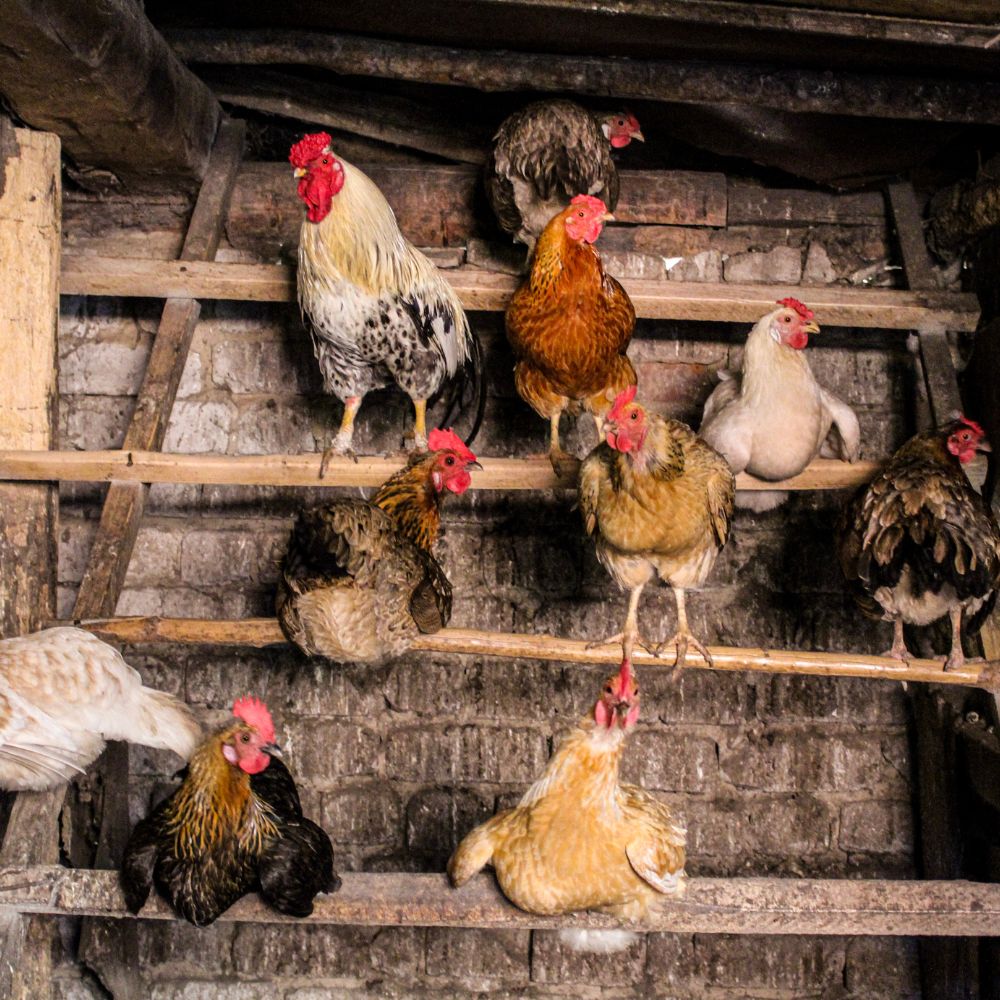
Chickens on roosting bars in a coop

What Causes Feather Loss?

Molting

Molting is one of the most common reasons why hens lose their feathers. It typically happens first when hens are around 18 months old – then, it occurs on an annual basis. For the most part, you can expect about two months of feather loss and regrowth but this can vary depending on the age, weather, breed, and individual disposition of your chickens.

In fact, for some hens, it can take up to four months for them to finish molting.

How do you know if it’s the molt?

Molting looks different for each and every chicken. A hen’s molt will vary depending on her diet, environment, and age. It can start slowly, with you noticing that the feathers of your bird are simply starting to lose their shine. Alternatively, you might notice that your hen has lost a large cluster of feathers overnight. 

Generally, molting lasts 8-12 weeks and is triggered by shorter days (so in most cases, you’ll notice the molt begins at the end of summer or the beginning of fall).

Whatever the case may be, in general, productive egg-laying birds and younger hens will recover from the molt more quickly than older hens. 

Broodiness

If you discover that only one hen has lost feathers and that she is acting in a peculiar manner, there’s a good chance that she isn’t molting – she’s just gone broody. Broody hens are those that have decided they want to hatch their own chicks. They will lay on top of their eggs all day long, moving only to eat and drink occasionally. 

Broody hens lose their feathers because they will pull them out of their breast. This is done so their skin can make direct contact with the eggs. If broodiness is to blame for the feather loss, you likely won’t notice largescale, widespread feather loss but only in this specific area. 

Bullying

Some chickens will lose their feathers when other members of the flock are picking on them. Raise chickens long enough, and you’ll quickly discover that hens will constantly compete to move to the top of the pecking order (or chicken hierarchy, so to speak).

This is normally harmless behavior, but sometimes, it can get more aggressive, with dominant chickens pecking and pulling the feathers from less dominant chickens. 

Again, if your chicken is losing feathers and you see bald spots…and is the only one in the flock that seems to be suffering, bullying and pecking order issues could be to blame.

This can be quite dangerous, as it can lead to raw spots on your chicken’s skin that can entice more bullying – and even lead to death. Some over-bullied hens even become victims of cannibalism in the flock.

Disease and Parasites

Another issue that can cause widespread feather loss in your flock is disease or parasites (external and internal parasites). Both can cause feather loss – and can also cause your birds to quit laying eggs.

Lice and mites are the most common, causing widespread feather loss all over your hens’ bodies or just in isolated areas (such as around the vent).

Ensuring that your flock has the proper vitamins and minerals will help them fight off parasites and disease as well.

Roosters

Even roosters can be to blame if your hens are losing their feathers!

When a rooster mates with a hen, he will hold onto her back with his beak. Mating can cause the rooster to pull the heathers out of her back and neck, so if you notice that this is where your hens are losing their feathers and you have a rooster in your flock, he could be to blame.

If this is the problem, you might consider a chicken saddle, check out this cute chicken helper here.

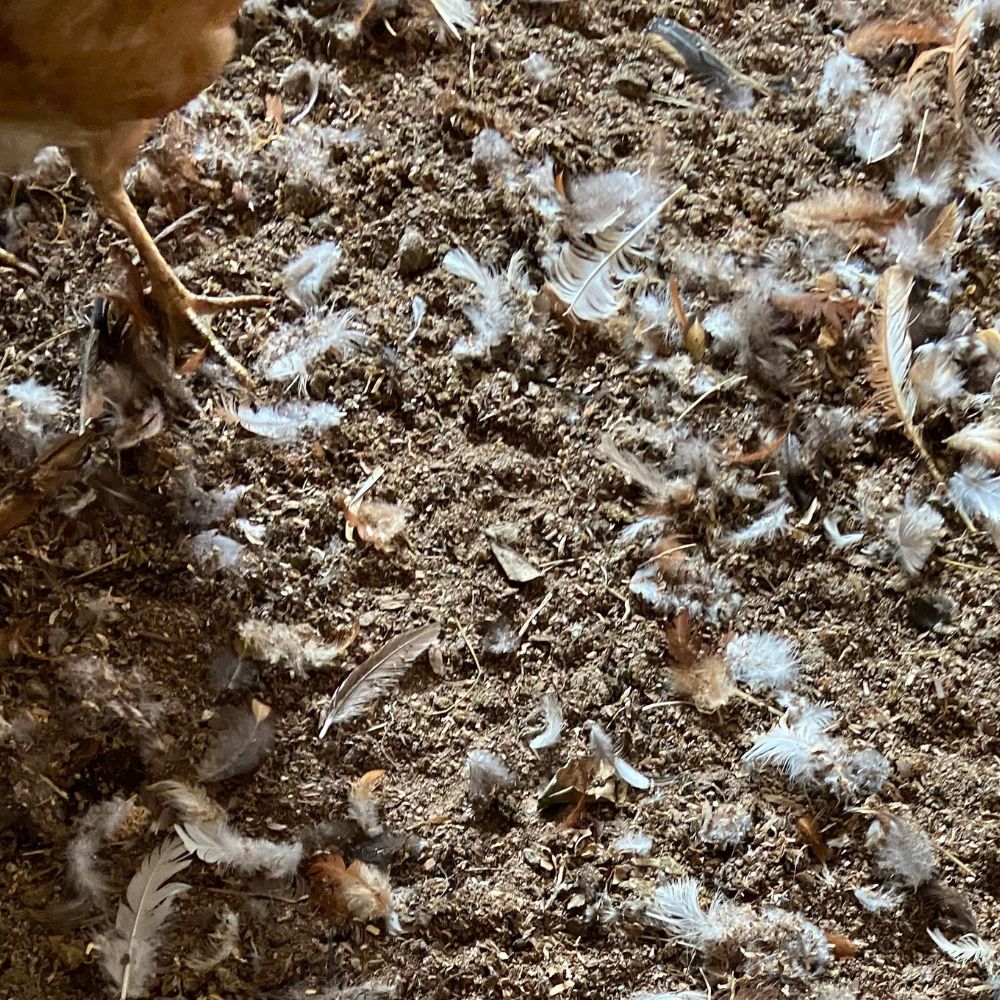
Chicken feathers all over coop floor

How to Help Your Hen Grow Her Feathers Back Fast 

Supply Additional Protein

Believe it or not, the slightest change in your hen’s diet can trigger a molt. Therefore, you’ll want to pay close attention to what you are feeding your hens to make sure they are growing feathers properly. 

Not sure what to feed your chickens when they are molting? IF you’re looking for tips to help molting chickens, be sure to check out this article!

In particular, monitor their protein intake. Feathers are almost entirely protein, containing about 85% beta-keratin. Therefore, a protein deficiency could be a reason for feather loss. Lots of protein will go toward replacing feathers during the molt, which is why egg production drops when your chicken is trying to replace lost features (for any reason). 

The best possible thing you can do for your hen when she is trying to regrow her feathers, due to molting or any other reason, is to up the protein content of her food. Switch to a game bird feed or another option with added protein – you should look for 22 percent protein in the feed. If you don’t want to change to a new type of food, you can also add high-protein treats like these

Here are some delicious mealworms your chickens are sure to enjoy. If you’re looking for a way to improve feather quality in chickens or to promote new feather growth in chickens after they’ve suffered some feather loss, adding high-protein treats like mealworms is the way to go.

Minimize Stress and Discomfort

A comfortable hen is a productive hen – and she is also a fluffy, well-feathered hen! Make sure your hens are exposed to as little stress and discomfort as possible. Maintain proper spacing in your chickens’ living quarters and keep the coop clean and tidy.

Provide your hens with ample access to feed and water, and make sure no one hen is being isolated from the feeding troughs or waterers by more dominant hens. 

You should also take some time to shore up the coop against predators and other threats. Often, hens will lose their feathers due to stress alone. If you have a predator that continues to return and harass the birds in the chicken coop, this can lead to serious issues with feather loss and regrowing feathers. 

Check that the coop has good air ventilation, too. This will help provide your hens with the environment they need for ample feather regrowth.

When and How to Switch Back to a Layer Feed

After your hens are done molting or have made it through whatever stressful circumstance (lice, mites, aggressive rooster, or whatever the case may be) is causing them to lose feathers, it’s time to focus your energies on going back to normal.

Once the feathers have been regrown, you can adjust the nutrient profile of your birds and transition back to a layer feed. This layer feed is a great option if you’re in the market!

Don’t do this all of a sudden, though – slowly wean your birds off the high-protein feed over the course of seven to ten days. That way, you won’t have to worry about any digestive upsets in your flock.

Keep a Good Ratio of Roosters to Hens

If you have both roosters and hens in your flock, you will need to do some extra work to make sure that proper breeding ratios are maintained. This article has some helpful tips on that subject!

Never keep a 1:1 rooster-to-hen ratio. That’s too many roosters! Instead, keep a rooster with five or more hens so that he doesn’t put too much pressure on one individual hen. 

Help Bullied Hens

If your hen is being bullied and this is causing her to lose feathers, you are going to want to take action immediately. Usually, your best bet will be to isolate the bully. 

Put the bully in a separate pen for a few days. When she returns to the coop, she’ll likely be more docile as the other girls will have worked out a new pecking order – and she’ll be the low hen in the pecking order

Exercise caution when introducing new hens to the flock, too. There will always be a bit of jostling when you introduce new birds, but you can minimize this by introducing new birds slowly.

Make sure you have plenty of room in the chicken coop – at least three square feet in the coop along with 15 square feet apiece in the run. Any less than this, and you may find that bullying incidents are more common. 

Will chicken feathers grow back after an attack? Yes – but you need to give your beleaguered hen some space while she recovers.

Chicken with loss of feathers

Treat Mites and Lice

The best way to help your hen grow her feathers back if she is suffering from parasites (internal or external parasites) is to get rid of them. After all, you aren’t going to be making much of a difference if the feathers grow back only to be damaged by infection or parasites again.

Treat mites by spreading poultry dust in your chicken coop (you can treat lice by applying the dust directly to your chickens). Chickens naturally enjoy dust bathing. You can also use natural treatments like diatomaceous earth. Of course, the first step in getting rid of mites and lice should be to regularly wash and clean your chicken coop. 

While you’re treating for mites and lice, consider adding some of these nesting herbs to their nesting box- it will help your hen bounce back in a jiffy!

How Long Does it Take For Chicken Feathers to Grow Back?

Ultimately, there is no single “miracle cure” that will help your hen magically regrow her feathers overnight. However, you can incorporate plenty of tips and tricks to minimize stress on your hens. These techniques will help them regrow feathers that they may have lost due to bullying, molting, lice, or other common issues.

In most cases, chickens can regrow their feathers in a matter of a few short weeks or months.

With a bit of patience and attention to the individual health of each and every one of your hens, you’ll have a beautiful flock of hens that continue to lay plenty of delicious, nutritious eggs for you every day.

Summary

Backyard chickens make many folks very happy. But they come with their own list of things to watch out for. Feather loss is one of those. Now you have a good bit of information to help you figure it out and grow those feathers back!

Related Articles

Main Takeaways & Extra Info:

  • Crumbles and mash are just different ways to feed starter to chicks. One isn’t necessarily better than the other.
  • It’s important that whichever you feed, the chick starter has at least 18% protein.
  • I feed a mash because I want to make sure my chicks can eat it (particle sizes are small enough)
  • Grinding the food into a mash might preserve some of the nutrients better.
  • Crumbles have gone through an extra step of grinding, and then heating and compressing the ingredients, so some nutrients might be lost. (You can always ask the manufacturer about this)
  • Our chick starter has not been heated – just ground so baby chicks can eat it. (View our chick starter here)
  • With any chick feed be careful about getting it wet and leaving it to mold. Always change the feed out daily!

Additional reading:

What do chickens eat

High protein treats for chickens

Watch all the Baby Chick Series Videos here