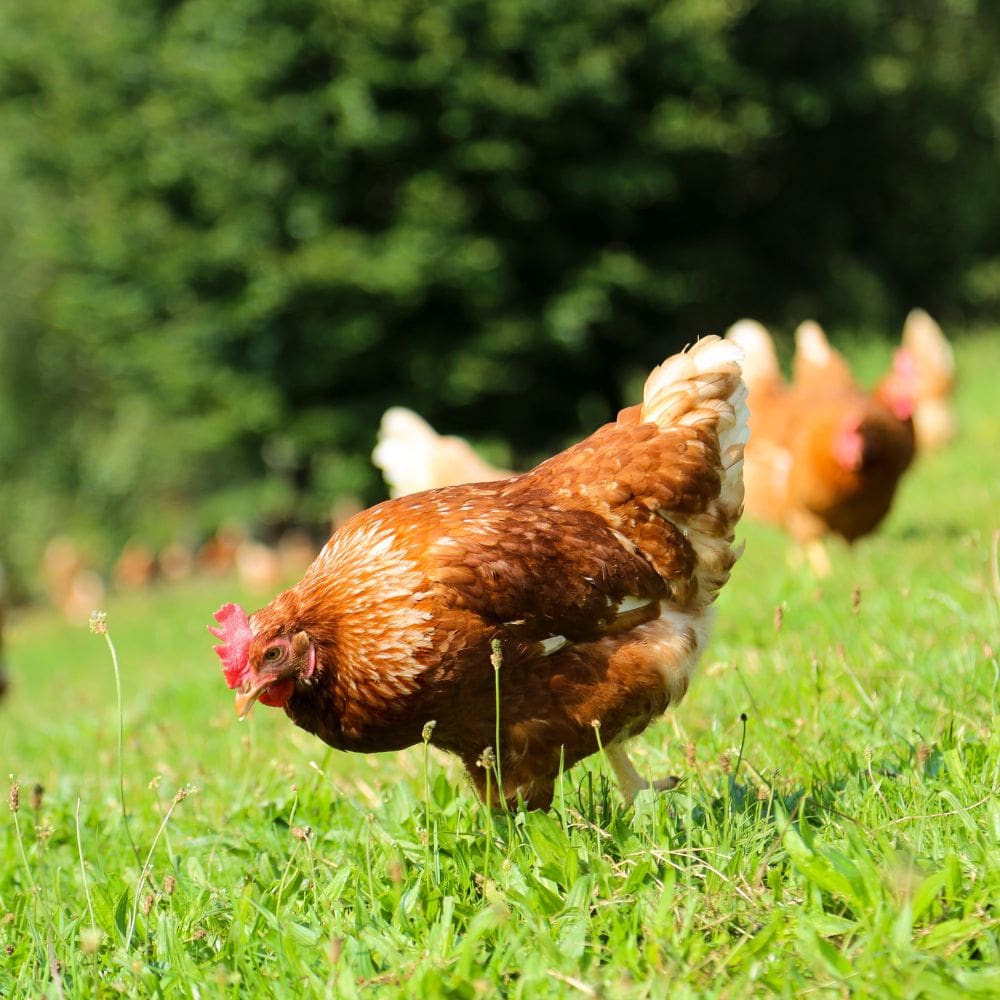
Ahhh….molting. It’s a crazy annual event that can definitely freak you out if you’re new to backyard chickens.

While molting is a totally natural process, if you’ve never experienced it, you might wonder how best to support your flock while they regrow their feathers.

In this podcast, you’ll learn:

  • Why you should never handle your chickens as they’re molting
  • How to best feed your flock so they stay healthy while they grow new feathers
  • How to keep them warm when the temperatures turn cold and they’re naked
  • The specific pattern you should look for when your chickens molt

Links we discuss:

Molting checklist

Manna Pro Poultry website

Where to buy Calf Manna

Where to buy Manna Pro Organic Layer Pellets

385x470 organic ad_frugal_chicken

I’d like to hear from you!

Have you ever dealt with a chicken molting? Did it totally freak you out? Leave a comment below!

Winter is coming….are you prepared?

This week on What The Cluck?! we talk about the specific steps you should take to help your backyard flock weather the snow, ice, freezing rain, and cold temperatures when Old Man Winter comes around.

You’ll learn:

  • What to do to make sure your coop is a safe, warm home for them
  • How to feed your chickens in winter
  • Great boredom busters for those dull, long, wet days

Links we discuss:

How to Keep Your Chicken’s Water From Freezing

Be sure to grab the downloadable Coop Checklist here

Coconut Oil Suet cakes Recipe

Chickens- Naturally Raising A Sustainable Flock AD (1)-min

I’d Like to Hear From You!

How do you prepare your chicken coop for winter? Leave a comment below!

Let’s face it. It’s pretty hard to keep your chicken’s water from freezing without electricity in the winter.

When the cold arrives, I struggle to keep the chicken’s drinking water from turning into a frozen block.

And without a water heater? It can certainly seem daunting.

I know many of you are worrying about how to keep your chicken’s water from freezing without electricity this winter, so I wanted to share some tricks that have worked for me.

These tips will also work well if you have ducks, turkeys, quail, or any other kind of poultry.

So, if you’re worried about how to keep poultry water from freezing, remember that these tips aren’t just for chickens!

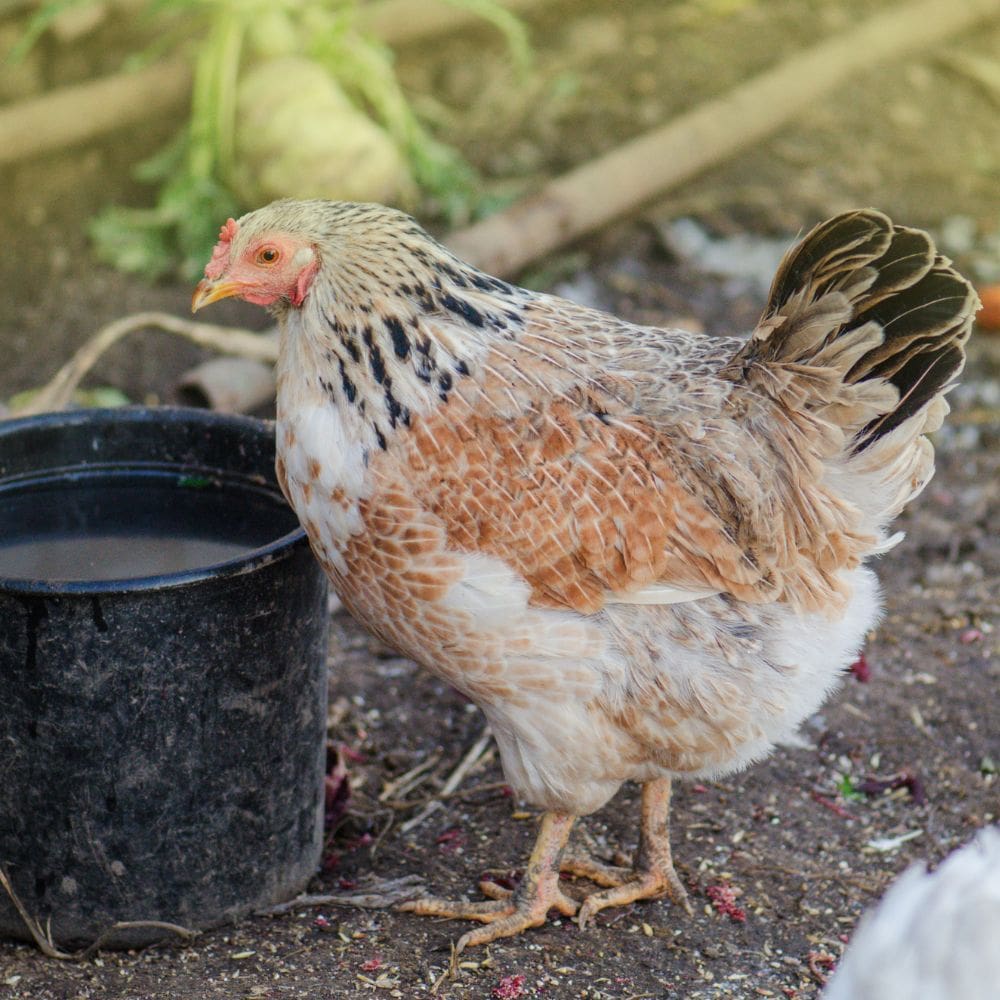
Chicken standing next to container full of water

7 Genius Hacks For Keeping Poultry Water From Freezing

1. Big Water Tub

Typically, the larger the bowl is, the longer it takes to freeze. With our 40-gallon rubber water troughs, they rarely freeze in the cold weather. Of course, it depends on the climate you live in as to how hard you have to work at this dilemma.

If the top freezes, unfrozen water usually rests below that layer of ice. I use the heel of my boot (assuming there are no cracks in them!) to break the surface ice. You can scoop it out and refill the tub so your hens don’t run the risk of falling in as they try to drink.

Using a large waterer to keep your chicken’s water from freezing isn’t always realistic, especially with younger chickens (such as pullets) that can’t balance well on the edge and might fall in.

But if your flock is older and they’re able to not get themselves into deadly situations, then using a large tub is one way to prevent freezing.

2. Rubber or Plastic Water Dishes

I believe that rubber waterers are best for winter, and in most cases, it’s true.

Rubber conducts cold less efficiently than stainless steel, and it will take longer for your chicken’s water to turn into a solid block of ice. Most rubber bowls also tend to be less expensive than stainless steel. Rubber tubs are more durable for sure. You can bend them and kick them to get the frozen water out when needed (it happens even we we try to not let it happen).

Plastic is another option although in my experience, it doesn’t retain heat from the sun as efficiently as rubber.

Which brings us to….

3. Black Water Tubs

As we all know, black absorbs the sun’s rays better than any other color out there.

So, black rubber water tubs are more likely to keep your chicken’s water from freezing without electricity than (probably) anything else out there.

If you’re not able to use an electricity-sourced water heater, then relying on heat from the sun is definitely a bonus. Plus it’s more cost efficient than buying an electric water heater (and potentially safer).

Dark blue, purple, or burgundy would work as well, but steer clear of lighter colors (and, of course, stainless steel and metal waterers).

4. Ping Pong Balls

I’ve had marginal success with this, but other people swear by it, so I wanted to mention it.

You can grab a packet of ping pong balls at your local dollar store and float them on the top of the water.

The idea is that as the wind moves the surface of the water, the continued movement of the ping pong balls will keep your chicken’s water from freezing.

Now, you’ll be relying on the breeze to do the work for you. And if your water tub isn’t deep, the ping pong balls will get stuck as the water freezes around it.

It’s worth a shot, but you might want to use the ping pong balls in conjunction with a black rubber tub.

5. Ducks (not a typo)

Believe it or not, ducks themselves are pretty good at keeping your chicken’s water from freezing.

Ducks automatically want to splash and play in the water. They are MESSY! But a benefit of this behavior is that they keep the surface constantly moving so it can’t turn into ice.

Again, a deep dish is required, and you will have to keep it full because your ducks will want to dunk their heads and bills into the water.

In most cases, the ducks will be fine if they get wet – they have down which repels water! And unless they’re young, they can figure out when to stop.

6. Hand Warmers

I’ve successfully used commercial hand warmers (the kind you don’t open until ready to use) with small stainless-steel mason bases for jar waterers. I KNOW, I just said not to use stainless steel…but hang on.

In this case, using stainless steel waterers works best because the metal will conduct heat from the warmers, keeping the water just above freezing temperatures. Just stick the warmer below the metal bottom, and replace it as needed.

If you have quail or smaller chickens that require only a mason jar waterer, this solution works well, particularly since smaller waterers will freeze much quicker.

7. Hot Water

If you’re going to be gone part of the day and want to make sure your flock has access to fresh water for longer, you can give them hot H20 when you fill their dish.

Just make sure it’s not boiling, otherwise, your hens might burn their throats.

If, throughout the day, you notice their water turning to ice, then refill the bucket with hot water.

You can also do this at night, although chickens are less likely to drink water in the dark since they’ll want to get some shut-eye. In fact, I sometimes empty the waterers out at night so I don’t have to deal with frozen water in the morning. Since my flock is sleeping, and I’m sure they had access to fresh water all day, I don’t have to worry about them.

Additional Tips

  • Keep your chicken’s water inside the chicken coop (coops are usually, and hopefully, warmer than the outdoors).
  • Fill a plastic bottle with salt water and let it bob in your chicken’s water tub. Salt naturally warms it up a bit and it has a lower freezing point. I’ve never used the salt-water trick, but many folks have had success.
  • Heat a stepping stone for a bit in your oven and then place your chicken’s water tub on top of it. It’s a lot of work, but it is an option.

Summary

Backyard chicken keeping sure has its challenges, and frozen drinking water is one of them. But all the enjoyment these featherd friends brings us makes every challenge worth the fight! 💕

So whether you opt for borrowing the strength of the sun, or whether you toss ping pong balls in the water tub, or any number of options – you now have several methods to help you – help your flock! May the warmth be with you!

Winter is coming, and that means I’m getting a lot of emails asking things like: “Do chickens need heat in winter?” and “Do you need heat lamps for chickens?”

Winter is a tricky time on the homestead because you’re navigating through cold weather, wet weather, snowy weather – sometimes all in the same day.

Over the years, I’ve come to realize that cold weather isn’t much of an issue with chickens….but cold WET weather can be deadly.

Every winter, I spend half my time wringing my hands because our chickens play outside when it’s freezing rain, and don’t have enough sense to go into the coop when the temperature drops further.

We haven’t lost a chicken to the cold yet (knock on wood), but I do stress in the winter months over their health.

So, to solve the question “do chickens need heat in winter”, the answer I’ll give you is: It depends.

Let’s look further.

Can chickens survive winter?

In short, yes. Chickens do quite well in freezing temperatures. They have natural defenses against the cold, and their feathers provide protection.

How?

Well, over winter, you might notice your chickens fluffing and ruffling their feathers. This isn’t just to make them look cute (although they do).

When your flock puffs their feathers, they’re creating a gap of air, which acts like a layer of insulation between them and the cold.

During the day, your flock likely will move around a lot; this keeps their bodies even warmer, including their feet, combs, and wattles.

At night, when they’re quiet, your chickens will keep their feet warm by crouching over them and insulating them with their feathers.

As for their combs and wattles, you probably will notice your chickens tucking their heads into their wings at night to protect them from frostbite.

So, chickens naturally are pretty prepared for cold weather.

Do chicken coops need heat?

Every winter, I get asked “Do we need heat lamps for chickens in winter?”

I’m personally not a fan of heating chicken coops, and I think heat lamps are fire hazards. We don’t heat ours.

Before I got wise to the dangers of heat lamps, more than once we woke up to a house filled with smoke because a chick or a piglet messed around and knocked the heat lamp over – and these were heat lamps with regular 75 watt bulbs in them.

So, that gives you some indication just how dangerous they are – and they’re exponentially MORE dangerous with the red heat lamp bulbs.

The red heat bulbs get extremely hot – we’ve tested their temperatures as high as 140 degrees before.

Chickens like to constantly reinforce their pecking orders, and all it takes is one careless hen to knock over a heat lamp and cause a fire.

Every winter, I’m sent photos of coops totally destroyed in a heat lamp fire – and the owner’s flock is totally gone.

I’m just plain not a fan of chicken coop heat lamps.

In most cases, chickens don’t need heat in winter, EXCEPT if you live in a very cold environment, such as parts of Minnesota or Canada that can easily reach -30 degrees F.

If you’re concerned your flock won’t be warm enough on particularly cold nights, offer your chickens some extra feed or cracked corn so they have extra calories to burn.

You can also feed your flock an extra meal or offer their grain free choice to keep their calorie count up.

Need some chicken treat recipe ideas? Check out my ebook Cluck Cakes!
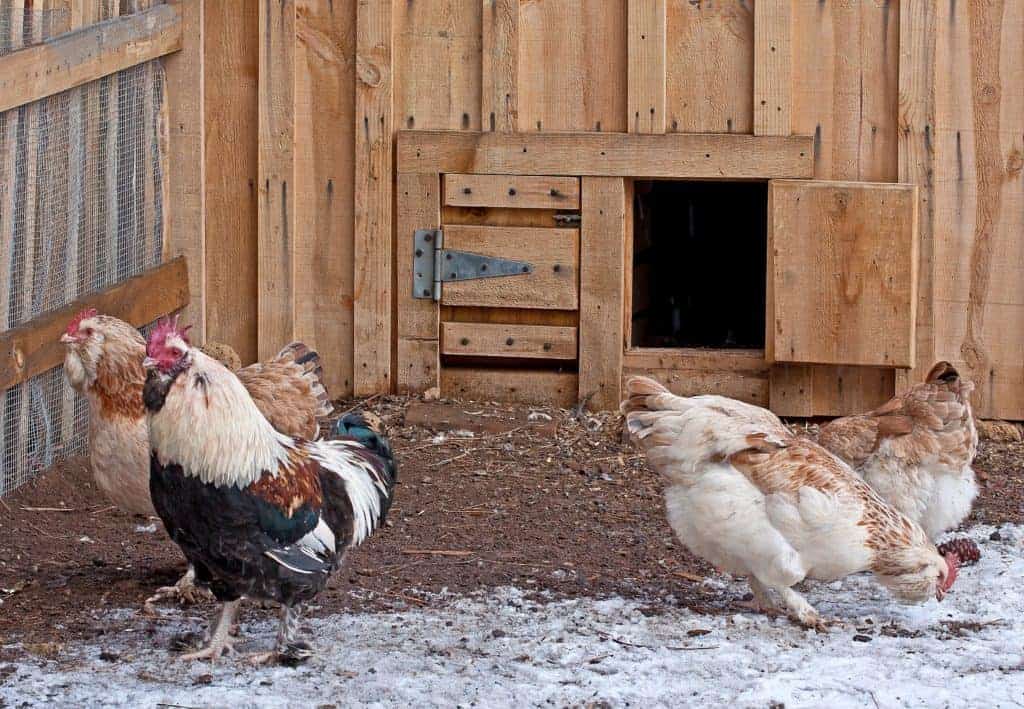
do chickens need heat in winter

Freezing rain: The silent killer

More so than any other type of winter weather, freezing rain can devastate your flock.

And chickens, unfortunately, don’t always have enough sense to keep out of freezing rain.

Last winter was terrible with cold rains in freezing temperatures, and more than once, we had to run out and cover the runs with huge tarps to keep the rain from hitting our birds.

While in snow and cold wind chickens can fluff their feathers, if they’re doused with water from a cold rain, they have a harder time fluffing their feathers – and it can dangerously lower their body temperatures and cause stress on their bodies.

It’s hard to get your flock dry in cold weather once they’ve gotten drenched.

When there’s freezing rain in the forecast, our flock stays inside the coop for the day with some extra treats and boredom busters.

If your chickens DO become wet in cold weather, then I recommend using a heat lamp for a couple hours and toweling everyone off (if you don’t have too many).

Once everyone’s dry, then remove the heat lamp and keep them inside until the weather is better.

What Does a Chicken Coop Need in Winter?

Ok, now that we’ve established my deep and unrelenting hatred of heat lamps, let’s talk about how you CAN protect your flock over winter.

While your flock will naturally insulate themselves by fluffing their feathers, that doesn’t mean they’re immune to cold breezes.

One of the best ways you can protect your flock is by giving them a draft-free coop.

What does this mean?

Before cold sets in, go over your coop.

  • If it has windows, are they sealed well?
  • Does their door shut well at night?
  • Are there any gaps in the walls that can cause drafts?
  • Is the floor solid? Does it have holes?
  • Does the roof keep the coop dry?

When the chilly winds pick up, your flock will thank you for taking the time to eliminate any drafts from their house.

They’ll thank you even more for making sure that any cold rain or snow can’t get into their coop, so be sure to double check their roof and keep windows and doors closed when the winter weather gets really nasty.

Ventilation

You should also make sure your coop has adequate ventilation.

Because chickens will naturally stay inside their coop more during the winter, they’re more likely to drop manure inside their home….and breathe the noxious fumes of ammonia.

Keeping the coop clean and ensuring there’s adequate ventilation will help prevent any respiratory problems from creeping up.

Preventing frostbite

Frostbite is caused by cold combined with moisture, either from something like rain or moisture from the buildup of manure.

Like any other living organism, chickens are at risk for frostbite over winter, particularly on their combs, wattles, and legs.

All is not lost however. Frostbite CAN be prevented by coating the combs and wattles in a thick layer of petroleum jelly….if your chickens will sit still long enough.

Keeping Eggs from Freezing

When it comes to the question “do chickens need heat in the winter?,” the question isn’t just about your flock.

Eggs can easily freeze when the mercury dips, causing them to explode and become useless, so you should take extra care to gather eggs multiple times during the day.

If they are frozen, but unbroken, then let them thaw gently at room temperature. If they’re broken, then they can be fed to your chickens, other critters (like pigs), or composted.

Keeping your flock prepared for nasty weather is critical to helping your flock survive winter.

The bottom line is keep them dry, keep their home dry, and give them extra feed, and they’ll do just fine when the cold temperatures hit.

Do CHICKS need a heat lamp? Well, that’s a whole other story. Check out my Podcast on Raising Chicks Naturally for some advice on heat lamps for chicks!

I’d like to hear from you!


Did you ever wonder “Do chickens need heat in winter?” Do you have any tips to share? Leave a comment below!

References:

Hassanpour H, Khalaji-Pirbalouty V, Nasiri L, Mohebbi A, Bahadoran S. “Oxidant and enzymatic antioxidant status (gene expression and activity) in the brain of chickens with cold-induced pulmonary hypertension.” Int J Biometeorol. 2015 Nov;59(11):1615-21. doi: 10.1007/s00484-015-0968-z. Epub 2015 May 5. Accessed August 30, 2016.

Singh Y, Ravindran V, Wester TJ, Molan AL, Ravindran G. “Influence of feeding coarse corn on performance, nutrient utilization, digestive tract measurements, carcass characteristics, and cecal microflora counts of broilers.” Poult Sci. 2014 Mar;93(3):607-16. doi: 10.3382/ps.2013-03542. Accessed August 30, 2016


Want to learn more about how to raise chickens naturally? The Backyard Chicken Bundle includes 5 individual ebooks about raising chickens, checklists, videos, and more! With gorgeous full color photographs, charts, and recipes for all-natural coop cleaners, layer feeds, herbal first aid salves, and more, it’s $250 worth of valuable resources a chicken mama needs in one place!

Click here to purchase the Backyard Chicken Bundle.

Backyard Chicken Bundle


If you have chickens laying soft eggs and aren’t sure what to do about it, you’re in luck because I have plenty of answers.

Soft eggs, also called shell-less eggs, soft-shell eggs, partially shelled eggs, or rubber eggs can be a sign of a few different factors, such as illness, age, and diet.

Some of these factors are out of your control (like age), some aren’t (like diet), and some factors are bigger causes for concern than others (like illness and stress).

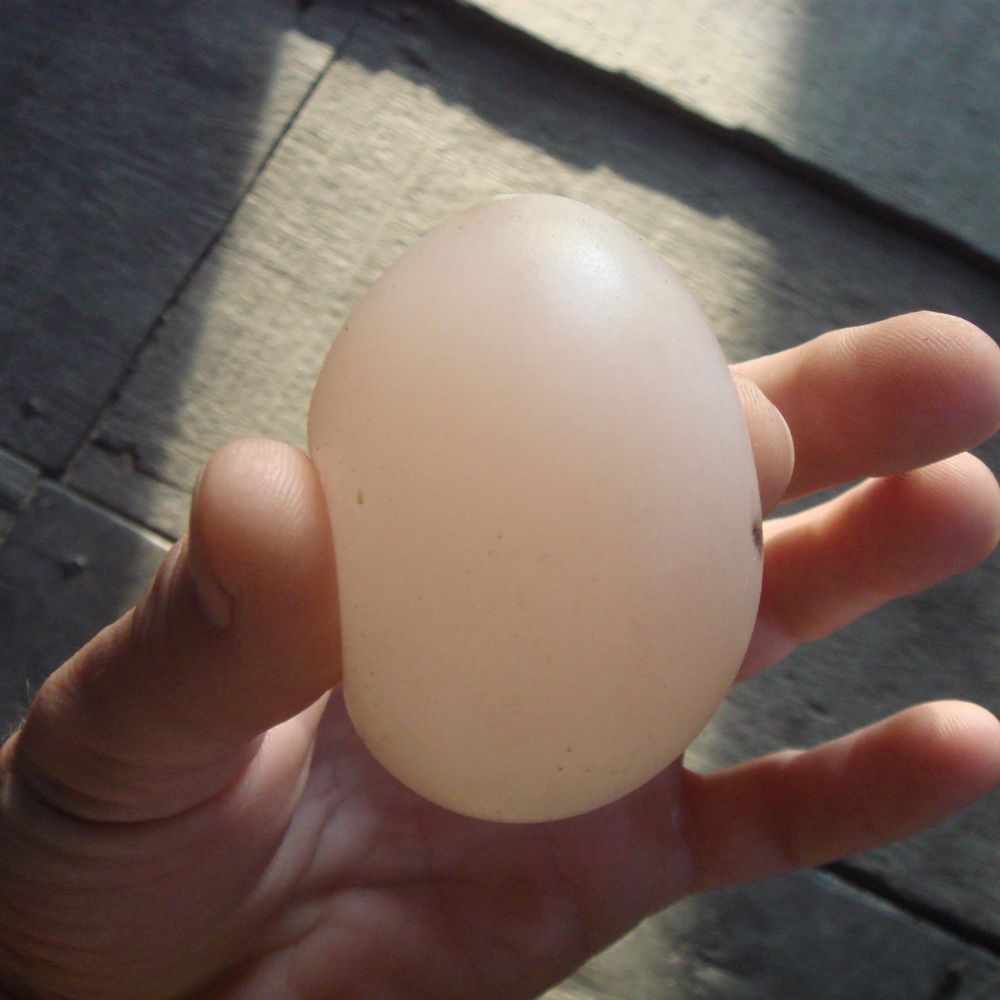
Soft Shelled egg being held by a hand

Soft Egg Surprise

We occasionally get chickens laying soft eggs on our farm, and they’re simultaneously interesting AND disturbing.

Back many years ago, the first time we saw a soft egg, we didn’t know what to make of it. Our latest batch of chickens were young brahma pullets that just started laying

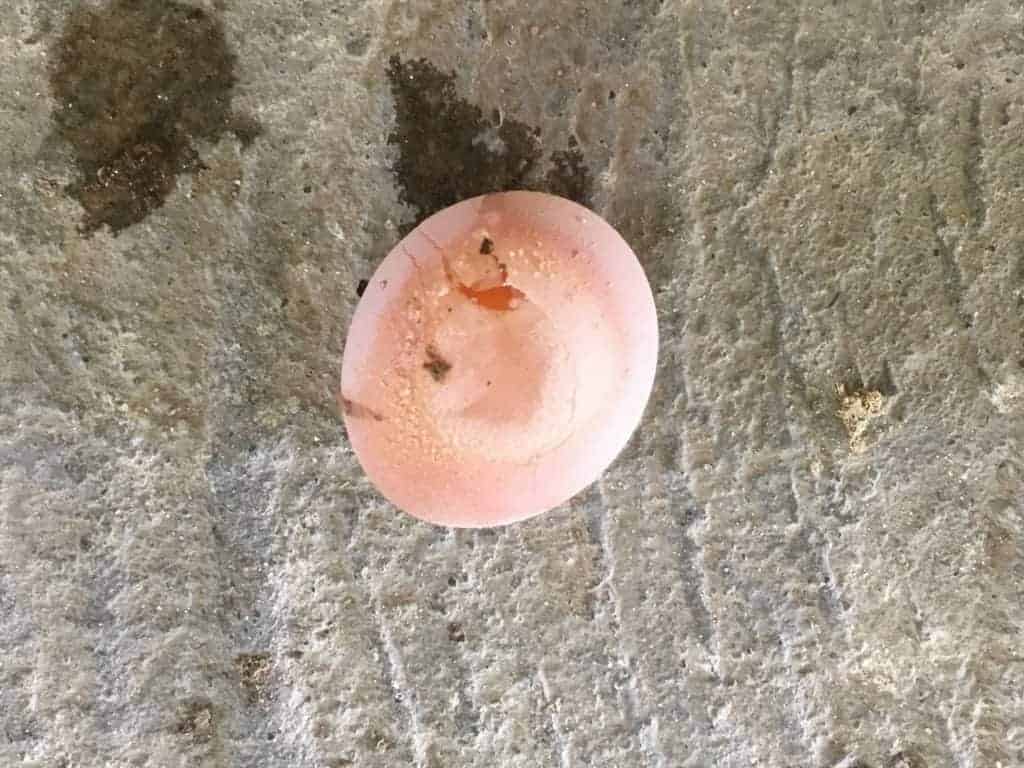
One of the first eggs we got from these layers didn’t have a shell – just the thin membrane, albumen, and yolk. And it had gotten squished in the nesting box and spread everywhere. We were so disappointed – we were looking forward to gathering eggs for the first time!

But the hen’s subsequent eggs were healthy and normal with regular egg shells. Whew! 

Chickens laying soft shell eggs can happen for a variety of reasons, which we’ll talk about below.

chickens laying soft eggs

4 Reasons for Chickens Laying Soft Eggs

#1 Age of Your Hen

One of the first things you should look at if you have chickens laying soft shell eggs is the age of your flock. When pullets first start laying, they’re more likely to lay soft-shelled eggs, eggs missing their shell or thin-shelled eggs than older laying hens. (And yes, these eggs go bad much quicker than their hard-shelled counterparts)

This can be for a couple of reasons: your backyard chickens don’t yet have enough calcium in their diet (more on that in the next section) or their bodies are getting used to laying, and haven’t quite caught up yet.

If you’ve been feeding your older pullets a grower ration, and they lay a soft egg, then switch them to a layer ration. The grower feeds don’t have as much calcium as a layer feed, so your chickens might not have enough calcium in their diet to support building an eggshell.

Simply switching to a layer feed or offering her a calcium supplement will likely solve the problem, and your chickens will probably start laying normal healthy eggs. 

If your chickens already have enough calcium in their diet (if you offer them a supplement already, for example), then it’s possible her body is just getting used to the rigors of laying and didn’t properly apply the calcium to totally encase her egg.

As long as she seems healthy and starts laying normal eggs, it’s probably nothing to worry about. It also might be a breed issue. We’ve had many types of chickens on our farm, including:

as well as various heritage chicken breeds, and each of these hens have never laid a shell-less egg. So you just never know.

#2 Calcium Deficiency

We’ve touched on calcium deficiency already, but if your chickens are older and laying regularly but suddenly give you soft eggs, then it’s time to look at their calcium intake. 

We love and recommend this product called Herbal Oyster Shells because it’s a great source of calcium and our chickens love it:

One of the most frequent causes of laying thin shells or soft eggs is a diet low in calcium. While most quality layer feeds have extra calcium in them, you should still offer a supplement just to make sure your hens get enough.

If your laying chickens aren’t eating enough calcium, soft eggs aren’t your only concern. In order to produce eggs, hens must draw calcium from somewhere. If they can’t get it from their diet, your chickens will start pulling it from their bones, which can lead to another set of health problems and shorten their lifespan.

You can always use the shells from eggs that fail the egg float test because they’re too old for humans to eat. You can also use those old shells in your garden and you’ll love the results.

#3 Stress

Stress can also lead to soft eggs or thin eggshells. There are four types of stress I’ll cover here: environmental, heat, roosters, and illness.

Environmental

Environmental stress can be caused by many things. One example is a coop or chicken run that’s too small and packed with too many chickens. You can read about what a coop should include right here – there are certain features you should build a chicken coop with to reduce stress.

Are your chickens cooped in a small area all day? Do they have 10 square feet of space each? It’s possible her environment is causing her stress, and the calcium is being diverted from creating eggshells to supporting your hen’s bodily health.

Another example is stress caused by roosters mating too frequently. If you want fertilized eggs, you need a rooster but you might have to separate him at times. Or, if you have too many roosters for the number of hens, you might need to rehome a rooster or two.

Predators can also cause a dangerous amount of stress. In one memorable experience on our farm, one of our chickens watched a dog kill her flock mate. The surviving hen never laid well after that, and laid a couple of rubber eggs. Since her diet was good and she was healthy, environmental stress seemed to be the cause.

This type of stress can also affect your chicken’s lifespan.

Heat

If you’ve ever wondered “Why did my chicken lay a soft egg” when it’s warm out, then heat stress might be the culprit. I’ve learned that hot weather can be a big factor in thin-shelled eggs or shell-less eggs. Heat is hard on chickens, much more so than cold weather.

Chickens have a natural body temperature of around 106 degrees and don’t have the same effective cooling mechanisms that humans have. So, they feel the heat a lot more than we do, and that can temporarily affect their laying ability. 

There’s not much you can do to control the weather, but you can offer your hens some relief from the heat. Make sure they have enough water, and a cool area to rest in.

chickens laying soft eggs

If you think heat stress can be affecting your flock’s egg production, then start offering nutritious treats like frozen fruit and mealworms to keep their diet up to snuff. 

It’s also a good time to offer a free-choice calcium supplement to ensure they’re getting enough calcium. Hot weather can lead to dietary deficiencies because chickens start using nutrients to battle stress and less for laying healthy eggs.

Roosters

Sometimes, roosters can over-mate with hens, and cause stress. If that’s happening, then you can isolate the hen – she won’t need the rooster to lay eggs. Or you can move the rooster elsewhere. Also, be sure you don’t have too many roosters for the number of chickens you have.

Illness

Soft eggs can also be a sick chicken symptom. If your hen’s body isn’t feeling healthy, she will use dietary nutrients to fight off the illness instead of creating a healthy eggshell. 

A soft egg can indicate any sort of illness, from a bacterial infection to bumblefoot, to a virus, to trauma, and more. If you think your hen is sick, then a vet can diagnose her exact illness and recommend a treatment. If you don’t have a vet that takes chickens as patients, then check with a knowledgeable friend or perhaps post your questions on a specialized Facebook group page.

In my experience, once the illness is resolved, the hen starts laying healthy-shelled eggs again.

#4 Sometimes Soft Shell Eggs Just Happen

Let’s say your flock’s diet is calcium-rich, you don’t see any environmental factors, heat stress, or signs of illness, but your chickens lay a single soft egg. It’s possible the rubber egg is just one of those things that happen. Chickens are living organisms. Like people, sometimes things just go awry, and there’s no logical explanation.

Perhaps her body just sent the egg through the oviduct faster than normal…as long as the hen seems healthy and it’s only one chicken egg without a shell, I usually don’t worry too much about it. Things happen!

Bonus Question: Can You Eat a Soft Shell Egg?

A question I’m frequently asked is whether soft eggs can be eaten. Honestly, when I come across an egg with just the membrane, if it’s intact, I give it to my pigs. One of the purposes of the shell is to keep bacteria and other pathogens out of the egg. Without it, there’s a chance it’s been invaded by germs I don’t want to eat. So personally, I don’t eat them.

Summary

So, soft eggs can be disturbing but don’t panic. As you can see there can be a lot of possible reasons, some of which are no big deal. The ones that are a big deal you can likely identify and remedy. There are a lot of ways to fix the problem, and it’s not necessarily a sign your flock is unhealthy. 

Resources:

Johnston SA, Gous RM. “Extent of variation within a laying flock: attainment of sexual maturity, double-yolked and soft-shelled eggs, sequence lengths and consistency of lay.” Accessed August 22, 2016

Gary D. Butcher and Richard Miles, Concepts of Eggshell Quality,” University Of Florida, IFAS Extension. Accessed August 22, 2016

If you haven’t yet built a dust bath for chickens, now is the time to start.

Luckily, it’s an easy project to complete, and it won’t cost you very much (yay saving pennies, right?) As you’ve watched your flock toss dust and crumbs of earth on themselves, did you ever wonder “Why do chickens take a dirt bath? Is it even necessary?”

Dust bathing is a very natural and necessary part of your chickens lives, and if you don’t provide one, your flock will find a way to create one in the most inconvenient spot you can imagine.  I speak from experience, friends.

Chickens are creative creatures, and will put a dust bath in the oddest places.Ours have had great fun digging a dust bath next to a car tire, in seedling patches, or in my potted plants. So, anything can be a possible (and massively destructive) place for them to dig a dust bath hole.

https://www.instagram.com/p/BCQTVDlC8w6/?taken-by=thefrugalchicken

But why do chickens roll in dirt anyway?

Chickens HAVE to dust bathe – it’s how they keep themselves free of external parasites that can otherwise devastate their feathers and cause all sorts of nasty health problems. A hen covered in dirt is a happy hen, and if you’ve never seen chickens rolling around and kicking earth over themselves you’re missing out.

Making your own dust bath for chickens also ensures that your hens are bathing with beneficial dirt, rather than dirt caked with manure, dead and decaying matter, etc, that harbor bad bacteria that can harm your birds.

You can also include parasite-preventing supplements and herbs to get your flock squeaky clean and ready to preen themselves.

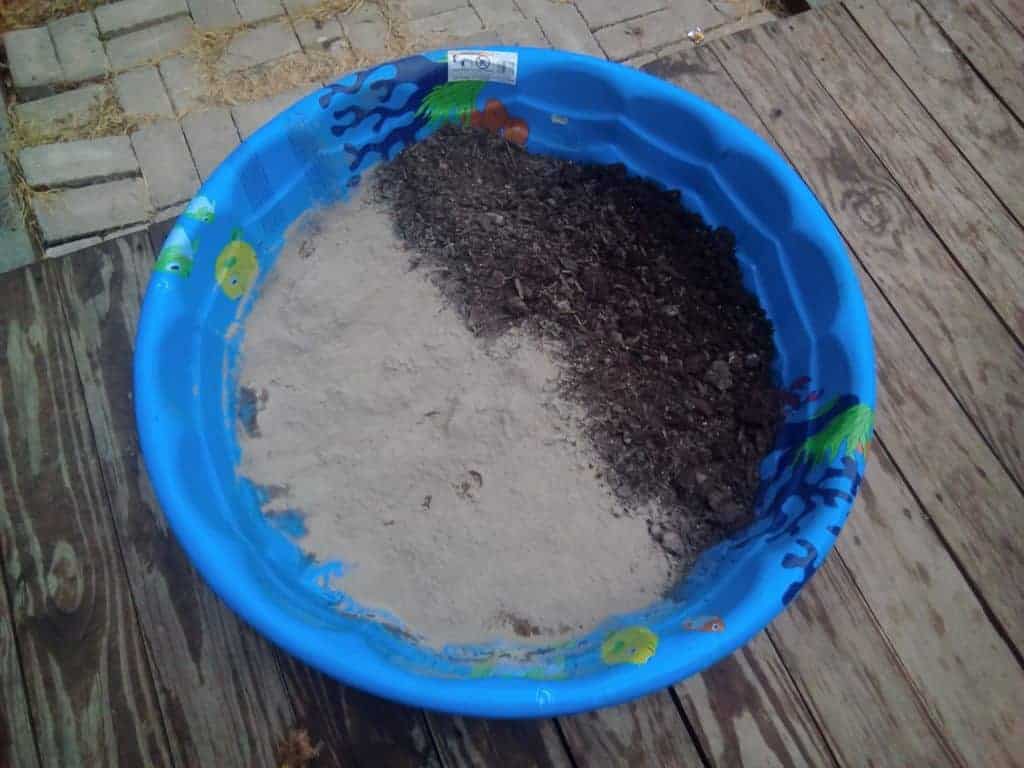
So, let’s talk about how to make a dust bath for chickens.  While my chickens like to create a dust bath directly in the ground (and it’s not a bad decision!), I also like to use a food-safe plastic container to make sure they’re getting goodies like wood ash and diatomaceous earth that help keep them free of mites and lice.

The nice thing about a plastic bin is if it gets gross (and it will because chickens are pooping machines), it’s really easy to clean.  A good choice is an old kiddie pool – it’s low enough that your chickens can easily get into it, and wide enough to accommodate more than one hen. Because, let’s face it, when one chicken uses a dust bath, everyone else wants to join in, right?

So, if you choose something like a kiddie pool to make a dust bath for chickens, your flock is more likely to use it. Other options are wood boxes or even a cement or mud brick bathing area.

dust bath for chickens

What dirt is best in my dust bath for chickens?

Next, let’s talk about what to actually put in your dust bath. For this step, you have 2 options. I explain both options below. Both have their benefits, but I personally think option #2 is faster, cheaper, and easier.

Option #1:

You can use dirt around your house and mix it with other ingredients. If you want to go this direction, you’ll need:

  • Loamy dirt or sand
  • Diatomaceous earth
  • Wood ash (optional)
  • Herbs, if desired

You can purchase sand or use regular ol’ dirt. We have loamy soil here (it’s mostly sand thanks to the Mississippi), so we just scoop dirt from our yard into the dust bath.  If you have super rich top soil, you might want to mix it with some sand. The point is to have loose dirt your flock can easily toss over themselves. You shouldn’t have to buy dirt for this project, but if you want to, you can easily get bags of topsoil at your local big box store.

Create a 1 or 2-inch layer of soil at the bottom of your container, smoothing it out so it’s even. Your chickens will mess it up quite quickly, but this step helps you judge how much diatomaceous earth or wood ash to add. Next, sprinkle diatomaceous earth over the soil. This will help to get rid of any mites or lice on your chickens and prevent them.

dust bath for chickens

The amount of diatomaceous earth you use will depend on the size of your container, but I like to use a 2:1 ratio in favor of dirt.  If you plan to use wood ash (which will kill mites like diatomaceous earth, but isn’t as effective in my opinion), you can add it now.

You can also pre-mix the DE and dirt, but without a doubt, your chickens will do it for you. If you want, you can add herbs such as mint or sage to further repel parasites. 

Option #2: Even Easier!

If digging around in the dirt and mixing it with diatomaceous earth isn’t your thing, then we love and recommend this bathing dust with herbs. Our chickens love it, and it’s made with all natural minerals. The diatomaceous earth and herbs are pre-mixed in, and it makes giving your chickens a dirt bath so easy.

Just add Dust Bath With Herbs to a kiddie pool, and voila – your dust bath for chickens is done!

If you’re not sure whether your chickens will like it, then here’s a video of my daughter’s favorite hen playing in it:

Summary

Keeping your backyard chickens happy and healthy isn important, and providing a designated dust bath area is one piece of the puzzle. If you have the right tools this can be a breeze.

References:

Scholz B, Urselmans S, Kjaer JB, Schrader L. “Food, wood, or plastic as substrates for dustbathing and foraging in laying hens: A preference test.” Accessed August 13, 2016.

Barnett JL, Tauson R, Downing JA, Janardhana V, Lowenthal JW, Butler KL, Cronin GM. “The effects of a perch, dust bath, and nest box, either alone or in combination as used in furnished cages, on the welfare of laying hens.” Poultry Science. 2009 Mar;88(3):456-70. doi: 10.3382/ps.2008-00168. Accessed August 12, 2016.