Step aside for the Buff Orpington duck! This delightful creature has captured the hearts of duck lovers with its charming personality, productive egg-laying abilities, and, of course, its stunning appearance.

Join us on this quacky adventure as we explore the breed history, unique traits, egg and meat production, and the dazzling plumage of Buff Orpington ducks.
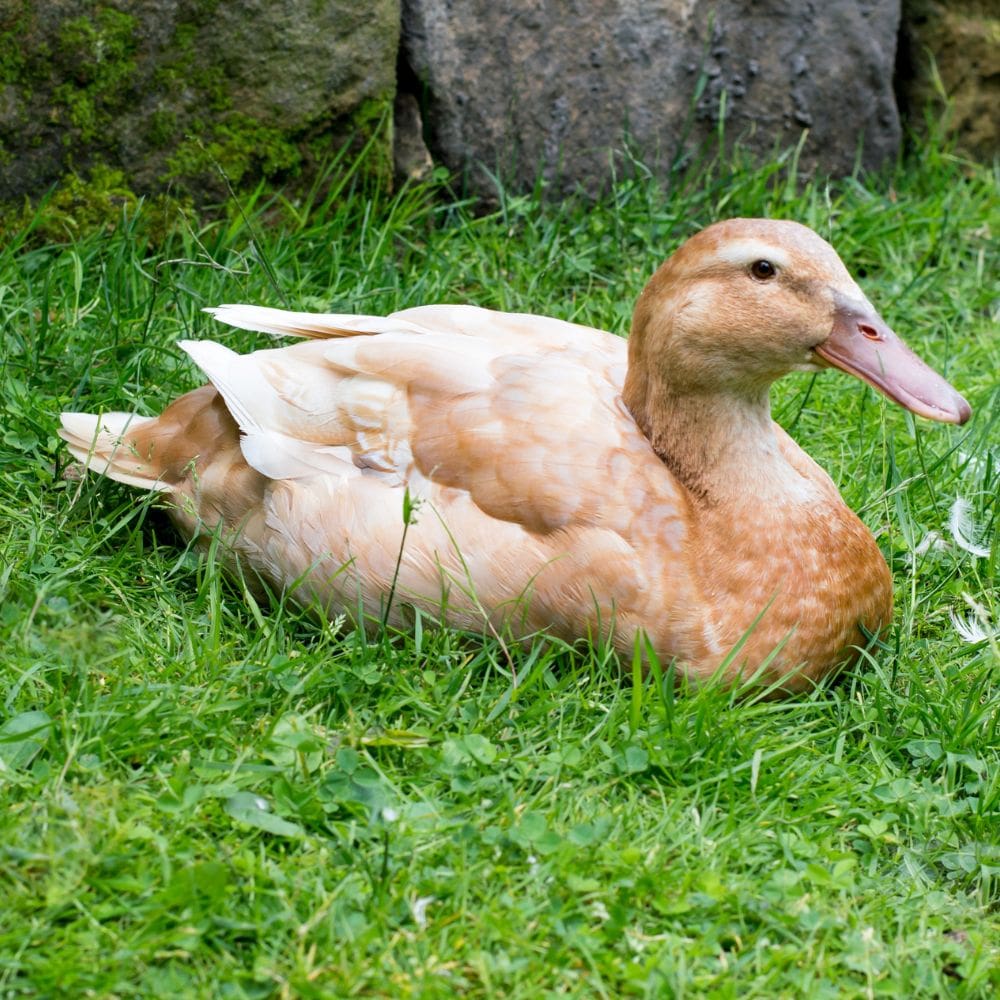
Buff Orpington duck laying in green grass

Buff Orpington Duck History Snippet

Our story begins in England during the late 1800s when the Buff Orpington duck (also referred to as Buff Duck) emerged as a breed. William Cook, a renowned poultry breeder from Orpington, Kent, brought these delightful ducks into existence.

Cook aimed to create a multi-purpose breed that excelled in both egg and meat production, while also possessing an attractive appearance. He succeeded beyond measure, and the Buff Orpington duck quickly gained popularity for its numerous desirable qualities.

Willam Cook is well known in the poultry world. He not only developed Buff Orpington ducks, but also chickens.

Personality Traits

Buff Orpington ducks are friendly and docile in nature. They often display a calm and gentle demeanor, making them a joy to be around. Their endearing personality traits make them wonderful pets and ideal companions for children.

These ducks, as well as many other duck breeds, can develop strong bonds with their humans and can even be trained to respond to their names. So, be prepared to form a delightful connection with your quacking friend!

Buff Orpingtons are a friendly breed and make good pets. The are relatively quiet and startle less easily than some other duck breeds, but they will alert if they perceive danger. They like to forage, although like most duck breeds, they need to be protected from predation as they do not fly

The Livestock Conservancy

Egg Production

If you’re looking for a duck that can lay a substantial number of eggs, the Buff Orpington female duck won’t disappoint. These excellent layers can produce around 180 to 220 large, creamy white eggs annually.

Their consistent egg production and warm and nurturing instincts make them great candidates for those interested in hatching and raising ducklings as well.

Buff Orpington Duck Meat

While Buff Orpington ducks are good egg layers, they also excel in the realm of meat production. They are considered a heavy breed and that speaks directly to their meat qualities. The male is larger and more appealing for meat, but both the hens and the drakes are sizeable enough.

Their flavorful meat makes them a popular choice for those seeking a delicious duck dining experience. So, if you’re considering raising ducks for meat, the Buff Orpington is a fantastic option that satisfies both the taste buds and the eyes.
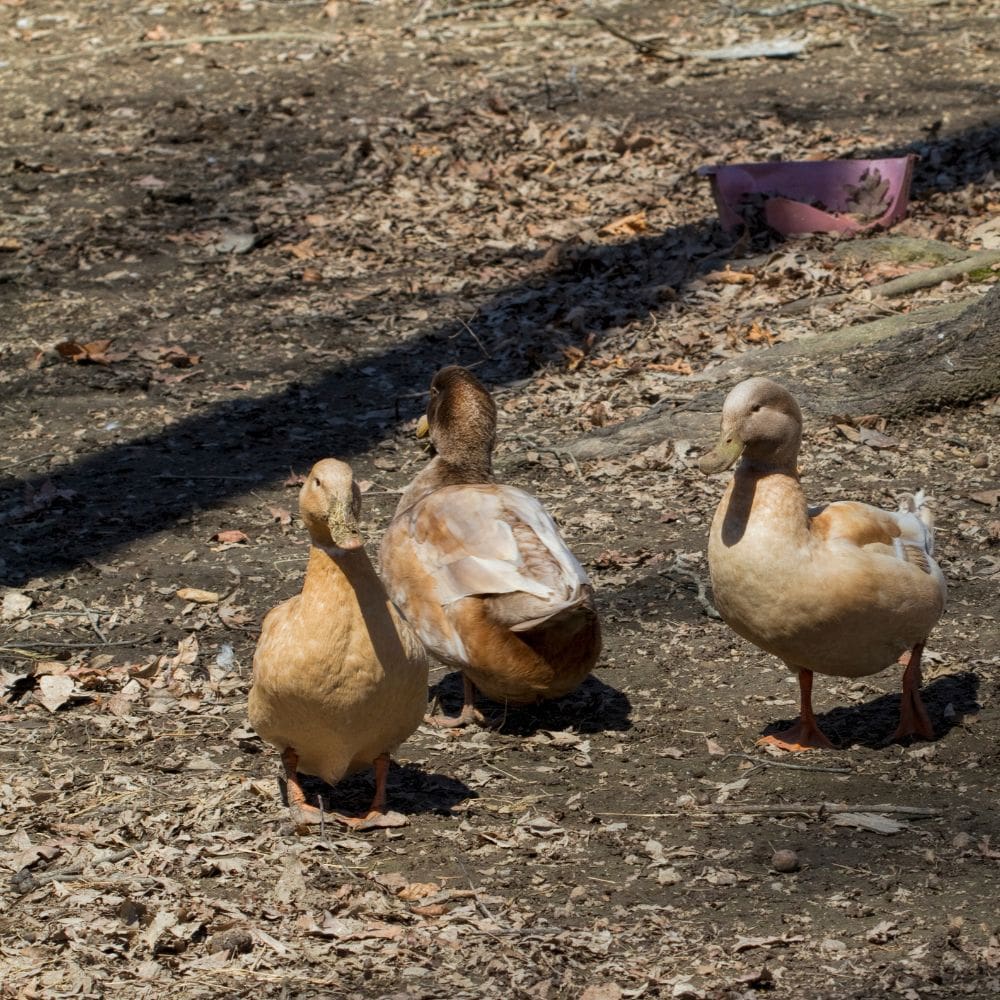
Three Buff Orpington ducks standing on ground with leaves and twigs

Appearance

These ducks have medium-sized, plump bodies covered in downy feathers and an oval head. They have lovely brown eyes. Their most prominent feature is their gorgeous buff-colored plumage, which ranges from a soft, buttery shade to a deep, rich golden hue. This beautiful coloration adds a touch of warmth to any flock.

We know about their buff plumage but what about the duck’s bill? Well, for starters, this breed proudly carries a medium-length bill. The drake’s bill is yellow, while a hen usually has an orange to brownish shade bill. They also sport a well-curled tail (which is one of my favorite feathers).

In both males and females, their wings are short and small. This is adorable, but it means it can’t fly well.

Basic Duck Care Tips

  • Ensure they have a predator-proof enclosure (at least overnight).
  • Provide constant fresh water (this is a bit challenging because ducks are very messy)
  • Allow free-range time if possible so they can hunt for worms, insects, berries, and other goodies
  • If they are cooped up in captivity all day give them some extra protein-packed treats like these.
  • Feed them high-quality feed that isn’t packed with fillers.
  • If you have access to a pond, they will be the happiest.

Summary

In the world of ducks, Buff Orpingtons stand out as a breed that combines beauty, temperament, and productivity. Their friendly nature, excellent egg-laying capabilities, and potential for meat production make them a beloved choice for duck keepers.

Whether you’re looking to add a charming pet to your backyard flock or to embark on duck cuisine, the Buff Orpington duck will likely exceed your expectations. So, why not consider inviting these delightful feathered friends into your life and experience the quacky charm of Buff Orpingtons firsthand?

Other Duck Articles

Want to learn more about ducks? Not sure if the Buff Orpington duck is the right duck breed for you? Interested in other duck-related information? Try reading some of these articles:
If you are like me, when you hear the name Dorking chicken you are imagining a chicken with glasses that has tape wrapped around the center 🥸. However, the Dorking chicken breed is pretty cool 😎…but not often heard of.

Prepare to be captivated by their rich history, their fluffy appearance, and the wonderful contributions they make to our plates. So, put on your chicken-loving hats, and let’s dive into the fascinating world of the Dorking chicken!

Dorking chicken standing on dirt covered area

Dorking Chicken History Snippet

Our journey begins in the charming town of Dorking in Surrey, England, where the Dorking breed has its roots. This illustrious breed boasts a history dating back over 2,000 years!

Yes, you read that right—these chickens have been strutting their stuff since Roman times. They were favored by the Romans for their meaty bodies and scrumptious flavor, making them the original “foodie” chickens.

Stay tuned there is a bit more on their history in the “Appearance” section.

Temperament

Now, let’s talk temperament! Dorking chickens are known for their gentle and docile nature, making them ideal companions for both humans and their fellow feathered friends.

These fluffy fellows have an uncanny ability to strut their stuff with grace and poise, all while maintaining a laid-back and friendly disposition. So, if you’re looking for a chicken that has a certain dual purpose…purpose, but is also people-friendly, the Dorking breed is an excellent choice!

Make them even friendlier (and healthier) with treats like these that are packed FULL of goodness. Trust me, you’ll be glad you did.

Dorking Appearance

Prepare to be dazzled by their appearance! Dorking chickens have unique and eye-catching features. With their long back, broad breast, and muscular bodies, they exude an air of confidence and strength. But let’s not forget about the fluff!

Their feathers are soft and abundant, almost like a downy cloud. They remind me a bit of my Light Brahmas, sweet fluff balls. Dorkings come in several color varieties, including white, silver-gray, and a lovely dark cuckoo pattern, providing a variety for any backyard flock.

These birdies have a single comb or rose comb (rose combs being better for cold climates because of frostbite resistance). The roosters have a large comb that can be a bit floppy and that’s just plain adorable. Dorkings have either horn-colored or pinkish beaks, reddish-brown eyes, red earlobes, and white skin. They have pinkish-white shanks and feet. Their weight is anywhere from 7 lbs to 9 pounds (females leaning toward the lighter side and males leaning toward the heavier side, of course).

Want to learn something extra interesting about this breed? It has a fifth toe 😆. Read what The Livestock Conservancy has to say:

The Roman author, Columella, wrote of five-toed fowls in Rome and their description fits the Dorking well. Popular history states that the Romans brought five-toed fowls with them when they invaded Britain in 43 A.D. These five-toed fowls were respected by the Romans for their fine table qualities. Possibly, the Romans brought the five-toed Ardennes chickens from Belgium, and these were the basis for the Dorking breed. 

The Livestock Conservancy

Beyond the quirky 5th toe, they also have short legs. This is unique in the chicken world and quite fun to look at.

Dorking chickens standing on dirt covered area

Egg Production

Dorking hens are excellent layers, bestowing their favorite humans with a steady supply of yummy, vitamin-packed eggs. They are good foragers and that makes their eggs extra nutritious. On average, a Dorking hen can lay approximately 160 to 200 eggs per year!

These eggs are medium to large in size and boast a beautiful creamy white hue. So, whether you’re whipping up a scrumptious omelet or baking a cake fit for a king, Dorking eggs are sure to help you out.

Dorking Meat Production

Last but certainly not least, we come to the mouthwatering aspect of Dorking chickens—meat production. With their plump bodies and well-rounded muscles, Dorkings are known for their exceptional meat quality.

They have a reputation for tender and succulent meat, making them a favorite among chefs and food connoisseurs alike. So, if you’re looking to raise chickens that will grace your dinner table with delectable dishes, the Dorking breed is a good choice.

The best way to ensure the tastiest and most nutritious meat is to choose wisely what you feed your chickens. I believe strongly that you are what you eat, and this is true for your flock as well. You need to feed them a high-protein feed that has quality ingredients and not a bunch of fillers. Here is one I highly recommend (check out the ingredients).

Why Aren’t Dorking Chickens More Popular

Why isn’t the Dorking breed more popular? I mean, chances are you’ve never even heard of this breed until now. Well, it’s probably the name! Okay…I’m kidding but I guess it’s plausible 😉.

One possible reason for the lack of popularity could be its slow growth rate, which doesn’t align with the demands of the fast-paced modern world. In a society that often values speed and efficiency, the Dorking’s slower development may be seen as a drawback. Additionally, its specialized characteristics, such as its unique appearance and specific meat flavor, may not cater to the mass market’s preferences for uniformity.

Let’s remember that sometimes the best things in life aren’t the most popular ones. The Dorking chicken’s distinct qualities and its long history era make it a hidden gem for farmers and backyard chicken keepers. They are best for those who appreciate its charm and are willing to embrace a leisurely chicken-raising experience.

Summary

The Dorking chicken breed, with its rich history, gentle temperament, fluffy appearance, and exceptional egg and meat production, has firmly established itself as a standout in the poultry world.

Whether you’re seeking a delightful addition to your backyard flock or craving a culinary adventure, the Dorking breed will not disappoint. So, embrace the fluff, savor the flavor, and let the Dorking chickens win over your heart! ❤️


Many of us love having chickens as pets, but there are other birds out there that are fun pets too. Parrots are one popular variety. And did you know there are many types of parrots? Some might surprise you! Today we will talk about 10 types of parrots people keep as pets.

If you want to learn more about parrots without having to sift through too much research – this article will get you started. Here’s a list of the top 10 types of most popular pet parrots, along with specific breed facts, colors, personalities, and special care tips for each.

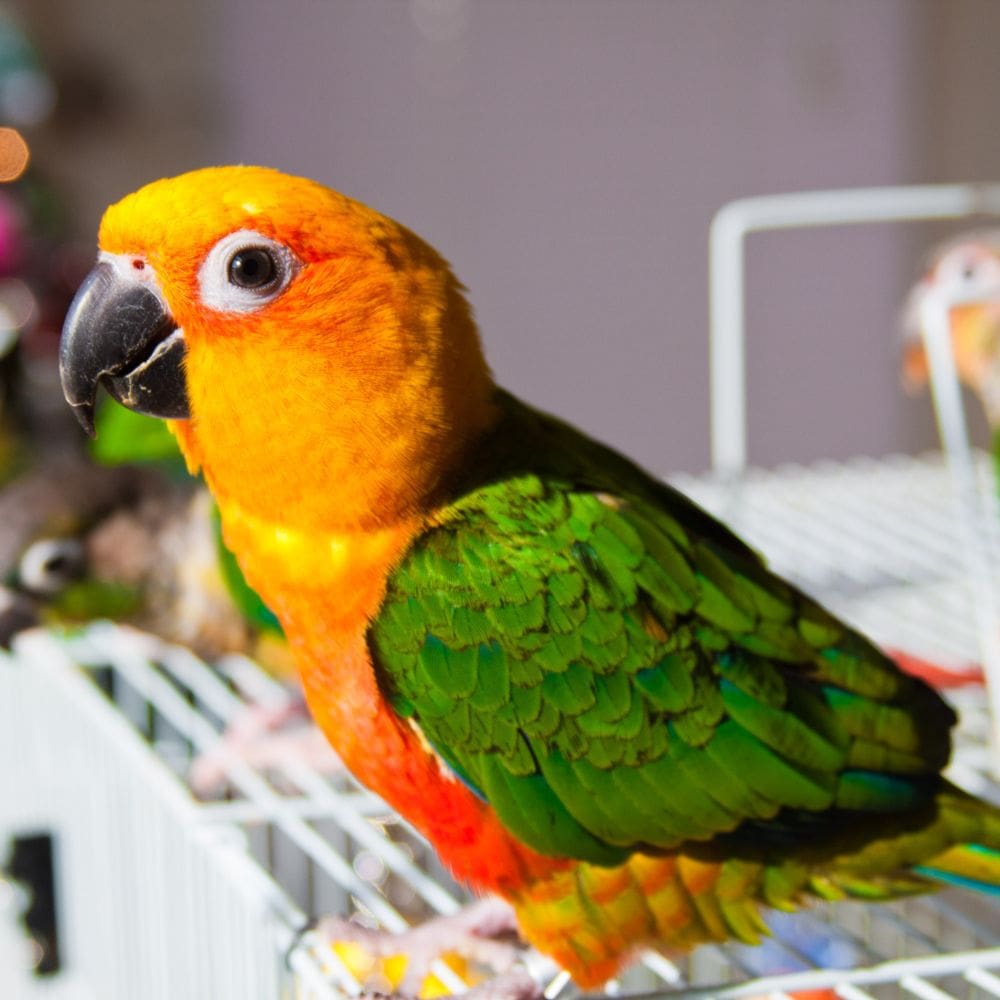
Sun Conure standing on wire cage with blurred background

10 Types of Parrots People Keep As Pets

There are roughly 350 species of parrots! Wowzer, that’s a lot! Several of the different types of parrots fall into the most popular pet bird category. Parrots are very social birds and form a strong bond with their owner if given the chance.

Parrots can be found all over the world, but most notably in tropical regions such as Australia, South and Southeast Asia, Solomon Islands, New Guinea, Mexico, South America, and West Africa. They live in flocks unless, of course, they are held in captivity.

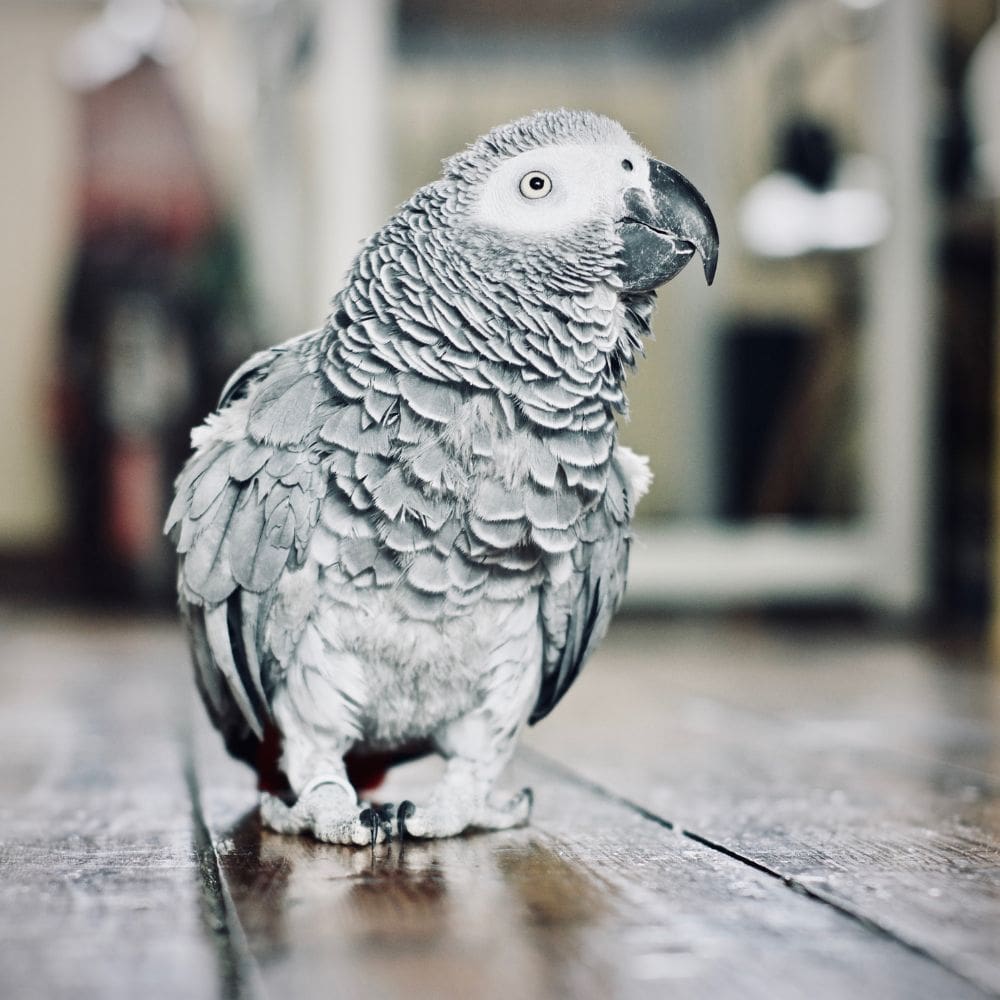
1. African Grey Parrot

  • Colors: Mostly gray with white patches on the face and bright red tail feathers.
  • Personality: Highly intelligent, excellent mimickers, and known for their ability to learn and understand human speech. With their inquisitive eyes and quick-witted nature, they demonstrate an incredible capacity for problem-solving and learning.
  • Special Care: Provide mental stimulation through interactive toys and regular social interaction with their owners. A balanced diet of pellets, fresh fruits, vegetables, and nuts is crucial.
  • Also called the African Gray Parrot (Gray spelled differently) and the Congo African Grey.
African Grey Parrot standing on wood floor with blurred background

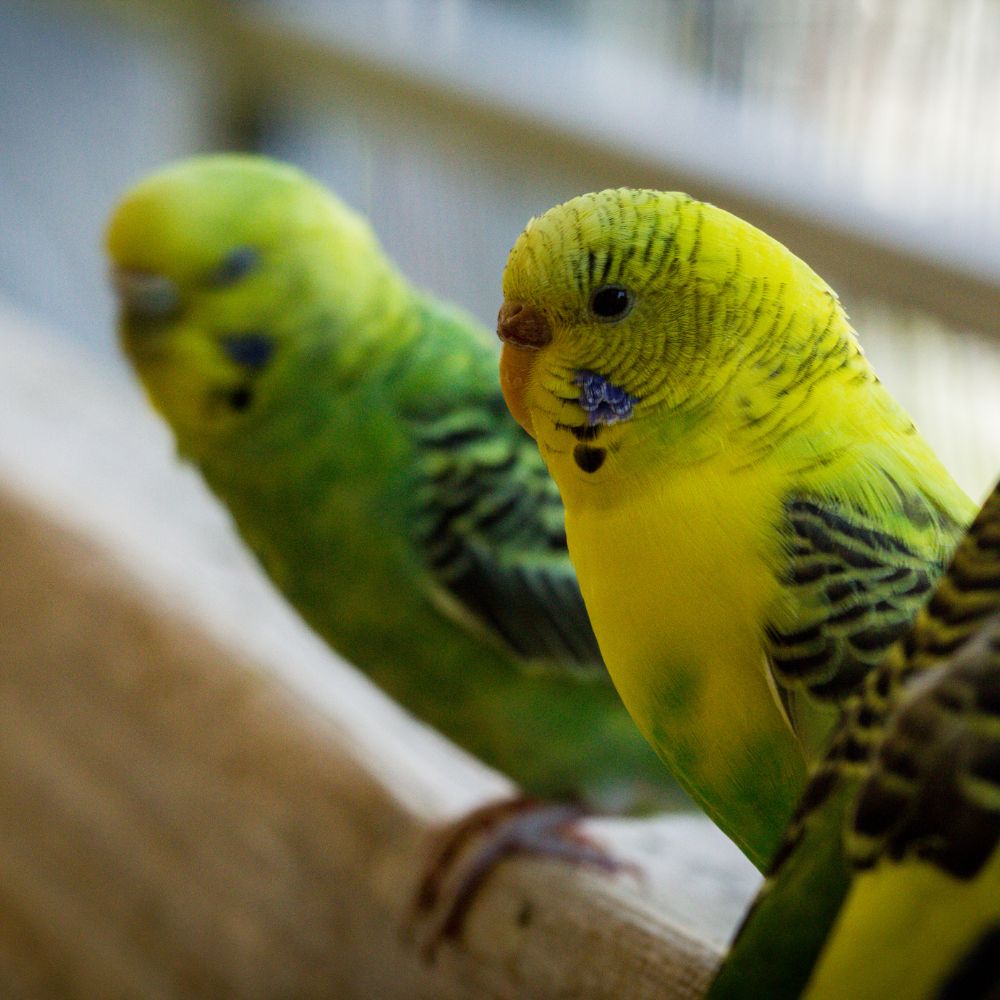
2. Budgerigar

  • Colors: A variety of colors, including blue, green, yellow, and white, with different patterns.
  • Personality: Playful, social, and easy to train. They enjoy interacting with their owners and can be taught to perform tricks. They can even learn to say some words! This cutie is easy to find in most pet stores and inexpensive.
  • Special Care: Regular exercise outside the cage, fresh fruits and vegetables, and chew toys to maintain their beak health.
  • Also known as a Budgie or a Parakeet. Read more about this easy to care for pet bird: Parakeets – Ultimate Guide For The Smallest Parrots.
Budgerigar Parrots up close standing on a perch

3. Cockatiel

  • Colors: Mainly gray with a vibrant crest on their head. Males have bright orange cheek patches, while females have paler ones.
  • Personality: Friendly, affectionate, and known for their ability to whistle and mimic simple tunes. They enjoy human companionship. They love to entertain and play and will keep you laughing for sure.
  • Special Care: Provide regular social interaction, a varied diet including seeds, pellets, and fresh vegetables, and opportunities for exercise.
Cockatiel Parrot standing on a small cage with blurred windows in background

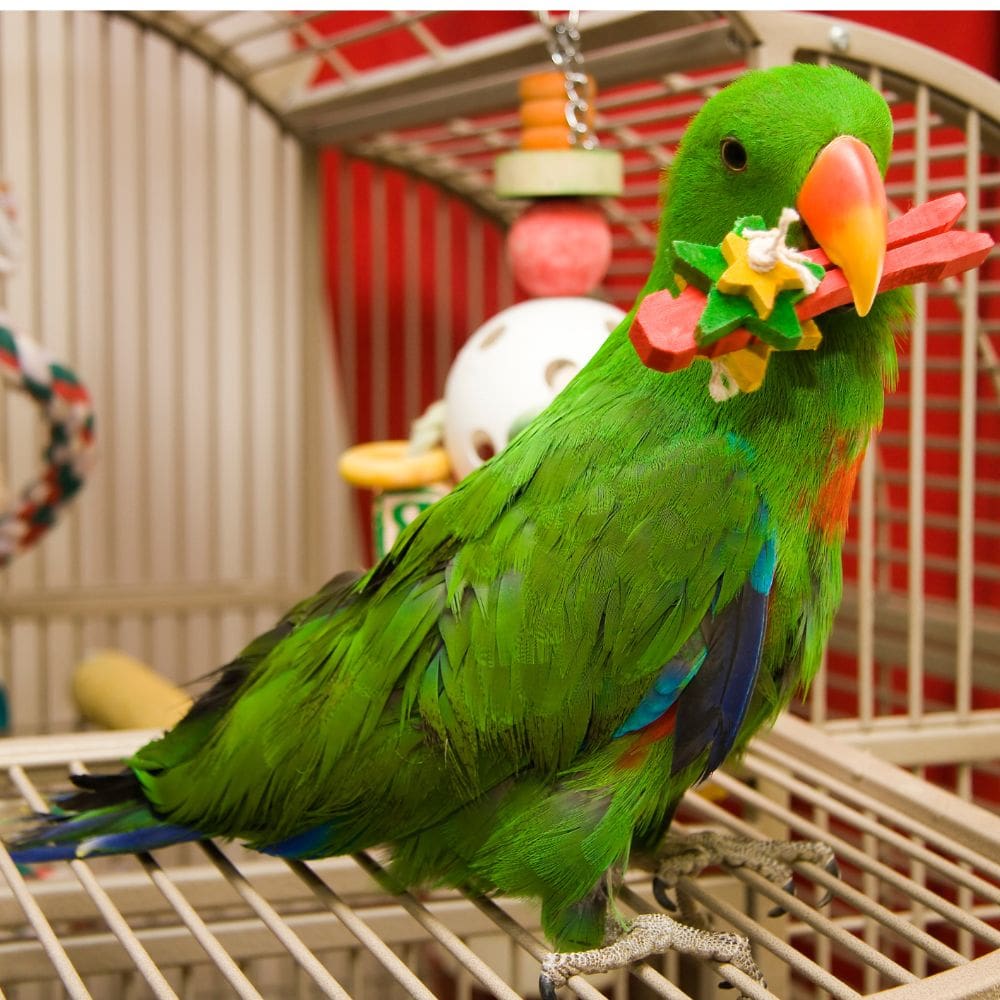
4. Eclectus Parrot

  • Colors: Males bright green plumage with red and blue accents, while females have red and blue feathers with a purple-blue chest.
  • Personality: Intelligent, social, and known for their calm and gentle nature. They are good talkers and can learn a large vocabulary.
  • Special Care: A diet consisting of fresh fruits, vegetables, pellets, and limited seed intake. Provide plenty of chewing toys to satisfy their strong beak.
Eclectus Parrot standing in a bird cage with a toy in its mouth

5. Sun Conure

  • Colors: Vibrant combination of yellow, orange, green, and red feathers.
  • Personality: Energetic, playful, and affectionate. They enjoy being the center of attention and can learn tricks and simple phrases. They love to problem-solve and investigate, so be prepared to follow them around as they get into things.
  • Special Care: Provide plenty of toys and social interaction. A diet consisting of pellets, fruits, vegetables, and limited seed treats is essential.
Sun Conure standing on wire cage with blurred background

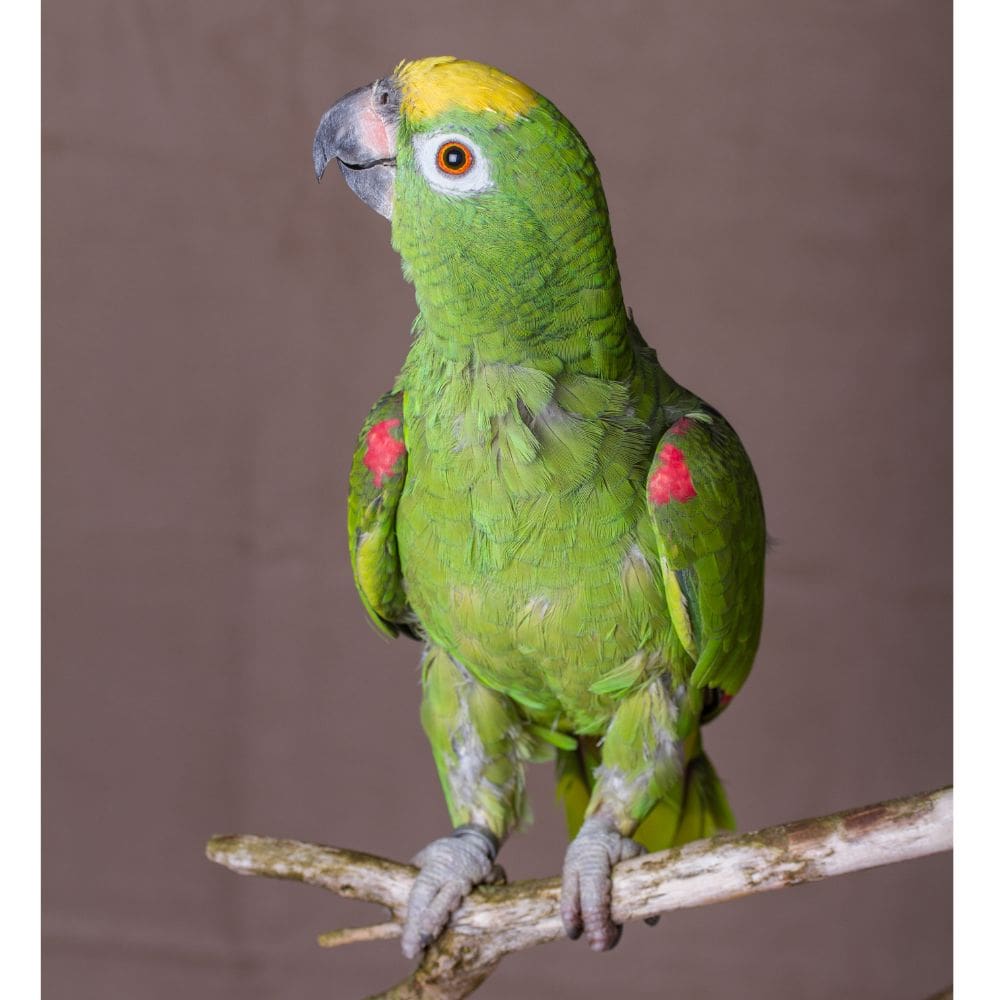
6. Amazon Parrot

  • Colors: Various colors depending on the species, including green, blue, yellow, and red.
  • Personality: Highly intelligent, outgoing, and known for their ability to mimic human speech. They require regular mental stimulation and social interaction. They are high-maintenance birds but are considered to be one of the most intelligent birds out there.
  • Special Care: A balanced diet of pellets, fresh fruits, vegetables, and occasional nuts. Provide sturdy toys to keep them mentally engaged.
Amazon Parrot standing on brand perch with gray background

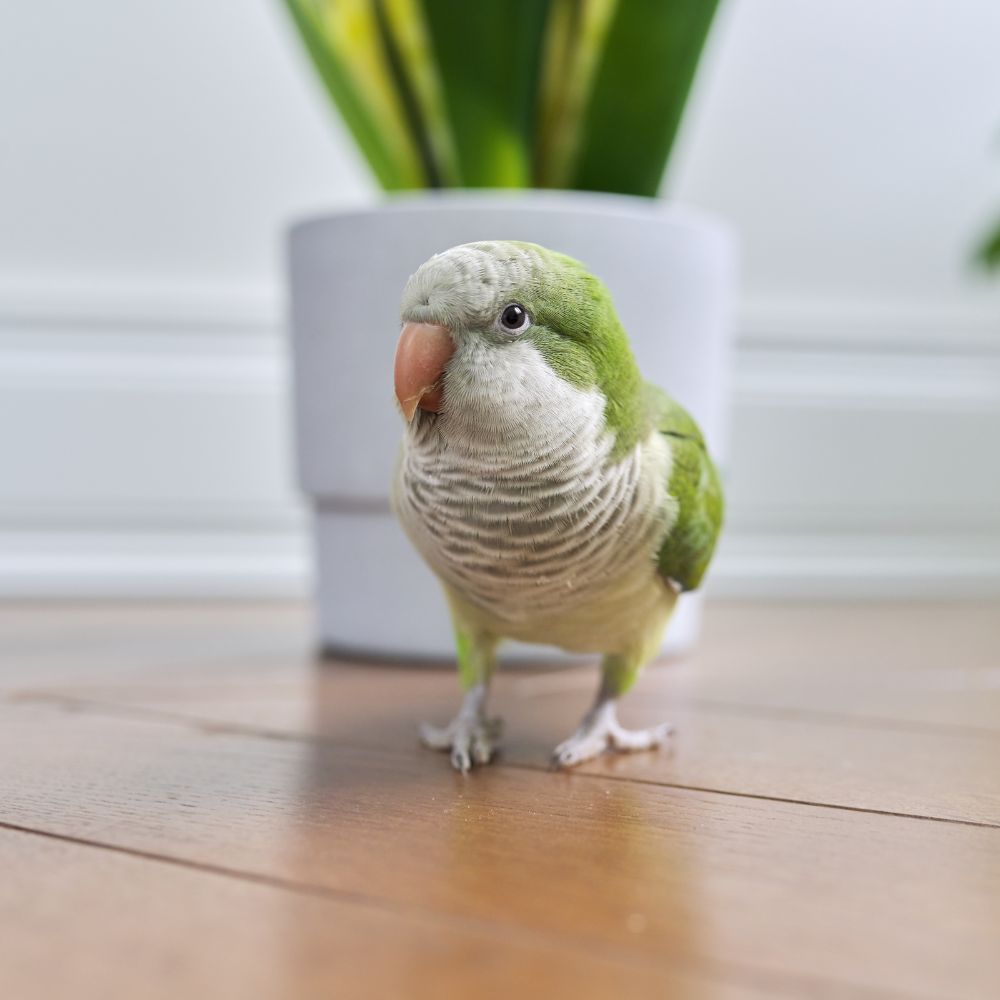
7. Quaker Parrot

  • Colors: Mainly green with a grayish face and a blue chest in some varieties.
  • Personality: Sociable, playful, and curious. They are capable of learning tricks and can be talkative.
  • Special Care: Regular interaction and playtime with their owners, a balanced diet of pellets, vegetables, and occasional seeds. Provide chew toys to keep their beaks busy.
  • Also called a Monk Parakeet.
Quaker Parrot standing on wood table with blurred plant in background

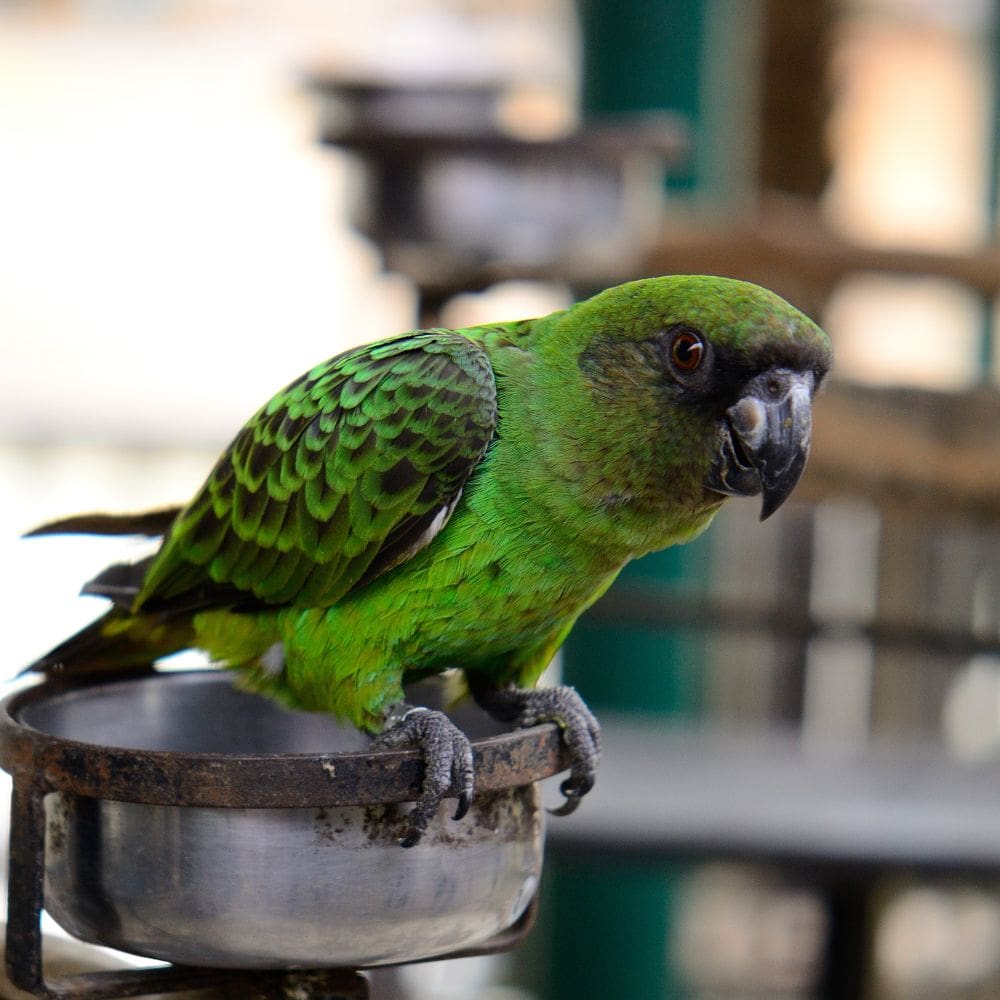
8.Senegal Parrot

  • Colors: Mainly green with a gray head, yellow belly, and a bright orange beak.
  • Personality: Intelligent, independent, and known for their charming and playful nature. They can learn to mimic speech and enjoy interactive toys.
  • Special Care: Regular social interaction and mental stimulation, a varied diet of pellets, fresh fruits, vegetables, and occasional nuts.
Senegal Parrot up close while standing on a feeding dish

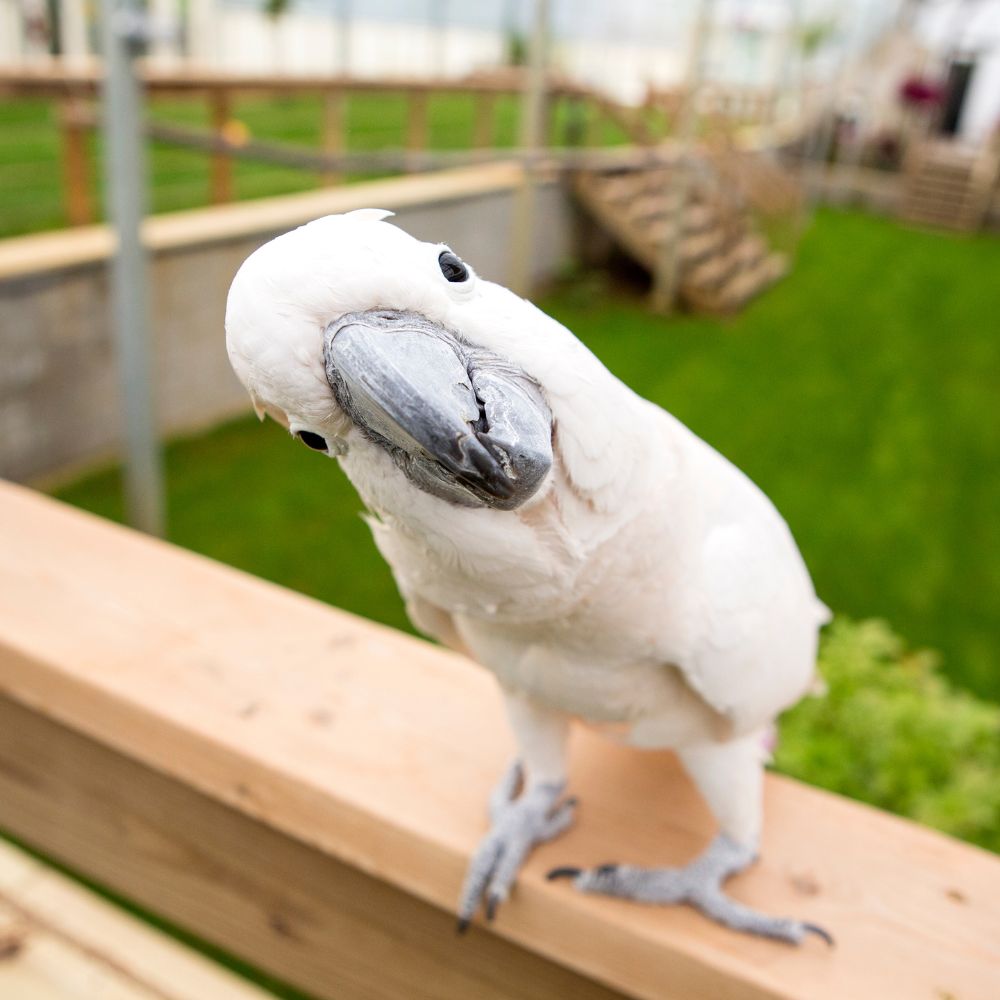
9. Cockatoo

  • Colors: White or light pink feathers with a distinctive crest on their head.
  • Personality: Highly social, affectionate, and intelligent. They are known for their ability to learn complex tricks and mimic human speech. You’ll never have to go to the movies again because they are quite entertaining.
  • Special Care: Regular exercise outside the cage, a diet consisting of pellets, fresh fruits, vegetables, and nuts, and plenty of toys to keep them mentally engaged.
Cockatoo Parrot looking at the camera with head to the side

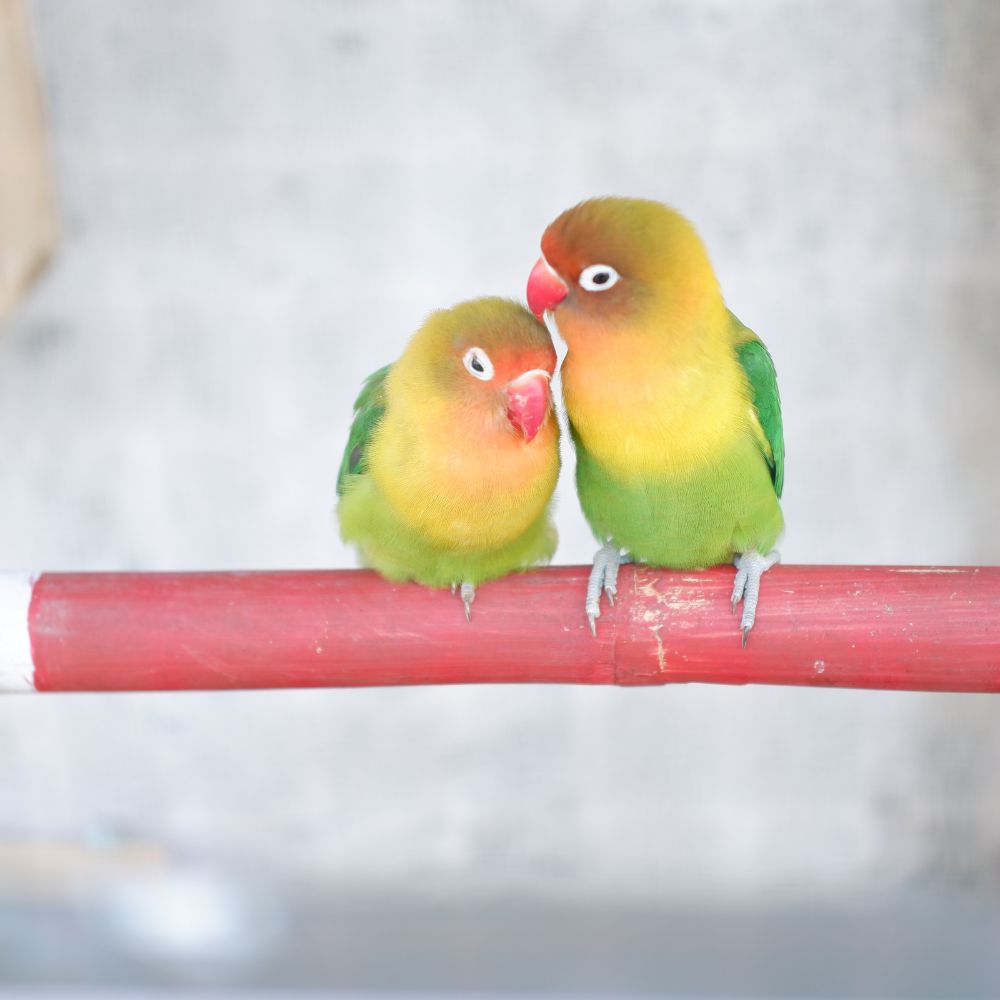
10. Lovebird

  • Colors: A variety of colors, including green, blue, yellow, and peach-faced lovebirds with various combinations and patterns.
  • Personality: Energetic, social, and known for their strong pair bonding. They enjoy interacting with their owners and can be trained to perform tricks. They are not talkers.
  • Special Care: Regular social interaction, a balanced diet of pellets, fresh fruits, vegetables, and occasional seeds. Provide plenty of toys to keep them entertained.
Two Lovebirds standing on a perch and snuggling

Although we just breifly talked about 10 types of parrots that people keep as pets there are many more parrot species that are regularly kept as pets. Lorikeets, Macaws, Meyer’s parrot and more! So if this list got you excited, but you aren’t quite sure – don’t stop here!

All popular parrots are similar in that they are a committment, they need fresh food, and lots of attention.

Bonus Care Tip

Did you know that parrots can eat mealworms? They can and they are a super nutritious treat that they will love you all the more for! Try these quality mealworms out!

Is a Parrot Right For Me?

I don’t want to end with a big red flag warning, but I also don’t want to lead you down a path you aren’t ready for. I personally allowed my daughter to buy a pet parrot recently, only to discover it was not a good fit. Within two weeks we were able to find the bird a forever home and it worked out okay because we acted quickly. But once a bird has bonded with you, it’s very stressful for them to be rehomed.

Considering a parrot as a pet requires careful consideration of their unique needs and your individual lifestyle. Parrots are not independent pets. They are social creatures that demand a considerable amount of attention and interaction. They thrive on human companionship and can easily become stressed or develop behavioral issues if neglected or left alone for extended periods.

Owning a parrot means committing to daily interaction, mental stimulation, and creating a stimulating and suitable habitat. It’s important to note that parrots can have remarkably long lifespans, some living for 50 years or more, requiring a lifelong commitment.

They can also bite. And the bigger the bird, the bigger the bite. This is something we have definitely learned along the way. It may seem like a strange thing to mention, but from my experience it’s certainly important to understand and be prepared for this.

Therefore, before bringing a parrot into your home, assess your ability to provide the necessary time, attention, and care that these feathered companions deserve. If your lifestyle and availability cannot accommodate their needs, it may be wise to explore alternative pet options that better align with your capabilities and preferences.

A Word About Chickens & Ducks

Chickens are not parrots, but I am a dedicated chicken and duck mama too (along with a whole host of other critters…like a Lovebird). If a parrot doesn’t sound like something you can commit to, you might think about chickens or ducks. They are easier to care for and don’t have as long of lifespans (less committment).

Here are a few articles about chickens and ducks to give you a taste of other bird species 😉.

The Sumatra chicken breed, originating from Indonesia’s enchanting island of Sumatra, is a captivating sight to behold. With its glossy black feathers, adorned with a shimmering blue-green hue, these chickens are the picture of elegance and beauty.

Beyond their stunning appearance, Sumatra chickens are a bit mysterious in history but still rich in culture making them cherished members of the poultry world.

Let’s dive into the fascinating world of Sumatra chickens, where beauty and mystery meet.

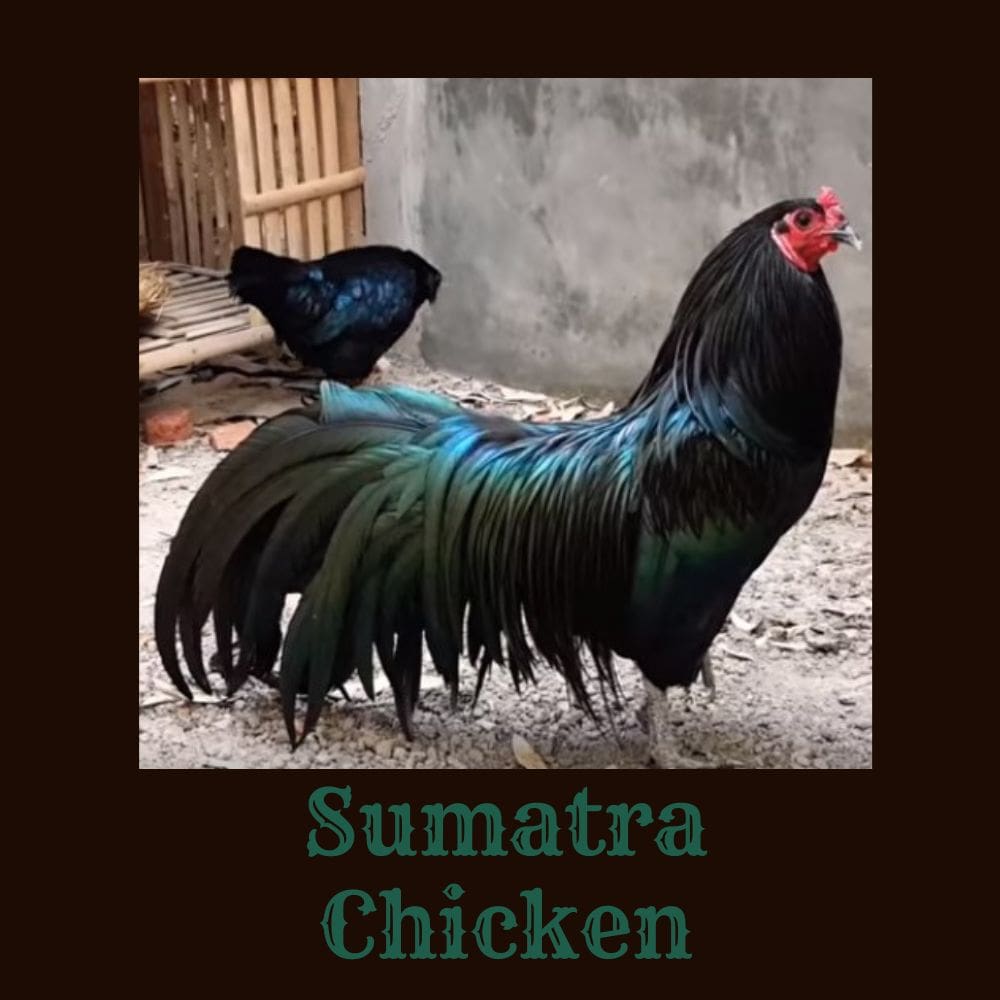
Sumatra chicken standing in front of concrete wall

Sumatra Chicken Breed History Snippet

As with many chicken breeds, we don’t have a complete history. Some things are just going to be a mystery no matter how much we wish we could figure it out. The good news is that we can at least trace this breed back to its importation in 1847. It was originally from the island of Sumatra in southeast Asia and that’s where it gets its final name. Read the quote below from The Livestock Conservancy – there is a surprising twist on the history of the name.

The Sumatra chicken was first imported into the United States in April 1847 by J.A.C. Butters of Roxybury, MA. There were subsequent importations by others in 1850-52. The breed went to Germany in 1882 where it was, at first, called “Black Yokohama”. Nelson A. Wood, of the Smithsonian Institute in Washington D.C., began with the breed in 1885 and is given much credit for refining the Sumatra chicken to enhance its flowing feathers and increasing its productivity.

The Livestock Conservancy

Not only was it called the Black Yokohama at one point, but it was also referred to as the Sumatran Pheasant. Although it is interesting in appearance, it is definitely a chicken and not a pheasant. This fact is clearly why that particular name didn’t stick.

The Sumatra breed was recognized by the American Poultry Association in 1883 as a standard breed. They are considered jungle fowl and are kept primarily as ornamental chickens.

Sumatra Chicken Appearance

The appearance of the Sumatra chicken breed is truly remarkable. These chickens possess a slender and graceful build that simply makes them beautiful.

However, it’s their feathers that truly steal the spotlight. Imagine glossy black plumage with a mesmerizing blue-green iridescence when touched by sunlight. This unique feature gives them a distinct look, setting them apart from many other breeds.

The feathers are exceptionally smooth and shiny, adding to their overall appeal. From their confident stance to their shimmery plumage, Sumatra chickens are undeniably a sight to behold.

Sumatra males and Sumatra hens are both glorious in appearance. They have a small pea comb to match their dainty 4 to 5-pound bodies. The wattles are also tiny, sometimes even hard to find. Of course, the most stunning feature of these birds is their long, flowing tail feathers that almost look like a wedding dress train.

One of the more interesting things about this breed is that they can have black skin and bones like the Silkie! Some have dark skin, and some even have yellow skin. If a black-skinned chicken piques your interest you may also be interested in reading about the Ayam Cemani breed. It’s ALL black, from head to toe.

This Sumatra breed is mostly known for the black variety. This is the one with black feathers with an amazing beetle green sheen, but today it also comes in a couple of other color varieties. Blue varieties and Dun colors are cited by The Livestock Conservancy. However, the black Sumatra chicken is going to be the easiest to find even though they are all considered rare.

One last fun fact about the appearance of this beauty, they can have multiple spurs! We don’t know why but it’s likely just part of their protection system for the wild yonder.

Sumatra Temperament

This little bird is a nervous, flighty, survivor. It’s always on the lookout for predators and danger so it makes for an excellent foraging-free-ranger. It does not make a good lap chicken, however.

The Sumatra chicken is still a pretty natural bird, meaning it’s not as tame as many of the breeds you may be used to. Although, this is not 100% true in all cases. I’ve read about some Sumatra chickens that are quite tame.

It’s safe to say they aren’t mean or aggressive, just (usually) not an easy-to-catch-and-hold bird. They make up for it in beauty though.

Whether it be the Sumatra rooster or the hen, they tend to be jumpy and flighty birds.

Sumatra Chicken Egg Production

They can lay up to 100 small white eggs each year. Not a record-setting bird but still enough to earn its keep. Besides, they are so lovely to look at whether they lay eggs or not.

Plus, they lay well in the winter months. I’d say that’s a bonus. We need eggs in the cold months too!

These ladies are not dreaming of motherhood either, so they don’t tend to go broody. If you are looking for a breed that is low on the broodiness scale, this breed might make your list.

You should consider feeding these birds protein-rich treats like these to make them as people-friendly as possible (and boost their nutrition while you are at it 😉). Your eggs will benefit from this as well.

Where to Buy Sumatra Chickens

There are many places you can buy Sumatra chickens. You can check with local breeders in your area for starters. Here are a few hatcheries to get you started if you’d like to order them that way.

Summary

If you are wanting an ornamental breed and dream of a long tail bird walking around foraging with your flock – the Sumatra chicken is worth considering.

It’s a lovely breed with a unique look that is sure to be a conversation starter at the very least.

I think it’s pretty safe to assume that most of us think of the iconic white Leghorn when we think of the Leghorn breed. But did you know that there are a couple of other Leghorn varieties? That’s right, and the Brown Leghorn chicken is one of them.

Not only is the Brown Leghorn an elegant beauty, but this variety is also quite the egg producer. Keep reading to learn some fun facts about this lesser-known (but impressive) Leghorn chicken.

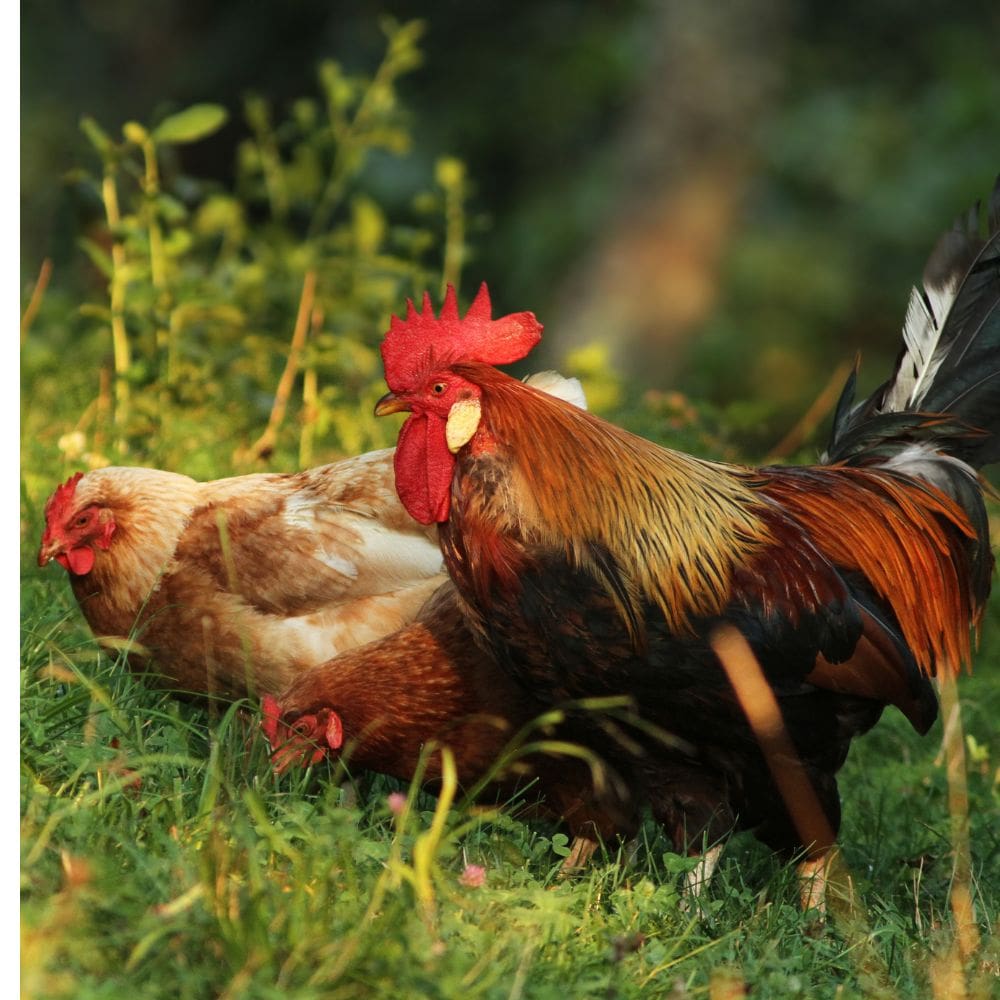
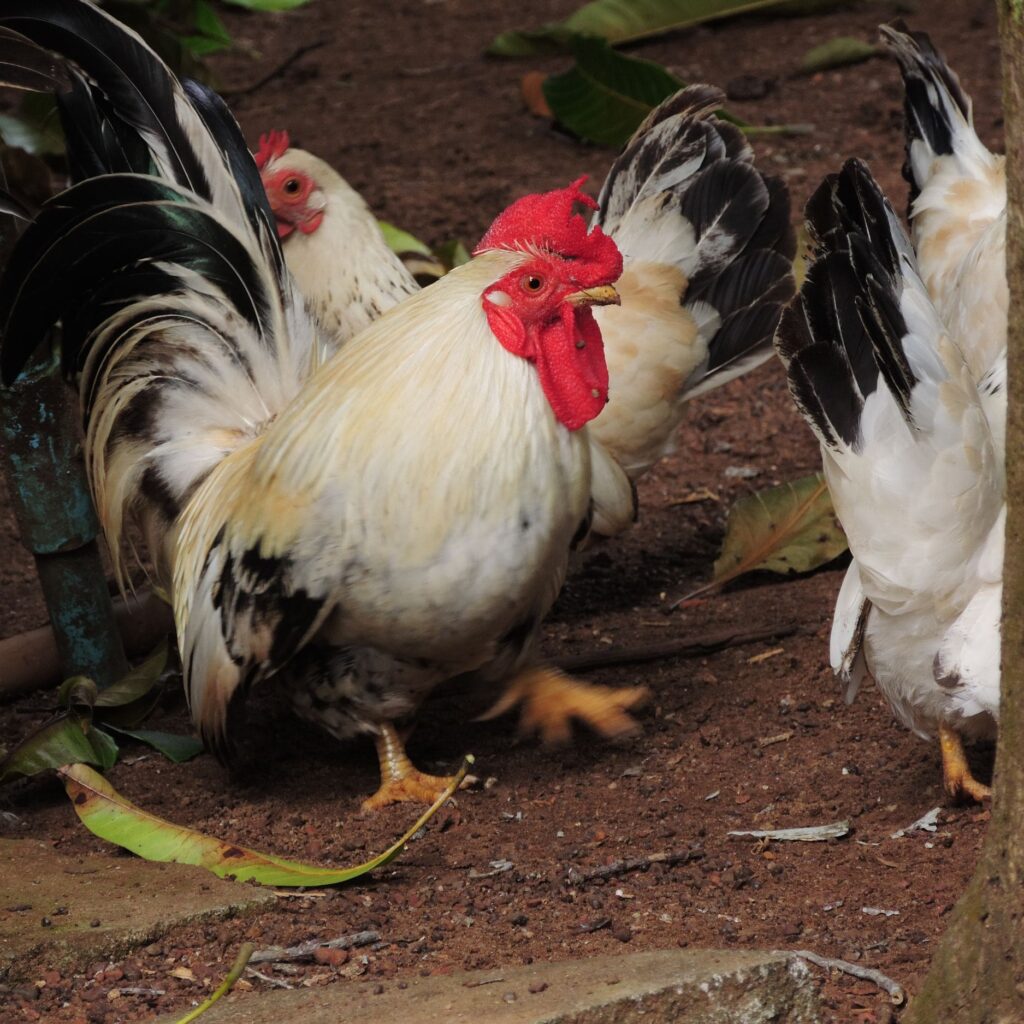
Brown Leghorn rooster and two hens standing in grass

Brown Leghorn Breed History

The Leghorn breed has a rich history that can be traced back to Italy, Denmark, and England. This breed was admitted to the American Standard of Perfection in 1874.

Bred for their ability to forage and lay eggs, these chickens became quite popular. Over time, the Brown variant came about, with its lovely brown plumage setting it apart.

Leghorns in general mature early and are active foragers which has made them a long-time favorite throughout history.

Appearance

I’ve personally tried to gain a colorful flock, and brown chickens were not at the top of my list. But learning about Brown Leghorns changed my mind forsure.

The Brown Leghorn chickens have quite an array of brown shades, arranged just perfectly. It’s not just a plain Jane brown (apologies to the Jane’s out there). The glossy feathers, splashed around like art, create an appearance that catches the eye.

Whether simple backyard birds or used as show poultry, the Brown Leghorn chickens are certainly captivating enough to most onlookers.

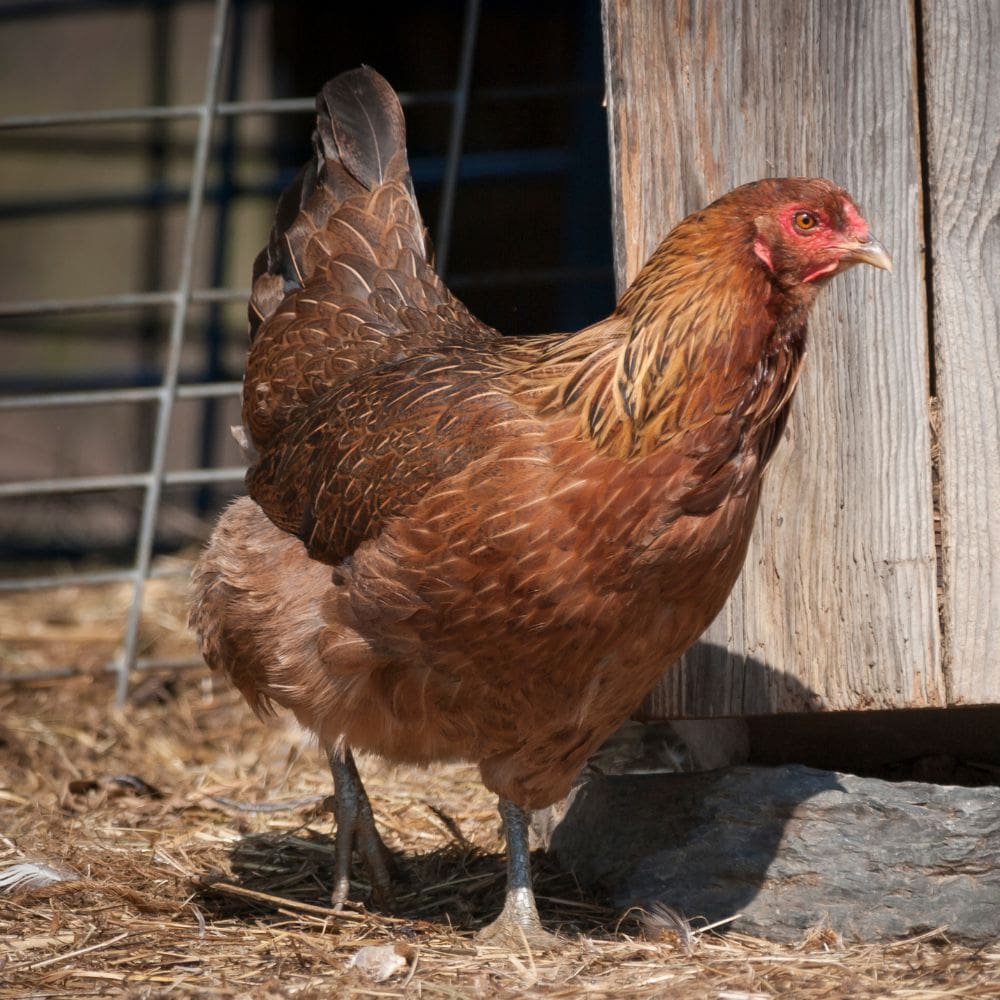
The males, like most birds, have more colors to display. Cream, black, brown, and golds with an orangish-colored saddle make for handsome roosters. The female is more muted brown but with elegant penciling and shades throughout (from lighter browns to dark brown to even darker brown). They can have salmon-colored breasts.

They have large wattles and a single comb (which is great for hot climates) or rose combs (which is better for very cold climates). Be prepared for the slimly built Mediterranean look, not a fluffy feathered butterball look.

Brown Leghorn Chicken Egg Production

When it comes to egg production, the Leghorn family excels beyond compare. They are not broody and that means they are laying instead of sitting. Renowned for their remarkable productivity, these birds are known as exceptional layers. The hens can lay 300 plus large white eggs each year.

Their focus on egg-laying has earned them a reputation as efficient and reliable producers. Many backyard farmers seeking a breed consistently delivering high-quality eggs turn to Leghorns, including Brown Leghorns. With their perfect blend of beauty and utility, these chickens are the epitome of egg-laying wonder.

I will say that due to their athletic build and active nature, they are not ideal as meat birds. And that’s just fine with me.

Temperament

Alongside their impressive egg-laying skills, Brown Leghorn chickens possess the best of work ethics. It’s true that most chickens are pretty industrious but the Leghorns are certainly good examples of this.

These birds are hard workers, joyfully pecking and scratching their way through the world. They, like all Leghorns, are not lap chickens and tend to be high strung and flighty. Regardless, they are still enjoyable to have around.

While individual personalities may vary, common traits include curiosity, alertness, and active natures. Due to their athletic build and tendencies, they are better as free-rangers than they are for confinement. If they do have to be confined they need plenty of room and activities to keep them from boredom because they are such active birds.

Their ability to tolerate various climates and conditions further adds to their appeal, putting them high up on the hardiness scale. This makes them an ideal choice for farmers and backyard enthusiasts.

Brown Leghorn hen standing in front of barn door

How to Care for Chickens

Summary

The Brown Leghorn chicken is a great choice for someone who needs an excellent egg-laying hen with the ability to avoid predators. If you don’t want a broody bird, you want a lot of eggs, and you aren’t looking for meat, this breed might just be a good fit. And if you have traditional white Leghorns, you might also consider giving the Brown Leghorn chicken a try.

When I first heard about the Andalusian chicken I thought it sounded almost mystical, or intriguing at the very least. I wasn’t wrong. This breed is not the common chicken you can find at just any farm store. It’s a breed of its own and it is definitely interesting.

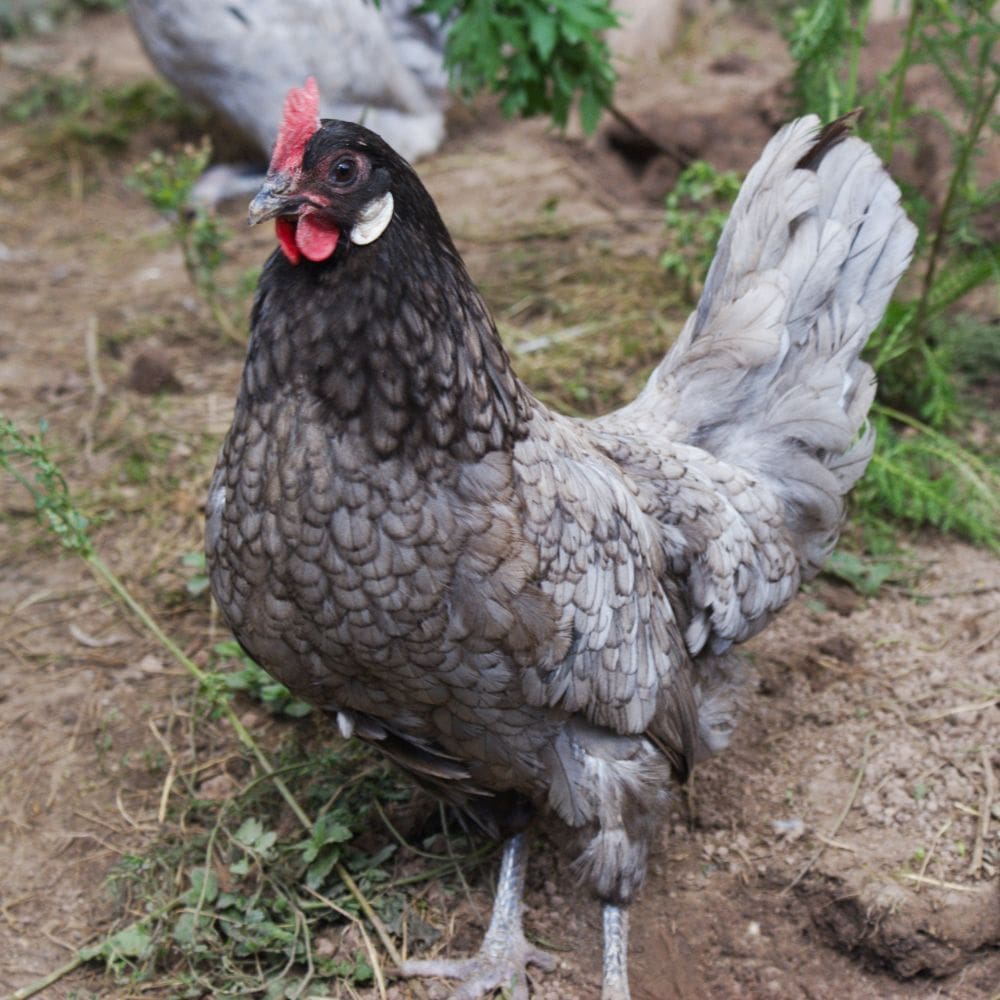
Andalusian Chicken standing on the ground

5 Fun Facts About Andalusian Chickens

#1 Foraging Machines

Andalusian chickens are excellent foragers. These birds are independent, hardworking, industrious, and agile. In fact, they don’t tolerate confinement well – they simply thrive in a free-ranging environment.

#2 Athletes

Maybe they aren’t basketball players, but they are super athletic. They are built for speed and incredibly crafty about staying away from predators. This is yet another reason they are ideal for free-ranging.

#3 Blue Gene Dream

If you haven’t heard of a blue chicken yet, then let me introduce you. Blue chickens are a thing. Of course, they aren’t smurf blue but more of a lovely gray. It’s all due to a diluting gene. Learn more about blue chickens in this article: Blue Chicken – Is there REALLY such a thing?

The Andalusian chicken is one of the blue breeds and they are show-stoppers for sure. The American Poultry Association only recognizes the blue Andalusians even though there are black, splash, and white. This is worth mentioning as an interesting fact because blue is not possible without the mixing of the other colors.

#4 Winter Wonders

These ladies may not be on the top 10 list of egg layers, but the cool thing (no pun intended) is that Andalusian hens have no motherly aspirations so they don’t go broody. This, in turn, means they lay through the cold winter. Ultra cool. This anti-mother tendency is in your favor if you think about it.

#5 Early Birds

Andalusian chickens mature quickly and feather out early, which means they start laying eggs earlier than many other breeds. Let’s just get those ladies to work as soon as possible!

These girls lay about 160-200 medium to large white eggs each year. Not too shabby, especially for chicken keepers who want unique chickens but still want some good egg production.

Andalusian Chicken History Highlights

Some history is just unknown, and that is pretty much the case for Andalusians. Most think that landrace chickens were used as the base breed (possibly Black Castilians).

As far as the category they fall into, they tend to be assumed to have their start in Spain. They certainly have the rugged look of many Spanish breeds.

We do know one thing for sure, and that is that Leonard Barber brought the breed to England in the 1840s. The first of the breed was a paler blue color but they were enhanced over the years and are now a darker blue color.

Appearance

You might be familiar with Leghorn chickens which are a Mediterranean breed. Andalusians appear much like Leghorns, but they are more rugged and bigger. They are probably more comparable in size and body type to Minorcas. Roosters will weigh around 7lbs and the hen weighs around 5 pounds.

The Andalusian males usually have upright and large combs (and they are single comb bird), while the Andalusian females flop over a bit. While they are winter wonders and lay eggs in the cold weather, their big combs can be in danger of frostbite in those winter months (if you live in frigid conditions).

Both have lovely gray (blue) plumage, often called slate blue, with black lacing.

Temperament

The blue Andalusian chicken is not ideal for a house pet, let’s just say that. They are nervous, flighty, and fast as rockets. These traits make them excellent foragers and predator escapees but are not conducive to sitting on your lap while enjoying your morning coffee.

You can, however, keep them generally tame by regularly luring them with protein-rich treats like these.

Where to Buy Andalusian Chickens

Summary

If you are looking for a rugged yet beautiful chicken that can forage like a pro, yet still produce a good amount of eggs – an Andalusian chicken might be your match.

Just remember they aren’t snugglers, they are best as free-range chickens, and they are a bit nervous (but that’s what makes them so good at staying alive while free-ranging).