The Dominique chicken breed is a special breed that, unfortunately, not many have heard about. It’s thought to be the oldest known breed in America having arrived in the 1750s or earlier (of course, I’m sure the Natives had chickens of some kind). Dominique chickens became a regular addition to MANY American farms by the 1820s. Vintage, indeed.

Anyone who didn’t live through the Great Depression, or hear stories from those who did, might have a hard time understanding just how impressive it is that this breed fared so well through that time. And it did just that. It speaks LOUDLY about the level of their hardiness.

Who knows when a time like the Great Depression, or similar, might come around again? For that reason, getting to know more about this breed is a must. Let’s take a look at this fantastic pioneer bird.
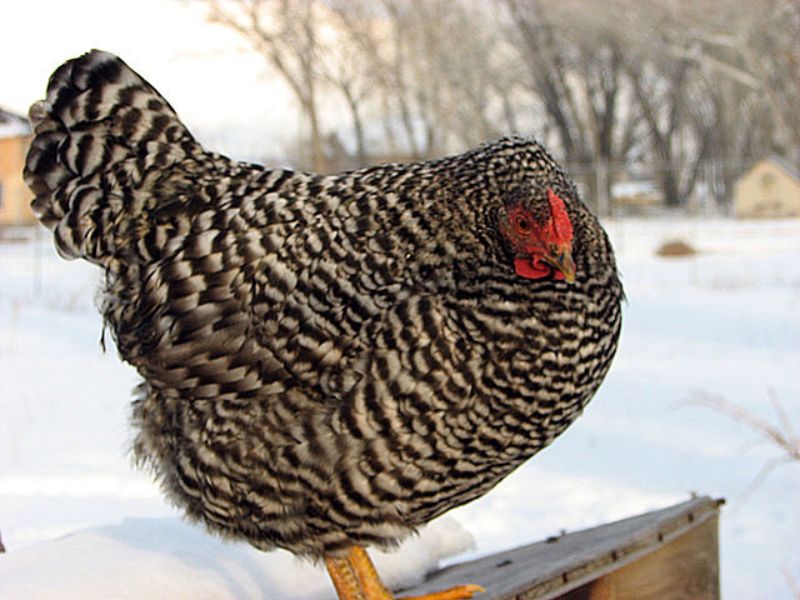
Dominique Chicken with a snowy background

Ummm…Isn’t That a Barred Rock Chicken, Not a Dominique Chicken?

Nope. But a lot of folks do get confused, and I can see why. There is one telltale sign that will help you distinguish the difference. Want to know what it is?

The comb. Sure there are other differences between the two breeds. But the comb is the key to such knowledge (in combination with the general look, of course). Read on to find out how the comb is different AND all you need to know about this pioneer breed!

History of the Dominique Chicken Breed

Whether this breed came from England with the Pilgrims (as they were called Pilgrim Fowl in beginning ) or from the french colony of Saint Dominique (which is now Haiti), they came to America around 1750. They are, hands down, one of the oldest known chicken breeds in the United States. That makes them a true American breed.

The Dominique chicken breed’s popularity has been a bit of a roller coaster ride – up and down, up and down. Their first decline was said to be due to their beloved breeders passing on with very few taking their places.

After that, many animals, including chickens, struggled through the Great Depression. Dominique chickens were real troopers and foraged their way right through it. That became their roadway to chicken fame (or at least noticeable).

After that, the industrial revolution played a part in the decline of the use of many breeds, including Dominiques. The commercial egg industry sought out and created breeds that were simply egg-making machines. Even though this breed is considered an excellent egg layer, it was never considered good enough for commercial production.

And now, they have drifted a little out of the known homestead breeds and are considered, by the American Livestock Conservancy, to be headed to extinction and in need of rejuvenation. (Hey, maybe you can help?)

What Do Dominique Chickens Look Like?

Well, they look a lot like a Barred Rock chicken (one of the Plymouth Rock varieties of chickens), and possibly for good reason. Many chicken experts believe that the Barred Rock is the result of a Black Java chicken bred with a Dominique chicken. But don’t be fooled.

The big difference is the comb. The Dominique chicken will have a rose comb with a spike (broad, almost flat) and the Barred Rock will have an upright single comb (which is more straight up). This is the primary way to tell the difference between the breeds.

There are other differences though. Their plumage looks the same if you just glance, but they are different as well. Dominiques have what is called a cuckoo pattern. Cuckoo sounds like the sound a bird might make, but it’s a description of the color pattern.

Dominiques have offsetting and more sporadic bars, not synchronized. And their dark “bars” are not true black. Between the offsetting bars and the faded black, the result is not as clearly “barred” as the Barred Rock. Their feathers are very close to each other, which aids in their ability to stay warm in very cold weather.

The Barred Rocks have straight, very synchronized bars that are, roughly, all the same size. Regardless of the pattern of the bars, they are helpful to camouflage chickens from predators in the sky.

Other Physical Traits

Their earlobes (isn’t it cute that chickens have earlobes?), wattles, and combs are all a shade of red. The fact that they sport a true rose comb means they are just that much more hardy in cold weather – their combs are less likely to get frostbite or freeze in an area with a colder climate.

Dominique males weigh about 7 pounds, while the females weigh a little less – coming in at around 5 pounds. There are also bantam Dominiques! I’m a sucker for bantams, so I highly recommend trying all of them 😉.
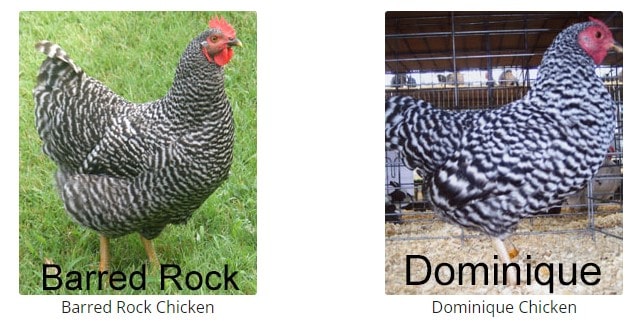
Dominique Chicken verses Barred Rock Chicken side by side photo comparison from Cackle Hatchery website
Comparison of the Barred Rock Chicken and the Dominique Chicken
from the Cackle Hatchery Website

Dominique Chicks

Chicks are cute no matter the breed, and these are precious as can be. They are an auto-sexing breed, which makes it pretty easy to tell whether they are roos or girly girls when they are just newborn chicks.

Both males and females have white spots on their heads. But since roos are from Venus and hens are from Mars – their spots show up differently. The female chicks have small spots that are concentrated in one area. The males have spots that are spread out a bit.

Feeling Sleepy?

Good. Because I have a very interesting tidbit about America’s oldest breed. Because the feathers of this chicken are very close to each other, they had plenty of feathers to share back in their prime. Many pillows and featherbeds were stuffed with these warm feathers back in the pioneer days. This added to their value when folks needed multipurpose farm animals to survive.

Dominique Chicken Personality Traits

This breed wasn’t a favorite back on Grandpa and Grandma’s farm just because of how hardy it is. It is a friendly breed as well. This fluffy friend has a temperament as lovely as their plumage. Sweet, docile, easy-to-please family flock members are the best descriptions for them. The roosters can get protective of their hens or show aggression when threatened, but many breeds are just the same. You have to learn how to respect them and give them space.

They, like all chickens, like to free-range. But they are get-along-gals and guys and are happy in confinement too. This makes them a pretty low-maintenance buddy.

Dominique Breed Egg Production

While they aren’t White Leghorns laying 300 plus eggs a year in a commercial operation, they do hold their own. Dominiques lay about 230 plus small to medium-sized brown eggs annually. Not bad for a pioneer, vintage bird – even if their egg size isn’t jumbo (medium-sized eggs are good enough!). They are also considered to be a good choice as a dual-purpose breed.

Of course, the better nutrition they have – the better the egg production and egg nutrition will be. Be sure to feed your sweethearts a high-quality feed and provide them with plenty of healthy treats. I don’t mean to sound like a broken record (or squawking chicken), but taking care of your flock’s health really does make all the difference in the world.

Hatcheries and the like describe Dominique hens as occasionally broody. Maybe that is the case today, but when they were pioneer birds you know they had to rate high in broodiness – there weren’t exactly electric incubators loaded on the Conestoga wagons.

They are known to be very good mothers, and therefore an excellent choice if you do want to encourage a broody mama hen.

How to Keep My Dominique Chickens Healthy

Summary

The truth is that this breed is simply not known as well today as the Plymouth Rock breed or the Rhode Island Red breed. But they are a great choice for first-time chicken keepers. They are also advantageous to those worried about the stability of our world in trying times.

Dominiques are a hardy, dual-purpose, heritage breed, sweethearts that can help you stuff a pillow for a good night’s sleep if needed. So join in with the nostalgia of our early settlers, and try out America’s oldest breed as one of your backyard chickens. Go shopping for some Dominique chicks! (and tell your significant other that you are helping to save the breed)
If you have standard breeds of chickens but want a fancier yet solid dual-purpose breed, Barnevelder chickens are right up your alley!

These are not your everyday chickens due to the gorgeous pattern they flaunt. It’s really quite exquisite. But they are more than just a pretty barnyard knick-knack. Follow me to the barn to find out why they won’t wear out their welcome.

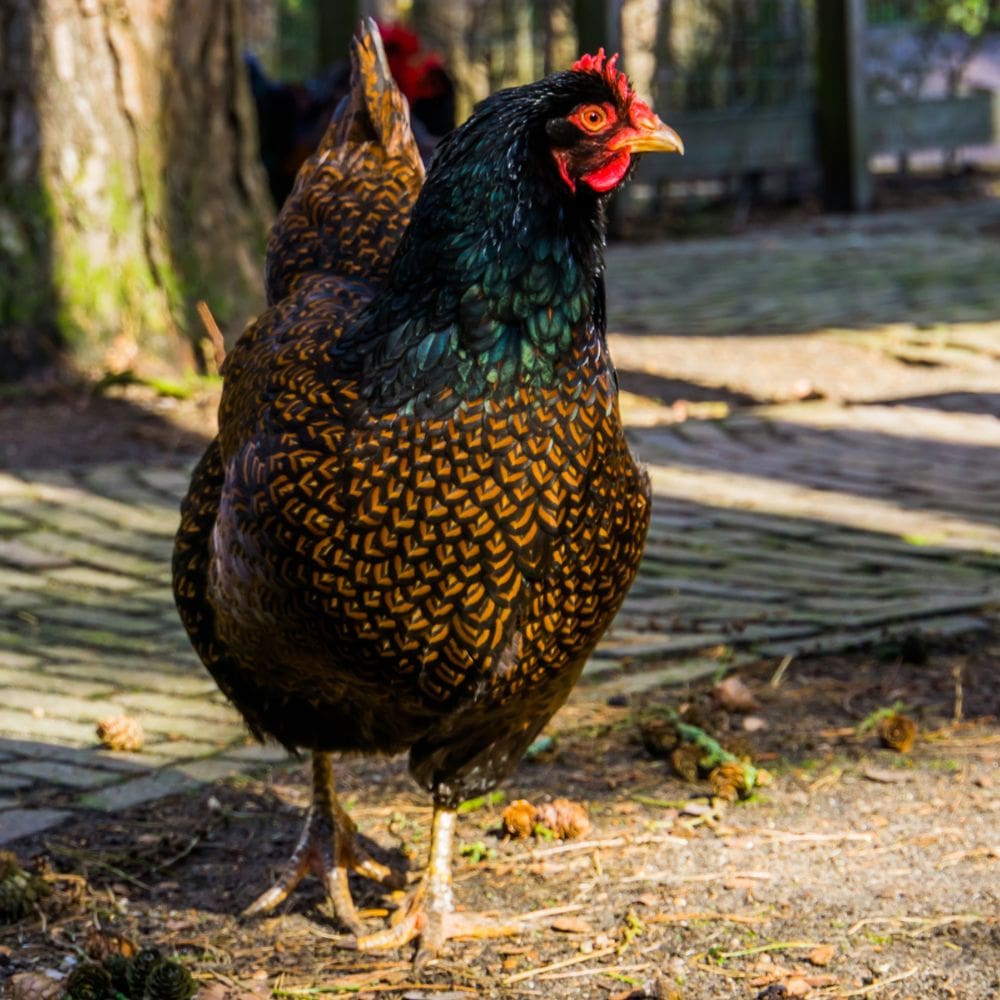
Barnevelder hen outside. Up close photo shows her beautiful plumage.

Barnevelder Hen Appearance

With a fluffer sporting artwork like the Barnevelder hen, we have to start this “tour” off with appearance. And the pattern of this bird is definitely an art masterpiece. There are several color options, but the most recognized or common color is chestnut with double black lacing (sometimes called double laced partridge). Their neck feathers are a solid color and does not have the artsy feather pattern.

The end result is a pattern that looks like an arrowhead shape all over the body. But wait! There’s more! You will be all the envy of your chicken loving friends with this work of art walking around your yard!

Does a Rooster Look Different Than a Hen?

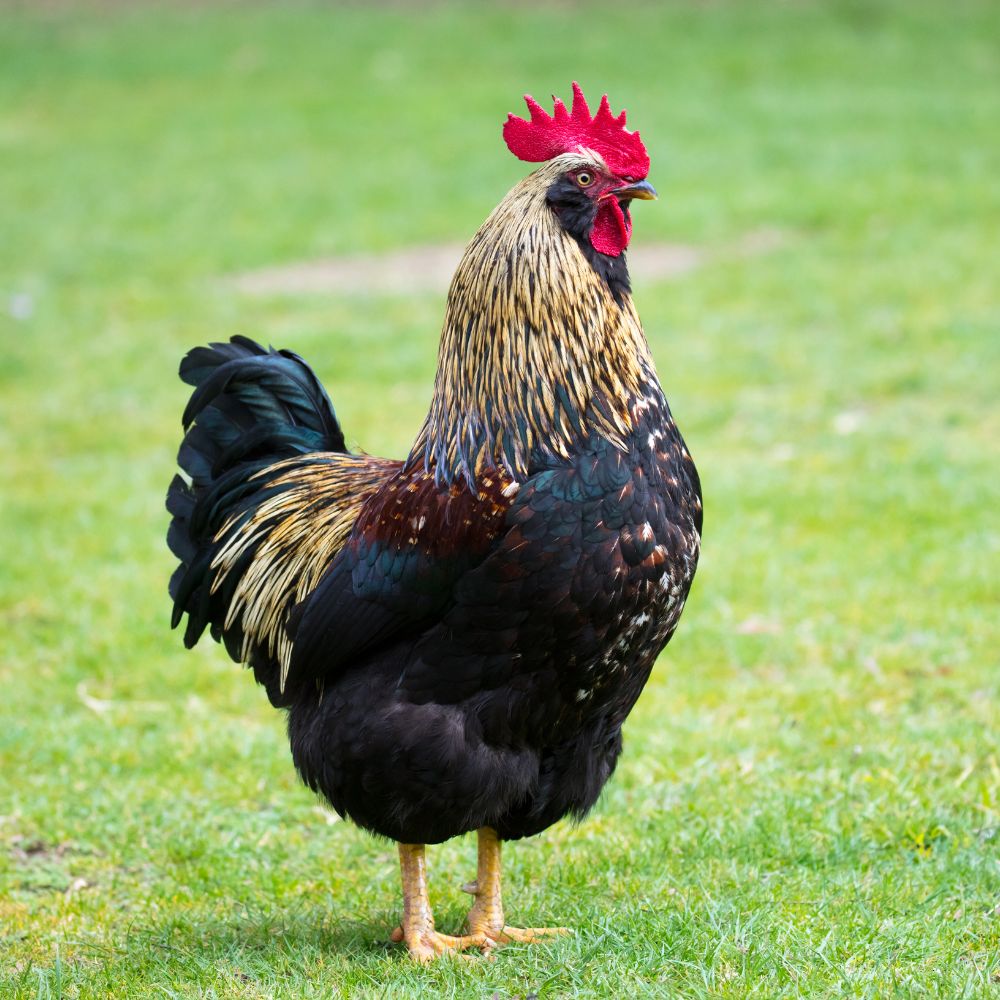
Yes, the barnevelder roosters do not have the double lacing on their chests. This is interesting. Apparently, breeders are trying to get the double lacing to appear on a male but they have not been successful. Maybe some things are just not meant to be.

That being said, the roosters do have unique plumage. They can be a bit multicolored and have shimmery hues to show off.

Stately Barnevelder Rooster standing in a green grassy field.

American Poultry Association Standard of Perfection For Barnevelder’s

Disqualifications: White in the earlobes
Standard Weights for Largefowl Barnevelder: Cock 7 lbs., Hen 6 lbs., cockerel 6 lbs., pullet 5 lbs

COMB: Single comb, medium in size, straight and upright, evenly serrated, having 5 well defined points.
BEAK: Short stout and well curved.
EYES: Very bright and prominent.
WATTLES: Medium in size. Well rounded and of fine texture
EAR-LOBES: Medium in size
HEAD: carried high with a neat skull
NECK: Fairly long, full and carried erect. Slightly arched. Hackle well developed flowing to the shoulder covering part of the back and part of the front of neck.
TAIL: Full with graceful, uniform sweep. Carried high, up to fifty degrees above the horizontal. Moderately spread and open. Medium in length.
WINGS: Well developed, carried high and rather short.
PLUMAGE – Very tight and nice texture

*This information is an abridged version, full version can be found on the American Poultry Association’s website.

How Many Colors of Barnevelder Chickens Are There?

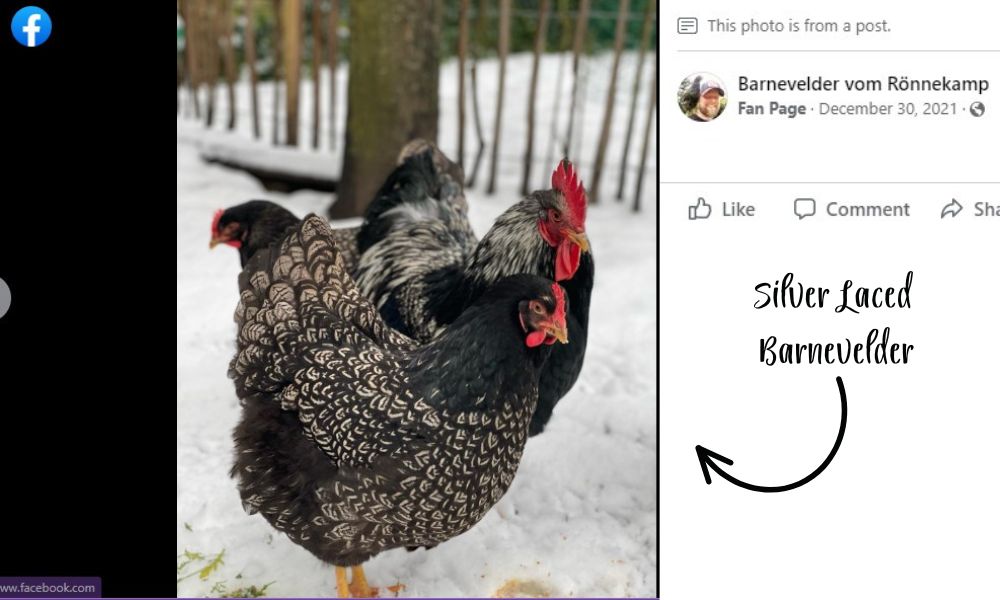
I mentioned the most common, the chestnut with double black lacing. But there are other varieties out there. They are not as consistent in the breeding outcome, and they are a little harder to find. There are Double Laced Blue, Silver Laced, Black, White, and a couple more lesser known colors. One of my favorites to look at is the Silver Laced version. So fun!

Facebook post showing Silver Laced Barnevelder Chickens standing in snow. A rooster next to a hen.

Are Their Miniature Barnevelder Chickens?

Sort of. In the chicken world vocabulary, they are called bantams. And there IS such a thing as a bantam Barnevelder! Adorable little versions of this wonderful breed. Although they are harder to find than the full sized version.

History of the Barnevelder Chicken Breed

This will be a short and sweet history lesson. Why? Because there really isn’t much provable history about this breed (as is true with many breeds). What we do know is that they were bred in Barneveld in the Netherlands (hence, the name Barnevelder).

We also know that Barneveld has a long history of swine and poultry agricultural training programs. Put two and two together, and you can see the outcome.

It is speculated that local breeds in that area were, back in the late 19th or early 20th century, crossed with Oriental chickens as the starting point. Chicken historians believe Brahmas, Langshans, Malays, and Gold Laced Wyandottes were used in the process.

They are sometimes called “Barnies,” but I think they are far too sophisticated for that casual nickname. But that’s just me. Some say they are rare, but I think their rarity is fading as they are not that hard to find and growing in popularity.

Barnevelder Chicken Egg Production

This breed lays approximately 170 to 200 eggs each year. They lay light brown eggs, dark brown eggs, and sometimes (and most desired) chocolate colored eggs. It used to be the norm for them to lay chocolate colored eggs, but over the years the egg coloring has been diluted.

There are breeders out there working hard to get back to the chocolate colored eggs. I hope they succeed. I sure do love seeing unusual egg colors.

The BEST part about this pretty lady, other than her looks, is that she will lay eggs throughout the winter! Win!

What Are Barnevelder Personalities Like?

Their personalities and behavior match their outward beauty – they are friendly, amicable, and easy to please. It’s pretty much as simple as that.

This easy going temperament make it easier to merge them with your established flock as well (although there will always be a pecking order establishment routine).

They are also good mothers if they have the chance to raise up some chicks. If you are interested in allowing that to happen, it’s a very interesting and fun journey, especially if you have kids that can watch the process.

Of course, if you’ve ever owned a chicken you know they are like children – they have individual personalities. The breed might have a “norm,” but each bird will have it’s own quirks and attributes. Most Barnevelder owners would vouch for them as being good pets.

They really like to free-range, as most chickens do. But they are also easy to keep confined in a coop if needed. Just remember to give them extra treats if they are cooped up to give them needed protein and to make them love you more than anything 😉😍

What Are Barnevelder Chickens Used For?

These beauties aren’t just for the chicken model walkway (that’s a funny picture). Due to their nice medium to large size, they are good dual purpose birds as well. And while they won’t take home the championship for egg laying, they do lay a fair amount of eggs. So, they are friendly, gorgeous, good for meat, and good for eggs.

These Barnevelder’s are just a good all round backyard bird.

How To Care For Barnevelder Chickens

  • Provide plenty of fresh, clean water
  • Feed a high quality feed
  • Boost their immune system with nutritious treats
  • Be sure they have adequate shelter
  • Keep their coop clean to avoid parasites
  • Prevent pests like mites, lice, flies, and mosquitos with these amazing nesting herbs (and they are all natural!)
  • Stay on top of their healthcare (meaning pay attention and take care of any issue you may come across right away)

Barnevelder Chickens and Marek’s Disease

Don’t let this bit of info scare you off, just be preventative. Many breeders say that the Barnevelder breed is susceptible to Marek’s disease. This is a concern for many breeds and this why hatcheries usually offer vaccinations for this disease.

You might be one to pass on vaccinations, but if you buy a Barnevelder, you might think twice before clicking the “no thanks” box. It could be key to your chicken health plan.

What Is Marek’s Disease Anyway?

Marek’s Disease is cause by a virus. First, you should know that humans cannot get this virus – so there is no need to worry about that. It is serious though, because once a chicken gets this virus they cannot be cured. It’s best to prevent them from getting the virus, hence the vaccination.

If a chicken does get this virus some of their symptoms might include tumors in internal organs, weight loss, paralysis, and eventually death. The virus can get into your soil or coop dander and last for months, which could put your flock in danger.

It does sound terrifying especially if you have only experienced a healthy flock, but it can be prevented with proper healthcare.

You can find vital information and useful advice about this disease on the Penn State Extension website.

Summary

Look, you can buy a piece of abstract art to hang on your wall….OR you can buy a Barnevelder chicken which is out door art (unless you are a crazy chicken person and keep chickens indoor. But I digress).

Khaki Campbell Ducks are great beginner ducks with fun personalities. You will fall in love with this egg making entertainer.

When I decided to dive into the world of duck ownership, I did a LOT of research. I was a bit nervous about this endeavor because it was a new and completely unchartered territory. After hours of reading and learning, I was set on trying out the Khaki Campbell breed. After raising several of these quackers, I feel confident in sharing what I learned with you!

So, waddle this way…let’s get started.

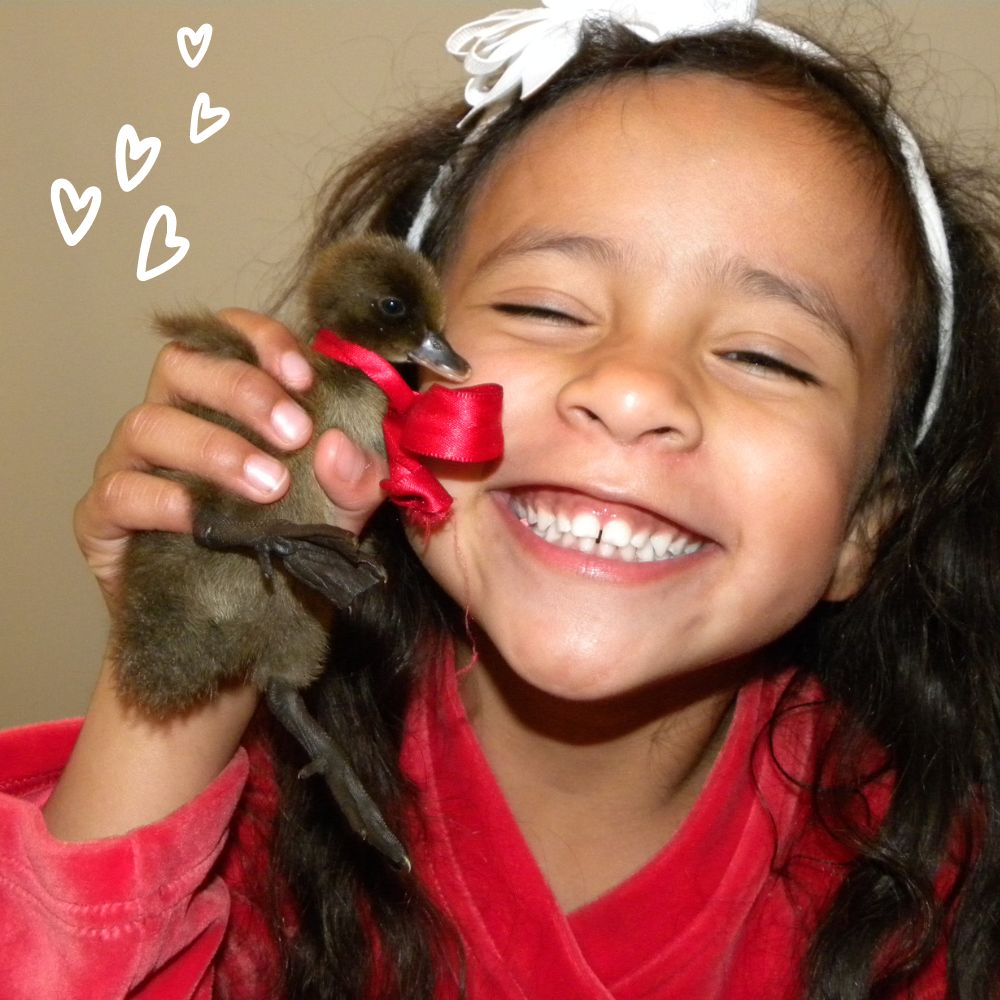
Girl holding Khaki Campbell duckling with a bow around the neck

Top 3 Reasons to Choose Khaki Campbell Ducks

  1. Eggs
  2. Eggs
  3. Eggs

Okay, okay…there are several other reasons you might want a Khaki Campbell duck in addition to their egg laying abilities – but seriously, they are one of the best duck egg layers out there.

So if you are after a plentiful amount of duck eggs and adorable waddling talent shows around your place, then you should really consider Khaki Campbell ducks. More on their egg production in a moment.

Are Khaki Campbell Ducks Family Friendly?

Khaki Campbells have a great reputation for producing a hefty number of large eggs. On the other hand, they also have a not-so-great reputation (false, in my opinion) for being skittish. Let me explain.

Khaki Campbell ducks might be described as “Nervous Nellie’s” by some. Because they CAN (under certain conditions) be on the nervous side. Sure, they might get spooked or startled by something like….several children chasing them for no good reason. However, I think this is true of most fowl, ducks included, unless they are handled quite regularly as you raise them up.

That leads me to my own personal experience with this breed. My experience does NOT support any claim out there about them not being family friendly ducks.

My kids played with our ducklings all the time as little ducklings, including taking them in the tub for their evening baths when the ducklings were very small! No kidding. Perhaps this is the recipe you need to follow so you can enjoy all the other wonderful attributes of these sweet Khaki Campbells.

Benefits of Khaki Campbell Ducks

Khaki Campbell Ducks Are Great Egg Layers

We already touched on this, but now lets dig into some of the egg facts. This breed is known to have great egg production – they can lay up to (and even more than) 300 eggs per year. Wowzer! And they are large eggs to boot.

Of course, the number they lay can vary from duck to duck. Other elements that might affect their egg laying success is their age, their nutrition, and their health.

The hens start laying as early as 5 months old. Their eggs are white in color.

The Khaki Campbell gained even more renown due to the egg laying contests where it averaged up to 39 more eggs laid than the second best breed. One Khaki Campbell laid 346 eggs in 365 days while another laid one egg a day for 225 straight days!

Credit: Metzer Farms Website

Khaki Campbell Ducks Are Multipurpose

If you are homesteading or trying to be more self sufficient, or if you are simply wanting to know how your food is raised and what you are putting into your own body – then you might be interested in a dual purpose duck.

I know the commercial meat industry has changed a lot over the years, some good changes and some bad changes. Many folks have legitimate concerns about what types of vaccines and antibiotics are given to the “meat” they will be eating.

Plus a lot of feeds out there are stuffed with fillers that are not meant to be food. It’s understandable that many of us are concerned and we, therefore, want to raise our own meat.

Khaki Campbells are egg-cellent egg layers, AND they are tasty for eating as well. They may not be the number one choice (such as Pekin or Muscovy) for exquisite French chefs, but it is known for being a good, tasty choice for meat.

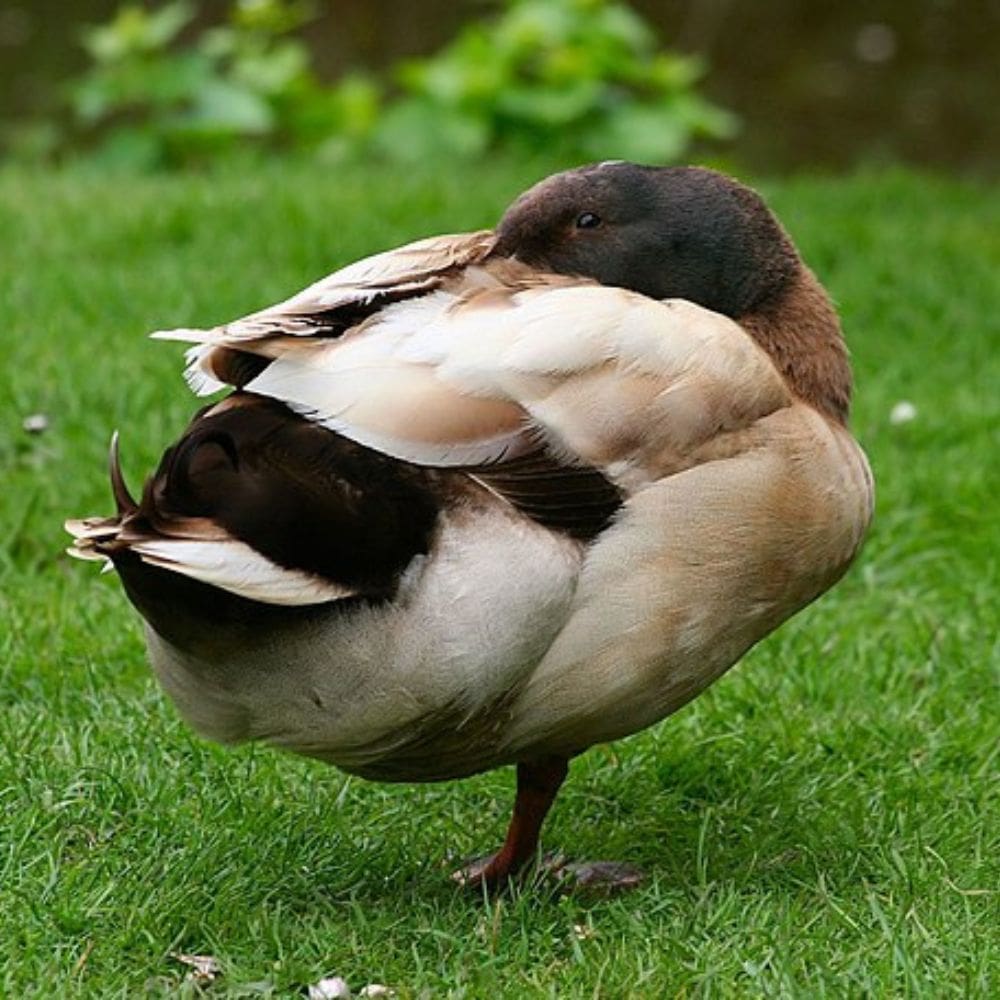
Khaki Campbell Drake with beak tucked into its feathers on a green grassy background.

Khaki Campbell Ducks Are Good Foragers

All ducks are pretty good foragers. But Khaki Campbells are definitely noted for being a great duck to hire for such a task. They are super active and LOVE running around eating slugs, ticks, worms, and most other insects. They also eat weeds! It’s just too bad we can’t train them to weed the garden without also eating some things that aren’t weeds!

This love of foraging also contributes to healthy eggs. That’s a bonus none of us want to turn down. Read more about duck egg nutrition here.

Khaki Campbell ducks are great for free-ranging as well. In fact, they are happiest when they can free range because they love looking for bugs. However, they are pretty content in a run as well if that is all you can offer them in your situation. If you can let them out, for even an hour or two, they would appreciate you all the more.

One warning of caution. If you let them out for an hour or two, it may be hard to get them to go back into their run. There is a way to remedy this….one word: TREATS! Train your ducks from a very young age to come running for treats and you will have them at your beckon call.

Khaki Campbell Ducks Have Good Temperaments

These sweet quackers are truly sweet. I don’t mean to say that you will find them rubbing up against your leg begging for love like your family dog, but they won’t be chasing you around hissing at you either. They will actively run around doing their job – eating bugs and weeds.

You can review the “Are Khaki Campbell Ducks Family Friendly?” section to read my explanation of friendliness. And don’t forget, if you have trained them to understand treats, they may approach you for goodies.

Khaki Campbell Duck Housing Needs

If you have an extra bedroom in your house, that will work juuuussst fine. But that might not work if you aren’t a “crazy duck lady,” so I’ll offer some other advice.

Duck Housing Needs

  • Shelter that will protect them from weather, wind, and predators.
  • Duck coop needs to have proper ventilation.
  • Clean, fresh water for drinking.
  • Some type of pool or pond for swimming.

Do Khaki Campbell Ducks Need a Pond?

No. Yes. Maybe. I didn’t have a pond during my first run with Khaki Campbell ducks. I will say that all ducks love ponds. They were made with webbed feet good for swimming after all. Have you heard the phrase “like a duck to water?” Yup, they love it.

They will be happiest with a pond…..OR some kind of water. It can even be a kiddie pool, but read on if you are going this route.

Ducks are messy little critters. They are worth it, but they are messy birds. If they are using a kiddie pool (in place of a pond) it WILL get dirty pretty fast. It will need to be dumped, rinsed out, and refilled regularly. How regularly?

Well, that depends on the size of the pool, the number of ducks, and your particular ducks. Generally speaking, I’d say every couple of days. On a positive note, it’s a great animal care chore for kids.

Khaki Campbell Duck Appearance

Drakes

If you are new to ducks, you may not know this – the males are called drakes. Pretty manly sounding if you ask me. Khaki Campbell drakes are light brown and khaki coloring (hence the name). Their heads are a darker color, often in a range of olive to dark green. However, I have friends who have Khaki Campbells and their drakes do not have dark heads.

They typically have a green bill with a black spot on the end. Also notable are their dark brown eyes and dark feathers near the tail.

Their leg and feet color is hard to put a finger on because the color can change! Sounds odd, but it’s true. They have brown legs and feet as ducklings, just like the hens, but they can become more of a dark orange color as they mature…but wait! There’s more! Their hormones can slightly change the intensity of that color too. That’s pretty cool.

As with most things, the leg and feet colors can vary. But either brown or dark orange legs are pretty typical.

The absolute cutest thing you might notice about their appearance, is the little curled tail feather (called a drake feather)- usually a dark color. Not all drakes are blessed with this extra adorable feature, but the ones who do look like they are showing it off!

Hens

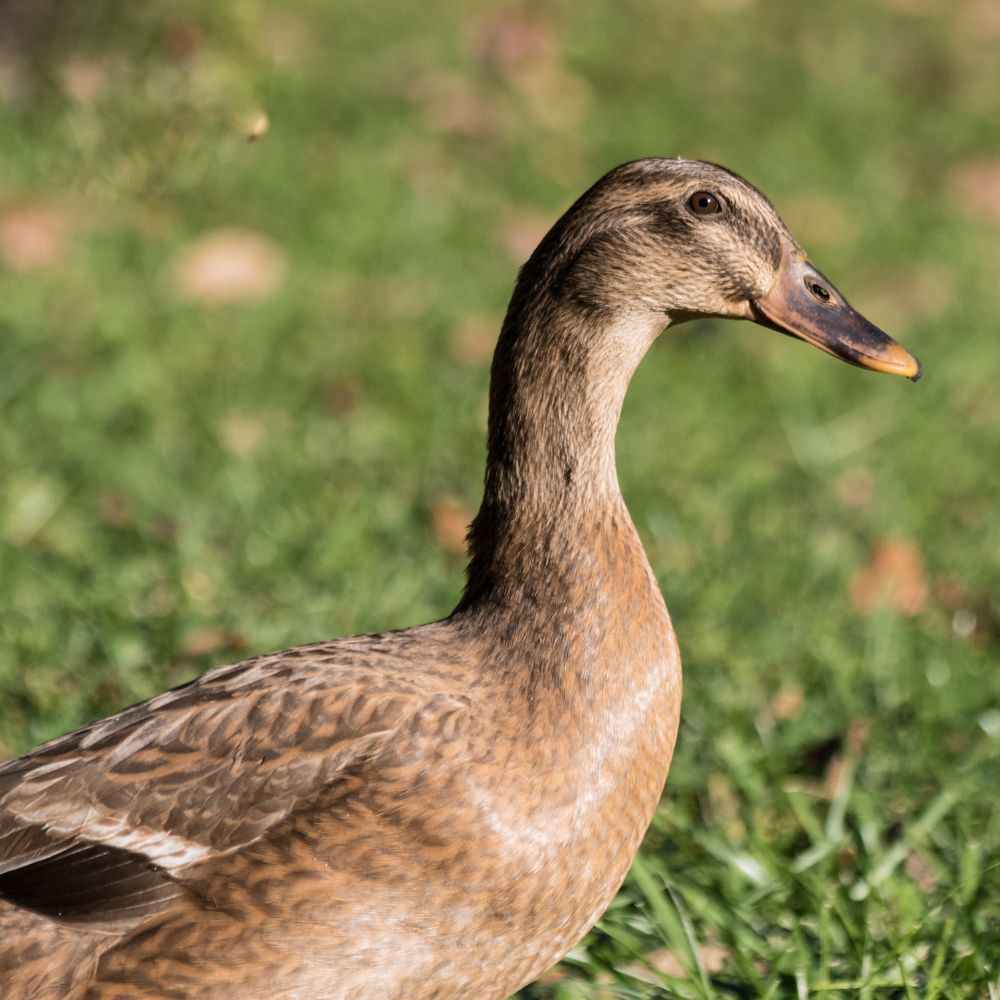
Female Khaki Campbell duck are often, but not always, slightly darker tan/khaki (darker than a drake) in color. They are more uniformly colored, without the dark head. The duck’s khaki plumage is penciled throughout, which means there are lines through the feathers. Take a look at the photo below to understand how this looks.

These lovelies have the same beautiful dark brown eyes as the males. Their legs and feet are a brown color. And their bill is a darker color than that of the male duck.

Initially they were a fairly mixed color breed but later an emphasis was placed on the current khaki color. It is interesting that at the same time the khaki color was being bred into the Campbell, there was a patriotic fervor for the British troops fighting the Boer War who also wore the khaki color. Once the “Khaki” was attached to “Campbell”, the breed gained even more popularity.

Credit: Metzer Farms Website
Khaki Campbell Hen on green grass

Are Khaki Campbell Ducks Hardy?

Yes! It’s a definite plus to this breed. They are very hardy in all types of weather, from very hot to extreme cold. You can tell, by the quantity of eggs they lay each year, that they lay well even in cold climates.

Can Khaki Campbell Ducks Live With Other Ducks and Chickens?

Khaki Campbell ducks can be mixed with other ducks. They can also get along with chickens. But it’s important to note that ducks and chickens are very different in certain ways.

Ducks are super messy and they will play in water and soak whatever is around them. Your chickens may not fair well in a wet environment. Also, chickens like to roost at night, and ducks like to nest at night. You need to be sure they both have a place to live their best lives.

If you decide to put ducks with chickens, you will want to research the best tips on how to do that well.

What Do Ducks Eat?

Adult ducks can eat chicken feed. But feeding ducklings can be tricky if you don’t know what you are doing. Ducklings need starter that’s specially formulated for them. Ducklings require a lot of niacin for proper bone and bill growth, and most chick starters do not have enough.

If you have chick starter on hand, you can increase the niacin by adding brewer’s yeast. Add 1 pound of brewer’s yeast per 40 pounds of chick starter. You can buy brewer’s yeast for ducklings here.

Ducks, and ducklings, can eat many other wonderful things, like fruits and vegetables. You need to read up on what they can, and can’t eat. You can do that in this article we wrote, it’s packed full of goodness.

Khaki Campbell Duck History

History has always been a hard subject for me. So many things to memorize! But duck history is a different story. Here is the the Khaki Campbell story.

Way back in 1901 (or around there) a lady by the name of Adele Campbell of Uley, Gloucestershire, England, crossed a couple of different breeds to make the Khaki Campbell breed. She kept the details of her breeding as somewhat of a secret, so there is some controversy as to which breeds she crossed. Some say she crossed White Indian Runner ducks with Fawn ducks. Others insist that Rouen and Mallards were involved. Either way, the end result is great!

Even though this crossing occurred back in the beginning of the 1900’s, the American Poultry Association (APA) didn’t recognize them as a breed until 1941, of course – after they came to the United States.

Where Can I Buy Khaki Campbell Ducklings?

Due to the nature of these ducks, as well as their egg laying capabilities, they are pretty popular – and that makes this breed pretty easy to get ahold of.

Most hatcheries sell them, so it’s a matter of finding the best hatchery for you. We recommend using a quality, local hatchery if you can. That way, the birds don’t have to endure taking a forced US Postal Service “vacation.”

If you don’t live near a hatchery, then you can look online to find a hatchery that suits your needs and expectations. You’ll want to be sure they have good policies such as refunds if shipping doesn’t go well (rare) and sexing guarantees.

Shipping costs can be quite high, so I’m usually strategic about it. I may order a few more of something just because the shipping rate doesn’t change within certain quantity ranges. And that works out great for this crazy bird lady.

Summary

Khaki Campbells are one of the most popular duck breeds, mainly because they are an exceptional layer of eggs. But as you can see, they have plenty of other traits you can love them for as well. They are pretty easy keepers, so you won’t have to hold a PhD in Duckness to be successful.

You may be starting your first flock, or adding to your backyard zoo – either way you might consider giving Khaki Campbell ducks a try.

The Araucana Chicken Breed is extremely rare and that is precisely the thing that draws chickens lovers to them.

Araucana’s are so often confused with the Ameraucana and Easter Egger breeds, but they are very different if you know what you are looking for. We will explore this unique and rare breed, it’s characteristics, and much more in this article. So join me as we dive (or fly) in.

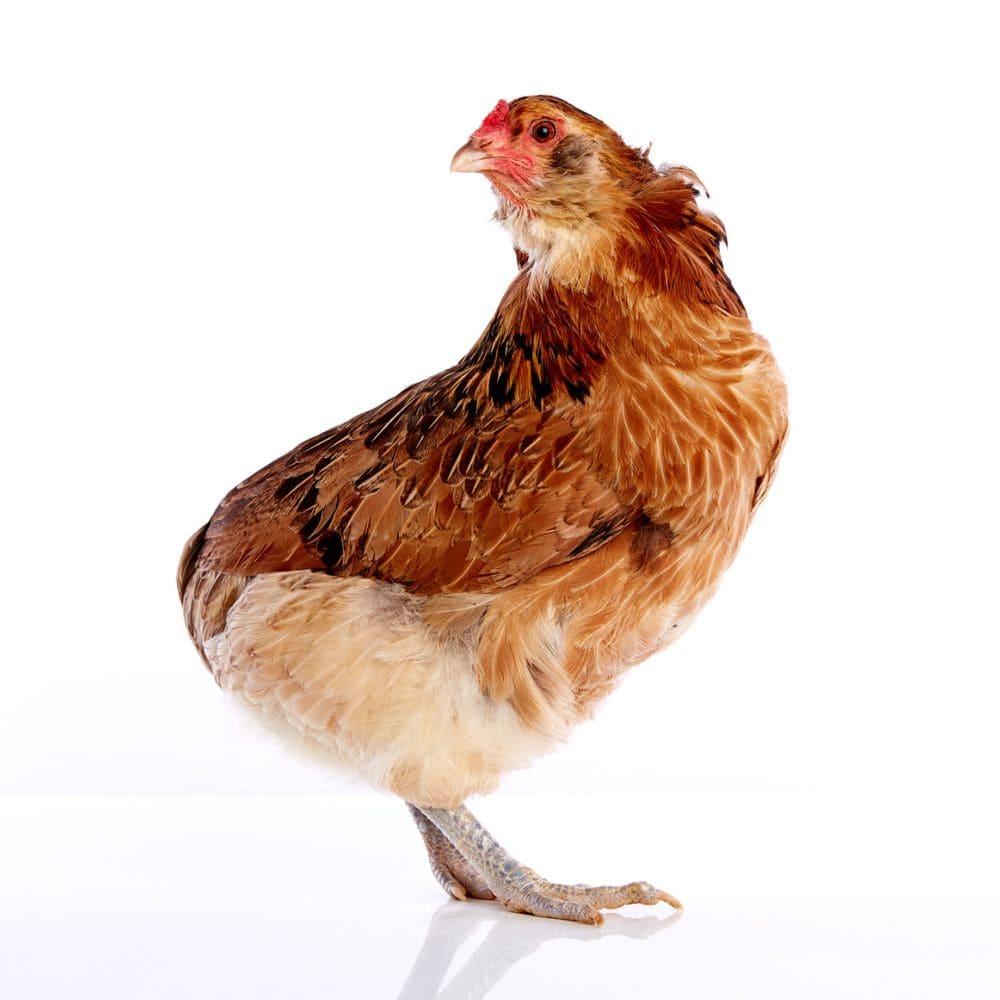
Araucana Chicken posed very nicely on all white background

Araucana Chicken Mini History Lesson

This rare breed was imported to the United States from Chile’s Gulf of Arauco in the early 1930’s. According to the Araucana Club of America the breed started in a village of fierce Araucana Indians. There were two specific breeds in Northern Chile that carried the traits we see in the Araucana breed: Colloncas which laid blue eggs and were “rumpless birds,” and Quetros that have ear tufts.

Because they are from South America, they are also called South American Rumpless. Not exactly the most desirable name to be had (I don’t think I would want Rumpless to be part of my name).

The American Poultry Association, otherwise known as the APA, didn’t recognize them as a breed until 1976.

Why Would Anyone Want To Breed For “Rumpless” Chickens?

It was thought that, without tail feathers, predators would have a harder time catching them. Sounds reasonable to me.

Araucana Breed Appearance and Personality

What Do Araucana Chickens Look Like?

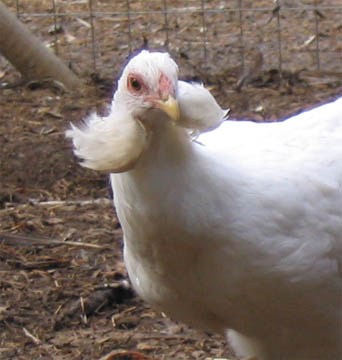
Araucana chickens are quite funny little birds. They have cute little ear tufts, no tail feathers (this is called rumpless), and a very unique overall feathery appearance. You might even say they have a windblown model look around their faces, ready to pose for the photographer. They really are very irresistible.

Araucana hen showing ear tufts
“Araucana hen showing ear tufts” by User:Anne Cushing – Own work. Licensed under Public Domain via Wikimedia Commons

What Colors Do Araucana Chickens Come In?

  • Black
  • Black Breasted Red
  • Golden Duckwing
  • Silver Duckwing
  • White

What Size Are Araucana Chickens?

The cartoon like chickens are not huge, nor are they bantam sized. They are the monkey (uh hum…chicken) in the middle, so to speak. The average weight of this breed is 5 pounds. However, they do come in a bantam size as well.

Are Araucana Chickens Friendly?

Boy are they! These chickens are incredibly people friendly. They make perfect backyard buddies. They will be your best friend if you throw them a few treats here and there. You might as well call them super-friendly-lap-snugglers! Of course, they have individual personalities, but they are well known for their docile and sweet temperaments.

They are known to be pretty comical little companions. If you like to smile and laugh while looking at, and watching a coop show, then Araucana’s might just be a good fit.

Araucana Eggs

What is Special About Araucana Chicken Eggs?

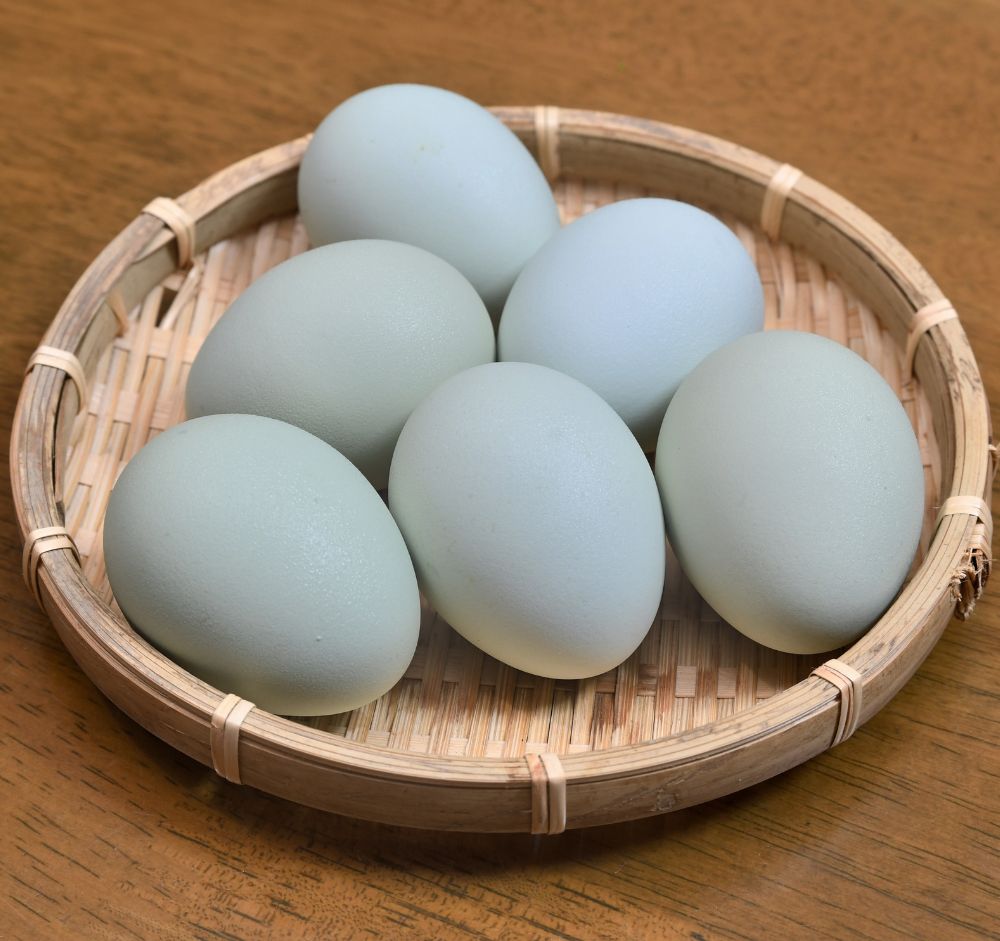
The hens are blue egg layers! Yes indeed, they lay blue-shelled eggs. This is simply a novelty that never gets old. They aren’t as bright as robin eggs, but they are a nice blue color that everyone loves. Of course, the color of blue can… and will vary.

Small basket of Araucana Blue Eggs

Are Araucana Chickens Good Layers?

You can search the web all day long and find MANY different answers to this question. I think it’s because they are rare and hatcheries don’t carry them, and therefore do not have published information on them. You’ll find a range from about 180 to 260 eggs per year. The frequency of eggs also depends on their age, their health, and their individuality.

I think it’s safe to say that most folks who raise Araucana chickens are more interested in their fun appearance than how many eggs they lay.

How To Take Care of Araucana Chickens

  • Provide a safe coop, especially for nighttime
  • Make sure they have clean, fresh water at all times
  • Feed high quality chicken feed
  • Enhance their healthcare with protein packed treats
  • Keep their living quarters free of pests and parasites

Can I Buy Araucana Chickens at a Hatchery?

No, you cannot. They are extremely rare and can only be purchased through breeders. Although you may THINK you are buying Araucana chickens at a hatchery or a farm store, but they sell Ameracana’s and Easter Egger’s. More on that in a minute.

The great news is that, if you buy these from a breeder, they would be able to offer much useful advice on the breed that could be helpful.

Why Are Araucana Chickens Extremely Rare?

Don’t hate the messenger on this one, it’s a bit of a sad tale. This breed has something that is called a “tuft gene.” This tuft gene is a lethal gene and most likely caused by a mutation, and you and I both know that mutations are usually a bad thing.

Due to this mutation, the hatch rate for this breed is not good at all. The hatch rate is about 50% on average. You can now see why hatcheries don’t sell these, it wouldn’t be profitable if a high rate of baby chicks don’t make it through the incubation period.

What’s the Difference Between Araucana, Ameraucana, and Easter Egger Chickens?

Araucana, Ameraucana, and Easter Egger chickens have a rough time keeping their own identity in this world. All three of them are often mistaken for the other. If only they could talk! They would be sure to straighten out all the people that put them in the wrong category (including farm stores).

So, what are the differences? Well, it’s really not that complicated. Let’s walk through each one listing their unique characteristics.

Araucana

  • Rumpless (no tail feathers)
  • Has ear tufts
  • No beard
  • No muffs
  • Breeds true
  • Blue Eggs

Ameraucana

  • Has tail feathers
  • No ear tufts
  • Have beards
  • Have muffs
  • Slate Legs & Feet
  • Breeds true
  • Blue Eggs

Easter Egger

  • Hybrid that has mixed characteristics
  • Many egg colors (but each hen will only lay one of those colors)
  • Does not breed true

What Does “Breeds True” Mean?

The Araucana, the star of this article, breed true. This means it’s pure bred and produces the same characteristics consistently across the breed. As noted in the bullet points above, so do the Ameraucana’s. However, Easter Eggers do not – their appearance varies greatly from bird to bird because they are a hybrid.

Are Araucana’s the Right Chickens For Me?

Chicken keepers can find themselves wanting to add every chicken breed to their own flock. And if you have the space and resources, why not?

The Araucana breed is certainly one that would be enticing if you’ve already tried most other breeds since they are rare. You know, so you can show them off to all of your chicken friends! Even though it’s a beginner-friendly, the fact that these feathered friends are harder to find makes them more of an advanced breed.

Welsummer chickens are loved by so many, find out what makes them such great backyard birds.

This breed holds a special place in my heart as my very first rooster was a Welsummer. I wanted that iconic rooster – with a boisterous, large full tail sporting plenty of beautiful, shiny green feathers! As far as I knew, it was THE rooster to have. 

To be honest, I’m not even sure where or how this became my vision of what a real rooster should look like. But it was my vision, and it was my reality when I bought my first chickens. I didn’t regret it, and I still don’t – I loved that rooster (and his hens).

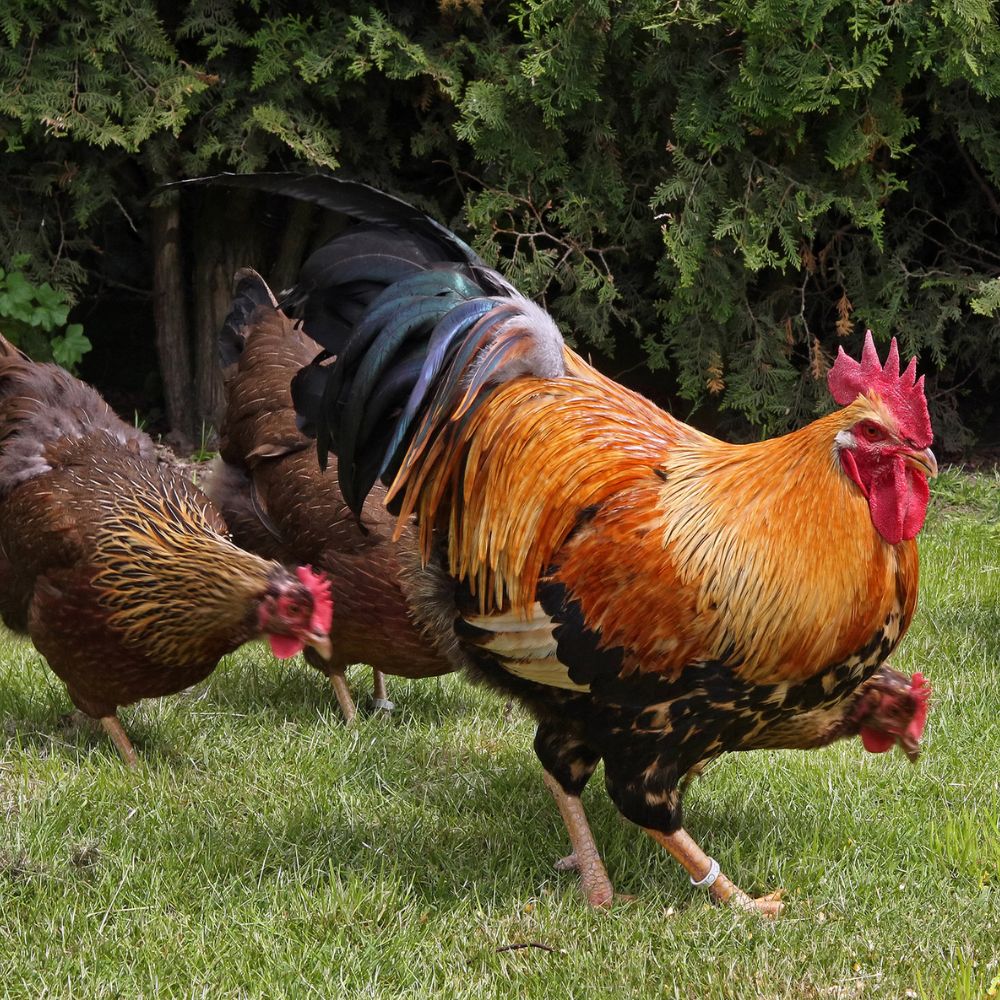
Welsummer Chickens with stuning Welsummer rooster in grass with pine trees behind them.

What is the History of the Welsummer?

Welsummers are Dutch and named after the village they are thought to originate from – Welsum, Holland. Welsummers were imported into America in 1928, so it’s a relatively new breed in the United States. The name is also spelled Welsumer (only one “m”), and there is really no record of when it started being spelled with two “m’s”, but likely a difference created when they were introduced in America.

Welsummers were admitted to the American Standard of Perfection in 1991. This basically means that they were accepted as an American Poultry Association breed.

Are Welsummer Chickens Famous?

I’m glad you asked! They are a bit famous. Most self-proclaimed chicken “historians” will refer to the Kellogg’s Corn Flake box rooster (named Cornelius) as a Welsummer. I’m not sure anyone can back that claim up (although, there is a resemblance). 

But, the Kellogg’s UK website does shed some light on the history of said rooster. Apparently, W.K. Kellogg (founder of the company) had a friend that suggested a rooster as the “mascot” for this cereal. Obviously, the rooster was a bit of an alarm clock for the morning back in those days – so that made sense…”wake up and eat!” But this Welsh friend, Nansi Richards, thought of it because the Welsh word for rooster is ceiliog – which (when pronounced properly) sounds a lot like Kellogg. 

Now you know.

Are Welsummer Chickens Royal?

Perhaps you can call them royal. Did you know that Prince Charles of Wales, now the King of England, has owned Welsummers for many years? It’s true! King Charles has a plethora of chickens, many of which are Welsummers, located at his dwelling place called Highgrove in Gloucestershire, England. 

The royals love chickens so much that they even had an artist create proprietary hen designs for chinaware. See a sample here.

The Poultry Club of England has offered chicken husbandry classes at Highgrove, but it’s unclear how to apply for this honor and how often, when, or if they even offer them anymore. Not that most of us would be able to sign up for that, but it’s still a fun fact. 

Well, (please read with an English accent) it’s time to end our tea party and say “cheerio” to the royals, we are off to learn more about these iconic birdies.

King Charles with chickens
Courtesy of Highgrove Gardens Facebook Page

What do Welsummer Chickens look like?

I can assure you that the Welsummer rooster does NOT look like the rooster on the Kellogg’s Cornflake box. The body is NOT bright green…that would be ultra cool, but that is not reality. The real-life Welsummer is stunning and sophisticated (which must be why the royals love them).

Welsummer Hen Appearance

Hens are not flashy, but still lovely. I like the way MyPetChicken.com describes them: The hens are modest, heathery brown, with their hackles shading to glints of gold and black. Even their eyes are a lovely red bay. 

Welsummer Roo Appearance

Males, or roosters, on the other hand, are show-stoppers. These handsome fellas are super flashy, over-the-top, breathtaking, and just all-around beautiful. They have shades of gold, browns, blacks, reds, and oranges. I’d call them “manly” birds with great stature and a broad back. Their tails are black with streaks of iridescent green. These amazing tails appear like they have been strategically designed by a top-notch stylist on Rodeo Drive. 

Fun Welsummer Appearance Facts

And let’s not forget to check out their ear lobes! Hmmm…maybe you’ve never even noticed a chicken has ear lobes, but they do! Welsummer rooster ear lobes are red, along with their red wattles. They also have saddle feathers, which are long, flowing feathers at the beginning of the tail. Hens have saddle feathers too, they just aren’t as impressive.

Both Welsummer roosters and Welsummer hens have award-winning, clean, yellow legs. The ladies don’t even have to shave (woo-hoo!). If you take a peek at their skin (if you ever get that bored), you will see that it too is yellow. Yellow skin? Yes Ma’am!

How Big Does the Welsummer Breed Get?

These precious family friends are considered to be medium-sized birds, weighing in at about 5-6 pounds. Guess what? These come in a mini size too – as a bantam variety. Yes please, I’ll take one large and one small.

What are Welsummer Chickens Good For?

Welsummer chickens are friendly, sweet, easy to please, intelligent, and great companions. Let’s just say they would be easy to set up on a date if you were a chicken matchmaker. Of course, I am addicted to chickens…but maybe you are too. Either way, this breed is a great breed for anyone wanting a chicken. 

They are good egg layers, more on that in a moment. They can also be used for meat (if you are desperate and want to eat your friend). All kidding aside, they are dual-purpose birds good for companionship, eggs, and meat. 

Welsummer Egg Production

Welsummer hens might be modest in appearance, but they are so much more than just looks. They serve a purpose by providing humans with many fine breakfast feasts each year. They produce around 250 large speckled brown eggs per year.  I’d rate this as good egg production. Not to mention she’s a bit of an overachiever by dressing up many of these lovely large eggs with speckles, wouldn’t you agree?

Early on in the history of this breed, they were considered great egg layers. But as breeds were crossed and refined, the hybrids (bred by egg production enthusiasts, specifically for egg laying) kind of took over the market. However, we aren’t talking about opening an egg-laying facility here, now are we?

How Long Do Welsummer Chickens Lay Eggs?

They lay about as long as most standard-size breeds, 3 years. But the better you treat them and the better you feed them – the better the outcome, one large brown egg at a time!

Why Are Welsummer Eggs Brown and Speckled?

Wondering why the Welsummer has dark brown eggs with occasional speckles? One weird word: Protoporphyrin (not to be confused with any other word you regularly use). If you are feeling like quitting your job and becoming a chicken scientist, then start here. It seems as if this topic is still being studied quite a bit. 

It’s a challenging read, but you can learn more about it here. Hint: it has to do with the creation of shell pigment (brown pigment to be exact), all wrapped up in genetics.

Are Welsummer Females Broody Birds?

Not particularly. There may be a rebel here and there, but generally speaking the Welsummers are not trying to populate the world of chickens with their kind regularly. It’s rarer than some other breeds to have a broody hen in this bunch. The chicken experts, such as hatcheries, rate them as “occasionally broody.” 

It may be for the best as they have a bad rap for motherhood (they are not known for being good mothers), so they won’t win any awards there…which leads me to my next thought. 

If you want a bunch of sweet little tea-party-attending Welsummer baby chicks running around, you’ll probably want to incubate some eggs or visit a hatchery.

What is the Personality of These Feathered Friends?

Just like people (don’t judge…chickens are people too), these little friends have individual personalities. Most of them have a great temperament. They are docile and they like their people. For these reasons, Welsummer chickens are beginner-friendly. You don’t have to be a confident chicken keeper to try this breed. And you will likely gain in confidence pretty quickly with them by your side. 

This classic breed makes perfect backyard buddies for just about anyone interested in chickens. If you regularly give them treatsthey will follow you to the ends of the earth. So be sure to spoil them, and tell them I sent you!

Are Welsummer Chickens Noisy?

COCK-A-DOODLE DO!!!!! Does that answer your question? Yes, they are vocal. They are known to chatter a lot and the roosters like to crow.

How to Keep a Healthy Welsummer Flock

Do Welsummer Chickens Have Known Health Issues?

Welsummers are known to be athletic, active birds. You won’t see them playing basketball or anything like that, but they are a pretty fit and hardy breed. Since they do have medium combs and medium wattles – this makes them good candidates for frostbite. Ouch. This is something you definitely want to avoid. So, just be sure they are out of the frigid weather if it occurs in your particular area in the winter months. 

Annndd, we can’t forget parasites and other pests – the itsy-bitsy buggers that drive all animal owners crazy from time to time. 

Most Common Internal Parasites:

  • Worms 
  • Protozoa

Most Common External Parasites:

  • Mites 
  • Lice
  • Mosquitos
  • Gnats

To help stay pest free, be sure to keep their coop clean, provide good nutrition, and stay in touch with their behavior so you can detect a problem with their chicken health early on. Good healthcare will go a long way in prevention.

Based on this, they are pretty easy keepers

Want to go Royal?

Curious to know what King Charles III finds so appealing about this breed. Well….then, try out a Welsummer while sipping tea and eating cornflakes (if you are feeling spunky).  

Sapphire Gem Chickens are not your average bird. If you like unique chickens with a purpose, then it’s time to go shopping!

My husband DID get me a wedding ring, but after years of learning what matters most and a cultivated love for chickens – I might just trade it in for one of these “gems.” After all, I can’t even wear my wedding ring these days, between my fingers swelling from milking goats and that extra 20 pounds I put on. But I have an eternal love for my Sapphire Gem chickens!

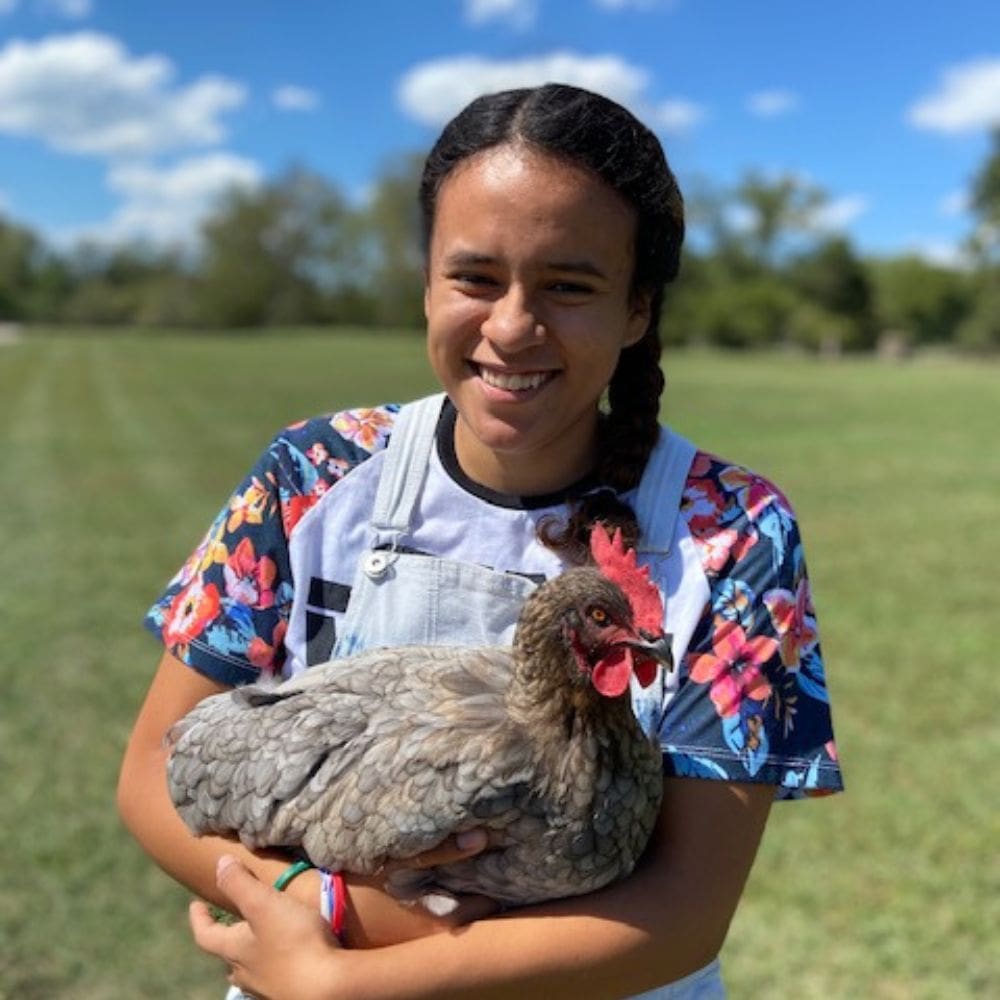
Teen girl holding a Sapphire Gem Chicken lovingly in her arms

What is a Sapphire Gem Chicken?

Don’t confuse this beauty with the Sapphire chicken breed. It might be a small nuance, but the “gem” in Sapphire Gem is VERY important. If you send your spouse to get a gallon of milk AND a Sapphire Gem – you will be surprised for sure if they bring you back a Sapphire chicken.  

I wouldn’t worry about it too much though. Sapphire Gems have pretty much taken over and it’s actually hard to even find the “gem-less” Sapphire chicken. But if you are curious, they are all white chickens (some described them as small white birds) that lay bright blue eggs. Oooh, tempting…another day…keep pressing on to learn about the Sapphire Gems.

The History of the Sapphire Gem Breed

Sapphire Gems can be traced back to the Czech Republic, but the true origin is unknown. To be quite honest, there are many theories and there are just some things in life that will always be a mystery. This may have to be one of them.  

It is thought that the breed was created by crossing a Blue Plymouth Rock (a cross between a native Andalusian male and a Plymouth Barred Rock female) and a Barred Plymouth Rock (a heritage chicken). You can definitely see the Old Andalusians in their look. In the end, Sapphire Gems are a hybrid chicken bred for their beautiful color AND egg production.

We do know that these are a fancy breed, sold as specialty chickens.  Although we aren’t exactly sure when they were first introduced as a breed, we know they have become exceedingly popular and a new favorite in recent years – and you will soon see why.

Are Sapphire Gems Recognized by the American Poultry Association?

You may, or may not, be interested in knowing if the American Poultry Association recognizes the Sapphire Gem breed as a standard breed. The answer is no. But that’s no surprise since we already know this jewel is not standard, it is…special.

According to the American Poultry Association’s website, you can apply to add a new breed or variety. There is a lengthy process to ensure quality and proper standards, but it can be done.

Sapphire Gem Appearance and Personality

What does a Sapphire Gem look like anyway? With a fancy name like it has, it better be good-looking. And it is! These birds truly do stand out in a crowd of poultry. 

These specialty chickens have what is called an “upright appearance” and they are alert. I personally find these to be funny descriptions, as most of my chickens would fit these adjectives. I don’t know of many chickens that walk around hunched or droopy, and unaware. But maybe my flock is advanced (wink, wink).  Regardless, they do stand out!

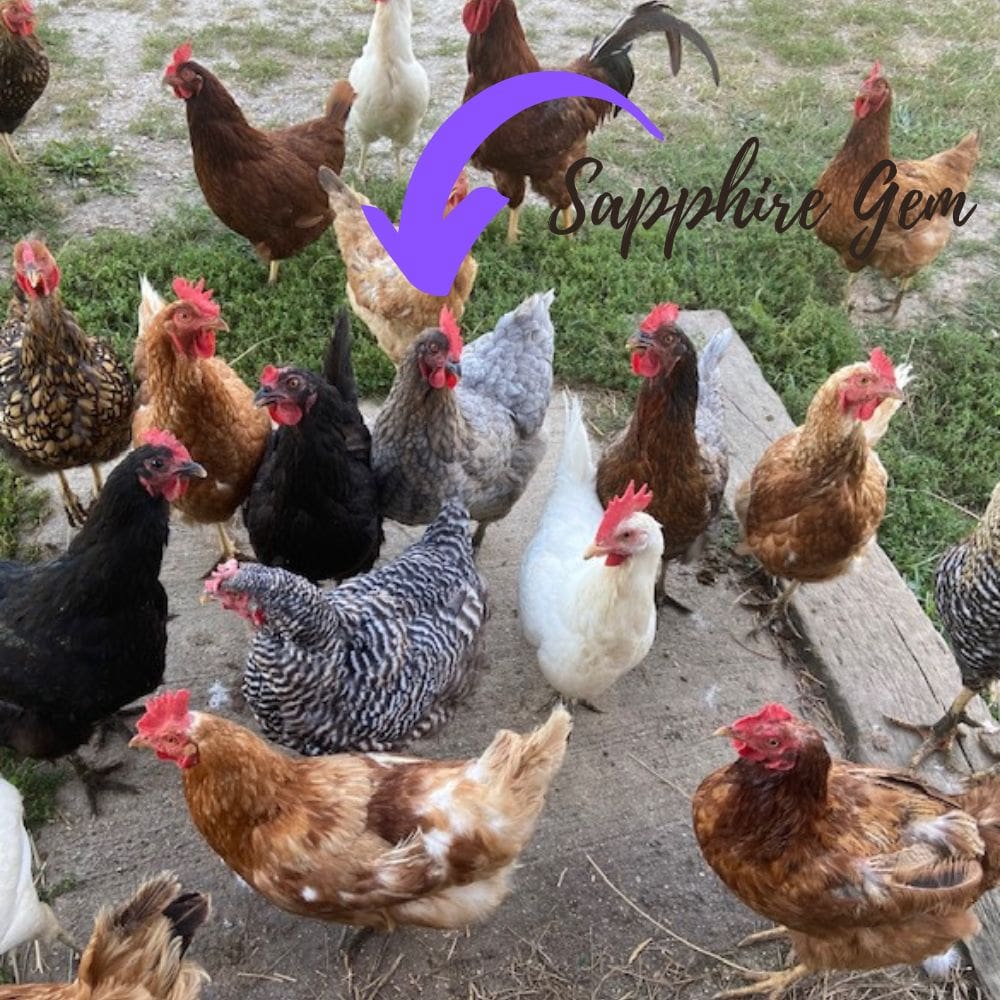
Sapphire Gem Chicken standing out in a group of other chicken breeds

Are They Really Lavender or Blue?

The Sapphire Gem hens plumage consists of shades of lavender, gray, blue, gray, and…gray (soooo pretty). They have a darker span of feathers around their necks (like a necklace made to impress the judges at a beauty contest).  Did you notice I mentioned gray a couple of times? 

Well, don’t for one minute think this point makes them any less pretty – but don’t expect a mystical, purple, unicorn-type hen. The lavender/blue color most often used to describe this birdy is really more of a gray in the same way a redbud tree is named (they are really not a true red, they are more of a purple or pink). 

The roosters are pretty too.  Of course, that’s normal in the bird world so I don’t think Mr. Rooster would be offended by being called pretty. Males are usually a blueish color with a white spot or white dot on their head. 

I think it’s pretty safe to say they are indeed just a bit flashier than most common breeds.

Roo or Lady – How Do You Know?

Female chicks versus male chicks, how does one know? The Sapphire Gem breed is a sex-linked breed. That label has always confused me. So here’s the meaning in laymen’s terms. Sex-linked chickens are made by cross-breeding heritage breeds in order to get certain attributes in the chickens. When this is done, it also makes it easier to determine whether or not you have a rooster or hen when the chicks are very young. 

A Sapphire Gem female will generally have completely lavender or blue feathers (or gray) and a male will usually have a white patch/spot on their wings or head. The cool thing is you can tell whether they are male or female on the day they hatch. Hatcheries love this!

When they are full grown, they are similar to other breeds and definitely easy to tell apart. Roosters are larger, have bigger combs, and crow. 

Both roosters and hens have single combs so they are considered to be part of the single-combed breeds.

How Big Are Sapphire Gems?

These stunning birds are considered to be medium-sized chickens. They will weigh around 6 to 7 pounds. 

What is the Sapphire Gem Temperament Like? 

These treasures are equally as sweet as they are beautiful. They can easily be lap chickens. They may not be quite as lap friendly as Silkie chickens, but they do seem to like their humans. These sweeties are not barnyard troublemakers. They make great farm workers as well as family pets and they are great for kids.

Pretty much, they would win a popularity contest if you held such an event at your coop. They are fun chickens to look at, and just as entertaining as any other chicken to watch (if you are looking for chicken entertainment that is). 

Egg and Meat Production

Are Sapphire Gems good for eggs or meat? Let’s find out.

Sapphire Gem Egg Production

One of the great things about this specialty breed is that they are special AND useful. That’s a bonus. These beauty pageant winners have more than just looks, they are excellent egg layers that produce about 290 plus extra large brown eggs each year. Fried eggs and egg salad sandwiches all year long, yummy!

Do Sapphire Gems Lay Colored Eggs?

If you consider brown to be a color, then yes. They lay 290 plus eggs per year. And although brown may not be as fun as the Easter Egger’s colored eggs, they more than make up for it in beauty and temperament. 

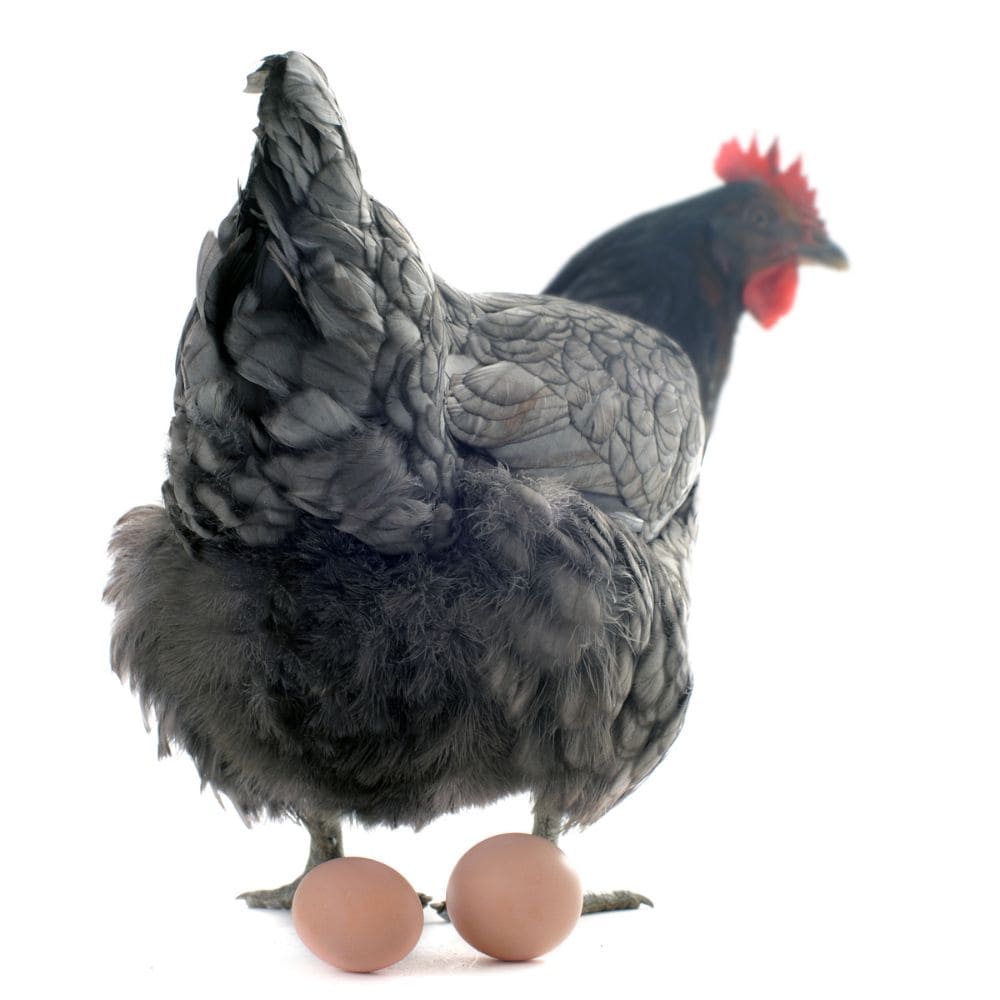
Sapphire Gem Chicken standing with her fluffy butt towards the camera, with eggs next to her all on a white background

Sapphire Gem Meat Production

Gulp. Who wants to eat their show-stopping dazzler? Well, maybe I don’t…but perhaps my cruel husband does (ha ha). Although they are not listed anywhere as a meat bird, they can be eaten just like other standard breeds around the farm. However, you wouldn’t buy this breed as a meat chicken

Sapphire Gem Care

Are these treasures of the coop harder to take care of than standard breeds? Are they high maintenance or low maintenance? I think you’ll like the answer.

Do Sapphire Gems Like to Forage?

They do like to forage, and they are good at it. Sapphire Gems love to free-range and hunt and peck for bugs all day long. They are such hard workers. I love watching mine find the tastiest morels around the yard. It’s quite entertaining to see them run away with their freshly caught prize so none of their feathered friends will snatch it from them! 

Are Sapphire Gems Hardy in Various Weather?

I’m glad you asked! Yes. Or should I exclaim YES!? These fluffy friends are very hardy. It’s one of the things I love most about them (other than their role in replacing my wedding ring)! 

As I mentioned early on in this article, it’s hard to find conclusive facts on this relatively new breed. If you search the internet to find out if this breed is hardy, you will see many articles stating that they are good for cold climates and warm climates… but you won’t see many scientific facts about this.

However, I can confirm by my own experience.  I personally own this breed and I know that they are hardy. I live in a climate that is very hot in the summer, and we have quite cold winters (including rounds of ice and snow). Our temps range from 0 to 105 (and sometimes outside of that range in both directions). My coop is in my barn which is not heated or cooled. I’ve never had a problem with my precious gems. 

Do Sapphire Gems Get Sick Easily?

This falls into the “hardy” category as well. This breed is not a high-maintenance, fragile breed. They do not have a tendency to get sick. This makes them great beginner backyard chickens. As with all flocks, you will want to keep them as parasite-free as possible. Most seasoned chicken owners know, parasites can be a problem. That’s why your chickens should have a healthy diet and a clean coop.

What Kind of Coop Do I Need?

Sapphire Gems may be unique in appearance with their fancy color, but they should be treated just like any other chicken you own – they don’t need a fancy house to match their fancy look. 

It’s best to have a place for them to seek shelter in cold weather, harsh winds, or in the heat of the summer. They like to roost as most chickens do, so you will want to have roosting bars somewhere in the coop. And, since they do lay eggs they will need a laying box available as well. 

If you are free-ranging you should provide about 4 square feet per chicken in the coop. If you are not free-ranging, then they probably need about 10 square feet each – plus a run of some kind for exercise, sunshine, and relief of boredom. 

For the most part, they will be content with plenty of shade and water. And if you have the ability to let them free range, they love that too. But they will still need a coop to rest in safety at night.

Can Sapphire Gems Free-Range?

They certainly can, and they love it. They are alert chickens and well aware of their surroundings, which makes them a good fit for free-ranging. I’m not going to say they are kung-foo fighters, but they are pretty savvy. I’ve owned this breed for years, all the while free-ranging, and I have never lost one to a predator of any kind. 

Should I Free-Range My Chickens?

Of course, it depends on your setting. I have free-ranged most of my chicken-owning life. But I have open fields around the coop. There are patches of woods nearby, but I do not live IN the woods. I also do not live WAY out in the wilderness, therefore I may not have as many predators looming around looking for dinner. I certainly have opossums, raccoons, coyotes, neighbor dogs, hawks, and the like. 

When considering free-ranging chickens of any kind, you have to take the details of your surroundings into consideration. You should also be mindful of your schedule. Will you be able to shut the chickens up at dark regularly?  Are you home during the day to keep an eye (and ear) on the happenings outside? And so on. 

Should I Get Sapphire Gems?

Yes. Yes. Yes. Based on their docile nature, their beauty, their hardiness, and their egg production – there is no good reason not to add this breed to your backyard flock! It’s time to go shopping for your personal beauty queen!