If you got chicks earlier this spring, no doubt they’re turning into young pullets and roosters now.

You likely have a million questions such as “when can I expect eggs?” and “how do I introduce them to my flock?”

Well, you’re about to get all those questions answered.

In this week’s podcast, I give you pro tips to helping your chicks grow into healthy pullets and roosters

(don’t forget my tip sheet: 7 Herbs For Healthy Hens!)

You’ll learn:

  • What you should feed them (and why certain supplements are critical)
  • How to train them so they know where their coop is
  • Why young chickens are even more vulnerable at night
  • The one thing you need to remember so your young chickens are safe while foraging

LIKE THIS PODCAST? LISTEN TO ALL OF THEM HERE!

Links we discuss:

Manna Pro Poultry Website

Where to buy Manna Pro Grower Crumbles

Where to buy Harris Farms nesting boxes (TheFrugalChicken.com/NestingBoxes)

What Foods Can My Chickens Eat?

I’d like to hear from you!

What questions do you have about raising healthy chickens? Leave a comment below!

We get more than our fair share of double yolk eggs on our farm.

The funny thing about an egg with two yolks is they always seem like a gift (most eggs do!), although a double egg yolk is technically something that hens shouldn’t be laying regularly.

I get many emails from you guys about your abnormal eggs, and an egg with two yolks are usually on the list!

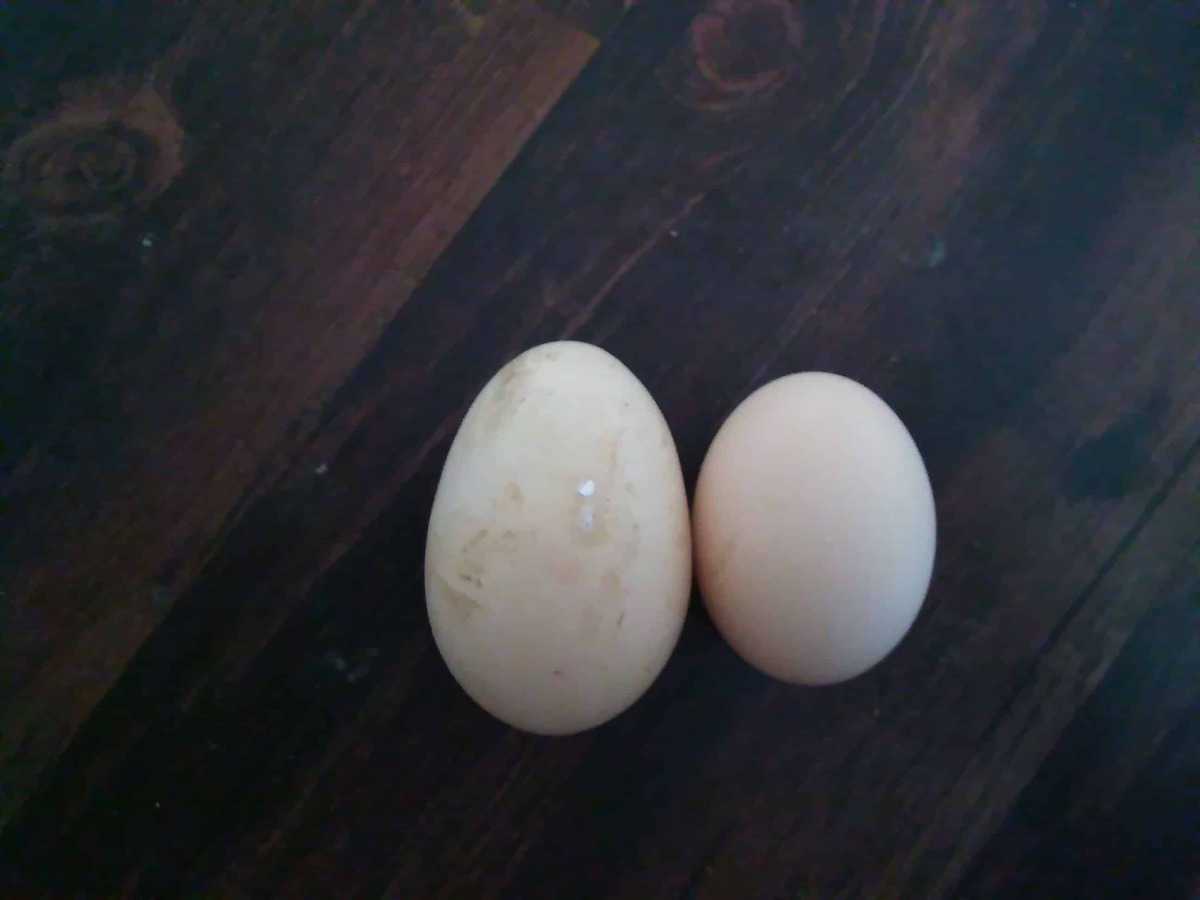
It’s amazing to see them—they’re usually much larger than other eggs.

While many certainly look like they might hurt the hen to lay, most hens get through the experience perfectly fine.

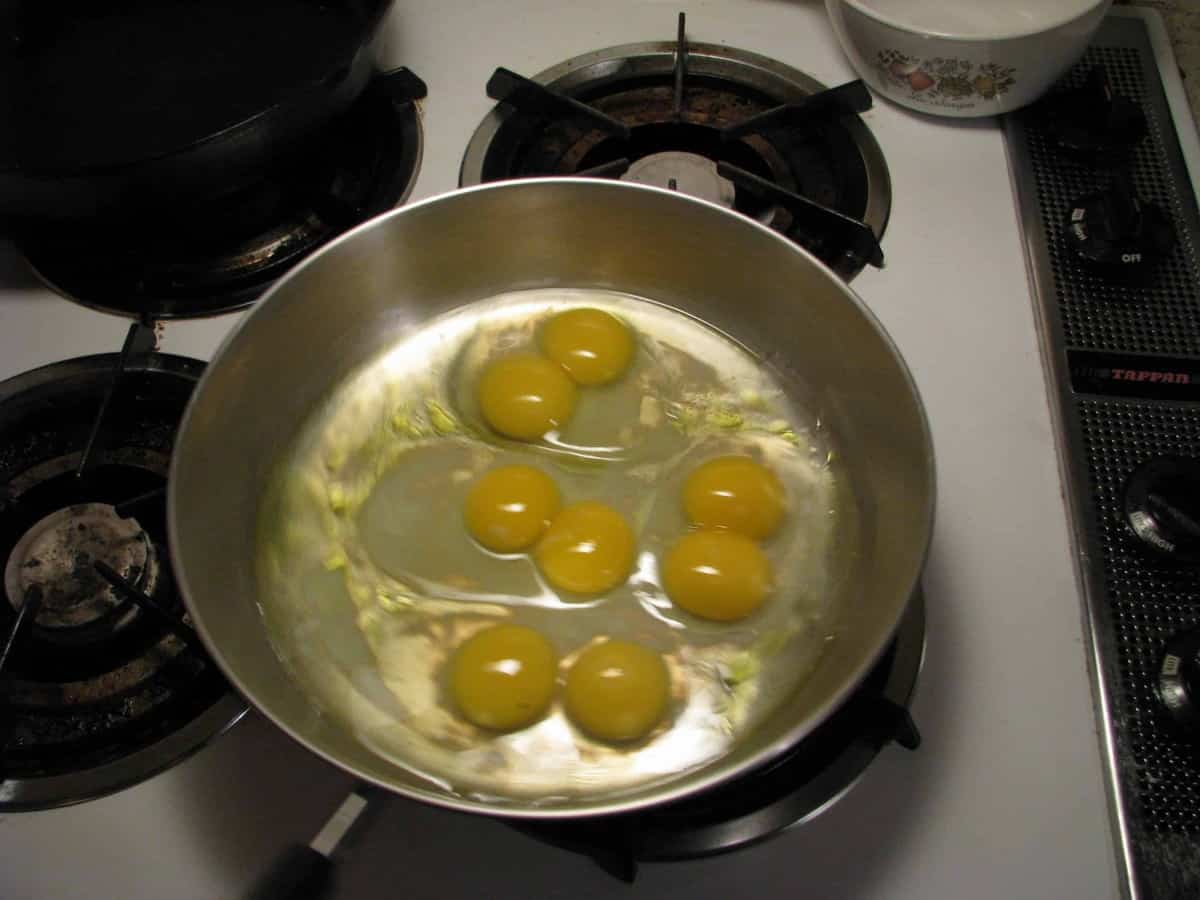
It’s always fascinating to crack a large egg open, and find that instead of one normal yolk, there’s two yolks in there!

You can also never be too sure what you’ll get with them.

Just a few weeks ago, a reader emailed me telling me about their double yolk egg. One yolk was a normal yellow color, but the other was purple!

Now, you might be wondering what the deal is with double yolk eggs.

Although they might contribute to egg binding and it’s possible large double yolk eggs might tear your hen’s vent a bit as she lays them (learn more about vent gleet here), for the most part, double yolk eggs aren’t much to worry about!

As long as your hen is laying regularly and without difficultly, she likely is perfectly healthy even if she does pop out a double yolker every so often.

We get more than our fair share of double yolk eggs on our homestead. Here's why they happen and why they're not such a big deal!

What are double yolk eggs?

Double yolk eggs are single eggs that happen to have two yolks in them. They happen when a hen releases one yolk too soon after a prior one, and both become encased in the same egg.

Hens are born with about 4,000 ovum (the yolks), and they don’t produce anymore during their lives. So, the total amount of eggs a hen can lay is determined from birth.

Although hens usually release a yolk between 30 and 75 minutes after she lays, sometimes, things don’t go as planned, and she releases two at roughly the same time.

Both yolks then go through the rest of the egg-making process together, and become encased in a single shell. This causes double yolk eggs.

An egg with two yolks frequently happens with chickens that are bred for high egg production, such as Production Reds and Black Sex Links, although any hen has the potential to release more than one ovum at the same time.

Double yolk eggs can also happen with new layers who systems haven’t quite adjusted to producing eggs, so they release two ovum together.

In these cases, the hen’s body usually adjusts to the new influx of hormones quickly, and she then starts laying eggs with a single yolk, never to lay another double yolker again.

Because of there are two yolks in them, double yolk eggs tend to be larger than their normal counterparts. (Ducks can lay double yolk eggs too, by the way).

Are double yolk eggs safe to eat?

Of course! They’re no different than regular eggs, there’s just two yolks in them.

Scramble them for breakfast or fry them over easy (or try one of my 50 egg recipes). They will taste and be just as nutritious as regular eggs.

We get more than our fair share of double yolk eggs on our homestead. Here's why they happen and why they're not such a big deal!

Should I be worried about my hen’s health?

Although they’re really nothing to be concerned about, double yolk eggs can lead to issues of egg binding or tearing of the vent because of their size.

However, there’s not much you can do to prevent these types of eggs.

They just naturally happen, and usually the hen is perfectly fine after laying one (although you might want to give her a pat for managing to pass the egg!).

Can I buy double yolk eggs at the grocery store?

Because grocery store eggs go through a detailed inspection process that makes sure all eggs from industrial farms are pretty uniform, you’re unlikely to get any double yolkers at the market.

If your local store sells farm fresh eggs, however, you might very well come across one or two double yolk eggs eventually.

In Europe, they’re becoming so popular, that some manufacturers are selling cartons containing only enormous eggs containing two yolks for people who want to buy double yolk eggs on purpose.

In this case, the hens that lay the eggs are bred and selected to only lay double yolk eggs.

There’s some controversy that these hens lead shorter egg-laying lives, and possibly have decreased lifespans because of their breeding (although I should mention that Europe has better animal welfare laws than the US has.)

Researchers have studied hens to determine the best way to feed layers, and part of the study considered whether double yolk eggs might require feeding hens differently.

Can an egg with two yolks be incubated?

Yes, but I wouldn’t bother trying to hatch double yolk eggs. Because there’s just usually not enough space, oxygen, and nutrients to keep both embryos alive until hatching, most attempts fail.

There are stories of successful hatches, but they are few and far between.

It would be irresponsible to try to hatch the egg, only to have the embryos die before hatching because there wasn’t, for example, enough oxygen.

Enjoying your double yolkers at breakfast and sharing the photos on Facebook is a more productive and healthier way to celebrate them!

Is there a double yolk egg superstition?

There’s actually a few. In many cultures, they’re considered good luck, while the Norse believed that they were a bad omen. 

These days, some people believe that if you find a double yolker in your coop, it means you or someone close to you will have twins.

Double yolk eggs are an exciting part of chicken ownership that you’ll likely encounter with your backyard flock. If you do happen to get one (or maybe a dozen), consider yourself lucky!

Here’s more articles on backyard chicken eggs:

Resources:

Nayara T. Ferreira, Nilva K. Sakomura, Juliano César de Paula Dorigam, Edney Pereira da Silva, and Robert M. Gous. “Modelling the egg components and laying patterns of broiler breeder hens.” Animal Production Science, April 10, 2015. 

Rae Ellen Bichell. “Why The U.S. Chills Its Eggs And Most Of The World Doesn’t.” NPR.org, September 11, 2014.

Attila Salamon and John P. Kent. “Triple-yolked eggs in domestic ducks: a rare occurrence.” Poultry Science, December 1, 2015.

Jacquie Jacob and Tony Pescatore. “Avian Female Reproductive System.” University of Kentucky, Cooperative Extension Service, November, 2013.

I’d like to hear from you!

Have you ever found double yolk eggs in your coop? Leave a comment below!


Chickens; Naturally Raising A Sustainable Flock is my best selling book about raising healthy hens! You’ll learn how to handle sticky first aid situations, raise baby chicks with the week-by-week checklist, how to give the best care even in the worst weather, and more!

Click here to learn more.

Chickens: Naturally Raising A Sustainable Flock


One aspect of owning chickens not many people think about is showing chickens.

While some people chase ribbons, Bonnie at Not So Modern Housewife reveals that for her, showing is about improving the quality of her livestock.

In this podcast, we talk to Bonnie about what it’s like to show chickens, as well as the governments NPIP certification program.
We also wander a bit into discussing other species and what it’s like owning and showing them too!

You’ll learn:

  • Why showing chickens helps you improve the quality of your flock (and why you should care)
  • What NPIP certification is, and why you should make sure a seller has it before buying chicks and eggs through the mail
  • How to get started showing chickens

Links we discuss:

Not So Modern Housewife

Poultry Show Central

NPIP Certification

Where To Buy A Cabin Full Of Food

I’d like to hear from you!

Do you think you’ll start showing chickens? Leave a comment below!

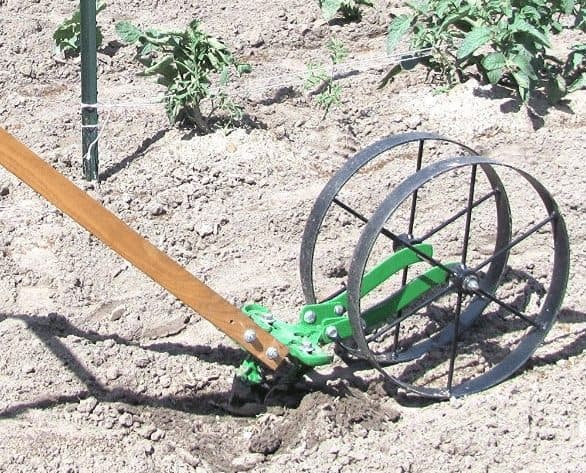
Hoss Tools Double Wheel Hoe is one of those items you need to have in your garden shed.

Trust me on this.

If you love to garden, want to start cultivating your own food source, or just want to make establishing a new vegetable bed easier, you will be able to do it with the Hoss Double Wheel Hoe, and do it faster.

If you’re somebody who can’t spend a lot of time outdoors for health reasons, or you haven’t started a backyard garden because you’re worried your health might limit you, then this cultivator is for you.

Hoss Tool Double Wheel Hoe

Hoss Tools sent me the double wheel hoe, as well as several attachments, including:

  • Cultivator Teeth
  • Plows
  • Oscillating Hoes 

I was sent the Hoss Tools Double Wheel Hoe and attachments just in the nick of time. 

This year, one of our goals is to grow more food for our livestock, in order to reduce our feed bill.

Wanting to plant corn, but not wanting to use a traditional hoe to dig up the ground and create beds, I was really, really excited to receive this tool to review.

What’s even better?

Not only was I able to establish a bed for my corn, but I did it, literally, in a 10th of the time it normally would have taken me.

In this review, I’ll cover the hoe itself, the cultivator attachment, and the plows. I’ll continue my review with the oscillating hoes next week.

Product Description:

The Hoss Double Wheel Hoe is a hand-held gardening tool meant to make tasks such as cultivating ground, removing weeds, and creating garden beds easier.

The item consists of a double wheeled tool with handles so you can use it comfortably standing up.

The different attachments can be added or removed as needed.

The cultivator attachment allows you to dig up the ground to aerate it, create beds, or loosen the soil.

The plow attachment allows you to dig up the soil or create garden beds (for corn, for example).

When the package arrived, it came with detailed instructions about what was included and how to put it together, so we were able to assemble the hoe in a few minutes.

The Hoss Double Wheel Hoe is sold for $209. The cultivator teeth attachment (which includes 3 teeth) is $13. 99, and the plow attachment we received runs $39.99.

The Hoss Tools website (HossTools.com) sells replacement parts as well, should the need arise.

The Good:

I love this tool. Putting it together took just minutes, and the instructions were clear and detailed enough that even I could figure them out.

Creating a garden bed for my corn was so simple and fast compared to using a standard hoe.

It used to take me hours to dig up the ground to correctly aerate the soil and establish the bed.

We have a large garden, and now that we’re increasing the amount that we’re planting to better meet our livestock’s needs, it’s important that we are able to do it quickly and without a ton of effort.

Imagine trying to hoe a half acre by hand—it can be done, but if it can be done faster, so much the better!

The double wheel hoe was easy to use, and light—pushing it didn’t take any effort, yet with the cultivator teeth, it created straight rows deep enough to plant large seeds such as corn. 

In about 5 minutes, we had a decent size bed finished.

To store the Hoss Tools Double Wheel Hoe, we just placed it upright in our greenhouse. 

Removing the cultivator teeth and adding the plow attachment was simple.

Although it’s light, the double wheel hoe is sturdy, and the wheels are securely attached.

The handles are comfortable to hold, and made of smooth wood, so you won’t get any splinters. If necessary, they would be easy to replace.

Using the tool to create a new bed for our corn was comfortable, and made a hard job much, much easier.

The Bad:

There really isn’t any bad about the Hoss Tools Double Wheel Hoe.

The price is easily accessible, and since we were able to establish a new garden bed faster, which will save us money on animal feed, the price is well worth the investment.

If pressed, I would say that if you’re a person of smaller stature, you might need to alter the handles to your height.

Otherwise, I think this is an overall incredible tool for anyone to have in their garden shed.

The Bottom Line:

The Hoss Tools Double Wheel Hoe is a good investment for any homestead.

You’ll save time, energy, and likely yield a better crop because your bed will be prepared better.

I cannot recommend it enough!

You can buy the Hoss Double Wheel Hoe at HossTools.com or on Amazon by clicking here.

I’d like to hear from you!

Do you think you’ll try the Hoss Tools Double Wheel Hoe? Why or why not? Leave a comment below!

Starting a homestead from scratch isn’t easy, but it can be done.

You don’t even need a lot of money.

When we started our homestead, we were pretty broke, but we still managed to do something every day to get us to where we are today.
We started homesteading because we wanted to produce more than we consume, live a healthier life, and feel the freedom our lifestyle affords us.

If you’re dreaming of starting a homestead from scratch but aren’t sure where to begin, then listen up, because here’s some of my top tips.

Starting a homestead from scratch

Despite some of the rumors you hear out there, you don’t need a lot of land to start a homestead. In fact, I know people who homestead in their apartments.
I think it does a disservice to our lifestyle to place artificial limits on what a homestead is; if you only have ¼ acre of property, then homestead away on that ¼ acre.

But I’m not going to get into a discussion of what homesteading is. If you’re here reading this article, you likely have your own set of ideas about what comprises a homestead.

Instead, let’s look at how to make the most of what you do have and the history of our homestead.
homestead on ad

Our story

We have 10 acres, and yes, we started our homestead from scratch.

Once upon a time, our farm was homesteaded by settlers who did so out of necessity.

There was once what we modern people call an “off grid cabin” in the woods on our property, which later was abandoned for the house we live in now. The cabin no longer exists.

(“Off grid cabins” are a modern invention; when there was one on our property, it was a dirt floor shack that the family couldn’t immediately afford to replace).

How do I know this?

The people who owned our house settled here in the 19th century. The same family owned it until the elderly parents died and their late-in-life daughter sold the property.

Meanwhile, another child, who is now in his late 70s, has told us over time the story of our homestead.

How did we find our property?

My husband made a call to a family friend who happened to have some land for sale. We bought it at about $8,000 an acre.

In a lot of areas of the country, the cost of land is really, really high. But there are places out there still where you can buy land for very little or even get free land.

I’ve seen land for sale that people will even trade for trucks. You just have to look.

So, we had a farm.

But we didn’t have useful barns, animals, or even a place to grow our food because as the old owners aged, the farm fell into disrepair and modern conveniences became the name of the game.

What steps did we take to establish our farm?

We first started with our chickens. From them, we had meat and eggs.

We also established a garden, but our first year, it produced little. We had a lot of tomatoes, some lettuce, a few peas, and that was pretty much it.

It took time to get into the rhythm of the seasons, to decide what was worth growing (what we would use, like paste tomatoes), and what I was actually skilled at growing (like garlic).

Beets and carrots still elude me.

We then started adding green houses were we could protect a wheat crop from loose animals and extend our growing seasons.

When the right opportunity came along, I got some goats for milk and cheese.

Then the following year, rabbits seemed like a good addition.

The point is that we took it step by step, adding more to our homestead when the time was right.

Starting a homestead from scratch meant we had to build it ourselves.

We even had to redo both barns on the farm to make them useful for us.

We did this largely for free, reusing material we already had on the farm. For example, one barn had siding on it, but needed to be redone so we could use it to store farm equipment.

We were able to source telephone poles for free, which we used to support the barn as we refurbished it.

The other barn needed siding to make it habitable for our horses. Guess where we found the siding for it?

If you’re starting a homestead with no money, look at the resources you DO have, and make the most of them.

Don’t have money to build a barn for cows? Try goats.

Can’t keep large livestock? Keep rabbits in your garage.

Can’t keep chickens? What about quail?

There’s usually an alternative that will keep you moving forward on your journey.

Now, the thing you need to remember when starting a homestead from scratch is that this isn’t an overnight thing.

It takes years with annual and seasonal goals to actually get to a point where your homestead will start to support you.

Sorry if that bursts some bubbles. But it can be done, and we’re living proof.

Once you master a part of homesteading, even if it’s a small skill such as baking bread, you gain confidence to move onto the next skill.

It really is as simple as that.

Something else to consider is that homesteading isn’t all about keeping cows and milking the goats every day.

There’s a popular thought that homesteading is about stuff like that, and it is, but there’s another aspect to it.

But it’s not all about the land

What about what goes on inside the farm house? What about the cooking? The natural living?

Bottom line, if you’re someone who lives in an apartment or small property, there’s not much stopping you from engaging in this aspect of the homestead life.

Cheese can be made from store bought milk, and I’m friends with cheese enthusiasts who do just that.

For fresh veggies, if you truly have no land, you can join a CSA or find someone local to you who sells or gives away fresh produce.

You can also grow microgreens.

Even though we have 10 acres, I still grow microgreens because they’re easy and ready to harvest quickly.

Similarly, you can learn to cook from scratch.

Six months ago, I couldn’t make pasta. I took an online course, now I can make homemade egg pasta from scratch, and I no longer need to go to the store to get it.

So, starting a homestead from scratch doesn’t necessarily have to be all encompassing or require you to move to a new home.

The cost of starting a homestead doesn’t even have to be that much. It could be as little as $20 to learn to make your own bread.

The bottom line is that homesteading is not a journey that is mastered in one day, and you’d be doing yourself a disservice to assume that without 100 acres and a plow you can’t homestead.

There’s more to starting a homestead from scratch than working large tracts of land.

Acquiring livestock

I’m better at raising livestock than I am raising dwarf fruit trees and vegetables, so while I garden and try to keep my goats from eating my orchard, I largely concentrate on raising animals for meat, dairy, and eggs.

I’ve written in the past about how to start homesteading today by getting livestock for little or no money.

Starting a homestead from scratch with livestock doesn’t need to be cost intensive. In fact, you don’t want to acquire too many animals at once.

You’ll be overwhelmed. Ask me how I know.

Along with animals comes a couple things.

First, you need to understand their different anatomies and needs. A goat is not the same as a chicken which is not the same as a rabbit.

How they eat and digest, how they give birth, and their medical needs and common illnesses are all different.

And you need to know them all, and be prepared for them all, especially if you don’t have a lot of money to spend on vets or if you don’t have good, reliable veterinary services in your area.

Second, you need to have good fences and an established place for them to live. Winging it won’t work, so if you don’t think you have the space, or don’t have the right fences for large livestock, stick with smaller animals that are easier to house and keep corralled.

Nothing will kill your homestead dreams faster than an HOA that alters regulations because your animals keep getting loose.

Your first couple years homesteading, you don’t want to go overboard on the livestock. Pick one or two, and go from there.

Now, the other thing about livestock is, whether you like it or not, we live in a society that is largely uneducated about the source of their food.

In a lot of areas, people have forgotten or are just plain uncomfortable with the fact that their meat actually comes from animals.

So, if you’re starting a homestead from scratch, you need to take your local area into consideration.

I’ve lived in areas where people regularly had cows removed from their farms by animal control simply because their neighbors didn’t understand that the cows were raised as food.

Or, they decided that a cow nursing a calf was “too thin” even though local livestock experts disagreed.

I’ve also seen people be indicted on animal abuse charges for butchering their own animals, and publicly humiliated for using established, humane (more humane than commercial), butchering techniques.

You need to consider whether you want to deal with all that drama if you live in an area where this might happen.

You can still homestead—you can buy meat from a local farmer, choose livestock that’s straight forward to butcher, or find an alternative solution.

Or you can simply engage in other aspects of homesteading such as growing vegetables, grains, and fruit.

In our area, none of this is an issue. There’s an established history of homesteading, and regulations protecting farmers.

Livestock for small spaces

If you want to homestead, but think you can’t because you live in suburbia with little land, then you might want to consider rabbits, chickens, ducks, and quail.

The reality of our homestead is this:

  • We cannot afford a cow. Sorry, but spending $500-$2,000 on a single animal is not happening right now when I can spend a fraction of that on goats, pigs, or rabbits that will produce food for our farm, eat less, and have fewer space requirements.

  • We do most of our homesteading on just 2 acres. Yes, you heard that right. We have 10 acres, but we’re able to keep pigs, rabbits, goats, chickens, turkeys, quail, and ducks on just two acres.

You need to remember that homesteading is about producing more than you consume and learning traditional skills, in whatever form that takes.

If you’re able to self-sufficiently feed your family with rabbits and chickens, then mazel tov. If you want a cow, then that works too. The point is that you’re doing what you can to take care of yourself.

So, you don’t need a lot of land to start a homestead, and there’s no homestead police that will take away your membership card if you don’t have every species of livestock under the sun.

Rabbits can easily be kept in a garage, out of sight. They’re quiet for the most part, are fairly inexpensive to raise, and breed quickly and easily.

Chickens require 10 square feet of space in their coop, but quail only require 1 square foot. If neither interests you, then laying ducks are an option.

Lastly, let’s talk about mindset

As I’ve shown you, starting a homestead from scratch doesn’t necessarily require a lot of land, money, or even skills.

There’s no rule book out there that requires you to split rails; trust me, if the homesteaders that settled our farm had access to our modern amenities, I know for a fact (because they told me) they would have taken advantage of them.

Starting a homestead from scratch is simply about mindset.

As I said earlier, there’s a bucolic notion that a valid “real” homestead is about working the land to produce everything under the sun for yourself.

I’ve learned this is a standard set largely by voyeurs who don’t actually do it themselves.

There’s a reason why 100 years ago, community was the pillar of our society and the way the homesteaders of old survived.

One person cannot produce it all.

Really, it’s about producing as much for yourself as possible regardless of your location. It’s ridiculous in our modern society to assume that the crux of homesteading is the ability to acquire land.

It’s not, and land is a scarce resource.

Starting a homestead is about adding skills to your life so you become a producer instead of a consumer.

It can be as simple joining a CSA (and supporting another homesteader) and preserving as much food as you can and cooking from scratch.

Later on, you might add some goats for dairy. Or you might choose to find a dairy near you.

It’s about getting it into your head that you’ll start producing for yourself, and taking the steps to start actually doing that (not dreaming about it).

That’s when the freedom begins, because you begin acquiring skills that you can support yourself with.

There’s nothing special about us. But we did it, and so can you.

I’d like to hear from you!

Do you think you’ll try starting a homestead from scratch? Why or why not? Leave a comment below!

A lot of people are afraid to start homesteading because they’re concerned about the costs, or how to make money homesteading.

In today’s episode of What The Cluck?!, I talk to Roe Harris of Harris Homestead – Sumterville, FL. 

Roe has run a successful meat chicken business from her homestead in Florida for the past 6 years.

In this podcast, we discuss how to start a meat chicken and homestead business and how to make it successful.

You’ll learn:

  • How Roe started and maintains her meat chicken business
  • The one thing you need to do in order to be successful
  • Why selling eggs isn’t always your best bet
  • Why listening to your customers is so important
  • Why flexibility is critical to success

Links we discuss:

Harris Homestead, Sumterville, FL Facebook page

Example sheet explaining how homestead-raised chicken is superior to store-bought chicken

Transcript:

Coming soon

I’d like to hear from you!

Do you think you’ll try starting a homestead business? Why or why not? Leave a comment below!