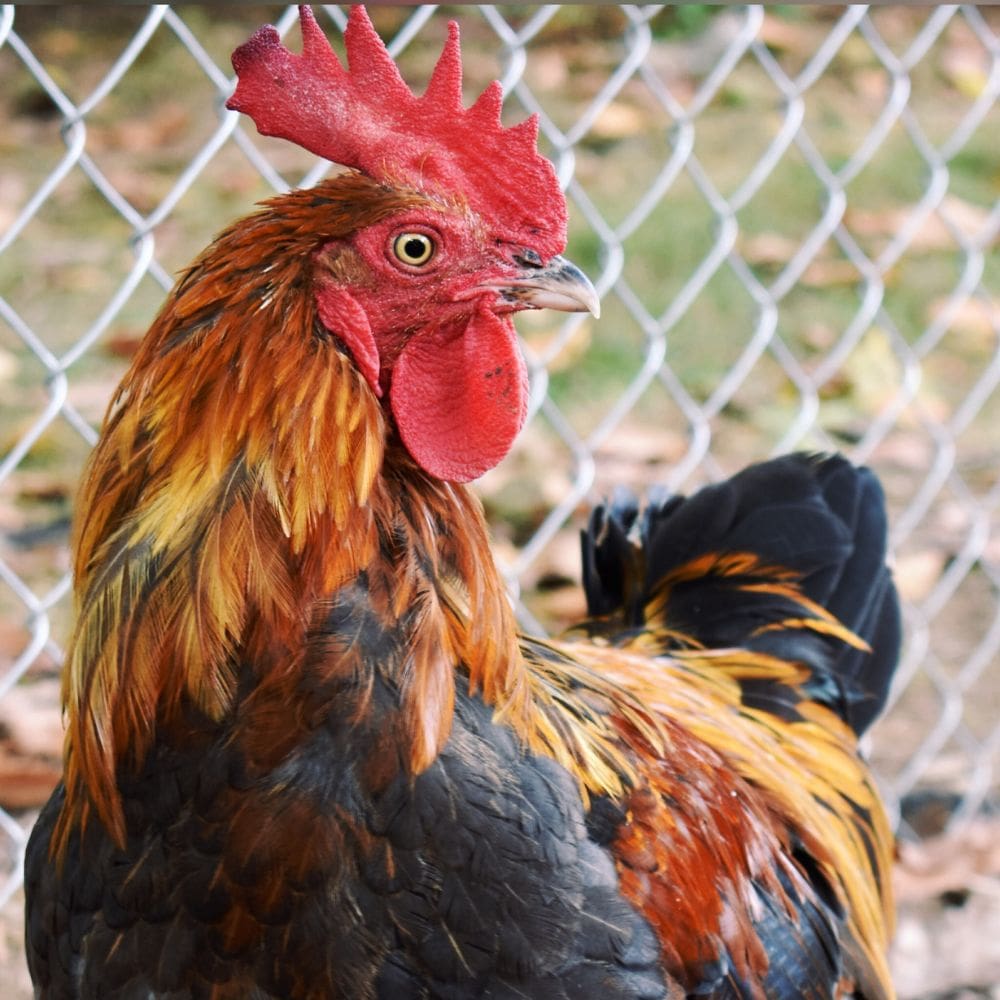
You’ve probably heard about Cornish chickens, in some capacity, at some point in your life. But could you pass a test about the differences between Cornish Chickens, Cornish Hens, and Cornish Cross?

If you are curious or if you need to know, I have the answers you are looking for. And hey, you never know when this information might come in handy for family trivia game night, while watching Jeopardy with your Grandma, or when your 6-year-old asks yet another random question!
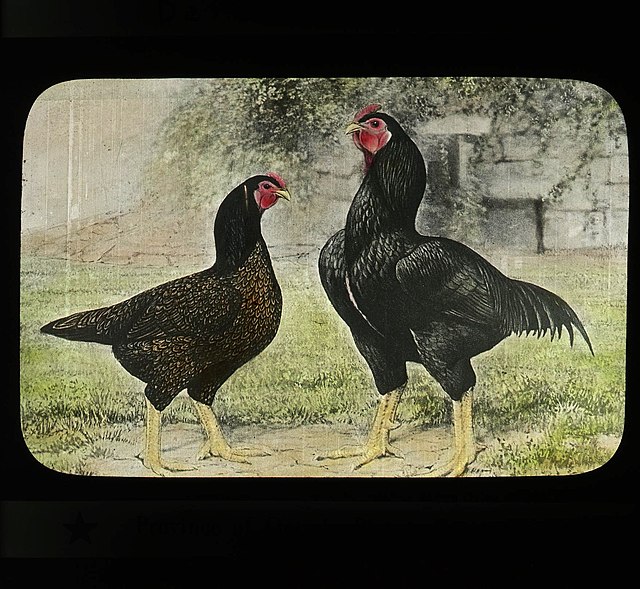
Cornish Chickens painting rooster and hen old fashioned

So What are the Differences Between Cornish Chickens, Cornish Hens, and Cornish Cross birds?

If you want to go on a wild and exciting adventure, then research the difference between these types of chickens. It’s not as easy as you might think. If you want to skip all that and just find out the answer, that’s great too…I’ve simplified it and compiled all you need to know below.

Cornish Chickens

The name, Cornish, comes from Cornwall, England. They were also known as Indian Game Birds (and cornish game hens) because the breed is the result of crossing an Old English Game chicken with a Red Aseel from India (go ahead and click Red Aseel, you won’t be sorry you did…they are some strange looking birds).

Some breeders still refer to this breed by their more old-fashioned, historical names.

I always thought the breed “Cornish” referred to the small chickens served up for dinner in fancy restaurants and at the famous Dolly Parton’s Stampede (in Branson, MO, and Pigeon Forge, TN). I was wrong, more on that in a bit.

Cornish chickens emerged around 1820 by Sir Walter Gilbert of England and are one of many heritage breeds. This breed has had moments of popularity, but many have shied away due to their game bird heritage. The reason is that many people associate game birds with cockfighting as you can imagine.

Cornish Chickens Appearance

The breed is quite an interesting-looking breed, with a very “beefy” appearance. They are, in the chicken world, “bodybuilders” with deep breasts and extremely wide backs. They are known for having heart-shaped bodies due to the hefty breasts these birds show off.

There are a couple of different varieties, including the dark variety and a white and buff variety (and a couple of others). You can find the most information about the dark variety. Their feathers have a whole host of colors that can include glimmery greens, browns, and even blue.

Chicks can be a variety of color ranges, from a light reddish to a darker reddish brown. They have small wattles, red earlobes, and yellow beaks, legs, and feet. These birds also have small pea combs.
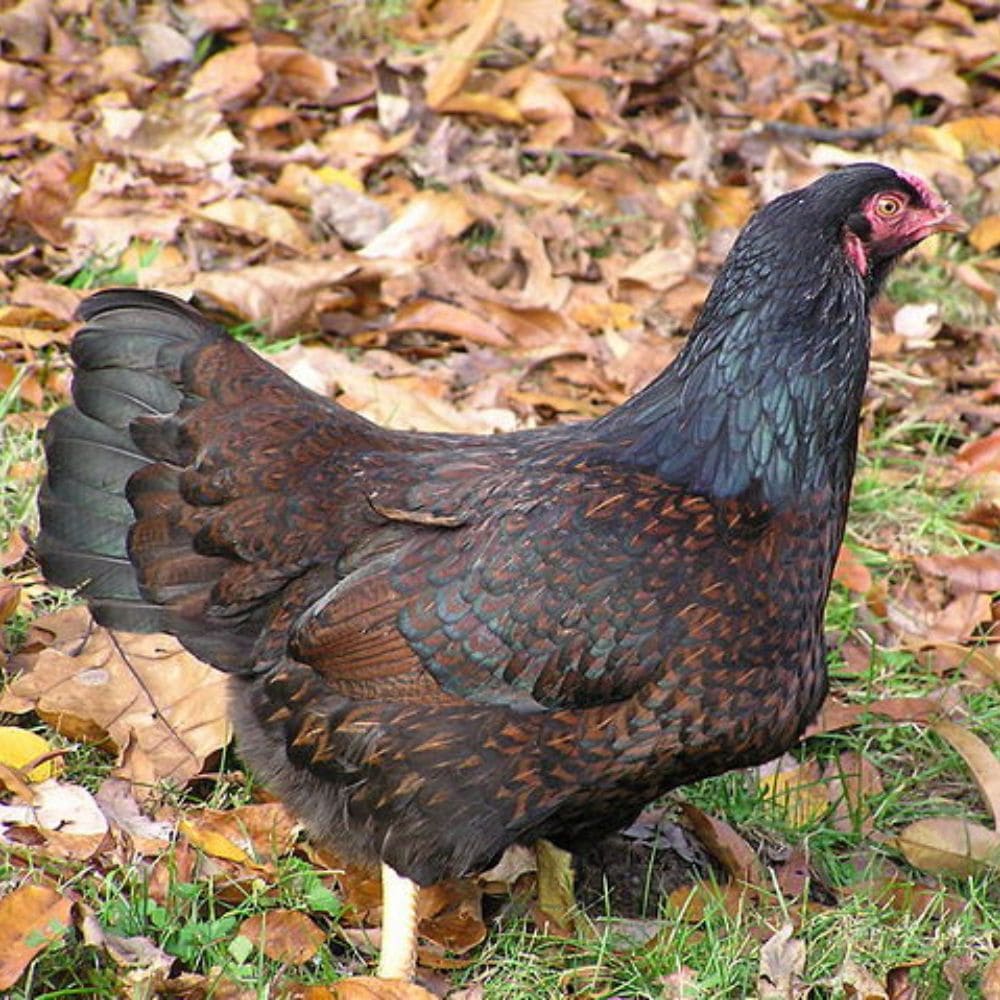
Dark Cornish Chicken with leaves in background on ground

Cornish Chickens Egg Non-Production 😉

They are not very good at laying eggs, as you might expect since they were specifically bred for making meat. So let’s not hold this against them. They do lay approximately 160 eggs a year which isn’t the worst number in the world.

Egg size is small to medium and the egg color is light brown but they are also known for laying various tinted cream-colored eggs.

If you decide to add this breed to your flock, just don’t expect to whip up a quiche every day. You might get yourself a hybrid chicken to take care of that duty.

Cornish Chicken Temperament

Well….they aren’t lap chickens for sure. Because of their gamebird background, the roosters can be aggressive sometimes, especially when merged with more docile breeds. They are at the top of the pecking order in most flocks.

Are Cornish Chickens Broody?

Yes, they can be according to the Livestock Conservancy:

Although Cornish hens lay fewer than 160 small/medium cream or light brown eggs a year, they can go broody and make doting and protective mothers. Unfortunately, with their massive bodies and shorter legs, they are known to accidentally break eggs as they are not physically well-built to sit. 

Livestock Conservancy Website

Are Cornish Chickens a Recognized Breed?

As Indian Game birds, they were accepted into the American Poultry Association’s (APA) Standard of Perfection back in 1893.

Later, in 1910, their name was changed to Cornish which describes them better since they are from Cornwall, England. They were also moved to the English class from the Asian class (which makes perfect sense since they aren’t from India).

An interesting fact is that the breed standard is the same for males and females.

How to Care For Cornish Chickens

Pretty much just like any other chicken in your flock. They need plenty of fresh water and high-quality feed, here’s my favorite non-GMO feed that is packed full of nutritious goodies.

Provide an environment that sets them up for success, such as adequate shelter that is parasite free. Lice, mites, and other nasty parasites can make your flock sick and there are ways to repel them. Read more about that here.

Just How Much Do These Heavyweights Weigh? 🏋️‍♀️

Bred for the quantity of meat, these birds weigh up to 10.5 lbs. However, they are slow growing…and that leads us to the Cornish Cross.

Cornish Cross

Cornish Cross chickens are true to the name – they are a Cornish chicken crossed with a White Plymouth Rock chicken. This combo creates a fast-growing, body-building, meat-making machine. Of course, it is more complex than just a simple cross of two birds.

It took decades of experimentation, intentional breeding, and fine-tuning genetics and selected strains to produce the Cornish Cross chickens many of us know as “meat birds” in America. This bird is full of muscle and there’s no doubt about it.

They are white with red combs and wattles. The males and females look identical, like giant butterballs.

Cornish Cross are often referred to as “Cornish Rock” or “Jumbo Cornish X Rocks” chickens.

Cornish Cross Are Only For Meat

I get together with a group of crazy chicken people and raise Cornish Cross meat birds, otherwise known as broiler chickens, every year.

One year, not long ago, we had trouble finding a supplier for the time frame we needed. I decided to take matters into my own hands and cross breed to make my own Cornish Cross chickens…but after much research, realized this endeavor is impossible. Bummer, we can’t find the secret recipe!

Cornish Cross chickens are specially bred to grow lightning fast. You can almost watch them grow. They literally change overnight, each night.
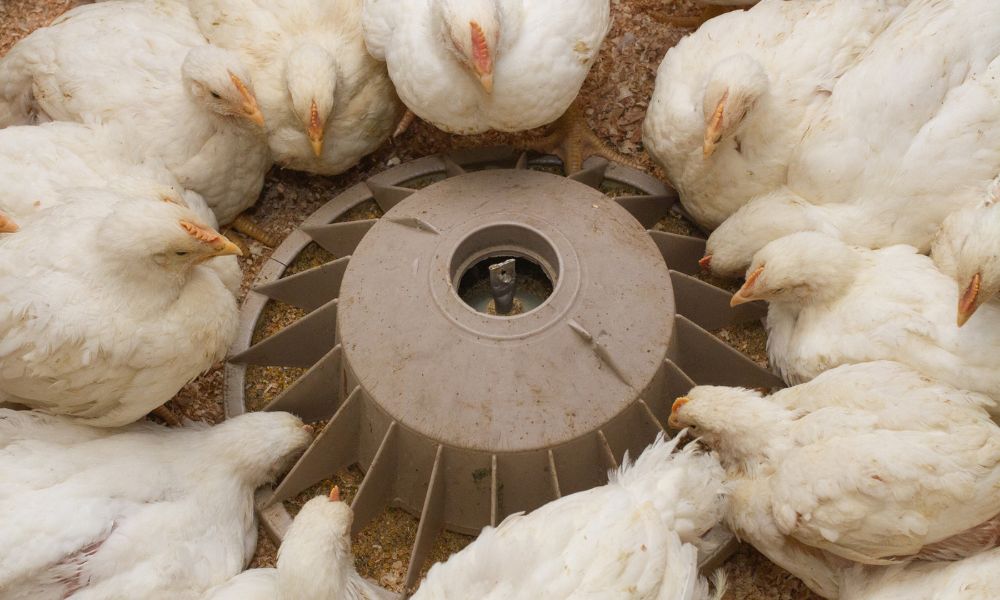
Cornish Cross chickens laying down eating out of feeders

These amazing meat birds grow to full size in just 8 weeks. If you let them grow any longer than 8 to 10 weeks, they start to have serious, life-threatening, problems such as heart attacks, kidney issues, spraddled legs, and more.

Because of all of these issues, it’s best to just stick with the plan and harvest them by not later than 10 to 12 weeks – depending on how you feed them out.

I’m an ultimate critter lover, but when it comes to these chickens I’m pretty much ready to butcher them by 8 weeks. They are bred to just want to eat constantly..without stopping…all day…all night…all the time.

Toward the end, they act like they want to eat your hand off when you enter the coop, plus they are quite ugly (especially around 4 weeks old). Soooo ugly, even a mother would shudder. That’s U-G-L-Y.

Even though they are ugly, and you are going to butcher them, doesn’t mean you shouldn’t spoil them and give them the best possible life. Since they LOVE to eat and that is all their life really consists of, give them daily treats. It will enhance the quality of the meat you will be eating too! Try these!

Things to Know About Cornish Cross Chickens 🐔

There are several important, interesting, and funny things about this breed (even though they are ugly). Here’s a list:

  • If you raise them you know what you are eating
  • Cornish Cross needs high protein feed to grow properly (20-22% protein)
  • They are pretty inexpensive to buy because a straight run is just fine (since you are butchering them)
  • They grow extremely fast
  • Cornish Cross are super tender and is the same chicken meat you are used to eating from the grocery store
  • They grow so fast and weigh so much that they often lay down while eating (fat, lazy, fast-growing birds)
  • Did I mention that they grow fast? They do. Very, very fast. 🎉

Cornish Hens

I mentioned Dolly Parton’s Stampede earlier in this post. If you’ve never been there, they serve up a delish din-din to eat while you watch the show. The dinner includes an “A Mouth-Watering Tender Whole Rotisserie Chicken.” This whole chicken is small, but definitely a full meal for one person and very tender indeed.

These whole rotisserie chickens are, what is called a Cornish Hen. You may be naive, as I was, in thinking that Cornish Hens are a special little chicken breed. You may want to send the children into another room at this moment.

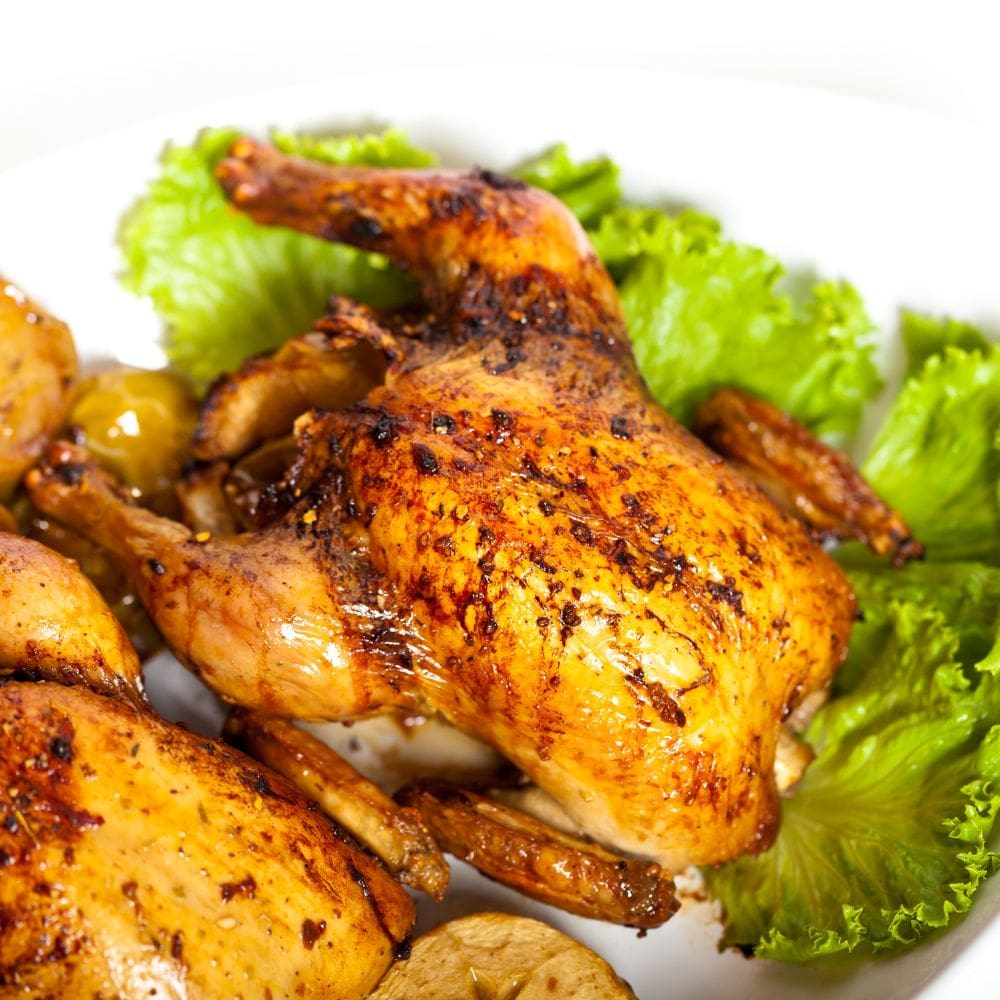
Cornish Hens are not only hens AND roosters, but they are also baby chickens! They are simply Cornish Cross chickens at 4 weeks old. Yup, you heard it here first. 😢

Before you cry too hard, remember that they are (or quickly become) really ugly birds (does that help?). They do look a lot better as a roasted one-person chicken. And because of their young age, they are so tender and juicy.

It’s hard to talk about, but if you can get past the sadness, you will know a chicken is a chicken no matter how small (or big). And if you eat chicken from the store, there is truly no difference.
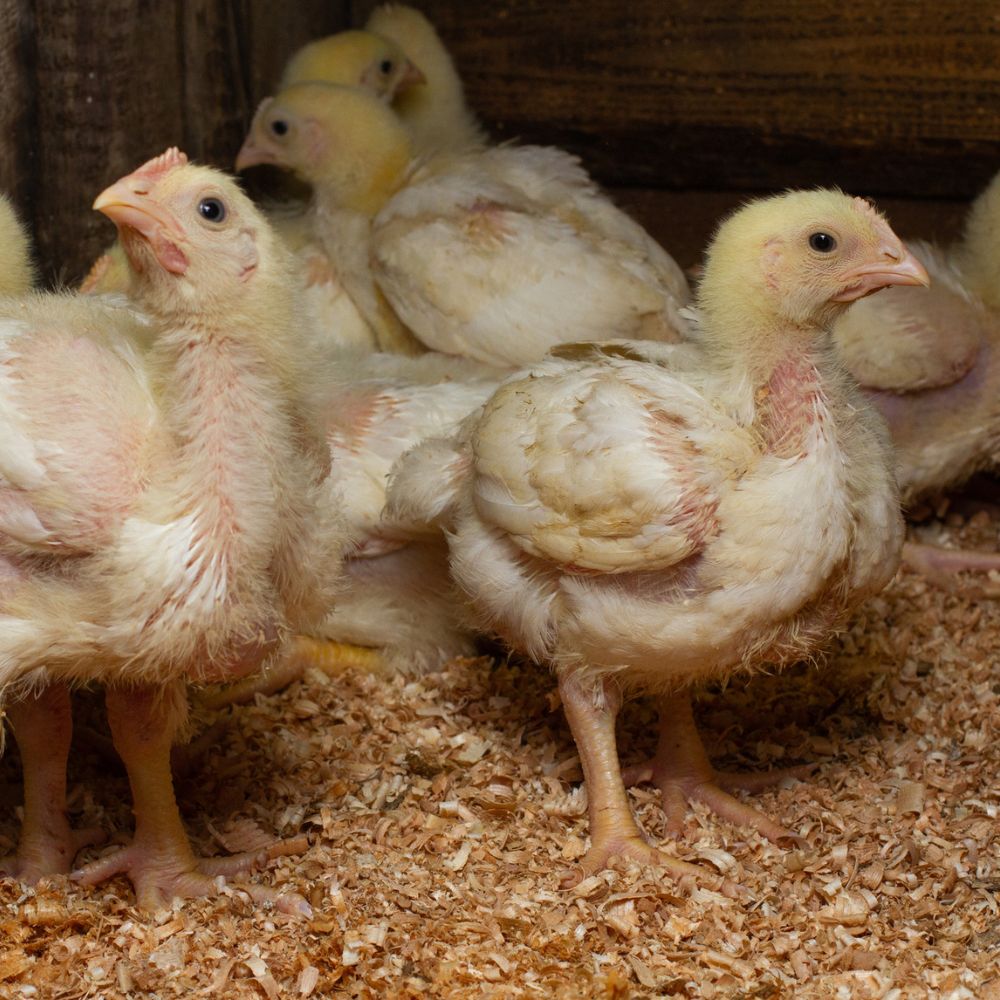
Cornish Cross chicken in brooder about 4 weeks old
Ugly 4-week-old Cornish Cross
Cornish hen baked and on a plate with garnish
Pretty 4-week-old Cornish Cross (aka Cornish Hen)

Where to Buy Cornish Chickens

If you want to add Cornish Chickens of any kind to your chicken wish list and are ready to add some to your shopping cart, they may be a bit hard to find. So I’ll save you a little time by sharing the top 2 hatcheries to buy Cornish varieties from:

1. McMurray Hatchery

McMurray Hatchery has a wide variety of Cornish and Cornish Cross chickens. They have Dark Cornish, White Laced Red Cornish, Jumbo Cornish X Rock, Cornish Game Hens (which are the Cornish Cross that you harvest as young birds), Cornish, and Cornish Roasters.

They have a 6-chick minimum order limit. Click here to find out more and check availability.

2. Cackle Hatchery

Cackle Hatchery doesn’t have all the same varieties as McMurray, but it a fine hatchery that carries Jumbo Cornish Cross, Cornish Bantams, and Dark Cornish chickens.

They have a more generious 3-chick minimum order limit. Click here for more info about hatch dates.
There are so many chicken breeds out there today that it may be easy to overlook this fast-growing heritage breed. New Hampshire chickens often get confused with the Rhode Island Red breed, which doesn’t help.

But New Hampshire chickens shine bright when it comes to being a great meat producer that also lays a good amount of eggs. New Hampshire chickens were crossed with Rhode Island Reds, which is part of the reason they look a lot alike.

Rhode Island Reds have stolen the spotlight over the years much like the older, prettier sister can do. But if you take a closer look at New Hampshires, you may scratch your head in wonder over this overshadowing.

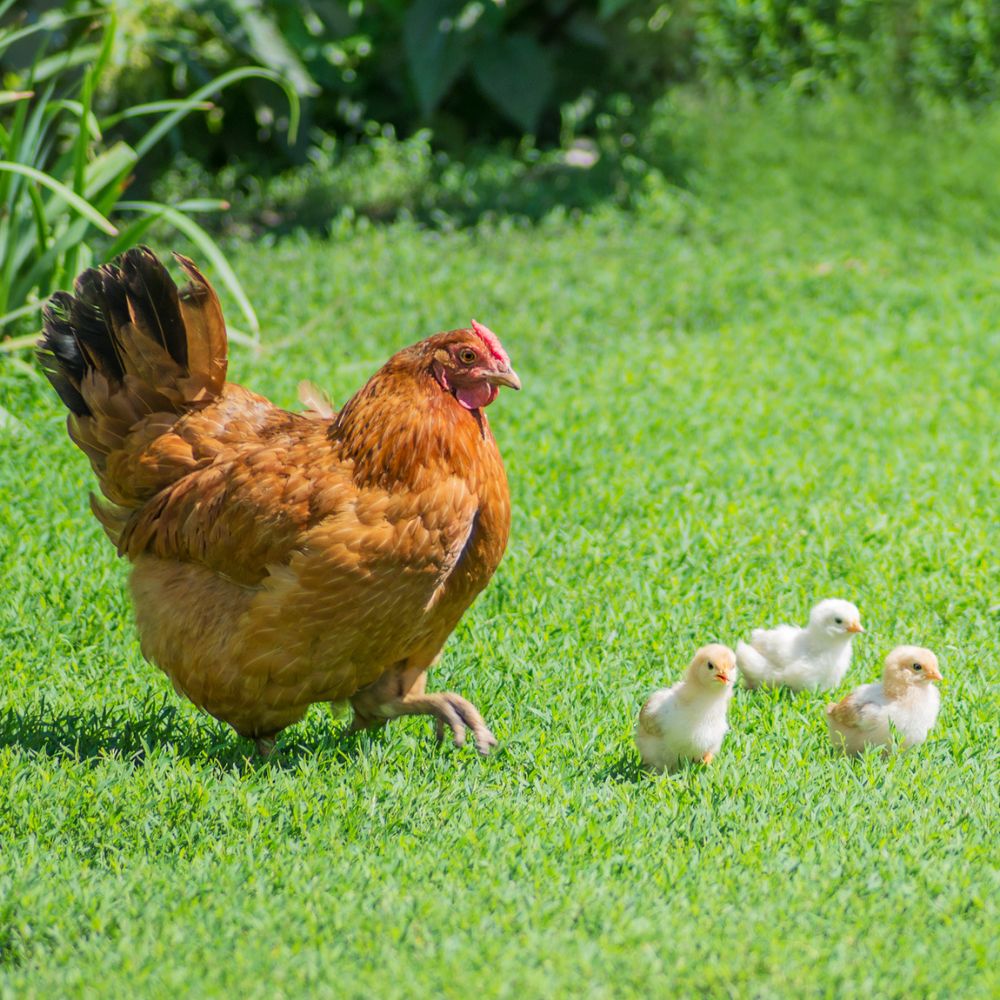
New Hampshire hen with chicks on green grass

Why Should You Want New Hampshire Chickens?

To fight for the underdog (uh hum…underchicken)! I love a good underdog success story, and the New Hampshire breed is a perfect candidate. Being overshadowed by the prettier big sister (Rhode Island Reds), the New Hampshire breed has a hard time getting their job skills out there for prospective owners to see.

So how do they shine? Well, for starters New Hampshire chickens mature faster than Rhode Island Reds (and many other breeds). They are also known for being a little more docile and friendlier that Rhode Island Reds.

Don’t get me wrong, Rhode Island Reds are good chickens too. But this post is dedicated to getting the word out about the “underchicken.”

History Snippet of the New Hampshire Chicken Breed

Why only a history snippet instead of a full history lesson? Simply because the history is short and sweet. The Livestock Conservancy says it best:

The New Hampshire is a relatively new breed, less than 100 years old. It was developed in New Hampshire and Massachusetts and is a separate strain of the Rhode Island Red. In the early 1900s, New Hampshire poultry breeders began to select hens from Rhode Island Red strains that feathered, grew, and matured faster. The breakthrough in the creation of this breed was made by Professor “Red” Richardson, who was working at an Agriculture Experimentation Station at the time. 

Basically, this breed was created by an intensive selection of Rhode Island Reds. After a lot of refinement, the breed was admitted to the American Poultry Association as its own separate breed in 1935. They are a heritage chicken breed.

Chicken of Tomorrow Contest

Have you seen the documentary “Chicken of Tomorrow?” Probably not, but it is fun to watch. I will give a fair warning, it was made in 1948 and that shows in many ways (in film quality and content). Regardless, it’s pretty interesting and worth watching.

I mention this documentary because New Hampshire chickens were entered into the National Chicken of Tomorrow Contest.

The world was changing rapidly — with the aftermath of World War II, along with the Baby Boom era, there was a great need to find a way to produce fast-growing high-protein meat. That’s when the broiler industry flew into action.

The country’s largest poultry retailer at the time, the Great Atlantic & Pacific Tea Company, created a competition to encourage breeders to create a chicken breed that could meet the demand. They offered a $10,000 prize — even today, that amount would be enticing.

The New Hampshire breed didn’t place first in the contest but it also did. Wait, read that last sentence again. It’s not a typo. You see, the breed did get noted for “best feathering.” But better than that, the grand prize winner was the result of Red Cornish males crossed with New Hampshire females!

In my award book, that makes the New Hampshire breed a clear winner. You can’t deny this was a big deal for the breed.

That wasn’t the only time New Hampshire chickens have shared the spotlight with another breed. Barred Rocks were crossed with New Hampshires to create the Delaware breed, which was once a top choice for broilers and for eggs.

New Hampshire Chicken Temperament

New Hampshire chickens are super friendly and docile which guides their daily behavior. They truly make great family pets. I’ve had a good experience with this breed in my own personal flock.

In fact, we named one of ours “Daddy’s best friend” because it followed my husband around all day. He was building a shop on our property and that sweet bird tagged along like an apprentice training on the job. My husband shared his lunch with his little feathered buddy on a daily basis and truly enjoyed the friendship.

They can be broody and are excellent mamas. The fact that they are good mothers is a plus if you want chicks, but don’t want to do all the work (or don’t have the time) of incubating and brooding them artificially.

Although they are very friendly, many of them do have one teeny tiny issue. Nothing in this world is perfect, right? Well, this breed tends to be food aggressive. They like their food and they are willing to arm wrestle (or wing wrestle) for it. But this is probably part of the reason they grow so fast, so have some grace for the piggies.

The roosters can get a bit protective during mating season but that’s pretty typical for many roosters.

New Hampshire Breed Appearance

Some people say they look a lot like Rhode Island Reds. And this is true in some cases. However, most usually they are easy to tell apart. New Hampshire’s are a chestnut or mahogany color (more of a light red, or slightly orangish shade), while Rhode Island Reds are a deep shade of red. You can even see the difference clearly as baby chicks.

Their neck and tail feathers are naturally adorned with black tips. It’s quite lovely.

They have a single comb that is medium-sized and yellow shanks. Their combs often flop to the side like a hip hairstyle. The comb, wattles, and long earlobes are all a red color (fashionably coordinated…nice). Finally, they sport a beak with a reddish color.

Females weigh about 6.5 pounds and males weigh about 8.5 pounds. They do come as mini-sized bantams as well.

Although the most common color is the New Hampshire Red, there are also Blue Tailed New Hampshires and White New Hampshires — both of which are extremely rare.

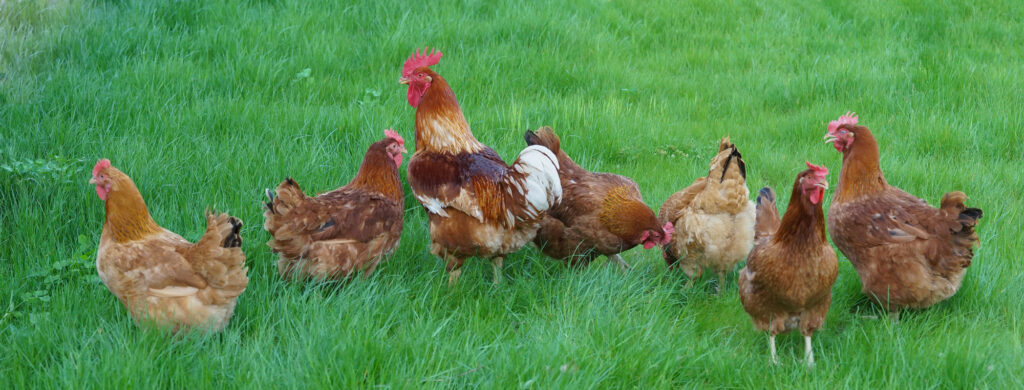
6 New Hampshire hens with 1 rooster on green grass

Egg Laying and Meat Production

Other than their friendly dispositions, this girl really stands out as a dual-purpose hen. According to Cackle Hatchery, a New Hampshire hen lays the same amount of eggs (on average) as a Rhode Island Red. Here I go again, comparing the two — but it’s hard not to.

The reason the egg-laying ability, of 200 to 280 brown eggs per year, is notable is that they are a fast-growing variety that is appealing for meat production as well. Being a good layer that also displays rapid growth makes them an amazing dual-purpose breed.

To be fair to the comparison breed (Rhode Island Reds), they end up weighing about the same. The takeaway is that New Hampshire chickens mature faster and that’s important when you consider the cost of raising a chicken for meat. Every pound of feed makes the end result, dinner, more expensive.

Are New Hampshire Chickens Hardy?

Yes siree Bob, they sure are. They tolerate cold weather early on due to their fast feathering feature and are full of vigor and vitality. They are great for both new and old backyard chicken keepers regardless of their climate (within reason, of course).

The only caution, as with all single-comb breeds, is to beware of the potential frostbite of the comb.

How to Care For New Hampshire Chickens

  • Protect them from an overload of parasites (look here for some of my favorite ways)
  • Provide plenty of fresh, clean water (give them warm water in the winter)
  • Feed your feathered friends a high quality feed
  • Be sure they are protected from the elements and predators with a good, sturdy coop
  • Let them free range if possible (it’s good for their diet and saves on feed)
  • Buy their love ♥️ with protein-packed treats (it’s a win-win proposition)

Summary

So, what do you think? Do you want to help a breed that is falling by the wayside, that has been overshadowed by another similar breed? Do you want a friendly, fast growing, dual-purpose chicken that is hardy? If so, this breed might be worth looking into.

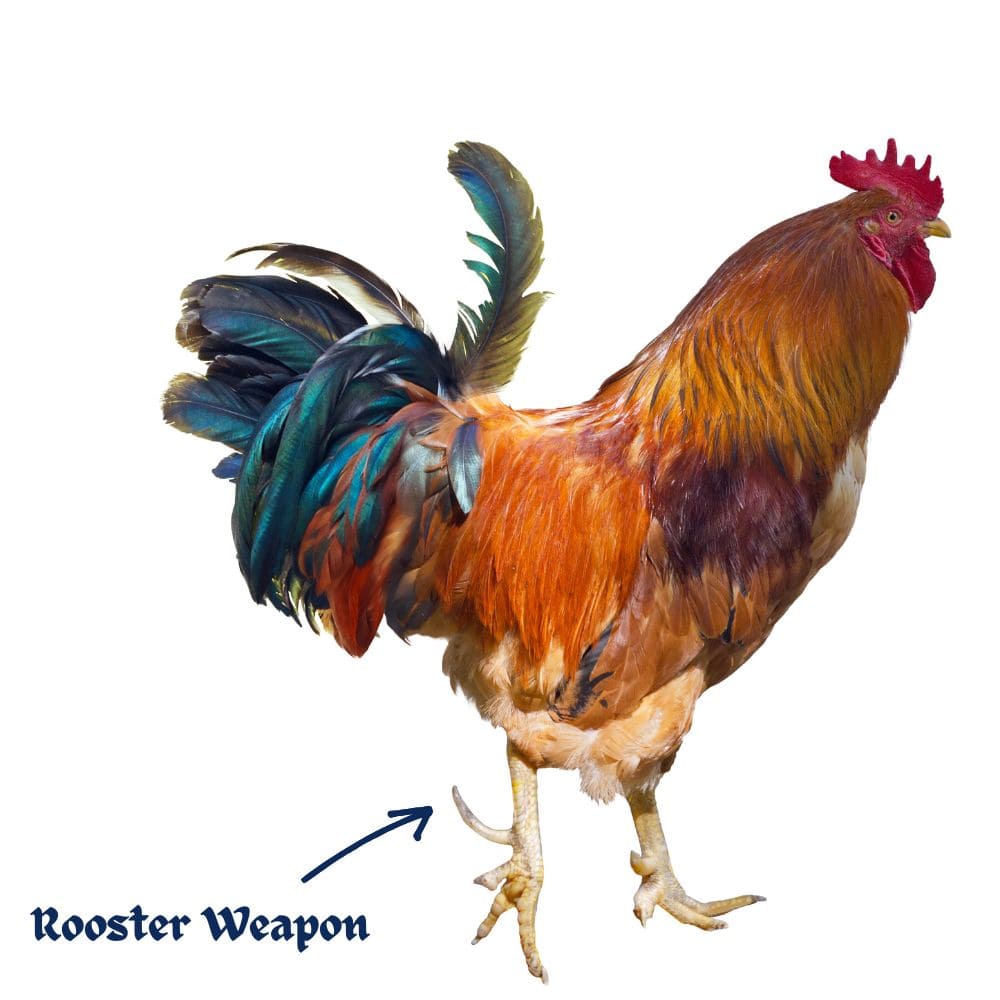
Rooster spurs are VERY intimidating to look at. And if you’ve ever been “spurred” by a rooster you will likely always be leery of roosters from then on out. I get it. They are scary, and they can hurt you.

However, most roosters use them for the protection of their hens, and not for attacking their owners. But that doesn’t mean you have to love them, or even have them. There are many things to consider.

Let’s dig into this subject and learn all about rooster spurs!

What Are Spurs Anyway?

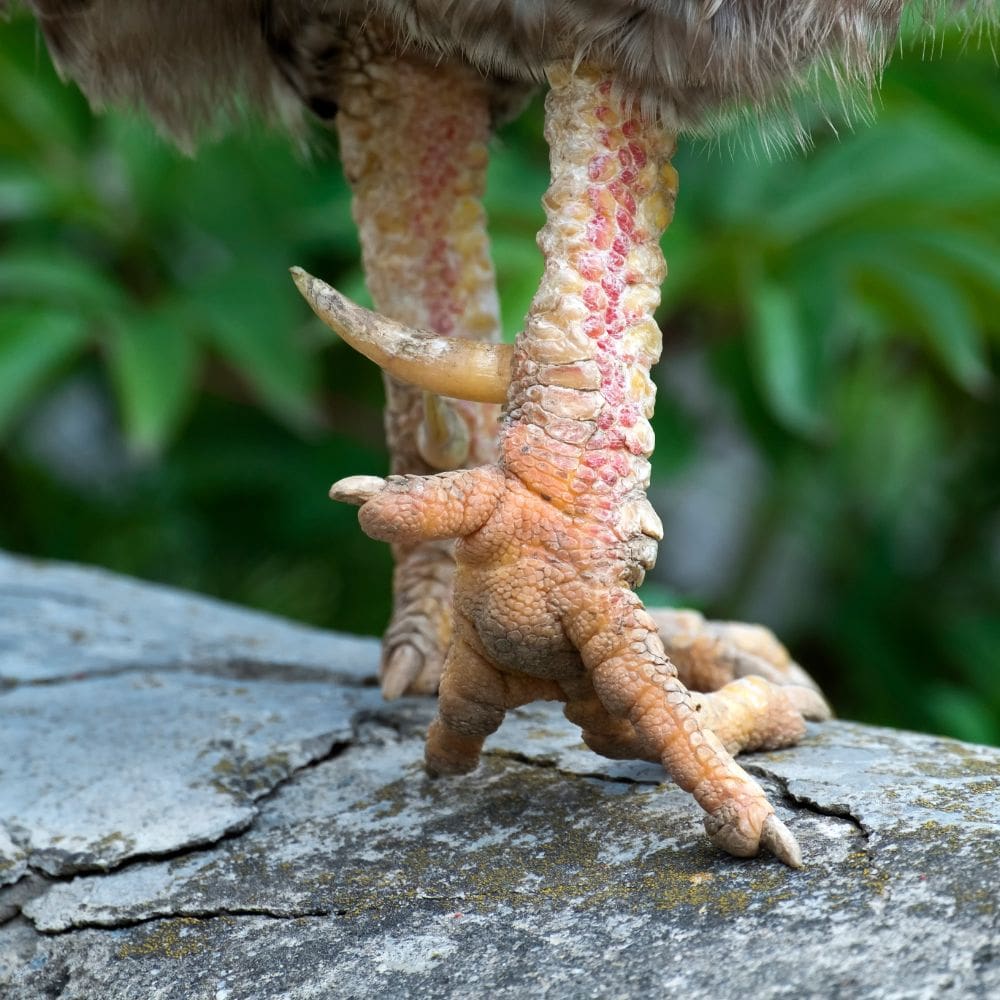
Spurs start as a spur bud on chick-sized roosters (and some hens). Many of them develop into large spurs, and sometimes they do not. Spurs are part of the leg bone and they are super tough. The spurs are wrapped in a hard layer of keratin (the same stuff their beaks are made of, our nails are made of, and rhinoceros horns are made of).

Rooster spurs DO have a purpose, other than intimidating their owners – they are protective weapons. Weapons attached to their legs…hmmm…handy indeed. And don’t think that the word weapon is too strong, they are just that. Roosters use them to hurt, harm, and even kill predators or fight off other threats to them or their ladies (like a rival male).

If you have any roosters that do their protective job well, be sure to reward them with a sweet treat (chicken style)! It’s the way to their hearts.

Do All Roosters Have Spurs?

No, not all…but most do. However, the rate at which they grow and their final size varies greatly. There is no standard schedule or size. Usually, a rooster that grows spurs has them on both legs. But sometimes they only have one that really grows. At times they will start to grow and then fall off.

A female chicken can have spur buds or even full-grown spurs, although it is less common than that of roosters.

Because of all these variables, you cannot sex chicks with spur buds or even grown spurs.

Can a Rooster Protect Hens Without Spurs?

Yes, they can. Roosters have claws that are pretty much weapons as well. If a rooster feels threatened, or if his ladies are threatened, and his protective nature kicks in – then watch out. Some roosters will fight to the death with, or without, spurs (especially if you have an aggressive rooster). Obviously, spurs can be helpful but they aren’t the only weapon in his arsenal.

up close rooster spur with greenery background

Can Rooster Spurs Be Removed?

Yes, they can. Many people think you should remove them at a very young age. The theory is that the smaller the spur, the less traumatic it will be to remove them. It’s much like disbudding a goat kid compared to cutting off their horns as mature goats.

Others claim it’s not that traumatic to remove them even once the rooster is fully grown. But these are human opinions made by humans who have never had spurs removed 😉.

The big question is – do you REALLY need to remove them? Perhaps, if you have had a bad experience with a rooster spur. Or if you have a rooster that is starting to show aggression.

The thing to remember is that they can still harmfully attack with their claws, even if the spurs are removed. Yes, one of the weapons would be removed and that would increase your chances of avoiding unnecessary wounds and possible infections caused by such wounds.

How To Remove Rooster Spurs

As for HOW to remove them, there are many methods. Here are a few to consider.

  • Heat up a potato and press the hot potato onto the spurs and let it heat the spurs up for a bit. Then clip the spurs off with a sharp tool. This sounds weird, but it’s an actual method called the potato method.
  • File them off with something like a Dremel tool.
  • Break the spurs off with a pair of pliers.
  • Use clippers to cut them off.

The biggest caution is to not clip or cut or file them too close to the bone or you might cause significant bleeding (much like when you cut a human fingernail). If this does happen, use corn starch or styptic powder to help stop the bleeding.

If you just can’t stand the thought of removing a rooster’s line of defense, you may want to consider just trimming them to keep them from being as dangerous.

In the worst case scenario, if you really want to take the spurs off – but just don’t want to do it yourself – you can have a veterinarian remove them. Although, in many areas, vets don’t even take chickens and roosters as patients (cold-hearted non-chicken-loving vets 😆).

Should I Remove My Rooster’s Spurs?

There is no right or wrong answer to this question. It completely depends on your animal husbandry philosophy, your specific rooster, and your environment.

Top 5 Things to Consider Before Removing Spurs

#1 What Breeds of Roosters Do You have?

As you may already know, there are many different kinds of chicken breeds. Some are super friendly and docile, some are not. If you have a breed known for being a bit aggressive, then you likely have the potential for a aggressive rooster or two. If you have a an aggressive rooster that you want to keep around, then you might consider removing his spurs for your protection.

#2 The Personality Factor

Regardless of the breed you have, you also need to take into consideration the individual personality of your rooster. Even if the breed is not known for being docile, your rooster may be friendly. Perhaps you handled him a lot as a chick, or perhaps he just doesn’t fit the standard personality for that breed.

Many times your rooster is just playing king of the coop, and what may be interpreted as aggressive is actually just a show. You will have to be the judge of that taking all the different aspects of your rooster into consideration.

There’s no reason to feel like you have to remove your rooster’s spurs if he’s kind and doesn’t misuse them.

#3 Your Personalized Environment

Do you live in an area where you are constantly fighting off chicken predators? If so, then you may need your rooster to have his spurs as protective weapons. Sure he can fight off some things without his spurs, but they do come in handy when the fighting gets tough.

Another thing to consider is children. Do you have small children running around, that may or may not be pestering your rooster? I do. I have a son that sometimes thinks it’s fun to pester our rooster and then run from him. Of course, I tell him not to and we are striving to teach him to be kind to our roosters. But he’s a wild child running free on our land half of the day, and things happen.

If you free range your flock, you will likely need to have a rooster with a protective weapon (spurs).

You need to take your personal surroundings and situation into consideration. Apply common sense and make the best decision for you and yours.

#4 Respect Your Roosters

When you talk to your rooster, be sure to call him “Sir” and maintain good eye contact with him. Okay, I’m kidding. But there is a real respect you can learn (and teach your kids about). Unless you have a naturally aggressive breed, most roosters will not bother people, or even other roosters, unless they feel threatened.

I show respect to our roosters by being calm around them, walking around them instead directly at them, giving them treats from time to time, and not flustering their hens in front of them. I also try to teach my kids these principles too.

You can sense when a rooster might be feeling threatened by his body language. So be alert and back off if you see the need.

As a side note, if you give your rooster lots of love and attention when they are chicks and while growing up – you will have a much better chance of having a friendly rooster. So be sure to be generous with love, treats, and other good eats.

#5 Rooster Hen Ratio

Another simple thing you can do is keep your rooster hen ratio in check. If you end up with too many roosters per number of hens, you will have fighting roosters. It’s how they are built and there’s no amount of rooster therapy that will fix this.

You either need to separate the roosters and allow them each to have their own set of hens, or perhaps rehome some roosters. Too many roosters in the mix will cause problems with duelling males as well as over-mating.

Summary

Whether or not you keep or remove your rooster’s spurs is up to you. If you have a rooster you love and don’t want to get rid of… AND you are afraid of his spurs – then maybe it’s ok to remove them. If you have an aggressive rooster that isn’t really using his spurs for good, it may just be a good idea to rehome him.

Learn more about dealing with an aggressive rooster by reading this article we wrote about that topic.

Call Ducks fit the bill (no pun intended) if you’ve ever wanted a stuffed animal to come alive and be your pet. It’s truly one of a kind.

They are off the charts on the adorable scale. There isn’t a kid (or any critter lover) out there that could pass up a cute little Call Duck as a pet. They are bantam-sized and look like they waddled right out of an animated Pixar flick. I know, I’ve already convinced you in just a couple of sentences…but follow me to the pond for a few minutes to learn all about this special little friend.

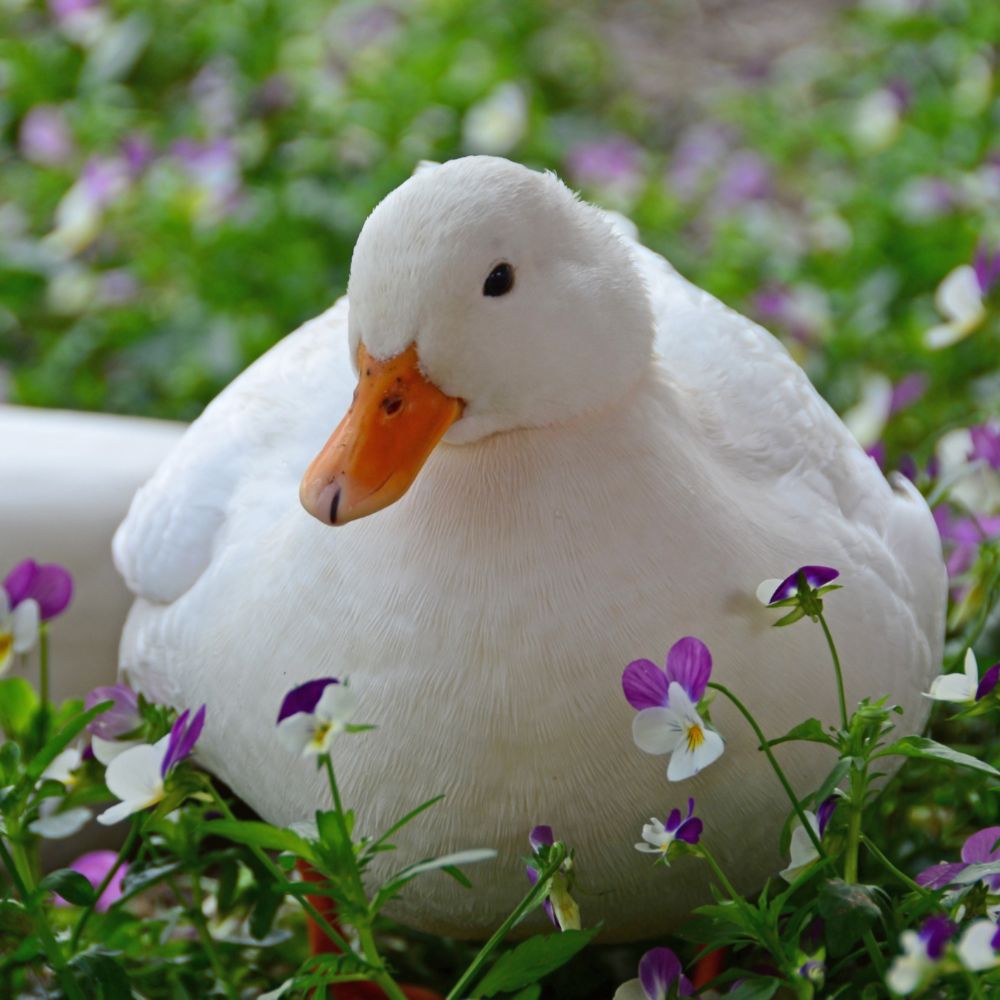
Call Duck sweetly laying in grass and little wild flowers

What Do Call Ducks Look Like?

Call Ducks are simply delightful in appearance. They truly do look like stuffed animals. They are bantam-sized, which is basically a miniature in the fowl world. Bantams are often a smaller version of a full-sized chicken or duck. In this case, Call Ducks are a true bantam – meaning there isn’t a large version.

These cute little ducks are not only small with a very compact, oval body shape, but they have a short bill too. You may not even realize it until it’s pointed out, but the short beak is one of the things that makes this breed so cute. Their feathers also appear fluffy, which just adds to their stuffed animal look.

The feature that most makes them look like an animated critter is their eyes! They look like little glass beads you would find on a teddy bear. Your heart will be captured in an instant.

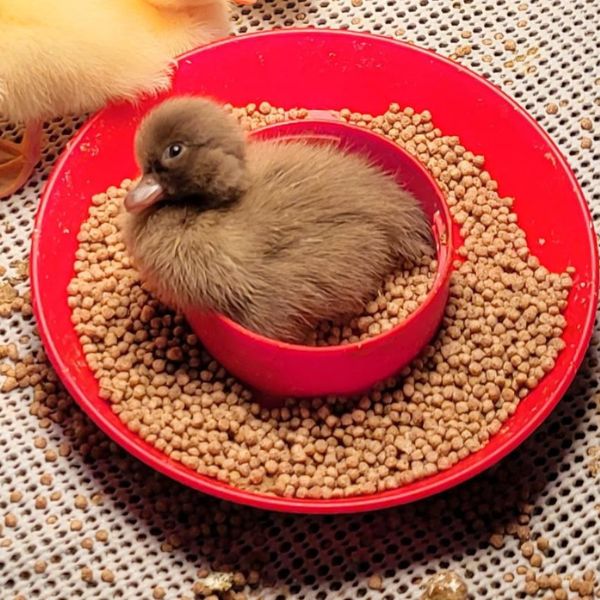
Call Ducks are so small that their weights aren’t even regularly listed in pounds, but rather ounces! Hens weigh around15-20 ounces while drakes weigh about 19-25 ounces.  Call Duck ducklings are so incredibly tiny, you can hardly believe they are real.

The most popular color is white, but there are many other colors out there. Black, dark silver, bibbed, apricot, chocolate, blue fawn, magpie, and more.

Call Ducks History Snippet

The most common theory is that these ducks originally came from East Asia back in the 1600s, but we cannot be 100% sure of that. We can be pretty sure that the breed was introduced to Great Britain sometime in the 1800s.

Call Ducks are closely related to Mallard Ducks, and you can see the similarities if you compare them side by side. The history of Call Ducks is a little sad to me. Probably because I’m not much of a hunter personally. The name itself is derived from a Dutch word that means trap (and you can probably guess what comes next).

Call Ducks were regularly used as a decoy in hunting. They have a very high-pitched call that travels long distances, and this was cleverly used to lure larger wild ducks into a trap by hunters. Of course, this required the Call Ducks to be tied in place near the trap or within shooting range of the larger breeds.

The US Fish and Wildlife Service refers to this process as baiting. Baiting for waterfowl (duck decoys) is prohibited in many states.

What Are Call Ducks Used For Today?

They are mostly ornamental, just plain fun to watch run around. Call Ducks are commonly used for pets and for show. Apparently, they quite regularly win show championships! If you have the desire to show waterfowl, then you might want to look into this breed.

Call Duck Temperament

I mentioned that these ducks look like they waddled right out of an animated Pixar movie. Well, their temperament is pretty much that of a cartoon character as well. They are as sweet and docile as can be. A lap duck if ever there was one for sure.

Call Ducks are not known to be flighty or skittish like some other duck breeds. Good for both young and old alike, they make a great family pet.

Chatterbox extraordinaire – apparently they have a lot to say. They also like to “call,” as their name indicates. If you think this may bother you, be sure the duck house is not right next to your bedroom window!

Also, if you live close to a neighbor that doesn’t want to hear your ducks chatting it up and calling, then you should move (okay, I’m kidding…but you might actually like these ducks even more than you like your neighbors)!

Brown Call Duck Duckling in feed dish looking really cute

Call Duck Eggs

So here’s the scoop. I can’t make a case about Call Duck egg production being great. They do lay eggs though. The reports of how many eggs per year are all over the place – from about 50 up to 150. I guess you’ll have to get some Call Ducks and experiment yourself to find out.

Duck eggs are usually larger than chicken eggs, but since the Call Duck is miniature – their eggs are sized more like that of a chicken. And yes, you can eat them.

Their eggs are most often white but can be shades of blue and green as well.

Fast Facts About Call Ducks

The Good:

  • They are adorable (as I’ve already mentioned countless times).
  • They are adorable (oops, I already said that…didn’t I?)
  • They are very cold hardy.
  • They are heat tolerant.
  • They lay eggs.
  • They are photogenic.
  • They are good with kids… and adults that act like kids.
  • They are a great choice for showing waterfowl.
  • They like to clean themselves…a lot!

The Not So Good:

  • They are very small and noisy (the females) which makes them a target for predators (and annoyed neighbors)!
  • They like to hang out by your feet (you have to avoid stepping on them).
  • They have a loud call which is noisy (but you can always wear ear muffs 😉).
  • They are too small to be a good dual purpose breed.
  • They lay eggs, but not a hefty amount (which circles back to not being a great dual purpose breed).

Caring For Call Ducks

Feed

Take good care of your sweet little pet with high quality feed like Pampered Chicken Mama’s 16% Premium Layer Feed With Black Soldier Fly Larvae, Fishmeal, & Herbs. It’s soy free and has high protein. It’s far superior to common farm store feed.

You should also provide some kind of grit to help them grind and process food in their gizzard. Oyster shells will act as a grit and also provide extra calcium which they need during laying season.

And finally, it’s a good idea to give your duck friends vitamins and minerals, especially since our soil these days is lacking in such things.

Water

Provide lots of fresh water for your mini ducks. They love to swim in water but they also need to drink plenty of fresh water. Water and ducks go together like peas and mashed potatoes, or burgers and fries.

As for swimming, a pond is best. But if you don’t have a pond, you can also use a kiddie pool or large farm tub or tin bathtub or any number of other creative ideas. I have a friend who dug out a spot that looked like a large mud puddle for her ducks.

If you use a pool or tub, you will need to clean it out every few days to keep it safe. If you create a mud puddle, you will want to add water regularly to keep it fresh.

Provide Shelter

Ducks need a coop or shelter of some kind. They don’t roost like chickens, but they still need a place out of the elements and safe from predators.

Call Ducks are tiny, defenseless little creatures – so free ranging them is a little challenging if you live in a predator heavy area. You will need to keep this in mind. Plenty of people successfully free range this breed, you just need to be mindful of your particular set up.

If you decide to keep them in a run, be sure they have plenty of space. Despite their small size, they still need about 12 square feet per duck to be super happy.

Also, be sure they have water to drink and water to play in.

Girl hugging Call Duck with grennery in garden background

Love 💕

Give these precious additions to your critter collection lots of love. But I doubt I have to tell you this one! They love attention. They also love treats – you can find some of my favorites here. There’s nothing better than giving treats that have a purpose. These are not like candy suckers that banks try to hand out to your kids, these treats are packed full of nutrients that will keep your ducky healthy.

Final Call (clever, I know)

Was I right? Are they adorable, miniature, and irresistible? You be the judge.

Want to learn about another adorable duck breed? Read all about Runner Ducks here.

Sometimes we get stuck in the norm and forget to expand our horizons. Quail eggs are little nutritional powerhouses that simply don’t get enough mainstream recognition. Let me show you how these eggs are small but mighty!

Quail are delightful little birds with many purposes. I didn’t know much about quail until well into my adult life. Learning about keeping quail and how to use their eggs was a very interesting endeavor and I’m excited to share this journey with you.

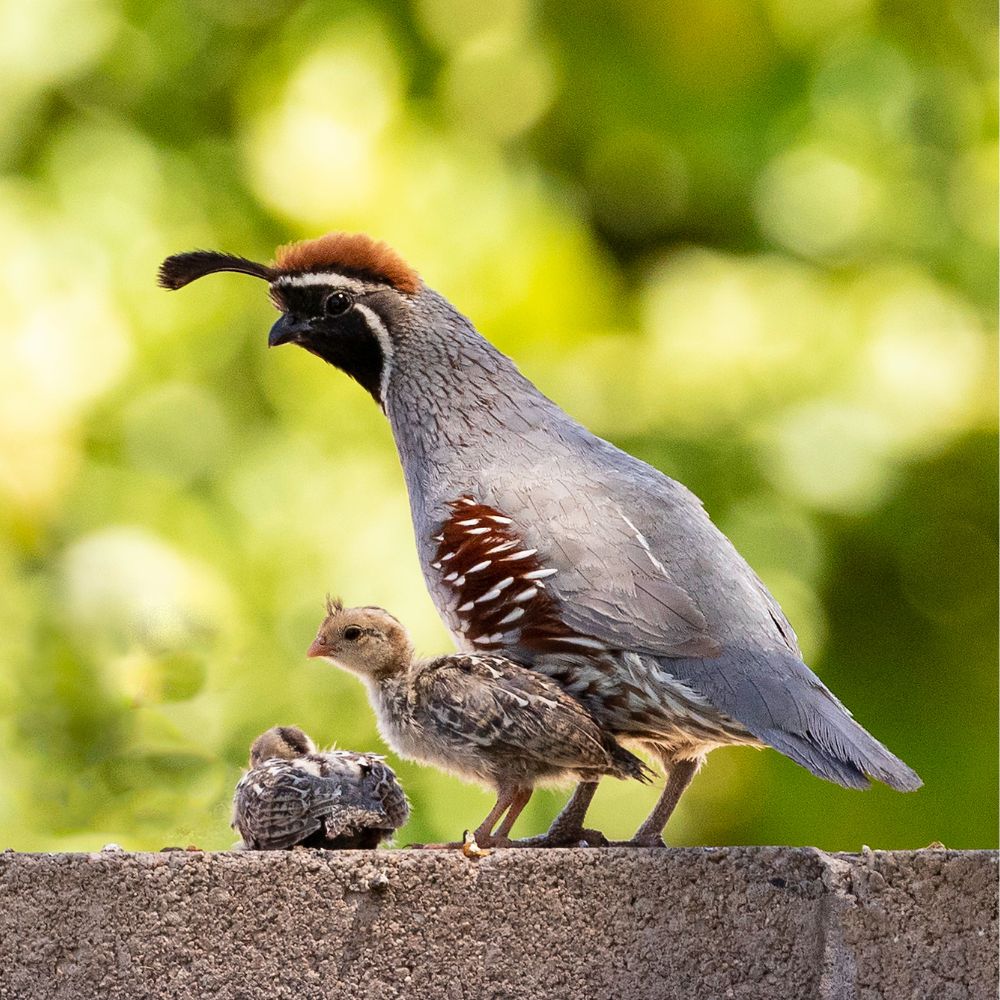
Quail Hen Up Close With Two Baby Quail Chicks

Quail Antics

We will mostly be talking about quail eggs in this article but I would be remiss if I didn’t tell you a thing or two about the bird that produces the eggs you’ll be using.

Quail are adorable for starters. They are comical and quirky and just plain fun little pets. Quail are not known for high IQs, so they won’t be helping your teens with algebra or anything like that. 😉

Aside from being cute, they are also quieter than chickens (they don’t crow like roosters). They chirp more like that of a parakeet or other house bird. If you live in a place where you can’t have chickens, quail may be a good fit. They also grow quickly, which is a plus if you are looking for a dual-purpose bird as well.

These little quirky birds are social creatures and do not like being alone in their coop or cage. They need a buddy, you’ll need to keep that in mind.

There are several different species of quail. Some of the quail species are Common Quail, King Quail, Japanese Quail, and Northern Bobwhite Quail (and many others beyond this list). If you decide to get quail you will want to do your due diligence on which one suits you best.

Nutritional Value of Quail Eggs

I get it, I’m not the first one to volunteer to try chocolate-covered grasshoppers or escargot. In fact, I may be the last one in line. But we all eat eggs, and quail eggs are just little chicken eggs in essence. They are packed full of nutrients and that is the biggest draw for eating these little powerhouses.

It’s not that quail eggs are significantly more nutritious than chicken eggs, although they do exceed chicken eggs in some categories. The deal is, you either have quail or want quail and this information will help you understand the hidden benefits of these pets. Eggs!

Quail eggs and chicken eggs, if compared gram for gram, are pretty much neck and neck except for when they aren’t! Quail eggs have significantly more iron and B-12. In fact, one quail egg provides a good portion of your vitamin B-12 daily value needs. That’s great.

However, they also have more cholesterol than that of chicken eggs. but don’t judge that too hastily because 60% of the cholesterol is the good kind that our bodies need.

Quail eggs are smaller so you have to eat more of them to equal the same amount as a chicken egg (approximately 3 quail eggs to 1 chicken egg). An interesting thing about quail eggs, which contributes to their extra nutrients, is that their yolk is proportionately larger than the white portion compared to a chicken egg. And the yolk is where most of the vitamins and minerals are found. The white contains most of the protein.

Both quail and chicken eggs are full of nutrients (including choline, selenium, riboflavin, folate, phosphorus, iron, and several vitamins). You can learn more scientific information about the nutrition of quail eggs here and about chicken eggs here.

Of course, it goes without saying that the nutritional value of the egg is affected by what the quail are eating. Be sure to feed them quality feed and treats.

What Do Quail Eggs Look Like?

On the adorable scale, they rate a 10. They are super fun to gather, especially for kids (or those of us that are kids at heart).

Quail eggs are a creamy light brown color with little brown speckles randomly placed all over the shell. They are quite pretty. They remind me of wild bird eggs, or (better yet) candy eggs!

The shells are usually pretty hard due to a very thick membrane, thicker than a lot of chicken eggs. The inside of the shells can be a bit surprising with a hint of a blueish color. That’s fun. And the eggs you are thinking about eating look just like a smaller version of a chicken egg.

Quail eggs are a little over an inch long and about one inch wide.

What Do Quail Eggs Taste Like?

Pretty much like a chicken egg, but with a little more yolk than white (proportionally). That being said, it has a richer flavor. Just imagine a chicken egg with an extra dose of yolk. Since I love the yolk and tolerate the white part, this is good news for me!

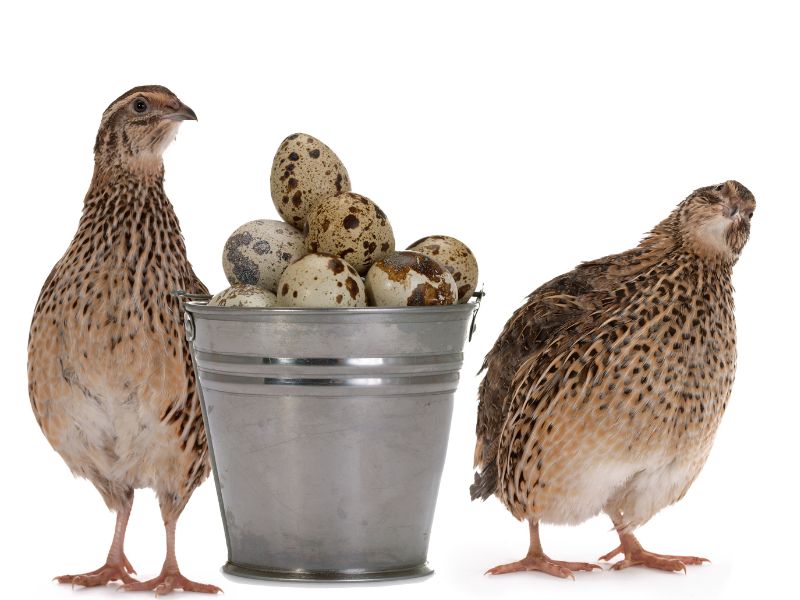
Two quail hens with bucket of quail eggs

Why Eat Quail Eggs?

Look, I’m not getting paid by the “National Eat Quail Eggs Association!” Nor am I a traveling quail eggs salesman. I’m just informing you about all the wonderful things you might want to know about quail eggs. You are looking for some information about their eggs after all.

If you are going to own quail, for either a pet or meat or training hunting dogs, you might as well utilize their eggs as well. And eggs in general are packed full of vitamins and minerals. Quail eggs (as well as chicken eggs) have every vitamin a body needs except for vitamin C. Impressive. And if quail eggs are equal to, or greater than, chicken eggs – then you should probably use the eggs if you have them.

There are many claims of health benefits of quail eggs. So let’s hop to it and see what a few of those are.

Potential Health Benefits of Quail Eggs

May Reduce LDL (bad cholesterol)

Even though quail eggs have more cholesterol than chicken eggs, more than half of that is HDL (good cholesterol). There are studies that show that this good cholesterol can actually lower the bad cholesterol. Nifty. Common sense says this would potentially lower the chances of heart-related ailments.

May Help People With Anemia

Anemia is when you have an issue where you do not have enough healthy red blood cells to properly carry oxygen to your body’s tissues. There are many reasons a person may face this issue, and symptoms include fatigue, weakness, dizziness, and headaches.

Quail eggs are very high in iron, and iron is the mineral needed to combat many certain types of anemia.

May Reduce Chances of Cancer

If you’ve been around for any amount of time, you have heard that antioxidants fight free radicals (cancer-causing cells). But what you probably haven’t heard is that quail eggs are full of antioxidants! Put two and two together, and you can see why eating these cuties is beneficial.

May Help With Some Allergies

There is a protein by the name of ovomucoid. This is a protein that serves as an anti-allergenic. This natural protein can help your body with inflammation and congestion which happens with many allergic reactions.

May Help With Hyperglycemia Related to Diabetes

According to several studies on lab rats, quail eggs had significant positive effects on hyperglycemia and glucose levels. These studies show promising uses for these eggs as a natural aid in managing diabetes as well as related kidney disorders.

More Benefits of Quail Eggs

But wait! There’s more! There is quite a lengthy list of the potential benefits of quail eggs. Everything from fighting depression to skin and hair care, plus the other benefits I’ve already mentioned. A simple internet search and you will have several days’ worth of reading on the subject. I highly recommend doing so if you are wanting to get quail, or already have quail.

I’m Not a Medical Professional

I am certainly not a medical professional or even an expert on the medical benefits of quail eggs. This article is not intended to be used as medical advice. Rather, it is to inform you about the potential benefits. As with all eggs, they should be eaten in moderation. And consult your doctor with any questions!

At the end of this article, you will find a list of references used in the writing of this article. If you are genuinely interested in learning more about the studies I’ve mentioned, there is a lot of interesting information in the provided links.

Top Uses For Quail Eggs

These adorable specialty eggs are used for many culinary reasons, but mostly in countries other than the United States. They are considered to be a delicacy in Japan and are used in sushi. They are regularly used in countries like Indonesia and South America. In many places, they are pretty common and even used as topping for things like hamburgers.

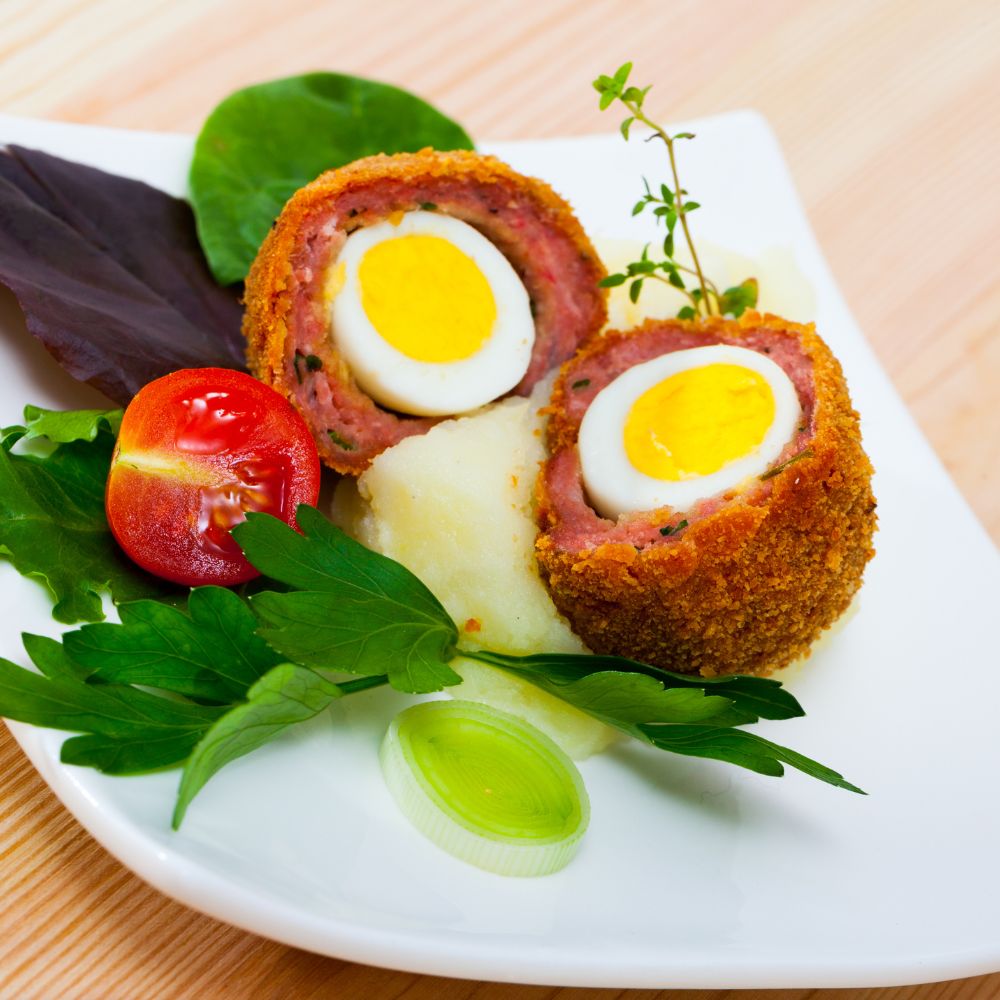
Scotch eggs are a fun and delightful dish that calls for eggs. It’s basically eggs wrapped in sausage, breaded, and then fried. It’s making me hungry just thinking about it.

Scotch Quail Egg on plate with garnishes

If you are a culinary wiz, learning about specialty eggs may excite you. You can find many special recipes that incorporate them. If you are not a chef, and more of a cook – there are plenty of uses for you as well. You can use them in any way you would regularly use chicken eggs for starters.

A super common use, and one that sounds appetizing, is simply hard-boiling them. They are adorable, and super snackable, a size that makes them great finger food. These hardboiled snack-sized powerhouses are also appealing on a salad. You can use them for egg salad, or even tiny deviled eggs!

They can be fried, baked, scrambled, poached, and more. Or use them as soft-boiled eggs. The options are endless.

I will warn you, the shells are much harder to crack than a chicken egg. Some folks used a sharp paring knife to cut them open. This may be a deterrent to some people. They can be just as tricky as a chicken egg to peel once hardboiled. A tip for all eggs is to let them sit in cold water for a few minutes before peeling. On the upside, they take a lot less time to boil than chicken eggs because of their small size.

Summary

Quail are not only great pets, among other things. But they are useful too. Much like a chicken you can gather their eggs and find many uses for them. In my book, it’s always great to have an animal with multiple uses. The fact that you can easily eat quail eggs made them a reasonable pet to have around my place.

References

Healthier Quail Eggs – Diabetes Anemia
Healthline – 6 Reasons Why Eggs Are the Healthiest Food On the Planet
National Library of Medicine – Metabolic effects of quail eggs in diabetes-induced rats: comparison with chicken eggs
Organic Facts – 9 Surprising Benefits Of Quail Eggs
WebMD.com – What to Know About Quail Eggs
Stylecraze – Quail Eggs: 18 Important Health Benefits, Nutrition, And Side Effects
National Library of Medicine – The Golden Egg: Nutritional Value, Bioactivities, and Emerging Benefits for Human Health
Healthline – Quail Eggs: Nutrition, Benefits, and Precautions
US Department of Agriculture – Egg, quail, whole, fresh, raw
US Department of Agriculture – Egg, whole, raw, fresh
National Library of Medicine – Bioactive Egg Components and Inflammation
National Library of Medicine – Effects of quail egg on kidney functions in alloxan induced diabetic Wistar rats
Research Gate – Effects of Various Concentrations of Quail Egg Solution on Glycemia and Antioxidant Parameters of Alloxan-induced Diabetic Rats
National Library of Medicine – BioActivities of Coturnix japonica (quail) egg yolk and albumen against physiological stress


Black Copper Marans are becoming all the rage for folks seeking unique colored eggs. But do they really lay chocolate eggs? Follow me to the end of the rainbow to find out, plus a whole lot more!

I am one of those chicken lovers who not only loves to watch chickens of all colors roam my land but also loves to gather a whole rainbow assortment of eggs. So, naturally a Black Copper Maran, with all the talk of chocolate eggs, caught my attention. I will say I was a bit disappointed when I realized they were not milk chocolate Easter eggs! 😉

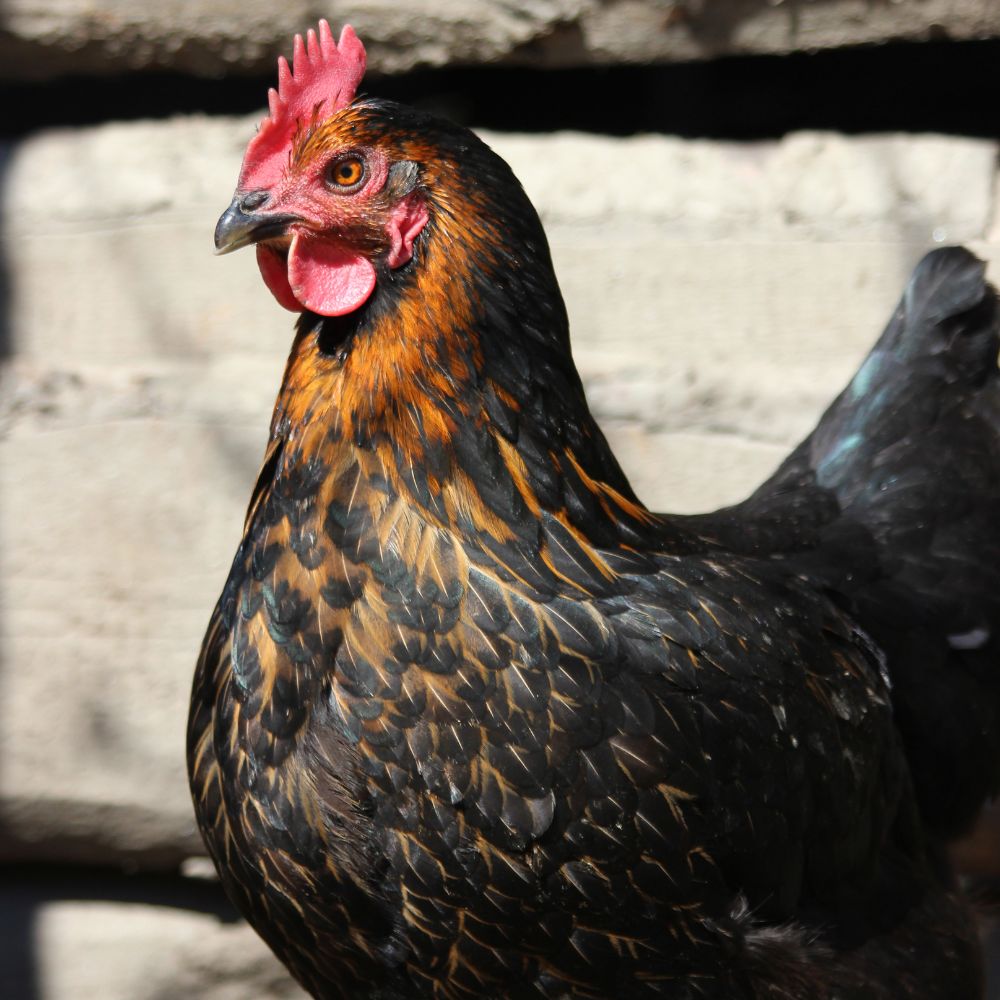
Balck Copper Maran Hen Close Up of Plumage and Eyes

Black Copper Maran History

“Parlez-vous français?” (Do you speak French?) No? Neither do I. But Black Copper Marans might. We can track their heritage back to the Marans and the La Rochelle areas of France. Ooo la la!

Apparently, these areas of France are a bit swampy geographically speaking, which is why this breed started out being called “swamp chickens.” Not something you really want to brag about, but we all have little things from our past that we don’t shout from the rooftops, now don’t we?

Don’t worry, they eventually got a new name – “Marandaise Fowl.” That’s an improvement from swamp chickens. This slightly newer model was created by crossing the swamp chickens with fighting game birds that sailors brought with them to France from India and Indonesia.

After that, the history is a bit foggy (or shall we say…swampy), but whatever breeders crossed them with worked a bit of the fight out of the game bird portion of this breed. Some believe that breeds like the Croad Langshan, Coucou de Malines, Faverolles, and Gatinasie. were used. But alas, we will likely never know for sure.

And we now have the brave…the beautiful…the useful…the French Black Copper Maran.

Black Copper Maran Appearance

“Belle!” (Beautiful in French) Absolutely beautiful is what they are! They have a body full of black feathers. Sometimes they have a lovely greenish shimmer to them, especially in the sunlight. They have a single comb and wattles that are red in color.

The feathers around the neck (otherwise known as hackles) are a delightful copper color. This is the color that really sets them apart.

Copper Maran roosters also have this copper splendor, but not only on the neck feathers! This exquisite copper color is also present in his saddle feathers (the long flowing feathers near the tail). It’s a sight to see this plumage throughout.

The females might be a bit jealous of their male counterparts, but so it is in the bird world.

Black Copper Maran Chocolate Eggs – Fact or Fiction?

I love, love, love gathering an array of eggs. I’m simply not satisfied with a basket full of all white, or all light brown, or even all dark eggs. I MUST have a huge variety of colors. And so, the Black Copper Maran shows up on my radar.

I’ve heard they have dark chocolate brown eggs. Hmmm…sounds enticing. But it also sounds far-fetched, and it is in reality. Yes, they can have dark brown eggs (and perhaps described as dark chocolate eggs). But they usually lay eggs from a light red shade all the way to the dark brown color they are known for.

The reality is that only the first few eggs laid in the season will (or CAN be) a darker brown color. With each egg they lay, the color will lighten up a bit. At the end of their laying season, they can be a lot lighter. And then the cycle will start all over again.

I have to admit, learning this reality of their egg color was not what I wanted to hear. However, they are still very pretty chickens with the potential to lay some pretty dark-colored eggs. So let’s not throw in the towel. Marans eggs are still good eggs regardless of their color.

If you do have hens that regularly lay the darkest eggs (the ones we are all wanting), they will also be the hens that lay the fewest eggs. This is because the eggs get lighter (as described above) with each egg laid. The more eggs laid, the lighter they will be. The fewer eggs laid, the darker they may be.

Just remember, if a gypsy shows up on your street selling Black Copper Marans, touting their abundance of dark chocolate colored eggs – beware! You’ve been warned. 😉

How Many Eggs Do These Beauties Lay?

Black Copper Marans lay up to 200 eggs a year. That’s not bad egg production. As we have already discussed, the color of the eggs will range from a light red shade all the way to a dark brown shade.

If you want to have the best eggs ever, then try Best Eggs Ever! It will change your egg lovin’ life!

Are Black Copper Marans Good To Eat?

Yes, Black Copper Marans are good to eat. They are considered to be a dual purpose breed. The males weigh about 8 lbs and the females weigh about 6 1/2 lbs.

Have you ever heard the saying “You are what you eat?” Well, there is a lot of truth to that. What we feed our animals is very important when you consider eating their eggs and their meat. Be sure to feed them high quality feed and good treats that support them nutritionally.

Are There Other Varieties of Marans?

Yes, there are. But the Black Copper Marans are the most popular. With 9 recognized colors in the French Maran category there are Birchen, White, Columbian, Wheaton, Black-tailed Buff, Cuckoo, Golden Cuckoo, Black, and (of course, Black Copper). There are other colors that are not official.

Marans can come in an adorable bantam size as well, but those are even rarer than the full-size versions.

This article is only highlighting the Black Copper variety. But a fun fact about Cuckoo Marans is that they look much like a Dominique or a Barred Rock.

Black Copper Maran Rooster Close Up of Plumage and Eyes

What Personality Type are Black Copper Marans?

Remember when I said the early version of this breed included fighting game birds? Well, that was mostly bred out of them as time went on. But, there is still some of that DNA present and it shows up a teeny tiny bit with temperament. It’s not that they aren’t friendly, but they also aren’t going to show up on the top 10 friendliest chicken breed list.

Black Copper Marans like to forage and roam. Free ranging is best suited for this breed. They can get a little irritable if they are cooped up, especially if they don’t have an adequate run.

On a super positive note, they are clean freaks. They have been known to avoid randomly pooping all over laying boxes and they don’t seem to sit in dirty places much either. This is a trait I wish all chickens had!

Is This Rare Breed Hard To Find?

This breed is considered to be a rare breed, and it can be a bit hard to find.

An import ban reduced the genetic diversity of the French Black Copper Marans and flocks of this chicken are therefore hard to find. Cackle Hatchery® carefully breeds this chicken to improve genetic diversity and advance the health of the chicken.

Cackle Hatchery

Hatcheries, like Cackle Hatchery, have limited quantities of this breed, so you might have to be patient if you so desire to order some.

Is the Black Copper Marans Chicken the Right Fit For You?

Black Copper Marans are beautiful birds. More importantly, they are hardy. They are also decent egg producers and can be used for meat. Not lap birds by any means, but still friendly and docile enough to enjoy.

If you are aiming for the possibility of dark chocolate brown eggs and like the other traits mentioned, then you might try adding this breed to your flock. But remember, you might have to be patient when ordering this rare breed.