Have you ever wondered what the difference is between a raven and a crow? To be honest, the thought never even crossed my mind until recently. I simply called all big, black birds crows. These two birds look similar and share many common characteristics.
But, what sets them apart? Let’s explore the differences between these two mysterious black birds: Raven VS Crow!
Ravens VS Crows
The first thing to understand is that ravens and crows are both members of the Corvidae family – commonly referred to as corvids. This family also consists of other birds such as jays, magpies, nutcrackers, and more. While crows and ravens are closely related, they have a few distinct traits that make them unique.
Ravens are much less common than the common crow (which is probably why crows are more familiar to my brain). In this article we are talking primarily about common ravens and American crows (also called common crows).
Raven VS Crow Physical Differences
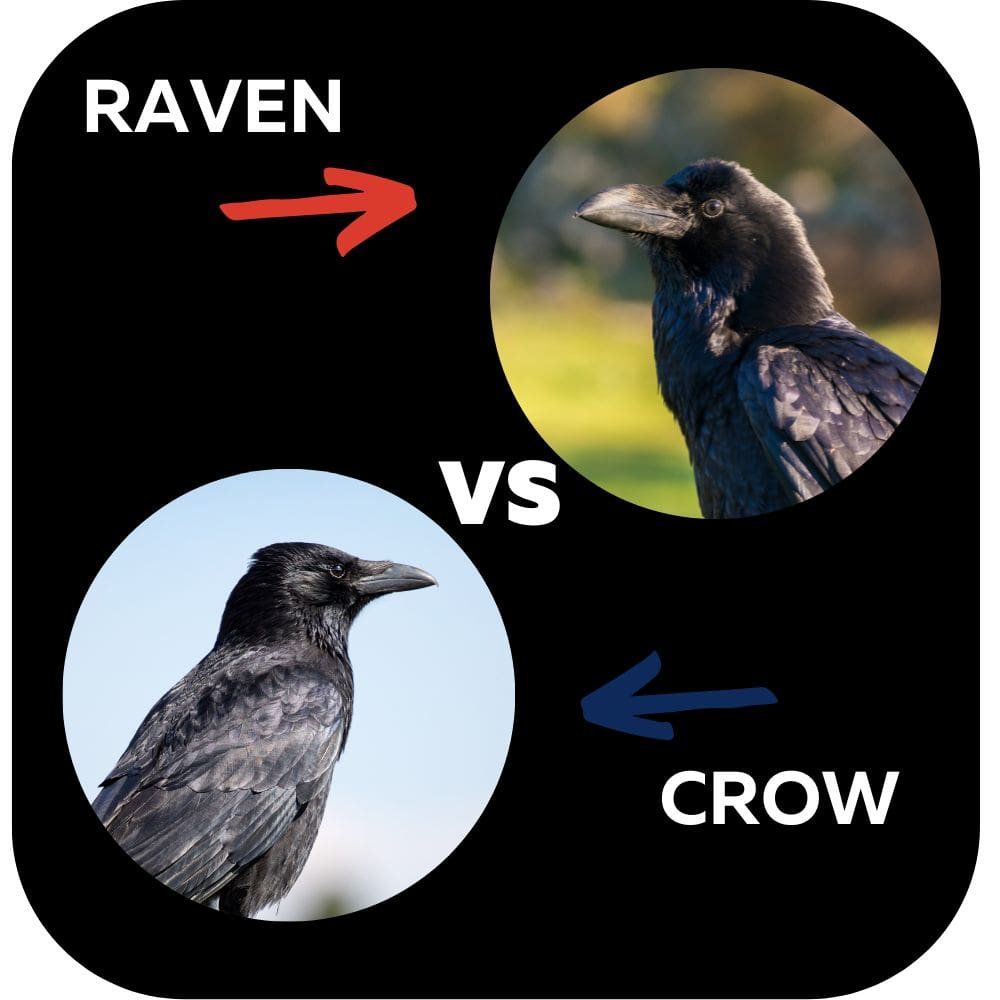
One of the most obvious differences between ravens and crows is their size. Ravens are larger in size than crows with a wingspan up to 4 feet – often compared to the size of red-tailed hawks. They also have thicker bills (or beak) and wedge-shaped tails. In order to compare their tails, you really need to look at their tail feathers when they are in flight.
Crows, on the other hand…uh hum…on the other wing…are smaller in size than ravens, their wings are only about 17 inches long. They also more square or fan-shaped tails.
Ravens tend to have shaggier throat feathers than that of a crow as well. In fact, they generally just have a more shaggy look.
Both the raven and the crow have iridescent greens, blues, and purples throughout their plumage. Male and female ravens and crows resemble each other greatly.
Raven VS Crow Calls and Sounds
Ravens make a deep croaking sound, high-pitched sounds of alarm, and a low raspy sound. The raven calls can be heard for over a mile.
Crows make a variety of calls, including a cawing sound and a high-pitched chirping sound. They have more than 20 crow calls which is impressive. The most common is the stereotypical caw we all know and love…or hate. Their caws can be all different lengths and pitches, and all the variations have different meanings.
Human Interaction
Ravens are quite intelligent and have been known to interact with humans in a variety of ways. They can even learn to problem-solve and mimic human speech. Watch this amazing video of one of the cutest ravens you ever did see.
Before you get to cheering for ravens in the battle of the birds, you should know that crows are also known to be quite intelligent and interact with humans in a similar fashion to ravens. They can also mimic human speech. Weird thought. It’s quite amazing.
The raven’s intelligence is pretty much matched by the intelligence of crows. The battle of the birds is truly a neck and neck race. Here’s a famous crow that will wow your wonder.
Behavioral differences between Ravens and Crows
Ravens are solitary birds and do not usually gather in large flocks as often as crows do. They are also known to be more curious and can often be seen exploring their environment.
Ravens are said to be more aggressive than crows. Ravens will attack and prey on other birds, while crows tend to avoid confrontations. However, if they are protecting their young they aren’t immune from dive bombing the threat (human or otherwise).
They will both be found eating human garbage, small mammals, reptiles, insects, earthworms, amphibians, and…of course…carrion (dead animal flesh).
Habitat differences between Ravens and Crows
Ravens are found in grasslands, forest, and mountains while crows are often seen in urban settings.
Ravens can tolerate up to -58 F degrees! These hardy Northerners just earned a point in my book.
But again, crows hold their own in cold weather. Take a look at this defense mechanism. So cool.
Crows can go into a state called torpor. They lie on the ground with their bills half-open when sunning themselves. This is actually a state of unconsciousness where their core temperature drops approximately 10-12 degrees. This causes the breathing and heart rate to drop and the bird’s body then needs less energy to maintain body temperature.
Can you tell the difference between a raven and a crow now? It might be a challenge since they are so much alike.
Just remember the biggest differences are in their body size and beak shape. Watch the two video’s I included above and it will help. Heck, you might even want one of them as a pet bird after watching.
If it peaks your pet bird interest, but you aren’t quite ready for such a wild ride, then you might consider quail. They are adorable and easy to care for. They may not talk, but they are full of spunk and personality. If you want a talking bird, that is a beginner bird, check out parakeets!
You can also read about some pretty special chicken breeds that make great pet birds too, click here.
Know what a broody hen is? Do you want your hen to hatch chicks? Or do you want a lot of eggs for eating? It’s something to consider and plan for either way.
In this post, you will learn what having a broody hen means, how to encourage and help if you want, and how to hinder (or attempt to stop) it if needed. Plus some fun-loving broody stories you don’t want to miss!
What Exactly Is A Broody Hen?
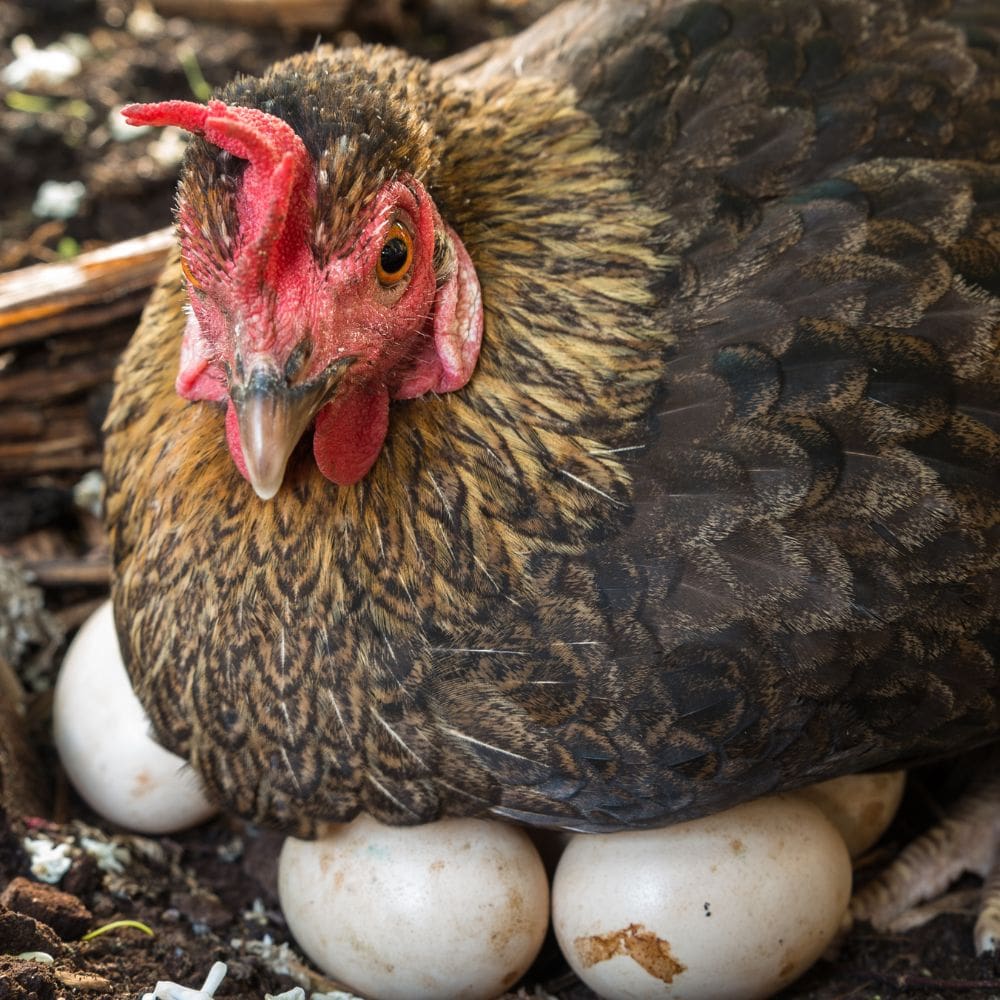
When a hen goes “broody” it means she wants to hatch some chicks. It also means she will want to sit on eggs and stay there for the vast majority of her time for 21 days (or more) in a row in order to incubate the eggs.
It sounds precious, but broody hens are usually pretty darn serious about their job of sitting on their eggs. They can get downright mean about it. A broody hen will likely peck you and squawk and do just about anything to stay on those eggs and keep you away.
I can relate. I recall walking around in life happily content as a childless woman until one day…one day something inside me changed and I had a strong desire to have a baby. All my mind could think of was “must have baby now!” 😆Mama hens act the same way when they go broody. Their natural instinct and hormones kick in and you better watch out!
But chickens aren’t people (I know, some of us chicken lovers would happily debate that), and people who own chickens have to make the decision to let their hens hatch chicks or not. So let’s take some things into consideration.
How Do I Know If My Hen Is Broody?
It’s actually quite easy to know, and once you know…you know – if you know what I mean! You’ll go to your chicken coop to gather eggs and you’ll see one of your darling flock members in the nesting box but she won’t want to come out to greet you like normal.
You think to yourself “hmmm I wonder why she isn’t getting out of the box now…oh no, is she sick?” And then you’ll reach in to gather the eggs she’s sitting on and she will surprise you with aggression. She will NOT get off the eggs and you will NOT take her eggs (according to her).
She also might pull out some feathers to “nest.”
And there you have it! You have yourself a merry little broody hen.
Should I Let My Broody Hen Stay On Her Eggs?
This is a choice you will need to make for your hen since you are the chicken boss! Here are some things to think about:
Do you have a rooster? This is a big one! If you don’t have a rooster you won’t have fertile eggs and there will be no chicks no matter how long she sits on them. Even though you might be tempted to let your hen sit on the eggs, because it makes her happy, it will result in rotten eggs and a disappointed hen.
When your chicken broods, she will stop laying eggs. So if eggs are what you want, then you’ll need to try and break her desire for hatching eggs. Not to mention, other chickens can be influenced by her broody behavior. This will result in you having a talk with your chickens – “if all your coop mates jumped off a bridge, would you jump off the bridge too?” 😉
If you want your hen to produce chicks, then you’ll want to allow her to brood. But there are very important things to know before doing this! More on that next.
How To Help a Broody Hen Be Successful
If you decide you want to give it a try and let your happy hen live her dream of motherhood, there are things you need to know.
I’ve had several successful runs at letting hens hatch eggs and raise the chicks. I’ve also had a few attempts that turned out in tragedy. Here’s what I learned…
Nesting Location
My success stories were 100% based on the coop setup. I had a moveable chicken tractor with an upstairs and a downstairs (the downstairs was bottomless and that’s where the chickens hunted and pecked at grass and bugs). Upstairs is where they went to visit their nesting boxes.
My nesting boxes were level with the floor so the chickens didn’t have to jump up to get in the boxes. When a hen went broody, I simply closed off the opening to the ramp so she couldn’t go downstairs anymore. The rest of the hens just had to stay in the lower section while I kept the upstairs closed off for a while.
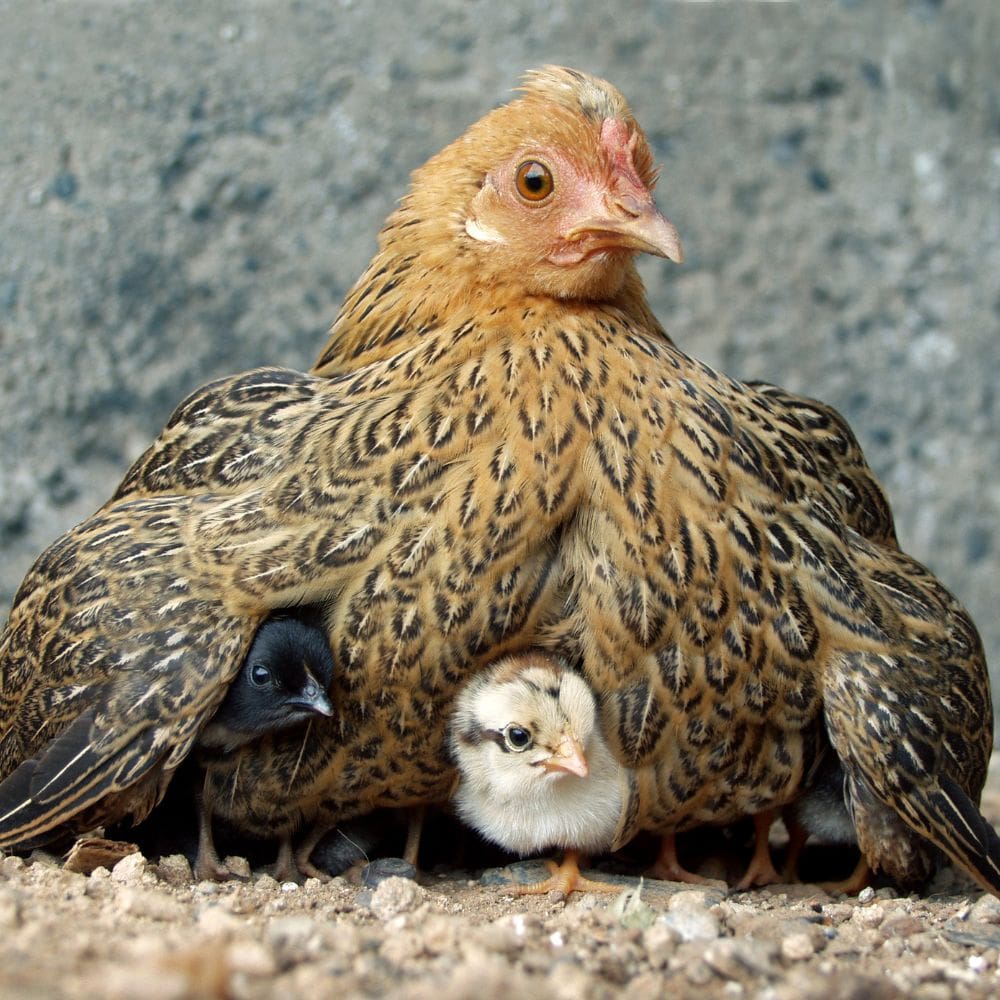
When she hatched chicks, there was no chance the chicks could fall out of the nesting boxes (or down the ramp because it was now closed off), and the chicks could also follow mama hen around and access food and water. It worked beautifully this way, and not just once but with many broody hens.
Well then, we moved and I sold that chicken tractor. I upgraded to an amazing barn with two separate coops, both with a set of nice laying boxes. But the laying boxes are up off the floor so the chickens have to jump up to get into them.
The result is that when they hatch chicks in the boxes that are up off the ground, the chicks fall out and die from being too cold or get pecked to death by other chickens. Even if that wasn’t the case (which it would be), when they are in the nesting boxes up off the ground the chicks cannot follow the mama to get food and water. This also results in death.
Relocating Hen With Eggs
I had a crazy broody hen sitting on eggs in nesting boxes that were up off the ground. I knew that wasn’t good because, as stated above, when the chicks hatch they fall out of the boxes and die one way or another. They also cannot get to food and water.
So, I took the eggs from my broody girl every day…for many, many, days to try and redirect her (so she would lose the broody urge). A couple of weeks went by and she was just plain determined to hatch those eggs. There was nothing I could do to stop her from trying. So I had mercy on this wanna-be mother hen and decided to move her and her eggs to a safe, ground-level nesting area.
I worked very hard to make her space inviting and comfortable…I even hung up a curtain so it would be dark and private like they prefer. And then I moved her eggs quickly, followed by moving her into her new safe space. And guess what she did? Do you think she laid on those eggs and sent me a thank you card? Heck no!
She screamed (I had never heard a chicken scream before, but she definitely screamed) over and over and over again and ran from one side of the pen to the other…back and forth, back and forth. And she didn’t sit on the eggs for even one second. She panicked at the change and she completely freaked out. So, I moved her and her eggs back to the box that was doomed for death.
She hatched those eggs and I knew what was going to happen next. So I built an extension to her nesting box so I could at least put food and water in it so the chicks could access it. But the space was too small and she trampled a couple of the chicks. I ended up removing the chicks and putting them in my brooder inside the house under a heat lamp.
Hmmpfh. If only chickens could reason. The moral of this story is YOU CAN’T RELOCATE A BROODY HEN WITH HER EGGS!
Other Tips To Help Your Broody Hen
Mark the Eggs
Your broody hen will likely completely stop laying eggs. But her coop buddies won’t (unless she influences them to also be broody). The hens that are still laying will take any opportunity they have (when your broody girl gets out of the box for just a minute to get a drink and a snack) to lay more eggs in the nest.
This doesn’t sound like a problem, but it is. The reason it’s a problem is that the eggs will then be at different stages of development. When the first group of eggs hatches the mama will not sit on the remaining eggs and the little chick embryos will die. The solution to this is to take a pencil and make an X on the eggs in the beginning. Then check each day and remove any eggs that don’t have an X.
Easy enough? Well, not so fast. Remember your broody hen will likely be aggressively protecting her eggs. You might have to wear gloves (or an armored suit 😉) to get the eggs out. Also, you will need to leave all the eggs alone for the last three days of the 21-day cycle because the eggs shouldn’t be turned during those days.
Prepare the Space
Be sure your mama hen has access to food and water during sitting and hatching. Preferably pretty close to where she is sitting on eggs so she will be sure to stay hydrated and nourished while she sits. She’ll love you all the more, and be healthier for it if you give her protein-rich treats in the box too. Click here to see my favorites!
After she hatches eggs, you need to be sure the chicks can also easily access food and water in order for them to survive. The mama doesn’t feed them like wild birds feed their young. I remember having a successful hatch and being so proud. And then that night, while trying to sleep, I sat straight up in bed and thought…how are the chicks eating?
I quickly remembered that the mama doesn’t take care of this and I ran out to the barn to provide food and water where the baby chicks could access them. It’s a bit embarrassing to share this story, but if helps just one person and their chicks – it’s worth the red cheeks. 😳
Number of Eggs Your Hen Can Sit On
While there isn’t a magic number, there is a good guideline. Your hen can sit on approximately 12 eggs at a time with success. This is using the standard of her own personal egg size – meaning a bantam can sit on 12 bantam-sized eggs, etc.
To my surprise I found one of my broody hens stealing eggs from another box and moving them to her box to sit on! No kidding! It was a sight to see. I had no idea a chicken could do such a thing, but I saw it with my own eyes. I thought about contacting America’s Got Talent but decided I didn’t want to deal with the paparazzi. 😁
So be sure to check the eggs daily and remove any you haven’t marked (see this explained above).
How Many Days Will Your Hen Sit On the Eggs?
It typically takes 21 days for a hen to hatch chicks. Interesting side note, if you incubate eggs, it will be precisely 21 days. When a mama hen incubates eggs it can vary. This is because she is incubating in less certain conditions. The eggs have to be at a specific temperature and humidity to grow.
When a hen is sitting in various, fluctuating temperatures and humidity percentages – things are a little less predictable. It can take up to 30 days in some cases. In my experience, it usually takes about 25 days when I let the hen incubate. Just remember not to touch the eggs at day 18 and on (it can prevent the chicks from being able to peck out of the eggs).
The first time I allowed a hen to be broody, I thought we failed but I held out just in case I counted my days wrong. Truthfully, I knew I didn’t but I was sad about the eggs not hatching. And on day 25 I got a big surprise and boy was I thrilled!
Lice, Mites, and Other Parasites
If you do let your hen go broody she will basically be sitting in one place for 21 to 30 days. This will make her more susceptible to getting an overload of lice, mites, and other parasites.
If you have an incubator you can just incubate the eggs yourself. While that is a fine option, and I’ve done it many times, it doesn’t solve the issue of your hen being broody. She’ll just keep sitting on eggs every day in hopes to be a mother…unless you take other steps to hinder her from being broody. Click here to learn about that).
Beyond that, there are still some things to think about. For one thing, it’s a lot less work for you. If you set it up right, the chicken can incubate, hatch, and raise chicks. It’s also less expensive and less time intensive because you don’t have to run and monitor an incubator for 21 days. And you don’t have to clean up the incubator, which is a BIG job).
In addition to that, if you let the mama raise the chicks – you don’t have to keep an electric hogging heat lamp plugged in for weeks. You also don’t have to clean up the brooding box every day. You will have to keep the coop clean if the mama is raising the chicks. But let’s face it – it doesn’t call for the same kind of cleaning as a brooder box does.
All that to say, if you are lazy (or efficient), letting the mama hen do all the work is a great option. That being said, incubating eggs and brooding the chicks yourself is more predictable and easy to plan. It’s just a lot more work.
How to Hinder a Broody Hen
You might be yelling “But wait, I don’t want chicks! I just want my eggs!” If that’s the case here are some steps you can take to possibly redirect your hen. Warning: It’s a natural instinct that is hard to hinder.
Remove your broody hen from the nesting box and take all the eggs while you are at it. Do this several times a day. She may get tired of it and decide it’s not worth it. Some breeds are broodier than others, so this may or may not work.
Put a frozen water bottle under her. It may sound mean because it is. 😣However, it might just do the trick.
Change her location if possible. Move her to another coop or shed or cage for a few days. The disruption might get her mind on something else. Also, if the new location doesn’t have an inviting nesting box she may not find it suitable to brood.
Take all nesting material out of the nest box to make it an uninviting atmosphere. The problem with this method is that it may also deter your hens from laying eggs in the boxes.
Of course, there are many more breeds but this list will get you started.
What Chicken Breeds Are NOT Especially Broody?
If you already know you simply don’t want broody hens, you should consider buying hens that don’t usually go broody. Here are a few to consider. Keep in mind it’s pretty safe to target hybrid chickens because they were developed to be high egg producers that don’t go broody.
Should you let your hen sit on eggs or not? You have to decide what is best for you and your chickens. The most important thing is to be knowledgeable and prepared either way. And if you read this article then you are already doing your part to learn and prepare.
In the whole scheme of things, it doesn’t really matter what you decide. So take a deep breath and choose whichever path you want to choose. And don’t forget to give your chickens lots of love! 💕
There’s probably not a person around who doesn’t know who Donald Duck or the AFLAC Duck is. Did modern television make the Pekin duck popular, or did the breed make these well-known characters popular? We may never know. I suppose it’s a bit like the chicken and the egg – and the age-old question of which one came first?
It’s really neither here nor there — the point is that the Pekin duck is a favorite indeed. Let’s learn some of the reasons why!
Top 5 Reasons The Pekin Duck Is So Popular
#1 Super Friendly Quacker
The Pekin duck is known to be sugar and spice and everything nice! They are very friendly ducks and therefore, great for families of all kinds. They won’t sit in your lap while you drive to the grocery store, but they can learn to come up to you for treats!
#2 Hardy Helpers
Pekin ducks are not only very hardy, but they are also amazing helpers. They do very, very well in both hot and cold climates and they are easy keepers. These friendly waddlers also do a fine job of eating weeds and pests (like worms, crickets, and mosquitos).
#3 Quiet and Cute
For ducks, this breed is relatively quiet – all the while being extremely cute. They are silent, but they aren’t super annoying either. The females are louder than the males, however. The volume level is low considering and any noise they do make fades away because they are just so incredibly cute. They almost look like they are smiling. 😍
#4 Egg-erific
These girls are some terrific egg layers. They produce about 125 to 225 beautiful extra-large eggs per year. So get your baking apron on and go to town! Chicken eggs are great, but ask any French chef and they will tell you to use duck eggs!
#5 Meat Maker
If you just want a pet you can pass right over #5, but it is one of the winning points for this breed. It finds itself listed on the biggest duck lists all over the place. They were bred for both meat and eggs and it is the most popular market duck for sure. I personally can’t eat these cuties, but the word on the street is that the meat is great tasting.
What Does a Pekin Duck Look Like?
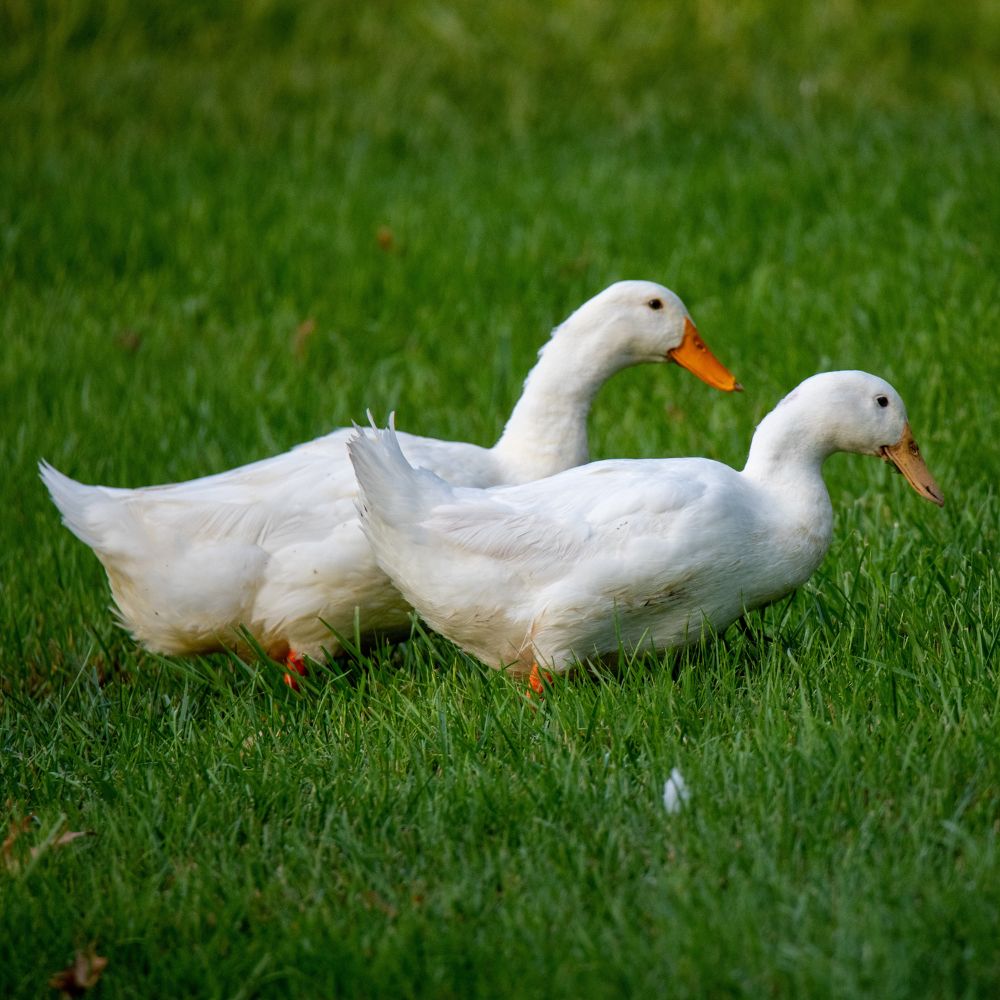
If it looks like a (Donald) duck and it walks like a (AFLAC) duck, then it’s a duck….a Pekin duck that is. Both Donald Duck and the well-known AFLAC duck that has won so many hearts are modeled after the Pekin duck. I suppose the Pekin duck is about like the White Leghorn chicken breed – it’s what we relate to when we hear “chicken.”
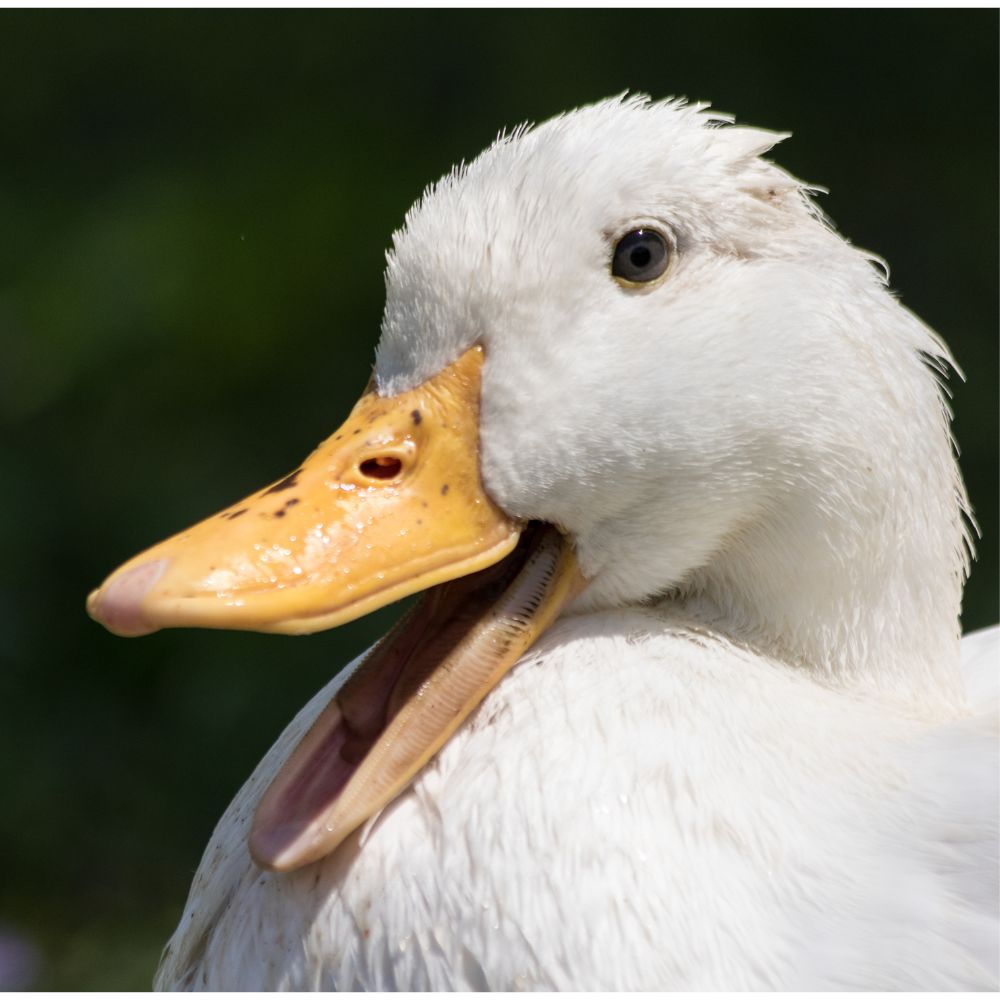
Pekin ducks come in one color only – white! They are white and fluffy and have orange feet and a yellow bill. The bill is sometimes a little speckled. Amazingly enough, the ducklings hatch out yellow – but they always end up with all white feathers.
They are large and in charge (in charge of your hearts). The males, otherwise known in the duck world as drakes, weigh in at about 9-10 pounds. The Pekin hens weigh around 8-9 pounds. There is a jumbo variety, and Jumbo Pekins are…well…JUMBO! They can weigh a whopping 13 pounds. Duck for Thanksgiving anyone?
Male or Female?
The most telltale sign of a female Pekin is the volume at which she quacks. These aren’t overly loud ducks, but the female is generally louder than the male. The drakes usually have a raspy, and noticeably quieter, quack. The males will often sport a drake feather at the tail (a cute little curly feather).
Pekin Duck Vs. Peking Duck
So…..what is it? A Pekin or a Peking? Have you ever wondered? Or is it just a typo? So many questions – you do have to wonder though. The answer might surprise you! I’ll let TastyDuck.com explain it:
A Peking duck is a famous Chinese cooking method, tracing its roots to the Imperial Era. Using pumped air, the duck skin is first separated from the fat. The duck is then seasoned and roasted, often in a vertical oven, until the skin is crispy and golden. The finished duck is then traditionally carved table-side and served with a Chinese “pancake”, plum sauce and cucumbers or scallions.
A Pekin duck is a duck breed, a Peking duck is a famous cooking method. Who knew?
Just How Popular Is The Pekin Duck?
Simply put, it’s said that there are more white Pekin ducks raised than all other ducks combined, at least in the United States. That pretty much sums it up.
Are There Different Types of Pekins?
Yes, there are. There are different strains of Pekin ducks, the two most well-known are the American Pekins and the German Pekins. The strain called German Pekins has a yellowish tint and a thicker neck. The American Pekins are also known as the White Pekin and the Long Island duck.
Do Ducks Need A Coop?
Yes, and no. They definitely need shelter to get out of the elements and to protect themselves from predators. Some people use a simple duck house, much like a dog house. Others use something more like a chicken coop…or they actually use their chicken coop. Ducks don’t need roosting bar though.
Ducks are messy and splash a lot of water around too. So you have to take special care if you try to keep ducks and you chicken flock together in harmony.
Do Pekin Ducks Need A Pond?
Need? Maybe not. But WANT? Yes! Pretty much every duck dreams of a pond to swim around in. It is best for them so they can glide around and enjoy life fishing and frogging and the like. However, if you don’t have a pond you should most certainly provide a small pool of some kind.
Do Pekin Ducks Free Range?
Yes, they can and they do. And they love it. You just need to be sure they are safe in your particular situation. If you can’t let them free range then they need to have a sizeable run that allows enough space for them to run and waddle and play and splash.
Also, if they are cooped up, you will want to provide them with high-protein treats to replace what they aren’t getting naturally. You can find the best treats ever here (be sure to pay special attention to the ingredients in these treats).
Summary
If you are looking for a duck and don’t want regrets, give a Pekin a try. Do your research though, because all ducks have traits that may or may not fit your lifestyle. You can read up on other breeds like Indian Runner ducks, Call ducks, Khaki Campbell ducks, or Rouen ducks. As far as the Pekin duck, they are friendly, good egg producers, and have tasty meat.
Have you ever thought of whipping up a batch of turkey eggs or making turkey egg omelets? I’d venture to say most people haven’t thought about this, but why?
Let’s find out all about turkey eggs, whether you can eat them or not, and more!
Can We Eat Turkey Eggs?
Believe it or not, you can most certainly eat turkey eggs. There is not a single reason that you can’t eat turkey eggs – except for the fact that you might be weirded out about the thought. And if you do eat turkey eggs, will you live to tell the story? 😆
Yes, you will live. They taste identical to chicken eggs and have the same basic set of minerals and vitamins. Indeed, they have vitamin b, magnesium, folic acid, phosphorus, calcium, zinc, potassium, sodium, and more! So there is no reason to be afraid.
So why do we hear about chicken eggs, quail eggs, and duck eggs – but not turkey eggs? I mean let’s be real, have you ever seen a dozen turkey eggs on sale at your local grocery store? Or even a specialty store? No….and why is that?
The reason is not some super secret, it’s quite simple in fact. Turkeys don’t lay as many eggs each year as chickens do. And in addition to that, they don’t start laying quite as early as chickens (chickens start at 5 months, turkeys at 7). And finally, they eat a whole lot more food to produce to small number eggs of they lay (compared to chickens).
Due to the obvious scarcity of their eggs, it’s simply not profitable for the commercial industry to raise turkeys for eggs since turkeys lay eggs so infrequently.
Have Turkey Eggs Ever Been a Thing?
Yes, they used to be quite popular. But this was looonnnggg before the fast-paced commercialization Americans sought after. In the late 1800’s they were a regular menu item in homes and in restaurants. They were favorites of chefs and food connoisseurs.
But once things became industrialized and commercialized turkey eggs faded into the background.
How Many Eggs Do Turkeys Lay Each Year?
Turkey hens lay about 100 eggs per year. Compare that to chickens who can lay over 300 eggs a year (commercial breeds) and you can see why chicken eggs abound. Mature female turkeys only lay about 2 eggs per week.
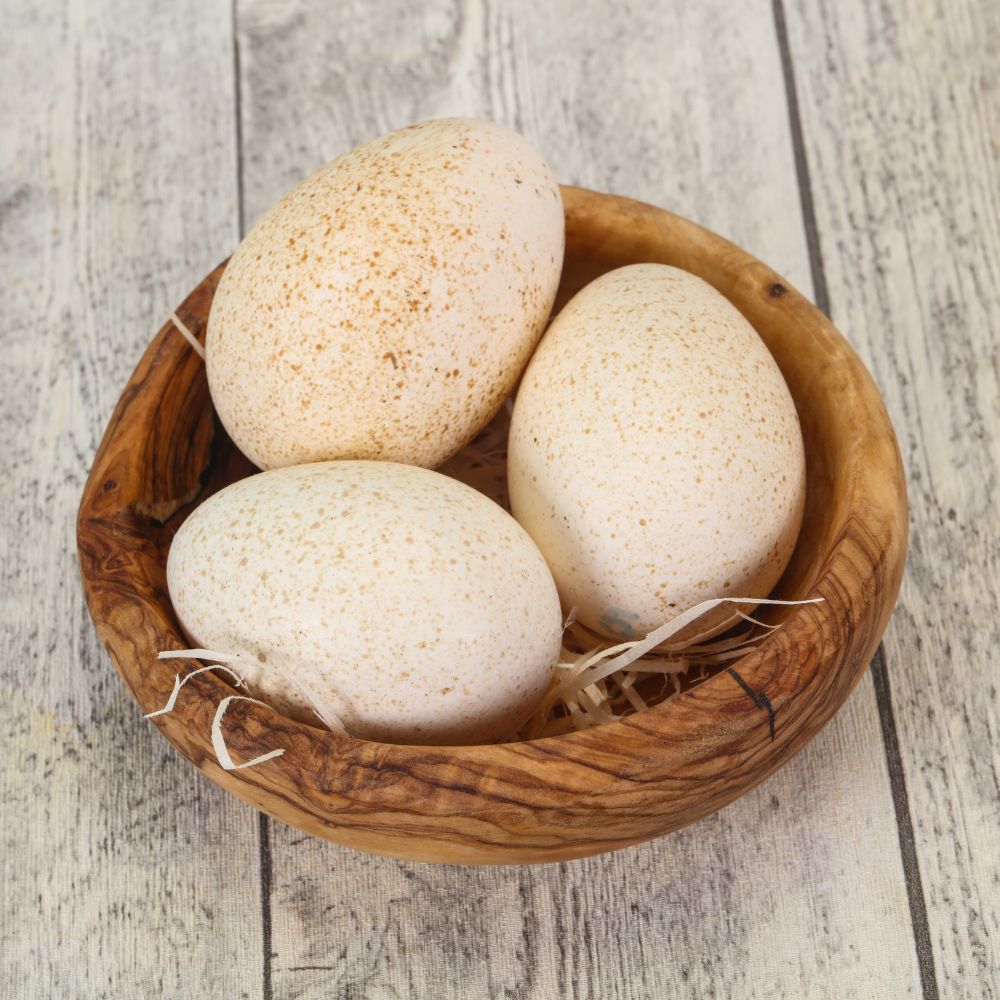
Turkey eggs are much larger than chicken eggs, but it still doesn’t make up for the lack of numbers.
What Do Turkey Eggs Taste Like?
Turkey eggs taste a lot like rainbow sherbet….okay, I’m kidding but I got your attention. The real answer is not riveting as sherbet, but good to know. Turkey eggs taste like chicken eggs.
Eggs of turkeys also have very similar nutritional value as chicken eggs. They do have more fat and calories than chicken eggs per gram. They have about 11 grams of protein and 9 grams of fat per egg. It is important to note that they also have a higher level of cholesterol than chicken eggs (some reports say that have twice as much cholesterol).
You can read about the nutrition of a turkey egg here.
Where Can You Buy Turkey Eggs?
Since you can’t go to your local Walmart to buy turkey eggs, what’s a turkey egg-craving person supposed to do? You can try local farms, farmers’ markets, and breeders who might sell turkey eggs.
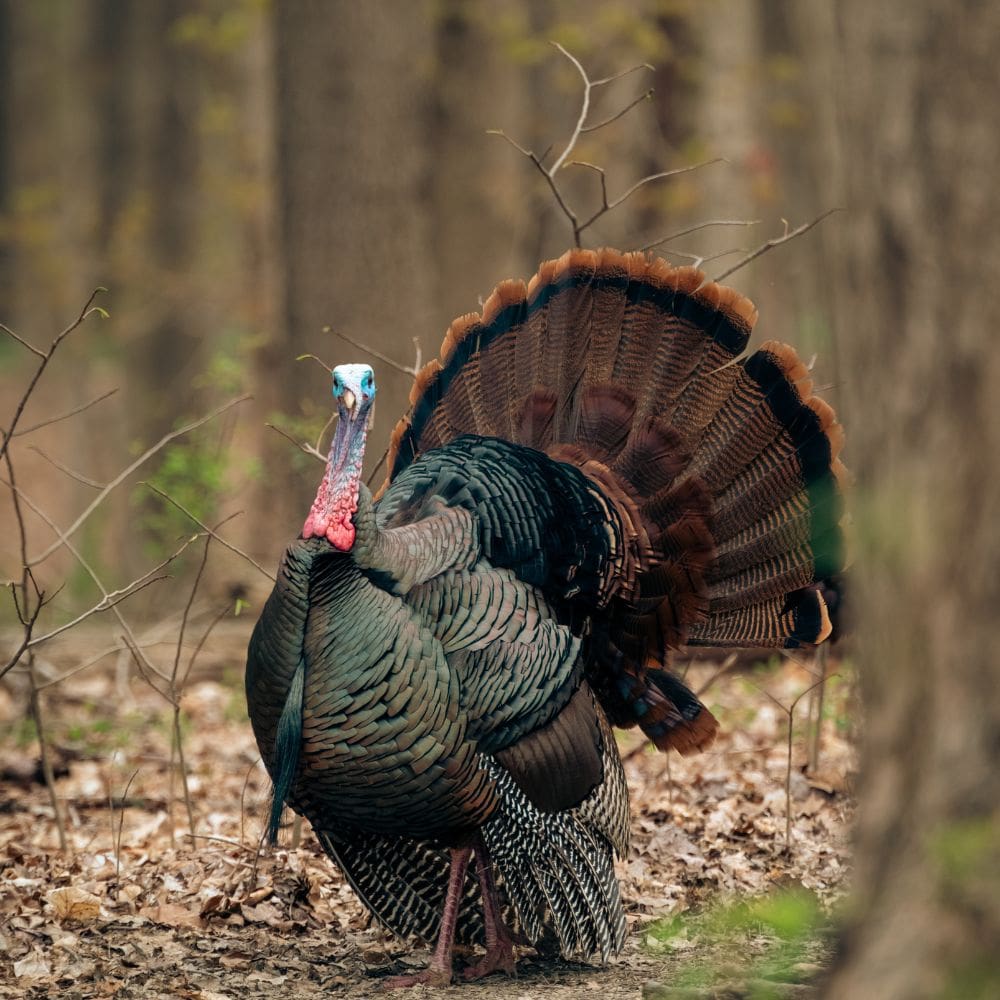
Or….wait for it….you can get your own turkeys! What a glorious thought, you’d be all the rage in your neighborhood. I actually have neighbors who have three turkeys in their fenced-in front yard! They are very majestic I must admit (as long as you don’t look at their ugly faces).
But before you run out and buy some turkeys to add to your poultry flock, do your research. They take a little bit different care than chickens do.
Summary
You can eat turkey eggs, they are just hard to find and very expensive because turkeys aren’t great egg producers. I guess they have to put all their energy into getting fat for Thanksgiving 😣. Their eggs taste like chicken eggs and have lots of vitamins and minerals, but they also have more fat, calories, and cholesterol.
If nothing else, you should get some and try them for fun. And while you are at it, try some quail eggs and duck eggs too.
Want more nutritional eggs from your chickens or turkeys? Try treating your birds with some protein-packed treats like these! You won’t be sorry.
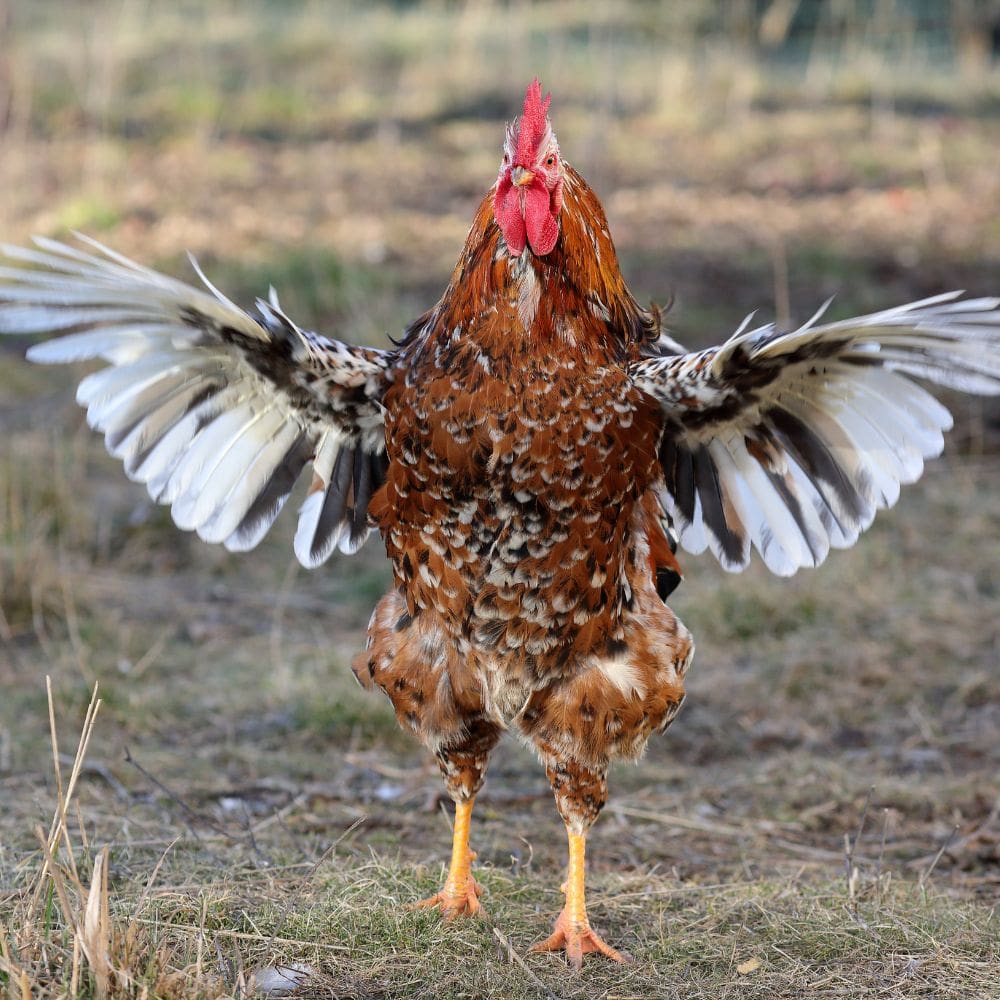
Not all chicken breeds are named so clearly as the Swedish Flower Hen. It doesn’t take much imagination to figure out that this hen comes from Sweden and has plumage with the appearance of a beautiful flower.
But that’s not all there is to know about this lovely breed. Keep reading to learn about this ornamental, yet practical feathered friend.
History of the Swedish Flower Hen
We don’t know much about the history of this breed, but we do know it’s considered to be a landrace chicken. “A what?,” you say!?!
A landrace chicken is a breed that developed over time by natural selection, and not that of breeders guiding every step of the “trait” path. You may not have heard of the Swedish Flower Hen, but you’ve possibly heard of an Egyptian Fayoumi or a Sumatra — both of those are landrace birds too!
It may be folklore, or it may be true, but the story goes, this breed originated from the earliest settlers arriving in Sweden. After that, the environment, weather, the weak versus the strong, and other natural factors led the way for the breed we now know and admire.
Even in Sweden, however, the commercialization of chickens changed the landscape of heritage and landrace chickens. Swedish Flower Hens were no different. Around 1970 they were almost a breed in the past and would have been if not for some select breeding groups designing a breeding plan. By 2010 it was decided to send 15 Swedish Flower Hens to the USA.
And the rest is history.
Swedish Flower Hen Appearance
At first glance, the primary type of Swedish Flower Hens looks an awful lot like a Speckled Sussex. In fact, unless you are a chicken expert it might be pretty darn hard to find the differences.
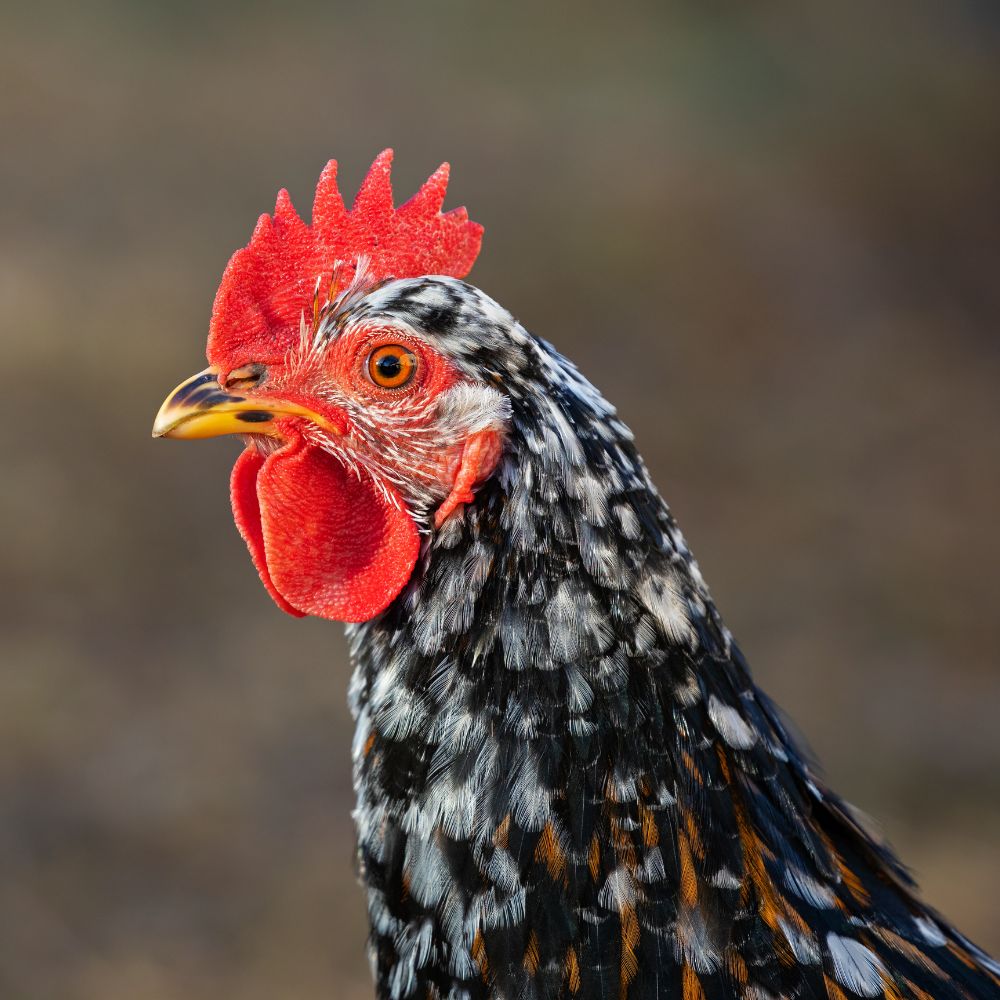
Regardless, they are beautiful. Their plumage is in the pattern of “thousand flowers” (hence the name). This pattern is also known in the chicken world as the “millefleur pattern.” This breed is not to be confused with the well-known breed called Mille Fleur d’Uccle bantams, but they do have the same pattern of feathers.
They come in a large variety of colors such as orange and brown, black and white, and white and red. There is also a snow leopard variety that has black tips on the ends of feathers, it is especially rare (a rare version of the already rare bird). All of them have the flower pattern for which they are known.
The speckles all over their feathers are what give them the appearance of “flowers.” It’s unique and special and there isn’t a chicken-loving soul on earth who wouldn’t admire them.
This breed has orange eyes, red wattles, and combs (single comb), and they can be tasseled, crested, or un-crested 😉. They are round, medium-sized, fluff balls.
Roosters weigh in at about 8 pounds and hen are 5.5 lbs, on average.
Temperament of the Swedish Flower Hen
According to those in the know, these beauties are equally as friendly as they are pretty. They are calm, cool, and collected (which is counterintuitive considering they are landrace chickens). Even the roosters are known for being friendly fellas, not aggressive. But they make up for their non-aggressive roo behavior with a very loud crow! So be ready for your alarm clock.
Indeed, they are incredibly mild tempered which makes them a very appealing family chicken. They seem to crave human interaction and will be your best friend (especially if lured by treats like these).
They are very smart and aware of their surroundings (which can be life-saving for chickens).
Egg Production of the Swedish Flower Hen
They aren’t the best, but they aren’t the worst either. These girlies lay approximately 150 to 200 eggs per year which is a decent amount of eggs. The egg color is light brown/beige.
Their eggs start out smaller and get larger and larger as time goes on. Some even lay extra-large eggs.
Be sure they have enough calcium to make their shells strong, otherwise, the shells can break easily and the chickens might start feasting on their own eggs😬. One great way to make sure they get enough calcium is to provide them with something like these Herbal Oyster Shells, especially if they aren’t free-ranging birds.
Are Swedish Flower Hens Hardy?
An emphatic yes! Due to the fact that they are landrace chickens that developed in a Swedish climate — they are most certainly hardy. This strain, at least in the development stage, made it through a series of environmental tests and trials and came out on top!
They do well in colder climates due to the fact that come from Sweden, this is a big bonus.
According to Greenfire Farms, a farm dedicated to hatching, raising, and selling the world’s rarest chickens, the Swedish Flower Hen is ultra-hardy.
Our experience is that they are also unusually hardy, rarely falling ill or acting dumpy. Swedish flower hens display a level of vigor and mastery of their environment that other breeds –and quite a few people– would do well to emulate.
That was a quote I just couldn’t pass up, quite clever 😄.
Do Swedish Flower Hens Need To Free Range?
They certainly LOVE to free range. Most chickens do because they can naturally hunt and peck for bugs and grass and other things. It makes their eggs better too.
However, not everyone has a suitable free-range situation or the desire to free-range. If that’s the case, you can keep this breed in confinement but you need to be sure of a couple of things:
Be sure they have at least 4 square feet of space per bird.
Provide them with a nice fenced run so they can run and play and get sunshine.
Give them some chicken toys to keep them busy.
Supplement their feed with nutritious treats so they are sure to get plenty of protein and vitamins that are necessary to be healthy. Take a look at my favorite treats, the ingredients are out of this world. I’m pretty sure my free-range chickens like these treats better than the bugs they find on their own!
How Noisy Are Swedish Flower Chickens?
They may not be aggressive, but they are very talkative. The hens will chat it up most of the day and the roosters are proud of their crow. That probably makes this breed more of a rural, farm chicken…more so than a city chick.
That depends on your layout, your neighborhood, and how much you like (or dislike) your neighbors.
How To Care For Swedish Flower Chickens
They may be aware and wise, but even the wisest chickens need a predator-safe dwelling to roost at night. So these beauties need a good predator-proof coop. Check out these.
All chickens need clean, fresh water at all times. In the winter you might consider pampering them with warm water, it will help encourage egg-laying too!
Feed your feathered friends a high-quality feed. Remember, chickens are people too. 😉The feed I recommend has a whole lot more nutritious goodies than your average farm feed. Your chickens deserve it, and it will likely prolong their lives, we are all affected by what we eat after all.
Swedish Flower chickens are very hardy and not prone to health concerns, but you should always keep your eye on your chickens so you can detect when something isn’t right. If you catch things like lice, mites, and other nasty parasites early, it will be much easier to treat them. You can reduce the load of these kinds of pests with things like specially formulated nesting herbs and dust baths.
Summary
If you are looking for a unique chicken to add to your flock and you want a breed that is super hardy, yet loves human company — then an ornamental, yet practical Swedish Flower Hen might be your pick. Plus, she’ll pay you in eggs! It’s a win-win arrangement.
Where To Buy Swedish Flower Hens
Here are a few specialty farms/breeders that you might want to look into:
What in the world are ISA Brown chickens? They may have a weird name and a mysterious history — but I assure you, they are WONDERFUL chickens.
If you want an incredibly friendly, even cuddly, chicken that provides you with PLENTY of eggs all year long then ISA Brown’s are what you want.
Keep reading to find out fun facts about this chicken breed, as well as how to care for them.
What Does ISA Brown Mean?
Good question. And when I first came upon this breed at my local farm store, I had to look twice. Then I consulted Google to find out what in the world an ISA Brown is.
It turns out that this oddly named breed is a pretty new addition to our poultry breeds and highly popular. I guess I was a little late to the game but certainly happy I opted in!
The letters stand for Institut de Sélection Animale, which is the name of the company in France that designed and bred this breed in 1978. Now you can better understand why they are just called ISA Browns – much easier to say.
The exact “recipe” used to design this breed is a super duper secret that has been guarded with care. Most folks in the know think Rhode Island Reds and White Leghorns were part of the secret sauce, but it’s not likely we will ever find out (which is impressive in my opinion).
This breed was bred for one purpose only, EGG PRODUCTION. Lots and lots of eggs. And then more eggs. They are eggcellent indeed. As you can probably tell, these are a hybrid breed and not heritage chickens.
ISA Brown Appearance
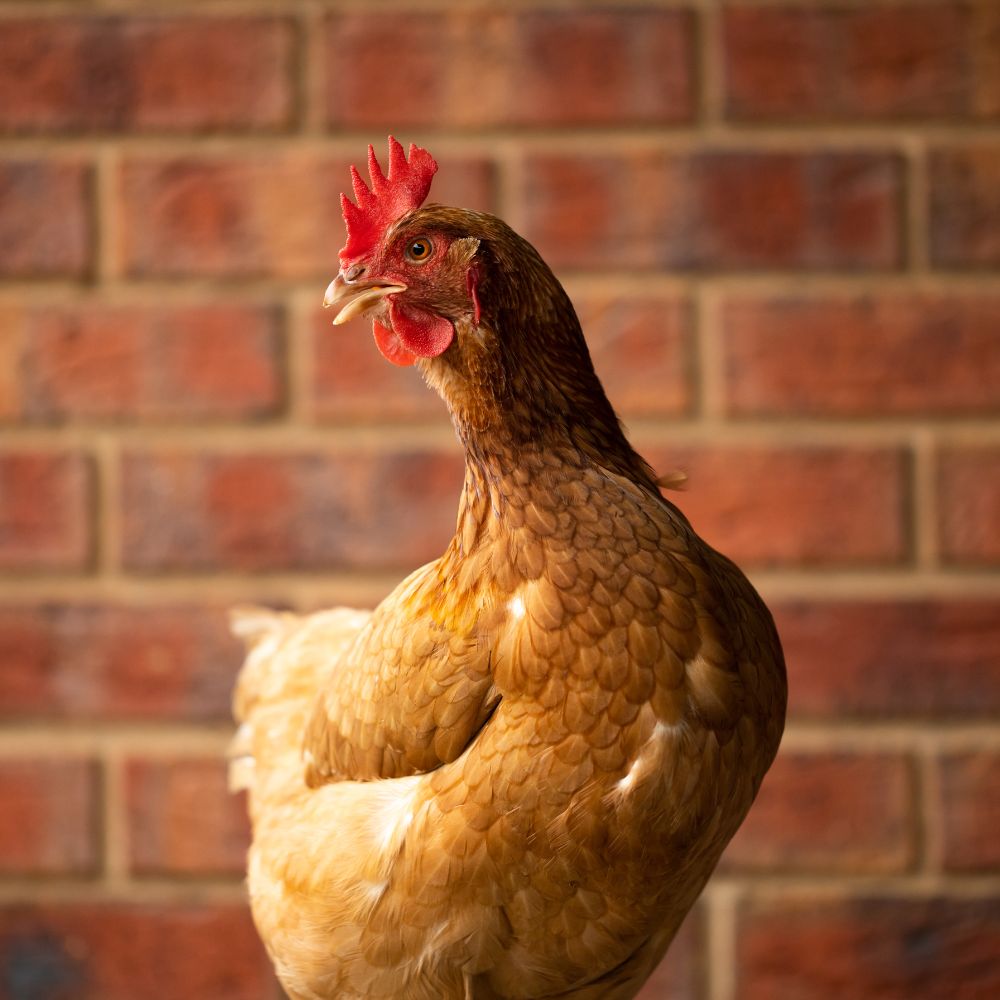
When these girls are out and about with my backyard flock, it’s sometimes hard to tell them apart from my Rhode Island Reds. But after a little practice, you can tell them apart.
This egg-making machine is a medium chicken with chestnut brown feathers and white tail feathers. The white feathers peak through and almost give the appearance of white spots throughout the plumage. This breed will sport a single comb that is red with matching red wattles.
The ISA brown chicken breed is both lovely, and loveable – the perfect combo.
How Big Are ISA Browns?
They are a medium sized, hybrid chickens. Hens weigh approximately 5 lbs and roosters weigh around 6 lbs.
ISA Brown Chicken Temperament
I have about 20 different breeds of chickens at any given time, and I am here to tell you that these are the friendliest lap chickens I’ve ever had…even friendlier than my Silkies. They are truly tame and love affection.
ISA Browns are simply great for beginners, maybe the best breed to start with. They are good with kids, not too loud or chatty, and even enjoy being held and cuddled. Some other friendly chicken breeds are Orpingtons, New Hampshires, Barred Rocks, and Silkies. But I’ve owned all of the above, and my ISA Browns (and Silkies) have been the ultimate pettable pets!
Due to their docile nature, they are a top choice for any flock or pet chicken (as long as you know about them…and now you do)!
ISA Brown Egg Production
Since ISA Browns were bred specifically to have this excellent egg-laying ability and you can bet your bottom dollar that they get an A+ in egg production. They are certainly considered prolific egg-layers by commercial outfits as they are the number one brown egg layer according to some studies.
I can believe it. In fact, as I type this I have a star performer out in my chicken coop laying an egg in 20-degree weather! And she does it every, single day while my other slacker breeds stand around and cluck (while not laying eggs in the winter).
I do need to give some credit to my White Leghorn and Rhode Island Red as well, these two girls are also laying an egg every day in this cold season. And that makes me think that a White Leghorn and Rhode Island Red is definitely part of the secret recipe we would all love to figure out!
An ISA Brown hen lays 300 plus eggs each year. With that number of eggs, who wouldn’t want one or more of these chickens? They lay large and extra-large eggs, with an egg color of brown – we wouldn’t expect anything less from these beauties.
ISA Browns Are Auto-Sexing
This is one of the easiest chickens to sex on hatch day which means you are less likely to get an accidental male chick when you order pullets. The males are white (but really more of a soft yellow) and the females are tan.
Too Wonderful To Pass Up
The breed is too wonderful to pass up, and so is this description I found on the ISA Poultry website. It pretty much sums up the goodness of this ultra sweet bird. It’s still a wonder that many people, including some that are addicted to chickens, are unaware of this breed.
The ISA Brown has proven more than 40 years of excellent performance as the best brown laying hen in the world. The ISA Brown is well known and globally recognized for its strong and reliable results, also renowned as the Global super star in performance. Extensive field testing with the ISA Brown shows that the ISA Brown has exceptional feed conversion and is capable of laying up to 500 first quality eggs. The ISA Brown laying hens are able to adapt well to different climates, poultry management styles and housing systems.
Be sure they have an adequate source of calcium with an oyster shell supplement
Ensure they have a good shelter to protect them from predators and weather
Let them free range if possible in order for them to hunt and peck for bugs and other goodies
Summary
If you want a ultra friendly-lap-pettable-pretty-chicken that lays a ton of eggs, even through the winter, then you NEED to get some ISA Browns. This is a breed that won’t disappoint!