Whether you’re a novice gardener with zero knowledge of plant care or an expert who can read a sun chart like the back of her hand, you no longer have to go it alone when it comes to caring for your plants.

The days of relying on folklore and the Farmer’s Almanac are over. Today, the Internet has made it possible to get all kinds of information about how to care for your garden with the simple click of a button. 

There are also thousands of useful apps that can benefit your plants, too. Here’s everything you need to know about today’s top gardening apps. 

How Gardening Apps Can Help You 

Gardening isn’t necessarily a high-tech hobby, but in this day and age, there’s no reason not to use every single tool that we are given! Gardening apps can help you in so many different ways. 

For example, you might consider some of these most popular features that gardening apps offer. With a gardening app, you can:

  • Identify poisonous plants
  • Determine which insects are beneficial or harmful to your plants
  • Plan out your growing season
  • Know when to harvest certain plants
  • Access advice from other gardeners
  • Understand your soil type

The 25 Best Gardening Apps to Consider

Gardening Manager

Gardening Manager is a neat app that allows you to easily keep track of your planting schedule. You can take notes in the app’s diary feature, allowing you to track growing patterns for later seasons. Garden Manager has a sister app, too, which is called Plant ALarm. This app lets you save a variety of gardening alarms to help you keep track of what needs to be watered and when.

Garden Time Planner

Garden Time Planner has information about when you need to harvest and plant your crops. It will give you information about the individual type of plants as well as their region. It also gives you a handy task list so that you can stay on top of everything you need to do. It’s available for both iPhone and Android users.

Plant Diary 

Plant Diary is an easy to use app that is free for Android. It lets you keep track of the gardens you plant and you can even make a physical map of your garden with it. It’s not a fancy or high-tech app by any means, but it’s perfect for someone who is doing just a small amount of gardening. 

Garden Answers Plant Identification

Garden Answers is one of the best apps for you to use if you are new to plant identification. An easy-to-use identification app, it can identify more than 20,000 plants. You’ll walk away with some seriously useful information. It’s also easy to use – all you need to do is take a picture of a plant, press submit, and wait for your answer. 

Gardroid

Available only for Android, this app has a user-friendly design and allows you to peruse a list of vegetables and fruits to give you an idea of what to plant. You can add them to your garden in the app and then plug in the date that you planted them. You will be given a progress bar so you will know when they are ready. You can add or remove items to the calendar. 

This is a great app for people who are new to gardening as well as those that are pressed for time. You’ll learn everything your plants need to be healthy – and you’ll also stay organized in the process. 

Gardenate 

Gardenate is one of the top-ranked gardening apps. It includes a calendar so you know what you should plant each month. It also has a Wish List to let you keep track of plants to grow in the future. 

GardenTags

GardenTags is more of a community app than anything else, providing a platform for helpful gardeners to share tips and information with each other. Plant care is sorted so you can get information about how to deal with pests and weeds. 

Garden Compass 

Garden Compass is another app designed exclusively for iPhones. This app helps gardeners by teaching how to identify certain diseases and pests. If you notice anything odd in your garden, all you need to do is snap a picture of it and the app will identify it. 

Leafsnap 

Leafsnap doesn’t just have a catchy name – it’s also recommended and used by the Natural History Museum. You know it’s got to be good! Unfortunately, it’s only available on iOS. However, the app contains gorgeous high-resolution photos of all kinds of plants and all their various parts, including fruits, leaves, flowers, bark, and seeds. 

Garden Squared

Garden Squared is another helpful app that helps you keep track of what is planted within your garden. Only designed for gardens with a size range no larger than 4×8 feet, it’s perfect for someone who already knows how to garden but just needs an easy-to-follow planning system.

Into Garden

Available for Android and iOS alike, this app is perfect for designing a new garden layout. It’s perfect for small gardens in particular.

Flower Checker

As the name implies, the Flower CHecker app provides useful plant identification services for flowers. However, it doesn’t stop there – you can get information on more than 90% of all plant species! The app has no advertisements, too, which is another great feature to consider.

Vegetable Tree

Vegetable Tree is a fun app that is currently the top-selling app for iOS devices. It contains all the information you need about sowing seeds and caring for your plants, and tells you all the characteristics of the different fruits and vegetables you might grow in a garden. You can choose from just about any kind of plant and you can customize it to your garden’s specifications. 

SmartPlant

Available for both iOS and Android, SmartPlant helps you to identify plants. It’s more than that, though, and also features a Digital Care Calendar to tell you when and what all of your plants need. You can further personalize the experience by adding specific plants you have in your garden. The app will provide you with updates on what you need to do to care for them – and more importantly, when. 

Gardening Companion

Gardening Companion helps you keep track of the progress of your garden. Like many of these other apps, it also has information about how to care for your plants. 

Moon Gardening

Unfortunately, Moon Gardening is not a free app, and it’s only available on iPhones. However, it can be super useful if you believe in the power the moon has on your plants’ growth. It shows you a moon calendar with all the phases and related zodiac elements, letting you know when you should water your plants based on that information.

Plantifier 

Plantifier is a bit different from the other apps on this list because it doesn’t rely on experts but instead on the masses. To contribute, all you need to do is upload a picture of the unknown plant and let the other users on the site will help you figure it out. It also helps you track the progress of your plants and flowers too. 

GardenMinder

GardenMiner was designed by Gardener’s Supply Company and is one of the best gardening apps for you to consider if you want to stay on top of every step of the gardening process. It provides users with weekly alerts and how-tos so you’ll never have to worry about what to do.

My Soil

My Soil was designed by the British Geological Survey and gives you all the information you need to know about the soil in your local area. You can get information on everything from your soil type to its pH, it’s temperature to how much organic matter it has. This is super useful if you’re trying to figure out what kind of plants to grow in your area.

Garden Plan Pro

Garden Plan Pro isn’t just for “pros” – it’s also a great tool for novice gardeners. This app helps you get all the tips you need to design an herb, fruit, or vegetable garden. It includes tools to help you arrange your plants, layout the garden, and even track its progress. 

Home Grown 

Homegrown was created by Bonnie Plants and is a great app for people who are just getting started with growing their own food. It allows you to create a high-tech garden journal and also displays your weather for the next five days. It includes growing advice for more than 250 plants, too. 

Beesmart Pollinator Generator

Beesmart Pollinator Generator is a cool app that you can use to learn how to attract certain types of pollinators to your garden. From annuals to perennials, trees to vines, this includes a ton of information about how to bring these helpful creatures to your property. 

iScape

It can be tough to figure out how to best plan your garden. iScape helps with this, allowing you to virtually design your garden before you even plant. 

House and Garden

The House and Garden magazine offers a handy app. This app allows you to draw inspiration from gorgeous backyards so that you can easily plan your own display. 

Agrobase

Agrobase helps gardeners identify the most common weeds, insects, diseases, and other factors that are interfering with their garden’s success. Designed for farmers, it can be a bit tricky to use if you only have a small garden. However, it also offers solutions for some of the most common issues.

Which Gardening Apps are Best for Me?

If you’re just getting started with using gardening apps, don’t rush in all at once. It might make sense for you to try one app first and see how well that meets your needs. After all, you don’t want to bog down your phone with a million different apps!

However, gardening apps can be super useful tools for novice and expert gardeners alike. Give one a try this growing season!
Male chickens are so easy to ignore. It is so easy for society to wash their hands of them. Roosters are important, but for some people, they’re far less important than the females of the species. But why is this? Why are roosters or cockerels be abandoned with a shrug and maybe a wave? 

The simple answer is that roosters cannot lay eggs, and unless they are being raised as broilers, they are not ideal for meat, either. When hatcheries set out to produce the next generation of chickens, they often endure an awkward period of equal love for all freshly hatched chicks. The love of all chicks is palpable, as any chicken owner might tell you, but there does come with this a certain degree of anticipation – of anxiety, as long as the chickens are not sex-linked. 

At some point, this batch of fresh-faced little peepers will be sexed. When this happens, the fates of the birds will reveal their cards.

The hens will go into the egg houses or be shipped to eager new owners. One or two of the roos will find their way into the breeding program. But what if there are an abundance of males? Can all of these roosters find their way into that program? Not usually. Because food is expensive, many of these males find their lives shortened. 

This is a tragic truth of roosters. But if you read my last article about roosters, you’ll discover that they’re wonderful additions to any flock. Today, rather than consider the darkness of their lives, let’s look at what roosters are, and why we should value each and every one.

https://www.instagram.com/p/BuXYXqfFwUF/

Are They Roosters Or Cockerels?

It’s good to start with a definition. What are male chickens called? In some circles, they are called “roosters”. In others, they have the name “cockerel.” So, which one is correct? Well, technically, both. A cockerel is a young, immature rooster. A “rooster” is a sexually mature male chicken. Easy! 

Why Keep A Rooster At All?

Roosters serve three significant purposes in your flock of chickens. The most obvious one is reproduction. Hens will lay eggs regardless of the presence of a cockerel. But to fertilize them, a rooster must be present. Farms with hens whose only purpose is to produce eggs might not even need a single rooster around. 

The second purpose of the rooster is that of defense. A single male will stand guard and protect the flock. They are constantly on guard against perceived threats to his hens and chicks. Though they might not look like great fighters, a rooster can hold his own against a number of common threats – attacking with sharp beak, blows from his wings, and scratching with talons and spurs.

Roosters are also good at finding food for the flock. Most people who keep chickens understand the value of a well-planned diet, but traditionally, finding especially tasty vittles fell to the rooster. Once he found something yummy, he would share it with the rest of the crew. 

A fourth reason supersedes the more traditional reasons for chickens in a family – as food, breeding, or eggs – and is far more in line with a modern reason for chickens: vanity. A good rooster just looks good! Many chicken breeds are quite docile, and that coupled with a cheery attitude and generations of good genes, and these males are practically built for showing. This purpose has little to do with the rest of the flock, and everything to do with the individual owner’s motivation for having these birds in their lives. 

https://www.instagram.com/p/BuZ8CmXFNoY/

Exploring Roosters: How Does Society See Roosters?

They Crow A LOT

This is perhaps one of the most enduring images of a barnyard. You have a rooster on a fencepost, just quietly awaiting the first rays of dawn. The faintest grey coloring slips over the horizon, and the rooster is there, ready, willing and able to greet the sun. Their distinctive call blasts out over the farm. Their crow is the original alarm clock, as it heralds the start of the day. When considering the legacy of a rooster, it is almost impossible to divorce oneself from this cry. It is both an endearing feature of the animal and a damning one. I mean, does anyone really enjoy waking up in the morning?

They’re Cocky

We all know that person. They have a smirk that can kill, and love telling tales of their exceptional lives. These are the ones that have never gone bowling and with their first throw, hit a strike. They have a saunter, a swagger, a sashay; all of these almost demand that attention gravitates towards them, because, after all, they should have their own gravity fields. To themselves, they are stars! Sure, sometimes these attitudes are very much not deserved, but other times, they sure are. These people are cocky. 

As you might have guessed, the adjective “cocky” comes from “cockerel.” Originally, back in Shakespeare’s time, this was a longer “cocksure” – sure of themselves just like a rooster! It’s a good term, one that makes an excellent metaphor for someone. A rooster tends to stand tall and proud, his tail feathers up, his head even higher, perpetually on guard against any threat to the safety and stability of his flock. A truly cocky person takes on the same mannerisms. But rather than protect a flock, a cocky human stands taller and prouder than everyone around them. LOL!

They Fight

Very often, a group of roosters can live together in peace and harmony. There are exceptions, and when a number of roos enter a barnyard, they might become extremely aggressive with one another. These bouts of aggression help the males to figure out dominance. Like with any social grouping, leaders need to be established. This is called establishing a pecking order.

However, when roosters are raised together, they probably won’t fight, because they will have sorted out the pecking order long before they’re mature. The usual rule is keeping 1 rooster per 10 hens, but if you have a docile roo, you can usually keep him with another rooster. Just keep an eye on your hens to make sure they’re not getting hurt.

Roosters are amazing animals. A good one can add so much joy to our lives, and can be trusted to look after the hens in our (short-term) absences. I can’t even begin to describe the value that my own roosters have brought me and my family over the years.

Heard of black sex link chickens, but aren’t sure what they’re like? We’ll tell you everything there is to know about this type of chicken!

Pure breed chickens have long been the way to add consistency to a home flock of chickens. Pure breeds have some amazing benefits — you can scratch the competition itch by entering them in shows, you are guaranteed registration with the American Poultry Association, and the genetic quirks from long generations are guaranteed to appear in their chicks, leading to generations of consistency within the particular breeds.

Yet for all the perks that come from genetic purity, there are just as many strong cases of bucking the trend and breeding hybrid chickens. Hybrid chickens are not breeds of chickens, but rather mixes that produce very specifically desired chicken results.

One of the most popular of these types of hybrid is the Black Sex Link Chicken. 

What Are Black Sex Link Chickens?

Black sex link chickens are a hybrid mix that results by crossing a pure-bred barred hen and a pure-bred non-barred rooster. For example, crossing a Barred Plymouth Rock hen with a Rhode Island Red rooster will result in sex-linked chicks. When these parents mate, the pullets do not receive a barring gene because the barring gene is only on the male chromosome.

Because of this, the sex of their chicks is immediately recognizable through their color. From birth, Black Sex Link pullets are all black, and the males are identifiable by a white spot on their heads. The link here is an invaluable resource for anyone wanting to know the ins and outs of the genetics behind sex link chickens.

What Are Sex Link Hybrids? 

In a nutshell (or an eggshell, as the case may be), a sex link hybrid is NOT an official breed of chicken. They retain many of the more positive qualities of their parent chickens’ breeds but are specifically bred for the uniqueness of their coloring. 

Perhaps the most common and popular example of a sex link hybrid is also the most prominent example of the Black Sex Link. If you cross two popular American chicken breeds – a Rhode Island Red male and a Barred Plymouth Rock female – you will get sex linked chicks. The gender of the resultant chicks will be immediately recognizable upon hatching. 

Why Breed Black Sex Link Hybrids?

In the above example (the Rhode Island Red male and a Barred Plymouth Rock female), the goal is to produce females that can be immediately separated from the males. Then, once these females come of age, they will be some of the best egg-layers around. With good care, they have been known to produce 300 eggs per year. 

An added bonus of this particular pairing of chicken is the size. The Black Sex Link results of this pairing are large enough to serve as meat chickens. Once your Black Sex Link hens have exhausted their eggs, they will make a sizable addition to your dining needs. 

Breed Description FAQ

What Do Black Sex Link Chickens Look Like? 

Black Sex Link pullets are instantly recognizable when they hatch by their pure black down. You can easily recognize male chicks because they have a distinguishable white dot on their heads.

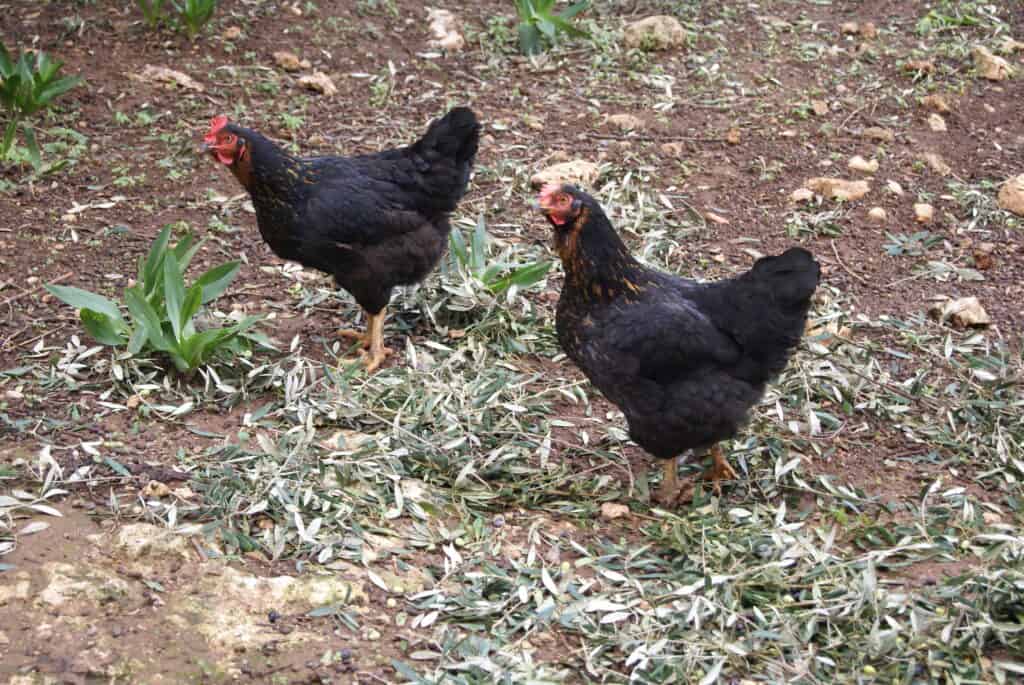
At maturity, Black Sex Link hens are usually black with gold hackle and breast feathers. Roosters, on the other hand, have banding across their bodies. Both males and females have red combs and wattles.

How large are they? 

On average, the hens weigh 6-7 pounds. Cockerels weigh around 8-9 pounds. Some hatcheries advertise their black sex link chickens a little lighter, with the hens being only a touch over five pounds and the roosters being about 6 pounds. 

Are they friendly? 

Black Sex Link Chickens are sometimes described as skittish, curious, energetic, and friendly. Many of their owners love them, but there are some exceptions to the rule.

Some Black Sex Link Chickens have been known to be noisy or aggressive to other breeds. This is especially true with the roosters. Some of this could be explained away as an alpha-bird attitude in that they occasionally enjoy being at the top of the pecking order.

You might wonder if the hens are broody (chickens are usually a little more aggressive when they brood). We’re happy to share that black sex link hens are not known for their broodiness. 

How long do black sex link chickens live? 

They live as long as any normal chicken. Rhode Island Reds – one of the parent breeds – are generally known to live into their eighth year.

If you’re worried about them surviving the winter, don’t fret, the two parents of the average Black Sex Link Chicken are the Rhode Island Red and the Barred Plymouth Rock. Considering that both of these breeds are very cold hardy, Black Sex Link Chickens breed true in this regard; they are very cold hardy and are ideal for colder environments.

Are Sex Link Chickens An Accepted Breed By The American Poultry Association?

No, they are not and never will be. One important requirement for chickens to be accepted breeds is that they have to actually be breeds. A breed is a type of chicken that, as defined in the American Poultry Association’s list of breeds, breeds true. A standard is a definition of a breed that each subsequent generation of the breed can be compared to.

The APA doesn’t want to disqualify breeds and offer a means of applying for the entry of new breeds of chicken into the registry but each applicant must have a standard. Because Black Sex Link Chickens are hybrids, they will not breed true. This means that the resultant offspring will not conform to any standard, and they might display a number of deviations from either parent.

Do Black Sex Link Chickens Breed True?

For a chicken to breed true, there must be some genetic consistency within the breed. With Black Sex Link Chickens, the father cockerels share two color genes that might match inconsistently with the single-color gene of the mother hens. The inconsistency of the result could produce variations like heavy banding, or alternative coloring.

Because of the roulette matching of genes, Black Sex Link Chickens cannot breed true. As a result, most Black Sex Link Chickens are not bred past the first generation. 

How Often Do Black Sex Link Chickens Lay Eggs?

Black Sex Link Chicken hens thrive at egg production and can produce about 300 eggs in a single year with proper care and if they are in good health. They start laying at 18-20 weeks on average and are a brown egg layer.

This type of chicken usually maintains optimum egg development through about their fifth year, when they begin waning in egg production. Their eggs are brown.

What Kind of Health Issues Do Black Sex Link Chickens Have? 

Black Sex Link Chickens suffer from the same health issues that most other chickens endure. As far as external threats, ticks, mites, lice, worms, and other parasites are all dangerous to them.

Black Sex Link Chickens are so important for egg production, you’ll want to minimize their potential danger. A great way to beat the bugs is by boosting your chickens’ immune systems with apple cider vinegar and crushed garlic. You can also try my favorite pest control products, all natural and chickens love them! Click here to check them out.

Are black sex link chickens and black star chickens the same?

Black Sex Link Chickens and Black Star Chickens are the same. A simple way to look at it is to think of “Black Star Chickens” as a specific designer name for the hybrid. There might be some minor differences between one and the other, but all Black Star chicks possess black as their primary color and can be sexed from hatching.

black sex link chickens outside

Top 5 Hatcheries To Buy Black Sex Link Chickens From

Black Sex Link Chickens (and other sex links such as Red Sex Link chickens) are quite a popular hybrid for their impressive egg production and good size for dining purposes. As a result, they are fairly easy to find in many hatcheries around the USA. 

One word of advice, some search tools on hatchery sites are character sensitive. I’ve provided specific links below, but if you are searching yourself you might have to try different variations such as sexlinks and sex-link in order to have results on their website show up.

1. Cackle Hatchery 

Find more information and prices here: Cackle Hatchery

Cackle Hatchery, located in the great state of Missouri, is one of the most popular online chick retailers. You can find nearly 200 different types of chickens at all stages – fertile hatching eggs, baby chicks, pullets, etc. The company specializes in all kinds of egg-laying, meat-producing, and bantam breeds, as well as several rare breeds of chickens, too.

At Cackle, other kinds of poultry species can be found, too, including ducks, turkeys, geese, and more. You’ll have plenty to choose from when you’re filling your backyard coop and run!

They only have a minimum order of 3 birds…of course, you’ll pay less the more birds you get, so if you’re interested in raising a high-production flock of black sex links, Cackle might be the way to go. 

Advantages

  • Discounts if you buy male chicks
  • Vaccinations available
  • Only need three birds to ship (just one for male birds)

Disadvantages

  • Limited availability 

2. Stromberg’s 

Find more information and prices here: Stromberg’s

Stromberg’s is another well-known chick hatchery and also sells chicken-raising supplies. You’ll find all kinds of gear at Stromberg’s, including coops, coop building supplies, wild birdhouses, feeders, waterers, and more.

They have a variety of chicken breeds when you shop with Stromberg’s, including New Hampshire Reds, Orpingtons, White Leghorns, and of course, black sex links! This company offers substantial discounts when you order large batches of birds – in fact, you’ll pay more than $2 less per bird when you order 100 or more chicks. There are similar (though smaller) discounts available for tinier batches, too. 

Plus, if you time your order right, you can even get free shipping, helping to save you even more money. Just expect to buy at least five chicks at once when you order.

Advantages

  • Hatching eggs available
  • One of the least expensive hatcheries to buy chicks from
  • All kinds of chicken breeds available for sale

Disadvantages

  • Shipping dates are not estimated at the time of payment

3. Townline Hatchery 

Find more information and prices here: Townline Hatchery

Another well-known hatchery that specializes in black sex link chickens is Townline Hatchery. It’s actually one of the oldest hatcheries in the country, having been around for more than 100  years. This company is located in Michigan and is the longest-standing mail-order hatchery in the country.

You’ll get access to some pretty awesome customer service when you order from Townline Hatchery. You can call or email with questions at any time and you can also find out valuable information bout raising black sex link chicks by visiting the company’s website. The employees at Townline Hatchery are known to be some of the most attentive, too, as they care for new batches of baby chicks.

The only disadvantage to ordering from Townline is that you’ll have to buy in bulk. The hatchery has a minimum order of fifteen chicks, which can be a challenge if you live in a city that has restrictions on how many birds you can raise (most towns cap it at six hens). However, if you’re planning on shopping for a large flock anyway, Townline is the way to go – the hatchery offers a discount of several dollars per bird when you buy more than 100 chicks.

Advantages

  • Superior customer service
  • Excellent reputation as one of the longest-standing hatcheries
  • Great for buying chicks in large quantities

Disadvantages

  • Not many hatching dates available for fall, winter, or early spring shipping

4. Hoover’s Hatchery 

Find more information and prices here: Hoover’s Hatchery

Another established brand, if you’re looking for chicks, is Hoover’s Hatchery. Hoover’s supplies many farm and garden supply stores in the United States with their chicks, making them a smart choice if you want to skip the middleman and order from the hatchery directly.

Plus, Hoover’s offers free shipping on practically everything you order. You’ll have to buy at least 15 chicks, so again, Hoover’s might not be the best option if you live in a city with chicken restrictions. However, as long as you’re willing to buy in bulk, it’s a smart choice. You can even mix and match your order by adding other chicken breeds along with poultry species like pheasants, turkeys, guineas, ducks, and more. 

Another benefit of ordering from Hoover’s Hatchery is that it hatches chicks all throughout the year – a must-know feature if you plan on buying chicks around Christmastime. 

Advantages

  • Excellent guarantee and refund policy in case of shipping problems
  • Hatches chicks during the winter, one of the few hatcheries to do so
  • Sells other kinds of poultry too

Disadvantages

  • Large minimum order

5. Valley Farms Hatchery 

Find more information and prices here: Valley Farms Hatchery

Valley Farms Hatchery is located in Alabama and is one of the few large commercial chick hatcheries located in the southern United States. If you live in the south, that’s one good reason to give Valley Farms a try – you won’t have to ship your new black sex links long distances, which can cut down dramatically on shipping stress.

You can buy fertile hatching eggs along with black sex link chicks from this hatchery. You’ll find some of the lowest prices, here, too, with a minimum order of just three chicks. If you buy males the order minimum is just one bird. Buying in bulk poses several advantages though, especially if you can buy more than 50 birds at once – you’ll get significant savings.

Advantages

  • Each order is backed by a 100% live delivery guarantee, no matter where you live
  • One chick minimum order if you’re buying males
  • Optional Marek’s vaccination

Disadvantages

  • Limited shipping dates

Wondering what vegetables grow in the shade? No matter where you might live, it can be tough to find the optimal conditions for growing vegetables.

From shade produced by nearby buildings to hefty tree limbs that block out the afternoon sun, finding a garden plot with the perfect amount of sunlight your plants need can be a challenge. However, you don’t need to move mountains in order to grow a productive garden. 

Instead, you just need to consider these vegetables that grow in shade. 

What is Considered “Shade”?

There are essentially three different sunlight settings that can describe how much light your plants will get during the growing season. 

Full sun refers to areas that receive direct sunlight for a  minimum of six hours each day. Usually, this will be sometime between the hours of 10 am and 6pm. 

Partial shade, on the other hand, refers to areas that receive three to six hours of sun each day. This can include areas of filtered or dappled sunlight, even if it’s just during a short window each day. 

Full shade areas receive no direct sun or even any reflected light during the day. It can be pretty tricky to grow any kind of vegetable in full shade (after all, every plant needs light to grow)- as a result, most of the plants we will recommend in this article should be considered for partial shade instead. 

Top 20 Vegetables That Grow in Shade

When you’re looking for the best vegetables to grow in the shade, you will want to consider plants like leafy greens (which are sensitive to the sun) and root vegetables, that can tolerate some partial shade as well. 

Here are some of the top vegetables that grow in shade. 

Beans

Beans require very little work to grow, which is probably why they are found in just about every gardener’s plot. In addition, they grow well with moderate amounts of daily shade. With so many different types of beans to choose from, they’re a smart choice for your shade garden for sure. 

Arugula

One of the fastest-growing leafy greens, arugula is a great option for your backyard shade garden. Although not everyone will be fond of arugula’s musky, peppery taste, it can’t be argued that it performs exceptionally well when grown in partial shade.

Broccoli

Broccoli loves being grown in lots of shade. A member of the cabbage family, it really only requires a few hours of sunlight each day along with plenty of water. In some places, you might be able to sneak in multiple crops throughout the growing season, too – just make sure you trim back the flowers so the plant doesn’t bolt on you.

Beets 

Beets are one of the best cold-hardy crops you can grow, but they are also one of the best vegetables that grow in shade for you to consider, too. Although too much shade can cause your beetroots to become a bit tiny, the greens will still produce remarkably well. Plant beets in succession for a continual harvest and make sure you keep them well-watered!

Brussels Sprouts

Brussels sprouts – you either love them or you hate them. These plants are fun to watch as they mature and they will do so quite well even in the shade. Brussels sprouts grow well into the cold season and actually prefer being grown in cooler weather. 

Spinach

Spinach can be grown with just a few hours of sunlight each day. Because it is a cold-loving plant, it even grows well in the waning daylight hours of fall and spring. NOt only is spinach an excellent salad green, but it can be used in a variety of cooked recipes, too. If you start planting early, you can plant in succession for a crop all season long.

Swiss Chard

Swiss Chard is a colorful beauty for you to consider in your backyard shade garden. Preferring partial shade, this plant is biennial – you can overwinter it to grow it a second year. Chard is easy to grow and requires minimal maintenance, making it perfect for the inexperienced gardener. 

Kale

Kale is another superb candidate for your shade garden. Closely related to cabbage, this plant can also be grown in a container and likes cool soil temperatures and lots of shade. It can even handle a light frost!

Collard Greens

Yet another cabbage relative on this list is collard greens. This plant tastes delicious sauteed as well as in a salad. Collard greens require at least four hour of sun each day, so if you have a shadier garden that receives a bit of dappled sunlight every now and then, you’re in luck. This plant also performs well in cold climates.

Cauliflower

A very close relative to broccoli, cauliflower also grows well in the shade. It can tolerate a ton of cold and shade. Delicious cooked and fresh, cauliflower should be blanched if you want it to have a sweeter taste.

Cress

Also known as garden cress, cress is a rare vegetable that many gardeners overlook when they are considering the major vegetables that grow in shade. However, this is a great option for you to consider if you want another leafy green to dd to the dinner table. Not only does it mature with lightning speeds, but it can also be grown in moist soil and is known for its peppery flavor. 

Mustard Greens

Move over, spinach and kale. Here’s a new leafy green to consider growing in the shade. Mustard greens can be grown either in full sun or in partial shade, but since they prefer cooler temperatures, you might want to grow them in the shade. 

Peas

Peas do quite well in a partially shady location, primarily because they like being cool. However your timing will be important – you need to make sure you sow your seeds and can get a harvest before it gets too hot. 

Endive

Endives perform remarkably well with only a few hours of sunlight each day. This is specifically true if you are growing the plant during the hottest days of the summer – offering shade will prevent the plant from bolting too soon. It can also be grown in a pot!

Lettuce

Lettuce is truly a gardener’s staple and is a cool-season green that grows well in partial shade. You can grow it in almost complete shade, too – some gardeners even use shade cloth to prevent it from becoming signed in the summer sun. 

Radishes

The humble radish is one of the best vegetables to grow in the shade. Not only does it take up very little space, but it doesn’t like a lot of sun or heat – in fact, it will taste woody if you give it too much sun. 

Not only do radishes taste great on their own (and there are so many varieties!) the tops can be eaten, too. Radishes can be grown in the fall and the spring and there are plenty of possibilities and varieties for you to grow. 

Bok Choy

Also known as Chinese cabbage, bok choy is perfect in soups and salads. It can be grown easily in dappled sunlight or even more serious shade. It requires just two hours of sunlight each day to maintain its deep green leaves. 

Green Onions

You might also hear green onions referred to as scallions. These plants grow quickly and are hardy to most conditions. They can be sprouted by soaking the roots in a container of water before transplanting them to partial shade. Delicious in a salad or cooked dish, green onions can sometimes be grown as perennial shade crops, too.

Carrots 

Another root vegetable that grows well in the shade is the mighty carrot. Carrots can handle partial shade with grace – if you can provide your carrots with six or more hours of sunlight, they will grow more rapidly, but you can also grow them in the shade. You just might have to wait a bit longer! 

Potatoes

Potatoes need at least five hours of sunlight if you want large tubers. However, if you have a shadier spot, feel free to give them a try – you might end up with great boiling potato at the very least! They don’t, however, n eed super hot weather to grow – potatoes prefer soil temperatures in the 40s and 50s. 

Tips for Growing Vegetables in the Shade

Invest in Your Soil

The key to growing healthy vegetables, but particularly vegetables that grow in shade, is making sure you have good soil that can actually support plant life. If you are already going to be challenging your crop to grow with minimal sun, it’s super important that your plants have fertile soil that is well-draining and not compacted. Add some compost to help improve your structure and soil fertility.

Moderate Moisture

Don’t water your shade garden like you would water a garden in full sun! Moisture won’t evaporate as quickly, so you won’t need to water your garden quite as frequently. If it’s near trees, however, you will need to water a bit more since your vegetables will be competing with the trees for water. 

Keep an Eye Out For Pests 

Certain pests are opportunistic little buggers and will seize any opportunity they can get to attack your plants. Shady areas also tend to be a bit cooler and isolated, making them the perfect habitat for shade-loving (but crop-destroying) creatures like snails and slugs. 

Prevent Diseases

Just as you will need to monitor the moisture levels in your vegetable garden in the shade, you will also need to be mindful of moisture. You are more likely to suffer from various fungal diseases like powdery mildew, when you are gardening in the shade because your plants won’t have as much opportunity to rid themselves of excess moisture. 

Think About Maturation Times 

There are plenty of vegetables that grow in the shade, but it’s important to remember that they won’t grow exactly like their sun-loving counterparts. You may find that your plants take a bit longer to mature than what you see noted on the seed packet.

Start Your Seedlings Indoors

Starting seeds ahead of time indoors is a great way to give them a jump start before they need to be in the shade. You can start your own transplants and plant them whenever the ground has warmed.

Plant in Succession 

Not sure how well your shade garden is going to perform, or concerned that your plants will take longer to mature? Don’t worry. All you need to do is plant succession. This will allow you to reap multiple harvests of the same crop despite the delays related to the shade. 

Grow the Right Plants 

Don’t try to grow plants that are adapted to full sun conditions when you only have partial sun available where you’re trying to garden. Crops that demand lots of light, such as blossoming plants like tomatoes and peppers, will not do well in a shady environment no matter how much you build up your soil ahead of time. 

Modify Your Environment 

Consider pruning low tree branches or thinning out tall limbs to let more sunlight pour into your garden. You can also paint nearby surfaces white to reflect more light back onto your garden. You can also use a reflective mulch to serve this purpose. 

Grow in Containers 

Growing in containers is a great way to accommodate for an overly shady garden. Not only will you be able to move your plants as the seasons change, but you can bring them inside once the weather cools, too.

Why You Should Consider These Vegetables That Grow in Shade

If you have a shady garden and think you can’t successfully grow vegetables, think again. A partially shaded garden not only allows for a longer growing season for cool-season crops (like broccoli) but the shade can also protect your plants from the hot rays of the summer sun. 

Shade-grown vegetables also taste better. They tend to be more succulent and less bitter, since they haven’t had to spend all of their energy staying cool. 

Consider these tips and order your seeds . There are plenty of vegetables that grow in the shade – and now that you’re no longer in the dark, you should start planting as soon as possible.

Salmon Faverolles would be awarded “Entertainers of the Year” if there were such a thing as chicken entertainment awards! Plus they are friendly, cuddly, and cute!

Faverolles chickens come in a wide color palette, from Mahogany, Black, Buff, Blue, Blue Salmon, Cuckoo, Ermine, Laced Blue, to Splash. But only two colors are actually recognized by the American Poultry Association: White and Salmon. 

Any and all of these color variations possess the unique traits of the Faverolles, but it is in the Salmon that their colors really shine best. This article covers everything you need to know about Salmon Faverolles.

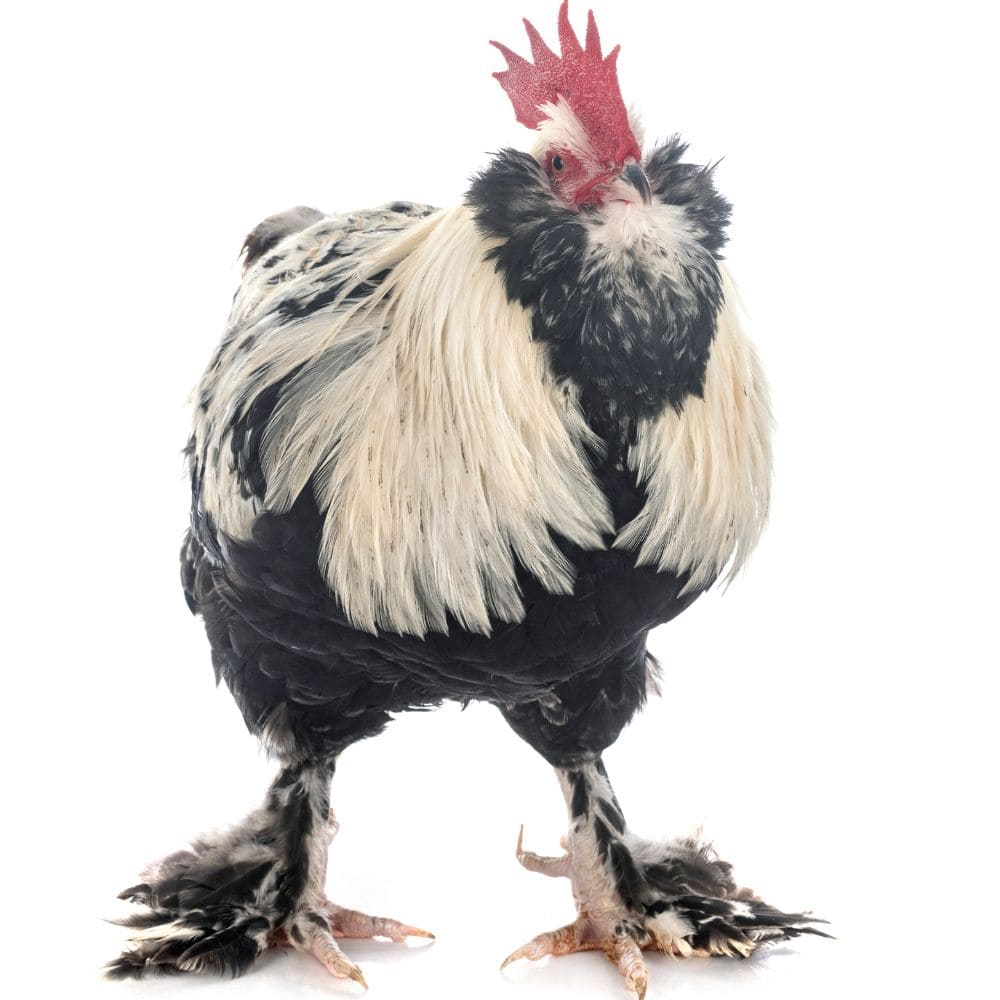
Puffed up black and white Salmon Faverolles rooster

What are Faverolles?

Faverolles are a French chicken breed. They take their name from the French village that they were first bred in, Faverolles, which is about 50 miles northeast of Paris. There are no records of the creation of this breed, so no one knows who actually created this chicken breed, but Houdon, Brahma, Crêve-Cour, Dorking, CouCoo, and Cochin have all been connected to their origins. 

Faverolles were first bred for the dual purpose of eggs and meat. 

At the time of their introduction to the markets of France, they took to close confinement better than other breeds, like the Houdan. This quickly brought them to the forefront of the poultry market, and by 1886 or 1894 (depending on your source), they found their way across the English Channel. The Faverolles were quickly developed to exhibition standards in England. 

They came to the USA in the first few years of the 20th Century and settled in Glens Falls, NY, not far from the state capital of Albany. Since then, this docile breed has served Americans in three distinct ways: as food, for their eggs, and as a show breed.

This delightful breed is considered a rare breed, despite their ability to lay about 200 eggs per year and the fact that roosters can grow to 8 pounds and hens to 6 pounds. 

5 Amazing Faverolles Chicken Facts

  • They have super soft and downy feathers.
  • They are a truly all-purpose breed, serving as excellent layers and lovely show chickens.
  • They are super-cuddly, sociable, and love attention and kisses. 
  • Roosters and hens are two distinct colors: with the males being a greater color mix than the two-toned females.
  • The word “Faverolles” is French. As a result of this, the “s” is silent, so the pronunciation of the singular and plural is both “fa-ver-ell” or “fa-ver-oll,” though an Anglicized “fa-ver-olz” isn’t unexpected. The spelling of both singular and plural is both “Faverolles”, however. 

What Do Salmon Faverolles Chickens Look Like?

Physically, Faverolles are quite unique. The first major difference is their toes. Most chicken breeds have 4 toes, but like Silkies, Faverolles have five toes. 

Faverolles also possess a beard under their beaks that adds a lovely layer of fluff to their appearance. They have muffs too (essentially crazy cute face feathers). Their wattles are tiny to non-existent, and they have feathers on their legs. 

AND they have feathered legs! Feathered legs, crazy muffs and beards, and super curiosity….this, my friends, is part of why they are so dang entertaining!

Their faces, comb, and what little wattle that they have are red. If their coloring reaches their eyes, that is also red. Their single comb is medium in size with five points.

Faverolles have bay-colored eyes. Their skin and legs are white.  

What is the Color of a Salmon Faverolles Hen?

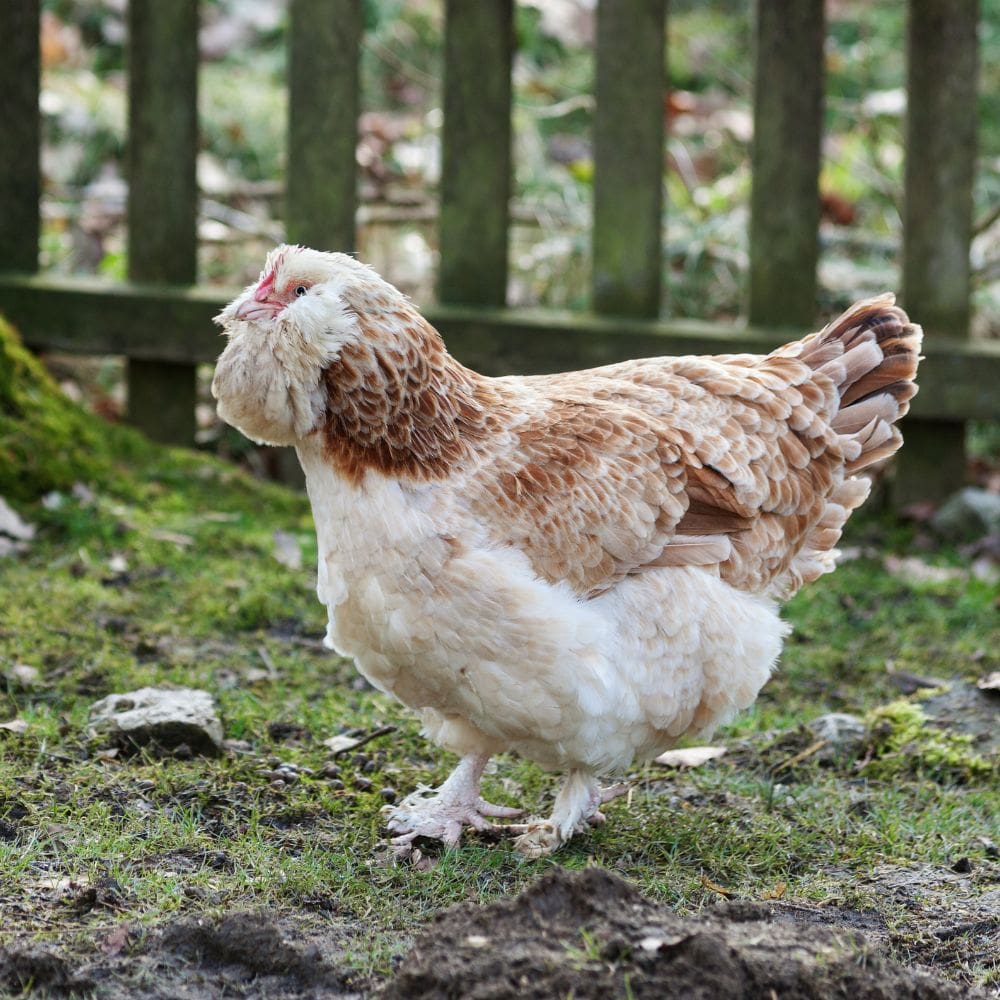
Salmon Faverolles hens have white to light caramel breasts and underbellies, but sport a splash of rich color on the hackles, back, and wing. The colors of their backs are a light pink salmon through a darker bronze. The spread of color could stretch further down the wing, or along the flank, but regardless of distribution, the two-toned quality of their coloring is always present in Salmon Faverolles hens.

Salmon Faverolles hen in grass with wooden fence behind her

What is the Color of a Salmon Faverolles Rooster?

Male Salmon Faverolles are almost as unique as their tufted ears and fluffy beards. Unlike the females, who possess the exquisite caramel topping on a large vanilla sundae, the males have a secret weapon: black chocolate feathers. 

The average Salmon Faverolles rooster has a thick black beard, breast, and undercarriage. Occasionally, one might have a white beard to match his white (or cream) neck and head. The black coloring usually fills out his breast and legs and may be separated by more white or it may just continue on through his tail. 

Splashes of straw or dark straw stretch across his upper wings, and spot his hackles, back, and saddle. White compliments his colors; in addition to it serving as a mane around his neck, it sometimes gives a spotty reappearance along his back. Then, in a very cool touch, white serves as a peculiar triangular accent at the triangular tips of his wings. 

All in all, the rooster is quite an array of color that any chicken lover would be proud to show off.

What is the Color of a Salmon Faverolles Chick?

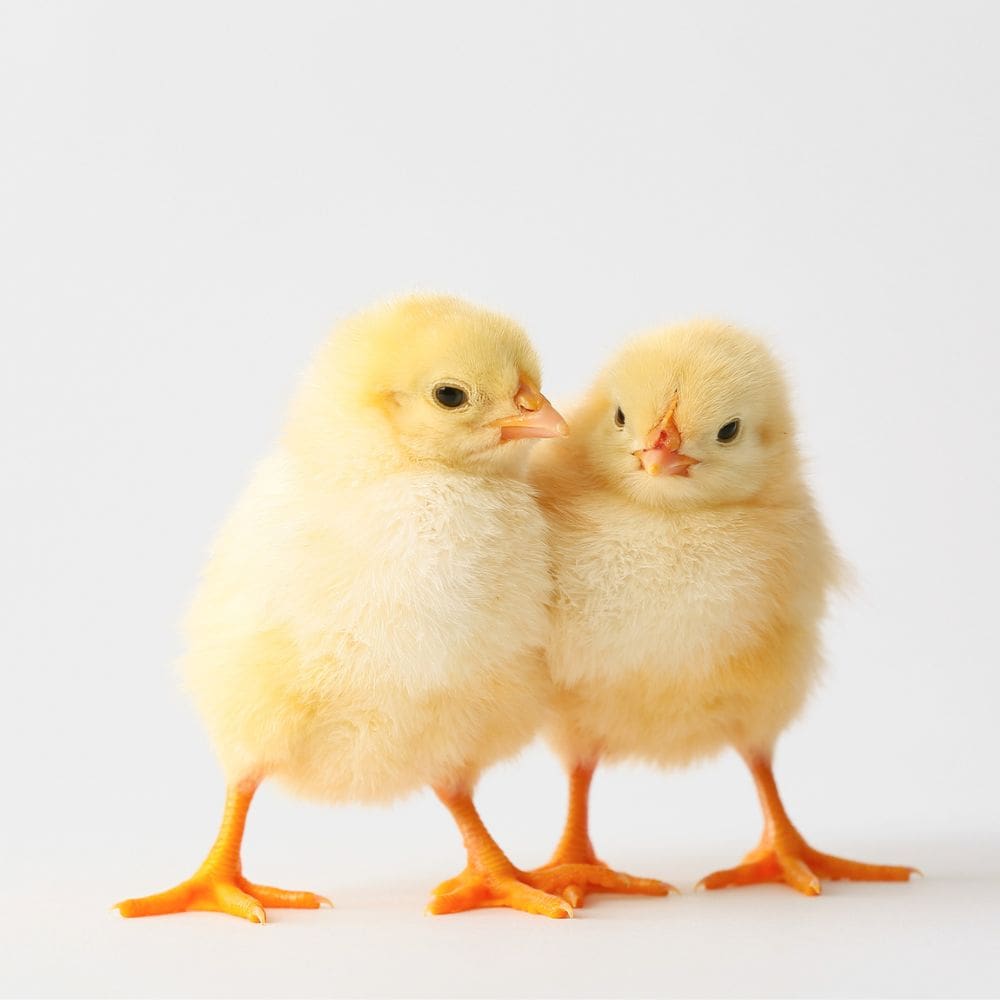
Chicks start off as downy fluffs of yellow, but once their feathers start coming in, you’ll see the salmon coloring replacing their yellow. 

Two Salmon Faverolles chicks standing next to each other

Salmon Faverolles Meat and Egg Production?

As Faverolles were originally bred for meat and eggs, Salmon Faverolles are an excellent source for meals. Their eggs are cream-colored and medium-sized like the eggs of other color varieties. 

They lay an impressive amount of eggs for a breed many haven’t heard much about, coming in around 200 eggs per year!

Salmon Faverolles Temperament

Beyond color, not very. Faverolles are famous for their curious and family-oriented personalities. These are the kinds of chickens you want to bring home to mom and are just as cuddly for children as they are for adults. Roosters are also extremely friendly, but as with all roosters you need to respect their space (especially children).

Salmon Faverolles are amazing birds that will bring you great humor, laughter, and pleasure. They are one of the most entertaining breeds, full of personality. They are a medium-sized bird that does have some minor health worries, but these are easily managed with frequent checks.

As with all your backyard buddies, they will come running for treats! And if you serve them up the right kind of treats, it will help keep them healthy.

Salmon Faverolles Health Issues

These stars are quite feathery. Due to all these feathers, including on their faces and their legs, they are prone to mites and lice. But luckily, there are preventative measures you can take. My favorite prevention products are MitesBGone & PestsBGone.

The other health issue, is related to the first, but slightly different. It’s called scaly leg mites (sounds scary but it’s manageable). Scaly leg mites are common for chickens with feathery legs. You just need to check their legs regularly as the mites (or evidence of mites) can be hard to see with all those feathers.

If you are diligent at keeping the coop clean and free of parasites, your chances of scaly leg mites are pretty low. But, if you do find yourself fighting that war, a great help for scaly leg mites is this herbal leg salve.

Where are Salmon Faverolles Chicks for Sale?

By being the most popular Faverolles chicken breed in the USA, finding them isn’t too extreme a chore. 

  • Purely Poultry, out of Fremont, WI, offers a supply of female, male, and non-sexed Salmon Faverolles. 
  • From Rudd, IA, day-old males, females, and unsexed Salmon Faverolles are available at various times of the year. 
  • There are also periodic supplies of Salmon Faverolles at My Pet Chicken in Monroe, CT. 
  • Seasonally, from February to July, you can find Salmon Faverolles at Cackle Hatchery in Lebanon, MO. 
  • Meyer Hatchery in Folk, Ohio, also has seasonal supplies of Faverolles. 

Summary

Want an entertaining sort of bird, that is pleasing to the eyes as well as the egg basket? Then a Salmon Faverolles might just be something you NEED to add to your flock of fun birds.

Do you own any Salmon Faverolles chickens? Leave a comment below!

What are the best winter vegetables to grow?


This year, we purchased a 10 foot by 12 foot greenhouse just so we can grow more vegetables in the colder months here in Southeast Missouri.

Just because the days are getting shorter and the temperatures are dropping, it doesn’t mean that you have to set your gardening gloves aside. Winter isn’t just a time to dream wistfully of the bountiful harvests of summer – it’s also a great time to plan for the year ahead, as well as to jumpstart your garden for next year. 

There are plenty of winter vegetables to grow, particularly if you live in an area that experiences mild winters. Even if you live in an area with more severe weather, there are plenty of ways to keep your garden growing throughout the coldest months of winter. 

The 13 Best Winter Vegetables to Grow 

1. Onions

Onions are easy to plant and you won’t have to do anything all winter. In most areas, onions have a long growing season and won’t be ready for harvest until next summer anyway. Just make sure you plan carefully because they will still be in the ground when it’s time to begin planting crops in the spring. 

2. Garlic

Garlic is an easy vegetable to grow and there are plenty of varieties to choose from. Even if you experience harsh winters, garlic can survive – you will just need to mulch it heavily to protect it from the heavy freeze. Consider growing options like Chesnok Red and Wight Cristo for a variety of culinary applications. You can learn how to grow garlic here and how to store garlic here.

3. Spinach

Spinach is a cold-hardy crop that can grow throughout much of the winter months in many areas. For the best results, choose perpetual spinach varieties, which will yield you multiple cuttings throughout the season. Sow in the early autumn and you’ll have a crop well into early summer. 

4. Peas

You may not be able to grow peas if you get a heavy snowfall, but in most cases, peas are quite cold hardy. Sow rounded variants in the fall for a headstart next spring. You can also learn how to preserve peas here.

5. Asparagus

Asparagus is a perennial and takes several years to establish. It can survive even the roughest winters in colder growing zones, and fall is the best time to plant it. Choose a variety meant to be planted in the fall, like Pacific Purple. Once you get it established, asparagus will produce up to 25 spears per year – for up to 25 years. You will need to be patient, but you will get a serious return on your investment. 

6. Parsley

One of the hardiest herbs you’ll find, parsley can sometimes survive up to zone 5 in the winter. It will yield bushy greens in the spring before going to spring. Curly parsley tends to be more frost-resistant than flat-leaf parsley.

7. Carrots

Carrots can be grown outside well into the winter months in many areas. Plant them directly in beds and mulch heavily. Carrots that are hit with a frost are often sweeter, so it may actually be to your benefit to keep growing them throughout the colder months. 

8. Leeks

Leeks are inexpensive and produce a bountiful harvest. You can harvest them throughout the year and as long as you have a mild winter, you don’t have to worry about them dying. 

9. Turnips

Turnips grow great during the winter months. As long as temperatures remain just above freezing, you should be able to harvest both the roots and the tops during the winter months. 

10. Leafy Greens

Kale, along with other cold-hardy leafy greens such as chard, lettuce, and bok choy, usually do just fine in the cold temperatures of the winter. You can usually harvest them straight through the winter months (and they’re great for chickens). 

In fact, most greens perform better in the winter. In the summer, these plants often go right to seed. Just don’t forget to water and fertilize when growing greens during the winter – even though they won’t need as much water, the drying air of winter can still sometimes be a problem. 

11. Potatoes

Depending on where you live, you might be able to grow potatoes all throughout the winter months. Although it’s not the best winter vegetables to grow, the potato is still a great option if you experience minimal snowfall. Learn more about growing potatoes in containers here and curing potatoes here.

12. Radishes 

Radishes mature quickly, with some varieties ready in just a month from when you have seeded them. They also don’t need a lot of heat – too much heat damages the texture and flavor of delicate radishes – so they’re perfect candidates for winter growing. 

13. Broad Beans

A sturdier variety of green beans, broad beans can often be planted in fall gardens because they are heartier and more rugged than their narrower cousins. These plants can be grown directly in the winter garden in many areas with mild winters, or they can be grown in an unheated greenhouse. 

Tips for Growing Vegetables in the Winter Months 

Use a Hoop House or Greenhouse

Growing winter vegetables outdoors might be possible in areas that don’t experience hard freezes or heavy snowfall, but if you live in a colder climate, that might not be an option. However, if you have a greenhouse or hoop house (a greenhouse covered in plastic instead of glass, you can easily grow some plants throughout the entire season. Here are some plants to consider:

  • Salad mixes (mustard, lettuce, land cress, etc)
  • Basil
  • Cilantro
  • Oregano
  • Thyme 
  • Carrots
  • Cabbage
  • Peas
  • Corn
  • Broccoli
  • Tomatoes

You can even grow many flowers and fruits in your greenhouse, too!

If you have a greenhouse, you can choose to leave it heated or unheated. Some warm-weather plants, like tomatoes, peppers, and squash can even be grown during the winter months, too. As long as you heat the greenhouse and transfer these plants to pots, you may be able to get them well into the next growing season. 

Consider a Cold Frame 

Cold frames are a great way to extend your growing season, even if you live in a colder growing zone like 3 or 4. Essentially miniature greenhouse over your plants, cold frames can be purchased dor built inexpensively from scrap lumber and glass. 

Just be sure to vent your cold frames, as too much heat can become an enemy to plants in the winter even more quickly than too much cold can. Trapping too much hot air inside can not only dry your plants out but it can also conversely lead to fungal issues should too much moisture also get in there. 

Don’t have the time or resources to buy or build your own cold frame? Don’t worry. You can easily construct a DIY version by positioning hay bales on all sides of a planting bed and then covering the area between with old windows. 

Don’t Forget About Dormant Plants

Some plants might not actually grow during the winter months, but they won’t die back, either. They will simply remain dormant until the temperatures rise and growth can resume. Consider planting a winter vegetable garden in the late summer or early fall so that the vegetables have time to get established before they go dormant.

Mulch 

Mulching can help protect your crops from becoming too dry or frozen. It will also keep the soil warmer when temperatures plummet. Consider using mulch materials like straw or dried leaves, which will help nourish the soil as they break down, too. 

Do a Deep Clean

Even if you have a long list of winter vegetables to grow, that doesn’t mean you can neglect your normal fall planting chores. Cut away any dead foliage and make sure you throw out any diseased or damaged plants. This will prevent rot and also stop pest eggs from proliferating. 

Know Which Plants to Bring Inside

Indoor gardening is a great option for many gardeners who can’t keep things going during the winter months, either due to extreme temperatures and precipitation or because they simply don’t want to garden outside during the winter. 

Many plants can be grown inside in containers. Cold-sensitive plants like tomatoes and peppers are great candidates for this, as are many herbs. 

Protect from Frost and Wind

You can’t control when a frost might strike, but you can take steps to protect your plants. Cover frost-sensitive varieties up with blankets, sheets, or row covers that are draped over stakes. This will help get them through brief cold snaps at the very least. You can also consider heating your greenhouse.

Select Ideal Varieties

Try a variety of crops to see what works best for you, keeping your growing zone and gardening preference in mind. You might also want to experiment a bit with timing to see what planting schedule and rhythms work. Put in new crops whenever you see an empty space and save seeds when you find varieties that perform exceptionally well in your area. 

Why You Should Consider the Best Winter Vegetables to Grow

Winter gardening is a great way to keep the garden going all year long. Not only will it help satisfy your green thumb urges during the colder months of the year, but it will also provide you with plenty of healthy vegetables at a time when they are normally scarce on your dinner plate. 

Plus, growing vegetables in the winter is surprisingly easy. They will naturally grow a bit slower, but you’ll have fewer weeds to contend with. You may not even need to water much between mid-November and mid-February! 

You can start with this list of best vegetables to grow in winter. Try lots of crops to see what works best for you – perhaps start with just one this year and add more varieties as you gain experience. Stay warm!