If you’ve ever seen your dog rummage the yard for pieces of poop, you’ll understand how frustrating and stomach turning it can be. Rest assured, this actually is a normal type of behavior for dogs, even if it disgusts us. Even though it can be normal, it’s best to try to deter this sort of behavior as it can lead to continued reinfection of parasites and cause intestinal disturbances. There are some actions you can take to try to break this habit, which we’ll discuss below.

What is so enticing about the Poop?

Coprophagy is the term used to describe the act of eating poop. Although it’s common for people to think a dog eats poop because they have some sort of nutrient deficiency, this is usually not the case. Poop scavengers are typically eating poop as a sign of dominance, indicating to others that they are in charge. When puppies eat poop, it’s more so out of curiosity and play. Other dogs may eat poop merely because it tastes good to them and is extremely malodorous. We all know how dogs love to chew on things that smell bad, such as worn socks, shoes, and dirty laundry (including underwear- that’s a common cause of intestinal obstruction in dogs). Finally, some dogs eat poop merely out of boredom or frustration.

What can I do to stop my dog from eating poop?

Getting your dog to stop eating poop (stool) will take a combinations of deterrence, training, and quick movement on your part. We’ll break these down below.

Deterrence:  

This is the act of making eating the poop less attractive, rewarding, and enticing for your dog. There are actually products made specifically for this reason- to get your dog to stop eating their stool or the stool of another pet. There are a few options out there, but the oldest and most effective one is called For-Bid (https://www.for-bid.com/)

For-Bid is a highly purified edible protein that comes in powder form. When eaten, it causes the dog’s stool to taste very bad. It’s important to note that even though we as humans may think stool already tastes bad, this is not necessarily the case for dogs, but the For-Bid powder causes the stool to be distasteful to dogs’ taste buds.

If your dog is eating their own stool, you sprinkle the powder into your dog’s food daily until your dog stops eating their poop. If the behavior begins again, you start the process over. If your dog is eating another dog’s poop, then you sprinkle the powder into the other dog’s food daily until your dog stops eating the other dog’s poop. You can also give this to your cats to eat if the problem is that your dog is getting into their litter box and eating their poop.

Behavior Training:

If your dog is eating their own poop or other dogs’ poop as a sign of dominance, out of frustration or boredom, or due to another behavioral issue, it is a good idea to seek out the help of either a certified dog trainer or a veterinary behaviorist. They can come to your home and spend some time with your dog and other pets in the home.  They can get an idea of the social hierarchy and any stressors that may be present, while working with you to provide recommendations and changes in the environment. 

Make sure your dog has lots of toys and enrichment to keep their body and mind entertained. If your schedule allows, try to play with them regularly and take them on daily walks. If your budget allows, taking them to regular dog training classes, dog parks, or agility courses will also help keep them stimulated and less inclined to eat their poop. 

Quick Movement:

Remove their poop as fast as you can from the ground. This is the number one best way to prevent them from eating their poop. If it’s not there, they can’t eat it! This, of course, means that you have to go outside with them during each potty break, take a glove and a bag, and scoop up their poop right as they are laying it down. This takes much more work on your part, but is the best preventative measure you have. 

Every dog is different and these measures may or may not work completely for your individual dog. If you are worried your dog is eating poop because of something painful in their mouth or a medical condition, it’s also always a good idea to schedule an appointment with your veterinarian so they can do a thorough examination on your dog and discuss if bloodwork may be needed.

If you’re thinking about raising backyard hens for eggs, you might feel a little bit intimidated by the process. Is this a hard process, or an easy process? How do you get started? And so on.

Luckily, chickens are some of the easiest animals you can raise – but it’s important to learn how to do it correctly. In this article, we’ll walk you through some of the most important information you need to know in order to get started. 

Person holding wooden box full of eggs, hand and part of leg is visable

Why Raise Backyard Chickens?

In these uncertain times, a lot of people are concerned about food security. Raising chickens means always having a supply of fresh, organic eggs (even as the prices in the stores skyrocket).  You can keep your egg production…well, productive!

Chickens are easier to care for than dogs or cats. They only need:

  • A home
  • Food
  • Water
  • Protection from predators
  • Veterinary care as needed

Unlike dogs, you never need to walk poultry! You can also leave them alone for a couple days (with food, water, and protection from predators) if you need to leave town for a few days. Hens are quiet, and like parrots, these birds can provide companionship. They’re also a great pet for kids!

How Do I Get Started Raising Chickens? Quick Overview!

Buy the Chickens!

Your first step in raising chickens? You’ve got to buy the chickens, of course! Don’t rush out to the feed store to purchase your chicks right away. Make sure you have a brooder set up and ready to go so that you have somewhere to put the little fluffy butts. This should include a heat lamp and plenty of food and water. 

You probably want to do a little research on chicken breeds, so you get the best fit your needs, your plans, and your set up. Are you wanting super egg layers? Do you want dual-purpose birds?

If you plan on raising adult chickens, you can skip this step. Otherwise, keep reading – we’ll give you more information on where to buy your chickens below.

Feed

You are also going to need an ample supply of feed to give your chickens. We’ll talk more about this later in the article, but make sure you have your feeders ready to go. 

Waterers

The same rule applies to waterers. You are going to need a waterer for your chickens so they can stay hydrated at all times. Invest in good waterer because they can last for quite some time when cared for properly.

A Coop

Last but not least, you’re going to need a coop in which to house your chickens. It doesn’t have to be huge, but there are some considerations you will need to make.

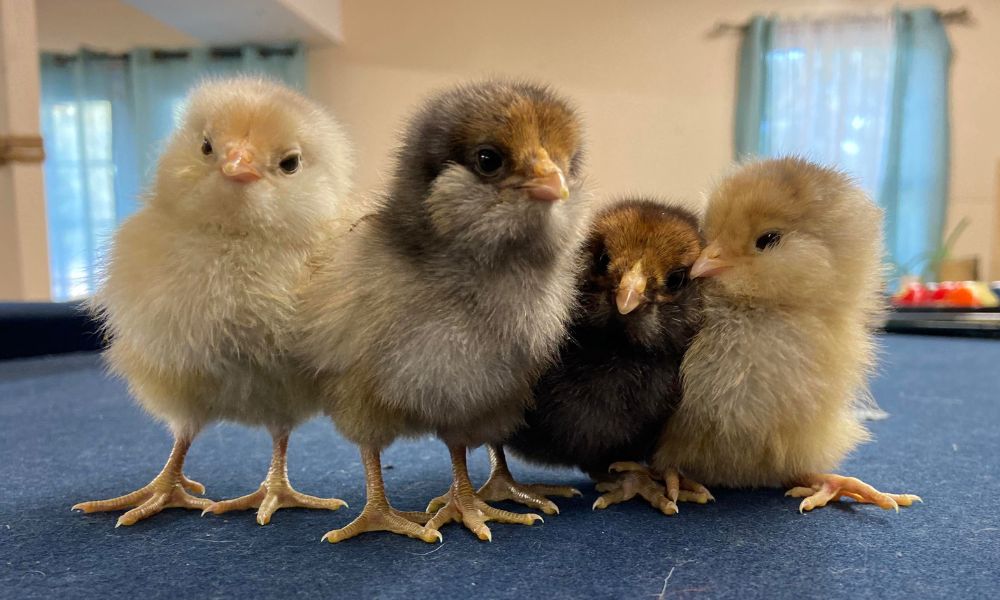
Four chicks standing in a row

Where Can I Buy Chickens?

The first thing you need to do is purchase your chickens. Decide on your breed first. If you want your chickens to be pets as well as egg producers, some friendly breeds that give lots of eggs are Australorps, Orpingtons, Speckled Sussex, Brahmas, and Cochins.

Next, start the search for your birds. Hatcheries are often chosen by beginning chicken keepers because they raise and ship chicks in a safe, humane fashion. Yes, that’s right – you can get mail-order chicks!

When you order from a hatchery, the chicks are sent as one day old and sent directly to the post office. You’ll pick them up there. You will be able to choose from a wide selection of breeds. If you’re not allowed to have roosters in your neighborhood, you have the option to purchase only hens (female chickens called pullets as chicks). 

There are hundreds of hatcheries out there, but it’s important to find one that is reputable. We use Cackle Hatchery, but there are other good options including Murray McMurray and Meyer Hatchery. Do your research and make sure your hatchery of choice has plenty of positive customer reviews! 

You may also want to check out local farm stores. Most people are familiar with shops like Tractor Supply, Rural King, and Orschelns. The only downside to purchasing chicks from a farm store is that you are often limited to what they have in store. That said, some stores allow you to place an order ahead of time in which you can specify how many and what breed you are interested in buying. 

A final option is to consider local breeders or even your neighbors. The internet is a glorious invention that makes it possible for us to find chicks for sale just about anywhere! Just remember to inspect your chicks carefully before you bring them home to make sure they are healthy. 

How Much Should I Pay for a Chicken?

In most cases, a baby chick will cost less than $5 apiece. Often, that price is quoted by hatcheries with all expenses – including shipping fees – rolled in. After all, buying chicks should not break the bank! Of course, prices change according to supply and demand, as well as market trends.

Hatcheries will sometimes offer discounts if you buy in bulk – with discounts usually given for purchases of 25, 50, or 100 birds – or if you purchase unsexed chicks. 

You can also purchase adult chickens that are ready to lay. While the price of these can vary widely depending on the breed and age of the bird, try not to pay more than $10 to $20. It’s very easy for you to find yourself scammed or overcharged!

If you want to buy adult chickens, keep an eye out for free birds on Craigslist, Facebook Marketplace, and via other Facebook groups. Again just be aware of scams and don’t be afraid to ask health questions.

What Do Chickens Eat?

Chickens are easy creatures to feed, but you will need to pay attention to what you are feeding them – especially in the early days.

Young chicks (those under the age of 16 weeks) need to be fed a chick starter ration. This contains 18% protein and all the nutrients your chicks need to be healthy. You can purchase chick starter from your local farm store. If you want a feed that has some extra added nutrients and have it shipped directly to your home, you can purchase chick starter from our website here. 

Once your chickens get a bit older, you’ll need to provide them with alternative feed. Laying feed is fine for laying hens – it contains extra calcium – while broiler feed is best for meat birds. If you want layer feed shipped directly to your door, visit our store here

Chickens are some of the best backyard pets you can raise because they are incredibly versatile creatures that can be fed a wide variety of kitchen scraps and leftovers. If you want to read a full list of what chickens can and cannot eat, be sure to check out this post

What Type of Waterers Are Best?

Having plenty of fresh, clean water at all times is just as important as having plenty of fresh feed. Although you can use basic waterers from Amazon (here are some options), or even just a dog bowl with water for your adult chickens, you’ll need to be more careful about how you give water to young chicks. 

Chicks can easily drown in open bowls of water, and while some people simply put pebbles or marbles in the bottom of their adult chicken waterer to prevent this, accidents can still happen. Therefore, you will want to use a mason jar-style waterer, which tends to be much safer to use. Watch the video below to learn more about chick waterers.

What Type of Coop is Best?

You can purchase your own chicken coop on Amazon or you can build your own chicken coop. Here are some free plans to help you get started. There are all kinds of styles you can choose from, including coops that are portable and meant to be moved every day, those that are designed for small flocks, and those that are best for oversized breeds. 

Either way, remember that you will need at least six to ten feet of space per bird in your coop. You’ll need even more than that out in the run, so make sure you leave plenty of outdoor space for your birds, too. 

Also in the coop, you will need to leave room for nesting boxes and roosting bars. The roosting bars should be no more than a few feet off the ground and positioned away from the nesting boxes. 

You can purchase a coop for as little as $200 on Amazon. But remember that any structure can serve as shelter, as long as it’s dry, draft-free, and provides protection from predators. So, if you have a garden shed or even an old play house that’s no longer used by your kids, you have the start of a great coop!

How Much Room Do Chickens Need?

Experts recommend 10 square feet of space per chicken. So, if you have 3 hens, then your coop should be 30 square feet.

Your flock will also need a fenced-in run so they can get sunshine and exercise! If you can’t build a run, don’t worry. While it’s not ideal in all situations (due to predators), you can allow your chickens to free range (run around your yard) part of the day to stretch their wings.

Other Frequently Asked Questions

How do I keep my chickens safe from predators?

There are all kinds of creatures that like munching on chickens! From raccoons to coyotes, weasels to foxes, your chickens need to be protected from these threats. The easiest way to do this is to build a strong, secure chicken coop that can withstand any threat. Make sure it has no openings or gaps through which a predator can sneak and lock your chickens in each and every night.

You can find more tips on how to make your chicken coop predator-safe here

What temperature is best for baby chicks?

As with all baby animals, young chicks are extremely susceptible to temperature fluctuations when they are first born. Baby chicks need to be kept in a warm place until they have all their feathers. 

The brooder should be at least 95-100 degrees for the first two weeks of their lives, and then reduced five degrees each week until the chicks reach four weeks old.

Not sure if your chicks are too warm or too cold? Here’s a video that will tell you quick ways you can figure it out. 

What kind of nesting boxes do I need?

You can build your own nesting boxes or you can purchase some prebuilt ones from the farm store or Amazon. Whichever you choose, make sure you have at least one nesting box for every four chickens. You’ll Want to fill it with fresh, clean bedding and check it at least once a day to keep it from becoming overrun with eggs.

Here are some more tips on what to look for and consider when researching nesting boxes. 

When do chickens start laying eggs?

Wondering when all of your hard work is going to pay off – and your chickens are going to start laying eggs? If you’ve purchased layers, they should begin laying eggs right away. 

You can learn more about when chickens start laying eggs by watching this video, but as a general rule of thumb, baby chicks start laying when they’re six months old. Some breeds, like White Leghorns, Sex Links, and Australorps start laying as early as sixteen weeks old, but others can take up to eight months to start laying.

How often do chickens lay eggs? 

Most hens lay four to five eggs each week, but some breeds (like Production Reds) lay more and some less (such as Mille Fleurs). You can encourage better laying patterns by feeding a high-quality feed. Check out this article for more information!

Other nutrients chickens need

  • Oyster shell is a great addition in order to provide good, healthy eggs with strong eggshells. Here’s a great option for you!
  • Put special herbal blends like these in their nests to repel pests (like parasites), plus your hens will LOVE going into their nesting boxes to lay eggs.
  • Provide specific areas for your hens to take dust baths, it’s a necessary process and helps keep them healthy. Here are my favorites.
  • If your chickens don’t free range, you’ll likely want to provide grit to help aid them in digestion. You can think of grit like a substitute for teeth (chickens don’t have teeth).

Final Thoughts

Getting started with backyard chickens is very easy – and chickens are simple to care for! As long as they have shelter, food, water, protection from predators, and appropriate veterinary care, they’ll do great! If you do decide to dive right in, we have all the resources you need on this website!

Is there anything better than a nice, ripe banana? I don’t think so!

But if you live where I live – in one of the colder areas of the world to say the least, and one where bananas definitely do not grow in the wild – you need to get creative when it comes to storing those tasty fruits past their normal period of ripeness. 

Even if you’re lucky enough to grow bananas on your own property, you may feel overwhelmed with an inundation of the fruits come harvest time. 

Interested in preserving your own bananas at home? Here are several ways to do it so that you can continue to enjoy these tasty, nutritious fruits long past their harvest. 

How to Store Fresh Bananas Properly

There are several studies out there arguing whether bananas ripen quicker together or separately – and although the difference is subtle, the truth of the matter is that bananas left attached in an original bunch tend to ripen more slowly. 

Therefore, you should avoid separating your fresh bananas whenever possible. This will help them last a bit longer without requiring you to do anything else! You should, however, always store your bananas at room temperature – there’s no need to refrigerate them.

Hanging the fruit is another good rule of thumb.t his will allow air to circulate around the fruit and will prevent bruises from developing as the fruits essentially crush each other. 

If you can’t hang your bananas once you bring them inside, at least wrap the ends of the stems in plastic. This will release the escape of ethylene gas – something that you must do because as the fruits release more gas, they will ripen more quickly.

You can store your fresh bananas with other fruits if you don’t plan on preserving them, but remember that storing bananas with ripened fruit will hasten their ripening while storing them will unripened fruit will slow it down.

Store in the Refrigerator 

You should try to avoid storing unripened bananas in the refrigerator. Not only will it slow down the ripening process, but it can impact their final flavor and texture. 

However, if your fruits have ripened and you aren’t quite ready to eat them – yet don’t have time to try one of these other methods of preserving bananas – then you should put them in a plastic bag that can be sealed and stored in the refrigerator. This will give you at least one more week before the bananas need to be eaten up. 

Wrap in Plastic 

We already mentioned the benefits of wrapping the stems of your bananas in plastic, but did you know plastic wrap is another great method of preserving bananas all on its own?

If you have a leftover piece of a banana or even a whole banana whose stem and peel is no longer intact, consider covering the open pieces with plastic wrap. You may want to store it in the refrigerator, as it will get mushy and attract fruit flies otherwise. You can use the peel in your garden.

Store Slices

Have some banana slices to store? Don’t worry! You can either flash freeze them (which we’ll detail below) or you can cover the slices in a bit of lemon juice, vinegar, or pineapple. When stored in the refrigerator this way, the lemon juice or other additives will help prevent browning and keep them fresher for longer.

If you store your bananas in some kind of acid, remember that you don’t necessarily need to saturate the banana. This will make your banana taste sour. Instead, provide the fruits with a light coating-  usually, a gentle brushing is all you need. 

If you find that the acid flavor is still overwhelming strong, keep in mind that you can use sweeter – yet still highly acidic – alternatives such as apple juice or pineapple juice. You can also simply soak the bananas in a water solution that is made with crushed vitamin C tablets.

Make Banana Leather

Who doesn’t love those roll-up fruit leathers that we feed to little kids all the time? You don’t have to be a kid to enjoy the taste of fruity banana goodness! All you need is a dehydrator. 

To make your own banana leather, you will need to process your bananas into a puree. You can elect to combine them with other ingredients, like Nutella, strawberries, or cinnamon if you so choose. Once you’ve pureed the mixture, you will roll out the blend on the trays for your food dehydrator (layered in parchment paper to reduce mess and cleanup, if you’d like). 

Once in the dehydrator, it will take about three or four hours until your leathers are complete. They will then last for several months without any refrigeration or special storage.

Flash Freezing 

Freezing is a great method of preserving bananas. Not only will it free up space on your kitchen counter, but there’s nothing more delicious than a frozen banana in the dog days of summer. 

Always freeze bananas with the peels removed. It is very difficult – if not impossible! – to peel bananas when they are frozen, and doing so after they have thawed can be even more challenging. 

You can throw them whole into a freezer-safe container, or you can flash freeze them first. To flash freeze, peel the bananas and lay them out on a cookie sheet. Place the sheet in the freezer for twelve hours, then remove the bananas and place them in a bag. This way, they won’t stick together. 

Once placed into a freezer-safe bag, your frozen bananas will stay good for up to one to three months. They can be eaten frozen or consumed in dishes like smoothies, banana bread, and other recipes. 

Use a Solar Oven 

If you’re lucky enough to have a solar oven, here’s a great way to preserve your bananas (you can build your own with this article). It can take some time to dehydrate bananas using the solar oven, but really all you have to do is slice the bananas into slices before putting them inside. Then, you’ll have an unlimited number of banana slices to last you long into the future months!

Dehydrate Them

Don’t have a solar oven? No problem. If you read our article about preserving apples, you might know that dehydrating fruit is a great option. You can easily dehydrate bananas using a regular oven or a home dehydrator, too. 

Dehydrating bananas is a great way of preserving them because they can be stored for up to a year and don’t take up any freezer space. Plus, dehydrated bananas taste great as a snack while hiking, mixed into trail mix, or even just eaten by themselves while you’re relaxing on the couch at home! 

Whether you dehydrate your bananas in a kitchen dehydrator or do this in the oven, make sure you slice your bananas evenly. This will help you make sure they can all be done at the same time. It’s not a bad idea to put a bit of lemon juice on the banana slices first, too, as this can prevent browning. 

If you use a dehydrator, you will need to process them for about six hours. They will be crisp and crunchy by the time they are done. 

If you choose to do this in your oven, you should preheat your oven to 225 and lay your banana slices on a baking sheet layered in parchment paper. Try not to let them touch. You will bake the slices for three years, turning them every thirty minutes so that they cook evenly. 

When they are done being dehydrated, there will be no moisture left. You can store them in an airtight container.

Bake Your Bananas

When all else fails, don’t worry – there are still plenty of methods of preserving bananas in recipes, too! From banana bread to banana muffins, there are all kinds of options out there for you to use up these tasty (albeit expiring) treats.

Canned Bananas

Canning bananas is not recommended for safety reasons (bananas produce a puree-like consistency that is generally regarded as unsafe for home canning). However, that’s not to say that you can’t include bananas in your favorite canner-approved banana recipes! Some of the best include banana jam and banana chutney. You can learn more about canning fruit in this article.

Try a Variety of Methods of Preserving Bananas at Home

Depending on your taste, space, and time preferences and availability, you may find that you don’t love all of these methods of preserving bananas equally. A banana that has been frozen will taste quite different from one that has been dehydrated!

As a result, you should experiment with the many methods to find the ones that you like best. Bananas are not only inexpensive to buy or grow, but they’re also good for you. You shouldn’t have to worry about how you are going to store them if you find yourself lucky enough to have a ton at home – these methods are all great options for you to try!

Read any gardening article, tutorial, or how-to, and you will inevitably see endless amounts of information about “zones.”

It sounds like something out of a sci-fi movie, but really, it’s not that complicated. Gardening zones, or hardiness zones, refer to the areas set out by the USDA for planting. The USDA Hardiness Zone Map separates North America into 11 separate planting zones, with each growing zone about ten degrees Fahrenheit warmer or colder on average than an adjacent zone.

If you’re new to gardening, here’s everything you need to know about gardening zones. 

What Are Gardening Zones – and Why Are They Useful?

Gardening zones make it possible for you, as a gardener, to compare your climate with the climate where a plant is known to grow well. Information about your gardening zone can tell you not only which plants will grow well in your region based on temperature but also based on rainfall. 

The most updated zone maps don’t just take into consideration these factors, but also things like changes in elevation, proximity to bodies of water, and terrain features, making them even more accurate when it comes to predicting the temperature and its effects.

Gardening zones are separated by ten-degree differences, spanning the lowest up to the highest potential cold weather conditions. The types of vegetation that has the lowest numbers can survive the coldest weather, and those with higher numbers prefer warm climates. If a plant falls right in the middle – for example, if it belongs to gardening zone 3-7 – it can survive a bit of cold but probably not prolonged freezing conditions. It will likely not hold up well to desert heat, either.

When you buy plants either from a nursery or online, you’ll notice that they are broken down into hardiness zones. These often are broken down further into “a” and “b” counterparts. We will break down the various zones for you below – and while we won’t go into detail about the “a” and “b” counterparts there, essentially all you need to know is that plants marked with “a” usually tolerate winter temperatures about five degrees cooler than those marked with “b” for the same gardening zone.

Once you know your gardening zone, you can choose the best plants for your area without having to waste your money on plants that will inevitably die. You will be able to provide better care for your plants and you may even discover that some of the plants you grow are much more versatile than others. By understanding which plants work best for your gardening zone, you can grow a more diverse, more successful garden. 

How to Find and Interpret Your Gardening Zone

There are numerous hardiness zone tools available online. These will tell you all kinds of information, such as temperature ranges, first and last frost dates, and even the type of ecological system in which you live. You can also refer to one of many USDA gardening zone maps online, which are usually color-coded for easy comprehension. 

Each plant type has its own designated hardiness zone, meaning the plant will be tolerant of the lowest temperature in that area. Planting outside the hardiness zone can result in your plants being shocked by extreme cold or heat. Therefore, it’s important to understand your gardening zones to hat you can choose the best trees, vegetables, shrubs, and other plants for your area. 

Zones aren’t stagnant entities, either. As the climate continues to change, zones can change, too. They are usually updated every few years. The USDA continues to get better at classifying zones as it focuses in on certain features of climate that can affect plant growth beyond temperature, such as wind, urban heat, humidity, and rainfall. 

Make sure you know your exact gardening zone and don’t just assume that the farther north you are, the lower your gardening zone will be. Average temperatures aren’t just affected by latitude but also by other factors, as we’ve mentioned already. Seattle, for instance, has a warmer gardening zone than Baltimore – which is located much further south. 

The 11 Gardening Zones of North America

Here, we will break down for you the major gardening zones. Interested in learning which gardening zone applies to you? Look at the 

Zone 1-2

Winter Temperatures Can Reach: -60 to -40 degrees Fahrenheit

Includes: Northern and Central Alaska 

What to Plant: Lettuce, kale, asparagus, broccoli, eggplant, vine tomatoes (plants with short times between planting and harvest)

Growing Season: April to September

Zone 3-4

Winter Temperatures Can Reach: -40 to -20 degrees Fahrenheit

Includes: States bordering Canada such as upstate New York, Vermont, New Hampshire, North Dakota, Minnesota

What to Plant: Broccoli, asparagus, spinach, lettuce, kale, vine tomatoes, eggplant, strawberries, sweet peas, potatoes, winter squash

Growing Season: April to October

Zone 5-6

Winter Temperatures Can Reach: -20 to 0 degrees Fahrenheit

Includes: Colorado, Nebraska, Iowa, New York, Massachusetts, Pennsylvania, New Jersey, Connecticut 

What to Plant: Corn, squash, tomatoes, melons, strawberries, beans, lettuce, leafy greens in the fall and spring only

Growing Season: March to October 

Zone 7-8

Winter Temperatures Can Reach: 0 to 20 degrees Fahrenheit

Includes: Arizona, Northern Texas, Tennessee, North Carolina, Oregon, Northern California

What to Plant: Tomatoes, corn, melons, collard greens, squash, carrots, bush beans, leafy greens during cold months

Growing Season: March to November

Zone 9-10

Winter Temperatures Can Reach: 20 to 40 degrees Fahrenheit

Includes: Central Florida, Southern California, Arizona

What to Plant: Tomatoes, squash, melons, peppers, yams, peaches, citrus, figs, bananas, salad greens and peas during cold months only

Growing Season: February to November

Zone 11-13

Winter Temperatures Can Reach: 40 to 70 degrees Fahrenheit

Includes: Los Angeles, San Diego, Miami, Hawaii, Puerto Rico

What to Plant: Passionfruit, sweet potato, cassava,  mango, Thai chili peppers, citrus, taro, bananas, Okinawa spinach, pineapple 

Growing Season: Year-round

How to Work With (Instead of Against!) Your Gardening Zone

Start by figuring out your gardening zone with one of the tools mentioned above, and then realize that there are ways to make your gardening zone work for you – instead of against you. 

Just because you live in a cold growing zone (we’re looking at you, zone 2) doesn’t mean that you can’t grow anything at all. You just need to become more skilled at planning and being flexible when it comes to your garden. 

First, realize that plant hardiness zones vary. As accurate as the USDA attempts to be in its estimations of growing zones, there are variations. Some chunks of a zone will receive a ton of rainfall, while others in the same zone might be very dry. 

Either way, use a planting schedule based on your area to take the guesswork out of gardening. These will give you a better idea of when to start seeds inside and whether there are crops that can be planted a second time in a season in your gardening zone. 

You may have to change what you want to grow. Sorry, zone 4 folks  – you aren’t going to be growing pineapples outside any time soon! There are some plants that just don’t work in certain areas. 

However, there are always ways you can make it work. For example, you can grow heat-loving plants indoors in containers or you can use a greenhouse to extend your growing season. Additional tools, including frost protection methods like row covers and cold frames, can help make it possible to create the ideal gardening environment, too.

What to Keep in Mind With Your Gardening Zone

Like all things in life, gardening zones aren’t perfect. There are some situations that zone maps aren’t fantastic at working with.

For example, the USDA map does an excellent job of determining the garden climates of the eastern portions of the United States. Since this section is relatively flat, it’s easy to draw zone lines parallel to the Gulf Coast every 120 miles or so as you move north.

Yet there are still drawbacks. In this region, the USDA map doesn’t take into consideration how helpful snow cover can be over perennial plants or the regularity of freeze-thaw cycles (we all know how unpredictable those infamous January thaws can be!). In addition, it doesn’t factor in soil drainage during cold months. 

Moving westward, the gardening zone maps become even less reliable. Once you reach North and South Dakota down through Texas – and then moving westward- you’re going to struggle to figure out the most accurate gardening zone because of the elevation. In addition, as you get closer to the Pacific Ocean, it’s more challenging to predict temperature and weather because of the unpredictability as patterns move over numerous mountain ranges. 

As a general rule of thumb, though, knowing your gardening zone is a great place to begin if you are new to gardening. It will help you figure out which plants may not make it in your climate – and which ones will thrive.


Want a great smelling, healthy coop, and heard herbs are what the pros use? Not 100% sure HOW to incorporate herbs into your daily routine? Want to make sure your flock will truly benefit from your investment? 

In this article, I’ll show you the best and easiest way to incorporate dried herbs into your flock’s nesting boxes. We’ll look at a real blend, and show step by step how I mix it with my flock’s bedding so I hear clucks of joy!

First, there’s a couple things you should consider BEFORE adding herbs to your chickens’ nesting boxes.

Very Important! Make Sure You Buy Herbs From A Reliable Source 

You might read in Facebook groups that any type of herbs will work. This isn’t really true. It’s very important to source your flock’s nesting herbs from a safe source. You need to know the herbs in the package are the real deal. 

So, skip the grocery store. Those herbs aren’t fresh (they typically sit around warehouses for YEARS before hitting the aisles). You can’t really know where they came from OR if they’re 100% pure. The herbs could easily be treated with chemicals (supposedly) safe for humans, but not meant for chickens to eat. 

Many times, culinary herb companies will combine lesser quality herbs, or even a different species of plants. It’s a bit like the Wild West. As long as its safe for HUMAN consumption, these companies can pretty much do what they want. 

A great example is cinnamon. Most cinnamon sold isn’t actually cinnamon. It’s cassia bark. Similar, but definitely NOT cinnamon. Cassia bark doesn’t have the same herbal benefits. But those labels don’t mention that, do they?

So, before you start adding herbs to your flock’s nests, first make sure they’re safe. Make sure they’re USA sourced, all natural, and never synthetic or treated with any chemicals. The herbs we use for our flock are all USA sourced and certified.

You Can Use Fresh, But Dried Herbs Have A Longer Shelf Life

Another common question is whether dried or fresh herbs are better. Both have their benefits. But I prefer dried herbs. They’re easier for chickens to eat, and the essential oils (what makes them smell great and has health benefits) are more concentrated. Dried herbs also have a longer shelf life, and a little goes a long way.

Blends Have More Benefits Than Single Herbs

Most herbalists will tell you that in many cases, a single herb won’t provide as much benefit as a blend. Each herb has a different benefit, so they work together like a symphony. For your chickens, it’s no different.

A single herb will have a finite number of benefits. A combination of herbs, however, provides multiple benefits and all the herbs work together. From your flock’s perspective, they’re getting a variety of treats. Your chicken can explore the different herbs available to them, and taste test them before settling into their nest.

Ok, now that we got that cleared up, let’s move on!

How to Add Herbs To Your Nesting Boxes

First, Add Bedding To The Nesting Boxes

You don’t just want to toss a bunch of herbs into a nesting box and hope for the best. Your aim is to make the area as inviting as possible. And who wants to sit in a cold nesting box? Not your chickens!

It’s important to add enough bedding so your flock has a nice cushion. We use pine bedding (avoid cedar). You can also use straw or shredded newspaper. It’s important to use fresh bedding – so throw away anything that’s soiled or smells.

Proper bedding also protects your flock from cuts and scrapes (especially if you use a metal nesting box) and can prevent the egg from breaking.

In this video, you can see my chickens in their nesting boxes – which are full of herbs!

Add Herbs On Top Of Bedding

Just remove a ½ cup of herbs from the bag, and sprinkle them over the bedding (½ cup per nesting box). Spread the herbs out so they’re as evenly distributed as possible. Make sure to put some in the corners of the box as well. It doesn’t do much good to clump them all in the middle – they’ll just get squashed, and most biting insects prefer corners of the box anyway.  

Mix Them Into The Bedding 

You want herbs in all layers of the bedding – not just the top. It’s important to mix them fully into the bedding. This is for 3 reasons. 

#1 So the herbs can repel external pests.

Pests like to hide in crevices, so just adding the herbs to the top of the bedding won’t be as effective. 

# 2 Before your hen lays an egg, she usually likes to arrange her nest.

As she sorts through the bedding, she’ll discover the nesting herbs, and likely take a taste test – which will provide her with environmental interest AND the natural benefits of the herbs. 

#3 The herbs will last longer because they won’t be immediately soiled. 

To mix them in, just use your hands. Make sure to hit all 4 corners of the box. You can also “pre-mix” the herbs by adding 1-2 cups of herbs to 1 bag of shavings. Then, add the mixture to your nesting boxes. A little amount of herbs goes a long way, but add as much as you like. It’s hard to over do it!

When it’s time to change your flock’s bedding, remove all the bedding AND herbs. Then, repeat these steps to add fresh herbs to the new bedding. If the bedding is soiled by a broken egg or a lot of manure, then you should change the bedding more often.

See – adding herbs to your nesting boxes is easy! I hope you’ve enjoyed this article. Please be sure to reach out to us if you have any questions!

Oh, bantams, you infinitely cute and cuddly chickens. What is it about small chickens that just turn our knees to jelly? Is it really just because they’re smaller? Or maybe it’s because they’re adorable AND they lay eggs? 

It could also be their attitudes. Most bantam breeds are just the sweetest birds. They really are the perfect package of lovely – they’re irresistible!

If you’re like me, you’re probably going to find a few in your coop. You might never know how they get there, either. One day, you’ll just head out there and find the most adorable hen with your other layers. Chicken math wins again.

It’s alright, of course, as you’ll fall in love with her, but the question is, if you’re actually planning on adding some bantam hens to your coop, should you spend time researching which variety to add? It couldn’t hurt!

Bantams are more than just a pretty face. They’re good egg layers, just like their larger cousins. In fact, you can get several eggs a week from one hen. As a bonus, she won’t eat as much because of her small size!  And they are great for beginners.

In this article, we’ll look at the top-tier types of bantam eggers (whether they’re true bantams or not). True bantams are chickens whose breed has no regular-sized alternative. “True” bantams will be marked as such, in case anyone is interested. 

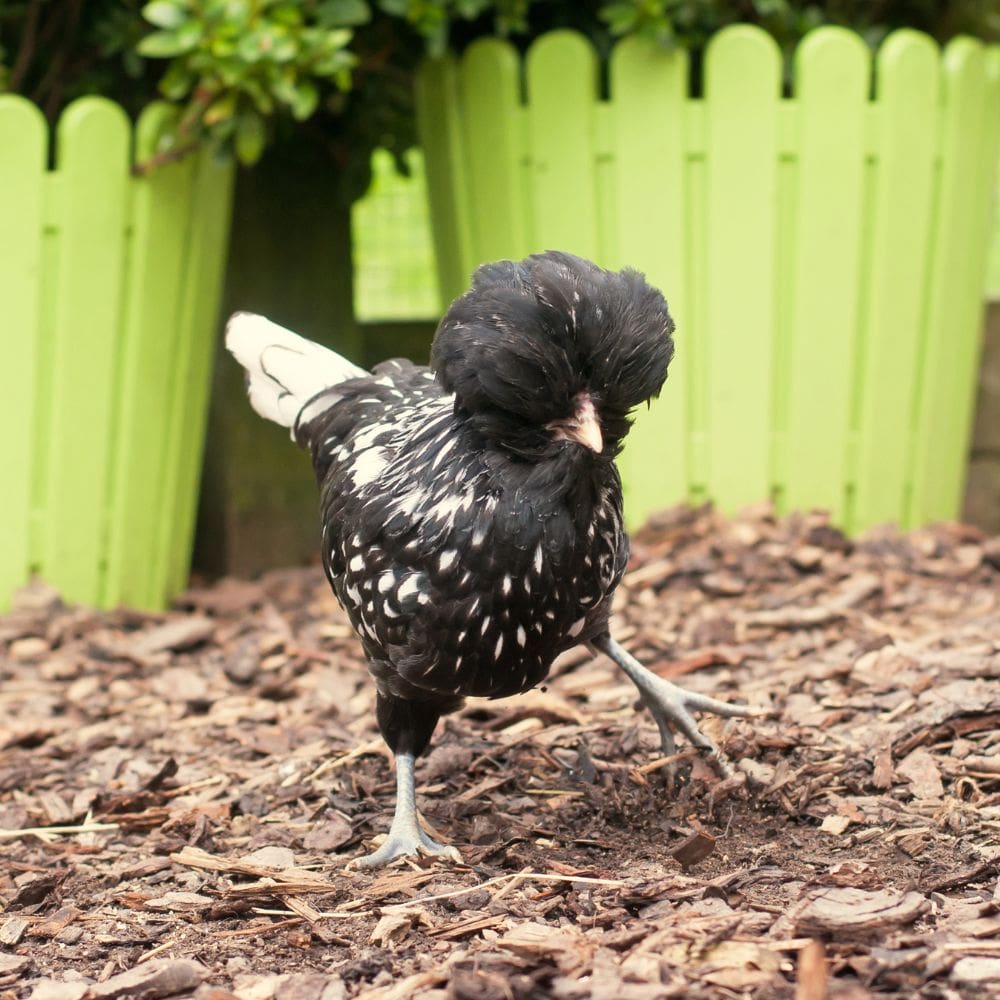
Polish bantam chicken looking extra cute

Araucanas

These South American birds are known for their blue eggs. They’re a very distinctive breed – they’re “rumpless” and have no tails to speak of.  They are friendly and come in a variety of colors.

Like most other bantam varieties on this list, Araucana eggs are quite small. But they lay fairly abundantly – you can expect about 150 blue eggs per year. 

Frizzles

Frizzles are an odd addition to this list. Sure, they are generally excellent layers that can produce about 200 eggs per year. But what really sets them apart from most other chicken breeds on this list is they aren’t actually a breed. They’re a variation of a breed. Meaning, out of 2 parents, in any given clutch, some of the offspring will have frizzled feathers, and some won’t.

Frizzles are birds that have a quirky genetic disposition for feathers that curl outward, whereas most other chickens have feathers that lay flat against their bodies. They’re delightfully quirky looking as a result.

Two things to consider with these birds is that most frizzles are not cold hardy. Because their feathers do not sit flush, they are susceptible to chills in really cold weather.

The other thing to keep in mind is that the number of eggs they produce will intimately reflect the tendencies of their base breed. If you have a Cochin frizzle, it will lay a solid 200 eggs per year, but if you have a Japanese bantam, you’ll get less than half that amount – about 75 max! Either way, be sure that they have lots of protein from a good, non-GMO source. Try these treats out for starters.

Polish Bantams

These funny-looking characters are some of the friendliest chickens out there! The tufts on their head are actually extra feathers.

Polish chickens are quirky, funny creatures that are full of personality and love to be held. They’re best known for the tufts of feathers on their head, lovingly referred to by chicken owners as their “pom-pom.” These unique head feathers definitely set them apart.

While there are a lot of Polish bantam varieties out there, I’m partial to Silver Laced. You can expect about 150 white eggs per year.

Dutch Bantam

These are another bantam variety that has the potential to add a rainbow of color to your flock. They originated in Holland. Their officially recognized colors are:

  • Partridge
  • Black
  • Blue
  • Lavender
  • Silver

These are really colorful birds. What’s more, Dutchies are true bantams! There is no larger equivalent. These are a special breed designed for their compact sizes and about 160 to 200 small cream-colored eggs each year. 

Barbu d’Uccle

In French, the name means “Beards of Uccle,” and their beards truly are a delight to run fingertips through. These are a newer variety of bantam chicken, but boy are they colorful! They come in:

  • Blue
  • Lavender
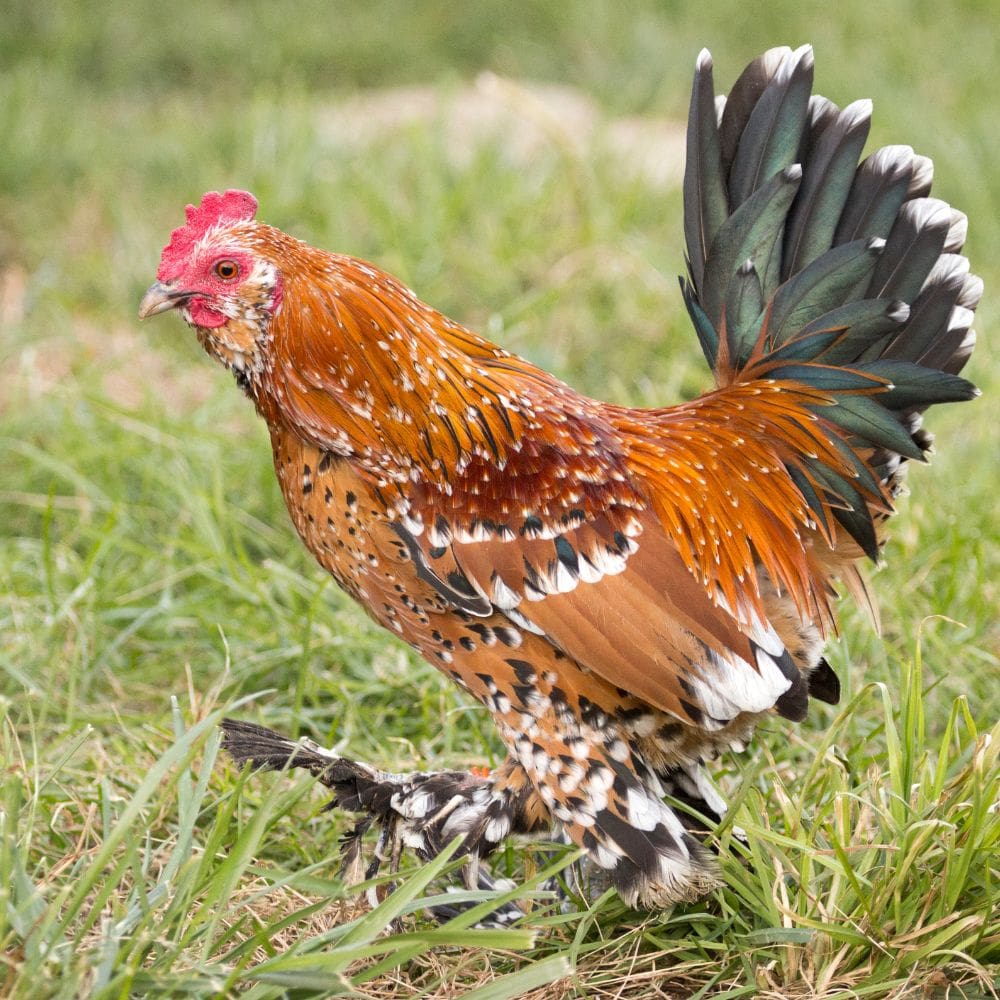
  • Mille fleur
  • Porcelain
  • Mottled
  • Black
  • White
  • Cuckoo

For eggs, each year, these lovely birds can deposit up to 200 cream-colored eggs in your collecting baskets.

Mille Fleur bantam chicken standing in grass

Brahmas

While Brahmas are known as a large breed, there is a bantam Brahma variety. These chickens are amazingly sweet. For people with limited space, you’d be hard-pressed to find a hen more ideally suited for urban environments and for cold weather.

These little sweethearts are one of the best egg-laying bantams out there – at over 200 each year. An added bonus is the variety of colors that Brahmas come in. In addition to laying lots of bantam eggs, your flock can be a rainbow of light, dark, buff, black, and white.

Cochins

Like Brahmas, Cochins are known for being a larger breed. But there is a bantam variety, and they’re some of the friendliest chickens out there! I really like my Cochin bantam hens, and recommend them to families with children. If anyone is looking for a sweet, docile breed that’s like toy poodle of the chicken world, Cochin bantams are it.

As a bonus, each hen usually drops upwards of 200 brown eggs every year. They have feathered legs, and enjoy spending time with their humans.

Easter Eggers

No list about egg laying would be complete without mentioning Easter Eggers. With these birds, you can end up with a coop full of a rainbow of egg colors. Because Easter Eggers are mixed breed chickens, they can lay white, brown, cream, blue, green, or olive eggs.

They’re not as friendly as other breeds on this list (in my experience, the Easter Egger bantams tend to be more flighty). But they make up for it with their eggs! You can expect about 200 eggs per year. The color will be dependent on the genetics of each individual chicken.

Chicken Tip

Regardless of the size of your flock members, they all need great nutrition and lots of love. A hen without a good diet won’t lay a healthy amount of eggs no matter the breed. Here is a list of our favorite products that will help your backyard buddies thrive.

Summary

If you want to add some cute to your backyard flock, then try a bantam or two (or three or four…or more). And this article is not an exhaustive list! There are many more. Take Silkies, for example, they are adorable little fluffy chickens that are unique and super sweet. You can also check out the Sebright bantam or the Serama bantam, both irresistible miniature chicken breeds.

They simply make great pets, take up less space, and still have decent egg production. So, get your chicken coop ready and research the types of bantam chicken you might be most interested in.

With the bantam options available, there are two things to keep in mind: the chicken eggs will generally be small (with some possibly even being tiny), and the chickens will be adorable! I hope this list helps you to find the best layers for your goals.