Remembering back to the first and only time my flock ended up with Coryza (a respiratory infection) – I cringe. It was awful. I thought for sure they were all going to die. I also panicked about what to do with my coop and the brooding chicks I was getting ready to introduce to the flock.

Immediately searching all over the internet and checking with the vet and friends with chickens, I was quite surprised to find that there weren’t that many answers out there for me. That is why I feel compelled to educate other chicken lovers about Coryza in chickens.

Pull up a chair and learn a bit about this nasty respiratory infection so you can be proactive and prepared.
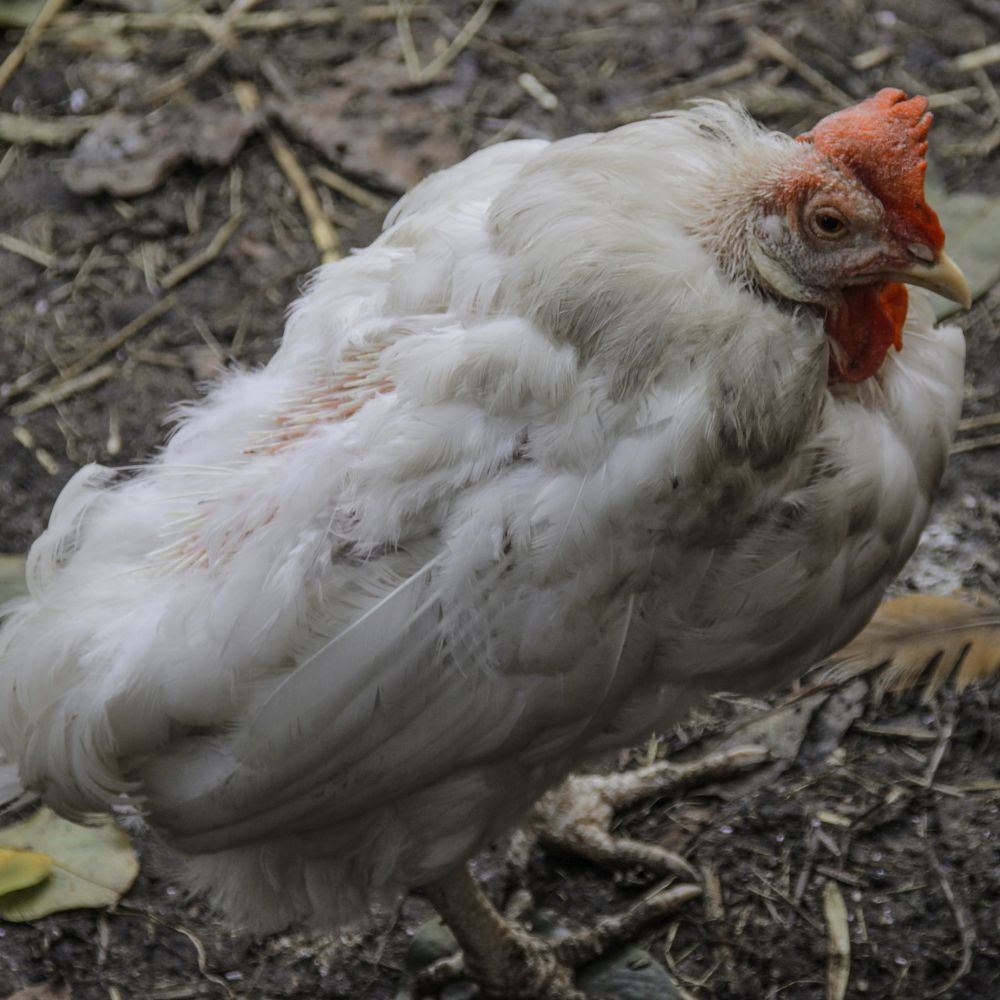
Sick chicken standing on twigs and leaves

What Is Coryza?

I’ll tell you in laymen’s terms here in just a bit. But first, let’s consult the professionals about poultry Coryza- the Merck Veterinary Manual.

Infectious coryza is an acute respiratory disease of chickens caused by the bacterium Avibacterium paragallinarum. Clinical signs include decreased activity, nasal discharge, sneezing, and facial swelling. Diagnosis is based on PCR assay, bacterial culture, or production of typical clinical signs in susceptible chickens following inoculation with nasal exudate from an infected bird. Early antibiotic treatment may help infected birds recover. Prevention is based on sound management practices, including appropriate biosecurity measures and vaccination with serovars present in the local population.

Merck Veterinary Manual

I promised laymen’s terminology, so here I go. It’s a common cold. However, it can be far more dangerous than a human cold so keep reading.

How Does Coryza Spread?

Coryza can be spread in several ways. It is commonly spread through teeny tiny droplets in the air (airborne), via contaminated water, feed, bedding, and directly between birds. Pretty much just like the human cold.

As we learned from Merck Veterinary Manual, this bug is caused by bacteria (or a bacterium) called Avibacterium paragallinarum. Big words, big problems.

What Causes Coryza in the First Place?

It is mostly found in overcrowded coops or coops that are not cleaned on a regular basis. Like most bacteria, it thrives, survives, and multiplies in dirty, damp, breeding grounds (i.e. a dirty coop without good ventilation).

However, I know from first-hand experience that a coop that is kept clean is not exempt from this bacteria. I’d say it’s rare, but it is possible.

Bringing new chickens from anywhere, such as a swapmeet, the fair, or a private seller, increases your chances of infecting your flock. Also, exposing your chickens to other places, like showing them at a fair, can be a risk too.

Am I telling you to never buy a chicken from an outside source again? Or am I telling you to never show your chickens? NO! We can’t live in fear. However, we need to use good judgment and adopt good hygiene management.

Large operations with huge layer flocks or meat birds are more likely to fight this bacteria simply due to the number of chickens they have.
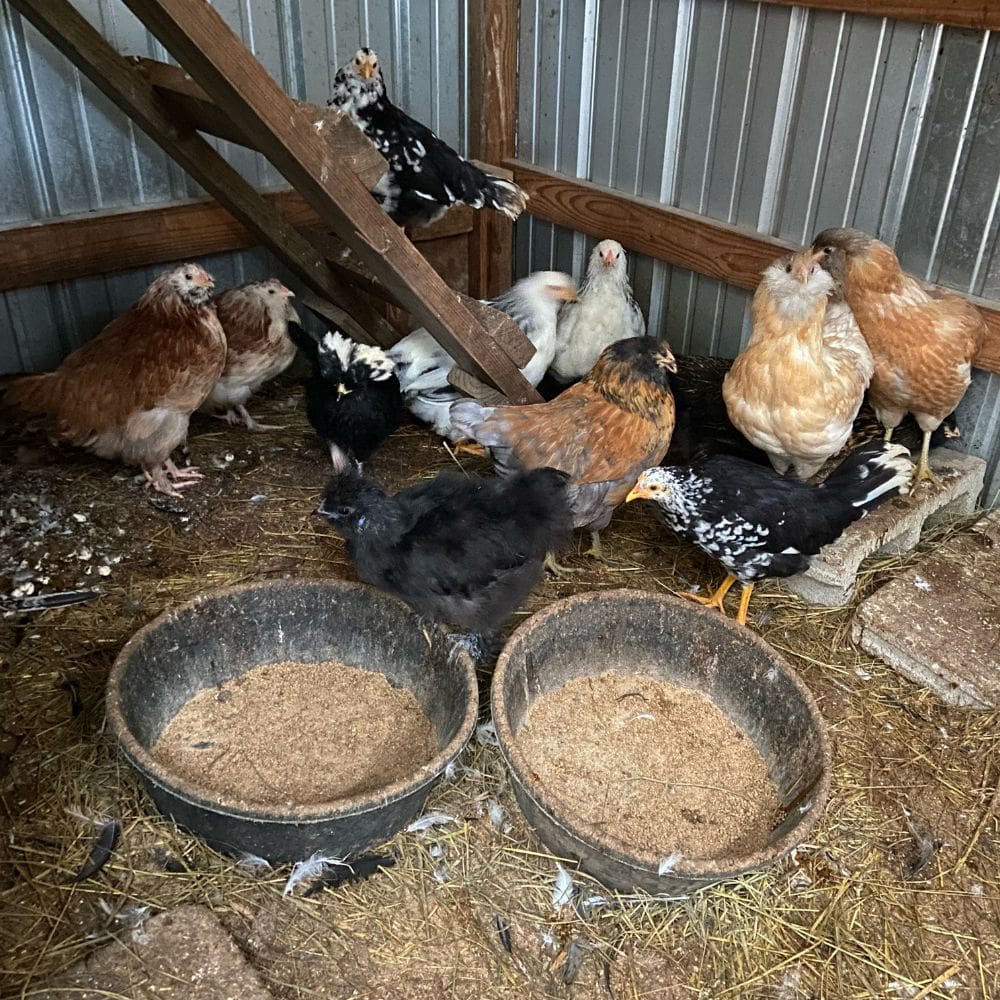
Dirty chicken coop

Incubation Period

How long does it take for this bacteria to be introduced before symptoms show their ugly heads? It only takes 1 to 3 days. The next couple of days following that will be the most noticeable symptoms.

Symptoms of Coryza

  • Nasal discharge
  • Lackluster in general
  • Coughing sounds
  • Lethargy
  • Diarrhea
  • Reduction in egg production
  • Pale combs
  • Conjunctivitis
  • Rattling breathing sounds
  • Heavy breathing
  • Eye and nose discharge
  • Sneezing (yes chickens can sneeze)
  • Swelling of the face (in some server cases)

The one time my chickens had a respiratory condition, I first noticed when I went to close their coop door. I walked in and it sounded like a sick ward in the hospital. The sounds were almost like snoring sounds, but it was a crazy rattling sound in their breathing. Obviously their sinuses were not okay.

I couldn’t believe my ears. Thinking my flock was in danger caused panic down deep in my chicken-loving soul. I did find a solution which I will share with you after a little more info you need to know.

Can Humans Catch Coryza From Chickens?

Nope. This is refreshing news. Coryza is not a zoonotic illness which means it cannot pass between animals and humans (unlike the Bird Flu, which can). You won’t need to keep your kids away from your chickens.

Can I Eat Eggs From Chickens With Coryza?

Yes, you can. The bacteria does not make its way into your chicken’s eggs. This is also great news! While you are doctoring your flock, you can get all the energy you need from their eggs. The only downside is that, sometimes, their egg production will decrease when they aren’t feeling well.

Coryza Treatment

Ok, your chickens are sick. You suspect Coryza or your vet tells you that your chickens have this nasty bug. In my case, I don’t have a vet in the area that sees chickens so I either rely on Dr. Google or Dr. Me (or on a friend that has experience).

Coryza is a bacteria and therefore can be treated with antibiotics. Like humans, the type of antibiotic you need to use is based on the type of bacteria you have. This is the tough part if you don’t have a veterinarian that is willing to take a chicken as a patient.

If you have a vet (which would be great) that can run the tests you need, they can tell you exactly what kind of antibiotic you need to treat the particular bacteria. They will usually just need to see one chicken, not the whole flock and they will perform a bacteriologic culture or PCR assay.

The most common antibiotics used are streptomycin, erythromycin, or sulfonamides. Although Coryza is known to be resistant to sulfa drugs, but not always. It can depend on what region you live in.

Natural Remedies For Coryza

You can find many natural concoctions on the web to treat Coryza in chickens just like you can for humans. They are your chickens, and you have to decide what risks you are willing to take. Keep in mind there are risks with antibiotics as well. Do your research and make the best choice you can.

Garlic, ginger, honey, and lemon are some of the ingredients mentioned quite often. Cider, vinegar, and electrolytes are also very popular suggestions.

Keeping in mind that I am not a veterinary, nor am I a medical expert…I have my own personal story to share from when my flock was plagued with a horrible respiratory illness.

As I mentioned before, I don’t have a vet that takes chickens. So, I consulted with Dr. Google and decided I needed to find an antibiotic that I could put in my chickens’ water. After going to many stores, one nice clerk told me that a prescription is required for what I was looking for. She then went on to tell me about her Grandfather.

Apparently, her Grandfather would give his chickens certain herbs and spices for respiratory issues. I immediately went searching for more info. I gathered what I had available in my own pantry and served it to my very sick chickens.

It worked! It actually solved their problem in THREE days! I was truly amazed. So, what was this mix? It was simply a half cup of dried oregano, a half cup of powdered garlic, and a fourth of a cup of cayenne pepper. I mixed it all up and sprinkled a few tablespoons on the chicken feed each day twice a day.

I keep my coop clean, but I went ahead and gave it a thorough cleaning and spread some lime around before putting the sawdust mix I use for the floor. It’s important to remove all you can to avoid the continued growth of the bacteria.

This is a one-time anecdotal story, but it’s my story and I will stand by it. Another tip is that this mix can be used for prevention too.

Prevention Methods

How do you prevent an outbreak of this bacteria? Of course, there is no one way, it’s a combination of things. Some of these things will help prevent an outbreak, but will also help slow down the transmission of the bacteria.

  • Keep your coop clean and dry
  • Be sure to have proper ventilation in your coop
  • Regularly clean the premises where the chickens spend most of their time
  • Give your chickens vitamins (they need the extra support to boost immunity)
  • Vaccinate your chickens
  • Use herbs, spices, and other natural remedies and prevention recipes
  • Quarantine or isolate new birds for 30 days before introducing them to your flock
  • Use products like Breathright to give your flock a helping hand to respiratory health

As mentioned, large operations have the most risk. It’s especially important to consider vaccinations and other measures if you have a high quantity of chickens (more than just a backyard flock).

Can Chickens Die From Coryza

Even though this is the same thing as a common cold in humans, it can be much more dangerous for chickens. It can, and does, take their lives.

Oftentimes, when a chicken gets infected with this bacteria it can get a secondary sickness because its immune system is compromised. This is where they enter the danger zone most of the time. When they get an overload of things to fight off, they can have a decreased appetite and reduced water consumption. Both of those things are necessary for a happy, healthy life.

According to the Extension website, mortality can be as high as 50%, but 20% is more common. The disease can last as little as a few days or as long as a few months, mainly when secondary infections occur.

In the personal story I’ve shared with you, I did not lose a single chicken. Let that provide some hope for you if you are currently faced with this situation.

Summary

Coryza is a nasty bacteria that causes respiratory illness in chickens. It is similar to the common cold for humans, but poses a bigger risk for chickens.

Keeping a clean coop and providing high quality feed and vitamins for your flock is your best method of prevention. There are a few other things you can do which we discussed in this post.
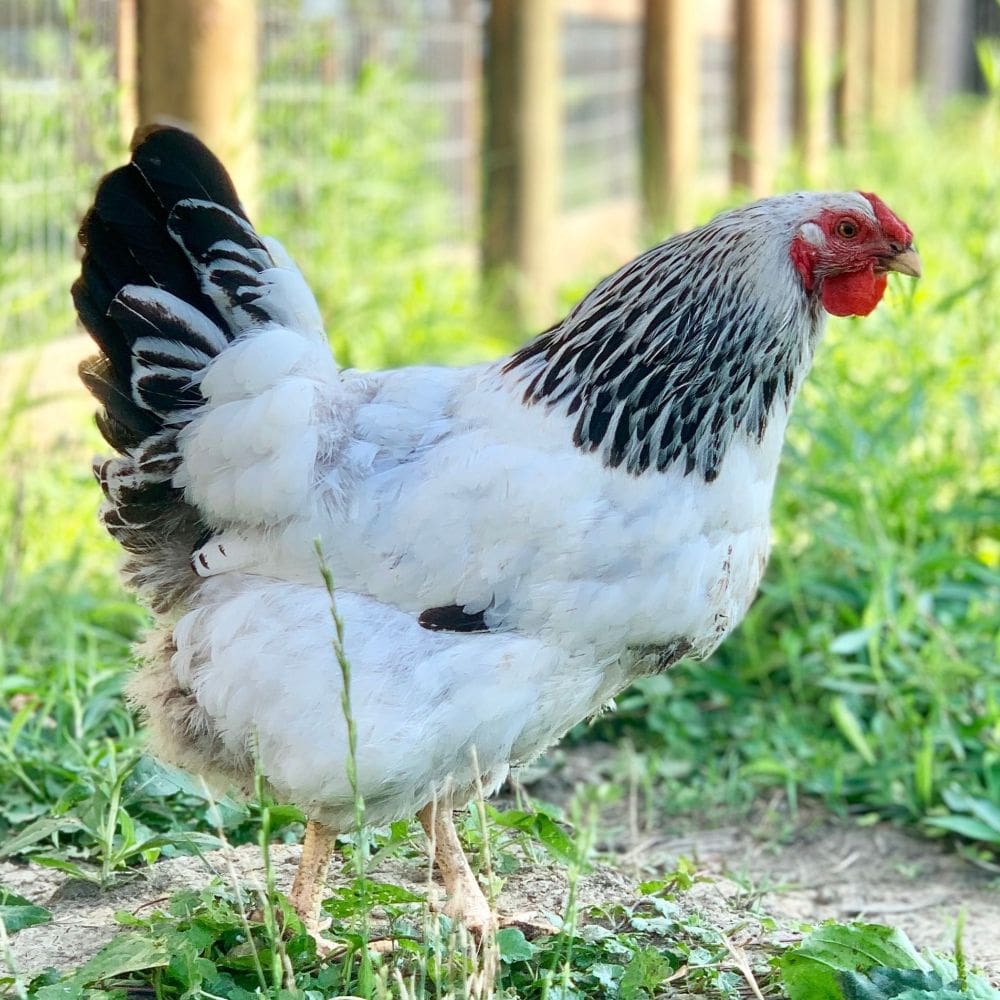
If you’re looking for an ideal backyard chicken, the Columbian Wyandotte is a perfect choice. These chickens are visually appealing with their striking, black-and-white feathers and are also quite hardy and easy to take care of.

Columbian Wyandottes are a unique breed that many simply haven’t heard about before. Let’s do this thing and learn all about the Columbian Wyandotte – the best unknown backyard chicken.

Columiban Wyandotte chicken standing on green ground cover with fence in background
Meyer Hatchery Photo

Columbian Wyandotte Breed History Snippet

Did you know that the World’s Fair that was held in Chicago back in 1893 was also referred to as the Columbian Exposition? You might guess why…and it has to do with Christopher Columbus. That exhibition was aimed at celebrating the 400th anniversary of Christopher Columbus’s arrival in the New World.

It’s weird but true and the Columbian Wyandotte knows all about it! Why? Because this breed’s debut was as this exact exposition and it became called the Columbian Wyandotte. Columbian because of the name of the exhibition, and Wyandotte after the Native American tribe called Wendat (although it’s a bit of a mystery as this breed has no specific ties to that tribe as far as we know).

The Columbian variety is not the only one though, there are many varieties of Wyandotte chickens. The first strain that was accepted to the American Standard of Perfection was the silver-laced Wyandotte. They are lovely as well, but let’s not get sidetracked…let’s stick to the Columbian.

Columbian Wyandotte Appearance

Lovely. Adorned. Stunning. I just love the look of this pretty lady chicken. These girls have a special little notch in my heart because my daughter owned one, which she endearingly named Banana (you can guess their color as chicks). Banana was a beauty for sure. Although she had some name identity questions in her adulthood! 😆

The Columbian Wyandotte is the result of crossing a white Wyandotte and a barred Plymouth Rock. The combination was a winner in every way.

This breed is mostly white (super fluffy) with artistically placed black feathers as a collar around its neck with a matching array of black feathers blended throughout its tail feathers. There’s just something special about the simplistic, yet complex, combination this makes.

They have a rose comb and a plump body, which is especially beneficial if you live in cold climates. Both hens and roosters have wattles and yellow beaks.

They are nice in size with hens weighing around 6 1/2 pounds and roosters weighing about 8 1/2 lbs.

Temperament of Columbian Wyandottes

This breed is great for beginners because they are pretty laid back. Certainly not aggressive birds, and oftentimes pretty docile. If you handle them a lot as chicks and while they are growing, and you give them treats to know you are their best friend – you will have friendly birds.

Simply put, this is a docile bird in the chicken world.

Need To Know Facts About Columbian Wyandottes

  • Egg happy chickens that lay around 200 to 250 medium eggs a year. Pretty good.
  • Their medium size lends well to provide meat (if you are interested in dual-purpose chicken breeds).
  • Cold hardy extraordinaire! With fluffy feathers and a rose comb, these birds know how to handle cold weather better than your average chicken.
  • Excellent free rangers! They LOVE hunting and pecking all the live long day! Goodbye ticks and other irritating bugs!
  • Even though they love to free range, they are also content in confinement.
  • Columbian Wyandotte chickens lay brown eggs (which is all the rage).
  • If you allow them to hatch some chicks they are excellent mothers.
  • Recognized by the American Poultry Association, or the AP, back in the 1800s.
  • Columbian Wyandotte chicks are yellow and grow into white and black feathers.
  • They can be confused with Delaware chickens, but Columbian Wyandottes have a more defined black collar around their necks.

How To Care For a Columbian Wyandotte

If you have other chickens then you pretty much know how to care for this breed. They do not need any special care. Simply provide fresh water, plenty of shade, predator-safe housing, oyster shells (provides calcium), a high-quality feed full of protein, and some good nesting boxes – and you are set.

A quick note about feed. It’s important to feed a high-quality feed (check this one out, I promise you won’t see the same ingredients in average farm store feed). Otherwise, you will see more health issues and less egg production. You are what you eat, and it’s no different for our beloved pets.

One thing to be on the lookout for are parasites. My favorite way to help fight these nasty creatures is by putting these herb blends right in their laying boxes. They love them and they repel things like mites and provide many other health benefits.

Where To Buy Columbian Wyandottes

Click on the names of the hatcheries below. They are some of my favorites and the links will take you right to Columbian Wyandottes.

Summary

If you are looking for a lovely and useful breed to add to your backyard flock, but want a unique breed of chicken that isn’t in every barnyard – then a Columbian Wyandotte might be your next backyard buddy.

Want to learn about other Wyandotte chicken varieties like the Black-Laced beauties or the Blue Laced Red lovelies? Wyandottes are some of the most strikingly beautiful chickens and great egg layers. Click here to learn more.

What comes to mind when you hear these attributes: beards, 5 toes on each foot, and muffs? Did Faverolles chickens come to mind? Probably not.

Finding a breed of chicken with such oddities could certainly make your home flock the talk of the town. If this is what you’re after, then a Faverolles Chicken is for you!

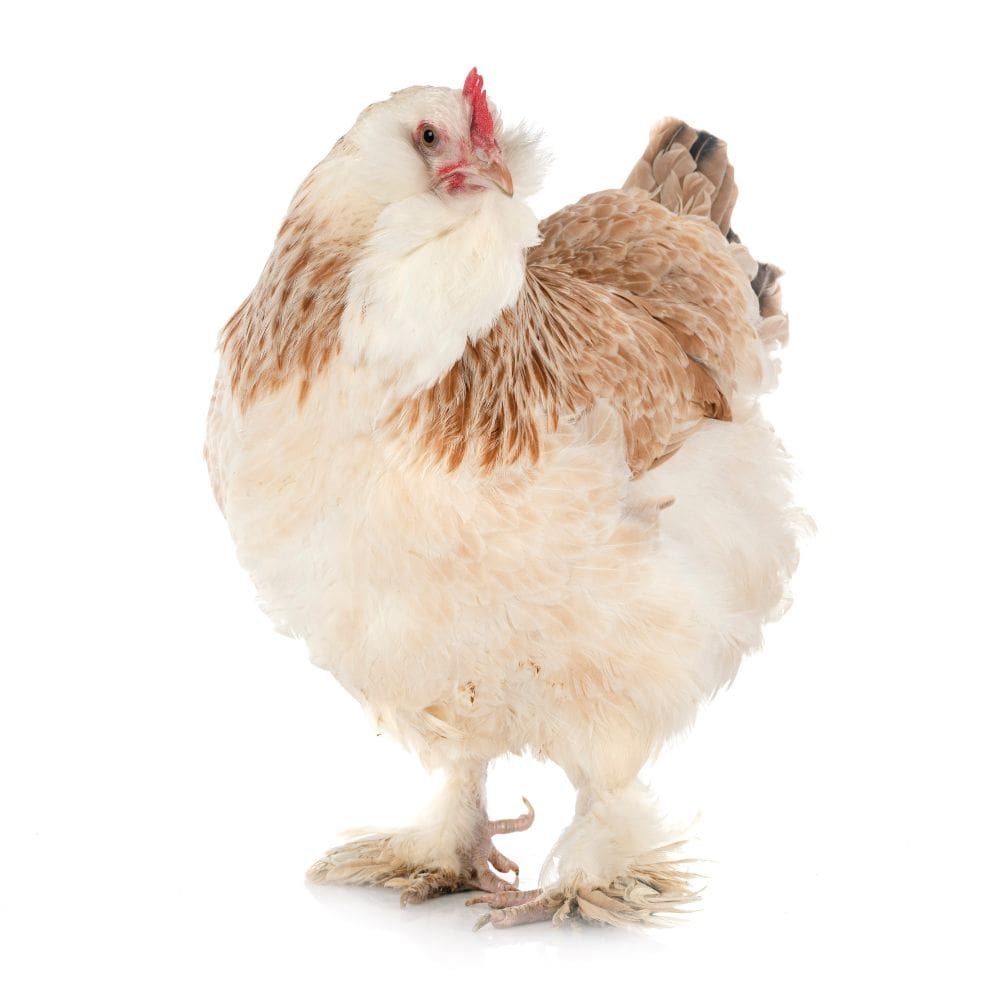
Salmon Faverolles on an oll white background

What are Faverolles Chickens?

Faverolles are a French chicken breed. They take their name from the French village that they were first bred in, Faverolles, which is about 50 miles northeast of Paris.

There are no records of the creation of this breed, so we have no idea WHO actually founded this breed. But we do know that Faverolles are a genetic mixture of Houdon, Brahma, Crêve-Cour, Dorking, and Cochin chickens.

Like most breeds with a long heritage, Faverolles were first bred for the dual purpose of eggs and meat. 

At the time of their introduction to the markets of France, they took to close confinement better than other breeds, like the Houdan. This quickly brought them to the forefront of the poultry market, and by 1886 or 1894 (depending on your source), they found their way across the English Channel. The Faverolles were quickly developed to exhibition standards in England. 

They came to the USA in the first few years of the 20th Century and settled in Glens Falls, NY, not far from the state capital of Albany. Since then, this docile breed has served Americans in three distinct ways: as food, for their eggs, and as a show breed.

5 Amazing Faverolles Chicken Facts

  • They have super soft and downy feathers.
  • They are a truly all-purpose breed, serving as excellent layers and lovely show chickens.
  • They are super-cuddly, sociable, and love attention and kisses. 
  • Roosters and hens are two distinct colors: with the males being a greater mix than the two-toned females.
  • The word “Faverolles” is French. As a result of this, the tail “s” is silent, so the pronunciation of the singular and plural is both “fa-ver-ell” or “fa-ver-oll,” though an Anglicized “fa-ver-olz” isn’t unexpected. The spelling of both singular and plural is both “Faverolles”, however. 

Faverolles Chickens Appearance

What are the Distinguishing Features of a Faverolles Chicken?

Physically, Faverolles are quite unique. The first major difference is their toes. Most chickens have 4 toes, but, like Silkies, Faverolles have five toes. 

Faverolles possess a beard under their beaks as well as ear tufts that frame their faces in a lovely poof. It adds a noticeable layer of fluff to their appearance and makes them look particularly inviting to children. And like other breeds, such as Black Copper Marans, they have feathers on their legs. 

What is the Color of a Faverolles Chicken?

The most common color varieties of Faverolles are White and Salmon, as these are the official colors registered by the American Poultry Association. There are a number of other color varieties including Mahogany, Black, Buff, Blue, Blue Salmon, Cuckoo, Ermine, Laced Blue, and Splash. 

The most notable of all Faverolles are Salmon Faverolles. Salmon hens have white to light caramel breasts and underbellies, but sport a splash of rich color on the hackle, back, and wing. The colors of their backs are a light pink salmon through a darker bronze. White Faverolles also have this color breakdown, though their back coloring is far lighter, from white to a cream.

Males are quite different and boast a wider splash of colors. The average rooster has a thick black beard, breast and undercarriage. Splashes of straw or dark straw stretch across his upper wings, and spot his hackles, back, and saddle. White compliments his colors: around his neck, spotted along his back, and the triangular tips of his wings. 

Chicks start off as downy fluffs of yellow, but once their feathers start coming in, you’ll see the salmon coloring replacing their yellow. 

Their faces, comb, and what little wattle that they have are red. In addition to being covered by their beards, the wattle is almost non-existent, so don’t worry if you never actually see it.

Faverolles have bay-colored eyes. Their single comb is medium in size with five points. Their skin and legs are white.  

What are Faverolles Chicken Feathers Like?

Faverolles feathers are soft, fluffy, and downy. Their beards and muffs are particularly soft, and snuggling up against them could easily distract you from other necessary activities.

With such lovely soft, fluffy feathers, you might find yourself spending extra time keeping them clean, so be warned! But really, Faverolles are such a delight to be around that this is no real chore. 

How Large Do Faverolles Chickens Get?

Faverolles were first bred for their meat, so a large breast and dense mass are a must for these birds. They do not stand as tall as some chicken breeds, nor are they ground huggers. Male Faverolles can stand in a proud manner, giving them a rather regal look especially with their thick beards. The American Poultry Association Standard suggests the following weights: roosters are about 8 lbs, and hens are about 6 lbs. 

There are also Bantam varieties. Bantam roosters weigh about 3 pounds and hens weigh between 2 and 2.5 pounds.

Three Faverolles chickens standing on earthy area

Faverolles Chickens Personalities

Faverolles Hens Personalities

In a word – cuddly. In a few more words, Faverolles are friendly, cheerful, full of life, and loveable. These are the types of chickens that will welcome visitors with curiosity and will beg for a seat at the table, preferably in a lap. This also makes them excellent backyard birds for kids.

Faverolles were originally bred for their meat and large egg production, but their endlessly affable personalities have really surmounted these uses. Faverolles are excellent show chickens that love attention and are gluttons for the spotlight. 

They are excellent in confinement and do just as well on smaller farms as they do free-ranging in your yard. 

Faverolles Rooster Personalities

The quiet, docile nature of the females can also be apparent in the males. Faverolles roosters are calm, peaceful, and exhibit non-aggressive behavior. 

Are Faverolles Hens Broody?

There is an occasional tendency for Faverolles hens to go broody. In a strange contradiction of how they do everything else in life, they don’t obsess over it. If you do get the occasional hen that has gone broody, breaking her of that shouldn’t be too difficult. 

Faverolles Chickens Egg Production

When Do Faverolles Hens Start Laying Eggs?

Faverolles hens are fully mature and are generally ready to lay about 6 months into life. They are excellent layers and should have no problems laying eggs all throughout the year, including colder winter months. 

How Many Eggs Does a Faverolles Hen Lay?

If you’re looking for a good egg-laying breed, these girls are not too shabby. Faverolles hens lay in the 180 to 200 egg per year range. 

Faverolles Chickens Egg Color

Faverolles chickens lay medium cream-colored eggs. 

Are Faverolles Chickens Rare?

This is an excellent question. When they were first bred, their even and accommodating temperament lent them to take the number one sales slot from their country cousins, the Houdon. In their travels, however, they lost this distinction.

The British were the first to breed them into the show chickens that they have become. Upon their arrival in the USA, their primary duty has been the show ring. Today, they are mostly used for the novelty of their loveable personalities.

While it certainly is possible to find them for sale, Faverolles are considered rare. They are nowhere near as easy to find as, say, the Rhode Island Red

Are there any Specific Health Problems with Faverolles?

A lovely beard might look amazing, but there are some drawbacks to having one. When it comes to your Faverolles, this is an increased susceptibility to lice. Try using something like these nesting herbs, as thier beards, tufts, and leg feathers are quite susceptible to lice. 

Those fluffy feathered legs are also at risk of another big problem: mites. These can become a very big problem, so like with the lice, regular checks are a must. You can also be proactive with MitesBGone and you won’t regret it.

Another health problem that Faverolles are susceptible to is vastly different from the other health hazards mentioned here. Because they are so easy-going and carefree, they occasionally become the proverbial punching bags of other chicken breeds in your flock.

If your Faverolles do become the targets of in-pen bullying, you might want to think about separating them from the bullies. 

In good living conditions with good care, your average Faverolles can live a good five to seven years.

Can I Buy Faverolles Chicks? Where are Faverolles Chicks for Sale?

  • Purely Poultry, out of Fremont, WI, offers a supply of female, male, and non-sexed Salmon Faverolles. 
  • Hoovers Hatchery, in Rudd, IA, day-old males, females, and unsexed Salmon Faverolles are available at various times of the year. 
  • There are also periodic supplies of Salmon Faverolles at My Pet Chicken in Monroe, CT. 
  • Seasonally, from February to July, you can find Salmon Faverolles at Cackle Hatchery in Lebanon, MO. You can read our review of Cackle here.
  • Meyer Hatchery in Folk, Ohio, also has seasonal supplies of Faverolles. 

Summary

Is the Faverolles the right chicken for you? These birds can fulfill just about any need you might have, whether it is for food, eggs, exhibition, or even just chilling around the house. They have such big personalities that you won’t regret bringing them into your family. 

Have you ever been relaxing on your back porch, gazing out over your beautiful land, and watching your chickens do the backstroke across your pond? Not likely. But can chickens swim? Perhaps I have captured your attention.

Put your swimsuit and goggles on and let’s swim on through this whimsical topic.

Whimsical chicken on all white background

Are Chickens Equipped To Swim?

Have you heard a phrase something like “She takes to dancing like a duck to water!”? Ducks have webbed feet and oily feathers which makes them excellent swimmers. I don’t have webbed feet or oily feathers, and I can still swim like a fish. What about chickens? They don’t have webbed feet either, plus a chicken’s feathers aren’t waterproof like a ducks – but did you know that they CAN swim? Funny picture, I know.

When chickens get wet, they resemble soggy poodles. They look half the size they normally do with their fluffy feathers, and they hardly resemble a chicken at all in their soggy state.

I have a pond and I’ve never caught any of my chickens performing the backstroke, or any type of swimming moves for that matter. However, after researching the topic – I now know they can swim if they want to, or if they are forced to for some unpredictable reason (like the incident that MIGHT happen after my 11-year-old son reads this post). 😉

Can Baby Chicks Swim?

Adult chickens have lots of tight feathering which makes them appear to simply float in the water. Baby chickens, or chicks, do not have the same tight feathering and therefore, cannot float or swim.

Plus chicks need to stay really warm, hence the reason you start them in a brooder at around 100 degrees. Getting them wet could easily lead to their death. So don’t even try it. Okay? 💞

In fact, it’s even a good idea to ensure their waterer is shallow so they don’t walk into or fall into their water while brooding.

Are You Sure A Chicken Can Swim?

Although I’ve never introduced one of my own chickens to swim classes, I’ve seen plenty of examples on the internet. It’s not only entertaining to watch, but inspirational! Watch one of my favorites in the video below.

Can Chickens Swim In My Swimming Pool?

Yes and maybe. You might want to follow the old advice “What’s good for the goose, is good for the gander.” Meaning, if you find it safe for you and your family to swim in a sea of chorinated water, then you probably aren’t going to mind your chicken joining in.

Since chicken swim teams are not yet a thing, there really isn’t much information out there about the safety of chickens being submerged in pool chemicals. If you let your chicken swim in your pool, watch it carefully for any adverse reactions.

It may be worth just filling a kiddie pool with natural water and introduce your flock to that as a starting point.

Do Chickens Enjoy Swimming?

I’m not sure we will ever truly know the answer to this question. It certainly appears, by the online videos, that some chickens do actually enjoy swimming. Or at least they don’t appear to hate it. Many of them are quite good swimmers, although they don’t have the same forward momentum as ducks with webbed feet.

While they do have the innate ability to swim, it’s likely more of a survival instinct. If the bird is put into water, and doesn’t start to paddle, it’s going to sink and die. They somehow know this, much like most puppies know this very same thing.

If you try this swimming gig with your flock, be sure to offer them treats as reward! These are my favorite protein packed chicken treats.

Tips For Swimming Chickens

  • Do not leave your swimming chicken unattended.
  • Don’t force a hen to swim.
  • Be sure the chicken can exit on its own if it wants to in order to prevent drowning – you may consider some type of ramp.
  • Avoid deep water so you can help your chicken if it finds itself in a panic.
  • If your chicken doesn’t “paddle” you may have to hold it up so it doesn’t sink.
  • Remember to only allow your chicken to swim for short periods of time to avoid fatigue. If they like it and have several lessons, then you can work up to long periods of time.
  • Dry your chicken off after a swim, especially on a colder day or if they were in cool water, to prevent them from getting chilled and experiencing hypothermia.
  • Keep in mind your chicken does not have waterproof feathers.

Summary

Now you may be able to do more than imagine a swimming chicken – you can actually give it a try with your own. I personally imagine I would end up on a “failed it” video, but maybe you can “nail it!”

Just remember to be kind to your feathered friends. Just because they can swim, doesn’t mean they will want to or that they will enjoy it. On the flip side, you may find yourself with a viral video that ends up paying your children’s way through college. Who knows?

Have you ever heard a rooster crowing loudly during the morning sunrise or near sunset? If you have, then you must have wondered “Why do roosters crow?” Roosters have long been an icon of the farm and countryside. They have been used to wake up farmers and announce the start of the day.

But why do roosters crow? In this post, you will discover the answer to this age-old mystery and learn about the fascinating behavior of these feathered creatures.

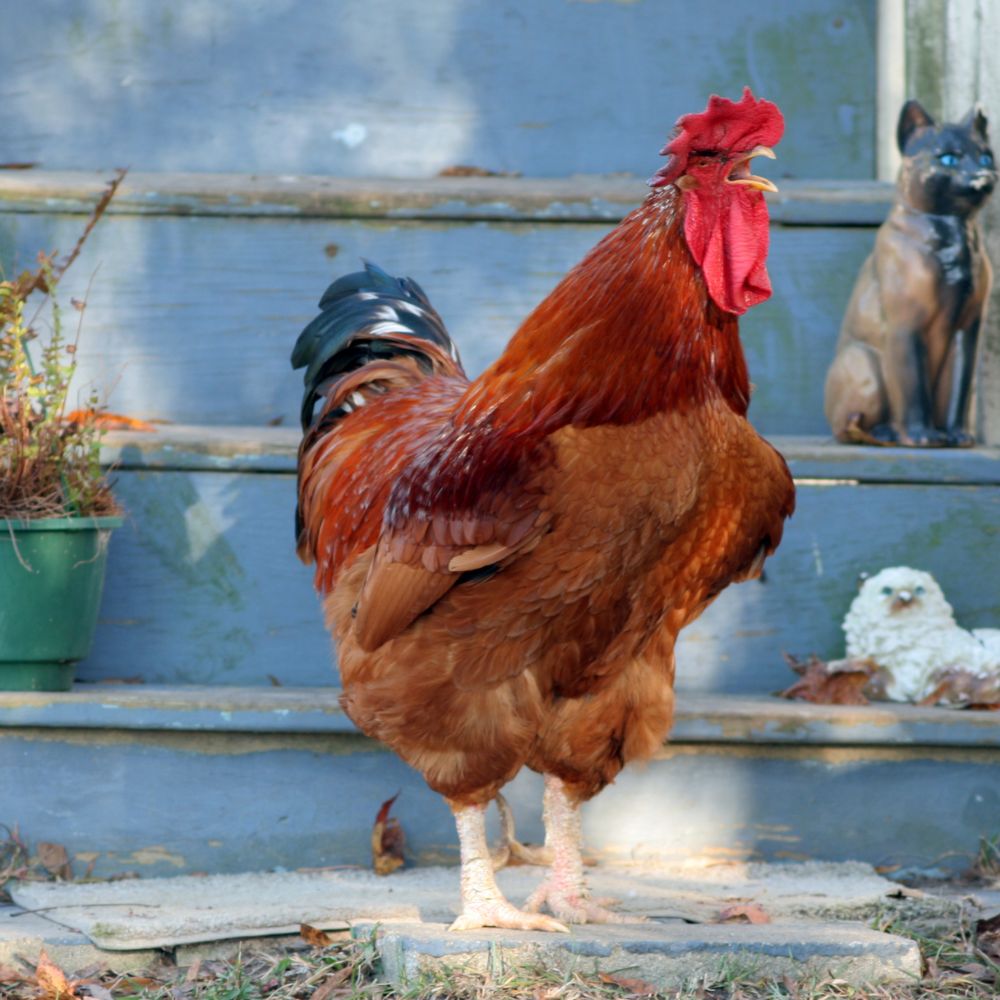
Rooster crowing with front porch steps in background

Why Do Roosters Crow?

Roosters are well-known birds that are found everywhere you look, at least in rural areas. They are usually sporting their bright colors and long tail feathers. They are also known for their loud crowing and often serve as farm mascots.

Roosters are capable of producing many different sounds. They can make clucking noises, crowing noises, and other calls that are used to talk with other roosters and hens.

Their crowing can actually reach the same, or higher, level of decibels as machinery such as a chainsaw! Ouch!

But what does crowing mean?

Don’t Roosters Crow at the Sunrise?

The answer to this question is not as straightforward as it may seem. To the surprise of many new chicken keepers, roosters can crow at all times of day, and often do.

For a long time, it was thought that the morning light was what caused a rooster to crow. However, a few studies have shown otherwise. Scientists have discovered that even when roosters are kept in constant light their internal clock kicks in and the crowing schedule resumes.

They found that roosters have an internal circadian rhythm. This means, that regardless of the light level, roosters will start to crow according to this rhythm. So now we know one of the reasons roosters start to crow a little before sunrise. And here I thought my rooster was a genius!

Do Roosters Crow Throughout the Day?

While it is true that roosters have this internal clock and will often crow at dawn, or even dusk, there are a number of other factors that can cause them to do so.

One such factor is a change in the environment, such as the presence of predators or loud noises. They will send a warning to their flock by crowing and loudly clucking. Thank you Mr. Rooster!

Roosters also crow in order to establish their territory and dominance within the flock. They even crow as changes in their social hierarchy occur.

When a rooster crows, he lets other roosters know that he is in charge and that he is the one who will protect the flock. This is why roosters will often crow when they are feeling threatened or when they sense a change in their environment.

Males will also crow during their mating rituals which supports some claims that a rise in testosterone causes them to want to flaunt their dominance.

Roosters can be quite personable, and it shows. When I visit my coop my roosters will often crow happily at me, as their way of begging for treats! It’s quite cute. If you want to try it, check out my favorite chicken treats (they love these treats and they are packed full of nutrients).

Who’s the Boss?

Roosters, regardless of the breed, are highly social and will establish a hierarchical system within their flock, which is also true of hens. This is where we get the phrase “pecking order.”

Regardless of how many roosters you have in your flock – one rooster will likely become the head rooster.

The dominant rooster, or the boss, will usually be the one that is the most vocal and will often be the one that crows the most. The other roosters in the flock will recognize the roosters’ social rank and will follow his lead.

How Roosters Respond to Different Stimuli

Roosters are also very sensitive to different stimuli, such as light and sound. They will often crow in response to loud noises or when the sun rises or sets. While that is common, you might not know that they will even sometimes crow when headlights or a flashlight shines toward them.

They can also be startled by sudden movements or changes in their environment. As a side note, this is why it’s important to be aware of your surroundings when you are around roosters. You don’t want to surprise your rooster, trust me.

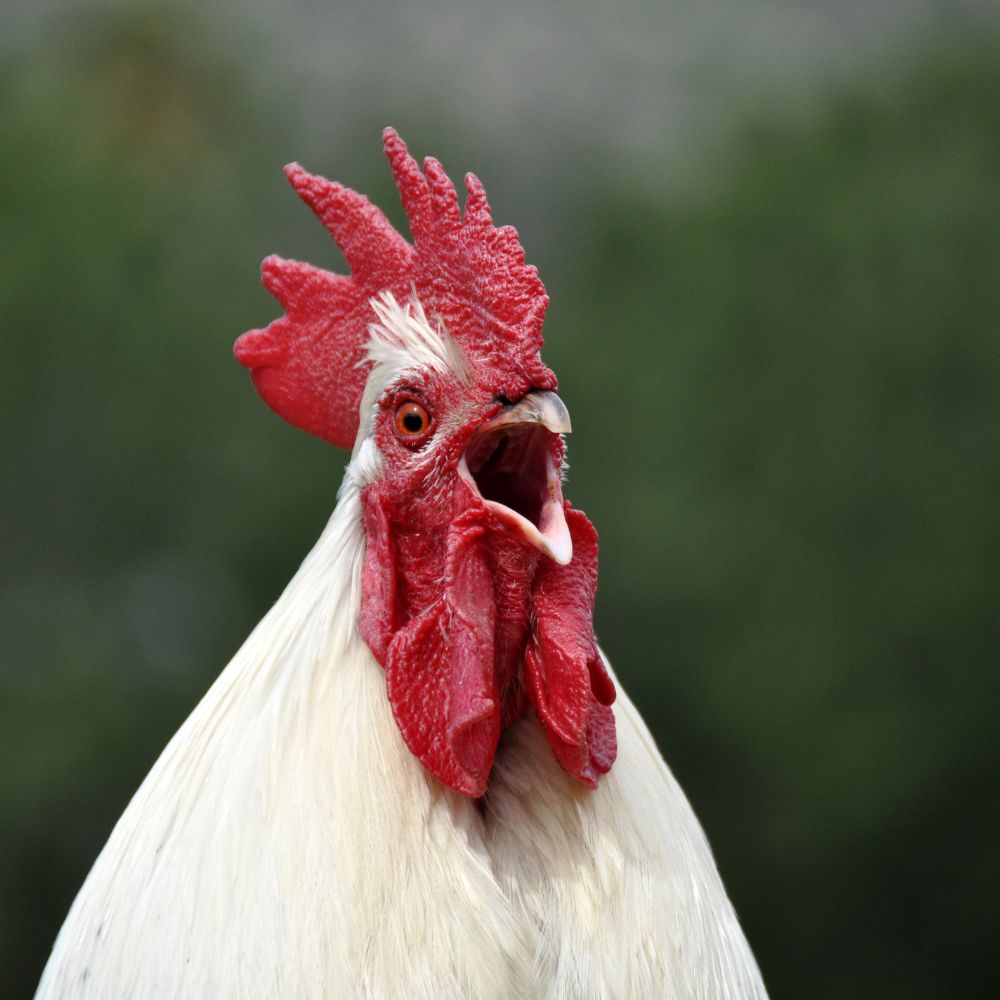
Up close head shot of rooster crowing

The Benefits of Roosters Crowing

Roosters’ crowing is definitely a beneficial thing for the flock. From alerting the flock to potential danger or changes in the environment to establishing the social hierarchy within the flock. But, in my opinion, it can be beneficial for people too.

The crowing of roosters can be a familiar and nostalgic sound for humans. I’ve heard many people talk about how it reminds them of their grandparents or their own upbringing. Not many turn their nose up at the sound of “cock-a-doodle-doo” unless it’s an unwanted alarm clock of course.

Crowing can also alert people. In fact, I’ve gone out to my coop more than once to see what all the crowing was about – only to find an uninvited neighbor dog in the area. It’s also been my call to open the coop door (because I forgot to and the flock is angry).

Rooster Crowing Quick Facts

  • Roosters do not just crow in the morning
  • Roosters have an internal clock
  • Crowing helps set the hierarchy between roosters
  • Roosters crow as an alarm for dangers or concerns
  • Crowing is part of the chicken mating ritual
  • Roosters can crow simply to communicate (just as begging for treats)
  • Crowing can serve as a wake-up call

Conclusion

Roosters are fascinating creatures, and one of their most intriguing (and sometimes mysterious) behaviors is their crowing. Chicken keepers oftentimes want roosters around their coop, not only for their egg fertilizing and protection skills but also for their nostalgic crowing.

Believe it or not, there are even some chicken keepers that have given up stereotypical backyard chickens and have started keeping bachelor flocks. I recently sold a rooster to a lady that keeps a bachelor flock because she doesn’t care about egg-laying. She absolutely loves her little bug-eating colony of roo’s. Read more about bachelor flocks here (it’s an interesting read).

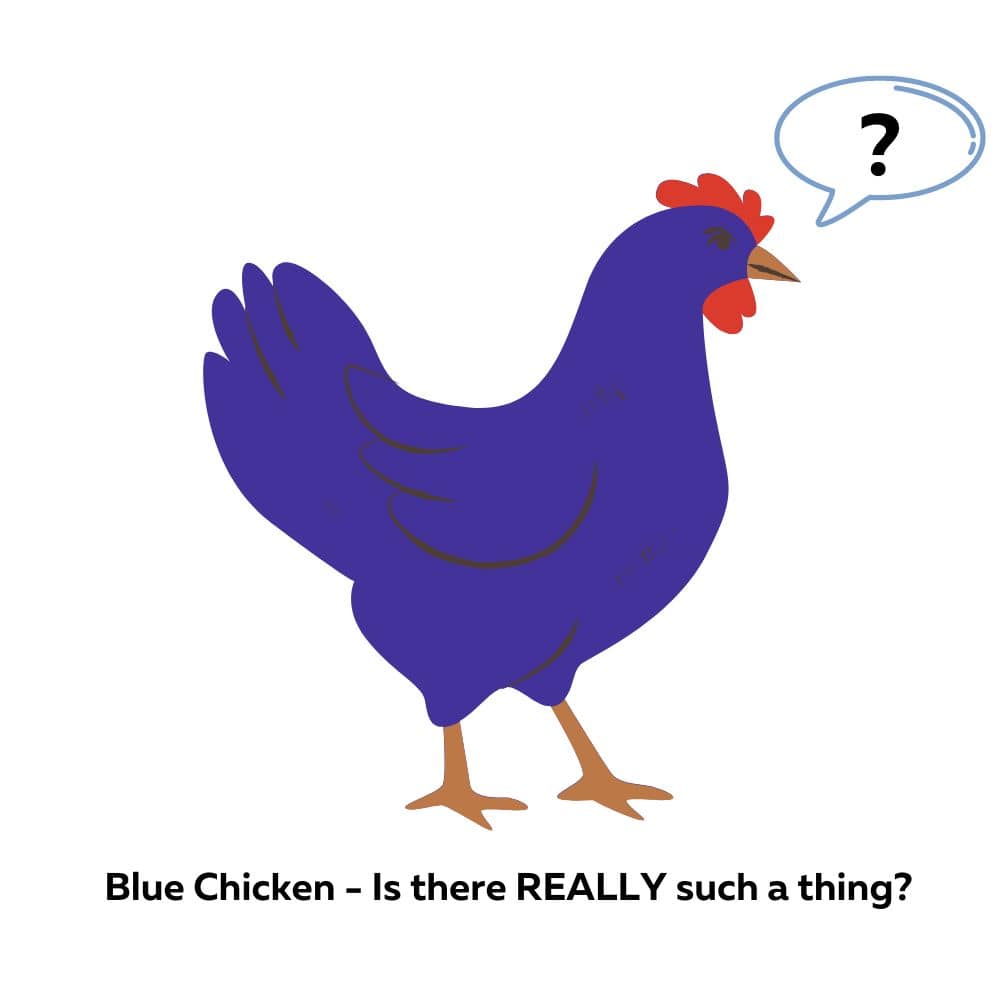
Have you heard of a blue chicken? What comes to mind? What comes to my mind is a cobalt-colored chicken which is incredibly appealing to me. There are such things as blue chickens, but it’s not the color we all envision (it’s ok, they are still beautiful).

So then, if blue chickens aren’t cobalt blue (or even sky blue), what shade of blue are they? Follow me to find out!

Cartoon of cobalt blue chicken

I was teaching a middle school US Geography class when we came across the Delaware Blue Hen as a state bird. The kids were intrigued, so I Googled it so I could show them the true blue color of a blue colored chicken 😁. And to my surprise, the photo that came up was pretty misleading.

I’m here to help you. Chicken facts are important to all of us chicken lovers. 💕

What Shade of Blue Are Blue Colored Chickens?

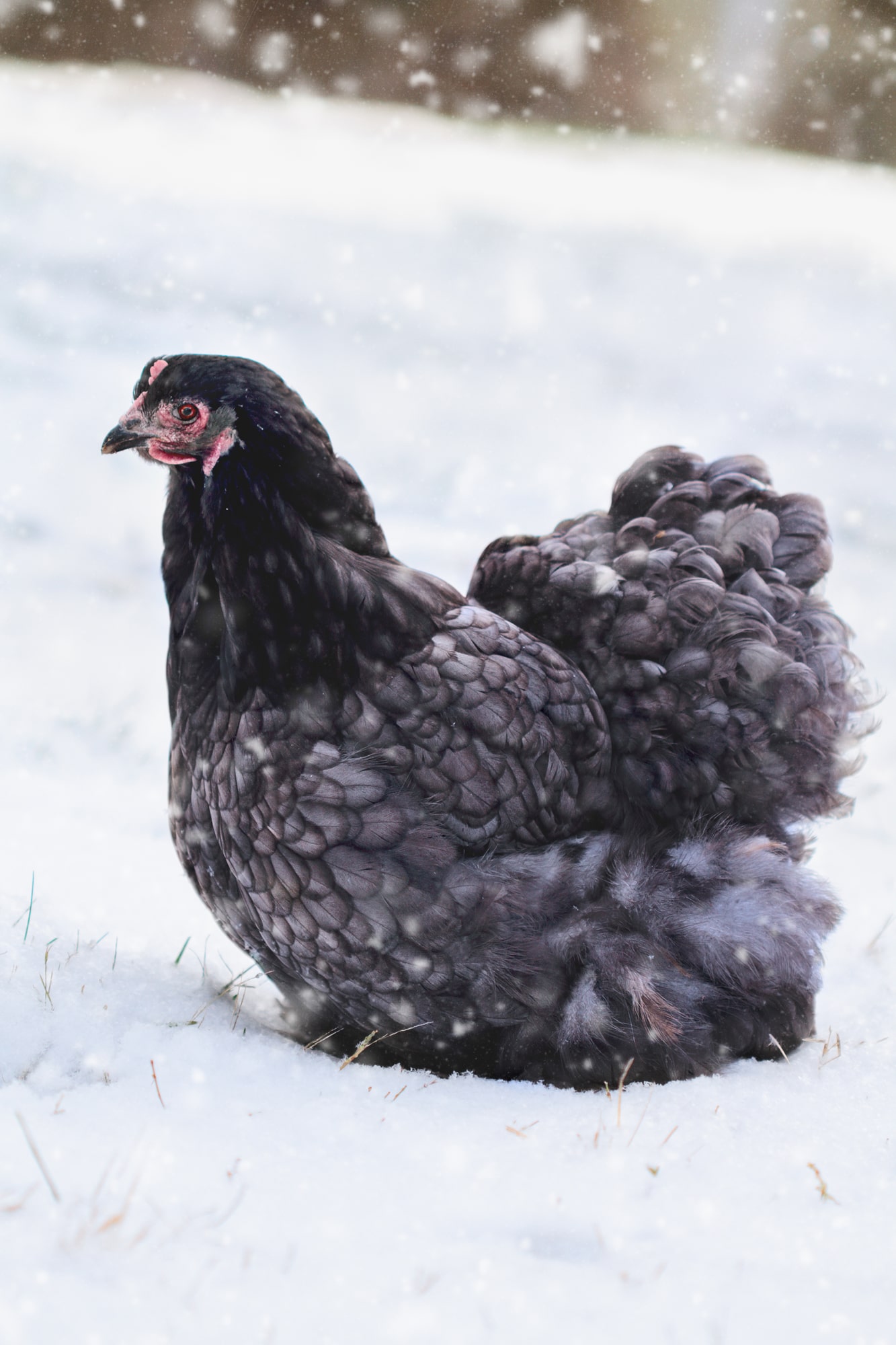
There are many breeds that have a blue-colored variety, which may be a surprise in itself. More on that in a bit. Within those breeds, there are, of course, many different shades of “blue” chickens. However, you can safely rely on some shade of slate blue.

Okay, that leads to the next question: What is slate blue? Slate blue is a combination between a muted blue and a light gray…sometimes with a periwinkle undertone. Slate is a natural rock used in building materials such as slate flooring and this is where the color name is derived from.

So…a blue chicken is not the mystical mermaid color one might dream about, rather it’s a lovely slate color. Let’s call it gray with a special twist, shall we?

Blue Chicken Breeds

There are many, many different breeds of chickens that have a gene that codes for blue feathers. Here are some of the most popular breeds of blue chickens:

  1. Blue Andalusian – The Andalusian chicken is originally from Spain and is known for its blue-tinted feathers.
  2. Blue Laced Red Wyandotte – One of the most popular blue feathered friends around. They have blue lacing with red feathers, very pretty.
  3. Blue Copper Marans – These birdies are from France and are known for their chocolate-colored eggs. Blue Copper Marans have a stunning contrast of copper feathers against their blue feathers.
  4. Blue Araucana – Originally from Chile and lay blue eggs. They are also known for their tufty ear feathers.
  5. Blue Orpington – Orpingtons are known for their docile nature and egg-laying ability. Top that off with this blue variety and you have a favorite.
  6. Blue Cochin – This breed is very rare, but also very docile and gentle. They are great for families, especially those that like to show birds.
  7. Blue Ameraucana – These stunning and elegant birds have irresistible lacing with a deep blue color.
  8. Blue Sumatra – The Sumatra are lousy egg layers, and are therefore mostly known as ornamental birds, exhibition chickens, and pets. Beautiful but a bit temperamental.
  9. Blue Silkies – Silkie chickens are super cute and friendly. The blue variety is no different. They can be excellent broody mamas too.
  10. Blue Australorps – Great egg layers with unique coloring. Their feathers are blue with white wing tips.

As I said, there are many, many varieties of blue chickens. So, if you are interested in becoming a blue chicken collector you aren’t restricted to the list of ten I just gave you.

You can branch out to a Blue Jersey Giant (oh, fun!), a Blue Plymouth Rock chicken, or any number of other blue chicken breeds…like Blue Wyandottes, or maybe a Blue Dutch Bantam or….okay, okay, I’ll stop. But you get the idea!

Blue chicken sitting in snow

How Do You Breed For a Blue Chicken?

As you might expect, hatcheries know best about this scientific process. Here is what Meyer hatchery has to say:

Genotype

Genotype is the term referring to the genetic makeup of any organism. Mendel’s law of inheritance states that for any genetic trait, a chick receives a gene from each parent. The blue coloring is made from two different genes, black (BB) and splash (bb). By “mixing” these two colors, we are able to achieve blue chicks. If we breed a black (BB) parent to a splash (bb) parent, 100% of the chicks should come out blue (Bb). The chick receives a gene from each parent, a dominant black (B) and a recessive splash (b), which genetically is a blue chick.

When the breeding flock consists of blue birds (Bb), the resulting offspring will contain approximately 25% black (BB) chicks, 50% blue (Bb) chicks and 25% splash (bb) chicks.

Meyer Hatchery

It does sound complicated, and it is if you ask me. Unless you are planning to be a serious breeder, it’s just best to order blue chicks from a hatchery (I’ve linked some of the top hatcheries that carry several varieties of blue chickens below). Are you still longing for more scientific details, you might be interested in knowing what self blue means. So, here you go.

Self Blue

Self Blue is the term used to describe a blue color in poultry that does genetically breed true. Usually, when a breed is genetically self blue, it will be described as a lavender-colored breed. As an example, consider the Lavender Orpington versus the Blue Orpington, similar-looking birds but genetically the former will breed true while the latter will not. Self Blue parents will produce 100% blue (lavender) chicks without the dominant black and recessive splash color variations. You can almost always assume that if any breed is called just “blue” without the “self blue” designation, it may produce the black and splash offspring in addition to the blue.

Meyer Hatchery

Phenotypes

Just when you thought I was done…there is also something called phenotypes. It gets pretty deep into your science book. If you want to read more about genotypes, phenotypes, and other poultry genetics, try this.

Do Blue Chickens Need Special Care?

Even though a blue chicken seems like it may need special care, it’s really just a chicken. The care is the same as any other chicken. Just keep in mind the specific needs of the specific breeds, and you’ll be A-OK. Here are a few general chicken care tips to get you rolling.

  • Always provide fresh, clean water. If you give them warm water in cold weather they will appreciate you more and it will encourage continued egg laying.
  • Don’t skimp on feed, choose a high-quality feed packed with protein-rich goodies like this one.
  • Food is a chicken’s love language, so woo them with treats. But make it count and give them treats that also enrich their diet. Here are my favorites.
  • Ensure they have a draft-free, but well-ventilated coop that protects them from the elements and predators.

Bonus: Blue Eggs

Do you know what’s even more fun than blue-colored chickens? Blue egg-laying birds! Learn all about blue egg layers in this article. Keep reading to find out where you can buy blue colored chickens.

Where To Buy Blue Chickens

So, now you want your very own blue chicken…but where do you get one of these beautiful birds? Of course, it depends on what breed you are looking for. Here’s a list to help get you started. Each of these hatcheries has several breeds with a blue variety to choose from.

You can always check local breeders and Facebook groups too.

1. The Chick Hatchery.com

Find more information and prices here: The Chick Hatchery.com

The Chick hatchery is Michigan’s “premier source for superior quality poultry.” With a creed that revolves around the sharing and joy of raising chickens, they operate in no-kill facilities. They raise their chickens humanely, with any unsold chicks going to Amish farms. Much of the experience of raising chickens is the awareness of the individual chicken and the relationship between food and our own health.

Their Lavender Orpington Chickens are available from February through August. 

Advantages

  • Ships a minimum of 3 of each sex
  • All poultry guaranteed live delivery
  • Offers discounts on orders of larger quantities of birds

Disadvantages

  • Ships a maximum of 15 total chicks (the above discounts do not apply to Lavender Orpingtons, due to their product limitations)
  • Does not ship to Hawaii or outside the USA

2. Cackle Hatchery

Find more information and prices here: Cackle Hatchery

Cackle Hatchery proudly boasts that they have been hatching and shipping since 1936. A third-generation hatchery based in Missouri, their mission is to provide customers with quality poultry for showing, meat, enjoyment, and eggs. They ship throughout the USA, including Alaska, Puerto Rico, and Hawaii. They offer nearly 200 different types of chickens at all stages. 

Cackle also offers many other kinds of poultry including ducks, waterfowl, game birds, turkeys, and other fowl. They are also a good source of supplies and books. Lavender Orpingtons are available only as baby chicks, and they are a very seasonal bird, available only from early March through July.

Advantages 

  • Discounts if you buy male chicks
  • Vaccinations available
  • Only need 3 birds to ship (or just one for male birds)

Disadvantages 

  • Limited availability (February through September)
  • Sold as baby chicks only

3. Murray McMurray Hatchery

Find more information and prices here: Murray McMurray Hatchery

Murray McMurray started his chicken business in 1917. As a banker, he sold his chicks to locals through the bank, and by 1919, he had developed his own stock of chickens. During the Great Depression, he devoted himself to chickens full-time. Since then, Murray McMurray Hatchery has developed into one of the largest chick hatcheries in the country. They sell more than just chickens, with ducks, geese, guineas, turkeys, other fowl, and game birds all in the catalog.

They take great pride in the Lavender Orpingtons that they produce, and are big fans of them.

Advantages

  • Very affordable
  • Bulk discounts available
  • Excellent breed availability with clear Availability chart
  • Mixing and matching chick breeds is possible

Disadvantages

  • Minimum order of six birds at a time

4. Purely Poultry

Find more information and prices here: Purely Poultry

As a family-owned business, Purely Poultry has some of the best customer service around. They pride themselves on their knowledge of their products, selection, and how-to details related to everything they offer, including ducks, chickens, geese, and lots of other birds! 

Located in Durand, WI, they guarantee live birds with every order, which is a good promise, indeed! Lavender Orpingtons are in high demand, thanks in part to their fluffiness.hat

Advantages

  • Each order backed by live arrival guarantee
  • Small order minimum on chicks 
  • Other kinds of poultry offered, too

Disadvantages

  • Not a huge advantage to buying multiple chicks – discounts are minimal
  • Expensive, especially for females. They charge extra on top of the Not Sexed rate.