It’s ButcherBox time! This month, I learned that you can customize your box and I ended up getting 6 pounds of BACON!
Of course it’s sugar free bacon (keto diet, thank you very much). And I got some other things besides bacon, but you’ll have to watch the video to find out what else I got. If you don’t know, ButcherBox is humanely-raised, grass-fed, organic, non-GMO meat sent right to your doorstep (convenience on a platter, LOL).
You can have pasture-raised chicken, beef, and/or pork sent to your home. It’s shipped overnight or 2 day (ours is 2 day because we live in a remote area) on dry ice and in insulated boxes and bags (in earth-friendly materials also!).
This month, if you join ButcherBox, you can save $10 and get bacon in your subscription box FREE! Use this link to get this special:
So yes, the boxes are customizable and you can start or stop your subscription as needed. I love how convenient it is to get healthy, organic meat delivered to my door, and so will you!
Bumblefoot is one of those backyard chicken diseases that’s pretty simple to understand and treat, although it definitely requires some first aid.
We’ve dealt with it a few times on our farm and it’s always been easily treatable. Interestingly, I’ve noticed it always seems to start on the left foot first. I don’t know if that’s been every chicken owner’s experience though.They say animals, like people, are either right or left-handed. I’ve always wondered if that has something to do with it.
There’s a lot of information you’ll find on the Internet that makes bumblefoot out to be a huge, serious “life or death situation.”
Now, don’t get me wrong – any infection can turn into a life or death situation if not treated, and since chickens usually don’t let on about how sick they are until it’s too late, it’s safe to say that if you suspect your backyard chickens have bumblefoot, then you need to take care of it.
But as for bumblefoot being immediately life threatening…..well, we have not experienced that on our farm.
Like any disease out there, bumblefoot can affect your chickens at any time and any age, but particularly if they have a depressed immune system, if they’re very young or very old, or have any sort of condition that could potentially make the immune system not as strong as it would be, then they run a higher risk of bumblefoot becoming a bigger issue.
For healthy chickens, however, it might not be the huge issue you may have been led to believe.
In this article, we’ll cut through the drama, and talk about what bumblefoot is, why it needs to be treated, treatment options (natural and pharmaceutical), and how you should approach this common backyard chicken issue.
“Bumblefoot” is the lay term for pododermatitis, and to sum up the Merck Veterinary Manual, it’s a Staphylococcus infection and localized abscess that occurs when backyard chickens get a skin injury such as a lesion. You may or may not see the lesion (it could be too small for the naked eye).
There’s a reason why shoes and socks are considered good hygiene for
human beings and even for dogs and cats! So, chickens should wear shoes too (just kidding).
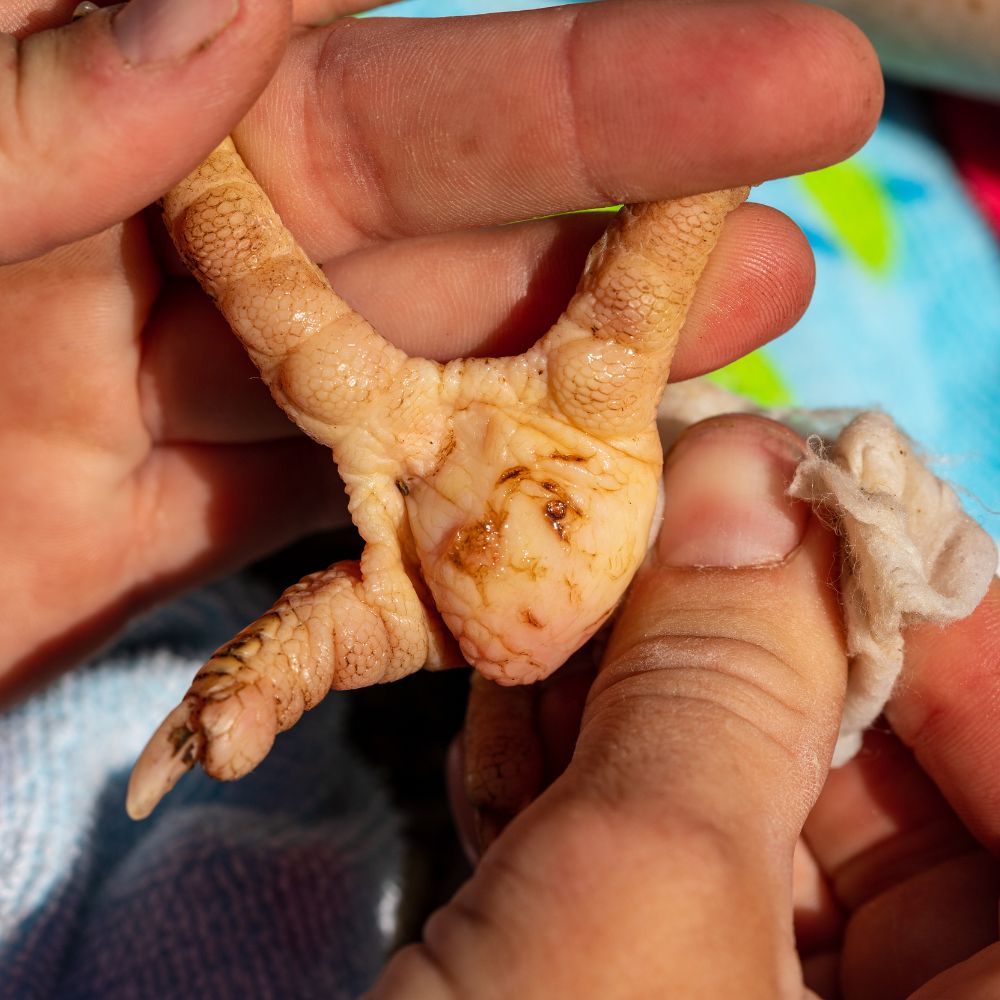
What does Bumblefoot look like?
What are the symptoms of Bumblefoot?
Poultry with bumblefoot might have swelling on the pad of the foot, or the entire foot can look swollen and enlarged. It might look as simple as a slight redness to a bulbous-looking growth on the bottom of the chicken’s foot. There might be noticeable scabs as well.
You might notice your chickens limping or hopping around on one foot because it’s difficult and painful to walk on a swollen foot with a pus-filled abscess.
The swellings, called “bumbles” give the infection its colloquial name. The swellings can show up on different areas of the foot, keep that in mind.
You’ll want to take care not to confuse bumblefoot with other issues such as frostbite and scaly leg mites, both of which can also cause your backyard chicken’s feet to swell.
While side-by-side it’s obvious which malady is affecting your chickens, it might not be so obvious for a new chicken owner.
Why does Bumblefoot happen?
Typically bumblefoot happens to a flock member due to a Staphylococcus infection. This bacteria issue could be due to getting a small (or large) cut or abrasion, getting something stuck in their foot like a splinter, piece of straw or hay, from chicken wire, or even roosting bars (don’t think this means you should get rid of your roosting bars, however.)
In rare cases, it also might be indicative of a vitamin A deficiency, especially if your chickens aren’t getting a balanced diet (you can give them a multivitamin if you’re worried).
Bumblefoot Prevention
It can be hard to prevent bumblefoot because your chickens are walking outside without socka and shoes. By default, they’re more susceptible to infections and cuts on their feet.
However, making sure your chickens have a good diet and their bedding is adequate is a place to start. Eliminating sharp rocks or anything else that can cut them is another strategy but can be challenging depending on your situation.
How to Treat Bumblefoot
Medical Care
According to the Merck Veterinary Manual, a chicken with bumblefoot likely has a staph infection (staphylococcus aureus)and:
“Staphylococcosis can be successfully treated with antibiotics such as penicillin, erythromycin, lincomycin, and spectinomycin.”
If you think your chickens might have bumblefoot, you should consult a veterinarian. They can give you dosage advice (even if they don’t know, they have a network of vets they can call for advice) and let you know if your chickens need some sort of treatment more extreme than medicine.
Many times, we’ve taken animals with some mysterious illness to the clinic, and the vet has been able to call another vet he knew from school or met at a convention and got treatment advice in minutes.
Natural Options
There are some natural options for Bumblefoot, if you want to avoid pharmaceuticals, such as essential oils, honey, or green clay.
Essential Oils
I like using Young Living’s Animal Scents ointment, which promotes healthy skin.
If you use oils, you should always dilute it with a carrier oil such as almond or coconut oil. For more details about using essential oils on your chickens, check this out: Using Essential Oils To Raise Healthy Chickens
You don’t hear much about green clay in the backyard chicken community. However, it’s a popular remedy for treating bumblefoot with parrot and parakeet owners. (It’s not just chickens that get bumblefoot).
Keeping it wrapped
If your chicken has bumblefoot you’ll want to keep the foot pad wrapped with a gauze pad if you can manage it. This will help keep dirt, sand, and additional bacteria out of the infected area. But first, be sure to clean the foot with mild soap and warm water.
You’ll also want to keep your hen or rooster in a place where you can observe it. In the case of a small wound, and if your chicken isn’t very uncomfortable, you can let your chickens continue to wander around.
If it’s bad enough, the lump on your chicken’s foot might need to be opened up to drain. You would need a scalpel, antibacterial spray, bandages, or vet wrap. After draining it, you should soak it in Epsom salts, and then dress the wound. If you aren’t comfortable with draining it, you might try soaking it in the Epsom salts and wrapping it and see how it does before seeking medical care.
Should you do surgery to get rid of bumblefoot?
You might see advice online that if your chickens have bumblefoot, you should perform surgery to excise the infection. You should bear in mind that this advice calls for you to perform surgery without anesthetic in your own home.
There are times when the wound will need to be drained and dead tissue cut out. However, I think it’s irresponsible to tell owners of backyard chickens that this type of surgery is necessary and to perform it themselves.
If you read the Merck Veterinary Manual, their first course of treatment is not surgery. Therefore, it shouldn’t be your first choice. Except in cases where a vet has advised you the infection needs to be drained.
Particularly if you’ve never done this type of surgery before, it’s advised to get the help of your local vet.
Even if you don’t have an avian vet in your area, a regular vet can still help. They will have experience with minor surgeries and can help your chickens be more comfortable. They’ll also give advice for follow-up treatment.
Summary
Chicken issues can worry even the most seasoned backyard chicken keepers, so know you aren’t alone. Mild cases of Bumblefoot can be easily treated. Severe cases of Bumblefoot might need more attention.
Bumblefoot doesn’t have to be life-threatening, or even greatly inconvenience your backyard chickens. Just remember that it’s an infection, and treat it like one. Above all, if you’re not sure what to do, seek the advice of your local vet.
Making a DIY automatic chicken coop door, especially if you work, makes taking care of your hens so much easier.
We know that chickens are animals that love routine. They definitely know when to come in at night and come out early in the morning to go on about their pecking and bug hunting.
A commercial or DIY automatic chicken coop door is installed to keep your chickens safe from predators at night and to make it easy to let the hens out in the morning.
The problem with a simple pop door is that you have to lock and unlock it manually in the evening and at daylight.
It’s a twice-a-day chore that doesn’t allow you to sleep in on a bed-weather morning or let your hens out as soon as they’re ready (and trust me, they’re ready at 4 AM or earlier).
Making or finding a cheap automatic chicken door opener might just be the trick to keep you AND your flock happy.
In this article, I show you doors that work well and you’ll also get ideas for your own DIY automatic chicken coop door.
No matter whether you buy a commercial one or make a DIY automatic chicken coop door, the number one thing to remember is to make sure it fits the door of your coop.
(The second thing to do is decide if you want one that’s battery operated, solar operated, weight operated, or uses wired electricity (instead of batteries). You’ll need to decide which is best for your particular coop.)
Commercial and DIY Automatic Chicken Coop Door Ideas
Automatic Chicken Coop Door
I was sent one of these to review, and I’ve found it to be one of the best on the market. It’s simple to install, and priced well.
You can see how well it works here:
You can buy it as a complete kit (yay for easy install) or just buy the motor separately.
The coop doors are also made to be all-weather and protected with linseed oil. Each automatic poultry door is individually tested & inspected before it leaves the facility.
After speaking with the owner, I learned that they’ve had NO returns in 3 years, and their prototype door still operates after almost 10 years of daily use.
The motors are also 100% repairable, so you are never stuck purchasing another motor or door. Since I love one-time investments, that makes me VERY happy!
You can also see how easy it is to install here:
They also have a DIY automatic coop door kit in the event you want to build your own.
AutoDoor is one of the most popular chicken coop door builders in Amazon. It is made from heavy duty aluminum that doesn’t rust nor break easily from external forces.
The size is very comfortable for your chickens to go in and out with a 1-foot tall and 10.5-inch wide opening. Installation is pretty easy as well with just 4 bolts to screw into the door.
It’s also powered by 4 AA batteries, making it easy to power (although you will have to buy batteries, which can add up.)
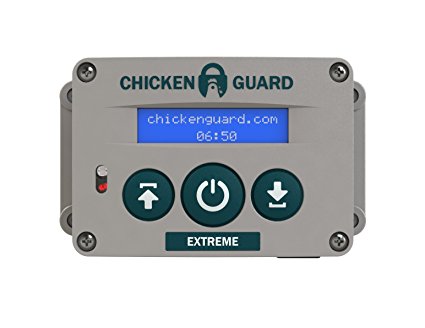
This isn’t a full coop door, but just a box that controls the coop door you need to install separately. It works between temperatures as low as -20 degrees and as high as 120 degrees (sorry people who live in -30 degree weather…)
It also runs off AA batteries, which is convenient, but given the other options, the price tag of over $200 is a bit high for just a control box.
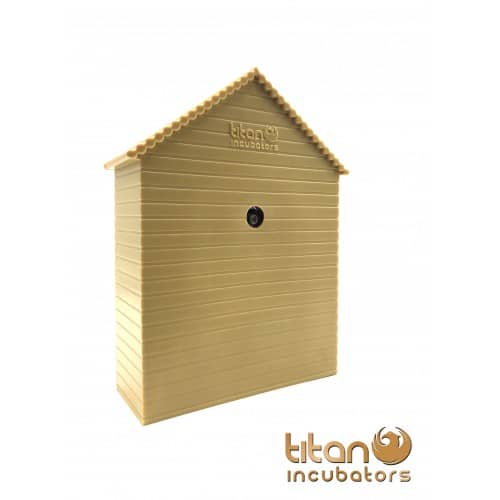
Titan Incubators Automatic Chicken Coop Door Timer Unit
This is another unit (just a unit, no door) that controls a pre-installed automatic chicken coop door, but at $125, it’s an easier to swallow price than the ChickenGuard. You can purchase a metal door separately that’s compatible with the unit.
The idea is to use the combined weight of the chickens as they climb onto the roosting bar to sleep at night to pull the cables and pulleys and pop the door open.
As it shifts to a lighter weight, the door closes. It’s simple and eco-friendly since you don’t need to use electricity. If you are going for a cheap automatic chicken door opener, this is an option.
You can see how it works here:
Since it doesn’t use electricity, if the power grid goes down (or some ding dong runs their care into a telephone poll, which is usually the case in our neighborhood), your chickens can just let themselves out, like the bosses they are.
The only disadvantage here is that you need to make sure your chicken flock will actually use the roosting bar.
Personally, I would also put the coop door up higher than the one in the video in case they didn’t close it at night for whatever reason. A coop door that low might be too much for predators to resist.
How to decide which automatic coop door is for you
If you’re not sure which coop door is for you (or whether you should DIY one yourself or buy a commercial one), consider the following:
Are you “mechanically inclined,” so making a DIY automatic chicken coop door is easy for you, or would you rather just take one out of the box and install?
How large is your coop door? If it’s not a standard size, a DIY option might be easier, or you can find a way to adjust the door size.
Do you want to use electricity, solar energy, or batteries? Do you want the coop door to be chicken-activated?
These questions will help you figure out which option – commercial or DIY automatic chicken coop door – is best for your particular situation.
There are plenty of automatic coop doors out there to choose from. But the bottom line is the commercial ones currently available on the market with good reviews are not very different from each other. You just have to make sure to choose the right one for your chicken coop.
With a DIY automatic chicken coop door, you can sleep safe and sound at night knowing that your flock will still be alive and clucking so lively in the morning. Get yours today!
Curious about what’s going on at our farm and in our coop? Here’s photos from my Instagram!
Thinking about researching stock tank pools and maybe even DIY-ing one this summer? Well, you have good taste, my friend.
Country living is all about finding fun, creative ways to use things other people might not even think about. In a hot summer when all you can stare at is your large backyard, wouldn’t you want to build yourself a swimming pool to squelch the oppressive heat?
But let’s face it – most of us don’t have the dollars on hand, the space, or the energy to start digging up our backyard for an in-ground pool.
Well, that’s where stock tank pools come in. A stock tank hot tub or pool is your coolest alternative to an in-ground backyard pool.
It’s the good ol’ redneck solutions to hot weather, and if you don’t know what I’m talking about, you should read the rest of this article.
These are metal tanks originally built for homestead living as a water system for plants and livestock. We use them for our horses!
But clever people out there in the world (way more clever than I!) have found a way to make use of these waterers….and they’ve become the mason jars of backyard pools.
They are sturdy, affordable, and highly Instagram-able. If you are curious enough about how to build one, check out some ideas below to help get you started.
How to craft a stock tank pool
You should first buy or find a galvanized tank 8-foot in diameter and about 2 feet deep. It’s big enough for one person to submerge into and float away.
Next, you’ll need to figure out where to put it! This might sound easy, but filling up a large volume of water and maintaining it is a pretty tedious job. (Ask me how I know!)
Hence, one of the best stock tank pool ideas is to permanently place it on a spot close to a water source.
From there, you can either hang a hose over to the side to fill it up or you can drill holes and use a small pump to keep the water moving.
One pressing issue in using these tanks as pools is keeping the water clean and something you’d want to swim in. Regularly skimming the surface with a net can work well (albeit with more effort) as a pump filtration system.
You can also use a pool vacuum to remove dirt and build-up from the bottom of the tank. Chlorine tabs are common however, experts say that using a chlorine float works better to prevent rust and corrosion.
So you now have a mini-pond in your backyard. What’s next? Engross yourself in a hands-on DIY project to add decks or other features.
Do you find still water boring? Create a cascading waterfall. Building a wooden floor also creates that rustic touch we all want for our country homes.
Some other design ideas are:
Adding a deck
Placing large landscaping stones around the tank as a pathway
Add solar powered lights around the pool (great for a night swim).
Hang canopies to ward off mosquitoes, or add battery powered diffusers for citronella essential oil.
You can leave your stock tank pools outside (they ARE designed for year-round use as livestock waterers), or dismantle the entire pool and bring it indoors to a shed or garage.
Another idea is to bring it indoors and have yourself a stock tank hot tub (just be sure your house can handle the amount of water inside.)
Getting your own backyard pool has never been easy. With a galvanized tank, a small pump, and some tubing, you can enjoy a dip in the water any day this summer. Stock tank pools are a hit, don’t you think?