Did you know humans have raised poultry for meat and eggs for almost 10,000 years? Heritage breeds play an important part in our history and can continue in our future if we preserve them.

Whether you keep them for practical reasons or just for fun, they are worth looking into.

While I’m a big fan of industrial breeds such as production reds, who lay an egg every day like clockwork – I‘m turning more towards keeping pure-blooded heritage breeds of chickens. In part to preserve a piece of American history that might otherwise be lost.

We also use them in our breeding program, to improve the chicken breeds we’re developing, and so we can start hatching sex links to bring some income to our farm. The genetic ability of heritage breeds is impressive.

According to the Livestock Conservancy:

Heritage breeds are traditional livestock breeds that were raised by our forefathers. These are the breeds of a bygone era, before industrial agriculture became a mainstream practice. These breeds were carefully selected and bred over time to develop traits that made them well-adapted to the local environment and they thrived under farming practices and cultural conditions that are very different from those found in modern agriculture.
Top 7 Heritage Chicken Breeds

Why Bother With Heritage Chicken Breeds?

One advantage to heritage breeds is, when it comes to hatching them, you know what you’re going to get from the heritage egg.

After all, the purpose of breeding purebloods is the genetic traits are predictable. Generation after generation of heritage chicken breeds show the same traits, whether it’s a certain color egg, a specific size, or plumage.

Centuries ago, when heritage chicken breeds were first developed in America or otherwise introduced to our country, for the most part, they were developed as dual-purpose breeds.

Buff Orpingtons, for example, were specifically bred so they would consistently produce eggs but were also white-skinned, making butchering easier, and were a hefty weight.

7 of The Top Heritage Chicken Breeds

There are quite a few to choose from but let’s take a look at 7 of the top heritage chicken breeds. We will also cover why they are great for any size homestead (or backyard flock).

1. Orpingtons

The first of the heritage chicken breeds we’ll look at are Orpingtons. We personally keep several Buff Orpingtons on our homestead, and they lay wonderful light brown eggs regularly.

They’re a great dual-purpose chicken, bred for both meat and eggs. If you’re off-grid or simply don’t want to incubate eggs, they’re particularly advantageous because the hens like to sit on eggs. This makes them ideal for a sustainable flock of heritage chicken breeds.

Orpingtons come in several colors, including black, white, buff, blue, and splash. The buff Orpington is the most commonly seen.

Orpingtons have a great history and were developed in 1886 by an English man named William Cook, a professional coachman.

He developed the Black Orpington to meet the need for a dark chicken that could be exhibited in London at shows without soot showing (London was a dirty place in those days!). They also met market demand for a chicken that was large, white-skinned, and good for the table.
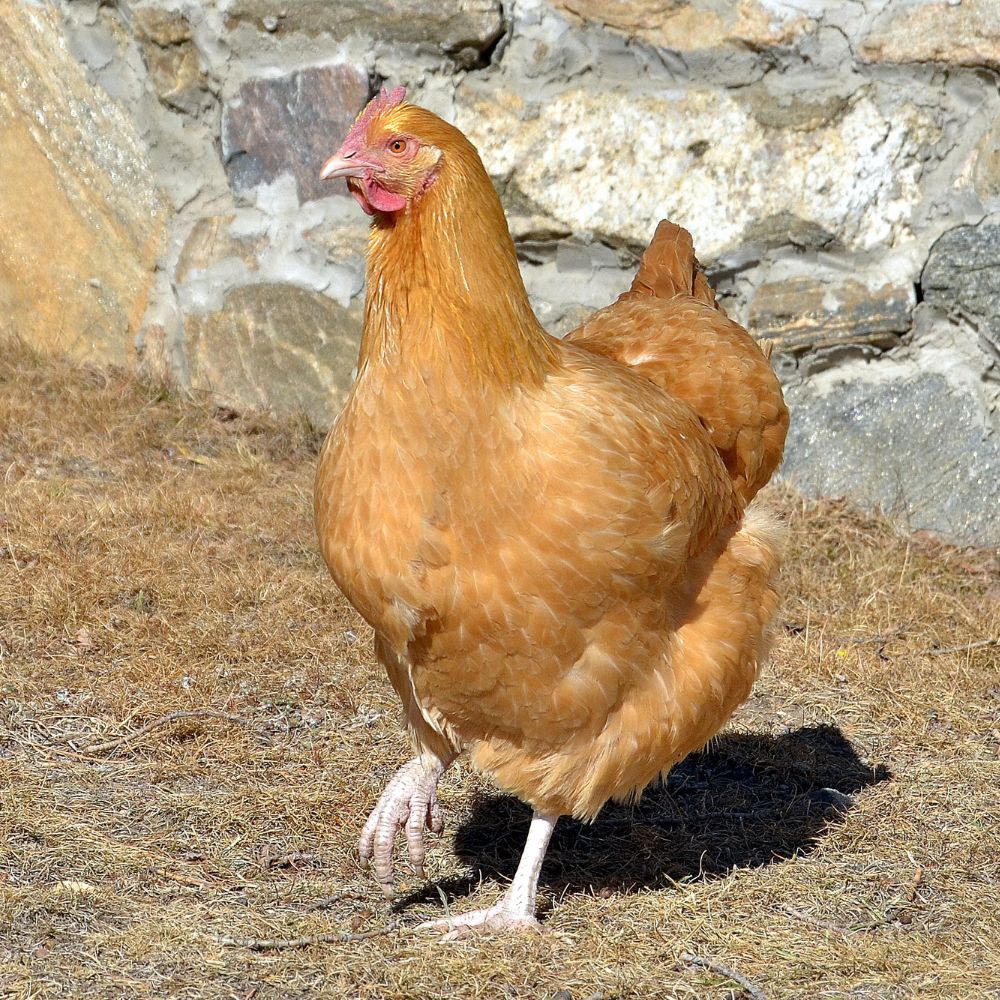
Heritage Buff Orpington Hen with rock wall background


These heritage chickens are named after the town they were developed in, Orpington, and were produced by crossing Minorcas, Langshans, and Plymouth Rock heritage breeds.

Later, the buff color was developed, and only the original colors are accepted by the American Poultry Association. 

As a heritage chicken, Orpingtons are perfect for any homestead or backyard flock because they grow to good harvestable weight, lay large brown eggs regularly, and are attractively colored birds.

2. Rhode Island Reds

Rhode Island Reds (RIR) is one of the oldest heritage chicken breeds in America. When it comes to RIR, there are industrial strains, bred for egg production as well as heritage strains.

For this article, we’re talking about the heritage strain, which looks different from an industrial chicken strain.

According to the Livestock Conservancy, heritage Rhode Island Reds are listed as “recovering,” thanks to efforts by breeders and homesteaders who want to preserve this piece of Americana.
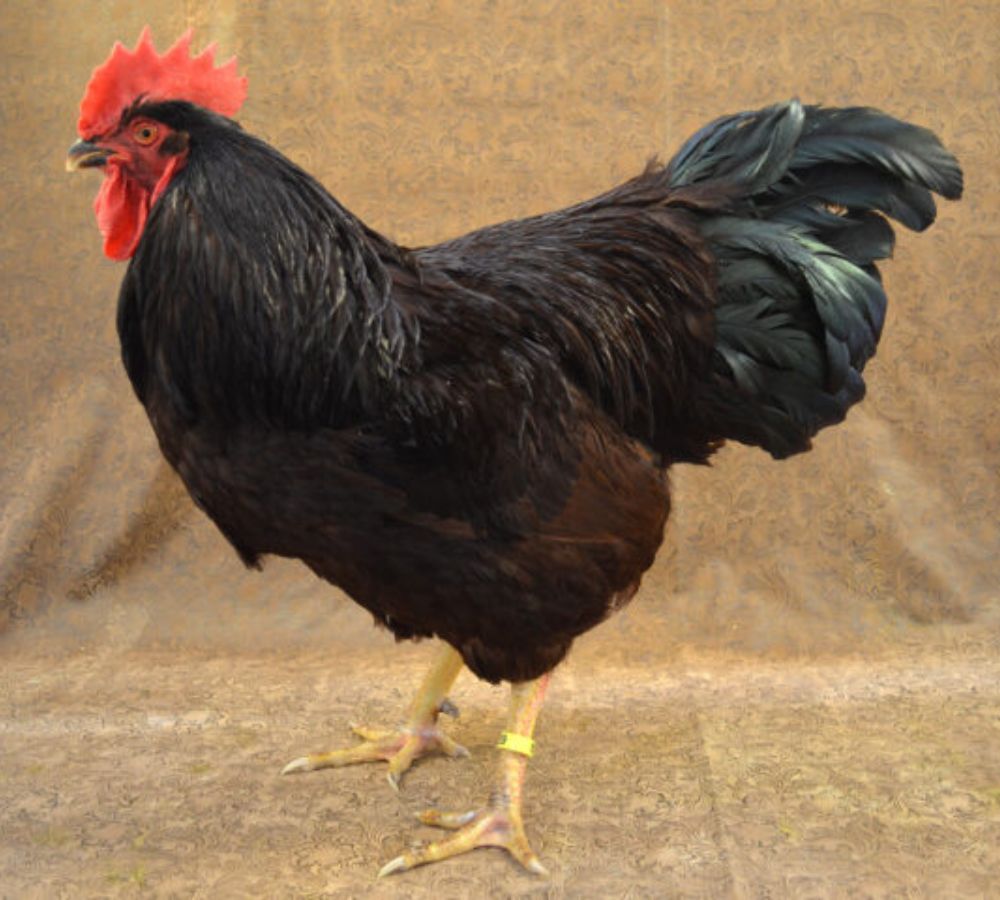
Heritage strain of Rhode Island Red Rooster with tan background
Photo from Livestock Conservancy

Directly descended from the heritage chicken breeds our ancestors developed in Rhode Island and Massachusetts, Rhode Island Reds originated in Adamsville, which is a village in Little Compton, Rhode Island.

They are larger than industrial strains and perfect for either the table or for their eggs. They’re also the foundation for more modern “breeds” such as Production Reds and Sex Links.

If you want to raise heritage Rhode Island Reds, do your homework to make sure the bloodlines are indeed true to this heritage chicken breed.

These heritage chickens are hardy birds that weather winter well and are great with children. 
the better egg ad final

3. Delawares

Delawares are next on our list of heritage chicken breeds. They’re beautiful, striking birds that make a gorgeous addition to any backyard flock. Plus, they are excellent egg layers.
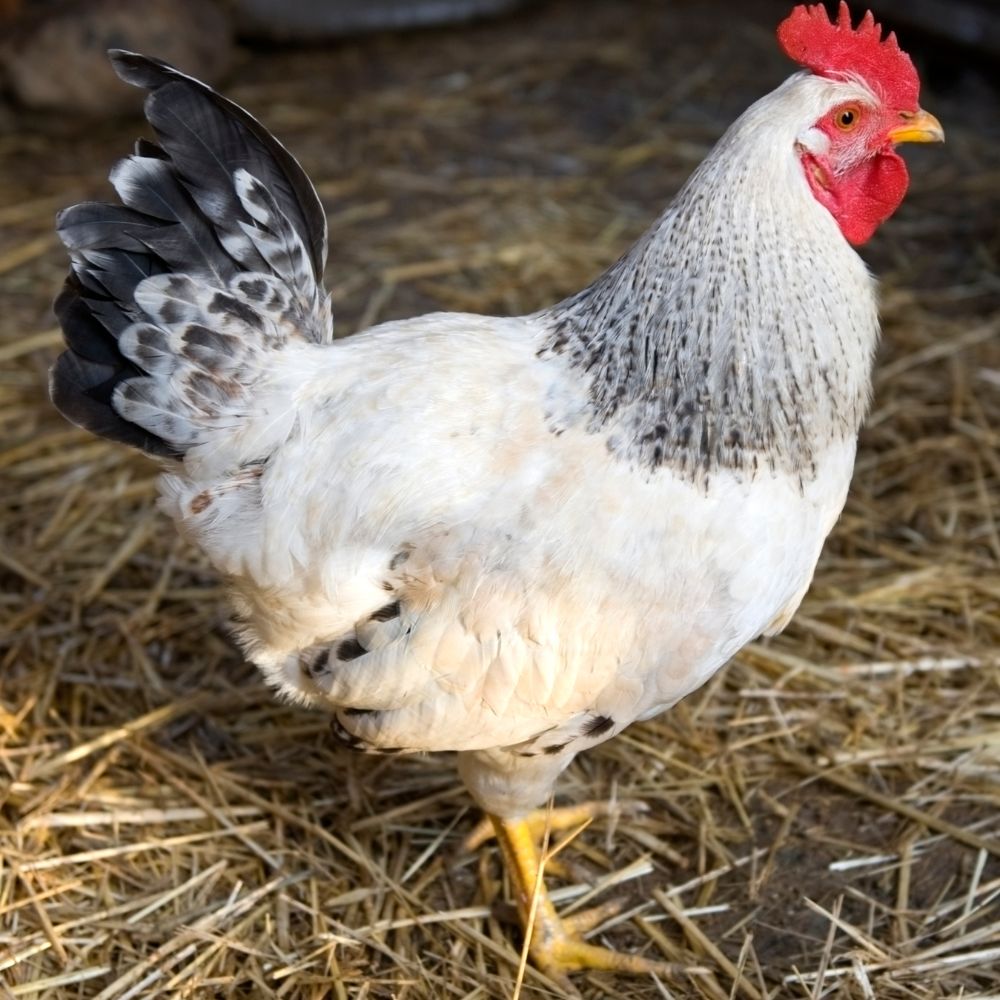
Heritage Delaware hen standing on bed of straw

This heritage chicken originated in Delaware in the 1940s by crossing  Barred Plymouth Rock roosters and New Hampshire hens. They’ve been important in creating modern broiler breeds, and for a while were the most popular meat chickens in the Mid-Atlantic area largely because of their color.

Delawares are critically endangered according to the Livestock Conservancy. Their usefulness as broilers has been surpassed by Cornish Crosses, but they still make a wonderful dual-purpose bird for any homestead.

We have a couple of Delaware roosters on our farm and they’re friendly, hardy birds that grow well.

4. Plymouth Rocks (Barred Rocks)

The fourth on our list of heritage chicken breeds are Plymouth Rocks, also popularly known as Barred Rocks.

The Plymouth Rock originated in America in the middle of the 19th century and is one of the most popular heritage breeds in part because the barred birds are very showy and beautiful.

They’re also excellent egg producers. This type of heritage chicken was first exhibited in Boston, Massachusetts as a breed in 1849 and was developed from hybrid chickens with Spanish, White Cochin, Dominique, Buff Cochin, Black Java, and Brahma bloodlines.
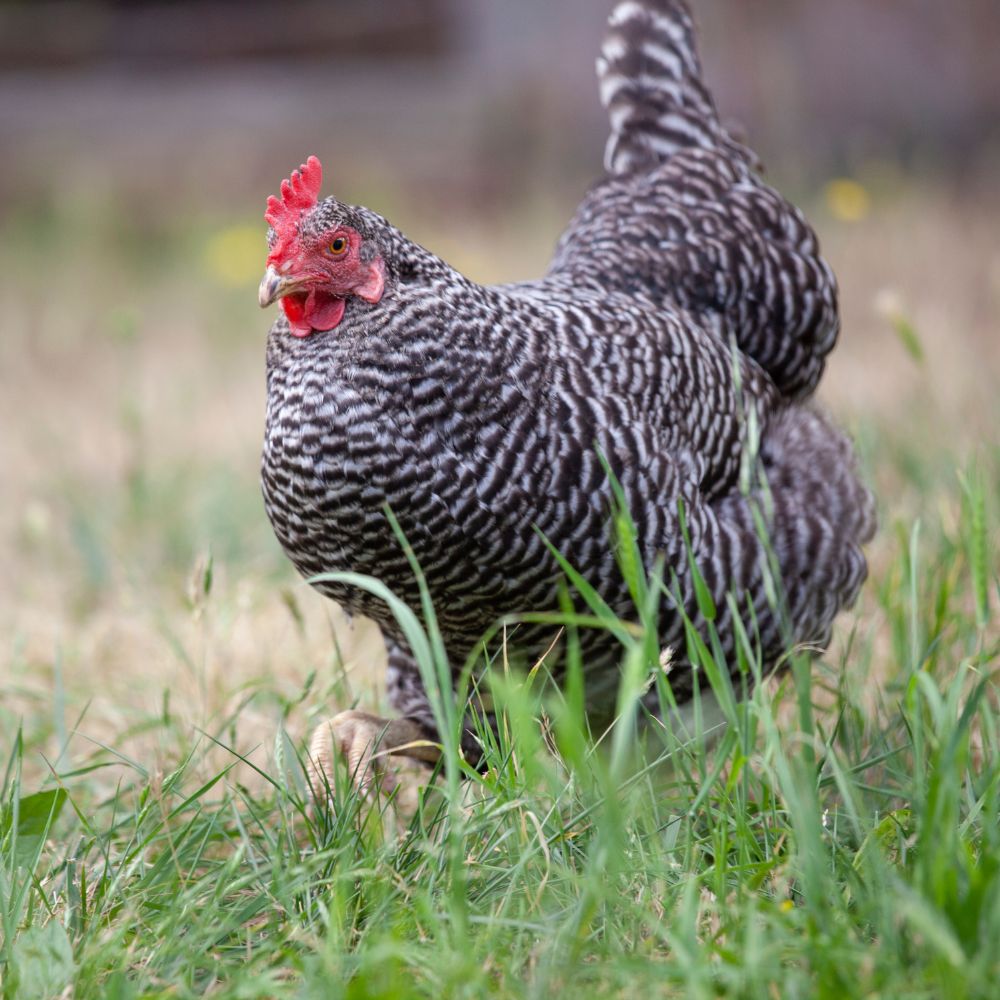
Heritage Barred Rock hen standing in grass

And the original Plymouth Rocks were of the barred variety.

According to the Livestock Conservancy, the Plymouth Rock seemed to have disappeared for 20 or so years until 1869 when this heritage breed appeared at a poultry show in Worchester, Massachusetts.

The Plymouth Rocks we know today are heritage offspring of the second set of Plymouth Rocks. This heritage breed was accepted into the American Poultry Association’s Standard of Excellence in 1874.

The Plymouth Rocks we have on our farm are friendly birds. We are raising them to breed both purebloods and black sex links. 

I like them because they lay nice brown eggs consistently and they’re popular meat birds among our neighbors.

5. Speckled Sussex

Sussex chickens have historically been raised as a dual-purpose breed, although many people today raise them as beautiful pets. There’s a standard-sized chicken and a bantam variety. Can you imagine how adorable the bantam variety is?

Speckled Sussex chickens are wonderful to own! They have “big” personalities, and ours are at the top of the flock. They’re curious, the first to check out new situations, love environmental enrichment, and are intelligent pets.

This breed of chickens, as it exists today, has been around since the mid-1800s, and originated in the county of Sussex, England, hence the name of the breed.
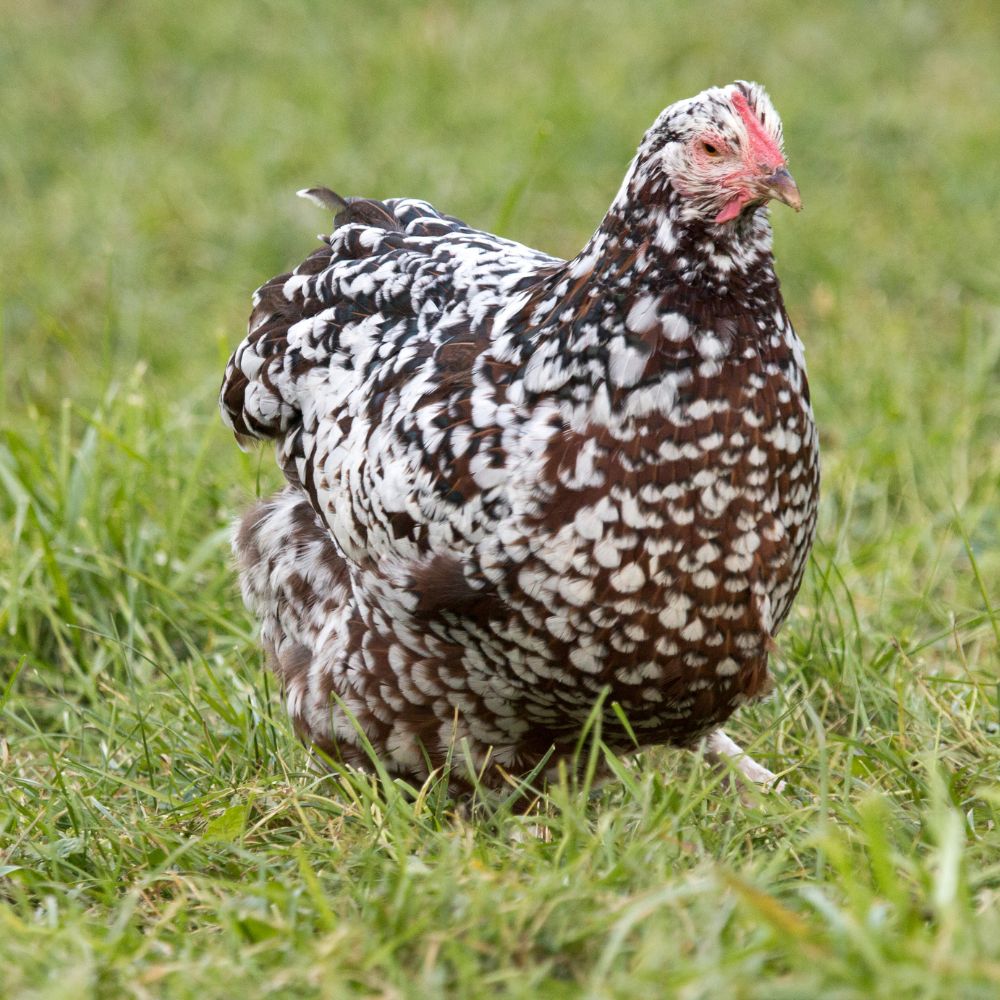
Heritage Speckled Sussex hen standing in green grass

While each color variety has its own individual influences, the Sussex chicken is largely influenced by Brahmas, Cochin, Dorking, among other breeds.

Roosters can weigh up to 8 pounds while hens weigh about 6 pounds.

6. Australorp

Here’s a quick history lesson on our sixth heritage breed – the Australorp. Back in the early 1900s, William Cook’s Orpingtons were taken from England to Australia. They were then crossed with Rhode Island Reds with the purpose of refining their egg-laying ability.

This refined version of the Orpington, became what we know today. They were imported into America in the early 1920s. The chicken powers that be had a hard time figuring out a name for this breed – they were called everything from Australian Utility Black Orpingtons to Australs.

But the final name ended up as Australorp which is a mixture of “Australia” and “Orpington.”

These birds are so popular because of their excellence in dual-purpose lives: males make excellent meat chickens weighing in at up to a whopping 10 pounds. These are LARGE birds! The female birds are excellent layers, with an average production run of about 300 eggs per year. Do you see the common link? EXCELLENCE!
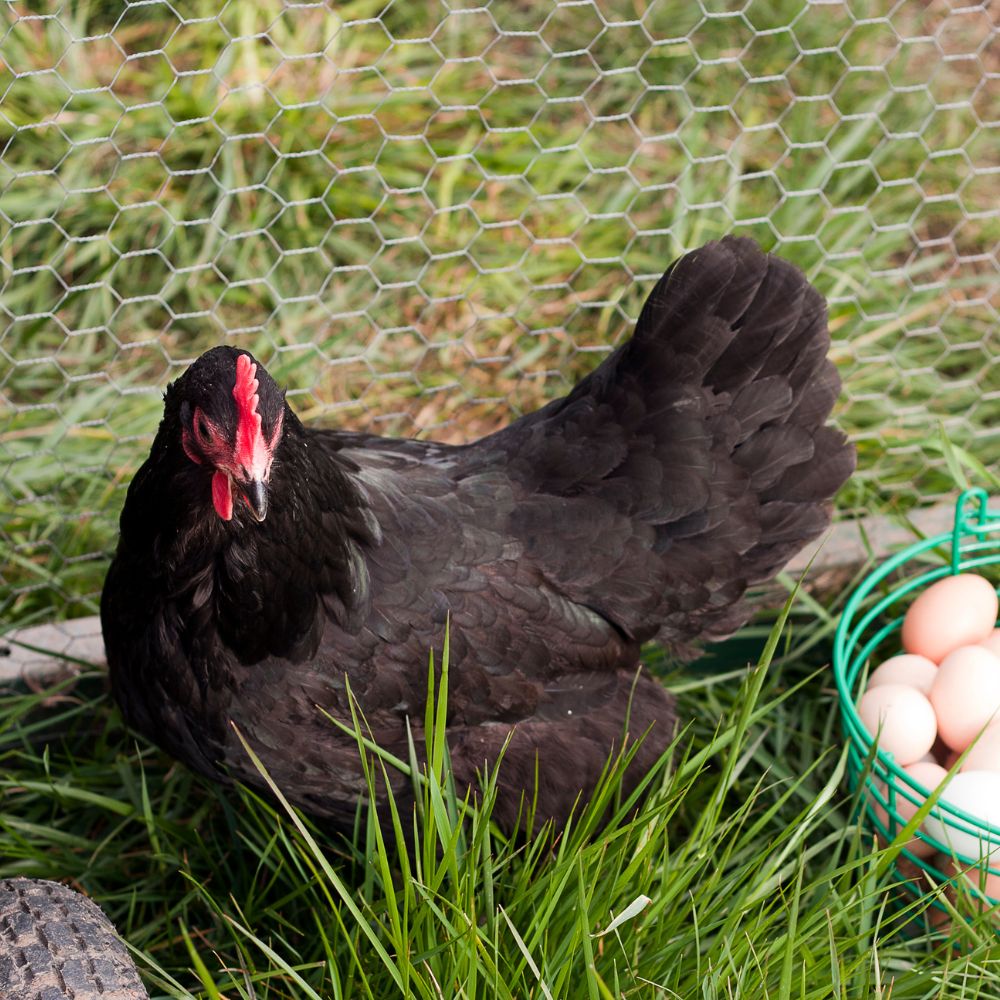
Heritage Black Australorp hen sitting in grass with basket of eggs next to her

7. Sultans

Now for the last heritage breed we will be covering in this article – the Sultans breed.

Not all heritage breeds are dual-purpose superstars. There are others that are pretty much just pets. Sultans is one that fits into that category.

I’ve never kept Sultans on our homestead, but after learning about them, I would like to!

Sultans are one of several heritage chicken breeds that are listed as “in danger of extinction,” according to the Livestock Conservancy.

They’re natives of Turkey, where they were likely developed as ornamental birds for the gardens of the Sultan.
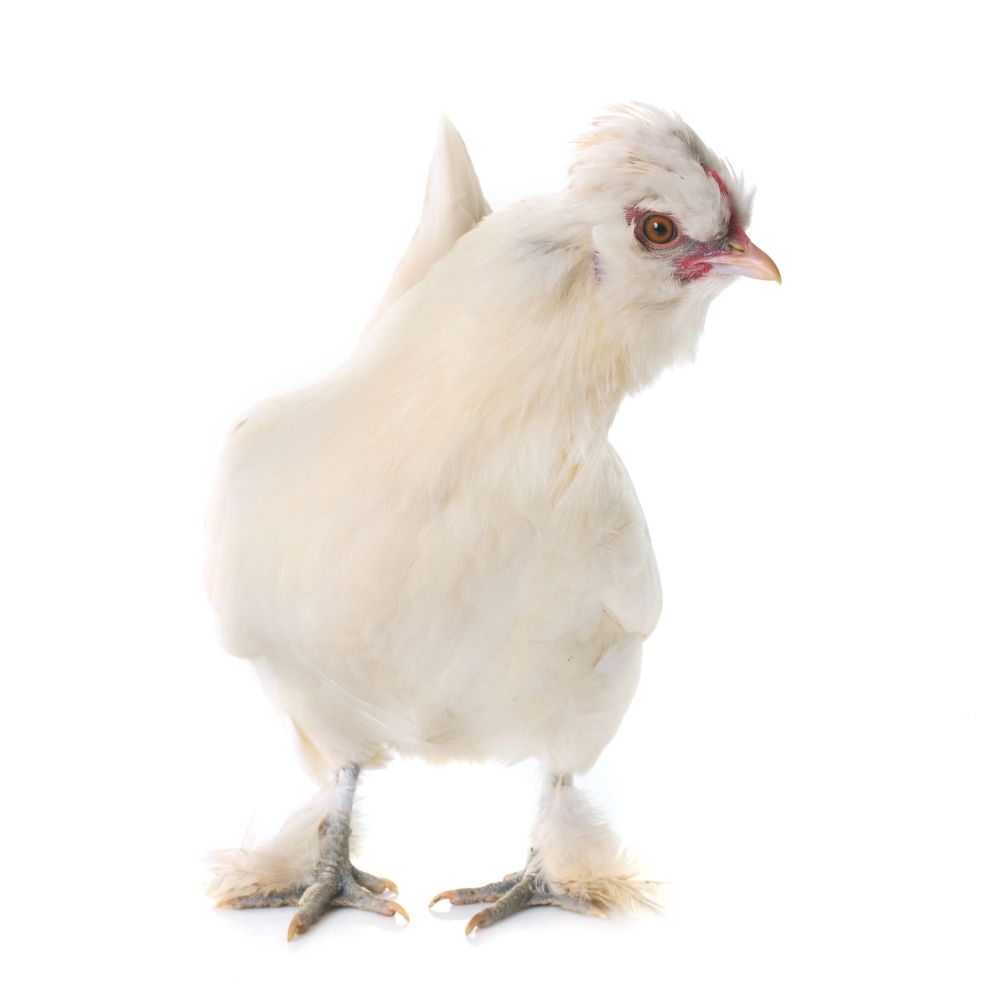
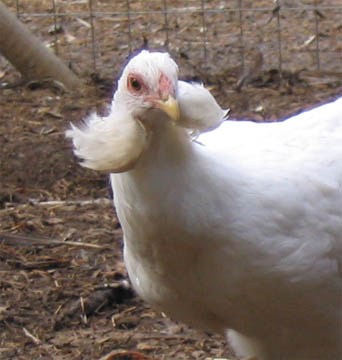
White Heritage Sultans Chicken on all white background

They have been rare since they arrived in England in 1854 by way of a friendship. You see, Mrs. Elizabeth Watts of Hampstead, England, the editor of the Poultry Chronicle (a British publication) received heritage chickens from a friend living in Constantinople (now Istanbul).

Their actual name is Serai Taook, which in Turkish means Sultan’s Fowl, which is where their name is derived.

They’re very pretty ornamental birds, possibly the most visually appealing among the heritage chicken breeds.

They don’t lay very well, but you might not be looking for a high-efficiency bird and just want to enjoy friendly companions!

Helping to save heritage chicken breeds is a wonderful pursuit for any homesteader or chicken lover. These breeds are a piece of American history, and we’re happy to continue preserving them!

Caring For Your Heritage Chickens

Summary

Our grandparents and great-grandparents had a lot of wisdom. Although new and shiny things can have a certain appeal, so can the old classics.

Preserving our history, both in big and in small ways, is important. For those of us that love critters, and chickens in this case, preserving these heritage breeds is hardly a sacrifice. It’s easy and fun. So…what are you waiting for?

On our homestead, we raise several rare breeds of chickens.

In part, this is because we enjoy their beauty, and also because the breeds have advantages over more popular breeds of chickens.

In this episode of What The Cluck?! we examine 4 rare breeds of chickens, and their advantages.

We also look at the history of the breeds

Three of the breeds we actively keep on our homestead, and I think you’ll be quite surprised at some of the information you’ll learn.

Rare breeds of chickens can have certain advantages over common breeds. In this episode of What The Cluck?! you'll learn about 4 rare breeds of chickens, the one breed that can bring substantial income to your farm, and common mistakes owners make raising rare breeds. From FrugalChicken

You’ll learn:

  • Why these rare breeds of chickens are more advantageous to raise than common breeds
  • Which breeds lend beauty to your flock
  • Common mistakes owners make when raising rare breeds of chickens
  • The one breed that can produce a hefty income for your homestead

(LIKE THIS PODCAST? LISTEN TO THE REST HERE)

Links we discuss:

Thrive Market

French study on Turkens (Naked Necks):

A.L. N’dri, et al. “Interactions between the naked neck gene, sex, and fluctuating ambient temperature on heat tolerance, growth, body composition, meat quality, and sensory analysis of slow growing meat-type broilers.” Livestock ScienceJune 2007, Volume 110, Issues 1-2, Pages 33–45
 
Ben Dorshorst, et al. “A Complex Genomic Rearrangement Involving the Endothelin 3Locus Causes Dermal Hyperpigmentation in the Chicken.” PLOS Genetics, December 22, 2011


Transcription:

Hi there, and welcome to session 11 of What the cluck, a podcast devoted to keeping chickens for fun and self sufficiency.

I’m maat from FrugalChicken, and in this episode we’ll look at rare breeds of chickens for your homestead and I think we have some really cool birds to talk about! So stay with me!

Now before we get started, I just want to briefly mention a company that I love and that’s Thrive Market. Why do I love them so much? Well, first off, if you don’t know what Thrive Market is, it’s an online organic supermarket, and it’s a little like Costco meets your favorite farmers market.

I personally buy a lot of the products I can’t make myself from Thrive Market, and I’m talking about products like turmeric, coconut oil, etc. Products that we use every day at home to lead healthier lives. Thrive is membership site, and their products are anywhere from 15% to 20% cheaper than I’ve found elsewhere.

I value my Thrive Market membership, and love that it’s a company with a conscience. As a green company commited to sustainable practives, all their products are ethically sourced, and I feel confident buying from them that I’m doing the best I can for our environment.

Another thing I love about Thrive Market is that for every membership they sell to someone like you or me, they give a membership to a family in need. So, it really is shopping for products you will use anyway in a way that benefits other people too.

You can join Thrive at thefrugalchicken.com/thrive, and that is an affiliate link, so thank you if you decide to use it.

Now, let’s get on with why we’re here. Today we’re going to talk a bit about unusual breeds of chickens you can have on your farm, and the great thing about these breeds is they’re useful, so obviously they lay eggs, but they’re also beautiful chickens for their feathers.

These rare breeds of chickens lend quite an exotic air to any homestead, whether you live in an urban area, or a rural area like I do.

Now, I’ve kept a majority of these rare breeds of chickens we’ll talk about today on our homestead, in part for their eggs, but also, like I said, because they’re beautiful birds and are just a lot of fun to have in any flock. Whether you keep chickens for their usefulness or just keep them as companions or anywhere in between, these rare breeds of chickens are for you.

So  what are the breeds of chickens we’ll discuss today? I’m glad you asked. They are:

  1. Turkens, also known as Naked Necks
  2. Blue Copper Marans
  3. Cuckoo Marans
  4. Ayam Cemanis, which are the chickens that are completely black.

So, let’s dive in and start with naked necks.

For the longest time, I kind of poo pooed this breed, largely because of their looks, I found the naked neck too bizarre looking for my tastes, and never considered these chickens.

All that changed when I received them as “packing peanuts” in a group of meat chickens I’d ordered from a hatchery.

Now if you don’t know what packing peanuts means in terms of chickens, they’re the extra chickens, usually roosters, that hatcheries send to either keep the other chicks warm, to make up for chicks that die enroute so the customer gets their full order, or they’re chicks the hatchery is just looking to get rid of to reduce their inventory.

So I got these naked neck chicks, and was pretty stunned I got them in the first place since they’re considered one of the more rare breeds of chickens. And really, to be honest, as soon as I pulled them out of the box, I was really excited to have them.

And for the record, I’m quite certain these chickens are all roosters. They’re only about 13-16 weeks old, I can’t remember exactly how old off the top of my head, but they’re some pretty cool guys.

While as chicks they look really funny, they have tufts of fuzz at the top of their head, then the back of their necks are completely free of fuzz or feathers, obviously their feathers have grown out now, then the rest of their bodies are covered in feathers.

It’s a pretty weird picture as far as breeds of chickens go, but they’ve made great additions so far, and the largest advantage of the roosters that I can see so far, aside from their easy going personalities, is the naked necks would make it very easy and clean to butcher them.

For a homestead looking for chickens that grow a good weight, are hearty, and who might be a little concerned about being able to butcher humanely, the naked neck might be a good choice for you.

Sometimes when butchering chickens, the feathers can get in the way, and there’s no issues with that when it comes to naked necks.

So what’s the deal with this rare breed? Let’s talk a little bit about this breeds history and how it came to be. According to Wikipedia, naked necks chickens were originally from Transylvania, but were largely developed in Germany.

The name “turken” is a misnomer, because people used to believe the chickens were derived from a cross between a turkey and a chicken, but obviously, that’s not the case.

The naked neck was recognized by the American Poultry Association in 1965, according to their website.

The trait for the naked neck is a dominant gene, so if you breed a naked neck with a feathered necked chicken, some of the offspring will have naked necks.

Now the really interesting thing about this breed is that a study performed in France in 2006 showed that naked necks, either pure bloods or those mixed with other slow growing breeds, like a heritage breed, were more efficient with their feed, grew larger, and were healthier than regular broilers, like a Cornish cross.

They were also able to better withstand the heat, but the most striking aspect of the study was that the naked necks grew better and required less feed, largely because of their naked necks.

Of course, I’ll put a link to that study about naked neck chickens in the show notes, which you can access at thefrugalchicken.com/podcast11, all one word.

The roosters in this breeds of chickens get to be around 8.5 pounds while the hens get to be around 6.5 pounds (from the Oklahoma State University records), which is excellent for a meat bird.

So, if you’re looking for a breed that would be good all purpose bird that’s a non-hybrid, or breeds of chickens to raise for meat, the turken aka naked neck is a great one.

So next on our list of rare breeds of chickens we’ll talk about today are blue copper marans, and I’ve raised them on our homestead for about 2 years now.

Just a brief history of the marans, these rare chickens are derived from the French town of Marans, which is in Western France.

Now from Wikipedia, Marans were derived from local feral chickens that were descended from fighting game breeds of chickens carried from Indonesia and India.

These breeds of chickens were “improved” as meat birds by pairing the feral birds with Croad Langshans.

The marans chickens were developed as dual purpose fowl known both for both eggs and meat, and according to some French chefs, it’s the best chicken meat available.

So, about a couple years ago, I got bit with the rare breeds bug, and hopped on the Marans bandwagon after learning their eggs were so highly prized in France for their quality, that some chefs will only use eggs from Black Copper Marans chickens.

While I’ve had trouble finding quality black cooper marans in my area, I try to buy my laying birds locally, I’ve had great luck finding blue copper marans locally, and let me tell you these are some of the most colorful and beautiful breeds of chickens you can raise on your farm.

The males and females look quite different, and of course the roosters are much more colorful.

They’re grey chickens, with varying shades of grey in their plumage, but the roosters also have gold and red feathers as saddle feathers and on their necks.

Both males and females have feathered legs.

According to the Marans of America club, the blue copper marans are a variety as old as the marans breeds itself, and because the blue marans don’t breed true, it means they can come in a variety of shades of grey or blue, but will also have the red and gold feathers.

If the genetics of breeds of chickens interest you, you can read more about it at the Marans Of America club website, and I’ll put a link in the show notes.

The hens lay wonderful, large, dark brown eggs, although they can range anywhere from a light brown to a dark, dark chocolate color, like a chocolate lab. One hen also lays speckled ones, so they’re a dark brown with darker brown speckles.

This breed of chickens is really quite lovely, and I recommend blue copper marans as layers. Largely they’re healthy chickens, we’ve had about 10 on the farm, and most have made it well into adulthood.

The hens are not the friendliest birds as far as breeds of chickens go, they are definitely not lap chickens, but the roosters are quite friendly, and we’ve had two blue copper marans roosters that enjoyed human company and that allow us to pick them up and pet them. So it’s really remarkable the difference between the two genders.

The hens don’t lay as efficiently as breeds of chickens like production reds, for example, and mine seem sensitive to their protein intake and to heat, requiring more protein than a production red and laying less in the heat.

But your experience might differ, and honestly, when it comes to these heritage breeds, it’s not reasonable to expect them to lay like an industrial hybrid might. I think it’s more important to enjoy them for what they are, a really cool breed that lays really cool looking eggs on a very regular basis.

Like I said we keep blue copper marans chickens largely for their dark eggs and beauty.

So third on our list of rare breeds of chickens are cuckoo marans, which in reality are a type of marans but for the sake of our podcast today we’ll talk about them separately from the blue coppers, and mainly that’s because these breeds of chickens look quite different, and I think their personalities are different too.

We’ve had a few cuckoo marans hens here, and largely they were very friendly chickens, with a more pet mentality than our blue copper hens. Like the blue coppers, the cuckoos lay dark brown eggs.

Unlike the blue coppers, however, the cuckoos look quite different. These chickens have the barring gene in them, so they look similar barred breeds like a Plymouth Rock hen.

So, if you want dark laying breeds of chickens, and want to try something a little different, cuckoo marans might be for you.

Like other marans, the eggs from the cuckoos can range from a medium light brown to a dark, chocolate brown and they lay a large egg nearly every day.

Like other breeds of marans, I’ve found that the cuckoo is less efficient in how they use feed, so they need to eat more, and are more susceptible to not laying if their protein intake isn’t high enough, so if you do keep a these chickens, it’s important to watch their feed intake, and if they don’t lay, or are not as productive, then you will need to increase the amount they eat, or use a higher protein feed.

Something like a handful a day of mealworms per every 4 chickens would probably be sufficient, but again, you need to keep a close watch on your flock because every bird is different.

Make sense?

As far as breeds of chickens for meat go, Cuckoo marans are a great choice, and are highly prized in Europe for the quality of their meat. Males can reach 9 pounds, which is excellent for a meat chicken, while a hen will reach about 7 pounds.

So the cuckoo marans are one of the great dual purpose breeds of chickens.

Now, when it comes to egg color, obviously, cuckoo marans are prized for the color of their egg shells.

So because the dark eggs are so prized, sources show that especially Vitamin K and calcium can have some limited help with keeping the dark brown egg shell color, according to Cackle Hatchery.

So, here’s some interesting facts about marans, and these facts apply to the black copper, blue copper, and cuckoo breeds of chickens.

Now, marans come obviously in many different “breeds” but a breed isn’t considered a true marans unless it consistently lays a #4 brown egg. So what does this mean?

Well, to preserve the best qualities of the marans breeds, a color chart was developed, scaling the color of marans eggs from 1 – 10, based on how dark the brown color is. 

So, they have this darkness scale, developed in France, and unless the hen lays at least a #4 dark brown egg, she’s not considered part of the true marans breeds, which tells you something of how important preserving this particular quality of these breeds is.

Now, in the show notes, I’ll put a copy of the scale, and you can access those notes at breeds of chickens were “improved”.

So, when grading these eggs, the French wait until the hen has layed a dozen, and the reason for this is the first few that a hen lays can remain in the oviduct longer as her body acclimates to producing eggs.

So, the first few ones a hen produces might be darker than she is able to produce for the rest of her life. To preserve the accuracy of the scale and the best qualities of these breeds, and to help with breeding decisions, it’s necessary to wait until the hen lays a dozen eggs.

Our marans chickens lay regularly a 5 to a 7 on this darkness scale, depending on the bird, and we have one that lays probably an 8. The thing about the cuckoos and marans in general is every single egg won’t be the exact same color, and their ability to produce the dark brown color waxes and wanes over a chickens life.

So the last breed we’ll talk about today are Ayam cemanis. There are many unusual breeds of chickens you can have on your homestead, but today we’ll just stick to four for the sake of time.

So we’re talking about ayam cemanis because they’re gaining popularity in the US in part because of their color and because they’re rare for lack of a better word, and in part because true ayam cemanis are very expensive, and they’ve gained a cult following in this country for these two reasons.

So what’s the deal with this breed of chickens?

So the ayam ceman originated on the island of Java, in Indonesia, and they’re prized in that country for their mystical powers, and are an important part of traditional culture there.

They were first brought to Europe in  1998 by a Dutch breeder, and grew in popularity there.

Ayam cemanis are pure black, including their organs, muscles etc.

The reason these rare chickens are pure black is because of a genetic condition called fibromelanosis which is caused by a mutation that affects how pigment-producing cells work.

So, a study done in Sweden in 2011 looked at four breeds of chickens with characteristically dark skin.

These breeds were Silkies from China, which are pretty popular in the US, the Ayam Cemani from Indonesia, Black H’Mong from Vietnam and Svarthöna from Sweden.

And basically, these researchers were trying to understand why some breeds of chickens evolved with this black gene and how it works.

A gene called endothelian-3 (EDN3), was involved in the regulation of melanocyte cells which produce pigments. So, these researchers found around 10 times as much EDN3 was expressed in the skin of adult black chickens than in other breeds.

So the bottom line is that in these breeds of chickens, the gene that regulates pigmentation is in overdrive in the ayam cemani, resulting in the black coloring.

So, that’s kind of a scientific nerdy explanation about why the Ayam cemani and the other breeds of chickens studied look the way that they do.

Now, true Ayam Cemani will be a true black, so it’s head will be black, and so will its feet, tongue, etc., and any chickens that don’t display this quality is a hybrid.

Now, if you want to keep ayam cemani on your farm, you will probably have to pay quite a bit for your chickens, and I highly suggest you do your research, and buy from a reputable source.

The reason for this is I’ve seen “ayam cemani” chickens for sale on e-bay and their hatching eggs for sale, and an unsuspecting buyer could easily pay purebred prices for hybrid chickens.

So, I don’t personally have any sellers I recommend, but I encourage you to do your homework.

If you want to keep ayam cemani on your farm, you can do so for the eggs or meat, they are chickens after all, but their real value seems to be in the breeding, and if you’re looking for a way to bring income to your homestead or just want to keep a cool chicken on your farm, ayam cemanis might be the way to go.

The ayam cemanis, being so intertwined with Indonesian and other eastern cultures, is highly valued for its traditional relevance.

In some countries, when a bank opens, for example, an ayam cemani chicken might be butchered in a good luck ceremony, and the darker the chicken meaning the more black it is, the stronger it’s powers of good fortune.

So some sellers in the US have been able to cash in on this breed for those reasons.

We have considered keeping ayam cemanis on our farm, but the cost for a true black cemani is so high that for right now it doesn’t fit into our personal goals.

So, the interesting thing here is these breeds of chickens have a third purpose on a farm besides eggs and meat.

So, I hope this episode has given you some ideas for rare breeds of chickens you can keep on your homestead.

I’d love to hear about the breeds of chickens you keep on your farm, or want to keep on your farm, so there’s something I want you to do.

I would love it if you dropped me a line at [email protected] to tell me what rare breeds you raise and why.

Now, if raising rare breeds of chickens is something that interests you, but you’re concerned about how to best feed them so they’re productive and lay nourishing eggs, as can sometimes be the case with these rare breeds, you’ll want to check out my new course, Feeding Your Hens Right, which you can see at feedingyourhensright.com.

In this course, you’ll learn how to feed your chickens so they get an optimal diet and lay the most nourishing eggs possible.

As we grow increasingly sophisticated in understanding where our food comes from and the repercussions of eating poor quality food, it’s important to understand how your hens diet effects the quality of her eggs.

Anyone who has a wheat allergy and can’t eat eggs will understand what I mean. A friend recently told me that if she feeds her chickens a wheat based diet, her son, who is wheat intolerant, will get sick.

So, that right there is proof that your hen’s diet does effect the quality of her eggs, and studies have shown the exact same thing.

If feeding your family the most nutritious food possible is important to you, then you’ll want to check out my course.

It’s 5 video workshops, that you can access at any time. There’s specific recipes for homemade feed that can be tailored to your particular needs, and you’ll learn how to raise a happy, healthy flock of chickens.

The URL for that course is FeedingYourHensRight.Com, all one word.

Thanks for listening to this episode of What the Cluck?! about rare breeds of chickens, and I’ll see you next time!

I’d like to hear from you!

Which rare breeds of chickens do you raise on your farm? What are their advantages? Email me at [email protected] or comment below!

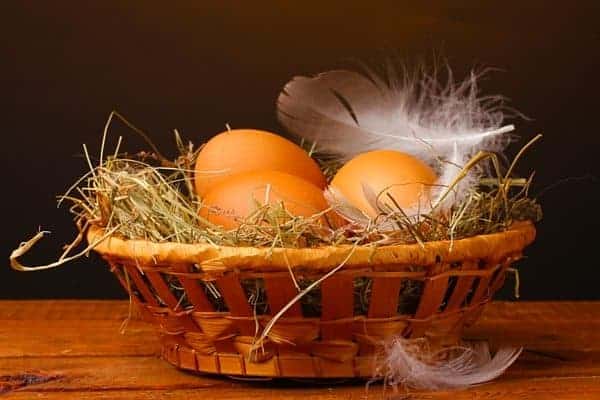
Do you want different colored eggs in your morning egg basket? Who doesn’t?

I have often been emailed by people asking: “Why are chicken eggs different colors?” So let’s talk about different chicken egg colors.

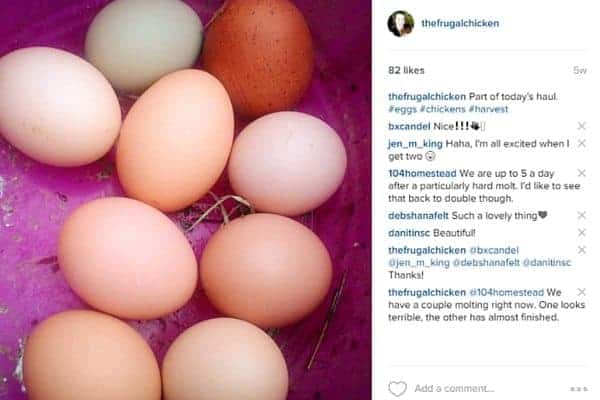
Harvesting different colored eggs is one of the best parts of chicken ownership, and I personally keep certain breeds, such as Easter Eggers and Blue Copper Marans, on our homestead just so I can harvest different colored eggs.

It’s wonderfully exciting to check the coop only to find a blue, green, pink, or dark brown egg in the hens’ favorite nest (because they all have to pile into the same nesting box!).

In fact, I love gathering different colored eggs so much that the only egg color we don’t have on the homestead is white!


Have you ever wondered why chicken eggs come in different colors?

Well, I have an answer for you!

Curious about how different colored eggs are made? Do you know why all eggs are either truly white or blue? In this article, you'll learn how chickens make different colored eggs, how their color is determined, and why every egg out there is either blue or white. From FrugalChicken.

While most eggs start off as white as the yolk is encased in a shell and travels down the oviduct, according to the University of Kentucky, their final color is based on the chicken’s genetics.

In most cases, only once the egg hits the uterus does it actually become colored.

Except…

Unless your hen is an Ameraucana, Araucana, or an Easter Egger that lays blue eggs.

Why’s that?

These two breeds use the pigment oocyanin to color their egg shells blue, and as the pigment is deposited on the egg as it travels through the oviduct, it permeates the egg.

Unlike other pigments, oocyanin covers eggs earlier in the shell-making process. This results in the interior and exterior of the egg being the same blue color, the University of Michigan found.

With olive eggers and Easter Eggers that lay different colored eggs, a brown pigment called protoporphyrin overlays a blue shell, which results in a green egg, and a blue interior egg shell.

So what about the rest of the chicken breeds that lay different colored eggs?

Their interiors are white, and that’s because chickens that lay brown tinted eggs deposit the protoporphyrin on the eggs much later in the shell forming process than oocyanin.

Curious about how different colored eggs are made? Do you know why all eggs are either truly white or blue? In this article, you'll learn how chickens make different colored eggs, how their color is determined, and why every egg out there is either blue or white. From FrugalChicken.

Because of this, protoporphyrin does not penetrate the interior of the egg, but colors only the surface of the egg, leaving the interior white.

The breed of your chicken will determine how her eggs are colored, whether they are brown, white, green, etc., but her individual genetics will determine the exact shade.

In case you don’t know, chickens, like humans, are born with millions of eggs in her ovaries, but she will only lay a fraction of those eggs in her lifetime.

After the egg is released, which is a hormonal response, it takes 26 hours to actually be laid, and during that time, it goes on a journey through her oviduct. Most of that time is spent forming the egg shell.

Only in the last few hours before the egg is laid does the pigment get added, creating the different colored eggs we find in our coops.

Pretty exciting stuff, don’t you think?

So…

Which chicken breeds lay different colored eggs?

While there’s a lot of chicken breeds that will lay different colored eggs, a short list of the most colorful eggs include:

  • Marans for dark chocolate colored 
  • Easter Eggers for green, blue, or pink 
  • Olive Eggers (a cross between a brown layer and a blue layer) for dark green 
  • Araucanas for blue 
  • Ameraucanas for blue (although Ameraucana and Araucana are referred to interchangeably, a true Araucana is a descendent of the chickens imported Chile to America in the 1920s).

Curious about how different colored eggs are made? Do you know why all eggs are either truly white or blue? In this article, you'll learn how chickens make different colored eggs, how their color is determined, and why every egg out there is either blue or white. From FrugalChicken.
“Araucana hen showing ear tufts” by User:Anne Cushing – Own work. Licensed under Public Domain via Wikimedia Commons

What about eggs that are speckled or with different shades?

While these eggs are usually completely normal, they can also be abnormal chicken eggs, and an indication something is not right with your hen.

Sometimes her diet can be off, or she might be experiencing some sort of stress like heat stress.

Speckles usually are normal, and are a welcome, and often beautiful, change!

Curious about how to tell if your chickens will lay different colored eggs other than white?

An interesting tip is to look at the chicken’s ear lobes.

Typically a chicken with white ear lobes will produce white eggs, while those with red earlobes will produce brown or different colored eggs.

Do the different colors impact the flavor or the health value of the eggs?

In short, nope.

Believe it or not, this is a common question I get from people unfamiliar with chickens.

A study by the University of Kansas showed that although brown eggs are more popular in grocery stores because they’re perceived as healthier, in fact the different colors in an egg has nothing to do with how healthy they are.

Different colored eggs and white ones have the exact same amount of cholesterol in them.

So eat away at those different colored eggs and don’t worry about whether they’re more or less nutritious for you (your hen’s diet actually determines how healthy her eggs are for you.)

Curious about how different colored eggs are made? Do you know why all eggs are either truly white or blue? In this article, you'll learn how chickens make different colored eggs, how their color is determined, and why every egg out there is either blue or white. From FrugalChicken.

I’d like to hear from you!

Which different colored eggs are your favorite? Which chicken breeds do you keep for colored eggs (I personally love Easter egger egg colors)? Email me at [email protected] or comment below!

More Egg Articles:


Love to SPOIL your flock with chicken treats? (I know you do!) Then quick like a chick, grab your copy of Cluck Cakes! There’s 11 easy recipes for organic and natural treats you can make in your own kitchen! My hens go WILD for them!

Click here to buy Cluck Cakes.


Save money on chicken feed. Wouldn’t we all like to know how to do that?

Since we began keeping chickens many moons ago, I’ve searched for ways to raising happy, healthy chickens while not breaking the bank.

(Want extra help? Grab my book Chickens: Naturally Raising A Sustainable Flock!)

Over the years, I’ve come up with plenty of ways that allow us to save money on chicken feed without compromising on the quality of the food we produce or on my flock’s quality of life.

In this episode of What The Cluck?! I share these secrets with you.

You’ll learn:

  • The best way to save money on chicken feed
  • The one person you should talk to at your local grocery store to snag free food
  • Why fermenting is critical to save money on chicken feed
  • The fastest way to begin saving today

Links we discuss in this episode:

Feeding Your Hens Right

Where to buy mealworms

Where to buy red worms

Best chicken feeders

(LIKE THIS PODCAST? LISTEN TO THE REST HERE)

Transcript for this episode:

Hi, this is Maat from FrugalChicken, and welcome to session 10 of What The Cluck, a podcast devoted to keeping chickens for fun and self-sufficiency. 

Today we’ll go in depth on 8 ways you can money on chicken feed. And I promise you won’t be disappointed.

Now, like you, I don’t have all the money in the world, so we have to look for ways to save money on chicken feed while still raising a happy and healthy flock.

I’ve learned over the years various ways to cut corners without compromising on the quality of life my flock has, and the quality of food we produce for us to consume.

In fact, many of the things we’ll talk about today are fairly inexpensive ideas to implement to save money on chicken feed, but are actually much better for your chickens.

So, let’s get into it.

The first way to cut costs is to ferment your chicken feed. So, what does this mean? If you use commercial chicken feed, you can soak it under water for up to 48 hours using some sort of starter like whey or fermented vegetable juice as a starter.

If you’re using a homemade chicken feed, whether you need a starter depends on what’s in your feed, but the idea of soaking the feed for up to 48 hours remains the same.

In essence, what you’re doing is creating an environment that allows beneficial bacteria to grow.

This beneficial bacteria is a good thing – studies show that it helps boost your flock’s immune systems, and they lay eggs that are better for you.

Studies show that eggs from hens that eat fermented foods are lower in pathogens such as salmonella and E. coli, and are lower in cholesterol. They also have more vitamin D and A and beta carotene.

Now, we go in depth on fermented feed, how to use it to save money on chicken feed, and how to make it in my course, Feeding Your Hens Right, so if you’re looking for guidance about how to ferment different feeds, that’s a resource that’s there for you.

There’s videos where I show you exactly what to do and what to look out for.

The next thing you can do to save money on chicken feed is feeding only what they’ll eat so there’s no wasting, and this goes for whether you use a homemade chicken feed or a commercial feed.

One option is to hang chicken feeders. This helps reduce waste, because they can’t scratch through it and it also prevents them from soiling their feed.

READ NEXT: ORGANIC CHICKEN FEED RECIPE (THAT WON’T BREAK THE BANK)

Once feed gets soiled, chickens can get kind of picky about it, and if they don’t, you don’t want them eating it anyway, because chicken guts are loaded with nasty pathogens like E.Coli, camphylobacter, and Salmonella, which we discussed a bit above.

Another option or place a plastic mat under their feeder to catch whatever falls down, and feed it back to them. Of course, this takes some maintenance, because as your hens drop feed onto the mat, they might also poop on it.

But it’s a great way to save money on chicken feed.

A third option is to build a PVC feeder that free feeds, but only feeds a little at a time. You can make this with a straight piece of PVC to hold the chicken feed, and a curved piece, which is where your flock will actually eat from.

This set up costs only a few dollars to create, but can potentially save you a bundle of money on chicken feed.

If you do make one of these, I suggest going with 3 or 4 inch PVC so it’s wide enough to actually hold enough feed and the chickens can eat from it easier, get their heads and beaks into it, etc.

You can also offer feed for only a set period of time, for example 20 minutes to a half hour, and remove it after so they don’t toss the feed everywhere to save money on chicken feed.

This, again, takes some maintenance and you’ll have to stay on top of it. If you’re like me, and multitask, which means you forget things a lot, it might not work.

But if you like watching your chickens eat, like interacting with them while they feed, then this option will work well for you.

The third thing you can do to save money on chicken feed is create a mealworm farm, and then feed the mealworms to your chickens. While this takes a bit of money to set up, it’s not a huge investment, and doesn’t take much time.

Yes, you’ll have to touch creepy crawlies, but my guess is if you have chickens, you’re not too concerned about touching insects, right? You can always wear gloves.

Now, the idea here is you purchase mealworms, and have them breed in plastic containers so you have an unending supply of protein for your chickens.

And mealworms are an excellent source of proteins, and an easy way to save money on chicken feed.

So, where do you buy mealworms? Go to TheFrugalChicken.com/mealworms for the dried mealworms I recommend, and I’ll put that link in the show notes.

You can also buy them locally if you have a local supplier, or from other online sites.

You want to make sure you buy live mealworms, so they’re able to reproduce, and there’s some debate about buying by the count or the pound.

So when you go buy mealworms online, some sellers sell them by the count, meaning you can buy 1,000 mealworms or 200 mealworms, you get the picture, or you can buy them buy the pound, meaning you’ll buy 1 pound or 5 pounds of mealworms, or whatever the seller sells them by.

Like I said, there’s some debate about whether it’s better to buy  by the pound or the count to save money on chicken feed.

I believe it’s better to buy by the count, and the reason is because when you buy by the pound, you might be getting big worms, or little ones, or who knows.

You only know you’re getting a set poundage, you don’t know how many you’re getting.

When you buy by the count, you know the amount you’re getting, and because your goal is to breed these mealworms to feed the offspring to your chickens, you can be fairly sure you’ll be getting enough to really supplement part of their feeding program to save money on chicken feed.

Even if they’re tiny, they will grow to become adults, and if they’re adults, then they can breed right away.

Either way, you know you’ll have enough to set up a sustainable breeding program to save money on chicken feed.

Now, for your mealworms, you can use oatmeal as bedding, and feed them scraps like carrots to sustain them.

READ NEXT: TREATS THAT YOUR HENS WILL LOVE!

You will have to move them around as they breed, but you can use a spoon or gloves so you never have to actually touch them.

Other than that, they’re very low maintenance, and very healthy for your chickens. Mine go nuts over mealworms, it’s like kids on Christmas morning when they see I have mealworms for them.

Similar to mealworms, you can offer red worms, aka red wrigglers, to your chickens, and in some ways, these are easier to acquire and require even less maintenance than mealworms.

And these are the same worms you add to soil or compost to improve the soil.

You can purchase these red worms at bait shops locally, or online.

See TheFrugalChicken.com/redworms for a supplier I recommend on Amazon, and I’ll also put that link in the show notes.

So like mealworms, you can purchase red worms by the count or by the pound, and I recommend, again, buying them by the count to save money on chicken feed.

To house red worms, you’ll need some material, like newspapers and cardboard as a bedding substrate, and a bit of dirt to start them out, and they’ll need food, of course.

Unlike meal worms, you don’t need to move red worms around unless they grow too big for their container, in which case you’ll have to move them into either a larger bin, feed more to your chickens, or split up your worm population into different containers.

You can feed them whatever kitchen scraps you have, and that’s pretty much what they eat. They breed easily, and you’ll have an active supply of protein for your chickens to save money on chicken feed.

One idea is to feed the worms to your chickens in your garden when you’re not growing anything the chickens can destroy, which means you can spread the worm castings in your garden while feeding your chickens, and their scratching will integrate the castings into your soil.

It’s a nice way to multitask, right?

Now the only thing about the red worms is you have to keep a watch on your population to make sure you don’t plow through it all as you try to save money on chicken feed.

In a similar vein, you can also save money on chicken feed by letting them scavenge in your compost pile.

Chickens will eat whatever it is your composting, but more importantly, they’ll eat bugs, worms, larvae, and whatever else is in there, all while working your compost to decompose it faster.

They’ll also add their own manure to the mixture, increasing the power of your compost.

While chickens shouldn’t only eat compost, this is a nice, green way to add to their diet, and your chickens will love it because it gives them something exciting to do.

So the next thing you can do to save mega bucks when raising chickens is to grow as much of their feed on your property as possible, and of course you’ll need to use a homemade feed recipe if you do that.

On the blog, I have a great recipe, which is pretty popular on YouTube as well. In the show notes, I’ll put a link to it, you can also find it on the FrugalChicken YouTube channel at TheFrugalChicken.com/YouTube, you can find the video there.

Now the first question I’m sure you have is how do you know how much to grow to save money on chicken feed.

Start with how much your chickens eat, and reverse engineer to figure out how much to grow. A good crop to start with might be wheat or millet, which are high in protein, but require little space to grow.

And even if you can only grow half or a quarter of what your chickens eat, and then use commercial feed to make up the difference, some is better than none to save money on chicken feed.

At the same time you can use the chicken manure to enhance your soil that you grow their food in, making this a nice way to close the circle, so to speak.

On our farm, we grow wheat, peas, and greens, and we’re considering trying oats. But the wheat and peas are super simple to grow and harvest, so that’s where we get the most bang for our buck to save money on chicken feed.

If you don’t have a lot of time, you can start with as much as you can do, and improve from there.

In the same vein, sprouting seed is one of the least time consuming ways you can save money on chicken feed. All you need is a bucket, some water, and some seed you know will sprout.

READ NEXT: HOW TO GROW FODDER (AND WHY YOU SHOULD)

When you sprout seeds into fodder, you take a fixed amount of nutrients, and exponentially multiply it until it becomes something more nutritious than it was before you sprouted it.

A good one to start with are peas, for pea shoots, which are very nutritious for people and animals, and another one I like are sunflower seed shoots.

Chickens love sunflower seeds, and they’re great for cooler weather because the seeds have a lot of fat in them. The chickens love the sprouts as well.

So chickens are getting the benefit from the seed itself, the shoot, which has grown, and the roots.

But probably my favorite seed to sprout is wheat, in part because it’s plentiful in my area, but also because it’s relatively cheap, about $6 for a 50 pound bag, and wheat has a lot of protein in it, so your chickens will get the benefits of fresh greens, but also an extra amount of protein.

Wheat is also really, really, easy to sprout and grow, and it doesn’t require much space or light to save money on chicken feed. Mostly it requires warmth and moisture.

You can also sprout barley, which is popular, and it grows faster than wheat. I noticed that barley takes 5 or so days before it’s at 2-3 inches in height, while wheat takes about 9 days.

I grow wheat because it’s easy to get in our area, for barley, I would have to have it shipped to me.

And again, in my course Feeding Your Hens Right, we go in depth on fodder and how to grow it, how to avoid things like mold, and mistakes to avoid.

I would say that sprouting fodder is the best way we save money on chicken feed, and they’re satisfied to get something fresh.

So the final way we’ll talk about today to save money on chicken feed is to use produce from the grocery store or a restaurant, and in this case, the food is still good, it’s not completely rotten or anything, but the grocery store can’t sell it for whatever reason.

Maybe it has a spot on it, or in some cases, they give us leftovers from making those fruit cups you see at the market, or the things of pre-chopped veggies you can buy.

It’s ok to feed your chickens produce as a treat or as a small portion of their diet, I don’t recommend it as their entire diet, and of course there are some foods you need to avoid, like potatoes and onions, but if you’re particularly hard up and it’s either feed your chickens produce from the grocery store or let them starve, then of course this is a good option.

We do actually do this, we receive food every week or so from a local supermarket to save money on chicken feed, and what we did was talk to their produce manager.

Don’t try anyone else, because they’ll just refer you to the produce manager.

Go to a local mom and pop store, don’t try a major chain or anything, you probably won’t be successful, but a small store might be happy to work with you.

In our case, the produce manager didn’t want to throw the food away, but before I came along, she didn’t have any option.

So it really was a win-win situation that lets us save money on chicken feed.

What I do is when I go to a new location, I feel them out, so I might talk to someone in the produce section, and ask what they do with all the food that can’t be sold and engage them in conversation to see if there’s an opening to ask.

It warms them up a bit before asking if they want to give the produce away to help us save money on chicken feed.

Most of the food goes to our pigs, but the chickens do get some fresh stuff, like grapes, strawberries, and the like.

An excellent, excellent way to extend the power of this free food is to ferment it, and we’ve talked a bit about fermenting, but for produce, it’s especially good if you can’t keep it all in your kitchen.

We get so many boxes, that we can’t bring it all inside, so I ferment it in 5 gallon buckets, and the food keeps really, really well that way, and becomes a more beneficial food because of the beneficial bacteria and everything.

It’s a good way to add probiotics into their diet, but like I said, it should not be the bulk of what you feed them. It’s a good way to save money on chicken feed, but it should not be the only way.

READ NEXT: 10 ABNORMAL CHICKEN EGGS & WHAT YOU NEED TO KNOW!

Well, I hope this podcast provides some insight into ways you can save money feeding your chickens.

There’s a lot of good ideas here that have worked well for me on my homestead, and hopefully one or two of these ideas will work for you.

As always, feel free to contact me with any comments or questions, and be sure to check out other chicken related articles on the blog, TheFrugalChicken.com.

If you liked this podcast, please feel free to give it a review and ratings in iTunes, I would definitely appreciate it. And don’t forget to subscribe to What The Cluck?! on iTunes so you don’t miss an episode.

If you haven’t checked out my new chicken nutrition course, Feeding your hens right, which comes out in January, head over to FeedingYourHensRight.com, all one word, to take a look.

Thanks again for listening to this episode of What the Cluck?! and I hope it helps you save money on chicken feed. See you next time!

I’d like to hear from you!

Which of these ideas to save money on chicken feed will you try? Email me at [email protected] or comment below!

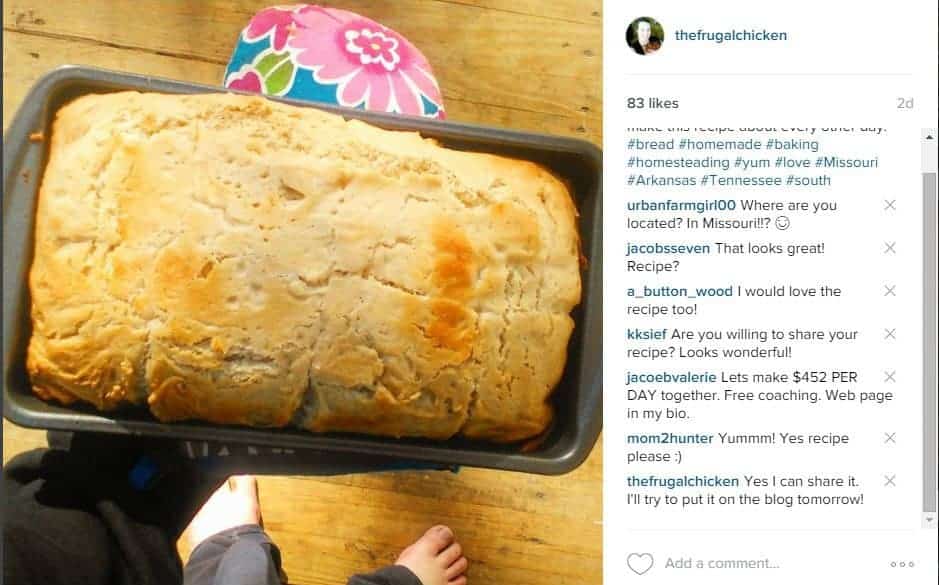
Baking great bread isn’t a talent I was born with, but I’ve learned by trying easy recipe after recipe.

But, as I took homesteading more seriously, and because I wanted to avoid all the preservatives and “what the heck is that?!” ingredients in store bought bread, it was time to get off the pot, and learn a to make homemade bread.

So I started learning, but was intimidated by all those recipes that show a gorgeous loaf, perfectly prepared.

It’s insane! I never felt like I could be that good.

So, I started developing a recipe so I could make healthy bread, in my own kitchen, without having to worry about chemicals and the like.

It wasn’t that hard, really!

While my bread is still hardly Pinterest-worthy, it’s a good example of the kind of bread you can bake, easily, in your own home.

And the best part?

It doesn’t take much time or kitchen-savvy.

Just a half hour or so, and a desire to learn.

There’s some secrets I’ve learned to baking good bread consistently, which I’ll share with you in this easy bread recipe. 

I developed this recipe for people like me in mind, who don’t have much time, but want to avoid buying bread at the store.

You can make my easy bread recipe for pennies on the dollar, and you’ll have a healthier, preservative-free product in the end.

I also want fast results, and a recipe I can turn to time and again.

This is that recipe.

My easy bread recipe yields one loaf of versatile bread that you can eat simply, with butter, or as part of a larger meal.

easy bread dough recipe

I like to eat it under homemade chili to make the meal heartier.

With my bread recipe, you’ll know your family is getting nourishing, healthy bread.

But first…

I’ll let you in on my bread secrets

So far, I only have a few bread secrets, but they’re big ones, and are important to this recipe.

For me, they’ve meant the difference between hard lumps of something that resembles bread, and a light loaf of crumb.

So, what are these secrets?

Secret 1: Always, always, always use bread flour

The all purpose stuff will work, but a good bread flour is essential.

You can find it in the same grocery store aisle.

Secret 2: Use warm water, 110 – 120 degrees to let your yeast activate. No warmer, no colder.

Warmer water might kill the yeast, and cooler water might prevent them from activating. Both mistakes can kill your bread making attempts.

The yeasts are freeze-dried, remember, but they’re living organisms, and they need to be activated to do their job in your bread recipe.

I’ve made the mistake of using 100 degree water, and the bread in this recipe came out very dense, and not at all light. 

So, the temp does make a difference.

I do use a thermometer, which you can easily find at any store selling baking materials (suggestions at the end of this article).

You can either microwave the water for 1:30 minutes, making sure to test the temperature after to make sure it’s right for the recipe.

You can also heat water on the stove until it’s risen to the right temperature.

Give our yeasty friends a warm bath, and they’ll help you out in this bread recipe.

Secret 3: Let the yeast activate until you see a lot of foam.

Following secret 2 is this secret.

Yeast are living creatures, and their job is to produce a gas that will make your bread light and fluffy. 

The longer they’re allowed to activate and do their thing (within reason), the better your bread will be, and it’s more likely you will have success with this recipe.

I let mine activate for 1/2 hour to 1 hour before dumping them into the other recipe ingredients. 

Seriously, this step will change your bread making.     But don’t skip the next step either….

Secret 4: Allow the dough to sit overnight before baking

Ok, I know this step kind of sucks because you need to wait.

But giving those yeast an extra few hours to do their thing yields incredible results.

If you want to bake right away, your bread will still be good.

But wait a few hours, putting your dough in a warm place…

Makes GREAT bread.

You’ll thank me.

Alright, now that we have that out of the way….

Ingredients

2 cups water (110 – 120 degrees)
1 cup white sugar
1 tbsp plus
1 tsp yeast
2 tsp salt
1/4 cup olive oil, plus more for brushing
6 cups bread flour
1 tbsp butter, for brushing


Directions

In a bowl, combine the flour, sugar, and salt.

In a separate bowl, combine the water and yeast, and stir to incorporate the yeast into the water.

Allow to sit for 30 – 60 minutes, or until you see a lot of foam.

This lets you know the yeast is doing its thing.

Right before adding the yeast, add the 1/4 cup of olive oil to the flour mixture.

Once the yeast is established, incorporate it with the flour mixture.

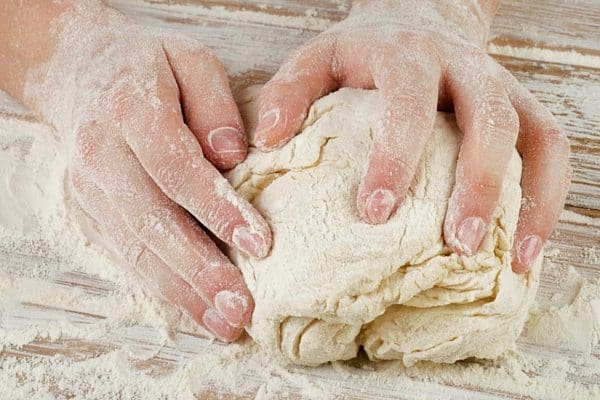
With your hands, start mixing the dough together, incorporating the yeast water and the oil to create the bread dough.

wet dough bread recipe

This only takes a few minutes, and you’ll know it’s done when the dough is fully incorporated and pulls away from the sides of the bowl.

To mix everything together, I like to mash the dough through my fingers, folding a couple times.

Once you’ve made your bread dough, brush some olive oil onto each side to prevent it from sticking.

This also gives it a nice flavor.

Cover the bread dough, and let it sit for 1 hour.

After 1 hour, return, and fold the dough in half once.

Allow to sit over night to let the yeast develop.

If you make your dough at night, you can allow it to sit until the following night, when you get home from work.

You can also simply pop it into the oven in the morning if you’ll be home all day.

Once the dough has risen, and it should have risen a lot, pour the dough into a non-stick loaf pan.

Make sure to smooth down the top of the dough so you don’t get any lumps in the crust.

Make one vertical slice lengthwise on the top of the dough, it does not have to be deep.

Then make two horizontal slices width wise.

These slices are to allow the dough to rise evenly in the oven without creating any weird lumps in the crust.

Cover the top of your dough with aluminum foil. This will allow the bread to bake consistently in the pan.

Preheat your oven 400 degrees, and wait for the correct temperature before putting the dough into the oven.

Bake for 30 minutes.

After 30 minutes, the dough should have risen and look like bread.

Now, remove the aluminum foil and brush the top of the bread dough with butter.

Place under the broiler, uncovered, for 10 minutes to darken the crust.

If it does not darken evenly, don’t worry – that’s part of the fun of making homemade bread in this recipe!

After the crust has darkened, remove the bread and allow it to cool for 30 minutes to an hour before cutting. This allows you to make even cuts without destroying the soft interior of the bread.

There’s a lot of steps, but after you make this recipe a few times, it will go like clockwork.

I’ve found this bread recipe to be pretty fool-proof, and if I can make it, so can you!

I’d like to hear from you!

What’s your favorite part of baking bread? Do you have a favorite recipe? Email me at [email protected] or comment below!


Keeping chickens laying through out winter is a tricky task.

It takes a bit of hard work, but by taking the right steps, you can keep your flock in business and still eat omelets for breakfast.

In this episode of What The Cluck?! we look at 5 steps you can take to keep your chickens laying through the winter.

Want to keep your chickens laying through the winter? In this podcast, you'll learn 5 things to do today to keep your chickens laying, as well as mistakes to avoid. From FrugalChicken

You’ll learn:

  • 5 things you need to do today to keep your chickens laying eggs
  • The one thing you shouldn’t do.
  • Why nutrition is key to getting eggs over the winter

(LIKE THIS PODCAST? LISTEN TO THE REST HERE)

Links we discuss:

Where to buy Nutridrench

Feeding Your Hens Right

FrugalChicken YouTube Channel

I’d like to hear from you!

Do you try to keep your chickens laying through the winter? What’s worked for you? What hasn’t? Email me at [email protected] or comment below!