What if I told you there was an all natural sunscreen out there made from the same ingredients you’ll find in your own garden?
Does it sound too good to be true?
Well, no. There’s a natural solution to the natural problem we all face when working outside. One that’s certified organic, and full of natural, safe ingredients.
Meet Goddess Garden.
I’ve been working closely with Goddess Garden Organics, and I can finally let the chickens out of the bag. They’ve agreed to let me test drive their wonderful organic sunscreen products for the next 30 days.
I hope you join me.
Let’s face it, I’m getting older. It’s just that simple.
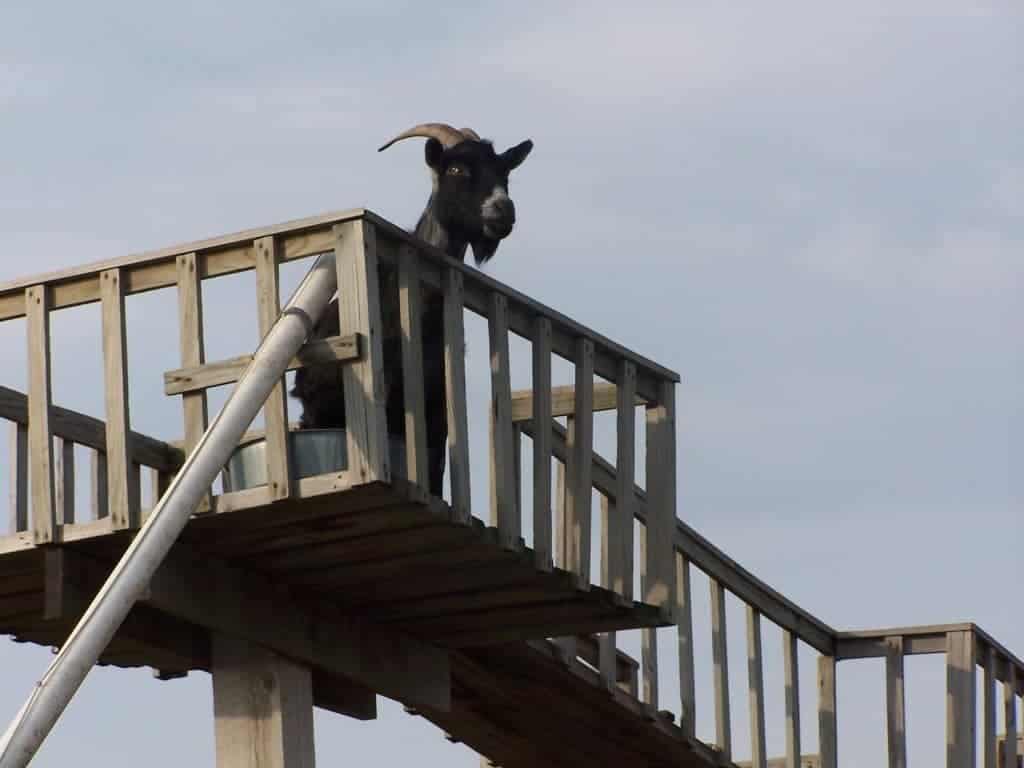
Skin care is a priority (as I seem to get less sleep, the more protecting my skin becomes a concern). I spend hours each day outside, either working in the gardens, checking on the orchards, examining hay, running down a wayward chicken, or milking a goat.
I don’t really feel like getting skin cancer.
I’m sure you understand.
Sunscreen choices are limited in my rural area (let alone organic, all-natural sunscreen), so I’m thrilled Goddess Garden exists (and is available through Amazon!).
What’s the big deal?
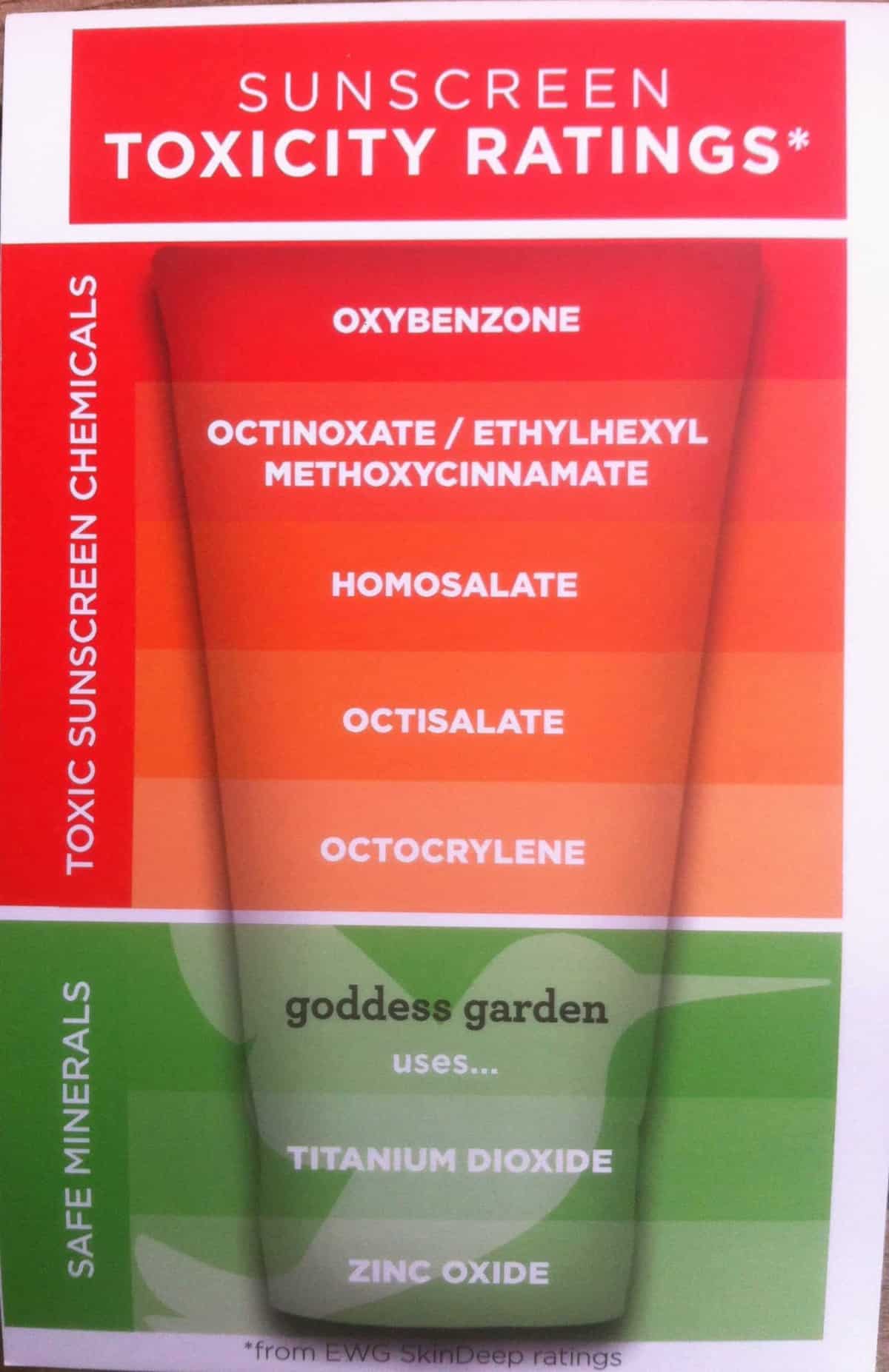
While it’s important to protect your skin when working outside, studies have found that regular sunscreens contain harmful chemicals that can lead to problems, such as hormone imbalances.
For example, oxybenzone, a popular sunscreen ingredient, has been known to cause allergic reactions, endocrine disruptions, and cellular level changes. Various studies such as this one in Toxicology and Applied Pharmacology show that oxzybenzone effects hormones and might cause endocrine disruption.
I’ve committed to these products because Goddess Garden’s products are all-natural, and full of wonderful ingredients such as aloe, green tea, coconut oil (you know I love coconut oil), and raspberry seed oil. Their active ingredients are the safe, naturally-occurring minerals zinc oxide and titanium dioxide.
These are ingredients approved by the Environmental Working Group (a group that gathers information about products and ingredients, and ranks them for environmental and human safety). Goddess Garden received a top score for safety from the Environmental Working Group.
Here’s what I like about Goddess Garden:
It’s certified organic
Won’t irritate sensitive skin (huge in my family!)
Biodegradable, reef-safe, vegan, gluten-free, and non-GMO (perfect, right?)
It smells AMAZING. Seriously.
One thing to remember when you look at the label —> The Food and Drug Administration requires manufacturers to put scary-looking ingredient names on labels. Luckily, Goddess Garden is a step ahead, and lists the common name of ingredients as well, so you can understand what you’re putting on your (and your kid’s) body.
What have I been trying?
I’ve been testing their:
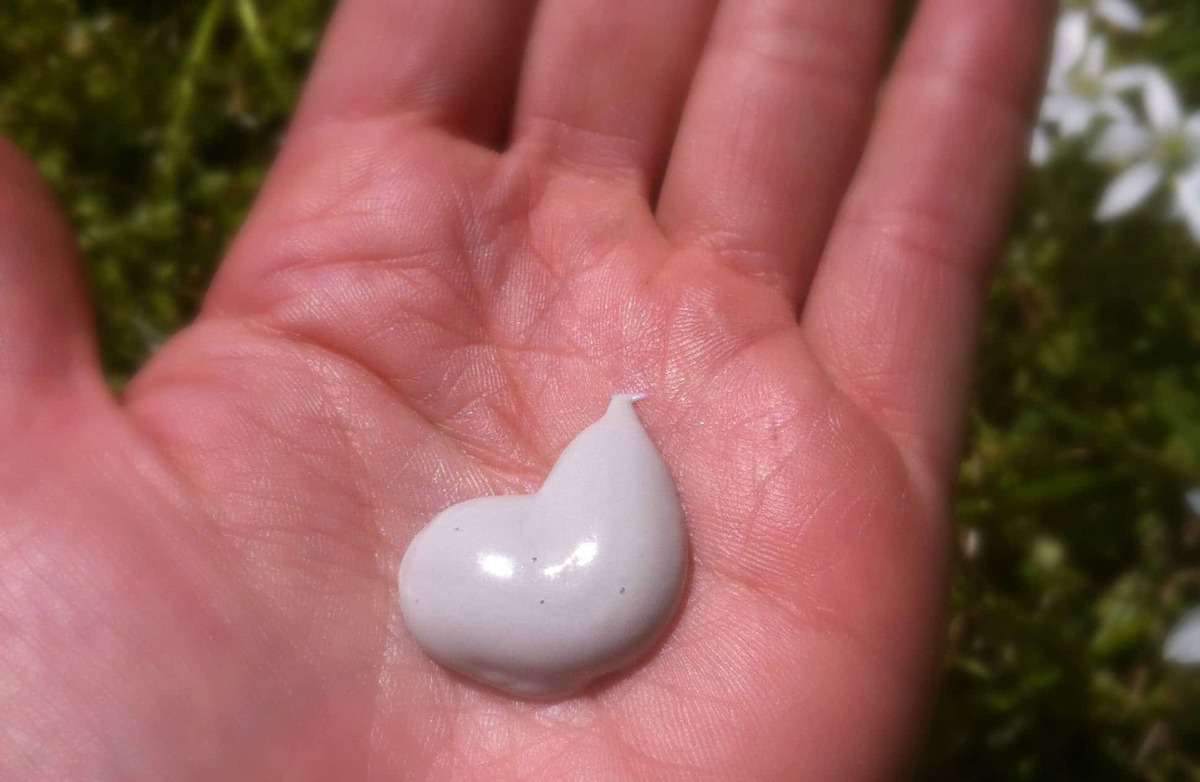
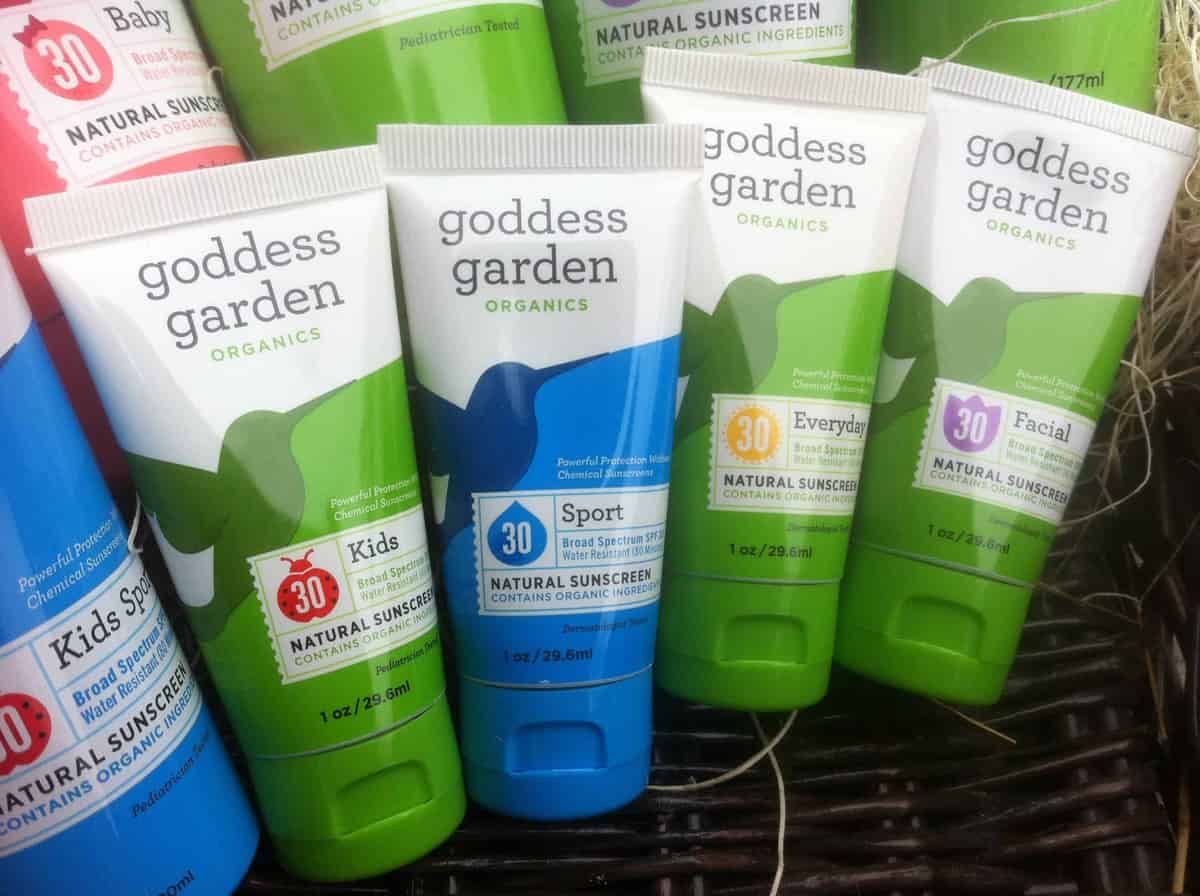
Everyday Sunscreen (and I wish you could smell it through this article – there’s notes of green tea and lavender)
Facial Sunscreen
Sport Sunscreen
There’s also a kid sunscreen (including a sport sunscreen for kids) and a Baby version (lots of shea butter – super important for skin!).
I’ve already started using it (I couldn’t wait!) and for the next 30 days, I’ll apply it daily and again any time I plan to spend hours outdoors. I’ll update you every step of the way.
Even though I was sent these products to test, you can be sure my opinions are my own, and I truly do love this sunscreen.
How do you see organic sunscreen fitting into your lifestyle?
If your chickens stopped laying eggs, there is a reason. Figuring out what the reason can sometimes be challenging. But don’t fret, we can figure this out together!
Chickens not laying eggs when they’re supposed to be is really, really frustrating. I know, because I’ve been there. From time to time my chickens stopped laying and I had to figure out why.
You think you’re doing everything right, but egg production has stopped…..and you’re left to wonder “Why are my chickens not laying eggs?” There can be a variety of reasons and that’s what we will be talking about in this article.
10 Troubleshooting Tips For Why Your Chickens Stopped Laying Eggs
#1: They aren’t getting enough protein. Chickens need feed with 16%-18% protein.
The most common reason chickens stop laying is by far the amount of protein they’re getting.
A good chicken feed of 16 – 18% protein is always recommended to avoid these issues. It doesn’t mean you won’t ever have another problem, but it’s a good foundation to start with. Feeding a high-quality feed with the right amount of protein will certainly prevent many other potential problems. Check out this feed, it’s packed full of amazing ingredients.
BUT, it’s not quite that simple. Chickens are individuals, and I’ve found that even different breeds can require an additional amount of protein to lay efficiently.My Production Red chickens happily produce eggs every day with a 16% protein layer feed.My Blue Copper Marans require a 22% game feed, however.
Particularly if you let your hens forage all the time, they might not be getting enough protein.One way to test this is to offer a handful of mealworms (either live or freeze-dried) to your chickens to see if they pick up production.
#2: Not getting enough food. You might need to measure the right amount per bird and watch them to be sure they are all getting a chance to eat.
Nutrition is so important for your flock, just like it is for us humans. Chickens need a certain amount of food, and unfortunately, they can’t tell you if they are still hungry (at least not with words).
A well-known ballpark figure for estimating purposes is 1/4 pound of feed per chicken per day, or, 1.5 pounds of feed per chicken per week. Keep in mind that this is a ballpark figure, and you’ll need to watch your flock’s intake. If they gobble their feed quickly and still seem hungry, offer more.
You also need to watch for chickens getting pushed out of the way. This can happen with birds low in the pecking order, and if you have a lot of chickens or very bossy hens.
You can try putting out extra feed stations or separating less-dominant birds from the flock during dinner (or permanently, if they’re getting really picked on).
#2: Your laying hens are stressed. Figure out if your chickens are stressed and remove the “thing” that is stressing them.
You may not even realize your hens are being stressed out. Here is a partial list of potential stressors: mishandling (like a child taunting them), boredom, adding new chickens to the flock, an overpopulated chicken coop, dirty nesting box issues, aggressive roosters, bully hens, and predators.
These are all things you can adjust, change, and rearrange for the good of your hens’ health.
#3: Lack of vitamins and minerals. Make sure your chickens have enough vitamins and minerals in their diet.
If one or more chickens stopped laying, there might be a vitamin or mineral deficiency, and they won’t lay until those needs are met.
Vitamin and mineral deficiency is one reason chickens stop laying. There are a lot of reasons your chickens might need a supplement, far more reasons than I can include in one article. If your chickens have stopped laying, then offering a vitamin supplement like this might be necessary.
While it can be hard to pinpoint the exact deficiency without bloodwork or at least a vet exam, there’s 4 possible reasons your hens might be vitamin or mineral deficient if your chickens have stopped laying.
Vitamin D
Lack of Vitamin D – which is needed to absorb and metabolize calcium correctly – is one possible factor if your chickens have stopped laying.The most common cause of this deficiency is not enough sunlight.
If your chickens are cooped up constantly (and not out in the sun), this can lead to a decrease in their Vitamin D absorption.Simply letting them sunbathe for an hour or so each day is a great preventative.
Adding some vitamin D to their feed for about 3 weeks might increase the laying.
Chickens absorb calcium through their intestines, and without enough calcium, they either won’t lay or will lay very soft-shelled eggs.
If your chickens are low in vitamin D, they’ll have difficulty absorbing calcium.Try giving your flock egg shells or oyster shells as a supplement if your chickens stopped laying.
You should supplement your chickens daily rations with calcium anyway.
Iron
Ever see chickens open and close their mouths, as if they had sour crop? Yet the crop is empty?This can be a sign of iron deficiency, and your hen might be anemic. (If it gets to this stage, you need to take her to a vet).If your bird is truly ill, she might have stopped eating, which can cause anemia as her iron levels drop.
Anemia doesn’t just occur if your chickens are sick.Sometimes anemia happens when your hen simply isn’t getting enough to eat, or her diet is low in iron, or she’s suffered a severe mite infestation.
As chickens become more anemic, their red blood cells have difficulty bringing oxygen around their body. (That’s why it looks like she’s gasping for breath).If it’s been going on long enough, and your chickens stopped laying, you will notice your chickens have lost weight, too.
Use their breast bones as a guide. Does it feel muscular, or does it just feel like bone? For a definitive diagnosis, you’ll need a vet’s advice.
Chickens that don’t get enough salt will experience a loss of appetite and might stop laying as a result.Signs of too little salt also include increased feather pecking, loss of weight, and an increase in nervousness.
If your flock gets a good layer feed and is allowed to forage, it’s unlikely they will be salt deficient.Chickens fed a large cereal-based diet (such as hens only fed oats) might need a salt supplement.
Be cautious with overloading your chickens on salt, as too much can lead to kidney problems and death. As with anything, moderation is best.To be on the safe side, you can offer salt free-choice (in a cup, for example), and let your hens peck at it whenever they want, or add a little to their dinner.
If your chickens stopped laying and you want to provide salt, I only recommend using Himalayan salt. It still has a lot of the natural minerals that something like table salt lacks.
Another possible issue for chickens not laying is age. As anything ages – chickens, people, etc., absorbing the right vitamins and minerals can get difficult. This one is short and sweet, the older they are the less eggs they will lay and the more problems they will have.
#6: Hide and go seek. Figure out if your chickens are hiding their eggs.
Frequently I hear from readers whose chickens stopped laying suddenly and they are wondering how to get their beloved chickens to lay eggs again.
My first question is about diet. If that answer checks out ok, then I usually ask whether the chickens free range or not. Typically the answer is yes, their chickens’ free range.
While there can certainly be another reason your chickens stopped laying, barring a diet issue, it’s entirely possible your hens have made a nest for themselves in some hidden area.
This happens more often than you’d think.
Chickens like to lay eggs in quiet and in dark, secret places. This way she can sit on them without disruption and the eggs have a higher likelihood of hatching.
So, if your chickens stopped laying without explanation, put them in their coop for a week or so to see if any eggs appear.
#7 Check your calendar. What time of year is it?
If it’s winter, this may be the problem. Most chickens require 14 hours of daylight in order to lay eggs.
I say “most” because we’ve bred some Production Red hybrids on our farm that still lay throughout winter months.
If your chickens stopped laying, consider the time of year. If it’s winter, then it’s completely natural as there are shorter days (less sunlight).
#8 Check their feathers. Are they in their annual molt?
When we say “chickens molting,” you might wonder what that really means. It’s a term you see thrown around on Facebook, but it can be confusing if you’re a beginner with chickens.
Basically, when we say “chickens molting,” we mean that your hens and roosters are losing their feathers. Don’t worry – they’ll grow new ones, and chickens molting is perfectly normal.
Inconveniently, chickens tend to molt in the late fall or early winter. They can stop laying, or at least slow down because they redirect their energy into growing new feathers.
#9 Is your hen ill? Illness can cause all kinds of problems.
Chicken keepers always need to keep their eye on the general health of their chickens. If you pay attention daily, then it’s easier to know when something isn’t right.
Perhaps a hen is sitting in the corner and not excited about treats like normal, or maybe one of your hens has a lot of fecal matter stuck to her vent, or perhaps you hear a cough in the coop. These are signs of illness.
You also need to regularly check for parasites like lice and mites. There are ways to prevent these ugly little creatures as well, like nesting herbs specially formulated to repel them.
#10 Is your hen broody?
Broody hens will stop laying eggs in order to take care of the ones she’s sitting on. To learn more about this behavior, and what you can do about it, read this article: Broody Hen – To Help or Hinder, You Decide.
Summary
I hope my experiences and research help you determine why your backyard chickens stopped laying eggs. I know it can be very frustrating as you are walking through the troubled waters.
Just know that you can usually find the problem and fix it…and be on the path to a beautiful bowl full of farm fresh eggs!
Apple cider vinegar has a multitude of uses around the homestead, and if you’re not making it yet, you’ll want to pay attention to this guide.
Making apple cider vinegar is so easy, and doesn’t take much effort, that it’s really one of those items you should produce at home.
You can easily make a gallon of vinegar for less than those quart-size bottles you buy at the store (I personally don’t make that much at once, but I include it as an example of how frugal making your own cider is).
I make apple cider vinegar with the leftover apple scraps when I make applesauce. Instead of throwing my cores and peels into the pot when making applesauce, I save them (no need to strain the applesauce later) and use them for apple cider vinegar. If you make a lot of pies, you can use the scraps from those apples, too.
Apple scraps, honey (or other sweetener) and water is all you need to start making your own apple cider vinegar. It really is that simple.
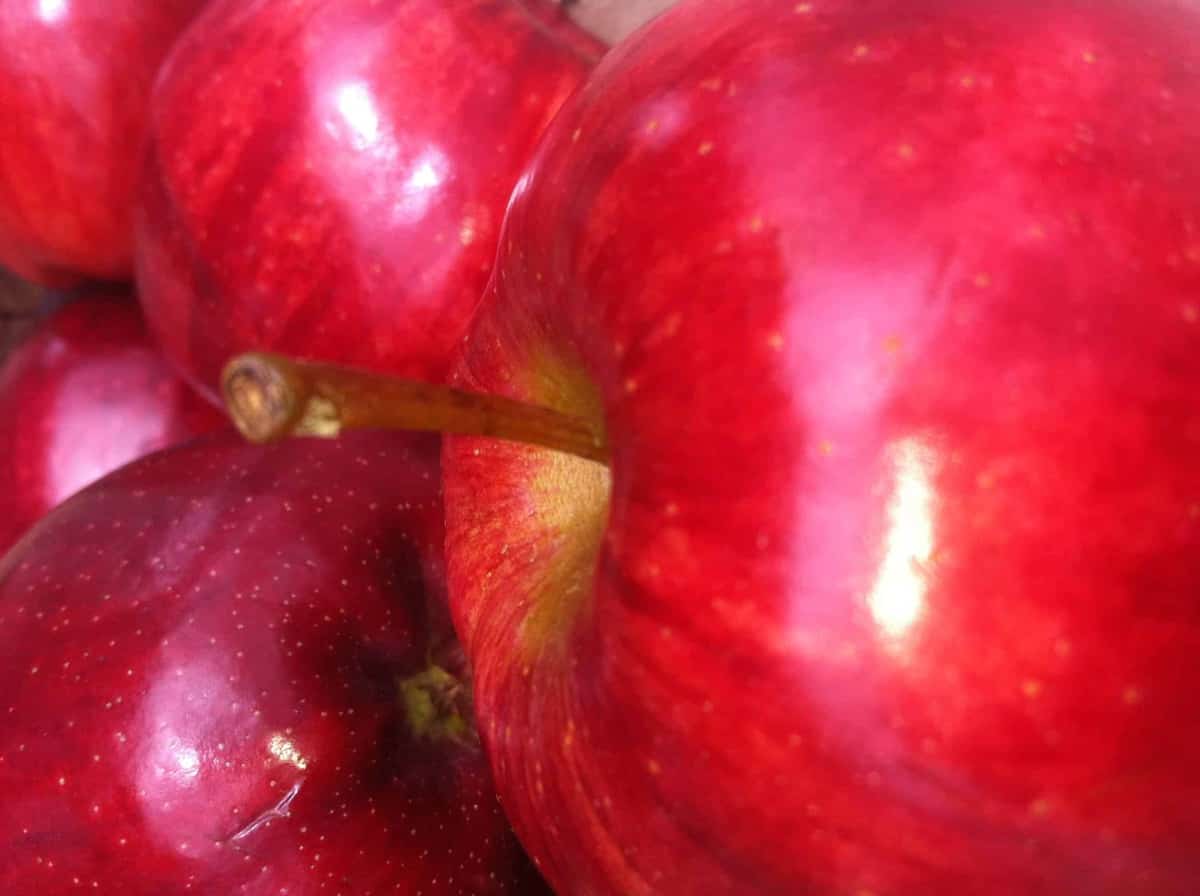
I start with the scraps from 6 lbs of Red Delicious apples. Some recipes suggest using sour apples, some suggest mixing sweet apples with tart apples, etc., but I’ve found it doesn’t really matter. Since I use scraps leftover from making applesauce, my vinegar is usually made with sweet apples.
You want to use a sterilized mason jar (because what would home brewing be without a mason jar?), to make your apple cider vinegar to keep nasties away. There’s detailed directions here.
Put your apple pieces in your mason jar, leaving a couple inches or so at the top of the jar.
Mix your honey and water together, and pour over the apple scraps. The apple needs to be covered completely, and should stay submerged. Use a weight if necessary.
Cover the opening of the mason jar with a cheese cloth (a brand new cloth diaper works also!) and tie with a rubber band or a string. The cheese cloth is super important – it keeps out contaminants.
Let the mixture sit for two weeks. It will turn into apple cider as the apples ferment.
If scum forms at the top – don’t worry! As long as the cider smells ok, the scum is harmless. Of course, if your mixture smells funny or moldy, throw it out and start over.
When the apples get to the fermentation stage, strain out the apple scraps, and return the liquid to the jar. Let it sit for another 4-6 weeks until it smells like vinegar. It’s unmistakable!
If it doesn’t smell like vinegar yet, let it sit until it does. The longer it sits, the more sour it will get.
Pretty simple, huh?
Ok, so why homemade Apple Cider Vinegar?
Savings aside, making your own vinegar has several advantages, not the least of which is you’re finding a use for something (apple scraps) you’d otherwise throw away or compost. If it can be used around the house, why not?
You’re getting pure, undiluted ACV, and if you use organic apples, it will also be organic. When you make it yourself, you know it’s origins, and that it’s the real deal, unfiltered and raw.
If you’re going to be consuming it, you’ll want to know where your ACV came from, and that it’s pure ACV.
ACV In Cooking
These are some of my favorite uses in cooking:
Use it instead of regular vinegar in marinades to lend a different flavor.
Include in a salad dressing instead of balsalmic vinegar
Make cheese using apple cider vinegar and milk (these days I’m looking for any way to use milk)
Add it to rice when cooking (add at beginning so it’s not quite so vinegary)
Like anything fermented, ACV contains natural enzymes and nutrients that nourish your body and reintroduces any lost nutrients. Consuming these goodies will lead to better heath.
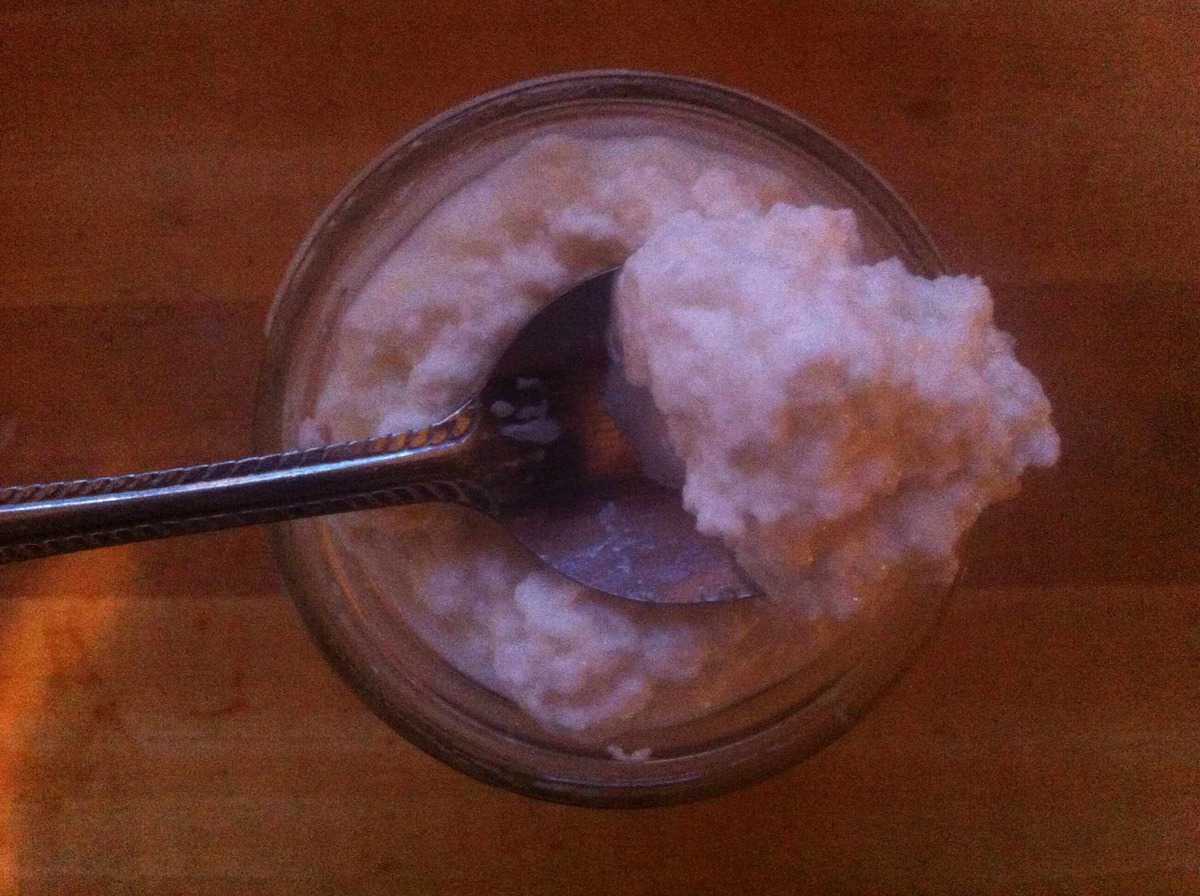
By combining 1/2 a gallon of milk (I used raw goat milk) with 1/4 cup of apple cider vinegar, you can make a sort of ricotta. It has a mild flavor, so it would work well with fruit, or in any recipe that uses ricotta or a softer cheese.
Uses for Apple Cider Vinegar Around the Homestead
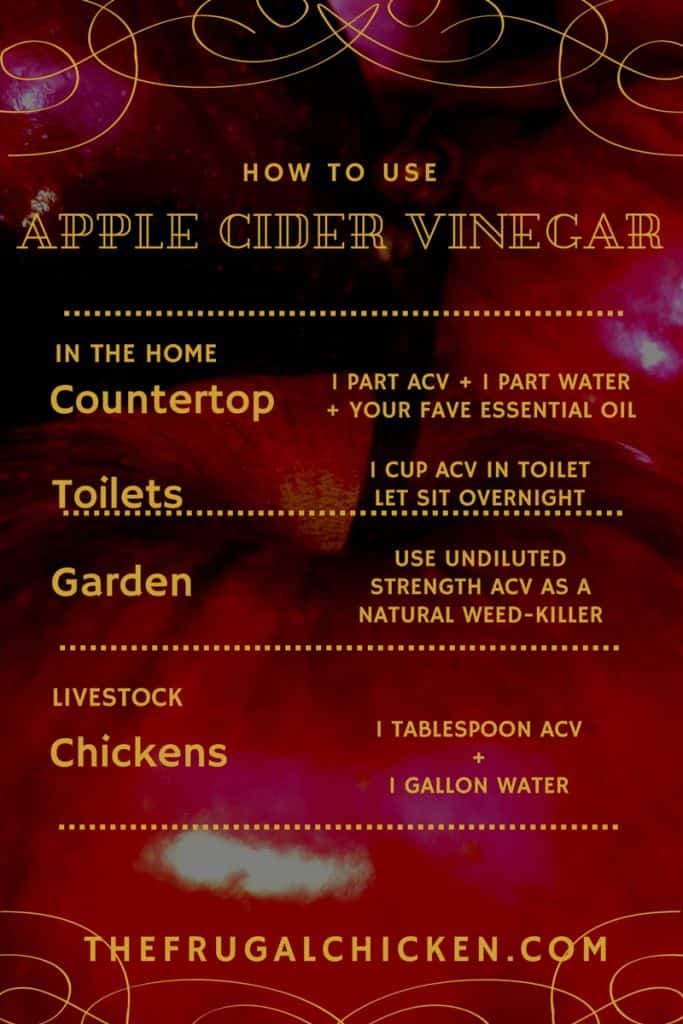
Because of the nutrients, ACV is great to add to your chickens’ water. It aids in digestion as well. It has antibiotic properties, which will not only deter nasties in their water, but in their bodies as well. I dilute 1 tablespoon with 1 gallon of water.
ACV is also a popular homemade cleaner because of its antibiotic properties – there’s a printable at the end of this article with recipes to make your own household cleaners using ACV.
Making your own apple cider is so easy, with so many uses, you’re just hankering to try it now, aren’t you?
Dairy goats are great for more than just milk on the homestead.
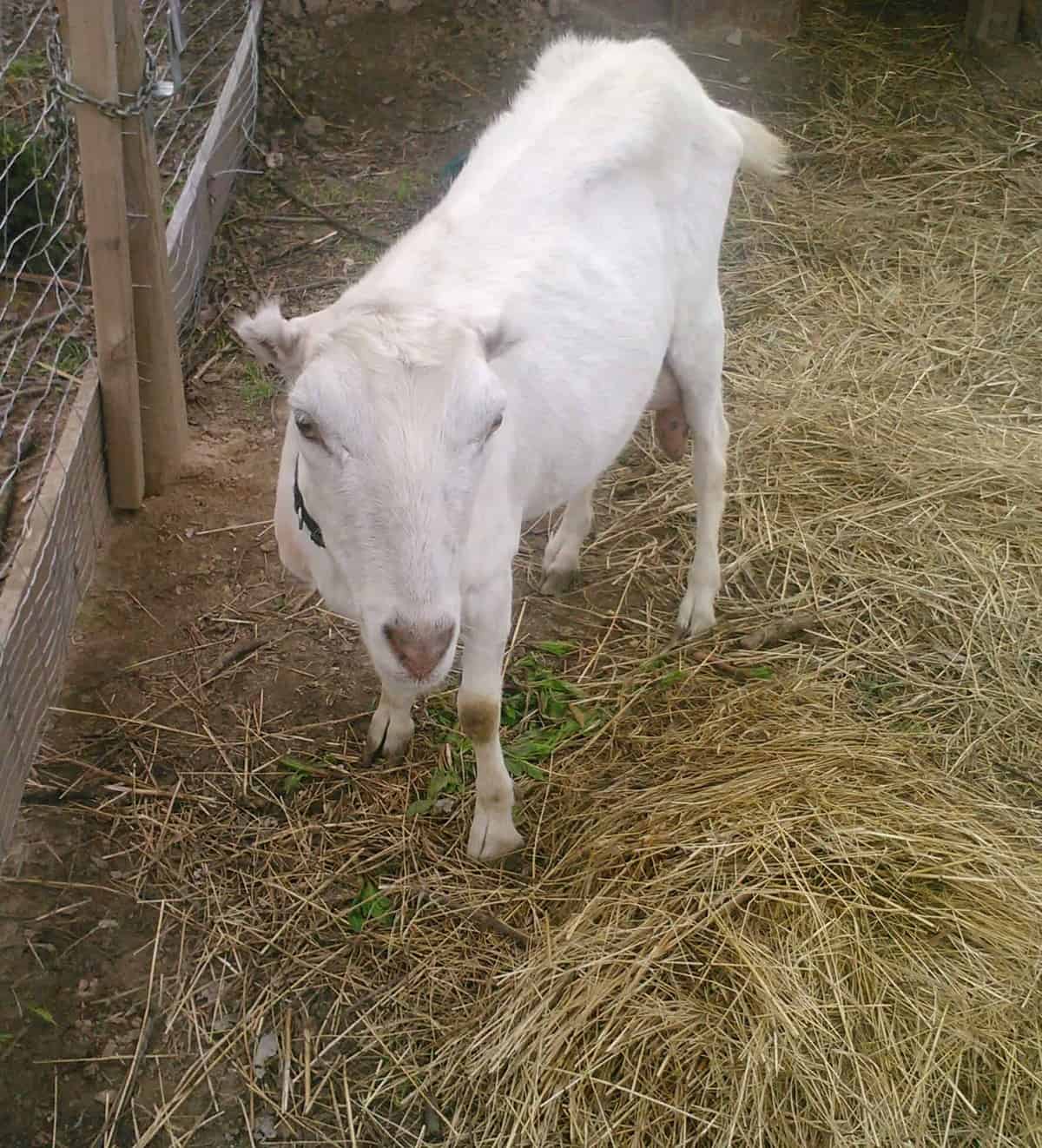
In part 1, I showed how we’re saving a ton of money by adding our LaMancha/Saanen cross, Dahlia, to our homestead. With Dahlia only costing us $7 for a 50# bag of grain (purchased once every 10 days or so), the cost of an occasional wormer, and occasional vet care, the cost to keep Dahlia is negligible compared to our gain.
Now, I’ll show you how a dairy goat has many more uses that makes them a great investment for any homestead.
1. Manure for compost
I’m sure you have a compost pile (if you don’t you need to get on it!). To build great soil, you’ll need compost, and not much is better than composted manure. And I’ll tell you, goats produce lots of manure.
I love how, as homesteaders, every time we grow our gardens, we save on groceries while improving our heath and living a sustainable life. Composted manure helps us close the circle while saving money.
You can also allow your goats to graze your plants at the end of the season, allowing their manure to remain in the plot and compost over the winter.
I incorporate animal manure into my compost pile by adding it on top, then watering and turning. That way the fresh manure will degrade faster. I also add a lot of leaves and green material to balance out the nutrient structure.
Even if you don’t want to compost their manure, it will still fertilize the ground they graze. As long as you don’t over graze your pastures and keep your animals healthy, their “addition” to the land will create a sustainable loop where they feed the land, and the land feeds them.
2. Keeping grass (and therefore bugs and ticks) down
When you add a goat to your homestead, you’ll find they’ll eat grass. Lots and lots of grass (and sometimes your garden. Can you guess what I woke up to this morning??).
While they won’t necessarily give you a golf-course-trimmed lawn, they will keep the grass height down, which decreases the less-desirable bug population (like ticks), assuming you have enough goats.
Even Google employs goats to keep grass trimmed. So when your lawnmower breaks down, you’ll be able to save on buying a new one or having to hire a landscaper.
On our homestead, we allow certain goats to free graze, while some are moved around the property to ensure they evenly clip the grass and don’t get into anything they shouldn’t. That way no one area of the farm is over grazed, and the goats get the most nutritious grass possible.
Another added bonus is they fertilize the grass around the farm, so when they’re rotated back around, they’re eating super nutritious grass. I should point out that in early spring, we don’t allow them to graze all day, as I’ve found the excess sugars in the grass can cause scours.
3. Possible meat or extra cash
Goats are used in so many cultures for the meat, and although I don’t think Dahlia or our two bucklings would be great meat goats, as we add to our stock through kidding or adding more goats to our home, there will come day when we have too many goats.
Dahlia, like most nannies, regularly has twins, and since we only need 2 dairy goats and a buck on our homestead, we can save money on meat by consuming our excess goats.
Another possibility is to sell our extra goats, and bring some cash flow to our homestead.
4. Companionship
It’s been medically proven that having a pet decreases blood pressure, and in some instances can lengthen your life. At a minimum, having a pet increases your quality of life.
A goat is a great pet for companionship, with their gentle natures and quirky antics. We love our two bucklings, even though I’m sure one will not be breeding quality. We’ll still keep him as a pet and a lawn mower.
While I’m not indicating a goat will help you avoid every health issue, their companionship might help manage your health simply by cheering you up. Their milk, being full of natural goodies, might improve your health simply because you’re drinking something full of beneficial nutrients.
5. Security
Our goats don’t do this, but I’ve heard of goats that will sound the alarm by bleating whenever a person comes on your farm. Since security can be an issue on our farm, I would love it if a goat saved me from purchasing a security system and new fencing!
I do believe Dahlia’s presence, as well as our bucklings, keeps our poultry population safe to some extent. Dahlia is bigger than a cat or a hawk, and I know predators have thought twice about attacking my flock after getting a glimpse of Dahlia.
We have a black cat on our farm who is very welcome because she’s eliminated our mouse population. A few times the cat has considered going after a chick, but after seeing Dahlia has thought twice. Good Dahlia!
How does a goat save you money around your homestead? If you haven’t read Part I of this 2 part series, I break down how much we spend on Dahlia versus how much we gain!
Until next time!
If you enjoyed this article, please feel free to share it on your favorite social media network using the buttons on your left!
This week, we took another step towards independence and got a dairy goat.
I’m super excited because this is something we’ve worked towards for the past couple years, and it feels great to finally achieve it! There’s a ton of different uses for goat milk on our homestead, and I’m so so excited to start putting it to use!
For the past couple years, I’ve wanted to add a dairy goat not only to increase our independence, but also to save money.
We now have a LaMancha/Saanen cross we’ve dubbed Dahlia, and she gives us oh-so-much milk. (pssst….there’s a recipe at the end!)
Goat milk is a versatile addition to the backyard farm, and there’s a variety of ways to use it, from eating and drinking (there’s a recipe at the end of this post!), to feeding livestock, to making soap.
I’ve researched the benefits of adding a goat to a homestead, and Dahila will save us a ton of money.
Dahlia doesn’t eat much, grass (or hay, depending on season) and a quart of grain a day. Since a 50# bag of Dahlia-appropriate grain is around $7, that’s not a lot of input for a lot of output.
Even if you have an urban farm, if you’re allowed to keep a goat, keeping a Nigerian Dwarf will still yield some milk, and she will eat even less than Dahlia.
Here’s 5 ways adding a goat to your homestead will save you money.
Goat Milk Soap
Dahlia will save us money because we can render our own soap.
I’ve been a little overwhelmed by the soap recipe choices, but I’ve settled on following the recipes from Simple Life Mom. Kelly’s recipes are straight forward, and I can find a lot of the ingredients on Amazon.
By adding Dahlia’s milk to the soap, I’m increasing the moisturizing quality of the soap, which is huge for a family with skin issues (like ours!).
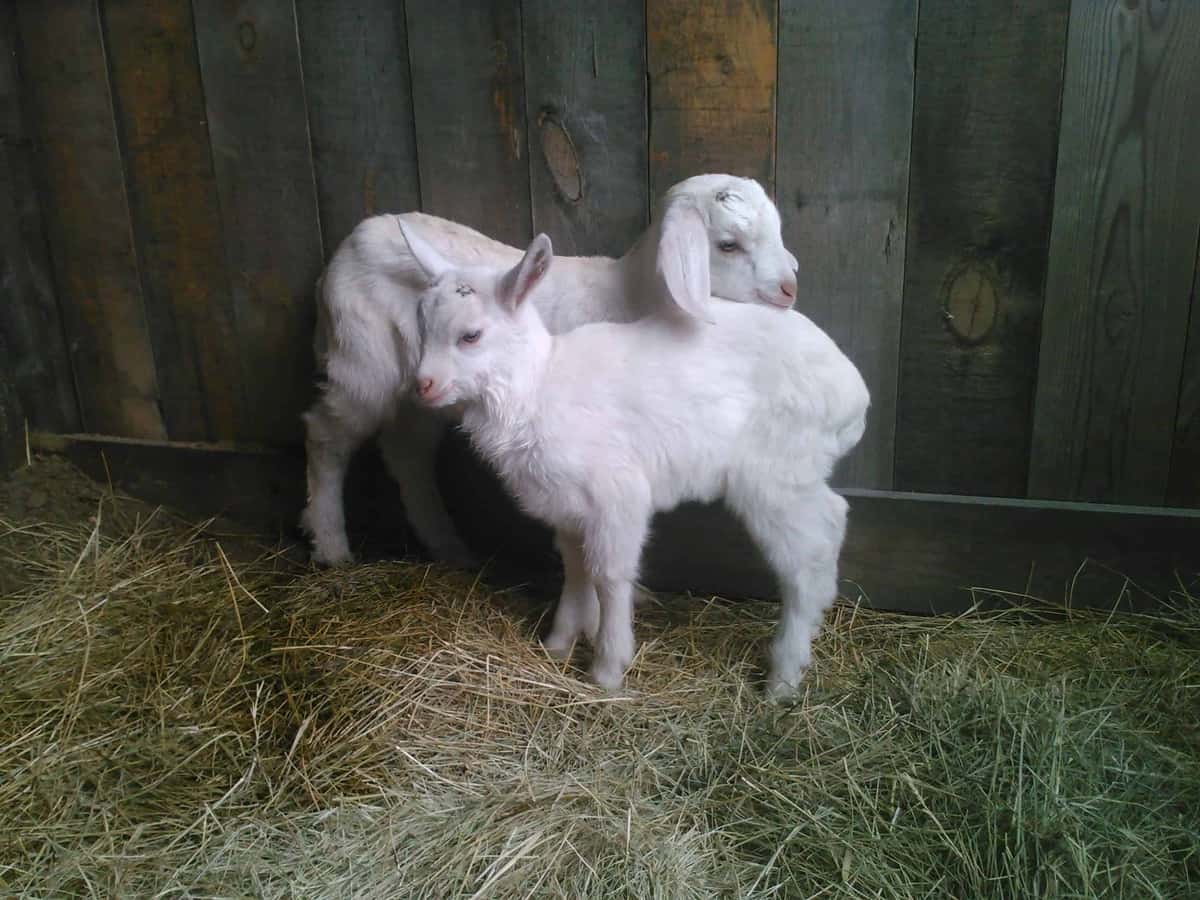
Back in March, I acquired a couple of bottle goats, two Saanen/nubian cross bucklings. It was difficult to transition them to a bottle, and since they didn’t like cow milk, we had to locate goat milk for them.
They’re just starting to be weaned now, and Dahlia’s milk is definitely helping.
For the small amount of grain I feed Dahlia, she saves me from having to drive an hour to pick up goats milk, and the $6/gallon I would pay for goat milk, or for an expensive bag of milk replacer.
Our new bucklings!
I wouldn’t get another bottle kid without a dairy goat on our homestead.
The extra milk will also feed our pigs, who love milk.
Goat Cheese
Dahlia’s milk will also feed us!
I love goat cheese, and it’s been hard to find a decent chevre since we bought our homestead. Now I can make my own!
I’ve been dying to try this chevre. In fact, my love of cheese was a main driver for starting this homestead, since I can’t get any fresh artisanal cheeses in my area.
I’ve planted an extensive herb garden this year too, which I’ll mix with the goat cheese to add even more flavor. My oregano, lavender, and cilantro are growing strong!
I’ve already ordered my starter culture from Amazon. The starter culture cost me less than $4 for 5 packets of starter culture; that’s less than what 4 oz of goat cheese costs at the grocery store (that’s far away).
I love feta, too (not as much as chevre).
Goat Milk Yogurt
Yogurt is also big on my homestead, since I can always eat it regardless of my mood. I love how filling it is, too.
It’s very difficult to find quality yogurt in our area, and Dahlia solves that problem. Now we have a ton of milk which I can transform into Greek yogurt.
Goat milk yogurt is made exactly like cow milk yogurt – it’s heated to 180 degrees, then cooled to 118 degrees before transferring to a container and adding 4 tablespoons of previously-made yogurt (or a starter culture, but I’ve always used yogurt).
I use a Yogotherm to make my yogurt. Some people wrap the pot in towels overnight, but I found the Yogotherm takes out a lot of the guesswork.
A lot of people also like the Euro Cuisine yogurt makers because they’re convenient and accurate. They’re great products, and if I were to buy a yogurt maker, I would definitely consider them.
I found the Yogotherm also works great, doesn’t require electricity, and I received it as a gift, so it’s what I use.
Milk to Drink
This is pretty obvious, but now we can manufacture our own milk to drink! Goat’s milk is consumed by 65% of the world’s population, and is becoming more popular in the US.
There’s a ton of benefits to raw goat milk. For example, goat milk is easier to digest since it’s fat globules are smaller than those found in cow milk. You can find a nutritional breakdown of goat milk vs. cow milk here.
Milk is getting ever-more expensive to buy, and I’m so glad we have Dahlia to help us cut that expense out of our budget! (Let’s face it, 50# of grain for $7 that will last us at least 2 weeks is SO much more budget-friendly than buying gallons and gallons of milk!)
You can substitute cow milk for goat milk in most recipes. We use it to make a curry sauce along with coconut oil (recipe is below). It’s great to know many of the ingredients are as farm fresh as possible!
Have I convinced you yet that you need a dairy goat?
In Part 2, I’ll show you 5 other ways to save a ton with goats!
I’d like to hear from you!
Would you ever get a dairy goat? Leave a comment below!
Do you love Little House on the Prairie®? I think every homesteader does.
Recently I was contacted by the folks at Family Friendly Productions, LLC to review the newly-remastered Little House on the Prairie®: Season 1 television show. They’ve redeisgned the Little House on the Prairie® website, LittleHouseOnThePrairie.com! Along with the DVD of the TV show, I was sent a DVD documentary, The Legacy of Laura Ingalls Wilder to review.
I hadn’t watched the TV show, Little House on the Prairie®, since I was very young. In essence, I was watching the show as if I had never seen it before, although I do remember the book well.
The compelling story lines of the TV show interested even my husband, who usually only cares about cars.
The quality of the DVD was excellent, and you’ll be sure to have an enjoyable watching experience.
What struck me the most, however, was the meeting of 1970’s American culture with Wilder’s descriptions of life on the American frontier. As a child, I couldn’t appreciate the level of risk the Ingall’s family took when they moved from Wisconsin to Kansas to take advantage of the Homestead Act.
It must have seemed like insanity at the time to move from relative security in civilization to a something of a war zone, where there was little support if they got into trouble. The TV show does a great job of evoking the emotions associated with the trials of the Ingall’s family.
The Ingalls family tried making it as farmers, and time and again, they were thwarted by the US government or nature. Each time, though, they survived and worked hard to create a better life for themselves.
The TV show is very much a product of it’s time: 1970s America. That being said, it harkens back to a time in modern American culture when television was made to inspire and be enjoyed by all age levels – something that’s missing in television today.
You can watch this show, your children will learn something about life in the 1800’s frontier society, and you can feel good about it. The quality of the writing and the acting brings to life the Little House storylines in a way everyone can enjoy.
The documentary, The Legacy of Laura Ingalls Wilder, covers the creation of the Little House books as well as Wilder’s inspiration for each novel. It also delves into her relationship with her daughter, Rose, who encouraged her mother to write the Little House books.
I thoroughly enjoyed the documentary, and think it’s a good learning tool for school-age children and adults.
Both the DVD Little House on the Prairie® (Seasons 1-4) and the documentary, The Legacy of Laura Ingalls Wilder can be purchased on the Little House on the Prairie website, along with the Little House books.
If you head over there right now, you can get in on a giveaway! You have the opportunity to win the first 4 seasons of Little House on the Prairie®, the best selling Pioneer Girl autobiography (packaged with an exclusive Pioneer Girl tote bag!), and the recently released documentary about Laura Ingalls Wilder. You can enter here!


 I’ve committed to these products because Goddess Garden’s products are all-natural, and full of wonderful ingredients such as aloe, green tea, coconut oil (you know I love coconut oil), and raspberry seed oil. Their active ingredients are the safe, naturally-occurring minerals zinc oxide and titanium dioxide.