Can I keep chicks and ducklings together? You might be surprised at my answer.

It’s Wednesday, which means I answer your questions about keeping chickens. 

If you’ve wondered:

  • Whether you can keep chicks and ducklings together in the same brooder
  • If chick grit is necessary (and where to buy it)
  • What you should do with a hen’s first egg
  • How to deal with an overly-bossy hen
  • If straw is a good idea to use in coops

then you’re in the right place.

You’ll learn:

  • Why it’s not the best idea to keep your chicks and ducklings together
  • When you should always provide chick grit
  • Common misconceptions about a hen’s first egg
  • The real deal about using straw in your coop (and other options)
  • The simplest way to deal with a hen that’s causing pecking order drama (and why she’s that way in the first place)

Links We Discuss

Where to buy brewer’s yeast

Game bird feed

Where to buy a chicken apron (for hens missing feathers)

The feather fixer brand I recommend

Where to buy chicken grit

Where to buy chick grit (small enough for baby chicks)

I’d like to hear from you!

Do you have a question for me? Leave a comment below!

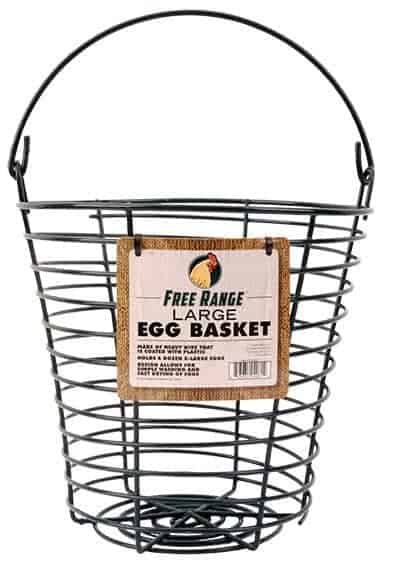
You’re going to love these gorgeous egg baskets which are perfect for collecting all those eggs in your chicken coop.

*(In this post, I give you the inside scoop on these lovely egg baskets which were sent to me by Harris Farms and Manna Pro Poultry to review. This review contains my honest and unbiased opinion. I test products to give you an idea of items you might enjoy on your homesteading journey.)* 

Product Description:

harris farms egg basket

The Harris Farms Free Range Egg Baskets come in two sizes: small and large.

The large basket holds up to 6 dozen eggs, while the small basket holds 3 dozen eggs. 

It’s made of plastic coated wire, and designed to fit the needs of the backyard flock owner.

The Good:

These stylish baskets are made of plastic coated wire, and the two I received were a neutral green color, so you can easily display the basket with all your eggs on your kitchen counter without it clashing with the rest of your kitchen decor.

The plastic wire also helps keep eggs from breaking as you’re loading them in, but that being said, it does pay to make sure you place the eggs in the baskets carefully. 

The wire also protects the eggs from getting damaged. My goats like to “help” me collect eggs, and broken eggs are a frustrating fate.

I found when using the basket, even if my buck crashes into me because he’s sure I have treats, the eggs are reasonably protected from an accidental bump.

It’s also solidly built, so the wire won’t bend or become misshapen, and the wire makes it easy to clean the basket, should manure get on it.

I like the wide opening that tapers into a narrower base – it makes the basket attractive, but still easy to put eggs into. 

The Bad:

There really isn’t anything bad about the Harris Farms Free Range Egg Basket. It’s simple, does the job, and at $13.99 for the large basket (on Amazon), you really can’t go wrong.

I suppose if pressed, I would say that you won’t be able to collect quail eggs in it because the gaps between the wire are too large to accommodate them.

The Bottom Line:

This is a well-made product that will serve you for years. In addition to being functional, it’s polished appearance makes it an upscale way to display your egg harvest before refrigerating them.

My recommendation is that if you have just a few chickens, then the smaller basket is for you. If you have a lot of chickens (I have about 50 layers), then the larger basket will fit your needs better.

You can learn more about the Harris Farms Free Range Egg Basket on HarrisFarmsLLC.com.

Click here to purchase it on Amazon.


I’d like to hear from you!

Is there a product you would like me to review for you? Do you think you’ll enjoy the Harris Farms Free Range Egg Basket? Leave a comment below!

If you’re not sure if your hens are laying eggs yet, there are some tell-tale signs you can look for.

In this podcast, I reveal my favorite ways to tell whether my hens are laying yet.

You can stand around and watch to see if an egg pops out (I’ve done that – you’ll be waiting a long time!) or you can look for some not-so-subtle signals. 

I also reveal how to use up all those eggs she’ll lay (we get a LOT of eggs every day, so I’ve become a master at finding new ways to use them in things like quiches, fritattas, and super yummy egg custard).

Even better, we talk about how to preserve all those eggs, because eventually, she will stop laying. I didn’t preserve them last year, and really missed farm fresh eggs over the winter. I wish I had preserved some, and I’m making sure to do it this summer!

You’ll learn:

  • The easy-peasy way to tell instantly if your hens are laying 
  • My favorite ways to use up all those wonderful eggs (your family will love these!)
  • Old timey (but tried and true) ways to preserve eggs for leaner times

Links we discuss:

Where to grab a free coupon book ($32 value!) from Manna Pro Poultry

Where to read about preserving eggs in water glass

How to use mineral oil to preserve eggs

Where to buy water glass

chicken mites and lice

Transcript

Coming soon.

Probably my favorite parts of spring is when I plant seedlings to grow paste tomatoes.

Who doesn’t love the look of the plants in the morning, fresh with an early hour watering?

Personally, I love gauging my tomato’s growth every day, and waiting until the time they turn just perfectly ripe.

4249_300x250

But, I’m sure you’re wondering…

So, out of all the tomatoes out there, why should you grow paste tomatoes?

Well, because it’s one of the most versatile crops out there, and you’ll be pleasantly surprised how many different kitchen staples you can make from them.

And I’m all about putting my effort into fruits and veggies that will yield the best results.

Using paste tomatoes, you can make tomato paste (which can then be turned into soups, fermented ketchup, and more), as well as tomato sauce, salsa, and pretty anything else you can imagine.

They’re juicy, like pretty much any tomato out there, but they also grow large, making preserving them easy and less tedious.

How to grow paste tomatoes from seed

Like other tomatoes, paste tomatoes should be started indoors about 6 to 8 weeks before the last frost date in your area.

You can start them later as well, but make sure you can transplant them before it gets too hot.

Otherwise, they might have difficulty getting established due to heat stress.

To successfully grow paste tomatoes from seedlings, first either make your own potting soil, or grab an inexpensive bag of organic potting soil as well as something to grow them in.

But before you grab that bag of soil…

Here’s a pro tip.

When filling containers with soil, I like to use a spoon to actually put dirt in the containers – the potting soil doesn’t get too compacted that way.

Place an indentation in the soil with your finger, a pencil, etc., then place 2 seeds in the indentation. Then cover with another spoonful of dirt.

Instead of watering from above the plant, which can displace the dirt, I put my seedling trays in a plastic bin with about 1/4-inch of water.

That way, the plants can self-water, and I don’t need to worry about over-watering, under-watering, etc.

Use a seedling mat to promote germination (75 degree soil temperature is a good temp to shoot for), as well as a light if you don’t have access to a greenhouse with good sun exposure.

Even in the dead of winter, a good greenhouse can get quite warm (when its 32 degrees on our farm, the greenhouse can easily be 50-60 degrees on a sunny day), so they’re a worthy investment if you plan to garden every year.

Transplanting your paste tomato plants

Before transplanting them, however, be sure to get started off on the right foot…er…root.

Add compost to the soil before transplanting your tomatoes, making sure to also plant some eggshells along with the transplants.

Over time, as you grow paste tomatoes, the egg shells will decompose and provide a rich source of calcium for your plants.

Grow paste tomatoes in at least 6 hours of direct sun to ensure a good harvest.

Tomatoes are warmth-loving crops, so to protect them after transplanting in case of a cold snap, use a cold weather frame, cloche, or some other method to protect them.

A gallon milk container with the wide end removed makes a good protector in a pinch.

When transplanting, plant as much of the stem as possible below the surface of the dirt, making sure to leave 3 or so inches above the soil.

Tomato stems below the surface of the soil will put out roots, which will give you a healthier plant.

Another thing to keep in mind when you grow paste tomatoes is to not crowd your transplants.

Spacing them out evenly means they’ll get better air circulation and sun exposure, which will reduce the chance of spreading diseases. Your plants will also be healthier.

Avoiding Blossom End Rot As You Grow Paste Tomatoes

Blossom end rot is the bane of any tomato grower’s existence, and the extra calcium provided by the egg shells will help your plant combat this disease.

So, what is blossom end rot?

This disease strikes tomatoes that are calcium deficient – you’ll know your tomatoes have blossom end rot if you see a black mark on the skin of the tomato where the flower once was.

Blossom end rot can start when your tomatoes are green, and eventually might make the tomatoes inedible.

It won’t just strike one tomato – I’ve had it kill an entire harvest, although that’s not necessarily a given if your plants are effected.

To avoid blossom end rot, also make sure to keep the soil evenly moist, especially in times of high heat.

Blossom end rot can happen after periods of dry spells, then pouring rain. Give your tomatoes 1 inch of water each week when it’s not raining to help avoid this devastating disease.

As your plants grow, pay attention to how they look. If the leaves start wilting or turning brown, you’ll know there’s a problem.

Use Cages For Extra Support As You Grow Paste Tomatoes

Cages aren’t just to give extra support – I’ve noticed that tomatoes that grow on the ground or whose branches fall to the ground are more likely to end up rotting on the bottom or be chewed by an animal (such as a chicken).

Using a cage to keep the fruit off the ground will avoid both of these scenarios.

There’s really nothing I hate more than putting out effort to grow fruit and vegetables, and to not have any harvest.

Also be sure to provide your plants with a thick layer of mulch to retain water, especially during dry periods.

The mulch will also keep weeds down, and if you use a dark-colored mulch or black plastic or landscaping fabric, it will absorb heat, and increase the temperature of the soil.

Pinch Off Suckers For A Better Harvest

Paste tomato plants will produce “suckers” which are growths where a leaf attaches to the stem. As the sucker grows, it turns into another stem.

Pinching them off (removing them by either cutting or plucking the off) helps your tomato plant grow upright, promotes air circulation, and improves the size and quality of the tomatoes because the plant puts effort out into growing the fruit instead of the stems and leaves. 

Remove as many suckers as you can once a week or so to ensure the plant has a single stem.

Harvest Time!

Now, one thing to remember with paste tomatoes is they’re indeterminate, meaning the plant produces fruit and ripens all season.

(Determinate tomatoes will produce all their tomatoes at once, and they all ripen around the same time.)

Big harvest = a lot of work at once.

At the same time, when it comes to paste tomatoes, you might get a few here or there, and not enough to make it worth dragging out the canner.

If you find yourself in that situation, simply freeze what you’ve harvested until you do have enough.

If you’re not sure how to can tomatoes, read my article about the basics of canning anything. It will take you step by step through what you’ll need to start canning as well as some safety information.

Paste tomatoes are one of the most versatile tomatoes out there, and I think you’ll be surprised how many kitchen staples you can make from just one type of tomato.

I’d like to hear from you!

Do you think you’ll try to grow paste tomatoes? Leave a comment below!

Eye worms and mites are nasty parasites chickens can get, and they’ll totally gross you out.

They can be dangerous to your chicken’s health, so in this podcast, we talk about them as well as how to safely get rid of them.

But those aren’t the only questions you guys had this week!

We also talk about putting chicks outdoors, greek yogurt, and grocery store eggs.

You’ll learn:

  • What eye worms are and how to avoid them
  • How (and when) to let chicks get used to the great outdoors safely
  • Why mites will kill egg production, and natural, non-toxic ways to say goodbye to them
  • Whether grocery store eggs are fertile
  • How to safely feed Greek yogurt to your flock

Links we discuss:

Medications your vet can administer for eye worms

Transcript

Hi there, and welcome to session 28 of What the Cluck?!, a podcast devoted to keeping chickens for fun and self-sufficiency. I’m Maat from FrugalChicken, and today is the day that I take your questions.

Now this week, we have a diverse amount of questions, but the thing they’re all common questions that I’ve had listeners ask. I think you’ll be blown away by some of the interesting information you’ll learn today.

A million thanks to everyone who submitted, and due to time limitations, I can only take 5 questions, but if your question isn’t answered today, rest assured I’ve taken note, and will try to answer them in next Tuesday’s episode.

Just as a reminder, if you would like to submit a question, you can shoot me an email at [email protected] or contact me over social media. You can find me on Facebook at TheFrugalChicken.com/Facebook.

When can I put chicks outside?

There’s a few considerations to make here, such as the age of your chickens and the temperature outside. You should also consider whether predators are an issue in your area, as well as whether you use something like a chicken tractor.

The best advice is to permanently put your chickens outside when they are fully feathered and better able to withstand the elements.

Feathers provide insulation from extreme heat and cold, and in the summer, they keep your chickens cool, and in the winter, they provide warmth by fluffing up and retaining heat.

Until chickens have feathers, they don’t have any ability to regulate their body temperature – that’s why you need to give them a heat lamp from the time they are born until they’re able to stand the ambient temperature in your house or barn.

Now, that being said, there’s a couple other considerations.

Chickens are fully feathered at around 12 weeks, and personally, I would not throw 12 week old chickens outside in 32 degree weather without some sort of period to get them used to the cold, especially if they’re used to living inside or under a heat lamp.

I would allow them to go outside during the day, then bring them in at night until they seem like they’re doing well.

Similarly, I would take caution on wet, cold days, and I’ve learned the hard way that young chickens don’t always weather those days so well.

You should also remember that young chickens are easy targets for predators, especially bantams because they’re so tiny.

If your area has a lot of predators, consider a chicken tractor instead of free ranging, and take special care at night to make sure they’re secure in their coop.

A lot of times, young pullets and roosters don’t start roosting until they’re well into 16 weeks old. Until then, in my experience, they prefer to sit on the ground, in large groups.

This makes them a really easy target for predators. Sometimes, putting them with older chickens, who will roost and will show the young ones what to do, is a good idea.

Now, during hot weather, you can put unfeathered chicks outside. After all, before we started raising chickens indoors, they were all born outdoors.

Using a chicken tractor is best to protect them from predators as well as getting lost or stuck in something, I have had that happen even when they were protected, so it is a cause for concern.

Personally, I would wait until a hot day, at least 85 degrees or so, before putting them outside. Make sure they have shade or a way to get out of the sun, and plenty of water and feed.

Until chickens are 12 weeks old, you want them to have free access to feed, and outside is no exception.

Putting young chicks outside is not necessarily a bad thing. They’ll get exposed to dirt, and build up immunities, and generally enjoy being a chicken.

You will have to provide chick grit to help them grind up anything they eat outside, and consider a probiotic to help them establish good gut flora in case they pick up any parasites or bacteria that might cause an issue.

What is an eye worm

Eye worms are a type of roundworm.

You find eye worms in the eye, hence their common name, and, according to the University of Florida, you’ll find them under the nictitating (nict-tit-tate-ing) membrane of the eye, and in the naso-lachrymal (lak-ruh-muhl) duct, which is their tear duct.

So, just for clarification, the nictitating membrane of the eye is the third eye lid that chickens have, and it helps them protect the eye and keep stuff out of it, like dust, dander, dirt, etc.

If you want to see the third eye lid in your chickens, a good time for that is when they’re dust bathing.

According to the Merck Veterinary Manual, eye worms are more of a problem in tropical and subtropical climates, and the host animal is actually cockroaches.

So, symptoms of eye worm include scratching of the eyes, and in extreme cases, blindness. It also can cause inflammation and tearing, and you might find your chicken has a lot of inflammation, for example, their eye might look like it is bulging.

So the way your chicken picks up eye worms is interesting.

The eggs are laid in the eye, then make it to the the pharynx by the tear duct, there’s a fancy scientific name for that, but we’ll keep things simple here.

The eggs then are swallowed, and eventually passed in the feces. They then have to be ingested by the Surinam cockroach, which incubates the eggs until larvae hatch, and become something that can infect your chicken

When your chicken eats the infected cockroach, the larvae then migrate up your chicken’s esophagus to the mouth and then through the nasolacrimal duct to the eye, where they then lay eggs, and the cycle continues.  

There are other insect species that can host the eye worm, such as beetles, grasshoppers, and also earthworms, but cockroaches are the biggest hosts.

According to the University of Florida, the time it takes to complete the cycle can be a few days or up to several weeks.

To treat eye worms, the Merck Veterinary Manual suggests using a local anaesthetic and removing the worms manually. The worms are then exposed by lifting the third eye lid, and removed.

There’s also medication your vet can administer, and I’ll put a link to the Merck Veterinary Manual in this episodes show notes that you can refer to.

To prevent eye worms, which are a species of round worms, your best bet is to keep your chicken’s coop clean and free of moist environments, feces, urine, etc.

How do I get rid of mites?

So, there’s a lot of different species of mites that can infect your chickens, but the ones we’re talking about here are red mites, which are a common problem with backyard chickens.

If you see tiny red or black spots on your chickens on their vents or around there ears, then they have mites.

They particularly like to huddle around a chickens vent, and like tiny vampires, they like to bite and suck your chickens blood.

According to the Merck Veterinary Manual, these mites can live up to 7 days, but can lay hundreds of thousands of eggs in those 7 days, so this has the potential to be a real problem with your flock.

Although they only live 7 days, they can infect your house for up to 6 months, although their ability to proliferate is slowed down in the winter.

Chickens get mites from other chickens, but people can also bring them into the coop if you’ve walked in an infected area. The mites can also live on inanimate objects and jump onto your hens.

The mites like to hide in cracks during the day and hop onto hens at night because they’re nocturnal, and like to eat at night.

If they’re not treated, then they can prevent your rooster from wanting to mate, and kill egg production in your hens. In extreme cases, it can make young chickens lose weight, and cause anemia and death.

There’s chemicals you can use to treat your flock, but today, we’ll talk about natural solutions. Diatomaceous earth has been proven to be useful in treating external parasites.

You can carefully apply diatomaceous earth to your hens, or allow them to dust bathe in it. If you apply it yourself, be careful to not do too much at once, since diatomaceous earth, if inhaled, can cause problems with their respiratory systems.

If you handle your hens to treat them, be sure to wash yourself and your clothes in hot water, and scrub your shoes in a bleach or citrus vinegar solution, to kill any mites that might be on your person.

Power wash your coop using water which can contain soap. Another alternative is to power wash with water mixed with a citrus vinegar solution.

Citrus soaked in vinegar makes an extremely powerful solution, and I can tell you from experience it is an excellent cleaner that will wipe out a lot of nasty pathogens.

To make it, all you do is grab a quart mason jar, place some orange peels in it, then pour in white vinegar.

You want to use white vinegar for this, not apple cider vinegar.

Allow it to mix for a week before using. When you spray this in your coop, make sure your chickens aren’t in it because the essential oils might overwhelm them. Let it air dry for a few hours before putting them back in it.

Are eggs in the grocery store fertile?

So, the answer to this question depends on some conditions. Generally speaking, the eggs you buy at the grocery store are not fertile.

Largely, these eggs come from industrial egg farms that don’t have roosters because they have no economic value.

While the eggs themselves are not examined for fertility, they are examined for things like blood spots, lack of yolk, and other irregularities, so the chances of getting an egg that has developed into an embryo are very small.

Without cracking open the egg, it’s impossible to tell if they’re fertile or not, although they are developing machinery that can tell us just that. But the bottom line is large egg farms generally do not have roosters, which are necessary to have fertile eggs.

Now, I do know of smaller stores that carry eggs from local farms that do have roosters in their flock.

In this case, it’s entirely possible you will end up with a fertile egg, and unless the seller examines each egg individually or the eggs are collected daily, then you might end up with a developed embryo.

Chances are slim, but still there since a rooster is involved.

Now, the question you might be wondering is whether you can incubate grocery store eggs, and the answer is no. If the egg has not been fertilized by a rooster, then the egg will never develop an embryo.

But let’s say you buy eggs from the grocery store that came from a local farm.

In all likelihood, those eggs won’t hatch either, and that’s because the eggs have been kept in a cold enough temperature that the possibility of the embryo developing after warming up is pretty slim.

I’m not going to say its impossible because it’s not, but it’s very unlikely, and you’ll do better to buy guaranteed fertile eggs from a local chicken owner.

Would it be alright to give my hens Greek yogurt? 

For the most part, giving chickens yogurt is perfectly fine, but there are some things to watch out for. Yogurt that is just milk, enzymes, and live cultures is best, and you should always stick to unflavored yogurt.

Other yogurts out there contain chemicals and other questionable ingredients that you don’t want your chickens eating, and if you don’t want to eat them yourself, then you don’t want your chickens eating it either.

While many mass produced products claim to have “natural flavoring” that does not mean something unsavory was added to give it flavor. For example, some natural flavoring derived from beaver anal glands, and personally, I don’t want to eat that.

In addition, some yogurts also have preservatives in them that might not be healthy for your hens, and might even harm them.

Studies show that a hen’s diet directly effects the quality of her eggs, so sticking with organic yogurt with simple ingredients is best.

You will know if the yogurt contains live cultures by looking at the label, and this is the most beneficial part of yogurt for your chicken.

Studies show that the beneficial bacteria in fermented products, which is what yogurt is, helps create a healthy digestive system for chickens.

In studies, hens fed fermented feed laid better, and their eggs were also larger. Their plumage looked healthier, and they were all around just healthier birds.

The best yogurt to give your hens is homemade yogurt, because you know exactly what they’re getting. However, if you don’t want to make your own, then giving them organic yogurt with only simple ingredients is best.

So, that’s this week’s podcast, and I hope it gives you some idea of how to successfully get started with chicks.

Now, if you’re interested in learning how to raise baby chicks and want some extra help, I actually have a book available on Amazon which can help you get started.

The book is called Chickens: Naturally Raising A Sustainable Flock, and if you’re interested in raising chickens naturally, then this book is for you.

It’s a 50 page ebook all about how to naturally raise a sustainable flock of chickens. You can check it out at TheFrugalChicken.com/chickenbook.

Thanks for listening to this episode of What The Cluck?! and I’ll see you next time!

I’d like to hear from you!

Have you ever experienced eye worms or mites? Leave a comment below!

 

If you don’t know about growing potatoes in containers, but want to harvest bucketfuls anyway, then this article is for you.

I’ve grown potatoes both in the ground and in pots, and there are benefits to both.

Now, I’m not the world’s best gardener. I even struggle keeping up with all the work sometimes. So, if I can grow potatoes, then so can you.

Last year, I split my potato crop between both containers and the ground. My potato yield in the ground was meager, and I fared better growing them in things like large trash cans and plastic (food safe) bins.

So this year, I’m growing potatoes in containers.

When you plant potatoes will depend on where you live. In my area (Zone 7), I start growing potatoes in pots in March so they’ll be ready to harvest in June, before it gets too hot.

The rule of thumb is to plant your potatoes about two weeks after the last frost date in your area. If you’re able to bring your containers inside, then you can plant your potatoes sooner.

READ NEXT: HOW TO PLANT GARLIC

How to Grow Potatoes in a Container

In order to plant potatoes in containers, you first need seed potatoes.

If you don’t know what those are, they’re small potatoes that are used like seeds. Out of the “eyes” of the potato, a plant will grow, putting down roots, and from there, more potatoes grow.

You can buy seed potatoes on Amazon or from a big box store, or grocery store.

When it comes to seed potatoes, you have some choices.

You can go with:

  • Certified seed potatoes (these are potatoes that have been tested and certified disease-free)
  • Use potatoes from last year’s harvest
  • Plant seed potatoes that have not been certified

You can try using potatoes from the grocery store; in my area, the smaller stores carry potatoes that clearly have not been sprayed with chemicals to prevent them from sprouting.

However, your grocery store might not be as lax about where it sources commercial potatoes, so you’re best bet is to go with certified disease-free seed potatoes.

Next, a decision

You can either plant your seed potatoes whole or cut them into smaller pieces. Each decision has its benefits.

Planting the whole potato means you’ll need more seed potatoes, but they’re less likely to succumb to rotting.

Cutting them up means you will have more to plant, but they also run a greater likelihood of picking up a disease or rotting in the ground.

If you do choose to cut your seed potatoes, then make sure there’s at least 2 eyes per piece, and cut them into roughly 1-inch pieces.

If you don’t know how to grow potatoes in containers, but want to harvest bucketfuls anyway, then this article is for you.

Do this one or two days before planting so they have a chance to form a protective layer over the exposed areas.

This helps them with moisture retention and rot resistance. If you don’t do this, your harvest might not be very good.

Personally, I’m going with both to see which does better in containers. 

Choosing a container

You can grow potatoes in anything, but plastic bins, large pots, and trash cans are common choices. If you want a good-looking plant to grace your doorstep, then large, ornamental pots are a good choice.

If you go with plastic, make sure it’s food safe. If you build a container out of pallet wood, then make sure the wood is safe for DIY projects.

READ NEXT: HOW TO TELL IF YOUR PALLETS ARE SAFE FOR DIY PROJECTS

Make sure the container can drain. The last thing you need is to lose an entire crop because it did not drain after heavy rains.

Line the bottom of the container with about a ½-inch of potting soil and compost. I use composted manure, since we have plenty of it.

Next, place your potatoes in it (if using whole ones, I like to do 1-2 large potatoes or 2-3 small, egg-sized ones. If using cut potatoes, go with 3-4 per container).

Add 2-inches of dirt over your potatoes. As they grow, the plant will begin to emerge from the soil. When it’s about 6 inches or so in height, add another 2-inches of soil.

Place the containers in a sunny area away from animals that might dig into them.

As the plant continues to grow, keep adding 2-inches of soil, making sure to leave about 4-inches of plant exposed to the sun, until the soil reaches the top of the container.

Your potatoes are ready to harvest when the leaves start to die back, in about 10 – 12 weeks. (If you want to store them for a while, however, then leave them in the ground for a few weeks after the foliage dies back so their skins thicken.)

When you go to harvest your potatoes, simply turn the bucket upside down, and sort through the dirt to find the tubers. Harvest them all at the same time so the potatoes don’t rot in the ground.

Make sure to harvest on a dry day, and make sure not to damage the tubers.

Brush dirt off gently, and store in a cool, dark area. Do not wash until you’re ready to eat them, since the water will shorten their shelf-life.

Some notes:

  • Potatoes grow best in well-drained, loose soil.
  • Potatoes require consistent, but not soaking, moisture, so water regularly.
  • Don’t let the tubers get exposed to sun; the skin will turn green, and become poisonous to you and your animals.

READ NEXT: HOW TO USE BANANA PEELS AS FERTILIZER

Common pests to look out for:

Aphids

Aphids are tiny insects that love to decimate vegetable crops. They can be tricky to get rid of, but one option is using banana peels buried just below the surface of the soil. 

Read my article about using banana peels in the garden here.

Flea Beetles

If you begin finding a lot of holes in your potato plant leaves, you might have a problem with flea beetles.

According to the University of Minnesota, flea beetles can be black, brown, bluish, or metallic. The University advises planting plants as close to summer as possible, since flea beetles are the biggest problem in the spring, and less of an issue in the summer.

If you’re going to grow potatoes in containers, then moving them to an area that’s away from leaf litter, hedge rows, and wind breaks or wooded areas is a good idea, since the flea beetle overwinters in those areas before emerging in the spring.

One option is to consider row covers if you’re concerned about them damaging your crop. 

You will have to double check that the row covers are not creating too much moisture, which can lead to blight.

Common diseases:

Late Blight

Potato blight (you might have heard of it because of the Irish Potato Famine) is a fungal infection that can kill your potato crop fairly rapidly.

It’s a bigger issue in hot, humid weather, which is why it’s best to plant in early spring for a June harvest, or in late summer for a fall harvest.

You’ll know if your potatoes are effected by blight if the leaves develop brown patches, or become black and moldy. Remove the plants and burn it. Wait a few weeks, the harvest the potatoes.

If you’re wondering how to plant potatoes in containers to avoid blight, using certified disease-free potatoes are a good place to start, as will using disease-resistant varieties.

Potato Scab

Potato scab is caused by Streptomyces scabies. According to the University Of California, avoid scab by planting potatoes in acidic soil or by treating them with sulfur before planting because Streptomyces scabies can’t survive acidic environments.

READ NEXT: HOW TO PLANT A PERENNIAL HERB GARDEN

I’d like to hear from you!

Do you like growing potatoes in pots? Do you feel like you now know how to go potatoes in containers? Leave a comment below!

More Gardening Tips:


Want more awesome gardening tips? Organic By Choice: The (Secret) Rebel’s Guide To Backyard Gardening is a book that’s your guide to embracing your secret (or maybe not so secret?) rebel. It’s more than a gardening book – it’s the manual to a life not many people have the grit to try.