From time to time, I try to give my readers recipes so you can use up all those eggs your hens lay.

Alas, I am not a chef – not even close!

So I invited my friends, Alix and Hugo of A Hedgehog in the Kitchen to share one of their favorite recipes with us – and if your family isn’t impressed with this delicious recipe of Oven Baked Eggs with Leeks & Blue Cheese, I would be really surprised!

What I love best is that Alix and Hugo use farm-fresh ingredients to create this dish – and they can ALL be grown in your backyard!

This recipe also has a French twist with the Herbs de Provence, and it’s simply to die for (and it also happens to be super simple to make!)

Please enjoy this recipe Alix & Hugo developed especially for FrugalChicken readers!

Oven Baked Eggs With Leeks & Blue Cheese

Oven Baked Eggs With Leeks & Blue Cheese

These oven baked eggs with leeks and blue cheese are one of our coziest Winter meals. It’s very cold outside and this dish is welcome, healthy comfort food.

We love cooking with eggs, they are an absolute staple of our diet. Here in Paris, we spend Sunday mornings at our local organic farmers’ market.

We are lucky to have easy access to fresh, organic eggs. Our local organic market has inspired some of our best healthy, wholesome, real food recipes.

We love this oven baked eggs with leeks and blue cheese recipe for several reasons:

  • The combination is really tasty.
  • The eggs and blue cheese are filled with nutrients which makes this a high-energy meal.
  • You can quickly throw these ingredients together and pop them in the oven to bake – quick and easy !
  • The combination and presentation are unique which makes this a fun dish to serve when you have dinner guests.
  • This is real, healthy, wholesome, homemade food at its finest.
  • We think leeks are really having a moment – at least in our home.

We have really enjoyed adding these delicious veggies to several of our recent recipes. They taste wonderful with eggs.

Eggs are one of our favorite ingredients because they are really versatile. They can be used in starters, main courses, side dishes and desserts.

Locally sourced, organic ingredients are the perfect components of a wide variety  of delicious meals. With some basic ingredients, you can create wonderful meals and experience food from other cultures as well.

We created these little bowls of perfection using mini cocottes (little pots made of ceramic that you can place directly in the oven to bake).

To make this recipe, prepare your leek and onion base. We used a small cast iron Dutchoven for this first step, but you can also use a small pot.

Add some dry white wine and blue cheese to the mix. You can add a little bit of cream if you’re worried about the blue cheese flavor being too strong. If you love blue cheese like us, you can skip this step.

Once you have preheated your oven to 390°F, line your mini cocottes with the leek, onion, wine and blue cheese mixture and prepare a small space for the egg on top.

Bake in the oven for 10-12 minutes, depending on how well-cooked you would like your eggs to be. And voilà, your meal is ready !

If you are raising chickens and collecting eggs at home, this is an easy way to use them in a tasty dish with a little French flair. Eating a balanced diet with organic food is one of our priorities and I know it is one of yours too.

Oven Baked Eggs With Leeks & Blue Cheese

Oven Baked Eggs With Leeks & Blue Cheese

Recipe

For 2 people / preparation time: 10 minutes / Cook time : 35 minutes

Ingredients

2 small leeks
1 little onion (sliced)
2 eggs
1/2 cup of blue cheese
3 tablespoons of white wine
3 tablespoons of liquid cream 
1 tsp of Herbs of Provence 
Olive oil
Salt and pepper

Instructions

  1. Wash the leeks and cut them into julienne.
  2. Heat olive oil in a pan on medium heat.
  3. Add leeks, onion, a pinch of salt, pepper and herbs and cook for 5 minutes.
  4. Pour the wine into the mixture and cook until the wine has been absorbed.
  5. Add the blue cheese and cook until it melts.
  6. Taste and add the cream if the blue cheese flavor is too strong for you.
  7. Preheat oven to 390°F (200°C).
  8. Pour the mixture into 2 mini cocottes.
  9. Create an indentation to pour the egg into.
  10. Pour the eggs in.
  11. Put the cocottes in the oven for 10 and 12 minutes (depending on how well-cooked you would like your eggs to be).

If you enjoyed this recipe, please sign up to have our real food recipes with a French twist sent to you by email.

As an added bonus, we are currently offering a virtual tour of our Paris. When you sign up for our recipe emails, you will also receive 1 email per day for 5 days with photos of our favorite spots in Paris + a related recipe for each day. Sign up here

About Alix & Hugo :

Alix and Hugo develop their healthy, wholesome recipes with a French flair in their Parisian home. They share their creations on their food blog, A Hedgehog in the Kitchen. Sign up to receive recipes in your inbox here. Stay in touch on Facebook | Instagram | Pinterest | Twitter

[amd-yrecipe-recipe:16]

When March arrives on the homestead, it’s definitely the start of spring.

And it’s also the time I start wondering what seedlings I can start that will yield a great harvest come September.

(Want to get great non-GMO & organic heirloom seeds at great prices & shipped to your door? Click here!)

In March, the weather tends to be more forgiving, as the last of the winter freezes run their course and make way for warmer temperatures and, in most cases, more precipitation.  

As a gardener, there are a variety of vegetables you can plant that thrive during this season of growing.

Due to the fact that there can be late freezes that carry over into the early part of spring, some seedlings are best suited for indoor planting, to be transplanted outdoors at a later time.

Here’s 8 crops you can start in March!

Herbs

(Want to start a medicinal herb garden? Click here to get a great all-in-one kit!)

Herbs are rather simple to plant and tend to, and the nice thing about herbs is that they are pretty portable throughout most stages of growing (so if you need to pull them inside because of a surprise cold-snap, no worries!).  

Start planting herbs about eight to ten weeks before the last frost of the season, then transplant them into pots.  Should another unexpected frost occur, the pots can simply be brought inside.  

The best herbs to start growing at this time are basil, oregano, thyme, lemon balm, rosemary, and sage.

Brussels Sprouts

(Click here to get Brussels Sprouts seeds for as low as $1.99 from my favorite store, Seeds Now!)

You’ll want to start planting seeds right about six to eight weeks before the last spring frost, in a greenhouse under lights.  A few days before planting/transplanting, you’ll need to work fertilizer into the soil.

You’ll definitely want to transplant them into raised beds due to the inconsistent temperatures that can occur during early spring.  

Plant transplant seedlings 12-24” inches apart, or you could also direct sow seeds, planting ½” deep and 2-3” apart.  Once the plants are 6” tall, thin them down to 18-24” apart.

Fertilize them three to four weeks after transplanting, and side-dress them because brussel sprout roots are shallow and it’s easy to damage them.  

Be sure to mulch the soil with wood chips so it retains its moisture, as well as keeps the soil temperature cool.

CLICK HERE TO CONTINUE THIS ARTICLE

Leafy greens are some of the healthiest “treats” you can give your backyard chickens.

And now is the perfect time to start them!

(Want my favorite leafy green seed package for chickens? Click here to grab the exact one I use!)

While I don’t personally like leafy greens too much, my hens gobble them up whenever we throw some bunches into the coop. 

Greens are also easy to grow, and an easy way to save a bit of money.

In this episode, we discuss several varieties of leafy greens that are perfect for your hens.

You’ll learn:

    • How to grow spinach, lettuce, kale, and more!
    • When to transplant them
    • Just why they’re so great for your fluffy butts

A DIY rabbit tractor is win-win for you AND your bunnies – we’ve found it lowers our feed bill and the rabbits are happy because they get to eat fresh grass.

Which is healthier for them, anyway, right?

If you’ve never built a DIY rabbit tractor (this also doubles as a chicken tractor for baby chicks), it’s easy, especially if you’re handy (I’m not, so that tells you it MUST be easy).

In this article, I’m going to show you how we built a DIY rabbit tractor for just $50, using both new and repurposed materials.

It makes raising rabbits easier with a LOT less work, and your buns will be happier because who doesn’t love fresh grass?

With your own DIY rabbit tractor, you can build it, move it around your property, get your lawn (somewhat) mowed, feed your bunnies for less, and give them a happier quality of life.

Up close of a furry bunny rabbit wearing pink glasses

How to Build a DIY Rabbit Tractor For $50 (or FREE)

Think of your rabbit tractor in 3 sections – a floor (more on this in a minute), walls, and a roof. That’s all you need (you can add wheels if you want to, but we didn’t with ours).

So, you will need to find materials that can satisfy those requirements.  We used a repurposed dog pen for the “floor”, a purchased dog pen for the walls, and tarps for the roof. You can use whatever materials you have on hand or feel comfortable using.

The Walls – A Dog Pen

You can use anything – we found a dog pen like this one on sale for $50, and it fit our size requirements and our budget perfectly. It was built for a small terrier, and it easily fits 3-4 medium-sized rabbits nicely.

Our rabbits are mixed breed and relatively small, but if you’re raising large breed rabbits, you might only be able to fit 1-3 rabbits in it.

(Before dumping rabbits into it, you should also figure out which ones will do well together, since rabbits can have “interesting” relationships. Ours took a bit of trial and error. Even if size-wise it seems like your tractor should fit 3 rabbits, but everyone is stressed out, then lower the amount of bunnies in the tractor and see if that works better.)

Something else to consider is cross-breezes. Since we live in a hot, humid environment, and rabbits, let’s face it, wear fur coats, that means they get pretty hot, pretty quickly. Cross-breezes help them stay cool and prevent overheating.

So, a second reason we opted for a dog pen is that the grate allowed for a steady flow of air.

Thirdly, it happened to be light – which meant we could move it easily without huffing and puffing or needing wheels.

Fourth, well, rabbits CAN have tussles, and are good at knocking things over. This particular dog pen came with metal pins that allowed us to tack the pen to the ground – so it won’t fall over when a rabbit got rowdy AND it keeps predators from knocking over the pen to get a free meal. The pins can be pulled up and replaced when we want to move the DIY tractor.

The pen is octagonal – yours can be square, rectangle, whatever. As long as there’s enough room for the amount of rabbits it will hold (the rule of thumb is 4x the length of the rabbit’s body).

The walls can be as tall as necessary – in summer, taller means better air circulation. Ours are 3.5 – 4 feet high – a rabbit can’t jump out, but we can bend over easily to feed and give attention.

The dog pen also came with a door – a nice feature in case we ever need to get in there if a rabbit is injured or needs to be removed for any reason. When building your own DIY rabbit tractor, include a door for the same reason.

The Floor – An Old Dog Pen We Had Laying Around

Yes, your DIY rabbit tractor needs a floor. Rabbits dig, and they will dig out, sooner or later. So, some sort of grating or wire on the bottom is necessary so they can eat grass but not dig out.

We used an old dog pen we had laying around. It has 2-inch holes – big enough for juicy grass to come through and to give rabbit paws a break (if on hardwire cloth or other wire for long periods, a rabbit can develop sores on their feet).

You can use hardware cloth, chicken wire, or whatever you happen to have laying around, as long as it won’t hurt their feet or let them dig out, and lets the grass come through so they can eat it.

The Roof – Tarps We Had Laying Around

If you have a homestead, you likely have lots and lots of tarps – we ALWAYS seem to need a tarp for something (like building a DIY rabbit tractor!)

For the roof, since we wanted to build a lightweight, easily movable tractor. Tarps like this one can easily be removed, and are lightweight.

To keep them in one place on windy days, we use bricks to pin them to the ground – again, easily removed and replaced so we can move the tractor around.

In summer, they provide great shade, and can be moved around as needed to keep everyone cool. In winter, they can insulate against wind and cold and unpleasant weather.

If you have a lot of predators in your area (bears, big dogs, a very determined hawk), tarps probably won’t cut it – in that case, you might want to consider grating at the top as well, or a more solid, permanent roof.

Either way, your roof needs to provide protection from the elements and shade.

A word to the wise

If you don’t want your rabbits to live in a co-ed colony, you will want to keep your rabbit genders separate. As of the time I’m writing this, we only keep males in a tractor.

Life is complicated enough without unplanned rabbit pregnancies. Does and bucks are weird when it comes to kits, and every rabbit breeder has tales of dead or maimed kits from a jealous doe or buck.

Even without the added drama of kits, does in particular are tricky when it comes to space. They’re more territorial than bucks, and can either need more space, less space, or just hate their tractor mate for reasons unknown.

Just like teen girls, life gets simpler when does have their own space. However, your mileage may vary.

A second word to the wise

If you plan to keep young bunnies (under 20 weeks old) in your DIY rabbit tractor, then you need to make sure you use 1/2-inch or 1-inch hardware cloth on the lower half.

Young does and bucks can fit through very small spaces – the 2-inch by 1-inch holes in the dog crate we used were way too big, and the kits figured out in 5 minutes they could get out. Hardware cloth would resolve this easily.

Baby chick season is almost here….and they have special needs adult chickens don’t.

We are definitely getting chicks this spring (despite what my husband says!), and right now we’re busy preparing for their arrival.

Baby chicks are a needy bunch, and it’s best to be prepared before they show up on your doorstep (ask me how I know!)

I know many of you are also looking to bring some chicks home, so this podcast will help you get organized.

From feed requirements to heat lamps (and alternatives to heat lamps!), we go through everything you need to consider before bringing your baby chicks home to the roost.

You’ll learn:

  • How to feed chicks,
  • Why I always give apple cider vinegar (and when)
  • When to introduce them to your adult chickens
  • How to keep your chicks warm & clean
  • Why it’s not a good idea to raise them with ducklings

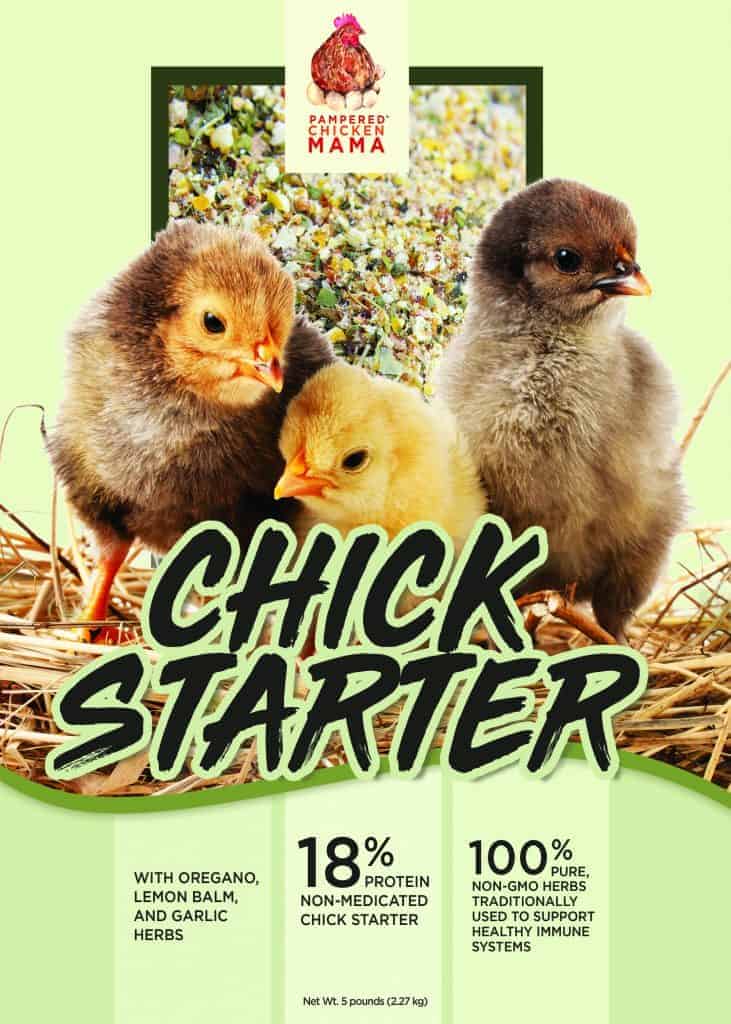
PCM Chick starter label

Using store-bought chemical cleaners in your coop is a recipe for disaster.

On our homestead, we try to stick with all-natural cleaners – who wants an egg full of toxins, right?

I’ve found that essential oils are a great natural alternative that promote a healthier living environment and might even help your chickens lay better!

(A lot of you ask which oils I personally use in my coop. Here’s everything you need to know!)

In this episode, you’ll learn about essential oils you can use to make 5 different sprays to help your chickens live healthier lives.

You’ll also learn the dos and don’ts of essential oils, how they are a cost-effective alternative to store-bought cleaners, and how to buy them wholesale. 

You’ll learn:

  • The 5 ways essential oils can help you create a healthy coop for your hens
  • How to make your own coop sprays with oils
  • Why I don’t currently recommend using oils for medicinal purposes on your flock (and what to do instead)

Links we discuss:

Manna Pro

Where to buy Poultry Protector

The essential oils I use

(Ready to grab some essential oils so you can get bugs out of your life for good? Here’s everything you need to know!)