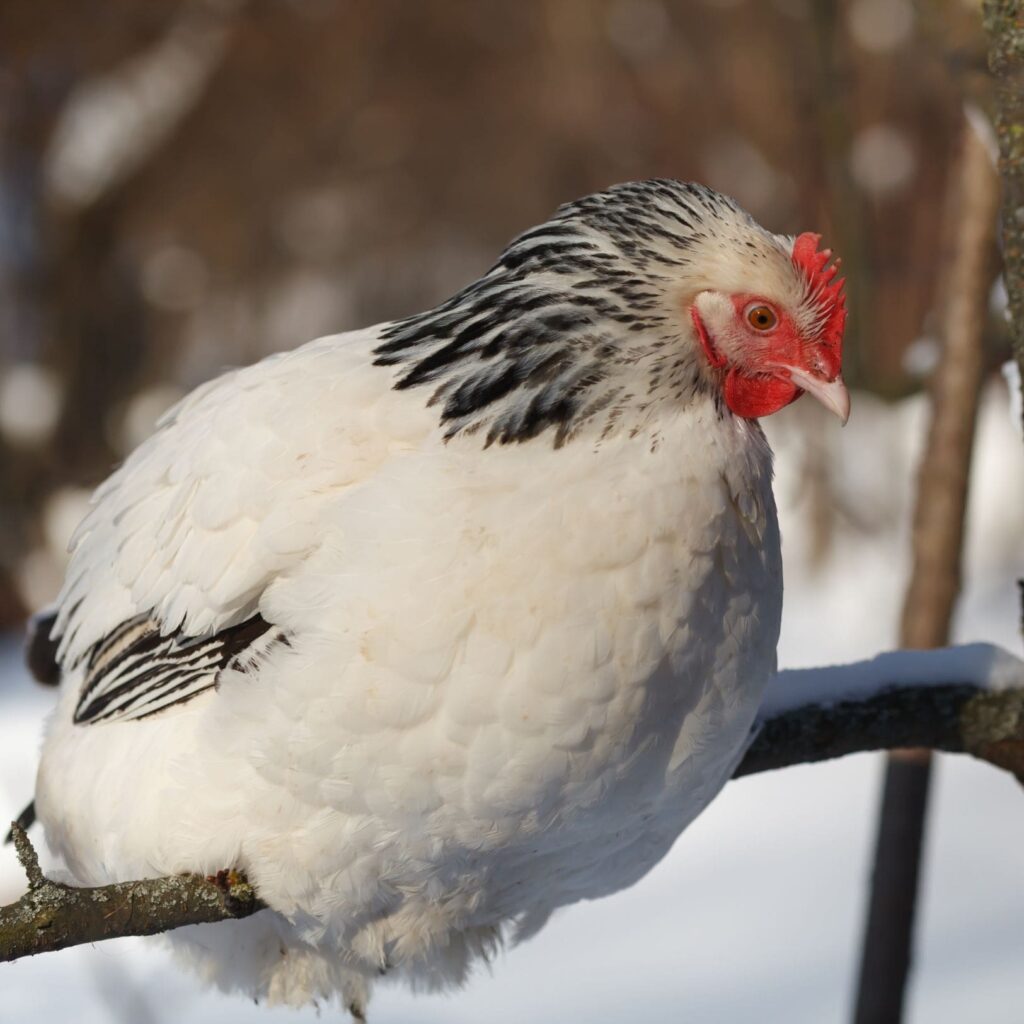
As we move through the process of raising baby chicks, we want to address some potential problems you may encounter. One of these is an issue known as piling.
Piling occurs when baby chicks clump together for safety. For example, if it’s cold or dark, then the chicks might lay on top of each other. This makes sense from an evolutionary standpoint. It’s not much different than mammals gathering together in a close-knit group to stay calm and keep away the chill.
The Downside Of Piling
Unfortunately, when 10 to 15 chicks pile together, some may get crushed or suffocate. Particularly if they are in a brooder or another enclosed area (you can learn how many chicks should be in a brooder here). The reason for this? Even though baby chicks are incredibly independent, they are still fragile. Bantams in particular.
These chicks are so tiny that they get lost in the melee to gather together. If a bantam is weaker or not growing as well as the others, this also leads to a greater risk of being crushed. In addition, since bantams get colder faster, there’s a likelihood of them piling up more frequently.
How To Minimize Piling Risks
Regardless if they’re bantams or full-size, chicks have a harder time keeping warm. And if the smaller chicks are mixed with normal sized ones, there’s a potential for greater damage. In the end, the way to minimize piling risks is to separate the chicks by size and make sure there’s no more than 10-15 chicks in the brooder.
Not too long ago, we received a batch of bantams and full-size chicks from a hatchery. The first thing we did is to separate them out, so the smaller chicks didn’t get crushed by a wall of bigger ones. Overall, we were able to maintain the safety of all of them.
Another way to minimize piling is to keep baby ducks and chicks in different brooders. Infant ducks tend to be bigger and heavier. Even though their interactions may be cute, a baby duck sitting on a day-old chick can cause fatal injuries.
A third way to prevent piling is to provide different heat sources, especially in enclosed spaces. With these units added throughout the brooder, the chicks can move to another source of warmth if the first one is too crowded. Be sure the brooder doesn’t get too hot, though!
Get Your Chicks To Thrive
As you would do with babies in your care, you want to ensure your chicks are well protected. This means shielding the smaller, fragile ones from being crushed when a group decides to pile together. By separating bigger chicks from smaller ones, as well as providing multiple heat sources, you can reduce this risk. In turn, you will end up with a healthy flock of chickens in a variety of sizes.
Today we’re going to talk about how to keep your chickens laying through winter.
And since mine have started to drop off in production, this is a topic near and dear to my heart.
There are many reasons why a hen can drop off production in the winter, and we’re going to look at reasons why that happens, both biological and environmental, and what you can do about it.
Some people like to give their hens the winter off, or let nature do its thing. They just go with the flow as their hens naturally drop egg production in the winter. Personally, I like to be eating omelets year round, so I try to keep my chickens producing eggs in the winter.
Why do chickens stop laying in the winter?
The biggest reason hens stop laying in the winter is because the days get shorter, and so there’s less light. Egg production is triggered by light, specifically by the pituitary gland and the amount of light that is affecting the pituitary gland. And since shorter days mean less light, it triggers the pituitary gland to stop producing the hormones that command egg production.
Chickens need about fourteen hours of light per day to keep laying eggs. Now this isn’t to say every hen needs fourteen hours. We’ve even bred chickens that will keep laying throughout shorter days, such as Production Reds. But generally speaking, most chickens need fourteen hours or so of light in order to lay eggs consistently.
From an biological stand point, more energy is needed to keep a hen alive during the winter. So there’s le value in producing eggs during the winter. So from that angle, it makes sense why hens don’t lay in the winter!
Now for people this stinks, obviously, because we have to work to keep egg production up, or just simply go without eggs.
How can I keep my hens laying?
There are several things you can do to keep your hens laying through the winter. The main problem is usually lack of daylight. In order to keep your hens laying throughout the winter you have to supplement the hours of daylight that your chickens get with artificial light. In our coop, we use battery powered lamps.
If you’re lucky enough to have electric lights in your coop, you can use those, or you can also use solar energy. That’s a great option if you are off grid. We’re looking at getting solar panels for our coop this winter, but for now we’re just using battery powered lanterns.
One thing to keep in mind is you need to use a strong light. When we first started putting lamps in the coop, the lamps just didn’t emit enough light and so it was useless. Obviously, you don’t need to blind your hens, but just using a small LED flashlight, in my experience, doesn’t work. So we use battery operated lanterns, which shed enough light to keep egg production up, but not so much that it’s overwhelming for the hens.
I advise you to skip infrared heat lamps. Those are the red light bulbs. In my opinion, the risks are way too high. Those heat lamps get really, really, really hot! And all it takes is a hen knocking it down (and chickens are great at getting into trouble) and you might lose your whole flock to a fire.
Putting a light in your coop is the top way to keep your hens laying throughout winter so you have fresh eggs. But let’s talk about some other things you can do that are really just as important.
Molting
So the next thing we’re going to talk about is molting. When hens molt they’re losing one set of feathers and replacing them with new ones. This could take a couple months, and while hens are molting they aren’t producing eggs.
Now when a hen molts, her body naturally puts all of its energy into producing new feathers, hence the drop in egg production. This generally happens in the fall and in early winter after your hen’s first year. Usually when she’s about eighteen months old, although I have had them molt at younger ages.
There’s really nothing you can or should do to speed up molting. I know in factory farms with chickens, they try to speed it up. But you really shouldn’t be doing anything to speed it up. It’s a natural process. But one thing that you can do that might help is to feed your hens extra protein, so her body can redirect extra energy into producing eggs.
So if you have a hen that’s molting, you can try a 22% commercial layer feed, or something with a lot of protein in it. Try things such as mealworms, black soldier fly larvae, or wheat fodder. If you like to feed eggs to your chickens, eggs are another protein supplement you can give a molting hen.
I supplement molting hens with my Fluffiest Feathers Ever Chicken Supplement. It’s packed full of protein and nutrients to help your hens have the fluffiest feathers ever! You can find it in the store here: Fluffiest Feathers Ever Chicken Supplement
Make sure your hens have enough to eat
The third thing that you can do in the winter to keep your hens laying eggs is to make sure they get enough to eat, especially if your hens are used to foraging.
During the cooler weather, foraging obviously gets harder. As the weather turns cooler, chickens start using more nutrients and energy from whatever they’re eating to keep warm. So if they get too cold, they’re going to take all the energy and put it to keeping warm instead of producing eggs.
So it’s really important in cool weather to make sure that your chickens are getting enough to eat. If you plan on keeping your hens cooped up during the winter season or if there is heavy snowfall preventing them from leaving their coop, it’s important to monitor their food intake. You may need to increase the amount of food you offer them to ensure they have enough energy to continue laying eggs.
Assuming that you are providing a supplementary light to encourage egg production, it is important to note that without it, most chickens won’t lay. However, it is equally important to ensure that they have enough food to eat.
To provide your hens with more nutrition, you can add more of their regular ration or supplement with mealworms. You should definitley make sure your feed is high-protein with quality ingregients.
If the night is going to be cold, you can offer corn as a treat. I don’t recommend feeding corn as a consistent feed since it lacks the necessary protein and calcium. It’s better to provide your hens with more of what they already eat, while ensuring that they receive an adequate amount of protein and calcium.
Calcium
To help keep your hens laying toward the winter, you should also make sure that they’re getting enough calcium. This is really important. Winter is an especially important time to offer oyster shells as a calcium supplement. You should do it all year round, but winter is especially an important time to do it.
I just offer oyster shells separately in a bowl or a dish. Don’t mix it with their feed, just offer it separately so they can take it as they need it.
It is vital for hens to consume calcium supplements to prevent them from drawing calcium from their own bones. Although not a certainty, if these supplements are not provided, the hens are likely to extract calcium from their own bodies.
Oyster shells are a great source of calcium for hens, and if they are not given enough calcium-rich food in their diet, they will resort to taking calcium from their own bones which is not desirable.
So I suggest that you offer them oyster shells as a supplement and let them eat at it as they need it.
Just remember, that I’m not a vet, so this is just a public service announcement. If you have any concerns about your chickens not getting the right amount of nutrients, have a vet pull some blood and double check it.
Stress
Egg production in winter can be hampered due to various factors, including stress. Stress can cause a hen’s body to be less likely to lay eggs. Extreme temperatures, such as very hot or very cold weather, can be one of the causes of stress in hens. Other factors include things like overcrowding, confinement, and boredom.
As the temperature drops, you may prefer to keep your chickens inside their chicken coop for longer periods. Similarly, during heavy snowfall, chickens tend to stay indoors instead of venturing outside. However, this change in routine may cause some environmental stress, especially if they are accustomed to roaming around freely.
This is the classic issue of overcrowding. Overcrowding can lead to a drop in egg production and behaviors like egg eating, picking at each other, and fighting. So when there’s snow everywhere and they don’t want to go outside, what are you going do?
We have a specific method for creating a comfortable environment in the run area. In the past, we used to lay straw on the ground instead of shavings. This is because shavings absorb water, which can create a boggy mess in the run. With straw, our chickens have a nice and clean place to walk, and it also provides a little warmth compared to the cold snow.
Then to convince them to go outside we offer them treats, like mealworms. Pumpkin is another favorite. You can offer them any treat that they really go nuts for.
When chickens are confined to the coop for extended periods, it’s important to weigh the risks and benefits. Prolonged lack of sunlight can lead to various behavioral and nutritional issues, including Vitamin D deficiency and problems with calcium absorption. Therefore, it’s necessary to evaluate the advantages and disadvantages of allowing the chickens to spend a few hours outside.
Obviously I’m not saying you should make them go outside in negative thirty degree weather or thirty mile an hour wind gusts. I definitely wouldn’t have them go outside in that case.
In that case, I would suggest waiting for a day with better weather before letting your pets out. However, if the weather is consistently bad where you live, it may be worth considering building an indoor warm area for them, such as a greenhouse. If the weather is reasonably cold but not too severe, it’s perfectly fine to let them go outside for a couple of hours. Doing so will benefit them and help prevent cabin fever.
Boredom Busters
If you’re looking for ways to keep your chickens entertained, boredom busters can be a great option. There are plenty of examples available online.
You can move perches around frequently to provide them with new and interesting things to think about. One of my personal favorites is giving them pumpkins to peck at. It’s as simple as breaking a pumpkin in half and letting the chickens enjoy the flesh for a few hours. In our coop of thirty chickens, this keeps them occupied for a good chunk of time.
If you can’t find pumpkins in your area, you can offer them squash or other gourds. The nice thing is that since the flesh is a little bit tougher in pumpkins and squash, it can take them some time to get through it, they get extra food, and they also love the seeds.
I find that giving my pets squash and pumpkin keeps them entertained for longer periods of time. This is especially helpful during the winter months when they tend to get bored. Additionally, the physical activity involved in consuming these foods can help them maintain their body temperature.
With your flock, you can use some of these ideas to help reduce their stress levels, or you can always come up with your own to keep your flock occupied during colder days of the year when they might not want to go outside and play. And the less stress that they have, the more likely they are to keep laying throughout the winter.
Summary
In summary, the days are getting shorter, and the weather is getting colder, but you still want your hens to lay eggs. To ensure that your hens continue to produce eggs, you need to focus on providing them with enough food, simulated daylight hours, and a stress-free environment. These factors are essential to keep your backyard chickens healthy and laying eggs consistently.
From the day your chicks hatch, they will need a good chicken waterer to help them have 24 hour access to water.
You don’t want them getting dehydrated!
There’s lots of options, which are all equally good. Whichever you decide, you’ve got to pay attention to the amount of water and the size of the waters as your chicks grow older.
I’ll introduce the best options out there(at least I think they’re the best options), but towards the end, I’ve even thrown in another option for your consideration.
In this article, we’ll answer the commonly-asked question: “What is the best waterer for my baby chicks?”
(For a full review of several waterers out there, you can read this article.)
Mason Jar Waterers
Mason jar waterers are good when you have itty bitty chicks that are day-olds. I like these because they’re shallow, and with anything deeper, your chicks might fall in the water.
Earlier this year, we actually did have somebody fall in the water (even though we use mason jar waterers). It was quite the tempest in a teapot with that chick, and although it was unharmed, it was very upset. We actually had to blow it dry to make sure that it was warm enough.
The problem with the Mason jar waterers is that your chicks will outgrow them pretty quick. But they’re cheap and easy to find at your local farm store, and they’re what I recommend using the first couple weeks of your chick’s life.
Bell Waterers
You will see bell waterers for sale at farm stores. I call them bell waterers. I’m not sure what everyone else calls them, but that’s what I call them because they’re kind of shaped like a bell.
You can use those with day-olds, but are really good all the way up to 16 weeks, which gives them a bit more of a lifespan.
The problem with bell waterers with the day-olds is how deep they are. They’re about an inch and a half deep.
It’s important to remember that when your chicks just come out of the incubator, they can’t walk very well. So, they can fall into it.
The other nice thing about these waterers is its handle. You can hang them, and your chicks won’t kick shavings in their water. (The only time they’re not going to get shavings in their waterers and feeders is if you use something like newspaper, which isn’t the best bedding out there.)
You will want to use a bell waterer if you have a lot of chicks. If you have 30 chicks, for example, the little mason jar waterer probably isn’t going to cut it after a couple of days.
It’s just going to be not enough water and not everybody can get to it. In that case, the bigger bell waterer is better.
Kitchen Pan
Sometimes, I have more chicks than waterers, so I need to find a pinch hitter. I’ve found ceramic kitchen pans and baking dishes to be good options. They’re also free and you won’t need to buy extra equipment.
I prefer a ceramic baking dish that’s no more than 1 inch deep. That’s shallow enough that the chicks can’t fall into it, and they can easily access the water (this works great with ducklings, too).
If they DO fall into it, they can easily get out. Additionally, they can’t tip it over, since the baking dishes are relatively heavy.
If we want to use a water from the kitchen, just like a bowl, that’s what we use because it’s just simpler.
Keeping Chicks From Falling Into Waterers
Yes, chicks can drown, especially if they’re weaker or they’re getting trampled. But you can easily prevent your chicks from falling into their waterer by putting a bunch of rocks in there.
Many farm stores use rocks they found outside, but I think it’s best to use smooth river stones that you can buy at the store. Your chicks can still get to the water, but they won’t try to climb in, and if they fall in, they won’t fall very far.
You can remove the stones after a few days.
So how many stones? Well, it depends on how deep your waterer is.
A single layer of stones is usually enough, especially with mason jar waterers. I’ve just found that with the mason jar waterers, you don’t really have to put in as many stones.
Personally, with the mason jar waterers, I don’t use rocks, and I’ve never had a chick drown in one of those smaller waterers.
In some cases, it can actually prevent them from drinking, and I want my day-olds to be able to get to the water all the time. But with the bell waterers, you can do that.
So there you have it! There’s 3 different waterers for chicks that’ll keep your new flock hydrated and happy!
I’ve had many chickens, and with my chicks, I love feeding them treats. Over the years, I’ve gotten a number of questions about what to feed backyard chickens, as well as queries about what treats are safe for baby chicks.
A common question I get regarding treats is “Can my chicks eat grapes?” We talked about a number of things that they can eat in another video, but I specifically wanted to talk about grapes because it seems to be a very common question now.
Before we talk about grapes, just remember that you really want to limit treats to 10% of your chicks’ diet, at most. You want them eating that high-protein chick starter that will give them all the nutrients that they need to grow. But – if you’re like me – you’re gonna want to give treats.
In this article, I’ll answer that question, as well as provide ways to safely feed grapes to baby chicks (and what to avoid).
Main takeaways:
Yes, chickens can eat grapes
It’s best to cut the grapes up so they’re tiny or smash them
Stay away from preserves, jams, jellies, or any grapes with added sugar
Yes, your chicks can eat grapes. Always make sure the grapes are fresh – never feed rotten food to your chicks. You only want to feed them very fresh grapes.
How to Feed Grapes
To reduce the chances of choking or impacted crop, always crush the grapes. You don’t want them getting chunks of grapes or any other fruits stuck in their throats, because that can cause the chicks to choke.
Similarly, you also don’t want these humongous chunks of fruit in their crop, because can lead to impacted crop and other digestive issues.
I try to crush them really, really well. If you don’t want to crush them, you can chop them, but crushing them doesn’t take that much effort. You put them in a bag and take a rolling pin or a can and just roll it.
There’s really no reason that they can’t eat it other than just the size, so as long as the grapes are crushed, mushy, fresh, not rotten in any way, your baby chicks can definitely enjoy them.
Steer Clear of Jellies, Jams, & Preserves
Fresh grapes and grape jelly are not the same thing in terms of the nutritional value for your chicks.
Fresh grapes have a lot of vital nutrients and vitamins. Grape jelly, on the other hand, likely has a lot of sugar in it, so it’s best avoided.
Your chicks don’t need sugar, and they certainly don’t need the preservatives and feed additives in commercial grape jellies. Fresh is always best!
So yes, chicks can eat grapes. Just be sure to follow the guidelines in this article!