If you love pizza, and having friends over, this no-fail pizza dough recipe is for you.

https://instagram.com/p/5qOqb9C8y7/?taken-by=thefrugalchicken

And I swear, if I can do it, so can you.

I used to be the worst at baking – really. While my breads came out perfectly cooked, they were heavy and way too hard, even pizza dough.

Not even the chickens would bother – and that’s saying something because they’ll eat anything.

I’m a good cook, so it seems natural that I would be a good baker, and I can be precise when it comes to measurements, so the problem wasn’t that I couldn’t follow a recipe.

So the reading began, and I finally cracked the code on making good breads.

And I’m sharing two secrets with you today.
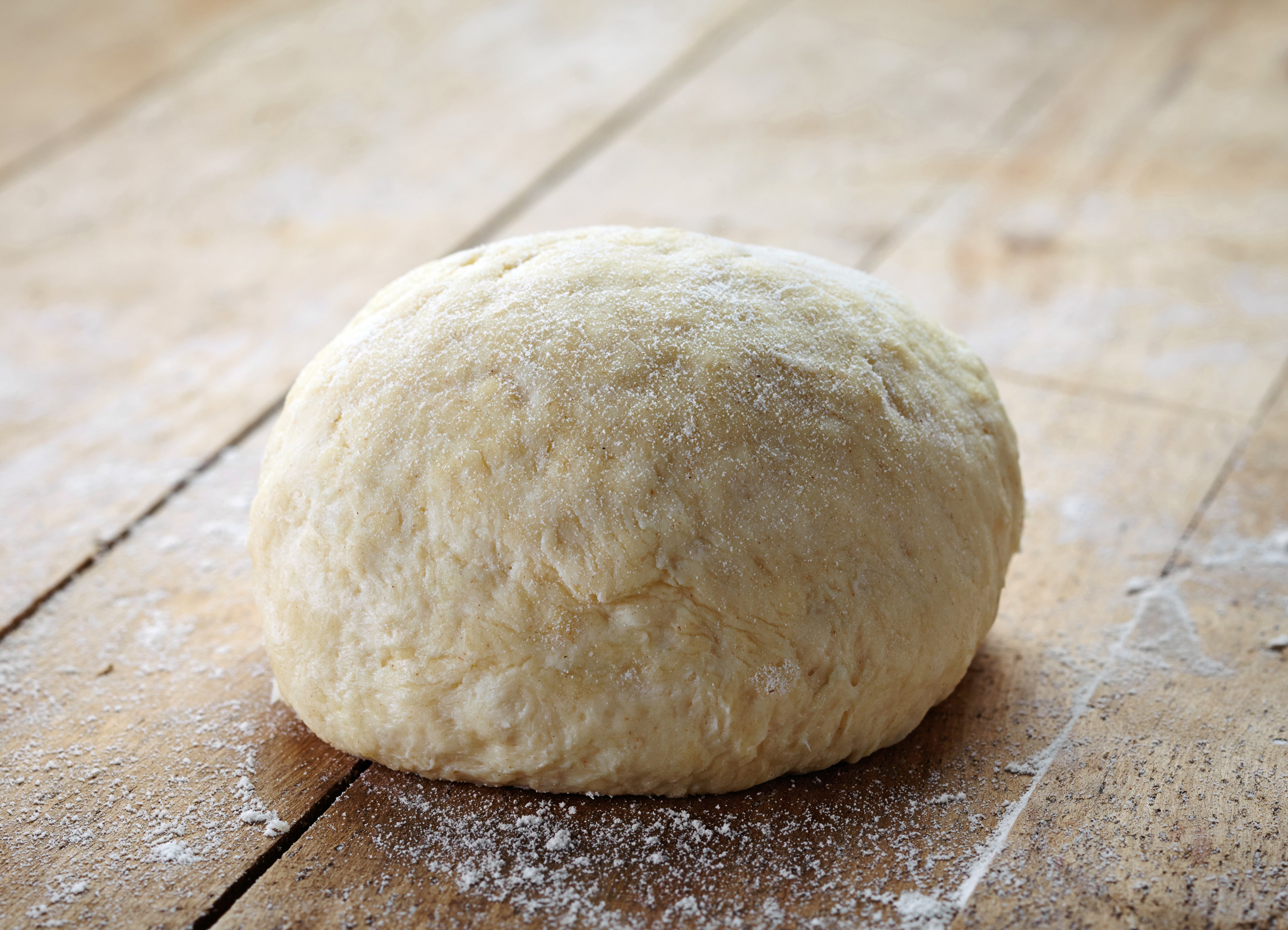
Ultimate no-fail pizza dough recipe. Start Sunday night, and have enough dough for 2-3 meals! Easy step-by-step directions. Make it today! From FrugalChicken

What are those two secrets?

Well, read on.

Now, making pizza dough is a snap, and I can have pizza whenever I want – without the questionable ingredients.

Here’s my secrets to no fail pizza dough!

What you’ll need for No Fail Pizza Dough:

7 1/2 cups bread flour

3 cups water

1 tbsp salt

1/4 tsp instant yeast

Secret #1: Use Bread Flour

For years, I just used all purpose flour for pizza dough, and while the results were okay, they weren’t consistently great – and definitely not “no fail.” Then I switched to bread flour.

Bingo.
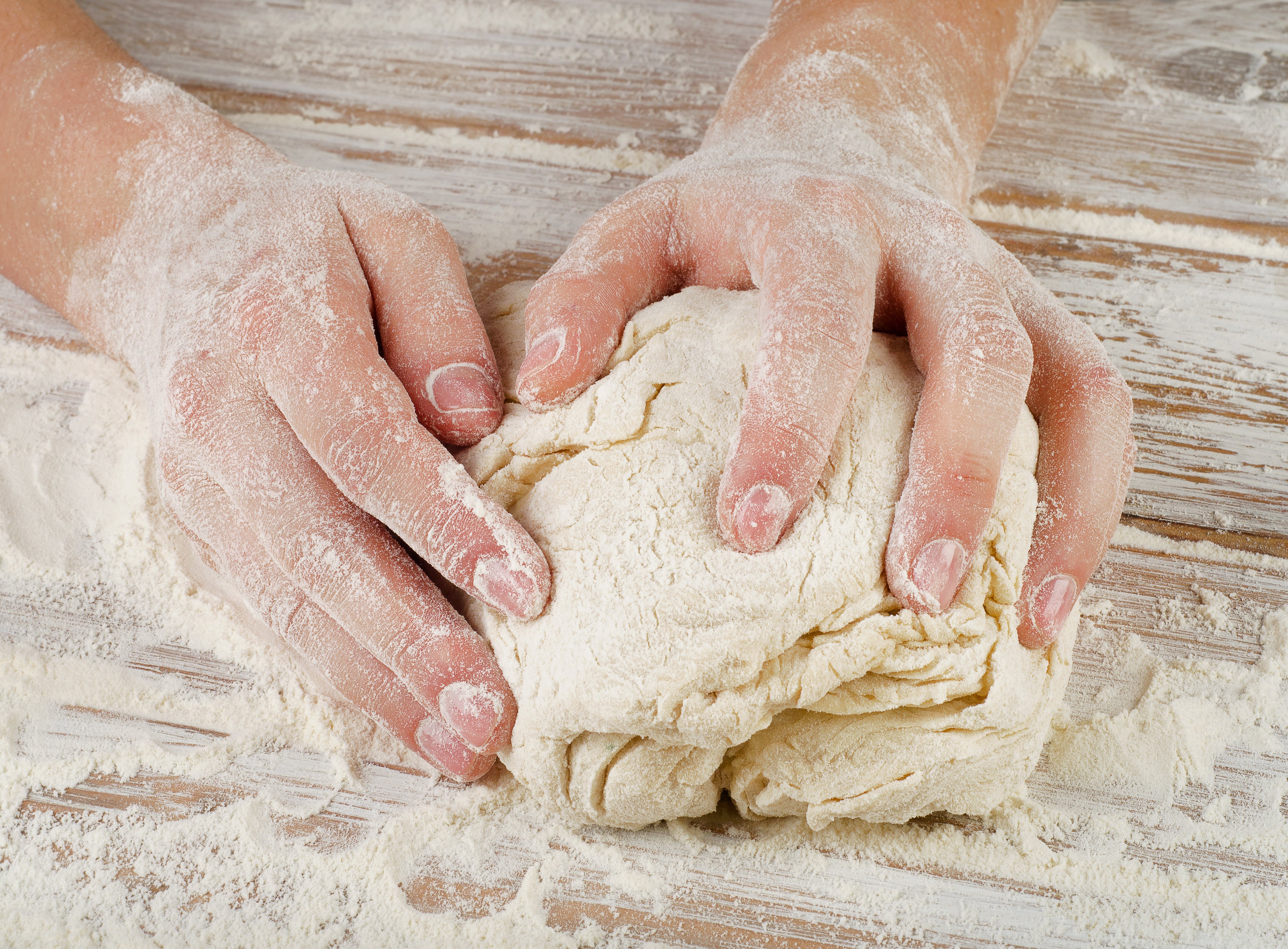
Ultimate no-fail pizza dough recipe. Start Sunday night, and have enough dough for 2-3 meals! Easy step-by-step directions. Make it today! From FrugalChicken
What’s the difference?

Bread flour has more protein than all-purpose, and that helps gluten content. You’ll want to use bread flour for pizza dough because it produces a chewier crust.

Even if you’re like my husband, and hate the crusts (we make our pizza crustless), you’ll still love the consistency.

Secret #2: Yeast needs to ferment

After making terrible bread for years, I finally figured out what I was doing wrong.

I realized I can’t just let the dough sit for a few minutes or even a couple hours and expect the live yeasts to do their job. Like other ferments, it takes a little time to produce something great.

Now, I allow the yeast time to “wake up” for 1/2 hour or so before adding it to the dough.

Not just that, but now I allow the dough to sit overnight and ferment properly. This produces a crust similar to a sourdough, but with an amazing taste.

And it has much more flavor than store-bought pizza.

How to make No Fail Pizza Dough

Combine your yeast with 2 tablespoons or so moderately warm water – between 90-97 degrees, if you have a thermometer. (If you don’t, here’s the one I use)

In a separate bowl, combine your flour with the rest of the water.

I combine by mixing with my hands – first in a swirling motion, then, as the water is incorporated, by reaching underneath the dough and bringing loose flour to the top, and pressing down with my hand.

Rinse and repeat until all the flour is incorporated into the dough.

I let these two bowls – the yeast mixture and the dough – sit for a 1/2 hour.

After 1/2 hour or so, I add the yeast mixture into the dough, incorporating with my hand by bringing the dough – which should be fairly elastic, over the yeast mixture again 3 – 4 times.

To continue to mix, I split the dough into 4 separate sections, then fold those sections over themselves. The basic point is you want to keep mixing until the yeast is as evenly dispersed throughout the dough as possible.

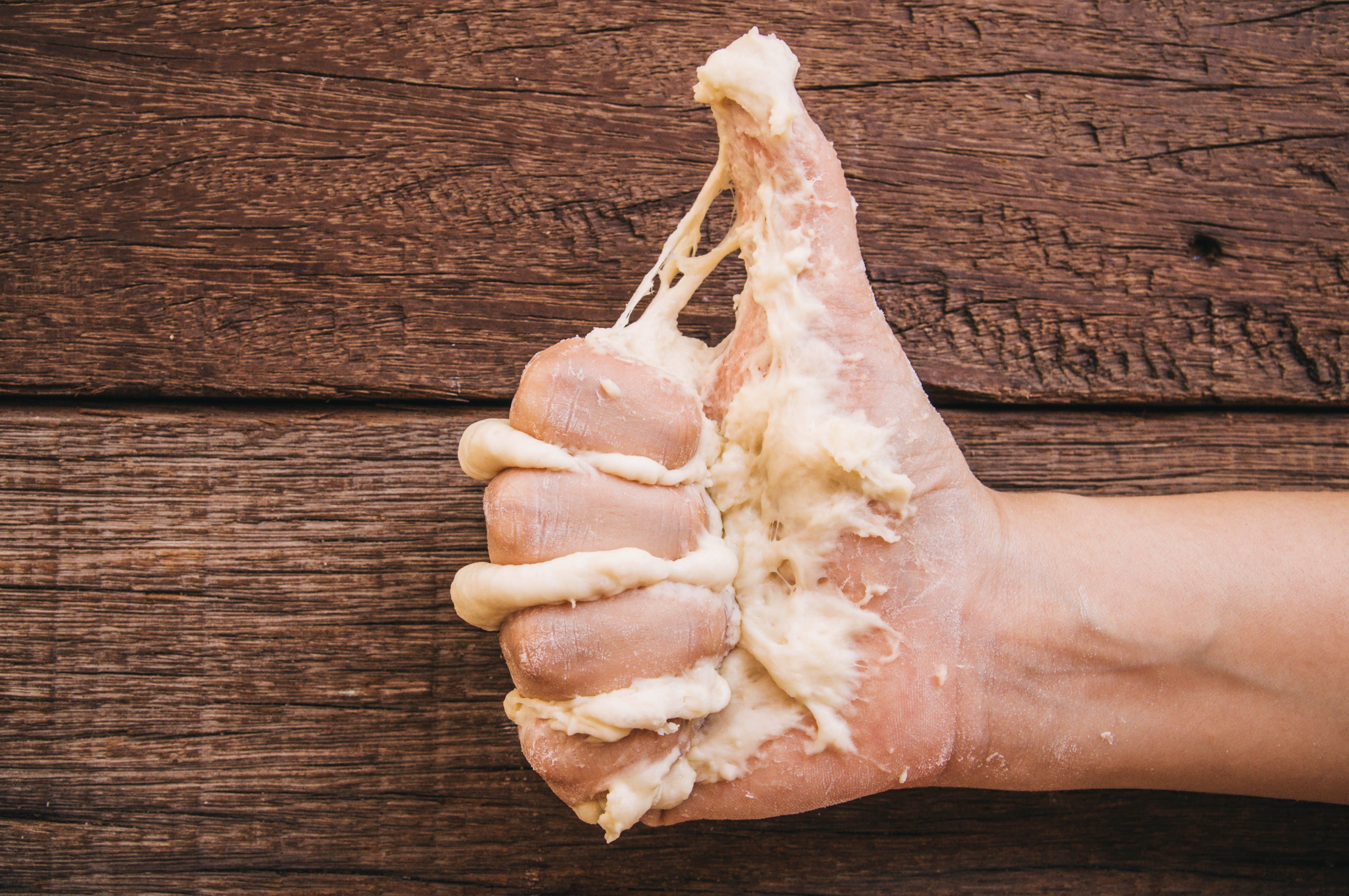
It’s really, really important to mix with wet hands – I’ve found if I skip this hint, the dough sticks to my hands, making it impossible to incorporate the yeast into the dough.
Ultimate no-fail pizza dough recipe. Start Sunday night, and have enough dough for 2-3 meals! Easy step-by-step directions. Make it today! From FrugalChicken
You want to wet your hands before mixing dough so you don’t end up like this.

Let the dough sit for another 30 minutes or so to rest.

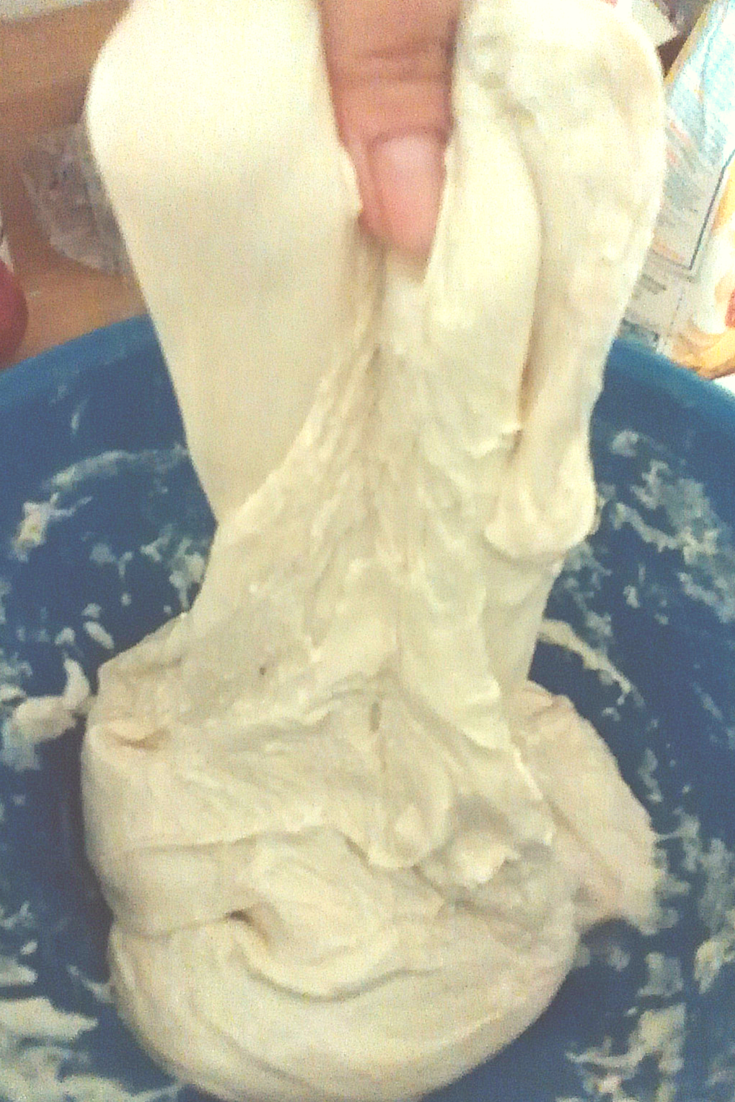
6. After the dough has rested another 30 minutes, fold the dough over itself one more time. You do this by reaching under the dough ball, and folding it in half.
Ultimate no-fail pizza dough recipe. Start Sunday night, and have enough dough for 2-3 meals! Easy step-by-step directions. Make it today! From FrugalChicken
Fold the dough by stretching it then folding it in half.

Don’t skip this simple step – if you do, chances are your dough will be runny since folding the dough allows the gluten in the dough to develop.

After folding, coat the dough with a little olive oil to prevent sticking.

7. Allow the dough to sit overnight. It’s important to allow the dough to sit for 12 or more hours until it’s at least twice it’s normal size.

During that time, the yeast is fermenting, creating gas bubbles in the dough that make it lighter and more flavorful. It’s not immediately gratifying, but it makes for a much chewier, tastier dough.
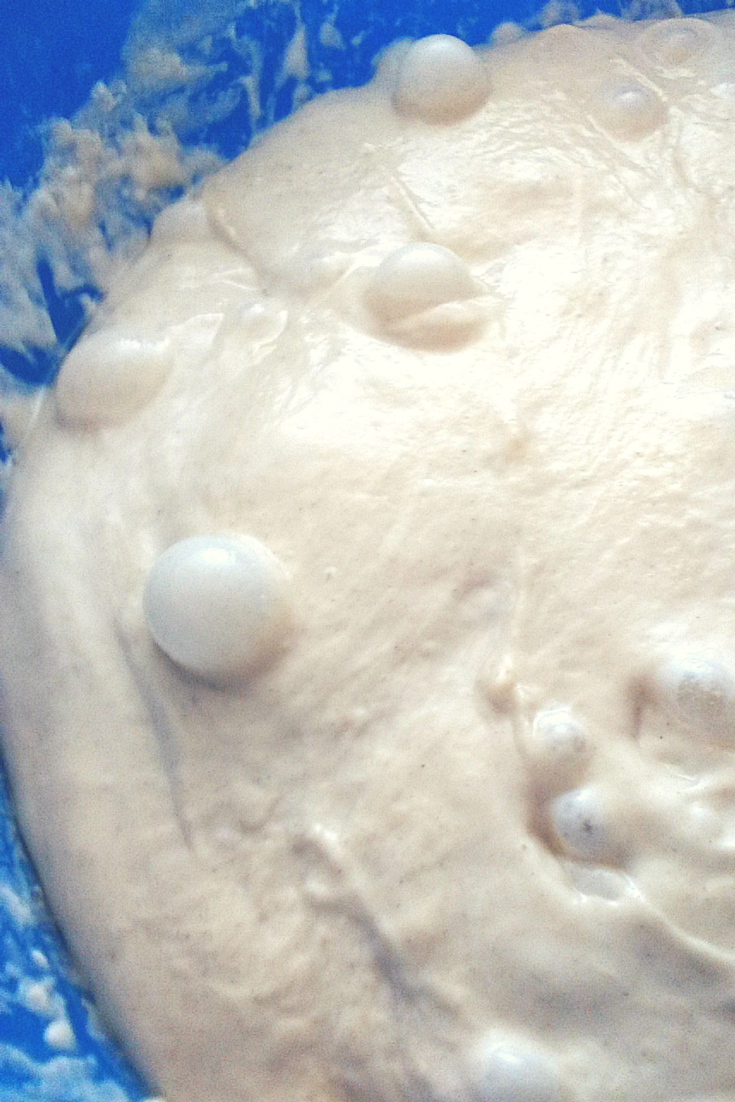
Ultimate no-fail pizza dough recipe. Start Sunday night, and have enough dough for 2-3 meals! Easy step-by-step directions. Make it today! From FrugalChicken

Your taste buds will thank you.

After the dough is 2 times it’s original size or more, wet your hands again and pour the dough out of the bowl and on to a flour-dusted counter top.

Shape the dough into a consistent loaf, and separate into 3-6 balls of dough. If you’re making a large pizza, you’ll want to try to get 3-4 balls, but if you’re making smaller, personal pizza’s you’ll want to make more dough balls.
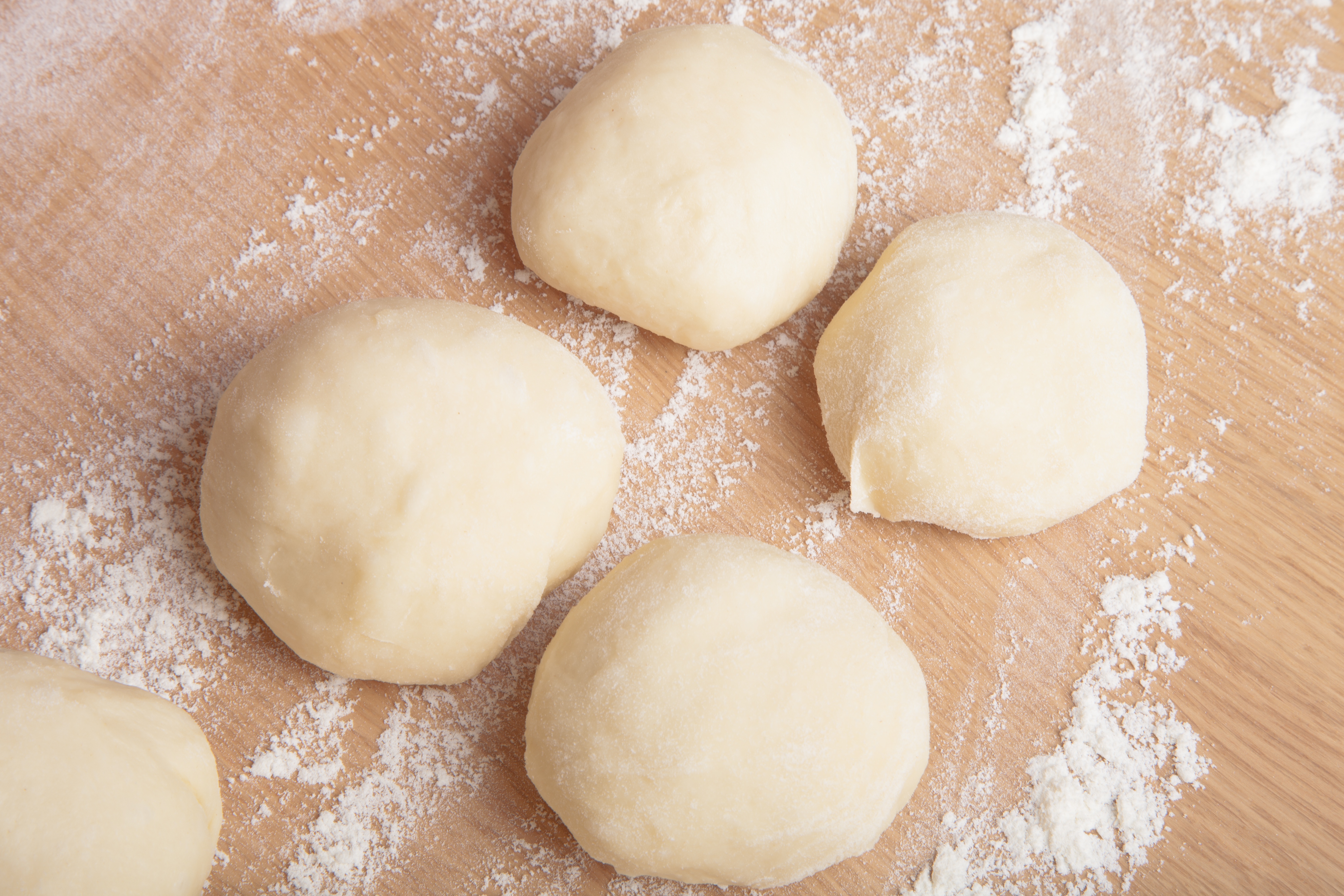
Ultimate no-fail pizza dough recipe. Start Sunday night, and have enough dough for 2-3 meals! Easy step-by-step directions. Make it today! From FrugalChicken

We go for smaller pizzas in our house, because no one can agree on toppings!

Let sit for another 3-4 hours in the fridge, then remove to use.

https://instagram.com/p/5mmMruC84b/?taken-by=thefrugalchicken

You’ll want to shape your dough for pizza when it’s cold – I’ve found if I wait for it to get to room temperature, it’s flimsier, and more likely to tear. It also creates a very thin crust, which can get soggy.

You will likely have more dough balls than necessary – that’s okay because you can either save some for the next day (you’ll love how the flavor deepens!), make foccacia (great with onions and bacon!), or simple bread sticks (we put pizza sauce and cheese on ours!)

Prepare the dough for pizza as you normally would.

I’d love to hear from you!

What’s your favorite pizza and topping? Shoot me an email or comment below!

Like this recipe? Then try these too!
Classic Strawberry Jam

Peaches & Basil Jam

Southern Style Sweet Potatoes

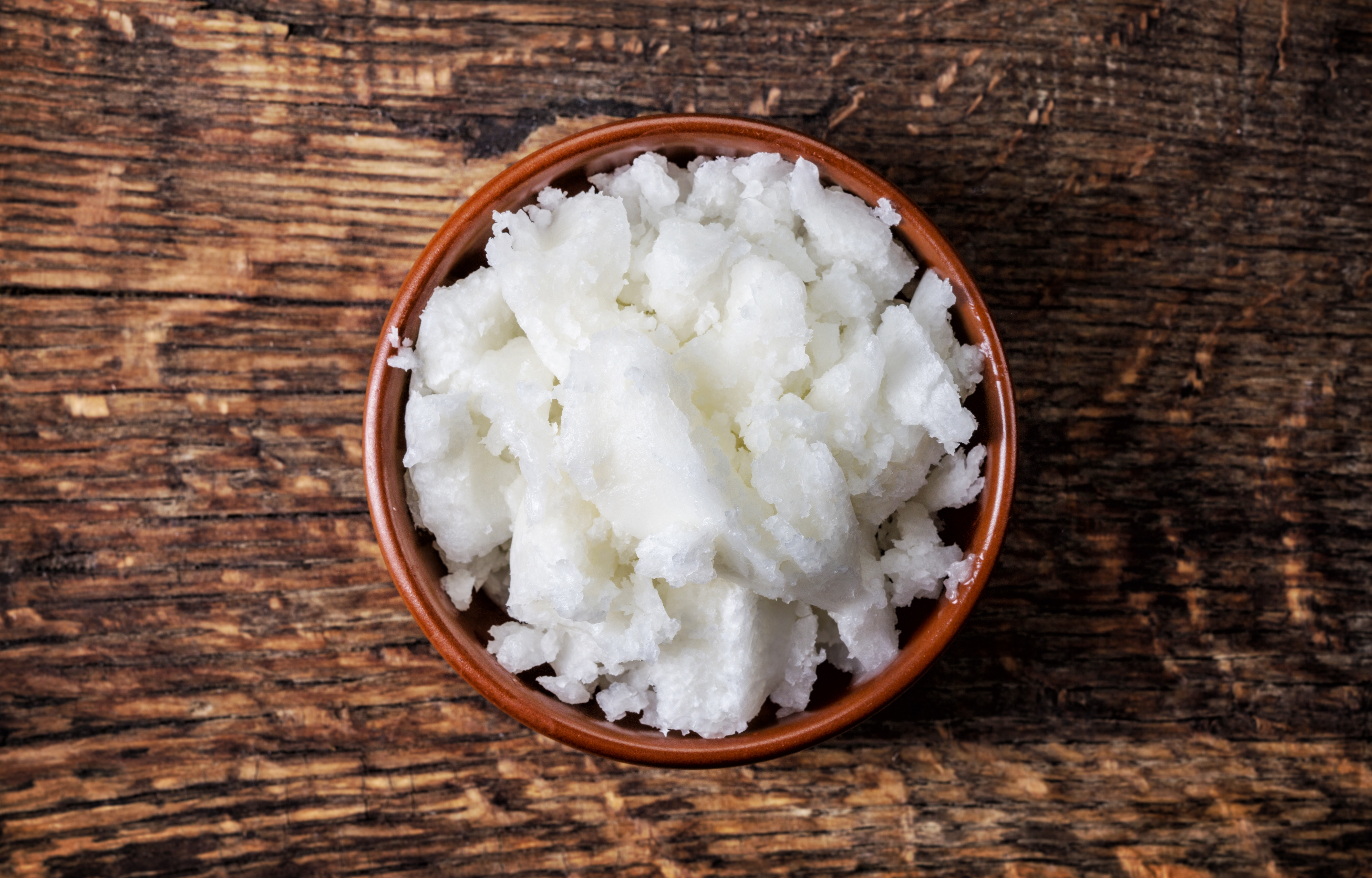
You’ve probably been hearing the buzz about raw organic coconut oil a lot, and how it’s the new superfood.

coconut oil

But you might be wondering what the heck this creamy white stuff is, whether it’s a new fad, and how you can add it to your daily life (and do you even have the time)?

Here’s the deal:

In my daily life, I mostly use organic coconut oil in cooking and on my body. I use it in soaps (it’s a great base ingredient for goat milk soap), as lip balm in the oil’s pure state, and as a base in salves.

In fact, it works better than any other lip balm I’ve tried, and I depended on it over winter.

It’s one of those small things that, because it’s so aromatic and flavorful, seems like an indulgence even though it’s pretty frugal.

I see it as a way to bring a little luxury into my home. The fact that it lends a subtle hint of its flavor to meals doesn’t hurt.

I’ve even gotten my husband, who normally steers clear of anything coconut, to use it – ask for it in fact – when he’s cooking.

(And that’s pretty darn special.)

I’ve done the research about coconut oil for you, so you can start incorporating it into your life. 

I tell you why its special, how to use it, and exactly where to get raw coconut oil – making it a snap for you to try. (Hint: You can snag it at Amazon)

There’s also a couple recipes to get you started in the kitchen and in the bathroom (see how easy it is?)

coconut oil

So why is raw organic coconut getting all this attention?

Some background:

Although certain cultures have known about coconut’s benefits for centuries, it seems we’re just catching up with how powerful this natural ingredient is.

Studies show that cultures that eat a lot of raw coconut post longer lives – so you can imagine that’s where a lot of this attention is coming from.

Organic coconut seems to have a lot of healing properties as well, and in this antimicrobal resistance-filled world, that’s something pretty important.

In one study, which was performed because of the increasing occurrence of antimicrobial resistance, raw coconut oil seemed to work as an effective fungicide against resistant Candida organisms.

That’s pretty powerful.

coconut oil

Okay, so why does it need to be raw and organic?

It doesn’t NEED to be be raw and organic, but why not go as natural as possible as long as it’s sustainably sourced and within the budget? 

Since coconut oil, in its natural state, is being studied because of it’s healing and health properties, it makes sense, to me, to use it in it’s raw state since if you adulterate it, it dilutes the oil’s power –> the reason I bought it in the first place.

5 Ways To Use Raw, Organic Coconut Oil

Coconut oil isn’t just for cooking (although it’s excellent for that). There’s other ways to incorporate it into your every day for a more natural, healthy life.

Here’s 5 ways we use it in our house:

1. Use instead of butter or oil

coconut oil cooking

This is probably the simplest and fastest way to incorporate raw, organic coconut oil into your life.

Any recipe that calls for butter or oil, just swap an equal amount of coconut oil.

It has a high smoke point – a benefit because when sauteeing, you don’t always want those burned bits that occur when you run out of oil before everything’s cooked (then you have to add more oil and the whole thing gets greasy, etc.)

It also adds a great coconut flavor. You don’t need to use a lot – a tablespoon or less will do great. 

I love to use it in coconut curries – in fact, there’s a recipe at the end of this post for a great coconut curry sauce you can use with any meat. 
If you’re vegetarian, why not try this Spicy Kale and Coconut Stir Fry?

You can use it when baking too, and it imparts a light flavor. Try raw coconut oil in muffins, for an easy, moist baked good to try!

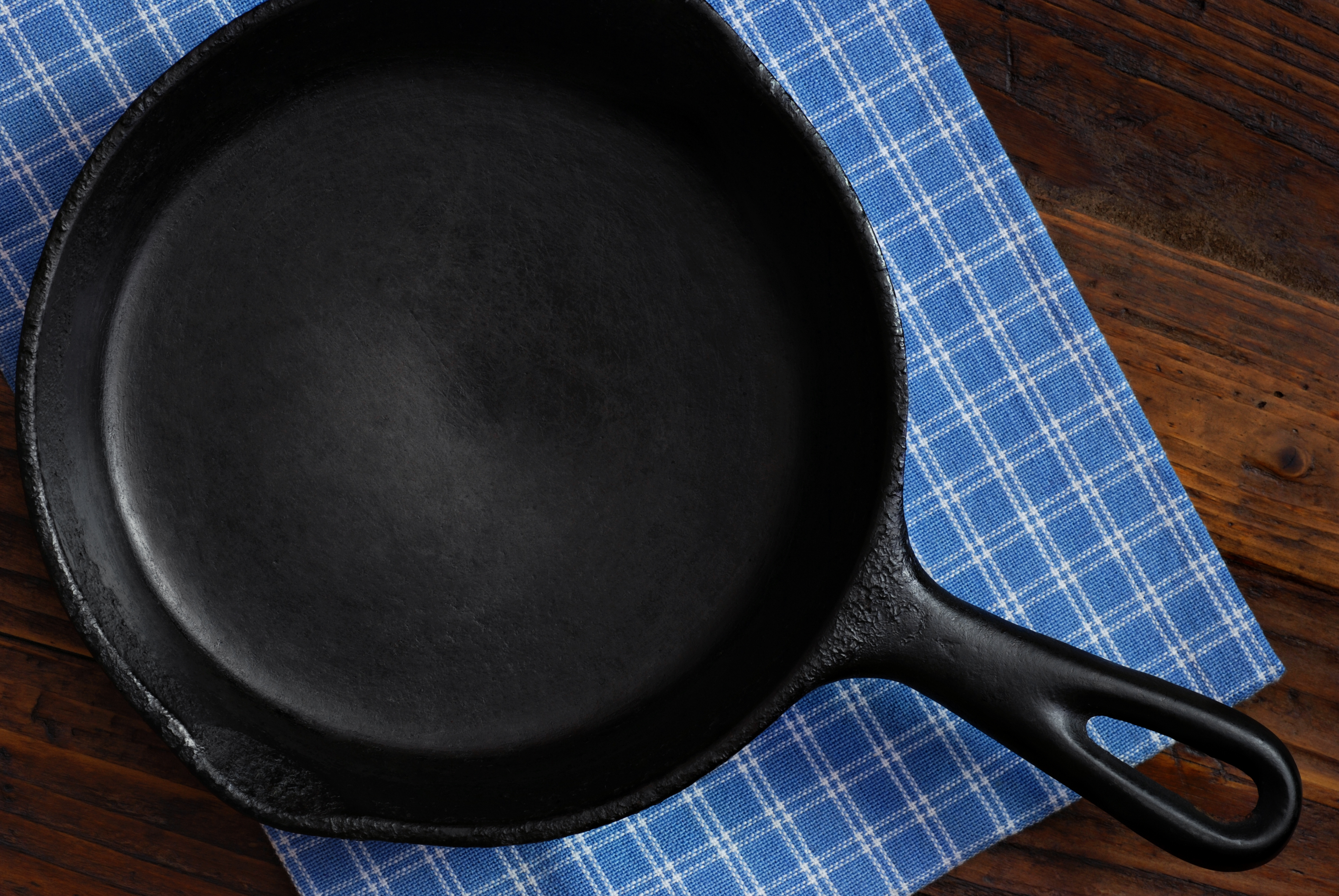
2. To season cast iron

cast iron

Anything cast iron should always have a very thin coating of oil on it to keep the metal conditioned and in good repair.

You can use any oil, but coconut oil, which spreads easily, isn’t greasy, and doesn’t leave sticky residue, is perfect for seasoning cast iron.

After you wash your cast iron, just rub a thin layer of raw, organic coconut oil on it, making sure to hit every area.

If your cast iron has been damaged and is rusty, raw coconut oil can recondition it after you’ve scraped off all the rust.

3. Reduces itching from bug bites

You can use coconut oil to reduce itching in bug bites. I didn’t believe it would work until I tried it myself, and I’ll confess, it really does work.

On a farm in the South, it’s a fact of life that you’ll have mosquitoes.

In the summer, I’m a feast for mosquitoes, and it can get miserable, especially if they bite my feet. 

Slap on a little coconut oil – you need only about 1/8th of a teaspoon per bite – and the itching stops almost instantly.

4. Essential oil carrier

essential oils

Some essential oils can be so potent that you need to dilute them so you don’t burn yourself – oregano oil for example (which has been shown to have excellent antimicrobal properties as well).

Other essential oils require a carrier oil so they can be spread more effectively. 

This is where coconut oil comes in – it’s one of the best essential oil carriers out there.

5. It’s one of the best moisturizers out there

This is one of my favorite ways to use organic coconut oil. It’s not greasy, and spreads easily.

You can use 1/2 a teaspoon and use it like lotion – because it’s an oil, it acts as a natural barrier, keeping my body’s natural oils in.

Another option is to create a body butter from it – check out my tutorial that uses raw, organic coconut oil and lavender here.

I use it before I wash dishes, for example, because it keeps the water from drying my hands out.

It works on your body and your face, and it naturally has an SPF 4, so raw coconut oil offers a bit of protection from UV rays, too.

Where to buy

You can buy coconut oil at pretty much any grocery store – even the small store in our town sells it, as does Walmart.

But I’ll tell you:

All raw organic coconut oils aren’t the same.

I really recommend getting your coconut oil from Thrive Market – that’s where I get mine. The quality is excellent, and it’s sustainably cultivated and is from a fair trade source.

If you don’t have a Thrive membership, you can still score some at Amazon, and there are several good options.

Now that you know the different ways to incorporate raw organic coconut oil into your life, here’s what I want you to do – leave a short comment below telling me your favorite way to use coconut oil, or how you plan to try it!

A good rooster is like gold – seriously.

The purpose of a rooster is, above all, to protect your hens. Their ability to fertilize their eggs is another benefit, albeit a secondary one.

In addition to adding beauty to your flock, a good rooster will take care of your hens and provide you with companionship – and they provide hours of entertainment.

Although they tend to have a bad reputation because they crow (noisy), you’ll get a lot of satisfaction in keeping a good, productive rooster.

Gorgeous Rooster standing in grass

Rooster FAQ

When adding a rooster to your existing flock you’ll find special challenges. Raising a rooster up with a flock of hens from chickhood is quite a bit easier. However, it doesn’t mean it can’t be done. Chicken keepers do it all the time.

Here are some frequently asked questions and their answers to help you embark on this exciting endeavor!

1. Are Roosters Mean?

Most aren’t mean, and in fact, a rooster can make a nice companion. Aside from how pretty they can be, a rooster’s main job is to protect his ladies from predators and sound the alarm when danger strikes.

If you treat him kindly and respect his space, your rooster will likely not be mean.

I’ve heard many stories of chicken owners who keep roosters as pets, and they enjoy a mutual friendship, and the rooster enjoys being a lap pet.

Every so often you will get a mean one with aggression issues, such as one that attacks people or other chickens. Bullying seems to be the goal of some roosters, but that’s more rare than not.

We had one rooster on the farm who would attack any other chicken in sight, new hens and old, familiar hens alike – we had to keep him isolated from the rest of the flock, and since he had no real use (we couldn’t breed him or keep him with the other chickens at all, and he wasn’t a pet type rooster), he was eventually removed from the farm.

We had another rooster that was overly rough with the hens when mating, and several ended up with deep wounds on their sides. One even had to be put down.

These two roosters are the exception, however, and every other rooster on the farm is pleasant to be around.

2. Are Roosters Necessary For Eggs?

No, roosters aren’t needed for your hen to produce eggs – she will do that on her own.

If you want to incubate eggs to hatch chicks, however, you will need a rooster.

While roosters aren’t necessary for eggs, keeping one around, if your city permits it, is still beneficial. Roosters instinctively protect the flock and, as leaders, search out food and tasty goodies for the girls to eat.

My king rooster will even let the ladies eat first in addition to sounding the alarm whenever a predator appears.

3. How Many Roosters Do You Need

If you want to breed, the rule of thumb is one rooster for every 10 hens.

This is also a good number if your goal is to keep a rooster to protect your hens from predators – there are only so many hens one rooster can watch.

On a homestead, it makes sense to keep as many roosters as you need unless you’re raising meat chickens because otherwise, you will feed livestock that won’t produce anything. 

If you’re keeping chickens for pleasure, there’s no rule of thumb about how many roosters you should keep, except as outlined above.

A newer trend you may not have heard of is bachelor flocks. You can read about that idea here.

4. Can I Keep More Than One Rooster?

Of course, as long as they get along. 

When you first introduce a new rooster (or new chickens for that matter) to the flock, it’s possible the chickens will need to “work it out” while they establish a pecking order or hierarchy. Squabbles are a necessary part of the process and is normal behavior.

Sorting out who will be king rooster shouldn’t last too long, however, and in many cases, there isn’t any drama when a new rooster joins the flock. 

If you introduce a rooster that’s overly aggressive, I don’t advise keeping it for the overall health of your flock.

We had one rooster that fought any other chicken – since we had bloody combs for too long, I felt it was inhumane to keep him in the flock and a distraction from my king rooster’s main duties (keeping the hens safe.)

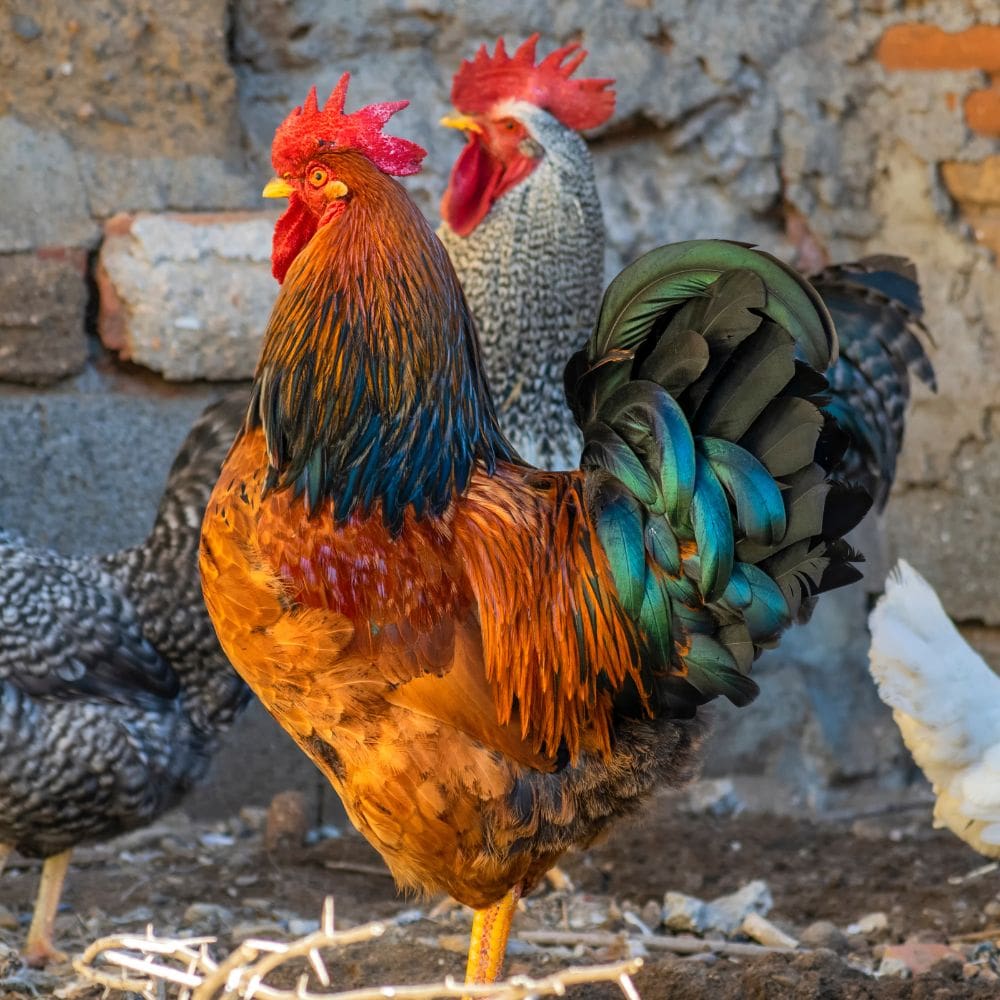
Two roosters in front of rock wall background

5. What Should I Do If My Rooster Attacks?

You have a couple of choices if your rooster attacks. It is possible to train it out of them.

If the rooster is just “charging,” (meaning he rushes at you but doesn’t make contact or attack in any other way) I personally don’t worry about it too much.

Your rooster is trying to establish dominance, take care of his flock, and protect his territory – he’s doing his job (obnoxiously, but he’s doing it).

If you establish that you’re the boss with your males (I chase them away), the charging should dissipate after some time.

When you’re correcting your rooster, don’t turn your back and walk away until he’s a good distance from you. If you do, he will take it as a sign that he’s won, and will try charging again the next time he gets the idea. Always be aware of your surroundings.

We have a rooster that will charge and occasionally “flog” (when they fly up on you without actually doing damage). The rooster is young, and “feeling his oats.”

When it happens, he’s immediately corrected and chased away, and the problem goes away.

While flogging isn’t pleasant, it’s not immediate grounds for banishment on the farm, especially if the rooster is responding to training and not doing any physical harm.

If your rooster attacks people or other chickens repeatedly, however, and is doing damage, it’s time to consider other options. The overall health of your homestead is most important.

6. Do You Feed Roosters Differently Than Hens?

Yes and no. A rooster can eat the same grain as your laying hens and lead a productive, healthy life.

However, if you want to save some money and your roosters don’t always live with your hens, you can transition them to a grower ration.

Because roosters don’t produce eggs, they don’t require a layer feed, which is formulated with a calcium boost for laying hens.

Don’t just feed him corn and scratch, however. Neither is formulated to give him the amount of protein he needs to remain healthy. A grower ration will meet his nutritional needs.

You can also feed your rooster an organic homemade feed alongside your hens.

Lastly, you can feed him protein-rich treats, like these, to ensure he has enough protein. Plus he’ll come running for treats and know you are his friend!

7. Exactly How Do You Introduce a New Rooster To Your Flock?

We usually put the rooster in a separate enclosure or cage that is within the same area as our current flock. In fact, we do this for new hens as well.

All the birds can get to know the newcomer (and visa versa) without the danger of getting into fights. After a few days, it’s usually safe to let them out and integrate them with the flock. Just be sure to watch the interaction for a little bit before walking away. It may take a few more days.

Summary

Roosters are beautiful, useful, and fun to have around. You just have to show him who is boss, respect his space, and provide him with enough room in the pen (or let him free range).

Using these tips, you should be able to successfully integrate a rooster into your flock, and enjoy the benefits for years. It may take a little patience on your part, but it will be worth it to complete your backyard flock.

One last thing – don’t feel bad about separating or removing aggressive roosters, you can only do so much.

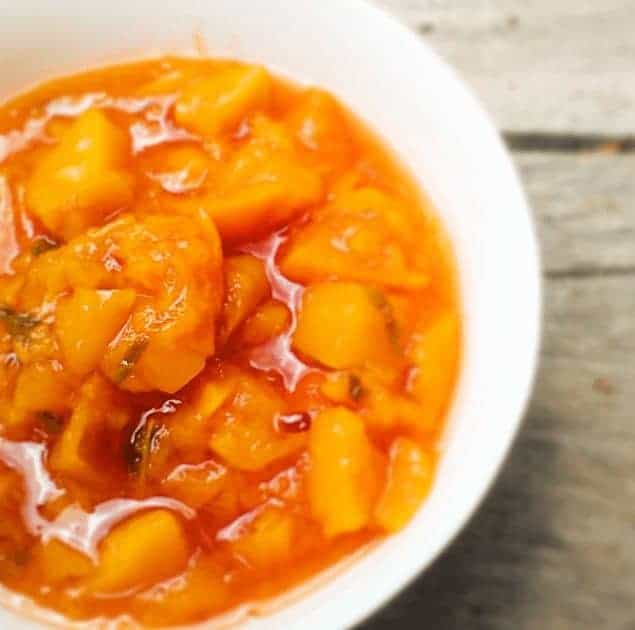
Peach basil jam brings together two favorite summer harvests to form a unique combined flavor that somehow just works. It’s even beautiful to look at, and livens up a sometimes-boring PB&J sandwich.

It’s also a great way to preserve basil in a new way.

https://instagram.com/p/5h7qKNC8yx/?taken-by=thefrugalchicken

This recipe yields 4 big jars of jam, which should satisfy your cravings for a while. Or maybe not, since I find myself eating this whenever I want something sweet.

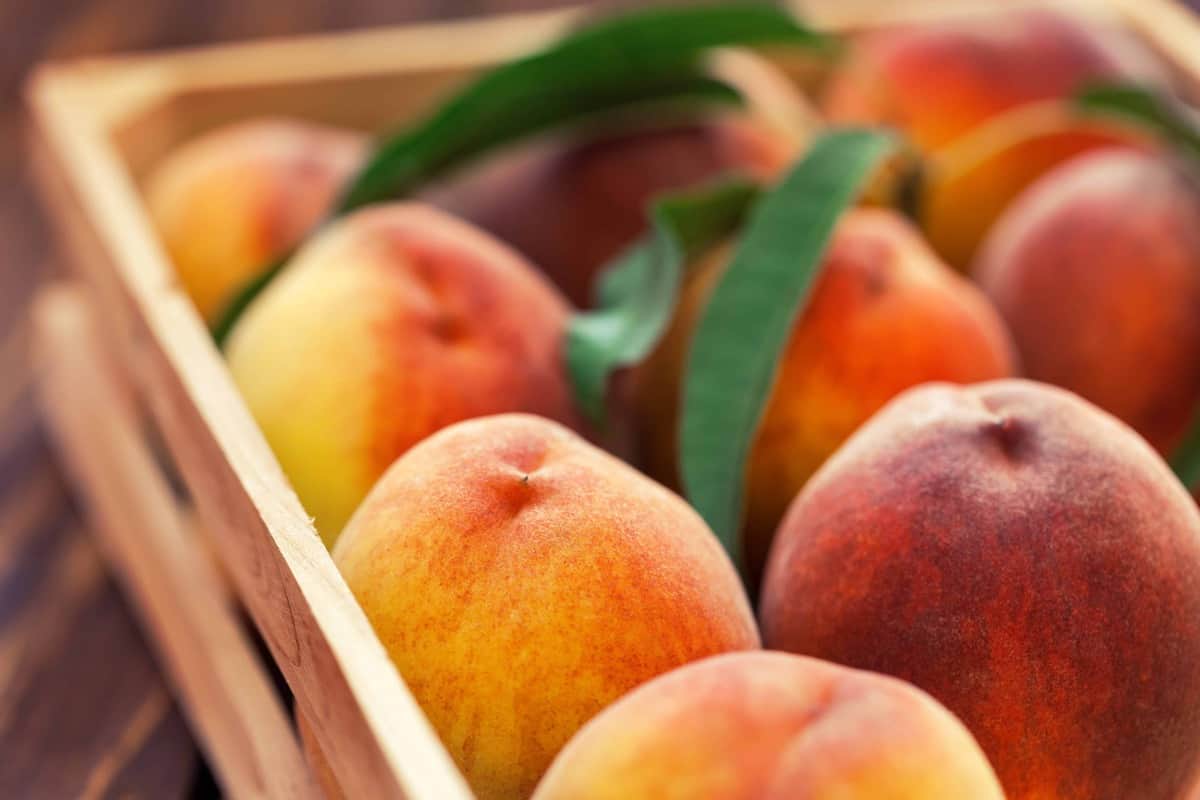
For this recipe, I used 5 pounds of peaches that I sourced from a local farm (unfortunately, we haven’t planted peach trees yet, let alone gotten them to produce fruit).

I didn’t remove the skins, although you can certainly do so by first plunging the whole peach in boiling water, then immediately dunking it in cold water.

I personally prefer the skin to remain on because I like the texture it brings to a jam.

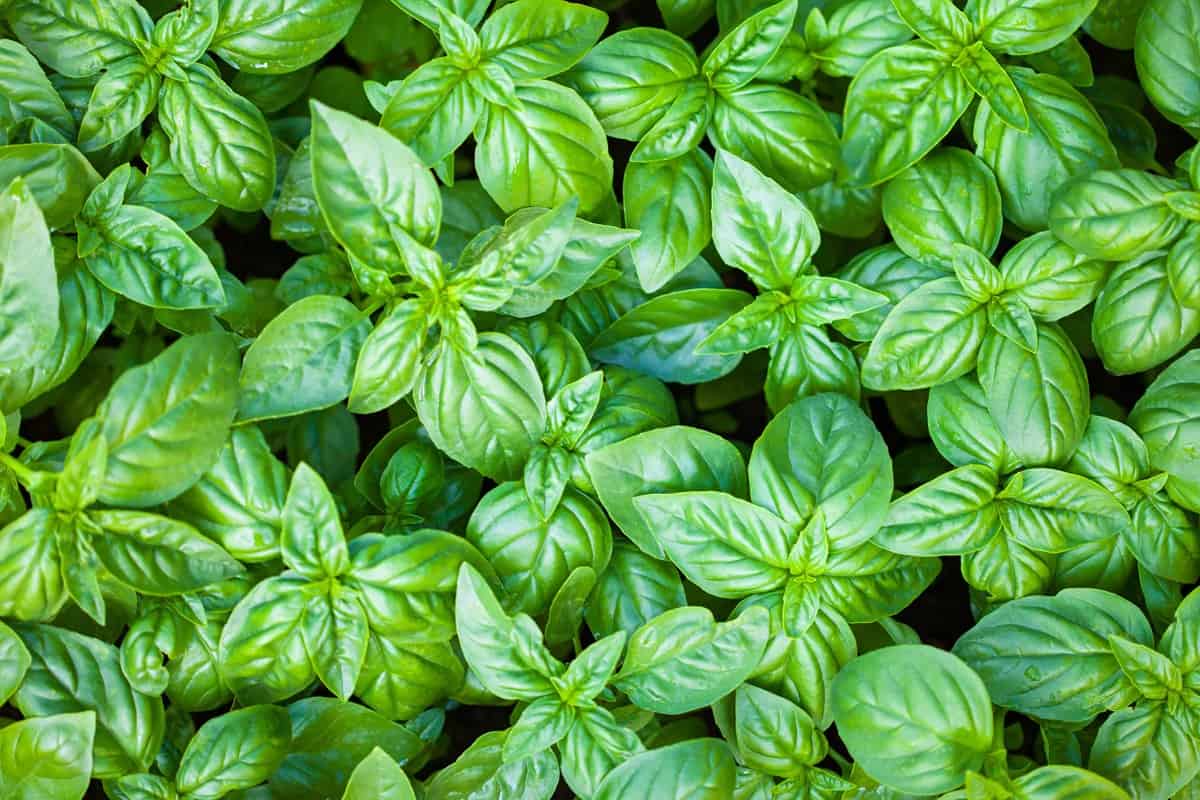
I also used a 1/2 cup of boxwood basil (that was sourced locally too – right outside my door!)

Bringing it all together takes about an hour.

I hope you enjoy this recipe as much as I do!

Celebrate summer's unique flavors with this peaches and basil jam. With just 3 ingredients, it will take you an hour to create fresh jam! From FrugalChicken

1. Select peaches, and chop

For this recipe, I used 5 pounds of peaches.

Celebrate summer's unique flavors with this peaches and basil jam. With just 3 ingredients, it will take you an hour to create fresh jam! From FrugalChicken

When selecting peaches to preserve, you want to pick ones that are firm, with no visible bruising or brown areas.

If there’s a small bruise on it, but the rest of the peach seems okay, then just cut out the brown area.

Chop the peaches, being sure to leave the pit and the red area surrounding the pit out of the slices.

You want to chop them into 1/2″ slices, or if you prefer a more consistent jam without large chunks of fruit, cut them to 1/4″.

2. Select your basil

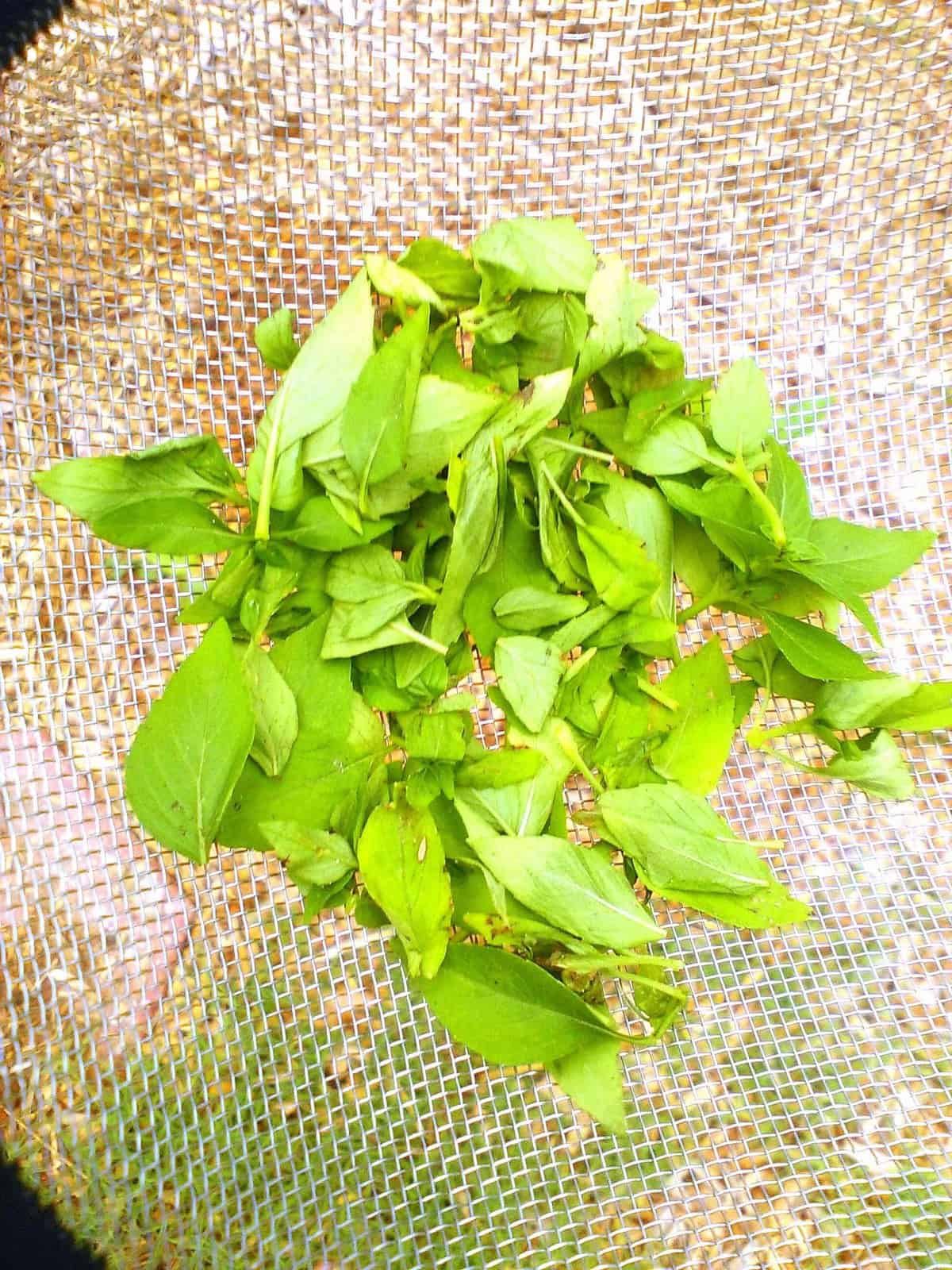
Any basil will work, I used boxwood basil because that’s what grows in my garden. If you use a larger leaf of basil, you will need to chop them finer than boxwood.

Celebrate summer's unique flavors with this peaches and basil jam. With just 3 ingredients, it will take you an hour to create fresh jam! From FrugalChicken

Whatever basil you use, you will want to chop it to release the aromatic oils that will infuse your jam with their flavor.

Before chopping your herbs, however, be sure to wash them well in a fine-meshed colander to remove any dirt or bugs.

Celebrate summer's unique flavors with this peaches and basil jam. With just 3 ingredients, it will take you an hour to create fresh jam! From FrugalChicken

3. Heat your sliced peaches and add your sugar

Celebrate summer's unique flavors with this peaches and basil jam. With just 3 ingredients, it will take you an hour to create fresh jam! From FrugalChicken

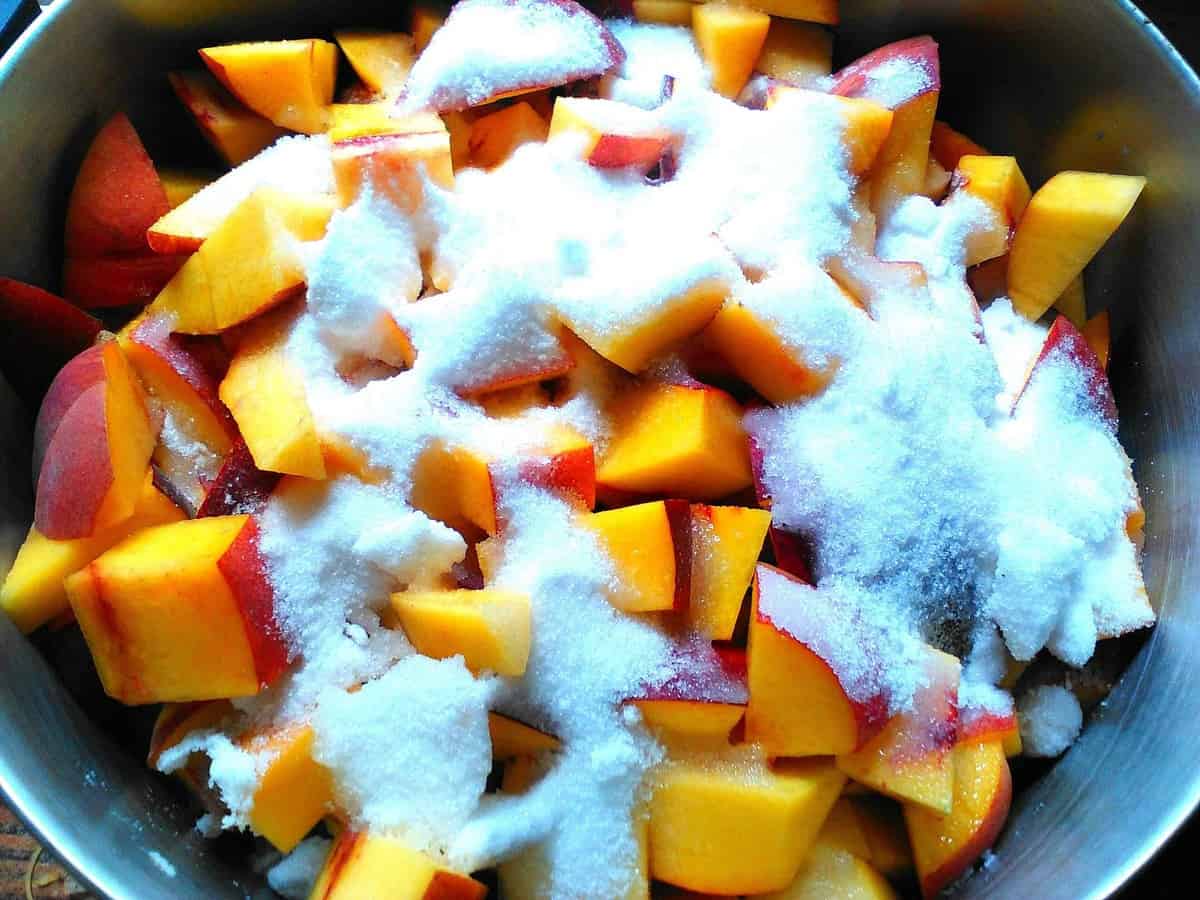
Toss your sliced peaches into a large non-reactive pot, and add 2 cups of sugar.

Turn the heat on medium high. If you use low heat, it will take a while for the peaches to fully break down and it’s possible the jam will be runny.

If the heat is too high, however, it will scorch the fruit, so I’ve found medium high heat lets the peaches break down without it taking forever.

If you prefer to not use refined sugar, you can substitute honey or your sweetener of choice (or none at all.)

I personally do not add water because although it’s possible the peaches might scorch, over medium heat, in my experience it’s not necessary. The juice from the peaches will weep, making the water unnecessary.

Celebrate summer's unique flavors with this peaches and basil jam. With just 3 ingredients, it will take you an hour to create fresh jam! From FrugalChicken

Stir the peaches as they begin to break down, making sure to get the bits on the bottom. As the peaches begin to break down, it gets easier to incorporate the sugar. 

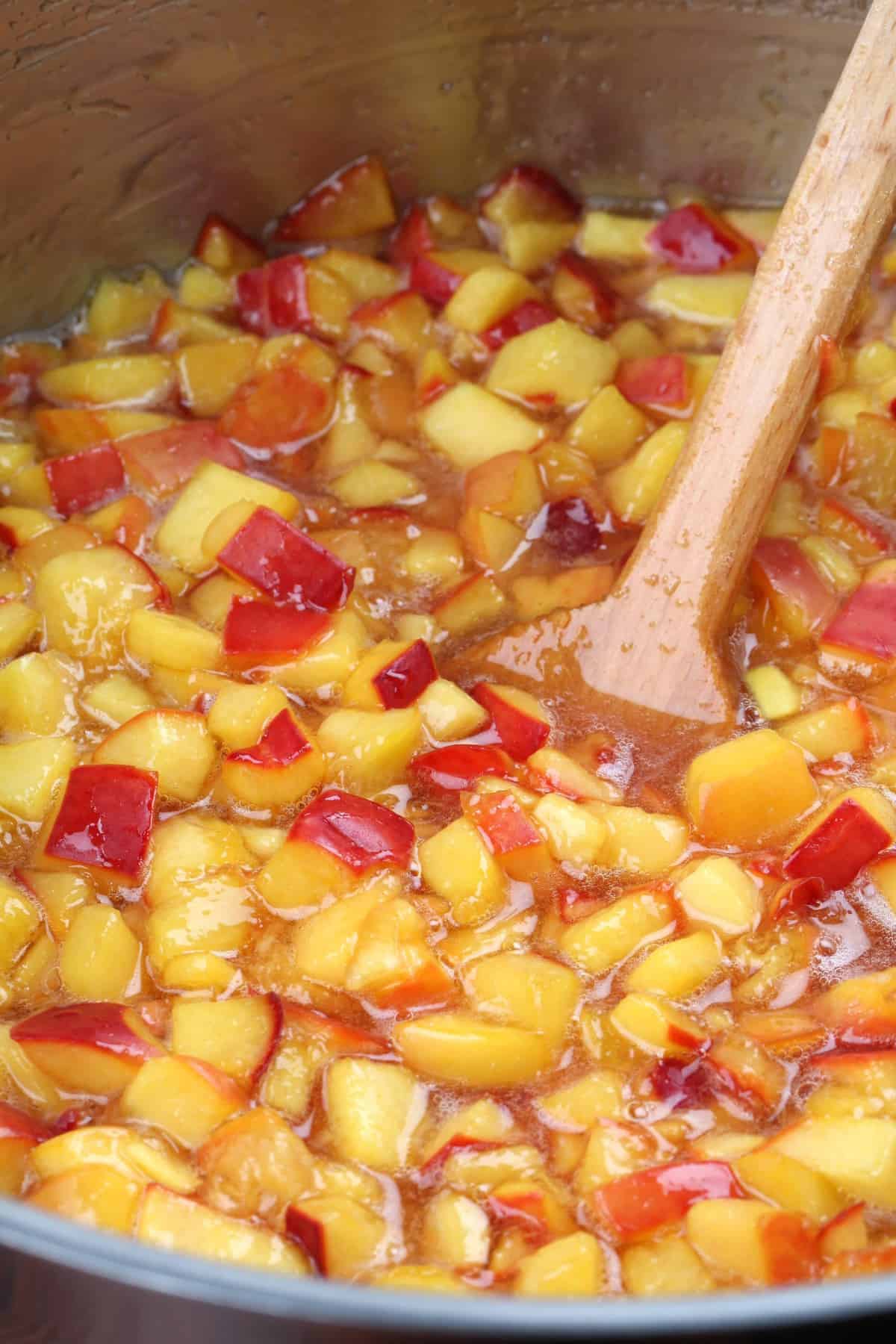
After about an hour, the fruit should be broken down so that chunks of fruit are mixed with a juice/jam like liquid.

Begin to mash the fruit chucks (they should be soft enough) to break them down further.

If, after mashing, the fruit seems too solid or you want a jam without chunks of fruit, continue to let the heat break down the peaches.

Once the consistency is fine, add your chopped basil.

You don’t want to add it before this point, because you don’t want it to cook – you’ve already chopped it, so the plant’s oils have been released, and the herb will heat up and combine flavors with the peaches as the jam cools.

Remove from heat and add to your mason jars for storage (you should pre-heat your mason jars to sterilize them and to ensure they won’t shatter when you add the hot jam).

Celebrate summer's unique flavors with this peaches and basil jam. With just 3 ingredients, it will take you an hour to create fresh jam! From FrugalChicken

If you plan to use immediately (or in the near future), allow to cool, making sure to either use a loose fitting jar seal or put cloth over the top to keep out dust or bugs.

If you plan to use a water bath method to can your peach basil jam, begin that process as soon as you fill your mason jars.

Once you’ve made Peaches & Basil Jam, try my recipe for strawberry jam to double your fun!

Abnormal chicken eggs: If you own chickens, it’s just a matter of time before you get one that makes you scratch your head and wonder “What the heck?”

Don’t worry. Usually, abnormal eggs just happen, and although they can mean your chicken is sick or stressed, they aren’t necessarily something to be concerned about. 

(New to chicken keeping? Grab my bestselling book Chickens: Naturally Raising A Sustainable Flock for less than the price of takeout here!)

Your chicken is a live animal, and sometimes, just like humans, things go awry without explanation.

There’s a few abnormal eggs you’ll likely run into regularly, while others are uncommon (although clearly not unheard of). 

If you’d rather learn about abnormal chicken eggs by listening, you can download my podcast about it here:

It’s important not to get too concerned about abnormal chicken eggs – while they can indicate a problem, your best bet is to watch your flock for signs of stress or illness, and remember that sometimes abnormal chicken eggs just happen.

With a couple of exceptions, abnormal chicken eggs are still okay to eat (and I tell you which ones aren’t!).

READ NEXT: WHAT ARE LASH EGGS?

Here’s common abnormal eggs your chicken might lay, and what they mean.

1. Soft Shell/No Shell Eggs

It can be unnerving (and kind of cool) the first time you see chicken eggs without their shell. The eggs can be missing the whole shell or just part of it, but the membrane is still intact.

https://www.youtube.com/watch?v=MCpeomgIK9c

Adding the shell is one of the last steps a chicken takes to produce eggs, and sometimes, for a variety of reasons, that step is skipped.

In pullets, soft shell eggs sometimes happen with her first egg – the pullet’s system just hasn’t kick started correctly, but it will soon catch up.

Sometimes the cause is insufficient calcium, which can happen with a chicken who’s been eating a grower ration that’s lower in calcium than a layer feed. 

In established layers, there’s a few reasons for abnormal soft shell eggs, including insufficient calcium or protein absorbed, inflammation of the oviduct, or heat stress. Hens also coming back into laying can lay abnormal soft shell eggs.

Another reason is if the previous egg stayed too long in your chicken’s shell gland, causing the soft shell egg to be laid too soon.  

Can you eat it?

If the soft shell chicken eggs remain unbroken until I find them, I usually feed them to the pigs or throw them on the compost pile.

Although they might be okay, I’m personally not comfortable eating them because I don’t know what kind of nasties have passed through the membrane.

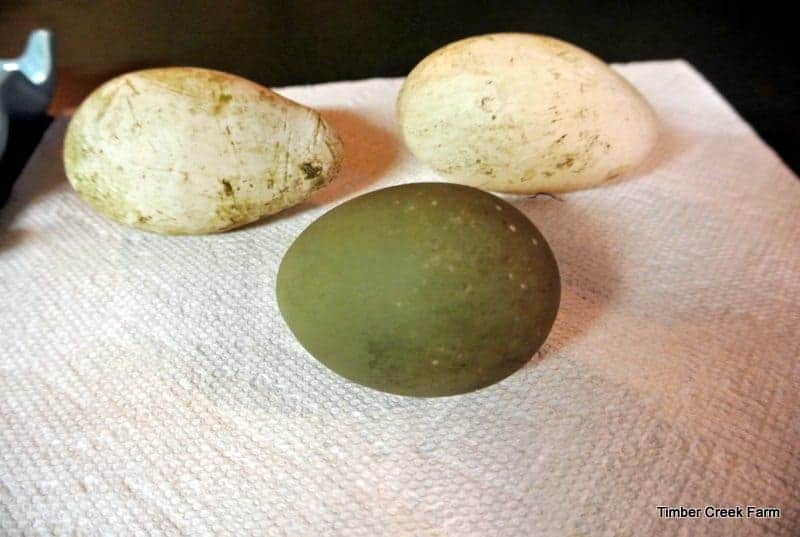
2. Lash Eggs

Among the most disturbing of abnormal chicken eggs to see is a lash egg.

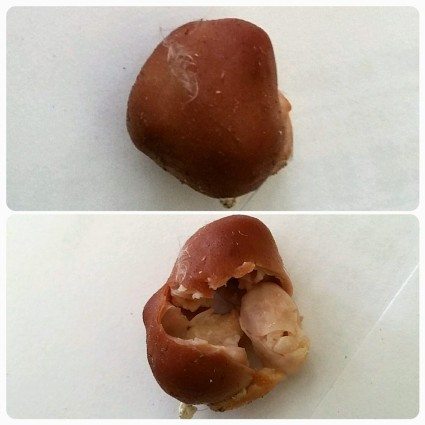
Lash eggs aren’t actually eggs, but rather the result of an infection called Salpingitis – an infection and inflammation of the oviduct. Lash eggs are generally shaped like eggs, since they still travel through the oviduct.

Lash eggs are the accumulation of pus, egg material, and possibly tissue laid by the hen. It can be soft or hard, and is comprised of layers of the shed material. 

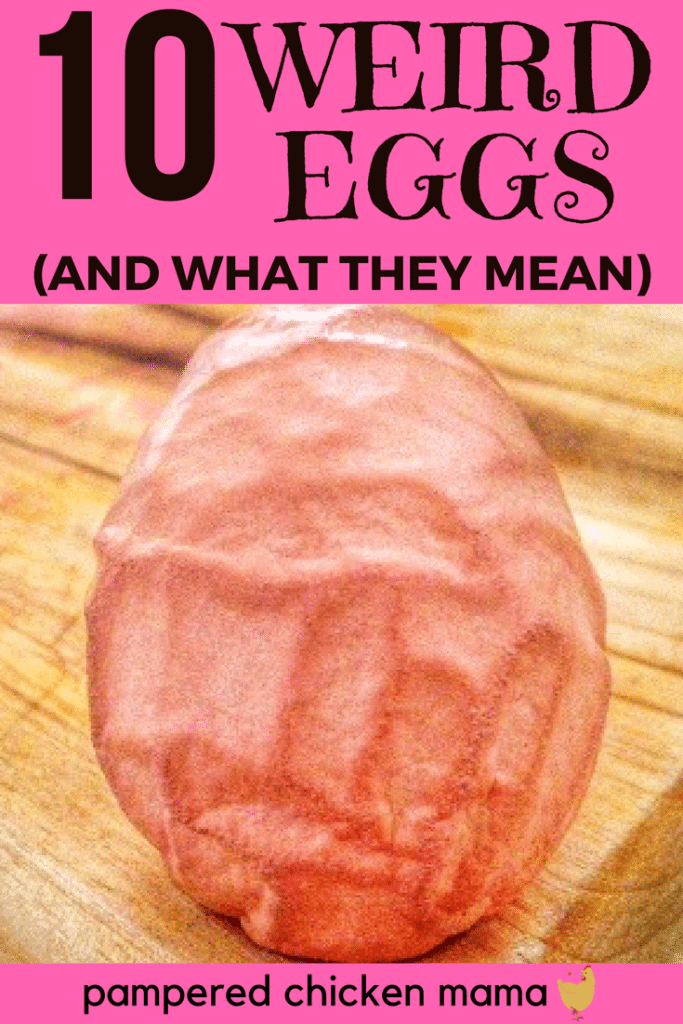
Got funky eggs? Abnormal chicken eggs happen to all of us - it's just a matter of time. Here's 10 weird eggs and everything you need to know. From FrugalChicken
Photo courtesy of Timber Creek Farm

While some chicken keepers ring the death knell if they have a chicken that lays abnormal eggs like lash eggs, the bottom line is it’s an infection – consult your vet to see if it can be treated. 

Can you eat it?

You’d be crazy to eat a lash egg.

READ MORE: 5 HERITAGE BREEDS OUR GRANDPARENTS KEPT

3. Incomplete pigmentation

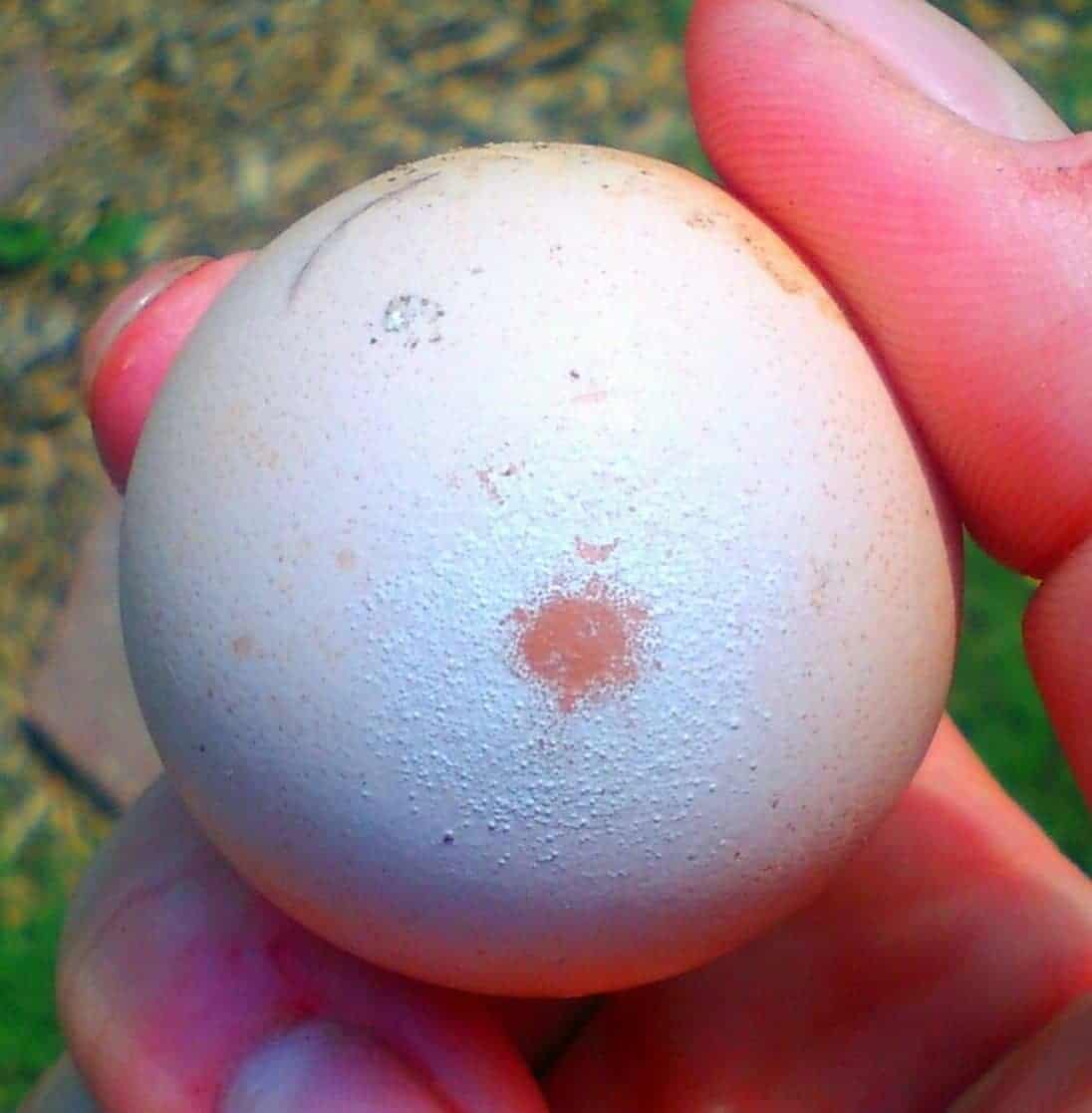
“I forgot to change the toner cartridge” is a common joke when a chicken owner comes across an egg that’s not uniformly colored.

https://instagram.com/p/5cRemnC83B/?taken-by=thefrugalchicken

Eggs not uniformly colored are normal eggs that just have a funny pigmentation that day – it’s a minor flaw.

Abnormal chicken eggs like this is are usually caused by some sort of stress, such as heat stress. The hen is working overtime to keep her body cool – which means she has less energy to put into making eggs.

Poor nutrition or a viral infection are other potential causes.

Can you eat it?

I’ve never had an issue eating chicken eggs with incomplete pigmentation.

4. Bumps on eggs

Bumps on your chicken eggs are calcium deposits – they can range from minor to large deposits, and they’re generally white.

Got funky eggs? Abnormal chicken eggs happen to all of us - it's just a matter of time. Here's 10 weird eggs and everything you need to know. From FrugalChicken

The most common cause is excess calcium in your hen’s diet – check to see if she’s somehow getting too much calcium.

Other causes are defective shell glands or stress during the calcification process.

Can you eat it?

I’ve eaten these eggs without any issues.

READ NEXT: 10 COMMON CHICKEN QUESTIONS (AND ANSWERS!)

5. Very Small Eggs

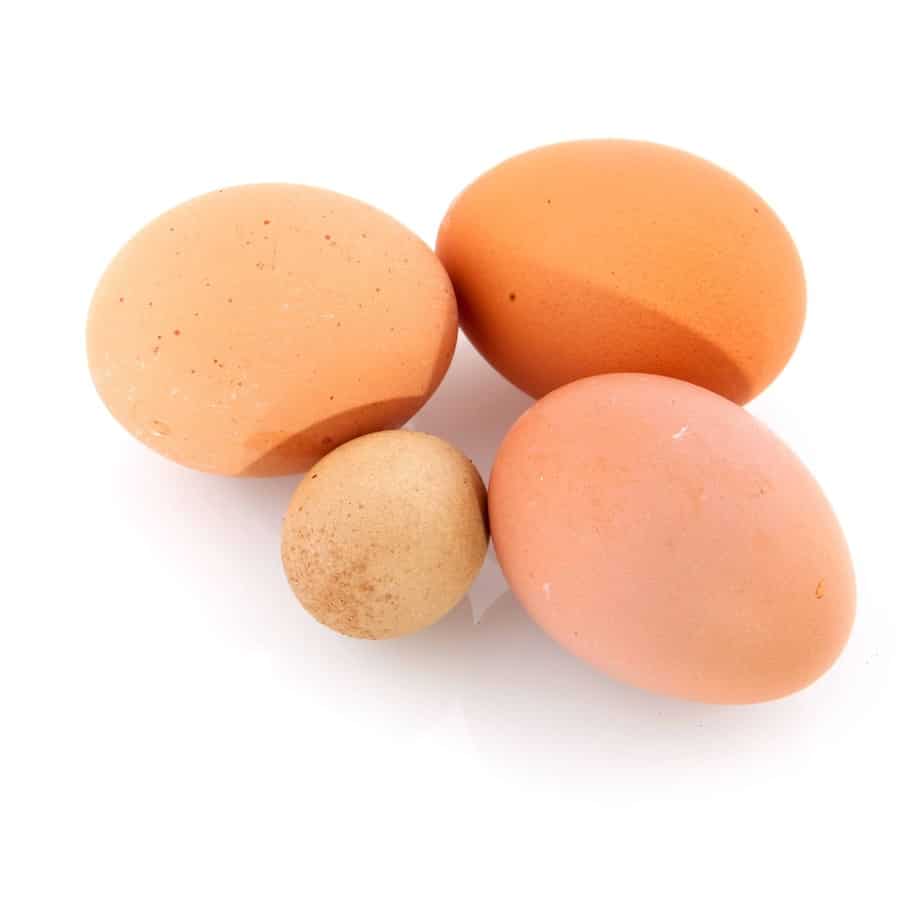
Lovingly referred to as fart eggs, rooster eggs or fairy eggs, very small eggs typically are missing the yolk. They’re cute to find, but don’t yield very much in the way of food.

Got funky eggs? Abnormal chicken eggs happen to all of us - it's just a matter of time. Here's 10 weird eggs and everything you need to know. From FrugalChicken

Young pullets might produce fairy eggs when they first start laying – their reproductive system is just trying to catch up.

I’ve also had hens lay fairy eggs when under stress, notably with one hen that had been savaged by a rooster.

Her reproductive cycle might have been disturbed by the stress, or her body might not have been able to produce a real egg because it was putting its energy into healing her body.

Fairy eggs can also be laid when a foreign mass (such as a piece of tissue) triggers the hen’s system to produce an egg.

Can you eat it?

I’ve never had a problem eating fairy eggs.

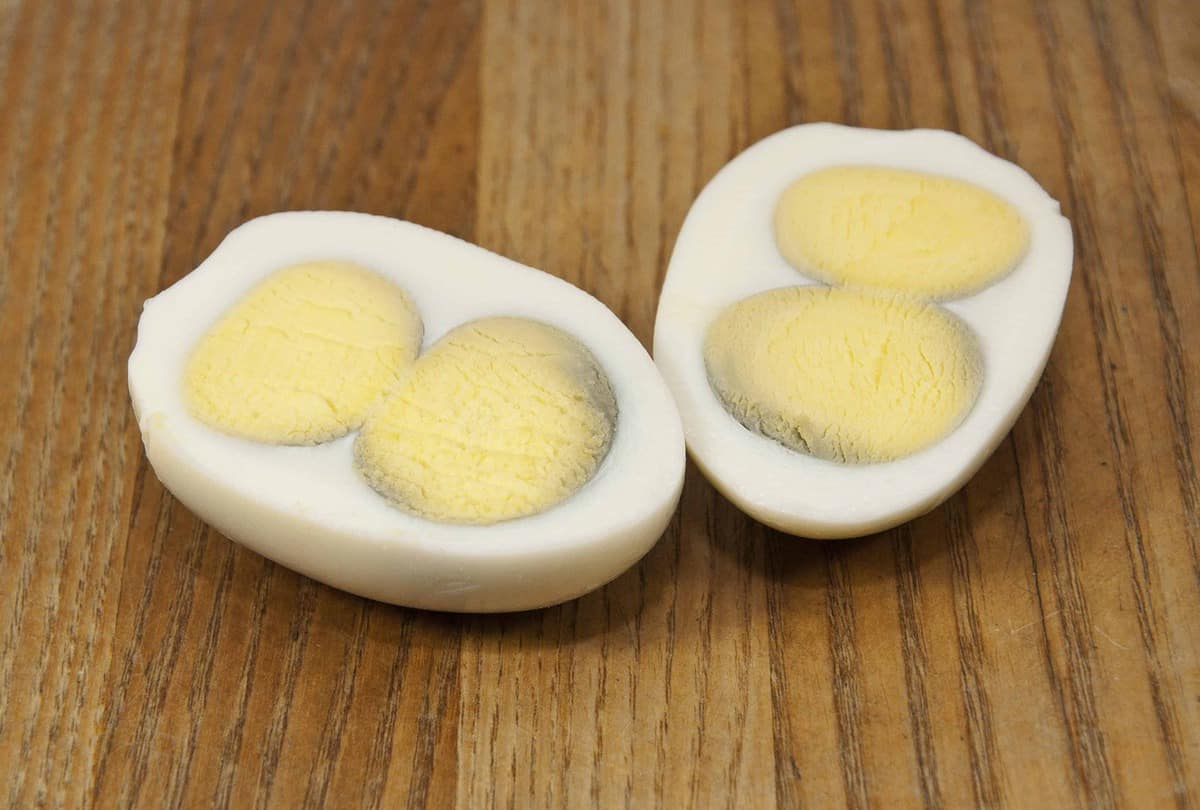
6. Double Yolkers

Double yolkers are always exciting abnormal chicken eggs to find – they will have two yolks in one egg.

Got funky eggs? Abnormal chicken eggs happen to all of us - it's just a matter of time. Here's 10 weird eggs and everything you need to know. From FrugalChicken

Double yolks happen when the hen releases two eggs into the oviduct, and both of those eggs are included in shell. 

Double yolk eggs generally are larger which can be a cause for concern if it’s too large for your hen to pass – causing her to become egg bound or suffer a vent prolapse. 

Although they put stress on a hen’s body, double yolks are becoming so desirable that industrial farmers have bred hens that will only produce double yolked eggs in Europe.

Generally speaking, there’s nothing wrong with a chicken that lays double yolked eggs – it’s just abnormal.

You can incubate it, and there are stories of twin chicks successfully hatching, although it’s rare.

Can you eat it?

People eat double yolked eggs daily.

READ NEXT: SHOULD YOU LET YOUR CHICKENS FREE RANGE?

7. White banded eggs

White banded eggs occur when two eggs enter the oviduct, thereby making contact with each other in the shell gland pouch.

When the hen is forming the shell of the first egg, the normal calcification process is interrupted, so it gets an extra layer of calcium – which is the white band marking. 

Causes for abnormal chicken eggs such as white banded eggs can be something simple, such as flock stress or something more serious such as an infection. 

Like always, your best bet is to watch your flock for abnormal behavior.

Can you eat it?

I’ve never had a problem eating white banded eggs.

8. Egg inside an egg

The fancy name for an egg inside an egg is counter-peristalsis contraction, but in every day terms, they’re eggs that somehow found themselves inside another egg.

It’s not common, but it does happen. 

It occurs when a hen releases a second egg into the oviduct before the first egg has completed the laying process. This causes the first egg to reverse in the oviduct, which is then added to the second egg.

The two then have a second albumen and shell form encasing both eggs.

You can see an egg inside an egg here:

Can you eat it?

Although I’ve not personally dealt with eggs inside eggs, I’ve read reports that they’re perfectly fine to eat. 

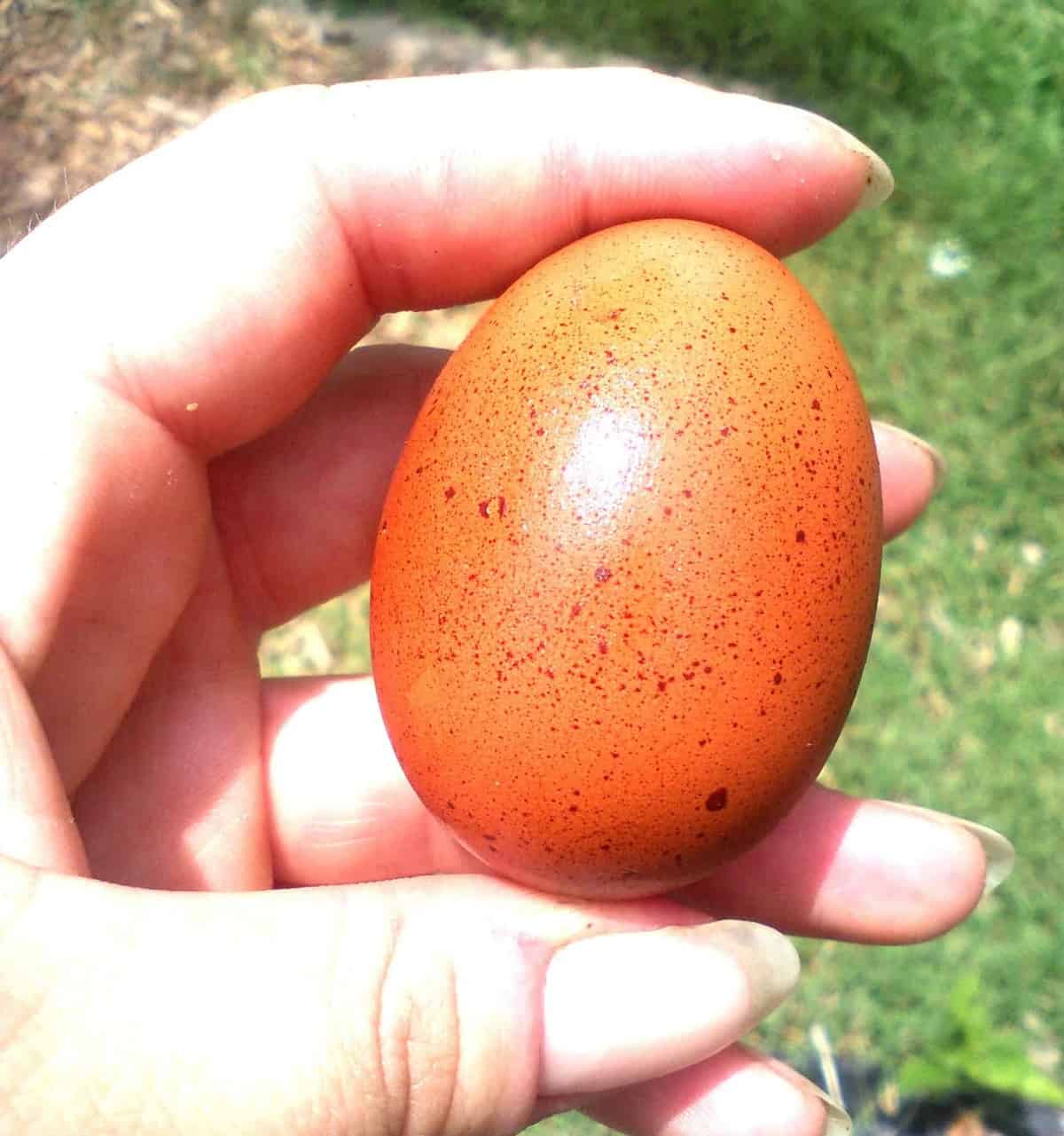
9. Speckled Eggs

Speckled eggs are pretty normal, as far as abnormal chicken eggs go. They look pretty, and it’s wonderful how unique eggs can be.

Got funky eggs? Abnormal chicken eggs happen to all of us - it's just a matter of time. Here's 10 weird eggs and everything you need to know. From FrugalChicken

The speckles are actually extra calcium deposits, and are formed when the calcification process is disturbed or there’s a defective shell gland.

They can also be caused by an excess of calcium.

Although technically abnormal eggs, National Geographic studied eggs, and found that speckled eggs might be a way to make shells stronger – so your chicken might be on to something.

Can you eat it?

I’ve never had a problem eating a speckled egg – they just look abnormal.

READ NEXT: HOW TO TELL IF YOUR HENS ARE LAYING

10. Odd shaped eggs

Odd shaped eggs are pretty self explanatory – they’re abnormal chicken eggs that aren’t uniformly shaped all the way around.

Got funky eggs? Abnormal chicken eggs happen to all of us - it's just a matter of time. Here's 10 weird eggs and everything you need to know. From FrugalChicken
Photo courtesy of Timber Creek Farm

They might have an abnormal look, like a bulge on one side, or a very pointy end, or just look lumpy.

Odd shaped eggs can occur if there’s some sort of abnormal disturbance in the egg forming process, or if your chicken experiences some sort of stress such as over crowding. Age also makes a difference – it can occur in very old or very young hens.

In rare cases, respiratory diseases can cause abnormal eggsI had a reader tell me her hen always lays odd shaped eggs  – in this case, I would venture to say that since the hen lays consistently, it’s likely a structural issue internally.

Can you eat it?

I’ve not personally had any issues eating abnormal shaped chicken eggs.

While this list of isn’t comprehensive, I’ve touched on the 10 most common occurrences of abnormal chicken eggs. Hopefully you find it useful! 

Got funky eggs? Abnormal chicken eggs happen to all of us - it's just a matter of time. Here's 10 weird eggs and everything you need to know. From FrugalChicken
Got weird looking, wrinkled, or abnormal backyard chicken eggs? Here's what your hens are trying to tell you!

I’d like to hear from you!

Have you ever gotten an abnormal chicken egg? What did it look like? Email me at [email protected] or comment below!

Other posts you might like:

10 Chicken Questions Answered!

Organic Homemade Chicken Feed Recipe

What To Feed Your Chicken For Great Tasting Eggs!

Baby wipes that are natural and organic are so simple to make, you’d be mad not to try.

I’ll confess, even after working for the Food and Drug Administration for 10 years, I still don’t understand those ingredients in store-bought baby wipes.

Do you?

Thought so.

Besides containing who knows what ingredients, I’ve found that a lot of baby wipes can be kind of painful for small children if they have diaper rash (read: broken skin), or worse, they can even cause chapped skin.

Red, angry skin is something no child should have to contend with, and I’ve noticed a lot of baby wipes clean well, but leave skin dry.

And that raw skin turns a simple task like diaper changing into a fight – but you can easily avoid it.

So, I’ve tested different homemade organic formulas for baby wipes – and developed a recipe that’s effective for my family without being harsh.

Want organic baby wipes? Don't even understand the ingredients in yours? Here's my recipe for homemade natural baby wipes you can make in 5 minutes! Try it out! From FrugalChicken

My recipe for organic, natural baby wipes contains 2 ingredients (and one optional one).

My personal experience is we’re left with clean but moisturized skin. And all the ingredients are organic.

And that’s something worth trying.

Want organic baby wipes? Don't even understand the ingredients in yours? Here's my recipe for homemade natural baby wipes you can make in 5 minutes! Try it out! From FrugalChicken

1. Ingredients

For this recipe, I use the following:

1.5 cups of water

1 tablespoon organic witch hazel

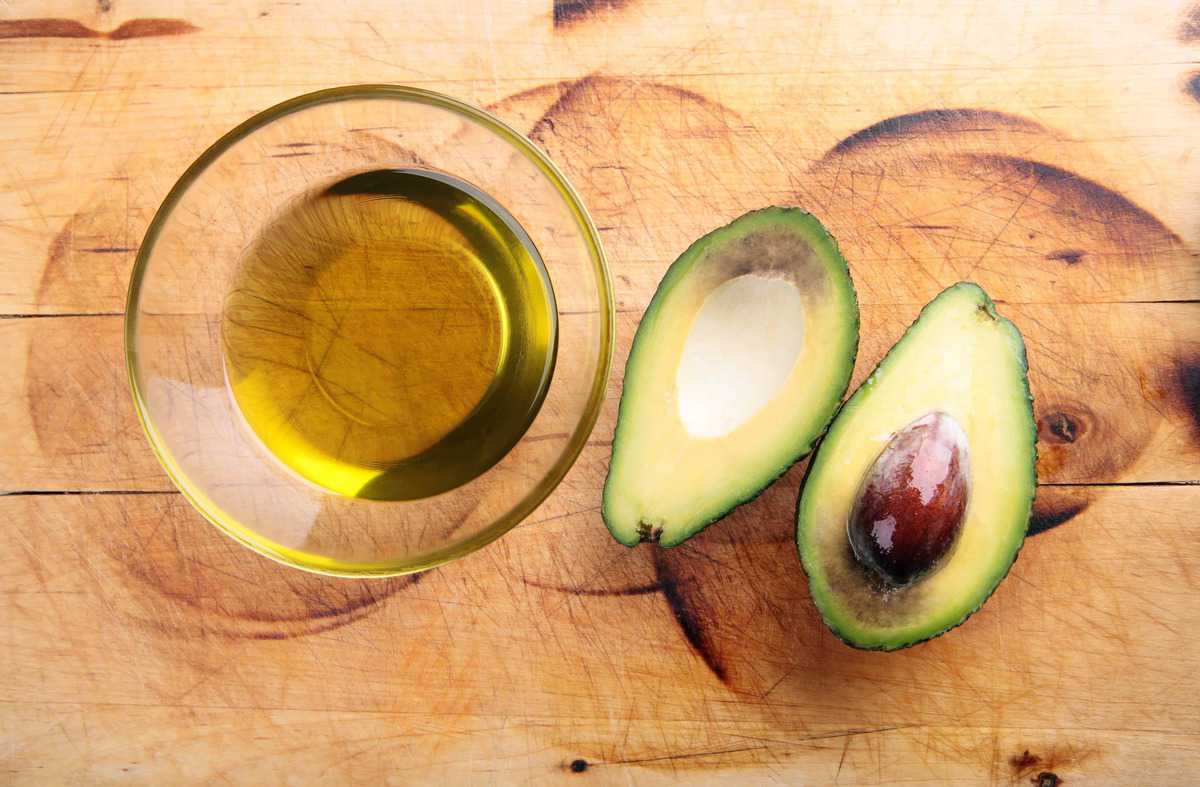
1 teaspoon avocado oil (optional, but recommended)

Essential oils (optional, see my note below)

Organic cotton reusable wipes (or 2 ply paper towels if you want disposable wipes)

Container for your wipes

Here’s all the ingredients and where you can buy them:

The organic witch hazel is known as being great for skin, but did you know it’s reported to help with diaper rash?

I’ve personally noticed after using organic witch hazel on myself (like in my natural fly repellent recipe, which is also kid-safe), my skin is softer. 

Although the avocado oil is optional, I recommend it because avocado oil contains phytosterols, which might help repair your baby’s skin, and at a minimum, the oil will provide a natural barrier against wetness.

Want organic baby wipes? Don't even understand the ingredients in yours? Here's my recipe for homemade natural baby wipes you can make in 5 minutes! Try it out! From FrugalChicken

2. How to make organic, natural baby wipes

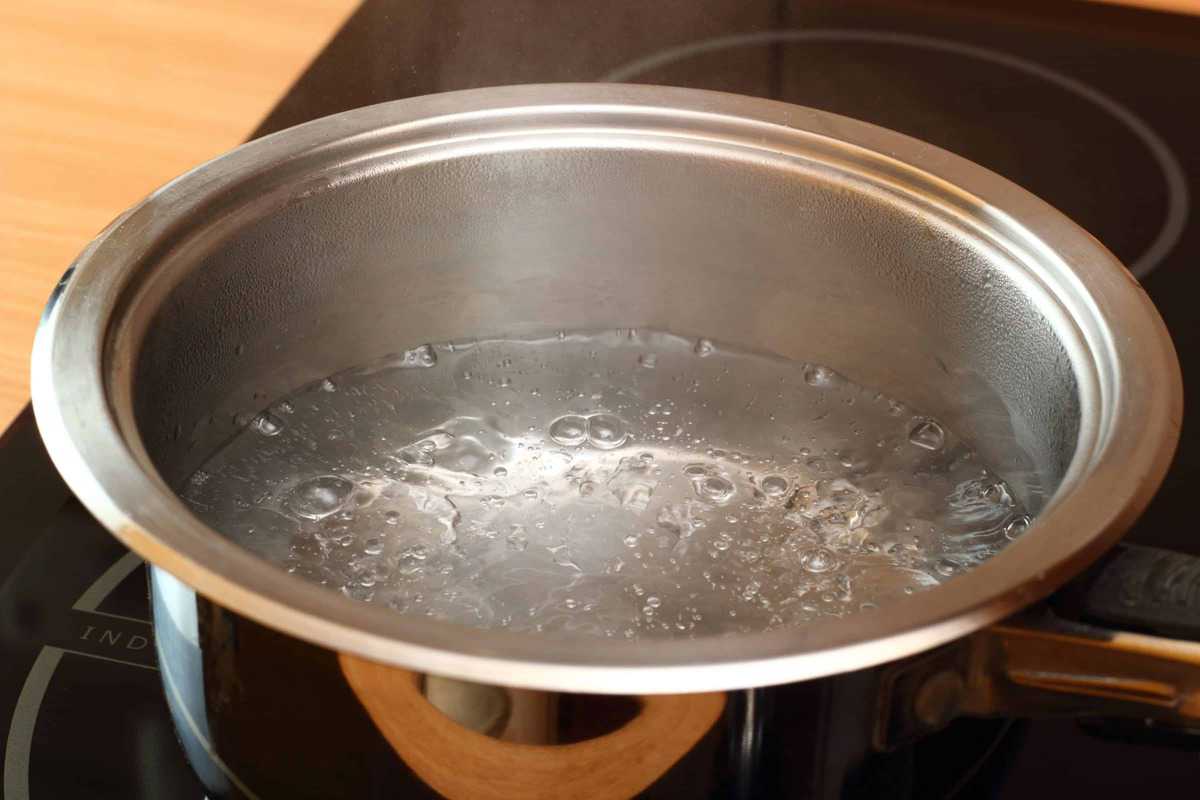
1. Pour the water into a non-reactive pot and bring just to a boil (but not a rolling boil). When the bubbles appear, remove the water from the heat.

Want organic baby wipes? Don't even understand the ingredients in yours? Here's my recipe for homemade natural baby wipes you can make in 5 minutes! Try it out! From FrugalChicken

2. Allow the water to cool, then add the witch hazel

3. If using avocado oil, add and use a whisk to combine ingredients

4. If using organic cotton for reusable wipes, cut them to an appropriate size (like 6″ by 6″) or customize them to your container. (If you’re creating disposable wipes, do the same).

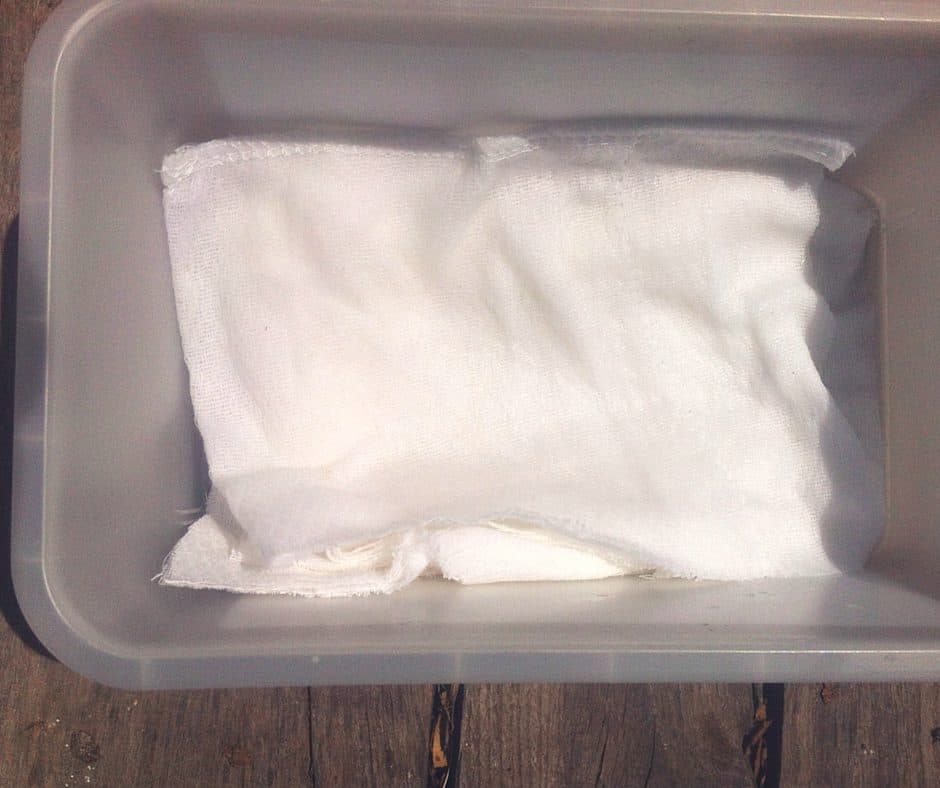
5. Pour your solution onto the wipes, and close the container. Swish it around a few times to make sure the wipes are saturated.

6. Store the wipes in the container for use.

Want organic baby wipes? Don't even understand the ingredients in yours? Here's my recipe for homemade natural baby wipes you can make in 5 minutes! Try it out! From FrugalChicken
You can fit a lot more than 6 in this container, it was time for a refill!

3. Options for wipes

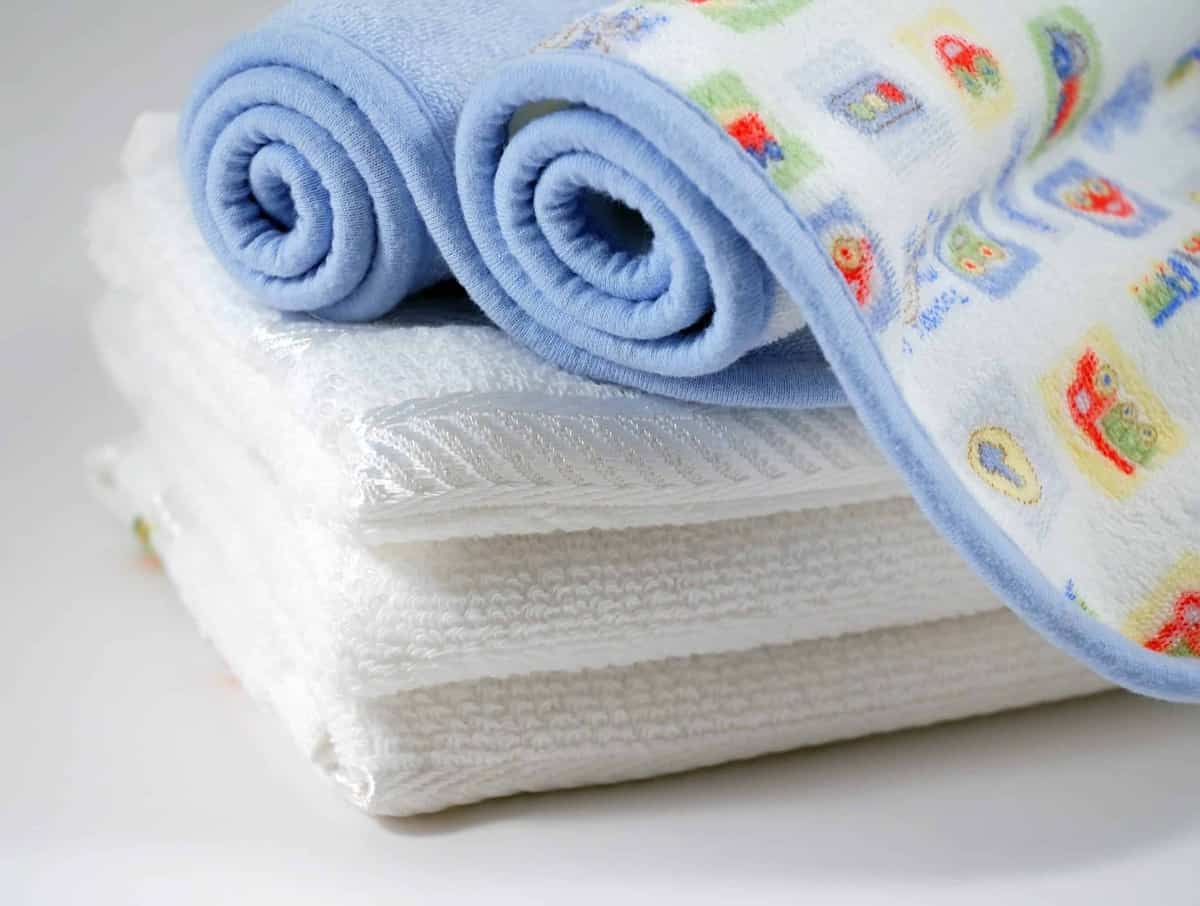
For reusable baby wipes, I’ve found success using cut up cloth diapers (see below). Tea towels will also work.

When I used cloth diapers, I was able to get 6 wipes from a diaper.

Old receiving blankets would work also.

I would shy away from using towels – they’re too bulky and will soak up too much of the solution.

4. Why bother?

I don’t think I really need to tell this crowd why it’s a good idea to formulate your own natural skin care products, but here’s reasons why organic, natural baby wipes might fit into your lifestyle:

Control over ingredients

The ingredients in these wipes are simple – they’re organic, from natural resources, and civilizations have been using them for thousands of years successfully.

You know what the ingredients are, where they came from, how their grown – and you have the peace of mind of knowing and all natural product is going on your children’s body.

It’s cheaper

While it’s a little bit more of an expense to start using natural ingredients, a bottle of witch hazel and avocado oil will last you a while – and since baby wipes are an ongoing expense, you can save a bundle by making your own.

Want organic baby wipes? Don't even understand the ingredients in yours? Here's my recipe for homemade natural baby wipes you can make in 5 minutes! Try it out! From FrugalChicken

Some notes:

You might have to play with the recipe a little bit to ensure you have enough of the mixture for the amount of wipes you want to create.

Unfortunately, it’s hard to give an exact amount of wipes this recipe will produce because everyone has a different idea of how wet a wipe should be, and the amount of the mixture absorbed is different whether you’re using cotton wipes or disposable ones.

With this recipe, I’m able to get one cup of the solution, which includes the avocado oil.

While I recommend using the avocado oil, it doesn’t mix well with the water and witch hazel  – which is great, because it won’t dissolve, but it can look unattractive. I personally don’t have a problem with it. 

A note about essential oils

If you want to include natural essential oils in this recipe, I recommend only a few drops. I’m a fan of lavender and frankincense – both are great. 

You can, of course, use which ever ones you want, although I would steer clear of harsher ones such as oregano and peppermint.