Did you know natural colors and flavorings found in everyday foods are derived from nature (from some…interesting sources, which we’ll get into) but are so over processed they’re actually only slightly different than their artificial counterparts?

Just the other day, I purchased a drink. Of course, I read the label, which listed “natural flavors” as one of the ingredients.

The drink was mango flavored, and it tasted…..very mangoey. There HAD to have been a “natural” over-processed ingredient that enhanced the mango flavor.

I’d always heard that “natural flavors” weren’t too natural, and were derived from some pretty weird sources.

In this article, I’m going to tell you about 7 “natural ingredients” you want to avoid – some of them are even carcinogens (might cause cancer).

By now, you probably think I’m over exaggerating – but just keep reading about what these “natural ingredients” are AND how they’re sourced.

You’ll start reading labels MUCH closer and start making different choices, I promise.

If you find this article useful, I suggest you print it out and carry it with you the next time you buy groceries to make sure you don’t accidentally ingest any of them. I know I’ll be looking harder from now on!

  1. L-Cysteine Made From Human Hair Or Duck Feathers

When we ate out a couple weeks ago, there was a hair in my daughter’s quesadilla. Gross, right? Well, apparently, it’s in a lot of breads too.

L-Cysteine is an amino acid used to extend the shelf-life of bread products and soften them (yet another strong reason to bake your own bread – get my recipe here).

While it IS derived from a natural source, that natural source happens to be human hair harvested in China from hair salons.

About 80 percent of the L-Cysteine created is from human hair, and the 20 percent is from duck feathers.

Mass-produced products AND lots of fast food joints use bread products with L-Cysteine in them – so skip the McDonald’s and go for the homemade version instead.

  1. Carmine Made From Boiled Beetles

We all know bugs have a lot of protein in them, and are even a delicacy in some cultures, but I still don’t want a mouthful of them.

A “natural coloring” called carmine is derived from boiled beetles as well as their eggs. Tasty, right?

Apparently, the little buggers can create purple, pink, orange, and red food coloring. Popular candies, certain ice creams, grapefruit juice, and more potentially contain carmine.

So, the next time you pick up a bottle of juice and see “natural colors added,” you now know you’re likely in for a big swig of over-processed boiled beetles.

  1. Castoreum Made From Beaver Anal Glands

Yes, you read that right. Strawberry, raspberry, and vanilla flavors are derived from beaver anal glands, which I guess taste like strawberry.  

This “natural ingredient” is very common in raspberry-flavored foods. So, the next time you pick up raspberry yogurt that has “natural flavoring” on the label – you’ll know to put it down, and back away slowly.

Want to make your own yogurt then add fresh, whole (aka unprocessed) raspberries? Here’s how.

Castoreum is also found in gelatin, pudding, candies, and gum (and gum also might contain lanolin – yes, the same lanolin sourced from sheep and you put on your baby’s bum – double yum).

  1. Carrageenan Derived From Seaweed

Carrageenan is found in different dairy products (milk, cottage cheese, cream, etc) and is used to bind ingredients together or to thicken them.

While seaweed by itself isn’t gross (I love nori), carrageenan is linked to bowel inflammation, rheumatoid arthritis, and thickening and hardening of the walls of the arteries.

Even all-natural, organic products can contain carrageenan – so read the labels of your organic milk, and if you see “natural ingredients” without a list of what those ingredients actually ARE, you might want to think twice about giving it to your kids (nobody needs irritated bowels).

  1. Yellow #5 Derived From Coal Tar

You probably know by now that the color additive Yellow #5 is something you don’t want in your system. But do you know how Yellow 5 is actually produced?

Turns out, Yellow #5 is derived from coal tar, which is little more than industrial waste.

Aside from it’s disgusting origins, this decidedly NOT natural food additive is linked to hyperactivity in children in some studies. To make it even more appealing, the International Agency for Research on Cancer has said that products containing 5 percent crude coal are considered a group 1 carcinogens (aka, ingest at your own risk).

  1. Shellac Made From Insect Poop

Here’s another “natural food additive” that will get your stomach churning. Shellac is used as a colorant and food glaze….and it’s what makes candy so shiny (you’re putting down the jelly beans, aren’t you?).

You know how those oranges look so nice and shiny in the grocery store? You guessed it – they’re covered in shellac.

Shellac is created from an insect found in Thailand. The excretions (aka poop) of the Kerria Iacca insect are used to make a resin, which is then dunked in ethanol (yum yum) to dissolve it.

Then at some point, it’s apparently brushed on the candy and citrus you plan to eat for lunch. When you buy candy, look for “confectioner’s glaze” on the ingredients list – it’s a sure sign the sweets have been dunked in shellac.

  1. Cellulose Derived From Wood

When you look at the label of the shredded cheese you just bought, you might notice “cellulose.” It’s not from green plants….it’s from sawdust.

In mass-produced shredded cheese, cellulose is used to keep the cheese from clumping. You can also find it in breakfast syrups, ice cream, chicken nugget products, and waffles. Here’s a list of companies and products that use cellulose in their products.

Interestingly enough, cellulose can’t be digested by humans, so it’s literally just taking up space and not providing any nutritional benefit.
Why would you need an all-natural tick kit?

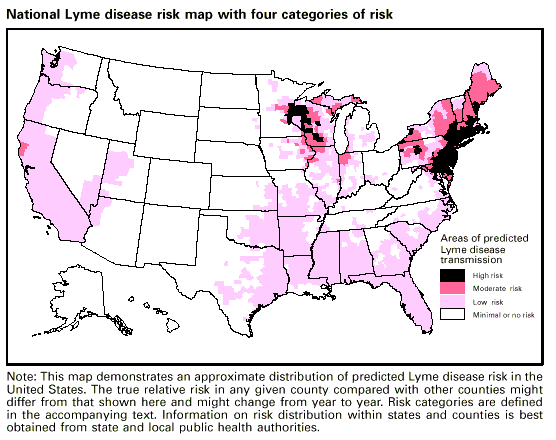
Well, if you’ve ever had Lyme disease, you know how miserable it can make you.

If you’ve never experienced it, believe me when I say you want to do everything to prevent it.

And if you’ve been bit by a tick recently, you want to rule it out right away. A tick kit will help with all of the above.

My Lyme Disease Story

I had a brush with Lyme disease about 12 years ago. At first, the doctor didn’t believe me – he decided it was a Staph infection because there wasn’t a traditional bullseye rash.

Newsflash: Not all deer tick bites develop the traditional bullseye rash.

I asked for antibiotics to treat Lyme disease anyway, as well as a test because I had the symptoms (excessive tiredness, flu-like symptoms, joint pain).

What followed was 14 days of miserable joint pain, fever, loss of appetite (from the antibiotics) and I felt really drained all the time.

In fact, the only thing I could eat was greek yogurt with peaches for about 2 weeks.

Now, we keep a tick kit on our farm, which helps us stay organized should someone get bit (or even find one on them).

The chickens do a pretty good job of keeping the tick population at bay, but realistically, they can’t get them all!

What should be in an all-natural tick kit?

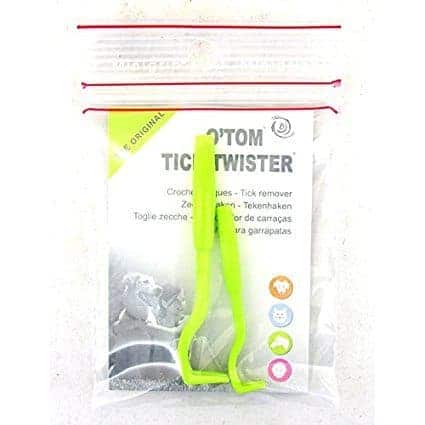
Here’s what we keep in our tick kit (we keep one in the house and one in each car so I don’t have to remember to bring one with us).

I prefer to use small plastic containers like these for a tick kit because they stay cleaner and are less likely to break if jostled in our truck.

We also keep tick repellent in our truck and house to try and beat the ugly buggers to the punch. You can get more information about how to repel ticks naturally right here.

How do you remove a tick?

From the Center For Disease Control website, after grabbing your tick kit, you should:

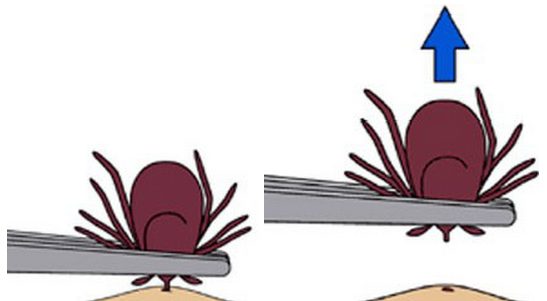
  1. “Use fine-tipped tweezers to grasp the tick as close to the skin’s surface as possible.
  2. Pull upward with steady, even pressure. Don’t twist or jerk the tick; this can cause the mouth-parts to break off and remain in the skin. If this happens, remove the mouth-parts with tweezers. If you are unable to remove the mouth easily with clean tweezers, leave it alone and let the skin heal.
  3. After removing the tick, thoroughly clean the bite area and your hands with rubbing alcohol, an iodine scrub, or soap and water.”
A tick kit can potentially save you a lot of heartache. Here's how to make one in 5 minutes with common household items!
Image via Wikimedia Commons

Another option we’ve used is to cleanse the area with rubbing alcohol mixed with an essential oil like lemon or oregano. (These are the exact oils we use).

If you’re allergic to rubbing alcohol, or have sensitive skin, you can use an essential-oil based soap and filtered water to cleanse the area.

A tick kit can potentially save you a lot of heartache. Here's how to make one in 5 minutes with common household items!
Image by Center For Disease Control via Wikimedia Commons

What next?

After removing the insect, tape it on a piece of paper you keep in your tick kit and write down the location of the bite and the date. Watch closely for symptoms of Lyme disease or other infection.

We also draw the boundaries of any redness, swelling, or rash with a Sharpie; if the skin gets red or irritated-looking outside of those boundaries, it’s evidence there is an infection of some sort, and it’s spreading.

As a precaution, we make a doctor visit for an opinion and if it seems at all like Lyme disease is present, we ask for antibiotics (I don’t mess around with Lymes since it has powerful long term effects

You can check the CDC website for common symptoms for all kind of tick-borne illnesses here. Print out a copy and keep it in your ll-natural tick kit for easy reference.

This post is sponsored by Layla Mattress. While I was provided a free mattress to test, the review below is my honest opinion of the product.

With 2 young kids in our house, as you can imagine, sleep is difficult to come by.


Even more interesting is that my husband and myself prefer two different mattress types – he likes mattresses super soft and I like them relatively firm.

Even better, both of us toss and turn all night – so, a good night’s sleep isn’t something we usually get. 

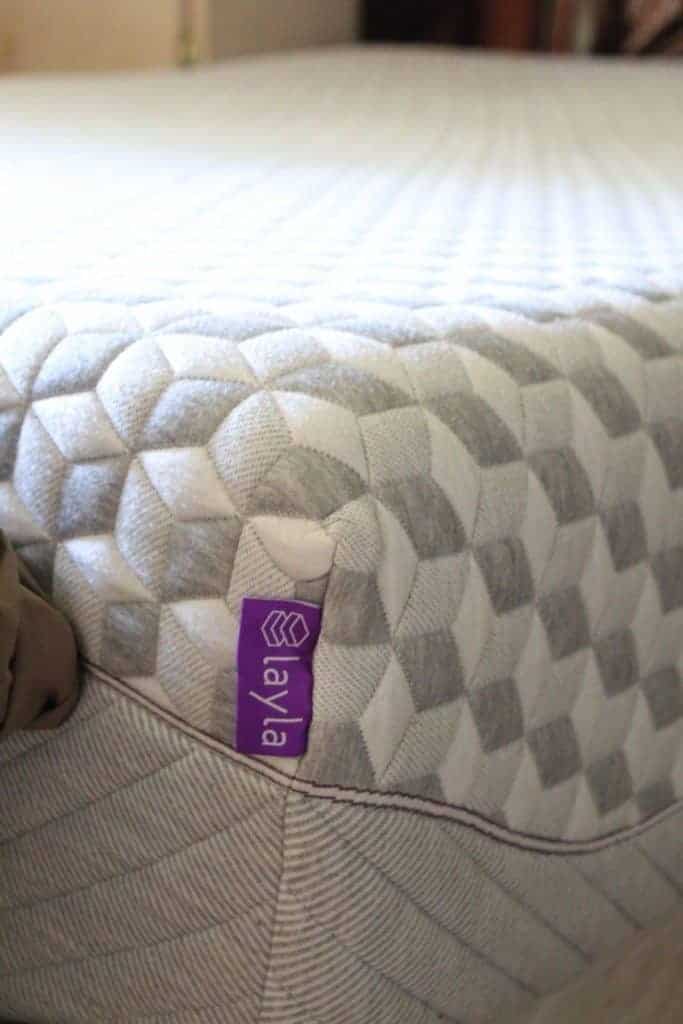
So, when I got the chance to review a Layla Mattress, I hopped on the opportunity. I’d seen their website, and loved that the mattress is flippable. One side is softer than the other, so my husband and I could figure out which worked for both of us.

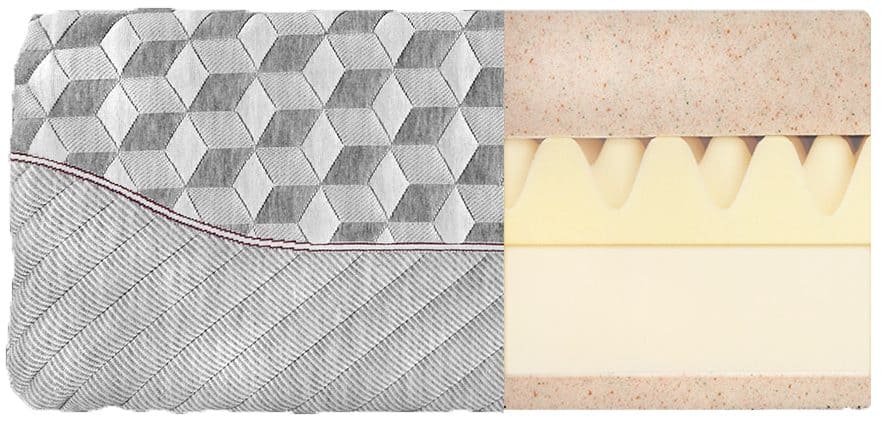
The mattresses are made with memory foam, which we both KNEW we wanted in a new mattress (I love that the softer side is made with 3 inches of foam, while the firmer side is made with 1 inch. 

We’re working outside for most of the day, and we’re getting older, so a mattress that could support us after a hard day’s work was definitely at the top of our list.

I tend to have hip pain at night from laying in one position – so I was looking for a mattress that would ease the pressure on my hips.

Getting our Layla Mattress


Our Layla Mattress arrived in a box – we couldn’t figure out how they rolled it tight enough to actually fit in it! 

They’re made in the USA (in Arizona), and if you order one, it will take 2-3 days for them to build it, then just a few days extra for shipping. 

I LOVE that they didn’t build our mattress until it was ordered – no sitting around in factories, getting flattened. (They come with lifetime warranties too!) 

I try to buy American as much as possible, and I knew I didn’t want to use a manufacturer that produces their mattresses outside the US. 

Layla only uses the highest quality materials, and since the mattresses are manufactured in the US, they won’t go out of stock for long periods like other brands.

We’re trying to be as natural as possible in our home – so we try to avoid toxic chemicals as much as possible.

When I researched Layla before accepting the mattresses, I read that the foams the company uses are CertiPUR certified, and they use with food-based adhesives to attach the layers to each other and non-toxic glues.

(You know how some brands have that faint chemical smell? I didn’t detect ANY of that in the Layla mattress because of the food-based adhesives they use.)

Here’s what inside the mattress looks like (from the Layla website):

Layla Mattress

The mattresses are also made without mercury, lead, and other heavy metals, and are formaldehyde-free.

Actually laying on our new Layla Mattress


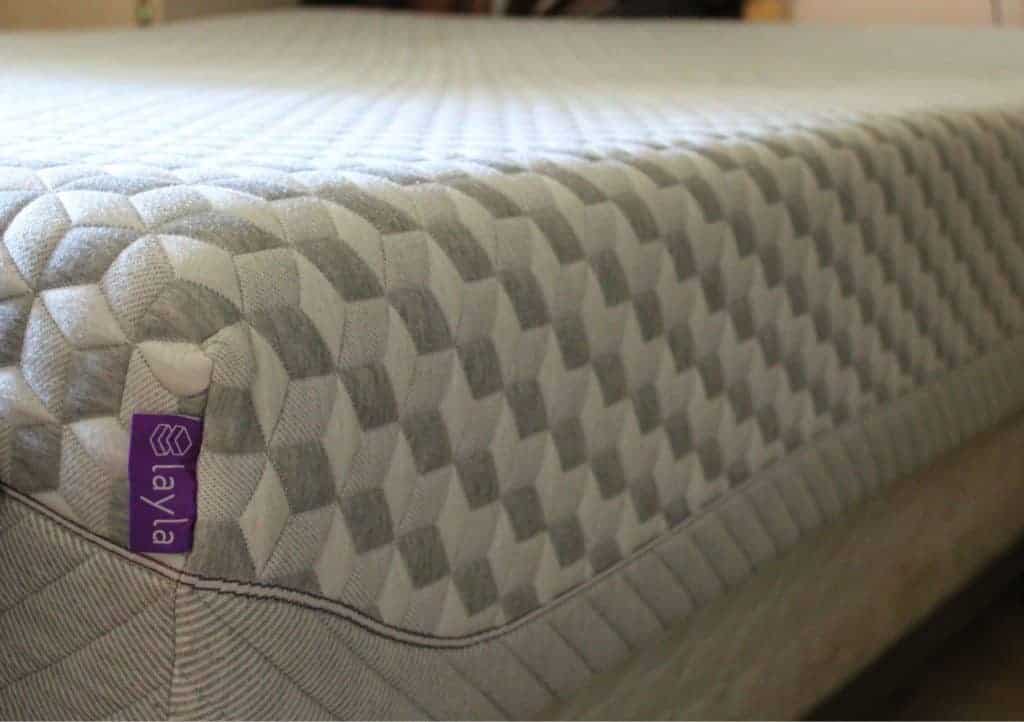
The first thing we noticed is that the mattress is very cool – it’s infused with copper.

We were particularly interested in the Layla brand because we’d heard that copper is known to cool and has healing/medicinal properties. 

My husband sweats a LOT at night (yuck), but we found with our Layla, he was more comfortable. That’s a pretty big deal around here!  

There’s also a Thermo-Gel cooling gel in the cover, which helps keep him cool also.

With my hip pain, I was interested in test driving the copper infused mattress to see if it would have an effect on my chronic pain. 

For us, the softer side (with 3 inches of memory foam) works well for both of us. It’s firm enough for me, and not too firm for him. 

There’s LOTS of support – I haven’t had hip pain since we started using it.


One very important piece of feedback my husband gave me about the Layla is that he sleeps better because when I toss and turn, the mattress doesn’t bounce like other brands. 

So, as I turn myself in my sleep, he’s not woken up – an added benefit we didn’t expect but love nonetheless!

Other key information about Layla Mattresses:


You can try your mattress for 120 days, and if it doesn’t work out for you, it’s fully refundable in that 120 day period. No shipping or return fees! 

You can get 0% financing with an independent financier called Affirm. So, you can start enjoying your mattress and sleeping better right away.


Sizes and Prices

We chose a queen size, but you can get your mattress in any size you need: 

  • Twin Dimensions: 38x74x10in $499
  • XL Twin Dimensions: 38x80x10in $599
  • Full Dimensions: 54x74x10in $799
  • Queen Dimensions: 60x80x10in $899
  • King Dimensions: 76x80x10in $999
  • California King Dimensions: 72x84x10in $999

My husband is 6 foot, and I’m 5’10. We’re big people, and the queen size mattress fits us comfortably, without our feet sticking out over the edge or feeling smooshed together (something that was an issue with our old mattress).

The cost of the Layla mattresses is right in line with other brands, and since it has a lifetime warranty, it’s a one-time investment that pays off (especially since I’m having less hip pain – can’t put a price on that!)

As of the time I’m writing this, you can save $60 by using the coupon code SUN60.

The bottom line?


Layla has built a mattress that helps us get a better night’s sleep. We love the mattress – in fact, the only bad thing I have to say about it is that sometimes my fitted sheet pops off in one corner (I’m not a bed maven so I haven’t figured out how to fix that). 

It’s worked out so well, that I don’t think we’ll ever try another brand!

Want to get your own? Click here to grab your own Layla mattress! Don’t forget to use coupon code SUN60 to get $60 off!

Nothing is worse than bug bites, except watching your kids be really, really unhappy! In this article, I’m going to show you how to make an all-natural, bug bite relief stick.

When things get a bit creepy crawly on your skin, you CAN grab a bottle of over-the-counter stuff….but you’re taking your chances. We’re trying to lead all-natural lives right?

There are all-natural options, and you can use essential oils to bring some bug bite relief to yourself and your little ones with a bug bite relief stick.

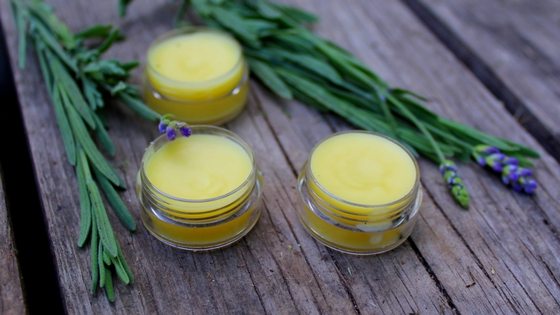
Got itchy kids? Make my favorite homemade bug bite relief Stick in your own kitchen with essential oils! Easy to follow recipe!

What essential oils will we use?

In our house, we rely on lavender essential oil for lots of things – including bug bite relief. It’s soothing, promotes healthy skin, and smells good.

(The scent especially can provide relief to small children who might be unhappy because of their itchy bug bite.)

In this stick, we also will use melaleuca, which promotes healthy skin and has cleansing properties should any dirt or other nasties get into the bite (especially if your child has been scratching at it.)

Ingredients To Make Your Own All-Natural Homemade Bug Bite Relief Stick

1/2 oz pure beeswax pastilles, about 1 tablespoon (I use this brand)

4 oz carrier oil, about 3 tablespoons (such as olive, coconut, or almond oil)

20 drops lavender essential oil

10 drops melaleuca essential oil

Empty lip balm containers (I like these or these)

Directions To Make Your Own All-Natural Homemade Bug Bite Relief Stick

To make your bug bite relief stick, you want to melt the carrier oil and the beeswax together, then add the essential oils before everything cools and hardens.

The carrier oil works to make the mixture easily spreadable, while the beeswax gives it some structure. The essential oils do the job of helping your little ones with their bug bite.

To make the bug bite relief stick, combine the carrier oil and beeswax in a heatproof container, such as a mason jar.

Fill a small pot ½ way with water and place your mason jar with the carrier oil and beeswax in it, creating a double boiler. Heat the water slowly, until the beeswax is completely melted.

Stir gently to combine, and remove from the heat. Immediately add the essential oils, and stir gently to combine.

While the bug bite relief stick mixture is still completely melted, pour into the lip balm containers, and allow to cool until the mixture is completely solid.

Once cool, store and apply as needed. If the bug bite relief stick is too soft, you can melt it again and add more beeswax, or simply adjust this bug bite relief stick recipe when you make it again.

If desired, you can also add a few drops of peppermint to the mixture; it’s cooling and some kids love it on their bug bites.

Roses and calendula, as well, promote healthy skin. One option is to infuse the carrier oil with rose or calendula petals for 2 weeks before making your homemade bug bite relief stick.

Today, I’m going to show you how you can use essential oils to prevent and deter insects that can bother your pets.

With some notable exceptions (which we’ll talk about below), essential oils are safe to use on and around your pets when diluted with a carrier oil, such as coconut oil (on large animals, I’ve been able to put them directly on depending on the situation.)

Naturally, when using oils, you want to remember safety first – when in doubt, dilute. Oils are powerful stuff!

In this article, we’re going to talk about keeping pet-annoying insects at bay, including:

  • Fleas
  • Mites
  • Ticks

We’ll cover using oils with dogs, chickens, and large animals.

A word about cats: Certain oils, when used in large quantities, can harm our feline friends, so we won’t be including cats in our discussion today. Citrus oils, in particular, are known to cause problems with feline livers, preventing them from functioning correctly.

We’ve diffused citrus oils (bergamot, orange) around our two cats a couple times a week, and always give the kitties a chance to leave the room. Our cats have been fine, but I would hesitate to diffuse oils consistently in a closed room with our cats, and I would not personally use citrus oils directly on them either.

I recommend you speak to a knowledgeable vet before using any essential oils on your cats.

Now, on to the bugs we’ll eliminate today!

Get Rid Of Bugs That Bother Your Pets

When it comes to fighting bugs and getting rid of bug itchies, lavender essential oil is your best bet. It counters all the insects we’ll discuss, and it’s soothing enough to use. Lavender also promotes healthy skin, so you can use it topically on your pets (diluted with coconut oil).

To prevent insects like fleas in your home, you can diffuse lavender as well – and as a bonus, it’ll make your house smell nice (and help you destress….or help your kids stop climbing the walls).

Fleas

When someone asks me about preventing insects on their pets with oils, they’re usually thinking of fleas.

One summer, we had a TERRIBLE flea infestation in our home. I cannot say how it started….but it started.

Lavender was my go to – and after I constantly started diffusing it, lo and behold our infestation stopped. Immediately. What a relief!

Preventative Spray

If you want to an all-natural preventative spray you can use regularly on your pets (particularly dogs), then go grab your favorite spray bottle, and fill it with water.

Add 2-3 drops of your favorite lavender essential oil (keeping purity in mind  – DON’T buy these on Amazon. Go with an established brand so you know you’re putting only lavender oil on your pet).

Shake before using and carefully spray your pet. Avoid eyes, nose, and ears.

You can also use this spray on pet beds and blankets. Allow bedding to air dry so your pet doesn’t get the oils in their eyes or noses.

Homemade Flea Collar

Commercial flea collars are full of chemicals….so you might not be so crazy about using them on your pets. You CAN make your own all-natural flea collars with oils, though!

To make an all-natural flea collar, grab a clean bandana and add 5 drops of oil evenly spread throughout the cloth. Tie the bandana around your dog to prevent fleas. Re-apply the lavender oil every couple of days as needed.

Flea Dip

If things have gotten bad enough, you’ll probably want to give your pet a good old fashioned flea dip.  To make a homemade flea dip, you’ll need:

  • Water
  • 1 teaspoon castile soap
  • 2 drops lavender oil

Fill your tub with water (I go for “just barely warm” water so I don’t accidentally scald my pets). Add in 2 drops of oil, making sure to keep your pet’s face out of the water. If you don’t think this is possible, then leave the oil out, and use the all-natural preventative bandana after your pet is dry.

Rub in the castile soap, making sure to thoroughly coat your pet. Let sit for a couple minutes, if your pet will allow it. You will probably start to see fleas emerging. It’s a slightly-disgusting-but-satisfying feeling.

Hose off the castile soap/lavender water mixture. Dry your pet, and use the all-natural flea collar bandana above to prevent fleas from returning.

You can also use cedarwood essential oil in addition to or instead of lavender.

Mites

Mites are no good for any animal. We once were given a rabbit with such a bad mite infestation in his ears, he could not walk properly (the infection was giving him vertigo). Since then, I try to stay up-to-date on preventing mites. On our farm, we’ve used oils to prevent fleas on dogs, rabbits, and chickens.

Dogs

For dogs, lavender oil is a good option (see fleas above).

Backyard chickens

To prevent mites in your chicken coop, a peppermint oil coop spray is ideal. To make the peppermint oil coop spray, grab your favorite spray bottle and fill it with 8 oz WHITE vinegar.

Add 5-10 drops of peppermint essential oil, and spray liberally around the coop (making sure to get all nooks and crannies). Make sure your flock is out of the area (the oils are safe, but better safe than sorry). You can read more about using peppermint oil in your coop here.

For mites ON your chickens, diatomaceous earth is my go-to. You can read about it here. If you want to use oils instead of DE, 1 drop of peppermint diluted in 4 tablespoons coconut oil is my go-to to promote healthy skin. Apply to the area of concern 2-3 times a day, or as needed.

Rabbits

For our rabbits that have mite infestations in their ears, we carefully clean the ears so they’re free of build up. We then follow up with 1 drop of lavender diluted in 4 tablespoons of coconut oil (melt the oil then add the drop of lavender).

Rub it on the flesh inside the ear, but only the upper portion – NOT inside the ear. Keep the ears clean regularly, and reapply the coconut/lavender oil.

Ticks

Once your pets have ticks, you just have to pull them out. To clean the wound, you can use 1 drop oregano oil mixed with 1 tablespoon coconut oil and apply after washing the wound well.

To make an all-natural repellent spray, mix 3 drops of lavender in 8 oz of water. Spray liberally before your pet goes outside, making sure to avoid the face, eyes, ears, and nose. You can also use cedarwood.

The CDC has even said that these oils are safe essential oils to repel certain insects, ticks included.

If you use essential oils in your home, you can also use them to rid your garden of unwanted pests that will try to steal your harvest.

At least, that’s what we do.

Nothing is more frustrating than to spend lots of time and energy trying to grow cabbages than to go out to your garden….only to find leaves full of holes and sprinkled with tiny green cabbage looper eggs. Grrr…..

Oils are great to use in your garden because they’re organic, all-natural, and they WORK.

Particularly if you make a homemade insecticidal soap, you only need a drop or two – so they’re also economical.

Most basic essential oils cost $0.08 a drop, so you can spend a lot of money on commercial organic pest control….or you can save a few bucks and make them yourself.

In this article, I’m going to show you how to use essential oils to deter and get rid of bugs, freeloading insects, and vegetable munchers in your garden.

A Word About Purity

Before we get started, let’s talk about purity for a minute. Everyone has their own favorite brand of oils – so we won’t cover particular brands in this article.

However, I advise buying from the manufacturer directly, and not from a 3rd party source like Amazon. It’s very, very easy to pop the top off oils and replace them with an inferior essential oil – or something that doesn’t even resemble an oil, but smells like the real deal.

The last thing you want is to spend a lot of time and effort growing your garden, only to dump a bunch of toxins on them unwittingly.

Bottom line: Buy from a trusted source, just be sure the oil is pure, and the oil in the bottle is as advertised.

Ok, moving on….

How Do You Know Which Essential Oil To Use?

If you’re new to oils, or aren’t sure which one will most benefit your garden, determine which pests are bothering your garden.

Then, using the chart below, figure out which oil will best repel them.

If more than one pest threatens your plant, or in insect AND a fungus are causing trouble, then it’s perfectly fine to add more than one oil to water, to a rag, or to a container.

What Are The Go-to Oils?

There are a few essential oils that are go-to oils that will work against MOST garden pests. They interfere with your pesky visitor’s biological systems (each oil effects a different part of the insect’s body), causing them to leave the scene to save their lives.

Orange essential oil

If you want a go-to oil for killing insects, then orange is a good choice, since it works to destroy the exoskeletons of bugs.

Cedarwood essential oil

A second option is cedarwood, which is believed to interfere with their neurological capabilities.

Peppermint Essential Oil

If you don’t yet have pests in your garden or just want to deter them, then peppermint oil is a good option. It’s strong smelling, and garden pests will turn around and find an easier target for a snack.

Pest Repelled By
Ants Peppermint, Spearmint, Wild Orange, Cedarwood
Aphids Peppermint, Spearmint, Cedarwood, Wild Orange
Beetles Peppermint, Thyme, Wild Orange, Cedarwood
Caterpillars Rosemary, Cedarwood
Cutworms Thyme, Clary Sage, Cedarwood
Fleas Lavender, Lemongrass, Peppermint, Wild Orange, Rosemary, Cedarwood
Fungus (e.g. Powdery Mildew) Melaleuca, Wild Orange
Lice Peppermint, Spearmint, Cedarwood
Rabbits, Mice Peppermint
Slugs/Snails Cedarwood, Douglas Fir, Peppermint
Squash Bugs Peppermint, Wild Orange, Cedarwood

Insecticidal Soap

Commercial insecticidal soaps work by dissolving the hard external bodies of insects, and you can make your own at home with liquid castile soap and orange essential oil.

These soaps are effective against aphids, thrips, mites, immature leafhoppers, and whiteflies.  Just remember that insecticidal soap is only effective if they come in contact with the insects while the soap is still liquid; it won’t work after it dries on the plants.

To make your own, combine 5 tablespoons of pure castile liquid soap to 2 quarts of water. Add 5-6 drops of orange and cedarwood essential oils. Combine thoroughly and use immediately.