Have you ever been weeding or working with wood, and come inside with pricklies under your skin? Then you’ll want to grab a jar of my favorite Amish Black Drawing Salve!

Amish Black Drawing Salve is a traditional recipe that’s found a resurgence in our modern times – and it’s pretty easy to make yourself.

Even better, the ingredients in the Amish Black Drawing Salve recipe below have myriad uses around the house – so investing in them is a good idea for an all-natural homestead.

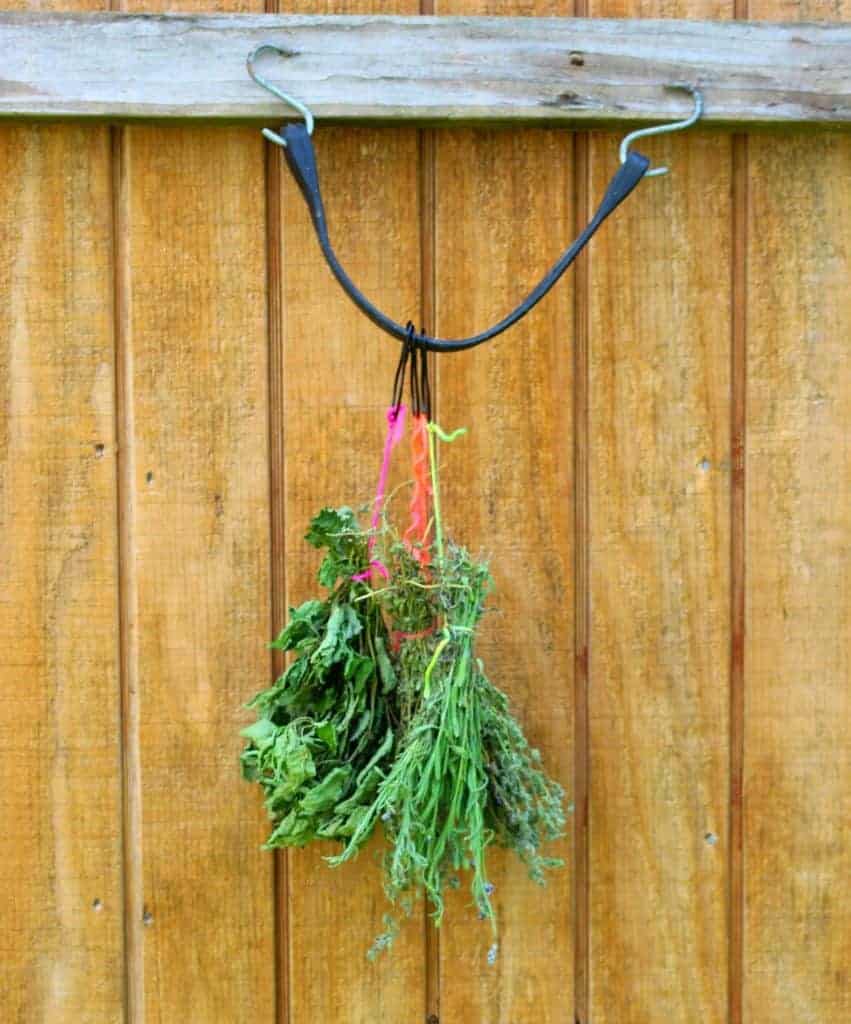
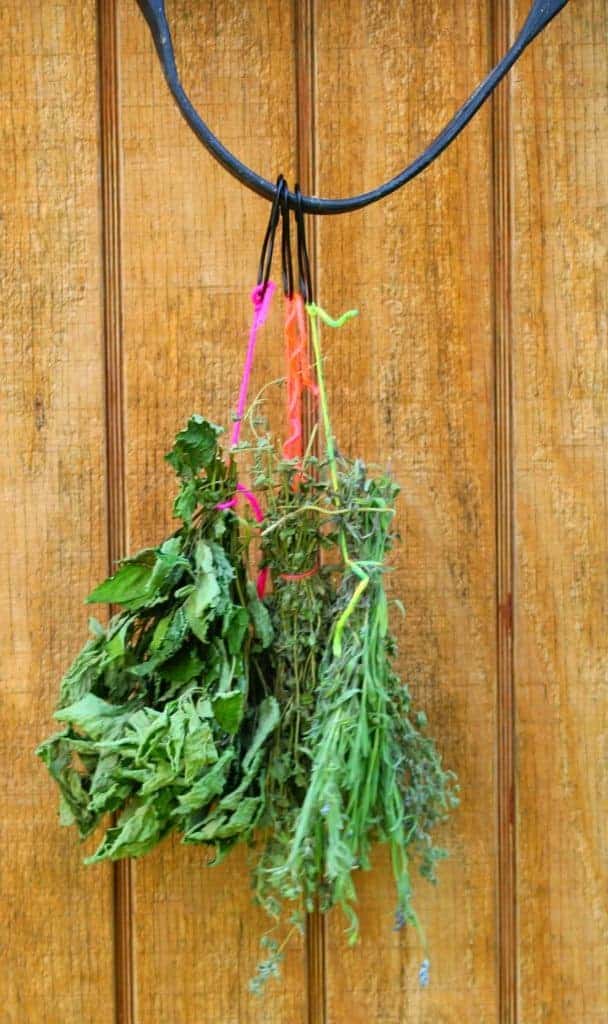
I’ve found Amish Black Drawing Salve particularly helpful after weeding the garden, when you might have brushed up against some prickly plants (the hyssop on this recipe is GREAT for that).

You can also use it if you’ve been working with wood and suddenly find yourself with a splinter.

Traditionally, Amish Black Drawing Salve is made with pine resin, and if you can get your hands on it, you can add it to this recipe – you’ll have to play with it a bit.

To replace the pine resin, I add pine essential oil – it accomplishes the same thing, and is easy to store with multitude other uses around the house (cleaners, for example).

I also added hyssop, which is great for supporting healthy skin. In fact, it’s my go-to when I want to improve the appearance of my skin. Similarly, carrot seed is great for supporting healthy skin.

The lavender in this Amish Black Drawing Salve adds it’s soothing properties while giving the salve a scent most people will appreciate (rather than something off-smelling, which some home remedies have).

Children, especially, are sensitive to smells, and might not want you to use it on them if your Amish Black Drawing Salve smells funky.

There’s a lot of different ingredients listed, but if you collect all the items before you make the salve (I’ve listed where you can get them for easy shopping), the actual steps are very simple.

Trust me, this looks a lot more complicated than it is.
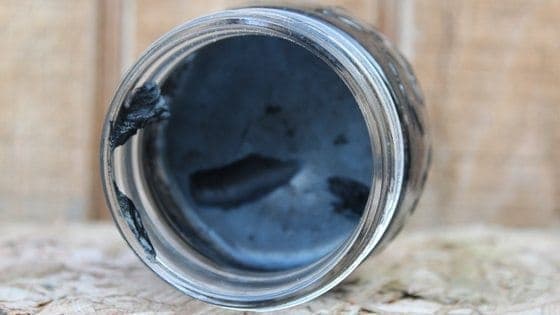
Amish black drawing salve is a centuries-old traditional recipe. Here;'s how to make it in your own kitchen!

Amish Black Drawing Salve Ingredients

(I’ve done a lot of research, and this is the brand of essential oils I recommend)

How to Make Amish Black Drawing Salve

Add the oil, shea butter, coconut oil, beeswax, and honey to a mason jar. Make a double boiler by heating water in a pot, then placing the mason jar in the water. You want to melt the oil, shea butter, coconut oil, beeswax, and honey so they combine.

Using the beeswax as a guide,when the mixture is almost totally melted, stir constantly for 2 minutes to ensure the honey is evenly distributed.

Don’t skip this step because you’ll find the honey might clump up in one portion of the finished salve, and it’ll be a sticky mess.

Once the ingredients are combined in the mason jar, remove from heat and add the activated charcoal powder, white kaolin clay, and essential oils.

Stir constantly until all the Amish Black Drawing Salve ingredients are thoroughly combined and then allow the mixture to cool undisturbed until solid. This step might take a couple hours.

Once cool, you can store it on a shelf and use as needed. To use, apply to the area of concern and wrap the area. Remove and reapply daily until desired result is achieved.

This recipe makes ¼ pint of Amish Black Drawing Salve – I store mine in a ½ pint jar. You can also store it in smaller containers.


If you own chickens, you’ve doubtlessly realized that the chickens really own YOU!

It’s impossible not to fall in love with them….and you have all the signs of a crazy chicken lady to prove it.

Grab your best friend and see just how crazy you are – here’s 20 signs you and your bestie are crazy chicken ladies!

1. Your husband/partner knows when the hatchery catalogues arrive, you’ll spend your entire tax return on “just a couple more chicks.”

Tax return? Honey, I don’t think we got one this year….oh those chickens? They just appeared….don’t ask me how!

2. You own 10 chicken t-shirts like this one:

3. You and your hens have your own language….and your family has started to understand it too.

Best friends need their own special language, right? You understand every word your hens say! It’s love!

4. You have more than one chicken that lives in your house…and you find eggs in your shoes.

And you look forward to the easter egg hunt every morning!

Still not convinced you’re crazy? Here’s the next 16 signs!

Click here!

Do you love the scent of fresh lemon balm?

Also called Melissa, lemon balm has been used by humans for generations to support healthy skin.

And this year, it’s completely taken over my garden. I planted two little seedlings, and they’ve grown to large, healthy plants.

I’ve been harvesting and drying lemon balm CONSTANTLY.

One of the best ways I’ve used to both preserve and use lemon balm is by creating infused oils.

The herb is perfect for homemade salves, creams, lotions…..and lip balms. With fall just around the corner, you’ll want to have lemon balm in your cabinet to help with those dry skin situations.

How do you make herb-infused oils?

If you’ve never made an infused oil, don’t worry. It’s as simple as snipping 1-2 cups of fresh herbs and covering them with oil (I use olive oil, but almond, grapeseed, and avocado are also good options).

Make sure the herbs are completely covered, and allow them to “steep” for 2 weeks to infuse the oil. (If the herbs get moldy or the oil smells or looks off, just toss and start again).

You can cook with infused oils and/or use them to create DIY skin care products.

Make your own Lemon Balm Lip Goo

Here’s how to make your own lemon balm lip goo! This recipe makes 4 tubes or 1-inch pots of lip balm.

Play with the essential oils to see which scents you like. The lavender gives the balm a floral, soothing scent, while the peppermint gives it a fresh feel.

Like lemon balm, carrot seed is great for supporting healthy skin – use only one drop because the smell isn’t super pleasant (compared to peppermint or lavender). 1 drop gives you the power of the oil without sacrificing the lavender/peppermint scent.

Lemon balm essential oil CAN be expensive, so it’s ok to leave it out. The lemon balm infused olive oil will be great for your skin.

2 tablespoons lemon balm infused oil (THIS is the oil I use)

1 teaspoon beeswax pastilles (I like this brand)

1 teaspoon organic honey (I like this brand)

1 drop carrot seed oil (I recommend this brand of essential oils)

1-2 drops peppermint essential oil

4 drops lavender essential oil

4 drops lemon balm essential oil (optional)

You can use any brand of essential oils, but I’ve done a lot of research and recommend Young Living oils. (You can get them wholesale or retail – you’ll save 24% if you get them wholesale from this link).

Making the lip balm

Once your oil is infused with the power of lemon balm, you’re ready to make your lip goo. In a mason jar, combine all the ingredients.

Make a double boiler by placing the mason jar in a pot of water. Heat until the beeswax is melted, stirring occasionally so the ingredients mix well.

Once melted, use a funnel to pour the mixture into tubes or other lip balm container. Allow to cool undisturbed.

The lip balm should be somewhat soft and easy to apply to your skin.

Once the water is simmering, the entire recipe takes about 5 minutes to complete. Easy peasy lemon balm squeezy, right?

Keep one tube in your car, one in your bag, one in a backpack, or wherever you think lemon balm might be needed.

Do you grow organic herbs so your chickens have them all year long? Or maybe you like making herbal teas?

As you know, there’s a short window of time to harvest herbs while they’re at their peak. In a few months, they’ll all be buried under snow and frost!

Right now, we have so many herbs growing, we can hardly harvest them all. It seems as soon as we harvest one raised bed, the other ones ripen!

In fact, our lemon balm (which is so good for so many health purposes!) is practically taking over one of our raised beds – so I’m trimming it back constantly.

Because we have curious kids, and chickens, and rabbits, we’re a little short on space where the herbs can dry but also be kept clean.

While you CAN use a microwave to quickly dry herbs, some readers have pointed out that they’re not comfortable with the process. (You can also use a dehydrator like this one here, but they can cost quite a bit).

Some readers also want to use vintage, traditional, or solar methods on their farms, so we figured out a 100% natural way that lets us dry large bunches of herbs in a smaller space.

We also noticed that it dries the herbs faster than just hanging them up in your kitchen (ours sometimes mold in the kitchen if we just randomly hang them around), and you might even have all the necessary parts in your house already!

Here’s our 5 minute hack to drying more herbs in a smaller space!

5 minute hack to preserve herbs faster

What You’ll Need

Herbs (the longer the stem, the better)

String

Shower curtain rings

Shower rod, insect-free branch, rope, or something similar for hanging

Long stem herbs are best to use because they’re easier to hang (if you have lots of herbs without long stems, you can use a mesh bag, but don’t fill it too full or the herbs will mold).

Grab your bunches of herbs and tie one bunch at a time together with the string.

To hang the herbs upside down, tie the strings to the shower curtain rings, and then hang from the shower rod (or whatever you’re using to hang the herbs).

5 minute hack to preserve herbs faster

The shower rings allow for air circulation – and they let you put as many herbs as possible in a more compact space.

For the first 24 hours, we hang them outside (as long as it’s not raining) so we can take advantage of air flow to kick start the drying. After 24 hours, we move them to a dry location that’s sunny but out of direct sun.

If you’re worried about leaves falling of the herb stems, you can either place a paper bag over the stems or place something under the drying rack to catch the falling leaves (the problem with this method is you then have to sort through all the leaves to figure out what herb they are!).

5 minute hack to preserve herbs faster

We usually only process 1 type of herb at a time, collecting them on specific days. Before using this strategy, the herbs could be a little difficult at times to distinguish after they were completely dried.

It’s a simple but effective 5 minute hack to make drying herbs easier and faster!

Did you wake up in this morning kinda sore and hearing your bones and tendons creak and crack?

That’s arthritis and inflammation – and there’s something you can do about it other than down a bunch of over the counter drugs.

The most powerful natural anti inflammatory medicines are fruits, herbs, and seeds you might already have in your kitchen.

In this article, I’m going to show you 6 healthy foods you can eat (and HOW to eat them – this is important) so you can do everything you can to reduce any inflammation and pain in your body.

Want a diet to follow? Based on studies, Harvard recommends the Mediterranean diet, which is high in fruits, vegetables, nuts, whole grains, fish, and healthy oils.

Of course, you can always make sure you eat lots of fruits, vegetables, nuts, whole grains, fish, and healthy oils (you’ll see they’re potentially the most powerful natural anti inflammatory resources out there), and stay away from sugar, fried foods, sugary sodas (replace with kombucha or water kefir), processed carbs like commercial bread, and processed meats like fast food.

Cherries, Blueberries, and Apples

Fruits such as cherries, blueberries, and apples, contain powerful natural antioxidants which lower uric acid levels, which might help reduce physical joint pain.

They’re also high in natural polyphenols – and studies suggest that eating antioxidants and polyphenols longterm can help avoid osteoporosis. However you should avoid taking polyphenol supplements which might inhibit iron absorption, and potentially make your problem worse.

Pineapple

Pineapple is one of most powerful natural anti inflammatory fruits available because it contains the enzyme bromelain, an anti-inflammatory substance which studies have shown reduces inflammation like drugs, but without the side effects.

While the University of Maryland Medical Center says bromelain produced mixed results when used to treat arthritis, eating more pineapple certainly won’t hurt! 

Raw Apple Cider Vinegar

Raw apple cider vinegar is wonderful stuff! Aside from the beneficial bacterial that are great for your digestive system, ACV also contains acetic acid, potassium, magnesium, probiotics and enzymes. For your joints and bones, it’s a good source of polyphenols, which studies have shown might reduce arthritis. 

There’s mixed results about whether apple cider vinegar is the most powerful natural anti inflammatory available, but it’s beneficial for your gut as well as your joints, so you won’t go wrong giving it a try.

Only consume raw organic apple cider vinegar WITH the mother (a collection of beneficial bacteria). You can learn how to make it with this $5 video or buy this brand hereStart with 1 tablespoon in 8 oz water to see how it does for you.

Ginger

Studies have shown that ginger root has powerful natural anti-inflammatory properties similar to drugs. One study gave participants 2 grams of ginger supplementation for 11 days and “proved that daily consumption of raw and heat-treated ginger resulted in moderate-to-large reductions in muscle pain.” You can either eat it fresh or drink ginger root tea – be sure to avoid anything processed. 

Turmeric

Turmeric has been heavily researched, and according to studies, it’s potentially most powerful natural anti inflammatory. The curcumin in turmeric gives the root its anti inflammatory and antioxidant properties.

Studies have shown, however, that turmeric itself does not have enough curcumin to have an impact, however, when mixed with black pepper, the amount of curcumin absorbed is 2,000 times more than just the root itself.

We’ve successfully used organic turmeric with black pepper on our farm to reduce inflammation with a pony who broke his shoulder. 

Omega 3s (Salmon, flax seeds, chia seeds, fish oils)

Eating lots of Omega 3s, found in fish meat (such as salmon, fish oil, flax seeds, and chia seeds), help reduce inflammation without the same side effects as drugs. According to the University of Maryland Medical Center, one animal study even showed that they reduced inflammation that was caused by pharmaceutical NSAIDS such as Motrin. 

The Arthritis Foundation says that flax is one of most powerful natural anti inflammatory seeds, and recommends adding it to smoothies or salad dressing to get your omega 3s on the go!  

The information in this article was reviewed for accuracy and efficacy by a licensed occupational therapist on 7/18/2017.

If you’re a new gardener, chances are you’re wondering how to save seeds.

Maybe you want a self-sufficient backyard farm, or loved the taste of this year’s tomatoes and want to try to grow them again next year.

On our farm, we try to save seeds so we can have a consistent harvest year to year – I like predictable plants, and over time, we’ve been able to develop varieties that are well-suited to our particular micro environment.

In this article, I’m going to show you how to save seeds so you can have the same!

What Seeds Should You Save?

Although you can save seeds from any vegetable you want, you’ll have a more consistent crop if you save seeds from self-pollinating vegetables. If vegetables have cross pollinated (so the seeds would be hybrids), they might not carry the same genetic traits as their parents.

Self-pollinating vegetables include:

  • Tomatoes
  • Peppers
  • Beans
  • Peas

However, if you do end up saving seeds that are potential hybrids, all isn’t lost – you might enjoy the next year’s vegetables even more.

Only save seeds from fully ripe vegetables. Choose the best, healthiest vegetables to harvest from.

Beans, Peas, & Greens (Lettuce, Mustard, etc)

You have a couple choices. You can harvest the pods when they’re mature and slightly dry, and allow to fully dry indoors for 4 or so weeks.

A second option I’ve seen farmers use successfully is to allow the pods to completely dry on plant.

The downside to this is there’s a chance of mold if it gets rainy or animals can scavenge them before you can harvest them. They could also pop open, spilling seeds on the ground or allowing them to mold.

Whichever method you use, be sure to choose healthy, unbroken pods to harvest.

Once completely dry, gently rub pods between your hands to reveal the dry beans or peas. Separate the seeds from the chaff and allow to continue to fry for another 2 weeks.

Store in an airtight, rodent-safe container.

Peppers

Cut open a fully-ripe pepper (if it changes color, wait until after the it’s finished) and remove the seeds.

Place on a paper towel and allow to dry for 2 weeks. Store in an airtight container in a cool area, out of direct light..

Tomatoes

Tomato seeds need to be treated differently than the other seeds in this article (this process can also be used for cucumber, squash, and melon seeds).

They’re covered with a natural germination inhibitor (the “gel” around a tomato seed) and need to go through a fermenting process to remove it once you harvest the fruit.

In nature, the fruit rots and falls to the ground, and the rotting process removes the gel surrounding the seed.

Since none of us want rotting fruit hanging around in our house attracting fruit flies, we need to ferment the seeds in a shorter timespan, about 5 – 7 days.

After choosing the tomato you want to save seeds from, slice it open and scoop the seeds and pulp into a mason jar. Fill with water and let sit for about a week.

It will probably smell, and might give an off-smell. That’s ok (you can loosely cover the jar to keep pests away). As you’re waiting for the fermenting process to complete, check to see if any of the seeds have started to float.

If so, remove them and toss. They won’t produce strong seedlings, if they sprout at all.

Once fermented, strain out the viable seeds and clean them thoroughly with fresh water. Lay them on a paper towel to dry for a few days. Store in an airtight container in a cool area out of the sun.