There’s a lot of funky information out there about medicated chick starter vs. non-medicated chick starter – so that’s the main topic of today’s podcast!

Essentially, both feeds are the same, with one significant difference. 

If you’re not sure which is for you, then be sure to listen!

But naturally, it’s not the only question we discuss! Roosters are becoming more of a hot topic, and we had a couple head-scratchers about the male side of the coop.

what herbs can chickens eat content upgrade-min

Of course, we also had plenty of questions about incubating eggs, since hens are laying again and everyone wants homegrown chicks.

In this episode…

You’ll learn:

  • The difference between medicated and non-medicated chick starter (and what that medication really is)
  • Why it’s a bad idea to remove manure before incubating eggs
  • Whether breed makes a difference to flock dynamics
  • The best age to butcher roosters (and why it’s breed-dependent)
  • Ideas to re-purpose extra roosters that are both humane and self-sufficient (and why your neighbors might thank you)

Links We Discuss:

Healthy Coop Boot Camp

My favorite brand of chick starter

Butcher kit I recommend

Incubator I use

I’d like to hear from you!

What do you think is a good age to butcher a rooster? Leave a comment below!

Do you know the proper way to give a broody hen eggs so you don’t convince her to leave her nest? Or what should always be in your chicken emergency it?

If not, then you’ll love this week’s podcast.

It’s Wednesday, which means I take your questions, and I got some super valuable ones this week.

If you want to submit a question, email me at [email protected].

what herbs can chickens eat content upgrade-min

You’ll learn:

  • How many roosters you should keep (or if you should keep them at all)
  • The proper way to put hatching eggs under broody hens
  • The key items that should be in your chicken first aid kit
  • When to help a chick hatch (and when to let well enough alone)
  • Whether you can know for sure which hen laid which egg

Links We Discuss:

Sign up for Healthy Coop Boot Camp!

Transcript:

Coming soon!

You might not believe raising mealworms, red wrigglers, or crickets for your chickens will save you money, but if you aren’t farming at least one of these 3 insects, you’re missing out.

Although raising insects to feed your chickens isn’t the most thrilling idea to some people, it’s a very easy way to save some money while providing a lot of extra protein for your chickens (which translates into better layers).

If you’re not on this bandwagon, by the end of this podcast, I might just have convinced you to give it a try (it’s up to you to talk your spouse into it though).

I love giving my hens insects, and I’m sure they love them just as much. In addition to the extra protein punch, insects give cooped hens the opportunity to hunt like the predators they naturally are.
what herbs can chickens eat content upgrade-min

You’ll learn:

    • Why raising mealworms, red wrigglers, and crickets for chickens is the best idea you’ve had in a while
    • How to set up an insect farm in 5 minutes
    • Why (and how) these three insects will save you money
    • Which insect is easiest to raise and preserve (and won’t make your spouse too mad)

Links we discuss:

Where to buy red wrigglers

Where to buy crickets

More about raising crickets

Ideal container for a mealworm farm

Healthy Coop Boot Camp 

Where to buy dried mealworms (if you don’t want to raise your own)

Transcript:

Hi there, and welcome to session 34 of What the Cluck?!, a podcast devoted to keeping chickens for fun and self-sufficiency.

I’m Maat from FrugalChicken, and in this episode we’ll talk making a mealworm farm and alternative protein sources for your chickens, including mealworms, red worms, and crickets.

By the end of this episode, you’ll know how to make homemade farms for mealworms, red worms, and crickets, and why they’re a good alternative protein source that might save you money.

Just as a reminder, you can get this episodes show notes at TheFrugalChicken.com/Podcast34, that’s podcast with the numbers 3 and 4.

So stay with me!

So, the first thing you’re probably wondering is why we, as chicken owners, should bother raising insects in the first place.

And there’s a good answer, namely, that it can save money while providing a healthy source of protein for your flock. It’s widely known that insects are full of protein, and in some areas of the world, they’re eaten by people for just that reason.

You can also be sure of the source of your chicken’s food, the quality of the food, and you know exactly what the insects have eaten. So, you can better control the quality of their diet.

Now, even if raising mealworms, red worms, or crickets for your chickens doesn’t appeal to you, and I’m sure this won’t appeal to everyone out there, it’s still worth listening to this podcast because you can find them for sale out there on Amazon.

I’ll put links in the show notes for where you can find all these critters, and it’s worth knowing why they might work for your flock.

Each of these farms is easy to set up and maintain, and in just a few weeks, you’ll have a sustainable source of protein for your chickens.

And it should be said that chickens love mealworms, redworms, and crickets, and they love the hunting aspect to it. So, while you’re saving money, you’re also making your chickens happier.

So, let’s get started with discussing mealworms.

Mealworms are full of protein and they’re easy to raise, are cost-effective, and don’t take too much time to maintain.

So first, what exactly are mealworms?

Mealworms are actually the immature form of the darkling beetle.

The beetle will lay eggs in dark, dry places such as grain bins, flour sacks, etc, and the eggs hatch, and the mealworms then start feeding on their surroundings and begin their lifecycle again. Needless to say, they can destroy a bag of livestock grain fairly easily.

So, while this seems kind of boring, it’s important for you to know about the lifecycle of the mealworm so you know how to properly set up their home and when to harvest them.

First, the darkling beetle lays eggs, which hatch in 2 weeks into small mealworms.

The mealworms then grow for another 3 months, then at that time, they go into a pupa stage for an additional month, then they emerge as adult darkling beetles, and everything starts all over again.

Each female darkling beetle will lay up to five hundred eggs before she dies in just a couple months, which is hugely advantageous to us as chicken owners that want to breed these critters as a protein source – the more mealworms we harvest, the better for feeding our flock.

When breeding mealworms, you always want to make sure you leave some of them behind so you always have a fresh set of beetles to begin laying eggs again, to ensure this becomes an easy, sustainable source of protein.

How to Make a Mealworm Farm

You can always buy a mealworm farm kit, but they’re so simple to set up yourself, that you might as well DIY it.

Sourcing a home for your mealworms

First, identify a container that you can grow them in. Some people use an aquarium, some of the best mealworm farms I’ve seen have actually been plastic storage drawers, and I’ll put a link in the show notes to an example.

But a lot of people like those storage drawers because you can move the insects around so all the beetles are in one drawer, etc.

Something like an aquarium or storage drawers let you look in on your insects to see how they’re developing, and as an aside, this is a great project for kids, especially if you homeschool your children.

It’s completely up to you, and what matters is that it’s a container you’re comfortable dealing with.

Your container should be around 12 inches long by 24 inches wide, by 12 inches deep to make sure there’s enough room, and it will need a top. A mesh screen helps ensure there’s enough air circulation to keep your mealworms alive.  

Next, figure out where you’ll keep your mealworm farm. In the summer, this is less of an issue because you can keep them outside, but in the winter, you certainly don’t want them freezing and have to start all over again, so find a spot that will work for whatever season you’re in.

In the winter, you can also use a heat mat or something else to keep the container warm, but again, that’s completely up to you and what fits into your lifestyle.

Mealworms like it to be around 80 degrees, and they like the dark. So, a basement would work, or a garage in the summer.

Feeding Your Mealworms

Next, let’s talk about substrates, or rather, what you’ll grow your mealworms in. You’ll want to use something that they can eat, such as rolled oats or wheat bran, and this has the added benefit of saving you time from feeding them all day.

In a pinch you can use chicken crumbles or cereal crumbs, but rolled oats and wheat bran are what’s usually used, and wheat bran is pretty cheap, it’s about $17 for a 50 pound bag here, which will last you a while.

One thing you might want to consider doing is sterilizing your substrate to makes sure no other pests that can harm your mealworms are present, and this is easy enough to do.

To sterilize your wheat bran, simply spread it out on a cookie tray and bake in the oven for 20 minutes at 140 F.

The thing about this is you don’t need to sterilize the entire 50 pound bag at once – just sterilize the small amount you plan to use, as you use it. This cuts down on the workload.

Don’t let your substrate get wet, otherwise it will mold.

In addition to wheat bran, you can feed your mealworms things like carrots.

To do this, simply slice them into 1 or 2-inch pieces, then place them into the container. The insects will find the carrots, and feed on them. Remove the carrots every so often, when they begin to look wilted.

Adding mealworms

At a minimum, you want to add 500 mealworms to your container, although obviously, the more insects you have, the more you’ll eventually have to feed your chickens. So, this is the case of the more the merrier.

You can buy them at feed stores or online, and I’ll put a link in the show notes where you can buy some.

Once you have purchased your mealworms, gently pour them out into your container and apply your cover to the container – the cover is to keep things out rather than the insects in.

At this point, it’s best to let them do their thing for a few months, make sure their fed, and allow them to turn into beetles and let the females lay eggs. Replace the wheat bran as needed.

In no time, you’ll start to have sustainable mealworms for your hens to eat.

Harvesting mealworms

To harvest mealworms, you can simply gather as many as you want from the container and feed them to your chickens.

Depending on the amount of chickens you have, ½ cup of mealworms per 5 hens is a good place to start. You can increase that amount if you want to use the mealworms as a large portion of your hens diet.

But let’s say you don’t have a place to keep them in the winter, or you have so many mealworms you can’t possibly use them all. Then you can freeze dry them.

To freeze dry mealworms, first harvest your insects, and place them in a container large enough to hold them.

Cover the container and place it in the freezer. This is considered a humane way to kill the mealworms quickly. Leave it in there for 20 minutes to ensure they’re dead.

You can store them in your freezer, although I’m sure most people wouldn’t really want a bunch of mealworms in their freezer. If that sounds like you, then you can roast them to preserve them in a more shelf-stable manner.

In a roasting pan, put down a layer of cornmeal. While the cornmeal isn’t strictly necessary, it will stop the mealworms from sticking to the pan.

Layer the mealworms and spread evenly to ensure that they cook at the same rate, and cover them with a lid to ensure they get evenly cooked.

Roast for 4 hours, or until the mealworms are a dark brown. Remove from heat and cool. Once cool, place in a storage container.

Worms

Next, we’ll talk about how to raise and harvest worms for your chickens.

These are a little messier than mealworms, but red worms, also called red wrigglers, also have the added benefit of providing castings for your farm, which is some of the best fertilizer out there. So, there’s a dual benefit.

You can find red wrigglers at gardening stores and bait shops, and you can also buy them online. I’ll put a link in the show notes to a source I recommend.

One pound of red wrigglers is about 1,000 worms, and that’s enough to keep your worm farm in business. They breed based on the amount of food available, so the more you feed them, the more worms you’ll have to feed your chickens.

Building a worm farm

Building a worm farm for your chickens is really, really easy, and you can do it anywhere. I know, because I had a worm compost bin in my condo before we moved to the farm.

To make a worm farm, you’ll need 2 large Tupperware bins with lids, and they need to be at least 12-inches deep. I use 18 gallon bins. Make sure to pick a dark color because worms like the dark.

Drill holes in the bottom of both bins with a ¼-inch drill bit. I put about 10-15 holes in mine.

The worms will go through the holes to get from the top container to the bottom one. This lets you harvest their castings while being able to harvest the worms, too.

To keep the worms from leaving the containers, I just put one lid under the entire farm.

You’ll also need to put air holes in one of the tops, to allow for air circulation.

Next, place one bin inside the other, and add strips of newspaper or torn up cardboard. You can also add some dried leaves.

Wet it down until it’s the consistency of a wet sponge. This is the ideal bedding for red wrigglers.

Next, add your worms and some food. Table scraps such as vegetables and bread are best. Avoid or animal products like bone, meat or fat, or dairy such as butter or yogurt. 

Bury the scraps in the newspaper, and let your worms have at it.

The next step is to add some newspaper on top of your worms. This creates a dark area and it keeps out fruit flies.

Red wrigglers can eat their own body weight each day so for maximum benefit, if you put in a pound of worms into your worm farm then add a pound of food each day, and more as they start to breed.

To harvest your worms for your chickens, all you need to do is start putting food in the bottom container along with some newspaper, and let the worms start to move to the second container.

You can also dig through your bin to harvest the worms.

Crickets

Last on our list are crickets. While these are less popular with backyard chicken farmers, they’re easy to grow, and are packed with more protein than beef, according to experts.

So, for chickens, they’re a healthy way to increase their protein intake with little trouble for you.

I don’t personally raise crickets, so I researched a bit about how to do it, and here’s what I came up with. You can buy crickets online or at pet stores.

To create a cricket farm, start with a 14-gallon bin with a mesh top for air circulation. A bin that size can hold up to 500 crickets. The bin’s walls should be smooth so the crickets can’t escape.

Crickets like temperatures of 86 degrees, so find them a warm place to keep their container. Feed them things like cucumber, lettuce, fruits, and gourds. Check their food regularly for mold as well.

How to breed crickets

Crickets breed by laying eggs in soil. So, place a shallow container of soil in their habitat. It must be kept moist, so spray it frequently until you see eggs in there. The eggs will look like pieces of rice.

Next, incubate the eggs in a separate container. Use a heating pad or heat lamp to provide heat. After about 7-10 days, you’ll see baby crickets emerge, and they’ll be the size of a pin head.

The baby crickets can eat things like tofu as they grow, they will need a lot of protein to grow to a large enough size to make them worth feeding to your chickens.

You can harvest them when they’re ½ inch long or so, but you should keep some out of every hatch for breeding stock. Crickets only live a couple weeks, so you will need a constant supply of breeders if you want to continue to raise them.

I’ll also put a link in the show notes to a more extensive discussion about how to raise crickets, but for our purposes today, they’re a great source of sustainable protein for your chickens, and raising them to save on chicken feed is definitely something to consider.

So, that’s this week’s podcast. Out of all of these insects we discussed today, I think you’ll have the easiest time raising mealworms, but the red worms will provide the most overall benefit for your farm.

Now, if you’re new to chickens or maybe you’re an old hand, and want to do something fun, I have a 15 day boot camp coming up called the Healthy Coop Boot Camp.

You can sign up at HealthyCoopBootCamp.com and each day you’ll get an email with a video chock full of information you need to know to raise happy, healthy chickens.

If you’re not sure what to do with chicks when you get them home, or when to switch feeds, or if you’re interested in raising chickens naturally with things like herbs, then my boot camp is for you.

My Healthy Coop Bootcamp is completely free.

Thanks for listening to this episode of What The Cluck?!, and I’ll see you next time!

Chicks, raccoon drama, chickens rolling, and nesting boxes are all on the table for today’s episode of What The Cluck?!

In today’s podcast, I answer your questions, and we got some great ones this week.

Like you, I’ve run to the feed store to buy some chicks, so it seems appropriate that most of this week’s questions are all about them!

Around here, they just stock very basic breeds, such as sex links, production reds, industrial strain Rhode Island Reds, you get the picture.

They’re so cute, it’s impossible to not leave with some – I’m sure you know what I mean! (And your spouse is probably rolling their eyes just as loudly as mine is!)

But they’re impossible to resist, aren’t they?

Anyway, in this podcast….

You’ll learn:

  • Why keep chicks in the house is important to their health
  • How to tell whether a raccoon or an opossum has killed your chicks
  • Why chickens roll in dirt (and it’s not just about bugs)
  • How heat lamps are critical to your chick’s health
  • Whether chicks need to be trained to use nesting boxes

Links we discuss:

Where to buy decoy eggs

Nesting boxes I recommend

Free instructional videos about chickens

Transcript:

Coming soon!

There’s cheesemaking, then there’s sustainable, natural cheesemaking.

I’m guessing as a homesteader, that the latter is pretty appealing to you.

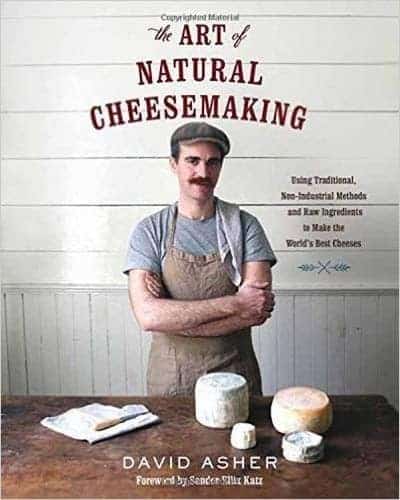
If sustainable living is your gig, then you’ll need to grab a copy of The Art Of Natural Cheesemaking by David Asher.

(Click here to purchase The Art Of Natural Cheesemaking By David Asher)

Product Description:

natural cheesemaking sustainable cheese

The Art Of Natural Cheesemaking by David Asher is a 320 page, soft bound book published by Chelsea Green Publishing. 

The book contains 35 step-by-step recipes, along with many full-color photos, to teach you the art of natural cheesemaking. The recipes are the author’s own, from his Black Sheep School of Cheesemaking.

Included are recipes for perennial favorites, such as mozzarella, paneer, basic farmstead cheeses, and cheddar, as well as off-the-beaten-path ideas for more original cheeses.

The Good:

I received this book to review, and one of the things that stood out immediately was that the author, David Asher, suggests using fermented foods as a starter in several recipes—in most cases, he suggests using kefir.

I’ve been making cheese for years, and I had heard about using leftover whey to start the next batch of cheese, but I had not heard of using kefir to start a new batch of cheese.

(Of course, I’ve made cheese out of kefir itself, but using it to inoculate a batch of fresh milk to make different cheeses was new to me).

The idea of using kefir as a sustainable way to culture milk into cheese is something I was thrilled to learn about since I like to make fresh cheese, but sometimes struggle to pay for starters.

But kefir grains only need to be purchased once, and as long as they are fed correctly, they will last for a long time, if not forever. Perfect for someone wanting to make cheese frugally!

Since I don’t like drinking kefir too much, I try using it in other ways, and found that using it to make cheese is a perfect way to eat extra nutrients, too.

For centuries, the purpose of making cheese has been to preserve milk for times when it might not be readily available (when a dairy animal is pregnant and dry, for example).

So, making cheese to preserve some of the nutrients in kefir makes sense, too.

Loving the thought, I tested out natural cheesemaking using some of my own, homemade, kefir.

I tried just a regular farmstead cheese using whole cow milk.

Since I had never made cheese using kefir as the starter, I just wanted to give it a test drive, so I could see the results without going through a ton of steps, especially since kefir can be kind of sour.

I wasn’t sure if I would like the end result!

Using the directions in The Art Of Natural Cheesemaking, I tried Mr. Asher’s recipe for a simple farmstead cheese.

After warming the milk and adding the kefir and rennet, I’m happy to report that the curds separated from the whey very easily, while overnight, the kefir worked its magic.

In the morning, I had wonderful smelling curds that I was able to drain over a couple hours into an incredible-tasting cheese.

And I have to say, I love that my cheesemaking became more sustainable thanks to using kefir!

The Art Of Natural Cheesemaking also has several easy recipes that don’t involve kefir, and these recipes are also perfect for any beginner to try.

I tested out the paneer recipe, since I had yet to find one that worked well.

I thought David’s directions were easy to follow, and thoroughly explained each step, so I ended up with great-looking paneer that tasted great too!

I also tested the mozzarella recipe, since I’ve always struggled getting the curds to stretch.

The step-by-step process that Mr. Asher describes is easy to follow, and as a result, I was finally able to get a wonderful, smooth mozzarella.

The Bad:

While The Art Of Natural Cheesemaking is very easy to follow and the instructions are clear, if you’re very new to cheesemaking (meaning, you’ve never made cheese before, or you’ve tried and failed), or if you’re still trying to sort out the mysteries of cheesemaking, then this book might be a bit over your head.

In order to understand Mr. Asher’s methods and why they work, some basic understanding of how cheese is made and what happens when rennet or starter is added to heated milk is necessary to get the full benefit of The Art Of Natural Cheesemaking

In addition, at times Mr. Asher doesn’t use precise quantities, or relies in quantities for a specific brand (for rennet for example), and for complete newbies, who need precise directions and might not have access to a certain brand, that can be confusing.

If you’re an experienced cheesemaker, however, this won’t necessarily apply to you.

The Bottom Line:

If you’re looking for a more sustainable way to create your own homemade cheese, you’ll love Mr. Asher’s book

I believe The Art Of Natural Cheesemaking is a must-have for any cheesemaker’s shelf, and I recommend you get a copy as fast as possible.

You can purchase a copy of The Art Of Natural Cheesemaking on Amazon.

I’d like to hear from you!

Do you think you’ll try natural cheesemaking? Why or why not? Leave a comment below!

Keeping chickens cool in hot weather can mean the difference between life and death.

Really.

Last summer, we dealt with some cases of heat stress, egg production suffered, and we even lost one friendly Cornish Cross rooster (you’ll hear all about that story in this week’s podcast!)

I have a lot to share on this subject, and in this podcast, you’ll get the inside scoop.

In most cases, heat stress is easily avoided, and there’s several steps you can take to prepare your flock for hot weather.

There are also some breeds that you shouldn’t bother raising in hot weather, and obviously, there are some breeds that are more heat-tolerant than others.

If you want to keep your flock healthy during the long days of summer, then you’ll love the pro tips in this podcast.

You’ll learn:

  • Emergency first aid for heat stress
  • How to provide cool water even when you’re gone all day
  • How to make homemade electrolytes using ingredients you already have
  • Heat-tolerant breeds (and which to avoid raising in the heat of summer)

Links we discuss:

Where to get a free coupon book for Manna Pro Poultry feed ($32 value!)

Misters I recommend

How to make an automatic waterer

Commercial electrolytes to keep handy

Transcript

Hi there, and welcome to session 32 of What the Cluck?!, a podcast devoted to keeping chickens for fun and self-sufficiency. I’m Maat from FrugalChicken, and in this episode we’ll talk about how to keep your chicken flock cool in hot weather.

It’s spring now, although I know some of you are still in the dregs of winter, but in my area, it’s about 80 degrees every day, so I thought an episode about keeping chickens cool would be a good way to prepare everyone so you can avoid problems in June, July, and August.

So, by the end of this episode, you’ll know how to keep your chickens cool in hot weather, signs of heat stroke, how to help a chicken experiencing heat stress, how to make homemade electrolytes, and breeds that are well suited for hot weather.

Just as a reminder, you can get this episodes show notes at TheFrugalChicken.com/Podcast33, that’s podcast with the numbers 3 and 2.

So stay with me!

Now, this podcast is sponsored by Manna Pro Poultry, and I’m happy to partner with them to bring you this podcast because I love their feed.

Particularly in summer, when your chicken’s ability to handle hot weather is effected by their diet, I particularly love how healthy Manna Pro’s organic feeds are.

They have a full array of organic, non-GMO feed for every stage of your chicken’s life, which is huge, and new this year is their Organic Grower Crumbles. This is a brand I trust, and that’s why I’m happy to tell you about them.

You might notice that in every episode I discuss how important diet is, and that’s because it dictates not just how healthy your hens are, but how healthy their eggs are for you.

Now, if you buy chicks at the feed store this spring, and you’re not sure which feed to buy for them, go with Manna Pro’s non-GMO, organic crumbles, and you can be sure you’re headed in the right direction to raising a happy, healthy flock.

Now, if you go to the Manna Pro Poultry Facebook page, and I’ll put a link to that page in the show notes, you can register to get a Chick Days Coupon Book, which they will send to you. 

There’s $32 in coupons in the book, and you will also find coupons for their organic crumbles, as well as their other products, such as hen treats and their mealworms, which I especially love.

You can visit Manna Pro to find out more about their line of organic, non-GMO feeds at MannaPro.com.

Now, let’s talk about how to keep your chickens cool during hot weather.

How To Keep Chickens Cool In Hot Weather

I’ve had more problems with chickens experiencing heat stress than problems with cold weather, and hot weather really is a bigger problem for chickens than cold weather.

In addition to heat stress, in hot weather, chickens can experience reduced appetite and reduced egg laying, and these are some sure signs that your flock is more likely to experience something traumatic like heat stroke.

First, let’s talk about how chickens process heat and how they stay cool from a biological standpoint.

How Chickens Sweat

First, chickens have a natural body temperature of 107° (F). Chickens don’t sweat, but like people, they require evaporation to stay cool, which they do by panting.

So, as chickens pant, moisture within the chickens’ lungs evaporates, leaving their body.

Because they don’t have sweat glands, this cooling through breath is why it’s harder for them to stay cool when it’s humid – humid air is harder to breathe, at least it is where I live where there are days in August when I really do have a hard time breathing because of how thick the air gets around here.

So, how do you tell if your chickens are getting too hot? Watch their behavior.

Are they panting? Are they hanging their wings away from their bodies?

If they’ve become listless or their breathing has become labored, you need to help them because they’re experiencing heat stress.

Signs of heat stress

  • Panting, with beak open – this is the point where you should take action
  • Laying around with wings outstretched
  • No interest in eating
  • Slow to respond to stimuli
  • Unresponsive
  • Poor egg laying, no eggs

How To Help A Chicken With Heat Stress

To help a chicken that’s overheated, first determine if it’s mildly effected or if it’s an emergency situation.

While any signs of heat stress should be immediately addressed, if it’s an extreme case, start with placing them in a cool bath, or hosing them off.

If you do use a cool bath, hold your chicken or stand by close if they can support themselves to make sure they don’t fall over and accidently drown. If your chicken can’t hold themselves up, then you’ll have to do it for them.

Next, offer cool water with electrolytes, and if possible, bring the bird into air conditioning or at least a cool part of your house.

Homemade Electrolyte Recipe (From Fresh Eggs Daily)

1 cup water

2 tsp sugar

1/8 tsp salt

1/8 tsp baking soda

To feed it to your chickens, mix 1 cup of the homemade electrolytes to 1 gallon of water. I’ve used these homemade electrolytes before, and I love this recipe.

You can also buy commercial electrolytes, and you can find a brand I recommend at TheFrugalChicken.com/electrolytes.

If your chicken is just panting, and seems mildly stressed by the heat, first move her into the shade and keep her quiet. Offer her cool water with electrolytes in it, and hose off her feet to help her cool down.

So, let’s talk about some ways you can help your hens stay cool this summer.

Make sure your coop is well-ventilated

If your chickens need to stay in a coop all day, your first step should be to make sure the coop is well-ventilated with either windows or a gap between the walls and the roof.

One of our coops has a nice overhang, so we’re able to leave a 4-inch gap at the top, which automatically translates into good airflow.

If your coop doesn’t have windows or a way to provide decent ventilation in hot weather, then try using a fan to make a breeze. This is also important because stagnant air equals ammonia everywhere, while ventilation will help get the ammonia out of your coop.

If possible, build your coop in a shady area of your property, since obviously, shade makes a big difference in temperature.

The next thing you can do to keep chickens cool in hot weather is to offer water, and we’ll talk about creative ways to do that.

One idea is to put waterers in the shade to entice your flock to lay in a cooler area, as we as keeping the water cool.

As they go along hunting and doing whatever they do outside, chickens tend to get distracted and not want to take a break in the shade; keeping it in the shade will prevent that.

Now, one thing to remember is that when it comes to nipple waterers, if you use those, remember that your hens might not be able to use them if they’re panting. In this case, opt to use a bowl instead so they can drink. When they’re less hot, they will go back to using the nipple waterers.

One way to ensure you’ll provide cool water in hot weather when you’re not home is to the night before, put a waterer in your freezer, or freeze a gallon of water, and put it out for them in the morning.

Obviously if you use a gallon of water, you’ll have to either freeze it less or wait for it to thaw before pouring it out, but the point is as the ice melts, they’ll have cool water to drink and it will stay cooler for a longer period.

Now, another option is to overfill their water buckets in the summer, which causes the dirt around the buckets to become cooler, so they end up with a cool place to stand. You can also keep a shallow tub filled for them to stand in.

You can also try misters, which you can buy cheaply enough, and I’ll put a link in the show notes where you can buy them, but you can also go to TheFrugalChicken.com/Misters for a good brand to try.

Misters will lower the temperature by about 10 degrees in the area they’re misting, which, if it’s a 100 degree day, can mean the difference between heat stroke and just hot hens. So, they’re a good option.

How To Set Up Misters For Your Coop

You can set the misters up 3 feet off the ground and mount them to a ½-inc PVC pipe about 3 feet apart.

Cap one end of the pvc pipe off, and put a threaded fitting onto the other end where you can hook up a hose. Turn the hose on, and the misters will do their job. Simple to set up, and pretty effective for keeping your flock cool.

If a DIY mister isn’t your thing, you can still water down the chicken run and your chicken coop to at least provide some comfort to your birds.

Summer is also a time when having dirt bath areas is critical, because as they dust bathe, especially if they do it in the ground, then as they dig deeper, cool dirt will be exposed.

Dogs and pigs do something similar – as they dig, they stay cool because dirt is cooler below the surface.

Another option is to provide them with a grassy area to stand. Grass is always cooler than dirt or asphalt, and it’s a way to help them stay cool on hot days.

Lastly, one of the most popular way to keep chickens cool in warm weather is to give them cold or frozen fruits and vegetables.

Watermelon is a good option, and chickens love pecking through a split watermelon, and it’s also a good way to keep them hydrated.

Another option is to freeze corn or other goodies like mealworms in water overnight, then let them peck through it to get the treats. At the same time, they’ll get cool water into their systems.

Frozen peas are another good idea. Really, the possibilities are endless. Just make sure its something safe for them to eat.

Just make sure you’re being observant. They might get enough shade in the morning, but at noon, the sun will have moved, and they might not have the same access to shade as they did in the morning.

This can particularly be an issue with chickens that are cooped all day.

Good chickens breeds for hot weather

If you’re someone who lives in an area that’s hot all year round, you might want to consider some heat-tolerant breeds, which we’ll talk about right now.

I’ve noticed that my Blue Copper Marans, which are of French origin, are not as heat tolerant as my Production Reds. While they haven’t suffered heat stroke, in very hot weather, like over 100 degrees, which its often that hot here in the summer, the quality of their egg shells suffers.

So, with them, I take particular care to make sure they’re ok in hot weather, and they’re maybe not a good bet for someone living in a hot climate year round.

When looking for a good breed that’s heat tolerant, look for chickens with small bodies and big combs, as well as lighter colored breeds, like leghorns. Dark breeds, such as black copper marans, will have a harder time because of their dark feathers.

Good options are Mediterranean breeds, such as Leghorns and Minorcas. 

Other breeds to consider are white faced black Spanish chickens, Sicilian Buttercup, Black Sumatra, and Egyptian Fayoumi, although this list is certainly not all-inclusive.

So, that’s this week’s podcast, and I hope you have a good idea of how to keep chickens cool in hot weather.

Now, if you’re new to chickens or maybe you’re an old hand, and want to do something fun, I have a 15 day boot camp coming up called the Healthy Coop Boot Camp.

You can sign up at HealthyCoopBootCamp.com and each day you’ll get an email with a video chock full of information you need to know to raise happy, healthy chickens.

If you’re not sure what to do with chicks when you get them home, or when to switch feeds, or if you’re interested in raising chickens naturally with things like herbs, then my bootcamp is for you.

My Healthy Coop Bootcamp is completely free.

Thanks for listening to this episode of What The Cluck?!, and I’ll see you next time! 
I’d like to hear from you!

Do you think you’ll try any of these ideas to keep chickens cool in hot weather? Leave a comment below!