I don’t like insects outdoors, and I REALLY hate them indoors.

We used to use chemical sprays, especially against ants and cockroaches (and let’s face it, those traps just don’t cut it, plus there’s always a chance a stray kid or cat will get involved with it.)

With children and pets, however, those sprays are a definite no-go. They left me feeling light-headed and dizzy anyway.

Essential oils are my go-to source to naturally get rid of insects, and they’re definitely cheaper than hiring an exterminator (and much safer!)

In this article, I’m going to show you how you can use essential oils to defend yourself and prevent insects in your home with essential oils.

The multi-legged critters we’ll discuss are:

  • Spiders
  • Bedbugs
  • Earwigs
  • Silverfish
  • Ants
  • Roaches

Spiders

Full disclosure: I don’t really mind spiders as long as they’re not poisonous. But we’ve all seen the memes with people torching their house because of a spider, so I’m guessing a portion of people reading this article aren’t exactly in love with our 8-legged friends.

Orange essential oil will destroy spiders (and most insects). To prevent or get rid of them without killing spiders, you can use orange, eucalyptus, or tea tree essential oil. If you can find it, you can also use neem essential oil.

You can either spray the oils, or put a few drops on a rag and swipe around problem areas in your home or around window and door frames.

To make a spray, grab your favorite food-grade spray bottle and put 10 drops of essential oil into 8 oz of water or rubbing alcohol. Spray liberally around problem areas or directly on the insects to kill them.

Bedbugs

Bedbugs are a definite no-no in our house, and everyone else is so scared of them, there’s even a registry that exists for reporting hotels with bedbugs.

You can make homemade sprays to deter and eliminate them. You can also diffuse the oils (with a diffuser) to keep them at bay.

To make an all-natural spray for your bed and other furniture, add 10 to 12 drops of cinnamon, peppermint, lavender, thyme, or eucalyptus essential oil to 8 oz of water. You can also put the oils on cotton balls and distribute around problem areas.

To diffuse them, add 10 drops of any of the above oils, and be sure to follow your diffuser’s directions.

Earwigs

Earwigs are one insect I hate, and whenever I find one in the house, it has to be gone. (Kind of like people who hate spiders in those memes). They’re harmless to people (but they’ll decimate your garden, given half a chance), but I don’t want them hanging around nonetheless.

I use oils on cotton balls to prevent earwigs. You can use citronella, cinnamon, or lavender oil, but my preferred is cinnamon. Just put 3-4 drops on a cotton ball. Because the oils are so powerful, they go a long way.

Silverfish

You might find silverfish in boxes of books or in your basement (anywhere that’s dark and damp with things they like to eat, such as paper.)

Like ants, silverfish hate the scent of cinnamon, so a good go-to essential oil to prevent them is cinnamon essential oil. You can also try lavender, cedarwood, and orange. To prevent silverfish, dip cotton balls in cinnamon oil or the essential oil of your choice.

The orange essential oil is known to kill insects like silverfish because it destroys the exoskeleton. If you already have an infestation, combine up to 20 drops of both cinnamon and orange essential oil with 8 oz alcohol in a spray bottle. Shake before using.

Ants

If you follow this blog, you know I have an undying hatred of ants, even though they service biologically-necessary jobs in nature. They definitely don’t belong indoors, though.

The BEST I’ve found to repel ants is cinnamon oil, although peppermint is an alternative. Because cinnamon essential oil is so strong, it interferes with ants’ neuroreceptors, preventing them from sending signals (by pheromones) back to their nest. Ants can’t take the lack of communication, and leave the area.

Apply 3-4 drops of cinnamon essential oil to cotton balls, and leave them in the area you want the ants to leave. If you want to make a spray, you can dilute 10 drops in 8 oz of water or rubbing alcohol. Shake before use, and spray away.

Roaches

Roaches are probably my #1 most hated insect. They’re disgusting, and whenever I spot one (we live in the country, so it’s going to happen from time to time), they need to be immediately gone.

To prevent and get rid of roaches, peppermint oil is the way to go, according to science. Fill a spray bottle with 8 oz alcohol, and add 20 drops of peppermint oil. The alcohol will clean the area and the peppermint oil will get rid of the roaches.
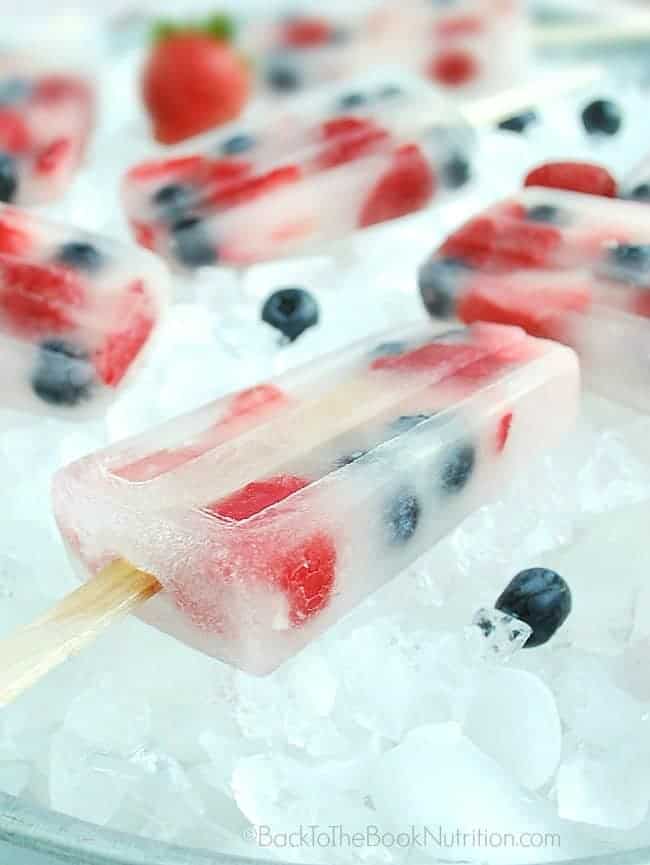

4th Of July is almost here…and you’re probably looking for all-natural, organic solutions to cookout staples!

It’s really easy to slip during this patriotic holiday, but this article will keep you on track. This is a collection of over 50 recipes for desserts, fruit salads, appetizers, and snacks that you can alter with all-natural, organic ingredients.

Particularly with the 4th of July, we want our food to be red, white, and blue….which means dying our food with potentially questionable dyes.

So, before we get started, here’s Where You Can Buy All Natural Vegetable-Based Red & Blue Food Dyes on Amazon.

If you order them now, they will be at your home before you get busy preparing food for a star-spangled cookout.

Where appropriate, I’ve also provided links where you can buy all-natural, organic, and non-GMO ingredients.

50+ Recipes For the 4th of July

Cheesecakes

Red White Blue Cheesecake Salad 

Red White Blue Cheesecake Salad 

Red White Blue Cheesecake Bites 

Red White Blue Cheesecake 

Cheesecake Topped Flag Cake

Cheesecake Stuffed Strawberries

No Bake Red White Blue Cheesecake 

Red White Blue Cheesecake Strawberries 

Popsicles

Red White Blue Frozen Banana Pops 

Red White Blueberry Popsicles 

Paleo Firecracker Pops 

4th Of July Coconut Water Berry Pops 

Where To Buy Organic Coconut Water

All-Natural Organic July 4th Red, White, & Blue Patriotic Recipes

Desserts

Red white blue trifle

Red White Blue Angel Food

Red White Blue Cupcakes

Red White Blue Meringues 

Patriotic Strawberry Shortcake Kabobs

American Flag Marshmallow Pops

White Chocolate Strawberry Trifle

Red White Blue Bark

Red White Blue Cookie Dough Dip

Star Spangled Slab Pie

Red White Blue White Chocolate Covered Strawberries

Firecracker Cakes

Red White Blue Berry Pie Bars

Red White Blue No Churn Ice Cream


Cookies

Where To Buy Organic Flour

Red White Blue Pinwheel Icebox Cookies

Fireworks Red White Blue Cookies

Red White Blue Cookies

Star Spangled Cookies

Patriotic Cookie Cakes

July 4th Sprinkle Cookies

Where To Buy All Natural Sprinkles

Where to Buy Organic Cake Mix

Red White Blue Chocolate Cookies

Firework Pudding Cookies

Red White Blue Bars

Salads

Red White Blue Pasta Salad 

Where To Buy Organic Pasta

Red White Blue Deviled Eggs

Red White Blue Patriotic Salad

4th Of July Fruit Salad With Honey Lime Glaze

Where To Buy Organic Honey

Blueberry, Strawberry, & Jicama Salad

Watermelon Feta Blueberry Salad 

Appetizers

Patriotic Taco Dip

Watermelon Blueberry Fruit Sparklers

Red White Blue Potato Skewers

Red White Blue Spaghetti

Pizza

Red White Blue Fruit Pizza

4th Of July Berry Pizza

Red White Blue Bacon Pizza

Snacks

Where To Buy Non-GMO Gluten-Free Pretzels

Patriotic Pretzels

Patriotic Pretzel Rods

Red White Blue Pretzel Bites

Red White Blue Patriotic Popcorn

Red White Blue Patriotic Popcorn

It’s summer…and it’s buggy. This time of year, the heat and humidity are bad enough, and I break out my go-to essential oils to repel insects when we’re outside.

(This article is based on my new book Organic By Choice: The (Secret) Rebel’s Guide To Backyard Gardening. Grab it on Amazon here!)

I have another recipe where you can use herbs, but I’ve found oils work better because they’re concentrated plants in a bottle – so much more powerful than just the herbs themselves when it comes to insects.

Because they’re weaker than oils, if you spray yourself with an herbal solution, it will dissipate faster – so you’ll need to spray yourself again and again. With oils, I found we only need to do it once or twice while outside.

In this article, we’re going to talk about recipes you can make at home that you can use on yourself and your family to keep bugs at bay.

The bugs we’ll discuss are:

  • Ants
  • Flies
  • Wasps/Hornets
  • Mosquitoes
  • Ticks

The Go-To Essential Oil For Killing Insects

Yes, there is a single one you can depend on (although there’s more you’ll want to use). Orange essential oil kills insects because it destroys their exoskeletons. In any recipe you make yourself, be sure it includes orange essential oils.

A word of note: Citrus essential oils, in large quantities, can harm your cats because it interferes with their liver. (It’s fine with other animals.) If your kitties hang out outside a lot, then don’t spray orange unless you can be sure your kitties will not be outside for 24-48 hours. Use any of the other alternative oils we talk about in this article, and just make sure there’s good circulation.

Ants

I hate these buggers. They’re arrogant insects, thinking they can get into whatever sugar I leave on the counter and invading my home whenever suits them….but there is hope.

The BEST I’ve found to repel ants is cinnamon oil.

Because it’s so strong, it interferes with their neuroreceptors and they can’t send signals (by pheromones) back to their nest to come grab whatever goody they’ve happened upon. It unnerves them, and they leave the scene rapidly.

It’s satisfying to watch the insects scurry away.

You can apply cinnamon directly to the area you want the ants to leave, without dilution, or you can dilute 10 drops in 8 oz of water or rubbing alcohol. Shake before use, and spray away.

If you plan to spray it directly ON the ants, also mix 10 drops of orange essential oil into the spray bottle. (If you’re allergic to cinnamon oil, you can use any of the oils listed above as an alternative).

If you plan to spray it on yourself, dilute it with carrier oils like coconut or sweet almond, or dilute with water or alcohol. Cinnamon is a “hot” oil, meaning on people with sensitive skin or children, it can cause skin irritation. Be safe.

Flies

I hate flies even more than ants. They’re just as annoying insects, except they ACTIVELY try to get in your face.

I have a great article with my favorite recipe to get rid of flies with essential oils here. It’s the best recipe I’ve found, and it actually works. It includes lemongrass and eucalyptus (which have many more uses than fly spray, by the way).

Wasps/Hornets

  • Mint
  • Eucalyptus
  • Citronella

Mix 8 drops of any of the above oils with 1 tablespoon of coconut oil or any other oil you love. Rub it on your body to keep the suckers away.

In this article, I show you how to eliminate wasp nests with liquid castile soap – You can also add the above oils along with orange to the castile soap mixture to kill ‘em dead.

Word of warning: You don’t want to use the orange essential oils on your body to repel wasps  – it will ATTRACT them since it smells sweet (wasps are attracted to sweet smells), and it can trigger photosensitivity (potentially causing some nasty burns) if you plan to remain outdoors.

(Orange is otherwise VERY safe to use – just avoid it on areas that will be uncovered if you plan to be out in the sun for a while.)

Mosquitoes

Summertime is mosquito time on our farm. With all the poop we have, the rotten insects LOVE to build nests and breed….and freeload off our livestock.

Whenever we go outside, I grab my purple spray bottle containing the following oils (in equal parts, mixed with 8 oz of water). As a bonus, we all smell better.

Citronella : Everyone knows that citronella repels mosquitoes, and it’s my go-to oil to repel ‘em. You can mix it (in a roller bottle) with any of the oils we discuss below for a more powerful solution that’s convenient to put on.

Eucalyptus: Eucalyptus oil has been used since the 1940s to repel mosquitoes, and is approved by The Centers for Disease Control and Prevention (CDC) as an effective ingredient in mosquito repellent.

Lavender: Lavender essential oil is great for relaxing and smelling good, but did you also know it can repel mosquitoes? Lavender can also be used to support healthy skin!

Ticks

Ahh…ticks. The lovely buggers that gave me lyme disease about 10 years ago. That was not fun…lots of yogurt, since I couldn’t eat anything else while I recovered.

These days, our chickens do a pretty good job of keeping the population down (yet another bonus to keeping a backyard flock), but if you plan to go camping or take a walk in the woods, here’s some essential oils you can put in a roller bottle or a spray bottle (along with water or alcohol – rubbing alcohol stays on longer) to repel the dirty insects.

You can mix and match 8 drops of oil with 8 oz of water or alcohol:

  • Rosemary
  • Lemongrass
  • Cedar (cedarwood oils)
  • Peppermint
  • Thyme
  • Eucalyptus

The CDC has even said that the above are safe essential oils to repel insects (specifically ticks!)

Looking at an empty bag of sugar, but eyeing a bottle of honey and wondering, “how can I substitute honey for sugar?”

In this article, I’m going to show you how substituting honey for sugar is really easy, and how to make sure the honey to sugar conversion OR the sugar to honey conversion doesn’t effect the quality of your desserts and actually improves them.

There’s also a chart below that you can refer to in order to figure out the honey substitute ratio.


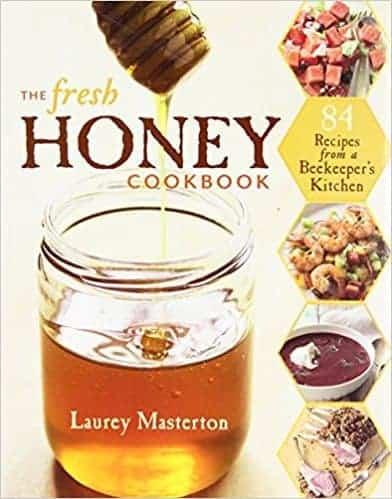
(Want a really great cookbook that includes 80+ recipes for baking with honey? Check out my favorite book on Amazon here!)

Can I substitute honey for sugar? In this article, I show you how to do it, so you end up with great baked goods every time!

One of our goals is self-sufficiency, and let’s face it: Not only is processed sugar BAD BAD BAD for you, you can’t make it yourself.

Honey, on the other hand, you can make with the help of our friends, the honeybees. Back in the day, our forefathers (and pretty much everyone in Medieval Europe) used honey to sweeten baked goods (they also used something called cider molasses, which you can read about here). So, it’s a time-tested practice we can also use in modern times.

Self-sufficiency aside, after about $10,000 spent on dental work this year, I’ve started to substitute honey for sugar in our favorite recipes, and keeping my fingers crossed that’ll keep me from funding my dentist’s next ski vacation (not that I don’t like my dentist, but I imagine he’d love to see less of me and my smelly muck boots too!).

Can I substitute honey for sugar? In this article, I show you how to do it, so you end up with great baked goods every time!

Especially if you keep bees, or plan to keep bees, you’ll want to learn how to substitute honey for sugar so you can use up your harvest.

I’ve created the honey substitute chart at the end of this article to make substitutions easier, so you can still enjoy your favorite meals (and they’ll be healthier!)

I’ve also included “best practices,” because although you certainly can substitute honey for sugar, it also means you need to take some extra steps to ensure your recipe turns out well.

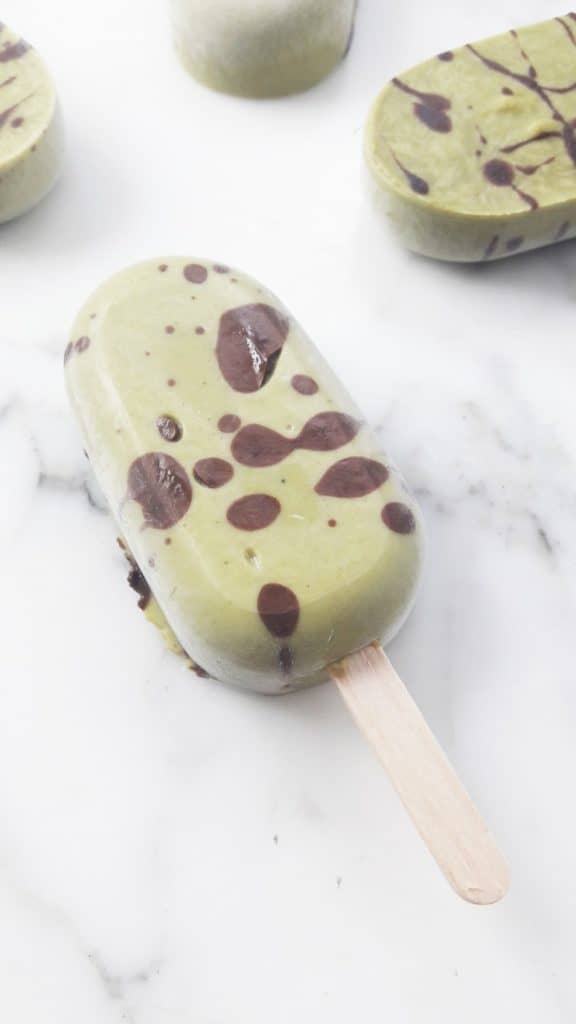
(Be sure to not miss the recipe at the end of this article for Sugar-Free Matcha Chocolate Popsicles!)

The Difference Between Baking With Honey And Sugar

Honey is a powerful sweetener, so use less of it

The last thing you want is to bite into the perfect cookie…only to have it be WAY to sweet to enjoy. Honey also has more flavor than sugar, which is great….but it can overwhelm all the other flavors in your baked good. So, you need to use less of it when you substitute honey for sugar.


Use less of other liquids in your recipe

When you substitute honey for sugar, you’re adding more liquid to your recipe, because honey is about 20 percent water. To make up for it, you’ll need to reduce the amount of the OTHER liquids in your recipe.

For every 1 cup of sugar you’re substituting, reduce the other liquids by 2 tablespoons. If you’re replacing ½ cup of sugar with honey, then reduce the other liquids by 1 tablespoon. If you’re replacing less than ½ cup of sugar, then you don’t need to reduce the other liquids.


Lower oven temperature by 25 degrees

Because honey has a higher sugar content (see #1), it cooks quicker and can burn easier than sugar. You’ll need to lower the oven temperature by 25 degrees to make up for it. Be sure to check your baked goods often so you don’t accidentally burn them.

Add baking soda so you don’t make hockey pucks

Honey is much denser than granulated sugar, so it can easily make your baked goods turn into meaty hockey pucks. Not good.

For every cup of honey you use in a recipe, add ¼ teaspoon of baking soda. The baking soda will help your dough rise better. 

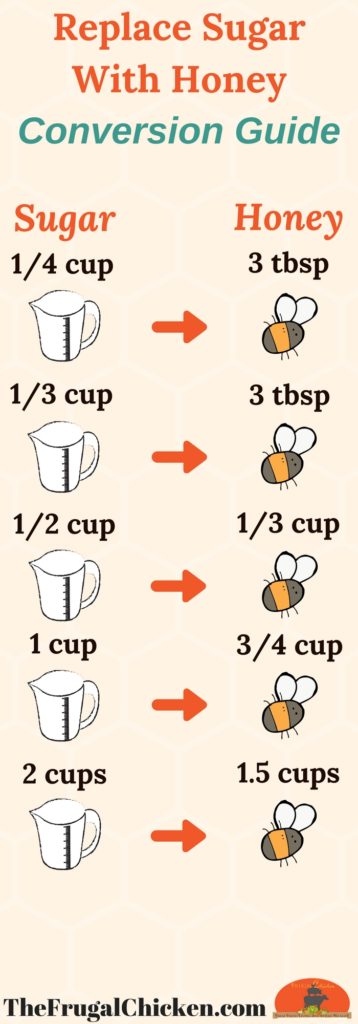
Honey to sugar conversion chart

To make life easier, print out this article and keep these honey substitute conversions handy.

Can I substitute honey for sugar? In this article, I show you how to do it, so you end up with great baked goods every time!

Ready to make something sugar-free & ultra yummy with honey?

My friends, Alix & Hugo at A Hedgehog in the Kitchen created this incredible sugar-free popsicle featuring honey! Perfect for summertime! Click here to get the recipe!

I’d like to hear from you!

Did you ever wonder “Can I substitute honey for sugar?” If you already are a master at this, what are your best tips? Leave a comment below!

More Real Food Resources:


Want to be a homesteading rockstar? Check out my tutorial on how to make your own apple cider vinegar.


If your organic garden has been invaded by wasps, chances are you’re probably wondering how to get rid of wasps naturally.

While they make great pollinators, unfortunately, if wasps have decided you’re invading their territory, you might be getting stung – which can put a damper on any fun garden activities very quickly.

Similarly, wasp nests are no fun – and they can creep up in the smallest places we wouldn’t expect (we’ve found them in chicken coops – no fun for you OR your chickens, believe me!).

(This article is based off my #1 Amazon Bestselling book, Organic By Choice: The (Secret) Rebel’s Guide To Backyard Gardening. Get your copy here).

Get rid of wasps naturally with these organic tips!

You CAN go for the stuff you buy at your local big box store – but we personally try to avoid those products, and have gotten rid of them in our house. They’re full of chemicals that neither our children or our animals need to inhale (in fact, for chickens, with the delicate upper respiratory systems, commercial insecticides can cause a lot of damage or even death in your flock).

To preserve the effort you’ve put out keeping your backyard organic and your family healthy, you’ll want to get rid of wasps naturally and ALSO stop wasps from coming back so you can enjoy your backyard once again.

Luckily, these organic options also happen to be pretty cheap, and you can create an effective natural insecticide for just pennies.

Create a wasp trap…naturally

If you’re like us, you probably have some soda bottles hanging around your house. To create a trap that’ll get rid of wasps naturally, cut the top 1/3rd of the soda bottle (also be sure to remove any wrap – if the bottle is reflecting light, it’s less attractive to wasps).

Leaving the screw cap off, turn the cut piece upside down and place it back inside the remainder of the bottle.

Pour apple juice into 1/2 the bottle – wasps will be attracted to the juice and enter the trap, but won’t be able to leave. Eventually, they will get caught in the juice and die.

You’ll want to place the trap away from areas of the garden you visit frequently to reduce your chances of crossing paths with a bunch of angry wasps (or worse – you might tip it over, and find yourself surrounded by a swarm with your name on it).

Empty the bottle when it’s full of dead wasps, or sooner if it starts to smell (if you’re pregnant and sensitive to smells, this is a “must do” and I suggest having your spouse or partner do it for you).

How To Get Rid Of Wasps Nests Naturally

If picking off wasps one by one isn’t for you, then you’ll want to turn to getting rid of the entire nest. Chances are you WON’T get all the wasps quickly with the soda bottle trick – but you CAN get rid of wasps in your backyard by knocking out the entire nest.

For this all natural solution, you’ll need pure liquid castile soap (I like this brand) and a hose-end sprayer like this one. Pour the soap into the sprayer until it’s ½ full, and attach to your favorite garden hose.

Turn the water on, and wait until you see suds. Spray the wasps nest thoroughly for a couple minutes, depending on the size of the nest.

Check to see if any wasps are still flying around – if they are, then keep spraying. Rinse and repeat the following day if some, but not all, are dead.

It’s better to use this spray in the early evening as the sun is going down – wasps will be back in their nests and will be subdued by the lack of light. They will then be less likely to sting.

Preventing Wasps Naturally

While nothing is 100 percent effective to prevent wasps, there are something you can do, and it’s easier than trying to get rid of wasps later on.

Wasps are attracted by sweet smells and rotting garbage – so try to keep your trash closed and on lockdown. Don’t just dump it outside and out in the open (this will also cut down on other pests like raccoons, opossums, dogs, etc).

If you have an orchard, be sure to pick up any rotting fruit from the ground.

Want to get rid of wasps naturally? Here's how to do it organically!

Plants that Deter Wasps Naturally

If you have room in your garden, you can plant some wasp-repelling plants. Just be aware that these plants might also deter bees, which is no good for an organic garden, since we depend on bees for pollination.

Some plants to deter wasps naturally include:

  • Wormwood (Artemisia)
  • Mint
  • Eucalyptus
  • Citronella

You can also try essential oils for these plants (there isn’t one for wormwood that I know of). Simply sprinkle a couple drops of the oil on a rag and hang in your garden. You can also soak cotton balls in the oils.

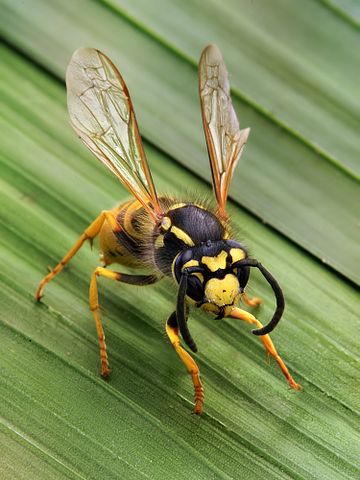
Photo of wasp: By Richard Bartz, Munich aka Makro Freak – Own work, CC BY-SA 2.5, https://commons.wikimedia.org/w/index.php?curid=2576477

I’d like to hear from you!

Have you tried to get rid of wasps naturally? Leave a comment below!

Quite frequently, I get messages from readers asking “What vaccines do my chickens need?”

In this article, we’re going to cover what vaccines are available for your flock. (This article was reviewed for veterinary accuracy by a licensed veterinarian on June 3, 2017.)

Before we get started, let’s get one thing out of the way: I’m not telling you IF you should get your chickens vaccinated – that’s a personal decision only you can decide.

I recommend you talk to your local qualified poultry vet and ask them what vaccines your chickens need. This article is meant only as a reference for what’s available (and remember that I’m not a vet – which is why I had this article reviewed by one!).

You should also know that I don’t personally vaccinate my chickens. That’s a decision I made based on the overall potential benefits compared to the overall potential negatives and costs (risk assessment, y’all).

For the most part, vaccines for chickens have been developed to improve the death rates, create herd immunity, and to reduce the potential transmission of diseases among chickens crammed together in a small space in the commercial sector, and not necessarily for the common backyard flock you and I have.

Wonder "what vaccines do my chickens need?" Here's a list! (Article reviewed by a veterinarian on June 3, 2017)

My flock doesn’t leave my property very often, and we practice common sense hygienic measures (cleaning and disinfecting coops, feeding only fresh food without mold, segregating new flock members for 30 days to check for disease, limited exposure to wild birds, etc).

These practices have been sufficient, and according to some vets I’ve consulted, quarantine and proper hygiene practices are MORE effective than vaccines.

Particularly if you’re raising Cornish Crosses for meat, remember you’ll likely be harvesting them between 6 and 10 weeks of age. You won’t want to do anything to harm or taint the meat, which might happen with injectable vaccines.

Remember also, that most vaccines come with warning labels advising to not butcher poultry that have just received shots (they tell you to wait anywhere from 15 to 60 days) – not ideal for meat birds.

If you DO want to vaccinate your chickens (for example, you attend poultry shows or are constantly bringing new chickens home from swap meets) – more power to you. I hope this article gives you a good overview of the options you can discuss with your vet.

Bottom line: It’s a personal decision only you can make after educating yourself and consulting with a qualified vet.

If you want to read about common chicken illnesses, you can do that in this article. If you want to learn how to care for a sick chicken, here’s a great reference

What vaccines for chickens are available?

This list isn’t comprehensive, and the veterinary world comes out with new medications and vaccines all the time. These are common ones I get asked about. The information referenced is from the Merck Veterinary Manual. (If you’re committed, you can find it online, or buy your own copy on Amazon here.)

Some of the most common vaccines for chickens are for:

  • Marek’s Disease
  • Mycoplasma gallisepticum infections
  • Infectious Bursal Disease
  • Encephalomyelitis
  • Fowlpox
  • Laryngotracheitis
  • Newcastle disease/Infectious Bronchitis

Marek’s Disease

When given, this vaccine is usually given to day old chicks, both broilers (usually Cornish Crosses) and layers. If you want your chickens vaccinated against Marek’s, most hatcheries will do it for you for a small fee (don’t bet on those chicks you buy at the local feed store having it – your best bet is to order from a hatchery and pay for the vaccine).

It’s given subcutaneously, which means below the skin. In most cases it’s given in the breast of your day old chick. An expert handler will do it likely without complication, but since chicks are very fragile, it’s also possible they will be injured by a less-than-adept technician.

You can buy a Marek’s Disease vaccine here on Valley Vet. (I don’t make any commission from this company. I personally buy equine vaccines from them, so I trust this source enough to recommend them). 

Newcastle/Infectious Bronchitis

You can read more about Newcastle/infectious bronchitis here. 

The vaccine is usually given between 14-21 days of age, via water, and at commercial poultry farms, is given consistently (every 2 weeks to 90 days, depending on age, location, managerial decisions, etc) thereafter. (See this chart about what vaccines chickens can get from the Merck Veterinary Manual). 

You can buy this vaccine on Valley Vet here.  You might need a prescription, so talk to a knowledgeable vet. They can also advise you on dosage strength and where (and how) to administer it.

Wonder "what vaccines do my chickens need?" Here's a list! (Article reviewed by a veterinarian on June 3, 2017)

Infectious Bursal Disease

This is a viral disease of the bursa, and it can interfere with immune system development as chicks age. You can read more about infectious bursal disease here. The vaccine is usually given 14-21 days old via water.

Encephalomyelitis

You can read more about Encephalomyelitis hereGiven in the wing web at 10-12 weeks old

Fowlpox

Read more about Fowlpox hereThe vaccine is usually given in the wing web at 10-12 weeks old. We’ve had fowlpox in our flock, and successfully treated it.

You can buy this vaccine on Valley Vet along with the vaccine for Encephalomyelitis. You might need a prescription for it, so speak to your vet first. Your vet can also advise on the dosage and where to administer it.

Laryngotracheitis

This is a viral infection. You can read more about it here. The vaccine is usually given at 10-12 weeks, intraocularly (in the eyeball) with eye drops, according to veterinarians I consulted.

Mycoplasma gallisepticum

This is a bacterial infection that can cause a chronic respiratory infection. You can read more about it hereThe vaccine is usually given between 10-14 weeks of age, either intraocularly (in the eyeball with eye drops) or by a spray (according to The Merck Veterinary Manual), although I have seen injectible vaccines (see below).

You can find this vaccine on Valley Vet here. Their product looks like an injectable vaccine, so discuss with your vet before using it. 

That’s the skinny on vaccines! It’s completely up to you if you want to vaccinate your backyard flock – just remember to consult a qualified poultry vet.

In all honesty, (based on my experience) if your local vet doesn’t have much experience with chickens, they probably won’t have these vaccines on hand, and they might not be comfortable administering or prescribing them.

I’d like to hear from you!

Have you vaccinated your chickens? What was your experience? Leave a comment below!