Can chickens eat citrus? You’ll be surprised not just by the answer, but by how wrong the myths out there about feeding citrus to chickens really are.

Frequently, we see advice online that advises us to not feed our backyard chickens things like oranges, limes, and lemons.

And in reality, many chickens don’t even like them. Mine don’t.

Sometimes we get fresh produce from a local grocery store (that they otherwise would toss), and while grapes, bananas, and watermelon are snarfed down amazingly quick, citrus is pretty much left to rot. 

what herbs can chickens eat content upgrade-min

Even the pigs won’t touch it! (Who knew pigs were so discerning?)

But the bottom line is feeding oranges and lemons has some amazing health benefits not just for your chickens, but for their eggs and meat.

I think you’ll be shocked by some of the things you’ll discover in this podcast.

You’ll learn:

  • Why the myths surrounding feeding citrus are bogus
  • How oranges and lemons can help your chickens combat heat stress
  • The herb you always want to feed with citrus (and how to do just that)
  • How citrus can improve the quality of the eggs you’ll ultimately eat

Links we discuss:

Butcher Box 

The Better Egg

Where to buy dried orange peel

Where to buy dried lemon peel

Think chickens shouldn't eat citrus? You couldn't be more wrong. Discover why all those myths are bunk, and how feeding oranges and lemons improves their eggs.

Transcript:

Coming soon.

I’d like to hear from you!

Do you think you’ll try feeding citrus to your chickens? Why or why not? Leave a comment below!

On our farm, I try to make things instead of buying them.

While part of that is about living a more natural, real-ingredients life, the other part is that I just don’t really like leaving my house. It’s just my personality.

If I can make it at home, I’m more apt to do that than run out to the store to buy an item.

That’s why I love 101 Easy Homemade Products For Your Skin, Health & Home, a book by Jan Berry that without a doubt lives up to it’s name. 

(Click here to see it on Amazon)
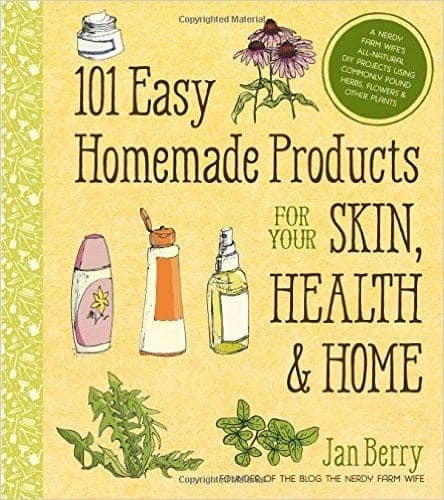
101 Easy Homemade Products for Your Skin, Health, and Home

101 Easy Homemade Products For Your Skin, Health & Home teaches you how to make every day items, like soap, shampoo, salves, lotions, and other health-related products from herbal ingredients you probably have growing in your backyard.

For someone like me, it’s pay dirt because I can make soaps for me and salves for my livestock, and all the recipes are housed in one simple resource!

If you’re like me, and are interested in making your own homemade herbal products, then 101 Easy Homemade Products For Your Skin, Health & Home is for you.

Product Description:

101 Easy Homemade Products For Your Skin, Health & Home is a 256 page, full color book by Jan Berry of The Nerdy Farm Wife blog. It’s published by Page Street Publishing, Co. 

The book is priced at $22.99 (less on Amazon), and it contains—wait for it—101 recipes that teach you how to make homemade products using herbs as well as healthy ingredients like coconut oil, beeswax, and shea butter. 

Recipes include tutorials about how to make soaps, shampoos, bath melts, lip balms, as well as herbal remedies like salves, throat syrups. You’ll also be invited to discover recipes for all-natural laundry detergents and wall washes.

At the beginning of the book is a full explanation of the ingredients, their beneficial uses, and tutorials about, for example, how to infuse oils with herbs to use in the recipes. 

You’ll also find a detailed Table Of Contents, which makes it easy to flip to exactly the recipe you want.

The Good:

101 Easy Homemade Products For Skin, Health & Home is one of those resources you absolutely want on your shelf if you’re trying to avoid chemicals.

You’ll find natural alternatives (that actually work) to products like shampoos and lotions, which tend to be full of unrecognizable ingredients if you buy them at the store.

One particular feature I like about the book is that Jan lists alternative herbal ingredients in case you don’t have access to certain herbs.

For example, I wanted to test out the “Peony & Orange Sugar Scrub” but I don’t have ready access to peonies.

However, roses were offered as an alternative, and since I received this book to review when roses were abundant on my homestead, I was able to safely substitute roses for the peonies and end up with a wonderful sugar scrub.

You’ll also find alternatives for carrier oils and butters. For example, I don’t have ready access to mango butter, and the book offers plenty of other choices that also work well within the limits of the recipe.

You’ll also discover little-known nuggets of information about common flowers and herbs. For example, before reading 101 Easy Homemade Products For Skin, Health & Home, I wasn’t aware how valuable all the violets growing on my front lawn really were. 

In 101 Easy Homemade Products For Skin, Health & Home, you’ll discover a recipe for Violet Leaf Lotion Bars, and the leaves are a wonderful source of vitamin E.

There’s also recipes for animals, and one of my favorites, and one I tested out, was a rose salve for livestock.

On my farm, this was a wonderful addition to my natural first aid kit, and it’s extremely useful for our chicken flock.

The recipes are easy to follow, and many of  the recipes also have accompanying photos for reference. 

The Bad:

I don’t have anything negative to say about 101 Easy Homemade Products For Skin, Health & Home.

The Bottom Line:

Five stars *****

This is a resource you will turn to time an again. For the list price of $22.99, you’re getting a valuable resource for your homestead.

If you’re a DIY person who is trying to avoid chemicals, then this book is absolutely a must-have.

Here’s where to buy 101 Easy Homemade Products For Skin, Health & Home on Amazon

I’d like to hear from you!

Do you think you’ll read 101 Easy Homemade Products For Skin, Health & Home? Leave a comment below!

If you’re not feeding these 5 dietary supplements to your hens, you’re probably missing out on healthier eggs.

There’s no magic here, no hocus pocus (promise).

These are 5 ingredients you possibly already have in your pantry that you likely overlooked because nobody told you how important they are to guarantee the quality of your hens eggs.

See, here’s the thing:

Since people are becoming more sophisticated about where their food comes from, researchers have started to figure out how to make our food healthier for us without using chemicals and all that other crap.

They’re starting to look at a chicken’s diet to determine if there’s a way to create food that’s healthier for me and you without adding unnatural ingredients.

Pretty amazing stuff, huh?

Several new studies have been published that prove that when your hen eats a healthy diet high in antioxidants, vitamin A, and other nutrients, she produces eggs lower in cholesterol, bad saturated fats, bad bacteria, and other harmful agents that can effect YOUR health.

So, this is an episode you DEFINITELY don’t want to miss because it’s SO EASY to make these small dietary changes for BIG results.

You’ll Learn:

  • What to feed for increased vitamins in egg yolks
  • Why antioxidants play an important role in your hen’s health (and what it means for you)
  • How researchers measure the quality of an egg (which you can repeat at home)
  • Which herb is a “no brainer” to feed your hens (you probably aren’t thinking of the right one)

what herbs can chickens eat content upgrade-min

Links we discuss:

Where to buy calendula/marigold on Amazon

Where to buy flax seeds

7 Healthy Herbs for Hens

Chickens: Naturally Raising A Sustainable Flock (Kindle) (Paperback)

Garlic Juice

Grab your free gift!

Manna Pro Poultry Facebook Page

Manna Pro Poultry $32 Coupon Book

chicken mites and lice

Transcript:

Coming Soon.

I’d like to hear from you!

Do you think you’ll try feeding any of these supplements? Which ones? Leave a comment below!

This year, I’m attending ShiftCon in New Orleans, and I hope you’ll join me.

If you don’t know what ShiftCon is, get ready to get excited.

Shiftcon is the premier eco-wellness conference, so if living a healthy life that’s free of GMOs, and you want to connect with:

  • other bloggers,
  • social media specialists,
  • nonprofits,
  • health and sustainability experts,
  • leading natural, organic, and eco-friendly brands 

Then ShiftCon is for you.

Join natural, organic and LOHAS industry leaders including:

  • Gary Hirshberg, Chair of Stonyfield Farm and co-founder of Just Label It
  • Anna Lappe, nationally known author of Diet for a Hot Planet
  • Robyn O’Brien, author of The Unhealthy Truth, Executive Director, Allergy Kids
  • Gunnar Lovelace, co-founder and CEO of Thrive Market
  • Lisa Leake, author of 100 Days of Real Food
  • Jenny McGruther, author of Nourished Kitchen

The last 2 years, ShiftCon has been in California, which means that I’ve been unable to attend.

But this year, since it’s so close, I can’t think of a reason not to!

If you’re in the blogging/online marketing sphere and you’re interested in connecting with brands and other bloggers who are trying to make a difference, then this is your opportunity.

Connect with industry experts in interactive workshops on social media best practices, food safety, GMO labeling, organic food production, sustainability, and the environment.

And until June 1, you can click here to grab a ticket for $100 off using the code VFRUGALCHICKEN. Click here to buy your ticket for $100 off. 

IMG_9407

I’d like to hear from you!

Do you think you’ll attend ShiftCon? Leave a comment below!

Yeah, I know talking about how to clean your chicken coop is kind of a dry chicken-owner topic, but the bottom line is doing it right is critical to your flocks health.

So, I’ve devoted a whole podcast to it, and I’m pretty sure I made it as entertaining as possible—but I’ll leave that to you to decide.

Give it a listen, and let me know.

Knowing how to clean your chicken coop is also fairly intuitive—but there are some things particular to chickens that you must know about.

For example, did you know there’s actually a super simple way to make manure clean up a 10 minute process (instead of hours of scraping)?

How about the one cleaning agent you should NEVER use in your coop?

If you’re intrigued (I know I am), then come a little closer, and let’s chat in today’s podcast about how to clean your chicken coop.

You’ll learn:

  • A step-by-step process to cleaning your chicken coop, and why doing it the right way will keep your hens healthy
  • My recipe for all-natural citrus cleaner (and why you should use it instead of bleach)
  • The best way to prevent moisture from building up (critical since moisture can lead to coccidiosis)
  • Which all-natural commercial product I recommend and why

Links we discuss:

Manna Pro Poultry Coop N Compost Cleaner

Manna Pro Poultry Facebook page

How To Treat Sour Crop

Harris Farms Nesting Boxes

Transcript:

Coming soon.

I’d like to hear from you!

Do you know how to clean a chicken coop? What’s your favorite way? Leave a comment below, or email me at [email protected]!

Before you add a rooster to your flock, you should know there’s certain behaviors you should accept, and some that you should avoid like the plague.

Knowing the difference can mean the health and happiness of your flock as a whole.

See, sometimes roosters seem okay, but they can make your flock nervous or flighty.

In this podcast, we discuss what to look for in a rooster before adding one to your flock.
You’ll hear all about the different roosters on our farm, why meat roosters can be the biggest pain in the behind ever, and why I don’t think flogging is THAT big of a deal.

You’ll learn:

  • The key personality traits every good rooster should have
  • How roosters have slightly different feeding requirements than hens and why it doesn’t matter anyway
  • When flogging is a really big deal (that you should nix immediately)
  • Whether roosters are really necessary

Links we discuss:

Manna Pro Facebook Page

Manna Pro Coupon Book

Where To Get A Free Copy Of The Better Egg

385x470 organic ad_frugal_chicken

I’d like to hear from you!

What behaviors won’t you accept from your rooster? Leave a comment below!