When Bears For Humanity asked for sustainable living bloggers to review their stuffed animals, I jumped at the opportunity to tell you about these delightful toys.

If you don’t know, Bears For Humanity aren’t just toy makers – they actively work with programs to provide employment to families in need.

They also donate toys to disadvantaged children, giving them comfort and stuffed animals to play with.

In this review, we’ll look at 3 stuffed animals I received to review and you’ll learn why Bears For Humanity is a company with a conscience that you can feel good supporting.

[This is a post sponsored by Bears For Humanity. I received compensation and 3 toys for this review, but the opinions are all my own.]

Product Description:

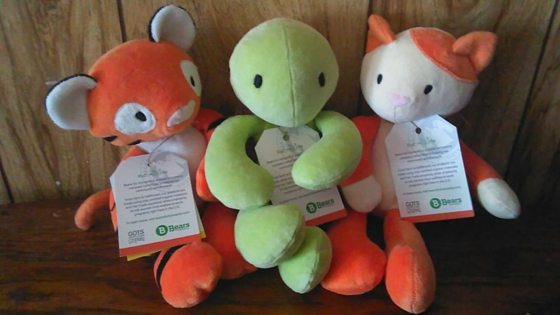
The three stuffed toys I received were a cat, a turtle, and a tiger. Each stuffed animal is about 8 inches tall, and made of plush 100% certified organic cotton. They’re filled with recycled polyester fill, and are very soft.

Each toy is adorable and ready for your child to love immediately.

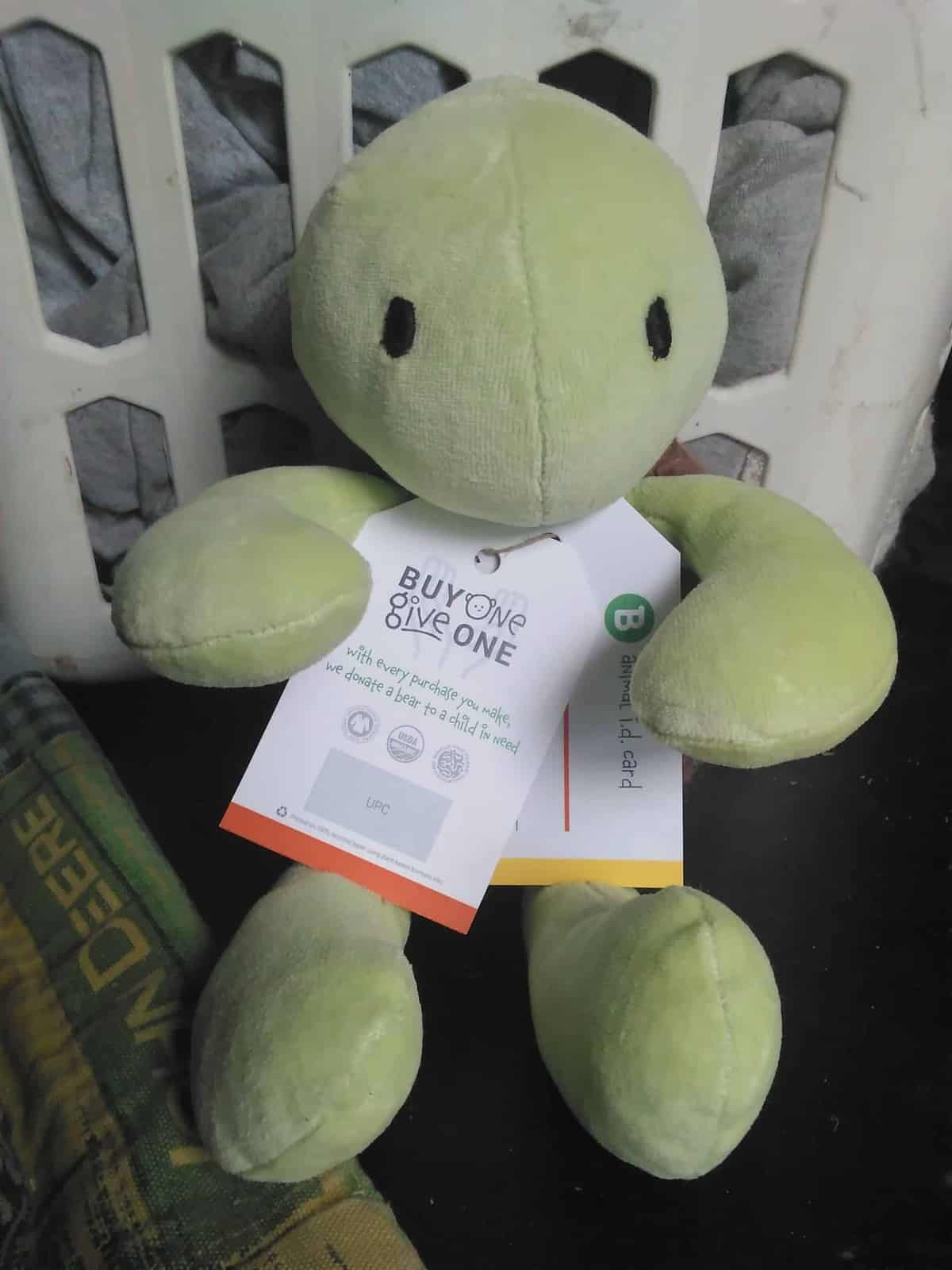
Bears For Humanity stuffed animals also come with two tags: One describing the “Buy One, Give One” pledge, which states that for every purchase you make, Bears For Humanity will donate a bear to a child in need.
bears for humanity

Since Bears For Humanity strives to support those in need by providing employment for working mothers through California’s Welfare to Work program, the other tag informed me that I can send a custom message along with a donation to support these women and children. 

The tag also states that Bears for Humanity partners with reputable local and national charities to ensure any donated bears reaches children in need.

Both tags are printed on 100% recycled paper using plant-based biomass inks. 

As of print, each toy I received to review is $25 on BearsForHumanity.com.

From now until the end of August 2016, if you purchase a stuffed animal from Bears For Humanity, you can get free shipping using the code FREESHIPPING4MOM.

The Good:

The tiger, turtle, and cat toys I received are adorable and my children immediately fell in love with them, and have spent several afternoons since playing with the stuffed animals.

The toys are easy for a child to hold, and since they’re soft, they’re easy to hug. My daughter especially loves soft toys and blankets, and the tiger became her particular favorite.

The turtle toy has an adorable brown “shell” made of soft shag cotton. 

Since Bears For Humanity uses only 100% certified organic cotton, I felt good knowing my children were playing with toys created from sustainable resources, and were not exposed to dyes or inks that could harm them. 

Anyone purchasing a Bear For Humanity will feel good knowing their purchase goes directly towards enriching the lives of women and children in need, and that children who might not have many toys will be given a stuffed animal to love.
bears for humanity

The Bad:

There’s nothing bad about these toys. I love them.

The Bottom Line:

Five stars.

You can grab the toy of your choice at BearsForHumanity.com and know that you’re giving your child an organic stuffed animal created with only the best intentions. With your purchase, you’ll be providing work for mothers and children in need, and giving comfort to a child who is not as fortunate. 

Don’t forget to use the free shipping code FREESHIPPING4MOM.

You can follow Bears For Humanity on social media here:

I’d like to hear from you!

Which toy will you purchase from Bears For Humanity? Leave a comment below!
Although we try to grow and harvest as much as we can on our homestead, there are some things that we just can’t (my goats seem to find fig trees particularly delectable).

So, when a major corporation makes a move towards being more sustainable and giving conscious consumers another option besides products with difficult-to-pronounce ingredients, it always makes my heart soar.

That’s why I’m happy to partner with Dannon (the yogurt maker) for this article.

[This post contains content sponsored by The Dannon Company, Inc. The opinions expressed in my post are my own. For more information on Dannon’s move toward sustainable agriculture, naturality, and transparency, and non-GMO ingredients, visit www.dannonpledge.com and www.dannon.com/ingredients]

So, what’s the deal?

One of the biggest yogurt manufacturers in the world recently made the Dannon Pledge to offer non-GMO yogurts to their buyers. That means when you see Dannon, Oikos, and Danimals brands (which comprise 50% of sales) on the grocery aisle, they will be available with non-GMO ingredients.

To make this even better, Dannon also is trying to source non-GMO feed for their cows. And since you are what you eat (and what your food eats), this is a pretty exciting step towards sustainability!

Now, if you’re wondering about a time frame for all this new exciting yogurt, Dannon has pledged that by the end of 2017, the Dannon brand family (so all their products) will be non-GMO, and their cows will only consume non-GMO feeds.

What about before December 2017?

Dannon has pledged that until all their products are non-GMO, they will be completely transparent on their labeling. 

They’ve voluntarily committed, whether or not the government passes laws, to declare on their labels if their products contain GMO ingredients to help you make a better buying decision.

Dannon has committed to sourcing their milk only from dairies they directly know, and are the first of the national leading yogurt makers to do so.

What about animal welfare?

We all know that it’s not just about non-GMO products and cows that eat non-GMO feed; it’s also about the quality of lives that the animals have.

Dannon is committed to making sure their milk is sourced from cows with happy lives, and are implementing systems to ensure the welfare of their cows using the Validus Certification system.

(If you don’t know what this is, it’s a group that’s USDA approved and uses third-party organizations to ensure all animals are treated fairly and humanely).

By July 2016, more than 90% of Dannon’s milk supply will come from farms that are Validus certified.

So, you can be sure that if you buy Dannon yogurt, it’s coming from cows that have been humanely treated.

If you’re not interested in making yogurt at home, and you want to make a socially and environmentally-conscious choice, then check out Dannon’s yogurts next time you’re at the supermarket.

I’d like to hear from you!

What do you think of the Dannon Pledge? Leave a comment below!

I’m a big believer that if you have the space, raising more than one type of poultry will help you become more self-sufficient.

In addition to chickens, we also raise ducks, quail, and turkeys, and we’ve considered adding guineas and even an emu (although emus can jump well, and require high fencing, and since we already have enough livestock trying to break free on any given day, we dropped the idea).

While chickens should be the cornerstone of any homestead, ducks lay better in winter and aren’t susceptible to many diseases chickens suffer from.

Turkeys can be a valuable asset if you hatch their eggs, since people will pay a premium for organic, pasture-raised turkey at Thanksgiving.

what herbs can chickens eat content upgrade-min
In this podcast, we discuss 4 other poultry you can raise on your farm, their advantages and disadvantages compared to chickens, and whether you can house them with your hens.

You’ll learn:

  • How turkeys, ducks, quail, and guineas can enhance your poultry flock
  • Why each has certain advantages that compliment chickens
  • Some reasons each might not be for you
  • Why I don’t recommend keeping chicks and ducklings together
  • Mistakes we made when starting out our homestead you can avoid

Links we discuss:

Butcher Box
Butcher Box square

I’d like to hear from you!

Which poultry would you like to raise with your chickens? Leave a comment below!

The truth is there’s people who will tell you that if you worry about what your hens eat, you’re over complicating backyard chickens.

Feeding hens certainly isn’t complicated, but that doesn’t mean you should make things so simple your health and your flock suffers.

The truth is you CAN improve their health and yours when you improve your hens’ diet. 

I know from experience that when your hens get a sub-par dinner, you run the risk of scrawny hens, unhealthy eggs, or even no eggs.

We actually went through a 6 month period a number of years ago because we relied on a forage-heavy diet – you reap what you sow, and nobody needs to deal with feeding hens that aren’t producing.

Once we started looking at our flock’s diet, researching, and testing some of the things I learned in scientific studies, our flock’s health dramatically improved, our hens were happier, and we were happier – because we started getting eggs again, which is why we started keeping chickens in the first place!

In this episode, we myth bust 3 common misconceptions about feeding chickens that can impact your health.

There’s more than enough evidence that shows us that what your hens eat predicts the quality of their eggs – and you can ignore these results or embrace them and benefit from them.

Increasing the healthy parts of your chicken’s eggs while decreasing the unhealthy parts isn’t complicated, despite what you might read online and on Facebook.

You’ll learn:

  • Why raising chickens “traditionally” like our grandparents did 50 or 100 years ago is not always the best idea
  • Why ignoring modern research means you’re doing yourself and your flock a disservice
  • How educating yourself about your flock’s diet isn’t over complicating backyard chickens
  • The one thing you should always do if you’re totally overwhelmed by all the advice out there about what to feed your backyard hens.

Links we discuss:

Learn more about Butcher Box

Where to buy flax

Grab your free gift The Better Egg here

Worrying about your flocks's diet doesn't mean you're over complicating backyard chickens. In this podcast, we myth bust 3 common misconceptions about feeding backyard chickens.

I’d like to hear from you!

Do you think you’ll try changing how you feed your chickens? Leave a comment below!

Comfrey salve with oregano is really easy to make, and it’s one of those home remedies that should be in your natural first aid kit.

It’s simple to whip up in just 30 minutes (and I mean literally whip up – once you have your ingredients assembled, it’s just about melting and stirring) but you’ll doubtlessly find a multitude of uses for it.

It’s fly season here, which means lots of bites, so we’re battling itchy pigs that are scratching their ears bloody.

We’ve also got hens that have been overly bothered by roosters, and they could use a little extra TLC.

what herbs can chickens eat content upgrade-min

When it comes to comfrey salve, I like making it not just with comfrey plant, but also with oregano leaves. While comfrey has anti-inflammatory properties, the oregano has antibacterial properties that double the healing punch of the salve.

The choice is up to you, though. You can make it comfrey alone, or combine it with your favorite herbs or plants to create your own homemade product.

What is comfrey?

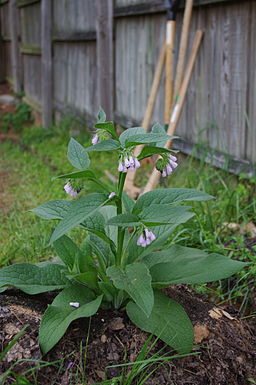
If you’ve never heard of comfrey, its scientific name is Symphytum officinale, and it is native to Europe and parts of Asia.

It grows 12 inches to five feet tall, and has green leaves and purple flowers. It’s a spring and summer plant, and grows well in full sun.

comfrey salve with oregano

Easy to establish, comfrey is one of those plants that will regenerate—in fact, once you grow it, good luck getting rid of it.

A lot of people grow comfrey because it’s sublime for compost piles, and helps yield rich, nutritious soil.

Note, though, if you want to use comfrey for its natural medicinal purposes in a salve, you should harvest the leaves before the plant flowers.

You can also use dried comfrey, which you can purchase here.

Why is comfrey salve with oregano so useful?

Although comfrey salve has been proven to successfully treat sprains, strains, and inflammation in people, for a backyard chicken owner, comfrey salve is excellent to help your chickens heal from a rash, skin irritation, or inflammation.

In studies, comfrey sped up the healing time.

Oregano has long been known to have antibacterial properties – in fact, researchers have been studying oregano essential oils as a way to combat antibiotic-resistant bacteria.

One benefit is that while it’s natural, comfrey salve with oregano also has no withdrawal times, so if you do need to use it, you can still eat your hen’s eggs.

A word of warning

Before we continue, let’s address a myth I see on the internet and in Facebook groups a lot.

I see advice out there to feed comfrey to your chickens.

I don’t agree with this advice.

According to the University of Maryland Medical Center, comfrey contains pyrrolizidine alkaloids, which are poisonous chemicals that are known to cause liver damage.

So, experts recommend to only use comfrey externally, and to not allow your pets or chickens to ingest it.

So, a comfrey salve is okay, but feeding it to your chickens isn’t the best idea.

Ok, so how do I make a salve my chickens won’t eat?

Without a doubt, if you put something in front of them, chickens will try to eat it. 

So it’s important to create a comfrey salve that can be blended into the skin.

This is easily achieved using something like coconut oil, which has a lower melting point than other fats (more on this in a minute).

https://www.instagram.com/p/BGw5XslC87c/?taken-by=thefrugalchicken

How to make comfrey salve

Ingredients:

1/2 cup organic coconut oil (where to buy) (you can also use grapeseed oil which has natural antioxidant benefits)

1/4 cup organic beeswax (where to buy)

1/4 cup dried comfrey (where to buy)

1/4 cup dried oregano (where to buy)

Tools:

Non-reactive pot

Mason jars (where to buy) or salve tins (where to buy)

Fine mesh strainer

It’s best to start with a comfrey oregano infusion (more about this below), but if you don’t have a lot of time, you can fast-track the infusion.

I’ve done this before, and it works out fine.

For these directions, I’m going to assume you’re fast-tracking the infusion.

First, melt the coconut oil over low heat.

When melted, combine the comfrey and oregano in your non-reactive pot with the coconut oil.

Place the mixture over low heat until the coconut oil has turned dark green. This indicates that the healing oils from the comfrey and oregano have been leeched.

Don’t heat the oil until boiling, just warm it.

This takes about an hour, but it might take more. 

Strain out the herbs until the melted coconut oil is free of particulates (if there’s some still in there, it’s okay, just do your best).

In a clean non-reactive pot, combine the infused coconut oil with the beeswax, and return to the heat.

(The coconut oil melts at 77 degrees, so combining it with the beeswax means it’s a little more stable, and won’t turn into mush in warmer weather).

Continue to warm until the mixture until all the beeswax is melted, stirring every so often to make sure it’s completely combined.

Transfer to a clean mason jar or container, and allow to cool until completely solidified.

Once hardened, you can start using the comfrey salve on your backyard chickens or other livestock.

How to make a comfrey oregano infusion

Combine a half cup of comfrey and oregano (fresh or dried) into 1 cup of grapeseed oil (which I love for its natural healing properties) or olive oil, and let steep for 2 weeks or so. After 2 weeks, strain the comfrey and oregano leaves from the oil.

While there’s a lot of steps, when you’re actually making the comfrey salve with oregano, it’s not very hard. If you can melt, stir, and pour, you’re pretty much set.

[Comfrey photo by Finchj (Own work) [CC BY-SA 3.0 (http://creativecommons.org/licenses/by-sa/3.0)], via Wikimedia Commons]

Resources:

Nancy Bubel. “Growing and Using Comfrey Leaves.” Mother Earth News, May/June 1974, accessed June, 22, 2016

University of Maryland Medical Center. “Comfrey.” Accessed June 21, 2016.

I’d like to hear from you!

Do you think you’ll try to make comfrey salve with oregano? Leave a comment below!

If you’re not sure of the best ways to keep chickens safe from predators, there’s only a few simple rules you should be concerned about.

We don’t have too many predators in our area, but I still follow these rules as much as possible. While they won’t cost you very much, they’re still critical to keeping your chickens safe.

Who wants to raise a bunch of pullets only to have a predator steal them before they’ve even laid an egg?

I sure don’t!

Listen to this podcast, and in just 30 minutes, you’ll have a bucketful of ideas to implement today to keep your chickens safe from predators.

keep chickens safe from predators

You’ll learn:

  • My top 10 tips to keep chickens safe from predators
  • Why 1/2-inch hardware cloth might save your hens’ life
  • The lesson I learned from having to fix a coop in the middle of the night

Links we discuss:

Where to buy 1/2″ hardware cloth

Where to buy a game camera

How to know what’s killing your chickens

Grab the free checklist + 3 bonus tips

 Butcher Box square

I’d like to hear from you!

What are your ideas to keep chickens safe from predators? Leave a comment below!